REVIEW
Influence of diet on the gut microbiome
and implications for human health
Rasnik K. Singh
1, Hsin‑Wen Chang
2, Di Yan
2, Kristina M. Lee
2, Derya Ucmak
2, Kirsten Wong
2, Michael Abrouk
3,
Benjamin Farahnik
4, Mio Nakamura
2, Tian Hao Zhu
5, Tina Bhutani
2and Wilson Liao
2*Abstract
Recent studies have suggested that the intestinal microbiome plays an important role in modulating risk of several
chronic diseases, including inflammatory bowel disease, obesity, type 2 diabetes, cardiovascular disease, and cancer.
At the same time, it is now understood that diet plays a significant role in shaping the microbiome, with experiments
showing that dietary alterations can induce large, temporary microbial shifts within 24 h. Given this association,
there may be significant therapeutic utility in altering microbial composition through diet. This review systematically
evaluates current data regarding the effects of several common dietary components on intestinal microbiota. We
show that consumption of particular types of food produces predictable shifts in existing host bacterial genera. Fur‑
thermore, the identity of these bacteria affects host immune and metabolic parameters, with broad implications for
human health. Familiarity with these associations will be of tremendous use to the practitioner as well as the patient.
Keywords:
Diet, Health, Metabolism, Microbiome, Microbiota, Nutrition
© The Author(s) 2017. This article is distributed under the terms of the Creative Commons Attribution 4.0 International License (http://creativecommons.org/licenses/by/4.0/), which permits unrestricted use, distribution, and reproduction in any medium, provided you give appropriate credit to the original author(s) and the source, provide a link to the Creative Commons license, and indicate if changes were made. The Creative Commons Public Domain Dedication waiver (http://creativecommons.org/ publicdomain/zero/1.0/) applies to the data made available in this article, unless otherwise stated.
Background
The gut microbiome
The human gut microbiome encompasses 10
14resident
microorganisms, including bacteria, viruses, fungi, and
protozoa, that are commensal with the human intestinal
tract [1]. Among these, bacteria represent the most well
studied group and will be the main focus of this review.
Overall the predominant bacterial groups in the
micro-biome are gram positive
Firmicutes
and gram negative
Bacteroidetes
[2,
3]. Recently, it has been shown that
microbiota can effectively be subdivided into different
enterotypes, each enriched by particular bacterial genera,
but that all seem to share high functional uniformity [4].
This uniformity exists regardless of several host
proper-ties, such as age, sex, body mass index, and nationality
[5].
The majority of microorganisms reside within the
more distal parts of the digestive tract, where their
bio-mass surpasses 10
11cells per gram content [6]. Microbes
in the distal gut contribute to host health through
bio-synthesis of vitamins and essential amino acids, as well
as generation of important metabolic byproducts from
dietary components left undigested by the small
intes-tine [7]. Short chain fatty acid (SCFA) byproducts such
as butyrate, propionate, and acetate act as a major energy
source for intestinal epithelial cells and may therefore
strengthen the mucosal barrier [8]. Additionally, studies
conducted using germ-free mice suggest that the
micro-biota directly promote local intestinal immunity through
their effects on toll-like receptor (TLR) expression [9],
antigen presenting cells, differentiated T cells, and
lym-phoid follicles [10,
11], as well as by affecting systemic
immunity through increased splenic CD4
+T cells and
systemic antibody expression [12].
These recorded benefits and more have led to growing
interest in the ability to modify the gut microbiota. An
acute change in diet—for instance to one that is strictly
animal-based or plant-based—alters microbial
com-position within just 24 h of initiation, with reversion to
baseline within 48 h of diet discontinuation [13].
Fur-thermore, the gut microbiome of animals fed a high-fat
or high-sugar diet is more prone to circadian rhythm
disruption [14]. Studies also suggest that overwhelming
Open Access
*Correspondence: [email protected]
2 Department of Dermatology, University of California, San Francisco,
systemic stress and inflammation—such as that induced
via severe burn injury—can also produce characteristic
acute changes in the gut microbiota within just one day
of the sustained insult [15].
The microbiome in disease
Studies examining the composition and role of the
intestinal microbiome in different disease states have
uncovered associations with inflammatory bowel
dis-eases (IBD), inflammatory skin disdis-eases such as
psoria-sis and atopic dermatitis, autoimmune arthritis, type 2
diabetes, obesity, and atherosclerosis. For instance, IBD
patients tend to have less bacterial diversity as well as
lower numbers of
Bacteroides
and
Firmicutes—
which
together may contribute to reduced concentrations of
microbial-derived butyrate. Butyrate and other SCFAs
are thought to have a direct anti-inflammatory effect in
the gut [16]. Furthermore, different indices of Crohn’s
disease activity have each been characterized by specific
gut mucosa-attached bacteria, that in turn are
signifi-cantly influenced by anti-TNF therapy [17]. The relative
abundance of different bacteria may mediate
intesti-nal inflammation and Crohn’s disease activity through
effects on local regulatory T cell populations [17,
18].
Furthermore, overrepresentation analysis has shown that
enzymes enriched in IBD microbiomes are more
fre-quently involved in membrane transport, which could
support a “leaky gut hypothesis” contributing to the
disease state [19,
20]. Interestingly, autoimmune Th17
differentiation from naïve T cells appears to be
depend-ent on the segmdepend-ented filamdepend-entous bacteria. Studies have
shown that Th17 cells are absent in the small-intestinal
lamina propria of germ-free animals, which is the major
site of their differentiation. Furthermore, introduction
of segmented filamentous bacteria is sufficient to
trig-ger autoimmune arthritis in these animals through
pro-motion of Th17 cell development in the lamina propria
and spleen [20,
21]. The gut microbiota of patients with
type 2 diabetes has been functionally characterized with
diabetes-associated markers, showing enriched
mem-brane transport of sugars and branched-chain amino
acids, xenobiotic metabolism, and sulphate reduction
along with decreased bacterial chemotaxis, butyrate
syn-thesis and metabolism of cofactors and vitamins [22].
Obesity has been characterized by an altered intestinal
Bacteroides:Firmicutes
ratio, with greater relative
abun-dance of
Firmicutes
. Furthermore, studies involving
microbiota transplantation from obese to lean mice have
shown that the obese phenotype is transmissible and may
be promoted by microbiota that have increased capacity
to harvest energy from the host diet [23]. Risk of
athero-sclerosis has similarly been linked to the gut microbiota,
in particular due to enhanced metabolism of choline
and phosphatidylcholine that produces the
proathero-genic compound, trimethylamine-N-oxide (TMAO) [24].
A recent study also demonstrated that gut bacteria can
produce significant amounts of amyloid and
lipopolysac-charides, which are key players in the pathogenesis of
Alzheimer’s disease [25]. These observations illustrate the
important role of microorganisms in human health and
suggest that manipulating them may influence disease
activity. While the microbiome of a healthy individual is
relatively stable, gut microbial dynamics can certainly be
influenced by host lifestyle and dietary choices [26].
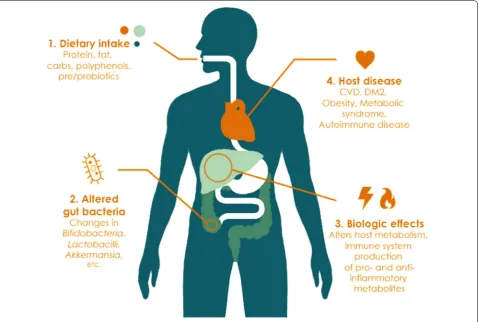
In this review, we comprehensively explore the ability
of the host diet to modulate gut bacteria, with the hope
that this knowledge will guide our understanding of how
dietary choices impact human health through alteration
of the gastrointestinal ecosystem (Fig. 1, Table 1).
Methods
We performed a systematic literature review in
Septem-ber 2015 by searching the electronic MEDLINE database
via PubMed. Search terms included combinations of the
terms “microbiota”, “intestinal mucosa/microbiology”,
“gastrointestinal tract/microbiology”, “gastrointestinal
diseases/microbiology”, with “diet”, “food”,
“polysaccha-rides”, “carbohydrates”, “proteins”, “meat”, “fat”, “lactose”,
“oligofructose”, “prebiotics”, “probiotics”, “polyphenols”,
“starch”, “soy”, “sucrose”, “fructose”, “diet, vegetarian”,
“diet, western”, “cereals”, “dietary fiber”, and “dietary
sup-plements”. Articles were reviewed independently by
two investigators, R.K.S. and K.M.L, and this was
adju-dicated by W.L. We limited our search to articles
avail-able in English, human studies, and those published
between 1970 and 2015. We excluded studies that did not
explicitly address the effect of a dietary intervention on
microbial composition. Manual searches through
refer-ence lists of the articles were also performed to identify
additional studies. This resulted in a total of 188
arti-cles being selected for inclusion in this review. Studies
describing the relationship between specific dietary
com-ponents and intestinal microbiota composition ranged
from subject number n
=
3 to n
=
344, with a majority
of studies clustered around subject number n
=
20 to
70. Study designs were primarily randomized controlled
trials, cross-sectional studies, case–control studies, and
in vitro studies. In addition to human studies, several
animal studies were also included to demonstrate dietary
impact on the microbiome under controlled
experimen-tal conditions.
Diet and microbiota
Protein
demonstrated lower counts of
Bifidobacterium
adoles-centis
and increased counts of
Bacteroides
and
Clostridia
in subjects consuming a high beef diet when compared
to subjects consuming a meatless diet [27]. With the
advances of 16S rRNA sequencing, several studies have
been able to comprehensively investigate the impact of
dietary protein on gut microbial composition (studies
listed in Table 2). Participants were given different forms
of protein across these studies, such as heavy
animal-based protein from meats, eggs, and cheeses; whey
pro-tein; or purely vegetarian sources such as pea protein.
A majority of the studies noted that protein
consump-tion positively correlates with overall microbial diversity
[13, 28–30]. For example, consumption of whey and pea
protein extract has been reported to increase
gut-com-mensal
Bifidobacterium
and
Lactobacillus
, while whey
additionally decreases the pathogenic
Bacteroides
fra-gilis
and
Clostridium perfringens
[31–33]. Pea protein
has also been observed to increase intestinal SCFA
lev-els, which are considered anti-inflammatory and
impor-tant for maintenance of the mucosal barrier [34]. On the
contrary, counts of bile-tolerant anaerobes such as
Bac-teroides
,
Alistipes,
and
Bilophila
were noted to increase
healthy subjects. Healthy subjects, on other other hand,
have 10-fold more abundant
E. rectale
in their intestines
[37–39]. These gut bacterial changes may be responsible
for the finding in a large participant prospective study
(n
=
67,581) that high total protein intake, especially
ani-mal protein, is associated with a significantly increased
risk of IBD [40]. Furthermore, several microbial genera
promoted by intake of red meat have also been
associ-ated with increased levels of trimethylamine-N-oxide
(TMAO), a proatherogenic compound that increases risk
of cardiovascular disease [41].
Mouse studies have revealed that high protein intake
increases insulin-like growth factor 1 (IGF-1) levels,
which are in turn associated with an increased risk of
cancer, diabetes, and overall mortality. In one study,
plant-derived proteins are associated with lower
mortal-ity than animal-derived proteins [42]. Accordingly,
long-term practice of such dietary habits may increase risk of
colonic disease and others. It is important to note that
animal-based diets are often high in fat, in addition to
protein. Dietary fat can also affect microbial composition;
therefore, further studies will be required to investigate
in what capacity each individual macromolecule impacts
the bacterial communities and how they act in concert.
Fats
Consumption of high saturated and trans fat diets is
thought to increase the risk of cardiovascular disease
through upregulation of blood total- and
LDL-choles-terol [43, 44]. On the other hand health-promoting fats,
Table 1 Overview of select gut bacterial genera and species commonly affected by diet
spp species, SCFA short chain fatty acid, LPS lipopolysaccharide, IBD inflammatory bowel disease, TH T helper, FG Fournier’s gangrene, HS hidradenitis suppurativa, UTI
urinary tract infection(s), TLR toll-like receptor, MALT mucosa-associated lymphoid tissue
aA. putredinis does not produce pigment and is susceptible to bile
Bacteria Basic features Associated physiologic changes Associated disease states References
Bifidobacterium spp. Gram positive obligate anaerobe
branched; nonmotile SCFA production; improve gut mucosal barrier; lower intestinal LPS levels
Reduced abundance in obesity [166, 167]
Lactobacillus spp. Gram positive facultative anaerobe
rod‑shaped SCFA production; anti‑inflammatory and anti‑cancer activities Attenuate IBD [168, 169] Bacteroides spp. Gram negative obligate anaerobe
rod‑shaped; variable motility Activate CD4 + T cells Increased abundance in IBD [170–173] Alistipes spp. Gram negative obligate anaerobe
rod‑shaped; bile‑resistant and pigment‑producinga
Reported in tissue from acute appen‑ dicitis and perirectal and brain abscesses
[174]
Bilophila spp. Gram negative obligate anaerobe urease‑positive, bile resistant, catalase‑positive
Promote pro‑inflammatory TH1
immunity B. wadsworthia observed in colitis, perforated and gangrenous appendicitis, liver and soft tissue abscesses, cholecystitis, FG, empy‑ ema, osteomyelitis, and HS
[175, 176]
Clostridium spp. Gram positive obligate anaerobe
rod‑shaped; spore‑forming Promote generation of TH17 cells Several spp. are pathogenic causing tetanus, botulism, gas gangrene, or pseudomembranous colitis
[177, 178]
Roseburia spp. Gram variable obligate anaerobe
curved rod‑shaped; motile SCFA production Reduced abundance in IBD [179] Eubacterium spp. Gram positive obligate anaerobe
rod‑shaped SCFA production; form beneficial phenolic acids Reduced abundance in IBD [180, 181] Enterococcus spp. Gram positive facultative anaerobe
cocci Several spp. are pathogenic causing UTI, endocarditis, or bacteremia [182] Faecalibacterium
prausnitzii Gram positive obligate anaerobe rod‑shaped; nonmotile SCFA production; anti‑inflammatory effects Reduced abundance in IBD and obesity [183, 184] Akkermansia
mucin-iphila Gram negative obligate anaerobe oval‑shaped; nonmotile Anti‑inflammatory effects Reduced abundance in IBD, obesity, and psoriatic arthritis [53, 133, 185] Escherichia coli Gram negative facultative anaer‑
obe rod‑shaped TLR‑activation Increased abundance in IBD gastroen‑teritis, UTI, and meningitis [186–188] Helicobacter pylori Gram negative microaerophilic
helix‑shaped; motile Gastritis; ulcers; MALT cancers [189, 190] Streptococcus spp. Gram positive facultative anaerobe
cocci Some spp. are pathogenic caus‑ing meningitis, pneumonia, and endocarditis
[image:4.595.57.541.97.481.2]such as mono and polyunsaturated fats, are crucial in
alleviating risk of chronic disease. The typical Western
diet is both high in saturated and trans fats while low in
mono and polyunsaturated fats, therefore predisposing
regular consumers to many health problems [45–47].
Several human studies have suggested that a high-fat diet
increases total anaerobic microflora and counts of
Bacte-roides
[26, 29, 48, 49] (studies listed in Table
3). To
spe-cifically investigate the effects of different kinds of dietary
fat on human gut microbiota, Fava et al. had subjects
consume diets of varying fat content. The authors noted
that consumption of a low fat diet led to increased fecal
abundance of
Bifidobacterium
with concomitant
reduc-tions in fasting glucose and total cholesterol, compared
to baseline. On the other hand, a high saturated fat diet
increased the relative proportion of
Faecalibacterium
prausnitzii.
Finally, subjects with high
monounsatu-rated fat intake did not experience shifts in the relative
abundance of any bacterial genera, but did have
over-all reduced total bacterial load and plasma total- and
LDL-cholesterol [49]. In line with these findings,
con-sumption of salmon–which is high in mono and
polyun-saturated fats—was not noted to alter fecal microbiota
composition in 123 subjects either [50]. Studies in rats
have shown that intake of a high-fat diet results in
con-siderably less
Lactobacillus intestinalis
and
dispropor-tionately more propionate and acetate producing species,
including
Clostridiales, Bacteroides,
and
Enterobacteri-ales.
Furthermore, the abundance of
Lactobacillus
intes-tinalis is negatively correlated with rat fat mass and body
weight [51]. Microbial changes have also been shown to
control metabolic endotoxemia-induced inflammation in
high-fat diet consuming mice [52]. Mouse studies have
also compared the differential effects of various lipids
on intestinal microflora. A comparison of lard-derived
and fish oil-derived lipids revealed that
Bacteroides
and
Bilophila
were increased in lard-fed mice, while
Actino-bacteria
(
Bifidobacterium
and
Adlercreutzia
), lactic acid
bacteria (
Lactobacillus
and
Streptococcus
), and
Verru-comicrobia
(
Akkermansia muciniphila
) were increased
Fig. 2 Impact of dietary protein on intestinal microbiota and health outcomes. SCFA’s short chain fatty acids, TMAO trimethylamine N‑oxide, Tregs T regulatory cells, CVD cardiovascular disease; IBD inflammatory bowel diseaseTable 2 Effects of protein on gut microbiota
Arrow thickness corresponds to relative number of studies supporting the relationship
Microbial
diversity Bifidobacteria Lactobacilli Bacteroides Alistipes Bilophila Clostridia Roseburia Eubacterium Rectale References Animal
protein ↑ ↑↓ ↑↓ ↑ ↑ ↑ ↓ ↑↓ [1338, 29–40–35] ,
Whey protein
extract ↑ ↑ ↑ ↓ ↓ [32, 33]
Pea protein
[image:5.595.58.541.228.423.2]in fish-oil-fed mice. Furthermore, lard-fed mice had
increased systemic TLR activation, white adipose tissue
inflammation, and impaired insulin sensitivity compared
to mice consuming fish oil. The authors demonstrated
that these findings are at least partly due to differences in
gut microbiota between the two groups; transplantation
of microbiota from one group to the other after antibiotic
administration not only enriched the transplant
recipi-ent’s gut with dominant genera from the donor species,
but also replicated the donor’s inflammatory and
meta-bolic phenotypes. These results indicate that
gut micro-biota may promote metabolic inflammation through TLR
signaling upon challenge with a diet rich in saturated
lipids (Fig. 3) [53].
Carbohydrates
Digestible carbohydrates (starch, sugars)
Carbohydrates are possibly the most well studied dietary
component for their ability to modify the gut
microbi-ome (studies listed in Table
4). Carbohydrates exist in
two varieties: digestible and non-digestible. Digestible
carbohydrates are enzymatically degraded in the small
intestine and include starches and sugars, such as glucose,
fructose, sucrose, and lactose. Upon degradation, these
compounds release glucose into the bloodstream and
stimulate an insulin response [54]. Human subjects fed
high levels of glucose, fructose, and sucrose in the form of
date fruits [55] had increased relative abundance of
Bifi-dobacteria,
with reduced
Bacteroides
[56]. In a separate
study, the addition of lactose to the diet replicated these
same bacterial shifts while also decreasing
Clostridia
spe-cies. Notably, many Clostridium cluster XIVa species have
been associated with irritable bowel syndrome [57,
58].
Lactose supplementation has additionally been observed
to increase the fecal concentration of beneficial SCFAs
[58]. These findings are quite unexpected given that
lac-tose is commonly thought of as a potential
gastrointes-tinal irritant (e.g. lactose intolerance). Further studies
validating these observations can help clarify the effects of
lactose.
The artificial sweeteners saccharin, sucralose, and
aspartame represent another dietary controversy.
Fig. 3 Impact of dietary fats on intestinal microbiota and host metabolism. TLR toll‑like receptor, WAT white adipose tissue, LDL low‑density lipopro‑ tein
Table 3 Effects of fats on gut microbiota
a Lactic acid bacteria include Lactobacillus and Streptococcus
Lactic acid
bacteriaa Bifidobacteria Clostridiales Bacteroides Bilophila Faecalibacte‑rium prausnitzii Akkermansia muciniphila References
High fat ↓ ↑ ↑ [30, 49, 51, 52]
Low fat ↑ [49]
High saturated fat ↑ ↑ ↑ [26, 49]
High unsaturated
[image:6.595.57.542.102.190.2] [image:6.595.57.541.497.695.2]Artificial sweeteners were originally marketed as a
health-conscious, no-calorie food option that could
be used to replace natural sugar. Recent evidence from
Suez et al. suggests that consumption of all types of
arti-ficial sweeteners is actually more likely to induce
glu-cose intolerance than consumption of pure gluglu-cose and
sucrose. Interestingly, artificial sweeteners are thought
to mediate this effect through alteration of gut
microbi-ota. For instance, saccharin-fed mice were noted to have
intestinal dysbiosis with increased relative abundance
of
Bacteroides
and reduced
Lactobacillus reuteri
[59].
These microbial shifts directly oppose those induced by
intake of natural sugars (glucose, fructose, and
sucrose)-as mentioned above. The evidence seems to suggest
that, contrary to popular belief, artificial sweeteners
may actually be unhealthier to consume than natural
sugars.
Non‑digestible carbohydrates (fiber)
In contrast to digestible carbohydrates, non-digestible
carbohydrates such as fiber and resistant starch are not
enzymatically degraded in the small intestine. Rather,
they travel to the large intestine where they undergo
fermentation by resident microorganisms. Accordingly,
dietary fiber is a good source of “microbiota
accessi-ble carbohydrates” (MACs), which can be utilized by
microbes to provide the host with energy and a carbon
source [25, 60, 61]. In the process, they are able to modify
the intestinal environment. This property of fibers
war-rants their additional designation as prebiotics, which
by definition are non-digestible dietary components that
benefit host health via selective stimulation of the growth
and/or activity of certain microorganisms [62]. Sources
of prebiotics include soybeans, inulins, unrefined wheat
and barley, raw oats, and non-digestible oligosaccharides
such as fructans, polydextrose, fructooligosaccharides
(FOS), galactooligosaccharides (GOS),
xylooligosaccha-rides (XOS), and arabinooligosacchaxylooligosaccha-rides (AOS) [63]. A
diet that is low in these substances has been shown to
reduce total bacterial abundance [64]. On the other hand,
high intake of these carbohydrates in 49 obese subjects
resulted in an increase in microbiota gene richness [30].
Regarding their effects on specific bacterial genera, many
studies suggest that a diet rich in non-digestible
carbo-hydrates most consistently increases intestinal
bifidobac-teria and lactic acid bacbifidobac-teria (studies listed in Table
5).
The numerous studies listed in Table
5 corresponding
to each type of prebiotic listed above, corroborate these
findings. For instance, non-digestible carbohydrate diets
that are rich in whole grain and wheat bran are linked
to an increase in gut
Bifidobacteria
and
Lactobacilli
[65,
66]. Other non-digestible carbohydrates, such as
resistant starch and whole grain barley, appear to also
increase abundance of
Ruminococcus
,
E. rectale
, and
Roseburia
[3,
67, 68]. Additionally, FOS-, polydextrose-,
and AOS-based prebiotics have been observed to reduce
Clostridium
[69–72] and
Enterococcus
species [73–76]. A
cross-sectional study of 344 patients with advanced
colo-rectal adenomas revealed that
Roseburia
and
Eubacte-rium
were significantly less prevalent, while
Enterococcus
and
Streptococcus
were more prevalent in these subjects
compared to healthy controls. Reduced dietary fiber
hab-its and consistently lower SCFA production were also
observed in the adenoma group [77].
Table 4 Effects of natural and artificial sugar on gut microbiota
Bifidobacteria Bacteroides Clostridia Lactobacilli References
Glucose ↑ ↓ [55, 56]
Fructose ↑ ↓ [55, 56]
Sucrose ↑ ↓ [55, 56]
Lactose ↑ ↓ ↓ ↑ [58]
Artificial sweeteners ↓ ↑ ↓ ↓ [59]
Table 5 Effects of non-digestible carbohydrates on gut microbiota
Arrow thickness corresponds to relative number of studies supporting the relationship
Bacterial
abundance Gene richness Lactobacilli Bifidobacteria Clostridia Enterococcus Roseburia Eubacteria Ruminococcus References
Fiber/prebi‑
otics ↑ ↑ ↑ ↑ ↓ ↑↓ [3069, 64–76–66] ,
Resistant
starch ↑ ↑ ↑ ↑ ↑ ↑ ↑ [3, 6730–, 69,
[image:7.595.56.541.101.183.2] [image:7.595.56.542.636.716.2]In addition to their effects on the makeup of the
micro-biota, and likely partially mediated by these effects,
prebiotics also produce notable shifts in metabolic and
immune markers. For instance, several groups observed
reductions in the proinflammatory cytokine IL-6,
insu-lin resistance, and peak post-prandial glucose
associ-ated with intake of non-digestible carbohydrates present
in whole grains [67,
78,
79]. One group additionally
observed reductions in total body weight and
concen-trations of serum triglycerides, total cholesterol,
LDL-cholesterol, and hemoglobin A1c [79]. West et al. [80]
noted increased plasma levels of the anti-inflammatory
cytokine IL-10 with consumption of butyrylated high
amylose maize starch. The beneficial effect of prebiotics
on immune and metabolic function in the gut is thought
to involve increased production of SCFAs and
strength-ening of gastrointestinal-associated lymphoid tissue
(GALT) from fiber fermentation [81].
Probiotics
Fermented foods containing lactic acid bacteria, such as
cultured milk products and yogurt, represent a source of
ingestible microorganisms that may beneficially regulate
intestinal health and even treat or prevent
inflamma-tory bowel disease [82]. They are thought to accomplish
this through their effects on the existing gut
microbi-ome (studies listed in Table
6), in addition to possible
induction of anti-inflammatory cytokines such as IL-10
[83]. Based on these properties, foods enriched for these
modulatory microorganisms are referred to as
probiot-ics. Several groups have reported increased total
bacte-rial load after regular consumption of fermented milk
or yogurt [84–87]. Notable increases in beneficial gut
Bifidobacteria
and/or
Lactobacilli
have also consistently
been observed with several different types of
probiot-ics [85–97]. A randomized placebo-controlled trial of 60
overweight healthy adults fed probiotics containing three
strains of
Bifidobacteria
, four strains of
Lactobacilli
, and
one strain of
Streptococcus
reported significant increases
in the concentration of total aerobes, anaerobes,
Lactobacillus
,
Bifidobacteria
, and
Streptococcus
com-pared to placebo. These subjects also had fewer total
coliforms and
Escherichia coli,
as well as reduced
triglyc-erides, total cholesterol, LDL-cholesterol,
VLDL-choles-terol, and high-sensitivity C-reactive protein (hsCRP).
HDL-cholesterol and insulin sensitivity improved after
probiotic supplementation. Interestingly, the subjects
with baseline low HDL, increased insulin resistance, and
elevated hsCRP were noted to have significantly less total
Lactobacilli
and
Bifidobacteria
with more
Escherichia
coli
and
Bacteroides
[98]. Probiotic-containing yogurt
has also been shown to significantly reduce counts of the
enteropathogens
E. coli
and
Helicobacter pylori
[94, 99].
Other reported health benefits from consuming
fer-mented dairy products include alleviation of GI
intol-erance symptoms [86,
100–102], accelerated intestinal
transit time [96], increase in total serum IgA to potentiate
the humoral immune response [90,
93,
94,
103],
inhibi-tion of pathogen adhesion to intestinal mucosa [104], and
decreased abdominal distention and ascites in chronic
liver disease patients [99]. One study that analyzed
stool from diarrhea-predominant IBS patients identified
reduced abundance of
Lactobacillus
[105]. Interestingly,
Lactobacilli
and
Bifidobacteria
have actually been used
successfully for the prophylactic prevention of traveller’s
diarrhea [106].
Polyphenols
Dietary polyphenols, which include catechins, flavonols,
flavones, anthocyanins, proanthocyanidins and
phe-nolic acids, are actively studied for their antioxidant
properties (studies listed in Table
7). Common foods
with rich polyphenol content include fruits, seeds,
veg-etables, tea, cocoa products, and wine [107]. Commonly
enriched bacterial genera amongst studies analyzing
these food sources include
Bifidobacterium
and
Lactoba-cillus
[56,
108–114]. Relative abundance of
Bacteroides
also was reported to increase in subjects consuming red
wine polyphenols [110,
115,
116].
Bifidobacterium
are
a commonly used probiotic strain with recorded health
Table 6 Effects of probiotics on gut microbiota
Bacterial
abundance Bifidobacteria Lactobacilli Streptococcus Total aerobes/anaerobes Total coliforms Helicobacter pylori Escherichia coli References
Probiotics ↑ ↑ ↑ ↑ ↑ ↓ ↓ ↓ [84–98]
Table 7 Effects of polyphenols on gut microbiota
Bifidobacteria Lactobacilli Bacteroides Clostridia Salmonella typhimurium Staphylococcus aureus References
benefits such as immune-modulation, cancer prevention,
and inflammatory bowel disease management [63]. In
terms of further health benefits, consumption of
cocoa-derived polyphenols has been associated with significant
increases in plasma HDL and significant reductions in
plasma triacylglycerol and C-reactive protein
concen-trations [112,
117]. Additionally, a study examining the
antibacterial activity of fruit polyphenols found high
sensitivity to these compounds in the enteropathogens
Staphylococcus aureus
and
Salmonella typhimurium
[118]. Moreover, reductions in pathogenic
Clostridium
species (
C. perfringens
and
C. histolyticum
) have been
noted after consumption of fruit, seed, wine, and tea
polyphenols [108, 112, 113, 119–122].
Select diets
Several popular diets, including Western, gluten-free,
omnivore, vegetarian, vegan, and Mediterranean, have
been studied for their ability to modulate the intestinal
microbiota (Fig.
4, studies listed in Table
8). In several
studies, a Western diet (high in animal protein and fat,
low in fiber) led to a marked decrease in numbers of total
bacteria and beneficial
Bifidobacterium
and
Eubacterium
species
[26, 29,
48]. Consumption of a Western diet has
also been associated with production of
cancer-promot-ing nitrosamines [123, 124].
Sanz et al. had 10 healthy subjects consume a
gluten-free diet for 30 days. Populations of “healthy bacteria”
decreased (
Bifidobacterium
and
Lactobacillus
), while
populations of potentially unhealthy bacteria increased
in parallel to reductions in polysaccharide intake after
beginning the diet. In particular, increases were detected
in numbers of
E. coli
and total
Enterobacteriaceae,
which
may include further opportunistic pathogens [125].
Bonder et al. [126] similarly investigated the influence of
a short-term gluten-free diet, noting reductions in
Rumi-nococcus bromii
and
Roseburia faecis
with increased
Vic-tivallaceae
and
Clostridiaceae
.
Vegan and vegetarian diets are enriched in fermentable
plant-based foods. One study compared vegan and
veg-etarian diets to an unrestricted control diet, and found
that both vegans and vegetarians had significantly lower
counts of
Bifidobacterium
and
Bacteroides species
[127]
(p < 0.001). Interestingly, another study found a very
modest difference in the gut microbomes of vegan versus
omnivorous subjects [128]. The discrepancy between the
two studies may be due to different methodologies for
microbiome profiling (culture- vs sequencing-based),
dif-ferent control group diets, and/or host genetics. Future
studies with careful experimental design will be needed
to provide more insight into the differential effects of
vegan and vegetarian diets on the gut microbiome.
Across the spectrum, the Mediterranean diet is highly
regarded as a healthy balanced diet. It is distinguished by
a beneficial fatty acid profile that is rich in both
monoun-saturated and polyunmonoun-saturated fatty acids, high levels of
polyphenols and other antioxidants, high intake of fiber
and other low glycemic carbohydrates, and relatively
greater vegetable than animal protein intake. Specifically,
olive oil, assorted fruits, vegetables, cereals, legumes,
and nuts; moderate consumption of fish, poultry, and
red wine; and a lower intake of dairy products, red meat,
processed meat and sweets characterize the traditional
Mediterranean diet [129]. De Filippis et al. investigated
[image:9.595.54.539.498.708.2]the potential benefits of the Mediterranean diet by
com-paring habitual omnivores, vegetarians, and vegans. They
observed that the majority of vegans and vegetarians, but
only 30% of omnivores, had high adherence to the
Medi-terranean diet. They detected significant associations
between degree of adherence to the Mediterranean diet
and increased levels of fecal SCFAs,
Prevotella
bacteria,
and other
Firmicutes
. At the same time low adherence
to the Mediterranean diet was associated with elevated
urinary trimethylamine oxide, which is associated with
increased cardiovascular risk [41]. Several other studies
have shown that foods comprising the typical
Mediter-ranean diet also improve obesity, the lipid profile, and
inflammation. These changes may be mediated by
diet-derived increases in
Lactobacillus
,
Bifidobacterium
, and
Prevotella
, and decreases in
Clostridium
[49,
110,
114,
130–132].
Discussion
The ability to rapidly identify and quantify gut bacterial
genera has helped us understand the impact of diet on
host microbial composition. Studies that involve intake
of a specific dietary component demonstrate how certain
bacteria tend to respond to the nutrient-specific
chal-lenge. Protein, fats, digestible and non-digestible
carbo-hydrates, probiotics, and polyphenols all induce shifts in
the microbiome with secondary effects on host
immuno-logic and metabolic markers. For instance, animal protein
intake positively correlates with overall microbial
diver-sity, increases abundance of bile-tolerant organisms such
as
Bacteroides, Alistipes, and Bilophila
, and reduces
rep-resentation of the
Roseburia/E. rectale
group. A
high-sat-urated fat diet seems to increase counts of total anaerobic
microflora and the relative abundance of
Bacteroides
and
Bilophila
. Human studies have not reported that a
high-unsaturated fat diet significantly alters the gut bacterial
profile; however, mouse studies have reported increases
in
Actinobacteria
(
Bifidobacterium
and
Adlercreut-zia
), lactic acid bacteria (
Lactobacillus and
Streptococ-cus
), and
Verrucomicrobia
(
Akkermansia muciniphila
).
Both digestible and non-digestible carbohydrates are
commonly reported in the literature to enrich
Bifidobac-terium
and suppress
Clostridia
, while only non-digestible
carbohydrates are noted to additionally enrich for
Lacto-bacillus
,
Ruminococcus
,
Eubacterium rectale
, and
Rose-buria
. Lastly, both probiotics and polyphenols enhance
Bifidobacterium
and lactic acid bacteria, while reducing
enteropathogenic
Clostridia species
.
Maintaining a healthy gut microbiome is critical to human
health
An increasing body of evidence suggests that our gut
microbiome has a profound impact on our health. In the
past decade, gut microorganisms have been shown to play
a role in a wide range of human diseases, including
obe-sity, psoriasis, autism, and mood disorders [133–136]. The
close relationship between diet, the gut microbiome, and
health suggests that we may possibly improve our health
by modulating our diet. One way in which microbiota can
influence host health is by modulating host immunity.
Studies in germ-free animals have demonstrated that the
gut microbiome is essential for immune cell recruitment
and differentiation [137]. Further investigations have
revealed more specific roles for some bacterial species
in mediating host immunity and immunologic diseases.
In particular, the segmented filamentous bacteria have
been found to promote autoimmune arthritis through an
enhanced Th17 response [20, 138]. On the other hand,
lac-tic acid bacteria and
Bifidobacteria
are known to secrete
factors that dampen inflammation by downregulating
NF-κB dependent gene expression, IL-8 secretion, and
levels of macrophage-attracting chemokines [139]. Lactic
acid bacteria and
Bifidobacteria
have also been shown to
directly downregulate T effector-mediated inflammatory
responses while upregulating anti-inflammatory T
regula-tory cell expression in mice [140]. The exact mechanism
of how these gut flora modulate immune responses is
still not well understood; however, several studies
sug-gest that microbial-derived SCFAs may be contributing
via G-protein-coupled receptor and epigenetic
mecha-nisms [141, 142]. Intestinal SCFAs have also been shown
to directly increase the abundance of T regulatory cells in
Table 8 Effects of special diets on gut microbiota
UFA unsaturated fatty acids
Diet Food
constitu-ents Total bacteria Bifidobacteria Lactobacilli Prevotella Eubacteria Rose‑buria Bacte‑roides Enterobacteria References Western High animal fat/
protein ↓ ↓ ↓ ↓ ↑ ↑ [26, 29, 48]
Mediter‑
ranean High fiber/antioxi‑dants/UFA low red meat
↑ ↑ ↑ ↑ ↑ ↑ ↑ [41, 129, 192]
Gluten‑
[image:10.595.59.541.101.203.2]the gut and to protect against allergic airway
inflamma-tion [17, 143–145]. In addiinflamma-tion, they may inhibit the
tran-scription factor NF-κB, leading to decreased secretion of
several pro-inflammatory cytokines [130]. Gut flora can
also modulate host immunity through epigenetic
modi-fications. For example, microbial-derived butyrate
inhib-its histone deacetylases 6 and 9, which leads to increased
acetylation in the promoter of the
FOXP3
gene and higher
regulatory T cell proliferation [142]. Reduced
methyla-tion in the promoters of proinflammatory genes
TLR2
and
FFAR3
is correlated with reduced abundance of
Fae-calibacterium prausnitzii
in type 2 diabetes patients [146,
147]. Clearly our gut microbiome has diverse effects on
host immunity, and a balanced gut flora is critical for a
healthy immune system (Table 9).
Besides immunity, gut microorganisms have also been
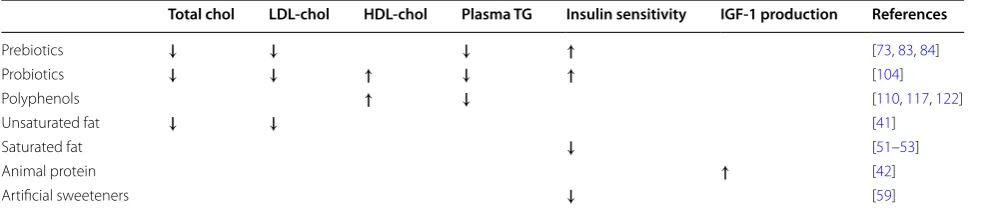
shown to impact host metabolic health. Individuals with
metabolic disorders such as obesity and diabetes have
been shown to have intestinal dysbiosis in relation to
healthy individuals [148,
149]. Further characterization
of the link between the gut microbiome and obesity has
revealed several bacterial groups that may specifically
contribute to the disease. In particular, obese
individu-als have a high baseline
Firmicutes
to
Bacteroidetes
ratio.
In these subjects, reduction of caloric intake was noted
to lower the
Firmicutes
to
Bacteroidetes
ratio [148].
[image:11.595.58.541.445.551.2] [image:11.595.56.550.609.714.2]Intriguingly, hosts with a gut microbiome dominated by
Firmicutes
have altered methylation in the promoters of
genes that are linked to cardiovascular disease and obesity
[150]. Additionally,
Lactobacillus
spp. have been shown
to alleviate obesity-associated metabolic complications
[151, 152]. The beneficial effects of
Lactobacillus
may be
attributed to interactions with obesity-promoting
bac-teria in the gut and direct modulation of host immunity
and gut barrier function [153]. Interestingly, the
mucus-degrading bacteria
A. muciniphila
has also been linked
to a healthy metabolic profile. Obese individuals with
a higher baseline relative abundance of
A. muciniphila
tend to have greater improvements in obesity-associated
metabolic parameters (insulin tolerance, plasma
triglycer-ides and body fat distribution) after dietary intervention
[154]. Interestingly, germ-free mice are more resistant to
diet-induced obesity, possibly due to enhanced fatty acid
metabolism in the absence of certain microflora [155].
Together, these findings demonstrate the important role
of gut microbiota in maintaining host metabolic integrity
(Table 10).
Conclusion and future directions
In conclusion, review of the literature suggests that diet
can modify the intestinal microbiome, which in turn has
a profound impact on overall health. This impact can
Table 9 Effects of dietary components on immune parameters
SCFA short chain fatty acids, TLR toll-like receptor activation, WAT white adipose tissue inflammation, Met Endo metabolic endotoxemia, LPS lipopolysaccharide levels,
CRP C-reactive protein, IL-6 interleukin-6, IL-10 interleukin-10, IgA immunoglobulin A
SCFA TLR WAT Met Endo LPS CRP IL-6 IL-10 IgA References
Prebiotics ↑ ↓ ↓ ↑ [67, 78–81, 120]
Probiotics ↑ ↓ ↑ ↑ [83, 88, 97–99, 103]
Polyphenols ↓ ↑ [115, 117, 122]
Unsaturated fat ↓ ↓ ↓ ↓ [50, 120]
Saturated fat ↑ ↑ ↑ ↑ [37, 52, 53, 58]
Animal protein ↓ [39–41]
Pea protein ↑ [31]
Table 10 Effects of dietary components on metabolic parameters
Chol cholesterol, LDL low-density lipoprotein, HDL high-density lipoprotein, TG triglycerides, IGF-1 insulin-like growth factor-1
Total chol LDL-chol HDL-chol Plasma TG Insulin sensitivity IGF-1 production References
Prebiotics ↓ ↓ ↓ ↑ [73, 83, 84]
Probiotics ↓ ↓ ↑ ↓ ↑ [104]
Polyphenols ↑ ↓ [110, 117, 122]
Unsaturated fat ↓ ↓ [41]
Saturated fat ↓ [51–53]
Animal protein ↑ [42]
be beneficial or detrimental, depending on the relative
identity and abundance of constituent bacterial
popu-lations. For example, it has been shown that a high-fat
diet adversely reduces
A. muciniphila
and
Lactobacil-lus
, which are both associated with healthy metabolic
states [53]. This observation provides a good example of
how dietary intervention might potentially be used to
manage complex diseases, such as obesity and diabetes.
Furthermore, advances in microbiome research have
sug-gested novel therapeutic possibilities for diseases that
have traditionally been difficult to treat. For example, the
fecal microbiota transplant has been used successfully to
manage several different conditions, including ulcerative
colitis,
Clostridium difficile
-associated colitis, irritable
bowel syndrome, and even obesity [156–160]. It is
possi-ble that dermatologic conditions, including psoriasis and
atopic dermatitis, may also be observed to benefit from
re-engineering the gut microbiota. Recent advances in
microbiome research offer exciting new tools to possibly
enhance human health. Most of the studies reviewed in
this manuscript profiled the microbiome using 16S rRNA
amplicon sequencing, which utilizes the hypervariable
regions of the bacterial 16S rRNA gene to identify
bacte-ria present in biological samples. 16S rRNA sequencing
is the most commonly used method by medical
research-ers to study microbial composition, due to its low cost
and relatively easy workflow for sample preparation and
bioinformatic analyses. However, 16S rRNA amplicon
sequencing primarily provides information about
micro-bial identity and not function. In order to investigate the
microbiome’s functions, many researchers have turned
to a shotgun metagenomic approach in which the whole
bacterial genome is sequenced. Despite a higher cost and
more complicated bioinformatics requirement, shotgun
metagenomics provides information about both
micro-bial identity and gene composition. Knowing which genes
are encoded by the bacteria present in a sample allows
researchers to better understand their roles in human
health. With reducing costs of next generation
sequenc-ing, improved sample preparation protocols, and more
bioinformatic tools available for metagenomic analysis,
this technique will be a powerful tool to study
microbi-ome functionality. Performing meta-analyses to correlate
the microbiome with host genomes, transcriptomes, and
immunophenotypes represents another exciting avenue
for investigating human and bacterial interactions.
Precision medicine is another attractive, novel
thera-peutic approach for many diseases with strong genetic
associations. It is important to note that the host
geno-type also plays a role in shaping the microbiome, and that
this host-microbe interaction is crucial for maintaining
human health [161]. Therefore, a better understanding of
the interplay between genes, phenotypes, and the
micro-biome will provide important insights into the utility of
precision medicine.
The observation that diet can modulate host-microbe
interactions heralds a promising future therapeutic
approach. Already, the gut microbiome has been found
to influence the response to cancer immunotherapy [162,
163]. Indeed, personalized nutrition is an emerging
con-cept that utilizes a machine-learning algorithm to
pre-dict metabolic responses to meals [164,
165]. This tool
has broad implications for individualized patient care
through dietary modification. While this and other
tech-nology is in the process of being refined and validated,
further research using large, long-term clinical trials to
evaluate a greater variety of food components would be
helpful in making specific dietary recommendations to
patients.
Abbreviations
AOS: arabinooligosaccharides; FOS: fructooligosaccharides; GALT: gut‑ associated lymphoid tissue; GOS: galactooligosaccharides; HDL: high‑density lipoprotein; hsCRP: high‑sensitivity C‑reactive protein; IBD: inflammatory bowel disease; IBS: irritable bowel syndrome; IGF: insulin‑like growth factor‑1; LDL: low‑density lipoprotein; MAC: microbiota accessible carbohydrate; TLR: toll‑like receptor; TMAO: trimethylamine‑N‑oxide; VLDL: very low‑density lipoprotein; XOS: xylooligosaccharides.
Authors’ contributions
WL and TB conceived and supervised the work. RKS, HC, DY, KL, DU, KW, MA, BF, MN, and TZ performed data acquisition. RKS, HC, and DY performed data analysis and wrote the manuscript. All named authors meet the International Committee of Medical Journal Editors (ICMJE) criteria for authorship for this manuscript, take responsibility for the integrity of the work as a whole, and have given final approval for the version to be published. All authors read and approved the final manuscript.
Author details
1 University of California, Los Angeles, David Geffen School of Medicine at UCLA,
Los Angeles, CA 90095, USA. 2 Department of Dermatology, University of Califor‑
nia, San Francisco, 2340 Sutter St. Room N431, Box 0808, San Francisco, CA 94115, USA. 3 University of California, Irvine, School of Medicine, Irvine, CA 92697, USA. 4 University of Vermont College of Medicine, Burlington, VT 05405, USA. 5 Univer‑
sity of Southern California Keck School of Medicine, Los Angeles, CA 90033, USA.
Acknowledgements
We are grateful to the Dinsmore family for their support of this project.
Competing interests
Dr. Wilson Liao serves as a research investigator for Abbvie, Janssen, Pfizer, and Novartis. Dr. Tina Bhutani is an advisor for Cutanea and conducts research for Abbvie, Janssen, and Merck. Dr. Liao and Dr. Bhutani have no stocks, employ‑ ment or board memberships with any pharmaceutical company. The remain‑ ing authors have nothing to disclose.
Availability of data and materials
The data supporting the conclusions of this article are included within the article.
Consent for publication
This article does not contain any individual person’s data in any form.
Ethics approval and consent to participate
Funding
Dr. Wilson Liao is supported in part by grants from the National Institutes of Health (R01AR065174, U01AI119125).
Publisher’s Note
Springer Nature remains neutral with regard to jurisdictional claims in pub‑ lished maps and institutional affiliations.
Received: 30 September 2016 Accepted: 21 March 2017
References
1. Gill SR, Pop M, DeBoy RT, Eckburg PB, Turnbaugh PJ, Samuel BS, et al. Metagenomic Analysis of the human distal gut microbiome. Science. 2006;312:1355–9. http://www.sciencemag.org/cgi/doi/10.1126/ science.1124234.
2. Flint HJ, Duncan SH, Scott KP, Louis P. Interactions and competition within the microbial community of the human colon: links between diet and health. Environ Microbiol. 2007;9:1101–11.
3. Walker AW, Ince J, Duncan SH, Webster LM, Holtrop G, Ze X, et al. Domi‑ nant and diet‑responsive groups of bacteria within the human colonic microbiota. ISME J. 2011;5:220–30.
4. Arumugam M, Raes J, Pelletier E, Le Paslier D, Yamada T, Mende DR, et al. Enterotypes of the human gut microbiome. Nature. 2011;473:174–80.
http://www.nature.com/doifinder/10.1038/nature09944. 5. Kurokawa K, Itoh T, Kuwahara T, Oshima K, Toh H, Toyoda A, et al.
Comparative metagenomics revealed commonly enriched gene sets in human gut microbiomes. DNA Res. 2007;14:169–81.
6. Walter J, Ley R. The human gut microbiome: ecology and recent evolu‑ tionary changes. Annu Rev Microbiol. 2011;65:411–29.
7. Bäckhed F, Ley RE, Sonnenburg JL, Peterson DA, Gordon JI. Host‑bacte‑ rial mutualism in the human intestine. Science. 2005;307:1915–20. 8. Topping DL, Clifton PM. Short‑chain fatty acids and human colonic
function: roles of resistant starch and nonstarch polysaccharides. Physiol Rev. 2001;81:1031–64.
9. Lundin A, Bok CM, Aronsson L, Björkholm B, Gustafsson JA, Pott S, et al. Gut flora, toll‑like receptors and nuclear receptors: a tripartite commu‑ nication that tunes innate immunity in large intestine. Cell Microbiol. 2008;10:1093–103.
10. Lee YK, Mazmanian SK. Has the microbiota played a critical role in the evolution of the adaptive immune system? Science. 2010;330:1768–73.
http://www.sciencemag.org/cgi/doi/10.1126/science.1195568. 11. Belkaid Y, Hand TW. Role of the microbiota in immunity and inflamma‑
tion. Cell. 2014;157:121–41. http://linkinghub.elsevier.com/retrieve/pii/ S0092867414003456.
12. Noverr MC, Huffnagle GB. Does the microbiota regulate immune responses outside the gut? Trends Microbiol. 2004;12:562–8. 13. David LA, Maurice CF, Carmody RN, Gootenberg DB, Button JE, Wolfe
BE, et al. Diet rapidly and reproducibly alters the human gut microbi‑ ome. Nature. 2014;505:559–63.
14. Voigt RM, Forsyth CB, Green SJ, Mutlu E, Engen P, Vitaterna MH, et al. Circadian disorganization alters intestinal microbiota. PLoS ONE. 2014;9:e97500. 15. Earley ZM, Akhtar S, Green SJ, Naqib A, Khan O, Cannon AR, et al. Burn
Injury alters the intestinal microbiome and increases gut permeability and bacterial translocation. PLoS ONE. 2015;10:e0129996. http://dx.plos. org/10.1371/journal.pone.0129996.
16. Lucas López R, Grande Burgos MJ, Gálvez A, Pérez Pulido R. The human gastrointestinal tract and oral microbiota in inflammatory bowel disease: a state of the science review. APMIS. 2017. http://onlinelibrary. wiley.com/doi/10.1111/apm.12609/abstract.
17. Schäffler H, Herlemann DP, Alberts C, Kaschitzki A, Bodammer P, Ban‑ nert K, et al. Mucosa‑attached bacterial community in Crohn’s Disease coheres with the clinical disease activity index. Environ Microbiol Rep. 2016;8:614–21.
18. Smith PM, Howitt MR, Panikov N, Michaud M, Gallini CA, Bohlooly‑Y M, et al. The microbial metabolites, short‑chain fatty acids, regulate colonic treg cell homeostasis. Science. 2013;341:569–73.
19. Greenblum S, Turnbaugh PJ, Borenstein E. Metagenomic systems biol‑ ogy of the human gut microbiome reveals topological shifts associ‑ ated with obesity and inflammatory bowel disease. Proc Natl Acad Sci. 2012;109:594–9. http://www.pnas.org/cgi/doi/10.1073/pnas.1116053109. 20. Schicho R, Marsche G, Storr M. Cardiovascular complications in inflam‑
matory bowel disease. Curr Drug Targets. 2015;16:181–8.
21. Wu HJ, Ivanov II, Darce J, Hattori K, Shima T, Umesaki Y, et al. Gut‑resid‑ ing segmented filamentous bacteria drive autoimmune arthritis via T helper 17 cells. Immunity. 2010;32:815–27.
22. Qin J, Li Y, Cai Z, Li S, Zhu J, Zhang F, et al. A metagenome‑wide associa‑ tion study of gut microbiota in type 2 diabetes. Nature. 2012;490:55–60. 23. Turnbaugh PJ, Ley RE, Mahowald MA, Magrini V, Mardis ER, Gordon JI.
An obesity‑associated gut microbiome with increased capacity for energy harvest. Nature. 2006;444:1027–31.
24. Koeth RA, Wang Z, Levison BS, Buffa JA, Org E, Sheehy BT, et al. Intestinal microbiota metabolism of L‑carnitine, a nutrient in red meat, promotes atherosclerosis. Nat Med. 2013;19:576–85.
25. Pistollato F, et al. Role of gut microbiota and nutrients in amyloid forma‑ tion and pathogenesis of Alzheimer disease. Nutr Rev. 2016;74:624–34. 26. Wu GD, Chen J, Hoffmann C, Bittinger K, Chen YY, Keilbaugh SA, et al.
Linking long‑term dietary patterns with gut microbial enterotypes. Sci‑ ence. 2011;334:105–8.
27. Hentges DJ, Maier BR, Burton GC, Flynn MA, Tsutakawa RK. Effect of a high‑beef diet on the fecal bacterial flora of humans. Cancer Res. 1977;37:568–71.
28. Clarke SF, Murphy EF, O’Sullivan O, Lucey AJ, Humphreys M, Hogan A, et al. Exercise and associated dietary extremes impact on gut microbial diversity. Gut. 2014;63:1913–20.
29. Reddy BS, Weisburger JH, Wynder EL. Effects of high risk and low risk diets for colon carcinogenesis on fecal microflora and steroids in man. J Nutr. 1975;105:878–84.
30. Cotillard A, Kennedy SP, Kong LC, Prifti E, Pons N, Le Chatelier E, et al. Dietary intervention impact on gut microbial gene richness. Nature. 2013;500:585–8.
31. Świątecka D, Dominika Ś, Narbad A, Arjan N, Ridgway KP, Karyn RP, et al. The study on the impact of glycated pea proteins on human intestinal bacteria. Int J Food Microbiol. 2011;145:267–72.
32. Meddah AT, Yazourh A, Desmet I, Risbourg B, Verstraete W, Romond MB. The regulatory effects of whey retentate from bifidobacteria fermented milk on the microbiota of the simulator of the human intestinal micro‑ bial ecosystem (SHIME). J Appl Microbiol. 2001;91:1110–7.
33. Romond MB, Ais A, Guillemot F, Bounouader R, Cortot A, Romond C. Cell‑free whey from milk fermented with Bifidobacterium breve C50 used to modify the colonic microflora of healthy subjects. J Dairy Sci. 1998;81:1229–35.
34. Kim CH, Park J, Kim M. Gut microbiota‑derived short‑chain fatty acids, T cells, and inflammation. Immune Netw. 2014;14:277. http://synapse. koreamed.org/DOIx.php?id=10.4110/in.2014.14.6.277.
35. De Filippo C, Cavalieri D, Di Paola M, Ramazzotti M, Poullet JB, Massart S, et al. Impact of diet in shaping gut microbiota revealed by a compara‑ tive study in children from Europe and rural Africa. Proc Natl Acad Sci USA. 2010;107:14691–6.
36. Russell WR, Gratz SW, Duncan SH, Holtrop G, Ince J, Scobbie L, et al. High‑protein, reduced‑carbohydrate weight‑loss diets promote metabolite profiles likely to be detrimental to colonic health. Am J Clin Nutr. 2011;93:1062–72.
37. Kang S, Denman SE, Morrison M, Yu Z, Dore J, Leclerc M, et al. Dysbiosis of fecal microbiota in Crohn’s disease patients as revealed by a custom phylogenetic microarray. Inflamm Bowel Dis. 2010;16:2034–42. http:// content.wkhealth.com/linkback/openurl?sid=WKPTLP:landingpage &an=00054725‑201012000‑00009.
38. Eeckhaut V, Machiels K, Perrier C, Romero C, Maes S, Flahou B, et al. Butyricicoccus pullicaecorum in inflammatory bowel dis‑ ease. Gut. 2013;62:1745–52. http://gut.bmj.com/cgi/doi/10.1136/ gutjnl‑2012‑303611.