Twenty-Sixth European Conference on Information Systems (ECIS2018), Portsmouth, UK, 2018
TEMS USE AND AFFECTING EXTERNAL CONSTRAINTS.
Research in Progress
Trieu, Van-Hau, University of Melbourne, Melbourne, Australia,
[email protected]
Cockcroft, Sophie, University of Southern Queensland, Australia,
[email protected]
Perdana, Arif, Singapore institute of technology, Singapore
[email protected]
Abstract
Business Intelligence (BI) has received wide recognition in the business world as a tool to address ‘big’ data-related problems, to help managers understand their businesses and to assist them in making ef-fective decisions. To date, however, there have been few studies which have clearly articulated a theo-retically grounded model that explains how the use of BI systems provides benefits to organisations, or explains what factors influence the actual use of BI systems. To fully achieve greater decision-making performance and effective use of BI, we contend that BI systems integration with a systems user’s work routine (dependence on the systems) is essential. Following this argument, we examine the effects of system dependent use along with effective use (infusion) on individual’s decision-making performance with BI. Additionally, we propose that a fact-based decision-making culture, and data quality of source systems are constraints factors that impact on BI system dependence and infusion. We adopt a quanti-tative method approach. Specifically, we will conduct a two-wave cross-sectional survey targeting 400 North American BI users who describe themselves as both using a BI system and making decision using data from the system. We expect to make an important theoretical contribution to BI literature by provid-ing a model that explains the dimensions of actual BI system use, and makes a practical contribution by providing insights into how organisational external constraints facilitate BI dependence and infusion in the pursuit of BI-enabled performance gain.
2
1 Introduction
In current information-based economies, the concept of Business intelligence (BI) has become increas-ingly important due to the promise of gaining value from ‘big data’’. Further, advances in machine intelligence have made new insights possible. As with many other types of information systems, the driving question for much BI research is how the use of information systems can generate value for organisations. Different researchers tend to examine different aspects of this topic using different theo-ries, lenses, and approaches; however rigorous conclusions cannot be drawn due to the mixed results reported from these studies (Ramakrishnan et al. 2012). These mixed results suggest a need to under-stand better the mechanism through which the use of these tools leads to improved BI-enabled mance. This study explores how the use of BI systems can lead to improved decision-making perfor-mance. The research question is: What is the relationship between actual BI system use (including BI system dependence and BI system infusion) and BI-enabled performance gain? And what factors lead to BI system dependence and BI system infusion? This question has not yet been addressed in the BI literature, despite researchers acknowledging its importance (Clark et al. 2007; Seddon et al. 2012; Trieu 2017). BIsystemdependence and BIsysteminfusion have emerged as important dimensions of actual BI use but have been identified as needing further investigation particularly in how Actual BI use im-pacts performance and specifically in BI decision-making effectiveness. Specifically, BI literature has offered no detailed explanations for the relationship between actual BI usage (BI dependence, BI infu-sion) and BI-enabled performance gain (Decision-making effectiveness) or what drives the actual BI usage.
Motivated by the importance of addressing these issues in the literature, this study makes three important contributions to the literature. First, it builds a theoretical underpinning, using established tenets from the literature on BI and IT use, to investigate the impact of BI dependence and BI infusion on BI user’s decision-making effectiveness. This is critical because the body of literature on BI use tends to lack theoretical depth (Shanks et al. 2011b). Second, most previous research has investigated BI success but paid little attention to factors that influence BI use (Trieu 2017). This research explores the black box of actual BI use by sharpening our understanding of the complexity of BI usage and the factors that drive BI dependence and BI infusion. Third, by exploring actual BI usage and its external constraints, this study develops a platform for research on what factors influence the effectiveness of BI use, and how BI systems need to be used to attain desired outcomes.
In the following section, we expand on the concept of BI and BI actual use. Next, we explain organisa-tion external constraints affecting actual BI usage. After taking stock of the field, we propose our con-ceptual and research model followed by hypotheses. We then explain our research method. Finally, we conclude with a discussion of our thesis and its implications for research and practice.
2 Theoretical Foundation
This section describes BI and how BI can generate value to organisations. We introduce BI actual use consisting of BI system dependence and infusion. Following this discussion, we describe external con-straints impact on actual use. Finally, we explain how external concon-straints and BI actual use relate to BI-enabled performance gain
2.1 BI and BI actual use
3
concept of BI does not have a specific, widely-accepted definition (Francalanci et al. 2008). It is vari-ously described as a process, a product, a set of technologies, or a combination of these (Ranjan 2008; Sabherwal et al. 2011; Shollo et al. 2010) (Shollo et al. 2010). While all of these definitions differ, they also have a common theme, which we also adopt in this paper, namely BI involves the use of systems and tools in organisations to evaluate and to analyse data and information from internal and external sources to provide accurate and meaningful information to decision makers (Watson 2009). Watson (2014)) elaborated on this definition to make the distinction between those tools used for getting data in, and out of, a data warehouse. The latter describing business analytics which is the key analytical component in BI (Davenport 2006). Therefore, in this paper, we use BI as a unified term for Business intelligence and analytics.
Researchers use different theories, lenses, and approaches to examine BI value creation (Trieu 2017) and the literature offers mixed results on the effect of BI on it (Ramakrishnan et al. 2012). One of the reasons for this mixed results is a lack of understanding about BI system actual usage in which BI use can have unexpected consequences (Trkman et al. 2010) because of following reasons: (1) ineffective use of BI likely results in workflow problems that ultimately impact negatively on business task perfor-mance (Deng et al. 2012); (2) the ultimate outcome of BI usage can be affected by external forces (Schryen 2013; Trieu 2017); (3) to achieve BI-based productivity gains and desirable outcomes, BI must be used fully (Venkatesh et al. 2000) and effectively (Burton-Jones et al. 2013; Sundaram et al. 2007).
Actual BI System Use: Business intelligence system dependence and infusion
Following Burton-Jones and Straub (2006), in this study, we define system use in terms of user, system, and task, and define a task as a “goal-directed activity” (Burton-Jones and Straub 2006 p. 231). How-ever, according to Venkatesh and Davis (2000), systems need to be used fully to gain benefits. In the IS/IT literature, a variety of models have been developed to explain IT usage (e.g. Burton-Jones et al. 2007; Goodhue et al. 1995; Sundaram et al. 2007; Venkatesh et al. 2003).
Sundaram et al (2007) identified IT usage which includes frequency (extent or frequency of use), rou-tinization (adapting to IS usage or incorporates IS into routine work pattern), and infusion (effective use or maximizing the potential of the IS use). However, Goodhue and Thompson (1995) noted that fre-quency of use should ideally be measured as the proportion of times users choose to use systems (Goodhue et al. 1995) but this proportion is very difficult to ascertain in a field study. In many situations, use of a system may be mandated as part of a job description because one may have no choice but to use the system provided by his/her organisation (Goodhue et al. 1995).
ThereforeThus, Goodhue and Thompson (1995) conceptualised system use as system dependence which refers to the extent to which the information systems have been integrated into each individual’s work routine, whether by individual choice or by organisational mandate. With this definition, frequency of use and routinization (Sundaram et al. 2007) can be conceptualised as system-specific dependence (Goodhue et al. 1995). Therefore, this study proposes that actual BI system usage includes BI system dependence and BI system infusion.
BI system dependence, adapted from Goodhue and Thompson (1995), is defined as the extent to which a BI user depends on the BI system for his/her decision-making tasks. A BI system creates utility for decision makers as it provides them with data/facts for their decision making. However, in many organ-isations, decision makers have the choice of basing decisions on their gut feeling or on facts provided by a BI system. This Dependence reflects the individual choice to accept the BI systems’ output, or the level of institutionalisation of BI systems.
BI system infusion is defined as the extent to which a BI user fully uses the BI to enhance his or her
4
antecedent to outcomes including improved individual task performance, organisational performance, and net benefits (DeLone et al. 2003). BI infusion impacts many levels including individuals, workgroups (Straub et al. 2012), business units, firms, networks, and industry level (Burton-Jones et al. 2007). This study focuses only on individual level of BI use and adapts Sundaram et al’s. (2007) infu-sion definition in BI context. It refers to the extent that an individual benefits from the systems use beyond merely depending on the system for work routine.
2.2 What organisation external constraints do affect actual BI usage?
The ultimate outcomes of BI system use can be affected by external constraints (Burton-Jones et al. 2013; Schryen 2013; Trieu 2017). From the perspective of an individual user of BI systems, these con-straints are the ones they have little or no control over.
To identify relevant external constraint factors, we first examine the definition of BI. BI is typically defined as a process of leveraging systems and tools to turn both internal and external data into mean-ingful information throughout the organisation (Ranjan 2008; Sabherwal et al. 2011). BI definitions also frequently stress how BI encompasses the people, processes and technologies involved in the gathering, analysis and transformation of data used to support managerial decision-making (Cosic et al. 2012). In this context, when individuals use BI (technology), they are likely performing well when their use of specific knowledge is supported (people) and they have more general support from their organisation it its use (process). Our second investigation concerns system theory. In system theory, organisation ex-ternal constraints (or exex-ternal disturbances) reflect the effects of uncontrollable or unpredictable factors in the environment on the decision criterion (Burton-Jones et al. 2013). Organisational constraints re-quire collective behaviour and actions (Leidner et al. 2006; Shanks et al. 2012). Following this argument, organisational related factors can therefore be considered as external constraints to the individuals. Yeoh and Koronios (2010), for example, note that management related factors contribute to BI success. Be-low, we propose two relevant external constraints that could potentially affect BI actual use.
Fact-based decision-making culture
Organisational culture is comprised of the collective behaviour of the people working in the organisation in terms of their values, vision, belief and routines (Leidner et al. 2006; Shanks et al. 2012). In a BI system context, a particularly relevant aspect of organisational culture is the routine of data use and analysis in decision making, or fact-based management (Pfeffer et al. 2006; Shanks et al. 2012). Fact-based decision-making culture (FBDM) culture requires decision-makers to be predisposed to accepting the data-driven insights of their subordinates (Davenport et al. 2007). It also requires them to encourage subordinates to actively participate in the development of a data-driven environment to support their own decision-making and problem-solving endeavours (Carte et al. 2005; Cosic et al. 2012; Watson 2014; Watson 2017). In the organisation, the acceptance of FBDM depends on gaining confidence in the quality of the shared data (Shanks et al. 2012). In an FBDM culture, people learn to rely on high-quality information and analytics as the foundation for their decision making (Reynolds et al. 2012). Pfeffer and Sutton (2006) found that adopting systems (such as BI systems) will potentially enable managers at all levels to understand how well they are performing and to ensure that the organisation has sufficient information for managers to assess its operations.
5
Data Quality of Source SystemsEmbracing the bBig data era is an unavoidable challenge for many organisations. By harnessing big data via BI, organisations gain opportunities to outperform the competition, decreasing costs, streamlining business processes and complying with regulations. To fully realize the value of BI for decision making, the most important aspect to consider is ensuring the data quality. Issues of data quality have become an increasingly critical concern of modern organisations (Nord et al. 2005), poor data quality derived source systems is the most common challenge that many organisations and BI users are now facing (Işık et al. 2013; Yeoh et al. 2008) because it inhibits organisations in realising the full potential of BI (Vis-inescu, et al., 2017; Janssen et al., 2017).
2.3 BI-Enabled Performance Gain: Decision-making effectiveness
Decision making is a core managerial task, decision makers often face information overload and redun-dancy, or they are forced to make decisions based on incomplete information (Baba et al. 2012; Pfeffer et al. 2006). As a result, the decisions made might not be relevant to the organisational context, and individuals’ decision-making practices can be difficult to evaluate (Baba and HakemZadeh, 2012, Pfef-fer and Sutton, 2006). BI has been put forward as a set of tools to enhance decision making effectiveness and by extension business value (Gibson et al., 2004). This study will measure decision-making perfor-mance as an assessment of individual decision-making task perforperfor-mance in terms of its effectiveness. Decision-making effectiveness will be assessed via the extent to which a user has attained the goals of the decision-making task for which the BI system was used (Burton-Jones et al. 2013).
Business intelligence is intended to provide significant organisational benefit by enhancing the effec-tiveness of managerial decision making (Gibson et al. 2004). For example, a decision maker may use a BI system to generate a dashboard, and if the information represented on the dashboard is accurate, complete, clear and easy to understand, she/he can make appropriate decision (+effectiveness). If the information represented on the dashboard is based on inaccurate or inconsistent data, and the visual presentation of the dashboard is confusing or difficult to interpret, she/he will make suboptimal decisions (- effectiveness). In addition, if the decision is based on accurate information then implementing it will likely be beneficial (+ effectiveness). But if it is a suboptimal decision as a result of incorrect, inaccurate, or inconsistent information, it might create issues for the organisation (- effectiveness). A number of organisations have derived, and continue to obtain significant benefits through BI infusion (Sabherwal et al. 2011). BI plays a very important role in decision-making performance because it enables the ef-fective deployment of intellectual capital that is widely recognised as a potential source of sustainable competitive advantage for organisations (Sabherwal et al. 2011).
3 Conceptual Model, Research Model, and Hypotheses
6
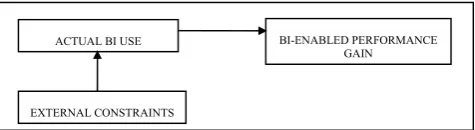
Figure 1. Conceptual model of BI enhances decision-making effectiveness
[image:6.595.70.313.333.520.2]In the conceptual model (Figure 1), we propose that BI external constraints have the potential to influ-ence actual BI use. Additionally, actual BI use will result in BI-enabled performance gain which reflects the extent to which BI value is fully realised and optimised by users to support their decision making. Figure 2 shows our research model reflecting the relevant constructs within the three concepts in the conceptual model.
Figure 2 Research model
Business intelligence system dependence (H1)
In an FBDM culture, people learn to rely on high-quality data and analytics as the foundation for their decision making (Reynolds et al. 2012). FBDM culture requires decision-makers to be predisposed to accepting the data-driven insights of their subordinates (Davenport et al. 2007), and requires them to encourage subordinates to actively participate in the development of a data-driven environment to sup-port decision-making and problem-solving (Carte et al. 2005; Cosic et al. 2012). To gain competitive advantages, organisations need to treat FBDM as a best practice and as a part of the organisation’s culture (Davenport 2006).
Thus, this study argues that the presence of an FBDM culture in an organisation will influence the dependence on BI system in an individual’s work routine, a dimension of BI actual use. If individuals are urged to base decisions on hard facts, they will depend more on BI system for their decision-making
ACTUAL BI USE BI-ENABLED PERFORMANCE GAIN
EXTERNAL CONSTRAINTS
7
as they know that their performance is gauged the same way (Davenport 2006) and they need to have data to support their assertions and decisions (Watson 2017) This argument gives rise to Hypothesis H1.
Hypothesis H1: There is a positive relationship between the fact-based decision-making culture of an
organisation and business intelligence system dependence.
Business Intelligence system infusion (H2, H3, H4)
In line with the argument for H1, if individuals are urged to base decisions on hard facts, they will need to depend on BI system to their work routine. Dependency on BI systems compels individuals to better understand BI systems to be able to attain their performance goals. Individuals will likely feel motivated to gain more knowledge about their task and the system. The knowledge of task and system gained from system dependence use will facilitate their system infusion for their decision-making (Klein et al. 1997). These arguments give rise to Hypothesis H2, and H4.
Hypothesis H2: There is a positive relationship between the fact-based decision-making culture of an
organisation and business intelligence system infusion
Hypothesis H4: There is a positive relationship between the business intelligence system dependence
and business intelligence system infusion
Data quality issues, arising from the integration of multiple data sources, critically affect BI system effective use. If data quality is not well managed the actual use of BI systems may lead to unexpectedly poor results. Janssen et al. (2017) note that data quality of source systems is among the important factors contributing to higher decision quality with BI. Fisher (2009) highlighted the importance of data gov-ernance in maintaining source system data quality. While research has confirmed the relationship be-tween data quality of source systems with perceived quality (Visinescu, et al., 2017), the relationship between data quality of source systems and actual use of BI remain unaddressed. Accordingly, we pro-pose the following hypothesis.
Hypothesis H3: There is a positive relationship between the data quality of source systems in
organi-sation and business intelligence system infusion
Decision-making effectiveness (H5, H6)
Business intelligence is intended to provide significant organisational benefit by enhancing the effec-tiveness of managerial decision making (Gibson et al., 2004). A number of organisations have derived, and continue to obtain significant benefits through BI infusion (Sabherwal and Becerra-Fernandez, 2011). The BI system plays a very important role in decision-making performance because it enables the effective deployment of intellectual capital that is widely recognised as a potential source of sustain-able competitive advantage for organisations (Sabherwal and Becerra-Fernandez, 2011). This argument leads to the following hypothesis.
Hypothesis H5: There is a positive relationship between business intelligence system dependence and
decision-making effectiveness
Sundaram et al. (2007) posit that an individual’s task performance improves with greater infusion. More-over, if the BI system is fully used, it enables decision-makers to achieve BI-based productivity gains and desirable outcomes (Venkatesh and Davis, 2000, Trieu, 2017). When individuals use a BI system relevant to their tasks, they will use it repetitively and it will become bound to their work routine, further the system helps in individual attain their goals (Burton-Jones and Grange, 2013). We posit that BI system infusion will enhance individual decision-making effectiveness (Burton-Jones and Grange, 2013). The more engaged individuals are with BI to solve their tasks, the more likely they will achieve decision-making effectiveness. Accordingly, we propose the following hypothesis.
Hypothesis H6: There is a positive relationship between the business intelligence system infusion and
8
4 Methodology
To answer the research questions and to test the validity of the research model proposed in the previous section, this study will adopt a quantitative approach. Specifically, we will conduct a two-wave cross-sectional survey to test the proposed model and hypotheses that are derived from the literature. The survey aims to further validate the model and instrument derived from literature as well as to reconfirm the model and measures using quantitative data. The survey will involve undertaking a cross-sectional, self-administered, and non-experimental field survey. The aim of the survey is to collect data on inform-ant’s perceptions related to the research model variables i.e. Fact-based decision-making culture, Data quality of source systems, BI system dependence, BI system infusion, and Decision-making effectiveness. The use of perceptual data from management members has been widely used in previous IS research and found to be reliable even when asking about performance-related topics (see Tallon et al. 2000). The use of a two-wave survey alleviates (at least somewhat) the risk of common method bias in cross-sectional surveys. The survey will target 400 North American BI users via a panel provider. The partic-ipants selected will be those who describe themselves as both using a BI system and making decisions using data from the system. The time gap between the two waves will be from 7 to 10 days. Items for exogenous variables will be tested in wave 1; and the items for endogenous variable in wave 2. Specif-ically, specifSpecif-ically, four constructs will be tested in wave 1 (BI system dependence, BI system infusion, Fact-based decision making culture, Data quality of source systems) and one construct ( Decision-mak-ing effectiveness) will be tested in wave 2. We will adopt existing measurement items from prior studies. Structural Equation Modelling (SEM) will be used to assess the measurement model, and test the struc-tural model. SEM will also allow us to take into account random measurement errors that are inherent in behavioural studies (Blanthorne et al. 2006).
5 Conclusion
Our paper is motivated by gaps identified in prior work (Clark et al. 2007; Shanks et al. 2011a; Trieu 2017) and the opportunity to make meaningful practical and theoretical contribution. We expect our findings will contribute to IS research in general and to BI communities in academia and practice. The paper offers several potential theoretical contributions. First, by providing a model that explains dimensions of actual BI use (i.e. BI dependence, and BI infusion) and external constraints affecting these dimensions (i.e. Fact-based decision-making culture, and data quality of source systems), Second, the research offers insights from quantitative data about the impacts of external constraints on actual BI use and on individual decision-making effectiveness. Finally, the results will enrich research on what influence BI use and how BI systems are and need to be used to attain desired outcomes.
9
References
Agarwal, R., and Dhar, V. 2014. "Editorial—big data, data science, and analytics: The opportunity and challenge for IS research," Information Systems Research (25:3), pp 443-448.
Ayres, I. 2008. Super crunchers : How anything can be predicted, (London: John Murray.
Baba, V. V., and HakemZadeh, F. 2012. "Toward a theory of evidence based decision making," Management decision (50:5), pp 832-867.
Blanthorne, C., Jones-Farmer, L. A., and Almer, E. D. 2006. "Why you should consider SEM: a guide to getting started," Advances in Accounting Behavioral Research (9), pp 179-207.
Burton-Jones, A., and Gallivan, M. J. 2007. "Toward a deeper understanding of system usage in organizations: a multilevel perspective," MIS Quarterly (31:4), pp 657-679.
Burton-Jones, A., and Grange, C. 2013. "From Use to Effective Use: A Representation Theory Perspective," Information Systems Research (24:3), pp 632-658.
Carte, T. A., Schwarzkopf, A. B., Shaft, T. M., and Zmud, R. W. 2005. "Advanced business intelligence at Cardinal Health," MIS Quarterly Executive (4:4), pp 413-424.
Chen, H., Chiang, R., and Storey, V. 2010. "Call for papers for MISQ Special Issue on Business Intelligence Research," MIS Quarterly, available online at
http://www.misq.org/skin/.../misq/pdf/CurrentCalls/SI_BusinessIntelligence.pdf).
Clark, T. D., Jones, M. C., and Armstrong, C. P. 2007. "The dynamic structure of management support systems: theory development, research focus, and direction," MIS Quarterly (31:3), pp 579-615. Cosic, R., Shanks, G., and Maynard, S. 2012. "Towards a Business Analytics Capability marturity
Model," in Proceedings of the 23rd Australian Conference on Information Systems: Geeloong, Melbourne, Australia.
Davenport, T. H. 2006. "Competing on analytics," Harvard Business Review (84:1), pp 98-107. Davenport, T. H., and Harris, J. G. 2007. Competing on analytics: the new science of winning, (Harvard
Business Press.
DeLone, W. H., and McLean, E. R. 2003. "The DeLone and McLean Model of Information Systems Success: A ten-Year Update," Journal of Management Information Systems (19:4), pp 9-30. Deng, X., and Chi, L. 2012. "Understanding Postadoptive Behaviors in Information Systems Use: A
Longitudinal Analysis of System Use Problems in the Business Intelligence Context," Journal of Management Information Systems (29:3) Winter2012, pp 291-326.
Francalanci, C., and Morabito, V. 2008. "IS integration and business performance: The mediation effect of organizational absorptive capacity in SMEs," Journal of Information Technology (23:4) Dec 2008, pp 297-312.
Gibson, M., Arnott, D., and Jagielska, I. Year. "Evaluating the intangible benefits of business intelligence: Review & research agenda," Proceedings of the 2004 IFIP International Conference on Decision Support Systems (DSS2004): Decision Support in an Uncertain and Complex World2004, pp. 295-305.
Goodhue, D. L., and Thompson, R. L. 1995. "Task-technology fit and individual performance," MIS quarterly (19:2), pp 213-236.
Işık, Ö., Jones, M. C., and Sidorova, A. 2013. "Business intelligence success: The roles of BI capabilities and decision environments," Information & Management (50:1), pp 13-23.
10
Leidner, D. E., and Kayworth, T. 2006. "Review: A review of culture in information systems research: Toward a theory of information technology culture conflict," MIS quarterly (30:2), pp 357-399. Nord, G. D., Nord, J. H., and Xu, H. 2005. "An investigation of the impact of organization size on data
quality issues," Journal of Database Management (JDM) (16:3), pp 58-71.
Pfeffer, J., and Sutton, R. I. 2006. "Evidence-based management," Harvard Business Review (84:1), pp 1-13.
Ramakrishnan, T., Jones, M. C., and Sidorova, A. 2012. "Factors influencing business intelligence (BI) data collection strategies: An empirical investigation," Decision Support Systems (52:2), pp 486-496.
Ranjan, J. 2008. "Business justification with business intelligence," VINE: The Journal of Information & Knowledge Management Systems (38:4), pp 461-475.
Reynolds, P., Jeanne, W. R., and Cynthia, M. b. 2012. "Building a culture of evidence-based management at Foxtel," in Center for Information System Research, p. 4.
Sabherwal, R., and Becerra-Fernandez, I. 2011. Business intelligence: Practices, Technologies, and Management, (John Wiley & Sons: NJ.
Schryen, G. 2013. "Revisiting IS business value research: what we already know, what we still need to know, and how we can get there," European Journal of Information Systems (22:2), pp 139-169.
Seddon, P. B. 1997. "A respecification and extension of the DeLone and McLean model of IS success," Information Systems Research (8:3), pp 240-253.
Seddon, P. B., Constantinidis, D., and Dod, H. 2012. "How Does Business Analytics Contribute to Business Value?," in Proceedings of the International Conference on Information Systems Orlando, USA.
Shanks, G., Bekmamedov, N., and Sharma, R. 2011a. "Creating value from business analytics systems: a process-oriented theoretical framework and case study," in in Proceedings of the 22nd Australian Conference in Information Systems (ACIS): Sydney, Australia.
Shanks, G., and Bekmamedova, N. Year. "The impact of strategy on business analytics success," ACIS 2012: Location, location, location: Proceedings of the 23rd Australasian Conference on Information Systems 2012, ACIS2012, pp. 1-11.
Shanks, G., Bekmamedova, N., and Sharma, R. Year. "Creating Value from Business Analytics Systems: A Process-oriented Theoretical Framework and Case study," in Proceedings of the 22nd Australian Conference in Information Systems (ACIS), Sydney, Australia, 2011b. Shollo, A., and Kautz, K. Year. "Towards an understanding of business intelligence," In the Proceedings
of the 21st Australian Conference in Information Systems (ACIS), Brisbane, 2010. Straub, D., and Giudice, M. d. 2012. "Use," MIS Quarterly (36:4), pp iii-vii.
Sundaram, S., Schwarz, A., Jones, E., and Chin, W. W. 2007. "Technology use on the front line: how information technology enhances individual performance," Journal of the Academy of Marketing Science (35:1), pp 101-112.
Tallon, P. P., Kraemer, K. L., and Gurbaxani, V. 2000. "Executives' perceptions of the business value of information technology: a process-oriented approach," Journal of Management Information Systems (16:4), pp 145-173.
11
Trkman, P., McCormack, K., de Oliveira, M. P. V., and Ladeira, M. B. 2010. "The impact of business analytics on supply chain performance," Decision Support Systems (49:3), pp 318-327. Venkatesh, V., and Davis, F. D. 2000. "A theoretical extension of the technology acceptance model:
Four longitudinal field studies," Management science (46:2), pp 186-204.
Venkatesh, V., Morris, M. G., Davis, G. B., and Davis, F. D. 2003. "User acceptance of information technology: Toward a unified view," MIS Quarterly (27:3), pp 425-478.
Watson, H. J. 2009. "Tutorial: Business intelligence-Past, present, and future," Communications of the Association for Information Systems (25:1), p 39.
Watson, H. J. 2014. "Tutorial: Big data analytics: Concepts, technologies, and applications," Communications of the Association for Information Systems (34:1), pp 1247-1268.
Watson, H. J. 2017. "Preparing for the Cognitive Generation of Decision Support," MIS Quarterly Executive).