EFFECTIVENESS OF STRUCTURED TEACHING PROGRAMME ON KNOWLEDGE REGARDING RISK FACTORS AND PREVENTION OF
PEPTIC ULCER AMONG MIDDLE AGE POPULATION IN
CO-OPERATIVE SUGAR MILL AT CHEYYAR TALUK
.
BY
MS.SIVAGAMI .T
A Dissertation submitted to
THE TAMIL NADU DR. M.G.R. MEDICAL UNIVERSITY, CHENNAI
IN PARTIAL FULFILMENT OF THE REQUIREMENT FOR THE DEGREE OF MASTER OF SCIENCE IN NURSING.
CERTIFIED THAT THIS IS A BONAFIDE WORK OF
MS.SIVAGAMI.T
ADHIPARASAKTHI COLLEGE OF NURSING,
MELMARUVATHUR-603 319.
SUBMITTED IN PARTIAL FULFILMENT OF THE REQIREMENT FOR
THE DEGREE OF MASTER OF SCIENCE IN NURSING FOR THE
TAMILNADU DR.M.G.R.MEDICAL UNVERSITY, CHENNAI-600 032
COLLEGE SEAL:
SIGNATURE: _________________
Dr.N.KOKILAVANI, M.Sc.(N), M.A (Pub.Adm).,M.Phil., Ph.D.,
Principal,
Adhiparasakthi College Of Nursing, Melmaruvathur- 603 319,
A STUDY TO ASSESS THE EFFECTIVESS OF STRUCTURED
TEACHING PROGRAMME ON KNOWLEDGE REGARDING
RISK FACTORS AND PREVENTION OF PEPTIC ULCER
AMONG MIDDLE AGE POPULATION IN CO
SUGAR MILL AT CHEYYAR TALUK
M.Sc. (Nursing) Degree Examination,
Branch I
Adhiparasakthi College of Nursing,
Melmaruvathur
Dissertation submitted to
THE TAMIL NADU DR. M.G.R. MEDICAL UNIVERSITY,
IN PARTIAL FULFI
FOR THE DEGREE OF MASTER OF SCIENCE IN
A STUDY TO ASSESS THE EFFECTIVESS OF STRUCTURED
TEACHING PROGRAMME ON KNOWLEDGE REGARDING
RISK FACTORS AND PREVENTION OF PEPTIC ULCER
MIDDLE AGE POPULATION IN CO-OPERATIVE
SUGAR MILL AT CHEYYAR TALUK
By
Ms.SIVAGAMI. T,
M.Sc. (Nursing) Degree Examination,
Branch I- Medical Surgical Nursing,
Adhiparasakthi College of Nursing,
Melmaruvathur- 603 319.
Dissertation submitted to
THE TAMIL NADU DR. M.G.R. MEDICAL UNIVERSITY,
CHENNAI
IN PARTIAL FULFILMENT OF THE REQUIREMENT
FOR THE DEGREE OF MASTER OF SCIENCE IN NURSING
APRIL - 2012.
A STUDY TO ASSESS THE EFFECTIVESS OF STRUCTURED
TEACHING PROGRAMME ON KNOWLEDGE REGARDING
OPERATIVE
SUGAR MILL AT CHEYYAR TALUK
A STUDY TO ASSESS THE EFFECTIVENESS OF STRUCTURED TEACHING PROGRAMME ON KNOWLEDGE REGARDING RISK FACTORS AND PREVENTION OF PEPTIC ULCER AMONG MIDDLE
AGE POPULATION IN CO-OPERATIVE SUGAR MILL AT CHEYYAR TALUK,
Approved by Dissertation Committee, April - 2012.
Signature
Dr.N.KOKILAVANI, M.Sc.(N), Ph.D.,
HOD- Medical Surgical Nursing, Adhiparasakthi College Of Nursing, Melmaruvathur- 603 319.
Signature
Dr. S.SRINIVASAN, M.D.
ASSISTANT PROFESSOR, MAPIMS,
MELMARUVATHUR - 603 319.
A Dissertation submitted to
THE TAMIL NADU DR. M.G.R. MEDICAL UNIVERSITY, CHENNAI
IN PARTIAL FULFILMENT OF THE REQUIREMENT FOR THE DEGREE OF MASTER OF SCIENCE IN NURSING.
A STUDY TO ASSESS EFFECTIVENESS
OF STRUCTURED TEACHING PROGRAMME ON KNOWLEDGE REGARDING RISKFACTORS AND PREVENTION OF PEPTIC ULCER AMONG MIDDLE AGE POPULATION IN CO-OPERATIVE SUGAR MILL
AT CHEYYAR TALUK
By
Ms. SIVAGAMI. T,
M.Sc. (Nursing) Degree Examination, Branch I- Medical Surgical Nursing,
Adhiparasakthi College of Nursing, Melmaruvathur- 603 319.
A Dissertation submitted to THE TAMIL NADU DR. M.G.R. MEDICAL UNIVERSITY, CHENNAI in partial fulfilment of the requirement for the Degree of MASTER OF SCIENCE IN NURSING,
APRIL - 2012.
ACKNOWLEDGEMENT
First and foremost I express my gratitude is articulated to HIS
HOLINESS ARUL THIRU AMMA, FOUNDER, Adhiparasakthi
Charitable Medical, Educational and Cultural Trust, Melmaruvathur, for
his graceful blessings, love and unseen guidance and force behind all
the efforts.
I wish to express my thanks to THIRUMATHI LAKSHMI
BANGARU ADIGALAR, CHIEF EXECUTIVE OFFICER, Adhiparasakthi
Educational Institutions, Melmaruvathur for given me the opportunity to
pursue my study in this prestigious institution.
With great respect and honor, I extend my thanks to our beloved
SAKTHI THIRUMATHI B.UMADEVI.,M.pharm., Ph.d., Correspondent,
Adhiparasakthi college of Nursing for her excellence in providing skillful
and compassionate spirit of unstinted support throughout the study.
I wish to express my heartfelt gratitude and sincere thanks to
opulent Respected Madam, Dr.N.KOKILAVANI, M.Sc.(N)., M.Phil.,
Ph.D., Principal, Adhiparasakthi College of Nursing, Melmaruvathur.
motivation, valuable suggestions and excellent guidance, without whom
this study would not have been moulded in the shape. I profusely thank
her for suggestions and guidance from the beginning to throughout the
study.
I wish to express my sincere thanks to Dr.S.SRINIVASAN
M.B.B.S., M.D., Assistant Professor, Department of Accident and
Emergency, MAPIMS, Melmaruvathur for his valuable and timely
guidance and advice to complete the study.
I wish to extend my heartfelt thanks to DR.PRASANNA BABY,
M.sc (N).,Ph.D.,Principal, Savitha College of Nursing, Chennai, for the
content validity and valuable suggestions.
I wish to extend my immense thanks to our
Prof. B. VARALAKSHMI, M.Sc.(N)., M.Phil., Vice Principal,
Adhiparasakthi College of Nursing, Melmaruvathur, for her valuable
guidance, suggestion and support which enlightened my way to
complete the work systematically.
My grateful thanks to Mrs. M.GIRIJA, M.Sc.(N)., M.Phil., Ph.d
Reader, Department of Medical Surgical Nursing, Adhiparasakthi
College of Nursing, Melmaruvathur who supported and guided me
I wish to express my sincere thanks to Mr. M.ANAND, M.Sc.(N).,
Reader, Department of Medical Surgical Nursing, Adhiparasakthi
College of Nursing, Melmaruvathur for his valuable timely guidance and
advice from the beginning of my study.
I extend my gratitude and sincere thanks to Mrs. P.TAMILSELVI,
M.Sc.(N)., Lecturer, Department of Medical Surgical Nursing,
Adhiparasakthi College of Nursing, Melmaruvathur for her valuable
guidance and suggestions throughout the study.
I extend my sincere thanks to Mrs. J.BHARATHI, M.Sc.(N).,
Lecturer, Department of Medical Surgical Nursing, Adhiparasakthi
College of Nursing, Melmaruvathur for her valuable guidance and
suggestions throughout the study.
I wish to extend my thanks to Mr. B.ASHOK, M.Sc., M.Phil.,
Assistant Professor in Bio-statistics, Adhiparasakthi College of Nursing,
Melmaruvathur for his assistance in statistical analysis of data.
My sincere thanks to Mr. A.SURIYA NARAYNAN, M.A., M.Phil.,
Lecturer in English, Adhiparasakthi College of Nursing, Melmaruvathur
for his valuable guidance and suggestions.
I wish to express my thanks to all the teaching faculty members
of Adhiparasakthi College of Nursing, Melmaruvathur for their
I would like to thank all the non-teaching members of
Adhiparasakthi College of Nursing, Melmaruvathur for their co-operation
throughout the study.
Especially I thank my Clients for their sincere co- operation and interest which showed upon the successful completion of the study, without which my venture would not be a fruitful one.
CHAPTER
CONTENT
PAGE
NUMBER
NUMBER
I.
INTRODUCTION 1Need for the study 6
Statement of the problem 13
Objectives 14
Assumption 15
Operational definition 15
Deimitation 16
Conceptual frame work 17
II. REVIEW OF LITERATURE 20
III. METHODOLOGY
Research design 37
Setting 37
Population 37
Sample Size 38
Sampling Technique 38
Criteria for Sample selection 38
Instruments for Data Collection 39
IV. DATA ANALYSIS AND INTERPRETATION 40
V. RESULTS AND DISCUSSION 64
VI. SUMMARY AND CONCLUSION 66
BIBLIOGRAPHY 73
LIST OF TABLES
TABLE
PAGE
NUMBER
TITLE
NUMBER
4.1 Frequency and percentage distribution of
Demographic variables of industrial workers
About peptic ulcer. 42
4.2 Level of knowledge regarding risk factors and
Prevention of peptic ulcer among middle age
Population in industrial workers 46
4.3 Comparison between pretest and post test
on knowledge regarding risk factors and
Prevention of peptic ulcer among middle age
Population in industrial workers 47
4.4 Improvements of Mean and standard deviation
Of pretest and post test scores forknowledge
Regarding risk factors and prevention of peptic
ulcer 48
4.5 Associations between demographic variables
And knowledge regarding risk factors and
LIST OF FIGURES
TABLE TITLE PAGE NUMBER NUMBER
1.2 Conceptual frame work. 16
4.1a Percentage distribution of industrial workers 50
Based on age (in years)
4.1b Percentage distribution of industrial workers
51
Based on Gender.
4.1c Percentage distribution of industrial workers
Based on religion 52
4.1d Percentage distribution of industrial workers
Based on education 53
4.1e Percentage distribution of industrial workers
based on marital status 54
4.2a Percentage distribution of level of knowledge
Regarding Risk factors and Prevention of
LIST OF APPENDICES
SL. APPENDICES Page
No. Number
I Demographic data. i-iii
II Questionnaire -English iv
III Health education of peptic ulcer-English v-xi
IV Questionnaire -Tamil xii-xix
V Health education of peptic ulcer-Tamil xx-xxxvi
CHAPTER – I
CHAPTER- I
INTRODUCTION
“Everything in excess is opposed to nature”
The stomach is an enlarged segment of the digestive
tract in the left superior part of the abdomen. Its shape and
size vary from person to person even with in the same
individual its size and shape will change from time to time
depending on its food content and the posture of the body.
Disease of the stomach is common and cause significant
morbidity, economic hardships and health consequences. Acid
peptic ulcer diseases alone has accounted for an estimated
$12.4 billion in direct costs in 2009.
The term peptic ulcer disease generally refers to
spectrum of disorders that includes gastric ulcers, pyloric
ulcer, duodenal ulcer and post operative ulcers at or near the
Pathologically the definition of a peptic ulcer is straight
forward it is a defect in the gastric or duodenal wall that
extends through the muscular is mucosa (the lower most limit
of the mucosa into the deeper layers of the wall sub-mucosa
or the mascularis propria). It is with in these layers, in that the
ulcer may erode a major blood vessel to produce the
complication of potentially life- threatening hemorrhage.
Peptic ulcer disease is a condition characterized by
erosion of the Gastro Intestinal mucosa resulting from the
digestive action of hydrochloric acid and pepsin. Any portion
of the gastro intestinal tract that comes into contact with
gastric secretions is susceptible to ulcer development
including the lower esophagus, stomach duodenum, and
margin of gastrojejunal anastomosis after surgical procedures.
There are approximately 500,000 new cases of ulcers
diagnosed and over 4 million recurrences of peptic ulcer each
year.
Perforation of peptic ulcer usually presented as an
acute-abdomen. Initial symptoms of perforated duodenal or gastric
is worse in right upper quadrant and epigastria and usually
accompanied by vomiting and nausea. There is rapid
generalization of pain and examination shows peritonitis with
lack of bowel sounds. In one lack population 10% of cases has
got an associated episode of melena. Perforated peptic ulcer
is more common in elderly patients prone for higher use of
non-steroidal anti-inflammatory drugs also dies to ambiguous
signs of the disease and there would be a delay in diagnosis.
Elderly patients are likely to have other medical problems
which increase the rate of morbidity and mortality in this
group.
There are some measures to decrease the risk of peptic
ulcer disease and perforation since about 30% of patients with
perforated peptic ulcer are taking non-steroidal
anti-inflammatory drugs. Use of these drugs should be lessened or
at least use concomitant anti-ulcer medications smoking
cessation and abstinence from alcohol should also increase
the risk of complicated peptic ulcer. Early diagnosis and
treatment of peptic ulcer have important role in prevention of
In June 2010, Omnicare an independent long term case
pharmacy and consulting, released the first edition of the
Geriatric pharmaceutical care guidelines, geriatric, specific,
clinically driven formulator evaluating medications by disease
indication. Clinical evaluation of each drug category was
performed by an independent, The Philadelphia college of
pharmacy and Sciences, in evaluating, equally effective for the
treatment of peptic ulcer disease.
Diseases of the stomach are common and cause
significant morbidity, mortality. A study conducted on
Factors affecting mortality and morbidity in patients with peptic
ulcer perforation was done by Ankara Numune Training and
Research Hospital, Turkey in the year of 2010 April. The
records of 269 patients who had been operated for perforated
Peptic Ulcer had been reviewed retrospectively. The following
factors had been analyzed in terms of morbidity and mortality:
age > 65 years; gender associated medical illness; chronic
ingestion of non-steroidal anti-inflammatory drugs, aspirin,
corticosteroids or immune-suppressants; alcohol ingestion and
season; delayed operation; site of ulcer perforation; and shock
on admission and type of operation.
There were 30 female (11.16%) and 239 male (8.84%)
patients. Seventy-one (26.4%) patients had associated
diseases. Simple closure was performed in 257 (95.5%)
patients; 12 patients (4.5%) underwent definitive operations. A
total of 108 postoperative complications were present in 65
(24.2%) patients. Twenty-three patients died (8.55%).
Multivariate analysis showed that only age, treatment delay,
presence of shock and definitive operation were independent
predictors of mortality.
Significant risk factors that led to morbidity were time of
surgery, season, presence of shocks and type of surgery.
There was a significant difference concerning morbidity and
mortality between simple closure of the perforation and
definitive surgery. Age, delayed surgery, presence of shock
and definitive surgery are the factors significantly associated
with fatal outcomes in patients undergoing emergency surgery
from shock, decreasing delay and reserving definitive surgery
for selected patients is needed to improve overall results.
Our understanding of the etiology and pathogenesis and
our approach to treatment have undergone remarkable
changes in the last 30 years. Up to the early 2005, peptic
ulcer was seen as a disease of excessive gastric acid
production and its treatment primarily surgical.
NEED FOR THE STUDY
Peptic ulcer is the primarily reported cause of death in
approximately 6500 persons in the United States each year.
The estimated direct costs of patient care and indirect costs
caused by work and productivity loss for peptic ulcer are $6
billion annually. Before 2000 the major causes of peptic ulcer
had been considered to be excess acid, diet, smoking and
stress.
Peptic ulcer, 60% of respondents believed that ulcers had
caused by too much stress 17% believed that eating spicy
infection caused ulcers. The belief that stress was the highest
among cause persons aged 18-24 years and among persons
with annual household incomes of less than $15,000.
According to World Health Organization (WHO), peptic ulcer is fifth
only to cardiovascular disease as a global healthcare problem and
medical studies show a 50-year-old woman has a similar lifetime risk of
dying from Peptic ulcer as from breast cancer. Since peptic ulcer affects
the elderly population which is growing, it will put a bigger burden to the
healthcare system as treatment is expensive. Unless swift action is
taken, it can escalate into an economic threat.
In the United States there are approximately 100,000 new
cases and 4 million recurrences of peptic ulcer disease yearly.
The one-year point prevalence of peptic ulcer in the United
States is about 1.8% of a life time prevalence of 8-14%.
Estimated annual direct costs for peptic ulcer disease are $3.3
billion with additional costs of 6.2 billion.
Peptic ulcer disease due to H. pylori is unlikely to have
and 50% of persons above the age of 60 years. The incidence
of H. pylori infection in developing countries is much higher.
A study on Canonical correlation analysis of factors
involved in the occurrence of Peptic Ulcers has been
conducted by Faith University, Faculty of Science and
Literature, Department of Mathematics, Istanbul, Turkey in the
year of 2007 January. The impact of risk factors on the
development of peptic ulcers has been shown vary among
different populations. We sought to establish a correlation
between these factors and their involvement in the occurrence
of peptic ulcers for which a canonical correlation analysis was
applied. It included 7,014 patient records (48.6% women,
18.4% duodenal ulcer, 4.6% gastric ulcer) of those underwent
upper gastro-endoscopy for the last 5 years. The variables
measured are endoscopic findings (duodenal ulcer, gastric
ulcer, antral gastritis, erosive gastritis, pangastritis, pyloric
deformity, bulbar deformity, bleeding, atrophy, Barrette
esophagus and gastric polyp) and risk factors (age, gender,
Helicobacter pylori infection, smoking, alcohol, and
found that duodenal ulcer had significant positive correlation
with bulbar deformity, pyloric deformity, gender, H. pylori,
bleeding, smoking, aspirin use, alcohol intake, and
non-steroidal anti-inflammatory drugs. Gastric ulcer had a
significantly positive correlation with pyloric deformity, age,
bleeding, gender aspirin use, bulbar deformity, alcohol intake,
smoking, and Barrette esophagus. The level of significance
was much higher in some variables with duodenal ulcer than
with gastric ulcer and the correlations with gastric ulcer in
spite of being highly significant the majority, were small in
magnitude. In conclusion, Turkish patients with the following
endoscopic findings bulbar deformity and pyloric deformity are
high-risk patients for peptic ulcers with the risk of the
occurrence of duodenal ulcer being higher than that of gastric
ulcer. Factors such as H.pylori, smoking, alcohol use, and
non-steroidal anti-inflammatory drugs use are risk factors that
have significant impact on the occurrence of duodenal ulcer;
aspirin has a significant impact on both duodenal ulcer and
The last 20 years of study have uncovered the
complicated relationship between humans and this organism in
terms of transmission physiologic consequences of infection
and subsequent disease states. A particularly thorough review
of the patho-physiology of H. pylori infection has recently been
published while the majority of infected persons remain
asymptomatic 10-15% will develop peptic ulcer disease.
In the developing world 80% of the population shows
evidence of infection compared to only 35-40% in the
industrialized world. The prevalence of infection is even
smaller in younger cohorts in the developed world.
In India, Helicobacter Pylori infection is common.
Exposure occurs in childhood and approximately 80% of adults
have been infected at same time.
The environment in India is contaminated and gastro
intestinal infections, symptomatic and asymptomatic are very
Second rates of recurrence of H. pylori infection may be
expected to be high in India H. pylori – re infection rates are
very low in Western populations. Being less than 0.5 per
patient year, in one Indian study of 45 patients following
eradication of H. pylori, recurrence of infection was detected
in only one patient (24%) after one year. However a rigorous
search was not performed to detect recurrent infection. The
only other full publication on re-infection in the Indian
literature suggests that recurrence of infections occurs in
around 60% of patient infection with the organism is most
common in population with poor sanitary and hygiene
condition.
Both the incidence of and mortality from bleeding and
perforated peptic ulcers are growing. It is assessed the
association between smoking, ingestion of alcohol (including
the type of alcoholic beverage), and risk of a complicated
peptic ulcer in a population-based study of 26,518 Danish
subjects followed up for an average of 13.4 years. There were
214 cases of incident bleeding and 107 cases with perforated
and perforated peptic ulcer with the Poisson regression
analysis. Smoking more than 15 cigarettes a day compared
with never smoking increased the risk of a perforated ulcer
more than threefold 95% confidence interval. Ingestion of
more than 42 drinks a week increased the risk of a bleeding
ulcer fourfold compared with ingestion of less than one drink a
week. Comparison of the same group, showed that subjects
who ingested more than 21 drinks a week, but no wine, were
at a higher risk of a bleeding ulcer 95% than drinkers of the
same amount of alcohol, but with more than 25% of their
intake as wine.
In Tamil nadu, one in ever ten an ulcer at some point in
life peptic ulcer disease affects all age groups including
children. Men are affected twice as often as women.
Acid peptic disorders, particularly gastric and duodenal
ulcer are common in elderly long-term care residents. They
are associated with substantial, negative outcomes, including
increased morbidity, hospitalization and even death. As a
subgroup of acid peptic disorders peptic ulcer disease is
patients may exhibit difference in the clinical presentation of
the disease as well as increased bleeding and mortality rates,
compared with young individuals.
Those practicing in the long term care setting are finding
that the incidence of peptic ulcer disease has increased in
elderly women. In this study 77% of participant nursing home
data showing that 67% of residents are women.
Peptic ulcer disease was once thought to be caused by
stress, spicy food and alcohol & the treatment was bed rest
and a bland diet. The role of stomach acid was then
discovered and antacids were introduced into the therapeutic
regimen.
STATEMENT OF THE PROBLEM
A STUDY TO ASSESS THE EFFECTIVENESS OF
STRUCTURED TEACHING PROGRAMME (STP) ON KNOWLEDGE
REGARDING RISK FACTORS AND PREVENTION OF PEPTIC
ULCER AMONG MIDDLE AGE POPULATION IN CO-OPERATIVE
OBJECTIVES OF THE STUDY
1) to assess the existing knowledge on risk factors and
prevention of peptic ulcer among middle age
population in co operative sugar factory at Cheyyar
taluk.
2) to determine the effectiveness of structured teaching
program on risk factors and prevention of peptic ulcer
among middle age population in co operative sugar
factory at Cheyyar taluk.
3)
to find out the association between post testknowledge level with their selected demographic
variables.
HYPOTHESIS
H1: There is a significant difference between pre-test and
post test knowledge of Risk factors and prevention of peptic ulcer.
H2: There is a significant association between knowledge of
Risk factors and Prevention of peptic ulcer with selected
ASSUMPTION
· Clients have inadequate knowledge on risk factors and prevention
of peptic ulcer.
· Structured teaching programme will enhance the knowledge of risk
factors and prevention of peptic ulcer.
· This will help them to apply the knowledge in life.
OPERATIONAL DEFINITIONS
ASSESS
It refers to the evaluation of the level of knowledge
regarding risk factors and prevention of peptic ulcer.
EFFECTIVENESS
It refers to a significant increased level of knowledge of the
patients after teaching programme.
STRUCTURED TEACHING PROGRAMME
It refers to a system of planned instructional design
to impart information in order to bring a change in knowledge
RISK FACTORS
It refers to predisposing factors like H. Pylori infection,
Use non-steroidal anti inflammatory drugs, Smoke cigarettes,
Drink alcohol, and stress and Spicy foods leading to peptic
ulcer.
PREVENTION
It refers to measures adopted by the subjects to prevent
peptic ulcer.
MIDDLE AGE
Those who are between the age group 30 and 45 years.
LIMITATIONS
1. The study was limited period of 6 weeks only.
2. The study was not generalized.
3. The study was conducted in selected industry.
DELIMITATIONS
1. The study was only for the middle age clients between 30 and 45
years
2. Samples has been selected by simple random sampling method
CONCEPTUAL FRAME WORK
Conceptual models are made up of concepts, which are words
describing mental images of phenomena and prepositions. General
systems theory developed by ALBWIGN VON BETTANLAFFY offers a
prospective looking at man and nature as interacting wholes with
integrated sets of properties relationships
All living systems which are open to the systems are open to the
exchange of matter and to the information. The investigator used the
model based on these theories
INPUT
A system imparts products known as input in this study after
assessing the existing knowledge; the investigator has given structured
teaching programme regarding risk factors and prevention of peptic ulcer
in the input process.
THROUGHPUT
A system transforms, creates and organizes the process known as
throughput which results in a reorganization of the input that is after a
structured teaching programme there is a change taking place in the
OUTPUT
A system expert views in a process known as output. Is a product
given of outside the system which can be detected and related to the
system. This output is mentioned as post teaching stage in this study.
This stage encompasses the improved adequate knowledge related to
risk factors and prevention of peptic ulcer.
FEEDBACK
The feedback is the environmental response of the system.
Feedback may be positive or negative or neutral. Feedback
encompasses to strengthen the input and throughput. It is necessary if
ASSESS THE DEMOGRAPHIC VARIABLES, KNOWLEDGE ABOUT THE RISK FACTORS AND PREVENTION OF PEPTIC ULCER AS MEASURRED BY QUESTIONAIRE
STRUCTURED TEACHING PROGRAMME RISK FACTORS:
H.pylori, stress, smoking, alcohol, non-steroidal anti inflammatory drugs and blood group ’O ’.
SIGNS AND SYMPTOMS: Stomach pain, stress,
nausea vomiting, restlessness etc. LIFE STYLE
MODIFICATION AND HOW TO PREVENT THE COMPLICATIONS TRANSFORMATION OF KNOWLEDGE REGARDING RISK FACTORS AND PREVENTION OF PEPTIC ULCER EVALUATE KNOWLEDGE REGARDING RISK FACTORS AND PREVENTION OF PEPTIC ULCER ACQUIRED ADEQUATE KNOWLEDGE ACQUIRED MODERATELY ADEQUATE KNOWLEDGE ACQUIRED INADEQUATE KNOWLEDGE PRE TEST INPUT THROUGHPUT POST TEST OUT PUT
CHAPTER – II
CHAPTER- II
LITERATURE REVIEW
The review of literature is an extensive, systematic selection of
potential sources of previous work, facts and findings of the chosen
problem. It is a body of text that aims to review the critical points of
current knowledge including substantive findings as well as theoretical
and methodological contributions to a particular topic.
This chapter deals with review of literature which helps in
integrating diverse opinion on the study and is an essential component
of research problem. The investigator carried out extensive review of
literature relevant to the research topic to gain insight and to collect
information for this study.
The review of literature related to this study has been discussed
under following headings
PART: I Studies related to the knowledge regarding
peptic ulcer.
PART: II Studies related to causes / risk factors of
peptic ulcer.
PART:I STUDIES RELATED TO THE KNOWLEDGE REGARDING
PEPTIC ULCER
Riccio.et.al., (2011),suggest that a very early upper
endoscopy was performed to find the source of upper gastrointestinal
bleeding and to take biopsy specimens for analysis of H. pylori
infection by the rapid urease test.
Milosavljevic.et.al., (2011), concluded that there is
important time trends embedded within this stable overall rate of
complications the dramatic decline in the prevalence of Helicobacter
pylori an increased use of nonsteroidal anti-inflammatory drugs and an
increased rate of ulcer complications related to such drug use, especially
in the elderly.
Tytgat.et.,al., (2011), suggests that Ulcers never develop
spontaneously in a healthy gastro duodenal mucosa. The dominant
aggressors are strong acid and high proteolytic (pepsin) activity in
gastric secretions. The longer the intragastric pH was >3, the quicker
ulcer healing was seen.
Banic.et.al., (2011), concluded that Antacids, Protective
agents, anticholinergics, and later gastric antagonists and
ZebrowskaMet., al., (2011), concluded that Polymorphism
may also be associated with an increased likelihood of H. pylori infection
development, especially in women.
Critchleyet., et., al., (2011), suggests that Laparoscopic
surgery has become increasingly popular for elective surgery.But it has
gained slow transference to emergency surgery. Laparoscopic and open
repair are equally safe in the management of Perforated Peptic Ulcer
(PPU).
Ermiset., et., al., (2010), suggests that Second-line
levofloxacin-based triple therapy's efficiency for Helicobacter pylori
eradication in patients with peptic ulcer.
Milosavljevic T.,et., al., (2010), suggests that there are four
major complications of peptic ulcer disease (PUD)bleeding,perforation,
penetration, and obstruction.
Hunt RH,et., al., (2010), states that the presence of gastric
acid plays a critical role in the mechanisms of NSAIDs/aspirin-associated
gastric and duodenal mucosal injury and ulceration. The role of gastric
acid and its relationship to aspirin in mucosal damage, ulcer and ulcer
increasing worldwide use of Non steroidal anti inflammatory drugs and
aspirin.
Malfertheiner P. et., al., (2010), state that gastritis and
corpus atrophy are accompanied by hypochlorhydria and carry the
highest risk for gastric cancer, whereas antrum-predominant gastritis
with little involvement of the corpus-fundic mucosa is associated with
hyperchlorhydria and predisposes to duodenal ulcer disease.
Vale FF. et., al., (2010), suggests that Helicobacter pylori is
a common human pathogen infecting about 30% of children and 60% of
adults worldwide and is responsible for diseases such as gastritis, peptic
ulcer and gastric cancer.
AhmetKaraman., et., al., (2010), states that argon plasma
coagulation an effective hemostatic method in bleeding peptic ulcers.
Larger multicenter trials are necessary to confirm these results.
Ding J, et., al., (2010), Laparoscopic repair of perforated
peptic ulcer is associated with improved outcomes in terms of less blood
loss, quicker recovery, and lower rates of wound infection and mortality.
Laparoscopic repair of perforated peptic ulcer is safe and feasible.
Roberto Manfredini., (2010), states that a seasonal variation
in autumn, winter, and spring is observed and confirmed as higher risk
periods.
Goldie L et., al., (2010), concluded that Millions of Americans
suffers from peptic ulcer disease. With approximately 10% of the U.S.
population experiencing this condition, it has significantly impacted our
health care system. The prevalence within the United States has
become equal for both men and women. Death rates over the last 50
years have declined for Peptic ulcer diseases, primarily due to
decreases in men.
Reimar W. Thomsenet., al., (2010), concluded that Diabetes may influence the outcome of complicated peptic ulcer disease, due to
angiopathy, blurring of symptoms, and increased risk of sepsis.
Colin W. Howden, et., al., (2010), suggests that The familial accumulation of peptic ulcer disease observed in several studies may be
attributable to genetic effects, aggregation of environmental exposure
(shared environment), or both. The intrafamilial spread of Helicobacter
pylori infection has raised the question whether shared environment
could explain the familial aggregation of peptic ulcer disease rather than
genetic similarity of family members.
surgery and repeated endoscopic treatment and improve mortality among
patients at highest risk.
ZhurnalNevropatologii et., al., (2010), concluded that the use
of laser puncture in multimodality therapy of peptic ulcer patients favors
correction of vegetative disorders and normalization of regenerative
processes occurring in the gastro duodenal system.
Mitsuru et., al., (2010), suggest that not only physical but also
psychological stress is still an important pathogenic factor for peptic
ulceration and accordingly that physicians should pay attention to the
possible presence of psychological stress in the management of patients
with peptic ulcers.
Ching-Liang et., al., (2010), suggests that silent peptic ulcer
disease is common in Taiwan. Dyspeptic symptoms because of peptic
ulcer disease may be influenced by intrinsic (body mass index and ulcer
characters) and extrinsic (habitual tea drinking) factors. Non-steroidal
anti-inflammatory drug use and Helicobacter pylori status had no
significant effect on the symptomatology of peptic ulcer disease.
Takahisa Suzuki et., al., (2010),,states that Cerebral air
embolism is a rare complication of penetrating gastric ulcer, but should
be considered in patients with a history of esophagectomy with gastric
Dzhitava IG, et., al., (2010), states that Algorithm diagnosis
and treatment of acute ulcers by different groups of patients.Treatment
depends on the nature of secretoryactivity stomach bleeding risk of
relapse and localization ulcers.
Sarkeshikian SS et., al., (2010), Concluded that gastrinoma as
the etiology of peptic ulcer disease, accumulation of peptic ulcer disease
complications is highly suggestive of Zollinger-Ellisone syndrome (ZES).
Uruha A et., al., (2010), states that Wernicke's encephalopathy
(WE) whose only prior illness was peptic ulcer disease. Wernicke's
encephalopathy (WE) there is the possibility that peptic ulcer disease
itself provoked thiamine deficiency due to malabsorption.
Chun–Peng Liu et., al., (2010), states that patients with
atherosclerosis and a history of peptic ulcers, the combination of
esomeprazole and clopidogrel reduced recurrence of peptic ulcers,
compared with clopidogrel alone. Esomeprazole does not influence the
action of clopidogrel on platelet aggregation.
PART:II STUDIES RELATED TO RISK FACTORS/CAUSES OF
PEPTIC ULCER
Chiu et. al., (2011), suggests that nonsteroidal
entire gastrointestinal tract, including bleeding, perforation
and occlusion.
Chan, et., al., (2011), suggests that high-dose
intravenous omeprazoleafter endoscopic therapy in high-risk
patients with acute peptic ulcer bleeding.
Ozdil et. al., (2011), concluded that Atherosclerosis
and acetylsalicylic acid are independent risk factors for
hemorrhage in patients with gastric or duodenal ulcer.
Gorgieva et., al., (2011),concluded that Infection with
Helicobacter pylori increases the risk for peptic ulcer disease
and its complications.
Chen et., al., (2010), concluded that the general
population, patients with end-stage renal disease (ESRD) have
increased peptic ulcer and upper GI bleeding complication
rates.
Kang JM et., al., (2010),states that Helicobacter pylori,
nonsteroidal anti-inflammatory drugs (NSAIDs), and antiplatelet agents
in the risk of peptic ulcer bleeding has not yet been established. This
study was performed to identify the risk factors for peptic ulcer bleeding
Sostres C,et., al., (2010),suggest that Aspirin is being
used as an effective analgesic and anti-inflammatory agent at doses
>325 mg daily. At low doses (75-325 mg daily), aspirin is the key
antiplatelet drug in the pharmacological prevention of cardiovascular
diseases. Topical and systemic effects of aspirin in the gastrointestinal
mucosa are associated with mucosal damage in the upper and lower
gastrointestinal tract.
Bode G, et., al., (2010),suggest that assess the relation of
smoking and alcohol and coffee consumption to active Helicobacter
pylori infection. These results suggest a protective effect of alcohol
consumption against active infection with H pylori and an opposite effect
of coffee consumption
D H Hull et., al., (2010), concluded that continued cigarette
smoking does not prevent the powerful duodenal ulcer healing effect of
cimetidine but does predispose to an increased expectation of duodenal
ulceration soon after cimetidine has been stopped.
ying bio et., al., (2010), concluded that Gastric ulcer
increases the risk of pancreatic cancer, whereas there does not appear
Shiotani et., al., (2010), states that association between peptic
ulcer and angiotensin type 1 receptor blockers reductive inhibitors.
Significantly associated with peptic ulcer haplotype may identify patients
at increased risk for aspirin-induced peptic ulcer
Ikuko Kato et., al., (2010), suggests that the risk of both gastric and duodenal ulcers progressively increased with increasing
pack-years of cigarette smoking. In contrast, alcohol intake was not
associated with either type of ulcer. The risk of gastric ulcer was
positively associated with the use of table salt/soy sauce, but there was
no association with the consumption of other oriental foods.
Patricia Chou et., al., (2010), suggests that Excessive
alcohol consumption causes damages to the stomach or duodenum by
impairing the integrity of the mucosal barrier. indicated that alcohol
consumption only minimally increased the ethanol intake odds of peptic
ulcer.
Talley, et., al., (2010), concluded that Mood or anxiety
disorders are associated with increased rates of peptic ulcer disease;
nicotine and alcohol dependence seems to play a substantial role in
explaining the link with peptic ulcer disease.
hydrochloric acid than other blood group those in whom no increase of
acid occurred.
Akira Uehara et., al., (2010),. Concluded that our case
reports suggest that psychological stress is still an important clinical
factor for peptic ulceration. In the management of patients with peptic
ulcer, physicians should pay attention to the possible presence of
psychological stress as well as physical causes.
Denis McCarthyet., al., (2010),.States that which involves the impairment of mucosal resistance to injury in an acid-peptic
environment, is multi-actorial and controversial. Ulcers caused by
NSAIDs can occur either in mucosa inflamed because of infection with
Helicobacter pylori or in histological normal mucosa. The use of these
drugs has been linked to an unexpectedly high incidence of ulcer
complications, and a history of peptic ulcer disease is common in such
cases. Nonsteroidal anti-inflammatory drugs thus appear both to
exacerbate an underlying peptic diathesis and to cause de novo ulcers.
Loes E Visser,et., al., (2010),. Concluded that NSAIDs
were prescribed to elderly patients after admission to hospital for serious
gastrointestinal complications and to study which factors are
Pedersen NL et., al., (2010),.States that Bisphosphonate
increases risk of gastroduodenal ulcer in rheumatoid arthritis patients on
long-term nonsteroidalanti inflammatory drug therapy.
Malaty HM et., al., (2010),. concluded that Genetic
influences are of moderate importance for liability to peptic ulcer
disease. Genetic influences for peptic ulcer are independent of genetic
influences important for acquiring H. pylori infection.
PART:III STUDIES RELATED TO PREVENTION OF PEPTIC ULCER
Caroline McCloskey et., al., (2011), concluded that Famotidine is effective in the prevention of gastric and duodenal ulcers,
and erosive oesophagitis in patients taking low-dose aspirin. These
findings widen the therapeutic options for the prevention of
gastrointestinal damage in patients needing vascular protection.
James M et., al., (2011), concluded that Scheiman
Acid-suppressive treatment with once-daily esomeprazole 40 mg or 20 mg
reduces the occurrence of peptic ulcers in patients at risk for ulcer
development who are taking low-dose acetylsalicylic acid(ASA).
patients with high-risk peptic ulcer bleeding reduced recurrent bleeding
at 72 hours and had sustained clinical benefits for up to 30 days. Walid H. Aldoori et., al., (2011), suggest that vitamin A from all sources, as well as diets high in fruits and vegetables, may
reduce the development of duodenal ulcer, possibly due to their fiber
content.
R.C. Elliott et., al., (2010), concluded that Gastric ulcers
were produced in mice by intra peritoneal injections of histamine. The
mice were protected from the lethal effects of the histamine by previous
administration of mepyramine. When the normal diet of the mice was
supplemented with sliced banana for one week prior to the histamine
injections there was a significant reduction in the incidence of gastric
ulcers
Milly Ryan-Harshman et., al., (2010), suggest that the role
of diet in reducing or aggravating risk of duodenal ulcer. A high-fibre diet,
particularly if the fibre comes from fruit and vegetables, could reduce
risk of DU; vitamin A might also be beneficial.
repeated endoscopic treatment. They improve mortality among patients
at highest risk.
GhulamNabiYattoo et., al., (2010), concluded that In
patients with bleeding peptic ulcers and signs of recent bleeding,
treatment with omeprazole decreases the rate of further bleeding and
the need for surgery.
Sugano et. al., (2010) concluded that Lansoprazole
was superior to gefarnate in reducing the risk of gastric or
duodenal ulcer recurrence in patients with a definite history of
gastric or duodenal ulcers who required long-term therapy.
RostomA et. al., (2010), demonstrate that misoprostol,
proton pump inhibitors, and double doses of H2-receptor antagonists are
effective at reducing the risk of both gastric and duodenal non steroidal
anti-inflammatory medications induced ulcers. The most effective
strategy in high risk GI patients appears to be the combination of a
COX-2 inhibitor.
R Jorde et. al., (2010) concluded that ranitidine 150 mg at night
significantly reduces the gastric ulcer recurrence rate, and that relapsing
Rees et. al., (2010) concluded that Sucralfate has a complex effect on the luminal and mucosal environment of the stomach
and duodenum. Some of the actions are important in ulcer healing whilst
others are important in preventing subsequent ulcer relapse. Although
sucralfate has little direct effect on acid secretion, there is evidence that
after ulcer healing with this drug, parietal cell responsiveness is reduced.
KiyonoriKuriki et. al., (2010) concluded that the erythrocyte composition of DHA was found to be negatively linked to risk
of gastric cancer, especially of well-differentiated adenocarcinoma.
Amartya Mishra et. al., (2009), concluded that dual
action of doxycycline, that is, regulation of MMP matrix
metalloproteinase’s activity and reduction of oxidative stress in arresting
gastric injury
Ogawa Nobuya et. al., (2009), states that cimetidine alone group through 12 weeks observation period. As for the safety, only
one patient who received cimetidine alone showed the elevation of
.GAMMA.-GTP and LDH which were not serious. Results indicated that
combination therapy with egualen sodium and cimetidine would be
CHAPTER – III
CHAPTER-III
METHODOLOGY
Research Methodology is a way to systematically solve the
research problems. According to Sharma, the research methodology
involves the systematic Procedure by which the Researcher starts from
initial identification of the problem to its final conclusion.
The study was aimed at evaluating the knowledge of risk factors
and prevention of peptic ulcer.
RESEARCH DESIGN
Quasi experimental in one group pretest and post test design was adopted to evaluate the effectiveness of risk factors and prevention of peptic ulcer.
SETTING OF THE STUDY
The study conducted in co operative sugar mill at Cheyyar taluk.
POPULATION
SAMPLE SIZE
Total number of sample was 100 who fulfilled the inclusion criteria.
SAMPLE TECHINIQUE
Sampling technique used by the investigator was probability,
simple random sampling method. The simple random sampling
technique was used to select the samples who were working in
co-operative sugar mill at Cheyyar taluk.
SAMPLING CRITERIA
INCLUSION CRITERIA
· Clients who are willing to participate in the study.
· Those who can communicate in English or Tamil.
· The study included both Men and Women.
EXCLUSION CRITERIA
· Clients who are unable to co-operate and respond.
· The clients below 30 years and above 45 years are not
INSTRUMENTS FOR DATA COLLECTION
Instrument for data collection is derived under the following
headings like
SECTION – A
This section consists of information about demographic
Variables such as age, gender, religion, educational status, occupation,
marital status, monthly income, type of family habits, contributory
objectives.
SECTION – B
This section consists of 15 questionnaire related to peptic ulcer
and 15 questionnaire related to risk factors and prevention of peptic
CHAPTER – IV
CHAPTER-IV
DATA ANALYSIS AND INTERPRETATION
This chapter deals with analysis and interpretation of data
collected from 100 samples, who were attending co-
operative sugar mill workers, effectiveness of structured
teaching programme on knowledge regarding risk factors and
prevention of peptic ulcer at co-operative sugar factory in
Cheyyar taluk.
Data analysis includes both descriptive and inferential
statistics. The items had been scored after the pretest and
post test and the results had been tabulated. The statistical
methods used for analysis were mean, standard deviation,
paired‘t’ test and “chi”- square test.
DESCRIPTION OF THE TOOLS
The instrument used for data collection was questionnaire. This was
developed based on the objectives of the study and through review of
literature.
SECTION – A
This section consists of information about demographic Variables
such as age, gender, religion, educational status, occupation, marital
status, monthly income, type of family habits, contributory objectives.
SECTION – B
This section consists of 15 questionnaire related to peptic ulcer
and 15 questionnaire related to risk factors and prevention of peptic
ulcer.
REPORT OF THE PILOT STUDY
The pilot study was conducted to test the reliability, content validity
and practicability of the tool. Pilot study was conducted for 10 days.The
study was conducted in co-operative sugar mill at cheyyar taluk. Ten
workers who met the inclusion criteria had been selected by using
simple random sampling technique. Assess the knowledge regarding
risk factors and prevention of peptic ulcer among middle age population
had been assessed with the questionnaire. The structured teaching
programme was given to enhance the knowledge of the clients with the
VALIDITY
The tool was utilized by the investigator under the guidance of
experts and on the basis of objective. The tools had been assessed and
evaluated by the experts of research committee and content validity of
this instrument was obtained.
RELIABILITY
The reliability was checked by an interater method. The reliability
was (0.72) 72% reliability and practicability of tool was tested through the
pilot study.
INFORMED CONSENT
The dissertation committee prior to the pilot study approved the
research proposal. Permission was obtained from the administrator of
co-operative sugar mill in Cheyyar taluk.
DATA COLLECTION PROCEDURE
The data collection procedure was done for six weeks by using
questionnaire and observation method. The investigator introduced her
to the study participants and developed a good rapport with them.
The investigator explained the purpose of the study and gains the
All workers participated in the teaching programme with great
interest that the same procedure was adopted for six weeks. They were
co-operative and attentive. Each week nearly 17 clients had been
selected. After seven days, post test with the same questionnaire for the
same group of clients was conducted.
SCORE INTERPRETATION
The instrument of part II Consists of 30 multiple choice question
regarding peptic ulcer. In each question the maximum score was “1” for
correct answer and “0” for wrong answer based on the scoring the
percentage of knowledge was calculated using following formula.
Obtained score x 100
Total score
The score were
LEVEL OF KNOWLEDGE SCORE
Inadequate
Moderately adequate
Adequate
≤ 50
51-75
SCORE DESCRIPTION
DESCRIPTION PERCENTAGE
Mild
Moderate
severe
1-50%
51-75%
METHOD OF DATA ANALYSIS PLAN
S.NO DATA
ANALYSIS
METHOD REMARKS
1.
2.
Descriptive
statistics
Inferential
statistics
Number percentage,
mean and standard
deviation.
Paired “t” test
Chi-square
Describes demographic
variables and assess the
knowledge of pre test and
post test.
Analyzing the effectiveness
between pre test and post
test.
To know the association
between post test and
demographic characteristics
of knowledge regarding risk
factors and prevention of
peptic ulcer among middle
age population in industrial
Data analysis was done by using descriptive and inferential
according to the need. The items were scored after assessment and
evaluation and the results were tabulated. The statistical method used
for analysis were mean, standard deviation, paired “t” test and
chi-square
STATISTICAL METHOD
TABLE: 4.1 Data analysis and interpretation were done under following
headings.
SECTION- A
Distribution of selected demographic variables of co-operative
sugar mill workers.
SECTION – B
Percentage of different aspect of knowledge regarding risk factors
and prevention of peptic ulcer among middle age population
SECTION- C
Comparison between pre and post test score on knowledge
regarding risk factors and prevention of peptic ulcer.
SECTION- D
Association between demographic variables and knowledge
SECTION- A
DISTRIBUTION OF SELECTED DEMOGRAPHIC
VARIABLES OF CO-OPERATIVE SUGAR MILL WORKERS.
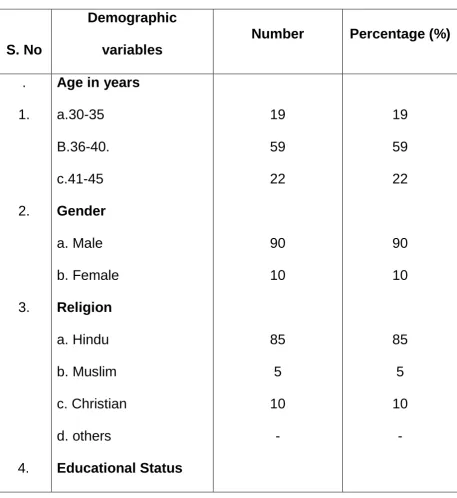
Table: 4.1 Frequency and percentage distribution of demographic
variables of industrial workers about peptic ulcer n= 100
S. No
Demographic
variables
Number Percentage (%)
.
1.
2.
3.
4.
Age in years
[image:68.595.70.528.276.775.2]5.
6.
7.
a. Illiterate
b. Primary school
c. High school
d. Graduate e.others Marital Status a. Married b. Unmarried c. widow d. others Monthly Income
a. UptoRs. 3000/-
b. Rs.3001/- to
Rs.5000/-
c. Rs.5001/- to Rs.8000
d. Above
Type of family
a. Nuclear family
b. Joint family
8.
9.
10.
occupation
a. Permanent
b. Temporary
Habit
a. Tobacco
b.smoking
c.alcohol
d. all above
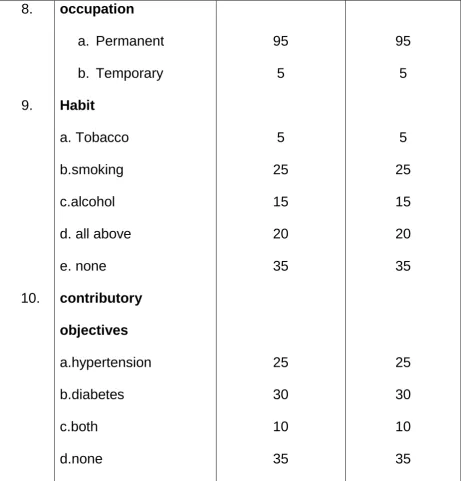
e. none contributory objectives a.hypertension b.diabetes c.both d.none 95 5 5 25 15 20 35 25 30 10 35 95 5 5 25 15 20 35 25 30 10 35
Table (4.2) shows the distribution of demographic variables of
The workers age of 19% belongs to the age group of 30-35 years. 59%
belong to the age group of 36-40 years. 22% belong to the age group of
[image:70.595.67.529.90.572.2]With regard to gender 90% male and only 10% female.
In relation to the education status, 5% had high school education.
50% graduates, 45% others.
With regard to occupation, 95 (95%) permanent, five (5%) were
temporary.
Regarding marital status, 93% married and 7% unmarried.
In religion, 85% Hindu, 5% Muslim, and 10% Christian.
In relation to the type of family, 90% belong to the Nuclear family
and 5% belong to joint family.
Regarding family’s monthly income, 5% had income up to
Rs.5000-8000. 95% had income above Rs.8000.
In the habits of 5% had tobacco chewing, 25% had the habits of
smoking,15% alcohol,20% all the habits,33% clients did not have any
FIG 4.1a percentage distribution of industrial workers based on age (In years)
010 20 30 40 50 60
30-35 19%
PER
C
EN
T
A
GE
FIG 4.1a percentage distribution of industrial workers based on age (In years)
36-40 41-45
59%
22%
age
FIG 4.1a percentage distribution of industrial workers based on age (In years)
30-35 36-40 41-45
FIG 4.1b PERCENTAGE DISTRIBUTION OF INDUSTRIAL WOR
FIG 4.1b PERCENTAGE DISTRIBUTION OF INDUSTRIAL WORKERS BASED ON GENDER
Male 90% Female
10%
KERS BASED ON GENDER
Male Female
FIG 4.1 C: PERCENTAGE DISTRIBUTION OF INDUSTRIAL WORKERS BASED ON
RELIGION
0 10 20 30 40 50 60 70 80 90
Hindu
Muslim
85%
p
er
cen
tag
e
FIG 4.1 C: PERCENTAGE DISTRIBUTION OF INDUSTRIAL WORKERS BASED ON
Muslim
Christian
Others
5%
10%
0%
RELIGION
FIG 4.1 C: PERCENTAGE DISTRIBUTION OF INDUSTRIAL WORKERS BASED ON
FIG 4.1d: percentage distribution of industrial workers based on education
0 5 10 15 20 25 30 35 40 45 50Illiterate Primary school
0% 0% PER C EN T A GE
FIG 4.1d: percentage distribution of industrial workers based on education
Primary school High school Graduate Others
0%
5%
50%
45%
EDUCATION
Fig 4.1 d percentage distribution of industrial workers based on marital status
010 20 30 40 50 60 70 80 90 100
Married Un married 93%
PERCENT
A
GE
Fig 4.1 d percentage distribution of industrial workers based on marital status
Un married Widow Others
7%
0% 0%
MARITAL STATUS
Fig 4.1 d percentage distribution of industrial workers based on marital status
SECTION- B
PERCENTAGE OF DIFFERENT ASPECTS OF KNOWLEDGE REGARDING RISK FACTORS AND PREVENTION OF PEPTIC
ULCER AMONG MIDDLE AGE POPULATION.
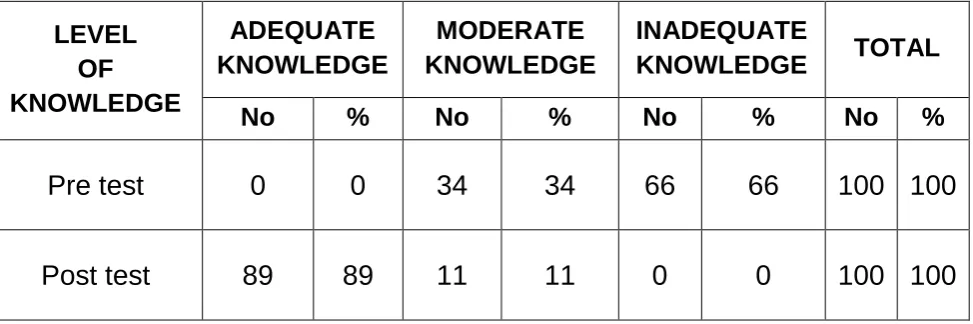
Table: 4.2 Level of knowledge regarding risk factors and prevention
of peptic ulcer among middle age population in industrial workers
LEVEL OF
KNOWLEDGE
ADEQUATE KNOWLEDGE
MODERATE KNOWLEDGE
INADEQUATE
KNOWLEDGE TOTAL
No % No % No % No %
Pre test 0 0 34 34 66 66 100 100
[image:77.595.64.551.313.475.2]Post test 89 89 11 11 0 0 100 100
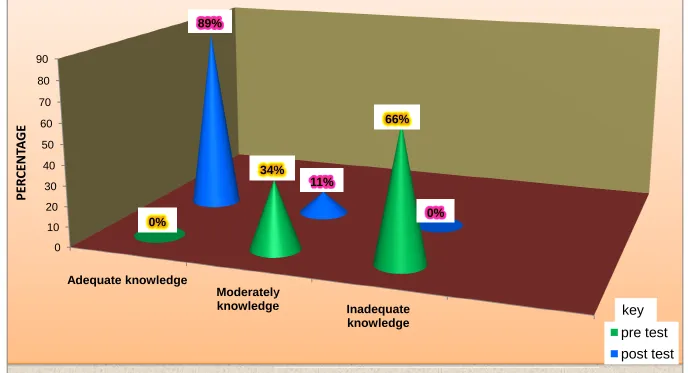
Table 4.2 shows that the knowledge regarding peptic ulcer through
the pre tests and post test based on questionnaire method. On the pre
test among middle age population in 100 industrial workers 34 (34%)
moderately adequate knowledge, 66 (66%) industrial workers had
inadequate knowledge. In the post test 89 (89%) had adequate
knowledge, 11 (11%) industrial workers had moderately adequate
Fig 4.2a Percentage distribution of level of knowledge regarding risk factors
and prevention of peptic ulcer
0 10 20 30 40 50 60 70 80 90 Adequate knowledge Moderately knowledge 0% 34% 89% PER CENT AG E
ercentage distribution of level of knowledge regarding risk factors
and prevention of peptic ulcer
Moderately knowledge Inadequate knowledge 34% 66% 11% 0%
ercentage distribution of level of knowledge regarding risk factors
pre test post test
SECTION-C
COMPARISON BETWEEN PRETEST AND POST TEST SCORES ON KNOWLEDGE REGARDING RISK FACTORS AND
PREVENTION OF PEPTIC ULCER
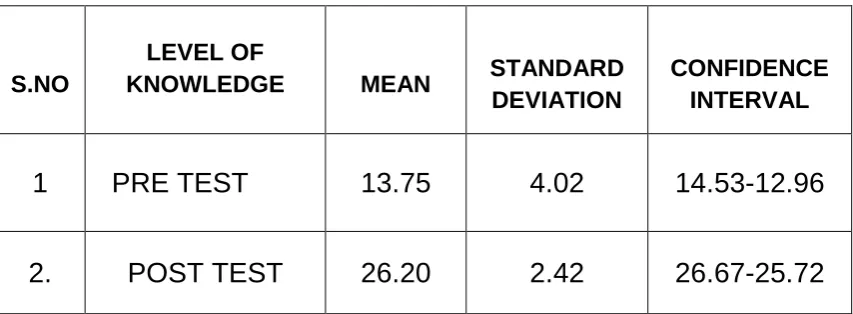
Table: 4.3 comparisons of mean scores between pretest and posttest on
knowledge regarding risk factors and prevention of peptic ulcer among
middle age population in industrial workers
n=100
S.NO
LEVEL OF
KNOWLEDGE MEAN STANDARD DEVIATION
CONFIDENCE INTERVAL
1 PRE TEST 13.75 4.02 14.53-12.96
2. POST TEST 26.20 2.42 26.67-25.72
Table 4.3
Shows that the over all mean of knowledge regarding riskfactors and prevention of peptic ulcer among middle age population was
13.75 with the confidence interval of 11.69 and standard deviation of
4.02 in pre test and the overall mean of knowledge regarding peptic
ulcer in post test was 26.20 with the confidence interval of 13.20 and
[image:79.