FORMULATION AND EVALUATION OF REPAGLINIDE
IMMEDIATE RELEASE TABLETS WITH IMPROVED
DISSOLUTION USING SOLID DISPERSION TECHNIQUE
A Dissertation submitted to
THE TAMIL NADU DR. M.G.R. MEDICAL UNIVERSITY, CHENNAI - 600 032.
In partial fulfilment of the award of the degree of
MASTER OF PHARMACY
IN
Branch – I – PHARMACEUTICS
Submitted by Name: P.KARPAGAVALLI
REG.No:261510254
Under the Guidance of
Dr. S. BHAMA, M.Pharm., Ph.D.,
Associate professor,DEPARTMENT OF PHARMACEUTICS
J.K.K. NATTARAJA COLLEGE OF PHARMACY KUMARAPALAYAM – 638183.
TAMILNADU.
CONTENTS
S.NO.
CHAPTER
PAGE NO.
1
INTRODUCTION
1
2
LITERATURE REVIEW
16
3
AIM AND OBJECTIVE
19
4
PLAN OF WORK
20
5
PROFILES
22
6
MATERIALS AND METHODS
31
7
RESULTS AND DISCUSSION
43
8
SUMMARY AND CONCLUSION
80
Chapter 1 Introduction
1. INTRODUCTION
An ideal dosage regimen in the drug therapy of any disease is the one, which
immediately attains the desire therapeutic concentration of drug in plasma (or at the
site of action) and maintains it constant for the entire duration of treatment. The drug
may be administered by variety of routes in a variety of dosage forms. Drugs are more
frequently taken by oral administration. The solid dosage forms available mostly in
unit dosage forms such as tablets, capsules, lozenges etc¹. When drugs are
administered orally in dry state, tablets and capsules are most convenient dosage
form².All practical purposes only compression tablets are almost universally used
while molded tablets being rate commodity. Drugs are more frequently taken by oral
administration³.
Although a few drugs taken orally are intended to be dissolved within the
mouth, vast majority of drugs taken oral are swallowed4. Compared with alternate routes, the oral route of drug administration is the most popular and has been
successfully used for the conventional delivery of drug5.
It is considered most natural, uncomplicated, convenient, safe means of
administering drugs6. Some of its advantages are greater flexibility in dosage design, ease of production and low cost7.
Many patients find it difficult to swallow tablets and hard gelatin capsules and
thus do not comply with prescription, which results in high incidence of
non-compliance and ineffective therapy. Recent advances in novel drug delivery systems
(NDDS) aim to enhance the safety and efficacy of drug molecule by formulating a
convent dosage form for administration and to achieve better patient compliance8.
Nearly 35 - 50% of the general population, especially the elderly and children
suffer from dysphasia or difficulty in swallowing, which results in high incidence of
non-compliance and ineffective therapy9. Swallowing problems also are very common in young individuals because of their poorly developed muscular and nervous
systems. Other groups who may experience problems in swallowing conventional oral
dosage forms are the patients with tremors of extremities, mentally ill, develop
mentally disabled, non-cooperative and patients with reduced liquid intake or patients
Chapter 1 Introduction
to water. The swallowing problems are also common in some cases such as patients
with motion sickness, sudden episodes of allergic attack or coughing and due to lack
of water.
To overcome this problem, scientists have developed innovative drug delivery
system known as a ''Immediate release tablets10”.
Immediate release tablets are designed to disintegrate and release their
medication in absence of any special rate-controlling features as special coating and
others techniques11.
1.1Advantages of Immediate Release Tablets12,13,14;
1. Large scale manufacturing is feasible in comparison to other dosage forms,
therefore economy can be achieved.
2. Accuracy of dosage is maintained since tablet is a solid unit dosage form.
3. Longer expiry period and microbial spillage owing to lower moisture content.
4. Easy of packaging (blister or strip)and easy handling over liquid a form.
5. Easy to transport in bulk. Emergency supplies can be carried by patients.
6. Easy to transport in bulk. Emergency supplies can be carried by patients15.
7. Product identification is easy and marking done with the help of grooved punched
and printing with edible ink,
Disadvantages of Immediate Release Tablets16,17;
1. It is difficult to convert a high dose poorly compressible API into tablet of
multiple size for human use18.
2. Difficult to formulate a drug with poor wet ability, slow dissolution in to tablet.
3. Slow onsets of action as compared to parenterals, liquid orals are capsules.
4. Difficult to swallow for kids, terminally ill and geriatric patients.
Chapter 1 Introduction
1.2. Desired Criteria For Immediate Release Drug Delivery System (IRDS):
Immediate release dissolving tablet should address the following:
Requires no water for oral administration, but it should dissolve or disintegrate in
the mouth in matter of seconds.
Be compatible with taste masking agent.
Be portable.
Have a pleasing mouth feel.
Leave minimal or no residue in the mouth after oral administration.
Exhibit low sensitivity to environmental condition as humidity and temperature.
Allow high drug loading.
Allow the manufacturing of tablets using conventional processing and packaging
equipments at low cost.
1.2.1. Salient Features of Immediate Release Drug Delivery System:
Ease of administration to patient who refuses to swallow a tablet, such as pediatric,
geriatric and psychiatric patients.
Require no water to swallow the dosage form, which is highly convenient feature
for patients who are travelling and do not have immediate access to water.
Rapid dissolution and absorption of drug, which will produce quick onset of
action.
Some drugs are absorbed from the mouth, pharynx and esophagus as the saliva
passes down into the stomach; in such cases bioavailability of drug is increased.
Pregastric absorption can result in improved bioavailability and as a result of
reduced dosage; improve clinical performance through a reduction of unwanted
effects.
Direct compression is the easiest method to manufacture immediate release
Chapter 1 Introduction
compression are its low manufacturing cost. It uses conventional equipment,
commonly available excipients and a limited number of processing steps.
Direct compression is the method of choice in tablet manufacture to produce
high quality finished product and applied to prepare dispersible tablets18.
In direct compression method, previously only crystalline compounds or
materials were considered to be directly compressed, but now the scenarios changing
and this technique is being applied for many non -crystalline materials too.
Formulations constituted by <-25% w/w of drug material are easy to be directly
compressed by simply using diluents, which are easy to be compressed and which acts
as a carrier for the drug19.
1.2.2. FACTORS AFFECTING THE DRUG RELEASE20: 1. Physiochemical properties of drug and
2. Dosage form factors
The various physiochemical properties of drug that effect drug dissolution and
its rate are - solubility, partical size, polymorphism, salt form, pseudo-polymorphism,
complexation, wetability etc.
Dosage form factors include manufacturing process and excipients
incorporated in them21.
Several manufacturing process influence drug dissolution form. Processes of
such importance in manufacturing of tablets are;
1. Method of granulation
2. Compression force.
The excipients such as binders, lubricants, disintegrants, etc influence the drug
dissolution26.
The techniques used in the preparation of immediate release tablets:
1.3.Conventional Techniques22,23,24; 1. Tablet moulding:
Chapter 1 Introduction
water soluble additives to allow the tablet to dissolve rapidly and completely in
mouth. All the ingredients of the formulation are passed through fine mesh dry
bended, wetted with a hydro - alcoholic solvent and then compressed into tablets
using low compression forces. The solvent is then removed by air drying.
2. Freezing drying:
Lyophilisation is a pharmaceutical manufacturing technology, which allows
drying of heat sensitive drugs and biological at low temperature under conditions that
allow removal of water by sublimation. Lyophilization results in preparations which
are highly porous, with a very high specific surface area, which dissolve rapidly a
show improved absorption and bioavailability.
3. Spray drying:
Spray drying is a process by which highly porous, fine powders can be
produced. The composition contains a bulking agent (mannitol and lactose), a
disintegrate (sodium starch glycol ate and caramelize sodium), an acidic ingredient
(citric acid) and / or alkaline ingredients (sodium bicarbonate) which when
compressed into tablets show fast disintegration and enhanced dissolution.
4. Sublimation:
This method includes the addition of a sublime of a sublime salt to the table
ting components, compressing the blend and removing the salt by the process of
sublimation. The active ingredient, diluents, a sublime salt (camphor / ammonium
bicarbonate) a binder and other excipient are blended and tablets are prepared.
5. Addition of disingredients:
Addition of disingredients in immediate release tablets, leads to quick
disintegration of tablets and hence improves dissolution. Microcyrstalline cellulose,
cross-linked carboxy methyl cellulose sodium, cross-linked polyvinyl pyrolidine and
partially substituted hydroxy propel cellulose, absorb water and swell due to capillary
action and are considered as effective disintegrates in the preparation of immediate
Chapter 1 Introduction
6. Sugar based excipient:
Sorbitol, mannitol, dextrose, xylitol, fructose, maltose and polydextrose have
been used as abulking agents. Because of their high aqueous solubility and sweetness,
which impart a pleasing mouth feel and good taste masking, nearly all formulations
for rapidly dissolving tablets contain sugar based materials.
7. Mass Extrusion:
This technology involves softening the active blend using the solvent, mixture
of water soluble polyethylene glycol using methanol and explusion of softened mass
through the extruder or syringe to get a cylinder of the product and cutting into even
segments upon heated blade to form tablets.
Patented Technologies:
8. Zydis:
In zydistechnology, drug is added to a solution carrier material (preferably
gelatin) to obtain dispersion, and the dispersion is filled into performed pockets of
blister pack by automatic means and freeze dried to produce the final dosage form.
9. Orasolv:
The system essentially make tablets that contain the taste masked active
ingredients an effervescent disintegrating agent, which on contact with saliva, rapidly
disintegrates and releases the active ingredient. The tablets are made by direct
compression at very low compression forces in order to minimize oral dissolution
time. The tablets produced are soft and friable.
10.Durasolv:
The tablet made by this technology consists of a drug, filler and a lubricant.
Dura Solve tablets are prepared by using conventional tableting equipment and have
good rigidity.
11. Flash dose:
Flash dose tablets consist of self-binding shear form matrix termed as ''floss''.
Chapter 1 Introduction
• Single floss
• Dual floss
1.4. SUPER DISINTEGRANTS
Disintegrates have a major in the disintegration and dissolution process of or
dispersible tablets made by direct compression 25. The choice of a suitable type and optimal amount of disintegrant is important for ensuring high disintegration rate. The
addition of other formulation components such as water soluble excipient or
effervescent agents further enhance dissolution or disintegration properties26. The understanding of disintegrant properties and their effect on formulation has advanced
significantly during last few years practically regarding superdisintegrants27.
Addition of super disintegrates in ODTs leads to quick disintegration of tablets
and hence improves dissolution. Microcrystalline cellulose, crosslinked carboxy
methyl cellulose sodium, crosslinked Polyvinyl pyrrolidone and partially substituted
hydroxy propyl cellulose etc absorb water and swell due to capillary action and are
considered as effective disintegrants in the preparation immediate release of tablets28.
1.4.1. MECHANISM OF SUPERDISINTEGRANTS
The tablet breaks to primary particles by one or more of the mechanism listed
below.
1. Because of heat of wetting (air expansion):
When disintegrates with exothermic properties gets wetted, localized stress is
generated due to capillary air expansion, which helps in disintegration of tablet. This
explanation however, is limited to only a few types of disintegrates and cannot
describe the action of most modern disintegrating agents.
2. Swelling:
The most widely used mechanism of action for tablet disintegration is swelling.
Tablets with high porosity show poor disintegration due to lack of adequate swelling
Chapter 1 Introduction
3. Porosity and capillary action (Wicking):
The first step for this is disintegration by capillary action. The tablet will be
put into the suitable aqueous medium; the medium penetrates into the tablet and
replaces the air adsorbed on the particles. Which uptake by tablet depends upon
hydrophilicity of the drug/ excipient and on tableting conditions.
4. Due to disintegrating particle/particle repulsive forces:
Another mechanism of disintegration attempts to explain the swelling of tablet
made with “non-swellable” disintegrates. Guyot – Hermann has proposed a particle
repulsion theory based on the observation that non-swelling particle also cause
disintegration of tablets.
5. Due to deformation:
During tablet compression, disintegrated particles get deformed and those
deformed particles get into their normal structure when they come in contact with
aqueous media or water. The swelling capacity of starch was improved when granules
were extensively deformed during compression. This increase in size of the deformed
particles produce produces a breakup of the tablet. This type of mechanism of starch
has been recently to be studied.
6. Due to release of gases:
Carbon dioxide released within tablets on wetting due to interaction between
bicarbonate with citric acid or tartaric acid. The tablet disintegrates due to generation
of pressure within the tablet.
Table No 1: List of Superdisintegrants
Super disintegrants Examples Mechanism of action
Croscarmellose® Cross Linked Cellulose Sweling and Wickling
Crospovidone Cross linked PVP Very little swelling, act by
capillary action.
Chapter 1 Introduction
Alginic acid NF Cross linked Alginic acid Rapid swelling and wicking action
Natural super disintegrants
Calcium silicate(20 – 40%) Wicking action
1.5.Techniques for Solubility Enhancement
There are various techniques available to improve the solubility of poorly
soluble drugs, some of the approaches to improve the solubility are:
1. Physical Modification:
A.Particle size reduction
a. Micronization
b. Nanosuspension
B.Modification of the crystal habit
a. polymorphs
b. Pseudopolymorphs
C. Drug dispersion in carriers
a. Eutectic mixtures
b. Solid dispersions
c. Solid solutions
D. Complexation
a. Use of complexing agents
E. Solubilization by surfactants:
a. Microemulsions
b. Self microemulsifying drug delivery systems
Chapter 1 Introduction
1.6. Solid dispersion Technique29:
40 - 60% of drugs used in pharmaceutical industry are poorly water soluble or
lipophilic compounds. Poorly water soluble drugs show unpredictable absorption,
since their bioavailability depends upon dissolution in the GIT. The dissolution
characters of poorly water soluble drugs can be enhanced by several methods like pH
adjustment, salt formation, co-crystallization, co-grinding, cosolvency, hydrotrophy,
solubilization, size reduction like micronization, nano technology, complexation, and
drug dispersion in carriers30. The solid dispersion can be prepared by fusion method,melting method, solvent method, Hot meltbextrusion method and
Supercritical fluid method.
a. Fusion Method:
The fusion method is sometime otherwise called as melting method, if the
starting material is crystalline. In this method, the carrier is heated to a temperature
just above its melting point and the drug is incorporated in to the matrix. The first
dispersion of sulfathiazole and urea was prepared by fusion method, by melting at the
eutectic composition followed by cooling step. Polymers like Polyethylene glycols
and Poly (vinyl pyrolidone) PVP are mostly used in this method.
Limitations:
• This method is suitable if the drug and polymer are compatiable and can be mixed homogeneously at the heating temperature in order to prevent formation of two
incompatible liquids phases or a suspension in heated mixture. This problem can
be overcome by using surfactants.
• Sometimes this problem during cooling stage when the drug – matrix miscibility changes which may produce phase separation. This problem is observed when
cooling is done at slow rate, resulting in formation of crystalline drug.
Chapter 1 Introduction
b. Hot melt extrusion method:
This method is same as fusion method except that the intensive mixing is
included by the extruder. In this method twin – screw extruder or single extruder is
used. This method offers the potential to shape the heated mixture in to implants,
implants inserts, oral dosage forms. To detect the solid – state solubility and to select
matrix suitable for melt extrusion, the solubility parameters are investigated. Higher
shear forces resulting in high temperature in extruder may create a problem for heat
sensitive materials.
The main advantage is the handling of product is easier because at the outlet of
the extruder the shape can be adapted to the next processing step without grinding.The
polymers like Hydroxylpropyl cellulose, Hydroxypropyl cellulose phthalate, Eudragit,
Celulose acetate phthalate (CAP), Poly vinyl alcohol (PVA), and Hydroxypropyl
cellulose (HPC) can be used. Leing Wang, et al., have prepared solid dispersion of
Nitredipine with silica particles using the melt mixing method31.
c. Solvent method:
In this method, the carrier and the active ingredients are dissolved in suitable
organic solvent. The second step involves the removal of solvent(S) under vacuum.
When the solvent evaporates, super saturation may occur followed by simultaneous
precipitation of the constituents resulting in a solid residue. In this formulation the
scientist has to face two challenges.
• It is difficult to mix drug and polymer in one solution having different polarity.
• It is difficult to prevent phase separation during removal of solvent(s).
• The recovery of solvent from co precipitate takes longer time.
Example:
Ethanol:-5 C and reduced pressure followed by drying for 12h in vaccum
Methanol / chloroform: 115 C for 1hr 125 C for 25min from Griseofulvin – PEG 6000
dispersion.
Drying at high temperature speeds up the drying process and reduces the time
Chapter 1 Introduction
phase separation (example: crystallization) because of the increase in the mobility of
drug and polymer.
For example: Dimethyl sulfoxide (DMSO) has high melting point (190 C)but
it has very low vapour pressure (0.08 kPa) hence not suitable solvent, but
2-methyl-2-propanol or tertiary butanol(TBA) is suitable solvent because it has high melting point
(125 C) and vapor pressure (5.49 kPa).
Advantages:
Minimal thermal stress during preparation.
Reduction in chances of phase separation.
d. Supercritical fluid method:
In this method carbon dioxide is used either as solvent for drug and polymer or
as an anti-solvent. When carbon dioxide is used as a solvent, the solution mixture of
carbon dioxide with drug and polymer is sprayed through nozzle into an expansion
vessel with lower pressure and resulting in formation of particles. As this techniques
does not involve use of any organic solvent termed as “Solvent free technique” and
also known as Rapid Expansion of Supercritical Solution (RES).
1.6.1. Advantages of Solid Dispersion Technology:
Single formulation can be used to multiple dose formulation
Improves bioavailability of drug.
Improves dissolution of poorly water soluble drugs.
Controlled release formulations can be formulated.
1.6.2. Breakthrough in Solid Dispersion Technology:
Recently, the primary goal of pharmaceutical industry is to discover a new
chemical entity that would be safe and effective. Initially, because of the limited bulk
drug supply and accelerated time line would not allow formulator to formulate solid
dispersion formulations. Even though, the below two recent breakthroughs in the
formulation of solid dispersion technology have renewed the interest for use in
Chapter 1 Introduction
The development of technology to fill solid dispersion directly into hard
gelatin capsules. For example: Chatham prepared PEG-based solid dispersion by
filling drug-PEG melts in hard gelatin capsules followed by solidification at room
temperature. The availability of surface-active and self-emulsifying carriers For
example: Gelucire 44/14, Polysorbate 80.
The availability of surface-active and self-emulsifying agent may help to
increase bioavailability of the drug.
For example: The bioavailability of ritronavir (solubility<lmcg/ml at pH.2)
[Norvir®, Abbot Lab] was enhanced by incorporating dispersion into mixture of
surfaceactive carriers as Gelucire 50/13, Polysorbate 80, and Polyoxyl 35
[image:15.595.104.526.357.734.2]castoroil.
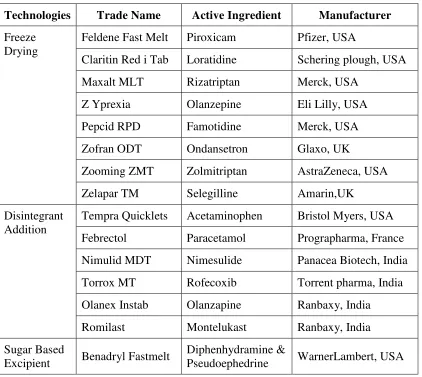
Table No 2: Commercially immediate release Tablets
Technologies Trade Name Active Ingredient Manufacturer
Freeze Drying
Feldene Fast Melt Piroxicam Pfizer, USA
Claritin Red i Tab Loratidine Schering plough, USA
Maxalt MLT Rizatriptan Merck, USA
Z Yprexia Olanzepine Eli Lilly, USA
Pepcid RPD Famotidine Merck, USA
Zofran ODT Ondansetron Glaxo, UK
Zooming ZMT Zolmitriptan AstraZeneca, USA
Zelapar TM Selegilline Amarin,UK
Disintegrant Addition
Tempra Quicklets Acetaminophen Bristol Myers, USA
Febrectol Paracetamol Prographarma, France
Nimulid MDT Nimesulide Panacea Biotech, India
Torrox MT Rofecoxib Torrent pharma, India
Olanex Instab Olanzapine Ranbaxy, India
Romilast Montelukast Ranbaxy, India
Sugar Based
Excipient Benadryl Fastmelt
Diphenhydramine &
Chapter 1 Introduction
1.7. ANTI-DIABETIC 34
Repaginate is a meglinide analogue used in the treatment of type II Diabetes
mellitus.
It controls high blood sugar levels and helps in preventing kidney damage,
blindness, nerve problems, loss of limbs, sexual problems & heart complications. This
should not be used in type I Diabetes mellitus. It is a poorly water soluble drug
belongs to BCS class II drug with short biological half - life 1hr. Repaglinide was
enhanced by solid dispersion techniques like 1) drop melt techniques. Repaglinide
dispersion was selected based on dissolution and formulated as tablet dosage form
using various diluents and super disintegrates. The final; formulation was selected
based on the dissolution profile that is formulation with MCC as a diluents and cross
povidone as a super disintegrants.
1.7.1. Diabetes mellitus type 2 35,36,37:
Diabetes mellitus type 2 (formelycalle non - insulin dependent diabetes
mellitus(NIDDM), or adult- onset diabetes) is a disorder that is high blood glucose in
the context of insulin resistance and relative insulin deficiency. It is often initially
managed by increasing exercise and dietary modification; medications are typically
needed as the disease progresses.
1.7.2. Signs and symptoms38
Early symptoms may be nothing more than chronic fatigue, generalized weakness
and malaise
Excessive urine production.
Excessive thirst and increased fluid intake.
Blurred vision
Unexplained weight loss.
Chapter 1 Introduction
1.7.3.Classification of Antidiabetic agent
1. Insulin
2. Oralantidiabetic drugs
a) Sulfonylureas
I. First - generation agents
a. Tolbutamide
b. ACetohexamide
c.Tolazamide
d. Chlorpropamide
II. Second - generation agents
a. Glipizide
b. Glyburide
c. Glimepride
d. Gliclazide
b) Meglitinides
I. Repaglinide
ii. Nateglinide
c) Biguanides
I. Metformin
II. Phenformin
Chapter 2 Literature Review
2. LITERATURE REVIEW
D. Karthikeyan et al39., investigated the feasibility of formulating a biphasic delivery system using mini-tablets in hard gelatin capsules delivering drug with a
variety of release profiles. Aceclofenac (NSAID analgesic) were chosen as model
drug.
Noorana Tehseen et al40., worked on design and characterization of twice daily mini-tablets formulation of pregabalin in order to improve the half life and
bioavailability.
Carla M. Lopes et al41., developed compressed mini tablets as a biphasic delivery system designed for zero-order sustained drug release. The outer layer that
fills the void spaces between the mini-tablets was formulated to release the drug in a
very short time (immediate release), while the mini-tablets provided a prolonged
release. Different composition (HPMC or EC) and number (10 or 21) of mini-tablets
were used to obtain different drug release rates. Based on the release kinetic
parameters calculated, it can be concluded that mini-tablets containing HPMC were
particularly suitable approaching to zero-order (constant) release over 8 h time
periods.
Intender Joshi et al42., developed a once-daily sustained release matrix tablet of repaglinide using sodium alginate as release controlling factor. In order to achieve
required sustained release profile tablets were compressed using sodium CMC,
sodium alginate, Magnesium stearate, and PVP. Six different formulation of
repaglinide were prepared by using different ratio of drug: polymer. The tablet was
characterized by hardness, wetting time, weight variation and In Vitro Drug Release
which shows the satisfactory result. All batches of solid matrix tablets were
satisfactory in terms of dissolution profile. The batches of all formulations, MT5
batch [Sodium CMC With drug (1:3)] showed more release than the other
concentration and better results.
Chapter 2 Literature Review
C.MalligarjunaShetty et al44 described the formulation of fast dispersible aceclofenac tablets and described the Effect of functionality of super disintegrants.
Caramella et al45 described the role of swelling property in the disintegration process also described how it influences the disintegration process.
Cirri M et al46 formulated fast dissolving tablets of Glyburide based on ternary solid dispersion with PEG6000 and surfactants.
Sarasija Suresh et al 47prepared mouth dissolving tablets of salbutamol sulphate by using sublimable ingredients. Selection of the filter also had an important
role in deciding of the disintegration time. Evaluation of the tablets showed that all
the tablets were found to be within official limits and the disintegration time for the
formulations ranged from 5s to 4s .Amongest all, the formulation contraining micro
crystalline cellulose and ammonium bicarbonate showed the least disintegrating time
of 5s.
USPTO Patent 2060165782148 described about orally disintegrating tablets for per oral administration which disintegrate quickly in the cavity of mouth, in particular
less than 30 seconds and the process of obtaining them.
Kaushik D et al49., studied mouth dissolving tablets emerged at an alternative to conventional oral dosage forms. Freeze drying, sublimation, spray drying,
disintegrant addition, tablet moulding and use of sugar-based excipients are the
techniques available for the formulation of mouth dissolving tablets. Despite the
different mechanisms involved in these techniques, the aim is, to provide the tablet
that quickly disintegrates or dissolves upon contact with saliva and also provides a
god mouth feel.
Zhao et al50 described the development of disintegrating functionality test for super disintegrants, also provides methods to test the efficiency of superdisintegrants.
Koizumi et al 51, described about rapidly saliva tablets using sublimation technique. Compressed tablets of mannitol did not dissolve in water due to the low
porosity. To increase the porosity of tablets sublimation was done. Tablets were
prepared by direct compression containing mannitol and camphor. A high porosity
Chapter 2 Literature Review
compressed tablets have high porosity (approximately 30%) rapidly dissolved within
15 seconds in saliva.
Combo P et al52 described about disintegration force, showed disintegration force is a new formulation parameter.
D.P.Venkadesh et al 53formulated taste masked orodispersible tablets of ambroxxol hydrochloride.
Ferrari F et al54 provided the information about influences of porosity and solubility of disintegrant in tablets.
Caramella et al 55 described the role of swelling property in the disintegration process also described how it influences the disintegration process.
Jeevana Jyothi et al56 developed immediate release tablets of glibenclamide using crosspovidone and its Kneading Mixture.
M M Patel et al 57 prepared rapid disintegrating tablets of valdecoxib by using various superdisintegrants following direct compression technique.
Martin et al58., reviewed the cyclodextrin and their uses. It provides information regarding the history preparation, complex formation of cyclodetrins and
industrial applications.
Pisal et al 59 formulated and evaluated tasteless complexes of ciprofloxacin with Iodine 234. Studies showed that complication affected by pH, but temperature
Chapter 3 Aim and Objective
3. AIM AND OBJECTIVE
The aim of the present work is to investigate the possibility of obtaining
immediate release tablet of repaglinide with improved dissolution using Solid
dispersion technique.
Basic goals in the immediate release tablets are to increase patient compliance,
ease of administration, safety and appropriate dosing. Orally disintegrating
formulations are provide benefits for pharmaceutical companies like lifecycle
management , line extension, market expansion, cost effective drug development
programs.
Immediate release tablet has perceived faster onset of action. repaglinide is a
white or half white powder, relatively insoluble in water. It is a class 2 drug according
to BCS Classification Solubility and dissolution was improved by formulating solid
dispersion. The advantage of this delivery system, in the present study were made to
formulate immediate release tablet repaglinide, which is useful to reduce sudden
increased glucose level in the treatment of non- insulin dependent diabetes mellitus
(NIDDM).
The direct compression was used to compress the tablets as it is easy way to
manufacture tablets. Conventional equipments, commonly available excipients and
limited number of processing steps are involved in direct compression and so
manufacturing cost is low. Tablets produced by direct compression are relatively
Chapter 4 Plan of Work
4. PLAN OF WORK
Stage – 1
Literature Survey
Selection of Drug and Excipients
Stage - 2
Preformulation Studies
Evaluation of Physical Parameters of repaglinide
Drug Excipients Compatibility study
Construction of standard curve
Stage – 3
Preparation of Solid Dispersion and Physical Mixture
Characterization of Solid Dispersion and Physical Mixture
Stage – 4
Preparation And Evaluation of Natural Superdisintegarants
Stage – 5
Precompression Parameters
Formulation of Immediate Release Tablets With Different super Disintegrants
Stage – 6
Evaluation of Immediate Tablets.
Weight variation
Friability
Thickness
Chapter 4 Plan of Work
disintegration
Wetting time
Uniformity of dispersion
Water absorption ratio
Assay
In-vitro dissolution study
Stage – 7
Chapter 5 Profiles
5. PROFILES
5.1. DRUG PROFILE:
REPAGLINIDE:
PRANDIN® (repaglinide) is an oral blood glucose-lowering drug of the
meglitinide class used in the management of type 2 diabetes mellitus (also known as
non-insulin dependent diabetes mellitus or NIDDM).
CHEMICAL NAME:
Repaglinide, S (+) 2-ethoxy-4(2((3-methyl-1-(2-(1-piperidinyl) phenyl)-butyl)
amino)-2-oxoethyl) benzoic acid, is chemically unrelated to the oral sulfonylurea
insulin secretagogues.
Chemical Structure:
The structural formula is as shown below:
Molecular Weight: 452.6
Category: (ß) cells in the pancreatic islets.
Description: white to off – white.
Storage: Do not store above 25° C (77° F). Protect from moisture. Keep bottles tightly closed. Dispense in tight containers with safety closures.
Mechanism of Action
Repaglinide lowers blood glucose levels by stimulating the release of insulin
Chapter 5 Profiles
pancreatic islets. Insulin release is glucose-dependent and diminishes at low glucose
concentrations.
Repaglinide closes ATP-dependent potassium channels in the ß-cell
membrane by binding at characterizable sites. This potassium channel blockade
depolarizes the ß-cell, which leads to an opening of calcium channels. The resulting
increased calcium influx induces insulin secretion. The ion channel mechanism is
highly tissue selective with low affinity for heart and skeletal muscle.
Pharmacokinetics
Absorption:
After oral administration, repaglinide is rapidly and completely absorbed from
the gastrointestinal tract. After single and multiple oral doses in healthy subjects or in
patients, peak plasma drug levels (Cmax) occur within 1 hour (Tmax). Repaglinide is
rapidly eliminated from the blood stream with a half-life of approximately 1 hour. The
mean absolute bioavailability is 56%. When repaglinide was given with food, the
mean Tmax was not changed, but the mean Cmax and AUC (area under the
time/plasma concentration curve) were decreased 20% and 12.4%, respectively.
Distribution:
After intravenous (IV) dosing in healthy subjects, the volume of distribution at
steady state (Vss) was 31 L, and the total body clearance (CL) was 38 L/h. Protein
binding and binding to human serum albumin was greater than 98%.
Metabolism:
Repaglinide is completely metabolized by oxidative biotransformation and
direct conjugation with glucuronic acid after either an IV or oral dose. The major
metabolites are an oxidized dicarboxylic acid (M2), the aromatic amine (M1), and the
acyl glucuronide (M7). The cytochrome P-450 enzyme system, specifically 2C8 and
3A4, have been shown to be involved in the N-dealkylation of repaglinide to M2 and
the further oxidation to M1. Metabolites do not contribute to the glucose-lowering
Chapter 5 Profiles
Excretion:
Within 96 hours after dosing with 14C-repaglinide as a single, oral dose,
approximately 90% of the radiolabel was recovered in the feces and approximately
8% in the urine. Only 0.1% of the dose is cleared in the urine as parent compound.
The major metabolite (M2) accounted for 60% of the administered dose. Less than
2% of parent drug was recovered in feces.
It indicate that repaglinide did not accumulate in serum. Clearance of oral
repaglinide did not change over the 0.5 - 4 mg dose range, indicating a linear
relationship between dose and plasma drug levels.
Variability of Exposure:
Repaglinide AUC after multiple doses of 0.25 to 4 mg with each meal varies
over a wide range. The intra-individual and inter-individual coefficients of variation
were 36% and 69%, respectively. AUC over the therapeutic dose range included 69 to
1005 ng/mL*hr, but AUC exposure up to 5417 ng/mL*hr was reached in dose
escalation studies without apparent adverse consequent
5.2.EXCIPIENT PROFILE:
CROSS POVIDONE60
Synonyms : Crosslinkedpovidone ; EI 202 ; Kollidon CL ; Kollidon CL-M;polyplasdon XL 10 ; Polyvinyl poly pyrrolidone ; PVPP ; 1-vinyl -2- pyrrolidone homopolymeress or nearly odourless hygroscopic powder.
Description : Crospovidone is a white to creamy white finely devided, free Flowing practically tasteless, odorless
Chemical name : 1-ethenyl -2 – pyrrolidone homopolymer.
Molecular weight : >1000000
Functional category
Chapter 5 Profiles
Applications in Pharmaceutical Formulation
Cross povidone is a water –insoluble tablet disintegrant and dissolution agent
used at 2-5% concentration in tablet prepared by direct compression method (1-6). It
rapidly exibit high capillary activity and pronounced hydration capacity, with little
tendency to form gels. Studies suggest that the particle size of crospovidone strongly
influences disintegration of analgesic tablets
SODIUM STARCH GLYCOLATE60
Synonyms : Primojel; Starch carboxy Methyl ether, sodium salt, Tablo;
Description : Tasteless, free flowing powder. The PhEur 2005 states that it consist of oval or spherical granules, 30-100 um in diameter, with some less spherical granules ranging from 10-35um in diameter.
Chemical name : Sodium carboxy methyl starch.
Molecular weight : 5 X 10 5 -1
Functional category : Tablet and capsule disintegrant.
Applications in Pharmaceutical Formulation
Sodium starch glycolate is widely used in oral pharmaceuticals as a
disintegrant in capsule and tablet formulations. It is commonly used in tablets
prepared by either direct compression or wet granulation process. The usual
concentration employed in a formulation is between 2% and 8% with the optimum
concentration about 4% although in many cases 2% is sufficient. Disintegration occurs
by rapid uptake of water followed by rapid and enormous swelling.
Although the effectiveness of many disintegrant is affected both presence of
hydrophobic excipients such as lubricant the disintegrant efficiency of sodium starch
glycolate is unimpaired increasing the tablet compression pressure also appears to
have no effect on disintegration time. Sodium starch glycolate has also been
Chapter 5 Profiles
CARBOXY METHYL CELLULOSE CALCIUM60
Synonyms : Calcium CMC ; ECG 505 ; Nymcel ZSC ; Calcium Carboxy
methyl cellulose
Description : It occurs as a white to yellowish- white hygroscopic fine powder
Chemical name : Cellulose, carboxy methyl ether, calcium salt
Functional category
: Stabilizing agent, suspending agent, tablet and capsule disintegrant; tablet binder; viscosity increasing agent Water Abosrbing agent.
Application in Pharmaceutical Formulation
It used as binder, diluents and disintegrant. It is an effective disintegrant as it
swells to several times it’s original bulk on conduct with water. Concentration up to
15 % w/w may be used in tablet formulations; above this concentration, tablet
hardness is reduced.
It is also used as suspending or viscosity increasing agent in oral and topical
formulations. And also used in modern wound dressings for it’s water absorption,
retension and hemostatic properties.
SODIUM STEARYL FUMERATE60
Synonyms : Fumeric acid, Otadecyl ester sodium salt; Pruv ; Sodium monosrearylfumerate.
Description : Sodium stearylfumerate is a fine white powder with agglomerates of flat, circular shaped particles.
Chemical name : 2-butenedioic acid, monooctadecyl ester, sodium salt.
Molecular weight : 390.5
Functional category : Tablet and capsule lubricant.
Applications in Pharmaceutical Formulation
Sodium stearylfumerate is used as lubricant, in capsule and tablet formulations
at 0.5 – 2.0 % w/w concentration. It is also used in certain food applications
conditioning or stabilizing agent in various backery Products, flour-thickened foods,
Chapter 5 Profiles
TALC 61
Synonyms : talc ; E 55 3 b; hydrous magnesium calcium silicate ; hydrous magnesium Silicate; magnesium hydrogen metasilicate; Magsilosmanthus; magsil star; powdered talc; purified French chalk; Purtalc ; soapstone; steatite; superior
Description : Talc is very fine to grayish –white, odorless, impalatable, unctuous, crystalline powder. It adheres readily to the skin and is soft to touch and free from grittiness.
Chemical name : Talc
Functional category : Anticaking agent; glidant; tablet and capsule diluents;
Applications in pharmaceutical formulation
Talc was once widely used in oral solid dosage formulations as a lubricant and
diluent although today It is less commonly used. It is widely used as dissolution
retardant in the development of controlled release product. Talc is used as a lubricant
in tablet formulations; in novel powder coating for extended-release pellets; and as an
adsorbent.
In topical preparations, talc is used as a dusting powder, although it should not
be used to dust. Surgical gloves. As it is a natural material it may contain
microorganisms and should be sterilized when used as dusting powder. Talc used to
clarify liquids and is also used in cosmetics and food products, mainly for it’s
lubricant properties
POLYETHYLENE GLYCOL 600060
Synonyms : Breox peg; carbowax; hodag peg; lutrol E; PEG: polyethylene glycol.
Description : Polyethylene glycols grades 6000 and above are available as free-flowing milled powders, colorless or slightly yellow colured. They have a slight, but characteristic odour and a bitter, slightly burning taste.
Chemical name : ά-hydro-ω- hydro- poly (oxy-1, 2- ethane diyl) and [25322-68-3]
Chapter 5 Profiles
Typical properties:
1. Density; 1.15–1.21 g/cm3 at 25°C.
2. Melting Point: 55–63°C
3. pH (5% w/v solution): 4.0-7.0.
4. Hydroxyl value: 16–22.
Incompatibilities:
All grades can exhibit some oxidizing activity due to the presence of peroxide
impurities and some secondary product formed by auto- oxidation. Solid polyethylene
glycols grades may be incompatible with some colour.
Safety:
Nontoxic and non-irritant material, when administered topically may cause
stringing.
Application in pharmaceutical formulation:
Polyethylene glycols can also be used to enhance the aqueous solubility or
dissolution characteristics of poorly soluble compounds by making solid dispersions
with an appropriate polyethylene glycol. Animal studies have also been performed
using polyethylene glycols as solvents for steroids in osmotic pumps.
MICROCRYSTALLINE CELLULOSE60 Nonproprietary Names:
• BP: Microcrystalline cellulose
• JP: Microcrystalline cellulose
• PhEur: Cellulosummicrocristallinum
• USPNF: Microcrystalline cellulose
Synonyms:
Chapter 5
Chemical Name and CAS Registry Number:
Cellulose [9004
Empirical Formula and Molecular Weight:
(C6H10O5)n≈36
where n ≈ 220.
Structural Formula:
Functional Category:
Adsorbent; suspending agent; tablet and capsule diluents; tablet disintegrant.
Applications in Pharmaceutical Formulation or Technology:
Microcrystalline cel
binder/diluents in oral tablet and capsule formulations where it is used in both wet
granulation and direct
binder/diluents (20–90%), microcrystalli
disintegrant (5–15%) properties that make it useful in tableting.
Description:
Microcrystalline cellulose is purified, partially depolymerized cellulose that
occurs as a white, odorless, tasteless, crystalline powde
particles. It is commercially available in different particle sizes and moisture grades
that have different properties and applications. Chemical Name and CAS Registry Number:
Cellulose [9004-34-6]
and Molecular Weight:
≈36 000
220.
Functional Category:
Adsorbent; suspending agent; tablet and capsule diluents; tablet disintegrant.
Applications in Pharmaceutical Formulation or Technology:
Microcrystalline cellulose is widely used in pharmaceuticals, primarily as a
binder/diluents in oral tablet and capsule formulations where it is used in both wet
granulation and direct-compression processes. In addition to its use as a
90%), microcrystalline cellulose also has some lubricant and
15%) properties that make it useful in tableting.
Microcrystalline cellulose is purified, partially depolymerized cellulose that
occurs as a white, odorless, tasteless, crystalline powder composed of porous
particles. It is commercially available in different particle sizes and moisture grades
that have different properties and applications.
Profiles
Adsorbent; suspending agent; tablet and capsule diluents; tablet disintegrant.
lulose is widely used in pharmaceuticals, primarily as a
binder/diluents in oral tablet and capsule formulations where it is used in both
wet-compression processes. In addition to its use as a
ne cellulose also has some lubricant and
Microcrystalline cellulose is purified, partially depolymerized cellulose that
r composed of porous
Chapter 5 Profiles
Density (bulk)
• 0.337 g/cm3;
• 0.32 g/cm3 for Avicel PH-101; 0.29 g/cm3 for Emcocel 90M; 0.29 g/cm3 for VivaPur 101.
Density (tapped) :
• 0.478 g/cm3;
• 0.45 g/cm3 for Avicel PH-101;
• 0.35 g/cm3 for Emcocel 90M.
Density (true):
• 1.512–1.668 g/cm3
Melting point:
Chars at 260–270°C.
Solubility:
Slightly soluble in 5 % w/v sodium hydroxide solution; practically insoluble in
water, dilute acids, and most organic solvents.
Stability and Storage Conditions:
Microcrystalline cellulose is a stable though hygroscopic material. The bulk
Chapter 6 Materials and Methods
6. MATERIALS AND METHODS
MATERIALS USED
List of Materials used for the research work was given in table by:
TABLE NO. 3
INGREDIENTS SUPPLIERS
Repaglinide Microlabs Ltd,Hosur
PEG6000 MicrolabsLtd,Hosur
Micro crystalline cellulose Lobachemi,Mumbai
Sodium Starch Glycolate Research lab fine chem, Mumbai
Cross Povidone Research lab fine chem, Mumbai
Sodium alginate Lobachemi,Mumbai
Talc Lobachemi,Mumbai
Aspartame Bangalore antibiotics &Biological, Salem
Methanol Himmedialab,Mumbai
Aerosil Lobachem. Mumbai
Hcl Microlab,Mumbai
TABLE NO.4
List of Instrument Used
Name of Instrument Manufacturing Company
Digital Balance Shimadzu Corporation Japan
Magnetic stirrer Remiequipments
Hot air oven In lab equipments, chenai
Orbit Shaker Lab India
Proton Pump Mini Single Punch Proton
Hardness tester Tab machines
Friability tester Roche Friabilator
Vernier caliper Mituyoko Japan
Dissolution Apparatus Lab India Disso 2000
UV Visible spectrophotometer Lab India
FT IR Spectrometer Bruker Germany
Chapter 6 Materials and Methods
6.1 PRE-FORMULATION STUDIES62:
Preformulation may be described as a phase of the research and development
process where the formulation scientist characterizes the physical, chemical and
mechanical properties of new drug substances, in order to develop stable, safe and
effective dosage forms.
6.1.1 Organoleptic properties:
Appearance
Transferred approximately 2gm of the sample on a white paper spreaded
uniformly and examined visually.
Colour: a small quantity of pure repaglinide powder was taken in a butter paper and
viewed in well illuminated place.
Taste and odour: very less quantity of repaglinide was used to get taste with the help
of tongue as well as smelled to get the odour.
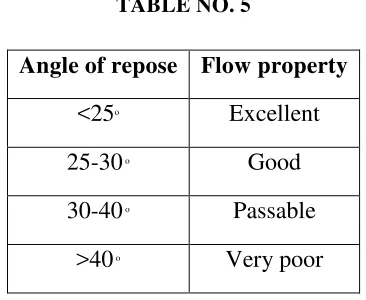
6.1.2 Angle of repose:
Angle of repose has been defined as the maximum angle possible between the
surface of pile of powder and horizontal plane. The angle of repose for the granules of
each formulation was determined by the funnel method. The prepared granules were
allowed to flow out of the funnel orifice fixed at a height of 2 cm from the surface on
a plane paper kept on the horizontal platform. The gradual addition of the granules
from the funnel mouth forms a pile of granules at the surface this is continued until
the pile touches the stem tip of the funnel. A rough circle is drawn around the pile
base and the radius of the granule cone was measured.
Angle of repose was then calculated with the use of the following formula:
tanθ = h / r
Where, θ = angle of repose, h= height of the pile, r = average radius of the powder
Chapter 6 Materials and Methods
[image:35.595.224.407.100.250.2]Limits:
TABLE NO. 5
Angle of repose Flow property
<25o Excellent
25-30 o Good
30-40 o Passable
>40 o Very poor
6.1.3: DETERMINATION OF DENSITIES
Bulk Density: Bulk density is defined as the mass of the powder divided by
the bulk volume. Bulk density largely depends on particle shape, as the particle
become more spherical in shape, bulk density was increased. In addition as the
granule size increases bulk density decreases.
METHODS:
Bulk density of the sample was determined by pouring gently 10g of sample
through a glass funnel into a 50ml graduated cylinder. The volume occupied by the
sample was recorded. The bulk density will be calculated as follows:
Bulk Density (g/ml) = Weight of sample in grams Volume occupied by the
sample.
TAPPED DENSITY:
10 grams of sample was being poured gently through a glass funnel into a
50ml graduated cylinder. The cylinder will be tapped from height of 2 inches until a
constant volume will be obtained. Volume occupied by the sample after tapping will
be recorded and tapped density will be calculated as follows:
Tapped Density (grams/ml) = Weight of sample in grams Volume occupied by the
Chapter 6
6.1.4.Measurement of Powder Compressibility:
Based on the apparent bulk and the tapped density, the percentage co
bulk was determined by the following formula
Compressibility index
Where, Vf = final tapped volum
Limits: S. No. 1 2 3 4 5 6
Where, Vf = final tapped volume, Vo = initial un tapped volume
6.1.5 LOSS ON DRYING
Determine on 1 g by drying in an oven at 100°C to 105°C for 3 hours. Mixed
and accurately weighed the substance to be tested. Tare a glass stopper, shallow
weighing bottle that has been dried for 30 minutes under the same conditions to be
employed in the determination. Weighed the empty bottle (W
bottle, replace the cover, and accurately weighed the empty bottle with contents (W
By gentle, sidewise shaking, distributed the sample as evenly as practicable to a depth
of about 5 mm. placed
the specified temperature in desicator before weighing. Weighed the bottle (W
difference between successive weights should not less than 0.3%.
Materials and Metho
Measurement of Powder Compressibility:
Based on the apparent bulk and the tapped density, the percentage co
bulk was determined by the following formula
index:
Where, Vf = final tapped volume, Vo = initial un tapped volume
TABLE NO.6
Compressibility index Flow
5-12 Free flow
12-16 Good flow
18-21 Fair
23-25 Poor
33-38 Verypoor
>40 Extremely poor
HausnerRatio: =
Vf
V0
Where, Vf = final tapped volume, Vo = initial un tapped volume
6.1.5 LOSS ON DRYING:
Determine on 1 g by drying in an oven at 100°C to 105°C for 3 hours. Mixed
accurately weighed the substance to be tested. Tare a glass stopper, shallow
weighing bottle that has been dried for 30 minutes under the same conditions to be
employed in the determination. Weighed the empty bottle (W1). Put the sample in
the cover, and accurately weighed the empty bottle with contents (W
By gentle, sidewise shaking, distributed the sample as evenly as practicable to a depth
placed the loaded bottle in the drying chamber. Dried the sample at
temperature in desicator before weighing. Weighed the bottle (W
difference between successive weights should not less than 0.3%.
Materials and Methods
Based on the apparent bulk and the tapped density, the percentage compressibility of
e, Vo = initial un tapped volume
poor
Determine on 1 g by drying in an oven at 100°C to 105°C for 3 hours. Mixed
accurately weighed the substance to be tested. Tare a glass stopper, shallow
weighing bottle that has been dried for 30 minutes under the same conditions to be
). Put the sample in
the cover, and accurately weighed the empty bottle with contents (W2).
By gentle, sidewise shaking, distributed the sample as evenly as practicable to a depth
the loaded bottle in the drying chamber. Dried the sample at
Chapter 6 Materials and Methods
The loss on drying is calculated by the formula:
% 100
Where, W1 = Weight of empty weighing bottle
W2 = Weight of weighing bottle + sample
W3 = Weight of weighing bottle + dried sample
6.1.6 SOLUBILITY ANALYSIS :
Solubility is important pre-formulation parameter because it affects the
dissolution of drug, bio availability of drug, less soluble in water, solubility of
repaglinide was determined in methanol, ethanol, dimethyl fluoride methylchloride,
0.1NHCl. Solubility studies were performed by taking excess amount of repaglinide
in different beakers containing the solvent.
6.1.7. PH
Weighed and transferred accurately about 1.0 g of sample in 20 ml clean and
dried volumetric flask dissolved in methanol free water and made up the volume to 20
ml with the same solvent, mixed. Determined the pH of freshly prepared solution by using recalibrated pH meter.
6.1.8.ASSAY
Weighed accurately 10mg of repaglinide sample and added to 100 ml
volumetric flask. Added 1ml of methanol mixed for 10 minutes added 60ml of 0.1 N
Hydrochloric acid and dissolved it. Made up the volume to 100ml with 0.1 N
Hydrochloric acid. Took 10ml and diluted to 100ml with 0.1 N HCL. Took 1ml and
diluted to 10 ml with 0.1 N HCL, absorbance measured at 283nm.
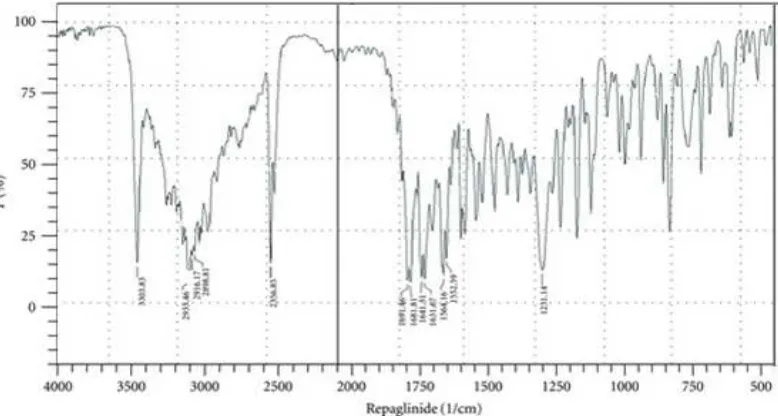
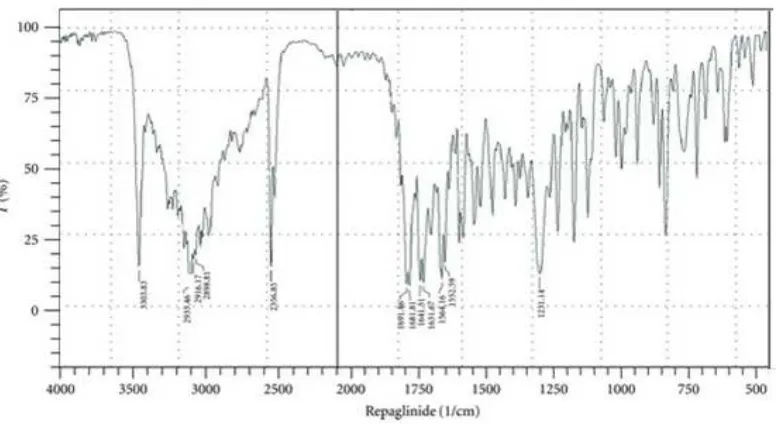
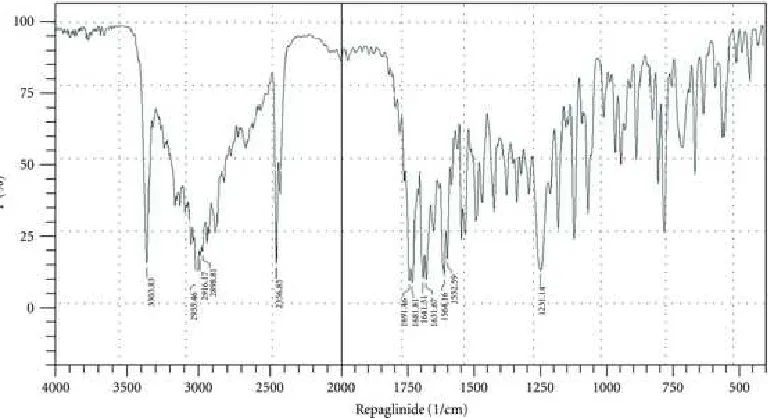
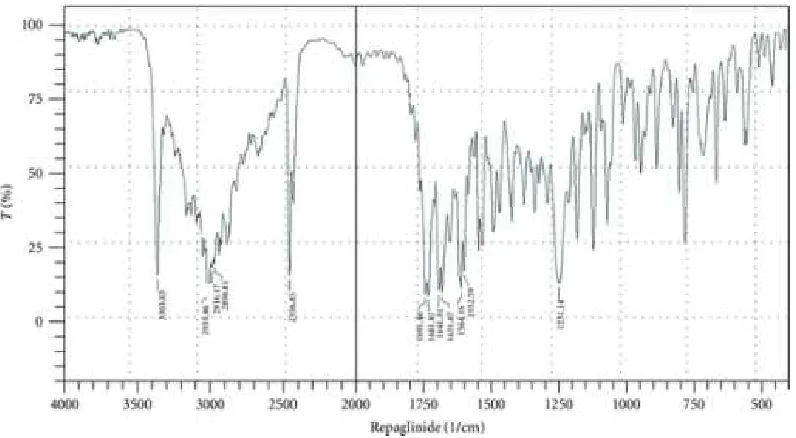
6.2 DRUG-EXCIPIENT COMPATIBILITY STUDY BY FTIR
Infra red spectroscopy is one of the most widely used tools for purity analysis of drugs
in pharmaceutical Industry. Fourier Transform IR spectra were recorded using bruker
Germany. IR spectrophotometer. KBr powder was used to prepare pellet for sampling.
Chapter 6 Materials and Methods
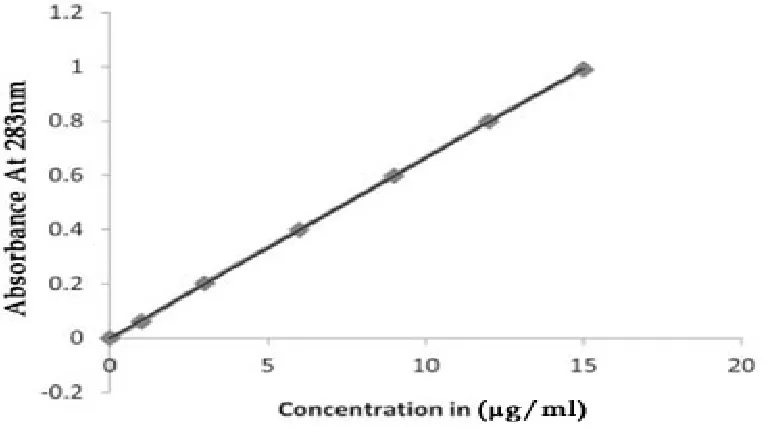
6.3 PREPARATION OF STANDARD CURVE
The calibration curve is based on the spectrophotometry. The maximum
absorption was observed at 283nm.
The Standard solution in repaglinide in pH acetate buffer 10mg of repagilinde
is accurately weighed and dissolved in 10ml containing methanol in a volumetricflask.
The various concentrations of repaglinide prepared are 10, 20, 30, 40, 50, 60, ug/ml.
The absorbance of various solutions of repaglinide are determined
spectrophotometricaly at 283nm employing UV double beam spectrophotometer using
acetate buffer of pH.
6.4 PREPARATION OF SOLID DISPERSION AND PHYSICAL MIXTURE63 : 6.4.1. Solid dispersions prepared by melting the carrier
Solid dispersions (SDs) preparations containing different weight ratios of
repaglinide in PEG6000 (1:1, 1:3, 1:5) were prepared by the melting method.
repaglinide was added to the melted PEG 6000 at 75oC and the resulting homogenous preparation was rapidly cooled in a freezing mixture of ice and sodium chloride, and
stored in desiccators for 24h.Subsequently, the dispersion was ground in a mortar and
sieved through 100#
6.4.2.Physical Mixture
Physical mixture (PMs) having the same weight ratios were prepared by
thoroughly mixing appropriate amounts of repaglinide and PEG 6000 in a mortar until
a homogenous mixture was obtained. The resulting mixture were sieved through a
100# sieve and denoted as PM.
6.5 Characterization of solid dispersions of repaglinide with PEG 600064 6.5.1 Drug content
About 10mg of drug equivalent of physical mixture and solid dispersion
(theoretical) were weighed accurately and transferred to 50ml volumetric flask to
which 10ml methanol was added and sonicated for 15min and volume was made up
with methanol. From this stock solution further dilution were done and assayed using
Chapter 6 Materials and Methods
6.5.2 Phase-Solubility Study
Phase-solubility studies were carried out to evaluate the possible solubilizing
effect of the carrier by adding an excess amount of drug to flask containing 10ml of
aquous solutions containing increasing concentrations of PEG6000.The flask were
placed in a mechanical shaker at 75rpm and room temperature for 24hour.After 24
Hours the solutions were filtered and analysed by UV-Spectrophotometer at 283nm..
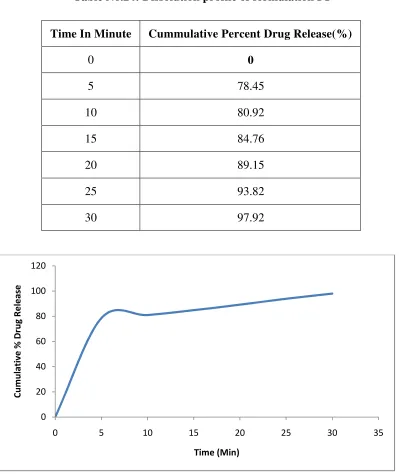
6.5.3 Dissolution Studies:
Dissolution studies of repaglinide in powder form, SDs, and PMs were
performed by using the USP type II paddle apparatus at the paddle rotation speed of
75 rpm in 900ml of pH 5 acetate buffers as a dissolution medium at 37±0.5 °C. The
SDs or PMs Equivalent to 2mg of repaglinide was weighed using a digital balance
and added into the dissolution medium. At the specified times (every 10 min for 2
hours), 10ml samples were withdrawn by using syringe filter (0.45 µm) and then
assayed for repaglinide content by measuring the absorbance at 283 nm using a
UV-Visible spectrophotometer. Fresh medium (10ml), which was prewarmed at 37 °C,
was added to the dissolution medium after each sampling to maintain its constant
volume throughout the test.
6.5.4. Fourier transforms IR spectroscopy:
Fourier-transform infrared (FT-IR) spectra were obtained by using Bruker
Germany FTIR. The samples (repaglinide or SDs or PMs) were previously ground
and mixed thoroughly with potassium bromide, an infrared transparent matrix, at 1:5
(Sample/KBr) ratio, respectively. The KBr discs were prepared by compressing the
powders at a pressure of 5 tons for 5 min in a hydraulic press.
6.6. Preparation of natural superdisintegrants (plantago ovata seed powder, mucilage and husk powder)65:
The powder of seeds and husk were prepared by an automatic grinder and
sieved (#80). Then it stored in a dedicator until use .For isolation of seed mucilage, the
cleaned seeds of Plantagoovata were soaked in distilled water 48 hrs and then boiled
few minutes so that mucilage was completely released in to water. This material
Chapter 6 Materials and Methods
volume of acetone was added to the filtrate so as to precipitate the mucilage .The
mucilage was dried in oven (less than 60oC), powdered, sieved (# 80) and stored in desiccators until use.
The natural super disintegrants were evaluated for their physicochemical
properties. The swelling index is calculated, it is the volume in milliliters that is
occupied by 1g of drug or any substance after it has swollen in an aqueous liquid for4
hr. The physical mixture of drug complex with this super disintegrants was allowed to
stand for 7 days and the assay of drug was performed for compatability studies.
Preparation of the prepared natural super disintegrants were evaluated for
swelling factor, bulk density, tapped density, angle of repose. Angle of reposewere
calculated according to the formula procedure in 6.1.4 bulk density and tapped density
were found out using the procedure given compressibility and hausner’s ratio were
found out according to the formula 6.1.4.
6.7. FORMULATION OF IMMEDIATE RELEASE TABLETS OF REPAGLINIDE.66
Different repaglinide Immediate Release Tablets were prepared according to
the proportions given in the table no 9. The raw materials passed through a screen (#
60). Prior to mixing powdered separately the repaglinide Solid dispersion, and
weighed the amount equivalent to 10 mg repaglinide, was mixed with other excipients
and compressed proton mini press tablet punching machine. All formulation prepared
Chapter 6 Materials and Methods
FORMULATION OF IMMEDIATE RELEASE TABLET
Table No - 7
S. No.
Ingredient
Name F1 F2 F3 F4 F5 F6 F7 F8 F9 F10 F11 F12
1 1:5 Solid Dispersion equivalent to 2mg Repaglinide
10 10 10 10 10 10 10 10 10 10 10 10
2
Micro crystalline Cellulose
92 92 92 92 92 92 92 92 92 92 92 92
3 Mannitol 80.0 78.0 80.0 78.0 80.0 78.0 80.0 78.0 80.0 78.0 80.0 78.0
4 Isphagol
Mucilage 10 12.0 - - - -
5 IsphagolPowder - - 10.0 12.0 - - - -
6 Iphagol husk
powder - - - - 10.0 120 - - - -
7 Cross Povidone - - - 10.0 12.0 - - - -
8 CMC - - - 10.0 12.0
9 SSG - - - 10.0 12.0 - -
10 Talc 2 2 2 2 2 2 2 2 2 2 2 2
11 Aspartame 1 1 1 1 1 1 1 1 1 1 1 1
12 Aerosil 4.0 4.0 4.0 4.0 4.0 4.0 4.0 4.0 4.0 4.0 4.0 4.0
13 Orange Flavour 1 1 1 1 1 1 1 1 1 1 1 1
Total weight 200 200 200 200 200 200 200 200 200 200 200 200
6.8. Evaluation of Immediate Release Tablet67: 6.8.1 PHYSICALAPPEARANCE
Prepared immediate release Tablets were evaluated for the smoothness and
absence of cracks, chips and other undesirable characteristics
6.8.2 WEIGHT VARIATION
Twenty tablets were randomly selected and weighed to determine the average
weight and were compared with individual tablet weight. The percentage weight
variation was calculated. As per Indian Pharmacopoeia specification, tablet with an
average weight between 80 – 250 mg, percentage deviation should not more than ±o.5
% and the tablet with an average weight more than 250 mg should not be more than ±