
Toolpath Interpolation and Smoothing for Computer
Numerical Control Machining of
Freeform Surfaces: A Review
Wen-Bin
Zhong
1,2Xi-Chun
Luo
1Wen-Long
Chang
1Yu-Kui
Cai
1Fei
Ding
1Hai-Tao
Liu
3Ya-Zhou
Sun
31 Centre for Precision Manufacturing, Department of Design, Manufacture & Engineering Management (DMEM), University of Strathclyde, Glasgow G1 1XJ, UK
2 Engineering and Physical Sciences Research Council (EPSRC) Future Metrology Hub, Centre for Precision Technologies, University of Huddersfield, Huddersfield HD1 3DH, UK
3 School of Mechatronic Engineering, Harbin Institute of Technology, Harbin 150001, China
Abstract: Driven by the ever increasing demand in function integration, more and more next generation high value-added products, such as head-up displays, solar concentrators and intra-ocular-lens, etc., are designed to possess freeform (i.e., non-rotational symmetric) surfaces. The toolpath, composed of high density of short linear and circular segments, is generally used in computer numerical control (CNC) systems to machine those products. However, the discontinuity between toolpath segments leads to high-frequency fluctuation of feedrate and acceleration, which will decrease the machining efficiency and product surface finish. Driven by the ever-increasing need for high-speed high-precision machining of those products, many novel toolpath interpolation and smoothing approaches have been pro-posed in both academia and industry, aiming to alleviate the issues caused by the conventional toolpath representation and interpola-tion methods. This paper provides a comprehensive review of the state-of-the-art toolpath interpolation and smoothing approaches with systematic classifications. The advantages and disadvantages of these approaches are discussed. Possible future research directions are also offered.
Keywords: Computer numerical control (CNC) , toolpath, interpolation, smoothing, freeform surface.
1
Introduction
Freeform surfaces are often defined as surfaces that
are non-rotationally symmetric[1]. 3D products with
free-form surfaces, such as impellers, optics, biomedical im-plants etc., have been widely used in areas like power,
semiconductor and medical[2–4]. They are playing
increas-ingly important roles in improving our daily standards of living. For instance, thousands of hip, knee, ankle, elbow and shoulder joint replacement operations take place in
the UK every year[5], which bring pain relief and
mobil-ity improvement to many patients. Freefrom surfaces are often designed to satisfy or improve a specific functional requirement. Sub-micrometer form accuracy and nano-meter surface finish are often required to guarantee the designed functionality. Multi-axis computer numerical control (CNC) machining has been a key technology for
fabricating such surfaces. Fig. 1 illustrates how the
geo-metric data of freeform surfaces is converted to a CNC machining program in current practice. The product sur-face is firstly designed in computer-aided design (CAD) software. Then the computer-aided manufacturing (CAM) software is executed to convert the cutter con-tact (CC) path into the cutter location (CL) path. The CL path is usually divided into a large number of piece-wise linear and circular segments as the toolpath to guide the movement of machine axes. Given a sufficient num-ber of segments, the toolpath can approximate the origin-al surface accurately. Finorigin-ally, the CNC is responsible for interpolating the toolpath to finish the machining. This conventional toolpath representation method will result in the following undesirable problems:
1) The original freeform surface and CC path are rep-resented in continuous parametric form in CAD and CAM, as regulated by standards such as the initial
graphics exchange specification (IGES)[6] developed by
the American national standard, and the ISO 10303
standard[7] which is informally known as standard for the
exchange of product model data (STEP). However, only the linear interpolation (G01) and circular interpolation (G02 and G03), which are defined in the RS274D
stand- Review
Special Issue on Improving Productivity Through Automation and Computing
Manuscript received March 20, 2019; accepted June 12, 2019 Recommended by Associate Editor Xian-Dong Ma
© The Author(s) 2019
International Journal of Automation and Computing
ard[8] and the ISO 6983 standard[9–11], are supported
across all CNCs. The discretization of continuous curves into linear and circular segments will inevitably
intro-duce the chord error, as shown in Fig. 2. There is a
trade-off between the toolpath approximation accuracy and the size of the part program. Shorter segments can decrease the chord error, but the number of segments will grow dramatically, which will pose a huge burden to the data transfer and CNC memory.
2) Due to the discontinuity of the linear and circular segments at the join points, the machine axes will experi-ence step velocity change at the corner. It requires infin-ite acceleration to achieve the movement, which will sat-urate the motor drives. Therefore, the conventional
lin-ear and circular interpolators have adopted the "S-curve"
velocity profiles, i.e., decrease the feedrate gradually when approaching the corner and start accelerating again at the beginning of the next segment. However, the fluc-tuation of feedrate and acceleration will decrease the av-erage feedrate and cause vibration, i.e., lower productiv-ity and surface finish. This problem will get even worse as high-density short segments are usually used when ma-chining freeform surfaces. Lengthy mama-chining time is of-ten expected, as an example, it took 42 hours to machine
a micro inducer as illustrated in Fig. 3. Moreover, the
un-desirable "dwell marks" will be left on the workpiece[14],
while good surface finish is often required.
The gap between the well-established freeform sur-faces representation method in CAD and the very lim-ited toolpath representation method in CNC has
attrac-ted a lot of attention since the 1990s. Fig. 4 illustrates a
promising solution to bridge the gap, where parametric curves are used as the toolpath for CNC. Mathematically, the parametric curve uses an explicit function of an inde-pendent parameter to define each coordinate
C(u) = (x(u), y(u), z(u)), a≤u≤b (1)
C(u)
where is the vector function of a curve with the
independent variable u, which is defined in the interval
[a, b].
Parametric representation exhibits many advantages
in CAD/CAM, as summarized by Piegl and Tiller[16],
most important advantages are that it is easy to extend to higher dimensions, intuitive for geometric design, etc. Therefore, it becomes the de facto standard for geomet-ric data exchange. It is also very convenient for multi-axis CNC control, where the reference point can be directly
calculated with the given parameter u. Compared with
CAM CNC
G/M codes
CAD Curve
segmentation Part program Motion planning
Reference points Control loops
Machine tool Linear/Circular real-time interpolator Line/Arc
segments
Curve representation
CAD model Cutter offset & path scheduling CL path
CC path
Fig. 1 Freeform surfaces data: from design to manufacturing (Adapted from [12])
Cutting tool Chord error
CC path
Linear segment
Fig. 2 Chord error in conventional toolpath representation method
1 mm
500 mm 500 mm
Fig. 3 Micro inducer machined by 5-axis micro-milling[13]
Segmentation
Parametric curve represented
model
Parametric curve information
Parametric curve interpolator
Tool motion
Man-machine interface
device
CAD CNC
Fig. 4 Freeform surface machining with parametric interpolation[15]
[image:2.595.327.528.369.591.2] [image:2.595.58.278.383.587.2] [image:2.595.313.544.623.740.2] [image:2.595.68.264.628.713.2]
the conventional linear and circular toolpath, it can avoid the cumbersome part program because it conveys much more information. And the high frequency fluctuation of the feedrate and acceleration can be eliminated due to the higher continuity provided by the parametric curve. Many different types of parametric curves are used for toolpath representation, such as pythagorean-hodograph
(PH) curves[17], NURBS (non-uniform rational
B-spline)[18], subdivision curves[19], etc. However, the
imple-mentation of these parametric curves remains a challenge. Proprietary parametric curve interpolation solutions are provided by some CNC manufacturers, but, they are not compatible with each other. The standard for parametric interpolation has not been finalized yet. Alternatively, the CNC built-in toolpath smoothing function can overcome the drawbacks of conventional toolpaths to some extent, while keeping the current toolpath generation approach unchanged, which can help avoid the high expense of spe-cialized CAM postprocessors and trainings for the new parametric interpolation on the factory floor.
This paper aims to provide a comprehensive review on the development of the toolpath interpolation and smoothing approaches. The technique routes are classi-fied, the advantages and disadvantages are discussed. The rest of the paper is organized as follows: The novel toolpath interpolation and smoothing approaches are re-viewed in Sections 2 and 3, respectively. Section 4 con-cludes the paper with discussions.
2
Parametric
toolpath
interpolation
2.1
Overview
Table 1 summarizes the interpolation features of five commercial CNC systems, which have been widely de-ployed in the industry. All the listed CNC systems sup-port two or more advanced interpolation methods for spe-cific parametric curves, in addition to the standard linear and circular interpolations. However, those methods are patented and use different kind of syntaxes, the imple-mentation details are not disclosed. Particularly, the posi-tion-velocity-time (PVT) interpolator has been promoted by Delta Tau and Aerotech, which is actually a cubic Hermite spline interpolation method, and it has seen its wide application in slow tool servo (STS) turning of
free-form surfaces[20–22].
The problem of parametric curve interpolation can be expressed as, given:
C(u)
1) the parametric curve ;
2) the command feedrate F;
3) the interpolation period T;
4) the current (k-th interpolation period) motion
status: feedrate fk and acceleration ak;
C(uk)
5) the current reference point .
C(uk+1)
Calculate the reference point for the next
in-terpolation period. And the result should be subject to
machine dynamics constraints and chord error
tolerance[23]:
1) Axial velocities and accelerations should be limited to avoid saturating the drive;
2) The jerk should be limited to avoid the excitation of vibrations in components in the machine assembly;
3) The chord error increases with feedrate and curvature, the feedrate should be limited to achieve high interpolation accuracy, while the productivity should be kept as high as possible.
Therefore, the parametric curve interpolation prob-lem becomes an optimization probprob-lem. The performance index is the total travel time along the curve, and the constraints include the machine dynamics and the chord error tolerance. There are two fundamental parts to be solved for the problem:
1) Parameter sampling, i.e., given the desired feedrate
fk+1, determine the value of the parameter uk+1, which
corresponds to the next reference point.
2) Feedrate scheduling, i.e., given the current motion status and constraints, determine the value of the
de-sired feedrate fk+1, which is used to calculate the next
reference point.
2.2
Parameter
sampling
Currently, there are two technical routes to establish the relationship between the feedrate and the parameter,
i.e., arc length parametrization and recursive Taylor′s
ex-pansion.
2.2.1 Arclengthparameterization
The feedrate is the differential of arc length over time, if the curve can be parameterized with respect to its arc length, then the parameter sampling will become straight-forward. However, the arc length parametrization is ex-tremely difficult, as it requires solving the inverse func-tion of the non-linear integral funcfunc-tion for arc length
evaluation[23]
s(u) =
∫ u a
C˙(u)du=
∫u a
√
˙
x(u)2+ ˙y(u)2+ ˙z(u)2du (2)
∥∥
where s is the arc length, a is the start value of the
parameter and computes the Euclidean Norm. Wang
Table 1 Interpolation feature of commercial CNCs
CNCs FANUC Series 30i[24] SIEMENS SINUMERIK
840D[25]
HEIDENHAIN iTNC
530[26]
Delta Tau Power
PMAC[27] Aerotech A3200[28]
Interpolation Line, Circle, Exponential, Helix, Involute, Cylindrical, NURBS
Line, Circle, Helix, Spline, Polynomial, Involute
Line, Circle, Helix, Spline
Line, Circle, PVT, Spline
Line, Circle, PVT, Bézier
[image:3.595.52.549.696.742.2]
and Yang[29] worked out a solution for near arc length
parameterization of a set of discrete points with a composite quintic spline, second order continuity was
achieved between each segment. Later, Wang et al.[30]
improved the idea by imposing additional constraint at the knots, third order continuity and no unwanted
oscillations were reported. Fleisig and Spence[31] extended
the work to five-axis machining, a near arc-length parameterized quintic spline was introduced to represent the tool position, while a near arc-length parameterized
quintic spherical Bézier was introduced to represent the
tool orientation, and the coordinated motion was accomplished with a reparameterization spline. However, for the given parametric curves, the near arc length parameterization will introduce geometric deviation to the original toolpath. Therefore, this technique is best suited for the postprocessor of CAM.
Farouki and Shah[32] introduced PH curves as the
toolpath for freeform surface machining. The PH curves are special parametric curves with the distinguishing property that their derivatives or hodographs satisfy the Pythagorean condition
˙
x(u)2+ ˙y(u)2+ ˙z(u)2=σ(u)2 (3)
σ(u)
where is a polynomial. This feature enables PH
curves to calculate their arc length analytically, which makes the parameter sampling much easier. Later,
Farouki et al.[33] extended the PH curve to three
dimensional machining.
Erkorkmaz and Altintas[34] proposed to use a feed
cor-rection polynomial to map the desired arc length to the correct curve parameter. The feed correction polynomial was obtained by applying a least square fit over the arc length and curve parameter values. A 7th order polyno-mial was generated for the correction purpose, and the second order continuity was achieved at the connection
boundaries, as shown in Fig. 5. This technique was later
incorporated in the development of more advanced
al-gorithms[35–37]. Similarly, Lei et al.[38] used a cubic or fifth
degree Hermit spline to map the arc length with the para-meter in each subinterval of the curve. This kind of tech-nique is carried out off-line and can be incorporated into the postprocessor of CAM.
2.2.2 RecursiveTaylor′sexpansion
To determine the sampled point for each
interpola-u(t)
V(t)
tion interval, the reparameterization of u with time t is
required. However, the solution of the required function is generally difficult to get, but its differential can be
derived with the following steps. The feedrate along
the curve is defined by[39]
V (t) = ds
dt =
(
ds du
) (
du dt
)
. (4)
Transforming the above equation yields
du dt =
V (t)
ds du
(5)
where the arc length differential equation is given by
ds du =
√
˙
x(u)2+ ˙y(u)2+ ˙z(u)2. (6)
Substituting (6) into (5) yields
du dt =
V (t)
√
˙
x(u)2+ ˙y(u)2+ ˙z(u)2
. (7)
Shpitalni et al.[40] proposed to apply Taylor′s
expan-sion around t = kT, i.e., the k-th interpolation period, to
(7), which yields the relationship between the feedrate and the parameter
uk+1=uk+Tu˙k+
(
T2
2
)
¨
uk+higher order terms (8)
˙
u du
dt u¨
d2 u dt2
where denotes and denotes . They have
deduced the first order approximation of the Taylor′s
expansion
uk+1=uk+
V(t)T
√
˙
x(uk)2+ ˙y(uk)2+ ˙z(uk)2
. (9)
They also pointed out that if the interpolation period
T is very small and the curve does not have small radii of
curvature, the first order approximation is adequate.
Fa-nuc has applied this work to its NURBS interpolator[41].
Cheng et al.[12] worked out the second order
approxima-tion for improved accuracy and applied it to their NURBS command generator
uk+1=uk+
V(t)T+
(
T2
2
) (
dV (t) dt
)
√
˙
x(uk)2+ ˙y(uk)2+ ˙z(uk)2
−
(V (t)T)2( ˙x(uk) ¨x(uk)+˙y(uk) ¨y(uk)+˙z(uk) ¨z(uk)) 2(x˙(uk)2+ ˙y(uk)2+ ˙z(uk)2)2
. (10)
Farouki and Tsai[42] compared the accuracy of the
Spline parameter u
Sk
s lk
o Arc displacement
Actual displacement Feed correction polynomial
Fig. 5 Feed correction polynomial[34]
[image:4.595.77.254.644.725.2]
Taylor′s expansion method with the PH curve arc length parametrization method. A quintic PH curve with strong curvature variation and uneven parameterization was
used in the experiment. A constant feedrate of 1 000 ipm
(25 400 mm/min) and a sampling frequency of 512 Hz
(in-terpolation period ≈ 1.95 ms) were used for the
interpola-tion. The "step size" was defined as the distance
trav-elled along the curve within each interpolation period,
which should be a constant value of 0.032 552 in
(0.826 820 8 mm). The "arc length error" was defined as
the difference between the actual distance travelled along the curve and the ideal distance over a period of time.
Fig. 6 shows the results from the first and second order
Taylor′s expansion methods with the PH curve method.
The PH curve method can accurately realize the fixed step size and almost zero arc length error, as the arc length of the PH curve can be calculated analytically.
The Taylor′s expansion methods, however, exhibit
fluctu-ations in step size as well as arc length error. The second
order Taylor′s expansion method is a great improvement
over the first order method, the step size error and arc length error were decreased by roughly two orders of magnitude. Despite the advantages of the PH curve method, the lack of support in CAD/CAM limits its
ap-plications in the industry. On the contrary, the Taylor′s
expansion method can be applied to any parametric curves, but the fluctuation of feedrate is inevitable due to the truncation of the high order terms.
Yeh and Hsu[43] introduced a compensatory value for
the Taylor′s expansion method. The value was obtained
according to the distance between the previous interpola-tion point and an estimated point. The interpolainterpola-tion sim-ulation on a NURBS curve showed that the algorithm can reduce the feedrate deviation by 50 times compared
with the second order Taylor′s expansion method. Zhao
et al.[44] proposed the arc length compensated Taylor′s
ex-pansion (ACTE) method to eliminate the feedrate fluctu-ation caused by the truncfluctu-ation error. A 33% reduction in feedrate fluctuation was achieved compared with
conven-tional Taylor′s expansion. Chen et al.[45] developed the
augmented Taylor′s expansion (ATE) method for
B-spline curves. The Heun′s method[46], which is an
im-proved method for calculating the numerical solution to the initial value problem, was used to attain a better ap-proximation to the true parameter value, and was calib-rated using offline computed knot-length pairs. A more
accurate result than the second order Taylor′s expansion
was reported. Those compensation measures can improve the interpolation accuracy, but there is always a notice-able increase in computation time.
2.3
Feedrate
scheduling
The feedrate scheduling plays a vital role in obtaining satisfactory productivity by exploiting the dynamic cap-abilities of the machine tool along the parametric curve. It is a non-trivial optimization problem, which has been
extensively studied in robotic manipulator control[47–49].
The solution to the time-optimal problem usually
in-volves "bang-bang" control, i.e., at least one constraint
First order 1 000 ipm 32.9
32.7
32.5
32.3
Step size (10
−3 in)
Second order 1 000 ipm 32.560
32.556
32.552
32.548
0
−10
−20
−30
−40
Arc length error (10
−3 in)
0.05
0
−0.05
−0.15 −0.10
0 0.2 0.4 0.6 0.8 1.0 1.2 1.4 Time (s)
0 0.2 0.4 0.6 0.8 1.0 1.2 1.4 Time (s)
Fig. 6 Performance of the first and second order Taylor expansion method compared with the PH curve interpolator. The dashed lines are exact “reference” data from the PH curve method, while the solid lines are data from the Taylor′s expansion methods[42].
[image:5.595.103.498.454.721.2]
reaches its upper or lower bound throughout the motion.
Timar et al.[50] demonstrated that the square of the
time-optimal feedrate for a polynomial curve can be determ-ined as a piecewise-rational function of the curve para-meter, however, it is only subject to the prescribed
accel-eration bounds of each axis. Later, Timar and Farouki[51]
improved the idea by imposing the speed-dependent axis acceleration bounds arising from the output-torque char-acteristics of axis drive motors. This algorithm was imple-mented on an open-architecture software controller for 3-axis CNC milling.
Dong and Stori[52, 53] proposed a generalized two-pass
feedrate optimization algorithm. The global optimality was demonstrated by proving the local optimality of each
trajectory segment. Dong et al.[54] later extended the
bid-irectional scan algorithm by introducing the jerk con-straint for the feedrate optimization process. The im-proved algorithm can reduce overshoot errors by more than an order of magnitude over the conventional
ap-proach with constant feedrate and G-codes. Compared
with the time-optimal approach without jerk constraint, this algorithm can improve cornering errors by approxim-ately 50%. The effectiveness of this algorithm was attrib-uted to the suppression of high-frequency structural
excit-ations caused by the jerk, as illustrated in Fig. 7. The
di-mension of the optimization problem will be increased with the addition of the other constraints, and the time-optimal solution will no longer be achievable with those techniques. Therefore, near time-optimal solutions are favored with less computational burden.
0.6 0.4 0.2 0
−0.2 −0.4 −0.6
Magnitude (V)
0 1 2 3 4 5 6
Time (s)
1.6 1.4 1.2 1.0 0.8 0.6 0.4 0.2
Power density (V
2/Hz)
0
100
0 50 150 200 250 300 350 400 450 500 Frequency (Hz)
0.6 0.4 0.2 0
−0.2 −0.4 −0.6
Magnitude (V)
0 0.5 1.0 1.5 2.0 2.5 3.0 3.5 4.0 4.5 5.0 Time (s)
1.6 1.4 1.2 1.0 0.8 0.6 0.4 0.2
Power density (V
2/Hz)
0
100
0 50 150 200 250 300 350 400 450 500 Frequency (Hz)
0.6 0.4 0.2 0
−0.2 −0.4 −0.6
Magnitude (V)
0 1 2 3 4 5 6 7 8 9 Time (s)
1.6 1.4 1.2 1.0 0.8 0.6 0.4 0.2
Power density (V
2/Hz)
0
100
0 50 150 200 250 300 350 400 450 500 Frequency (Hz)
Fig. 7 Magnitude and power spectrum of acoustic signals among the trajectories with jerk constraint (top row), without jerk constraint (middle row) and G-code trajectory (bottom row). Left column: acoustic magnitude. Right column: power spectrum[54].
[image:6.595.97.499.271.720.2]
Yeh and Hsu[15] worked out the analytical
relation-ship between feedrate, radius of curvature and chord er-ror, and proposed to change feedrate adaptively to limit
the chord error. Yong and Narayanaswami[55] improved
the idea by detecting feedrate sensitive corners offline so that the chord error and acceleration constraints can be
satisfied simultaneously. Erkorkmaz et al.[37] introduced
the process mechanics constraint during the feedrate scheduling for freeform milling. A specific resultant cut-ting force was maintained by compucut-ting the workpiece-tool engagement along the workpiece-toolpath and setting local feedrate limits. The overall feedrate optimization scheme
is illustrated in Fig. 8. The toolpath is planned in
com-mercial CAM software, the cutting force can be pre-dicted from the tool engagement geometry and the local feedrate limit is imposed to confine the resultant cutting
force according to the cutting force model. Guo et al.[56]
added the axis tracking error to the constraints. They es-tablished the relationship between the tracking error and the input signal of the high-order servo system. They also proved that the tracking error constraint can be reduced to a constraint on a linear combination of the
accelera-tion and jerk. Jia et al.[57] tackled the servo-lag induced
contour error during feedrate scheduling for high-preci-sion machining.
The lookahead technique is an effective approach to solving the problem of feedrate scheduling with many
constraints[58]. Annoni et al.[59] split the NURBS curve
in-to several segments according in-to its curvature and a dif-ferent feedrate limit was chosen for each segment to ful-fill the constraints. Then, the lookahead module was used to calculate the final feedrate of a segment considering the segment length and the following segments. Beudaert
et al.[60] proposed the velocity profile optimization
(VPOp) method, the lookahead technique was used to calculate the necessary feedrate reduction to approach a
sharp corner. Jin et al.[61, 62] implemented the lookahead
method by calculating the length of deceleration re-peatedly at each interpolation period, which allows rapid
reaction to sensitive areas on the curve. Wang et al.[63]
developed a trigonometric velocity scheduling algorithm, which consisted of two lookahead processes. In the pre-in-terpolation lookahead phase, the curve was scanned and classified into three cases according to the feedrate vari-ation. The explicit feedrate scheduling functions were cal-culated in the following lookahead stage. Smaller chord error was achieved than the S-curve and cubic
polynomi-al feedrate scheduling methods. Zhong et polynomi-al.[23] developed
the real-time interpolator for parametric curves (RTIPC) with feedrate lookahead and acceleration lookahead, as
shown in Fig. 9. The feedrate lookahead module checks
feedrate limits along the curve considering the chord er-ror and maximum axis velocity constraints, then the ac-celeration module validates the initial lookahead results against jerk and maximum axis acceleration constraints. The lookahead length was dynamically adjusted to mimize the computation load. Ten times productivity in-crease was achieved compared with the linear interpolat-or, and smoother motion profiles than the PVT interpol-ator were reported as well.
2.4
PVT
interpolator
Instead of specifying the exact toolpath for the free-form surface machining, the PVT interpolator only re-quires the user to provide the start and end positions of each segment, the velocities at both ends, as well as the travelling time. The interpolator will use a third order polynomial to interpolate between the given positions and velocities
C(t) =a0+a1t+a2t2+a3t3, 0≤t≤T s (11)
C(t)
where is the curve with the time parameter t, Ts is
(a)
(e)
(b) (c) (d)
(f) (g)
(k) (j) (i)
(h)
Cutting process
Toolpath & drives
CAM model & CL data Tool engagement conditionEngagement Cutting force model Resultant
cutting force Force limit
Feed limit
Feedrate ṡ
ṡ
ṡ
s
s
s Cutting force overload!
Limit
Feed limits due to cutting
Feed limits due to drives y
x s lk+1
lk lk+2
CL point Sub-segments:
#1 #3 #2#4
Update
B-spline fitting & refinement u
û=f0s7+f1s6···+f7 Numerical evaluation point s Feed correction polynomial
rss rs
rsss r=r(u(s))
Geometric derivatives
Feasibility not guaranteed!
Limit
Limit
Feed profiling & final trajectory
G93 G01(160 Hz inverse time) X−43.75 Y−6.000 Z4.431 F9600 X−43.75 Y−5.999 Z3.384 F9600 …
G94
Optimized NC code
Position
command y
x
z
Time Trajectory interpolation
Optimized feed profile
Jerk limited feed profiling with uninterrupted accelerations
Fig. 8 Feedrate scheduling with process mechanics constraint[37]
[image:7.595.79.519.532.730.2]
{ai}
the total travelling time, are the coefficients of the
polynomial, and can be determined by the given boundary conditions
C(0) =a0
C(T s) =a0+a1T s+a2T s2+a3T s3 ˙
C(0) =a1 ˙
C(T s) =a1+ 2a2T s+ 3a3T s2
(12)
C(0) C(T s)
˙
C(0) C˙(T s)
where and are the start and end points and
and are the corresponding velocities. Unlike
the geometric toolpath, the PVT interpolator also incorporates the feedrate scheduling information
˙
C(t) =a1+ 2a2t+ 3a3t2 ¨
C(t) = 2a2+ 6a3t ...
C(t) = 6a3
(13)
˙
C(t) C¨(t) C...(t)
where , and are the velocity, acceleration
and jerk, respectively. The PVT interpolator can achieve very smooth motion profiles within each segment. However, it can only maintain velocity continuity at the boundaries, as the end velocity of current segment is the starting velocity of the next segment. The acceleration is not necessarily continuous at the boundaries, which will lead to vibration.
The PVT interpolator allows great flexibility for the user to control the geometric profiles and motion profiles,
but the machine dynamics and other constraints are not considered. The planned toolpath is not as intuitive as the parametric curves or the linear and circular toolpath, and the deviation between the planned toolpath and the CC path is difficult to calculate. Great care must be taken when using the PVT interpolator, or excessive geo-metric error or vibration will be resulted.
3
Toolpath
smoothing
techniques
3.1
Overview
Linear and circular segments are still widely used as the toolpath on the factory floor due to the straightfor-ward coding and good support from CNC. However, they are increasingly becoming the bottleneck of the high-speed high-precision machining of freeform surfaces. The CNC build-in toolpath smoothing algorithms have been extensively studied both in academia and industry, as they can help eliminate the fluctuation of feedrate and acceleration while keeping the current practice of CNC machining without further training on the operator and huge investment in the advanced CAM postprocessors.
The toolpath smoothing methods can be classified in-to local smoothing and global smoothing according in-to the smoothing scope. Local smoothing works with two adja-cent segments, while global smoothing can act on a group of segments. These methods can also be classified into curve-based smoothing and velocity blending smoothing according to the smoothing mechanism. Curve-based smoothing is a two-step solution. Firstly, a parametric curve is used either to connect two segments at the corner or to approximate a group of segments. Then, the specially designed parametric curve interpolator is used to interpolate the parametric curve. By contrast, the velo-city blending method is a one-step solution, which sched-ules the velocity profile of each axis directly at the corner and creates a smooth transition. Table 2 summarizes the recently developed toolpath smoothing methods.
The degree of continuity is usually used to evaluate the performance of smoothing algorithms. There are two kinds of continuity associated with a curve, i.e.,
geomet-ric continuity and parametgeomet-ric continuity[64]. If the n-th
derivatives of both curves at the join point have the same
direction, then Gn geometric continuity is achieved at the
join point. If the derivatives have the same magnitude as
well, then Cn parametric continuity is achieved. For
free-form surfaces machining applications, at least C2
continu-ity is required to guarantee continuous veloccontinu-ity and accel-eration along the toolpath.
3.2
Local
curve
corner
rounding
Table 2 shows that the majority of researchers fo-cused on the local curve corner rounding method, as it can solve the corner transition problem in an analytical
Given curve
C(u)
Calculate lookahead length
Feedrate lookahead
Acceleration
lookahead Intelligentactivation Buffer Multi-cases
No
No
Yes
Yes Calculate servo
reference point
Curve end
End
Special cases
Fig. 9 Overall design of the RTIPC with feedrate and acceleration lookahead[23]
[image:8.595.94.242.72.350.2]
way, which minimizes the computational load for real-time CNCs. The SIEMENS SINUMERIK 840D sl
con-troller[65] implements its continuous path mode (G641
etc.) by inserting a spline at the corner. The Aerotech
A3200 controller[7] inserts a circular arc (ROUNDING
ON) for the corner transition, this measure can only
achieve G1 continuity, which means that the acceleration
is not continuous at the join points.
High order parametric curves are generally required to guarantee smooth motion profiles at the corner. The cu-bic spline was used by [60, 65, 70–72], while quintic
B-spline was adopted by [68, 72, 73]. Shi et al.[70] developed
their five-axis corner rounding method with a pair of
quintic PH curves. Bi et al.[71] realized the same purpose
with dual cubic Bézier curves. To discuss the advantages
and disadvantages of the local curve corner rounding method, an example of corner rounding with a cubic B-spline is illustrated.
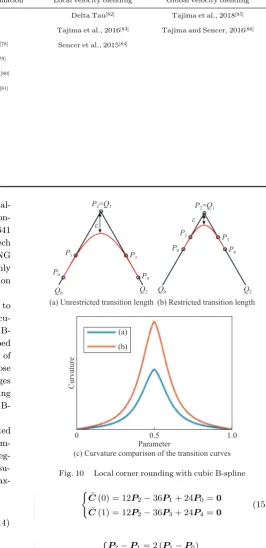
Fig. 10 (a) depicts a cubic B-spline curve is inserted
between the linear segments Q0Q1 and Q1Q2. Five
sym-metric control points are positioned on the linear
seg-ments. The knot vector {0, 0, 0, 0, 0.5, 1, 1, 1, 1} is
usu-ally used to create a symmetric B-spline curve. The max-imum deviation can be calculated analytically as
ε=∥P2−C(0.5)∥=
1
2P2− 1 4P1−
1 4P3
. (14)
The deviation can be easily controlled by carefully
po-sitioning P1 and P3. Since the first three and last three
control points are collinear, the new toolpath is G2 and
curvature continuous at the connecting points P0 and P4.
The smoothness can be further improved if the second de-rivatives of the B-spline at both ends are zero, as shown in (15). Equation (15) can be further simplified to (16),
which gives the positions of P0 and P4.
{
¨
C(0) = 12P2−36P1+ 24P0=0 ¨
C(1) = 12P2−36P3+ 24P4=0
(15)
{
P2−P1= 2 (P1−P0)
P2−P3= 2 (P3−P4).
(16)
It is obvious that this kind of approach is very re-strictive if the toolpath is composed of high density short linear segments, which are very common in the finish ma-chining of freeform surfaces. The inserted B-splines will overlap with each other, which makes the subsequent
in-terpolation impossible. Tulsyan and Altintas[72] proposed
P2=Q1 P2=Q1
P1 P3
P3
P4
P4
P1
P0
P0
Q0 Q2 Q0 Q2
ε ε
(a) (b)
Curvature
0 0.5 1.0
Parameter
(a) Unrestricted transition length (b) Restricted transition length
(c) Curvature comparison of the transition curves
Fig. 10 Local corner rounding with cubic B-spline
Table 2 Summary of the recently developed toolpath smoothing methods
Local curve corner rounding Global curve approximation Local velocity blending Global velocity blending
SIEMENS[65] FANUC[77] Delta Tau[82] Tajima et al., 2018[85]
Aerotech[66] SIEMENS[65] Tajima et al., 2016[83] Tajima and Sencer, 2016[86]
Huang et al., 2017[67] Yang et al., 2015[78] Sencer et al., 2015[84] Yang and Yuen, 2017[68] Fan et al., 2015[79]
Sun et al., 2016[69] Wang et al., 2014[80]
Shi et al., 2015[70] Yuen et al., 2013[81] Bi et al., 2015[71]
Tulsyan and Altintas, 2015[72]
Sencer et al., 2014[73] Zhao et al., 2013[74] Beudaert et al., 2013[75]
Pateloup et al., 2010[76]
[image:9.595.51.548.89.289.2] [image:9.595.275.542.98.648.2] [image:9.595.332.513.392.557.2]
to restrict the length of the transition path to avoid the
overlap problem, i.e., the maximum length of P0P2 and
P2P4 are restricted to the minimum half-length of the
connecting segments, as shown in Fig. 10 (b). However,
this measure will lead to the over-constrained tolerance
and much higher curvature, as shown in Figs. 10 (b) and
10 (c). The feedrate must slow down to avoid saturating
drives at the corner.
3.3
Global
curve
approximation
The global curve approximation method can over-come the limitation of local curve corner rounding. However, it suffers from the difficulty of controlling the
approximation deviation. Piegl and Tiller[16] have carried
out some fundamental work on the B-spline approxima-tion. They proposed an iterative way to approximate a set of points and used the least squares technique to cal-culate the unknown control points. They pointed out that the approximation process was computationally intensive, and wiggles tended to exist in the final curve. Moreover, their method only considered controlling the deviation between the points and the curve, and the deviation within each segment is very likely to be enormous. To avoid this undesirable problem for high-precision free-form surface machining, the Hausdorff distance between the approximation curve and the original toolpath should
be used, as shown in Fig. 11. Hausdorff distance is used to
measure the distance between two subsets in mathemat-ics. In this scenario, the two subsets are the approxima-tion curve and the original toolpath, respectively.
The evaluation of Hausdorff distance is exceptionally
computationally intensive[87], which makes it very
re-strictive for real-time CNCs. The SIEMENS
SINU-MERIK 840D sl controller[65] implements its NC block
compression function (COMPCAD) by approximating consecutive linear segments with 5th degree NURBS. Users are warned that it is very processor and memory-intensive, and should be considered as the last resort
when other measures are not satisfactory. The FANUC
Series 30i-LB controller[77] implements its smooth
inter-polation function (G05.1) by fitting linear points using
cubic splines[89]. Fan et al.[79] developed the global
smoothing method using mixed linear and quartic Bézier
segments. Wang et al.[80] used the Akima curve to fit the
linear toolpath, only C1 continuity was achieved. Yuen et
al.[81] developed a five-axis linear toolpath smoothing
method using a quintic B-spline, the curve fitting
al-gorithm was based on the Piegl and Tiller′s method
without considering the Hausdorff distance.
3.4
Local
velocity
blending
Velocity blending based smoothing methods can achieve higher efficiency than curve-based smoothing methods as they eliminate the curve planning process. The one-step solution detects the corner and schedules axes velocities in the lookahead operation, as shown in
Fig. 12. However, it also has the same limitation as the
local curve corner rounding method. The Delta Tau
Power PMAC controller[82] achieves the fixed-error corner
blending by calculating the blending time based on the move speeds and change in angle at the corner. The blending starts and ends at the blending-time-dependent distance from the corner. The actual blending length will be very limited if the original linear segments are short, thus the feedrate must slow down to avoid saturating the
drives. Sencer et al.[84] developed a method using finite
impulse response (FIR) to filter the discontinuous axes velocities at the corner to achieve a smooth transition. The tolerance was controlled by selecting the
overlap-ping time. Tajima and Sencer[83] proposed the velocity
blending method based on the jerk limited acceleration profile (JLAP). The proposed algorithm was reported to be able to achieve better performance than the spline based corner rounding method by reducing the overall cycle time 6–7%.
3.5
Global
velocity
blending
Tajima and Sencer[86] later realized the limitation of
the local velocity blending method, and developed the look-ahead windowing (LAW) technique to overcome the overlapping problem at adjacent corners. Experiments showed that the improved algorithm can reduce the cycle time up to 45% more than the point to point linear
inter-polation and 10–15% compared to the local Bézier corner
rounding method and FIR based local velocity blending
method. Tajima et al.[85] applied the FIR filtering to a
multiple segmented toolpath, as shown in Fig. 13. The
contour error of filtering circular segments was also con-sidered. Experiments showed that it was able to reduce
the cycle time up to 20% compared with the local Bézier
corner rounding method[85].
Sup inf d (x, y)
xϵX, y ϵ Y
Sup inf d (x, y)
y ϵ Y, x ϵ X X
Y
Fig. 11 Hausdorff distance between curve X and curve Y [88]
[image:10.595.94.240.559.725.2]
4
Conclusions
This paper has provided a review of the toolpath in-terpolation and smoothing methods for CNC machining of freeform surfaces. The following conclusions can be
drawn:
1) The conventional toolpath comprised of linear and circular segments has become the bottleneck for high-speed high-precision machining of freeform surfaces, be-cause the high density short segments results in high
fre-
Y
X Y
X
Vx
Vy
t
t
Vx
Vy
t
t
Fig. 12 Comparison of corner transition without and with velocity blending[82]
(a) Filtering of a rectangular velocity pulse
Velocity
Acceleration
v v′
a′ a′
j′
v′ s′
Time Tv Tv Time
Tv Tv+T1
Tv+T1+T2 T1
T1 T
1T1+T2 T1 T2
T2 T 2 Rectangular vel. pulse
(L=FTv) (L=FTv)
* (Conv.)
* *
* (Conv.) T1
1
T1 F
T1 F T2
1
T2 1
T1T2 F T2
1
ddt
ddt ddt ddt
(b) Filtering of a trapezoidal velocity pulse Trap. vel. pulse
(c) Displacement profile generation by interpolation
∫′ dτ
Displacement
Jerk
Trapezoidal vel. profile Trapezoidal acc. profile
L 0
Fig. 13 FIR filtering based velocity blending method[85]
[image:11.595.112.486.72.364.2] [image:11.595.98.505.395.655.2]
quency fluctuation of feedrate and acceleration, which will decrease the productivity and product surface finish.
2) The parametric curve is the desirable toolpath rep-resentation method for freeform surface machining. It can preserve the surface information with high continuity and avoid the drawbacks of linear and circular segments. However, the parametric toolpath has not been included in the standard. Some CNC manufacturers support pro-prietary parametric toolpaths.
3) It is extremely difficult to achieve the time-optimal solution for the interpolation of parametric curves sub-ject to constraints of machine dynamics and accuracy. The arc length parametrization can achieve higher
inter-polation accuracy than the Taylor′s expansion method,
but the high computational cost makes it ideal for the offline postprocessor of CAM.
4) The lookahead technique has been an effective way for the feedrate scheduling for the parametric interpolat-or. The lookahead process allows the flexibility of adding various constraints to the interpolator.
5) PVT interpolation is actually a cubic Hermite spline interpolation, which allows users to specify the polynomial toolpath for freeform surface machining. However, the acceleration is not continuous at the bound-aries, and it is error-prone.
6) The CNC built-in toolpath smoothing algorithm can mitigate the problems of linear and circular segments, without changing current practice of CNC machining.
7) The local curve corner rounding method provides an analytical solution to the corner rounding problem, but it has severe limitation when smoothing high density short segments, which are very common in the finish ma-chining of freeform surfaces. The limitation is found in a) The adjacent corner transition path may overlap with each other and make the subsequent interpolation im-possible; b) Alternatively, the length of the transition path is constrained which leads to high curvature and the feedrate must slow down to avoid saturating drives.
8) The global curve approximation method can avoid the limitations of local curve corner rounding method. However, it suffers from the difficulty of controlling the Hausdorff distance between the original toolpath and the approximation curve.
9) The velocity blending method can achieve higher efficiency than the curve based smoothing methods, be-cause it schedules the velocity profile of each axis dir-ectly at the corner without planning a transition curve.
Based on the assessment of current literatures, some possible future work for the freeform surface machining are offered:
1) Little work can be found that deals with the pro-cess dynamics in the CNC interpolator for freeform sur-face machining, while more and more difficult-to-cut ma-terials are being used for the 3D product.
2) More work is needed to improve the interpolator so that it can suppress the chatter and severe tool wear with
embedded sensors.
3) Interpolators that can automatically correct free-form surface machining errors with on-machine metro-logy are highly desirable in some demanding applications.
4) The hybrid machining, which simultaneously ap-plies more than one machining processes on the work-piece, has been an emerging solution for high-efficiency and cost-effective machining of freeform surfaces. There is a gap in the CNC interpolation and toolpath representa-tion methods to accommodate more than one processes.
Acknowledgements
The authors acknowledge the support from the UK Engineering and Physical Sciences Research Council
(EPSRC) under the program (No. EP/K018345/1) and
the International Cooperation Program of China (No. 2015DFA70630).
Open
Access
This article is licensed under a Creative Commons At-tribution 4.0 International License, which permits use, sharing, adaptation, distribution and reproduction in any medium or format, as long as you give appropriate credit to the original author(s) and the source, provide a link to the Creative Commons licence, and indicate if changes were made.
The images or other third party material in this art-icle are included in the artart-icle’s Creative Commons li-cence, unless indicated otherwise in a credit line to the material. If material is not included in the article’s Creat-ive Commons licence and your intended use is not per-mitted by statutory regulation or exceeds the perper-mitted use, you will need to obtain permission directly from the copyright holder.
To view a copy of this licence, visit http://creative-commons. org/licenses/by/4.0/.
References
X. Jiang, P. Scott, D. Whitehouse. Freeform surface char-acterisation – A fresh strategy. CIRPAnnals, vol. 56, no. 1, pp. 553–556, 2007. DOI: 10.1016/j.cirp.2007.05.132.
[1]
J. Chaves-Jacob, G. Poulachon, E. Duc. Optimal strategy for finishing impeller blades using 5-axis machining. The InternationalJournal of AdvancedManufacturing Tech-nology, vol. 58, no. 5–8, pp. 573–583, 2012. DOI: 10.1007/ s00170-011-3424-1.
[2]
F. Z. Fang, X. D. Zhang, A. Weckenmann, G. X. Zhang, C. Evans. Manufacturing and measurement of freeform optics. CIRP Annals, vol. 62, no. 2, pp. 823–846, 2013. DOI: 10.1016/j.cirp.2013.05.003.
[3]
I. S. Jawahir, D. A. Puleo, J. Schoop. Cryogenic machin-ing of biomedical implant materials for improved function-al performance, life and sustainability. Procedia CIRP, vol. 46, pp. 7–14, 2016. DOI: 10.1016/j.procir.2016.04.133.
[4]
National Joint Registry. JointReplacementSurgery:The NationalJointRegistry, [Online], Available: https://www.
[5]
hqip.org.uk/, March 8, 2019.
U.S. Product Data Association. Initial Graphics Exchange Specification, IGES 5.3, 1996.
[6]
M. J. Pratt. Introduction to ISO 10303-the STEP stand-ard for product data exchange. JournalofComputingand InformationScience inEngineering, vol. 1, no. 1, pp. 102–
103, 2001. DOI: 10.1115/1.1354995.
[7]
T. R. Kramer, F. M. Proctor, E. Messina. The NIST RS274NGC Interpreter –Version 3, Technical Report NI-STIR 6556, Department of Commerce, USA, 2000.
[8]
Automation Systems and Integration - Numerical Control of Machines - Program Format and Definitions of Address Words - Part 1: Data Format for Positioning, Line Motion and Contouring Control Systems, ISO 6983-1: 2009, December 2009.
[9]
Y. Zhang, X. L. Bai, X. Xu, Y. X. Liu. STEP-NC based high-level machining simulations integrated with CAD/CAPP/CAM. InternationalJournalofAutomation and Computing, vol. 9, no. 5, pp. 506–517, 2012. DOI: 10.1007/s11633-012-0674-9.
[10]
B. Venu, V. R. Komma, D. Srivastava. STEP-based fea-ture recognition system for B-spline surface features. Inter-national Journalof AutomationandComputing, vol. 15, no. 4, pp. 500–512, 2018. DOI: 10.1007/s11633-018-1116-0.
[11]
M. Y. Cheng, M. C. Tsai, J. C. Kuo. Real-time NURBS command generators for CNC servo controllers. Interna-tionalJournalofMachineToolsandManufacture, vol. 42, no. 7, pp. 801–813, 2002. DOI: 10.1016/S0890-6955(02) 00015-9.
[12]
K. Nakamoto, T. Ishida, N. Kitamura, Y. Takeuchi. Fab-rication of microinducer by 5-axis control ultraprecision micromilling. CIRP Annals, vol. 60, no. 1, pp. 407–410, 2011. DOI: 10.1016/j.cirp.2011.03.021.
[13]
S. J. Yutkowitz. Apparatus and Method for Smooth Cor-nering in A Motion Control System, U.S. Patent 6922606, July 2005.
[14]
S. S. Yeh, P. L. Hsu. Adaptive-feedrate interpolation for parametric curves with a confined chord error. Computer-Aided Design, vol. 34, no. 3, pp. 229–237, 2002. DOI: 10.1016/S0010-4485(01)00082-3.
[15]
L. Piegl, W. Tiller, TheNURBSBook, 2nd ed., New York, USA: Springer-Verlag, 1996.
[16]
Y. F. Tsai, R. T. Farouki, B. Feldman. Performance ana-lysis of CNC interpolators for time-dependent feedrates along PH curves. Computer Aided Geometric Design, vol. 18, no. 3, pp. 245–265, 2001. DOI: 10.1016/S0167-8396(01)00029-2.
[17]
C. Brecher, S. Lange, M. Merz, F. Niehaus, C. Wenzel, M. Winterschladen, M. Weck. NURBS based ultra-precision free-form machining. CIRP Annals, vol. 55, no. 1, pp. 547–550, 2006. DOI: 10.1016/S0007-8506(07)60479-X.
[18]
A. Vijayaraghavan, A. Sodemann, A. Hoover, J. Rhett Mayor, D. Dornfeld. Trajectory generation in high-speed, high-precision micromilling using subdivision curves. In-ternational Journal of Machine Tools andManufacture, vol. 50, no. 4, pp. 394–403, 2010. DOI: 10.1016/j.ijmachtools. 2009.10.010.
[19]
Z. Q. Yin, Y. F. Dai, S. Y. Li, C. L. Guan, G. P. Tie. Fab-rication of off-axis aspheric surfaces using a slow tool servo. InternationalJournalofMachineToolsand Manu-facture, vol. 51, no. 5, pp. 404–410, 2011. DOI: 10.1016/ j.ijmachtools.2011.01.008.
[20]
X. S. Wang, X. Q. Fu, C. L. Li, M. Kang. Tool path gener-ation for slow tool servo turning of complex optical sur-faces. TheInternationalJournalofAdvanced Manufactur-ing Technology, vol. 79, no. 1–4, pp. 437–448, 2015. DOI: 10.1007/s00170-015-6846-3.
[21]
L. Lu, J. Han, C. Fan, L. Xia. A predictive feedrate sched-ule method for sculpture surface machining and corres-ponding B-spline-based irredundant PVT commands gen-erating method. The International Journalof Advanced ManufacturingTechnology, vol. 98, no. 5–8, pp. 1763–1782, 2018. DOI: 10.1007/s00170-018-2180-x.
[22]
W. B. Zhong, X. C. Luo, W. L. Chang, F. Ding, Y. K. Cai. A real-time interpolator for parametric curves. Interna-tional Journal of Machine Tools and Manufacture, vol. 125, pp. 133–145, 2018. DOI: 10.1016/j.ijmachtools. 2017.11.010.
[23]
FANUC Corporation. FANUC Series 30i/31i/32i/35i –
MODELB, [Online], Available: https://www.fanuc.co.jp/ en/product/cnc/fs_30i-b.html, March 8, 2019.
[24]
Siemens AG. SIEMENSSINUMERIK840DslBrochure, [Online], Available: https://www.industry.usa.siemens. c o m / d r i v e s / u s / e n / c n c / s y s t e m s - a n d - p r o d u c t s / Documents/Brochure-SINUMERIK-840D-sl.pdf, March 8, 2019.
[25]
HEIDENHAIN Corporation. HEIDENHAN iTNC 530 Brochure, [Online], Available: https://www.heidenhain.de/ f i l e a d m i n / p d b / m e d i a / i m g / 8 9 5 8 2 2 - 2 5_i T N C 5 3 0_
Design7_en.pdf, March 8, 2019.
[26]
Delta Tau Data Systems Inc. PowerPMACUser′s Manu-al, [Online], Available: https://www.deltatau.com/ manuals/, March 8, 2019.
[27]
Aerotech Inc. Automation3200Brochure, [Online], Avail-able: https://www.aerotech.co.uk/product-catalog/ motion-controller/a3200.aspx, March 8, 2019.
[28]
F. C. Wang, D. C. H. Yang. Nearly arc-length parameter-ized quintic-spline interpolation for precision machining. Computer Aided Geometric Design, vol. 25, no. 5, pp. 281–288, 1993. DOI: 10.1016/0010-4485(93)90085-3.
[29]
F. C. Wang, P. K. Wright, B. A. Barsky, D. C. H. Yang. Approximately Arc-length parametrized C3 quintic inter-polatory splines. Journalof Mechanical Design, vol. 121, no. 3, pp. 430–439, 1999. DOI: 10.1115/1.2829479.
[30]
R. V Fleisig, A. D. Spence. A constant feed and reduced angular acceleration interpolation algorithm for multi-ax-is machining. JournalofMechanicalDesign, vol. 33, no. 1, pp. 1–15, 2001. DOI: 10.1016/S0010-4485(00)00049-X.
[31]
R. T. Farouki, S. Shah. Real-time CNC interpolators for Pythagorean-hodograph curves. ComputerAided Geomet-ricDesign, vol. 13, no. 7, pp. 583–600, 1996. DOI: 10.1016/ 0167-8396(95)00047-X.
[32]
R. T. Farouki, M. Al-Kandari, T. Sakkalis. Hermite inter-polation by rotation-invariant spatial pythagorean-hodo-graph curves. Advances inComputationalMathematics, vol. 17, no. 4, pp. 369–383, 2002. DOI: 10.1023/A: 1016280811626.
[33]
K. Erkorkmaz, Y. Altintas. Quintic spline interpolation with minimal feed fluctuation. Journalof Manufacturing ScienceandEngineering, vol. 127, no. 2, pp. 339–349, 2005. DOI: 10.1115/1.1830493.
[34]
K. Erkorkmaz, M. Heng. A heuristic feedrate optimization strategy for NURBS toolpaths. CIRP Annals, vol. 57, no. 1, pp. 407–410, 2008. DOI: 10.1016/j.cirp.2008.03.039.
[35]
M. Heng, K. Erkorkmaz. Design of a NURBS interpolator with minimal feed fluctuation and continuous feed modu-lation capability. InternationalJournalofMachineTools andManufacture, vol. 50, no. 3, pp. 281–293, 2010. DOI: 10. 1016/j.ijmachtools.2009.11.005.
[36]
K. Erkorkmaz, S. E. Layegh, I. Lazoglu, H. Erdim. Feedrate optimization for freeform milling considering constraints from the feed drive system and process mech-anics. CIRPAnnals, vol. 62, no. 1, pp. 395–398, 2013. DOI: 10.1016/j.cirp.2013.03.084.
[37]
W. T. Lei, M. P. Sung, L. Y. Lin, J. J. Huang. Fast real-time NURBS path interpolation for CNC machine tools. InternationalJournalofMachineToolsandManufacture, vol. 47, no. 10, pp. 1530–1541, 2007. DOI: 10.1016/j. ijmachtools.2006.11.011.
[38]
Y. Koren, C. C. Lo, M. Shpitalni. CNC interpolators: Al-gorithms and analysis. ManufacturingScienceand Engin-eering, vol. 64, pp. 83–92, 1993.
[39]
M. Shpitalni, Y. Koren, C. C. Lo. Realtime curve interpol-ators. Computer-aidedDesign, vol. 26, no. 11, pp. 832–838, 1994. DOI: 10.1016/0010-4485(94)90097-3.
[40]
T. Otsuki, H. Kozai, Y. Wakinotani. Free-form Curve In-terpolation Method and Apparatus, U.S. Patent 5815401, September 1998.
[41]
R. T. Farouki, Y. F. Tsai. Exact taylor series coefficients for variable-feedrate CNC curve interpolators. Computer-Aided Design, vol. 33, no. 2, pp. 155–165, 2001. DOI: 10.1016/S0010-4485(00)00085-3.
[42]
S. S. Yeh, P. L. Hsu. The speed-controlled interpolator for machining parametric curves. Computer-aided Design, vol. 31, no. 5, pp. 349–357, 1999. DOI: 10.1016/S0010-4485(99)00035-4.
[43]
H. Zhao, L. M. Zhu, H. Ding. A parametric interpolator with minimal feed fluctuation for CNC machine tools us-ing arc-length compensation and feedback correction. In-ternational Journal of Machine Tools andManufacture, vol. 75, pp. 1–8, 2013. DOI: 10.1016/j.ijmachtools.2013. 08.002.
[44]
M. Chen, W. S. Zhao, X. C. Xi. Augmented Taylor′s ex-pansion method for B-spline curve interpolation for CNC machine tools. InternationalJournalofMachineToolsand Manufacture, vol. 94, pp. 109–119, 2015. DOI: 10.1016/j. ijmachtools.2015.04.013.
[45]
Wikipedia. Heun′s Method, [Online], Available: https://en.wikipedia.org/wiki/Heun%27s_method, May 20, 2019.
[46]
J. E. Bobrow. Optimal robot plant planning using the min-imum-time criterion. IEEEJournalonRoboticsand Auto-mation, vol. 4, no. 4, pp. 443–450, 1988. DOI: 10.1109/56. 811.
[47]
G. Pardo-Castellote, R. H. Jr. Cannon. Proximate time-optimal algorithm for on-line path parameterization and modification. In ProceedingsofIEEEInternational Con-ferenceonRoboticsandAutomation, IEEE, Minneapolis, USA, pp. 1539–1546, 1996. DOI: 10.1109/ROBOT. 1996.506923.
[48]
D. Verscheure, B. Demeulenaere, J. Swevers, J. De Schut-ter, M. Diehl. Time-optimal path tracking for robots: A convex optimization approach. IEEE Transactions on Automatic Control, vol. 54, no. 10, pp. 2318–2327, 2009. DOI: 10.1109/TAC.2009.2028959.
[49]
S. D. Timar, R. T. Farouki, T. S. Smith, C. L. Boyadjieff.
[50]
Algorithms for time-optimal control of CNC machines along curved tool paths. Robotics and Computer-Integ-ratedManufacturing, vol. 21, no. 1, pp. 37–53, 2005. DOI: 10.1016/j.rcim.2004.05.004.
S. D. Timar, R. T. Farouki. Time-optimal traversal of curved paths by Cartesian CNC machines under both con-stant and speed-dependent axis acceleration bounds. Ro-botics and Computer-integrated Manufacturing, vol. 23, no. 5, pp. 563–579, 2007. DOI: 10.1016/j.rcim.2006.07.002.
[51]
J. Dong, J. A. Stori. Optimal feed-rate scheduling for high-speed contouring. Journalof ManufacturingScience and Engineering, vol. 129, no. 1, pp. 63–76, 2004. DOI: 10. 1115/1.2280549.
[52]
J. Dong, J. A. Stori. A generalized time-optimal bidirec-tional scan algorithm for constrained feed-rate optimiza-tion. Journal of Dynamic Systems, Measurement, and Control, vol. 128, no. 2, pp. 379–390, 2006. DOI: 10. 1115/1.2194078.
[53]
J. Y. Dong, P. M. Ferreira, J. A. Stori. Feed-rate optimiza-tion with jerk constraints for generating minimum-time trajectories. InternationalJournal of MachineToolsand Manufacture, vol. 47, no. 12–13, pp. 1941–1955, 2007. DOI: 10.1016/j.ijmachtools.2007.03.006.
[54]
T. Yong, R. Narayanaswami. A parametric interpolator with confined chord errors, acceleration and deceleration for NC machining. Computer-aidedDesign, vol. 35, no. 13, pp. 1249–1259, 2003. DOI: 10.1016/S0010-4485(03)00043-5.
[55]
J. X. Guo, K. Zhang, Q. Zhang, X. S. Gao. Efficient time-optimal feedrate planning under dynamic constraints for a high-order CNC servo system. Computer-aided Design, vol. 45, no. 12, pp. 1538–1546, 2013. DOI: 10.1016/j. cad.2013.07.002.
[56]
Z. Y. Jia, D. N. Song, J. W. Ma, G. Q. Hu, W. W. Su. A NURBS interpolator with constant speed at feedrate-sens-itive regions under drive and contour-error constraints. In-ternational Journal of Machine Tools andManufacture, vol. 116, pp. 1–17, 2017. DOI: 10.1016/j.ijmachtools. 2016.12.007.
[57]
S. H. Suh, S. K. Kang, D. H. Chung, I. Stroud. Theoryand Design of CNC Systems, London, UK: Springer, 2008. DOI: 10.1007/978-1-84800-336-1.
[58]
M. Annoni, A. Bardine, S. Campanelli, P. Foglia, C. A. Prete. A real-time configurable NURBS interpolator with bounded acceleration, jerk and chord error. Computer-aided Design, vol. 44, no. 6, pp. 509–521, 2012. DOI: 10.1016/j.cad.2012.01.009.
[59]
X. Beudaert, S. Lavernhe, C. Tournier. Feedrate interpol-ation with axis jerk constraints on 5-axis NURBS and G1 tool path. International Journal of Machine Tools and Manufacture, vol. 57, pp. 73–82, 2012. DOI: 10.1016/j. ijmachtools.2012.02.005.
[60]
Y. A. Jin, Y. He, J. Z. Fu. A look-ahead and adaptive speed control algorithm for parametric interpolation. The InternationalJournal of AdvancedManufacturing Tech-nology, vol. 69, no. 9-12, pp. 2613–2620, 2013. DOI: 10. 1007/s00170-013-5241-1.
[61]
Y. A. Jin, Y. He, J. Z. Fu, Z. W. Lin, W. F. Gan. A fine-in-terpolation-based parametric interpolation method with a novel real-time look-ahead algorithm. Computer-aided Design, vol. 55, pp. 37–48, 2014. DOI: 10.1016/j.cad.2014. 05.002.
[62]
Y. S. Wang, D. D. Yang, R. L. Gai, S. H. Wang, S. J. Sun.
[63]
![Fig. 3 Micro inducer machined by 5-axis micro-milling[13]](https://thumb-us.123doks.com/thumbv2/123dok_us/1359567.89438/2.595.68.264.628.713/fig-micro-inducer-machined-by-axis-micro-milling.webp)

![Fig. 5 Feed correction polynomial[34]](https://thumb-us.123doks.com/thumbv2/123dok_us/1359567.89438/4.595.77.254.644.725/fig-feed-correction-polynomial.webp)
![Fig. 6 Performance of the first and second order Taylor expansion method compared with the PH curve interpolator. The dashed linesare exact “reference” data from the PH curve method, while the solid lines are data from the Taylor′s expansion methods[42].](https://thumb-us.123doks.com/thumbv2/123dok_us/1359567.89438/5.595.103.498.454.721/performance-expansion-compared-interpolator-linesare-reference-expansion-methods.webp)
![Fig. constraint7 Magnitude and power spectrum of acoustic signals among the trajectories with jerk constraint (top row), without jerk (middle row) and G-code trajectory (bottom row). Left column: acoustic magnitude. Right column: power spectrum[54].](https://thumb-us.123doks.com/thumbv2/123dok_us/1359567.89438/6.595.97.499.271.720/constraint-magnitude-acoustic-trajectories-constraint-trajectory-acoustic-magnitude.webp)
![Fig. 8 Feedrate scheduling with process mechanics constraint[37]](https://thumb-us.123doks.com/thumbv2/123dok_us/1359567.89438/7.595.79.519.532.730/fig-feedrate-scheduling-with-process-mechanics-constraint.webp)
![Fig. acceleration9 Overall design of the RTIPC with feedrate and lookahead[23]](https://thumb-us.123doks.com/thumbv2/123dok_us/1359567.89438/8.595.94.242.72.350/fig-acceleration-overall-design-rtipc-with-feedrate-lookahead.webp)
![Fig. 11 Hausdorff distance between curve X and curve Y [88]](https://thumb-us.123doks.com/thumbv2/123dok_us/1359567.89438/10.595.94.240.559.725/fig-hausdorff-distance-between-curve-x-and-curve.webp)
![Fig. 12 Comparison of corner transition without and with velocity blending[82]](https://thumb-us.123doks.com/thumbv2/123dok_us/1359567.89438/11.595.98.505.395.655/fig-comparison-corner-transition-without-with-velocity-blending.webp)
