This is a repository copy of Effect of Print Density on the Properties of High Speed Sintered Elastomers.
White Rose Research Online URL for this paper: http://eprints.whiterose.ac.uk/87091/
Version: Accepted Version
Article:
Ellis, A., Hartley, L. and Hopkinson, N. (2015) Effect of Print Density on the Properties of High Speed Sintered Elastomers. Metallurgical and Materials Transactions A, 46 (9). pp. 3882-3886. ISSN 1073-5623
https://doi.org/10.1007/s11661-015-2833-4
[email protected] https://eprints.whiterose.ac.uk/
Reuse
Unless indicated otherwise, fulltext items are protected by copyright with all rights reserved. The copyright exception in section 29 of the Copyright, Designs and Patents Act 1988 allows the making of a single copy solely for the purpose of non-commercial research or private study within the limits of fair dealing. The publisher or other rights-holder may allow further reproduction and re-use of this version - refer to the White Rose Research Online record for this item. Where records identify the publisher as the copyright holder, users can verify any specific terms of use on the publisher’s website.
Takedown
If you consider content in White Rose Research Online to be in breach of UK law, please notify us by
1
EFFECT OF PRINT DENSITY ON THE PROPERTIES OF HIGH SPEED
SINTERED ELASTOMERS
Adam Ellis1, Liam Hartley1, & Neil Hopkinson1
1Department of Mechanical Engineering, University of Sheffield, Sheffield, UK.
Keywords: High Speed Sintering, elastomers, tensile properties, density, greyscale
Abstract
High Speed Sintering (HSS) is an Additive Manufacturing process that creates parts by combining inkjet printing and infra-red lamps rather than laser systems employed in Laser Sintering (LS). This research investigated the effects of altering the dosage of ink (via greyscale/dithering) on the properties of parts produced from elastomers. The results indicate that print density may be optimized to maximize mechanical properties and have achieved an elongation at break as high as 365%. The findings also open up the possibility of creating parts with added functionality. By using differing amounts of ink per layer it may be possible to create parts with varying properties throughout.
Introduction
Additive Manufacturing (AM) was introduced in the late 1980s and is now defined by the American Society for Testing of Materials (ASTM) as ‘the process of joining materials to make objects from 3D model data, usually layer upon layer, as opposed to subtractive manufacturing technologies’.1 Originally AM was used as a visualization tool for final products, this was known
as Rapid Prototyping. The potential of AM for functional components was recognized, this led to direct manufacture of end products, ushering in the term Additive Manufacturing.
Materials typically used in AM are metals, polymers and ceramics although other materials such as chocolate and paper have been used.2 There are three primary categories which the processes are placed into; powder based systems such as Laser Sintering, solid based systems which includes Fused Deposition Modelling and liquid based systems such as Stereolithography.
High Speed Sintering (HSS) is an evolution of the Laser Sintering (LS) process, manufacturing products layer upon layer from a polymer powder. The feature which differentiates the two technologies is the means by which energy is delivered to each powder layer to initiate sintering and consolidation of powder. In LS this task is completed by the use of a scanning laser. To create the desired geometry in HSS, an inkjet print head deposits a Radiation Absorbing Material (RAM) directly on to the powder surface. An IR lamp then passes over the surface and exposes the entire build area to infra-red. The RAM absorbs a high level of the incident IR energy causing nearby powder particles to sinter and consolidate, while areas of powder that have not received RAM do not become hot enough to sinter and remain as discrete powder particles acting as a support for the next layer.3,4
2
Problem Definition
Previous work has shown that print density/greyscale has a significant effect on the mechanical properties of Nylon 12 parts. This is because the amount of energy absorbed by the powder corresponds to the amount of RAM deposited on the surface (print density). Results for Nylon 12 showed that mechanical properties improved as the amount of RAM deposited increased up until a certain point, after which mechanical performance decreased.7
However, no research has yet been performed to investigate how print density influences the mechanical properties of elastomeric parts. The purpose of this research was to assess the influence of print density on mechanical properties, density and Shore hardness of High Speed Sintered parts made from a Laser Sintering grade elastomer, TPE 210-S made by ALM. This material is designed to produce parts which require high elasticity. TPE 210-S has the potential to be used in many industries including Automotive and Footwear.8
Greyscale & Print Density
To affect print density, open source image software ImageJ was used to manipulate the grey scale level and then convert to a dithered pattern using greyscale levels as shown in Figure 1.
0 57 113 170 198
This method is analogous to a previous method in which a more detailed explanation can be found.9 It is important to note that on this scale of 0-255 a value of 0 represents black, a fully dense print, whereas 255 is white, no print at all. Thus, the greyscale value and amount of RAM deposited have an inverse relationship.10
Experimental Methodology
100% virgin TPE210-S powder was used to manufacture 6 tensile specimens in XY orientation which conformed to ASTM D638-10, and 3 density blocks of each greyscale.11 The parts were manufactured at a layer thickness of 0.1 mm on a bespoke HSS System at The University of Sheffield using machine parameters shown in Table 1.
[image:3.612.182.434.309.425.2]Table 1: The machine parameters used to build the tensile specimens
Figure 1: The process of creating dithered patterns with variable densities, the number above represents the level of grey scale with 0 as black and 198 as a light grey
Build Bed (°C)
Build overhead
(°C)
Feed bed (°C)
Feed overhead (°C)
Preheat stroke (% @ mm/s)
Sintering stroke (% @ mm/s)
[image:3.612.90.526.652.730.2]3
Tensile testing was performed using a Tinius Olsen H5K-S Universal Testing machine equipped with a 500LC Extensometer and HT36 grip under ambient conditions operating at 5 mm extension per minute.
Results and Discussion
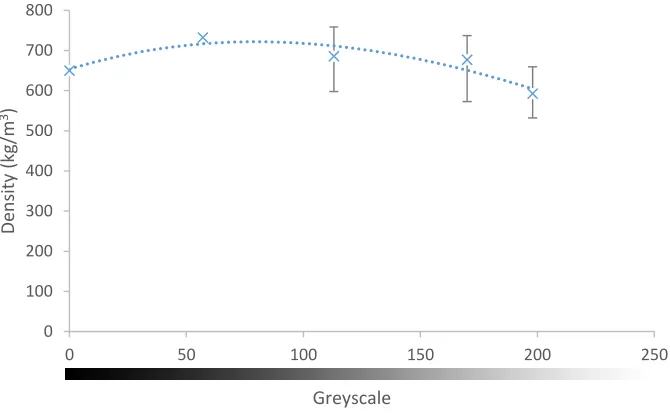
[image:4.612.137.472.182.392.2]The effect of print density on part density is shown in Figure 2, average dimensions were calculated using three measurements taken using Vernier calipers.
Figure 2: Density vs. greyscale
It is important to note data points at greyscale 0 and 57 do contain range bars, however, the recorded range was so narrow to make the range bars almost unperceivable. Density remains approximately constant until it starts to decline around 170 reaching the lowest density of 592 kg m-3 at the lowest print density investigated, a greyscale value of 198. It is not surprising the lowest density appeared at the lowest print density as print density corresponds to the amount of energy absorbed. Previous work has shown that as the amount of energy absorbed decreases the degree of particle melt is also reduced.9 Thus, a reduced degree of particle melt will lead to a reduction in part density. Interestingly, the reverse effect is not observed, the highest print density did not correspond to the highest density. This suggests that it is possible to deposit an excess of RAM which inhibits part density. It is possible that excess ink leads to interference of particle sintering or leads to such a high energy absorbance that the polymer itself becomes thermally damaged as has been reported for Nylon 12.12
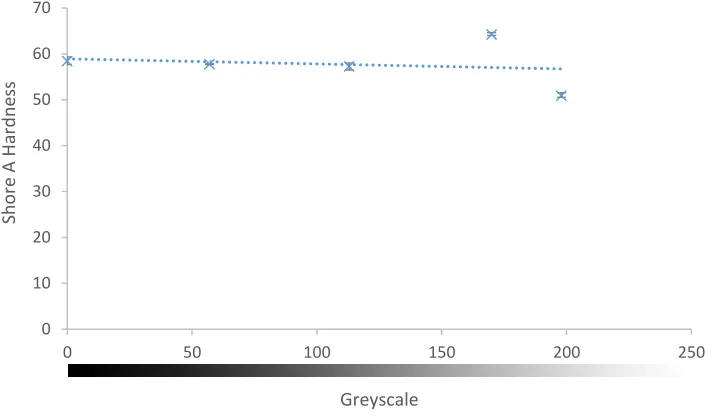
Figure 3 illustrates the average Shore A hardness at different greyscale values, testing was
performed on three areas of each part using a Shore A Durometer according to ASTM D2240.13
0 100 200 300 400 500 600 700 800
0 50 100 150 200 250
D
e
n
si
ty
(
k
g
/m
3)
4
Figure 3: Shore A hardness vs. greyscale
As for certain data points in Figure 2, range bars for all data points are shown but appear very narrow. The trend in Figure 3 reveals that hardness marginally decreases for the first three data points from the left alongside the decreasing amount of RAM. The two lowest print densities do not follow this pattern closely as an unexpected increase was observed at greyscale 170. Subsequent to this the trend was resumed with a decrease to the lowest Shore hardness observed at the lowest print density investigated.
[image:5.612.142.478.420.634.2]Figure 4 displays the ultimate tensile strength for tensile test specimens at the specified greyscale.
Figure 4: UTS vs. greyscale
Figure 4 shows an initial increase in UTS alongside increased deposition of RAM, followed by
similar values for greyscale 57 and 113, subsequent to this a decrease is observed. This is a similar but exaggerated form of the trend observed for part density in Figure 2 with the highest observed property occurring at a greyscale value of 57. The data shows that maximum parts density corresponds with maximum tensile strength as expected. The data suggests that for the material
0 10 20 30 40 50 60 70
0 50 100 150 200 250
S h o re A H ar d n e ss Greyscale 0 1 2 3 4 5 6
0 50 100 150 200 250
5
investigated it is not necessary to print at full density to achieve greatest tensile strength, which is consistent with previous observations made using nylon 12.
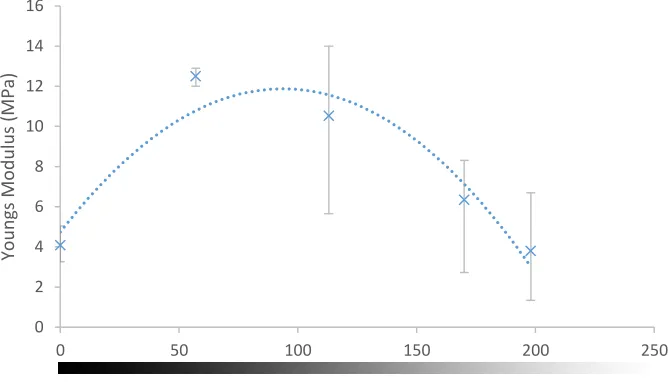
[image:6.612.141.475.131.322.2]The effect of greyscale on Young’s Modulus is shown in Figure 5.
Figure 5: Young’s Modulus vs. greyscale
A similar trend is observed to that seen in Figure 4 for UTS. A significant increase in YM was seen between 0 and 57 and after this point it is observed to decrease. Once again, the observed mechanical property reaches a peak at greyscale 57, and subsequently decreases alongside print density. It is important to note here, that the increase from 0 to 57 is substantial, the value increases threefold from 4.1 to 12.5, remaining comparatively high at greyscale 112 with a Young’s Modulus of 10.5 MPa. Subsequent to this a sharp decrease is observed to 6.3 MPa and the lowest value of observed of 3.8 MPa.
0 2 4 6 8 10 12 14 16
0 50 100 150 200 250
Y
o
u
n
g
s
Mo
d
u
lu
s
(MP
a
)
6
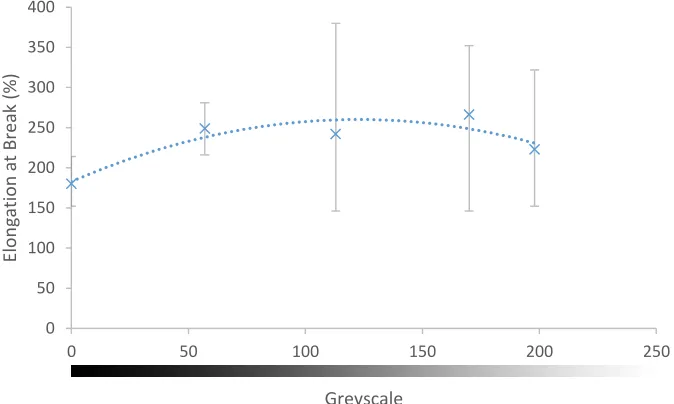
[image:7.612.140.477.89.291.2]The effect of greyscale on Elongation at Break is shown in Figure 6.
Figure 6: Elongation at break vs. greyscale
At greyscale 57 an increase in the EaB is observed when compared to 0 as seen before for UTS and YM. However, subsequent to this the same trend is not observed. After the initial increase from 180 to 249 elongation at break remains similar with values of 241, 266 and 223%. This suggests that the ductility of the material is influenced less by greyscale than UTS. This effect was not observed previously for Nylon 12, and suggests the elastomeric nature of the material is more robust in this respect than the much less ductile Nylon 12.9
The results show that at greyscale 0 (black), excess ink may be inhibiting the sintering process. Conversely, insufficient ink may lead to insufficient energy transfer leading to decreased mechanical performance. Thus, it appears that, as for Nylon 12, there is indeed an optimum RAM dosage for mechanical performance. The tensile properties achieved at 170 on the greyscale are higher than those obtained at 0. This suggests that significantly less ink may be used and still achieve similar or improved UTS.
Conclusions and Further Work
The results have revealed that the print density or greyscale does indeed affect the mechanical properties, density and Shore A hardness of High Speed Sintered parts. All tensile properties tested exhibited a similar trend in which the properties of the part increased to a certain point and then decreased as print density decreased. This point was discovered to be in between the values of 57 and 113 on the greyscale. The hardness of the parts was seen to decrease with decreasing print density.
As IR absorption increases with print density, it is unsurprising that part properties are enhanced with increased print density. Increased energy absorption will lead to higher degree of particle melt and thus increased mechanical performance. This occurs until a certain point is reached, here there are two possibilities. It is possible that so much energy is absorbed the polymer itself becomes thermally damaged, it is also possible that so much RAM is present sintering is inhibited, in both cases physical properties of the part will be reduced. The data reveals that an ideal greyscale value
0 50 100 150 200 250 300 350 400
0 50 100 150 200 250
E
lo
n
g
at
io
n
at
B
re
ak
(
%
)
7
may exist in which RAM may be used more economically and enhanced tensile properties achieved without compromising significantly on the density or the hardness of the parts.
8
References
(1) International, A. West Conshohocken, PA, 2012.
(2) Hopkinson, N.; Hague, R.; Dickens, P.; Wiley: 2005.
(3) Thomas, H. R.; Hopkinson, N.; Erasenthiran, P. In Solid Freeform Fabrication Symposium
University of Texas, Austin, USA, 2006, p 682.
(4) Hopkinson, N.; Erasenthiran, P. In Solid Freeform Fabrication Symposium University of
Texas, Austin, USA, 2004, p 312.
(5) Ellis, A.; Noble, C. J.; Hartley, L.; Lestrange, C.; Hopkinson, N.; Majewski, C. Journal of
Materials Research 2014, 29, 2080.
(6) Majewski, C. E.; Oduye, D.; Thomas, H.; Hopkinson, N. Rapid prototyping journal 2008,
14, 155.
(7) Noble, C. J.; Ellis, A.; Hopkinson, N. In Solid Freeform Fabrication Symposium University
of Texas, Austin, USA, 2014, p 132
(8) Herrmann, K. Hardness Testing: Principles and Applications; ASM International, 2011.
(9) Ellis, A.; Noble, C. J.; Hopkinson, N. Additive Manufacturing 2014, 1–4, 48.
(10) Chabay, R. W.; Sherwood, B. A. Matter and interactions; John Wiley & Sons, 2011.
(11) International, A. West Conshohocken, PA, 2010.
(12) Vasquez, M.; Haworth, B.; Hopkinson, N. Polymer Engineering & Science 2013, 53, 1230.