Resource
Insights into the Evolution of Longevity from the
Bowhead Whale Genome
Graphical Abstract
Highlights
d
Genome and two transcriptomes of the bowhead whale, the
longest-lived mammal
d
Bowhead-specific mutations in genes associated with cancer
and aging (e.g., ERCC1)
d
Duplications in genes associated with DNA repair, cell cycle,
and aging (e.g., PCNA)
d
Changes in genes related to thermoregulation (UCP1) and
other bowhead traits
Authors
Michael Keane, Jeremy Semeiks, ...,
Bo Thomsen, Joa˜o Pedro de Magalha˜es
Correspondence
[email protected]
In Brief
The bowhead whale is the longest-lived
mammal, possibly living over 200 years.
Keane et al. sequence the bowhead
genome and transcriptome and perform a
comparative analysis with other
cetaceans and mammals. Changes in
bowhead genes related to cell cycle, DNA
repair, cancer, and aging suggest
alterations that may be biologically
relevant.
Keane et al., 2015, Cell Reports
10
, 112–122
January 6, 2015
ª
2015 The Authors
Cell Reports
Resource
Insights into the Evolution of Longevity
from the Bowhead Whale Genome
Michael Keane,
1,18Jeremy Semeiks,
2,18Andrew E. Webb,
3,18Yang I. Li,
4,18,19Vı´ctor Quesada,
5,18Thomas Craig,
1Lone Bruhn Madsen,
6Sipko van Dam,
1David Brawand,
4Patrı´cia I. Marques,
5Pawel Michalak,
7Lin Kang,
7Jong Bhak,
8Hyung-Soon Yim,
9Nick V. Grishin,
2Nynne Hjort Nielsen,
10Mads Peter Heide-Jørgensen,
10Elias M. Oziolor,
11Cole W. Matson,
11George M. Church,
12Gary W. Stuart,
13John C. Patton,
14J. Craig George,
15Robert Suydam,
15Knud Larsen,
6Carlos Lo´pez-Otı´n,
5Mary J. O’Connell,
3John W. Bickham,
16,17Bo Thomsen,
6and Joa˜o Pedro de Magalha˜es
1,*
1Integrative Genomics of Ageing Group, Institute of Integrative Biology, University of Liverpool, Liverpool L69 7ZB, UK
2Howard Hughes Medical Institute and Departments of Biophysics and Biochemistry, University of Texas Southwestern Medical Center,
Dallas, TX 75390-9050, USA
3Bioinformatics and Molecular Evolution Group, School of Biotechnology, Dublin City University, Glasnevin, Dublin 9, Ireland 4MRC Functional Genomics Unit, University of Oxford, Oxford OX1 3QX, UK
5Departamento de Bioquı´mica y Biologı´a Molecular, Instituto Universitario de Oncologı´a (IUOPA), Universidad de Oviedo, 33006 Oviedo,
Spain
6Department of Molecular Biology and Genetics, Aarhus University, 8830 Tjele, Denmark 7Virginia Bioinformatics Institute, Virginia Tech, Blacksburg, VA 24061, USA
8Personal Genomics Institute, Genome Research Foundation, Suwon 443-270, Republic of Korea 9KIOST, Korea Institute of Ocean Science and Technology, Ansan 426–744, Republic of Korea 10Greenland Institute of Natural Resources, 3900 Nuuk, Greenland
11Department of Environmental Science, Center for Reservoir and Aquatic Systems Research (CRASR) and Institute for Biomedical Studies,
Baylor University, Waco, TX 76798, USA
12Department of Genetics, Harvard Medical School, Boston, MA 02115, USA
13The Center for Genomic Advocacy (TCGA) and Department of Biology, Indiana State University, Terre Haute, IN 47809, USA 14Department of Forestry and Natural Resources, Purdue University, West Lafayette, IN 47907, USA
15North Slope Borough, Department of Wildlife Management, Barrow, AK 99723, USA 16Battelle Memorial Institute, Houston, TX 77079, USA
17Department of Wildlife and Fisheries Sciences, Texas A&M University, College Station, TX 77843, USA 18Co-first author
19Present address: Department of Genetics, Stanford University, Stanford, CA 94305, USA
*Correspondence:[email protected] http://dx.doi.org/10.1016/j.celrep.2014.12.008
This is an open access article under the CC BY license (http://creativecommons.org/licenses/by/3.0/).
SUMMARY
The bowhead whale (
Balaena mysticetus
) is
esti-mated to live over 200 years and is possibly
the longest-living mammal. These animals should
possess protective molecular adaptations relevant
to age-related diseases, particularly cancer. Here,
we report the sequencing and comparative analysis
of the bowhead whale genome and two
transcrip-tomes from different populations. Our analysis
identifies genes under positive selection and
bow-head-specific mutations in genes linked to cancer
and aging. In addition, we identify gene gain and
loss involving genes associated with DNA repair,
cell-cycle regulation, cancer, and aging. Our results
expand our understanding of the evolution of
mammalian longevity and suggest possible players
involved in adaptive genetic changes conferring
can-cer resistance. We also found potentially relevant
changes in genes related to additional processes,
including thermoregulation, sensory perception,
dietary adaptations, and immune response. Our
data
are
made
available
online
(
http://www.
bowhead-whale.org
) to facilitate research in this
long-lived species.
INTRODUCTION
whales are unknown, but it is clear that, in order to live so long,
these animals must possess preventative mechanisms against
cancer, immunosenescence, and neurodegenerative,
cardio-vascular, and metabolic diseases. In the context of cancer,
whales, and bowhead whales, in particular, must possess
effec-tive antitumor mechanisms. Indeed, given their large size (in
extreme cases adult bowhead whales can weigh up to 100
tons and are therefore among the largest whales) and
excep-tional longevity, bowhead whale cells must have a significantly
lower probability of neoplastic transformation relative to humans
(
Caulin and Maley, 2011; de Maga˜lhaes, 2013
). Therefore,
study-ing species such as bowhead whales that have greater natural
longevity and resistance to age-related diseases than humans
may lead to insights on the fundamental mechanisms of aging.
Here, we report the sequencing and analysis of the genome of
the bowhead whale, a species of the right whale family
Balaeni-dae
that lives in Arctic and sub-Arctic waters. This work provides
clues regarding mechanisms underlying mammalian longevity
and will be a valuable resource for researchers studying the
evo-lution of longevity, disease resistance, and basic bowhead whale
biology.
RESULTS
Sequencing and Annotation of the Bowhead Whale
Genome
We sequenced the nuclear genome of a female bowhead whale
(Balaena mysticetus) using the Illumina HiSeq platform at
150
3
coverage. We followed established standards in the field in
terms of sequencing paired-end libraries at high coverage
plus mate-paired libraries of varying (3, 5, and 10 kb) insert
sizes (
Table 1
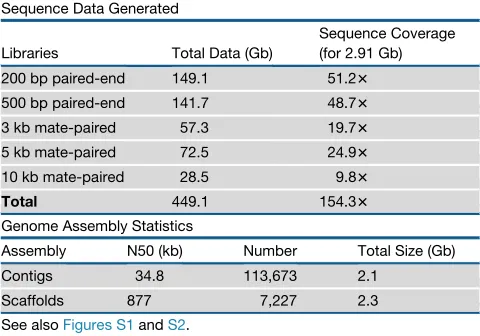
). Contigs and scaffolds were assembled with
ALLPATHS-LG (
Gnerre et al., 2011
). In line with other genomes
sequenced with second-generation sequencing platforms, the
contig N50 was 34.8 kb and scaffold N50 was 877 kb (
Table 1
);
the longest scaffold in our assembly was 5,861 kb. In total, our
assembly is
2.3 Gb long. Genome size was estimated
experi-mentally to be 2.91 Gb in another female and 2.87 Gb averaged
with one male (see
Supplemental Results
and
Figure S1
), but this
discrepancy likely reflects highly repetitive regions, as observed
for the genomes of other species with similar reported sizes such
as the minke whale (
Yim et al., 2014
).
The full and partial completeness of the bowhead whale draft
genome assembly was evaluated as 93.15% and 97.18%,
respectively, by the CEGMA pipeline (
Parra et al., 2007
), which
is comparable to the minke whale genome assembly (
Yim
et al., 2014
). We also generated RNA sequencing (RNA-seq)
data from seven adult bowhead whale tissues (cerebellum,
kid-ney, muscle, heart, retina, liver, and testis) from specimens
from Greenland and Alaska, resulting in two transcriptome
as-semblies (see
Experimental Procedures
) and annotated the
genome using MAKER2, which combines ab initio methods,
ho-mology-based methods, and transcriptome data to derive gene
models (
Holt and Yandell, 2011
). Our annotation contains 22,672
predicted protein-coding genes with an average length of 417
(median 307) amino acid residues. In addition, based on
tran-scriptome data from two Alaskan individuals (
Table S1
), we
esti-mated 0.5–0.6 SNPs per kilobase of RNA (
Table S2
). To begin
annotation of the bowhead genome, we identified orthologs
based on similarity with cow, human, and mouse genes/proteins
(see
Experimental Procedures
), which allowed us to assign
pre-dicted gene symbols to 15,831 bowhead genes.
Moreover, to annotate microRNAs in the bowhead genome,
we sequenced small RNA libraries prepared from kidney and
skeletal muscle. The miRDeep algorithm (
Friedla¨nder et al.,
2008, 2012
) was used to integrate the sequencing data into a
model of microRNA biogenesis by Dicer processing of predicted
precursor hairpin structures in the genome, thus identifying 546
candidate microRNA genes. Of the 546 candidate miRNAs
tified in the bowhead, 395 had seed sequences previously
iden-tified in miRNAs from human, cow, or mouse, whereas 151 did
not. All of our data are available online from our Bowhead Whale
Genome Resource portal (
http://www.bowhead-whale.org
).
Analysis of the Draft Bowhead Whale Genome
Repeat sequences make up 41% of the bowhead genome
assembly, most of which (78%) belong to the group of
transpos-able elements (TEs). Although long interspersed nuclear
ele-ments (LINEs), such as L1, and short interspersed nuclear
elements (SINEs) are widespread TEs in most mammalian
lineages, the bowhead genome, similar to other cetacean
ge-nomes—minke, orca, and common bottlenose dolphin—is
virtu-ally devoid of SINEs (
Supplemental Folder 1
). LINE-1 (L1) is the
most abundant TE, particularly in orca (90%) and minke whale
(89%) (
Figure S2
). In comparison, TE diversity (measured with
Shannon’s index) in the bowhead genome (0.947) is higher
than in orca (0.469) and minke whale (0.515) but lower than in
dolphin (1.389) and cow (
Bovine Genome Sequencing and
Anal-ysis Consortium et al., 2009
) (1.534).
[image:3.603.53.293.117.285.2]As a first assessment of coding genes that could be
respon-sible for bowhead whale adaptations, we used bowhead coding
sequences to calculate pairwise dN/dS ratios for 9,682, 12,685,
and 11,158 orthologous coding sequences from minke whale
(Balaenoptera acutorostrata), cow (Bos taurus), and dolphin
(Tur-siops truncatus), respectively. It is interesting to note that there
are high levels of sequence conservation in the protein coding
regions between bowhead and these species: 96% (minke),
Table 1. Statistics of the Bowhead Whale Genome Sequencing
Sequence Data Generated
Libraries Total Data (Gb)
Sequence Coverage (for 2.91 Gb) 200 bp paired-end 149.1 51.23 500 bp paired-end 141.7 48.73 3 kb mate-paired 57.3 19.73 5 kb mate-paired 72.5 24.93 10 kb mate-paired 28.5 9.83
Total 449.1 154.33
Genome Assembly Statistics
Assembly N50 (kb) Number Total Size (Gb) Contigs 34.8 113,673 2.1
92% (dolphin), and 91% (cow). This is not surprising, however,
given the long generation time of cetaceans and of the bowhead
whale, in particular, with animals only reaching sexual maturity
at >20 years (
Tacutu et al., 2013
).
[image:4.603.62.379.96.381.2]Because the minke whale is the closest relative to the
bow-head (divergence time 25–30 million years ago [
Gatesy et al.,
2013
]) with a sequenced genome and is smaller (<10 tons) and
probably much shorter lived (maximum lifespan
50 years)
(
Tacutu et al., 2013
), comparisons between the bowhead and
minke whale genomes may provide insights on the evolution of
bowhead traits and of longevity, in particular. A number of
aging-and cancer-associated genes were observed among the 420
predicted bowhead-minke orthologs with dN/dS exceeding 1,
including
suppressor of cytokine signaling 2
(SOCS2),
aprataxin
(APTX),
noggin
(NOG), and
leptin
(LEP). In addition, the top 5%
genes with high dN/dS values for bowhead-minke relative to
the values for minke-cow and minke-dolphin orthologs included
forkhead box O3
(FOXO3),
excision repair cross-complementing
rodent repair deficiency,
complementation group 3
(ERCC3),
and
fibroblast growth factor receptor 1
(FGFR1). The data on
dN/dS ratios are also available on our portal to allow researchers
to do their own analysis and quickly retrieve gene(s) of interest.
In a complementary and more detailed analysis of selective
pressure variation, we used codon-based models of evolution
(
Yang, 2007
) to identify candidate genes with evidence of
line-age-specific positive selection (see
Experimental Procedures
).
Using bowhead, minke, and orca protein-coding data along
with a variety of available high-quality completed genomes
from Laurasiatheria, Euarchontoglires, marsupial, and
mono-treme species, we identified a total of 866 single-gene ortholog
families (SGOs) (i.e., these gene families have no more than
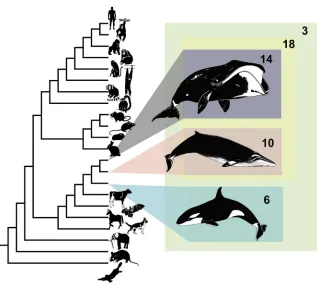
Figure 1. Phylogeny of Mammals Used in Codon-Based Maximum Likelihood Com-parison of Selective Pressure Variation The number of candidate genes under positive selection on each lineage is indicated.
one copy in each species). We tested
each of the extant whale lineages, the
ancestral baleen whale, and the most
recent common ancestor (MRCA) of
bowhead, minke, and orca, a total of
five lineages (
Figure 1
), for evidence
of lineage-specific positive selection.
Of the two extant whales analyzed, the
number of SGOs exhibiting signatures of
lineage-specific positive selection were
as follows: bowhead (15 gene families)
and minke (ten gene families). The small
number of candidates under positive
se-lection likely reflects the high level of
pro-tein conservation between bowhead and
other cetaceans as well as the stringent
filtering of candidates due to data-quality
concerns; all results and alignments are
provided in
Supplemental Folder 1
. A
few genes associated with disease were
identified, including
BMP and activin membrane-bound inhibitor
(BAMBI), which has been associated with various pathologies,
including cancer, and also poorly studied genes of potential
interest like
GRB2-binding adaptor protein, transmembrane
(GAPT).
In addition to the codon-based models of evolution, we
wished to identify bowhead whale specific amino acid
replace-ment substitutions. To this end, we aligned orthologous
sequences between the bowhead whale and nine other
mam-mals—a total of 4,358 alignments (see
Experimental
Proce-dures
). Lineage-specific residues identified in this way have
previously been shown to be indicative of significant changes
in protein function (
Tian et al., 2013
). Our analysis revealed
several proteins associated with aging and cancer among the
top 5% of unique bowhead residues by concentration (i.e.,
normalized by protein length), including ERCC1 (excision repair
cross-complementing rodent repair deficiency,
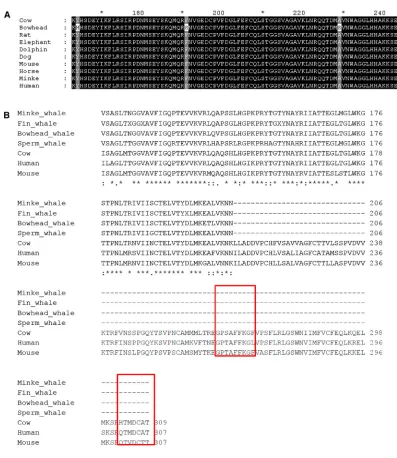
complementa-tion group 1), HDAC1 (histone deacetylase 1), and HDAC2 (
Fig-ure 2
A). ERCC1 is a member of the nucleotide excision repair
pathway (
Gillet and Scha¨rer, 2006
), and disruption results in
greatly reduced lifespan in mice and accelerated aging (
Weeda
et al., 1997
). Histone deacetylases play an important role in the
regulation of chromatin structure and transcription (
Lee et al.,
1993
) and have been associated with longevity in
Drosophila
(
Rogina et al., 2002
). As such, these represent candidates
involved in adaptive genetic changes conferring disease
resis-tance in the bowhead whale. The full results are available in
Sup-plemental Folder 1
.
note, a number of proteins related to sensory perception of
sound were also identified with bowhead-specific mutations,
including otoraplin (OTOR) and cholinergic receptor, nicotinic,
alpha 10 (CHRNA10), which could be relevant in the context of
the bowhead’s ability to produce high- and low-frequency tones
simultaneously (
Tervo et al., 2011
). In addition, many proteins
must play roles in the large differences in size and development
between the bowhead and related species and our results reveal
possible candidates for further functional studies; for example, in
the top ten proteins, SNX3 (sorting nexin 3) has been associated
in one patient with eye formation defects and microcephaly (
Ver-voort et al., 2002
), and WDR5 (WD repeat-containing protein 5)
has been associated with osteoblast differentiation and bone
development (
Gori et al., 2006
).
[image:5.603.86.483.92.550.2]In the naked mole rat, a poikilotherm with a low metabolic rate
and body temperature when compared to other mammals,
unique changes in uncoupling protein 1 (UCP1), which is used
to generate heat, have been previously found (
Kim et al.,
2011
). Because the specific metabolic power output of cells
in vivo for large whales must be much less than for smaller
mam-mals (
West et al., 2002
), it is interesting to note that UCP1 of
whales has a premature stop codon in C-terminal region, which
is functionally important and conserved in other mammals (
Fig-ure 2
B). It is tempting to speculate that these changes are related
Figure 2. Multiple Protein Sequence Alignments of HDAC2 and UCP1
to differences in thermoregulation between whales and smaller
mammals.
Potential Gene Duplications and Gene Losses
Gene duplication is a major mechanism through which
pheno-typic innovations can evolve (
Holland et al., 1994; Kaessmann,
2010
). Examples of mammalian phenotypic innovations
associ-ated to gene duplication include duplication of
RNASE1, a
pancreatic ribonuclease gene, in leaf-eating monkeys that
contributed to adaptative changes in diet and digestive
physi-ology (
Zhang et al., 2002
), a duplication of
GLUD1
in hominoids
that subsequently acquired brain-specific functions (
Burki and
Kaessmann, 2004
), and domestication of two syncytin gene
copies that contributed to the emergence of placental
develop-ment in mammals (
Dupressoir et al., 2009
). We surveyed the
bowhead whale genome for expanded gene families that may
reflect lineage-specific phenotypic adaptations and traits.
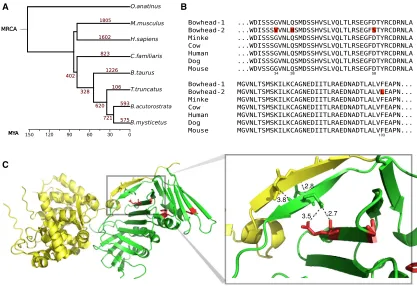
In the bowhead whale lineage, 575 gene families were
pre-dicted to have expanded (
Figure 3
). However, because gene
expansion predictions are susceptible to false-positives owing
to pseudogenes and annotation artifacts among other biases,
we applied a stringent filter based on percentage of identity
(
Experimental Procedures
) that reduced the number of
candi-date expansions to 41 (see
Supplemental Folder 1
for the
complete list). A functional enrichment analysis of these gene
families, using default parameters in DAVID (
Huang et al.,
2009
), only revealed a statistically significant enrichment (after
correction for multiple hypothesis testing; Bonferroni <0.001)
for genes associated with translation/ribosome. Given the
asso-ciation between translation and aging, for instance, in the
context of loss of proteostasis (
Lo´pez-Otı´n et al., 2013
), it is
possible that these results reflect relevant adaptations in the
bowhead whale.
Upon manual inspection of the gene expansion results, we
found several duplicates of note. For instance,
proliferating cell
nuclear antigen
(PCNA) is duplicated in bowhead whales with
one copy harboring four lineage-specific residue changes (
Fig-ure 3
B). Based on our RNA-seq data mapped to the genome
(see
Experimental Procedures
and full results in
Supplemental
Folder 1
), both
PCNA
copies are expressed in bowhead whale
muscle, kidney, retina, and testis. By mapping the
lineage-specific residues onto the structure of PCNA in complex with
B
A
[image:6.603.95.512.100.386.2]C
Figure 3. Gene Family Expansion and PCNA
(A) Gene family expansion. Numbers in red correspond to the predicted number of gene expansion events during mammalian evolution. Mean divergence time estimates were used from TimeTree (Hedges et al., 2006) for scaling.
(B) Multiple sequence alignment of PCNA residues 28–107, showing bowhead whale-specific duplication (gene IDs: bmy 16007 and bmy 21945). Lineage-specic amino acids in the duplicated PCNA of bowhead whales are highlighted in red.
(C) Crystal structure of the PCNA (green) and FEN-1 (yellow) complex. Lineage-specific residues on the PCNA structure are colored in red. A zoom in on the structures reveals a putative interaction between twobsheets, one within PCNA and another within FEN-1. This interaction may be altered through a second interaction between the PCNAbsheet and a lineage-specic change from glutamine to histidine within PCNA. Distance measurements between pairs of atoms are marked in black. PDB accession number: 1UL1.
FEN-1, we uncovered one amino acid substitution (Q38H), which
may affect the interaction between PCNA and FEN-1 (
Figure 3
C).
A subsequent branch-site test for selective pressure variation
(see
Experimental Procedures
and
Table S3
) revealed that one
substitution, D58S, may have undergone positive selection in
the bowhead-whale lineage (with a posterior probability score
of 0.983). The duplication of
PCNA
during bowhead-whale
evo-lution is of particular interest due to its involvement in DNA
dam-age repair (
Hoege et al., 2002
) and association with aging in that
its levels in aged rat liver seem to relate to the decrease in the
rate of cell proliferation (
Tanno et al., 1996
).
Another notable duplicated gene is
late endosomal/lysosomal
adaptor, MAPK and MTOR activator 1 (LAMTOR1), in which six
bowhead-specific amino acid changes were identified (
Fig-ure S3
). LAMTOR1 is involved in amino acid sensing and
activa-tion of mTORC1, a gene strongly associated with aging and
cancer (
Cornu et al., 2013
). The original
LAMTOR1
copy was
ex-pressed in all bowhead whale adult tissues for which we have
data, with the duplicate having much lower (but detectable)
expression in heart and retina. Also of note, putative duplications
of
26S proteasome non-ATPase regulatory subunit 4 (PSMD4)
and
ubiquitin carboxyl-terminal esterase L3
(UCHL3) were
iden-tified with evidence of expression, which is intriguing considering
the known involvement of the proteasome-ubiquitin system in
aging (
Lo´pez-Otı´n et al., 2013
) and given previous evidence
that this system is under selection specific to lineages where
longevity increased (
Li and de Magalha˜es, 2013
);
UCHL3
has
also been involved in neurodegeneration (
Kurihara et al., 2001
).
Other gene duplications of potential interest for their role in
mitosis, cancer, and stress response include
cAMP-regulated
phosphoprotein 19
(ARPP19), which has three copies even
though we only detected expression of two copies,
stomatin-like 2
(STOML2),
heat shock factor binding protein 1
(HSBP1)
with four copies of which two appear to be expressed,
spermine
synthase (SMS)
and
suppression of tumorigenicity 13
(ST13).
Similar to previous genome characterizations, we chose the
complete set of known protease genes for a detailed supervised
analysis of gene loss (
Quesada et al., 2009
). This procedure
high-lighted multiple gene loss events potentially related to the
evolu-tion of several cetacean traits, including adaptaevolu-tions affecting
the immune system, blood homeostasis, digestive system, and
dentition (
Figure S4
). Thus, the cysteine protease CASP12, a
modulator of the activity of inflammatory caspases, has at least
one conserved premature stop codon in bowhead and minke
whales. Interestingly, whereas this protease is conserved and
functional in almost all of the terrestrial mammals, most human
populations display different deleterious variants (
Fischer et al.,
2002
), presumably with the same functional consequences as
the premature stop codons in whales. Likewise, two paralogues
of carboxypeptidase A (CPA2 and CPA3) have been
pseudogen-ized in bowhead and minke whales. Notably, CPA variants have
been associated with increased risk for prostate cancer in
hu-mans (
Ross et al., 2009
), which could be of interest in the context
of reduced cancer susceptibility in whales compared with
hu-mans (
de Magalha˜es, 2013
).
Additionally, we found that multiple coagulation factors have
been lost in bowhead and minke whales. The finding of bowhead
whale-specific changes is also noteworthy because it could be
related to the special characteristics of this mammal. For
example, OTUD6A, a cysteine protease with a putative role in
the innate immune system (
Kayagaki et al., 2007
), is specifically
lacking in the assembled genome and expressed sequences of
the bowhead whale. In addition, whereas the enamel
metallopro-tease MMP20 has been lost in bowhead and minke whales (
Yim
et al., 2014
), our analysis suggests that these genomic events
happened independently (see alignments in
Supplemental
Folder 1
). Finally, as aforementioned, the cysteine protease
UCHL3 seems to have been duplicated through a
retrotranscrip-tion-mediated event in a common ancestor to bowhead and
minke whales, although only the genome of the bowhead whale
shows a complete, putatively functional open reading frame for
this extra copy of the gene. UCHL3 may play a role in
adipogen-esis (
van Beekum et al., 2012
), which indicates that this
duplica-tion might be related to the adaptaduplica-tion of the bowhead whale to
the challenging arctic environment. These results suggest
specific scenarios for the role of proteolysis in the evolution of
Mysticetes. Specifically, given the relationship between
immu-nity and aging (
Lo´pez-Otı´n et al., 2013
), some of these findings
might open new approaches for the study of this outstanding
cetacean.
DISCUSSION
this key resource for studying the bowhead whale and its various
traits, including its exceptional longevity and resistance to
diseases.
EXPERIMENTAL PROCEDURES
DNA and RNA Sampling in Greenland
Bowhead (Balaena mysticetus) DNA used for genome sequencing was iso-lated from muscle tissue sampled from a 51-year-old female (ID no. 325) caught in the Disko Bay, West Greenland in 2009 (Heide-Jørgensen et al., 2012). Tissue samples were stored at –20C immediately after collection. Age estimation was performed using the aspartic acid racemization technique (Garde et al., 2007). CITES no. 12GL1003387 was used for transfer of biolog-ical material. Bowhead RNA used for RNA-seq and small RNA analysis was isolated from two different individuals: kidney samples were from a 44-year-old female (ID no. 500) and muscle samples were isolated from a 44-year-old male (ID no. 322). For more details of the individual whales, see
Heide-Jørgensen et al. (2012).
Genome Sequencing
DNA was extracted following standard protocols, quantified using Qubit and run on an agarose gel to ensure no degradation had occurred. We then gener-ated1503coverage of the genome using the Illumina HiSeq 2000 platform with 100 bp reads, sequencing paired-end libraries, and mate-paired libraries with insert sizes of 3, 5, and 10 kb (Table 1). Sequencing was performed at the Liverpool Centre for Genomic Research (CGR; http://www.liv.ac.uk/ genomic-research/).
Genome Assembly
Libraries were preprocessed in-house by the CGR to remove adaptor se-quences. The raw fastq files were trimmed for the presence of the Illumina adaptor sequence using Cutadapt and then subjected to window-based qual-ity trimming using Sickle with a minimum window qualqual-ity score of 20. A mini-mum read-length filter of 10 bp was also applied. Libraries were then assem-bled with ALLPATHS-LG (Gnerre et al., 2011), which performed all assembly steps including read error correction, initial read alignment, and scaffolding. ALLPATHS-LG build 43762 was used with the default input parameters, including K = 96. Several build parameters were automatically determined by the software at run time per its standard algorithm. Of 2.883109
paired frag-ment reads and 1.873109
paired jumping reads, 0.015% were removed as poly(A) and 1.5% were removed due to low-frequency kmers; 54% of jumping read pairs were error-corrected, and overall 33% of jumping pairs were redun-dant. In total, we used 216 Gbp for the 2.3 Gb assembly, meaning that coverage retained for the assembly was953. Full assembly and read usage data are shown inSupplemental Folder 2. Assembly completeness was assayed with CEGMA by searching for 248 core eukaryotic genes (Parra et al., 2007).
Genome Size Determination
To determine the genome size for bowhead whale, spleen tissues were acquired from one male (10B17) and one female (10B18). Both whales were harvested in 2010 as part of the native subsistence hunt in Barrow, Alaska. Sample processing and staining followed the methods ofVindeløv and Chris-tensen (1994). Instrument description and additional methodological details are provided inOziolor et al. (2014). Briefly, flow cytometric genome size deter-mination is based on propidium iodide fluorescent staining of nuclear DNA. Mean fluorescence is calculated for cells in the G0 and G1 phases of the cell cycle. This method requires direct comparison to known standards to convert measured fluorescence to pg of DNA. The primary standard used in this study was the domestic chicken (Gallus gallus domesticus). Chicken red blood cells are widely used as a genome size standard, with an accepted genome size of C = 1.25 pg. Chicken whole blood was purchased from Innovative Research. Mouse (Mus musculus) and rat (Rattus norvegicus) were included as internal checks, with estimates for both falling within 3% of previously published genome size estimates (Vinogradov, 1998). Spleen tissues from three male 129/SvEvTac laboratory mice and a single male Harlan SD Sprague-Dawley laboratory rat were used.
Transcriptome Sequencing and Assembly: Greenland Samples
Total RNA was extracted from the kidney and muscle employing the mirVanaTM RNA extraction kit (Ambion). RNA integrity of the individual RNA samples was assessed on a 1% agarose gel using an Agilent 2100 Bioanalyzer (Agilent Technologies). Library preparation was performed using the ScriptSeqTM mRNA-seq library preparation kit from Epicenter according to the manufacturer’s protocol (Epicenter) and sequenced (100 bp paired end) as multiplexed samples using the Illumina HiSeq 2000 analyzer. Fastq gener-ation and demultiplexing were performed using the CASAVA 1.8.2 package (Illumina). The fastq files were filtered for adapters, quality, and length using Trimmomatic (v.0.27), with a window size of 4, a base quality cutoff of 20, and a minimum length of 60 (Lohse et al., 2012). De novo transcriptome as-sembly was performed using the short read assembler software Trinity (release 2013-02-25), which is based on the de Bruijn graph method for assembly, with default settings (Grabherr et al., 2011).
Transcriptome Sequencing and Assembly: Alaskan Samples
Tissue biopsies were obtained from two male bowhead whales harvested by Inupiat hunters at Barrow, Alaska during the Fall hunt of 2010; heart, cere-bellum, liver, and testes were biopsied from male bowhead number 10B16, and retina from male bowhead 10B20. Samples were immediately placed in liquid nitrogen and transported in a dry shipper to Purdue University. RNA was extracted using TRIZOL reagent (Invitrogen) following the manufacturer’s protocol. RNA was purified using an Invitrogen PureLink Micro-to-Midi col-umns from the Total RNA Purification System using the standard protocol. RNA quantity and quality was estimated with a spectrophotometer (Nanodrop) and by gel electrophoresis using an Agilent model 2100 Bioanalyzer. cDNA libraries were constructed by random priming of chemically sheared poly A captured RNA. Randomly primed DNA products were blunt ended. Products from 450–650 bp were then isolated using a PippenPrep. After the addition of an adenine to the fragments, a Y primer amplification was used to produce properly tailed products. Paired-end sequences of 100 bp per end were gener-ated using the Illumina HiScan platform. Sequences with primer concatamers, weak signal, and/or poly A/T tails were culled. The Trinity software package for de novo assembly (Grabherr et al., 2011) was used for transcript reconstruc-tion (Table S1).
Small RNA Sequencing and Annotation
To annotate microRNA genes in the bowhead genome, we conducted deep sequencing of two small RNA libraries prepared from muscle and kidney tis-sues (Greenland samples). Total RNA was isolated using mirVana miRNA Isolation Kit (Ambion). Small RNA in the 15-40 nucleotides range was gel pu-rified and small RNA libraries were prepared for next-generation sequencing using the ScriptMiner Small RNA-Seq Library Preparation Kit (Epicenter). The two libraries were sequenced on an Illumina Hi-Seq 2000 instrument to generate single end sequences of 50 nucleotides. Primary data analysis was done using the Illumina CASAVA Pipeline software v.1.8.2, and the sequence reads were further processed by trimming for adapters and filtering for low quality using Trimmomatic (Lohse et al., 2012). Identification of conserved and novel candidate microRNA genes in the bowhead genome was accomplished by applying the miRDeep2 algorithm (Friedla¨nder et al., 2008, 2012).
Evaluation of Repeat Elements
To evaluate the percentage of repeat elements, RepeatMasker (v.4.0.3;http:// www.repeatmasker.org/) was used to identify repeat elements, with parame-ters set as ‘‘-s -species mammal.’’ RMBlast was used as a sequence search engine to list out all types of repeats. Percentage of repeat elements was calculated as the total number of repeat region divided by the total length of the genome, excluding the N-region. Genomes of minke whale (Balaenoptera acutorostrata), orca (Orcinus orca), common bottlenose dolphin (Tursiops trun-cates), and cow (Bos taurus) were downloaded from NCBI and run in parallel for comparison with the bowhead genome.
Genome Annotation
transcriptomes with comparative and de novo prediction methods including BLASTX, Exonerate, SNAP, Genemark, and Augustus. In addition to the RNA-seq data, the entire SwissProt database and the draft proteome of dol-phin were used as input to the comparative methods. Repetitive elements were found with RepeatMasker (http://www.repeatmasker.org/). The com-plete set of MAKER input parameters, including training sets used for the de novo prediction methods, are listed inSupplemental Folder 2. In total, 22,672 protein-coding genes were predicted with an average length of 417 (median 307) amino acid residues.
The RNA-seq data from seven adult bowhead tissues described above were then mapped to the genome: FastQC (http://www.bioinformatics. babraham.ac.uk/projects/fastqc/) was used for quality control to make sure that data of all seven samples was of acceptable quality. STAR (Dobin et al., 2013) was used to generate genome files from the bowhead assembly and to map the reads to the bowhead genome with 70.3% of reads mapping, which is in line with other results including those in the minke whale (Yim et al., 2014). To count the reads overlapping genes, we used ReadCounter (van Dam et al., 2015). The results obtained from all seven samples were combined into a single file describing the number of nonambiguously map-ping reads for each gene (full results in Supplemental Folder 1). Of the 22,672 predicted protein-coding genes, 89.5% had at least ten reads map-ping and 97.5% of predicted genes had at least one read mapmap-ping to them, which is again comparable to other genomes like the minke whale genome (Yim et al., 2014).
To allow the identification of orthologous relationships with bowhead pro-teins, all cow protein sequences were downloaded from Ensembl (Flicek et al., 2013). Cow was initially used because it is the closest relative to the bow-head with a high-quality annotated genome available. First, BLASTP (105
) was used to find the best hit in the cow proteome for every predicted bowhead protein, and then the reciprocal best hit for each cow protein was defined as an ortholog. In addition, human and mouse orthologs from the OPTIC pipeline (see below) were used to assign predicted gene symbols to genes and pro-teins. A total of 15,831 bowhead genes have a putative gene symbol based on these predictions. Homologs in minke whale and dolphin were also derived and are available on our bowhead genome portal.
Genome Portal
To facilitate further studies of these animals, we constructed an online genome portal: The Bowhead Whale Genome Resource (http://www.bowhead-whale. org/). Its database structure, interface, and functionality were adapted from our existing Naked Mole Rat Genome Resource (Keane et al., 2014). Our data and results are available from the portal, and supplemental methods and data files are also available on GitHub (https://github.com/maglab/ bowhead-whale-supplementary).
Pairwise dN/dS Analysis
The CodeML program from the PAML package was used to calculate pairwise dN/dS ratios (Yang, 2007). This is done using the ratio of nonsynon-ymous substitutions per nonsynonnonsynon-ymous site (dN) to synonnonsynon-ymous substitu-tions per synonymous site (dS), dN/dS, oru(Yang, 2007). Specifically, these pairwise dN/dS ratios were calculated for bowhead coding sequences and orthologous sequences from minke, cow, and dolphin, excluding coding se-quences that were less than 50% of the length of the orthologous sequence. The results were then ranked by decreasing dN/dS and are available on our bowhead genome portal. In addition, the ratio of the bowhead-minke dN/dS value to the higher of the dN/dS values for minke-cow and minke-dolphin was calculated to identify genes that evolved more rapidly on the bowhead lineage.
Assessment of Selective Pressure Variation across Single-Gene Orthologous Families Using Codon-Based Models of Evolution
To accurately assess variation in selective pressure on the bowhead, minke, and orca lineages in comparison to extant terrestrial mammals, we created a protein-coding database spanning the placental mammals. Along with the orca (http://www.ncbi.nlm.nih.gov/bioproject/189949), minke (Yim et al., 2014), and bowhead data described above, we extracted protein coding sequences from Ensembl Biomart v.73 (Flicek et al., 2013) for the following
18 genomes: chimpanzee, cow, dog, elephant, gibbon (5.63 coverage), gorilla, guinea pig, horse, human, macaque, marmoset, microbat, mouse, opossum, orangutan, platypus, rabbit, and rat. These genomes were all high coverage (mostly >63coverage) with the exception of gibbon (Supplemental Folder 2). Sequence similarity searches were performed using mpi-BLAST (v 1.6.0) (Altschul et al., 1990) (http://www.mpiblast.org/) on all proteins using a threshold of 107
. Gene families were identified using in-house software that clusters genes based on reciprocal BLAST hits (Altschul et al., 1990). We iden-tified a total of 6,630 gene families from which we extracted the single-gene orthologous families (SGOs). Families were considered SGOs if we identified a single-gene representative in each species (one-to-one orthologs), and to account for lower coverage genomes and missing data we also considered cases where a specific gene was not present in a species, i.e., one-to-zero or-thology. SGOs were only considered for subsequent analysis if they contained more than seven species in total and if they contained no internal stop codons (indicative of sequencing errors). In total, we retained 866 SGOs for further analysis. Multiple sequence alignments (MSAs) were generated using default parameters in PRANK (v.100802) (Lo¨ytynoja and Goldman, 2008). To minimize potential false-positives due to poor sequence quality, the MSAs of the 866 SGOs underwent strict data-quality filtering. The first filter prohibited the presence of gaps in the MSA if created by unique insertions (>12 bp) in either bowhead or minke sequences. The second filter required unaligned bowhead or minke sequences to be at least half the length of their respective MSA. These two filters refined the number of testable SGOs to 319. The gene phy-logeny of each SGO was inferred from the species phyphy-logeny (Morgan et al., 2013). CodeML from the PAML software package (v.4.4e) (Yang, 2007) was employed for our selective pressure variation analyses. We analyzed each of the 319 refined SGOs using the nested codon-based models of evolution un-der a maximum likelihood framework. We employed the likelihood ratio test (LRT) using nested models of sequence evolution to evaluate a variety of models of codon sequence evolution (Yang, 2007). In general, these codon models allow for variable dN/dS ratios (referred to asuthroughout) among sites in the alignment, along different lineages on our phylogenetic tree, or a combination of both variations across lineages and sites. To assess the signif-icance of fit of each model to the data, we used the recommended LRTs in CodeML (Yang, 2007) for comparing nested models (seeSupplemental Folder 2). The LRT test statistic approximates the chi-square (c2) distribution critical value with degrees of freedom equal to the number of additional free parameters in the alternative model. The goal of the codon-based modeling is to determine the selective pressures at work in a lineage and site-specific manner.
completeness and quality in that region). The posterior probability (PP) of a positively selected site is estimated using two calculations: Naive Empirical Bayes (NEB) or Bayes Empirical Bayes (BEB) (Yang, 2007). If both NEB and BEB are predicted, we reported the BEB results as they have been shown to be more robust under certain conditions (Yang et al., 2005). For all models used in the analysis whereuis estimated from the data, a variety of starting
uvalues was used for the calculation of likelihood estimates. This ensures that the global minimum is reached.
Identification of Proteins with Bowhead-Unique Residues
An in-house Perl pipeline was used to align each bowhead protein with ortho-logs from nine other mammals: human (Homo sapiens), dog (Canis familiaris), mouse (Mus musculus), rat (Rattus norvegicus), minke whale (Balaenoptera acutorostrata), cow (Bos taurus), dolphin (Tursiops truncatus), horse (Equus caballus), and elephant (Loxodonta africana) and then identify the unique bow-head amino acid residues. Gaps were excluded from the analysis, and a maximum of one unknown residue was allowed in species other than the bow-head. The results were ranked by the number of unique residues normalized by the protein length (full results inSupplemental Folder 1).
Gene Expansion Analysis, Filtering, and Expression
Human, mouse, dog, cow, dolphin, and platypus genomes and gene annota-tions were obtained from Ensembl (Flicek et al., 2013), the genome and gene annotation of minke whale were obtained fromYim et al. (2014). In total, 21,069, 22,275, 19,292, 19,988, 15,769, 17,936, 20,496, and 22,733 human, mouse, dog, cow, dolphin, platypus, minke whale, and bowhead whale genes, respectively, were used to construct orthology mappings using OPTIC (Heger and Ponting, 2007). Briefly, OPTIC builds phylogenetic trees for gene families by first assigning orthology relationships based on pairwise orthologs computed using PhyOP (Goodstadt and Ponting, 2006). Then, a tree-based method, PhyOP, is used to cluster genes into orthologous groups, and, last, gene members are aligned and phylogenetic trees built with TreeBeST (Vilella et al., 2009). Further details are available in the OPTIC paper (Heger and Pont-ing, 2007). Predicted orthology groups can be accessed athttp://genserv. anat.ox.ac.uk/clades/vertebrates_bowhead.
To identify gene families that underwent expansion, gene trees were reconciled with the consensus species tree, and duplicated nodes were identified. The tree used, derived from TimeTree (Hedges et al., 2006), was: (mm_oanatinus5, ((mm_cfamiliaris3, (mm_btaurus, (mm_ttruncatus, (mm_ balaenoptera, mm_bmysticetus)))), (mm_hsapiens10, mm_mmusculus5))). The following algorithm was used to reconcile gene and species trees.
A stringent filter was applied to the data so that gene duplicates in bow-head whales were required to differ by at most 10% in protein sequence from a cognate copy but were also required to differ by at least 1% to avoid assembly artifacts and to remove recently duplicated copies with no func-tion. Further manual inspection of the alignments was performed. Gene expression inferred from our RNA-seq data was used to check the expres-sion of duplicates.
An in-house peptide-sensitive approach was used to align the PCNA cDNA into codons, and CodeML/PAML was used to test M0, a one-rate model that assumes the same rate of evolution in all branches against M2^a, a branch site test with one rate for the background and one rate for the bowhead whale branch (Yang, 2007).
ACCESSION NUMBERS
Our data and results can be downloaded from the Bowhead Whale Genome Resource (http://www.bowhead-whale.org/downloads/). In addition, data are available at the NCBI BioProject PRJNA194091 with raw sequencing reads in the Sequence Read Archive (SRP050351).
SUPPLEMENTAL INFORMATION
Supplemental Information includes Supplemental Results, four figures, three tables, and two supplemental data files and can be found with this article online athttp://dx.doi.org/10.1016/j.celrep.2014.12.008.
AUTHOR CONTRIBUTIONS
G.M.C., J.C.G., R.S., J.W.B., B.T., and J.P.M. conceived and designed the study; L.B.M., E.M.O., and C.W.M. performed the experiments; M.K., J.S., A.E.W., Y.I.L., V.Q., L.B.M., S.v.D., D.B., P.I.M., P.M., L.K., J.B., H.-S.Y., G.W.S., J.C.P., C.L.-O., M.J.O., J.W.C., and J.P.M. analyzed the data; T.C., N.V.G., N.H.N., M.P.H.-J., R.S., and K.L. contributed reagents/materials/anal-ysis tools; and M.K. and J.P.M. wrote the paper.
ACKNOWLEDGMENTS
This project was supported by grants from the Life Extension Foundation and the Methuselah Foundation to J.P.M. We thank the Inuit whaling captains of the Alaska Eskimo Whaling Commission and the Barrow Whaling Captains’ Association for allowing us to sample their whales and their willingness to sup-port the transcriptome study. This study was also partly funded by the Augus-tinus Foundation to K.L. T.C. was supported by a Wellcome Trust grant (WT094386MA) to J.P.M. and M.K. was supported by a studentship from the University of Liverpool’s Faculty of Health and Life Sciences. J.S. was sup-ported by grants from the NIH (GM094575 to N.V.G.) and the Welch Foundation (I-1505 to N.V.G.). Y.I.L. was supported by a Nuffield Department of Medicine Prize studentship from the University of Oxford. C.L.-O. is an Investigator of the Botin Foundation also supported by grants from Ministerio de Economı´a y Competitividad-Spain and Instituto de Salud Carlos III (RTICC)-Spain. M.J.O. and A.E.W. are funded by Science Foundation Ireland Research Frontiers Programme Grant (EOB2763) to M.J.O. M.J.O. would also like to acknowledge the Fulbright Commission for the Fulbright Scholar Award 2012-2013. M.J.O. and A.E.W. thank the SFI/HEA Irish Centre for High-End Computing (ICHEC) for processor time and technical support. This work was also supported by the Korea Institute of Ocean Science and Technology (KIOST) in-house program (PE99212). Further thanks to Prof. Chris Ponting and Dr. Andreas Heger for hosting gene orthology predictions from OPTIC, the University of Liverpool High Performance Computing facilities for proces-sor time, Eric de Sousa for help with RNA-seq data analysis, and to Louise Crompton for assistance in compiling and formatting the bibliography. Last, we are grateful to the staff at the Liverpool Centre for Genomic Research for advice during this project.
Received: September 7, 2014 Revised: November 21, 2014 Accepted: December 3, 2014 Published: December 24, 2014
REFERENCES
Altschul, S.F., Gish, W., Miller, W., Myers, E.W., and Lipman, D.J. (1990). Basic local alignment search tool. J. Mol. Biol.215, 403–410.
Austad, S.N. (2010). Methusaleh’s Zoo: how nature provides us with clues for extending human health span. J. Comp. Pathol.142(Suppl 1), S10–S21.
Burki, F., and Kaessmann, H. (2004). Birth and adaptive evolution of a hominoid gene that supports high neurotransmitter flux. Nat. Genet. 36, 1061–1063.
Caulin, A.F., and Maley, C.C. (2011). Peto’s Paradox: evolution’s prescription for cancer prevention. Trends Ecol. Evol.26, 175–182.
Bovine Genome Sequencing and Analysis Consortium, Elsik, C.G., Tellam, R.L., Worley, K.C., Gibbs, R.A., Muzny, D.M., Weinstock, G.M., Adelson, D.L., Eichler, E.E., Elnitski, L., et al. (2009). The genome sequence of taurine cattle: a window to ruminant biology and evolution. Science324, 522–528.
Cornu, M., Albert, V., and Hall, M.N. (2013). mTOR in aging, metabolism, and cancer. Curr. Opin. Genet. Dev.23, 53–62.
de Magalha˜es, J.P. (2013). How ageing processes influence cancer. Nat. Rev. Cancer13, 357–365.
Dobin, A., Davis, C.A., Schlesinger, F., Drenkow, J., Zaleski, C., Jha, S., Batut, P., Chaisson, M., and Gingeras, T.R. (2013). STAR: ultrafast universal RNA-seq aligner. Bioinformatics29, 15–21.
Dupressoir, A., Vernochet, C., Bawa, O., Harper, F., Pierron, G., Opolon, P., and Heidmann, T. (2009). Syncytin-A knockout mice demonstrate the critical role in placentation of a fusogenic, endogenous retrovirus-derived, envelope gene. Proc. Natl. Acad. Sci. USA106, 12127–12132.
Finch, C. (1990). Longevity, Senescence, and the Genome (Chicago: Univer-sity of Chicago Press).
Fischer, H., Koenig, U., Eckhart, L., and Tschachler, E. (2002). Human caspase 12 has acquired deleterious mutations. Biochem. Biophys. Res. Commun.
293, 722–726.
Flicek, P., Ahmed, I., Amode, M.R., Barrell, D., Beal, K., Brent, S., Carvalho-Silva, D., Clapham, P., Coates, G., Fairley, S., et al. (2013). Ensembl 2013. Nucleic Acids Res.41, D48–D55.
Friedla¨nder, M.R., Chen, W., Adamidi, C., Maaskola, J., Einspanier, R., Knes-pel, S., and Rajewsky, N. (2008). Discovering microRNAs from deep sequencing data using miRDeep. Nat. Biotechnol.26, 407–415.
Friedla¨nder, M.R., Mackowiak, S.D., Li, N., Chen, W., and Rajewsky, N. (2012). miRDeep2 accurately identifies known and hundreds of novel microRNA genes in seven animal clades. Nucleic Acids Res.40, 37–52.
Garde, E., Heide-Jorgensen, M.P., Hansen, S.H., Nachman, G., and For-chhammer, M.C. (2007). Age-specific growth and remarkable longevity in nar-whals (Monodon monoceros) from West Greenland as estimated by aspartic acid racemization. J. Mammal.88, 49–58.
Gatesy, J., Geisler, J.H., Chang, J., Buell, C., Berta, A., Meredith, R.W., Springer, M.S., and McGowen, M.R. (2013). A phylogenetic blueprint for a modern whale. Mol. Phylogenet. Evol.66, 479–506.
George, J.C., Bada, J., Zeh, J., Scott, L., Brown, S.E., O’Hara, T., and Suydam, R. (1999). Age and growth estimates of bowhead whales (Balaena mysticetus) via aspartic acid racemization. Can. J. Zool.77, 571–580.
Gillet, L.C.J., and Scha¨rer, O.D. (2006). Molecular mechanisms of mammalian global genome nucleotide excision repair. Chem. Rev.106, 253–276.
Gnerre, S., Maccallum, I., Przybylski, D., Ribeiro, F.J., Burton, J.N., Walker, B.J., Sharpe, T., Hall, G., Shea, T.P., Sykes, S., et al. (2011). High-quality draft assemblies of mammalian genomes from massively parallel sequence data. Proc. Natl. Acad. Sci. USA108, 1513–1518.
Goodstadt, L., and Ponting, C.P. (2006). Phylogenetic reconstruction of orthol-ogy, paralorthol-ogy, and conserved synteny for dog and human. PLoS Comput. Biol.
2, e133.
Gori, F., Friedman, L.G., and Demay, M.B. (2006). Wdr5, a WD-40 protein, reg-ulates osteoblast differentiation during embryonic bone development. Dev. Biol.295, 498–506.
Grabherr, M.G., Haas, B.J., Yassour, M., Levin, J.Z., Thompson, D.A., Amit, I., Adiconis, X., Fan, L., Raychowdhury, R., Zeng, Q., et al. (2011). Full-length transcriptome assembly from RNA-seq data without a reference genome. Nat. Biotechnol.29, 644–652.
Hedges, S.B., Dudley, J., and Kumar, S. (2006). TimeTree: a public knowledge-base of divergence times among organisms. Bioinformatics22, 2971–2972.
Heger, A., and Ponting, C.P. (2007). Evolutionary rate analyses of orthologs and paralogs from 12 Drosophila genomes. Genome Res.17, 1837–1849.
Heide-Jørgensen, M.P., Garde, E., Nielsen, N.H., Andersen, O.N., and Han-sen, S.H. (2012). A note on biological data from the hunt of bowhead whales in West Greenland 2009-2011. J. Cetacean Res. Manag.12, 329–333.
Hoege, C., Pfander, B., Moldovan, G.L., Pyrowolakis, G., and Jentsch, S. (2002). RAD6-dependent DNA repair is linked to modification of PCNA by ubiq-uitin and SUMO. Nature419, 135–141.
Holland, P.W., Garcia-Ferna`ndez, J., Williams, N.A., and Sidow, A. (1994). Gene duplications and the origins of vertebrate development. Dev. Suppl., 125–133.
Holt, C., and Yandell, M. (2011). MAKER2: an annotation pipeline and genome-database management tool for second-generation genome projects. BMC Bioinformatics12, 491.
Huang, W., Sherman, B.T., and Lempicki, R.A. (2009). Systematic and integra-tive analysis of large gene lists using DAVID bioinformatics resources. Nat. Protoc.4, 44–57.
Kaessmann, H. (2010). Origins, evolution, and phenotypic impact of new genes. Genome Res.20, 1313–1326.
Kayagaki, N., Phung, Q., Chan, S., Chaudhari, R., Quan, C., O’Rourke, K.M., Eby, M., Pietras, E., Cheng, G., Bazan, J.F., et al. (2007). DUBA: a deubiquiti-nase that regulates type I interferon production. Science318, 1628–1632.
Keane, M., Craig, T., Alfo¨ldi, J., Berlin, A.M., Johnson, J., Seluanov, A., Gorbu-nova, V., Di Palma, F., Lindblad-Toh, K., Church, G.M., and de Magalha˜es, J.P. (2014). The Naked Mole Rat Genome Resource: facilitating analyses of cancer and longevity-related adaptations. Bioinformatics30, 3558–3560.
Kim, E.B., Fang, X., Fushan, A.A., Huang, Z., Lobanov, A.V., Han, L., Marino, S.M., Sun, X., Turanov, A.A., Yang, P., et al. (2011). Genome sequencing re-veals insights into physiology and longevity of the naked mole rat. Nature
479, 223–227.
Kurihara, L.J., Kikuchi, T., Wada, K., and Tilghman, S.M. (2001). Loss of Uch-L1 and Uch-L3 leads to neurodegeneration, posterior paralysis and dysphagia. Hum. Mol. Genet.10, 1963–1970.
Lee, D.Y., Hayes, J.J., Pruss, D., and Wolffe, A.P. (1993). A positive role for his-tone acetylation in transcription factor access to nucleosomal DNA. Cell72, 73–84.
Li, Y., and de Magalha˜es, J.P. (2013). Accelerated protein evolution analysis reveals genes and pathways associated with the evolution of mammalian longevity. Age (Dordr.)35, 301–314.
Lohse, M., Bolger, A.M., Nagel, A., Fernie, A.R., Lunn, J.E., Stitt, M., and Usa-del, B. (2012). RobiNA: a user-friendly, integrated software solution for RNA-seq-based transcriptomics. Nucleic Acids Res.40, W622–W627.
Lo´pez-Otı´n, C., Blasco, M.A., Partridge, L., Serrano, M., and Kroemer, G. (2013). The hallmarks of aging. Cell153, 1194–1217.
Lo¨ytynoja, A., and Goldman, N. (2008). A model of evolution and structure for multiple sequence alignment. Philos. Trans. R. Soc. Lond. B Biol. Sci.363, 3913–3919.
Morgan, C.C., Foster, P.G., Webb, A.E., Pisani, D., McInerney, J.O., and O’Connell, M.J. (2013). Heterogeneous models place the root of the placental mammal phylogeny. Mol. Biol. Evol.30, 2145–2156.
Oziolor, E.M., Bigorgne, E., Aguilar, L., Usenko, S., and Matson, C.W. (2014). Evolved resistance to PCB- and PAH-induced cardiac teratogenesis, and reduced CYP1A activity in Gulf killifish (Fundulus grandis) populations from the Houston Ship Channel, Texas. Aquat. Toxicol.150, 210–219.
Parra, G., Bradnam, K., and Korf, I. (2007). CEGMA: a pipeline to accurately annotate core genes in eukaryotic genomes. Bioinformatics23, 1061–1067.
Philo, L.M., Shotts, E.B., and George, J.C. (1993). Morbidity and mortality. In The Bowhead Whale, J.J. Burns, J.J. Montague, and C.J. Cowles, eds. (Law-rence, Kansas: Allen Press), pp. 275–312.
Quesada, V., Ordo´n˜ez, G.R., Sa´nchez, L.M., Puente, X.S., and Lo´pez-Otı´n, C. (2009). The Degradome database: mammalian proteases and diseases of pro-teolysis. Nucleic Acids Res.37, D239–D243.
Rogina, B., Helfand, S.L., and Frankel, S. (2002). Longevity regulation by Drosophila Rpd3 deacetylase and caloric restriction. Science298, 1745.
Ross, P.L., Cheng, I., Liu, X., Cicek, M.S., Carroll, P.R., Casey, G., and Witte, J.S. (2009). Carboxypeptidase 4 gene variants and early-onset intermediate-to-high risk prostate cancer. BMC Cancer9, 69.
Seim, I., Ma, S., Zhou, X., Gerashchenko, M.V., Lee, S.G., Suydam, R., George, J.C., Bickham, J.W., and Gladyshev, V.N. (2014). The transcriptome of the bowhead whale Balaena mysticetus reveals adaptations of the longest-lived mammal. Aging (Albany, N.Y. Online)6, 879–899.
Genomic Resources: integrated databases and tools for the biology and ge-netics of ageing. Nucleic Acids Res.41, D1027–D1033.
Tanno, M., Ogihara, M., and Taguchi, T. (1996). Age-related changes in prolif-erating cell nuclear antigen levels. Mech. Ageing Dev.92, 53–66.
Tervo, O.M., Christoffersen, M.F., Parks, S.E., Kristensen, R.M., and Madsen, P.T. (2011). Evidence for simultaneous sound production in the bowhead whale (Balaena mysticetus). J. Acoust. Soc. Am.130, 2257–2262.
Tian, X., Azpurua, J., Hine, C., Vaidya, A., Myakishev-Rempel, M., Ablaeva, J., Mao, Z., Nevo, E., Gorbunova, V., and Seluanov, A. (2013). High-molecular-mass hyaluronan mediates the cancer resistance of the naked mole rat. Nature
499, 346–349.
van Beekum, O., Gao, Y., Berger, R., Koppen, A., and Kalkhoven, E. (2012). A novel RNAi lethality rescue screen to identify regulators of adipogenesis. PLoS ONE7, e37680.
van Dam, S., Craig, T., and de Magalha˜es, J.P. (2015). GeneFriends: a human RNA-seq-based gene and transcript co-expression database. Nucleic Acids Res.http://dx.doi.org/10.1093/nar/gku1042
Vervoort, V.S., Viljoen, D., Smart, R., Suthers, G., DuPont, B.R., Abbott, A., and Schwartz, C.E. (2002). Sorting nexin 3 (SNX3) is disrupted in a patient with a translocation t(6;13)(q21;q12) and microcephaly, microphthalmia, ectrodac-tyly, prognathism (MMEP) phenotype. J. Med. Genet.39, 893–899.
Vilella, A.J., Severin, J., Ureta-Vidal, A., Heng, L., Durbin, R., and Birney, E. (2009). EnsemblCompara GeneTrees: Complete, duplication-aware phyloge-netic trees in vertebrates. Genome Res.19, 327–335.
Vindeløv, L.L., and Christensen, I.J. (1994). Detergent and proteolytic enzyme-based techniques for nuclear isolation and DNA content analysis. Methods Cell Biol.41, 219–229.
Vinogradov, A.E. (1998). Genome size and GC-percent in vertebrates as deter-mined by flow cytometry: the triangular relationship. Cytometry31, 100–109.
Weeda, G., Donker, I., de Wit, J., Morreau, H., Janssens, R., Vissers, C.J., Nigg, A., van Steeg, H., Bootsma, D., and Hoeijmakers, J.H.J. (1997). Disrup-tion of mouse ERCC1 results in a novel repair syndrome with growth failure, nuclear abnormalities and senescence. Curr. Biol.7, 427–439.
West, G.B., Woodruff, W.H., and Brown, J.H. (2002). Allometric scaling of metabolic rate from molecules and mitochondria to cells and mammals. Proc. Natl. Acad. Sci. USA99(Suppl 1), 2473–2478.
Yang, Z. (2007). PAML 4: phylogenetic analysis by maximum likelihood. Mol. Biol. Evol.24, 1586–1591.
Yang, Z., and dos Reis, M. (2011). Statistical properties of the branch-site test of positive selection. Mol. Biol. Evol.28, 1217–1228.
Yang, Z., Wong, W.S.W., and Nielsen, R. (2005). Bayes empirical bayes infer-ence of amino acid sites under positive selection. Mol. Biol. Evol.22, 1107– 1118.
Yim, H.S., Cho, Y.S., Guang, X., Kang, S.G., Jeong, J.Y., Cha, S.S., Oh, H.M., Lee, J.H., Yang, E.C., Kwon, K.K., et al. (2014). Minke whale genome and aquatic adaptation in cetaceans. Nat. Genet.46, 88–92.
Zhang, J., Zhang, Y.P., and Rosenberg, H.F. (2002). Adaptive evolution of a duplicated pancreatic ribonuclease gene in a leaf-eating monkey. Nat. Genet.
30, 411–415.