
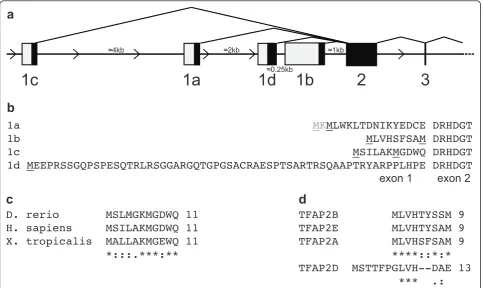
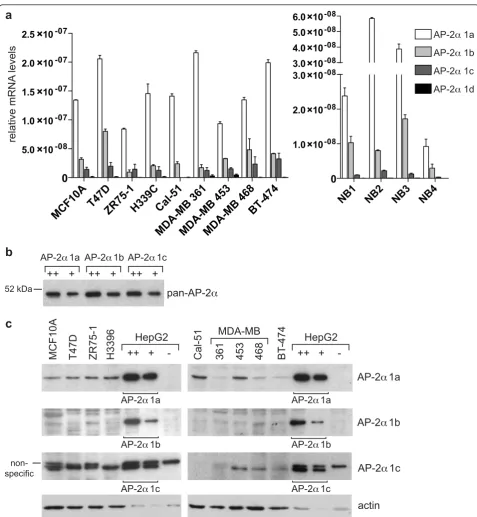
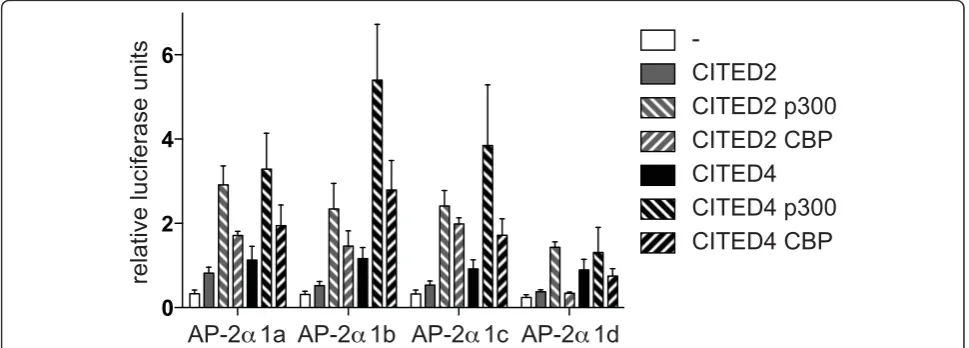
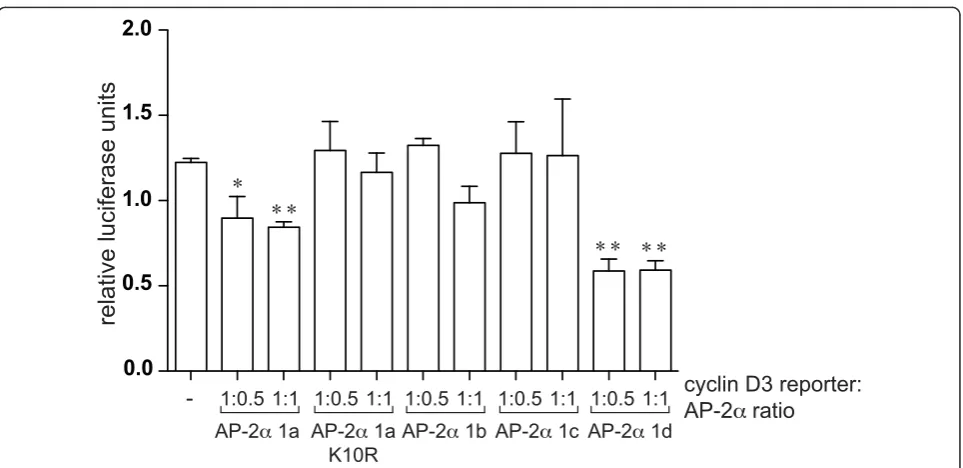
Alternative TFAP2A isoforms have distinct activities in breast cancer
Full text
Figure

Related documents
Background: A new serum marker of inflammation copeptin (CPP) a stable C-terminal pro-vasopressin was assessed along with conventional markers such as C-reactive protein
For the serviced apartment case (case 1), there is no bequest motive and agents have no access to the insurance market prior to entering the retirement village; retirees can
Accordingly, cells from humans, monkey, hamster, mice, quail, cows [ 49 , 54 , 55 ] and, as shown in this study, red deer and fallow deer are permissive to SRLV entry since
A UV transmittable NLO crystal Hydrofluoric acid mixed Sulphamic acid (FASA) was synthesized and explored in aqueous solution by slow solvent evaporation technique at
The aim of this investigation is to explore which proteins are involved in the response of the maize plant to heat shock treatment and using them as molecular markers to improve
This UM is constituted by these TCP and TRP which, in turn, are the ultimate constituents of any matter and any mind in the inherent presence of thought force (T F ) in vitro
Small scale batch production of ethanol was carried out from the cassava peels and effluent wastes derived from the local cassava processing mill.. This study
Results and Conclusions: Based on this work showed that: the embryotoxic effect of caffeine was only confined to a reduction in the number of offspring; the greatest changes in
