DESIGN AND DEVELOPMENT OF IMMEDIATE RELEASE AND SUSTAINED RELEASE BI-LAYERED MATRIX TABLETS OF
ORAL-HYPOGLYCEMIC DRUGS
Dissertation submitted to
The Tamilnadu Dr. M.G.R Medical University, Chennai
In partial fulfillment for the requirement of the degree of
MASTER OF PHARMACY (Pharmaceutics) SEPTEMBER-2012
DEPARTMENT OF PHARMACEUTICS
KMCH COLLEGE OF PHARMACY
DESIGN AND DEVELOPMENT OF IMMEDIATE RELEASE AND SUSTAINED RELEASE BI-LAYERED MATRIX TABLETS OF
ORAL-HYPOGLYCEMIC DRUGS
Dissertation submitted to
The Tamilnadu Dr. M.G.R Medical University, Chennai In partial fulfillment for the requirement of the degree of
MASTER OF PHARMACY (Pharmaceutics) SEPTEMBER-2012
S
Suubbmmiitttteeddbbyy Reg. No: 26107116 U
UnnddeerrtthheeGGuuiiddaanncceeooff
Mrs. J. Padmapreetha, M.Pharm., Assistant professor, Department of Pharmaceutics,
KMCH College of Pharmacy, Coimbatore. Co-supervised by
Mr. Rajesh Kshirsagar Mr. Sanjay C. Pawar, Executive Vice-President, Deputy General Manager,
Micro Advanced Research centre, Micro Advanced Research centre, Kudlu, Bengaluru. Kudlu, Bengaluru.
DEPARTMENT OF PHARMACEUTICS
KMCH COLLEGE OF PHARMACY
Dr. A. RAJASEKARAN, M. Pharm., Ph.D., PRINCIPAL,
KMCH COLLEGE OF PHARMACY, KOVAI ESTATE, KALAPATTI ROAD, COIMBATORE – 641048. (TN)
CERTIFICATE
This is to certify that this dissertation work entitled “DESIGN AND
DEVELOPMENT OF IMMEDIATE RELEASE AND SUSTAINED RELEASE
OF BI-LAYERED MATRIX TABLETS OF ORAL-HYPOGLYCEMIC
DRUGS” is a bonafide work carried out by Reg. No: 26107116 under the guidance
of Mrs. J. Padmapreetha, M.Pharm., Assistant Professor, Dept of Pharmaceutics
for the partial fulfillment for the Degree of Master of Pharmacy and is forward to The
Tamil Nadu Dr.M.G.R. Medical University, Chennai.
DATE: Dr. A. RAJASEKARAN, M.Pharm., Ph.D.,
Mrs. J. Padmapreetha, M.Pharm. , Assistant Professor,
Department of Pharmaceutics, KMCH college of Pharmacy, Coimbatore- 641048.
CERTIFICATE
This is to certify that the dissertation work entitled “DESIGN AND
DEVELOPMENT OF IMMEDIATE RELEASE AND SUSTAINED RELEASE
BI-LAYERED MATRIX TABLETS OF ORAL-HYPOGLYCEMIC DRUGS”
submitted by Reg. No: 26107116 to the Tamil Nadu Dr.M.G.R. Medical University,
Chennai, in partial fulfillment for the Degree of Master of Pharmacy in
Pharmaceutics is a bonafide work carried out by the candidate under my guidance
during the year 2011 – 2012.
DATE: Mrs. J. Padmapreetha, M.Pharm.,
DECLARATION
I do hereby declare that this dissertation entitled “DESIGN AND DEVELOPMENT
OF IMMEDIATE RELEASE AND SUSTAINED RELEASE BI-LAYERED MATRIX
TABLETS OF ORAL-HYPOGLYCEMIC DRUGS” submitted to the Tamil Nadu
Dr.M.G.R. Medical University, Chennai, in partial fulfillment for the Degree of Master of
Pharmacy in Pharmaceutics was done by me under the guidance of
Mrs. J. Padmapreetha, M.Pharm., Assistant Professor, Department of Pharmaceutics,
KMCH College of Pharmacy, Coimbatore, during the year 2011 – 2012.
EVALUATION CERTIFICATE
This is to certify that the dissertation work entitled “DESIGN AND
DEVELOPMENT OF IMMEDIATE RELEASE AND SUSTAINED RELEASE
BI-LAYERED MATRIX TABLETS OF ORAL-HYPOGLYCEMIC DRUGS”
Submitted by Reg. No:26107116 to the Tamil Nadu Dr.M.G.R. Medical University,
Chennai, in partial fulfillment for the Degree of Master of Pharmacy in
Pharmaceutics is a bonafide work carried out by the candidate at KMCH College of
Pharmacy, Coimbatore, and was evaluated by us during the academic year 2011 – 2012.
Examination Centre: KMCH College of Pharmacy, Coimbatore – 48.
Date:
Internal Examiner External Examiner
Convener of Examination
ACKNOWLEDGEMENTS
There is a belief that god is the reason for everything in this world. I sincerely believe this and feel that I could finish my work without obstacles only because of his grace on me.
My Father, Mother and Brother are reasons behind every good things happening in my life. They are my strength. Needless to say that, their support during this project was remarkable. They deserve all the praises in the world.
I would like to thank my guide Mrs. J. Padmapreetha for all her support during my project work. She has been gracious in guiding me all through the work. I would like to thank her for being so helpful and showing me the right way.
My heartfelt thanks to Mr Arun kumar Nagalingam for his timely help and guidance he has given me during my term in KMCH college of Pharmacy.
It has been great to be under our Head of the deparment Mr. K.S.G. Arul Kumaran. His support during project was Stupendous. All the encouragement he has given to me is priceless.
It has been a great privilege to be under Inspiring Principal Mr. A. Rajasekaran. I am grateful to him for the room he has created for us in college in building our career. I sincerely thank him for supporting us to carry out the project in industry. I am thankful for all the facilities he has given to us during our project.
I sincerely thank Dr. C. Sankar for the knowledge he has shared with us during our project work. His advises are invaluable. I am so grateful to him.
I am very grateful to Mr. Rajesh Kshirsagar, Executive Vice-President for giving me an opportunity to carry out my project work in Micro Advanced Research Centre.
I would like to thank Mr. Sanjay Pawar, Assistant General Manager, for giving me an opportunity to carry put my work in industry under his team. The chance given by him laid a great foundation to my career.
It was great experience to be working under Mr. Durai Venkadesh. I am very grateful for absorbing me in to his team as an intern. I am surprised by the liberty he has given me in upgrading my knowledge during my term in the industry. He has been graceful in guiding all through my project in industry.
I would like to thank Mr. Rajan and Mr. Dhayanand for their support they have given during my project work.
I am grateful to Mr. Ankush Gupta, Mr. Rathinasamy, Mr. Senthil for sharing their knowledge with me. Their suggestions are invaluable.
I would like to thank Mr.Bavesh, Mr. Dharma raj, Mr. Rajini kanth, Mr. Srikanth Reddy, Mr. Mayur Narode, Mr. Rupesh Jain, Mr. Sunil, Mr. Rahul Patil, and Mr. Manjunath for their technical suggestions during my internship. They help greatly in progress of my carrer.
My sincere thanks to Ms Rupali and Ms. Monalisa of Human Resource department, Micro Advanced Research Centre for their support during my internship.
Light moments with Shameem, Naveen, Sridhar, Abhishek, Vishal, Somnath, Madan, Dushyanth, Divya, Seema, Aditya, Bhaktha, Sovan, Jogasmitha, and Gopal interns of FR&D,Micro Labs helped a lot in keeping my mental strengths intact. I am thankful to them for sharing their knowledge with me.
I am very thankful to Ranjith and Vivek interns of AR&D, Micro Labs., for their timely help during my project.
My Batch mates first and eventually my best buddies Akhil, Prashant, Subba, Vinu, Rekha, Niyas, Chandra sekhar, Harshita, Chaitanya, Mahesh, Sruthi, Venkatesh, Gowtham, Anto, Mansoor, Waseem, Najeeb for making my term in KMCH a memorable one and reminding me about the ticking clock.
I would like to thank my seniors Christene, Mazin, Sandra, Lincy J, Lincy V, Sagar Srijith, Dinesh, Ambiga, Arun, for their suggestions and support.
I would like to thank my sweet and good friends in KMCH Sagar MJ, Maria, Anna, Sruthy, Suraj, to name few in constantly knowing my status and wishing very best for me.
I would like to thank my Junior batch friends for wishing best for me. Time with them was memorable during project.
I am thankful to our Lab attendant Ms. Thiruveni for helping us a lot during our project work.
My heartfelt thanks to all the teaching and non-teaching staff of KMCH college of Pharmacy involved directly or indirectly in helping to finish my work.
CONTENTS
SERIAL PARTICULARS PAGE
1 INTRODUCTION 1-15
2 OBJECTIVE AND PLAN OF WORK 16
3 LITERATURE REVIEW 17-22
4 MATERIALS AND EQUIPMENTS 23-24
5 DRUG PROFILES 25-28
6 EXCIPIENT PROFILES 29-38
7 EXPERIMENTAL WORK 39-72
8 RESULTS AND DISCUSSION 73-94
9 SUMMARY 95-96
10 CONCLUSION 97-98
Table
Number PARTICULARS Page
1 Different Oral-Hypoglycemic drugs 10
2 Description of Solubility 39
3 Compatibility studies 45-46
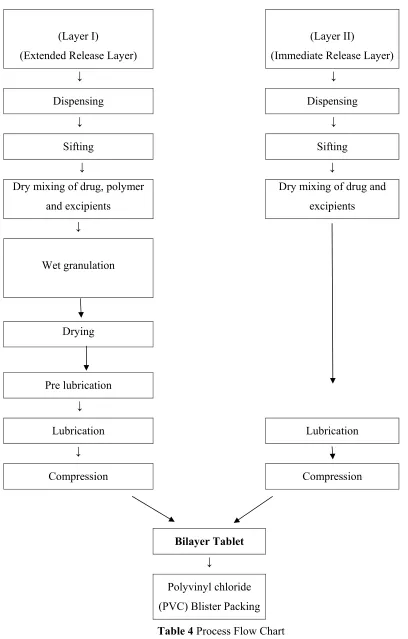
4 Process Flow Chart 49
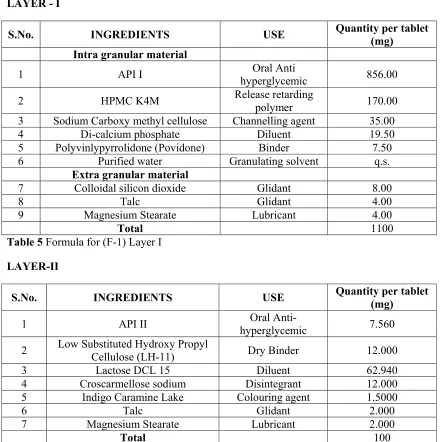
5 Formula for Trial 1 Layer I 50
6 Formula for Trail 1 Layer II 50
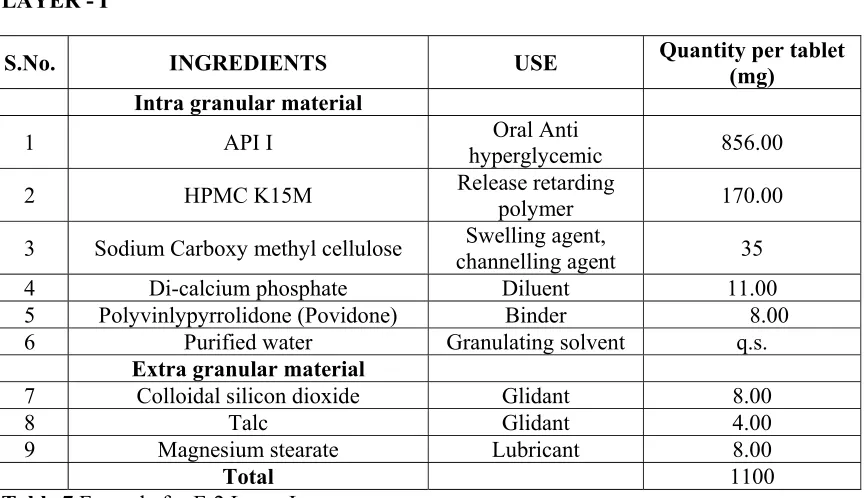
7 Formula for Trial 2 Layer I 51
8 Formula for Trial 2 Layer II 51
9 Formula for Trial 3 Layer I 52
10 Formula for Trial 3 Layer II 52
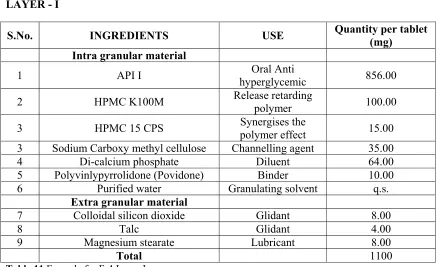
11 Formula for Trial 4 Layer I 53
12 Formula for Trial 4 Layer II 53
13 Formula for Trial 5 Layer I 54
14 Formula for Trial 5 Layer II 54
15 Formula for Trial 6 Layer I 55
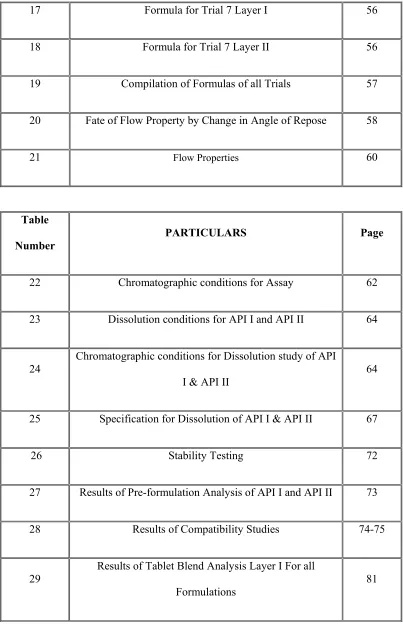
[image:10.612.105.511.69.722.2]17 Formula for Trial 7 Layer I 56
18 Formula for Trial 7 Layer II 56
19 Compilation of Formulas of all Trials 57
20 Fate of Flow Property by Change in Angle of Repose 58
21 Flow Properties 60
Table
Number
PARTICULARS Page
22 Chromatographic conditions for Assay 62
23 Dissolution conditions for API I and API II 64
24
Chromatographic conditions for Dissolution study of API
I & API II 64
25 Specification for Dissolution of API I & API II 67
26 Stability Testing 72
27 Results of Pre-formulation Analysis of API I and API II 73
28 Results of Compatibility Studies 74-75
29
Results of Tablet Blend Analysis Layer I For all
[image:11.612.105.508.66.694.2]30
Results of Tablet Blend Analysis Layer II For all
Formulations 81
31 Specifications for Tablet Evaluation 82
32 Results of Tablet Evaluation 82
33 Dissolution Profile of Formulation-1 84
34 Dissolution Profile of Formulation-2 85
35 Dissolution Profile of Formulation-3 86
36 Dissolution Profile of Formulation-4 87
37 Dissolution Profile of Formulation-5 88
38 Dissolution Profile of Formulation-6 89
39 Dissolution Profile of Formulation-7 90
40 Dissolution Profile for all Formulations 91
41 Values for Plotting graphs of various Kinetic models 92
Table
Number PARTICULARS Page
42
Regression values and Slope Values from all Kinetic
models Graphs 92
30°C/65%RH
44 Stability data for Samples placed in conditions
LIST OF FIGURES
Figure
Number Particulars Page
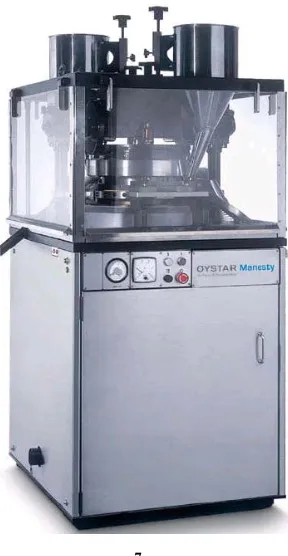
1 Manesty double rotary press 7
2 IR graph of API I + HPMC 15 CPS 76
3 IR graph of API I + HPMC K 4M 77
4 IR graph of API I + HPMC K 15M 77
5 IR graph of API I + HPMC K 100M 78
6 IR graph of API I + Sodium CMC 78
7 IR graph of APII + L.S. HPC (LH 11) 79
8 IR graph of API II + Lactose DCL 15 79
09 IR graph of API I + Croscarmellose Sodium 80
10 Dissolution profile of API I in Formulations 1, 2 & 3 86
11 Dissolution profile of API I in Formulations 4 & 5 88
12 Dissolution profile of API I in Formulations 6 & 7 90
LIST OF ABBREVIATIONS
% :
Percentage
Mg
:
Milligrams
pH
: Hydrogen ion concentration
HCl
: Hydrochloric Acid
BCS
: Biopharmaceutical Classification System
FTIR
: Fourier Transform Infra-Red Spectroscopy
C.I.
:
Compressibility
Index
°C :
Degree
Centigrade
API
: Active Pharmaceutical Ingredient
NIDDM
: Non-Insulin Dependent Diabetic Mellitus
HPMC :
Hydroxypropyl
Methylcellulose
DCL
: Directly Compressible Lactose
CCS
: Croscarmellose Sodium
CDR
: Cummulative Drug Release
IR Layer
: Immediate Release layer
SR layer
: Sustained Release layer
IR Graph
: Infra-Red Graph.
Ppm
: Parts per million
nm
:
Nano
meters
RMG
: Rapid Mixer Granulator
US FDA
: United States Food and Drug Administration
USP
: United States Pharmacopoeia
% RH
: Percentage Relative Humidity
% RSD
: Percentage Relative Standard Deviation
NFD
: Non-Filling Detecting System
ICH
: International Conference for Harmonization
RPM
: Revolutions per minute
ABSTRACT
The aim of the work is to develop Bi-layered matrix tablets containing a
Biguanide (API I) in SR layer and a Thiazolidinedione (API II) in IR layer. The
formula is developed by taking In-vitro release of both the drugs in to consideration.
HPMC K 4M, HPMC K 15M and HPMC K 100M were used as rate retarding
polymers and Croscarmellose sodium as superdisintegrant for SR layer and IR layer
respectively, in the trials for preparing an optimum formulation of the Bi-Layer
tablets. Pre-formulation studies and Compatibility studies were found to be
satisfactory. Tablet blend all formulations was evaluated for flow properties, which
were found to be optimum. Tablet prepared were evaluated for several parameters like
Thickness, Hardness, Weight variation, Friability, Drug content and In-vitro release of
the drugs. Formulation F-7 was found to be an optimum formula with the release of
the API I and API II within specifications. The release rate was found to be following
First-order kinetics and mechanism is by combination of diffusion and erosion.
Stability studies at conditions 30°C/ 65%RH and 40°C/75%RH are showing that the
dosage form is intact after storage for 3 months at both the conditions. It can be
concluded that Bi-layered tablets of these drugs are advantageous in having uniform
drug content of both the drugs and the sustained release of the API I reduces the
1.
INTRODUCTION
Definition1:
Tablets are solid preparations each containing a single dose of one or more
active substances and usually obtained by compressing uniform volumes of particles.
Tablets are intended for oral administration. Some are swallowed whole, some after
being chewed, some are dissolved or dispersed in water before being administered and
some are retained in the mouth where the active substance is liberated.
The particles consist of one or more active substances with or without
excipients such as diluents, binders, disintegrating agents, glidants, lubricants,
substances capable of modifying the behaviour of the preparation in the digestive
tract, colouring matter authorized by the competent authority and flavouring
substances.
Classification of Tablets2:
Most commercial tablets are divided into two general classes, by whether they
are made by compression or molding. Compressed tablets are prepared by large scale
production methods, while molded tablets generally involve in small scale production.
Various tablet types are listed below.
¾ Compressed tablets
¾ Molded tablets.
Compressed tablets are of again of following types:
• Sugar coated tablets.
• Film-coated tablets.
• Multiple compressed tablets
• Controlled release tablets
• Tablets for solution
• Effervescent tablets
• Compressed Suppositories or inserts
• Buccal or sublingual tablets.
Molded tablets are also called as Tablet Triturates can be of two types. These are
manufactured in small scale. Two types of Molded tablets are given below.
• Dispensing tablets
• Hypodermic tablets
Advantages of Tablets3:
Of all the oral solid dosage forms tablets are most commonly employed, tablet
has several advantages:
9 They are unit dosage forms, so they offer the greatest capabilities of all oral
dosage forms for the greatest dose precision and least content variability.
9 Their cost is lowest of all dosage forms.
9 They are lightest and most compact of all oral dosage forms.
9 They are in general easiest and cheapest to package and ship of all oral dosage
forms.
9 Product identification is potentially the simplest and cheapest requiring no
additional processing steps when employing an embossed or monogramming
9 They lend themselves to certain special release profiles products, such as
enteric or delayed release products.
9 They are better suited to large scale production than other unit oral dosage
forms.
9 They have best combined properties of chemical, mechanical and
microbiological stability of all dosage forms.
Disadvantages of Tablets3:
9 Some of the drugs resist compression into dense compacts, owing to their
amorphous nature or flocculent, low-density character.
9 Drugs with poor wetting, slow dissolution properties, intermediate to large
dosages, or any combination of these features may be difficult or impossible to
formulate and manufacture as a tablet that still provide adequate or full drug
availability.
9 Tablets cannot be suggested for the patients with Dysphagia (difficulty in
swallowing).
Multiple compressed tablets1:
These are compressed tablets made by more than one compression cycle. This
process is best used when there is need of separating active ingredients for stability
purposes or if mixing is inadequate to guarantee uniform distribution of two or more
active ingredients.
They are of two types again
• Layered tablets
Layered tablets
:
Layered tablets are formed by compressing the granules onpreviously compressed blend (First layer). This forms two layers and can be used for
making tablets of multilayer. This requires Special Presses, when it comes to large
scale manufacturing.
Press coated tablets: Press coated tablets are formed by compressing the granules
having already compressed tablets in the core. This forms a dry coat over the core
tablets. Special presses are developed for the large scale processes recently.
Layered tablets
:
Bi-layered tablet are mostly explored by the pharmaceutical companies not
just for the sake of extension of the patents and marketing of the drugs, but also for
sake of Bi-modular release of the drugs and to incorporate two drugs in one tablet.
There are many formulations of tablets comprising two drug molecules, but there is
always possibility of interaction. Bi-layer tabletting is a better option of avoiding the
interaction between two different classes of molecules.
Bi-layer tablets are having an advantage of accommodating the layers of two
different kinetic profiles of a drug, of which one can be an immediate release layer
and other a prolonged release layer (Chan, et al.,)4. There are some works that have
two drug molecules in different layers, one drug layer immediately releases and other
drug layer is designed to release in delayed or extended time. (Vaya, et al)5.
Preparing the bi-layered tablets is feasible with all desired parameters at
small scale. But when transforming the process to a large scale process, the
parameters desired are difficult and nearly impossible to obtain. To obtain desired
bi-layered tablets, special presses are obviously required to avoid the risks like
9 Improper weights of the individual layers.
9 Separation of the layers.
9 Cross-contamination of layers.
9 Hardness problems.
In the earlier times the machines fed controlled volumes of each separate
granulation on top of each other and compressed them together at one pressing station.
The machines of later stages were engineered to compress each layer separately
before deposition of next granulation, with a final compression for the complete
tablet.
Wipe-off blades covering the entire face of the die have been installed not to
allow the excess blend to circulate around the turret. The excess is directed in to pots
at the side of the press and manually returned to the appropriate hopper. Suction
pumps were used to remove any blend that escaped the scraper blades.
The latest refinement is has been the force feeders which retain the individual
granulations. But some powder escapes from these also, and same arrangement as
described is installed on the presses to prevent one granulation from contaminating the
other.
In the operation of older type of machine, the granulation for the first layer is
placed in the hopper, and the machine is adjusted until the desired weight is achieved
with consistency; then the second hopper is filled with the granulation, and the same
procedure is followed until the correct tablet weight is obtained. In this, the
single-compression method, the delineation between the layers tends to be little uneven. It is
also difficult to adjust the weight during the run.
Of the modern machines, there are two types which differ mainly in the way
the layers are separated for weight and hardness checking. In one, the first layer is
diverted from the machine. In the other, the first layer is made so hard that the second
layer will not bond to it or will bond only weekly; upon ejection of complete tablet,
• A granulation is placed in the in the first hopper that flows in to the feed frame. The
machine is started and the volume of granulation in the die is adjusted by the weight
adjustment cam.
• The upper and lower punches are brought together by the pre-compression rolls. To
form a weak compact. Part of lower cam track is raised hydraulically to eject the first
layer, which is swept off the die table by the wipe-off blades affixed to the back edge
of the second feeder.
• Samples are weighed and hardness is determined, when conditions are satisfactory,
the ejection cam is lowered and the entire process is repeated for the second layer,
using feed frame, weight adjusting cam tamping rolls and ejection cam and wipe-off
blades.
• The weight of second layer is determined by the difference between the two weights.
• The leading and trailing edges of the feed frames are equipped with wipe-off blades
which divert any powders that escape from the feeders in to the collection boxes. The
blade of the trailing edge of first feed frame guides the completed tablet down the
chute to the collection bin.
• If an adjustment in the weight or thickness of the first or second layer is necessary,
then weight of each succeeding layer will probably need correction as weight is
Diabetic Mellitus7:
Diabetes mellitus is a heterogeneous group of disorders characterized by
abnormalities in carbohydrate, protein, and lipid metabolism. The central disturbance
in diabetes mellitus is an abnormality in insulin production or action or both, although
other factors can be involved. Hyperglycemia is a common end point for all types of
diabetes mellitus and is the parameter that is measured to evaluate and manage the
efficacy of diabetes therapy.
Diabetes mellitus has been traditionally classified into Insulin-dependent
diabetes mellitus (IDDM), also known as type I (formerly called juvenile-onset
diabetes mellitus), and non–insulin-dependent diabetes mellitus (NIDDM), also
known as type II.
Type I Diabetes mellitus constitutes about 10% of cases of diabetes mellitus.
[image:25.612.126.270.70.348.2]The pathogenesis of type I diabetes is autoimmune destruction of the cells of the
pancreas. The factor or factors that trigger this autoimmune response are unknown.
Predisposing factors appear to include certain major histocompatibility complex
haplotypes and auto-antibodies to various islet cell antigens. The progression of the
autoimmune response is characterized by lymphocytic infiltration and destruction of
the pancreatic cells resulting in insulin deficiency.
Type II Diabetes mellitus, is far more common. In contrast to Type I, Type II
is not an autoimmune process and may or may not be insulin dependent; that is, a
diabetic state that is most effectively managed by insulin therapy. Frequently, NIDDM
is used interchangeably with type II diabetes mellitus. The three major metabolic
abnormalities that contribute to hyperglycemia in NIDDM are defective
glucose-induced insulin secretion, increased hepatic glucose output, and inability of insulin to
stimulate glucose uptake in peripheral target tissues.
There are several complications that arise due to Diabetes such as Diabetic
Keto-acidosis, Macro-vascular diseases, Micro-angiopathy, dysfunction of vascular
endothelium. There is a risk of formation of oxygen derived free radicals. Chronic
renal failure is another complication where Diabetes becomes a reason.
Management of Diabetes Mellitus:
WHO provides guidelines for the management of Diabetes Mellitus. It was
suggested that the major components8 of treatment of Diabetes are
• Diet with exercise
• Oral-Hypoglycemic drugs.
Type 2 diabetes is a syndrome characterized by insulin deficiency, insulin
resistance and increased hepatic glucose output. Medications used to treat Type 2
Diabetes are designed to correct one or more of these metabolic abnormalities7.
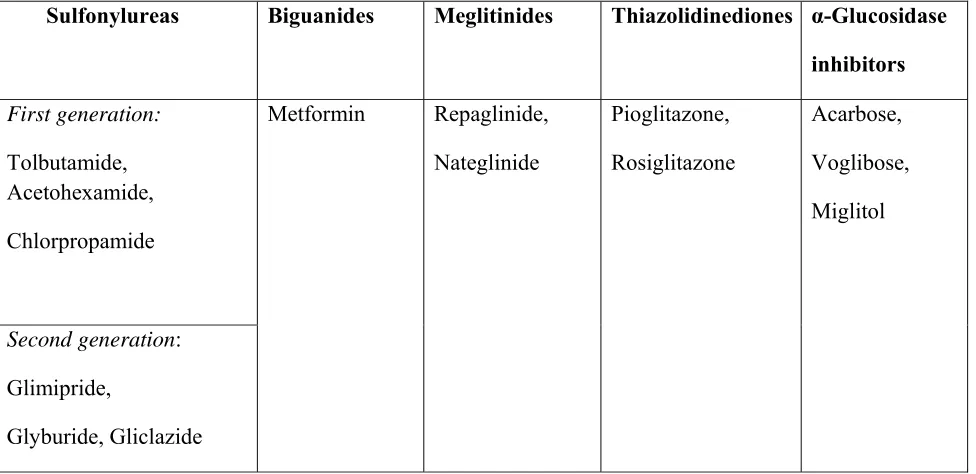
Currently, there are five distinct classes of hypoglycemic agents available, each class
displaying unique pharmacologic properties. There are five important classes of Oral
Hypoglycemic drugs namely,
• Sulfonylureas
• Biguanides
• Meglitinides
• Thiazolidinediones
[image:27.612.65.553.423.660.2]• Alpha-Glucosidase inhibitors.
TABLE 1 Showing various classes of Oral-Hypoglycemic drugs.
Sulfonylureas Biguanides Meglitinides Thiazolidinediones α-Glucosidase
inhibitors
First generation:
Tolbutamide, Acetohexamide,
Chlorpropamide
Metformin Repaglinide,
Nateglinide
Pioglitazone,
Rosiglitazone
Acarbose,
Voglibose,
Miglitol
Second generation:
Glimipride,
Combination of Oral-Hypoglycemic Drugs9:
If adequate control is not obtained with the use of a single agent, combination
therapy is an option. Several of the available oral agents have been studied in combination
and have been shown to further improve glucose control when compared to monotherapy. As
with monotherapy, the choice of a second agent should be based on individual characteristics.
Reasonable combinations of agents include the following,
Sulfonylurea+ Biguanide or Thiazolidinedione or Alpha Glucosidase
inhibitors.
Biguanide+ Meglitinide
Biguanide + Thiazolididnedione
Biguanide + Alpha- glucosidase inhibitors.
Triple combination is therapy is done with:
Sulfonylurea + Biguanide + Thiazolidinedione.
Sulfonylurea + Biguanide + Alpha-Glucosidase inhibitors.
Biguanides7 does not affect insulin secretion but requires the presence of
insulin to be effective. The exact mechanism of Biguanide’s action is not clear, but it
does decrease hepatic glucose production and increase peripheral glucose uptake.
Thiazolidinediones7 (sometimes termed glitazones) are a novel class of drugs
that were initially identified for their insulin-sensitizing properties. They all act to
decrease insulin resistance and enhance insulin action in target tissues.
Thiazolidinediones activate the nuclear peroxisome proliferator–activated receptor
(PPAR), a nuclear orphan receptor that is predominantly expressed in adipose tissue
and to a lesser extent in muscle, liver, and other tissues.
Biguanides act by inhibiting the hepatic glucose output and to a lesser extent
by enhancing the Insulin sensitivity in hepatic and some peripheral tissues. The
glucose level in the body is found to be reduced up to 50 to 70 mg/dL.
Thiazolidinediones act by increasing the sensitivity in the Adipose tissues and
muscles and to a lesser extent by reducing the hepatic output of glucose.
These are found to be reducing the hepatic glucose by 25 to 50 mg/dL. So it
can be implied that combination of these two classes can have Synergistic effect over
glucose regulation.
SUSTAINED RELEASE FORMULATIONS:
During a course of therapy, patient is advised to take medicines more than
once a day. This can be because of fast elimination of the drug from the body. To
maintain the drug concentration within the therapeutic range, there would be a need of
administration of drug for more than once a day. Patients with multiple drug regimens
and with several dosing intervals are usually non-compliant with the therapy. There is
also a fluctuation observed in case of multiple dosing of a drug. The therapeutic effect
The solution for this is achieved by the Sustained release formulations where the
release of drug is manipulated in such a way that the concentration of drug will be in
the therapeutic window for longer durations than the conventional drug delivery
systems.
There are several advantages that make sustained drug delivery a choice of drug
delivery systems:
The therapeutic effect of drug can be enhanced at lower concentrations.
The adverse effects can be minimized.
Frequency of dosing can be minimized.
Improvement of patient compliance.
The release of drug form a system can be controlled either13
By forming a Membrane around10 the Dosage form that sustains the release
of drug by forming a layer that retards the release form the core. Polymers are
employed, in forming the membrane around the dosage form. Polymeric membrane
can be a Micro-porous, Non-porous or a semi-permeable membrane. A polymer like
Ethylene-vinyl acetate copolymer is found to be used in many formulations as
polymer membrane to control the release in several products.
The equation13 that explains several variables that influence release from this kind of
system:
Where Km/r and Ka/m are, respectively, the partition co-efficients for the
interfacial partitioning of drug molecules from the reservoir to the membrane and
from the membrane to the aqueous diffusion layer; Dm, and Dd are, respectively, the
diffusion coefficients in the rate-controlling membrane with a thickness of hm, and in
the aqueous diffusion layer with a thickness of hd.
Another technique of controlling the rate of drug from the dosage is by
forming a matrix around the drug molecules with Lipophilic or Hydrophilic
polymers. This can be achieved by dispersion of the drug particles blend in the
semisolid polymer and then cross-linking of the polymer chains. By Kneading the
polymer with the drug particles well that forms a matrix on contact with the water
(Hydroxy Propyl Methyl Celluloses). Melt extrusion is also used in fabricating the
polymer matrix systems.
The equation that explains several variables that influence release from this kind
of system:
In which the time-dependent thickness [ha(t)] of the diffusional path for drug
molecules to diffuse through, which is increasing with time, is compensated by the
proportional increase in the drug-loading level [Cp(ha)],and a constant drug release
A technique includes the combination of both the Membrane permeation
system and Matrix systems. The core would be a matrix comprising of Polymer
matrix and the membrane is employed for further regulation of drug release.
The equation that explains several variables that influence release from this kind of
system:
where A is the initial amount of drug solid impregnated in a unit volume of
polymer matrix with solubility Cp and diffusivity Dp; Km is the partition coefficient
for the interfacial partitioning of drug molecules from polymer matrix toward polymer
coating membrane; Pm is the permeability coefficient of the polymer coating
membrane with thickness hm; and Pd is the permeability coefficient of the
hydrodynamic diffusion layer with thickness hd
Micro-reservoir systems are another way regulating the release of the drug
from the dosage forms. This includes fabrication of several micro-reservoirs, by
dispersing solid drug particles in a water miscible polymer and again dispersing this
matrix in another polymer that forms several micro-reservoirs which is bio-compatible
in nature.
The equation that explains several variables that influence release from this kind of
Where m = a/b and n is the ratio of drug concentration at the inner edge of the
interfacial barrier over the drug solubility in the polymer matrix,[1,6] in which a is the
ratio of drug concentration in the bulk of elution solution over drug solubility in the
same medium and b is the ratio of drug concentration at the outer edge of the polymer
coating membrane over drug solubility in the same polymer and S1 and Sp are the
solubility of the drug in the liquid compartments and in the polymer matrix,
respectively.
A drug molecule that is having high solubility, small elimination half-life,
which is usually administered for more than once a day is suitable for formulating in
to a sustained release formulation.
Conclusion:
Keeping everything in a nutshell, it can be noted that Bi-layered tablets can be
an ideal carrier for drugs that are usually prescribed in Combinational therapy.
Thiazolidinedone and Biguanides are suitable candidates for Bi-layered tabletting. As
Biguanides usually have shorter half life and are administered for more than three
times a day, Biguanide is selected as drug candidate for sustained release layer.
Thiazolidinediones are having higher half-lives and so selected as drug candidate for
2. OBJECTIVE AND PLAN OF WORK
AIM:
The aim of the work is to design and develop Bi-layered matrix tablets comprising of a Thiazolidinedione derivative in the immediate release layer and a
Biguanide in the Sustained release layer and to carry out the In vitro release study of
the drugs.
The objectives which were destined to achieve during the work are:
¾ Bi-layered tablets with good physical strength.
¾ Tablets with correct content of active pharmaceutical ingredients
without variation.
¾ To obtain optimal sustained release of the drug in the First layer and
optimal release from the Immediate release layer.
PLAN OF WORK:
¾ Literature survey
¾ Pre-formulation studies:
API characterization and
Drug-Excipients compatibility studies.
¾ Optimization of the formula that results all the desired physical
characteristics.
¾ Pre-Formulation analysis like
1. Angle of repose
2. Bulk density
3. Tapped density
4. Compressibility index
5. Hausner’s ratio
¾ Post- Compression analysis of tablets to know the parameters like
Hardness, Uniformity of weight, Dimensions, %Friability, and amount of drugs in the units.
¾ In vitro dissolution study and
¾ Analysis of data to know the kinetic pattern of the drug.
¾ Stability studies to be done on the optimized formula at two conditions
3. LITERATURE REVIEW
Naeem et al 11developed and characterized bi-layered tablets of Tramadol
HCl and Acetaminophen micro particles in which they have used
Ethylcellulose as drug release retarding polymer. The micro particles were
prepared separately and were compressed as Bi-layered tablets. The release of
drug was observed for 8 hours and 12 hours where the formulations followed
Higuchi’s pattern of controlled release. Although a conventional solid dosage
combination of TmH and AAP has been approved by the United States Food
and Drug Administration (FDA) for use, patients still have to take the
conventional tablets 3 - 4times a day. To improve patient’s compliance, a
controlled-released combination was developed and characterized in this study
for its physical and chemical stability as well as for release characteristics.
Laxmi Goswami et al 12. Formulated and evaluated Bi-layered floating tablets
of two anti-diabetic drugs to increase the gastric residence time of a drug in
one layer and to release another drug immediately from second layer. They
have carried out the work by using HPMC, Carbapol, Polyvinylpyrrolidone as
chief ingredients. The formulated tablets were subjected for In vitro studies
which were carried out in USP Type II apparatus. The tablets were found to be
buoyant for 12-20 hrs.
Durga Prasad Pattanayak et. al.13 formulated bilayered tablets comprising
Metformin and Glimipride, where they have optimized the blends of both the
layers separately. They have used HPMC and Polyethylene oxide for
sustaining the drug release for about 24 hours. Form the stability profile they
release profile than that of PEO. Those formulations also exhibited Zero-order
release kinetics.
Bhala chirag et al 14. Formulated and evaluated bilayered tablets of two
model Anti-Diabetic drugs by using HPMC K 4M for sustained release layer
and Croscaramellose Sodium for Immediate release layer. the work suggests
that the increase concentration of the polymer brought about the sustained
release effect of drug in the Sustained release layer. They have used wet
granulation for sake of sustained release layer and direct mixing for immediate
release layer. The sustained release followed Higuchi’s kinetic pattern. Thay
have concluded that Bi-layered tablets can be a good alternative for
conventional tablets of the model Anti-Diabetic drugs.
Dhaval Patel et.al.15 formulated and evaluated Bi-layered floating tablets for
Gastric retention of Ciprofloxacin HCl. Both the layers were prepared by
direct compression. HPMC K 15M and Carbapol 934P were used for sustained
release of drug. Sodium bicarbonate was used for producing the floating
effect. Sodium starch glycolate was used for immediate release layer. They
have concluded that Carbapol 934 P and HPMC K 15M gave a desired kinetic
profile for the Immediate release layer and Sodium bicarbonate produced
optimum Lag time for obtaining the release profile for 12h.
Pankaj et al16. designed and developed a Bi-layered tablets formulation of
Simvastatin. HPMC (104) was used for the sake of Suatined release layer and
Croscaramellose sodium and Sodium starch glycolate for the immediate
release layer. They have concluded that Bi-layered tablets are good
application for sustaining the drug release and also releasing the drug
Preeti Karwa et al17 designed and evaluated the release of the Bi-layered
tablets of Zolpidem Tartarate. HPMC K 100M was used for retarding the
release in the sustained release layer and Croscaramellose sodium for the
sake of immediate release in the immediate release layer. HPMC K 100M
was found to be retarding the release of the drug for 6 hours. The release
profile was found to be fitting Korsmeyer-Peppas kinetic model and
Quasi-Fickian diffusion.
Mohana Raghava Srivalli et al18. designed novel Bi-layered gastric
muco-adhesive systems for localized and unidirectional release of Lamotrigine.
Carbapol 974 p and Polyox were used for Muco-adhesion and HPMC K 15M
was used for control release of the drug. The formulations were evaluated for
the exvivo mocoadhesion and also for In vitro release of the drug. The
formulations were found to be giving optimal muco-adhesion and also
controlled release. It was also concluded that uni-directional release of the
drug is possible.
Sharad Darandale et. al19 designed and characterized a Gastroretentive
dosage form consisting of Furosemide. The dosage consists of two layers in
which one layer is controlled release formulation (CR layer) and an IR layer.
These are muco-adhesive films that are placed in capsule, adhere to mucosa
after swelling. Controlled release of the drug was brought by the
Hydroxypropyl β-cyclodextrins in both layers and Carbapol 971P in CR layer.
Optimum release, Bio-adhesion and mechanical properties were also the
result of incorporation of these polymers.
Kiran musle et al20 designed and formulated Bi-layered tablets of
release layer and latter in to sustained release layer. HPMC K 4M was used as
release rate retard agent. It is stated that for combiaton therapy Bi-layered
tablets are better alternatives for multiple drug dosage form intake.
Rajendran et al21. formulated and evaluated Bi-layered tablets of
Anti-diabetic drugs in which one drug is incorporated in sustained release layer for
prolonged effect by using HPMC K 100M and HPMC K 100M as rate
retardants of release of the drug. Second layer is an immediate release layer
with Croscaramellose sodium and Sodium starch glycolate as
Superdisintegrants. The formulations comprising HPMC K 100M and HPMC
K 15M in combination were fopund to be giving optimum release profile for
drug in sustained release layer. The release of the drug is observed up to 8
hours. The release profile fits in to Higuchi’s kinetic model for drug release.
Mohammed Mofizur Rahman et al22 formulated and evaluated matrix tablets
of Ranolazine with Eudragit L 55 100 and with different viscosity grades of
HPMC polymers (Methocel E50 and Methocel K 15M CR). The dissolution
study was done 2h in simulated gastric fluid and for 6h in pH 6.8 phosphate
buffer. It was stated that by increasing the concentration of polymers, there
was a decrease in the rate of release of the drug. Further it was found that the
release from formulations containing Eudragit L 55 100 and high viscosity
grades of HPMC is slower than that of the low viscosity grades of HPMC
(Methocel E50).
Maggi et al23 studies compared the capabilities of PEO with two different
grades of HPMC polymers in case rate controlling of drug release. They have
are varying by having other parameters constant. They concluded that HPMC
polymers retarded the release of drug better that of PEO polymers.
Mohamed Halith et al24formulated Bi-layered tablets of Amlodipine Besilate
and Metoprolol Succinate by having the former in the SR layer and the latter
in IR layer. HPMC was used as release retardant and Sodium Starch Glycolate
as superdisintegrant. The release of drug in the SR layer was studies for 20
hrs. It was found to be following Zero-order kinetics.
Patel Naveen et. al.25 designed and formulated Floating matrix tablets of
Metoprolol Tartrate in a view of increasing its gastric residence time. HPMC
K 100M was used as release retarding agent. It was concluded that the
formulations with higher percentages of HPMC K 100M decreased the release
rate of the drug than the formulations with HPMC K100M in lower
percentages.
Beatriz Luna et. al .26 have suggested in their article that combination of a
Biguanide and Thiazolidinedione derivatives for a synergestic action in
control of elevated Glucose levels. It was suggested that this combinational
therapy is advised when there are no predicted results from single Oral
Anti-Diabetic agent.
Patel Mehul27 reviewed challenges in formulation of Bi-layered tablets. It
was suggested that Bi-layered tablets are purpose-built Bi-layered tablet
presses are of good choice to preclude several problems during manufacturing
process like Layer separation, insufficient hardness, and inaccurate weight
control of individual layers and cross contamination. It was concluded that
whenever high-quality bi-layer tablets need to be produced at high speed, the
to be the best solution. The sensitivity of the displacement-based control
system increases as pre-compression force decreases, resulting in a higher
accuracy.
Kumara Swamy et. al.28formulated and evaluated the Oro-dispersible tablets
of Theophylline using various superdisintegrants. Oro-dispersible tablets were
prepared with superdisintegrants Crosscaramellose sodium, Crosspovidone,
Sodium starch glycolate with concentarations 2%, 3% and 5%. Formulations
with 5% superdisintegrants have shown good disintegrant effects.
Formulations with Croscaramellose Sodium and Crosspovidone have shown
MATERIALS USED FOR STUDY
MATERIAL SOURCE
API I Wanbury limited
API II Biocon limited
Hydroxypropyl Methycellulose K 100M DOW chemicals / Colorcon Asia
Hydroxypropyl Methycellulose 15CPS Taian Ruitai Cellulose Co., Ltd
Croscaramellose sodium DMV Fonterra Ltd.
Sodium Carboxy Methyl Cellulose Pioma Chemicals
Di-Basic Calcium Phosphate Sudeep pharma
Povidone BASF Ltd.
Low-substituted Hydroxy Propyl Cellulose Aqualon Ltd
Lactose DMV Fonterra Ltd.
Colloidal Silicon Dioxide Wacker Silicones
Talc Luzenac Ltd.
Indigo Caramine Lake Roha dye chem..
EQUIPMENTS USED FOR THE STUDY
INSTRUMENTS MAKE
Top loading balance Sartorius
Rapid Mixer Granulator Allen-Bradley
Octagonal Blender PAM Machineries
Rapid Dryer Retsch T-200
8-station Bi-layer Tablet Press Rimek
Mechanical Stirrer Remi Motor
Tap density testing apparatus Electrolab
Hardness tester Schleuniger 8M Tablet tester
Friability testing apparatus Electrolab
Disintegration time testing apparatus Electrolab
Moisture Balance Sartorius
Analytical Balance Sartorius
Dissolution apparatus Lab India
Disso 2000
High Performance Liquid Chromatography SHIMADZU LC 2010 C HT
API I
29, 30, 31Category : Oral Anti-Hyperglycemic drug.
Description : White crystalline powder.
BCS classification : Class III drug.
Physico-chemical properties
Solubility : Freely soluble in water, slightly soluble in ethanol, Insoluble
in Acetone, Chloroform
pKa : 12.4
Mechanism of action: Decreases blood glucose levels by decreasing hepatic glucose
production, decreasing intestinal absorption of glucose, and
improving insulin sensitivity by increasing peripheral glucose
uptake and utilization. These effects are mediated by the initial
activation by of AMP-activated protein kinase (AMPK), a liver
enzyme that plays an important role in insulin signaling, whole
body energy balance, and the metabolism of glucose and fats.
Activation of AMPK is required for the drug’s inhibitory effect on
the production of glucose by liver cells. Increased peripheral
utilization of glucose may be due to improved insulin binding to
insulin receptors. Its administration also increases AMPK activity
in skeletal muscle. AMPK is known to cause GLUT4 deployment
to the plasma membrane, resulting in insulin-independent glucose
Pharmacokinetics
Absorption : Absorbed over 6 hours, bioavailability is 50 to 60% under fasting
conditions. Administration along with food decreases and delays
absorption.
Volume
of Distribution : 654 L for 850 mg administered as a single dose. The
volume of distribution following IV administration is 63-276 L,
likely due to less binding in the GI tract and/or different methods
used to determine volume of distribution.Peak action occurs 3
hours after oral administration.
Excretion : Approximately 90% of the drug is eliminated in 24 hours in those
with healthy renal function. Renal clearance of the drug is
approximately 3.5 times that of creatinine clearance, indicating the
tubular secretion is the primary mode of elimination.
Half-life : 6.2 hours. Duration of action is 8-12 hours.
Dosage : The maximum recommended daily dose in adults is 2000 mg.
Indications : For use as an adjunct to diet and exercise in adult patients (18 years
and older) with NIDDM. May also be used for the management of
metabolic and reproductive abnormalities associated with polycystic
ovary syndrome (PCOS).
Side effects : Diarrhoea, Nausea, Gas, Weakness and indigestion are some of the
API-II
29, 30, 31Category : Oral Anti-Hyperglycemic drugs.
BCS Classification : Class IV drug
Description : White crystalline powder.
Dosage : 15mg and 30mg upto 45mg
Solubility : Practically insoluble in water, ether. Soluble in Di-methyl
formamide,
very slightly soluble in Acetonitrile.
Mechanism of action: This acts as an agonist at peroxisome proliferator activated
receptors (PPAR) in target tissues for insulin action such as adipose
tissue, skeletal muscle, and liver. Activation of PPAR-gamma
receptors increases the transcription of insulin-responsive genes
involved in the control of glucose production, transport, and
utilization. In this way, it both enhances tissue sensitivity to
insulin and reduces hepatic gluconeogenesis. Thus, insulin resistance
associated with type 2 diabetes mellitus is improved without an
increase in insulin secretion by pancreatic β cells.
Pharmacokinetics
Absorption : Following oral administration, in the fasting state, it is first
measurable in serum within 30 minutes, with peak concentrations
observed within 2 hours. Food slightly delays the time to peak serum
concentration to 3 to 4 hours.
Volume of distribution: 0.63 ± 0.41 L/kg.
Excretion : This is found to be eliminated unchanged by the Biliary excretion.
The renal excretion is said to be negligible.
Half-Life : 3-7 hours.
Indications : Treatment of Type II diabetes mellitus.
Side effects : Sore throat, weight gain, muscle pain, tooth problems are likely to
Synon Molec Cate Desc fibrou Solub and e meth
Hand and q eye p minim
Stora dry p
nyms: Hydro
glycol
cular Structu
gory: Rate-c
i
ription: Hy
us or granula
bility: Solu
ether, but anol and D
dling Precau quantity of m protection i mize the risk
age: Hyprom
place.
6
.
xypropyl met
l ether.
re:
Where R i
controlling p
increasing a
ypromellose ar powder.
uble in cold w t soluble in Dichloro-meth
utions: Obs
material han s recommen ks of explosi
mellose pow
EXCIPIEN
HYPRO
thylcellulose,
is H, CH3, or
polymer for
gent.
is an odo
water; practi mixtures o hane, and m
erve normal ndled. Hypro nded. Exces ion. Hyprom
der should b
NT
PROFI
OMELLOSE
HPMC, Met
r CH3CH (O
sustained re
rless and ta
ically insolub f ethanol an mixtures of w
l precautions omellose dus ssive dust g mellose is com
be stored in a
ILES
32E
thocel, meth
OH) CH2
lease, stabili
asteless, wh
ble in chloro nd dichlorom water and alco
s appropriate st may be ir generation s mbustible.
a well-close
ylcellulose pr
izing agent,
hite or crea
oform, ethan methane, m ohol.
e to the circu rritant to the should be av
d container, ropylene viscosity- amy-white nol (95%), ixtures of umstances e eyes and
voided to
in a cool,
Syno
SCM
Mole
Func
visco
Desc
whit
Solu
tolue
collo
subs
Han
circu
sodiu
Stor
in a c
onyms:
A
C; sodium
ecular Stru
ctional
Ca
osity‐incre
cription:
C
te, odorless
ubility:
Pra
ene. Easily
oidal solut
stitution.
dling
Prec
umstances
um may be
rage:
Th
cool, dry pl
SODI
Akucell; Aq
carboxyme
ucture:
ategory:
T
asing agen
Carboxyme
s, granular
actically in
y dispers
tions. The
cautions:
and quant
e irritant to
he bulk ma
lace.
IUM CAR
quasorb; B
ethylcellulo
Tablet and
nt; water‐a
ethylcellulo
r powder.
nsoluble in
ed in wat
aqueous
Observe n
tity of mat
o the eyes.
aterial shou
RBOXY M
Blanose; c
ose.
d capsule
absorbing a
ose sodium
n acetone,
ter at all t
solubility
normal pre
terial hand
Eye protec
uld be stor
METHYLC
cellulose g
disintegra
agent.
m occurs as
ethanol
temperatu
varies w
ecautions a
dled. Carbo
ction is rec
red in a we
CELLULO
um; CMC
ant; tablet
s a white t
(95%), eth
res, formi
with the de
appropriat
oxymethylc
commende
ell‐closed c
OSE
sodium;
binder;
o almost
her, and
ng clear
egree of
te to the
cellulose
d.
DIBASIC
‐
CALCIUM
PHOSPHATE
Synonyms:
A‐TAB; calcium monohydrogen phosphate; calcium
orthophosphate;
Di
CafosAN
;
Dicalcium
orthophosphate;
E341;
Emcompress Anhydrous; Fujicalin; phosphoric acid calcium salt (1 : 1);
secondary calcium phosphate.
Structural Formula:
CaHPO
4Category:
Tablet and capsule diluent
.
Description:
Anhydrous dibasic calcium phosphate is a white, odorless,
tasteless powder or Crystalline solid. It occurs as triclinic crystals.
Solubility:
Practically insoluble in ether, ethanol, and water; soluble in
dilute acids.
Handling
Precautions:
Observe normal precautions appropriate to the
circumstances and quantity of material handled. The fine‐milled grades
can generate nuisance dusts and the use of a respirator or dust mask may
be necessary.
Storage Conditions: The bulk material should be stored in a well-closed container in
a dry place.
Syno
Stru
Func
table
Desc
odor
value
occu
man
Solub waterHan
circu
and a
Stor
How
airtig
onyms:
Ko
uctural For
ctional
Ca
et binder.
cription:
P
rless or al
es equal to
ur as sphe
ufactured b
bility: Freely r; practically i
dling
Prec
umstances
a dust mas
rage
Condi
wever, sinc
ght contain
ollidon; Pla
rmula:
ategory
: D
Povidone o
most od
o or lower
eres. Povid
by drum d
y soluble in insoluble in e
cautions:
and quan
sk are recom
itions:
Pov
e the pow
ner in a co
POV
sdone;; Po
Disintegran
occurs as a
dorless, hy
r than 30 a
done K‐90
rying and o
acids, chlor ther, hydroca
Observe n
ntity of ma
mmended.
vidone may
wder is h
ool, dry pla
VIDONE
lyvidone; P
nt; dissolu
a fine, whi
ygroscopic
are manufa
0 and hig
occur as pl
roform, ethan arbons, and m
normal pre
aterial han
y be stored
ygroscopic
ace
.
Polyvinylpy
tion aid;
ite to crea
powder. P
factured by
gher
K
‐val
ates.
nol (95%), k mineral oil.
ecautions a
dled. Eye
d under or
c, it should
yrrolidone
suspendin
amy‐white
Povidones
y spray‐dry
ue
povido
ketones, methappropriat
protection
rdinary co
d be store
e; PVP.
g agent;
colored,
with
K
‐
ying and
ones
are
hanol, and
te to the
n, gloves,
nditions.
ed in an
COLLOIDAL
SILICON
DIOXIDE
Synonyms:
Aerosil; Cab‐O‐Sil; colloidal silica; fumed silica; light
anhydrous silicic acid; silicic anhydride; silicon dioxide fumed.
Structural Formula:
SiO
2Functional
Category:
Adsorbent; anticaking agent; emulsion stabilizer;
glidant; Suspending
agent; tablet disintegrant; thermal stabilizer;
viscosity‐increasing agent.
Description:
Colloidal silicon dioxide is a submicroscopic fumed silica
with a particle size of about 15 nm. It is a light, loose, bluish‐
white‐colored, odorless, tasteless, nongritty
amorphous powder.
Solubility: Practically insoluble in organic solvents, water, and acids, except hydrofluoric acid; soluble in hot solutions of alkali hydroxide. Forms a colloidal dispersionwith water.
Handling
Precautions:
Eye protection and gloves are recommended.
Precautions should be taken to avoid inhalation of colloidal silicon dioxide.
In the absence of suitable containment facilities, a dust mask
should be worn when handling small quantities of material.
For larger quantities, a dust respirator is recommended. Inhalation of
colloidal silicon dioxide dust may cause irritation to the respiratory tract
but it is not associated with fibrosis of the lungs (silicosis), which can
occur upon exposure to crystalline silica.
Storage Conditions:
Colloidal silicon dioxide powder should be stored in
a well‐closed container.
TALC
Synonyms:
Altalc; Hydrous magnesium calcium silicate; Hydrous
magnesium silicate; Magnesium hydrogen metasilicate; Magsil
Osmanthus; Powdered talc; Purified French chalk; Purtalc;
Soapstone; Steatite
.
Structural Formula: Mg6 (Si2O5)4(OH) 4
Description:
Talc is a very fine, white to grayish‐white, odorless,
impalpable, unctuous, crystalline powder. It adheres readily
to the skin and is soft to the touch and free from grittiness.
Functional
Category:
Anticaking agent; glidant; tablet and capsule
lubricant.
Solubility: Practically insoluble in dilute acids and alkalis, organic solvents, and water.
Handling
Precautions:
Observe normal precautions appropriate to the
circumstances and quantity of material handled. Talc is
irritant if inhaled and prolonged excessive exposure may
cause pneumoconiosis. In the UK, the occupational exposure limit
for talc is 1 mg/m
3of respirable dust long‐term (8‐hour TWA). Eye
protection, gloves, and a respirator are recommended.
Storage Conditions: Talc should be stored in a well‐closed container in a cool, dry place.
MAGNESIUM
STEARATE
Synonyms:
Magnesium octadecanoate; octadecanoic acid, magnesium
salt; stearic acid, magnesium salt.
Structural Formula:
[CH
3(CH
2)
16COO]
2Mg
Description:
Magnesium stearate is a very fine, light white, precipitated or
milled, impalpable powder of low bulk density, having a faint odor of
stearic acid and a characteristic taste. The powder is greasy to the touch
and readily adheres to the skin.
Functional Category:
Tablet and capsule lubricant
Solubility: Practically insoluble in ethanol, ethanol (95%), ether and water; slightly soluble in warm benzene and warm ethanol (95%).
Handling
Precautions:
Observe normal precautions appropriate to the
circumstances and quantity of material handled. Eye protection and gloves
are recommended. Excessive inhalation of magnesium stearate dust may
cause upper respiratory tract discomfort, coughing, and choking.
Magnesium stearate should be handled in a well‐ventilated environment;
a respirator is recommended.
Storage Conditions: Magnesium stearate is stable and should be stored in a
Syno
Stru
Func Desc white tastel Solub of so swell Hand and minim Stora hygro
HYD
onyms:
Hy
uctural For
R ctional Cateription: Low
e powder or less.
bility: Pract
odium hydro
ls in water.
dling Precau quantity of mize the risk
age Conditi oscopic, mat
DROXYPRO
yprolose, lo
rmula:
is H or [CH
egory: Table
w-substitute granules. It
ically insolu
oxide (1 in
utions: Obs
f material ha k of explosio
ions: Low-s
terial. The po
OPYL
CEL
ow‐substitu
H2CH(CH3)O
et and capsu
d hydroxypr t is odorless
uble in ethan
n 10) and p
erve normal andled. Exce ons.
substituted h owder shoul
LLULOSE,
uted;
L
HPC
O]mH
ule disintegra
ropyl cellulo or has a sli
nol (95%) an
produces a
l precautions essive dust
hydroxyprop ld be stored i
Low
sub
C
.
ant; tablet bi
ose occurs as ight, charact
nd in ether. D
a viscous so
s appropriate generation
pyl cellulose in a well-clo
stituted
nder.
s a white to teristic odor
Dissolves in
olution. Inso
e to the circu should be a
e is a stabl osed containe
yellowish r, and it is
a solution
oluble,but
umstances avoided to
Synon Prism Struc Funct and
Desc
powd
appro
Solub waterHand
circu
or inh
Stor
cool,
nyms: Pharm maLac ctural Formu tional Categ capsule dilue
cription:
der. Lacto
oximately 2
bility: Practi r
dling Pre
umstances a
halation of
age Condit
, dry place.
matose DCL
ula:
gory: Bindin ent.
Lactose oc
ose is od
20% as swe
ically insolu
cautions:
and quantity
dust, shoul
tions:
Lact
LAC
15 CapsuLang agent; dilu
ccurs as w
dorless and
eet as sucros
uble in etha
Observe n
y of materi
ld be avoid
tose should
CTOSE
ac, GranuLacuent for dry-p
white to off
d slightly
se, while
β
-anol, chloro
normal pre
ial handled.
ded.
d be stored
c, Tablettose,
powder inhale
f-white cry