DESIGN AND
IN-VITRO
EVALUATION OF SUSTAINED RELEASE
MATRIX TABLETS OF LORNOXICAM
Senthil Kumar K*, Ameer Basha Pothuganti, Mohammed Gulzar Ahmed
Department of Pharmaceutics, Sri Adichunchanagiri college of Pharmacy, B.G. Nagara,
Karnataka-571448.
ABSTRACT
The aim of the present work was to develop sustained release matrix
tablets of Lornoxicam using polymers such as carbopol, Eudragit
RS100, polyvinylpyrrolidone, ethyl cellulose, pectin as carriers in
various concentrations. Matrix tablets were prepared by direct
compression method. Prepared formulations were subjected to various
evaluation parameters like hardness, friability, thickness, % drug
content, weight variation etc. In-vitro dissolution studies were carried
out for 12 hrs. The tablets were subjected to in-vitro drug release in 1.2
pH for first 2 hrs then followed by 6.8 pH phosphate buffer for next 10
hrs and the results showed that among the ten formulations F2 and F4
showed good dissolution profile to control the drug release
respectively. Combination of polymers shows greater retarding of drug
release. The compatibility of the drug and polymer were determined by FT-IR spectroscopy.
Results showed that the drug was compatible with all polymers. The release data was fitted to
various mathematical models such as Higuchi, Korsmeyer-peppas, Hixson crowell, Zero
order and first order to evaluate the kinetics of drug release. The drug release follows mixed
order kinetics and mechanism was found to be non-fickian diffusion. The stability studies
were carried out according to the ICH guideline which indicates the selected formulation (F2
& F4) was stable. In conclusion, the results suggest that the developed matrix tablets of
Lornoxicam shows to improved efficacy and better patient compliance.
KEYWORDS: Sustained release, Matrix tablets, Lornoxicam, carbopol, Eudragit RS100, Polyvinylpyrrolidone, Ethylcellulose, pectin.
Volume 4, Issue 9, 1063-1074. Research Article ISSN 2277– 7105
Article Received on 05 July 2015,
Revised on 26 July 2015, Accepted on 17 Aug 2015
*Correspondence for
Author
Senthil Kumar K
Department of
Pharmaceutics, Sri
Adichunchanagiri college
of Pharmacy, B.G.
Nagara,
INTRODUCTION
Oral drug delivery continues to rise in popularity as formulation scientists look for ways to
control drug release and improve patient convenience. However, developing oral controlled
release tablets for water soluble drugs with constant release rate has always been a challenge
to the pharmaceuticals technologist. Most of these water-soluble drugs, if not formulated
properly may readily release the drug at a faster rate and produce a toxic concentration of the
drug on oral administration.[1]
The basic goal of therapy is to achieve a steady state drug in blood level for an extended
period of time. The design of proper dosage regimens is an important element in
accomplishing this goal. Sustained release, Sustained action, Prolonged action controlled
release. Extended action, time release depot and repository dosage forms are terms used to
identify drug delivery system than are designed to achieve a prolonged therapeutic effect by
continuously releasing medication over an extended period of time after administration of
single dose. In the case of injectable dosage form, this period may vary from day to months.
In the case of orally administrated dosage forms, this period measures in hours and critically
depends on the residence time of the dosage form in the gastrointestinal tract. The term
controlled release has been associated with those systems from which therapeutic agents may
be automatically delivery at predetermined rates over a long period of time. Products of this
type have been formulated for oral injectable and topical use and inserts for placement in the
body cavities.[2] Lornoxicam (Chlortenoxicam), is a non-steroidal Anti-inflammatory drug
(NSAID) of the oxicam class. It has analgesic, anti-inflammatory and anti-pyretic properties.
Lornoxicam is also as a NSAID in relieving symptoms of osteoarthritis, rheumatoid arthritis,
ankylosing spondylitis, acute sciatica and low back pain.Lornoxicam has half-life of 3 to 5
hrs. So, patients are routinely asked to take Lornoxicam for several times in a day. Such
frequent drug administration may reduce patient’s compliance and therapeutic efficacy.[3]
MATERIALS AND METHODS Standard Curve for Lornoxicam
100 mg of Lornoxicam was accurately weighed and dissolved in 100 ml of pH 1.2 to prepare
first stock solution. 5ml of above solution was taken and diluted to 100 ml with the same
solvent to prepare II stock solution. The aliquot amount of stock solution II was further
final solution. Then the absorbance was measured in a UV spectrophotometer at 376 nm
against pH 1.2 as blank. The same procedure was repeated by using phosphate buffer pH 6.8.
Compatibility study using FT-IR: The IR spectrum of drug was recorded using Tensor 27,
Bruker. The observations are shown in figure.
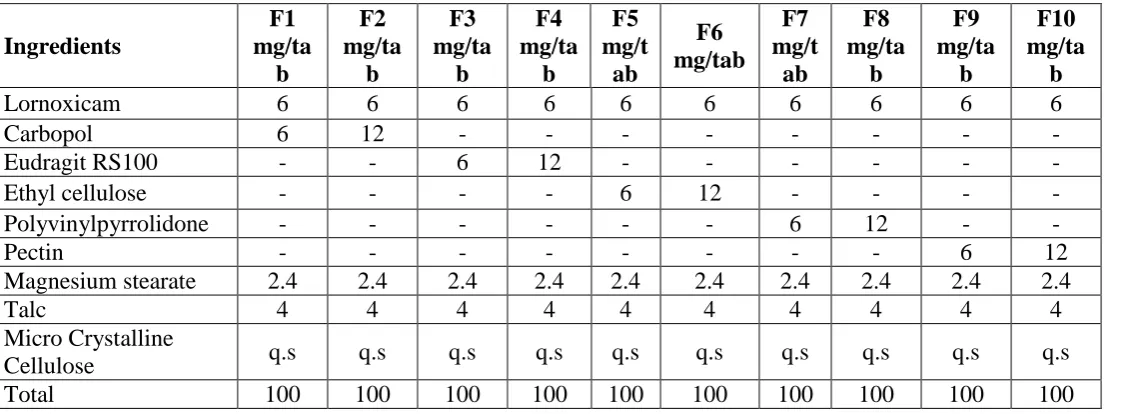
[image:3.595.24.594.225.432.2]Formulation development of sustained release matrix tablets of Lornoxicam
Table 1.Formulations containing various concentrations of excipients
Preparation of Lornoxicam matrix tablets: 6mgof Lornoxicam along with various polymers
such as carbopol, eudragit RS100, ethyl cellulose, polyvinylpyrrolidone, pectin other
excipients (talc, magnesium stearate and MCC) were mixed and tablets were prepared by
direct compression technique. Desired amount of blend was directly compressed into tablets
using rotary tablet compression machine (Multi punch machine). Before compression, the
surface of the die and punch were lubricated with magnesium stearate. All the preparations
were stored in airtight container at room temperature for further studies.
EVALUATION OF LORNOXICAM MATRIX TABLETS
The matrix tablets prepared were evaluated for the following parameters:
Weight variation
Hardness
Friability
Drug content
In-vitro Dissolution Studies
Stability Studies Ingredients F1 mg/ta b F2 mg/ta b F3 mg/ta b F4 mg/ta b F5 mg/t ab F6 mg/tab F7 mg/t ab F8 mg/ta b F9 mg/ta b F10 mg/ta b
Lornoxicam 6 6 6 6 6 6 6 6 6 6
Carbopol 6 12 - - - -
Eudragit RS100 - - 6 12 - - - -
Ethyl cellulose - - - - 6 12 - - - -
Polyvinylpyrrolidone - - - 6 12 - -
Pectin - - - 6 12
Magnesium stearate 2.4 2.4 2.4 2.4 2.4 2.4 2.4 2.4 2.4 2.4
Talc 4 4 4 4 4 4 4 4 4 4
Micro Crystalline
Cellulose q.s q.s q.s q.s q.s q.s q.s q.s q.s q.s
Weight Variation Test
To study weight variation, 20 tablets of each formulation were weighed using an electronic
balance and the test was performed according to the official method.
Table 2.IP standards of Uniformity of weight
Sl.No AvgWt of Tablet % of Deviation
1 ≤ 80mg 10
2 >80 mg – 250 mg 7.5
3 ≥ 250 mg 5
Hardness and Friability
For each formulation, the hardness and friability of 6 tablets were determined using the
Monsanto hardness tester (Cadmach, Ahmedabad, India) and the Roche friabilator (Campbell
Electronics, Mumbai, India) respectively.
Drug Content: Ten tablets were weighed and average weight is calculated. All tablets were
crushed and powder equivalent to 6 mg drug was dissolved in 6 ml of 0.1N NaOH and the
volume was made up to 100 ml with pH 6.8 phosphate buffer. The solution was shaken for 1
h and kept for 24 h. From the stock solution, 1ml solution was taken in 10 ml volumetric
flask and the volume was made with pH 6.8 phosphate buffer. Solution was filtered and
absorbance was measured spectrophotometrically at 376 nm against pH 6.8 phosphate buffer
as a blank. Amount of drug present in one tablet was calculated.
In-vitro dissolution studies
The in-vitro dissolution studies were performed using the USP-II (Paddle) dissolution
apparatus at 50 rpm.Two dissolution medias-acidic buffer pH 1.2 for 2hrsand phosphate
buffer pH 6.8 for 10hrs.Medium is maintained at 37±0.50C. A 5ml was withdrawn at specific
time intervals of 1 hrupto12 hr and same volume of fresh medium was replaced. The
withdrawn samples were diluted to 5ml with pH 6.8, filtered and analyzed on UV
spectrophotometer at 376 nm using pH 6.8 as a blank. Percentage cumulative drug release was
calculated.
STABILITY STUDIES
The optimized formulation was subjected for two month stability study according to ICH
mouth bottles closed tightly. They were then stored at 25ºC/ 60% RH, 40ºC / 75% RH for 3
months and evaluated for their permeation study.
RESULTS AND DISCUSSION
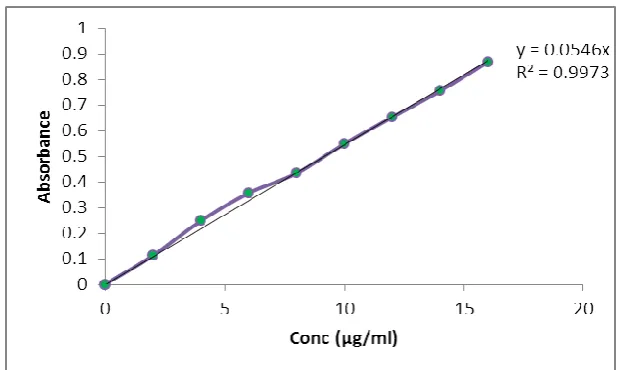
Calibration Curve of Lornoxicam in 1.2 pH buffer.
[image:5.595.144.453.204.385.2]The absorbance was measured in a UV spectrophotometer at 376 nm against 1.2pH buffer.
Figure 1Calibration Curve of Lornoxicam in 1.2 pH buffer.
Calibration Curve of Lornoxicam in 6.8 pH buffer
The absorbance was measured in a UV spectrophotometer at 376 nm against 6.8pH buffer.
Figure 2 Calibration Curve of Lornoxicam in 6.8 pH buffer. FT-IR spectrum
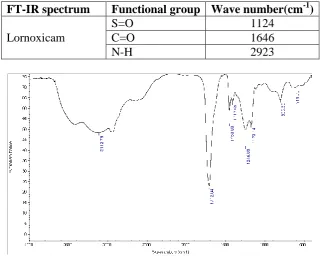
Infra red spectrum of drug and polymers were recorded over KBr disc method.
Drug-Lornoxicam
[image:5.595.142.453.478.663.2]Figure 3FT-IR Spectrum of Lornoxicam
Table 3.Compatibility of Lornoxicam
FT-IR spectrum Functional group Wave number(cm-1)
Lornoxicam
S=O 1124
C=O 1646
N-H 2923
Figure 4.IR Spectrum of Lor+Carbopol
Table 4.Compatibility of Lor+Carbopol
FT-IR spectrum Functional group Wave number(cm-1)
Lor + Carbopol
S=O 1124
N-H 2928
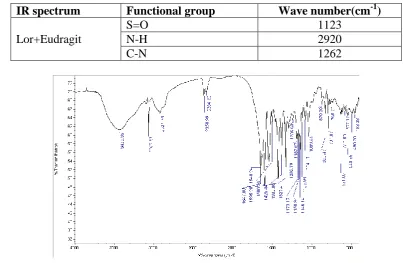
Figure 5.FT-IR Spectrum of Lor+Eudragit
Table 5.Compatibility of Lor+Eudragit
IR spectrum Functional group Wave number(cm-1)
Lor+Eudragit
S=O 1123
N-H 2920
C-N 1262
Figure 6.FT-IR Spectrum of Lor+Pvp
Table 6.Compatibility of Lor+Pvp
FT-IR spectrum Functional group Wave number(cm-1)
Lor+Pvp
S=O 1123
C-N 1158
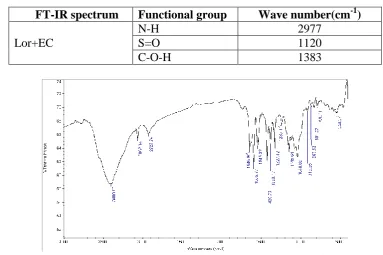
[image:7.595.91.495.323.586.2]Figure 7.FT-IR Spectrum of Lor+EC
Table 7.Compatibility of Lor+Ethyl cellulose
FT-IR spectrum Functional group Wave number(cm-1) Lor+EC
N-H 2977
S=O 1120
C-O-H 1383
Figure 8. FT-IR Spectrum of Lor+Pectin
Table 8.Compatibility of Lor+Pectin
FT-IR spectrum Functional group Wave number(cm-1)
Lor+Pectin
S=O 1145
C-N 1239
C=O 1646
Table 9.Compatibility of F2 formulation
FT-IR spectrum Functional group Wave number(cm-1) F2 formulation
S=O 1026
C-N 1162
[image:8.595.102.486.287.542.2]Figure 9.FT-IR Spectrum of F2 formulation
Table 10.Post Compression Evaluation Parameters Formulation Weight Variation
(mg)
Hardness (Kg/cm2)
Friability (%)
Thickness (mm)
Drug content (%)
F1 99.54±0.46 3.4±0.25 0.14±0.01 2.22±0.05 97.21±0.29
F2 99.44±0.56 3.2±0.29 0.18±0.076 2.27±0.04 97.51±0.49
F3 99.33±0.67 3.5±0.26 0.25±0.013 2.21±0.05 98.34±0.21
F4 98.55±0.23 3.3±0.24 0.55±0.30 2.16±0.02 98.11±0.82
F5 100.5±0.40 3.6±0.27 0.13±0.06 2.25±0.17 99.57±0.33
F6 99.14±0.86 3.1±0.22 0.17±0.04 2.10±0.01 99.56±0.83
F7 99.24±0.76 3.5±0.26 0.58±0.66 2.24±0.17 98.34±0.21
F8 99.76±0.24 3.8±0.28 0.69±0.46 2.22±0.01 97.51±0.49
F9 99.88±0.12 3.9±0.29 0.59±0.66 2.19±0.02 99±0.81
[image:9.595.76.518.517.745.2]F10 99.57±0.43 3.2±0.23 0.25±0.103 2.10±0.01 98.37±0.67
Table 11.In-vitro drug release profiles of Formulation F1 to F10. Time
(min) F1 F2 F3 F4 F5 F6 F7 F8 F9 F10
0 0 0 0 0 0 0 0 0 0 0
60 8.1 10.8 7.2 9.99 6.21 6.3 5.4 6.3 4.77 5.22
Figure 10.Cumulative percentage release Vs Time profile of formulations F1,F2,F3,F4
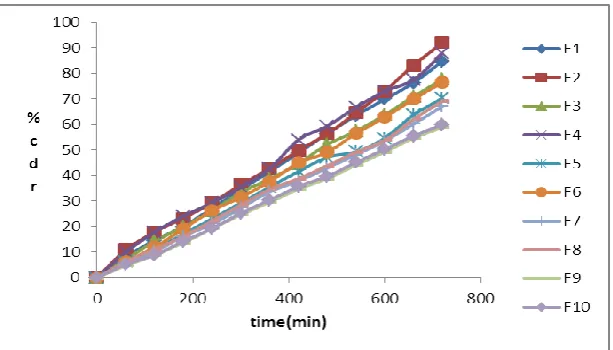
Figure 11.Cumulative percentage release Vs Time profile of formulations F5, F6, F7, F8, F9, F10
[image:10.595.145.453.300.491.2] [image:10.595.146.453.553.728.2]STABILITY STUDIES
The best formulations F2 and F4 subjected to stability studies at 40 /75% RH and room
temperature for 2 months. Then the tablets were analysed for physical change, drug content
estimation and in-vitro dissolution studies at an interval of 15 days. Results show that after
analyzing there was no change in case of physical appearance, no significant differences in
the drug content and dissolution study.
CONCLUSION
The present study was carried out to develop sustained release matrix tablets of Lornoxicam
using polymers such as carbopol, EudragitRS100, polyvinylpyrrolidone, ethyl cellulose,
pectin alone and in combinations by direct compression method.Based on the IR studies there
is no possibility of interaction between Lornoxicam and carbopol, Eudragit RS100,
polyvinylpyrrolidone, ethyl cellulose and pectin.
All the prepared formulations were evaluated for both pre-compressive and post-compressive
parameters such as melting point, solubility studies, compatibility studies, angle of repose,
bulk density, tapped density, carr’s index, hausner’s ratio, tablet thickness, hardness,
friability, weight variation and drug content uniformity, the values obtained were found to be
satisfactory and they complies with pharmacopoeial standards.The tablets were subjected to
in-vitro drug release in 1.2 pH for first 2 hrs then followed by 6.8pH phosphate buffer for 10
hrs. Combination of polymers shows greater retarding of drug release. From the above
experimental data it can be concluded that the sustained release matrix tablets of Lornoxicam
have been developed for improved therapeutic efficacy and better patient compliance. The
formulations F2 and F4 produced better controlled with 92.0%and 87.85% of drug release
over a period of 12hrs in comparison to other formulations.
BIBLIOGRAPHY
1. Antesh KJ, Bhattacharya A, Pankaj V. Formulation and in- vitro evaluation of sustained
release matrix tablets of Metoprolol Succinate using hydrophilic polymers. IJPRIF, 2009;
1(4): 972-977.
2. Lachmann L, liberman HA, KonigJL. The theory and practice of industrial pharmacy.
3rdEdn.pp. 430, Varghese publishing house, Bombay, 1991.
3. Phani Kumar GK, Gangarao B, LovaRaju NSK. Preparation and evaluation of sustained
release matrix tablets of Lornoxicam using tamarind seed polysaccharide. IJPRD, 2011;
4. Vinay K, S K Prajapati, Girish C,S, Mahendra S, Neeraj k. Sustained release matrix type
drug delivery system. IRJP, 2012; 1(3): 934-960.
5. K. P. Sampath K, Debjit B, Chiranjib, Margret C K. K. Tripathi. Innovations in sustained
release Drug Delivery System and Its market opportunities Chem. Pharm. Res. 2010;
2(1): 349-60.
6. GennaroAR. (Ed.) Remington’s. pharmaceutical science. 20thEdn. 905-906, Lippincott
Williams and wilkini publishing co, Newyork, 2000.
7. Lachmann L, liberman HA, KonigJL. The theory and practice of industrial pharmacy.
3rdEdn. pp. 431-432, Varghese publishing house, Bombay, 1991.
8. Harnish P, Dhrupesh R P, Upendra P, Tushar B, Mayur S. Matrix type drug delivery
system: A Review. Journal of Pharmaceutics Science and Bio-scientific Research
(JPSBR), 2011; 1(3): 143-451.
9. en.wikipedia.org/wiki/Non-steroidal anti-inflammatory drug.
10.Shanmugam S, Ramya C, Sundaramoorthy K, Ayyappan T, Vetrichelvan T. Formulation
and evaluation of sustained release matrix tablets of Losartan potassium. IJPRIF, 2011;
3(1): 526-534.
11.Akhlaq M, Majid GK, Abdul W, Abid H, Arshad K, Asif N, Kifayat US. Formulation and
in-vitro evaluation of Flurbiprofen controlled release matrix tablets using cellulose
derivative polymers. Pak. J. Pharm, 2010; 1: 23-29
12.Phani Kumar GK, Gangarao B, LovaRaju NSK. Preparation and evaluation of sustained
release matrix tablets of Lornoxicam using tamarind seed polysaccharide. IJPRD, 2011;
2(12): 89-98.
13.Ravi KN, Narayanaswamy VB, Senthil A, Mehul D, Tejas L, Mahalaxmi R. Formulation
and evaluation of sustained release matrix tablets of Lornoxicam. Indo-Global Research
Journal of Pharmaceutical Sciences, 2011; 1(3): 92-99.
14.Subramaniam K, Rangasamy M, Kugalur G, Parthiban KN, Senthil NK. Formulation and
evaluation of sustained release tablets of Aceclofenac using hydrophilic matrix system.
IJPRIF, 2010; 2(3): 1775-1778.
15.Qamar JA, Hariprasanna R.C, Upendra k, Basawaraj S.P, Rabbani G. Fabrication and
development of once-daily Lornoxicam bi-layer matrix tablets: for the effective treatment
of arthritis. J App Pharm, 2011; 4(3): 376-388.
16.MD.Saiful I. Fariba K, Reza-ul J. sustained release Theopylline matrix tablets prepared
by direct compression 1: effect of hydrophobic excipients. Bangladesh Pharmaceutical