This is a repository copy of
Spatial composition in the multi-channel domain: aesthetics
and techniques
.
White Rose Research Online URL for this paper:
http://eprints.whiterose.ac.uk/80581/
Version: Published Version
Proceedings Paper:
Stefani, E and Mooney, J (2009) Spatial composition in the multi-channel domain:
aesthetics and techniques. In: Proceedings of the International Computer Music
Conference 2009. International Computer Music Conference, 16-19 Aug 2009, Montreal,
Canada. International Computer Music Association .
[email protected] https://eprints.whiterose.ac.uk/
Reuse
Unless indicated otherwise, fulltext items are protected by copyright with all rights reserved. The copyright exception in section 29 of the Copyright, Designs and Patents Act 1988 allows the making of a single copy solely for the purpose of non-commercial research or private study within the limits of fair dealing. The publisher or other rights-holder may allow further reproduction and re-use of this version - refer to the White Rose Research Online record for this item. Where records identify the publisher as the copyright holder, users can verify any specific terms of use on the publisher’s website.
Takedown
If you consider content in White Rose Research Online to be in breach of UK law, please notify us by
SPATIAL COMPOSITION IN THE MULTI-CHANNEL DOMAIN:
AESTHETICS AND TECHNIQUES
Dr Ewan Stefani
School of Music / ICSRiM
University of Leeds, UK
[email protected]
Dr James Mooney
Culture Lab
Newcastle University, UK
[email protected]
ABSTRACT
This paper outlines technical and aesthetic approaches to sound spatialization for electroacoustic music composi-tion. In particular, the paper discusses how spatialization (sound diffusion) can be used to realize specific musical objectives. Technological solutions to problems associated with adapting multichannel compositions for live spatial-ization are explored, with particular reference to the open-source Resound system [3, 4]. Some preliminary examples of Resound applications are provided to illustrate the poten-tial of the system for controlling complex spapoten-tial behaviour during live performance.
1. INTRODUCTION
There is an emerging debate in the sonic arts community [1, 2, 5, 6, 8] concerning the expressive potential and musi-cal function of multi-channel spatialization. This paper will discuss the musical objectives behind novel approaches to spatialization (sound diffusion) and the techniques that have been developed to realize such objectives. Three areas of preliminary investigation are outlined here:
1. Strategies to support the realization of compositional aims by dynamic reallocation of fixed material to gr-oups of loudspeakers and the control of sophisticated spatial behaviour during live performance using the Resound system.
2. Development of compositional techniques linked to sound diffusion, including using acoustic space and loudspeaker placement to remix or balance textural (‘vertical’) layers within the music, and embed a spa-tial dimension into the (temporal) composition of rhy-thmic, harmonic, melodic and spectral morphologies.
3. An aesthetic approach to sound diffusion, which em-phasizes the customization of techniques for individ-ual performance venues. In particular, the consider-ation of the acoustic properties of the space and the placement of loudspeakers in relation to the audience
are highlighted to ensure that the aesthetic objectives of the work are realized (and enhanced) in live perfor-mance.
2. APPROACHES TO SPATIALIZATION
2.1. Overview
The objectives for the investigation of spatialization in this context can be summarized in the following:
• Using the inherent flexibility of Behaviours in Re-sound to enable a music-led approach to spatializa-tion, as opposed to conventional hardware techniques that are constrained or compromized by the physical limitations of the mixing console.
• Taking a site-specific approach to the placement and distribution of sonic material, enabling the composer to investigate the expressive potential of a particular performance space by exploiting acoustic features and physical dimensions of the venue.
• Developing techniques for the successful transposi-tion of a compositransposi-tion to different performance spaces via customization of Behaviours in Resound.
• Composing musical material to investigate the poten-tial of Resound behaviours.
• Consideration of the audience listening experience be-yond the ‘sweet spot’ within the venue, using simul-taneous and autonomous movement of multiple audio channels to create shifts in perspective. This may be a particularly effective technique for varying the bal-ance of component musical parts as passages of com-plex music are reiterated, for example.
3. COMPOSED SPACE, DIFFUSED SPACE AND THE LIMITATIONS OF THE MIXING DESK
When composing we are dealing (amongst other things) with the distribution of audio material among a finite number of source channels; two for stereo, four for quad, et cetera. Material might be distributed among the source channels by way of panning, or via counterpoint between channels, for example. Smalley refers to this, ‘the space as com-posed on to the recorded media,’ as the ‘comcom-posed space’ [7]. However, the final spatial experience depends on both the placement of the loudspeakers and the way in which the source channels are routed and diffused to them; the ‘dif-fused space.’ Thus the overall outcome is a combination of both compositional and performative elements.
A site-specific approach to multi-channel composition and sound diffusion requires the composer to gather data on the acoustics of the space and plan where the loudspeakers will be positioned. Practical considerations of cable man-agement and safety will also be important at this initial stage. The realistic potential of the space may then be factored into the organization of compositional material. For example, the space may be used to enhance a phenomenological im-pression of ‘intimacy’ or ‘distance.’ This can be explored by placing small loudspeakers close to the audience (or un-derneath seats) and larger loudspeakers off-stage or facing away from the audience. Exploiting the dramatic effect of hidden loudspeakers may also be possible, so that sounds suddenly emerge from a new location within the space at key moments within the composition.
In performance, we diffuse our fixed number of source channels to a (usually) larger number of loudspeakers. Thus, we have a choice with respect to which source channels are sent to which loudspeakers. However, when diffusion is car-ried out using a standard mixing desk (as is often the case), the relationship between source channels and loudspeakers is limited, with each fader controlling the attenuation of one predetermined source-channel-to-loudspeaker (i.e. input-to-output, or I/O) routing. It is only normally possible to have one I/O routing per fader, making it difficult to affect com-plex or rapid transitions, particularly with more than two source channels. Both of these factors limit the extent to which multi-channel composition and diffusion techniques can be explored. If we are to adopt a site-specific approach and embrace the process of diffusion as one that extends the process of composition into the performance space, then the paucity of the mixing desk as an expressive tool is an in-hibiting factor.
4. RESOUND APPLICATIONS
The following sections focus on specific multi-channel dif-fusion scenarios, their implementation in Resound, and a summary of the spatio-aesthetic explorations that the
Re-sound system enables.
4.1. Spatial Redistribution of Multi-channel Sources
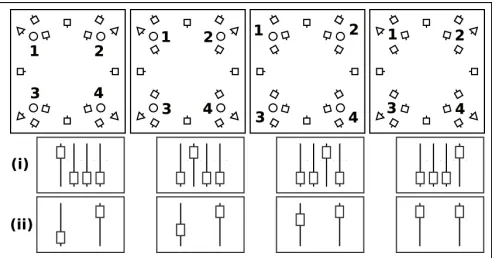
[image:3.612.313.559.224.353.2]In Resound, each fader can simultaneously control multiple I/O routings. In Figure 1 (i) the four channels of a quadra-phonic source can be diffused to four different groups of four loudspeakers using only four faders. The same con-figuration would require sixteen faders on a normal audio mixing desk; not to mention a super-human level of dexter-ity! The Resound system permits a fuller exploration of the intersection between composed space and diffused space.
Figure 1. Control of four different quadraphonic source to loudspeaker mappings using: (i) grouped mappings on four faders; (ii) a Multipoint Crossfade Behaviour on two faders.
Resound also allows diffusion to be controlled semi-automatically via a suite of algorithmic spatialization rou-tines called Behaviours. Figure 1 (ii) demonstrates how the same four I/O-mapping groups can be mapped on to two faders using the ‘Multipoint Crossfade’ Behaviour. The fader on the left crossfades between each of the four groups of I/O routings in turn, while the fader on the right (shown here at constant maximum level) controls overall amplitude. Of course the examples chosen here are arbitrary: in a real performance the grouping of I/O-mappings would be an aesthetic one. Some less obvious I/O mappings are shown in Figure 2. Such examples demonstrate the potential of Re-sound to enable the composer to incorporate sophisticated and dramatic alterations during live performance. Groups of loudspeakers may be given distinct musical identities, such as a particular range of articulations or a family of timbres. Such mappings of musical, spectral and morphological char-acteristics to groups of loudspeakers may be fixed for a pe-riod of time during the composition, until they are likely to have become familiar to the audience. For dramatic effect, or to emphasize a major structural event, the mappings can then be altered at key moments within the piece.
Figure 2. Some potential (arbitrary) source-channel-to-loudspeaker mappings for a quadraphonic source.
4.2. Rotation
[image:4.612.52.301.286.422.2]The examples in Figure 3 illustrate two ways in which ro-tations of multi-channel source material could be achieved. Configuration (i) uses one fader for each stage of the rota-tion, a smooth transition being achieved by manual cross-fading between the four faders.
Figure 3. Rotating a quadraphonic source using: (i) grouped mappings on four faders; (ii) a Multipoint Cross-fade Behaviour with two controls.
Or, as in configuration (ii), the four I/O-mapping groups that constitute the rotation could be mapped on to one con-trol using the Multipoint Crossfade Behaviour. Resound does not have to operate with faders; any MIDI or OSC con-troller can be used, and a rotary control as pictured above would be intuitive in this case.
As noted previously, the aesthetic outcome of these tech-niques will depend fundamentally upon the compositional approaches taken in building the (in this case four-channel) source material. For example, in the composition Three Spaces[9], the Multipoint Crossfade Behaviour is used to ro-tate four musical parts simultaneously between three groups of loudspeakers in the space to enable gradual changes in perspective to be investigated. The rate of movement is controlled manually and varies according to the size of the venue and diffusion system.
4.3. Dynamic Control of Multi-channel Spread
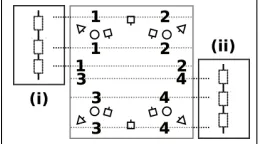
Figure 4 illustrates how two faders – again, configured as Multipoint Crossfades – can be used to dynamically shift
the ‘front’ and ‘rear’ planes of a four-channel source. Fader (i) controls the positioning of source channels 1 and 2 via three pairs of loudspeakers in the front half of the hall, while fader (ii) does the same thing for source channels 3 and 4 for three further loudspeaker pairs towards the rear. This affords intuitive control over the spatial separation of the constituent channels within the venue. The end result will depend upon how the four source channels have been used compositionally. In the case of a single, homogeneous four-channel image – that is, if panning has been used across all four channels – then this configuration can be used to manip-ulate the volume of space that the auditory image occupies whilst maintaining intact the internal spatial relationships within it.1If, on the other hand, the four channels have been treated individually, as four discrete monophonic sources, then this setup affords us control over four quite distinct zones of sound within the venue. This kind of exploration takes us beyond the conventional ‘sweet spot’ paradigm and can be particularly effective when loudspeakers have been positioned so as to emphasize the acoustic characteristics of the venue.
Figure 4. Using two Multipoint Crossfade Behaviours to dynamically shift the front and rear planes of a quadra-phonic source.
4.4. Random and Sequential Spatial Distribution
The Mexican Wave Behaviour crossfades automatically thr-ough a predefined set of I/O mappings in sequence. We could, for example, iterate through all of the I/O mappings illustrated in Figure 2 at a given (fader assigned) frequency and overall amplitude. The Random Behaviour is similar, only the iteration is random rather than sequential.
As an illustration of this process, inKlangfarben Study [10], musical lines are broken-up and distributed between four discrete groups of electroacoustic sounds which are each separated spatially around a large concert venue. By cross-fading through a sequence of I/O mappings, Resound is used to alter the spatial position of each group of sounds inde-pendently, so that the relative positions of musical events vary dynamically at key moments within the piece. This Be-haviour is also effective for exposing individual lines within
1Some will argue that this kind of diffusion does not maintain image
[image:4.612.371.501.334.406.2]polyphonic textures and revealing the decomposition of ch-ords or complex spectra. Each component within the musi-cal texture (or spectrum) can be moved individually to pre-defined locations within the space, to maximize the expres-sive potential of a particular concert venue. The ability to modify such Behaviours with a small number of physical controls enables the composer to ‘orchestrate’ any number of sophisticated spatial sequences and interactions during live performance of the work. In this way, Resound opens up new avenues for exploration within the multi-channel elec-troacoustic work.
5. CONCLUSIONS
The studio mixing desk is in many ways an inappropriate tool for live sound diffusion, and as a consequence we are limited in what we can achieve with it within the restricted confines of our own dexterity. This has adversely affected our creative ambition with regard to spatial composition and diffusion, and as a consequence much territory remains un-or under-explun-ored, particularly in the multi-channel domain. By allowing multiple I/O-to-fader mappings and semi-automated spatialization Behaviours, Resound enables a ful-ler exploration of the spatio-performative potential of the multi-channel electroacoustic work than could otherwise be achieved with conventional mixing hardware. In particu-lar it has been shown that Resound provides the tools with which multiple independent sources can be diffused simul-taneously2, and with which homogeneous multi-channel im-ages can be presented, adapted and spatially redistributed in real time. This permits the composer to explore the unique expressive potential of the performance space to maximize the dramatic elements of the music. The composer may also consider the audience listening experience beyond a ‘sweet spot’ within the venue, using independent movement of multiple audio channels to create dynamic shifts in per-spective or focus.
Resound has become a powerful tool for the successful transposition of a composition to different performance en-vironments. Typically, when performing a work in a new venue (and on an unfamiliar diffusion system), the acous-matic composer must significantly reorganize multi-channel audio material to achieve a satisfactory spatialization of the music in the space that has been provided. The advantage offered by Resound is that once an outline for spatialization has been composed by organising the music into discrete ‘stems’ (where material is arranged according to musical criteria), these parts may be dynamically re-mapped during live performance to fully exploit the acoustic properties of the space and the layout of the diffusion system.
It is often the case that electroacoustic musicians com-pose their music with all of the realities of the sound
dif-2For a discussion of the live spatialization of multiple live sources in an
improvisational context, see [2]
fusion context borne in mind. Where constraints exist – with the venue, the system, the loudspeakers, and so on – this is taken into account, in one way or another, in the compositional decisions made. Hence, the limitations of the diffusion system impact upon composition. In redefin-ing the possibilities of sound diffusion the Resound sys-tem thus opens up unforeseen possibilities in the compo-sitional domain, particularly with respect to multi-channel work. Further development of the system will benefit enor-mously from detailed input from composers, and collabora-tions are currently being sought for future work in this area.
6. REFERENCES
[1] D. Berezan, “In flux: A new approach to sound dif-fusion performance practice for fixed media music,” inProceedings of the International Computer Music Conference, Belfast, UK, 2008.
[2] J. Mooney, P. Bell, and A. Parkinson, “Sound spa-tialisation, improvisation and ambiguity,” in Proceed-ings of the Sound and Music Computing Conference, Berlin, Germany, 2008.
[3] J. Mooney and D. Moore, “A concept-based system for the live diffusion of sound via multiple loudspeakers,” inProceedings of the Digital Music Research Network Conference, Leeds, UK, 2007.
[4] ——, “Resound: open-source live sound spatialisa-tion,” in Proceedings of the International Computer Music Conference, Belfast, UK, 2008.
[5] A. Moore, D. Moore, and J. Mooney, “M2 diffusion: The live diffusion of sound in space,” inProceedings of the International Computer Music Conference, Miami, FL., USA, 2004.
[6] F. Ontodo, “Contemporary trends in the use of space in electroacoustic music,” in Organized Sound, vol. 13(1), 2008, pp. 77–81.
[7] D. Smalley, “Spectromorphology: explaining sound shapes,” inOrganized Sound, vol. 2(2), 1997, pp. 107– 126.
[8] N. Stavropoulos, “Multi-channel formats in electroa-coustic composition: Aelectroa-coustic space as a carrier of musical structure,” inProceedings of the Digital Music Research Network Conference, London, UK, 2006.
[9] E. Stefani, Three Spaces. Available online at http://www.leeds.ac.uk/cepra/media.html, 2008.