Abstract—Accurate land cover classification is required for government and private research bodies to monitor and to report road maps, forest area, agriculture land and other land classification problems. These reviews suggest that the progress of land use/cover classification method grows along-side the launch of a replacement sequence of Land-set and advancement within the computer or applied science. As land cover changes over the time. Thus monitoring and mapping of land cover and its changes over large areas is made possible by measure of Google earth Pro data collected through Smart GIS, Qgis, ArcGIS, ERDAS, IMAGEINE and Envir. This paper presents study of various land use/cover classification techniques. The method of land use/cover classification is applied to a land-set imagery followed by supervised and unsupervised, object based, pixel based, knowledge based, sub pixel based and contextual based classifiers. This paper covers the various classification approaches, methods, classifiers and techniques. Further analysis is required on the application of hybrid land use/cover classification classifiers as they’re precise. Index Terms: Classification Approach, method, Classifiers, Landset, land cover
I. INTRODUCTION
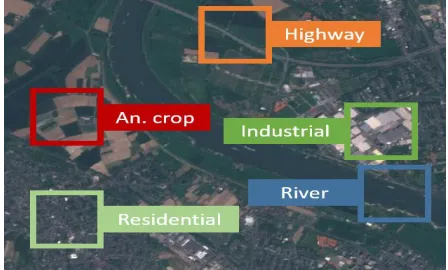
The terms Land use /Land Cover Classification (LCC) is generally used inter-changeably. Land use/cover refers to the characteristics of surface cover that refers to Earth’s Surface, as represented by natural components the same as Highway, Crop, Industrial, River and Residential shown in figure 1. Classification of land cover establish the base line info for behavior like thematic mapping and alter/change recognition analysis [1]. Land covers refer to the activity, cost-effective principle, future exercise, and managing policy placed on the land use/cover sort by humans or land manager. A change in objective or management practice similarly constitutes land use/cover change. When used together the saying land cover normally talk over with the categorizationor classification of human actions and natural part on the landscape inside a specific timeframe supported recognized
Revised Manuscript Received on December 22, 2018.
Gurwinder Singh, Department of Computer Science, Punjabi University, Patiala, India.
Ganesh Kumar Sethi, Department of Computer Science, M. M. Modi College, Patiala, India.
scientific and statistical method of analysis of proper source material[2].
[image:1.612.328.552.250.385.2]Land use/cover is that the physical material at the surface of the world. Land cover is the characterization of however communities utilize the land.Socio-economic activities, urban and agricultural or undeveloped land uses are two of the most effective usually perceived high-level categories/classes of use[3]. At any one point, there may be a various and alternative land use or land cover, the specification of which may have a great aspect[4].
Figure 1 : Land use/cover classification using satellite imagery. Patch is extract from a satellite image with the principle to identify the showed land
use/cover class.
A. Applications of Land Cover Classification
The land use/cover classifications methods are used to classify the land in the aerial or satellite imagery, and can be used for versatile applications listed as following:
The military can use the land use classification to classify the terrains across the border to prepare the individual strategies for each of the terrains.[5]
The agriculture-based planning can be determined by classifying the soil based on the colour or texture of a wide region. This land use classification can be used to plan the target crops in the different type of soils[6]. The urban planning is the key use of land use
classification models. Housing projects can be planned everywhere. The land must be adequately dry, at a specific distance from wetlands and should least cover the cultivated land; hence a detailed land use classification is required when planning the urban areas[7].
The road projects also require a detailed land use classification surveys to identify the different kinds of obstacles, such as wetlands, rivers, deserts, etc.
B. Need for Land Use/Cover Classification
The land use/cover
classification is required in all
Automatic Land Cover Classification Using
Learning Techniques with Dynamic Features
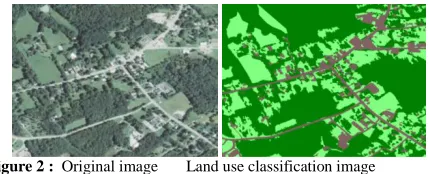
of the above applications, because in the bare imagery, we cannot spot the difference between the distinct terrains or lands. The land use classification methods prominently mark the different kinds of land with distinct colours, which makes the different areas quite visible unlike its original imagery[8]. The Figure 2 shows the clear difference between the original and land cover classified image. An apparent difference can be spotted between the different kinds of lands in the classified image in comparison with original image.
Figure 2 : Original image Land use classification image
C. Challenges of Land Cover Classification
This effort faces several technical challenges in land use/cover classification including:
The shortage of ground truth land use/cover maps makes it complicated to guage the projected way or methods. It’s tough to manually label a big collected dataset of
imagery to training the land use/cover classifiers, especially DL (Deep Learning) based. Therefore, supervised LCC or unsupervised LCC learning is mandatory.
The dataset imagery at the online sharing websites or resources is extremely noisy in terms of picture/image quality, inaccurate GTF (Geo-Tagged Field) photos, uneven spatial allotment, etc.
The rest of this paper is structured as: Part II introduces the Land Cover Classification, Part III specifies the LCC with Machine Learning, and the Part IV represents LCC with Deep Learning. The conclusions are drawn in the last section.
II. LAND COVER CLASSIFICATION: DATASET, METHOD, CLASSIFIER, ACCURACY
[9]T analysesT someT decadeT ofT intensiveT dry-landT farmingT inT theT GadarifT area,T placedT inT theT EasternT partT ofT Sudan,T hadT ledT toT speedyT LULCT (LandT Use/LandT Cover)T changesT mainlyT dueT toT agriculturalT development,T governmentT rulesT andT environmentalT calamitiesT suchT asT scarcity.T [10]T describedT theT aimT ofT multi-sourceT remoteT sensedT dataT fusionT forT developingT landT coverT classification.T LandT use/coverT classificationT ofT fine-resolutionT RST (RemoteT sensed)T dataT incorporateT manyT sequential,T angular,T andT shadowT likeT optionsT remainsT partialT andT thereforeT theT supportT ofT variousT remoteT sensedT featuresT toT landT use/coverT classificationT correctnessT remainsT unsure.T [11]T describeT theT LandT use/coverT classificationT inT aridT regionT wasT grandT significanceT toT theT estimation,T forecast,T andT managementT ofT landT geologicT process.T LandT coverT classificationT showT theT red-edgeT groupT ofT Rapid-EyeT imageryT wasT efficientT forT plantsT identificationT andT couldT developT landT coverT classificationT accuracy.T TheT majorT centeredT onT theT representativeT inlandT aridT desertT regionT placedT inT DunhuangT BasinT ofT northwesternT China.T [12]T
discussT aT Large-scaleT mappingT ofT LCCT (LandT Use/CoverT Classification)T wasT studiedT aT difficultyT ofT automaticT processingT ofT largeT geospatialT data,T whichT includeT theT variousT unpredictability.T ToT exerciseT threeT paradigmsT ofT computerT sciences,T namely,T theT decompositionT techniqueT (“divideT andT conquer”)T fromT theT theoryT ofT algorithmicT rule,T theT techniqueT ofT activeT trainingT fromT intellectualT computing,T andT alsoT theT techniqueT ofT re-enactmentT ofT satelliteT pictures/imagesT fromT computerT process/processingT ofT digitalT imagery.T [13]T proposedT aT veryT highT spatialT andT sequentialT resolutionT remoteT sensingT datasetT alterT mapping,T veryT complicatedT andT variousT urbanT environments.T TheT combinedT high-resolutionT aerialT digitalT photosT andT elevationT data,T andT itT wareT processT exploitationT object-basedT imageT analysisT forT mappingT urbanT landT use/coversT andT quantifyingT buildings.T [14]T evaluatedT theT supervisedT classificationT ofT landT use/coverT areaT andT timeT wasT aT long-standingT objectiveT ofT theT PlanetT ScienceT area.T PictureT calibrationT andT representativeT spatiotemporalT sampling,T theseT data-setsT couldT beT createdT byT supervisedT classificationT ofT time-serialT LandT satT imagery.T TheT sideT uncertaintyT ofT orderT extrapolationT andT alsoT theT deficiencyT ofT historicalT referenceT informationT orT data,T strategiesT shouldT beT appliedT toT approximationT uncertaintyT togetherT withT predictionsT overT time.T [15]T discussT DSMsT (DigitalT SurfaceT Models)T resultingT fromT LiDART (LightT DetectionT andT Ranging)T dataT haveT beenT moreT andT moreT integratedT withT high-resolutionT multispectralT satelliteT orT aerialT imageryT forT urbanT landT use/coverT classification.T AnT OBT (Object-Based)T classificationT approachT toT studyT theT whetherT aT combinationT ofT LiDART heightT andT moderationT ofT dataT setT canT accuratelyT mapT urbanT landT cover.T
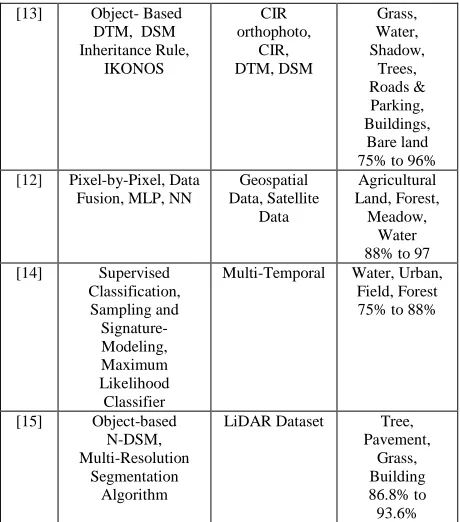
TABLE I. LAND COVER CLASSIFICATION
Auth or/ Year
Classification Approach
Landsat Images
Type of Land cover/ Accuracy
[9] Post Classification, Change Detection
Method
Multi-Temporal Landsat or
MSS, ETM+ASTER,
Landsat-3,7; Landsat-5 TM
Cultivated, Wood, Fallow and Bare Land, Settlement
86% to 92%
[10] Pixel Based Supervised using
SVM
Landsat-8 OLI, MODIS, CCD,
HIS
Forest, Water, Crop, Bare, Grass 87% to 92% [11] Random Sampling
Method or RF NDVI, NDVI-RE
Rapid-Eye Bare, Sandy Decertified , Wind Eroded, Saline and Alkaline Land 3.46% to 86.67% [16] Object Based and
Pixel Based, USGS,
LPGS
TM Data Forest, Grass, Water, Farm
Land, Developed Land, Barren
[image:2.612.67.281.160.247.2][13] Object- Based DTM, DSM Inheritance Rule,
IKONOS
CIR orthophoto,
CIR, DTM, DSM
Grass, Water, Shadow,
Trees, Roads & Parking, Buildings, Bare land 75% to 96% [12] Pixel-by-Pixel, Data
Fusion, MLP, NN
Geospatial Data, Satellite
Data
Agricultural Land, Forest,
Meadow, Water 88% to 97 [14] Supervised
Classification, Sampling and
Signature-Modeling, Maximum Likelihood Classifier
Multi-Temporal Water, Urban, Field, Forest 75% to 88%
[15] Object-based N-DSM, Multi-Resolution
Segmentation Algorithm
LiDAR Dataset Tree, Pavement,
Grass, Building 86.8% to 93.6%
III. LAND COVER CLASSIFICATION WITH MACHINE LEARNING: DATASET, METHOD,
CLASSIFIER, ACCURACY
[17]T investigatedT thatT theT HighT resolutionT formation/rasterT informationT orT dataT setT forT landT use/coverT mapT orT modificationT analysisT areT normallyT nonT heritableT throughT satelliteT orT aerialT imagery.T GivenT aT brandT newT techniqueT wasT accomplishedT ofT mapT garrigueT orT phryganaT vegetationT furthermoreT asT karstT orT ground-armourT parcelT inT photosT captureT byT aT photographicT camera.T IncludeT aT referenceT patternT inT eachT orT everyT frame,T theT automatedT technique/methodT estimateT theT entireT areaT coveredT byT eachT orT everyT landT coverT type.T [18]T studiedT theT monitorT landT use/coverT amendmentT wasT criticalT toT economicalT environmentalT managementT andT urbanT planning.T ToT defineT twoT objectives:T initialT wasT toT check/compareT pixel-basedT (PB)T randomT forestT (RF)T andT decisionT treeT (DT)T classifierT waysT andT aT supportT vectorT machineT (SVM)T algorithmicT programT eachT inT pixelT andT objectT primarilyT basedT approachT forT classificationT ofT landT use/coverT duringT aT heterogeneousT landscapeT forT 2010.T TheT secondT wasT toT lookT atT examineT spatiotemporalT landT use/coverT changeT orT amendmentT overT theT previousT twentyT yearsT (1990–2010)T victimizationT LandT satT data.T [19]T examinedT OptechT TitanT sensingT element,T multi-spectralT data/informationT wasT forT theT primaryT orT firstT timeT givenT forT 3DT ALST information/dataT setT pointT cloudsT fromT aT singleT sensingT element.T TotallyT differentT staticT aerialT read/view,T theT technologyT wasT self-determiningT ofT externalT illuminationT standing,T andT thereT aren’tT anyT shadowsT onT strengthT ofT imagesT factor-madeT orT manufacturedT fromT theT infoT orT data.T [20]T discussT theT suitableT methodologiesT forT exactT LandT use/coverT classificationT inT theT locationT Joshi-mathT district,T (India).T ToT proposedT K-meanT clusterT algorithmT approachT forT accurateT mappingT ofT landT cover.T [21]T
[image:3.612.61.291.49.310.2]attemptedT toT dataT fusionT wasT aT powerfulT toolT forT theT mergingT ofT multipleT sourcesT ofT informationT toT produceT aT betterT outputT asT comparedT toT theT individualT source.T TheT dataT fusionT alsoT provideT landT coverT varieties:T uncoveredT land,T cultivatedT land,T uninhabitedT rangeland,T greenT meadow,T andT SutlejT basinT riverT landT copedT fromT remoteT sensing.T [22]T conductedT aT pictureT classificationT fromT RST (RemoteT Sensing)T wasT attractiveT moreT andT moreT urgentT forT monitorT environmentalT change.T AnalyzeT theT efficientT algorithmsT toT enhanceT classificationT correctnessT wasT critical.T TheT useT ofT multispectralT HJ1BT andT ALOST (AdvancedT LandT ObservantT Satellite)T PALSART L-bandT (PhasedT ArrayT kindT ofT L-bandT Artificial/SyntheticT ApertureT Radar)T forT theT landT use/coverT classificationT exploitationT learning-basedT algorithms.T [23]T attemptedT toT GLCCT (GlobalT LandT Use/Cover)T infoT wasT essentialT forT environmentalT amendmentT studies,T landT resourceT management,T propertyT development,T andT lotsT ofT alternativeT socialT advantages/benefits.T TheT automatedT landT use/coverT classifiers,T interactiveT methodT wereT useT justT inT caseT ofT classificationT inT troublesomeT areasT andT forT internalT control,T leadingT toT theT POK-basedT (Pixel,T ObjectT andT KnowledgeT Based)T operationalT approachT [24]T studiedT theT RandomT ForestT (RF)T classifiersT forT landT use/coverT classificationT ofT aT difficultT areaT wasT explore.T EstimationT wasT basedT onT aT numberT ofT criteria:T mappingT correctness,T sensitivityT toT dataT setT rangeT andT noise.T TheT performanceT ofT theT randomT forestT withT aT numberT ofT treesT andT randomT splitT variables,T decreaseT inT trainingT dataT setT andT noiseT addingT upT inT termsT ofT oobT (oobT error)T andT testingT accuracy.T
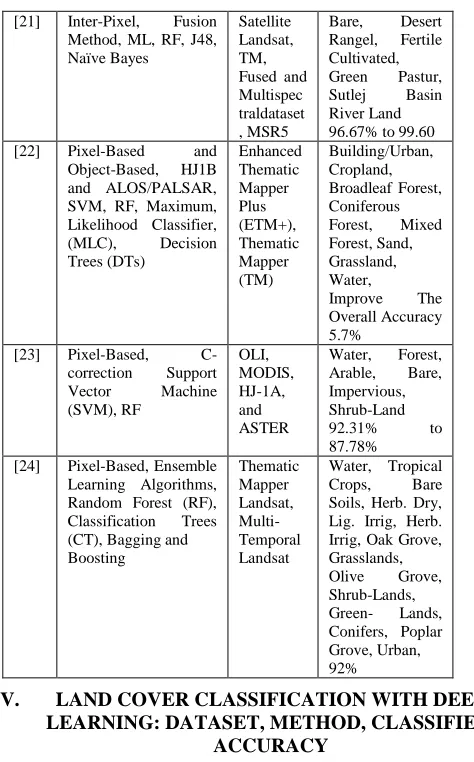
TABLE II. LAND COVER CLASSIFICATION WITH MACHINE LEARNING
Aut hor/ Yea r
Classification Approach
Landsat Images
Type of Land cover/ Accuracy
[17] Pixel Based, Supervised Decision Tree Method, NN, SVM, and FL
Synthetic Aperture Radar (SAR)
Vegetation and Non-vegetation Areas
[18] Pixel Based, Object-Based, Discriminative Method, Post-Classification Change Detection Method, DT, RF, SVM, OSVM
TM and ETM+
Forest, Water, Grassland, Farmland, Built-up area 86% to 93%
[19] Object-Based, Land Cover 1. Classification method i. DSM, ii. DTM,
2. Change Detection Method,
Histogram
ALS Dataset, Titan Dataset
Building, Trees, Asphalt, Gravel, Rocky Areas 90% to 96%
[20] Pixel Based, Supervised,
Unsupervised, Artificial Neural Network and Maximum Likelihood Field
Classifier, K-mean Clustering and Iso-Cluster
Geo- Reference d (ArcMAP 10.2.1 Software), Landsat Imagery
Snow and Hills, Cloud,
Vegetation Grassland, Water Body
[21] Inter-Pixel, Fusion Method, ML, RF, J48, Naïve Bayes
Satellite Landsat, TM, Fused and Multispec traldataset , MSR5
Bare, Desert Rangel, Fertile Cultivated, Green Pastur, Sutlej Basin River Land 96.67% to 99.60 [22] Pixel-Based and
Object-Based, HJ1B and ALOS/PALSAR, SVM, RF, Maximum, Likelihood Classifier, (MLC), Decision Trees (DTs)
Enhanced Thematic Mapper Plus (ETM+), Thematic Mapper (TM)
Building/Urban, Cropland, Broadleaf Forest, Coniferous Forest, Mixed Forest, Sand, Grassland, Water,
Improve The Overall Accuracy 5.7%
[23] Pixel-Based, C-correction Support Vector Machine (SVM), RF
OLI, MODIS, HJ-1A, and ASTER
Water, Forest, Arable, Bare, Impervious, Shrub-Land 92.31% to 87.78% [24] Pixel-Based, Ensemble
Learning Algorithms, Random Forest (RF), Classification Trees (CT), Bagging and Boosting
Thematic Mapper Landsat, Multi-Temporal Landsat
Water, Tropical Crops, Bare Soils, Herb. Dry, Lig. Irrig, Herb. Irrig, Oak Grove, Grasslands, Olive Grove, Shrub-Lands, Green- Lands, Conifers, Poplar Grove, Urban, 92%
IV. LAND COVER CLASSIFICATION WITH DEEP LEARNING: DATASET, METHOD, CLASSIFIER,
ACCURACY
[image:4.612.49.286.45.426.2][25]T discussT theT deepT learningT techniquesT andT strategiesT well-triedT appropriateT toT groupT actionT withT RST (RemoteT Sensing)T dataT setT primarilyT forT sceneT ofT classificationT i.e.T CNNT (ConvolutionT NeuralT Networks)T onT singleT image/picture,T veryT littleT studiesT existT referringT toT theT seral/sequentialT deepT learningT approachesT i.e.,T RNNsT (RecurrentT NeuralT Networks)T toT compactT withT RST (RemoteT Sensing)T series.T [26]T studiedT theT DCNNsT (DeepT ConvolutionT NeuralT Networks)T hadT anT instantT agoT emergedT asT aT mainT paradigmT forT machineT learningT techniqueT inT aT varietyT ofT domains.T UsedT byT deepT convolutionT neuralT networkT forT landT use/coverT classificationT inT high-resolutionT RST (RemoteT Sensing)T imagery.T [27]T researchedT inT classifyT andT acceptanceT ofT theseT photosT wasT time-consuming.T TheT landT use/coverT type’sT acceptanceT modelT forT fieldT photosT wasT instructedT supportedT onT theT deepT learningT technique.T TheT modelT combinesT aT pre-trainedT convolutionT neuralT networkT (CNN)T becauseT theT image/pictureT featureT extractorT andT thereforeT theT multinomialT provisionT regressionT modelT asT theT featureT classifier.T TheT labelT fieldT photosT fromT theT GlobalT Geo-ReferencedT FieldT Photo/pictureT LibraryT (http://eomf.ou.edu/photos)T wereT choosingT forT modelT trainingT andT validation.
TABLE III. LAND COVER CLASSIFICATION WITH DEEP LEARNING
Aut hor/ Yea r
Classification Approach
Landsat Images
Type of Land cover/ Accuracy
[25] Pixel-Based and Object-Based, RNs, LSTM, RF, Naive Bayes, KNN, and
SVMs
Thau Data Set,
Reunion Island Data Set
Water, Forest and Woods,
Summer Crops, Winter
Crops, Grassland, Sclerophyll Vegetation,
Truck Farming, Bare
Soils, Salt Marshes, Vineyards, Urban Areas,
Sparse Vegetation,
Rocky and Bare Soil, Sugarcane
Crops [26] Regions and Objects,
FE, DCNN
UC Merced (UCM), SVM,
RSD
98.5%
[27] Feature Extraction and Fine-Tunin, Transfer Learning, Convolutional Neural Network (CNN)
Geo-Referenc
ed Dataset,
YFCC (Yahoo Flickr Creative Commo
ns) Dataset, ImageNe
t Dataset,
Forest, Shrublands,
Savannas, Cropland, Plantations,
Grassland, Wetlands, Urban Barren,
Open Water Snow and Ice,
48.40% to 76.24%
V. CONCLUSION
ThisT paperT presentsT theT surveyT ofT theT workT doneT inT lastT year’sT preT processingT algorithmsT inT theT areaT ofT landT coverT classification.T AlsoT issuesT relatedT toT theT insufficientT trainingT samples,T accuracyT andT greaterT typesT ofT objectsT forT classificationT hasT beenT observed.T StudyT ashoreT setT landT use/coverT classificationT haveT reportT theT higherT performanceT ofT objectT basedT mostlyT andT pixelT basedT inT numerousT landscapesT likeT forest,T water,T bareT land,T tillage,T inexperiencedT andT wetlands.T TheT majorT advantageT ofT objectT basedT mostlyT andT pixelT basedT isT thatT itT representsT theT categorizationT unitsT asT realT wordT objectsT onT theT bottomT orT earthT positionT andT henceT reducesT amongT theT categoryT variability.T TheseT approachesT additionallyT involvesT severalT stepsT inT itsT work-flowT likeT choosingT coachingT /trainingT datasetT samples,T developingT ruleT theT setsT andT selectingT classifiers,T allT ofT thatT haveT theT potentialT toT haveT anT effectT onT theT classificationT accuracyT orT correctnessT ifT notT
REFERENCES
[1]T P.T Helber,T B.T Bischke,T A.T Dengel,T andT D.T Borth,T “IntroducingT
Eurosat:T AT NovelT DatasetT andT DeepT LearningT BenchmarkT forT
LandT UseT andT LandT CoverT Classification,”T IGARSST 2018T -T
2018T IEEET Int.T Geosci.T RemoteT Sens.T Symp.,T pp.T 204–207,T 2017.
[2]T H.T Xing,T Y.T Meng,T Z.T Wang,T K.T Fan,T andT D.T Hou,T
“ExploringT geo-taggedT photosT forT landT coverT validationT withT
deepT learning,”T ISPRST J.T Photogramm.T RemoteT Sens.,T vol.T 141,T
no.T DecemberT 2017,T pp.T 237–251,T 2018.
[3]T D.T PhiriT andT J.T Morgenroth,T “DevelopmentsT inT LandsatT LandT
CoverT ClassificationT Methods :T AT Review,”T pp.T 1–25,T 2017.
[4]T Y.T CaiT etT al.,T “AT high-performanceT andT in-seasonT classificationT
systemT ofT field-levelT cropT typesT usingT time-seriesT LandsatT dataT
andT aT machineT learningT approach,”T RemoteT Sens.T Environ.,T vol.T
210,T no.T March,T pp.T 35–47,T 2018.
[5]T I.T DemirT etT al.,T “DeepGlobeT 2018:T AT ChallengeT toT ParseT theT
EarthT throughT SatelliteT Images,”T pp.T 172–181,T 2018.
[6]T A.T Gauci,T J.T Abela,T M.T Austad,T L.T F.T Cassar,T andT K.T ZarbT
Adami,T “AT MachineT LearningT approachT forT automaticT landT
coverT mappingT fromT DSLRT imagesT overT theT MalteseT Islands,”T
Environ.T Model.T Softw.,T vol.T 99,T pp.T 1–10,T 2018.
[7]T T.T DoganT andT U.T A.T Kursat,T “TheT ImpactT ofT FeatureT
SelectionT onT UrbanT LandT CoverT Classification,”T Int.T J.T Intell.T
Syst.T Appl.T Eng.,T no.T 2147–67992,T pp.T 59–64,T 2018.
[8]T P.T Schäfer,T D.T Pflugmacher,T P.T Hostert,T andT U.T Leser,T
“ClassifyingT landT coverT fromT satelliteT imagesT usingT timeT seriesT
analytics,”T CEURT WorkshopT Proc.,T vol.T 2083,T pp.T 10–15,T 2018.
[9]T K.T Biro,T B.T Pradhan,T M.T Buchroithner,T andT F.T Makeschin,T
“LandT UseT /T LandT CoverT ChangeT AnalysisT AndT ItsT ImpactT
OnT SoilT PropertiesT InT TheT NorthernT PartT OfT GadarifT RegionT
,T Sudan,”T no.T November,T pp.T 1–13,T 2017.
[10]T B.T ChenT andT B.T Xu,T “Multi-sourceT remotelyT sensedT dataT
fusionT forT improvingT landT coverT classification,”T ISPRST J.T
Photogramm.T RemoteT Sens.,T vol.T 124,T no.T December,T pp.T 27–
39,T 2017.
[11]T L.T I.T Xianju,T C.T Gang,T L.T I.T U.T Jingyi,T C.T Weitao,T C.T
Xinwen,T andT L.T Yiwei,T “EffectsT ofT RapidEyeT ImageryT ’T sT
Red-edgeT BandT andT VegetationT IndicesT onT LandT CoverT
ClassificationT inT anT AridT Region,”T vol.T 27,T no.T 5,T pp.T 827–
835,T 2017.
[12]T M.T S.T LavreniukT etT al.,T “Large-ScaleT ClassificationT ofT LandT
CoverT UsingT RetrospectiveT SatelliteT Data,”T no.T February,T 2016.
[13]T E.T HussainT andT JieT Shan,T “Object-basedT UrbanT LandT CoverT
ClassificationT UsingT RuleT InheritanceT overT VeryT HighT
ResolutionT MultiT SensorT andT MultiT ...T Object-basedT urbanT landT
coverT classificationT usingT ruleT inheritanceT overT veryT
high-resolutionT multisensorT andT multitemporalT data,”T no.T November,T
pp.T 162–182,T 2015.
[14]T J.T O.T Sexton,T D.T L.T Urban,T M.T J.T Donohue,T andT C.T Song,T
“Long-termT landT coverT dynamicsT byT multi-temporalT classiT fiT
cationT acrossT theT Landsat-5T record,”T RemoteT Sens.T Environ.,T
vol.T 128,T pp.T 246–258,T 2013.
[15]T W.T Zhou,T “AnT Object-BasedT ApproachT forT UrbanT LandT CoverT
AnT Object-BasedT ApproachT forT UrbanT LandT CoverT
Classification :T IntegratingT LiDART HeightT andT IntensityT Data,”T
IEEET Geosci.T RemoteT Sens.T Lett.,T vol.T 10,T no.T JuneT 2015,T pp.T
928–931,T 2013.
[16]T W.T Yu,T W.T Zhou,T Y.T Qian,T andT J.T Yan,T “AT newT approachT
forT landT coverT classiT fiT cationT andT changeT analysis :T
IntegratingT backdatingT andT anT object-basedT method,”T RemoteT
Sens.T Environ.,T vol.T 177,T pp.T 37–47,T 2016.
[17]T A.T Gauci,T J.T Abela,T M.T Austad,T L.T F.T Cassar,T andT K.T Z.T
Adami,T “EnvironmentalT ModellingT &T SoftwareT AT MachineT
LearningT approachT forT automaticT landT coverT mappingT fromT
DSLRT imagesT overT theT MalteseT Islands,”T Environ.T Model.T
Softw.,T vol.T 99,T pp.T 1–10,T 2018.
[18]T H.T Keshtkar,T W.T Voigt,T andT E.T Alizadeh,T “Land-coverT
classificationT andT analysisT ofT changeT usingT machine-learningT
classifiersT andT multi-temporalT remoteT sensingT imagery,”T Arab.T J.T
Geosci.,T vol.T 10,T no.T 6,T pp.T 1–15,T 2017.
[19]T L.T Matikainen,T K.T Karila,T J.T Hyyppä,T P.T Litkey,T E.T Puttonen,T
andT E.T Ahokas,T “Object-basedT analysisT ofT multispectralT airborneT
laserT scannerT dataT forT landT coverT classificationT andT mapT
updating,”T ISPRST J.T Photogramm.T RemoteT Sens.,T vol.T 128,T pp.T
298–313,T 2017.
[20]T R.T Nijhawan,T I.T Srivastava,T andT P.T Shukla,T “LandT CoverT
ClassificationT UsingT SupervisedT andT UnsupervisedT LearningT
Techniques,”T Int.T Conf.T Comput.T Intell.T DataT Sci.T L.,T pp.T 1–6,T
2017.
[21]T S.T QadriT etT al.,T “MultisourceT DataT FusionT FrameworkT forT
LandT UseT /T LandT CoverT ClassificationT UsingT MachineT Vision,”T
vol.T 2017,T pp.T 1–8,T 2017.
[22]T X.T Y.T Wang,T Y.T G.T Guo,T J.T He,T andT L.T T.T Du,T “FusionT
ofT HJ1BT andT ALOST PALSART dataT forT landT coverT
classificationT usingT machineT learningT methods,”T Int.T J.T Appl.T
EarthT Obs.T Geoinf.,T vol.T 52,T pp.T 192–203,T 2016.
[23]T J.T ChenT etT al.,T “ISPRST JournalT ofT PhotogrammetryT andT
RemoteT SensingT GlobalT landT coverT mappingT atT 30T mT
resolution :T AT POK-basedT operationalT approach,”T ISPRST J.T
Photogramm.T RemoteT Sens.,T vol.T 103,T pp.T 7–27,T 2015.
[24]T V.T F.T Rodriguez-galiano,T B.T Ghimire,T J.T Rogan,T M.T
Chica-olmo,T andT J.T P.T Rigol-sanchez,T “AnT assessmentT ofT theT
effectivenessT ofT aT randomT forestT classifierT forT land-coverT
classification,”T ISPRST J.T Photogramm.T RemoteT Sens.,T vol.T 67,T
pp.T 93–104,T 2012.
[25]T D.T Ienco,T R.T Gaetano,T C.T Dupaquier,T andT P.T Maurel,T “LandT
CoverT ClassificationT viaT MultitemporalT SpatialT DataT byT DeepT
RecurrentT NeuralT Networks,”T IEEET Geosci.T RemoteT Sens.T Lett.,T
pp.T 1–5,T 2017.
[26]T G.T J.T ScottT etT al.,T “TrainingT DeepT ConvolutionalT NeuralT
NetworksT TrainingT DeepT ConvolutionalT NeuralT NetworksT forT
LandT –T CoverT ClassificationT ofT High-ResolutionT Imagery,”T IEEET
Geosci.T RemoteT Sens.T Lett.,T vol.T 14,T no.T March,T pp.T 549–553,T 2017.
[27]T G.T Xu,T X.T Zhu,T D.T Fu,T J.T Dong,T andT X.T Xiao,T “AutomaticT
landT coverT classiT fiT cationT ofT geo-taggedT fiT eldT photosT byT
deepT learning,”T Environ.T Model.T Softw.,T vol.T 91,T pp.T 127–134,T
2017.
AUTHORS PROFILE
Gurwinder Singh received the MCA and M.Phil (CS) from the Department of Computer, Punjabi University, Patiala, in 2014 and 2016, respectively. He is currently pursuing the Ph.D. degree in Image Processing with the
Department of Computer Science, Punjabi University, Patiala.