
Online Communities: An Ecology for Knowledge Collaboration
Julie Blakey, Malcolm Wolski and Joanna Richardson
Griffith University
In the current Web 2.0 environment there is high expectation that libraries and IT service providers will embrace online technologies to connect with and engage their users. Some libraries, for example, have reported on their implementation of technologies to develop online communities; however there is a much greater potential to utilise this approach than is generally appreciated within both the profession and, more broadly, the university sector.
Like most, the Division of Information Services at Griffith University has used a suite of Web 2.0 tools and technologies to engage and support academic enquiry and has also experimented with a number of different technologies and applications to develop communities. Our thinking is maturing as we move from a technology focus to a strategy and use focus. In addition the focus goes beyond just academic enquiry. The Division is adopting a more planned approach to online communities.
Within this context, two quite different communities have been established on the Yammer platform. One is an example of a private community, pre-planned to support an academic-led emerging technologies planning group. The other is an open community created for any Griffith staff or student to discuss technology used within the University’s learning, teaching and research environment.
Based on a combination of observation and interviews, this paper reviews these two initiatives in terms of their characteristics, modes of participation, and rules of engagement (written and unwritten). It concludes with a suggested ecology based on a multiplex relationship model, i.e. relationships that are maintained both online and offline.
Introduction
Given that higher education has a strong culture of working together, it is not surprising that collaboration is well embedded in the fabric (McCredie & Pirani, 2012). In the last decade knowledge production has become increasingly interdisciplinary, multidisciplinary and trans-disciplinary. It is characterised not only by more collaboration and communication but also through more diverse and informal ways of communication. The latter encompasses blogs, wikis, various social media and online communities (Anandarajan & Anandarajan, 2010).
McMillan and Chavis (1986) define a community as “... a feeling that members have of belonging, a feeling that members matter to one another and to the group, and a shared faith that members’ needs will be met through their commitment to be together”. A community is characterised by membership, influence, integration and fulfilment of needs, and shared emotional connection. An online community (OC) is a virtual form of a community whose development closely parallels the way in which the Internet itself has developed (Rheingold, 2000).
Knowledge collaboration is broadly defined by Faraj and others (2011) as the sharing, transfer, accumulation, transformation, and co-creation of knowledge. It is critical to the sustainability of OCs. Libraries have typically engaged in this space through the creation of wikis and blogs. However more formalised approaches to OCs offer the potential to widen engagement with their users.
In the university landscape there are a number of enterprise systems that deliver online communities within their environment based on defined groups or membership. On the one hand, the Learning Management System (LMS) traditionally offers a unit of study with an online discussion forum; on the other hand, within administrative areas technologies such as SharePoint facilitate pre-defined groups. These are siloed, static solutions in terms of group membership and functionality.
recruitment and communicate “brand ethos”. However interest and participation in social media within the higher education sector is increasingly being broadened to support knowledge communities both online and offline.
In this paper the authors discuss the direct benefits that Griffith’s online communities provide to the organisation by facilitating information flow and knowledge transfer across administrative silos in support of institutional core business: learning, teaching and research. As opposed to a purely technological deployment, the authors’ focus is on the organisational benefits of creating an environment for convening and supporting such groups.
Literature review
Researchers have demonstrated a significant interest in online communities (OCs) since their inception. There is a substantial and growing body of literature about the implementation of OCs and particularly the critical success factors in developing healthy and robust communities. In defining an online community, Whittaker and others (1997) have expanded on the work of McMillan and Chavis: “Members have a shared goal, interest need or activity that provides the primary reason for belonging to the community. Members engage in repeated, active participation ... Members have access to shared resources, and policies determine the access to those resources. Reciprocity of information, support and services among members is important. There is a shared context of social conventions, language and protocol.”
In focusing on the virtual aspect of the community, researchers have highlighted the use of networked technology, especially the Internet, to facilitate collaboration among groups of people with common interests but dispersed across different geographical and time zones (Johnson, 2001; Ridings, Gefen, & Arinze, 2002). The online community is not to be confused with the community of practice, which is an offshoot of a “designed community” such as an OC or even a traditional organisation (Nachmias et al., 2000; Wenger, 1998).
Much of the literature has focused on the characteristics of OCs, particularly the motivators for people to contribute to these communities. While updating content regularly is critical for encouraging members to engage in viewing activities (Koh et al., 2007), a sense of belonging coupled with a perception of the community as useful for exchanging information also significantly affects members’ participation (Lin, 2007). Other characteristics include a reward system for valuable postings (Koh et al., 2007), identity— and especially a sense of self-worth (Blanchard & Markus, 2004; Ma & Agarwal, 2007; Ren et al., 2007), perceived ease of use (Lin, 2007; Tyndall, 2008), trust (Schwier, 2009), ease of navigation (Tyndall, 2008), and social capital (Wasko et al., 2009). Recent literature has also focused on roles and rules (Faraj et al., 2011; Fleming & Waguespack, 2007) and authority (O'Mahony & Ferraro, 2007).
“Online communities are now typified by the extent to which users can contribute content, a high degree of personalisation, interaction and collaboration (Wellman et al., 2002). It is an environment based on open communication, decentralisation of authority, and the freedom to share and re-use content” (Salisbury & Monaghan, 2010). While technology has a role to play in terms of user interaction and system availability, building a sustainable online community is not just about the tools. Faraj and others (2011) argue that it is the fluid (highly flexible and permeable) nature of OCs that facilitates knowledge collaboration in these environments. Unlike traditional organisational structures, an OC is a dynamic space in which many individuals are at various stages of entry and exit at any point in time.
According to Preece (2005), increasingly it has been accepted that
... online communities rarely exist only online; many have off-line physical components. Either they start as face-to-face communities and then part or all of the community migrates on to digital media, or conversely, members of an online community seek to meet face-to-face. Communication is hardly ever restricted to a single medium.
The authors of this paper have chosen to focus on what Sessions (2010) describes as an online community model based on “multiplex relationships”, i.e. relationships that are maintained both online and offline. Her research has shown that this type of relationship enhances members’ engagement with the OC as a whole, strengthens ties to other attendees, and contributes to the creation of bonding social capital.
Use of case study methodology
Since the authors were interested in obtaining qualitative—rather than quantitative—data, they utilised exploratory research as the preliminary step of investigation (Zikmund, 1994). Case study was selected as the category of exploratory research most appropriate to study two different types of online communities which have been established at Griffith University based on the enterprise social networking software, Yammer. Social scientists in particular have used this methodology for many years to examine contemporary real-life situations and provide the basis for the application of ideas and extension of methods (Yin, 1984). According to Meyer (2001), it is ideally suited for exploring new processes or behaviours.
Having conducted a literature review, the authors formulated the following key research questions: 1. Is membership in the communities beneficial?
2. If so, what do participants gain from membership?
3. If so, what role does an offline community (if applicable) play?
The authors then used the two case studies to answer these questions, utilising a combination of observation and interviews to collect the data.
Yammer communities at Griffith University
Yammer, the OC technology used, has recently been acquired by Microsoft. It is marketed as “a secure, private social network for an organisation. Yammer empowers employees to be more productive and successful by enabling them to collaborate easily, make smarter decisions faster, and self-organize into teams to take on any business challenge”. Yammer can be accessed from most devices that have an internet connection.
There is an underlying assumption on the part of the originators of Yammer—and subsequently of Microsoft—that it will be utilised in a moderately structured way within an organisation. Griffith University, for its part, has not mandated who can[not] use the platform or for what purpose. Interestingly one academic group has established its own external social group to facilitate collaboration and conversations (a personal learning network) as an alternative to the learning management system.
For the purposes of this paper, Yammer is the platform used to facilitate the online communities being studied. However the focus of this paper is not the actual technology but rather the communities themselves.
There were several reasons for choosing the two communities. Both require members to use their university credentials to access Yammer within the university network. Therefore geographical and cultural differences are minimised. Any differences between the communities cannot be attributed to the use of different technologies. In addition, as employees of the university, the same written rules of behaviour and conduct apply to both communities. Therefore differences between the communities cannot be attributed to written codes of conduct.
Both communities have a flat organisational structure and are cross-institutional with participants from different seniority levels and various organisational units, both administrative and academic. Organisational structure and seniority levels have played no part in who can be a participant within each community. Membership in each community is voluntary. There are no expectations on participants’ roles and responsibilities. There are no written terms of reference, for instance.
Case study 1: Griffith University All Company Feed
The Yammer online community known simply as “Griffith Yammer” is an open community created for any Griffith staff or student to discuss technology used within the University’s learning, teaching and research environment. There are no written terms of reference. While there are no formal guidelines for behaviour, there is an expectation that the precepts outlined in the Griffith University’s Staff Code are adhered to within this OC.
[image:4.595.186.411.216.343.2]
There is a low technological barrier for participation. The interface, which is similar to Facebook, is reasonably easy to use. The actual participation by the approximately 500 members is estimated to be distributed as follows:
Figure 1: Participation in Open Online Community
The members contributing content tend to be curators and “content champions”. This small group provides the “thought leadership” required to sustain the community. Content champions on Yammer evaluate and aggregate information/content from a myriad of online sources and post these within both open and closed groups. Information posted here serves to prompt discussion, providing multiple perspectives and creating awareness of issues at play in the higher education sector worldwide. Content is generally posted through the filter of ‘strategic relevance’ and speaks to the plans of the University going forward; the posts are socially curated.
As an example of how the content operates in real time, the Griffith University’s IT Security Specialist posts to the open company feed to communicate and inform on important security and spam issues. This channel predates formal (hierarchy-based) notifications sent via email. Typically, this information flows to everyone in the company feed.
Of the approximately 500 online community members in the open group, the authors identified a random sample of 11 (2%) to interview. Ten found the membership beneficial while one was “unsure”. Respondents identified the following principal benefits derived from membership:
• Awareness of what is happening within the University and globally
• Awareness of what people are “picking up on”
• Breaking down organisational and geographical barriers/silos, e.g. identifying people with common interests across the organisation
• Information sharing which then stimulates action offline
• A central site for information which helps prevent getting “lost in the online wilderness”
One respondent cited increased academic fellowship along with “increased collaborative and cross disciplinary research opportunities”.
Respondents generally had low expectations from participating; however several explicitly identified fair play and openness as important. One stated: “Passive membership is not viewed as bad”. A number of respondents mentioned expectations in regard to new ideas about educational strategies and technologies as well as gaining different perspectives and seeing what is trending in higher education.
90%
9% 1% Lurk
Comment
Respondents use the information they glean from the community for various purposes. These include: professional development, sharing with colleagues (team and peers), following links, sharing links/info with non-community members, linking to the LMS and other resources for students. One respondent specifically uses the network as a kind of archive which can be searched later as needed.
Respondents were asked how the online community drove offline communities and vice versa. A small number of respondents used the community deliberately as a source of information for other activities such as
• Learning, teaching, administration and research requirements
• Feedback on a national copyright initiative (Australian Law Reform Commission)
• Online community driving offline community attendance at an internal event (“Blended Learning Symposium 2012”)
• Facilitation of “discussions that don’t belong online”
One respondent noted that they had “taken offline impacts and communicated them to the online community” while another commented that “offline community is an extension of the online community”.
[image:5.595.95.501.339.515.2]The responses were evaluated to see if there was evidence of knowledge collaboration as defined by Faraj and others (2011):
Table 1: Knowledge Collaboration: Case Study 1
Element Interviewee Comments
Sharing “...sharing with colleagues (team and peers)”; “... sharing links/info with non-community members”
Transfer “...information helps me focus on what I need to be doing to keep up”
Accumulation Bookmarking of resources
Transformation “...adapt what I can to improve my course in real time”; discovery of SCVNGR via Yammer and subsequent adoption, which then transformed practice to support students
Co-creation of knowledge “Through the online community I have met colleagues in other departments who had similar interests, approaches to teaching and learning, and are interested in collaborative research”
Several respondents specifically referred to knowledge collaboration as an important benefit of the All Company Feed, for example:
Knowledge collaboration is very important for improving teaching learning and research at the high standards required. This knowledge collaboration for both online and off-line is reducing the "information overload" by refining this information to those topics that people think are of most interest and can benefit both the academics, students and university.
From the above the authors have confirmed that there is evidentiary basis to conclude that knowledge collaboration is occurring.
Although not part of the principal focus of this study, the authors were interested to determine whether participants thought that their respective Yammer community was contributing in any way to furthering the University’s strategic goals. Of the 11 respondents, all but one answered in the affirmative. One respondent wrote:
rather than limiting the academic community within Griffith University, by engaging them in the discussions.
Case study 2: Emerging Technologies Group
The Emerging Technologies Group (ETG) is an example of what Wenger (1998) refers to as a predefined “designed community”. It is used to facilitate information sharing and discussion between regularly scheduled meetings and therefore has broad unwritten terms of reference to help facilitate and focus discussion on emerging technologies in teaching. It is viewed as a collaboration space and knowledge base by the participants, who are principally academics. The primary contributor is the curator (a non-academic); secondary contributors comprise half a dozen members who regularly provide conversations that inform debate and ongoing discussion as well as post content of their own.
The ETG has 25 members of which five were interviewed. Respondents identified the following principal benefits derived from membership:
• Providing an awareness of broader perspectives and knowledge (across disciplines)
• Targeted sharing of up to date information
• Enabling collaboration and discussion across numerous organisation groups of the University
• Creating connections and potential networks across disciplines
• Provision of another avenue for chatting and sharing knowledge and research which might not have happened otherwise
Respondents generally expected honest and open discussion; there was a higher expectation of participation, which is not surprising given its role as a reference group. As one respondent summarised: “You are what you share …”.
Respondents identified a number of uses for the information that they found, including:
• Assess potential applicability to courses being taught
• Actively apply knowledge in teaching
• Utilise in research being undertaken
• Make comments, ask questions, bookmark it for future reference, email to team or role group
One respondent elaborated: “I ... actually used information gained via Yammer for citation in journal articles, as examples in lectures and presentations, and also to pass on to other colleagues who are not on Yammer”.
Respondents were asked how the online community drove offline communities and vice versa. Respondents identified a number of offline-related activities such as:
• Information on Yammer often gets discussed in other arenas
• Discussions are undertaken with Yammer members offline
• Discussions in meetings and forums are introduced back into Yammer
• More cohesive distribution of information
One respondent summarised the co-dependency: “Discussions in meetings or forums often lead to researching discussion topics and related activities which are then shared on Yammer as well as feeding the outcomes of research back to the original forum.”
Table 2: Knowledge Collaboration: Case Study 2
Element Interviewee Comments
Sharing All 5 interviewees gave evidence of sharing information Transfer “Ideas shared on Yammer are finding their way into
leadership discussions”; “... pass on to other colleagues who are not on Yammer”
Accumulation No evidence was found Transformation “Furthering my own practice” Co-creation of knowledge Not explicitly stated
One respondent provided an example in which they were
... working on developing connections for my students through Twitter feeds and crowd sourced key thinkers in technology and education from colleagues on Yammer. The responses to my post included several key thinkers I was thinking of but also several more whom I had not previously considered. So this was definitely a valuable outcome for both myself and my students.
From the above the authors have confirmed that there is some evidentiary basis to conclude that knowledge collaboration is occurring. In the case of co-creation of knowledge, although not explicitly stated, the fact that ideas shared on Yammer are “finding their way into leadership discussions” implies that the resultant viewpoints are one of the inputs into the group decision making process.
In response to the question as to whether their respective Yammer community was contributing in any way to furthering the University’s strategic goals, all 5 respondents answered affirmatively. In fact one respondent—as already noted previously—stated: “Ideas shared on Yammer are finding their way into leadership discussions.” Another specific comment was: “...we're looking to be innovative, to be leaders, and to engage our students. Yammer facilitates that through knowledge sharing, and sharing of enthusiasm which in turn (hopefully) leads to benefits for our teaching (and students) and research.”
Discussion
Comparatively, both Yammer communities (open and closed) share more similarities than differences. The Emerging Technologies Group has a higher level of expectation of participation because of its direct link to a corresponding offline community based on a predefined membership. Interview results across both groups indicate the value of permitting users to solve context-specific problems, align activities, share information quickly, and of creating interest in (and discussion of) pertinent issues directly affecting services and the higher education sector more broadly.
It is worth noting that Yammer is a cloud-based solution which was not deployed at Griffith as an enterprise solution. It has been through the uptake and engagement by the university community, through word of mouth, that the open community has experienced exponential growth. Additionally, the easy availability of mobile applications for smart phones and slate computing devices also has assisted the user community to access the platform, post, respond to and share content on Yammer and across other social networking platforms “on the go” and throughout a work day.
By reflecting on uptake and use during 2012, the authors have observed that: 1. Value can come from anywhere and anyone within the organisation
2. Both open and closed groups are dynamic, and the flow of information/knowledge is dispersed (shared) through both online and on-campus units (multiplex). In this instance an ecology or network is the best metaphorical description
3. Engagement and distribution increase a community’s success by not replicating organisational hierarchy/silos and thereby avoiding strictly vertical information flow
5. The user community is evolving as a significant distribution mechanism of information and discussion within the University.
One significant benefit of using the platform is that anyone can ask a question and elicit a conversation – and also anyone can answer. The traditional distinctions relating to who produces and creates organisational value is, to a degree, subverted and has permitted organisational knowledge to be elevated. Arguably a very tangible benefit about Yammer at the University is the reinforcement that the characteristics that make an online community worthwhile are provided by its members for one another.
Clearly, the benefits of this platform are in its community centredness and the conversations that occur there. The online community does not respond well when the platform is used like a website, i.e. to broadcast information and links with no context. Content curation remains a key component in its success: aggregating and interpreting content and contributing conversations of value to issues of significance in higher education and evaluating them through the filter of organisational strategy. Individually and collectively, the Griffith Yammer community members are determining which content is worth paying attention to and distributing content they view as valuable to colleagues who may not be using Yammer.
The organisational value of Yammer has not been the tool itself but in what the tool has permitted the University to do. That is, harness the “collective intelligence” of active and interested users resulting in improved communication across teaching, research and administrative silos. In addition, using Yammer has also assisted in providing the University with a reignited culture of sharing and collaboration while re-visioning collaborative collegiality in the knowledge economy.
In developing our thinking about the interview results, the authors would suggest that the Yammer communities at Griffith are more accurately an ecology. While ecology traditionally means the scientific study of the relationships between living organisms and their natural environment, it is also used to describe actual patterns of relationships between organisms and their environment. It is in this latter sense that ecology is used in this paper.
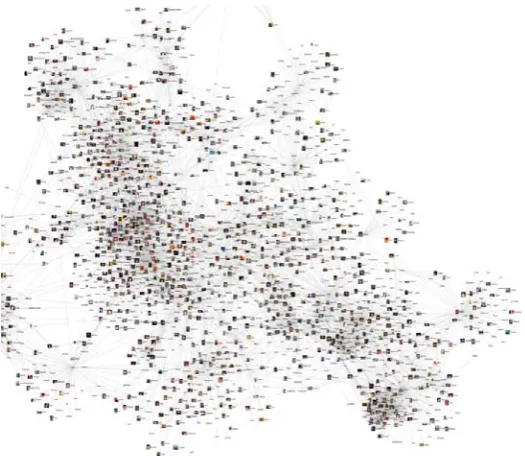
[image:8.595.165.428.508.736.2]The clusters represent the relationships of users that make up an individual Yammer community. Strong clusters form around the 1% content contributors and 90% lurkers based on levels of participation in the Yammer communities.
[image:9.595.105.495.220.514.2]However, as we have demonstrated above, there is more than just information transfer within the online community. A third dimensional aspect draws the ecology back to community participants across the University’s five campuses, i.e. a physical environment or location. We have examined what this model would look like if we added the offline community, i.e. a multiplex relationship model (Figure 3).
Figure 3: Ecology for Knowledge Collaboration
Yammer online community (blue nodes), other social networking platforms (green nodes) and offline campus locations (yellow nodes) represent an ecology for knowledge collaboration. One which—while essentially “growing organically”—has all the complexity associated with the digital informational environment.
Limitations
While the number of members interviewed in Case Study 2 (Emerging Technologies Group) represented a sample of 25%, the number interviewed in Case Study 1 (All Company Feed) was only 2%. In the latter case, the random sample was derived from a sub-set of members which excluded new participants. This approach was taken because of the authors’ desire to assess impact. Parenthetically, since the survey was conducted in mid-2012, there has been an exponential increase in the number of new members in the All Company Feed; this includes increased representation from senior university staff.
some anecdotal evidence to support the hypothesis that the social network is impacting on broader institutional discussions. Yammer has actually entered the popular lexicon: “I saw that on Yammer”. Despite being currently limited in uptake, it is meaningful.
Future investigations into Enterprise 2.0 could more fully interrogate online and offline as one cohesive and complimentary experience. In addition the survey should be expanded to include a much larger sample from the All Company Feed as well as representation from the full spectrum of roles. Nevertheless it has been possible to derive some useful data beyond the anecdotal, which strongly supports and reaffirms collaboration as an ongoing and core practice of higher education institutions.
Conclusion
This paper has explored the ways in which two different online communities—both using the Yammer software—have evolved at Griffith University. It has described how the use of Yammer is facilitating information flow and knowledge transfer across administrative silos in support of institutional core business: learning, teaching and research. Survey results have highlighted the importance of multiplex relationships, i.e. relationships that are maintained both online and offline, to enhance members’ engagement with the online community as a whole and to strengthen ties to other attendees.
The results also suggest the need to deliberately seed the community with information, and subsequently support and encourage ongoing communication. In those instances in which this leads to knowledge collaboration, it transcends the characteristics of the traditional online community and has the potential to add value not only to the immediate community but also to the larger organisation.
At Griffith, there are some early indications, supported by the data presented, that when an online social platform, such as Yammer, is implemented deliberately and with a specific focus and function, it appropriately complements users across five disparate campus locations. The organisation is becoming technically and behaviourally networked and value is occurring because of the opportunities afforded by the platform to improve communication and collaboration within and across organisational silos.
By adopting an online community model based on multiplex relationships, higher education institutions can embrace an efficient way to communicate information, discuss and debate concepts, and continue to reinforce the culture of collaboration in support of their strategic objectives.
References
Anandarajan, M., & Anandarajan, A. (Eds.). (2010). e-Research collaboration. Germany: Springer. Blanchard, A. L., & Markus, M. L. (2004). The experienced "sense" of a virtual community. ACM
SIGMIS Database, 35(1), 64-79.
Faraj, S., Jarvenpaa, S., & Majchrzak, A. (2011). Knowledge collaboration in online communities.
Organization Science, 22(5), 1224-1239.
Fleming, L., & Waguespack, D. M. (2007). Brokerage, boundary spanning, and leadership in open innovation communities. Organization Science, 18(2), 165-180.
Hampton, K. N., & Wellman, B. (2000). Examining community in the digital neighborhood: early results from Canada's wired suburb. In T. Ishida & K. Isbister (Eds.), Digital cities (pp. 194-208). Berlin: Springer-Verlag.
Hearn, G., Roodhouse, S., & Blakey, J. (2007). From value chain to value creating ecology: Implications for creative industries development policy. International Journal of Cultural Policy, 13(4), 419-435. Heer, J. & Boyd, D. (2005). Vizster: Visualizing online social networks. IEEE Information Visualization
(InfoVis), 32–39. http://hci.stanford.edu/jheer/projects/vizster/
Johnson, C. M. (2001). A survey of current research on online communities of practice. The Internet and
Higher Education, 4(1), 45-60.
Kavanaugh, A., & Carroll, J. M. (2005). Community networks: Where offline communities meet online.
Journal of Computer-Mediated Communication, 10(4), 00. doi: 10.1111/j.1083-6101.2005.tb00266.x
Koh, J., Kim, T.-G., Butler, B., & Bock, G.-W. (2007). Encouraging participation in virtual communities.
Li, C.. (2012) Making the business case for enterprise social networks. San Mateo, CA: Altimeter Group. http://www.slideshare.net/Altimeter/altimeter-report-making-the-business-case-for-enterprise-social-networks
Lin, H.-F. (2007). The role of online and offline features in sustaining virtual communities: an empirical study. Internet Research, 17(2), 119-138.
Ma, M. R., & Agarwal, R. (2007). Through a glass darkly: Information technology design, identify verification, and knowledge contribution in online communities. Information Systems Research, 18(1), 42-67.
McCredie, J., & Pirani, J. A. (2012). A dozen gurus describe IT collaborations that work. Research
Bulletin. Louisville, CO: EDUCAUSE Center for Applied Research.
McMillan, D. W., & Chavis, D. M. (1986). Sense of community: A definition and theory. Journal of
Community Psychology, 14(1), 6-23.
Meyer, C. B. (2001). A case in case study methodology. Field Methods, 13(4), 329-352.
Nachmias, R., Mioduser, D., Oren, A., & Ram, J. (2000). Web-supported emergent-collaboration in higher education courses. Educational Technology and Society, 3(3), 94-104.
O'Mahony, S., & Ferraro, F. (2007). The emergence of governance in an open source community.
Academic Management Journal, 50(5), 1079-1106.
Preece, J., & Maloney-Krichmar, D. (2005). Online communities: design, theory, and practice. Journal of
Computer-Mediated Communication, 10(4), 1-8.
Ren, Y., Kraut, R., & Kiesler, S. (2007). Applying common identity and bond theory to design of online communities. Organization Studies, 28(3), 377-408.
Rheingold, H. (2000). The virtual community: homesteading on the electronic frontier. Cambridge, MA: MIT Press.
Ridings, C. M., Gefen, D., & Arinze, B. (2002). Some antecedents and effects of trust in virtual communities. Journal of Strategic Information Systems, 11(3), 271-295.
Salisbury, F., & Monaghan, S. (2010). Finding a new voice: keys to building successful online communities, VALA 2010. Melbourne, Vic: VALA. http://www.vala.org.au/vala2010-proceedings/vala2010-session-14-salisbury
Schwier, R. (2009). Pursuing the elusive metaphor of community in virtual learning environments,
ED-MEDIA 2009. Honolulu, Hawaii: Association for the Advancement of Computers in Education.
Sessions, L. F. (2010). How offline gatherings affect online communities. Information,Communication &
Society, 13(3), 375-395.
Tyndall, J. (2008). “Only Connect”: communities of practice and university students - librarian as conduit, 5th International Lifelong Learning Conference (pp. 1-10). Yeppoon, QLD.
Wasko, M. M., Teigland, R., & Faraj, S. (2009). The provision of online public goods: Examining social structure in an electronic network of practice. Decision Support Systems, 47(3), 254-265.
Wellman, B., Boase, J., Chen, W. (2002). The networked nature of community: online and offline. IT &
Society, 1 (1), 151 - 165.
Wenger, E. (1998). Communities of practice: learning, meaning and identity. New York: Cambridge University.
Yin, R. K. (1984). Case study research: design and methods. Newbury Park, CA: Sage. Zikmund, W. G. (1994). Business research methods. Fort Worth, TX: Dryden Press.
Authors: Julie Blakey (contact author), Social Media Advisor (Information Services) [email protected]
Malcolm Wolski, Associate Director, Business Development (Information Services) [email protected]



![(E) 2 [2 (4 Carboxyphenyl)ethenyl] 8 hydroxyquinolin 1 ium chloride ethanol monosolvate](data:image/gif;base64,R0lGODlhAQABAIAAAP///wAAACH5BAEAAAAALAAAAAABAAEAAAICRAEAOw==)