Int. J. Electrochem. Sci., 14 (2019) 7884 – 7898, doi: 10.20964/2019.08.74
International Journal of
ELECTROCHEMICAL
SCIENCE
www.electrochemsci.orgMedium Effect on the Electropolymerization and Electro-optical
Properties of PEDOS
Kai Qu§1, Hongtao Liu§1, Nannan Jian1, Baoyang Lu2,*, Ximei Liu2, Jingkun Xu1,3,*
1 School of Chemistry & Chemical Engineering, Jiangxi Science & Technology Normal University,
Nanchang 330013, Jiangxi, China
2 School of Pharmacy, Jiangxi Science & Technology Normal University, Nanchang 330013, Jiangxi,
China
3 School of Chemistry and Molecular Engineering, Qingdao University of Science and Technology,
Qingdao 266042, Shandong, China
*E-mail: [email protected] and [email protected] §These authors contributed equally to this work.
Received: 19 March 2019 / Accepted: 6 June 2019 / Published: 30 June 2019
3,4-Ethylenedioxyselenophene (EDOS), an important derivative of 3,4-ethylenedioxythiophene (EDOT), has better optoelectronic properties including lower band gap, better interchain charge transfer, lower oxidation and reduction potentials. In this work, the electropolymerization behavior of EDOS, and the electrochemistry, surface morphology, optical and electrochromic properties of the resultant PEDOS films are comparatively investigated in different solvent-electrolyte systems (CH2Cl2-Bu4NPF6, CH2Cl2-BmimPF6, and pure BmimPF6). We find that solvent-electrolyte systems
exert influence on the electropolymerization behavior of EDOS monomer. EDOS displays lower onset oxidation potentials in CH2Cl2-BmimPF6 and pure BmimPF6 than commonly employed CH2Cl2
-Bu4NPF6. PEDOS can be facilely electrodeposited in all these systems. Electrochromic results suggest
that PEDOS film resulted from CH2Cl2-Bu4NPF6 medium exhibit relatively good transmittance
changes (△T%) of 26.5%, high coloration efficiency of 80 cm2 C-1. However, the addition of
BmimPF6 reveal a compact morphology, and enhanced the electrochemical stability and open circuit
memory for PEDOS film. From these results, PEDOS can be further explored as electrochromic materials towards indoor electrochromic products and flexible displays.
Keywords: Conducting polymers, Electropolymerization, Electrochromics, 3,4-Ethylenedioxyselenophene, Medium Effect
1. INTRODUCTION
has attracted extensive attention on organic electronics like organic field effect transistors (OFETs), organic light-emitting diodes (OLEDs), electrochromic devices (ECDs), etc. The selenium analogue of PEDOT, poly(3,4-ethylenedioxyselenophene) (PEDOS), which was firstly synthesized by adopting a five-step synthetic methodology by Aqad et al.,[1] has better optoelectronic properties than PEDOT in some respects, such as lower band gap, enforced interchain charge transfer, lower oxidation and reduction potentials, and so on.[2-6] To further simplify the synthetic procedure hindering the extensive research of PEDOS, Patra et al. developed an efficient synthetic method to improve the research interest for PEDOS and its derivatives.[3] Currently PEDOS is mainly prepared by electrochemical polymerization, chemical oxidative polymerization and solid state polymerization. As a generally used synthetic strategy, electrochemical polymerization exhibits several unique advantages over other methods, including simple and easily controlled experimental conditions, one step poymerization with high reproducibility, easy device fabrication, etc.
Electrolytic medium has been demonstrated to exert significant impact on the electropolymerization behavior of the monomers and also the optoelectronic properties of the resultant polymers. Unfornately, such medium effect for the electropolymerization of EDOS and the corresponding PEDOS has not been systematically explored. High polarity and low nucleophilicity of solvents can increase the yield of polymer, owing to the reduction of coulomb repulsion during cationic coupling step.[7,8] Therefore, conventional organic solvents, dichloromethane (CH2Cl2),[9,10] propylene carbonate (PC)[11,12] and acetonitrile (CH3CN),[13,14] are used in
electrochemical polymerization frequently. Unfortunately, all these conventional organic solvents are mostly toxic, volatile and flammable. Two decades ago, room temperature ionic liquids (RTIL) were firstly applied to the electrosynthesis of conducting polymers.[15-18] Up to date, many conducting polymers including polyaniline, polypyrroles, polythiophenes, and so on [19-22], are successfully prepared by using ionic liquids owing to their wider electrochemical window, mild chemical conditions, ion mobility, lower volatility, lower toxicity, and so on. 1-Butyl-3-methylimidazolium hexafluorophosphate (BmimPF6) is a common RTIL and has been employed for electrosynthesizing
typical conducting polymers [19-22]. Some inherent shortcomings of such media such as high viscosity and poor solubility, can be readily overcome by the combination of RTIL and conventional solvents.[23] The introduced RTIL can act as both the solvent and electrolyte for the electropolymerization of EDOS and is expected to result in high-performance PEDOS films with less structural defects and improved properties.
Herein, we synthesize EDOS by a three-step synthetic procedure and systematically investigate the electropolymerization behavior of EDOS in different solvent-electrolytic systems including conventional solvent CH2Cl2-Bu4NPF6 (0.1 M), the binary system of CH2Cl2-BmimPF6 (0.1 M) and
pure RTIL BmimPF6. Further, the medium effect on the polymerization and also the electro-optical
2. EXPERIMENTAL
2.1. Chemicals
2,3-Butanedione, (99%; Energy Chemical), trimethoxymethane, (99%; Energy Chemical), Methanol, (MeOH, analytical grade; J&K Chemical), H2SO4, (98%; Energy Chemical), selenium
dichloride, (SeCl2, 98%; J&K Chemical), Sodium acetate, (NaOAc, 98%; J&K Chemical), Hexane,
(analytical grade; J&K Chemical), ethylene glycol, (99%; Energy Chemical), toluene, (99%; Energy Chemical), p-Toluenesulfonic acid (p-TSA, 99%; J&K Chemical), 1-butyl-3-methylimidazolium hexafluorophosphate (BmimPF6, 99%; J&K Chemical) were all directly used as received
Tetrabutylammonium hexafluorophosphate (Bu4NPF6, 99%; Energy Chemical) were dried under
vacuum at 60 °C for 24 h before use. Dichloromethane (CH2Cl2, analytical grade; Beijing East
Longshun Chemical Plant) was purified by distillation with calcium hydride, and stored with 4 Å molecular sieves prior to use. Other reagents were all analytical grade and used as received without further treatment.
2.2. Synthesis
Figure 1. Synthetic route of EDOS monomer. Reagents and conditions: (i) trimethoxymethane, MeOH, H2SO4, 75 °C; (ii) SeCl2, NaOAc, Hexane, -78 °C; (iii) ethylene glycol, p-TSA,
toluene, 55 °C
2,3-Dimethoxy-1,3-butadiene [24], 3,4-dimethoxyselenophene and EDOS [3] were synthesized according to previously reported methods and their structures were confirmed by NMR, respectively.
1H NMR (400 MHz, CDCl
3) for 2,3-dimethoxy-1,3-butadiene: δ 4.45 (d, 2H), 4.09 (d, 2H), 3.52 (s,
6H). 1H NMR (400 MHz, CDCl3) for 3,4-dimethoxyselenophene: δ 6.56 (s, 2H), 3.86 (s, 6H). NMR
(400 MHz, CDCl3) for 3,4-ethylenedioxyselenophene: 1H NMR: δ 6.78 (s, 2H), 4.16 (s, 4H); 13C NMR:
δ 142.77, 101.55, 64.30.
2.3. Electrosynthesis and electrochemical tests
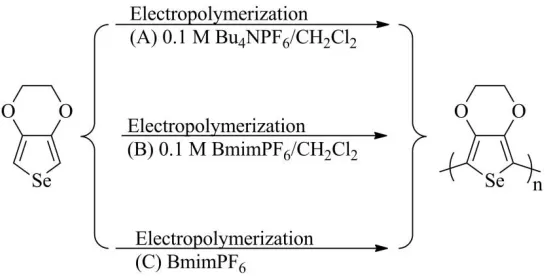
Bu4NPF6 (0.1 M) (yielding PEDOSa), CH2Cl2-BmimPF6 (0.1 M) (yielding PEDOSb), and pure
BmimPF6 (yielding PEDOSc) systems in a one-compartment cell. The thickness of the PEDOS film
[image:4.596.161.436.199.338.2]was controlled by the total charge passed through the cell, which was read directly from the I-t curve by the computer. Anhydrous dichloromethane was used to repeatedly wash away the electrolyte and monomers/oligomers on the polymer films after the polymer film grew on the working electrode. Electrochemical tests of all these PEDOS films were carried out in monomer-free electrolyte solutions.
Figure 2. Schematic for the electropolymerization of EDOS in different solvent-electrolytic media.
To obtain a sufficient amount of the polymer films for other characterization, ITO-coated glass (3 × 2 cm2) and Pt sheet (3 × 2 cm2) were used as the working electrode and counter electrode, respectively.
2.4. Characterization
All the electropolymerization and electrochemical experiments were carried out with a VersaStat3 potentiostat/galvanostat (Princeton Applied Research). UV-vis spectra of both EDOS monomer and polymer were recorded on a SPECORD 200 PLUS UV-vis spectrophotometer. Fourier transform infrared (FTIR) spectra were characterized by using a Magna-IR 750 (American Nicolet Company) FT-IR spectrometer with samples in KBr pellets over the range from 4000 to 400 cm-1. SEM images of different PEDOS films were taken on a Hitachi-S4800 scanning electron microscope with the polymer deposited on the ITO-coated glass.
The spectroelectrochemical studies of PEDOS films were carried out in a quartz cell with monomer-free electrolytes under the applied potential. The electrodes were an ITO-coated glass (working electrode), a Pt wire (counter electrode), and an Ag/AgCl (reference electrode), respectively. A blank ITO-coated glass in monomer-free electrolytes was used as the background in spectroelectrochemical measurements.
In a specific wavelength (λmax), the optical density (∆OD) and coloration efficiency (CE) can be
∆𝑂𝐷 = log (𝑇𝑜𝑥
𝑇𝑟𝑒𝑑) (1)
𝐶𝐸 =∆𝑂𝐷
𝑄𝑑 (2)
Tox and Tred are the transmittance of the oxidized and reduced PEDOS films, respectively. Qd is
the injected/ejected charge.
3. RESULTS AND DISCUSSION
3.1 Electrochemical polymerization
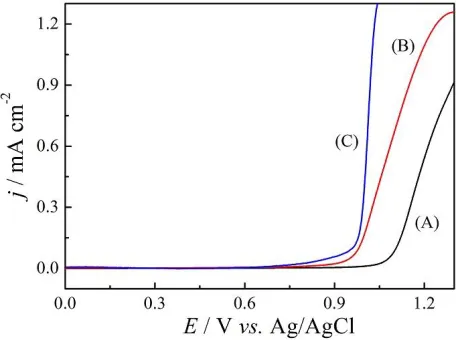
Fig. 3 shows the anodic polarization curves of EDOS in different electrolytic media. The onset oxidation potential (Eonset) corresponds to the potentials that the monomers are oxidized to their radical
cations, and lower Eonset can effectively reduce the occurrence of side reactions such as overoxidation
and form higher quality polymer films.[20] Eonset of EDOS in CH2Cl2-Bu4NPF6, CH2Cl2-BmimPF6 and
pure BmimPF6 are approximately at 1.10 V, 0.96 V and 0.98 V vs Ag/AgCl, respectively. Ionic liquid
BmimPF6 containing electrolytic media give EDOS lower Eonset, which would be beneficial for
preparing high-quality PEDOS films.
Figure 3. Anodic polarization curves of 0.1 M EDOS in (A) 0.1 M CH2Cl2-Bu4NPF6, (B) 0.1 M
CH2Cl2-BmimPF6 and (C) BmimPF6, respectively. Potential scan rate: 20 mV s−1.
Repetitive potential scanning of EDOS was recorded with potential intervals between -1.2 and 1.2 V in different media during the dynamic deposition process, as shown in Fig. 4.
Cyclic voltammetry (CV) curves recorded in all the three media (CH2Cl2-Bu4NPF6, CH2Cl2
-BmimPF6, and pure BmimPF6) display prominent redox process with increasing current density at the
[image:5.596.185.413.413.583.2]
Meanwhile, the CVs of EDOS electropolymerizatin in different solvent-electrolyte systems all show obvious and uniform peak currents increase along with continuous potential scanning, suggesting that the polymer films gradually form onto the electrode surface.[21] The broad redox wave of the depostied PEDOS films can be attributed to the broad distribution of the polymer chain length or the conversion of conductive species based on the PEDOS backbone from the neutral to oxidized states.
Figure 4. Cyclic voltammograms (CVs) of 0.1 M EDOS in CH2Cl2-Bu4NPF6 (0.1 M) (A), CH2Cl2
-BmimPF6 (0.1 M) (B) and pure BmimPF6 (C). Potential scan rate: 20 mV s-1.
The shift of anodic and cathodic peak potentials could be attributed to the fact that the increment of overpotential to overcome the electrical resistance increase of polymer film. This electrochemical behavior is characteristic of conductive polymers during the electrochemical deposition.
Additionally, the redox peak current densities of PEDOS in pure BmimPF6 arelower than those
in CH2Cl2-Bu4NPF6 and CH2Cl2-BmimPF6 due to its high intrinsic viscosity (η = 275 mPa s at 25 °C
measured in our lab) [27], which hinders the diffusion of EDOS from solution to the surface of the working electrode, thus the oligomeric species are not enough to form sufficient polymers on the working electrode. But the viscosities of CH2Cl2-Bu4NPF6 and CH2Cl2-BmimPF6 are much lower than
that of pure BmimPF6, therefore the redox peak current densities are much higher.
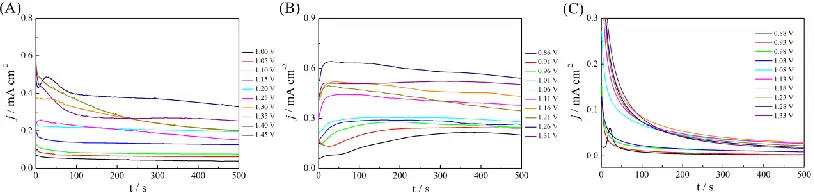
Figure 5. Chronoamperometry (constant potential polymerization) of 0.1 mol L−1 EDOS in 0.1 M CH2Cl2-Bu4NPF6 (A), 0.1 M CH2Cl2-BmimPF6 (B) and pure BmimPF6 (C) at different applied
potentials as indicated for 500 s.
[image:6.596.91.510.175.287.2] [image:6.596.95.502.540.636.2]
potentials higher than Eonset, as shown in Fig. 5 (0.1 M CH2Cl2-Bu4NPF6: from 1.0 to 1.45 V; 0.1 M
CH2Cl2-BmimPF6: from 0.86 to 1.31 V; BmimPF6: from 0.88 to 1.33 V). Note here that no polymer
was deposited on the working electrode until the applied potentials are higher than Eonset. Based on the
experimental observation and I-t curves in Fig. 5, the optimized applied potentials for the electropolymerization of EDOS are demonstrated to be 1.30 V in CH2Cl2-Bu4NPF6, 1.16 V in CH2Cl2
-BmimPF6, and 1.18 V in pure BmimPF6 (vs Ag/AgCl), respectively.
3.2. Structural characterization
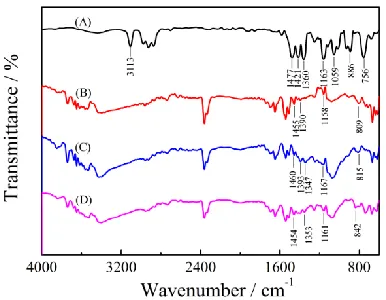
FT-IR spectra are recorded to elucidate the structure of the PEDOS film and the polymerization mechanism of EDOS monomers, as shown in Fig. 6. The detailed peak assignments are summarized in Table 1. In comparison with EDOS, the absorption peaks of the polymers are broadened due to the wide chain dispersity of the dopsited polymers. The absorption at 3113 cm−1 can be assigned to the C-H stretching from the 2,5-position of the selenophene ring in EDOS, but it disappears in the FT-IR spectra of PEDOS electrosynthesized in all solvent-electrolyte systems,[28] suggesting that EDOS monomers are mainly electropolymerized through the coupling at the 2,5-position of the selenophene ring.
Figure 6. FT-IR spectra: EDOS (A), PEDOS obtained from 0.1 M CH2Cl2-Bu4NPF6 (B), 0.1 M
CH2Cl2-BmimPF6 (C), and pure BmimPF6 (D) containing 0.1 M EDOS by constant potential
[image:7.596.202.395.377.527.2]electrolysis.
Table 1. Detailed peak assignments for the FT-IR spectra of EDOS and different PEDOS films.
Assignments and Notes Wavenumber (cm-1)
EDOS PEDOSa PEDOSb PEDOSc
C-H stretching at 2,5-position of the selenophene ring 3113 - - -
C=C and C-C stretching in the selenophene ring
1477 1421 1360
1455 1390
1460 1393 1347
1454 1353
C–O–C stretching vibrations in ethylene oxide unit 1163
1059 1158 1167 1161
C-Se stretching vibrations in selenophene ring 886
[image:7.596.66.554.623.743.2]
3.3. Morphology
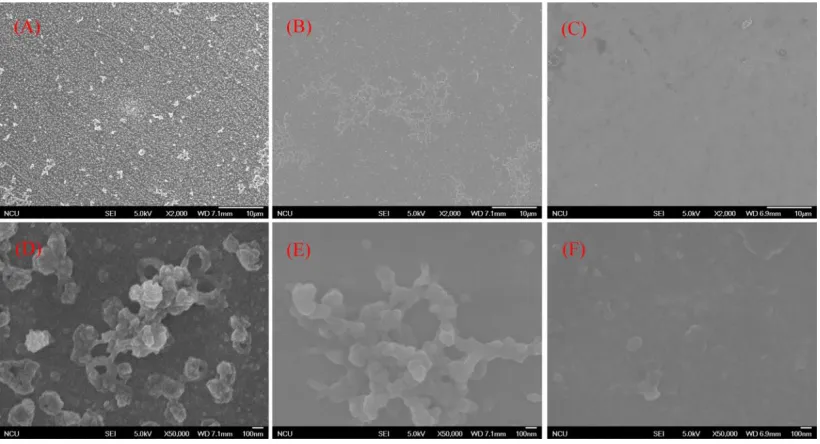
Figure 7. SEM of PEDOS films electrodeposited on the ITO-coated glass in three media: 0.1 M CH2Cl2-Bu4NPF6 (A and D), 0.1 M CH2Cl2-BmimPF6 (B and E) and pure BmimPF6 (C and F)
containing 0.1 M EDOS.
Surface morphologies of PEDOS films electrosynthesized in different solvent-electrolyte systems are closely related to their optoelectronic properties. As can be seen from Fig. 7, PEDOSa has
a rough morphology with homogeneous distribution of particles, due to the fact that EDOS monomer and its radical cations can easily diffuse in CH2Cl2-Bu4NPF6 solution with low viscosity. In addition,
the crystal nucleus of the oligomer particles could quickly form on the surface of electrode and the volume of the particles constantly increases as the polymerization process goes on. The morphology of PEDOSb is smoother and the number of particles is less than PEDOSa on the film surface, This is due to BmimPF6 as the supporting electrolyte makes the viscosity of CH2Cl2-BmimPF6 much higher than
Bu4NPF6 in CH2Cl2 at 25 °C.[26]
The PEDOSc presents a smooth and uniform morphology because of the high viscosity
properties of BmimPF6.[21] Compared with conventional organic solvents, the high viscosity of
BmimPF6 makes the EDOS monomer and its radical cations diffuse rather slowly and thus limits the
polymerization rate of EDOS.[29,30] Therefore, the deposition rate of polymer film is slow. This mild chemical condition and limited deposition rate by BmimPF6 result in smooth and compact surface
morphology of PEDOS films on the electrode surface.
3.4. Electrochemistry of PEDOS
[image:8.596.94.504.97.319.2]
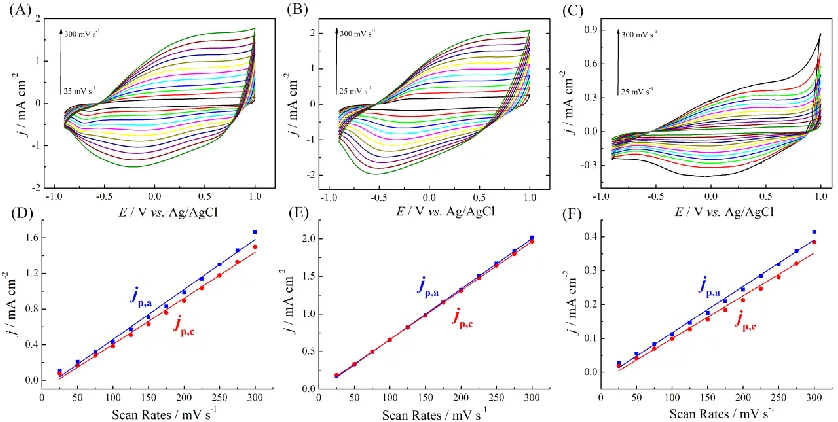
observed between the anode and cathode peak potentials. The main reason is probably due to the following phenomena during ion diffusion or interface charge transfer: slow and inhomogeneous electron transfer, rearrangement between some polymer chains, and slow conversion of electron species.[31] In all these electrolytic systems, the good linear dependency between redox peak current densities and scan rates demonstrates that the redox process is non diffusional and PEDOS films are well-adhered to the working electrode.[32-33] The calculated jp,a/ jp,c (the ratio between anodic or
[image:9.596.90.509.228.439.2]cathodic peak current density and potential scan rates) of PEDOSb is closer to 1.0, much better than those of PEDOSa and PEDOSc, indicating the polymer has better redox reversibility.[34]
Figure 8. CVs of PEDOS films in monomer-free solvent-electrolyte systems: 0.1 M CH2Cl2-Bu4NPF6
(A), 0.1 M CH2Cl2-BmimPF6 (B) and pure BmimPF6 (C) at potential scan rates of 25, 50, 75,
100, 125, 150, 175, 200, 225, 250, 275, 300 mV s-1. Plots of redox peak current densities vs. potential scan rates for different solvent-electrolyte systems: 0.1 M CH2Cl2-Bu4NPF6 (D), 0.1
M CH2Cl2-BmimPF6 (E) and pure BmimPF6 (F). jp is the peak current density, and jp,a and jp,c
denote the anodic and cathodic peak current densities, respectively.
Table 2. Electrochemical parameters for PEDOS tested in monomer-free electrolytic media.
Media PEDOS Ref.
Eox,peak (V) Ered,peak (V) R2an R2cat
Bu4NPF6 /
CH2Cl2 0.60 -0.24 0.9925 0.9942 This work
BmimPF6 /
CH2Cl2 0.74 -0.57 0.9996 0.9999 This work
BmimPF6 0.40 -0.06 0.9923 0.9867 This work
Microemulsion -0.42 -0.56 0.988 0.991
[40]
[image:9.596.86.508.594.723.2]
3.5. Redox Stability
The redox stability of PEDOS films from different electrolytic media is investigated by long-term CVs, as shown in Fig. 9. After 100 cycles, the exchange charge of PEDOSa and PEDOSb
maintain 18.5% and 33.2%, respectively. However, 37.9% for PEDOSc of it electrochemical activity is maintained after 1000 cycles. These results demonstrate that the employment of BmimPF6 can
improve the redox stability of PEDOS.
Figure 9. Long-term CVs of PEDOS films is deposited on Pt electrode in monomer-free solvent-electrolyte systems: 0.1 M CH2Cl2-Bu4NPF6 (A), 0.1 M CH2Cl2-BmimPF6 (B) and pure
BmimPF6 (C) via cyclic scanning at the scan rate of 150 mV s-1.
3.6. Spectroelectrochemistry
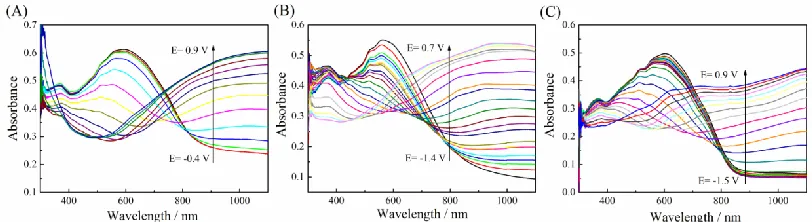
Figure 10. Spectroelectrochemistry of PEDOS films depostied on the ITO glass in 0.1 M CH2Cl2
-Bu4NPF6 (A), 0.1 M CH2Cl2-BmimPF6 (B) and pure BmimPF6 (C) at different application
potential ranges.
Spectroelectrochemical analyses are performed to examine the electrochromic properties of the resultant polymers in Fig. 10. Upon oxidation, the intensity of π−π* transition of PEDOS decreases and simultaneously a new band at longer wavelengths generates. The reason is probably that lower energy charge carriers (polarons and bipolarons) emerge during the oxidation process.[35] The band gap (Eg as shown in Table 3) is defined as the onset absorption of π−π* transition in the fully reduced
polymer and it is generally obtained via the equation (Eg = 1240/λonset). The Eg of all the PEDOS films
[image:10.596.91.509.202.314.2] [image:10.596.96.502.430.541.2]
As compared with PEDOSa and PEDOSb, the low-energy absorption peak of PEDOSc shifts to
longer wavelength due to the short conjugated chain length.[35,36] The completely reduced PEDOS is gradually oxidized and the absorbance gradually decrease at the maximum absorbance peak (λmax),
[image:11.596.107.489.176.306.2]because the electrons are removed from neutral PEDOS and the charge carriers (p-doping) are generated in the PEDOS film.
Figure 11. Color changing images of the PEDOS polymers from the oxidized state to the neutral state. PEDOS films were electrodeposited on the ITO-coated glass in 0.1 M CH2Cl2-Bu4NPF6 (A),
0.1 M CH2Cl2-BmimPF6 (B) and pure BmimPF6 (C) containing 0.1 M EDOS.
Table 3. Optical parameters of different PEDOS films.
Polymers λonset (nm)
Eg
(eV)
Colorimetric Results (CIE)
Applied potential L a b
PEDOSa 855 1.45 -0.5 V 78.37 1.25 -2.17
0.9 V 80.54 -0.42 -8.07
PEDOSb 874 1.41 -1.4 V 61.51 4.61 -8.93
0.7 V 72.32 -3.60 -8.07
PEDOSc 845 1.47 -1.5 V 76.84 0.95 -7.65
0.9 V 83.46 -1.53 -4.83
Overall, all fully oxidized PEDOS polymer films show similar color (blue) with visual observation. In the neutral state, the polymers reveal color changing phenomenon due to the absorption peaks appear at different wavelengths. Neutral PEDOSa and PEDOSc reveal a gray blue color, whreas
the color of neutral PEDOSc is changed to purple as can be seen in Fig. 11. The electrons are delocalized along the conjugated backbones through the overlap of aromatic π-orbitals, which contributes to the π−π* transition.[37] The π−π* interband transition arises from an extended π-system with a filled narrow valence band and occur in the visible range, leading to a specific coloration.[38]
3.7. Electrochromic Performance
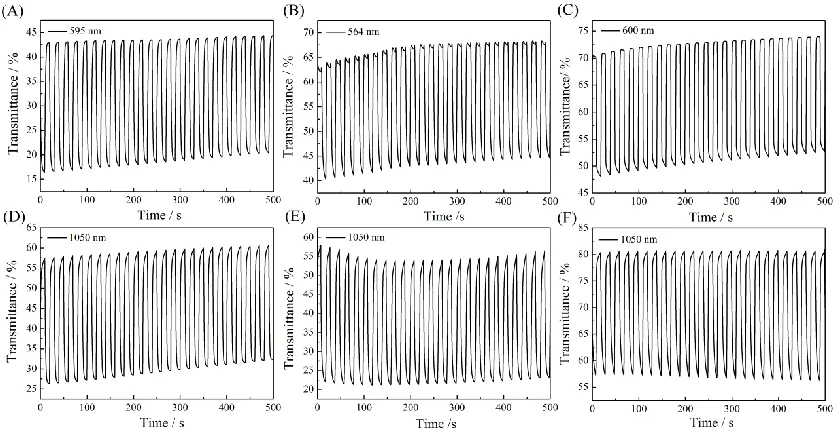
The electrochromic kinetic studies of PEDOS films are monitored by double-potential step chronoabsorptometry with different applied potentials at specific wavelengths (λmax and 1050 nm). Fig.
[image:11.596.70.531.404.517.2]
switched stepwise between the neutral and oxidative states with a residence time of 10 s. The optical contrast ratio of PEDOSa is found to be around 26.5%, superior to PEDOSb and PEDOSc at the corresponding λmax. However, the PEDOS films show better optical contrast in the near-infrared region
[image:12.596.89.507.154.368.2](1050 nm) than that in the visible region (the maximum optical contrast is 35.8% for PEDOSb).
Figure 12. Electrochromic switching and optical absorbance are monitored for PEDOS films in 0.1 M CH2Cl2-Bu4NPF6 (A and D), 0.1 M CH2Cl2-BmimPF6 (B and E) and pure BmimPF6 (C and F).
Table 4. Comparison on the electrochromic performances for PEDOS, PEOTT, PEDOT in different solvent-electrolyte systems.
Polymers Media Wavelength (nm) Tneut (%) Tox (%) ∆T (%)
Response Time (s) Coloration Efficiency (cm2 C-1)
Ref. Oxidation Reduction
PEDOSa CH2Cl2-
Bu4NPF6
595 16.4 42.9 26.5 3.6 7.0 80 This
work
1050 57.4 26.3 31.1 4.3 5.2 27
PEDOSb CH2Cl2-
BmimPF6
564 40.3 63.7 23.4 2.3 6.0 29 This
work
1050 57.9 22.1 35.8 5.1 1.5 24
PEDOSc pure BmimPF
6 603 48.1 70.9 22.8 2.7 8.4 24 This
work
1050 80.4 57.3 23.1 7.4 4.8 44
PEDOS Microemulsion 600 26 31 5 7.10 8.00 24 [40]
ACN 600 11 27 16 1.03 0.13 19
PEOTT
CH2Cl2 600 10.7 46.9 36.2 1.2 1.3 182
[26]
900 36.8 14.4 22.4 1.6 4.1 119
CH2Cl2-
BmimPF6
600 12.8 44.6 31.8 3.1 4.3 183
900 23.8 13.9 9.9 6.1 6.2 91
BmimPF6 600 30.3 8.0 22.3 3.1 6.4 212
PEDOT ACN 585 24.5 78.5 54.0 0.75 - 137 [41]
PEDOSc has a longer response time (achieving 95% of the full transmittance change) in comparison with those of PEDOSa and PEDOSb, mainly because the high viscosity and poor fluidity of
[image:12.596.50.549.471.671.2]
PEDOS films are oxidized via forming cationic charges along with the polymer chains, and PF6− anions are inserted in the films to maintain electrical neutrality. The reduction process is
oppositely accompanied by the release of counteranions. Coloration efficiency (CE) value is obtained from Equation (1) and (2) to evaluate the electrochromic performances of such PEDOS films, and the maximum CE value of PEDOS is about 80 cm2 C-1 at 595 nm in CH
2Cl2-Bu4NPF6.
3.8. Open circuit memory
The optical memory is important for the applications of electrochromic polymers, and it reflects the ability of color retention without applied voltages. As shown in Fig. 13, the transmittance curve is used to estimate the optical memory of different PEDOS films under the specifi wavelength of λmax. Overall, the color of oxidized PEDOS film doesnot change obviously in the absence of applied
voltage. However, the optical memory is significantly different in neutral state. In comparison with PEDOSc, PEDOSa and PEDOSb show stronger optical constrast fluctuations of about 4.2% at -0.4 V
and 4.5% at -1.4 V, respectively. This demonstrates that pure BmimPF6 can minimize the self-erasing
[image:13.596.89.507.367.481.2]effect of PEDOS films.
Figure 13. Open circuit memory of PEDOS monitored at 595 nm in 0.1 M CH2Cl2-Bu4NPF6 (A), 564
nm in 0.1 M CH2Cl2-BmimPF6 (B) and 603 nm in pure BmimPF6 (C). The potential is applied
on PEDOS for 2 s and then potential-free for 100 s.
4. CONCLUSION
In this paper, EDOS, the selenium analog of EDOT, is electropolymerized in three different media, i. e., CH2Cl2-Bu4NPF6, CH2Cl2-BmimPF6, and pure BmimPF6. The medium effect on the
electropolymerization of EDOS are studied though the detailed characterization on structure, electrochemical and electrochromic performance of as-formed PEDOS films. It is found that the mild chemical conditions and high intrinsic conductivity of BmimPF6 decrease the onset oxidation potential
of EDOS and produce a smooth and compact PEDOS film with improved redox stability. The combination of RTIL and conventional solvents (CH2Cl2-BmimPF6) can also be a good medium,
because EDOS can be effectively electropolymerized in CH2Cl2-BmimPF6 with a relatively low onset
(1050 nm) than that in the visible region, and the maximum optical contrast is demonstrated to be 35.8% for PEDOS prepared in CH2Cl2-BmimPF6.
ACKNOWLEDGEMENTS
This work is supported by the National Natural Science Foundation of China (51763010, 51863009), Science Foundation for Excellent Youth Talents in Jiangxi Province (20162BCB23053), and the Key Research and Development Program of Jiangxi Province (20171BBH80007). J. X. thanks the financial support from the Innovation Driven “5511” Project of Jiangxi Province (20165BCB18016), and the Key Project of Natural Science Foundation in Jiangxi Province (20181ACB20010). X. L. thanks the Science and Technology Foundation of Jiangxi Educational Committee (GJJ160790). K. Q. thanks Jiangxi Educational Committee for a Postgraduate Innovation Program grant (YC2017-S409). N. J. thanks Jiangxi Science & Technology Normal University for a Postgraduate Innovation Program grant (YC2017X26).
References
1. E. Aqad, M.V. Lakshmikantham and M.P. Cava, Org. Lett., 3 (2001) 4283. 2. A. Patra, M. Bendikov and S. Chand, Acc. Chem. Res., 47 (2014) 1465.
3. A. Patra, Y.H. Wijsboom, S.S. Zade, M. Li, Y. Sheynin, G. Leitus and M. Bendikov, J. Am. Chem. Soc., 130 (2008) 6734.
4. A. Patra and M. Bendikov, J. Mater. Chem., 20 (2010) 422. 5. S.S. Zade and M. Bendikov, Org. Lett., 8 (2006) 5243.
6. G.M. Nie, L. Wang and C.L. Liu, J. Mater. Chem. C., 3 (2015) 11318.
7. X.Y. Yang, C.L. Liu, J.B. Guo, L. Wang and G.M. Nie, J. Polym. Sci., Part A: Polym. Chem., 55 (2017) 2356.
8. W.Y. Yu, J. Chen, Y.L. Fu, J.K. Xu and G.M. Nie, J. Electroanal. Chem., 700 (2013) 17. 9. B.Y. Lu, S.J. Zhen, S.L. Ming and J.K. Xu, G.Q. Zhao, RSC Advances., 5 (2015) 70649. 10. B. Karabay, L.C. Pekel and A. Cihaner, Macromolecules, 48 (2015) 1352.
11. M. Li, A. Patra, Y. Sheynin and M. Bendikov, Adv. Mater., 21 (2009) 1707. 12. M. Li, Y. Sheynin, A. Patra and M. Bendikov, Chem. Mater., 21 (2009) 2482.
13. Y.H. Wijsboom, A. Patra, S.S. Zade, Y. Sheynin, M. Li, L.J.W. Shimon and M. Bendikov, Angew. Chem. Int. Ed., 121 (2009) 5551.
14. O. Dunand, T. Darmanin and F. Guittard, ChemPhysChem, 14 (2013) 2947. 15. S. Alkan, C.A. Cutler and J.R. Reynolds, Adv. Funct. Mater., 13 (2003) 331. 16. X.B. Wan, F. Yan, S. Jin, X.R. Liu and G. Xue, Chem. Mater., 11 (1999) 2400. 17. C. Liu, J.X. Zhang, G.Q. Shi and Y.F. Zhao, J. Phys. Chem. B, 108 (2004) 2195. 18. F. Alakhras and R. Holze, Synth. Met., 157 (2007) 109.
19. B. Fan, L.T. Qu and G.Q. Shi, J. Electroanal. Chem., 575 (2005) 287. 20. F. Endres and S.Z. El Abedin, Phys. Chem. Chem. Phys., 8 (2006) 2101.
21. B. Dong, Y.H. Xing, J.K. Xu, L.Q. Zheng, J. Hou and F. Zhao, Electrochim. Acta, 53 (2008) 5745. 22. B. Dong, D.F. Song, L.Q. Zheng, J.K. Xu and N. Li, J. Electroanal. Chem., 633 (2009) 63.
23. Y.W. Zhu, S. Murali, M.D. Stoller, K.J. Ganesh, W.W. Cai, P.J. Ferreira, A. Pirkle, R.M. Wallace, K.A. Cychosz, M. Thommes, D. Su, E.A. Stach and R.S. Ruoff, Science, 332 (2011) 1537. 24. E. McDonald, A. Suksamrarn and R. D. Wylie, J. Chem. Soc. Perk. T., 1 (1979) 1893. 25. C.L. Gaupp, D.M. Welsh, R.D. Rauh and J.R. Reynolds, Chem. Mater., 14 (2002) 3964. 26. B.D. Reeves, C.R.G. Grenier, A.A. Argun, A. Cirpan, T.D. McCarley and J.R. Reynolds,
Macromolecules, 37 (2004) 7559.
15581.
28. B. Kim, J. Kim and E. Kim, Macromolecules, 44 (2011) 8791. 29. P. Hapiot and C. Lagrost, Chem. Rev., 108 (2008) 2238.
30. K. Sekiguchi, M. Atobe and T. Fuchigami, Electrochem. Commun., 4 (2002) 881.
31. G. Inzelt, M. Pineri, J.W. Schultze and M.A. Vorotyntsev, Electrochim. Acta, 45 (2000) 2403. 32. T.A. Skotheim, R.L. Elsembaumer and J.R. Reynolds, CRC press, (1997).
33. J. Pringle, M. Forsyth, D. MacFarlane, K. Wagner, S. Hall and D. Officer, Polymer, 46 (2005) 2047.
34. Y.H. Wijsboom, Y. Sheynin, A. Patra, N. Zamoshchik, R. Vardimon, G. Leitus and M. Bendikov, J. Mater. Chem., 21 (2011) 1368.
35. S.L. Ming, S.J. Zhen, K.W. Lin, L. Zhao, J.K. Xu and B.Y. Lu, ACS Appl. Mater. Interfaces, 7 (2015) 11089.
36. P. Camurlu, T. Duraka and L. Toppare, J. Electroanal. Chem., 661 (2011) 359.
37. S. Chen, B.Y. Lu, X.M. Duan and J.K. Xu, J. Polym. Sci., Part A: Polym. Chem., 50 (2012) 1967. 38. S. Duluard, B. Ouvrard, A. Celik-Cochet, G. Campet, U. Posset, G. Schottner and M.H. Delville, J.
Phys. Chem. B, 114 (2010) 7445.
39. B.Y. Lu, S.M. Zhang, L.Q. Qin, S. Chen, S.J. Zhen and J.K. Xu, Electrochim. Acta, 106 (2013) 201.
40. W.N. Zhang, W.W. Zhang, H.T. Liu, N.N. Jian, K. Qu, S. Chen and J.K. Xu. J. Electroanal. Chem., 813 (2018) 109.
41. Z.P. Wang, D.Z. Mo, S. Chen, J.K. Xu, B.Y. Lu, Q.L. Jiang, Z.L. Feng, J.H. Xiong and S.J. Zhen, J. Polym. Sci., Part A: Polym. Chem., 53 (2015) 2285.