COMMISSION OF THE EUROPEAN COMMUNITIES
Brussels, 17.9.2009 SEC(2009) 1137 final
COMMISSION STAFF WORKING DOCUMENT
Accompanying the
REPORT FROM THE COMISSION TO THE COUNCIL
EU 2009 Report on Policy Coherence for Development
TABLE OF CONTENTS
1. Introduction ... 3
2. Organisational Mechanisms ... 4
2.1. General commitment to Policy Coherence for Development ... 6
2.2. PCD Promotion in EU Member States... 7
2.3. PCD Promotion within the Commission... 12
2.4. PCD Promotion at EU level/Role of the Council/Presidency and the European Parliament ... 15
2.5. Partner Country Perspective... 17
2.6. Conclusion & Outstanding Issues ... 20
3. Policy Areas ... 23
3.1. Trade ... 23
3.2. Environment... 39
3.3. Climate Change... 51
3.4. Security ... 61
3.5. Agriculture ... 76
3.6. Fisheries ... 87
3.7. Social Dimension of Globalisation, Employment and Decent Work ... 101
3.8. Migration... 114
3.9. Research and Innovation ... 124
3.10. Information Society... 141
3.11. Transport ... 151
3.12. Energy ... 159
4. Case Studies ... 169
4.1. Conceptual and Theoretical Framework ... 169
4.2. Case Study on MDG 1 (Hunger) and PCD ... 175
4.3. Case study on MDG 6 ... 188
1. INTRODUCTION
Since the mid 1990's EU Member States sought to improve coordination of bilateral and multilateral development policies in the light of greater integration in the Union, greater convergence of development objectives and limited availability of resources to face ever-increasing challenges in developing countries. Meanwhile, globalisation, increased interdependence of countries and regions throughout the world, and the rapid expansion of information technologies are illuminating starkly the developed and emerging countries' diverging interests or competing objectives which can sometimes have dramatic consequences for the developing world.
Against this background, realising that its policies in areas other than development were having some unintended impacts on third countries and building on the OECD work in this area, the Union formulated a concept of Policy Coherence for Development aimed at strengthening synergies between those non-aid polices and its development objectives. The idea was that carefully designed and implemented EU policies would generally lead to increased effectiveness of development aid and non-aid policies, and to efficient use of resources, by limiting policy incoherence and developing synergies.
To this end, the EU committed itself to PCD in twelve policy areas1 in 2005 and has endeavoured to strengthen PCD procedures, instruments and mechanisms at all levels since then. These efforts were formally embedded in the European Consensus on Development adopted in December 20052 and a first progress report on PCD in the Union, setting out the views and expertise of the Member States, was issued by the Commission in September 20073, as requested by the Council in May 2005.
The first report showed what the Union had done in organisational terms and in the twelve policy areas, highlighting specific aspects for each policy domain, acknowledging progress and setbacks, identifying outstanding issues and providing a comprehensive overview. The report was used to improve PCD awareness in the EU through debates and discussions in a number of fora and in different countries. Overall, the document was welcomed by many as a valuable attempt to take stock of PCD endeavours in the EU confirming the EU policy commitment to PCD and reinforcing its lead role at international level.
Building on the 2007 report's findings and recommendations, the Commission elaborated on PCD issues in four thematic areas (Migration, Research, Climate Change and Energy) in a Staff Working Paper published in April 2008. Tying in with the Commission Communication on speeding up the achievement of MDGs4, the paper, which resulted from a in-depth
1
May 2005 Council Conclusions on PCD. The twelve policy areas are Trade, Environment, Climate Change, Security, Agriculture, Fisheries, Social Dimension of Globalisation, Employment and Decent Work, Migration, Research and Innovation, Information Society, Transport and Energy.
2
OJ 2006/ C 46/01, December 2005, Joint Statement by the Council and the representatives of the governments of the Member States meeting the Council, the European Parliament and the European Commission- "The European Consensus on Development", ,
3
Com (200) 545 final and Sec(2007) 1202, 20/09/20007. EU Report on Policy Coherence for Development.
4
consultation of interested partners5, provided some options for drawing up development friendly policies in the four areas of focus.
The debate that ensued from the 2007 PCD report and the Staff Working Paper of April 2008, together with discussions with civil society and international organisations on PCD issues (Civil society meeting on development and coherence issues, the OECD DAC reflection exercises etc.) and the renewed focus on MDG in 2007/8 led to a rethinking of the EU PCD methodology for the 2009 reporting exercise and to an increased focus on the impact on developing countries.
With the positive experience of 2007 in mind, the 2009 report takes a two-pronged approach to the subject matter while integrating some evidence-based PCD.. An updated analysis of policy changes has been compiled, based on contributions by Member States and the various Commission services. As such, the 2009 report continues to reflect EU-wide endeavours to promote PCD at national, EU and international levels.
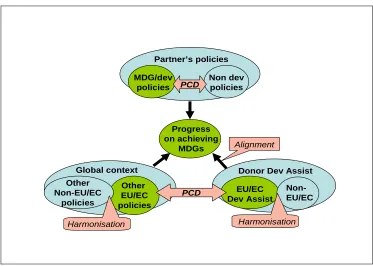
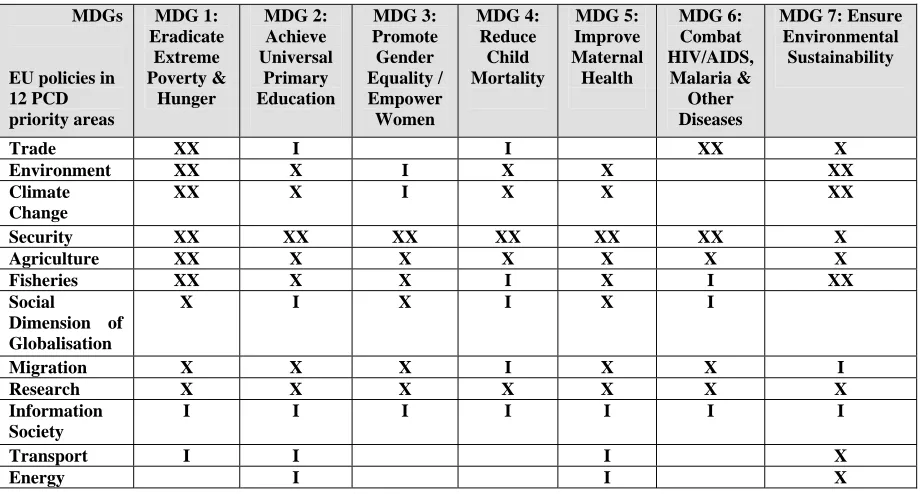
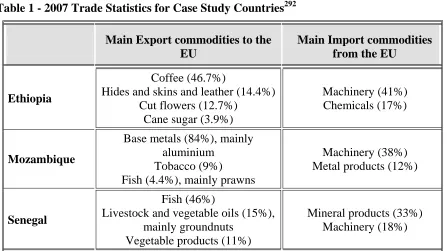
In addition however, the 2009 report presents an overall conceptual framework linking the 12 EU policies to the MDGs in developing countries and gives details of three case studies in developing countries and specifically in Africa, given the particularly dramatic situation therewith regard to MDGs. Two case studies focus on MDGs (MDG1 on hunger and MDG6 on the fight against HIV/Aids) in three developing countries (Senegal, Ethiopia, Mozambique for MDG1; Rwanda, Zambia, Tanzania for MDG6), the third case concentrates on the Joint Africa-EU Strategy as a framework with strong PCD potential.
With a strong focus on the impact in developing countries, the EU efforts to boost policy coherence for development should gain credibility and political clout. By establishing potential and concrete linkages between PCD efforts and progress in reducing poverty in poor countries, the report should help to further raise awareness of PCD potential among policy makers and more generally among the wider public. In keeping with the original mandate, the present 2009 PCD report provides a basis for assessing PCD progress in the EU and serves as an information tool to generate debate and to obtain feedback from EU stakeholders. Further, the linkages to progress on MDGs and to the Africa-EU strategy provides feedback from developing countries and may promote the principles of PCD as a relevant development concept to be further explored in policy fora in the south.
2. ORGANISATIONAL MECHANISMS
Brining about greater coherence between policies and development objectives is a complex endeavour. To succeed in this task governments need certain structures and mechanisms. The precise nature and interplay of these varies depending on the different political systems. But broadly speaking there are three key building blocks 1) a general – preferably legal - commitment to PCD, and a political framework outlining the approach to PCD, 2) institutional mechanisms, with a specific mandate to promote PCD and 3) a reporting obligation. The OECD pictures them together in the policy coherence cycle6:
5
Such as civil society organisations, international organisations and developing country representatives
6
2.1. General commitment to Policy Coherence for Development
EU commitment to PCD is founded as regards the legal base on article 178 of the Treaty establishing the European Community, and in a more general way on article 3, second subparagraph, of the Treaty on European Union as regards consistency between all the Union's policies and its external activities. The Treaty of Lisbon would give a solid legal base to Policy Coherence for Development with two articles of particular importance. Firstly, article 21(2)(d) and (3) of the Treaty on European Union in the chapter on the general provisions on the Union's external action which sets out sustainable development and the eradication of poverty as objectives of the Union's external action. Importantly, this article also stipulates that the EU shall pursue this objective in the development and implementation of the different areas of the Union's external action and of the external aspects of its other policies. Secondly, article 208(1) of the Treaty on the Functioning of the European Union would be the new version of the 178 coherence article with almost identical wording.
The political framework has been set by the Commission's Communication on Policy Coherence for Development in April 20057, the subsequent Council Conclusions in May 20058, the European Consensus on Development in December 20059, as well as in the Council Conclusions on the EU PCD report in November 200710. PCD commitments in specific areas were made in particular with the Council conclusions on security and development and the Conclusion on migration both of them adopted in November 2007, as well as the Council Conclusions of May 2008 on Climate Change/Energy/Biofuels, Migration and Research.
7
COM(2005)134 of 12.04.2005
8
Doc.9266/05 Council Conclusions, May 2005
9
December 2005, OJ 2006/C46/01, Joint Statement by the Council and the representatives of the governments of the Member States meeting within the Council, the European Parliament and the European Commission – 'The European Consensus on Development'
2.2. PCD Promotion in EU Member States
2.2.1. General commitment, capacity and approach to PCD
A growing number of Member States have officially committed themselves to PCD (see chart below11). The Czech Republic, Hungary, Latvia, Poland and Romania have adopted legislation putting a specific emphasis on PCD. Austria, Germany, Ireland, the Netherlands, Slovenia and Sweden (re)confirmed their commitment to PCD in long term government policies and/or coalition programmes. The Irish Government’ Programme ‘A Blueprint for Ireland’s Future’, for example, commits the government to an integrated approach to development across all departments. Some new, small donors envisage specific changes in policy commitment to PCD in the near future.
Sweden and Austria have identified focus areas for their PCD work: Sweden specified six global challenges as priorities for ensuring PCD: oppression, economic exclusion, climate change and environmental impact, migration flows, communicable diseases and other health threats, and conflicts and fragile situations (see box below). Austria is focusing its PCD efforts on three themes: Environment and Development, Food Security, and Education and Science.
Sweden: Six Global Challenges: A PCD Focusing Methodology.
Prior to 2007, Sweden attempted a whole-of-government approach to PCD but this provided to be ineffective as the policies of individual government offices were not always coherent with each other. The problems overall stemmed from a lack of policy ownership, a poor understanding of PCD means in practice, and the absence of a guiding strategy for implementation of PCD policies.12 Sweden embarked on a new approach in 2007 whereby PCD efforts are focused on selected global challenges. It announced this new approach to Parliament on 17 March 2008, in a communication entitled Sweden’s Policy for Global Development (Govt Comm. 2007/8:89). The six challenges selected are: Oppression,
11
Chart based on Member States' responses to a dedicated PCD 2009 questionnaire prepared by the European Commission
12
Economic exclusion, Climate change and environmental impact, Migration flows, Infectious diseases and other health threats, and Conflicts and fragile situations.They have been further subdivided into 18 cases, each with clear objectives and policy implementation targets along with a selection of measures that are seen as necessary to fulfil each objective. Each government office is responsible for developing the necessary policies and management processes for meeting the objectives. A global development policy forum has been established within government offices for increasing coordination and coherence. All policies that have an impact on global development are subject to an impact assessment that evaluates the policy according to a “rights perspective and the perspective of poor people on development”. Also, cooperation with non-state actors is promoted by the “actor-driven cooperation” approach, which focuses on developing self-sustaining relationships between Swedish and developing country actors. The first performance evaluation of Sweden’s new PCD approach will be conducted in 2010.
2.2.2. Administrative coordination and institutional mechanisms with a specific mandate to promote PCD
A number of Member States are enhancing their capacity to ensure PCD. Seven Member States took specific steps to enhance PCD capacity across government. The UK expanded the role of DFID and increased the number of inter-departmental units in areas such as trade and climate change (see box). The Netherlands intensified its focus on inter-ministerial agreements on development policy. France created a new Directorate General for Globalisation, Development and Partnerships, with a unit focusing on aid effectiveness and policy coherence.
UK, Making it Happen: April 2008 an internal management and delivery initiative
In April 2008, an internal management and delivery initiative (Making it Happen) helped to broaden the agenda of UK development policies to include areas that were previously outside of the development sector. The move towards increasing PCD capacity began in July 2007 with the doubling in size of the ministerial team for international development. 13 One of the major components of the government’s PCD effort is the establishment of a joint DFID – Department of Business, Enterprise, and Regulatory Reform Trade Policy Unit (TPU) in November 2007.2 This new unit places the responsibility for overseeing trade policy jointly on the two ministries, and a new Cabinet Committee was created to increase coherence. Furthermore, a Justice Assistance Network was created in May 2007, as a joint effort by DFID, the Attorney General, and the FCO, to ensure that UK justice assistance is coherent and effective. 1 Also, in 2007, Her Majesty’s Treasury (HMT) and Her Majesty’s Revenue and Customs started taking steps to ensure that taxation treaties are in line with the UK’s development objectives.1 DFID, the FCO, and HMT have also worked jointly to develop the Extractive Industries Transparency Initiative.2 The increased coordination between ministries dealing with trade, migration, and financial matters is necessary to make the UK’s development cooperation and policy coherence more effective.
About 75% of Member States have improved their institutional decision-making processes to ensure PCD. A large majority of the Member States now have well-established inter-ministerial or interdepartmental committees, units or task forces specifically mandated to
13
http://www.dfid.gov.uk/pubs/files/departmental-ensure PCD. Romania, for example, created the Inter-ministerial Commission for Economic Cooperation and International Development in July 2007. A number of Member States prefer more informal working groups or networks. Finland and Portugal strengthened their role of the PCD Coordinator. Hungary and Portugal established PCD focal points within non-development ministries. The UK established a Cabinet Committee on Trade, chaired by DFID’s Secretary of State. As Finland and Spain had done before 2007, Austria, Czech Republic and Latvia have also now established independent national advisory bodies to advise the government on PCD issues. These generally consist of representatives from development and non-development ministries, independent experts - from the private sector, NGOs, research - and, in the case of Latvia, representatives of municipalities as well.
Interministerial cooperation on climate change: the example of Germany
Since the beginning of 2008, the German Federal Environment Ministry (BMU) has made available up to €120 million, creditable against ODA, for International Climate Protection. The goal is to contribute to reducing emissions in a cost-effective way through increased energy efficiency and greater use of renewable energies in developing countries as well as to promote adaptation to climate change in those countries. In order to ensure coherence with development policy, the Federal Ministry of Finance issued a guidance note stipulating approval of the Federal Ministry for Economic Cooperation and Development (BMZ) must approve all decisions related to the programme’s financing.
In accordance with increased thematic focus, Sweden has set up new interdepartmental working groups for each of the six global challenges and the UK has established thematic PCD Units on Trade Policy; Returns and Reintegration (on Migration), Energy and Climate Change (at the High Commission in Delhi) and Stabilisation. Sweden and the UK have introduced results-based management principles for designing and managing action agendas for ensuring PCD in thematic areas.
Unsurprisingly capacities in national administrations still vary between Member States. For some countries, PCD is not a first priority and awareness of the need for it in non-development ministries remains low. It is noticeable that in Member States that have a strong policy commitment to PCD, non-development ministries reportedly understand its implications better too.
2.2.3. Analysis, reporting and awareness raising
Better use of impact assessment as well as more intensive exchanges with the European Parliament and a broader range of civil society actors was identified as an outstanding issue in the 2007 PCD report. Recognising the importance of clear evidence for enhancing PCD as well as the need to involve the public, Member States made more use of impact assessments, strengthened their reporting mechanisms and engaged in a broader dialogue with parliaments and civil society actors.
Department of International Cooperation. Romania and Lithuania expect to make more use of impact assessments in the near future.
Reporting on PCD is more and more integrated into general reporting on development policy. In their regular reports to Government, Swedish embassies and field offices provide feedback on PCD in partner countries based on individual country assistance strategies. The UK’s International Development (Reporting and Transparency) Act requires the Secretary of State for International Development to report to Parliament each year, including on a range of PCD areas. In Germany, PCD reporting is included in the overall report which the Federal Government presents to parliament once every election period. The most recent was the ‘White Paper on Development Policy’ issued in June 2008. In Ireland, the same month, Ireland's Interdepartmental Committee on Development presented its first Annual Report to the Minister for Foreign Affairs.. Amongst the newer European donors, progress reports frequently refer to advances made in more general ODA reporting.
The Netherlands undertakes regular external evaluations of the work of its Policy Coherence for Development Unit. These evaluations assess the relevance, added value and results of the Unit's three primary: PCD screening of Dutch positions in the European Union; pro-active networking and lobbying with other directorates and relevant ministries to define and achieve specific results on a limited number of current PCD issues; and strengthening EU and wider international cooperation on PCD.
Very few Member States report on studies analysing the root causes of PCD or the lack of it. Irish Aid commissioned research on PCD that involved comprehensive scoping of coherence issues across Government Departments. The resulting report, soon to be published, is expected to identify key policy coherence issues and suggest which of these should be most urgently addressed by the Irish Government. The UK on the other hand, reports that the interplay between climate change, livelihoods and conflict in Darfur has led to a number of pioneering projects in the region based on in-depth analyses conducted by different research groups, which aim to address the underlying environmental causes of conflict, providing a long-term sustainable basis for growth in the context of pressing and immediate humanitarian needs.
Awareness and transparency of PCD issues are increasing considerably in Member Sates. Most Parliaments are engaging much more actively on PCD issues. The UK House of Commons organised sessions on Sustainable Development in a Changing Climate, DFID and China, World Food Programme and Global Food Security, Scrutiny of Arms Export Control, Development and Trade and Cross-departmental Working and Afghanistan Reconstruction in 2008/9. Members of Parliament in many Member States repeatedly spent a lot of time discussing the findings of civil society organisations and research institutions with expertise in PCD.
Development’s Commitment to Development Index (CDI) as part of their efforts to raise awareness within governments and among the general public of the many ways that donor governments affect developing countries.
2.2.4. Conclusion on the situation in Member States
2.3. PCD Promotion within the Commission
The Commission has gained a high profile for its work on PCD. The latest DAC Peer Review of EC aid14 recognises the substantial progress made by the Commission to putting in place effective mechanisms to ensure PCD. In the reporting period the Commission concentrated on implementing its legal and political framework, and on using its coordination and reporting mechanisms in a more effective, active and targeted way.
The preparation of the 2007 PCD report was instrumental in raising awareness, enhancing understanding and increasing ownership of PCD in the Commission and the Member States. Its publication has been recognised by the Member States as a major achievement. However, the Netherlands found that drawing operational conclusions from the evidence provided was difficult and did not encounter sufficiently broad support from Member States and Commission.
In 2008, the Commission took its PCD work further by sharpening, and making better use of Inter-service consultation (ISC) and Impact assessments (IA), both of which are powerful mechanisms to promote PCD.
At international level, the Commission contributed to the OECD DAC Reflection Group on the revision of the DAC mandate, thus helping to make PCD a renewed priority for DAC in the future.
2.3.1. More effective use of impact assessments and inter-service consultations: PCD work plan
Every year, the Commission adopts hundreds of new legislative proposals and policy initiatives, which undergo IA and ISC. In an effort to identify the initiatives which will affect developing countries, the Commission now regularly establishes an informal PCD workplan, which lists all those EU policy initiatives and legislative proposals that are likely to have significant impact on developing countries. In 2008, 26 initiatives were identified and 37 in 2009.
This PCD planning list has been an important step forward. It allows the Commission to use the ISC and IA in a much more effective and strategic way and to concentrate its efforts on those initiatives with the biggest impact on developing countries. In addition, this exercise of jointly identifying the relevant initiatives with the responsible civil servants has proved to be a very useful process for enhancing ownership and increasing awareness of PCD issues.
2.3.2. Revision of the IA guidelines
The Commission uses impact assessment to identify likely consequences of its policy initiatives or legislative proposals in the economic, environmental and social fields. The 2007 PCD report suggested using them to get a clearer idea of how developing countries may be affected. The Commission therefore took the opportunity to revise the IA guidelines to strengthen their external dimension and to sharpen them as a PCD instrument15.
14
OECD Development Assistance Committee (DAC) Peer Review of the European Community, 2007
The revised IA guidelines applicable since January 2009, put the Commission in a better position to ensure Policy Coherence for Development, in so far as they call for a more in-depth analysis of possible the ways in which EU policy initiatives might affect developing countries. The guidelines state that 'initiatives that may affect developing countries should be analysed for their coherence with the objectives of EU development policy. This includes an analysis of consequences (or spill-overs) in the longer run in areas such as economic, environmental, social or security policy.' Such an analysis has to differentiate between countries at different stages of development. According to the new guidelines the impact on commitments arising from the ACP-EC Partnership Agreement must also be checked. The annexes to the guidelines include a specific section on assessing impacts on developing countries. In addition, specific guidance is given for identifying possible consequences on developing countries, including in the areas of employment, food security, and natural resources stocks.
These changes by the Commission also responds to requests from the European Parliament and the Council to strengthen the external dimension of IA and to improve and make better use the IA process to evaluate the impact of EU policies on developing countries.
2.3.3. Institutional mechanisms: PCD unit and PCD inter-service group
The PCD unit in DG Development continued to play its catalysing, advising and coaching role for PCD. It coordinated the PCD work of the Commission and contributed to making EU polices more development-friendly.
The inter-service group on PCD functions as a forum for exchange of views on PCD issues. Its members act as interpreters between the different policies. They make proposals and explain how development objectives can be taken into account in other policies. At the same time they give background on the policies of their DGs thereby promoting better mutual understanding and paving the way for sometimes new and innovative ways of enhancing synergies between policies.
2.3.4. Budgetary/financial issues/financing of non-development activities in developing countries
Cooperation with developing countries is no longer limited to promoting their development. Mauritania and the Seychelles receive more funding under the Common Fisheries Policy than under the Development Fund (EDF). Some countries receive considerable funding from European Research programmes for research activities involving their universities and academics. Security, migration and climate change and environment in general are other areas where the EU increasingly cooperates with developing countries.
Cooperation in these areas is mostly financed from non-development budget lines. While not primarily motivated by the will to support these countries in the fight against poverty, such cooperation also has the potential to contribute to development. To harness this potential it is important to ensure coherence at the policy level and to develop and strengthen mechanisms to ensure that coherence is also improved at the operational level.
2.4. PCD Promotion at EU level/Role of the Council/Presidency and the European Parliament
The Council Conclusions on integrating development concerns in Council decision-making of October 2006 describe the roles of the different actors in promoting PCD, emphasising that COREPER (the Committee of Permanent Representatives of the Member States to the EU) is the main forum for ensuring PCD.
These two main mechanisms recommended for promoting PCD, are the Rolling Work Programme (RWP) and the screening of Council agendas to identify items with a development dimension and to ensure that development concerns are fully reflected across the policy spectrum at all relevant stages in the decision-making process. Other mechanisms to promote PCD are the present report, joint meetings both of Council working groups and at the ministerial level, and the informal EU PCD network of the EU Member States.
The 2007 PCD report identified as one of the outstanding issues the need to review and improve Council procedures, in particular with regard to ensuring that PCD is built into the Council working groups so that COREPER receives coherent submissions. The report also suggested institutionalisation of the PCD screening of Council agenda, to make the RWP more operational, and organisation of more joint GAERC sessions.
Slightly more than half of the Member States are of the opinion that PCD procedures at EU level have been sufficiently reviewed and improved. The others see room for further improvement. Member States with less experience of PCD are on the whole more positive than the ones that have been working on it for the last decade. For this first group, the EU procedures provide fair guidelines to develop their capacity to ensure PCD within government.
The screening exercise has been carried out by all Presidencies since 2007. Several Member States find that even though, progress has been made with this exercise, the status of PCD screening remains unclear and specific follow-up is seen as ad hoc.
The PCD Rolling Work Programme was prepared by the German Presidency in the first half of 2007. It was updated by some of the subsequent Presidencies but not by all. Nine Member States use the Rolling Work Programme (RWP) as part of internal procedures or as a key reference for their PCD work. It provides an important tool for many Member States to help focus PCD work nationally, even if some of the more experienced Member States would like to see it further improved or feel their established procedures make it as yet unnecessary. Although some Member States find it a useful tool, it has to be acknowledged that the preparation of this programme is a laborious exercise, which contrasts with its relatively low status as a Presidency Paper. Combined with the huge range of areas and initiatives covered this does not encourage follow-up and limits the political value of the paper.
The lack of follow-up to both exercises somehow undermines the usefulness of the whole process. There is a need to take a more strategic approach: to limit the scope of the RWP but to be more ambitious in political terms, select a few PCD priorities and ensure that they are properly tackled.
exercise, several Member States find that the status of joint sessions remains unclear and specific follow-up is seen as ad hoc. Germany considers that joint Council sessions have made considerable progress, yet it recognises that underlying conflicts between internal EU and development policy objectives persist, and may remain. Sweden points to a lack of ownership in non-development Council formations. The UK indicates that the joint Council sessions with Foreign and Defence Ministers have been useful but could be expanded also to include Trade, Finance and Environment Ministers. Several Member States stress that specific outcomes are still too dependent on the EU Presidency of the day. Many Member States suggest that the role of the Council’s General Secretariat should be strengthened, and interaction between different Council working groups should be intensified.
The informal PCD network of EU Member States met on several occasions, to ensure exchanges between the Member States on PCD issues and to give advice with regard to preparation of the PCD report.
2.5. Partner Country Perspective
Intensifying the dialogue with partner countries on the synergies between EU policies and development cooperation programmes was identified as an outstanding issue in the 2007 PCD report. The Joint Annual Reviews show that the Community has followed up on this. Member States, too, have intensified their dialogue with partner countries on PCD issues. In parallel developing countries are showing a growing interest in PCD and new institutional arrangements such as the Africa-EU partnership are increasingly used to promote PCD by both side.
2.5.1. Cotonou Article 12 consultations
The Cotonou Agreement, which links the EU to 79 countries in Africa, the Caribbean and the Pacific, is probably the only international agreement, with a specific PCD article. Article 12 sets up a consultation mechanism to promote the coherence of Community policies which might affect the interests of the ACP countries. The Community must inform the ACP countries in due time of its intentions, whenever possible in advance of the adoption of such decisions. The ACP side may request for information on their own initiative. Article 12 provides that consultations are to be held promptly so that the concerns of the ACP countries can be taken into account before any final decision is made. After such consultation the ACP can transmit their concerns or requests for amendment in writing. The first formal consultation of this kind took place on 12 February 2009.
The first formal PCD consultations with ACP countries
The first formal consultations on PCD issues under Cotonou Article 12 took place on 12 February 2009 at a meeting of the Joint ACP-EU Subcommittee on Trade Cooperation at the request of the ACP side. The meeting was co-chaired by the Ambassador of Mauritius and a Director from DG Trade. The ACP Group had requested information on five Commission initiatives dealing with the use of pesticides, nickels substances, fisheries cold chain requirements, the renewable energy directive and the FLEGT licensing system. The Commission replied to concerns expressed by the ACP countries that these proposals could have significant impacts on their export of certain products to the EU and provided further detailed explanations. The Commission reassured the ACP representatives that their concerns would be taken into account in the preparation of these measures or in their implementation. The ACP representative said that the ACP counties wanted to be involved as early as possible in the preparation of all measures that might affect their interests. They see a need for close cooperation between the ACP countries and the Commission, going beyond the already tight relationship that exists in certain areas.
This request for formal consultations shows an increasing interest in coherence issues on the ACP side.. This interest is likely to grow as economic and political integration at the global level continues and consequently the impact of EU initiatives on developing countries will increase.
2.5.2. PCD in EC cooperation programming and reporting mechanisms
Following the introduction of a PCD section in Country Strategy Papers in 2007, the first Joint Annual Reports (JARs) in 2008, prepared together by partner countries and the European Commission, made reference to one of the 12 PCD areas on 136 occasions. Three areas (trade, climate change and environment) made up 50% of the total – with trade accounting for 25% - thus highlighting the importance of these aspects for the ACP states countries. Agriculture is the next most important issue, representing 11% of the cases with a number of sub-themes covered (sugar, cotton, banana…). Fisheries, migration, transport and security follow, with around 7% each. Other themes (research, energy, transport and the social dimension of globalisation) represent between 1% and 4% of the issues raised. The order of importance of the eight key themes is broadly the same across all regions.
With regard to trade policy, the EPAs are a major element reported by more than 50% of the Delegations. EU Sanitary and Phyto-Sanitary (SPS) standards are the second most important aspect in relation to trade.
As far as climate change and environment are concerned, the main issues raised are to do with forestry management and protection of biodiversity. The Global Climate Change Alliance16 appears as well, as a key initiative for the future of small islands and some coastal countries. In agriculture, it is worth noting that the CAP subsidies are only referred to in two Joint Annual Reports. However some specific agricultural products, relevant to a number of developing countries, are identified such as: sugar (in 10 reports), banana, cotton, beef or cocoa.
With regard to fisheries, the partnership agreements, which include a new development dimension, are mentioned in six coastal countries' JAR.
As far as migration is concerned, eight countries highlight its importance for development, with brain drain being seen as an acute issue, particularly in health sectors, in two countries from Austral Africa.
Transport policies are affecting developing countries mainly through issues related to air transport (safety standards) as reported in two countries. The same standards are however seen in two other countries as making positive contribution to safety and efficiency, minimising transport effects on the environment.
Security policy issues are reported in eight countries and mainly related to European Security and Defence Policy (ESDP), in connection with international military interventions with EU support or leadership.
Other policy areas (social dimension of globalisation, employment & decent work, research, energy, and information society) are only mentioned as PCD issues by a handful of countries.
2.5.3. PCD in Member States' cooperation programming and reporting mechanisms
Most Member States have intensified their dialogues with partner countries on synergies between (EU) non-development policies and development cooperation programmes (see chart above17). Sweden has developed guidelines for drawing up bilateral cooperation strategies that clearly incorporate the PCD perspective. Irish embassies are to include policy coherence issues in their analysis of the political, economic and development situation on the ground. The UK holds PCD discussion that involve around the thematic focus areas defined for DFID programmes: fragility, climate change and economic growth. Member States with development programmes in neighbouring countries seem to be rather sensitive to applying PCD principles to partner country dialogues.
At the same time many Member States are still in the process of developing their policy framework and procedures to reflect internationally accepted practice. In all, efforts appear to be mainly bilateral and rather tentative although some Member States have specifically adapted their administrative rules and procedures.
2.5.4. The Africa-EU partnership as a new way to promote PCD
The Joint-Africa-EU Strategy (JAES) adopted in December 2007 is the culmination of a process of deepening Africa-EU relations. It provides a comprehensive framework whereby subjects of common interest add value to existing cooperation and political dialogue. The JAES goes beyond traditional development cooperation by moving away from a donor-recipient relationship to a relationship in which mutual respect and political dialogue underpin a genuine and effective partnership to meet common challenges together.18
The JAES provides an opportunity to bring about synergies between policies and avoid negative impacts of policies on developing countries thanks to regular dialogue between a range of stakeholders. The potential of the JAES to put Africa and development issues on the agenda of other EU policy areas is the focus of the third case study examined in this report.
17
Chart based on Member States' responses to a dedicated PCD 2009 questionnaire prepared by the European Commission.
2.6. Conclusion & Outstanding Issues
The EU has substantially strengthened its approach towards PCD over the years. In a first phase it concentrated on the commitments for PCD. The key elements were the 2005 Communication and Council conclusions setting out the commitments in the 12 policy areas and the EU Consensus on Development. The second phase is characterised mainly by efforts to fulfil these commitments, the production of the first EU PCD report and the sharpening of the mechanism to promote PCD such as IA and ISC, using the more effectively and raising awareness. In 2008, with the Staff Working Paper on PCD, the Commission explored the potential for development of four EU policy areas: climate change and energy, through the lenses of biofuels production and consumption, migration and research.
Member States, generally speaking, are positive about the progress achieved since 2007. They note that the EU Consensus on Development and successive Council conclusions have led to strengthening of procedures, mechanisms and resources that will be used to meet PCD commitments. A large majority of Member States rates progress as average, good or even strong19. Progress at Member States level has been complemented by progress at EU level. The picture is not all rosy, though. Difficulties encountered at national level often spill over to the EU level and can be mutually reinforcing.. Member States point to the lack of political will and limited priority given to world poverty reduction as a serious hindrance to PCD progress. Diverging interests can make it difficult at times to ensure consistent Council messages on PCD. As the diagram illustrates, Member States assessments of EU performance differ greatly from one policy area to the other. EU Presidencies can play a lead role on PCD, but their efforts are necessarily limited to their term, often resulting in a lack of continuity from one Presidency to the other. PCD screening and joint meetings across sectors are important means to improve PCD within the EU, but so far there has been limited operational follow-up to such meetings.
19
Based on this groundwork it appears that a more strategic approach could be proposed. Reporting on PCD progress achieved in the 12 policy areas helped to raise awareness and to demonstrate the importance of the broader EU policy agenda for development. The strengthening of the PCD instruments was necessary to better harness the potential of EU policies for development. But to make real progress the EU needs to change its approach. Rather than monitoring the impact of all policies on developing countries the EU could promote PCD more effectively through a more focussed approach. The EU should select some key development challenges, analyse how it can contribute to achieving them through the broad array of its policies and instruments, and ensure political mobilisation around these challenges.
In this third phase the EU should also move towards a partnership approach to PCD. While the EU has made great efforts to better assess the impacts of its own initiatives on developing countries with a view to bringing them into line with development objectives, the role of developing countries in these processes has been limited. While some developing countries play an active role, others find it more difficult due to their capacity constraints. The EU should therefore support these countries in identifying EU policy and legislative proposals that might affect them, assess the possible impacts and find ways to address their development concerns. The EU and developing countries could for instance better use the consultation mechanisms provided for in the impact assessment guidelines, the Cotonou Agreement and possibly also the AU-EU Partnership and strengthen them if necessary.
Member States have also made progress individually. They have strengthened their commitment to PCD, refined their institutional mechanisms to promote PCD and engaged in a deeper dialogue with society at large. Many Member States however are still struggling with limited capacity and poor awareness. Sweden points out that analysis and evaluation is still the least developed part of the PCD chain of work - as specified by the OECD - also in Sweden. There is a great continued need for more in-depth analysis of the complex links between different policy areas and their impact on development. Focussing efforts on a limited number of issues, as Sweden and the UK have done, might prove more fruitful.
Outstanding Issues
• A review of the informal PCD Work Programme that could consist of the above-mentioned priorities and the screening of the Commission's annual Legislative Work Programme (CLWP).
• Better use by the EU and developing countries of consultation mechanisms to promote PCD and to strengthen them when necessary
• Commission support for developing countries' efforts to identify EU initiatives that matter for them by discussing with them the PCD priorities as well as the outcome of the screening of the CLWP.
• Continued efforts to improve awareness and understanding of PCD, particularly on the part of non-development ministries.
3. POLICY AREAS
3.1. Trade
Quick Facts
• Global trade (in volume terms) is expected to fall by 2.8% in 2009.20
• The IMF expects developing economies to grow by 3.25% in 2009, down from 6.3% in 2008 and from 7.9 % in 2007.
• Africa’s share of world trade has fallen from 5% twenty years ago to less than 2% today.21
• Exports from least-developed countries (LDCs) are estimated to have increased by about 16% in 2007. The expansion of merchandise exports was even stronger for LDCs than for the developing countries over the last seven years.
3.1.1. Introduction
This report is written in the midst of an economic crisis, contracting trade and falling investment. Countries that are more integrated into the global economy and world trade are feeling the effect of the crisis more overtly than those that are less well integrated, but all are being affected by falls in remittances and investment flows. As the global demand for commodities falls and their prices decline as a result, developing countries' export revenues are expected to decrease sharply leading to deteriorating external balances as well as lower revenues. Developing countries which are net exporters of commodities will suffer the most from plummeting commodity prices, while net importing countries of food, energy and raw materials will on the contrary see their import bills reduced. As a result, according to the World Bank, developing countries will face a financing gap of $270 billion to $700 billion this year.22
Even so, trade remains an important stimulus for growth, and helping to refuel trade with and between developing countries is in itself a key objective to support countries quick recovery from the crisis.
While trade is not a guaranteed route to economic growth for developing countries, evidence suggests that trade and openness to the global economy play an important role in creating jobs and prosperity in developing countries. No country has successfully developed without engaging more closely in international markets. Supported by appropriate flanking policies within coherent national development strategies, trade stimulates economic growth and thereby helps generate resources to meet the objective of poverty reduction and attain the other Millennium Development Goals (MDGs).
Developing countries play an increasingly important and active role in world trade. They look to trade as a vital tool in their development efforts, and the more advanced developing
20
International Monetary Fund, 01/28/2009, http://www.imf.org/external/pubs/ft/survey/so/2009/num012809a.htm
21
European Commission publication, "Africa-Europe: The Indispensible alliance", 2008.
countries are becoming more and more important actors in the global economy. But not all developing countries have been equally successful in taking advantage of the potential of trade.
Developing countries are increasingly prominent in the World Trade Organization (WTO) negotiations. However, they are a highly diverse group often with very different views and concerns, and a number of different coalitions among groups of developing countries have emerged in all negotiating fora. Whilst there are many aspects of EU trade policy where the principles of policy coherence for development are of relevance, the above is a key issue to be taken into account for the full integration of developing countries, and in particular LDCs, into the global economy, and for the full implementation of coherent policies.
3.1.2. Progress towards PCD Commitments
Through a wide range of measures and policy initiatives, the EU aims to ensure that developing countries are able to benefit from access to its own markets and from the openness of the global economy. It is recognised that there is no single model for trade and development but that making trade work for development means tailoring policies to different vulnerabilities and different potential strengths.
As trade is an exclusive competence of the Community, few Member States report on steps they have taken to promote PCD in the area of trade at national level. In Finland and the UK, one minister is responsible for both development and trade.
EU trade policy is multi-dimensional – multilateral, regional/bilateral and autonomous. Under each of these dimensions, it includes elements that respond to the particular needs of developing countries.
Examples can be found at all levels: at the multilateral level through the WTO negotiations, at the regional and bilateral level through the negotiation of trade agreements with countries or regions such as the Economic Partnership Agreements (EPAs) with the African, Caribbean and Pacific (ACP) countries and support to developing countries' own regional integration processes, and at the unilateral or autonomous level through the Generalised System of Preferences (GSP). In parallel to efforts directly linked to trade policy, the EU is also very actively engaged in the provision of Aid for Trade (AfT) to developing countries to support them in tackling the challenges of trade integration at both regional and global levels.
3.1.2.1. Multilateral negotiations
• Doha Development Agenda
The EU has been a strong supporter of attempts to ensure that the Doha Development Agenda (DDA) reflects the realities and concerns of developing countries. This advocacy has helped ensure that the Doha negotiations include important flexibilities to cater for particular capacities and needs of different developing countries.
to do so, should provide duty-free and quota-free (DFQF) access to all products from all LDCs by 2008, or no later than the start of the DDA implementation period. As things stand, some developed countries – the EU, Australia, New Zealand - have already implemented the goal of full DFQF access (or are on the way to it); others (e.g. Canada and Japan) have excluded a few sensitive products, but meet the interim 97% target set in Hong Kong while a few others (notably the US) still do not reach 97% coverage and/or exclude certain LDCs. India has introduced an expanded DFQF system for LDCs since mid 2008, while China has increased the number of tariff lines on which it grants duty-free treatment to a total of 30 LDCs. Brazil has repeatedly announced its intention to improve its market access for LDCs but no concrete measures have been taken so far.
Important progress was made in the July 2008 Geneva Ministerial, and tentative compromises were found on a wide number of issues. The new versions of the negotiating texts in Agriculture and NAMA, as issued in December 2008, reflect much of this progress. Nevertheless, further breakthrough is required to move forward from this point and negotiations are ongoing. It will be particularly important to broker a compromise on liberalisation initiatives for non-agricultural sectors, and cotton and agriculture, including such aspects as the Special Safeguard Mechanism (SSM). Progress on Trade-related Intellectual Property Rights (TRIPS) issues is also needed. To that end, a coalition of over two thirds (about 110) of all WTO members, including the EU, as well as many developing countries and LDCs, submitted in July 2008 a proposal to move forward the issues of Geographical Indications (GI) (establishment of a multilateral GI Register and extension of the additional level of protection for wines and spirits GIs to other GI products) and issues linked to the disclosure of origin in patent applications (see below).
Concluding the DDA is particularly important in the context of the current economic crisis, because it is an effective means both of preventing protectionism and of boosting global demand for products from developing countries. Both of these are, of course, fundamental for many developing countries, for whom the trade component is an essential element of growth and poverty eradication strategies.
• Trade-related Intellectual Property Rights (TRIPS)
The PCD challenge in relation to TRIPS lies in ensuring the use of Intellectual Property Rights (IPRs) to contribute optimally to development. One issue that has attracted attention in recent years is that of access to medicines. The TRIPS Agreement provides flexibilities to WTO Members in implementing its provisions in order for them to get access to affordable medicines. TRIPS also require developed countries to provide incentives to their companies to encourage technology transfer to least-developed country members to enable them to create a viable technological base. Furthermore, possibilities exist in the Agreement for technical and financial cooperation on mutually-agreed terms between developed countries and the developing world.
developing a strategy to improve medicine availability, affordability, acceptability and access for those in need, particularly for the poor in developing countries.
The EC was also active in WTO negotiations leading, in December 2008, to the amendments of the TRIPS Agreement in order to transform the waiver decision into a permanent solution. Moreover, the EC has taken steps to implement the waiver decision into Community legislation.23
In the WTO, however, limited progress has been made in ratifying the TRIPS amendment. Currently 48 WTO Members (including the 27 EU Member States) have ratified the amendment, which means the required 2/3 threshold has not been reached and extension of the current deadline of 31 December 2009 might be required. This waiver decision will continue to be valid until the amendment enters into force.
The amendment has been used once; Rwanda as a first country has notified to the WTO its intention to use the mechanism and import HIV/AIDS drugs from Canada (see further MDG6 case study). No request has been made to the EU so far.
Another area of PCD relevance in relation to TRIPS is genetic resources and traditional knowledge. In 2004 the EC submitted a detailed proposal on disclosure of origin to the World Intellectual Property Organisation (WIPO). This proposal sets out a way to include in international patent law a binding requirement to disclose the origin or source of genetic resources and associated traditional knowledge in patent applications. If adopted, this would allow States to keep track, at global level, of all patent applications with regard to genetic resources and thereby enhance transparency about uses of genetic resources that have left the providing country. The EU has also suggested amending the TRIPS Agreement to include an equivalent mandatory requirement. As a result, patent applications would not be processed without completion of the disclosure requirement.
IPR provisions may be included into Free Trade Agreements only in full coherence with the Doha Declaration. For example, the Doha Declaration on the TRIPS Agreement and Public Health reaffirms flexibility of TRIPS to ensure better access to essential medicines. In the negotiations on the CARIFORUM EPA, Articles 139.2 and 147.2 make it clear that nothing in the agreement should be construed in such a way as to impair the capacity of the CARIFORUM States to promote access to medicines, and that the provisions on patents must be implemented and interpreted in full respect of the Doha Declaration on the TRIPS Agreement and Public Health, including the flexibilities contained therein and the Decision of the WTO General Council of 30 August 2003. Moreover, it is important to mention that the EPAs are expected to contribute to other initiatives that are important to secure access to affordable medicines, such as development of local production and innovation capacity or technology transfer to ensure that locally produced pharmaceutical products meet internationally agreed standards.
Trade in generic drugs between third countries through Europe
The interception of shipments of medicines at the end of 2008 to developing countries in Europe resulted in a debate on the coherence of EU legislation on customs enforcement of intellectual property rights with one of the main objectives of European development policy,
i.e. to improve access to pharmaceutical products for the poorest populations. In this context it is important to recall that the Commission's policy on facilitating access to medicines has not changed. The Commission remains attentive to apply what is stated in Article 178 of the Treaty and its commitments on Policy Coherence for Development as stated in the European Consensus on Development. The Commission is, together with Member States, further analysing these cases.
3.1.2.2. Regional and bilateral negotiations
The EU has continued to have an important negotiating agenda for bilateral and regional trade agreements with a wide range of individual countries or groups of countries. The EU takes account of the development dimension by putting at the core of these negotiations an emphasis on sustainable development, addressing also social and environmental issues, and broader market opening, and by offering improved preferential access to the EU market for products originating in developing countries, including in some instances - like the EPA negotiations - through asymmetrical schedules for respective tariff dismantling. Moreover, these negotiations are generally accompanied by AfT, including Trade-related Technical Assistance, to support developing countries not only during the negotiating phase but also in taking fuller advantage of the resulting benefits of agreements.
EPA negotiations with ACP countries have been a key focus of ACP EU efforts over 2007 and 2008, and a major result was the signing of the Caribbean EPA, the very first of its kind in the world (see EPA section).
The EU is also working to further reinforce its trade relations with Latin America and Asia. In this context, it is seeking to support the partners' development process via broader market opening in the regions and greater export possibilities towards the EU.
In 2007, the EU has started negotiations for Association Agreements with the Andean Community24 and Central America, and for Free Trade Agreements with India and the Association of Southeast Asian Nations (ASEAN). For the partner countries, such agreements would not only offer increased access to the EU market for goods through the dismantling of tariffs, they would also aim at addressing behind-the-border issues, such as non-tariff barriers, sanitary and phyto-sanitary issues, or technical regulations, with a view to promoting third country exports to the EU. They would also foresee the progressive and reciprocal liberalisation of establishment and trade in services, and include provisions on public procurement and capital movement. Lastly, provisions on improved transparency in regulation, good governance, the rule of law, and sustainable development would contribute to realising the respective third countries' export potential to the EU.
Sustainability Impact Assessments (SIAs) have been/are being carried out by independent consultants in parallel to the negotiations assessing each trade Agreement's potential economic, social and environmental impact whilst suggesting possible measures to prevent or mitigate the negative and enhance the positive impact. The Commission's own views on the identified impacts and on the recommendations made by the independent consultants are set out in a Commission SIA position paper both in the context of the EC's negotiating position and by way of measures flanking the future Agreements.
24
• Economic Partnership Agreements
EPAs replace the previous market access regime for ACP countries and importantly involve a much more comprehensive approach to helping them diversify their economies, create jobs and contribute to their economic development. In particular, EPAs are intended to support regional integration, the creation of larger regional markets and economies of scale, by aligning liberalisation schemes and harmonising important trade-related rules across countries within a region.25 EPAs are trade agreements at the service of development. Removing barriers to trade, supporting regional markets, ensuring ACP countries and regions take on commitments commensurate with their development needs and have adequate time to make reforms, sustaining trade facilitation, providing for wide-ranging sustainable development clauses, safeguards to protect infant industry and helping the ACP countries meet international standards are all development dimensions of the EPAs.
The objectives of the EU and ACP countries are to agree comprehensive trade and development deals - as foreseen in the Cotonou Agreement signed in 2000. The deadline was 31 December 2007, when trade preferences granted by the EU to ACP countries under the Cotonou Agreement expired. However, by autumn 2007 it became clear that EPA negotiations in Africa and the Pacific would not have been concluded in time. The EU and African and Pacific countries and regions therefore decided to initial “interim agreements” that complied with WTO rules covering trade in goods only. This was aimed at securing ACP access to EU markets and allowed wider EPA negotiations to continue without any legal challenge from other WTO members. At the end of 2007, interim EPAs had been initialled with a number of ACP regions and countries in Africa and the Pacific. With the Caribbean, a comprehensive EPA was initialled and eventually signed on 15 October 2008. Signature of interim EPAs took place with Ivory Coast (26 November 2008), Central Africa – Cameroon (15 January 2009) and members of the SADC EPA group (Botswana, Lesotho, Swaziland, Mozambique) (June 2009). The signing of all other interim EPAs is expected later in 2009. Negotiations are ongoing with all African regions and the Pacific, with the aim of concluding full-fledged EPAs in 2009.
The CARIFORUM-EC Economic Partnership Agreement
On 16 December 2007 the European Commission initialled an Economic Partnership Agreement with Antigua and Barbuda, Bahamas, Barbados, Belize, Dominica, the Dominican Republic, Grenada, Guyana, Haiti, Jamaica, Saint Lucia, Saint Vincent and the Grenadines, Saint Christopher and Nevis, Suriname, and Trinidad and Tobago (the CARIFORUM countries). In signing an EPA, the Caribbean and Europe aim to build on their long-established economic ties to foster growth, jobs and development in the Caribbean. The EPA was signed in the Caribbean on 15 October 200826. The EU pledged to work with the Haitian government and other Caribbean partners to ensure that the conditions for Haiti to join the EPA are in place soon.
What is in the EPA?
25
COM (2008) 604 final/2, 06.10.2008, Communication on Regional integration for development in ACP countries.
The CARIFORUM-EC EPA is a pioneering agreement in the international trading system. It is the first genuinely comprehensive North-South trade agreement that promotes sustainable development, builds a regional market among developing countries and helps eliminate poverty. It will put the Caribbean on the map as an expanding market where traders and investors can find opportunities for growth and security for their investments.
At the centre of the EPA is the creation of an integrated regional market in the Caribbean. It promotes the progressive harmonisation of the external tariffs of the CARIFORUM countries building on the liberalisation of the flow of goods between the economies of the Caribbean. This will help local businesses create economies of scale and make the region much more attractive as a market for investment and trade.
The EPA removes all tariffs and quotas on Caribbean exports to the EU immediately. The only exceptions are sugar and rice, although rice will be liberalised as from 2010.
The EU has also agreed to open up new markets for Caribbean companies and professionals to offer services in the EU and for young Caribbean professionals to gain EU work experience. These go far beyond anything offered by Europe in any other trade agreement. On the Caribbean side there is a gradual opening of markets over a period of 25 years, which will eventually mean more competitive prices for consumers and businesses.
Caribbean countries will now benefit from improved 'rules of origin' that will support the development of industries that import materials to make goods for onward export to Europe. Beyond the 165 million Euro European Development Fund regional programme for the Caribbean, a development cooperation declaration in the EPA commits the EU to using its Aid for Trade financial support to help Caribbean countries implement the EPA.
Since 1 January 2008, on the basis of the EU Market Access Regulation27, all goods originating from an ACP country or region that initialled an (interim) EPA have DFQF access to EU markets, except for rice and sugar for which full liberalisation is being phased in. The Regulation also includes improved rules of origin in the areas of textiles and agricultural and fishery products.
The awareness that EPAs bring about (PCD) challenges and opportunities requires addressing these and finding solutions. Flexibility allows room to cater for concerns raised.
As ACP countries lower custom duties on EU imports, their tariff revenue will decrease, all else being equal. This has raised concerns that the EPA process could undermine government finances. However, the issue can be managed and EPAs will be supported by measures to reduce and offset net fiscal impact in the context of overall fiscal reform to be undertaken by the ACP countries. First, EPA design prevents any dramatic changes in revenue: as liberalisation is gradual, initial revenue loss will be very small, and the overall impact will be spread over many years. Products earmarked for fast tariff elimination are mostly those where the current tariff level is already very low. Second, EPAs aim to promote growth, investment and diversification in ACP production as well as regional integration and economic cooperation. This means stimulating economic growth, value added processing and new investment, all of which offsets fiscal loss by expanding the domestic tax base. As our primary concern is overall government revenue and not simply tariff revenue, it is vital to look at the net overall fiscal impact and not just import tariff revenues. The EU is committed to contributing to the absorption of net fiscal impact of EPAs in the context of fiscal reforms: experience shows that internal economic reform and changes to tax systems can offset revenue losses connected to tariff elimination. Revenue from tariffs can be successfully
replaced by sales, excise and other revenue taxes that do not discriminate between domestic and imported goods; furthermore, moving away from dependency on tariffs is a sound economic policy decision. Relying on tariffs for revenue strangles economic growth by taxing essential inputs and at best provides an unpredictable and volatile source of revenue.
Gender has not been a separate subject in the EPA negotiations. However, it is integrated into various negotiation areas such as those on labour standards and rules of origin where improvements have been achieved for sectors where to a large degree women are employed (agriculture, fisheries, textiles). It is also considered when agreeing on flexibilities that allow for safeguarding food security or infant industries. Monitoring the impact of trade liberalisation on the gender dimension is considered an important element due to the potential effects of trade liberalisation on women's lives.
In more general terms, monitoring is set to become an important part of the EPA implementation process. Its precise shape and form will be decided by the joint institutions provided for by the agreements. The CARIFORUM EPA, for instance, charges the Joint Council with the task of monitoring, while providing extensively for the participation of parliamentarians and civil society in the monitoring process. According to the specific needs of each region, the joint institutions will decide what monitoring is to consist of, how it is to be carried out and finally draw conclusions from that exercise. EPAs call for a flexible monitoring arrangement covering the bilateral and regional relationships (tariffs, trade flows, regional exchanges) but also taking into account the enabling environment in which the agreement is operation (domestic politics and the world economic trading situation).
The EU provides for substantial financial support for regional integration and EPA implementation. The 10th European Development Fund (EDF) provides funding adapted to ACP regional and country-specific needs, and additional funding is earmarked for the implementation of EPAs and necessary structural and transitional changes, including in terms of infrastructure and customs (e.g. support to customs reform). ACP countries are also major beneficiaries of EU assistance to the wider AfT agenda.
Specifically, the EU is working with the ACP countries and regions to set up so called regional Aid for Trade packages. The role of these packages is to support the ACP countries’ regional integration agendas by providing a coordinated and increased EU (i.e. European Community and EU Member States) financial response to needs and priorities expressed by the ACP countries and regions, including for implementation of EPAs.
The signing of the 10th EDF Regional Indicative Programmes (RIPs) in November 2008 can be seen as one milestone in the work to establish the packages. Together with the Commission, the ACP regional organisations have prepared the 10th EDF Regional Strategy Papers (RSPs), embedding the regional integration visions of the ACP countries, as well as the RIPs, constituting the main EC support to these from 2008 to 2013. The 10th EDF regional programmes are a basis for the EU support for regional AfT packages, although this support is yet to be completed by EU Member States. With €1.78 billion being allocated to regional integration of ACP countries under the 10th EDF, the financial envelope has almost doubled compared to the previous period of 2000-2007, reflecting the EU-ACP consensus on the importance of regional issues for development.
3.1.2.3. Autonomous regimes