AN ANALYSIS OF THE IMPLEMENTATION OF HORIZONTAL
COLLABORATION TO ENHANCE PERFORMANCE IN THE
LOGISTICS INDUSTRY
Thesis submitted in accordance with the requirements of the University of Liverpool for the degree of Doctor in Philosophy
by
LUCY ANNE EVERINGTON
i
ABSTRACT
This thesis examines the extent to which horizontal collaboration is being undertaken in the logistics industry, the different ways horizontal collaboration is being implemented in the logistics industry and the performance enhancements that can be achieved by logistics companies through horizontal collaboration partnerships. Research into the subject of horizontal collaboration has only in the past 5 years gained enough momentum and support to become a topic in its own right, rather than a footnote to research on vertical collaboration. For this reason existing research on the topic has been confined to a small number of areas and very little literature exists on comparing the performance enhancements of different types of horizontal collaboration.
This research involved a large-scale survey to investigate general patterns and perceptions of horizontal collaboration in the logistics industry and following that a number of case studies were undertaken to gain in-depth knowledge of how horizontal collaboration can be successfully undertaken. The results from these were then developed into a set of guidelines which can be used by logistics companies implementing horizontal collaboration by providing information on issues such as problems that can be addressed using horizontal collaboration, necessary partner requirements, necessary internal requirements, duration and formality of the collaboration, benefits, risks and obstacles for each of the four main types of horizontal collaboration being undertaken in the logistics industry.
Horizontal collaboration was found to be a wide-spread practice in the UK Logistics industry across companies of all sizes and types. The most common form of horizontal collaboration is ‘shared services’, however, ‘joint ventures’ are perceived to be the most effective form of collaboration.
ii
ACKNOWLEDGEMENTS
Firstly, I would like to thank my supervisor, Professor Andrew Lyons for his guidance throughout the duration of this research. I would also like to thank him for employing me on the REMPLANET project, which allowed me to complete this research. I would also like to thank Dr Hossam Ismail, Dr Iain Reid and Dr Peter Kahn for employing me on other projects, thus enabling me to complete my PhD without bankrupting myself!
My sincere appreciation goes to all the people who helped with this research in terms of responding to my survey and particularly to the people who were willing to be interviewed as part of my case studies.
iii
CONTENTS PAGE
ABSTRACT ... i
ACKNOWLEDGEMENTS ... ii
CONTENTS PAGE ... iii
LIST OF FIGURES ... ix
LIST OF TABLES ... xiii
CHAPTER 1 INTRODUCTION ... 1
1.1 Research Background and Motivation ... 1
1.2 Objectives of the Study... 3
1.3 Research Scope and Sample ... 7
1.4 Analytical Steps Undertaken ... 7
CHAPTER 2 A REVIEW OF THE LITERATURE ... 9
2.1 Introduction ... 9
2.2 Introduction to Horizontal Collaboration ... 9
2.3 Performance benefits of Horizontal Collaboration ... 11
2.3.1 Cost related performance benefits ... 12
2.3.2 Efficiency related performance benefits ... 13
2.3.3 Customer service related performance benefits ... 14
2.3.4 Flexibility related performance benefits ... 15
2.3.5 Benefits for SMEs ... 15
2.4 Difficulties in Implementing Horizontal Collaboration ... 18
2.6 Factors Necessary for Successful Collaboration ... 23
2.6.1 Individual Factors discussed in the Literature ... 23
2.6.2 Models for Successful horizontal collaboration implementation ... 25
2.7 Forms of Horizontal Collaboration... 35
2.7.1 Freight Consolidation ... 37
2.7.2 Shared Services ... 42
2.7.3 Joint Procurement ... 44
2.7.4 Joint Ventures ... 48
2.8 Buyer led and buyer-encouraged collaboration ... 57
2.9 Introduction to the Logistics Industry ... 60
2.10 Horizontal Collaboration in the Logistics Industry ... 65
2.10.1 Airfreight Providers... 68
2.10.2 Road Freight Providers... 69
iv
2.10.4 3rd Party Logistics Service Providers ... 72
2.10.5 Freight Forwarders ... 74
2.10.6 Logistics function collaboration between competing manufacturers and retailer.. 76
2.11 Research Gaps ... 79
2.12 Chapter Summary ... 81
CHAPTER 3 RESEARCH METHODOLOGY ... 82
3.1 Introduction ... 82
3.2 Review of Research Approaches ... 82
3.2.1 Action Research ... 84
3.2.2 Case studies ... 86
3.2.3 Delphi Method... 87
3.2.4 Focus Groups... 88
3.2.5 Interviews ... 90
3.2.6 Questionnaires ... 91
3.2.7 Secondary Data Sources ... 92
3.2.8 Mixed methods research... 93
3.3 Research Context and Justification of Research Approach ... 96
3.4 The Research Methodology ... 101
3.5 Application of the Methodology... 102
3.5.1 Initial questionnaire ... 102
3.5.1.1 Identification of population and sampling ... 102
3.5.1.2 Content of the questionnaire ... 102
3.5.1.3 Administration of the questionnaire ... 103
3.5.1.4 Analysis of the questionnaire data ... 104
3.5.1.5 Validity of the data ... 104
3.5.2 Follow-up questionnaire ... 105
3.5.2.1 Inclusion criteria ... 105
3.5.2.2 Content of the questionnaire ... 106
3.5.2.3 Analysis of the questionnaire data ... 107
3.5.3 Case studies ... 107
3.5.3.1 Procedures and initial question sets ... 108
3.5.3.2 Selection of cases ... 109
3.5.3.3 Analysis of Case Studies ... 110
3.6 Summary ... 111
CHAPTER 4 RESULTS AND ANALYSIS OF THE INITIAL QUESTIONNAIRE ... 112
v
4.2 Initial Bias Testing... 112
4.3 Profile of Respondents... 113
4.4 Drivers to Horizontal Collaboration ... 117
4.5 Barriers to Horizontal Collaboration ... 121
4.6 Types of Horizontal Collaboration ... 123
4.7 Horizontal collaboration features ... 134
4.7.1 Resources shared ... 134
4.7.2 Number of horizontal collaboration projects ... 140
4.7.3 Duration of horizontal collaboration partnerships ... 141
4.8 Maturity of Horizontal Collaboration Practices ... 143
4.9 Partner Attributes ... 144
4.10 Cost and Benefit Sharing ... 151
4.11 Termination of Collaboration Projects ... 153
4.12 Chapter Summary ... 159
CHAPTER 5 RESULTS AND ANALYSIS OF THE FOLLOW-UP QUESTIONNAIRE . 161 5.1 Chapter Introduction ... 161
5.2 Effectiveness Scores for horizontal collaboration initiatives ... 161
5.3 Effectiveness Scores for Types of Resource Sharing ... 163
5.4 Testing of Underlying Factors thought to Influence Perceived Effectiveness ... 166
5.5 Formality of Horizontal Collaboration ... 170
5.6 Maturity of Horizontal Collaboration Practices ... 173
5.7 Size of Types of Horizontal Collaboration Partnerships ... 175
5.8 Future of Horizontal Collaboration ... 180
5.9 Chapter Summary ... 184
CHAPTER 6 CASE STUDIES ... 186
6.1 Chapter Introduction ... 186
6.2 Case Study 1 ... 189
6.2.1 Introduction to Company A ... 189
6.2.2 Company A Questionnaire Responses ... 199
6.2.3 Rationale for this Case Study ... 202
6.2.4 Network Structure ... 202
6.2.4.1 Introduction to Company A’s Airfreight Operations ... 205
6.2.5 General Performance Improvement at Company A ... 213
6.2.6 Aircraft Sharing with Partner A ... 215
vi
6.2.7.1 Cost-Related Performance Enhancement ... 216
6.2.7.2 Efficiency-Related Enhancement ... 217
6.2.7.3 Customer Service-Related Performance Enhancement... 219
6.2.7.4 Flexibility-Related Performance Enhancement ... 220
6.2.8 Performance Enhancements in Relation to Indicated Key Drivers ... 220
6.3 Case Study 2 ... 222
6.3.1 Introduction to Company B ... 222
6.3.2 Company B’s Questionnaire Responses ... 226
6.3.3 Rationale for this case study... 227
6.3.4 Network Structure ... 228
6.3.5 General Horizontal Collaboration Advantages ... 235
6.3.6 Case Description ... 242
6.3.7 Performance Enhancements of Freight Consolidation ... 245
6.3.7.1 Cost Related Performance Enhancement ... 246
6.3.7.2 Efficiency Related Performance Enhancement ... 248
6.3.7.3 Customer Service Related Performance Enhancement ... 249
6.3.7.4 Flexibility Related Performance Enhancement ... 250
6.3.8 Performance Enhancements in Relation to Indicated Key Drivers ... 250
6.4 Case Study 3 ... 251
6.4.1 Rationale for this Case Study ... 252
6.4.2 Capacity Sharing with Partner A2 ... 252
6.4.3 Performance Enhancements of Capacity Sharing with Emirates ... 253
6.4.3.1 Cost Related Performance Enhancements ... 254
6.4.3.2 Efficiency Related Enhancement ... 255
6.4.3.3 Customer Service Related Performance Enhancement ... 256
6.4.3.4 Flexibility Related Performance Enhancement ... 258
6.4.4 Performance Enhancements in Relation to Indicated Key Drivers ... 258
6.5 Case Study 4 ... 259
6.5.1 Introduction to Company C ... 259
6.5.2 Company C’s Questionnaire Responses ... 260
6.5.3 Rationale for this Case Study ... 262
6.5.4 Company C’s Network Structure ... 263
6.5.5 Case Description –Backhauling with Transportes Caliche ... 266
6.5.6 Performance Enhancements of Backhauling ... 272
6.5.6.1 Cost Related Performance Enhancements ... 272
6.5.6.2 Efficiency-Related Performance Enhancement ... 273
vii
6.5.6.4 Flexibility-Related Performance Enhancement ... 275
6.5.7 Performance Enhancements in Relation to indicated Key Drivers ... 276
6.6 Case Study 5 ... 277
6.6.1 Rationale for this Case Study ... 277
6.6.2 Case Description ... 277
6.6.3 Network Structure of Joint Venture A1 ... 286
6.6.4 Performance Enhancement of Joint Venture A1 ... 288
6.6.4.1 Cost-Related Performance Enhancements ... 291
6.6.4.2 Efficiency-Related Performance Enhancements ... 292
6.6.4.3 Customer Service-Related Performance Enhancements ... 292
6.6.4.6 Flexibility-Related Performance Enhancements ... 295
6.6.5 Performance Enhancements in Relation to Indicated Key Drivers ... 295
6.7 Case Study 6 ... 296
6.7.1 Introduction to Joint Venture D1 ... 297
6.7.2 Joint Venture D1’s Questionnaire Responses ... 299
6.7.3 Joint Venture D1’s Network Structure ... 301
6.7.4 Performance Enhancements of Collaboration ... 310
6.7.4.2 Efficiency-Related Performance Enhancements ... 311
6.7.4.3 Customer Service-Related Performance Enhancements ... 313
6.7.4.4 Flexibility-Related Performance Enhancements ... 314
6.7.5 Performance Enhancements in Relation to Key Drivers ... 315
6.8 Case Study 7 ... 316
6.8.1 Introduction to Company E ... 316
6.8.2 Company E’s Questionnaire Responses ... 319
6.8.3 Rationale for the Case Study ... 321
6.8.4 Network Structure ... 322
6.8.5 General Horizontal Collaboration Advantages ... 325
6.8.6 Case Description ... 326
6.8.7 Performance Enhancements of Joint Procurement ... 328
6.8.7.1 Cost-Related Performance Enhancements ... 328
6.8.7.2 Efficiency Related Performance Enhancements ... 330
6.8.7.3 Customer Service-Related Performance Enhancements ... 330
6.8.7.4 Flexibility-Related Performance Enhancements ... 331
6.8.8 Performance Enhancements in Relation to Indicated Key Drivers ... 332
6.9 Chapter Summary ... 332
viii
7.1 Chapter Introduction ... 334
7.2 Survey Analysis ... 334
7.2.1 Company Classification ... 334
7.2.2 Drivers and barriers to Horizontal Collaboration ... 336
7.2.3 Maturity of Horizontal Collaboration Practices ... 338
7.2.4 Partner Attributes ... 339
7.2.5 Summary of Survey Analysis ... 342
7.3 Inter-case Analysis ... 343
7.3.1 Consolidation of Freight... 343
7.3.2 Shared Services ... 348
7.3.3 Joint Ventures ... 350
7.3.4 Summary of Case Study Analysis ... 351
7.4 Analysis of the Approaches to Undertaking the Different Types of Collaboration ... 352
7.4.1 Consolidation of Freight... 353
7.4.2 Shared Services ... 355
7.4.3 Joint Procurement ... 356
7.4.4 Joint Ventures ... 357
7.5 Framework for Successful Horizontal Collaboration ... 358
7.6 Chapter Summary ... 362
CHAPTER 8 CONCLUSIONS ... 364
8.1 Introduction to Chapter ... 364
8.2 Research Findings... 364
8.2.1 The Application of Horizontal Collaboration in the Logistics Industry ... 365
8.2.2 The Drivers and Barriers to Horizontal Collaboration in the Logistics Industry ... 366
8.2.3 The Types of Horizontal Collaboration undertaken in the Logistics Industry ... 367
8.2.4 The Features of Horizontal Collaboration Partnerships ... 368
8.2.5 The Effectiveness of Horizontal Collaboration in the Logistics Industry ... 368
8.2.5 The Framework for Implementing Horizontal Collaboration ... 368
8.3 Contributions of this Study ... 370
8.4 Implications of this Study ... 372
8.5 Limitations of this Study ... 373
8.6 Issues for Future Research ... 374
REFERENCES ... 377
APPENDIX A ... 418
APPENDIX B ... 423
ix
LIST OF FIGURES
FIGURE PAGE
Figure 2.1 Mapping expectation shortfalls ... 19
Figure 2.2 Conceptual framework of systematic culture in horizontal inter-firm alliances... 26
Figure 2.3 Management infrastructures for co-opetition in manufacturing networks .. 27
Figure 2.4 Co-opetition occurring in two separate continua... 36
Figure 2.5 Freight consolidation strategies ... 39
Figure 2.6 Market shares of cooperative buying groups in selected European countries ... 44
Figure 2.7 Effect of demand uncertainty and growth on joint venture formation ... 49
Figure 2.8 Partner attributes and joint venture success: A three-fold classification scheme... 52
Figure 2.9 Different types of LSPs ... 64
Figure 2.10 Classification of cooperation ... 67
Figure 3.1 Research approaches ... 83
Figure 3.2 Types of questionnaire ... 91
Figure 3.3 Typology of mixed research ... 95
Figure 3.3 Respondent size profile ... 105
Figure 4.1 Drivers of horizontal collaboration by company type ... 120
Figure 4.2 Other involvement in horizontal collaboration – consolidation of complementary freight ... 125
Figure 4.3 Other involvement in horizontal collaboration – consolidation of non-complementary freight ... 125
Figure 4.4 Other involvement in horizontal collaboration – shared services ... 126
x
Figure 4.6 Other involvement in horizontal collaboration – joint ventures ... 127
Figure 4.7 Project duration by type of collaboration ... 142
Figure 4.8 Length of time involved in horizontal collaboration ... 143
Figure 4.9 Number of partners ... 144
Figure 4.10 Collaborating in the same country vs collaborating in foreign countries 146 Figure 4.11 Reasons for horizontal collaborations ending ... 154
Figure 6.1 Revenue growth ... 192
Figure 6.2 Tonnes carried per year ... 194
Figure 6.3 Service coverage ... 196
Figure 6.4 Express market shares ... 199
Figure 6.5 Countries in which Company A has its own operations... 203
Figure 6.6 Example Company A supply chain ... 204
Figure 6.7 Changes in international freight volumes ... 206
Figure 6.8 Comparison of Company A and general air freight volumes ... 207
Figure 6.9 Cargo volumes by country ... 208
Figure 6.10 Company A aircraft numbers ... 210
Figure 6.11 Comparison of total property... 211
Figure 6.12 Company A Express strategy ... 213
Figure 6.13 Tonnes of airfreight handled across Europe ... 218
Figure 6.14 Freight capacity utilisation ... 219
Figure 6.15 Company B financial charts ... 234
Figure 6.16 UK total import and export figures ... 225
Figure 6.17 Company B’s road freight supply network ... 231
Figure 6.18 Company B ocean freight supply chain... 234
Figure 6.19 UK trade imbalance ... 236
xi
Figure 6.21 Comparison of Company B’s profit margin and UK freight forwarders 247
Figure 6.22 Imports and exports to Germany ... 249
Figure 6.23 Airfreight yields per kilo ... 254
Figure 6.24 Air freight growth changes by area ... 257
Figure 6.25 The Company C network ... 264
Figure 6.26 Partner C1 advert ... 267
Figure 6.27 UK Hauliers import and export figures for UK to Spain ... 268
Figure 6.28 Percentage of total freight carried by UK hauliers accounted for by Spanish imports and exports to the UK ... 269
Figure 6.29 Spanish Hauliers import and export figures for the UK to Spain ... 270
Figure 6.30 Percentage of total freight carried by Spanish Hauliers accounted for by Spanish imports and exports to the UK ... 271
Figure 6.31 HGV operating costs ... 274
Figure 6.32 Country B’s annual export values ... 285
Figure 6.33 Operational flow for Joint Venture A1 ... 287
Figure 6.34 Items of mail sent through Joint Venture A1 ... 289
Figure 6.35 Volume decrease vs GDP growth ... 290
Figure 6.36 Percentage market share of Joint Venture A1 ... 293
Figure 6.37 Customer satisfaction ratings for urgent deliveries ... 294
Figure 6.38 Joint Venture D1’s customers ... 305
Figure 6.39 Joint Venture Company D1’s logistics model ... 306
Figure 6.40 Information and material flows ... 310
Figure 6.41 Actual and predicted turnover for Company E ... 319
Figure 6.42 Company E’s suppliers involved in providing services for a number of examples customers ... 323
xii
xiii
LIST OF TABLES
TABLE PAGE
Table 2.1 Criteria, sub-criteria and elements ... 31
Table 3.1 The 12 contentions ... 84
Table 3.2 Case study designs ... 86
Table 3.3 Delphi forecasting steps ... 87
Table 3.4 Relative strengths of case study and survey methods ... 99
Table 3.5 Matching research purpose with methodology ... 100
Table 4.1 Company classification ... 113
Table 4.2 Job titles of respondents ... 114
Table 4.3 Company Revenue ... 115
Table 4.4 Involvement in horizontal collaboration by company size ... 116
Table 4.5 Drivers of horizontal collaboration by company size ... 118
Table 4.6 Barriers to horizontal collaboration by company size ... 121
Table 4.7 Types of collaboration ... 123
Table 4.8 Number of types of collaboration ... 124
Table 4.9 Type of collaboration by company size ... 129
Table 4.10 Type of collaboration by company type ... 131
Table 4.11 Drivers by type of collaboration ... 133
Table 4.12 Resources shared... 135
Table 4.13 Resources shared by company size ... 136
Table 4.14 Average number of resource sharing initiatives by company size ... 137
Table 4.15 Resource sharing initiatives by company type ... 139
Table 4.16 Number of projects ... 140
xiv
Table 4.18 Partnership duration ... 142
Table 4.19 Location of partners ... 145
Table 4.20 Location of partners by type of collaboration ... 147
Table 4.21 Partner location by size of company ... 148
Table 4.22 Partner location by type of company ... 149
Table 4.23 Relative size of partners by type of collaboration ... 151
Table 4.24 Cost and benefit sharing data ... 152
Table 4.25 Cost and benefit sharing data by type of collaboration ... 152
Table 4.26 Reasons for horizontal collaborations ending by type of collaboration ... 155
Table 4.27 Reasons for horizontal collaborations ending by size of company ... 158
Table 5.1 Effectiveness of the types of collaboration ... 162
Table 5.2 Effectiveness of sharing different types of resources ... 164
Table 5.3 Popularity ranking compared to perceived effectiveness ranking ... 165
Table 5.4 Hypothesis testing ... 167
Table 5.5 Mann Whitney U results ... 168
Table 5.6 The relationships between formal contracts and costs and benefit sharing1721 Table 5.7 Type of collaboration by formality of collaboration ... 172
Table 5.8 Maturity of horizontal collaboration ... 174
Table 5.9 Type of collaboration by length of time involved in horizontal collaboration ... 175
Table 5.10 Type of collaboration by number of partners ... 176
Table 5.11 Number of partners by length of involvement in horizontal collaboration177 Table 5.12 Mann-Whitney U tests undertaken in the under 1 years’ group ... 178
Table 5.13 Mann-Whitney U tests undertaken on the 1-2 years’ group ... 178
Table 5.14 Mann-Whitney U tests undertaken on the 3-5 years’ group ... 179
xv
Table 5.16 Mann-Whitney U tests undertaken on the 21 years’ and over group ... 179
Table 5.17 Future of horizontal collaboration ... 180
Table 5.18 Future of horizontal collaboration by type of collaboration ... 181
Table 5.19 Future of horizontal collaboration by number of partners ... 182
Table 5.20 Future of horizontal collaboration by number of initiatives ... 183
Table 6.1 Driver categories ... 187
Table 6.2 Overview of the cases undertaken ... 188
Table 6.3 Company A in numbers ... 190
Table 6.4 Market share ... 191
Table 6.5 Comparison of Company A and global average revenue growths ... 193
Table 6.6 Company A parcel delivery services ... 195
Table 6.7 Services offered and transit times ... 197
Table 6.8 Company A/Partner Company A comparison ... 212
Table 6.9 Company B’s European road services ... 228
Table 6.10 Comparison of Company B and Partner Company B ... 230
Table 6.11 Percentage split of freight ... 231
Table 6.12 Value of imports and exports by country ... 237
Table 6.13 Mass of imports and exports by country ... 239
Table 6.14 Price comparison for imports and exports ... 241
Table 6.15 Percentage change in key routes ... 243
Table 6.16 Performance enhancements of collaboration ... 248
Table 6.17 Growth rate in freight on the Europe Asia route ... 255
Table 6.18 Road freight deliveries ... 264
Table 6.19 Empty running percentages ... 278
Table 6.20 Key information ... 278
xvi
Table 6.22 Industry service profile ... 282
Table 6.23 Joint Venture A1 performance data ... 288
Table 6.24 Description of Automotive Company D1’s proprietary systems ... 310
Table 6.25 Parcel company E1’s discount rates ... 329
Table 7.1 Comparison of drivers to horizontal collaboration ... 336
Table 7.2 Comparison of barriers to horizontal collaboration ... 337
Table 7.3 Horizontal collaboration success factors ... 341
Table 7.4 An overview of the main findings from the surveys ... 343
Table 7.5 Revenues for Company A and Partner A1 ... 344
Table 7.6 An overview of the main findings from the case study research ... 351
1
CHAPTER 1
INTRODUCTION
1.1Research Background and Motivation
Rising operating costs and relentlessly increasing international competition are forcing logistics companies to look outside their own organisational boundaries for new and innovative sources of competitive advantage and performance improvement. Collaboration is becoming essential to staying competitive. In simple terms, inter-organisational collaboration can be classified as vertical or horizontal. Vertical collaboration is concerned with partnerships formed along a linear, upstream-downstream supply chain continuum. Conventional customer-supplier relationships are vertical in nature. Horizontal collaboration is a growing trend in contemporary supply chain design. It concerns collaboration between organisational entities providing the same or similar service. This paper specifically focuses on the horizontal form of inter-organisational collaboration. Horizontal collaboration has been formally defined as “a business agreement between two or more companies at the same level in the supply chain or network in order to allow ease of work and co-operation towards achieving a common objective” (Bahinipati et al., 2009). Co-opetition is another term often used to describe a similar type of relationship, described as occurring where “co-operation and competition exist within the same relationship” (Ritala et al., 2009.) There is a difference between the terms; horizontal collaboration is a more inclusive term and concerns both co-operation between competitors and co-co-operation between companies that provide the same or similar products or services but are not in direct competition, whereas co-opetition specifically refers to collaboration between direct competitors.
2
collaboration and subcontracting, Webster et al., (1997) does attempt to make the distinction between vertical collaboration and subcontracting. This work gives a definition of subcontracting as ‘a process where a subcontractor (ie an organisation with business objectives that are independent to those of the principal) performs a service for the principal to a specification laid down by the principal’ (Webster et al. 1997).
This definition differs from horizontal collaboration in a number of ways. Firstly, horizontal collaboration involves two or more companies with objectives that are similar or the same, for example, both companies could be looking to increase fill utilisation of a particular route or increase services to a particular market or customer. Secondly, for a subcontracted process, the subcontractor will fulfil a task for the principal company utilising their resources, the subcontractor will not have tasks of its own undertaken by the principal company. In horizontal collaboration resources are shared by the companies, giving all companies access to partner companies resources. For example in a shared route case, Company A will operate the route three days a week and Company B will operate the route three days a week. Thirdly, the specification of the services will be defined collaboratively between the companies, rather than being dictated by the principal company.
3
(SMEs) can gain significant advantages through the implementation of horizontal collaboration including cost reductions and access to new markets. However, despite these advantages, many companies are reluctant to form horizontal partnerships due to the numerous bariers to successful implementation and the difficulty of sustaining the alliance. Langley (2000) considers reluctance within an organisation to be one of the main barriers to horizontal collaboration. Co-operating with a competitor is intuitively counterproductive but Langley (2000) believes logistics companies need to embrace the idea if they are to survive. Huxham (2003) identified the key barriers to collaboration as the lack of common aims, power sharing problems, lack of trust, and the complexity of developing a membership structure for a collaboration.
A key goal of this study is to build upon the outputs of previous research (notably Mason et al. (2007), Lydeka and Adomavicius (2007) and Cruijssen et al. (2010)) and capture a broad view of how horizontal collaboration is being undertaken in the logistics industry. Specifically, the research attempts to empirically establish the effectiveness of different forms of horizontal collaboration adopted by companies providing logistics services, and to support the decision-making processes of logistics practitioners by providing useful policy information concerning the formation of different types of horizontal alliances and the execution of horizontal initiatives. This research provides a set of guidelines which amalgamates knowledge gained through this research to provide companies with guidelines for undertaking the four main types of horizontal collaboration.
1.2 Objectives of the Study
4
being undertaken and also to investigate why horizontal collaboration is being undertaken. A number of specific research questions associated with this aim are expressed as follows.
To what extent is horizontal collaboration being utilised by companies of different sizes and types? This aim was focused on investigating at a high level the extent to which companies in the UK are involved in horizontal collaboration and whether this implementation level is affected by factors such as type and size of company.
What are the main drivers and barriers to horizontal collaboration in the logistics industry? Previous research has considered to some extent the major drivers and barriers to horizontal collaboration, this research attempts to quantify the main drivers and barriers to horizontal collaboration. This research also considers whether the drivers and barriers are affected by any additional factors such as company type and size and the type.
To what extent are the different types of horizontal collaboration undertaken in the logistics industry? The literature on horizontal collaboration identifies a number of types of horizontal collaboration, this research aims to identify to what extent each of these types of collaboration is being undertaken and identify any underlying factors that are responsible for this.
How do these types of collaboration differ in terms of characteristics such as number of partners, time scale and formality of the collaboration? No attempt had previously been made in published literature to compare and contrast the structure of different types of horizontal collaboration in the logistics industry. This research aimed to make these comparisons on factors such as number of partners, length of collaboration, formality of the collaboration and geographical location of partners. What characteristics of the horizontal collaboration projects or the partners involved
5
structural differences between the types of collaboration, this research sought to investigate how effective each type of collaboration was perceived to be and identify any underlying factors that influenced this.
What are the major performance enhancements of implementing the different types of horizontal collaboration? The final objective of this research was to compare and contrast the benefits that companies had obtained from horizontal collaboration partnerships. This allowed generalisations to be made on the benefits that can be gained from each type of collaboration.
This research aimed to use all the conclusions that were drawn from these objectives to develop guidelines to guide and encourage logistic companies to implement horizontal collaboration. These guidelines aimed to offer them guidance on which type of horizontal collaboration would be most appropriate to address particular issues, the partner requirements for each type of collaboration, this included number of partners and level of complementary or similar processes or issues companies need to share with their partners, the time scale and formality of the collaboration, the potential benefits of the particular type of collaboration, the obstacles to implementing the partnership and the potential risks associated with each type of collaboration.
Whilst the aim of this research was to produce a holistic study of horizontal collaboration in the logistics industry, there are a number of factors that have been studied in academic literature that are thought to be of importance to horizontal collaboration research that have not been studied in this research. This was partially due to time and resource constraints, this research alone could not cover all the factors at play in horizontal collaboration. However a number of specific factors and the reasons for their omission are explained below.
6
sector to allow companies to comply to tightening emissions laws, the companies surveyed in this research indicated that environmental and emissions concerns were not a significant driver to horizontal collaboration, For this reason this research does not include research on this factor.
2) Legal issues in relation to competition laws in the UK, EU or globally. This was in issue that was neither indicated by respondents in the questionnaire or mentioned in any of the case study interviews. In the interviews, when invited to talk about difficulties in implementing horizontal collaboration, respondents focus tended to be on selecting partners and for this reason this topic was not included to allow more time to be spent on the factors that had been indicated as more important.
3) Power issues with respect to the relationships between the collaborators, this topic has been paid significant attention to in the literature, mainly from a theoretical point of view. Whilst, ideally this topic would have been studied within the case study part of this research, it was found to be a topic that representatives from the companies studied, were unwilling to discuss and therefore, the topic had to be excluded from this study.
7
1.3Research Scope and Sample
This study primarily examines UK based logistics companies due to time and scope constraints, however, a minority of respondents were from other countries due to input from companies already known to the research group. This study considers any company that considers its primary function to be to provide logistics services regardless of whether this is through use of their own resources or through use of sub-contracting, thus selling the service of co-ordinating customers logistics needs rather than providing the actual transport infrastructure. It also considers logistics providers of all sizes. This is similar to the surveys carried out by Cruijssen et al. (2007a) and the Eye for Transport (2010) survey.
1.4Analytical Steps Undertaken
This thesis is organised into six further chapters, which are introduced below.
Chapter two reviews relevant literature on the subject of horizontal collaboration in the logistics industry and other industries. This includes literature on general horizontal collaboration implementation, drivers and barriers to horizontal collaboration, specific types of horizontal collaboration and the necessary conditions needed for successful collaboration. It also considers examples of horizontal collaboration within different sectors of the logistics industry.
Chapter three outlines the methodology steps and the justification for the use of the different research methods that are used in this study. This includes issues such as questionnaire design, delivery method and sampling method as well as explaining the statistical techniques used to analyse the data. It also explains the rationale behind the choice in case studies and the procedures carried out when undertaking case studies.
8
carried out, the profile of the respondents, the drivers to horizontal collaboration, the barriers to horizontal collaboration, the types of horizontal collaboration, horizontal collaboration features, partner attributes, cost and benefit sharing models and termination of collaboration projects.
Chapter five is focused on the results and analysis of the follow-up questionnaire and considers the effectiveness scores for the different types of horizontal collaboration and for the different types of resource sharing partnerships, the testing of other factors thought to influence perceived effectiveness of horizontal collaboration, formality of horizontal collaboration, maturity of horizontal collaboration practices and the future of horizontal collaboration.
Chapter six presents the seven case studies which were undertaken in this study and describes each of the companies these were undertaken in, their questionnaire responses, the rationales for choosing each case, the network structure of the company, the case description and the performance enhancements seen in each case.
Chapter seven discusses the results from each stage and attempts to bring the results from the different sections together to provide a set of guidelines distinguishing between a number of key features for each type of collaboration.
9
CHAPTER 2
A REVIEW OF THE LITERATURE
2.1 Introduction
The chapter reviews in detail, the literature associated with horizontal collaboration. Horizontal collaboration is a fairly new topic in management literature with the majority of the dedicated literature being written from 2000 onwards, although, the concept is mentioned in papers on general or vertical collaboration prior to this.
This chapter will start with a review of general horizontal collaboration which will define the concept of horizontal collaboration and the main issues surrounding it. An attempt will also be made to review and classify different types of horizontal collaboration in preparation for further development within this thesis.
This chapter will develop a background for the research undertaken in this thesis by considering the performance advantages that have both been observed in case studies and that have been theorised through mathematical models or theoretical frameworks.
The main reason for the focus in this study on the logistics industry as opposed to manufacturing industry is due to the prevalence of horizontal collaboration literature and practice in this area. This chapter will build a review of how and why horizontal collaboration is being undertaken in the logistics industry. It will also consider how horizontal collaboration is being undertaken in different sectors of the logistics industry and by different types of companies.
2.2 Introduction to Horizontal Collaboration
10
risks, rewards and costs are shared between the parties” (Sandberg 2007). Horizontal collaboration has been formally defined as “a business agreement between two or more companies at the same level in the supply chain or network in order to allow ease of work and co-operation towards achieving a common objective” (Bahinipati et al., 2009). This allows the companies to collaborate whilst maintaining their general legal independence (Schmoltzi and Wallenberg 2012).
Co-opetition is another term often used to describe a similar type of relationship, described as occurring where cooperation and competition exist within the same relationship (Ritala et al., 2009). There is a difference between the terms; horizontal collaboration is a more inclusive term and concerns both cooperation between competitors and cooperation between companies that provide the same or similar products or services but are not in direct competition, whereas co-opetition specifically refers to collaboration between direct competitors.
Collaboration in supply networks occurs predominantly in two different dimensions, vertical or horizontal (Baratt, 2004, Mason et al., 2007). Academic research has extensively addressed the topic of vertical collaboration (Naesens et al., 2009). Horizontal collaboration has received less attention in the literature to date. Existing horizontal collaboration literature has focused on simulation studies which quantify cost savings and reporting on a small number of case studies (Cruijssen et al., 2010).
11
The aim of horizontal collaboration is to create a win-win situation for all partners. Many factors are driving companies to consider horizontal collaboration. The shortening of product lifecycles (Simatupang and Sridharan 2002), increased globalisation (DeMartino et al., 2007), increased fuel prices (Fernie et al., 2000) and increasing customer demand for customised products (Cravens and Piercy 1994) have all led companies to look for new ways to achieve cost savings and enhance customer service. Horizontal collaboration can provide companies with the means to achieve economies of scale and use outside expertise without outsourcing a function completely and losing all competence in that area (Cruijssen et al., 2007a). Research has shown that the main motivators for involvement in horizontal collaboration are resource accumulation and improving competitive advantage compared to rivals (Oxley et al., 2009).
Horizontal collaboration is considered to be most effective when carried out in non-core activities especially those activities that do not directly interact with customers (Bengtsson and Kock, 2000) whilst the companies remain competitive in core activities.
2.3 Performance benefits of Horizontal Collaboration
Effective collaboration between companies in a supply chain has been proven to reduce costs (Naylor, 2010), increase flexibility (Naim et al., 2006), and increase customer satisfaction (McLaren et al., 2002).
12
Despite these benefits Luo et al. (2009) state that overreliance on horizontal partnerships can be harmful. Empirical results show high intensity of alliance activity to have a negative influence on profitability of manufacturing units
This section will discuss these benefits and attempt to classify them in terms of cost related benefits, efficiency related benefits, customer service related benefits and flexibility related benefits.
2.3.1 Cost related performance benefits
Cruijssen et al. (2007a) concluded that horizontal collaboration can improve productivity and savings. Mason et al. (1995) highlighted the cost savings that can be achieved through the use of horizontal collaboration in terms of the reduction of duplication, lowering of operating costs and cost avoidance opportunities due to the reduction of capital spending on items such as information systems. “By co-operating with other industry players, companies can achieve synergies and competitive advantages that are too expensive to grow internally or acquire” (Lydeka and Adinavicius, 2007).
Horizontal collaboration is often used for research and development and systems development where neither company could afford to invest as highly in these areas on their own, so by pooling resources and costs they can afford further development. Von Stamm (2004) suggested that as well as achieving lower overheads through horizontal collaboration of research and development, accelerated innovation through more rapid problem solving could be achieved.
13
and Lazzarini 2008). Waite and Williams (2009) suggest that this is particular true in the case of entering overseas markets (Waite and Williams, 2009).
Horizontal collaboration can allow companies to bid for projects as a consortium or partnership thus allowing them to bid for contracts that require levels or investment and risk than they would not be able to take on individually, but, that will also give them greater benefits (Garette et al., 2009). Companies may not be large enough to deal with the entire of the order a customer is going to place or may only have some of the skills needed but by working as a consortium it is possible they will be able to obtain contracts that would otherwise have gone to larger players.
In terms of benefits to the logistics industry, reports have shown that reduced transport costs (Caputo and Minnimo, 1996), can be achieved through efficiency saving partnerships such as freight consolidation.
2.3.2 Efficiency related performance benefits
One of the efficiency savings often mentioned in horizontal collaboration trade articles and industry reports, such as Chalmers (2008) and Department for Transport (DFT) (2012) is the reduction of empty running miles and increased fill rates. By collaborating on identical or similar routes companies can increase the fill rate or decrease the empty running miles or a combination of both, to increase their overall efficiency.
14
As well as the obvious efficiency and cost savings for the company that are associated with increased fill rates and decreased empty running miles, McKinnin and Edwards (2010) point out that horizontal collaboration in the logistics industry can give general benefits to society through the reduction of trucks on the road and therefore a reduction in the carbon emissions and congestion. Whilst these may not directly benefit the company, press releases saying that they have reduced vehicle numbers and lowered carbon emissions may raise their profile and make them more appealing to companies with a green agenda.
2.3.3 Customer service related performance benefits
Collaboration can allow companies to provide a higher level of market and service coverage (Verstrepen et al., 2009); this means customers only have to work with a single company to find solutions to all their logistics needs. If logistics companies can increase their service range through horizontal collaboration, this can allow the customer to only have obe point of contact for any queries or problems they have with their shipments, providing a more personalised service.
Horizontal collaboration can allow companies to enter new markets, thus gaining new customers (Lee 2007). This often occurs when a domestic company partners with a foreign company. This allows for customer to access new, often global services which they can purchase through the domestic company, allowing for the cultural environment of the particular geographical area to be maintained (Li et al., 2001), making customer interaction with the company easier for the customer than if they had to deal with the differing customs and culture of a foreign company.
15
important driver encouraging companies to undertake horizontal collaboration (Eye for Transport 2010).
2.3.4 Flexibility related performance benefits
Hung and Chang (2012) suggest that horizontal collaboration can allow companies to offer their customers a wider range of goods or services than they would be able to offer on their own. A literature review on 3rd party logistics providers by Selviaridis and Spring (2007) suggests that a rise in outsourcing of logistics has led to the rise of large 3rd party logistics companies which are aiming to provide a full suite of solutions to their customers. Horizontal collaboration is one of the ways small companies can work together to increase their suite of services and therefore compete against the large multi-national 3rd party logistics providers. 2.3.5 Benefits for SMEs
Mesquita and Lazzarini (2008) suggested that small and medium sized enterprises (SMEs) can gain significant advantages through the implementation of horizontal collaboration including cost reductions and access to new markets. It could be suggested that since they have lower resource levels SMEs are likely to benefit from horizontal collaboration more than large companies. SMEs can use horizontal collaboration to allow them to compete with the wide ranging services offered by the larger logistics companies, Kock et al. (2010) particularly advocated the use horizontal collaboration allow SME’s to increase their geographical service reach.
16 2.3.6 Benefit/Gain sharing
This is a topic that has received significant attention in the literature, in terms of what affects a company’s negotiating power in the development of a gain sharing model, what types of gain sharing models can be used and what issues this leads to in horizontal collaboration. Krajewska et al. (2006) discuss the factors that influence the way the gains achieved by horizontal collaboration are shared, the features they considered to be the most important were the distribution of power among the companies, on their level of interdependency and willingness to make compromises, and on the market within which they operate
Cruijssen et al., (2007a) found that devising an acceptable way of dividing the gains of a collaboration project was one of the major barriers to implementing horizontal collaboration. Their research indicates that using simple and transparent method for dividing the gains is often the best way of solving this problem. They include a number of examples of how this can be done. These are as follows, gains should be:
1) Proportional to the total load shipped;
2) Proportional to the number of customers served; 3) Proportional to the number of orders:
4) Proportional to the transportation costs prior to the collaboration; 5) Proportional to the distance travelled for each shippers orders; 6) Based on inter-drop distances of constructed joint routes;
7) Based on direct distances from depot to outlet (Cruijssen et al. 2007a).
17
(2013) which relates specifically to the logistics industry and Naesens et al., (2007), which developed a three part framework, where the second part was dedicated to working out the gains for each company. This paper was also focused on the logistics industry. A further example of this type of research is Krajewska et al., (2007), which aimed to extend work done in this field by modelling cases where the power and market positions of the companies were different.
Vestrepen et al., (2009) put forward the idea that companies should chose to collaborate with companies of a similar size and bargaining power to ensure a fair or equal gain sharing model is agreed upon. However, Ahuja (2000) presents an argument that contradicts this point, with this paper arguing that companies should collaborate with the companies that would give them the highest benefits possible. Choosing to collaborate with a company which would give the focal company the highest access to other resources and markets, would likely lead to collaborating with a larger company, which would give it a higher bargaining power. Hingley et al., (2011) propose the use of a third party to aid companies in developing a fair method of gain sharing. Their study specifically considers the use of 4th Party Logistics Companies to facilitate logistic function collaboration between Grocery companies.
18
2.4 Difficulties in Implementing Horizontal Collaboration
However, despite these advantages many companies are reluctant to form horizontal partnerships due to the numerous barriers to successful implementation and the difficulty of sustaining the alliance. Langley (2000) considers reluctance within an organisation to be one of the main barriers to horizontal collaboration. Co-operating with a competitor is intuitively counterproductive but Langley (2000) believes logistics companies need to embrace the idea if they are to survive. Huxham (2003) identified the key barriers to collaboration as the lack of common aims, power sharing problems, lack of trust, and the complexity of developing a membership structure for a collaboration.
In a white paper on horizontal collaboration for Unipart Logistics, Arrand (unknown) commented on research by Deloitte that showed that 70 per cent of horizontal partnerships fail. The top reasons cited for this are power difference, opportunism, trust, conflicting objectives and technical implementation weaknesses.
Horizontal collaboration has proved in practice to be difficult to implement and maintain. For example, research on strategic alliances between complementary and competitor organisations by Zineldin and Bredenlow (2003) suggested that as many as 70% of strategic alliances fail. An example provided specific to the logistics industry concerns the collaboration between KLM and Northwest Airlines which led to large losses for both companies.
19
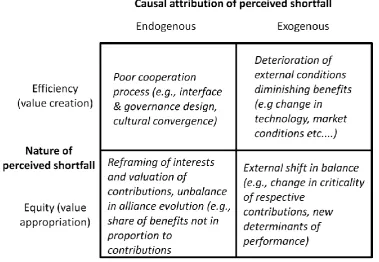
Figure 2.1: Mapping expectation shortfalls (Arino and Doz, 2000)
Figure 2.1 shows that internal and external factors can affect the collaboration, with changing market conditions and shifts in balance due to new technologies created by the companies outside of the remit of the partnership both potentially having negative effects. Whilst poor management and planning of the collaboration and changes in company strategy are the main internal factors that can undermine a horizontal collaboration partnership.
Saenz (2012) gave the following three reasons as being the chief pitfalls of implementing horizontal collaboration.
Problems in synchronizing supply chain processes and its dynamics.
Impaired supply chain visibility across the shared portion of the networks because one partner is lacking in this area.
Too much complexity in the supply chain – resulting from increased market volatility, for example – is making it difficult for one or both partners to maintain their
20
Many companies are unwilling or reluctant to collaborate with competitors at all due to the risk of compromising confidential information (Granot and Sosic, 2005). Trust is a necessary ingredient of any collaboration (Grossman, 2004) but is acutely evident in horizontal alliances where direct competitors are concerned.
Collaborative success requires companies to have a culture that is committed to collaboration (Barratt, 2004) as considerable time and resources are needed to establish, maintain and develop a collaboration (Anderson, 2001). This is particularly challenging for, but not limited to, smaller companies, as they are less likely to have the resources and time to undertake such collaboration. Cruijssen et al. (2007a) suggested that the costs of searching for partners and evaluating their fit and reliability have been found to be particularly problematic for smaller companies. If smaller companies do become involved in collaboration they are less likely to have the financial resources and time to find ideal partners, which may lead to lower satisfaction levels or they may only become involved due to being approached by a larger company and their bargaining position may mean they have little control over the project and may end up in a worse position than if they had not collaborated (Bleeke and Ernst, 1995). Koppenjan (2008) presented three reasons for the difficulty in determining the effectiveness of a horizontal collaboration partnership. These were as follows.
1) Collaboration involves many stakeholders who have their own implit and explicit expectations, interests, objectives and perceptions which will affect their evaluation of the collaboration.
21
3) Collaboration involves the development of new ways of working, which may have unforeseen implications and this may lead to the definition of the project scope or objectives.
Perceived or observed opportunistic behaviour by a partner can lead to one partner pulling out of the collaboration. Opportunistic behaviour can include cheating, shirking, distorting information, misleading partners, providing substandard products/services and appropriating partners’ critical resources (Das and Teng, 1998).
Emmett (2010) suggests that collaboration can be led into difficulties by the measurement of the wrong factors. This can lead to collaborations failing due to unrealistic targets or due to staff focusing on the wrong priorities. Koppenjan (2008) suggests that in most cases assessment of horizontal collaboration happens in an erratic and unstructured way, using ad hoc performance criteria which each partner develops separately. This can lead to the partners having very different ideas of how successful the collaboration is and what needs to be done in the future to meet the goals of the collaboration. This causes conflict and may even lead to the termination of the partnership.
There have been calls for the stricter monitoring of some forms of collaboration, with global investigations having been carried out into alleged price fixing by major cargo airlines (Zhang et al., 2007). Suspicions of these kinds make it more difficult for other companies to enter in horizontal collaboration due to the negative publicity that will be attracted by further alliances in the industry.
22
that only a small number remain and competition between them is very high. Also any horizontal collaboration between them might be seen as against the competition laws and not in the interests of customers or suppliers due to monopoly like conditions.
Retaining the momentum in a horizontal partnership can be difficult with some partnerships being formally announced and then very little happens and the partnership eventually dissolves into nothing. An example of this is the collaboration between Swissair and Singapore airlines in the 1990s which folded after a few years with no real results (Arino and Doz 2000).
A study on the benefits of different types of collaboration by Chan and Prakash (2012) actually showed that in some cases horizontal collaboration projects can have negative effects particularly in terms of individual company flexibility due to commitment of specific resources to the collaboration.
Carbone and Stone (2005) suggest that particularly in the cases where horizontal
collaboration is used to allow companies access to additional infra structure, they can only act as an expansion to services temporarily. They also warn that the stronger partner in the
alliance may become stronger and can therefore negotiate further bias into the agreement and in some cases may end up acquiring the weaker company. An example of this can be seen in the Railog collaboration between Schenker and Deutsch Bahn which was aimed at improving rail services, this partnership began in 2000 and ended in 2002 when Schenker acquired Deutsch Bahn, integrating it to become DB Schenker (DB Schenker 2012).
Interview based research carried out by Lydeka and Adomavicius (2007) gave the following solutions, suggested by respondents as to how best to overcome the roadblocks and
difficulties to horizontal collaboration.
23
2) Appoint a project leader who will take active leadership of the project and will push and coordinate other members of the collaboration as horizontal collaboration requires considerable effort and coordination.
3) Look at the collaboration from a business perspective, a number of respondents indicated that personal ambitions can hinder collaboration.
4) Build a detailed definition of the collaboration before beginning to collaborate to outline all interests and avoid later conflict.
5) Ensuring compliance, to avoid partners refusing to keep to their original promises, respondents indicated that formal agreements should be made.
2.5 Factors Necessary for Successful Collaboration
A considerable number of the papers on horizontal collaboration consider the factors, needed for a company to implement horizontal collaboration effectively or study a particular subsection of factors for example Vilana and Rodriguez-Monroy (2010) focuses solely on the cultural mechanisms whilst Kumar and Seth (1998) focus on control mechanisms. This section will start with a review of individual points made by different authors and will then move on to discuss the different models developed for factors needed for a collaboration to be successful.
2.5.1 Individual Factors discussed in the Literature
The most important factor for any collaboration is that the companies involved share a single/ a number of common goals (Chan and Prakash 2011). Without clear common shared goals, it is unlikely that a horizontal collaboration project will get past the negotiation stage.
24
partnership is likely to fail due to the findings being applied to exactly the same market. Chakravarty and Zhang (2007) suggest that complementary expertise is crucial for horizontal collaboration to be successful.
Steinicke et al. (2012) found that in the logistics industry cultural similarity has a larger positive effect on equity based collaborations such as the setting up of a joint venture than on non-equity based collaborations such as freight consolidation
Gulati (1995) suggests that companies are more willing to collaborate with companies who can shows that they have been involved in a similar form of collaboration previously, as this suggests that a company is trustworthy and capable of sustaining a partnership.
Previous collaboration expertise can also be attractive to potential partners as it suggests that the company already has the management knowledge to implement and run an effective collaboration, with better day-today management and joint leveraging operational knowledge, which in turn leads to lower coordination costs (Sampson 2005 and Hoang Rothaermel 2005). Through a survey of small Turkish companies, Morris et al. (2007) found that the factors SMEs consider the most important when considering whether to partner with a particular company are whether the company is perceived to be honest and reliable, whether the partner is likely to be loyal to the relationship and honour their commitments.
Steinicke et al. (2012) suggest that an important feature of horizontal collaboration is that managers should, when implementing horizontal collaboration, no longer focus on how to protect their knowledge from their competitors by impeding information flows. For horizontal collaboration to be successful companies need to share information so that the best solutions for all parties are reached.
25
they felt their company was too small to collaborate which they believed to be due to lack of available management time that could be spent on implementing horizontal collaboration. In an additional paper, Cruijssen et al. (2007b) they suggest this may also be due to smaller companies being more likely to operate in niche markets making collaboration more difficult. Oke and Idiagbon-Oke (2010) suggest that it is more common for horizontal collaboration partnerships to display a symmetric balance of power between partners than it is for vertical collaborations to display a symmetric balance of power. It is unlikely that companies would be willing to collaborate with direct or even potential competitors if they thought the other company held the majority of the power in the collaboration. Whereas, in vertical collaborations the larger partner may have the power to force its suppliers or customers to collaborate with it if they want to keep doing business with them (Hingley 2005).
2.5.2 Models for Successful horizontal collaboration implementation
26
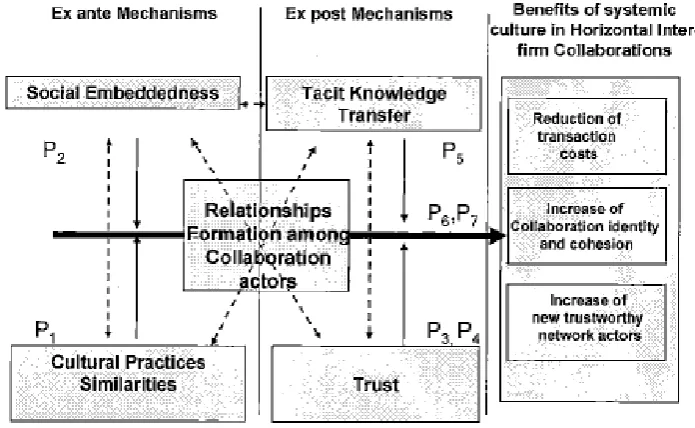
Figure 2.2: Conceptual framework of systematic culture in horizontal inter-firm collaborations (Vilana and Rodriguez-Monroy., 2010)
Figure 2.2 suggests that for horizontal collaboration to be successful there are four main cultural factors that must be met. Firstly, there must be some level of social embededness, the companies must have had a certain level of interaction before they will be able to collaborate effectively, this suggests that companies start with small scale collaborations and build up to the more intense types of collaboration. Goerzen (2007) suggests that collaboration between companies is likely to ‘snowball’, with companies collaborating repeatedly and in more in depth projects.
[image:43.595.119.467.86.300.2]27
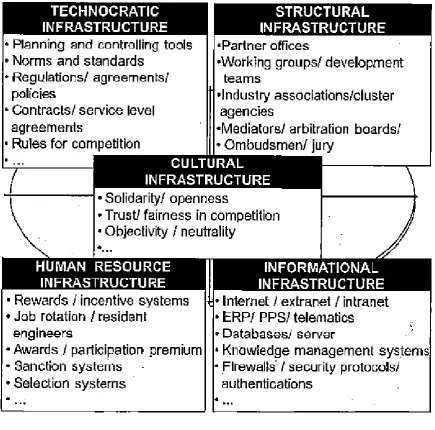
Figure 2.3: Management infrastructures for co-opetition in manufacturing networks (Ehrenmann and Reiss 2011)
Figure 2.3 suggests that there are five main factors that companies need to have in place for effective collaboration. Firstly, the collaboration needs technocratic infrastructure which relates to the conditions of the collaboration and the monitoring of the inputs into the collaboration and the results of the collaboration. As mentioned in the previous section measuring the wrong results can lead to failure of the collaboration.
[image:44.595.86.522.73.503.2]28
Vilana et al. (2010) show through case studies that an effective way of dealing with cultural differences between partner companies is for each company to form identical and specific departments to interface with their own company and the partner company
Thirdly, cultural infrastructure refers to the openness and trust needed for a collaboration to succeed. All collaborations need a basic level of trust to exist between the partners for the collaboration to be successful (Blomqvist et al., 2005). There also needs to be a level of openness between the companies to allow for information sharing.
Fourthly, all collaborations will involve some members of the collaborating companies working directly and indirectly on the project.
Fifthly, information systems, many companies have complex information systems to allow customers to view information on their orders. Whether the collaboration is customer facing or non customer facing it is important that the companies’ information systems can communicate efficiently. However, it is as equally important for companies that whilst allowing their partners access to collaboration data they do allow them access any data related to the ways they compete with their partner.
Reniers et al. (2010) propose a set of twelve parameters that all companies should consider before entering into a collaborative partnership of horizontal or vertical nature, as these will affect whether or not the collaboration is a success. These are as follows
1) Cultural fit, this refers to the human aspects or soft factors of the companies.
2) Internal stakeholder support, internal management support and overall company support is needed to avoid conflict on an intra and inter organisation basis through the collaboration.
29 4) Inter organisational trust
5) Former partnerships and experiences
6) Level of supplementary/complementary services
7) Benchmark results concerning a potential partner, a strengths, weaknesses, opportunities and threats (SWOT) analysis can be useful to check the fit of the partnership.
8) External willingness to collaborate, companies must believe that their partners want to be involved and carry on the partnership for it to last long enough to generate results. 9) External financial position, companies should check that potential partners will
continue to be financially viable.
10) External knowledge, there should be the potential for knowledge transfer in any partnership.
11) External flexibility, for a collaboration to be successful partners must be willing to adapt and change in order to gain the optimal results and benefits from the collaboration.
The study then went on to survey practitioners to find how the importance of these eleven factors differed across horizontal and vertical collaborations. The most important factors for horizontal collaboration were found to be openness between companies, inter organisational trust, external flexibility and cultural fit between companies.
Ghisi et al. (2008) through interviews with retailers involved in horizontal collaboration identified both a number of criteria needed for collaboration to occur and the four important steps involved in the setting up of a successful horizontal collaboration partnership. The minimum criteria that were identified are as follows.
1) Members have to perceive the existence of benefits
30
3) Common vision, direction and perspective between members 4) Commitment of partners to joint future actions and opportunities 5) Willingness to invest in innovation and modernisation
Point 2 is one that has been considered by much of the other literature on horizontal collaboration, with the idea of common vision and direction having been implied or mentioned briefly in the other studies considered. The other 3 points are less commonly cited, although points such as, members needing to perceive the existence of benefits are as obvious and necessary as the commonly cited points. Companies must see both potential benefits and these benefits must be high enough to justify the risk of horizontal collaboration before they will enter a collaboration project.
In the description of point 4, the commitment of partners, Ghisis et al. discuss the need for trust, one of the most commonly cited points and the need for companies to show willingness to make long-term commitments to the collaboration to allow it to develop and grow.
In terms of willingness to invest in innovation and modernisation, companies need to be willing to improve to match their partners standards in terms of technology and systems and horizontal collaboration can often be used to improve both companies effectiveness through the implementation of new infrastructure and management methods.
The four steps that Ghisi et al. concluded were necessary for the creation of a successful collaboration are.