Training primary health workers in mental health and its impact on diagnoses of common mental disorders in primary care of a developing country, Malawi: A cluster-randomised controlled trial.
By Dr. Felix Kauye a, Prof. Rachel Jenkins b, Prof. Atif Rahman c
a Clinical lecturer, College of Medicine and Director of Mental Health Services, Malawi
b Director of WHO Collaborating Centre, Institute of Psychiatry, Kings College, London
cChair of child and adolescent psychiatry, University of Liverpool
Abstract
Background – Mental health problems are common in primary care with prevalence rates of up to 40% reported in developing countries. The detection of psychiatric morbidity by primary care practitioners varies with most studies reporting over 50% of patients with psychiatric morbidity being missed or misdiagnosed. The aim of this study was to evaluate, using a cluster-randomised controlled trial design, the impact of a specially designed toolkit, used to train primary care practitioners in mental health, on the rates of diagnosed cases of common mental disorders, malaria and non-specific musculoskeletal pains in one of the 28 districts of Malawi.
Method – All 18 health clinics with outpatient services in the designated district were randomly divided into control and intervention arms. Using a two phase sampling process, baseline data on scores on the Self Reporting Questionnaire (SRQ), diagnoses made by primary care practitioners and results of the Semi structured Clinical Interview based on DSM IV (SCID) for depression, was collected on 837 adult consecutively attending patients in the pre-intervention study. The primary care practitioners in the intervention arm received training delivered through a specially designed toolkit whereas those in the control arm received routine training before collecting data on 2600 patients in the post intervention study.
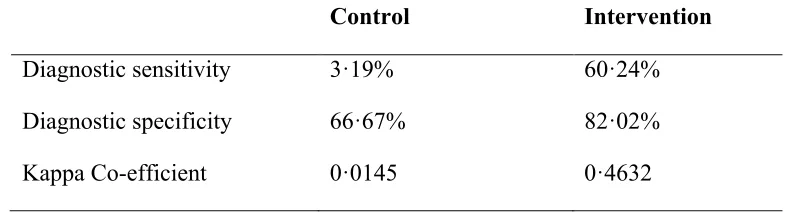
depression and anxiety while the control arm had more cases diagnosed with malaria. The diagnostic sensitivity and specificity for depression were 60·24% and 82·02% respectively in the intervention arm and 3·19% and 66·67% in the control arm.
Conclusion – Training of PHC workers in mental health with an appropriate toolkit will contribute significantly to the quality of detection and management of patients seen in primary care in developing countries and reduce wastage of resources which results from misdiagnosis.
Introduction
Mental disorders comprise a significant burden of diseases across the world including in developing countries. Surveys of community samples show that prevalence rates of
mental disorders range from about 10% to 25%1. Rates are even higher for primary care
attendees tending towards 15-30% and in some cases reaching as high as 45%1. A study
done in two centres in Kenya using the Self Reporting Questionnaire (SRQ) and the Standard Psychiatric Interview (SPI) found an average rate of psychiatric morbidity of
29%2. Anxiety and depression were the frequent diagnostic categories. In another study
done in East Africa in Tanzania looking at prevalence of common mental disorders among attendees in a primary health clinic and patients seeking care from a traditional healers, rates of 24% among primary health clinic attendees and of 48% of those seen by traditional healers were found3. A WHO study of psychological distress in general practice done in 15 countries found that the prevalence and detection rates of mental disorders were widely variable with an average of 24% for prevalence and 48.9% for
detection rate4. The World Health Organization (WHO) in 20025 estimated that
depression was the 4th leading cause of disability in Malawi coming after H.I.V., cataracts and malaria and one study done in Malawi found the prevalence of common
mental disorders in mothers attending postnatal clinics of 30%6.
Despite the high prevalence of mental disorders in developing countries, there are severe
shortages of mental health professionals. In contrast to developed countries where there is
a specialist psychiatrist for every 10,000 to 25,000 people7, ratios for most developing countries are low with Kenya having a ratio of 1: 522,388 in 2007.8 The World Health Organisation’s European region has 200 times as many psychiatrists as in Africa.9 The shortage of health professionals is not only restricted to mental health professionals and unlike in developed countries where primary health workers are general medical doctors, paramedics and nurses form the backbone of primary health care in developing countries.
workers in mental health by looking at the impact of the training package on rates of diagnosed cases of depression, anxiety and on rates of diagnosis of malaria and non-specific musculoskeletal pains in primary care in a developing country. The study is registered as ISRCTN.
Methods
Study area and participants
The study was done in Malawi which is located in Sub-Saharan Africa with an approximate area of 118 000 sq km. Its population is estimated at 13 Million and the
literacy rate is 69% for men and 59% for women.11 Administratively Malawi is divided
into 3 regions which are further divided into a total of 28 districts. The smallest health unit in Malawi is the Health Post which is manned by 1-3 health surveillance assistants who undergo a ten week course in public health. This serves a small number of villages with an average population of 2000 people. Next to the Health Post in the referral hierarchy is the Health Centre which is usually manned by Medical Assistants. Medical Assistants are paramedics who undergo two years of training in medical sciences and graduate with a certificate in medical sciences. A Health Centre normally caters for a population of around 22500 people. Problems which cannot be treated at the Health Centre are referred to the district hospitals which are present in all the 28 districts except three.
The sample frame was Machinga district (in the southern region of Malawi) which has a population of 459,000 people, served by 20 Health Centres and one district hospital. Two Health Centres were excluded from the study because they only offered maternity services with no general outpatient services. Thus 18 Health Centres with general outpatient services were included in the study and these included Health Centres run by the Ministry of Health and those run by the Christian Health Association of Malawi (CHAM). The Health Centre was chosen as the unit of randomisation and pair matching was done according to average daily attendance rates. Random allocation was done by a statistician from Liverpool in the U.K. who was not involved in the study and was unaware of the identity of the Health Centres. All 22 Medical Assistants working in the randomized Health Centres participated in the study.
Inclusion and Exclusion criteria
Consecutive adult attendees aged 16 and above at the Health Centres were recruited into the trial. Children and very ill patients were excluded from the study. These criteria were the same for both studies. Participants who took part in the baseline study were not included in the post intervention study.
Intervention group
Primary health workers in the intervention group underwent five-day training in mental health using a toolkit originally designed for Kenya where it has been used to train 2000 primary health workers. The toolkit, described in detail elsewhere7, 12, consists of five units. Unit one covers core concepts and unit two covers psychosocial skills. The third unit covers neurological disorders and the fourth unit covers psychiatric disorders whose
content is based on WHO primary care guidelines for mental health13, adapted for Kenya.
Unit five covers health sector and other sector system issues of policy; legislation; links between mental health and child health, reproductive health, HIV and Malaria; roles and responsibilities; health management information systems; working with community health workers and with traditional healers and integration of mental health into annual operational plans. The five-day training course is generally divided into 30 minute sections, each of which contains a short lecture, group discussion and role plays. This specially designed toolkit for Kenya was adapted and tested for use in Malawi. Changes made for Malawi included the development of treatment algorithms based on the text of the original toolkit and adaptation of the role plays to depict Malawian situations.
The trainings in the intervention arm were done by the leading author. Control group
PHC workers in the control group underwent a three-day training using a syllabus which has been used for a number of years to train primary health workers in mental health in Malawi. Contents of the syllabus include lectures on different psychiatric illnesses including the psychotic illnesses, mood disorders, anxiety disorders, substance abuse and psychiatric disorders secondary to general medical conditions. The trainings in the control arm were done by the longest serving psychiatric clinical officer from the national psychiatric hospital who has been practicing psychiatry in Malawi for the past 15 years since 1995.
Data ascertainment
Diagnosis of Common Mental Disorder
A two phase sampling process using the Self reporting Questionnaire (SRQ) in the first phase and the Semi-structured Clinical Interview for DSM IV (SCID) for depression in the second phase was used in the study.
The Self Reporting Questionnaire used in the study had 20 items. A cut off of 9 was used for this study because in a pilot study done eight months before the main study; this was found to give a good balance in terms of sensitivity, specificity and positive predictive value in this population.
SCID is a semi-structured interview for making most of the DSM IV axis I psychiatric diagnoses. It has been translated in a number of languages and there are at least 700
published studies in which the SCID was the diagnostic instrument used15. The section
on depression is the one which was used for this study. The SCID for Depression was used to measure the accuracy of the diagnosis of depression made by primary health workers by calculating the diagnostic sensitivity and specificity of depression.
Both the SRQ and SCID underwent a process of validation in Malawi which included translation, back translation, focus group discussions and testing16.
Diagnosis of Malaria and non-specific musculoskeletal pains
Malaria microscopy and rapid diagnostic tests are used as the gold standard to test for malaria. Since most Health Centres did not have laboratory facilities to confirm the diagnosis of malaria, the diagnosis of malaria was based on clinical assessments of the primary health workers with very few patients having malaria microscopy done. For patients who met the research tool diagnosis of depression and were diagnosed with malaria, their temperatures were measured to assess if they had fever or not as fever is a core feature of malaria although it is not a gold standard test for malaria.
Although non-specific musculoskeletal pains is not a diagnosis, in some developing countries like Malawi, this is put as a diagnosis and most patients who would normally be diagnosed as having medically unexplained symptoms are diagnosed with non-specific musculoskeletal pains. This accounts for about 4% of all diagnoses made in primary care in Malawi () and the diagnosis is based on clinical presentation.
Data collection procedure
Medical Assistants and the research team administering the SCID were blind to the patient’s SRQ score. Figure 1 is a diagram of the data collecting procedure.
Statistical analysis
For the baseline study, a formula recommended by WHO17 for determining sample sizes
in cohort studies was used. Based on this formula with a 5% significant level, 90% power and a 1·05 standardized design effect assuming intra class correlation of 0·05, a sample size of 806 was derived. Since this was a cluster randomised trial, this sample size was adjusted with a calculated design effect of 3·2 to give 2579 patients approximated to 2600 patients for the post intervention study.
Each Health Centre was allocated a number of patients for data collection depending on the average daily attendance rates. Once this number was reached for each Health Centre, the data collectors moved to the next Health Centre until data was collected for all 2600 patients.
To allow for the structure of the data, multilevel methods using STATA were used for the data analysis. Two-level models with individual patients nested within units were used rather than three levels nesting because the proportion of units with more than one practitioner per cluster was much small compared to that with one practitioner per unit. Multilevel regression methods were used as opposed to traditional regression methods because traditionally regression methods assume that all observations are independent of each other. This assumption is unlikely to be true for this data, as clusters of patients are obtained from the same units. It is likely that patients from the same unit will be more similar than patients from different units, thus violating the independence assumption. Failure to take account of the non-independence of the data can lead to incorrect estimates of the effect sizes, and also lead to the significance of the results being incorrect.
Diagnostic sensitivity for depression was calculated by dividing the number of true positive cases diagnosed by primary health workers with the total number of positives as identified by the research tool and multiplied by 100.
Ethical Approval
Patients were given verbal information read from an information sheet for patients and those who agreed to take part in the study gave a written consent. Those who could not write used the thumb print to sign the consent form.
Role of the funding source
Commonwealth Commission provided for the funds for the first author’s PhD studies and the funds for carrying out the research project came from the Ministry of Health in Malawi. Both sponsors had no role in the design, data analysis, data interpretation, writing of the report or in the decision to submit the report for publication. The corresponding author had full access to the data and final responsibility in the decision making including that of publication.
Results
Baseline study
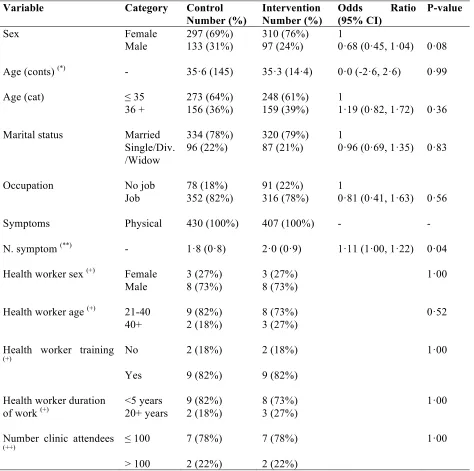
At baseline, analysis of predictors was done at three levels of patient, practitioner and clinic. Table 1 shows results of comparison of patient factors, practitioner and clinic factors.
There were no significant differences between the two arms as far as practitioner and clinic factors are concerned.
As can be seen from Table 1, there were no significant differences in all patient factors between the two arms apart from the number of symptoms presented by the patients. Patients in the intervention arm presented with more symptoms compared to patients in the control arm. The average number of presenting symptoms in the control arm was 1·8 while in the intervention arm was 2·0 (OR 1·11, p value 0·04). The highest number of symptoms presented by a single patient at baseline was five.
Diagnoses at baseline
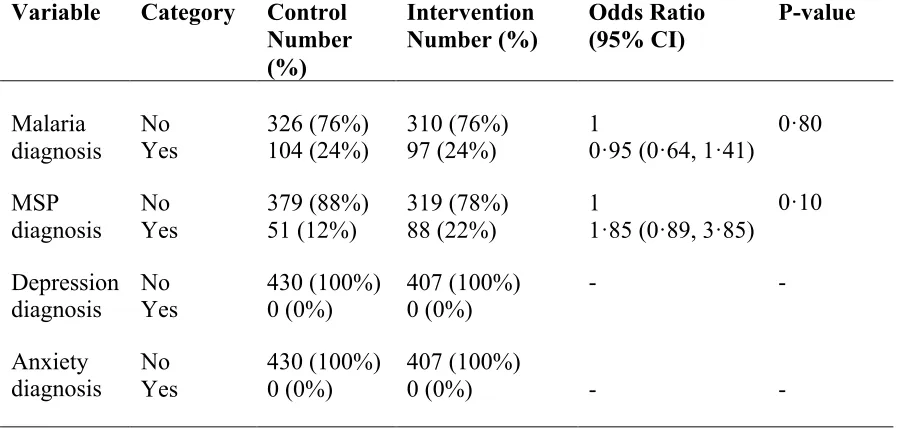
Malaria and non-specific musculoskeletal pains were the two common diagnoses as far as comparison between the diagnoses made by primary care practitioners and testing positive on the research tool for depression. Of the total number of patients who met the research tool diagnosis of depression at baseline, 31·0% were diagnosed with malaria by primary care practitioners while 14·3% were diagnosed with non-specific musculoskeletal pains.
Post Intervention study
Figure 2 shows the flow diagram of the post intervention study and Table 3 shows comparison of patient factors for the post intervention study. Since practitioner and clinic factors remained the same as at baseline, no comparison was done for these factors for the post intervention study.
The results of patient factors for the post intervention study show that there were no significant differences between the two arms in all of the patient factors unlike at baseline where there were significant difference in the number of presenting symptoms. The maximum number of presenting symptoms by a single patient for the post intervention study was seven.
Diagnoses in the post intervention study
Results of the main outcomes in the post intervention study (see table 4 and graph 1) show that there were significant differences in the rates of diagnosed cases of depression, anxiety and malaria between the two arms. There was a highly significant difference between control and intervention groups in the diagnosis of depression. The multilevel analysis indicated that the odds of a depression diagnosis in the intervention group were 32 times greater than the odds of depression diagnosis in the control arm. The occurrence of an anxiety diagnosis was also significantly higher in the intervention group than in the control group i.e. 1·2% of patients were diagnosed with anxiety in the intervention, compared to no patients in the control group. After adjusting for baseline differences, the odds of a malaria diagnosis were around 0·6 times as great in the intervention group relative to the control group. The difference in non-specific musculoskeletal pains between the two arms in the post intervention study had a p value of 0.06, just falling short of significance at the 5% level with a p value of 0·06 after adjusting for baseline differences.
The calculated kappa coefficient values were 0·0145 in the control arm and 0·4632 in the intervention arm and this means that PHC workers in the intervention arm were moderately good in making the diagnosis of depression in the post intervention study. The Intra-cluster Correlation Coefficients of the diagnoses made by the primary health workers of the four main outcomes were around 0·05 meaning that around 5% of the variation in the data was due to differences between units and the remaining variation was due to differences between patients.
Discussion
This cluster randomised controlled trial, using adequate sample size and with a high response rate, of training in primary health care, has shown that at baseline, before training, there were no patients diagnosed with anxiety or depression in the primary care clinics; and that use of an interactive standardised structured training toolkit adapted for Malawi has resulted in significant improvements in diagnostic ascertainment of depression and anxiety, with reduction in cases diagnosed with malaria.
The absence of health worker diagnosed anxiety and depression at baseline is in contrast to the epidemiological prevalence rates of common mental disorders generally found in
primary care2,3,4 or with the point prevalence rates for probable common mental disorder
and depression found at baseline in attendees of primary care in this study, which were 28·8% and 19% respectively, confirming that primary health workers in both arms were very poor at diagnosing common mental disorders at baseline.
Most of the patients who met the research tool diagnosis of depression at baseline were diagnosed by their health workers as having malaria and non-specific musculoskeletal pains. The lack of patients diagnosed by the health workers with common mental disorders at baseline is not consistent with epidemiological findings and misdiagnosis is the likely explanation.
while the 13 who had negative malaria parasites had the following diagnoses made by the primary health workers; 7 (54%) were diagnosed with depression, 3 (23%) were diagnosed with other physical illnesses which are not part of the four main outcome measures, 2 (15%) were diagnosed with non-specific musculoskeletal pains and 1 (8%) was diagnosed with depression and malaria.
The near significant difference of p=0·06 in the rates of diagnosed cases of non-specific musculoskeletal pains between the two arms in the post intervention study could either be as a result of a much lower sample size of patients diagnosed with non-specific musculoskeletal pains as compared to the numbers diagnosed with malaria or that erroneous misdiagnosis of non-specific musculoskeletal pains was not as significant as that of malaria.
Besides differences in the overall content, the toolkit used in the intervention arm differed from the normal training delivered in the control arm in the format of the delivery of the trainings. The format in the control arm was didactic and too theoretical while that in the intervention arm used integrated short lectures, group discussions and role plays. The toolkit also had sections on the link between physical illness and mental illness including the relationship between malaria and depression. Primary health workers in the intervention arm were also given treatment algorithms based on the toolkit which were produced as part of the adaptation process for Malawi. This indicates that training programmes which have been adapted to the local context are likely to be more effective than generic ones.
In 1975, the WHO carried out a Collaborative Study on Strategies on Extending Mental Health in developing countries () which involved training primary health workers in four countries of Colombia, India, Sudan and Philippines. Before the trainings, baseline data on the ability of the primary care practitioners to recognize patients with psychiatric morbidity was collected and this was also repeated after the trainings. Training packages differed from country to country due to the difference of cadres working in primary care. The trainings were based on what each country saw as priorities in their country. The duration of the trainings also varied from few hours to 60 hours. In summary, results of the diagnostic parameters as found in the four countries were as follows: (1) Colombia, sensitivity 18.8 pre training and 61.3 post training while specificity was 92.3 pre training and 82.5 post training (2) India, sensitivity 35.4 pre training and 23.2 post training while specificity was 95.5 pre training and 94.4 post training (3) Sudan, sensitivity was 26.2 pre training and 69.2 post training while specificity was 99.1 pre training and 98.9 post training and (4) Philippines, sensitivity was 46.3 pre training and 82.3 post training while specificity was 83.3 pre training and 85.1 post training.
with the results from the four countries, there were a number of differences between the studies in the four countries and the current study.
The first difference is that the studies in the four countries were not restricted to common mental disorders only in the evaluation and some countries like India included other diagnoses like psychosis and epilepsy which are easier to diagnose than depression. The other major differences involve the design of the evaluations in the four countries. The evaluations were not randomised controlled trials and used the pre/post design.
Another major problem with the evaluations in the four countries is the fact that the trainers had dual function of training and evaluating the impact of the trainings which could have led to bias in some cases.
Although there is need to carry out further research on the link between depression and malaria using laboratory tests and patient follow up, our study shows that for adult patients who present with malaria-like symptoms with no accompanying fever and with negative parasites, common mental disorders are an alternative diagnosis because of the presenting somatisation of these disorders. Out of the 3437 patients who participated in the baseline and post intervention data collection, only one patient presented with psychological symptoms during consultation. Screening for common mental disorders like depression in adult patients presenting with malaria-like symptoms but with no fever and negative parasites will go a long way in the detection of depression in primary care of developing countries. Another study done in Zimbabwe found that 40% of patients diagnosed with malaria had no fever20.
Poor detection and management of people with mental health problems means that most remain untreated and disabled leading to low productivity, high suicide rates, broken social relationships and contributing to the cycle of poverty in developing countries. In 2020, mental disorders are projected to increase to 15% of the global disease burden, and unipolar major depression could become the second leading factor in the disease
burden23. Feasible and cost-effective psychological treatment programmes for common
mental disorders24, 25 which do not need specialists can improve outcomes in the large number of persons with common mental disorders and reduce the large burden of illness from these disorders in developing countries.
Conclusion
References
1. Cohen A. The effectiveness of mental health services in primary care: the view from
the developing world. Geneva: World Health Organization, 2001.
2. Dhadphale A, Ellison AH, Griffin L. Frequency of Psychiatric disorders among
patients attending semi-urban and rural general out-patient clinics in Kenya. British Journal of Psychiatry (1983), 142,379-388.
3. Ngoma MC, Prince M, Mann A. Common mental disorders among those attending
primary health clinics and traditional healers in urban Tanzania. British Journal of Psychiatry 2003, 183(4):p.349-355.
4. Goldberg D, Gater R. Implications of the world health organization study of mental
illness in general health care for training primary care staff, British Journal of General Practice (1996), 46, 483-485.
5. Bowie C. The burden of diseases in Malawi, Malawi Medical Journal; 18 (3):
103-110 September 2006.
6. Stewart RC, Umar E, Kauye F, Bunn J, Vokhiwa M, Fitzgerald M, et al. Maternal common mental disorder and infant growth--a cross-sectional study from Malawi. Matern Child Nutr. 2008 Jul;4(3):209-19.
7. Jenkins R, Kiima D, Okonji M, Njenga F, Kingora J, Lock S. (2010) Integration of
mental health in primary care and community health workers in Kenya-context, rationale, coverage and sustainability. Mental Health in Family Medicine 7 (1), 37-47.
8. Ndetei D. Mental Healthcare Programs in Kenya; challenges and opportunities
International Psychiatry, 2008, vol 5, 2.
9. WHO. Mental Health Atlas. WHO; 2005.
10. Collins PY, Patel V, Joestl SS, March D, Insel TR, Daar AS, et al. 2011. Grand
challenges in global mental health. Nature, 475, (7354) 27-30. [PM:21734685]
11.http://www.nso.malawi.net/index.php?option=com_content&view=article&id=107%
3A2008-population-and-housing-census-results&catid=8&Itemid=6
12. Jenkins R, Kiima D, Njenga F, Okonji M, Kingora J, Kathuku D, et al. Integration of
mental health into primary care in Kenya, 2010 World Psychiatry 9, 118-120. 13. http://www.mentalneurologicalprimarycare.org/downloads.asp
14. Harding TW, De Arango MV, Baltazar J, Climent CE, Ibrahim HHA, Ladrido-Ignacio L, et al. Mental disorders in primary health care: a study of their frequency and diagnosis in four developing countries, Psychological Medicine 10, 231–241.
15. Structured Clinical Interview for DSM Disorders. Available on
http://www.scid4.org/faq/scidfaq.html
16. Stewart RC, Kauye F, Umar E, Vokhiwa M, Bunn J, Fitzgerald M, et al. Validation of a Chichewa version of the self-reporting questionnaire (SRQ) as a brief screening measure for maternal depressive disorder in Malawi, Africa. J Affect Disord. 2009 Jan;112(1-3):126-34.
17. Lwanga S, Lemeshow S. Sample size determination in Health Studies, A Practical manual, World Health Organisation, Geneva, 1991.
19. Zurovac D, Midia B, Ochola SA, English M, Snow RW. Microscopy and outpatient malaria case management among older children and adults in Kenya, Tropical medicine and International Health (2006), vol 11, no.4, 432-430.
20. Prince M, Patel V, Saxena S, Maj M, Maselko J, Phillips M, Rahman A. Global Mental Health Series 1. No Health without Mental Health. The Lancet. 2007; 370: 859-879.
21. Hammer DH, Ndhlovu M, Zurovac D, Fox M, Yeboah-Antwi K, Chanda P, et al.
Improved diagnostic testing and malaria treatment practices in Zambia, JAMA.
2007;297 (20):2227-2231.
22. A-Elgayoum SME, El-Feki AEA, Mahgoub BA, El-Rayah E-A, Giha HA. Malaria overdiagnosis and burden of malaria misdiagnosis in the suburbs of central Sudan: special emphasis on artemisinin-based combination therapy era, Diagnostic Microbiology and Infectious Disease Volume 64, Issue 1, May 2009, Pages 20-26. 23. Ustun TB. The global burden of mental disorders, American Journal of Public Health;
89(9), 1315-1319.
24. Bass J, Neugebauer R, Clougherty K, Verdeli H, Wickramaratne P, Ndogoni L, et al. Group interpersonal psychotherapy for depression in rural Uganda: 6-month outcomes, British Journal of Psychiatry (2006), 188, 567-573.
Exclusion criteria
All patients 10% patients 90% cases
Non- Cases
Positive for depression
Figure 1: Diagram of Study Procedure at Clinic Level
ALL ADULTS ATTENDING CLINIC
SRQ COMPLETED
NORMAL CONSULTATION: Clinician Diagnosis
POTENTIAL CASES ACCORDING TO SRQ SCORE > 9
NON-POTENTIAL CASES, SRQ SCORE < 9
SCID FOR DEPRESSION SCREENING NO FURTHER ACTION
REGISTER AS DEFINITE CASES FOR DEPRESSION
NO FURTHER ACTION
Age < 16 yrs. Refuse consent Very ill
Figure 2: Flow diagram of post intervention study Assessed for eligibility (20 practices)
Excluded: 2 practices (No outpatient services and manned by nurses)
Allocated to intervention (9 practices) Received allocated intervention 9 practices, median practice size = 1·∙22 Range 1-‐2, 11 medical assistants 1373 participants
Practices which did not receive allocated intervention (0 practices)
Allocated to control (9 practices) Received allocated intervention 9 practices, median practice size = 1·∙22 Range 1-‐2, 11 medical assistants 1356 participants
Practices which did not receive allocated intervention (0 practices)
Clusters: Analysed
9 practices, median practice size = 1·∙22 Range 1-‐2
Excluded from analysis (0 practices) Excluded from analysis; 73 (5·∙6 %) participants did not respond to questionnaires
1300 (94·∙68 %) participants analysed
Clusters: Analysed
9 practices, median practice size = 1·∙22 Range 1-‐2
Excluded from analysis (0 practices) Excluded from analysis; 56 (4·∙3 %) participants did not respond to questionnaires
1300 (95·∙87 %) participants analysed
Randomised (18 practices) ENROLMENT
ALLOCATION
Table 1: Comparison of patient, practitioner and clinic factors between the two arms at baseline
Variable Category Control
Number (%)
Intervention Number (%)
Odds Ratio
(95% CI)
P-value
Sex Female 297 (69%) 310 (76%) 1
Male 133 (31%) 97 (24%) 0·68 (0·45, 1·04) 0·08
Age (conts) (*) - 35·6 (145) 35·3 (14·4) 0·0 (-2·6, 2·6) 0·99
Age (cat) ≤ 35 273 (64%) 248 (61%) 1
36 + 156 (36%) 159 (39%) 1·19 (0·82, 1·72) 0·36
Marital status Married 334 (78%) 320 (79%) 1 Single/Div.
/Widow
96 (22%) 87 (21%) 0·96 (0·69, 1·35) 0·83
Occupation No job 78 (18%) 91 (22%) 1
Job 352 (82%) 316 (78%) 0·81 (0·41, 1·63) 0·56
Symptoms Physical 430 (100%) 407 (100%) - -
N. symptom (**) - 1·8 (0·8) 2·0 (0·9) 1·11 (1·00, 1·22) 0·04
Health worker sex (+) Female 3 (27%) 3 (27%) 1·00
Male 8 (73%) 8 (73%)
Health worker age (+) 21-40 9 (82%) 8 (73%) 0·52
40+ 2 (18%) 3 (27%)
Health worker training
(+) No 2 (18%) 2 (18%) 1·00
Yes 9 (82%) 9 (82%)
Health worker duration <5 years 9 (82%) 8 (73%) 1·00 of work (+) 20+ years 2 (18%) 3 (27%)
Number clinic attendees
(++) ≤ 100 7 (78%) 7 (78%) 1·00
> 100 2 (22%) 2 (22%)
(*) Mean and standard deviation reported in each group. Mean age difference (95% CI) reported (**) Mean and standard deviation reported in each group. Incidence rate ratio (95% CI) reported (+) One observation per health worker used in the analysis
[image:16.612.69.543.142.613.2]Table 2: Results of main outcomes at baseline Variable Category Control
Number (%)
Intervention Number (%)
Odds Ratio (95% CI)
P-value
Malaria
diagnosis No Yes 326 (76%) 104 (24%) 310 (76%) 97 (24%) 1 0·95 (0·64, 1·41) 0·80 MSP
diagnosis
No Yes
379 (88%) 51 (12%)
319 (78%) 88 (22%)
1
1·85 (0·89, 3·85)
0·10
Depression
diagnosis No Yes 430 (100%) 0 (0%) 407 (100%) 0 (0%) - -
Anxiety diagnosis
No 430 (100%) 407 (100%)
Yes 0 (0%) 0 (0%) - -
Table 3: Results of main outcomes in the post intervention study
(*) No baseline adjusted analysis possible, as no diagnoses of depression at baseline
(**) Analysis using Fisher's exact test, as no anxiety diagnoses in control group. No baseline adjusted analysis possible, as no diagnoses of anxiety at baseline
Variable Category Control Number (%)
Intervention Number (%)
Unadjusted OR (95% CI) [p-value]
Adjusted OR (95% CI) [p-value] Malaria diagnosis No Yes 779 (60%) 521 (40%) 897 (69%) 403 (31%) 1
0·56 (0·37, 0·86) [p=0·007]
1
0·62 (0·43, 0·89) [p=0·01]
MSP diagnosis No Yes 1202 (92%) 98 (8%) 1160 (89%) 140 (11%) 1
1·24 (0·71, 2·16) [p=0·46]
1
0·62 (0·39, 1·01) [p=0·06]
Depression Diagnosis (*)
No
Yes 1294(100%) 6 (1%) 1181 (91%) 119 (9%) 1 32·1 (7·4, 144·3) [p<0·001]
-
Anxiety Diagnosis (**)
No 1300
(100%)
1284 (99%)
Table 4: Results of diagnostic parameters for depression
Control Intervention
Diagnostic sensitivity 3·19% 60·24%
Diagnostic specificity 66·67% 82·02%
Kappa Co-efficient 0·0145 0·4632
[image:19.612.123.519.110.217.2]