2012
Viewing a world of disaster through the eyes of
faith: The influence of religious worldviews on
community adaptation in the context of
disaster-related vulnerability in Indonesia
Caleb M. Call
Iowa State University
Follow this and additional works at:https://lib.dr.iastate.edu/etd
Part of theAsian Studies Commons,International Relations Commons,Near Eastern Languages and Societies Commons, and theSociology Commons
This Thesis is brought to you for free and open access by the Iowa State University Capstones, Theses and Dissertations at Iowa State University Digital Repository. It has been accepted for inclusion in Graduate Theses and Dissertations by an authorized administrator of Iowa State University Digital Repository. For more information, please [email protected].
Recommended Citation
Call, Caleb M., "Viewing a world of disaster through the eyes of faith: The influence of religious worldviews on community adaptation in the context of disaster-related vulnerability in Indonesia" (2012).Graduate Theses and Dissertations. 12289.
Viewing a world of disaster through the eyes of faith: The influence of religious worldviews on community adaptation in the context of disaster-related vulnerability in
Indonesia
by
Caleb M. Call
A thesis submitted to the graduate faculty
in partial fulfillment of the requirements for the degree of
MASTER OF SCIENCE
Major: Interdisciplinary Graduate Studies (International Development Studies)
Program of Study Committee: Cornelia Flora, Major Professor
Grant Arndt Hong Qu Steven Fales
Iowa State University
Ames, Iowa
2012
TABLE OF CONTENTS
LIST OF FIGURES………..iv
LIST OF TABLES……….…v
ABSTRACT……….vi
CHAPTER 1: OVERVIEW ... 1
Introduction: Indonesia, Religious Worldviews, Climate Change, and International Development ... 1
Interdisciplinary International Development Studies Program... 4
Explanation of Change in Research Plans ... 5
Original research design. ... 5
Change in research. ... 7
Research Questions and Conceptual Hypotheses ... 8
CHAPTER 2: REVIEW OF LITERATURE ... 10
Religious Worldviews ... 10
Definition and dimensions of worldview. ... 10
Religious worldviews and religiosity... 11
Religious worldviews and international development. ... 16
Religious worldviews and community development. ... 21
Religious worldviews and decision-making. ... 27
Religious worldviews, natural disasters, and climate change. ... 32
Religious worldviews and Indonesia. ... 34
Natural Disasters ... 55
Natural disasters and international development. ... 55
Climate change and international development. ... 55
Natural disasters in Indonesia. ... 57
Climate change and Indonesia. ... 64
Adaptation ... 66
Definition and dimensions of adaptation-related concepts. ... 66
Community-based adaptation. ... 69
Cultural dimensions of adaptation. ... 69
Adaptation efforts in Indonesia. ... 74
CHAPTER 3: METHODS AND PROCEDURES ... 78
Type of Study: Quantitative Analysis of Secondary Data ... 78
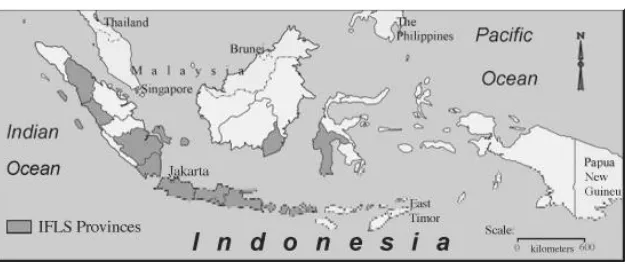
Indonesian Family Life Survey (IFLS). ... 78
IFLS4: sample for this study. ... 82
Variables ... 83
Adaptation – dependent variable. ... 83
Disaster – independent variable. ... 84
Religiosity – independent variable... 85
Other independent variables. ... 93
Statistical Procedures and Tests Used to Analyze Data... 93
Limitations of the Data ... 93
CHAPTER 4: RESULTS ... 96
Univariate and Bivariate Statistics ... 96
Community and disasters statistics. ... 96
Individual religiosity statistics. ... 97
Community religiosity statistics. ... 102
Adaptation statistics. ... 103
Bivariate correlations. ... 105
Regression Models ... 106
Logistic regression for predictors of Adaptation Awareness. ... 106
Multiple regression for predictors of Adaptation Action. ... 109
CHAPTER 5: SUMMARY AND DISCUSSION ... 111
Summary of Findings ... 111
Discussion of Results ... 111
Social capital. ... 114
Cultural capital. ... 116
Implications for International Development ... 116
Implications for Community Adaptation ... 118
Beliefs matter. ... 118
Urban-rural dynamics. ... 119
Policy Implications for Indonesia ... 120
APPENDIX: ADDITIONAL MATERIAL ... 124
BIBLIOGRAPHY ... 129
LIST OF FIGURES
LIST OF TABLES
Table 1: Summary of Data Collection ... 6
Table 2: Proposed Interview Guide for Semi-Formal Interviews ... 7
Table 3: Worldview Dimensions of Agricultural Decision-Making ... 31
Table 4: Total Number and Percentage of Regencies/Municipalities in Indonesia ... 64
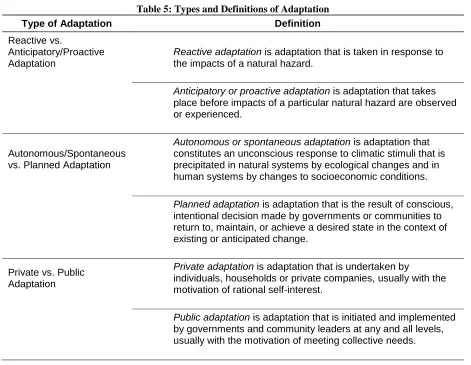
Table 5: Types and Definitions of Adaptation ... 68
Table 6: Per Community Sample of Individuals for Religiosity Data ... 86
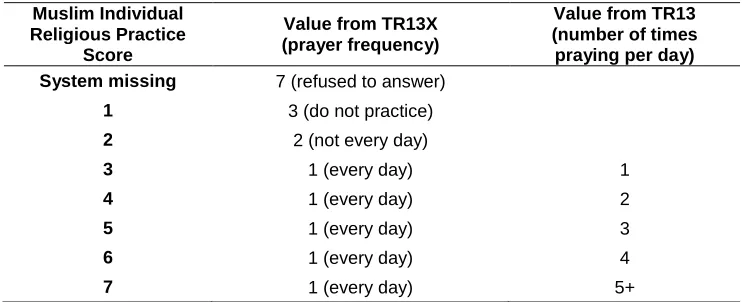
Table 7: Muslim Individual Religious Practice Score ... 89
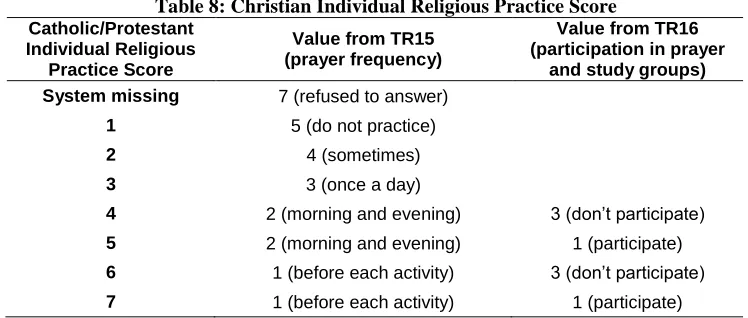
Table 8: Christian Individual Religious Practice Score ... 90
Table 9: Hindu Individual Religious Practice Score... 90
Table 10: Buddhist Individual Religious Practice Score ... 91
Table 11: Confucian Individual Religious Practice Score ... 91
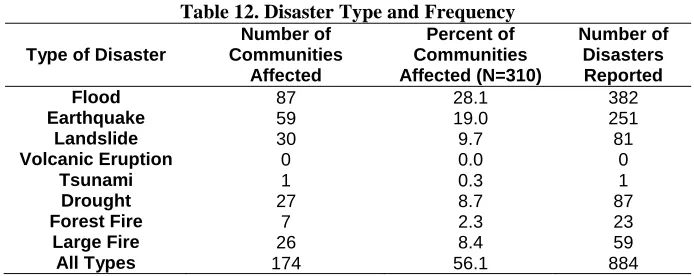
Table 12. Disaster Type and Frequency ... 96
Table 13: Urban-Rural Distribution of Disasters ... 96
Table 14: Self-Reported Religiosity by Religious Affiliation ... 97
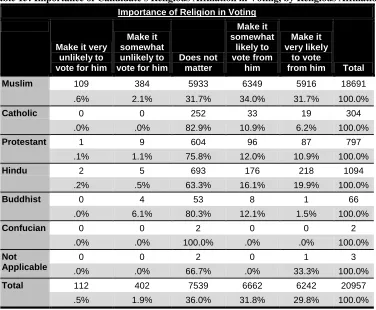
Table 15: Importance of Candidate's Religious Affiliation in Voting, by Religious Affiliation ... 98
Table 16: Importance of Candidate's Religiosity in Voting, by Religious Affiliation ... 99
Table 17: Descriptive Statistics for Religious Values Index ... 99
Table 18: Descriptive Statistics for Individual Religious Practice Score, by Religious Affiliation ... 100
Table 19: Descriptive Statistics for Individual Religiosity Factor Score ... 100
Table 20: Participation in Community Religious Activity, by Religious Affiliation ... 101
Table 21: Correlations for Individual Religiosity Indicators ... 102
Table 22: Descriptive Statistics for Individual and Communal Religiosity Scores ... 103
Table 23: Experience of Disaster and Disaster Preparedness Briefings ... 103
Table 24: Source of Disaster Preparedness Briefings ... 104
Table 25: Descriptive Statistics Adaptation Action Score ... 104
Table 26: Distribution of Types of Adaptation Action ... 105
Table 27: Bivariate Correlations for Key Variables ... 106
Table 28: Logistic Regression Coefficients Showing the Logged Odds of Receiving a Disaster Preparedness Briefing (Adaptation Awareness) ... 108
Table 29: Multiple Regression Models for Adaptation Action ... 109
Table 30: Survey Instrument for Disaster Variable ... 124
Table 31: Survey Instrument for Self-Reported Individual Religiosity (Sub-Dimension #1 of Individual Religiosity) ... 124
Table 32: Survey Instrument for Individual Religious Values (Sub-Dimensions #2 of Individual Religiosity) ... 125
Table 33: Survey Instrument for Individual Religious Practice (Sub-Dimension #3 of Individual Religiosity) ... 125
Table 34: Survey Instrument for Communal Religiosity ... 127
ABSTRACT
Natural disasters pose a ubiquitous threat to communities around the world.
Communities perceive, understand, anticipate, and make meaning of disaster risks through
the lens of their worldview. In many regions of the world, religious beliefs and practices
contribute to the shaping of worldview, hence affecting the attitudes, decisions, and
behaviors of a particular community. This study examines the impact of religiously-derived
worldviews on community response and adaptation in the disaster-prone nation of Indonesia.
Using data from the Indonesian Family Life Survey Fourth Wave, this study confirms that
the “religiousness” of a worldview makes a difference in community-level action. The
average religiosity of individuals in a community impacts the likelihood that tangible
measures will be taken by the community to reduce their vulnerability to future disasters. In
a community with more religious individuals, the likelihood that adaptive measures will be
taken is lower, potentially due to fatalistic attitudes and beliefs regarding the locus of control
over disasters and their impacts. The degree of participation in community religious
activities does not appear to impact the likelihood of adaptive measures being undertaken by
the community. Religiosity exhibits less influence on adaptation than other factors, such as
the number of disasters a community has experienced, the occurrence of briefings about
disaster preparedness, and the urban-rural location of the community. A “disaster awareness
culture,” including tangible actions for anticipatory adaptation, is more likely to arise in
communities that have experienced disasters and been briefed regarding disaster
preparedness. Furthermore, urban communities are more likely than rural communities to
CHAPTER 1: OVERVIEW
Introduction: Indonesia, Religious Worldviews, Climate Change, and
International Development
Human decisions cannot be understood in isolation from the deeply held beliefs and
values that guide, motivate, and mobilize our relations with each other, the natural
environment, and the spiritual realm. Understanding more explicitly the association between
a community’s particular religious beliefs and worldview, and the specific perceptions,
attitudes, and practices that materialize from that worldview is essential for predicting a
community’s adaptive response to natural and planned change.
In this thesis I undertake to explore the influence of religiously-based worldviews on
community decision-making in the context of natural disaster-related vulnerability. With
strong religiosity and increasingly frequent and destructive natural disasters, Indonesia is a
prime site to study this nexus of religion, worldview, natural disasters, and adaptive
decision-making. I originally planned to conduct a comparative two-case study in two villages, one
predominantly Christian and the other predominantly Muslim, in the uplands of Central Java.
However, due to various constraints, I instead utilized quantitative information from the
Indonesia Family Life Survey Fourth Wave (IFLS4) to illustrate the role of religious
worldviews in influencing community-based action to reduce vulnerability to future
disasters. While IFLS data is unable to sufficiently describe in detail the social, economic,
environmental, political, cultural, and religious context of decisions made by a particular
community, its large sample size allows for analysis that recognizes trends across diverse
as the emphasis of the Indonesian government in proactively planning for climate-related and
other natural disasters (National Agency for Disaster Management, 2010b; Surapranata,
2010), makes vital the exploration of religious, cultural, and social dimensions of adaptation
strategies.
Writing a history of Indonesia since 2004, well-known Indonesian historian Ricklefs
(2008) claims that “the period (2004-2008) has been characterized particularly by a dreadful,
deadly series of national disasters, and conflicts and controversies in the realm of religion”
(p. 404). Disasters and religions shape the course of nations. Understanding the interplay
between these two phenomena is therefore essential to international development studies, yet
remains nearly untouched by academic scholarship. Chester (2005) notes, “In view of the
continuing importance of religious beliefs within the worldviews of so many victims of
disaster, dialogue between scientists, social scientists, theologians and members of faith
communities is a potentially fruitful research frontier, as yet almost completely
un-researched” (p. 325).
Religion is prominent in Indonesia, the fourth most populated country in the world
with 248 million citizens spread across an archipelago of 17,500 islands (CIA World
Factbook, 2012). The country is approximately 86% Muslim, giving it the highest number of
Muslims of any country in the world. The Indonesian constitution states that the nation is
based upon the belief in the one supreme God, while at the same time assuring all persons the
right to worship according to their own religion or belief. All citizens must claim one of six
religions on their national identity card: Islam, Buddhism, Hinduism, Catholicism,
Indonesia is prone to natural disasters. In Indonesia’s dense human population and
geographical characteristics – including its position in the “Pacific Ring of Fire” and its vast
lowland flood plains – natural hazards encounter vulnerable human society to create the
potential for destructive natural disasters. Dominant disaster hazards in Indonesia include
earthquakes, tsunamis, landslides, volcanic eruptions, floods, and drought (National Agency
for Disaster Management, 2010b). The 1815 Tambora volcanic eruption and the 1883
Krakatau volcanic eruption, considered two of the world’s biggest volcanic eruptions in
recorded history, occurred in Indonesia (National Agency for Disaster Management, 2010a).
In the deadliest disaster worldwide of the young twenty-first century, the 2004 earthquake
and resultant tsunami near North Sumatra and Aceh killed a confirmed 110,229 people
(estimated 165,708 people), displaced over 700,000 people, and caused USD 4.45 billion in
damages and losses in Indonesia (BAPPENAS and the International Donor Community,
2005). Since 2004 additional disasters have struck Indonesia, including the 2005 earthquake
in Nias Island that killed over 1,000 people, the 2006 earthquake in Yogyakarta that killed
over 5,700 people, the 2009 collapsed dam in Banten that killed 82 people, the 2010 tsunami
in Mentawai that killed 435 people, the 2010 eruption of Mt. Merapi that killed 353 people,
and numerous other natural disasters that have caused human, material, and economic loss
(National Agency for Disaster Management, 2010b).
Climate change is exacerbating the occurrence of meteorological and hydrological
disasters in Indonesia (National Agency for Disaster Management, 2010b). Climate change
consists of changed weather patterns including averages, extremes, timing, and spatial
distribution of temperature, precipitation, humidity, evaporation, and extreme weather events.
(ENSO), which occurs with increased frequency due to a changing climate, are already
increasing the frequency of droughts and floods in Indonesia, hence disrupting agricultural
production and threatening the food security of millions of low-income Indonesians in rural
communities (Asian Development Bank, 2006; Surapranata, 2010).
The influence of religion and religious worldviews on natural disaster adaptation
strategies in communities is of great importance in Indonesia. Communities in Indonesia
interpret and respond to disasters and disaster risks through their particular worldview,
which, according to national ideology, is likely fundamentally derived from a monotheistic
religion. Efforts by national and local governments, as well as that of NGO, academic, and
civil society groups, to increase the capacity of communities to respond to, rebuild from, and
prepare for natural disasters must consider the role of religious worldviews in shaping the
decisions made by individuals and communities. Development policy and strategy decisions
concerning adaptation must incorporate more thorough information regarding the drivers of
community decisions.
Interdisciplinary International Development Studies Program
In choosing Iowa State’s interdisciplinary graduate studies program with an emphasis
in international development, I commenced my study with the plan to take courses in
Sociology, Anthropology, and Religious Studies. Due to the limitation of relevant courses in
Anthropology and Religious Studies, my program of study included only one course from
these two disciplines, but expanded to include courses from Agronomy and Statistics in
addition to a heavier Sociology curriculum. The multidisciplinary nature of my studies
allowed me to examine religious worldviews, climate change, and international development
problem solving and analysis. This thesis reflects the contributions of multiple disciplines to
the analysis of the particular intersection of religious worldviews, natural disasters, and
adaptation.
Explanation of Change in Research Plans
The specific research design and methodology employed in this thesis differs greatly
from what I originally envisioned. Although the topics of the original study were preserved
in my approach outlined below, the methodology utilized was quantitative rather than
qualitative.
Original research design.
In my original research design, I planned to conduct an ethnographic case study. The
case study strategy is appropriate for “how” and “why” questions (Yin, 2003) because it
encompasses the gathering of multiple types of data, including information about meaning,
incidents and histories, and distributions and frequencies. Understanding how a
locally-formed worldview affects the assumptions, attitudes, decisions, and actions of farming
households and communities in response to climate change requires a thorough, detailed
picture of farmer and village life that is insufficiently represented through survey data alone.
This original study would have created two cases of farmer communities from
upland, predominantly agricultural Javanese villages that are proximately located. I already
had contacts in one village, Desa Kenalan, and planned to select this village as one “case”
and find a nearby village as a second case. This village is located on the edge of forest, is
greatly impacted by the erosion caused by extreme rainfall events, and has a unique cultural
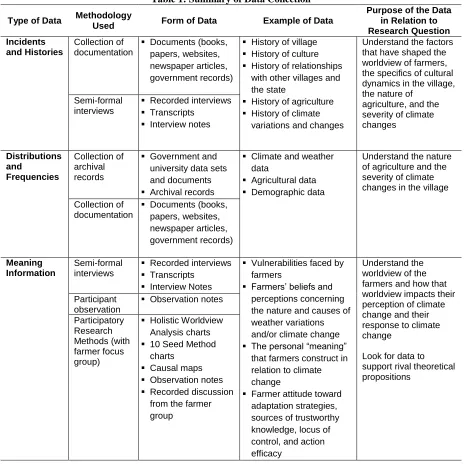
collecting multiple types of data through various research data collection techniques, I had
hoped to paint a rich, contextual picture that would have provided a deepened understanding
of this highly abstract, subconscious concept of local worldview. Table 1 contains
[image:13.612.84.548.220.686.2]descriptions of data that would have been collected.
Table 1: Summary of Data Collection
Type of Data Methodology
Used Form of Data Example of Data
Purpose of the Data in Relation to Research Question Incidents
and Histories
Collection of documentation
Documents (books, papers, websites, newspaper articles, government records)
History of village History of culture History of relationships
with other villages and the state
History of agriculture History of climate
variations and changes
Understand the factors that have shaped the worldview of farmers, the specifics of cultural dynamics in the village, the nature of
agriculture, and the severity of climate changes
Semi-formal interviews
Recorded interviews Transcripts
Interview notes
Distributions and Frequencies Collection of archival records
Government and university data sets and documents Archival records
Climate and weather data
Agricultural data Demographic data
Understand the nature of agriculture and the severity of climate changes in the village
Collection of documentation
Documents (books, papers, websites, newspaper articles, government records) Meaning Information Semi-formal interviews
Recorded interviews Transcripts
Interview Notes
Vulnerabilities faced by farmers
Farmers’ beliefs and perceptions concerning the nature and causes of weather variations and/or climate change The personal “meaning”
that farmers construct in relation to climate change
Farmer attitude toward adaptation strategies, sources of trustworthy knowledge, locus of control, and action efficacy
Understand the worldview of the farmers and how that worldview impacts their perception of climate change and their response to climate change
Look for data to support rival theoretical propositions
Participant observation
Observation notes
Participatory Research Methods (with farmer focus group)
Holistic Worldview Analysis charts 10 Seed Method
charts Causal maps Observation notes Recorded discussion
In-depth interviews, which would have required the assistance of an Indonesian
co-researcher, would have been the primary means of data collection. The questions in Table 2
were an initially proposed interview guide for semi-formal interviews.
Table 2: Proposed Interview Guide for Semi-Formal Interviews
1 Tell me about yourself and your farm. What about your farm makes you proud?
2 How and why has the weather changed in the past few years? Tell me what you know.
3 How have recent changes in weather affected your farming practices?
4 Name a specific agricultural problem you have faced. Walk me through the causes and effects of the problem, and how you responded to and handled that problem.
5
Who do you trust for accurate information about how to handle problems associated with climate change? Yourself, other farmers, religious leaders, government workers, other outsiders, God, etc.? Why do you trust/not trust them?
6 Name someone in the community who is the “ideal farmer.” What makes him/her an ideal farmer? How has he/she responded to changing weather patterns?
Each interview would have been qualitatively analyzed through open, axial, and
selective coding. Through this process I would have identified primary themes and
sub-categories that emerged from the data concerning my research question. I would have
performed an analytic comparison between the two cases using the method of agreement and
method of difference. From these findings I would have sought to create grounded theory
that explains why farmer responses to climate change are similar or different between the two
cases.
Change in research.
After establishing contact with several Indonesian researchers, I identified one
researcher who was willing to collaborate with me to facilitate my research. However, after
State University throughout the Fall 2011 semester, no official agreement had been reached
between the two parties by late 2011. Therefore, due to the time constraints of my master’s
program, I opted to forego this opportunity to do field research in Indonesia and to instead
utilize secondary data from the Indonesian Family Life Survey to perform quantitative
analysis. Chapter 3 below explains in detail the resulting research methodology.
Research Questions and Conceptual Hypotheses
Multiple factors potentially shape the decisions of communities to take adaptive
measures to reduce their vulnerability in anticipation of future disasters. Jungian theory
states that our perceptions as individuals and communities are more likely to be influenced
by experience than knowledge and faith (Jung, 1959). Studying opinions and perceptions of
seismic risk in Islamic regions of Morocco, Paradise (2005) contradicted this assumption,
instead finding that Islamic training, ritual, and belief eclipsed the psychological effects of
experiencing an earthquake. Therefore, in this study I aim to first answer this question: Does
the experience of natural disasters by communities reduce, increase, or not affect
community-level adaptive response? I hypothesize that the experience of natural disasters in the past five
years increases the likelihood that an Indonesian community will take community-level
adaptive measures to reduce their vulnerability.
I theorize that a religious worldview, meaning an outlook on the world founded in
religious belief and practice, mediates and impacts the adaptive response of communities to
disasters. Therefore I aim to answer the question: Does the religiosity of a community, as an
expression of its worldview, increase or decrease or have no effect on the likelihood that
communities will take adaptive responses to reduce their vulnerability to further disasters?
difference. If increased religiosity in a community is correlated with a decrease in adaptive
response, I suggest that groups who are more religious are less likely to take adaptive
measures because of a fatalistic belief in the predetermined nature of causal relationships
between God and the social and natural worlds. If increased religiosity in a community is
correlated with an increase in adaptive response, I suggest a possible explanation whereby
communities that are more religious are more likely to take adaptive measures because of
social capital and “common good” ethic that is built through religiosity and religious beliefs.
I hypothesize that the religious worldview of a community does significantly affect the
likelihood that the community will take community-level adaptive measures to reduce their
CHAPTER 2: REVIEW OF LITERATURE
Religious Worldviews
Definition and dimensions of worldview.
Worldview is an interdisciplinary concept. Originating from Immanuel Kant’s
concept of Weltanschauung, worldview has been utilized in philosophy, psychology,
religious studies, cultural anthropology, and sociology. In an era of increasing scientific
specialization, some philosophers propose worldview as an interdisciplinary language and
concept capable of integrating various disciplines when applied to real life problems (Aerts et
al., 2007). Rather than engage in tracing the history and nuances of this concept, I seek to
position worldview among other concepts and utilize it as a framework for exploring the
impact of religion on disaster vulnerability reduction decisions.
Koltko-Rivera (2004), writing from a social psychology perspective, traced the
historical development of the worldview concept. He drew from the work of a number of
20th century social scientists who defined and offered conceptualizations of worldview.
These include approaches informed by philosophy ((Pepper, 1942/1970; Stace, 1960)),
anthropology (Kluckhohn, 1950), and several sub-disciplines of psychology, including
psychoanalysis (Freud, 1933/1964) and (Jung, 1942/1954), personality theory (Coan, 1974;
Kelly, 1955; Maslow, 1970a, 1970b; Wrightsman, 1964), philosophy of psychology (Royce,
1964), social psychology (Lerner, 1980), and multicultural counseling (Sue, 1978).
Synthesizing their work, Koltko-Rivera (2004) proposed this definition of worldview:
A worldview is a way of describing the universe and life within it, both in terms of what is and what ought to be. A given worldview is a set of beliefs that
bad, and what objectives, behaviors, and relationships are desirable or
undesirable. A worldview defines what can be known or done in the world, and how it can be known or done. In addition to defining what goals can be sought in life, a worldview defines what goals should be pursued. Worldviews include assumptions that may be unproven, and even unprovable, but these assumptions are superordinate, in that they provide the epistemic and ontological foundations for other beliefs within a belief system. (p. 4)
Scholars have proposed various constructs to describe the deep, underlying structures
through which individuals perceive and act in the world: mental models (Corselius, Simons,
& Flora, 2003; Eckert & Bell, 2005, 2006; Krauss et al., 2009), socio-cultural paradigms
(Beus & Dunlap, 1990), knowledge systems (Baumwoll, 2008; Valdivia et al., 2010), and
cultural capital (Bourdieu, 1986; Flora & Flora, 2007). To simplify and synthesize these
related and overlapping concepts, I use worldview as my construct of choice, even while
other constructs might serve quite similar purposes. I define worldview as a system of
beliefs and assumptions about the reality, nature, and desirable characteristics of the social,
natural, and spiritual worlds and relationships between these worlds. This constellation of
beliefs and assumptions forms the unique perspective through which a community perceives
and from which it acts in the world.
Religious worldviews and religiosity.
Religion is essential to understanding the development of human history,
civilizations, and modern societies. I define religion as a belief system concerning ultimate
truth, origin, purpose, morality, reality, and/or destiny; the corporate and personal practices
utilized to affect and/or relate with spiritual entities such as beings, forces, and powers that
lie within and/or beyond the self; and the socio-cultural relationships formed around these
beliefs and practices. This three-fold definition focuses on belief systems, practices, and
life, are reflected in the values and attitudes of societies and individuals, which in turn shape
the behavior and practices of individuals (practice) and peoples (socio-cultural relationships).
Of sociological importance, Deneulin & Rakodi (2011) differentiate between religion, as “an
institutionalized belief system that unites a community of believers around social practices”
(p. 47), and spirituality, which pertains to individuals and potentially exists in socially and
historically detached forms. Religion, therefore, is not merely a set of private beliefs in the
minds of individual believers, but the basis of dynamic social interactions that influence
decisions at all levels of society (Deneulin & Rakodi, 2011).
Religiosity is the degree of commitment made by an individual or social group to a
religiously-defined way of thinking, believing, acting, and participating. Religiosity
contrasts with religious affiliation, identity, or adherence, whereby religion represents a
social identifier to distinguish a person or group from members of other groups, albeit
potentially divorced from serious commitment to the beliefs and practices of that particular
religion. Religious affiliation is analogous to ethnicity as a characteristic connected to
family, community, and cultural heritage rather than personal choice (McAndrew & Voas,
2011). Religiosity, on the other hand, represents the level of belief and practice that reflects
both personal choice as well as cultural heritage. Although religiosity is an important
cultural force and a key influence on behavior (Zamani-Farahani & Musa, 2012), accurate
estimates of religiosity are difficult to ascertain (Deneulin & Rakodi, 2011) and vary
considerably depending on the dimensions believed to comprise this construct.
Dimensions of religiosity.
According to most literature, religiosity exists as a multi-dimensional phenomenon.
their manifestations of what has been operationalized as religion (Jong, Faulkner, &
Warland, 1976). Various dimensional categories have been proposed. Researcher Charles
Glock (1962) proposed five core dimensions of religiosity: belief, knowledge, experience,
practice, and consequences. Gerhard Lenski (1961) suggested an alternative set of four
dimensions: doctrinal orthodoxy, devotionalism, associational religiosity (within religious
institutions), and communal religiosity outside the religious institutional setting (McAndrew
& Voas, 2011). Dittes (1971) made a conceptual separation between relatively explicit
modes and subjective modes of religion. The explicit modes are public, social,
institutionalized, and formalized, while subjective modes include deep-seated personal
beliefs, attitudes, values, loyalties, and commitments. Jong et al. (1976) identified six
dimensions of religiosity: belief, experience, religious practice, religious knowledge,
individual moral consequence, and social consequence. Moreover, Jong concluded that
belief, experience, religious practice, and the individual moral consequence are
sub-dimensions that form a single, more generic dimension of religiosity. Cornwall et al. (1986),
basing their work on social-psychological distinctions between knowing (cognition), feeling
(affect), and doing (behavior), proposed six dimensions of religiosity derived from a
cross-classification of three components (religious belief, commitment, and behavior) and two
modes of religiosity (personal and institutional). For example, the behavioral component is
performed personally through private prayer, scripture study, and ethical behavior such as
dietary restrictions, but also institutionally through religious service attendance and
participation in ceremonial rituals. Despite embracing the institutional dimensions of
religiosity, Cornwall et al. (1986) exclude communal involvement from religiosity, yet admit
and be influenced by religiosity. In the public sphere, overt religiosity may emerge from a
desire to express religious identity, achieve social or personal ends, or evade social and
political pressure (Deneulin & Rakodi, 2011; Zamani-Farahani & Musa, 2012).
Even though religiosity maintains multi-dimensionality, researchers have employed a
wide range of operational and conceptual definitions that are closely tied together as
sub-dimensions of a more global concept of religiosity. Therefore religiosity has some empirical
justification for being treated as a single variable, especially when regarded as a “general
cultural perception” (Jong, et al., 1976). Dittes (1971), however, cautions against the
conceptual, operational laziness and simplicity of one-dimensional constructs of religiosity.
Therefore, in this study I will utilize data on both private and public/communal dimensions
of religiosity. In this study, the particular secondary data being analyzed does not provide
the categorical richness necessary to provide a more multi-dimensional approach to
religiosity.
Researchers propose various theoretical dimensions of Islamic religiosity.
Researching in Muslim-majority Indonesia, Tamney (1979, 1980) differentiates between
“established religiosity,” based on compliance to the five pillars of Islam, and “functional
religiosity,” referring to the use of religious beliefs and practice for decision-making and
problem-solving purposes. Tiliouine and Belgoumidi (2009), using a textual analysis of the
Qur’an and Hadith, proposed four measures of Islamic religiosity: religious belief, religious
practice, religious altruism (doing good to others), and religious enrichment (lifelong
learning). Some, however, consider religious altruism and religious enrichment to be
Zamani-Farahani & Musa (2012) posit that Islamic religiosity as founded in the
Qur’an and the Hadith (the Prophet Muhammad’s sayings and doings) contains two
dimensions: iman (the belief) and amal (the practice). Belief and practice, therefore, become
two dimensions of religiosity into which other sub-dimensions can be aggregated. For the
sake of their own study, these researchers utilize the term “Islamic Piety,” defining religiosity
as “devoutness” that influences people’s perception and behavior. The use of belief and
practice as the two primary dimensions of religiosity accords with Batson, Schoenrade, and
Ventis (1993). Marks and Dollahite (2001) define belief to include the personal, internal
beliefs, framings, meanings, and perspectives of religion. Practice is outward, observable
expressions of faith such as scripture study, prayer, traditions and rituals. In a similar
categorization, Maselko and Kubzansky (2006) divided religiosity dimensions according to
the relational context in which the religious activity is performed (i.e. private religious
activity or group religious activity).
Relationship between worldview and religiosity.
Having established religiosity as generally comprising two primary dimensions
(belief and practice) and other possible dimensions and sub-dimensions, I now return to the
previous definition of worldview to describe the relationships between the two concepts. As
defined formerly, worldview is a system of beliefs and assumptions about the reality, nature,
and desirable characteristics of the social, natural, and spiritual worlds and relationships
between these worlds. This constellation of beliefs and assumptions forms the unique
perspective through which a community perceives and from which it acts in the world.
Religiosity as belief, therefore, is firmly embedded in religious worldviews as ideas, values,
example, studies show that religious people express a greater concern for moral standards
(Wiebe & Fleck, 1980). Religiosity as practice constitutes the individual and community
expressions of religious worldviews in the form of ritual, ceremony, tradition, and religious
training.
Religious worldviews and international development.
Surveying the historical development of societies over the past several millennia, both
the casual observer and astute intellectual recognize the central role of religious worldviews
in shaping the vision and trajectory of kingdoms, nations, communities, organizations, and
individuals as they struggle toward what they deem a desirable future. Nevertheless,
discussion of religious worldviews has been largely absent and marginalized from modern
academic and political discourse on development and social change. Religion includes
associated moral codes, practices, values, institutions, and rituals that impact every aspect of
life, including the economic, political, social, and cultural spheres that constitute the realm of
development (Marshall & Van Saanen, 2007). Alkire (2004) states well the tension and
complexity of the faith-development nexus:
Despite their pervasiveness in life, religious worldviews have been largely excluded
from mainstream development discussions due to the perception of being divisive,
dangerous, and defunct. Religions, being often intrinsically exclusive in regard to truth
claims, are deemed divisive as they compete with ultimate stakes, such as the eternal destiny
of souls, and for shorter-term stakes, such as financial survival and power. As religious
“agendas” conflict with the “development agenda,” religious worldviews are reckoned
dangerous, a threat to the progress of humankind. Forms of extremism advocating violence
or the bitter critique of other faiths or of the development agenda particularly accentuate this
threat. Speaking from secular, non-religious worldviews, others identify religious
perspectives as defunct, antiquated worldviews that will diminish and disappear in the face of
modernization (Marshall, 2005).
Contrary to its so-called defunct status, religion worldwide has arguably surged in
numbers as well as influence in public life (Alkire, 2004), leading development thinkers to
revisit reasons for religious faith’s inclusion in development discussions. Faith organizations
are widely present and highly trusted in communities throughout the world, strategically
positioned for social impact. Religiously-inspired individuals and organizations historically
and currently play major roles in direct development work. Faith institutions are involved in
the underlying causes of conflict as well as peace-making efforts, and are quickly mobilized
to respond to calamities. With morality central to their calling, faith institutions help people
grapple with ethical issues and speak boldly to those in power concerning the importance of
human dignity. In addition, faith institutions contribute greatly to bridging and bonding
social capital, as they span national boundaries and bring humans together. Religious
Marshall (2005) summarizes, “The meaning of soul goes far beyond what I can articulate
well. Suffice it to say we cannot fight poverty without tending to the dimension of
spirituality in human beings and its many institutional manifestations, in religious
institutions, leaders, and movements. A focus on the soul can give us the wisdom to reflect
more deeply on what we are trying to achieve” (p. 12).
While the sociology of religion approach tends to relegate religious perspectives to
the fringes of the discipline, early sociologists positioned religion more central. Marx,
famous for his “opiate of the masses” opinion of religion, believed that religious faith
obscures people from the real source of their oppression, thus serving the ruling class through
enabling the retention of power and status. Stemming from this theory, Marx saw
secularization, the diminishing and eventual disappearance of religion and religious faith, as
both desirable and inevitable. For Durkheim, religion contributes to social cohesion and
stability through collective consciousness. However, from his functionalist viewpoint, he
suggested other “secular” institutions would eventually supplant religion’s role of producing
a moral consciousness that binds people and societies together (Tomalin, 2007). Rather than
emphasizing its social function, Max Weber chose to frame religion as a system of meaning
that, while being separate or autonomous from society, shapes societal values in different
contexts. In his famous work, The Protestant Ethic and the Spirit of Capitalism (1905/2002),
Weber suggested religious worldviews explain differences in economic development among
societies. Similar to Marx and Durkheim, Weber proposed a version of the secularization
thesis, theorizing that through the “rationalization” of society, religion as a system of
meaning in economic and social institutions would decline. In essence he predicted that
An array of literature, while not holistically addressing the religious
worldview-development nexus, has sought to explain relationships between religion and economic
development. Adam Smith’s Theory of Moral Sentiments claims that given an efficient
human capital market, economically relevant morality becomes self-enforcing because
individuals bear indirect costs of their misbehavior (Nath, 2007). In An Enquiry into the
Nature and Causes of the Wealth of Nations, Smith (1776/1997) wrote that one of religion’s
most important contributions to the economic development process was its utility as a moral
enforcement mechanism through values like honesty and integrity, hence reducing
uncertainty and improving the efficiency in doing business with others. Smith argued that
Protestantism, especially Calvinism, produced societal values that enhanced economic
development of countries (Tomalin, 2007). These claims have sparked modern curiosity as
well. In a study empirically researching the religious determinants of economic growth in 59
countries, Barro and McCleary (2003) inferred that religious belief stimulates economic
growth by helping sustain individual behaviors that enhance productivity, yet church
attendance reduces economic growth. A similar study by Grier (1997) of 63 former colonies
found that the growth rate of Protestantism is positively and significantly correlated with real
GDP growth, and the level of Protestantism is significantly related to real per capita income
levels. Khan and Bashar (2008) pointed to the potential negative force of religions on
economic growth, including religious restrictions on capital accumulation, profit-making,
credit markets, and interest. Religion may also increase resource allocation toward church
activities such as building worship centers, thereby removing resources from market
activities. They concluded that religion and development are complementary as long as
Strong commonalities exist between faith-based and secular ethical approaches to
development; however, it would be naïve to consider them the same. Visions of a desirable
future not only differ among those of different religious worldviews, but also with secular
visions of socio-economic development. Communities of faith often view secular
development perspectives as those that “analyze, prescribe and act as if man could live by
bread alone, as if human destiny could be stripped to its material dimensions alone” (Alkire,
2004, p. 3). Voices of the Poor, a participatory study by World Bank that synthesized
concepts of well-being articulated in 60 countries by approximately 60,000 people who are
considered poor by themselves and their communities, found that “harmony” with
transcendent matters, which might be obtained through spirituality and religious observance,
was regularly considered to be part of well-being (Deneulin & Rakodi, 2011; Narayan,
Chambers, Shah, & Petesch, 2000; Narayan, Patel, Schafft, Rademacher, & Koch-Schulte,
2000). Furthermore, Islamic NGOs may engage in social struggle at the level of cultural
discourse and values, seeking to promote Islamic values as an alternative to secularism and
Western value systems (Wiktorowicz & Farouki, 2000). Studies on functional religiosity
from Southeast Asia reveal no relation between modernization and the use of religion in daily
life (Tamney, 1980), indicating that development and religion can proceed with mutual
inclusivity.
Religious worldviews must no longer be avoided in international development
discourse. Given the world’s current social and political context, assumptions about the
inevitability, desirability, universality, and irreversibility of secularization and secularism can
be itself labeled a worldview. A socially and historically-constructed, non-religious
discourse, advocating the relegation of faith to the private sphere. However, in practice the
relationship between religion, society, politics, and development is much more intertwined.
Moreover, the pervasiveness and importance of religious worldviews in developing
countries, as well as developed countries, necessitates a deeper investigation of how religion
influences the way individuals, communities, and societies construct meaning about the
world and act within it. Furthermore, researchers and practitioners in international
development must grapple with the heterogeneity and dynamism of the religious landscape of
developing nations, recognizing that the variety of religious worldviews produces a variety of
religiously-shaped meanings of “progress” and “quality of life,” as well as appropriate means
and methods of reaching those objectives (Deneulin & Rakodi, 2011).
Katherine Marshall (2001) summarizes well:
Given how wide is the impact of religion, and how pervasive the impact of the social and economic transformations that we term development, it is hardly surprising that the worlds, however alien they might appear in a first instance, overlap and are woven together in countless ways. This awareness is far from new and indeed discussion of basic issues that we see as central to the world of “development”: social justice, welfare, and the meaning of progress, for example, are core issues in major religious traditions with intellectual and moral roots that can be traced back for thousands of years. Poverty is an issue as old as human thought, and it has often arisen first or primarily in the framework of religions and religious debate.” (p. 345)
Religious worldviews and community development.
Community Capitals Framework.
Understanding religious worldviews is paramount not only in international
development, but in community-level development as well, especially in regards to decisions
made in response to and in anticipation of natural disaster. The Community Capitals
provides one way of understanding the role of religiously-influenced worldviews in
adaptation responses. With desired outcomes of a healthy ecosystem, vital economy, and
social inclusion, the CCF identifies a community’s assets (capital), flows of capital
investment, interaction among the capitals, and resulting impacts across capitals (Emery &
Flora, 2006). All communities have assets that can be diminished, saved, or invested to
create new resources. These capitals are both ends in themselves and means to an end.
According to Flora (2007), only with a “dynamic balance among the capitals and investments
in them can sustainable strategies emerge to address the emergent threats … in a global
economy and a rapidly changing climate” (p. 2).
The CCF articulates seven types of capitals, with considerable overlap occurring
between certain types. Natural capital refers to location-specific assets including climate,
geography, topography, natural resources, biodiversity of flora and fauna, and the quantity
and quality of water, soil, and air. Human capital includes the knowledge, skills, and abilities
of members of the community to access, utilize, and enhance other capitals existing both
within and outside their local context. This includes the ability to adapt though innovation,
experimentation, and devising new ways of utilizing other capitals. Social capital refers to
the internal relational bonds and external relational networks of people and organizations,
including collective identity, communal action, and a sense of a shared future (Flora, 2007).
A community’s social capital can play an important role in coping with environmental
stresses (Adger, 2003) and is often formed through a common religious affiliation (Candland,
2000). Political capital reflects access to power, organizations, connection to resources and
power brokers, giving the group opportunity to influence or determine the distribution and
resources that are available to develop livelihoods, support entrepreneurship, invest in the
enhancement of resources, and accumulate wealth for future community development. Built
capital includes the human-made structures and infrastructure that support the other capitals
(Flora, 2007). Cultural capital reflects the people’s worldview and culturally-derived
meanings, as well as their traditions and language. Natural capital contours place-based
cultural capital (Emery & Flora, 2006).
Emery and Flora (2006) describe the systemic interrelationship of the seven
community capitals toward sustainability outcomes through a process of “spiraling up” and
“spiraling down.” The flow of assets across capitals can perpetuate a process of attracting
and building assets among multiple other capitals, leading in effect to an upward spiral of
increased capital stocks and community well-being. Similarly, the loss or failure to maintain
capital assets results in a decreased intra-community and intergenerational flows of goods
and services (Cochrane, 2006). Through a process of cumulative causation, communities
that lose assets will likely continue to lose them through system effects (Emery & Flora,
2006). For example, a natural disaster like a flood can cause declines in natural capital assets
such as severe river bank erosion, thus triggering decreased financial capital through lowered
productivity and income, decreased human capital through out-migration, decreased cultural
capital through loss of indigenous knowledge and village traditions, and diminished social
capital through increased conflict over scarce resources.
Cultural capital.
Religious worldviews form one aspect of a community’s cultural capital. Bourdieu
(1986) first proposed the concept of cultural capital, noting that culture is necessary for the
Unlike scholars before him, Bourdieu distinguished between social capital and cultural
capital, defining the former as the actual or potential resources linked to membership of a
group, and the latter as being embodied in a condition of the mind, objectified in the form of
cultural goods, or institutionalized in rituals and customs. Cochrane (2006) notes that culture
is a set of patterned beliefs and behaviors that are socially produced, learned, and transmitted.
Flora (2007) claims that cultural capital “reflects the way people ‘know the world’ and how
to act within it” (p. 4), including cosmology and spirituality that express how different parts
are connected. Cultural capital includes cultural products like food, language, and the arts. It
also includes ways of knowing, ways of being, and assumptions about what can and cannot
be changed. Cultural capital also influences social relations, including whose voices are
heard and listened to, which voices have influence in what areas, and how creativity,
innovation, and influence emerge and are nurtured When community leaders, development
practitioners, and external change agents are successful in investing in cultural capital,
cultural differences are recognized and valued, and traditional customs and languages are
maintained. Investment in and preservation of cultural diversity increases the diversity of
approaches that can be utilized to enhance all the capitals as well as adapt to the challenges
of climate change and other natural disasters (Flora, 2007).
The concept of cultural capital has been criticized for numerous reasons. With its
emphasis on methodological individualism, mainstream economics deems cultural capital as
a problematic concept due to its embeddedness in the social dynamics of communities rather
than the rational choices of the individuals that constitute them. Cultural capital is difficult to
operationalize and measure, suffers from fuzzy definitional boundaries between the cultural
could be defined as “culture” (Cochrane, 2006). Some anthropologists claim the concept of
cultural capital justifies inequalities and power relationships that exclude certain minorities
of a community and is filled with ethical pitfalls (Wiber & Lovell, 2004). Modernization
scholars tend to posit culture and cultural values as internal barriers that contribute to a lack
of societal development (Brahn, 2009; Liping, 2008).
Of importance to community-based adaptation is the close relationship between
natural capital and cultural capital. In a co-evolutionary, dialectic relationship, local natural
capital shapes and influences cultural capital (Batterbury, 2008; Y. Winarto, 2010), and
cultural capital in turn mediates and controls the human interface with natural capital
(Cochrane, 2006). Cultural capital, being the propensity or disposition of a community to
behave in a certain way, underlies human, social, and political capital, thus influencing the
decisions regarding the control, utilization, and allocation of natural resources that affect
resilience and adaptation to natural disasters (Adger, 2003; Cochrane, 2006).
However, rural sociologists have often explained cultural capital primarily based on
variables like ethnicity rather than religious belief and affiliation. Some, however, suggest
that religious worldviews undergird ethnic culture, and therefore deserve greater
consideration as an explanation of differences among community-specific agricultural
practices (Curry, 2000; Swierenga, 1997).
Social capital.
Social capital is the internal social and cultural coherence of society, the norms and
values that govern interactions among people, and the institutions in which they are
embedded (Khan & Bashar, 2008). Religion may act as a catalyst for the accumulation of
religion are positive from the standpoint of social capital; sectarianism can breed intolerance,
hatred, and violence. This role of religion in “negative” social capital has caused many
social scientists to neglect its importance. Candland (2000) remarks, “Many social scientists
see in religious conviction an eclipse of reason and in religious motivation a constraint to
enlightened social behavior. Buttressing these perspectives is the observation that religious
identity and religious differences are often seemingly the sources of prejudice and violence.
Thus, in much social science literature there is an aversion to treating religion as the basis for
progressive social solidarity” (p. 355-6). Berger and Heffner (1998) define spiritual capital
as a “sub-species of social capital, referring to the power, influence, knowledge, and
dispositions created by participation in a particular religious tradition” (p. 3). Spiritual
capital is a useful concept and vital aspect of economic development that is often ignored in
current theories and discussion. Malloch (1998) concludes, “Indeed, the often used terms
social capital and human capital themselves are based to a large extent on the existence of
good faith, trust, stewardship, a sense of purpose and other moral characteristics which
cannot persist in the absence of piety, solidarity and hope that come from religion and
spiritual sentiments. When this is lost, societies and economies often decline rather than
grow. When this abounds societies and economies prosper” (p. 15-16).
Civil society is the arena of voluntary collective action around shared interests,
purposes, and values. Although in theory civil society’s institutional forms are distinct from
those of the state, family, and market, in practice these boundaries are often complex,
blurred, and negotiated. Religious values and practices have an important share in providing
and supporting the social networks that sustain civil society (Fukuyama, 2001). Alkire
understand the logic, strategies and dynamics of civil society anywhere in the Third World
unless we bring the transcendental dimension back into our analysis. Religious devotion is a
fundamental motive for many social movements in the South, from Latin America to Africa
and South Asia… Political and social movements and advocacy campaigns have often drawn
upon religious motivations and the support of religious leaders” (p. 6).
Globalization and modernization have significantly changed the religious landscape
of our world. While scholars may still speak of macro-level, predominant religious
worldview blocs that span and characterize specific parts of the world (Smart, 2000),
religious plurality at the meso- and micro-levels of society creates a more complex
landscape. Where divergent, religiously-derived worldviews exist in close proximity, the
potential for conflict and disagreement increases tremendously; so too, however, does the
potential for religious homogenization. In many societies, social ties between families and
individuals are increasingly determined by ideological like-mindedness instead of
geographical proximity (Geertz, 1957). Religious rituals and institutions create social
solidarity exclusively within a particular, ideologically similar group, often marginalizing a
minority group or weakening the bonds of social bridging between ideologically differing
groups.
Religious worldviews and decision-making.
Communities are not static. People constantly change in response to and as a result of
community-based initiatives, shifts in the socio-economic and natural environment, and
planned changes wrought by those outside the community (Breman & Wiradi, 2002; Murray
Li, 1999). The trajectory of change is not determined by external forces alone, but is deeply
world, and spiritual beings and forces. This unique perspective through which a community
perceives and from which it acts constitutes the community’s worldview.
Understanding religion is essential for explaining the social landscape of developing
nations. In many of these regions, religious beliefs ubiquitously influence everyday,
practical activities including livelihood strategies, as well as less regular activities, such as
responding to a natural disaster or preparing for future disasters. Knowledge of a
community’s religion provides insight into its motivation to change or resist change in
response to uncontrollable fluctuations in the natural and social world. This, in turn, is the
starting point for successful initiatives that promote well-being though capacity-building and
socio-economic development (Ensor & Berger, 2009; Lee, 2010; Vanclay, Silvast, &
Howden, 2007).
Agricultural decision-making.
Worldview is just one of several concepts that scholars utilize in an attempt to explain
the configuration of beliefs, values, assumptions, thinking patterns, and knowledge that
influence agricultural decision-making. While research specifically concerning religious
worldviews and farming practices is uncommon, various related concepts including
socio-cultural paradigm and mental model have been proposed.
The impact of a socio-cultural paradigm on agriculture practice was suggested by
Beus and Dunlap (1990) in their well-known description of conventional and alternative
agriculture. They define socio-cultural paradigm as a “prominent worldview, model, or
frame of reference through which individuals, or collectively, a society interpret the meaning
of the external world” (Beus & Dunlap, 1990, p. 592). Although they claim, “it is impossible
and values that underlie them,” (p. 593) their article makes no mention of the contribution
made by religious beliefs to the formation of particular values. Examining these two
paradigms in agriculture, Chiappe and Flora (1998) suggest that spiritual values, especially
for women, do undergird the preference for the alternative agricultural paradigm, which in
turn influences decision-making and practice.
An explanation of the deep-seated perceptions of reality that drive farmer
decision-making is also contained in the concept of mental model or mental causal model (Eckert &
Bell, 2005, 2006; Krauss, et al., 2009). Corselius, Simons, and Flora (2003) define mental
causal model as representing an individual’s belief system and his or her perceptions of
causal relationships. Interviewing Minnesotan farmers about crop diversification in the wake
of a severe crop disease outbreak, these researchers identified three dominant conceptual
frameworks: scientific, institutional, and spiritual. Each model reflects divergent worldviews
that affected farmer’s perception of the disease, its source, and the degree and means of
control available to them. Those farmers classified within the spiritual mental causal model,
while using a biological or climatic explanation for the crop disease, also articulated another
level of cause and solution when they attributed the disease to a broken relationship between
humankind and a divine being. They were more likely to base their cropping decisions on
religious rationales and personal experience compared to those operating from other types of
mental causal models (Corselius, et al., 2003). Calling for more mental model research,
Corselius et al. (2003) suggest, “determining whether other categories of mental causal
models exist, how these models might be modified, and how broadly these results can be
extrapolated geographically and agronomically are clearly areas ripe for future research.
framework turns out to be, it is clear that educators who assume that all farmers make
decisions solely through a scientific mental causal model are likely not correct in that
assumption” (p. 381).
Scholars rarely use worldview as a concept for explaining the agricultural practices of
farming communities. As an exception, researching five Iowan communities with
denominationally distinct Christian religious traditions, Curry (2000) hypothesized that
“distinct worldviews among members of these communities, grounded in metaphysical
commitments, were associated with specific social practice and result in discernible
differences among communities” (p. 695). While embracing complexity and spurning
one-way causal relationships between metaphysical and the socioeconomic factors, her analysis
illustrates that even among Christian-background farmers in geographically proximate
locations, community-level worldviews are different enough to disparately frame individual
actions and affect institutions, societal life, and the material landscape (Curry, 2000).
Furthermore, some rural sociologists have claimed that religious worldviews rather than
socio-economic factors may emerge as the interpretive key to understanding the dynamics of
rural agriculture. Swierenga (1997) argues, “decisions about cropping, fertilization, animal
husbandry, and land inheritance, all reflect, conspicuously or inconspicuously, the beliefs –
or ‘worldview’ – farmers hold dear” (p. 421).
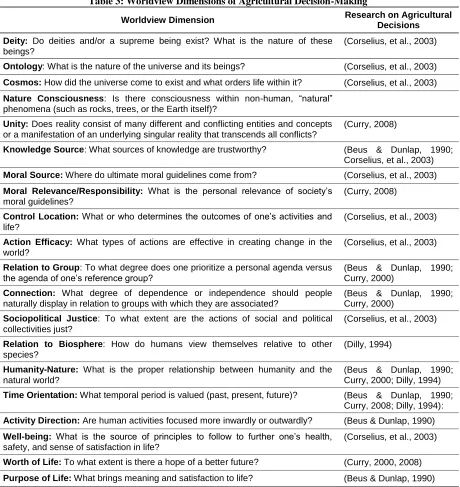
Summarizing these different conceptual approaches using the dimensions of
Koltko-Rivera’s (2004) worldview model as an analytical framework, various worldview dimensions
Table 3: Worldview Dimensions of Agricultural Decision-Making
Worldview Dimension Research on Agricultural Decisions Deity: Do deities and/or a supreme being exist? What is the nature of these
beings?
(Corselius, et al., 2003)
Ontology: What is the nature of the universe and its beings? (Corselius, et al., 2003)
Cosmos: How did the universe come to exist and what orders life within it? (Corselius, et al., 2003)
Nature Consciousness: Is there consciousness within non-human, “natural”
phenomena (such as rocks, trees, or the Earth itself)?
Unity: Does reality consist of many different and conflicting entities and concepts or a manifestation of an underlying singular reality that transcends all conflicts?
(Curry, 2008)
Knowledge Source: What sources of knowledge are trustworthy? (Beus & Dunlap, 1990; Corselius, et al., 2003)
Moral Source: Where do ultimate moral guidelines come from? (Corselius, et al., 2003)
Moral Relevance/Responsibility: What is the personal relevance of society’s
moral guidelines?
(Curry, 2008)
Control Location: What or who determines the outcomes of one’s activities and
life?
(Corselius, et al., 2003)
Action Efficacy: What types of actions are effective in creating change in the world?
(Corselius, et al., 2003)
Relation to Group: To what degree does one prioritize a personal agenda versus the agenda of one’s reference group?
(Beus & Dunlap, 1990; Curry, 2000)
Connection: What degree of dependence or independence should people naturally display in relation to groups with which they are associated?
(Beus & Dunlap, 1990; Curry, 2000)
Sociopolitical Justice: To what extent are the actions of social and political collectivities just?
(Corselius, et al., 2003)
Relation to Biosphere: How do humans view themselves relative to other species?
(Dilly, 1994)
Humanity-Nature: What is the proper relationship between humanity and the natural world?
(Beus & Dunlap, 1990; Curry, 2000; Dilly, 1994)
Time Orientation: What temporal period is valued (past, present, future)? (Beus & Dunlap, 1990; Curry, 2008; Dilly, 1994):
Activity Direction: Are human activities focused more inwardly or outwardly? (Beus & Dunlap, 1990)
Well-being: What is the source of principles to follow to further one’s health, safety, and sense of satisfaction in life?
(Corselius, et al., 2003)
Worth of Life: To what extent is there a hope of a better future? (Curry, 2000, 2008)
Purpose of Life: What brings meaning and satisfaction to life? (Beus & Dunlap, 1990)
Although all of these dimensions of worldview purportedly factor into agricultural
decision-making, it is likely that they neither directly affect decisions in all instances nor
affect decisions to equal degrees. Nor should this list be considered exhaustive.
Nevertheless, this worldview framework provides conceptual categories through which