R E S E A R C H
Open Access
Implications of climate change on the distribution
of the tick vector
Ixodes scapularis
and risk for
Lyme disease in the Texas-Mexico transboundary
region
Teresa P Feria-Arroyo
1†, Ivan Castro-Arellano
2†, Guadalupe Gordillo-Perez
3†, Ana L Cavazos
1,
Margarita Vargas-Sandoval
4, Abha Grover
5, Javier Torres
3, Raul F Medina
6, Adalberto A Pérez de León
7and Maria D Esteve-Gassent
5*Abstract
Background:Disease risk maps are important tools that help ascertain the likelihood of exposure to specific infectious agents. Understanding how climate change may affect the suitability of habitats for ticks will improve the accuracy of risk maps of tick-borne pathogen transmission in humans and domestic animal populations. Lyme disease (LD) is the most prevalent arthropod borne disease in the US and Europe. The bacteriumBorrelia burgdorferi causes LD and it is transmitted to humans and other mammalian hosts through the bite of infectedIxodesticks. LD risk maps in the transboundary region between the U.S. and Mexico are lacking. Moreover, none of the published studies that evaluated the effect of climate change in the spatial and temporal distribution ofI. scapularishave focused on this region.
Methods:The area of study included Texas and a portion of northeast Mexico. This area is referred herein as the Texas-Mexico transboundary region. Tick samples were obtained from various vertebrate hosts in the region under study. Ticks identified asI. scapulariswere processed to obtain DNA and to determine if they were infected withB.
burgdorferiusing PCR. A maximum entropy approach (MAXENT) was used to forecast the present and future (2050)
distribution ofB. burgdorferi-infectedI. scapularisin the Texas-Mexico transboundary region by correlating geographic data with climatic variables.
Results:Of the 1235 tick samples collected, 109 were identified asI. scapularis. Infection withB. burgdorferiwas detected in 45% of theI. scapularisticks collected. The model presented here indicates a wide distribution forI. scapularis, with higher probability of occurrence along the Gulf of Mexico coast. Results of the modeling approach applied predict that habitat suitable for the distribution ofI. scapularisin the Texas-Mexico transboundary region will remain relatively stable until 2050.
Conclusions:The Texas-Mexico transboundary region appears to be part of a continuum in the pathogenic landscape of LD. Forecasting based on climate trends provides a tool to adapt strategies in the near future to mitigate the impact of LD related to its distribution and risk for transmission to human populations in the Mexico-US transboundary region.
Keywords:Ixodes scapularis,Borrelia burgdorferi, Transboundary disease, Lyme disease risk map, Climate change
* Correspondence:[email protected] †Equal contributors
5
Department of Veterinary Pathobiology, College of Veterinary Medicine and Biomedical Sciences, Texas A&M University, College Station, TX 77843, USA Full list of author information is available at the end of the article
Background
Globally, Lyme disease (LD), also known as Lyme borre-liosis is considered an emerging transboundary zoonotic tick borne disease [1-7]. Foci of LD exist in the U.S, Europe, and Asia. In the US LD is the most prevalent arthropod borne infection with 30,831 cases reported to the Centers for Disease Control and Prevention (CDC) in 2012 [8] and it is estimated that over 300,000 people become infected every year [9]. The increase in LD cases during the last decade has prompted its classification as an emerging infectious disease. Several hard tick species in the genus Ixodes are recognized as common vectors of the spirochete Borrelia burgdorferi, the causative agent of LD. Ixodes scapularis and I. pacificus are the known competent vectors in the US while I. persulcatus
and I. ricinus are the documented vectors in Eurasia [3,10-13]. The majority of confirmed LD cases in the US are reported from the Northeast and upper-Midwest re-gions [8]. Consequently, almost all LD studies done to date are centered in the Northeast and Midwest regions of the US where this disease is more prevalent, with no major studies done in Southern US (SUS). Moreover, re-ports of LD in Mexico continue to increase [14-16]. In this geographic regionI. scapularisis also considered as the main vector of B. burgdorferi, although the involve-ment of other hard tick species as competent vectors is suspected [17].
Similar to other arthropod borne diseases, LD is a com-plex system subject to shifts in ecological processes that influence vector biology and the epidemiology ofB. burg-dorferi infection in reservoir hosts and humans [18-22]. Molecular plasticity is a feature that allows the adaptation of B. burgdorferi to invertebrate and vertebrate hosts where it grows [23,24]. The spirochete is maintained in the environment by different vertebrate hosts with varying degrees of competence. In the forests of eastern North America the white-footed mouse,Peromyscus leucopus, is its main reservoir [25,26]. On the other hand, white-tailed deer (Odocoileus virginianus, WTD) are the primary re-productive host for I. scapularis in the US, but they are reservoir-incompetent for B. burgdorferi [19,27]. A num-ber of studies have suggested that vertebrate species diver-sity affects the risk of contracting human LD [28-32]. In addition, climate change has been predicted to affect the geographic distribution of tick vectors [33-39] and there-fore the risk of LD infection. Species distribution models (SDMs) based on machine-learning algorithms and Geo-graphic Information Systems (GIS) platforms have been used to predict areas of potential distribution of insects that serve as vectors of zoonotic infectious agents such as
Trypanosoma cruzi,a parasite that causes Chagas disease [40,41]. These analyses typically show that climatic factors significantly influence the potential geographic distribu-tions of vectors and reservoirs. Additionally, temperature
may have a strong influence on vector species behavior [42,43]. For example, in the case of triatomine insects, temperatures higher than 30°C and low humidity increase triatomine feeding rates helping them to avoid dehydra-tion. In addition, these insect vectors may develop shorter life cycles and higher population densities in domestic life cycles when indoor temperature increases [42]. High tem-peratures can also speed up the development ofT. cruziin vectors [44]. In regards to arthropod tick vectors, it has been observed that the spread of the tick vectorI. scapu-larisin North American and Canada is followed by an in-creased invasion of the bacterial pathogen B. burgdorferi
and therefore an increase in the risk of disease transmis-sion [45]. In addition, recent studies in Canada have shown that the distribution of I. scapularishas been sig-nificantly affected by climate, and in particular by temperature [46,47]. Populations of this tick vector have been established and are spreading north. In this report, authors forecast, that with a continuous increase of temperature, the basic reproductive number (R0) ofI. sca-pularisin this region is predicted to increase, and there-fore the risk for Lyme disease [46].
The limited number of ecological studies in other re-gions like the Southern US and Gulf Coast has prevented a comparative analysis of ecological factors driving the pathogenic landscape of LD in the US [48]. In some parts of the world the ecology and epidemiology of LD remain to be fully understood. For instance, a LD-like syndrome has been described in Brazil [49], and ticks other thanI. scapularis have been associated with the transmission of
B. burgdorferi in Mexico [17]. Thus, LD is considered a transboundary zoonotic disease in that it can reach epi-demic proportions in different regions of the globe re-gardless of political borders [6]. There is unequally distributed knowledge about the ecology of this disease among the regions in which it occurs, even within the US. Knowledge gaps in our understanding of the epidemi-ology of LD in the Southern US exist [50]. A recent sur-vey could not detect B. burgdorferi from I. scapularis
ticks collected from deer in Tennessee [51]. During the late 1980’s and early 1990’sB. burgdorferiwas identified in Texas using classical culturing techniques and im-munofluorescence of tick midguts utilizing monoclonal anti-OspA antibody with an incidence as low as 1% [52-55]. With more advanced molecular techniques the incidence of B. burgdorferi in ticks collected from hu-man subjects over a 4-year period was also near 1% [13]. However, this last study was based on a passive surveil-lance set up, in which ticks coming from humans were collected, and no active sampling of ticks in the state of Texas was carried out.
(DIN) [56,57]. Under this scenario southern US states were portrayed as a low risk region given the non-appearance of host seekingI. scapularisnymphs at sampled sites [56,57]. Worth noting is that southern states had fewer sampling sites (e.g., 9 in Texas, zero in Louisiana, 4 in Oklahoma) while other areas of the country (the northeast and mid-west) were better represented (e.g. 19 in Illinois, 20 in Wisconsin, 13 in New York) [56,57]. In striking contrast to the conclusion of this purported null risk of acquiring LD in southern states, a steady number of LD cases have been reported in these low risk areas every year (http://www. cdc.gov/lyme/stats/index.html). Other relevant epidemio-logical aspects that require attention include human move-ment because in some LD cases the disease can be acquired in a region different from the one where they are reported and differences in tick phenology and behavior at different geographic regions may exist [57]. For instance, the questing behavior of I. scapularis nymphs show vari-ation among northern and southern sites, with southern nymphs rarely climbing to the top of vegetation likely reducing the ability to detect these nymphs at southern sites (J. Tsao, personal communication). These limitations might explain why the models utilized could not explain the variation in the distribution of the disease observed in low prevalence areas. Consequently, the drivers for variation in the distribution of LD cases observed in low prevalence areas remain to be identi-fied [50].
In Mexico, a national serosurvey of human serum sam-ples reported a B. burgdorferi sero-prevalence of 1.1% [15]. The Mexican states of Tamaulipas, Nuevo León, and Coahuila in the Texas-Mexico border region pre-sented the highest sero-prevalence (6.4%) compared with the rest of the country [58]. Also, Ixodes ticks infected withB. burgdorferi sensu strictooccur in the same states [17], and the infection has been recently documented in mouse reservoirs [59] as well as in WTD [60]. Distri-bution models of potential tick vectors in Mexico point to a wide distribution range that overlaps not only northeastern Mexican states along the border with the US, but also extends to central Mexico [59,61]. These studies, together with confirmed clinical cases of LD, acquired in parks near Mexico City [14,62] demonstrate the existence of a enzootic cycle responsible for LD in Mexico.
The large transboundary region shared between the US and Mexico present several risk factors for zoonotic arthropod borne diseases that can be exacerbated due to climate change [6,63,64]. This situation emphasizes the need to evaluate the risk for LD from a regional stand-point. In addition, the understanding of vector borne disease ecology has improved significantly in recent years due to the advancement in molecular biology, Geographic Information Systems (GIS) and SDM [65,66].
In this study a distribution model was constructed forI. scapulariscovering the eastern sector of the transbound-ary region comprising the states of Texas in the US, and Tamaulipas, Nuevo León, and Coahuila in Mexico. Future distribution models for the tick vector were forecasted under climate change scenarios within the defined study area. Additionally, data on the prevalence of B. burgdor-feriinfection inI. scapularissampled at sites in Texas and the neighboring northeastern Mexican states are pre-sented. This international research collaboration affords the opportunity to foster a binational approach for the adoption of control and prevention strategies to manage the risk, and reduce the burden of LD in human popula-tions living along the US-Mexico border.
Method
Study area
The Texas-Mexico transboundary region considered here includes sectors on both sides of the Rio Grande river, east of the Chihuahuan desert, which share a common biogeographic history and represents distinct ecozones. This region encompasses the Tamaulipan scrub biome. Based on the updated Köppen–Geiger climate classifica-tion [67,68], this biome climate includes four categories. The majority of the biome is classified as an arid-steppe (BSh), which changes to a temperate classification (Cfa) in Texas, whereas in Mexico it includes small areas with climate generally classified as arid desert (BWh), or tem-perate (Cwa). The region consists of four ecoregions in-cluding Gulf Prairies and Marshes, South Texas Plains (also known as Rio Grande Plains), Edwards Plateau (northeast of the river), and the Tamaulipan brushlands (southwest of the river) [69]. Elevation ranges from sea-level to around 1000 feet near the most inland locations. Annual rainfall may be 30-50 inches along the Gulf Coast, but declines to 14-16 inches in the inland reaches of the South Texas Plains-Edwards Plateau. Along the Gulf Coast summers are long, hot and humid, i.e. sub-tropical [70], and winters are very mild (>300 frost free days), while progressively more inland locations have hot-ter, drier summers, and winters subject to more freezing temperatures [69]. The region is subject to the fluctua-tions of tropical storms from the Caribbean and Gulf of Mexico, as well as periodic and sometimes extended pe-riods of drought [71]. Within the region considered in our study we obtained and analyzed a total of 109 I. scapularis ticks from 16 unique geographical locations (Figure 1).
Tick collection and classification
County), veterinary clinics from 13 counties (Bee, Collin, Edwards, Fort Bent, Harris, Kerr, Maverick, Montague, Montgomery, Robertson, Tarrant, Travis, and Uvalde), and the Big Thicket National Park in Tyler County. Counties were selected based on the presence of
I. scapularis ticks previously reported in the literature [13,19,54-56,73]. The main sources of ticks were hunter-harvested WTD (Odocoileus virginianus) or gemsbok (Oryx gazella) brought to check stations at each WMA mentioned above. Questing ticks as well as tick samples from humans and dogs were also acquired from WMAs in Texas. Ticks collected from human subjects and their dogs at the hunter-check stations were voluntarily provided and no personal identifiers were recorded. Only location, date and the fact that the ticks were feeding on human subjects were recorded. All human subjects were properly informed about the scientific nature of the project.
For each tick specimen we gathered associated infor-mation (host species, time and date, GPS coordinates, ZIP code, County) to allow for cross-referencing our findings with the reported human LD cases in Texas. Results from those analyses will be presented somewhere else (manuscript in preparation). All ticks collected were placed in vials containing 70% ethanol and transported to the Texas A&M University College of Veterinary Medicine and Biomedical Sciences for their codification, identification using dichotomous keys [74-77], and sub-sequently processed for DNA extraction andB. burgdor-feridetection.
[image:4.595.58.543.88.487.2]In Mexico, I. scapularis ticks were collected in the northeastern states of Tamaulipas, Nuevo Leon, and Coa-huila. Tick specimens were obtained from four different regions where vegetation was sampled for questing ticks and from collected wild mammals (eastern cottontail, the
hispid cotton rat, the painted spiny pocket mouse, prairie dogs, ringtail, black-tailed jackrabbit and jaguar) and do-mestic animals (bovids, horses, and dogs) [17,78]. Ticks were preserved in 70% ethanol and archived. Two institu-tions were involved in the collecinstitu-tions, the Entomology Laboratory of Escuela Nacional de Ciencias Biologicas, IPN, Mexico, which collected in forested and rural areas during 1990-1998, and the Emerging Infectious Disease Laboratory, UIMEIP, Centro Medico Nacional SXXI, IMSS, which collected ticks in forested areas during 1999-2007 [17,78]. An additional record ofI. scapularis
was obtained from the report of this species occurring on a female jaguar (Panthera onca) from the Reserva de la Biosfera, El Cielo in Tamaulipas Mexico [79]. All wild mammal collections were done under the ap-proved permits by Dirección General de Vida Silvestre in Mexico.
Borrelia burgdorferiidentification
DNA was extracted from individual I. scapularis ticks collected during the sampling period described above using the High Pure PCR template preparation kit for genomic DNA (Roche, Indianapolis, IN) following man-ufacturer’s recommendations with modifications to adapt the protocol to ticks. Briefly, individual ticks were homogenized utilizing the bead mill BeadRuptor 24 (Omni International, Inc., Kennesaw, GA) in 200 μl of Phosphate Buffer Saline (PBS) plus 200 μl of lysis buffer and 800μg of Proteinase K in 2 ml screw cap tubes for 5 minutes at a 5.65 m/s intensity (equivalent to 210 ×g). During this step 1.4 mm ceramic beads were used to homogenize unengorged ticks while 2.8 mm ceramic beads were used with engorged ticks. After homogeniz-ing, each sample was centrifuged at 10,000 ×g to pellet debris. Supernatants were collected and 200 μl of bind-ing buffer was added to each sample and the mixture in-cubated at 70°C for 10 minutes followed by the addition of 100 μl of isopropanol. The mixture was run through filter columns at 8,000 ×g for 1 minute. DNA bound to the filter was washed and eluted following manufacturer recommendations. Eluted DNA concentration and purity were measured using a NanoDrop (Thermo Scientific, Inc., Willinton, DE). DNA was used for the detection of
B. burgdorferi sensu latoby PCR using the flagella gene (flaB) as previously described by Jaulhac et al. [12]. Amplicons were separated on a 1.5% agarose gel and positive bands were sent for sequencing (Eton Biosci-ences, San Diego, CA). Sequences were analyzed through BLAST® using MacVector 12.6 software (MacVector Inc., Cary, NC) to facilitate species and strain identification. A second nested PCR for the intergenic region (IGR) 16SrRNA-23SrRNA using the primers and conditions de-scribed by Bunikiset al.[23] was done to allflaBpositive samples withB. burgdorferiidentification. IGR amplicons
were also submitted for sequencing and results analyzed using the MacVector 12.6 software to facilitate strain identification. Water served as negative control, and gen-omic DNA isolated from B. burgdorferi B31 A3 strain culture as positive control in all PCR steps done in this study.
Modeling methods and evaluation
To construct the potential distribution forI. scapularisat the study area we compiled a database with unique loca-tions (e.g., different geographic coordinates) of presence records that cover most of the known range of this spe-cies. Locations were obtained from the scientific literature [56] and from our own fieldwork (Texas and Northern Mexico). Our modelling methods required identification of precise locations where this tick species was found but a prevalent issue regarding tick records is that most lack an adequate level of geographical precision or reliable taxonomic identification. For example, the most extensive collection of reliable records for I. scapularis, covering most of its range, is limited to county level precision [80] and thus it is too rough for our purposes. Instead, we accessed data from several published studies that included standardized collecting techniques to sample 304 sites throughout 37 states from the continental US east of the 100thparallel. This study consisted mostly of state parks or natural preserves [56,57,81,82].I. scapulariswas found at 94 of these sites [56]. This was the basis for our loca-tions. For each park or natural area where I. scapularis
was recorded we identified a geographical centroid that was verified to occur within natural vegetation (via Goo-gle Earth) and the corresponding geographic coordinates were used as a unique location. Since most of the parks are small (<10,000 Ha), the level of resolution is substan-tially better than relying on county level records.
Present and projected future potential distributions for the target species were computed using these presence re-cords for the species (longitude/latitude) and using cli-matic parameters as exploratory variables, using a maximum entropy algorithm (MaxEnt) [66,83-85]. Max-Ent predicts a probability distribution ranging from 0 (least suitable) to 1 (most suitable) of habitat suitability over a given study area [84,86]. We used MaxEnt version 3.3.3 k (http://www.cs.princeton.edu/~schapire/maxent/) with the default modeling parameters (convergence threshold = 105, maximum iterations = 500, regularization value β= auto) following conditions standardized else-where [86]. We used the bioclimatic variables available at http://www.worldclim.org as predictors (Table 1).
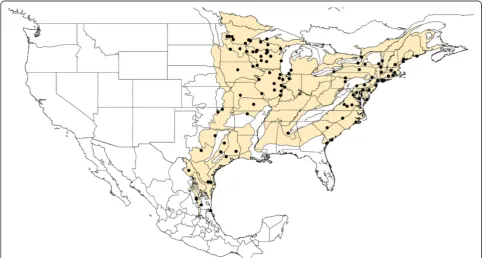
variables were used to construct the model (Table 1). To avoid the use of artifactual distribution limits for our tar-get species (e.g., political boundaries), we used as base map to construct our models a biogeographic regions map (Figure 2) and then projected the models to Texas and
Northeastern Mexico (Tamaulipas, Nuevo Leon, Coahuila) [87]. Biogeographic regions are areas of animal and plant distribution having similar or shared characteris-tics, thus this map is considered essential to construct a more realistic model of potential distribution forI. scapu-laris. Model results were processed and visualized using ArcGIS 10. The Area Under the Curve (AUC) of Receiver Operating Characteristics plots (ROC) was calculated to evaluate the models [88]. ROC is a threshold–independent measure that evaluates the sensitivity (probability that the model produces a positive result in a positive locality) versus the specificity (probability that the model pro-duces a negative result in a negative locality) of a model when presented with new data. A ROC plot is obtained by plotting all sensitivity values on the y–axis against their equivalent (1–specificity) values for all available decision thresholds on the x–axis. The theoretically per-fect result is AUC = 1, whereas a test performing no better than random yields AUC = 0.5. The AUC was calculated in MaxEnt.
Projection under future scenarios
[image:6.595.56.291.112.359.2]Future distribution models were developed for the year 2050 using two climate scenarios from the Intergovern-mental Panel on Climate Change (IPCC): A2A and B2A. These scenarios assume a heterogeneous world, but with B2A being more environmentally focused than A2A. B2 describes a world in which the emphasis is on local solu-tions to economic, social, and environmental sustainability.
Table 1 List of the environmental variables used in this study
Variable Description
BIO1 Annual Mean Temperature
BIO3 Isothermality
BIO5 Maximum Temperature of Warmest Month
BIO6 Minimum Temperature of Coldest Month
BIO7 Temperature Annual Range (maximum temperature of warmest month–minimum temperature of coldest month)
BIO9 Mean Temperature of Driest Quarter
BIO10 Mean Temperature of Warmest Quarter
BIO11 Mean Temperature of Coldest Quarter
BIO12 Annual Precipitation
BIO13 Precipitation of Wettest Month
BIO14 Precipitation of Driest Month
BIO15 Precipitation Seasonality (Coefficient of Variation)
BIO16 Precipitation of Wettest Quarter
BIO17 Precipitation of Driest Quarter
BIO18 Precipitation of Warmest Quarter
BIO19 Precipitation of Coldest Quarter
[image:6.595.56.540.445.703.2]It is a prospective view of the world with continuously in-creasing global population, at a rate lower than A2, and intermediate levels of economic development [43]. Differ-ent Global Circulation Models (GCM) exist, and since no single one can be considered superior, we selected three different GCM to compare results for potential distribu-tions: the Canadian Centre for Climate Modeling and Analysis (CCCMA), the Commonwealth Scientific and Industrial Research Organization (CSIRO) and the Hadley Centre for Climate Change (HADCM3) models.
We estimated a “stable” suitable habitat considering present and future maps (both IPCC scenarios and the three GCM). First, we reclassified the potential distribu-tion models for the present and future to obtain binary maps (presence = 1, absence = 0) using the “minimum presence threshold”. This is the most conservative thresh-old that includes suitable habitat predictions for all the lo-cations where we have collected I. scapularis ticks. The binary maps were then projected onto UTM with a spatial resolution of 1 km2. The“stable”habitat was estimated as the area that remained constant under each scenario and GCM.
Results
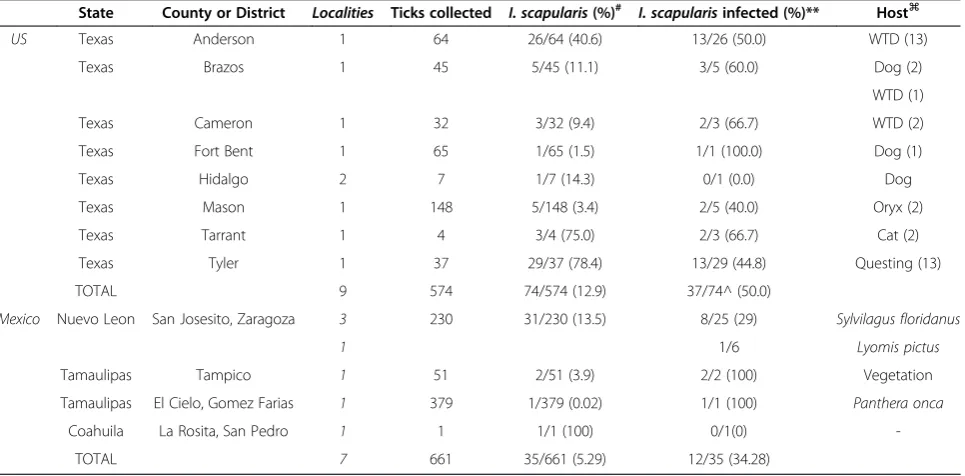
During this study, a total of 1235 tick specimens were collected in the Texas-México transboundary region. One hundred and nine specimens (8.83%) were identified as I. scapularis, which were collected questing or from
WTD, dogs, gemsbok, and a cat in Texas, and eastern cottontail (Silvilagus floridanus), painted spiny pocket mouse (Lyomis pictus) and jaguar (Pantera Onca) in Mexico, as shown in Table 2. Forty five percent of theI. scapulariswere infected withB. burgdorferiby PCR and sequencing of the flagella and IGR amplicons.
Presence ofI. scapularisandB. burgdorferiinfection in the Texas-Mexico transboundary region
A total of 574 tick specimens were collected from twenty counties across the state of Texas. Of those, 74 (12.89%)I. scapularis ticks were collected in eight of the counties sampled (Table 2). Fifty percent of I. scapularis ticks showed infection withB. burgdorferi sensu stricto(Table 2). This accounts for 6.445% of the total number of ticks tested in Texas in the current study. Even though the ma-jority of theB. burgdorferiinfectedI. scapularisticks were found on the most Eastern counties in Texas (Anderson and Tyler Counties), they were also detected in Central (Mason County), and South Texas (Cameron County, lo-cated on the border with Mexico). The central and south Texas areas had been previously considered as unsuitable for I. scapularis [56,65,89]. Only one location in Texas (Hidalgo, Table 2) showed no positiveI. scapularisticks for
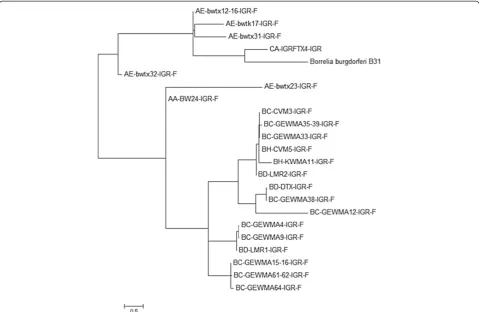
[image:7.595.58.541.462.700.2]B. burgdorferi. When analyzing the intergenic region 16S-23S rRNA ofB. burgdorferidetected in the ticks collected in Texas, the sequences tend to group in two main clusters (Figure 3). These results suggest that strains similar to the
Table 2 Texas counties and Mexico districts from whichI. scapularisticks were collected
State County or District Localities Ticks collected I. scapularis(%)# I. scapularisinfected (%)** Host⌘
US Texas Anderson 1 64 26/64 (40.6) 13/26 (50.0) WTD (13)
Texas Brazos 1 45 5/45 (11.1) 3/5 (60.0) Dog (2)
WTD (1)
Texas Cameron 1 32 3/32 (9.4) 2/3 (66.7) WTD (2)
Texas Fort Bent 1 65 1/65 (1.5) 1/1 (100.0) Dog (1)
Texas Hidalgo 2 7 1/7 (14.3) 0/1 (0.0) Dog
Texas Mason 1 148 5/148 (3.4) 2/5 (40.0) Oryx (2)
Texas Tarrant 1 4 3/4 (75.0) 2/3 (66.7) Cat (2)
Texas Tyler 1 37 29/37 (78.4) 13/29 (44.8) Questing (13)
TOTAL 9 574 74/574 (12.9) 37/74^ (50.0)
Mexico Nuevo Leon San Josesito, Zaragoza 3 230 31/230 (13.5) 8/25 (29) Sylvilagus floridanus
1 1/6 Lyomis pictus
Tamaulipas Tampico 1 51 2/51 (3.9) 2/2 (100) Vegetation
Tamaulipas El Cielo, Gomez Farias 1 379 1/379 (0.02) 1/1 (100) Panthera onca
Coahuila La Rosita, San Pedro 1 1 1/1 (100) 0/1(0)
-TOTAL 7 661 35/661 (5.29) 12/35 (34.28)
#: Percentage ofI. scapularisfound in each county among other tick species. **: Percentage ofI. scapularisinfected per county.
^: 6.445% of all ticks collected wereIxodes scapularisinfected withBorrelia burgdorferi.
positive control used in this study, B. burgdorferi B31 strain, were rarely detected in the area of study.
Of the 661 ticks collected from 11 localities in México, 203 were identified asIxodessp and only 35 asI. scapu-laris. TwelveI. scapularis were infected withB. burgdor-feriand were collected in six of the 7 localities (Table 2). The infected Ixodesticks were predominantly from four rural localities in San Josesito district, state of Nuevo Leon, and only one locality in Tampico district, state of Tamaulipas. A single I. scapularis tick was collected in Coahuila, which was not infected withB. burgdorferi.
Present and future suitable habitat forI. scapularisin the Texas-Mexico region
One hundred and ten unique locations, at whichI. sca-pularis is already present, were used to develop models of present and future suitable habitats for I. scapularis
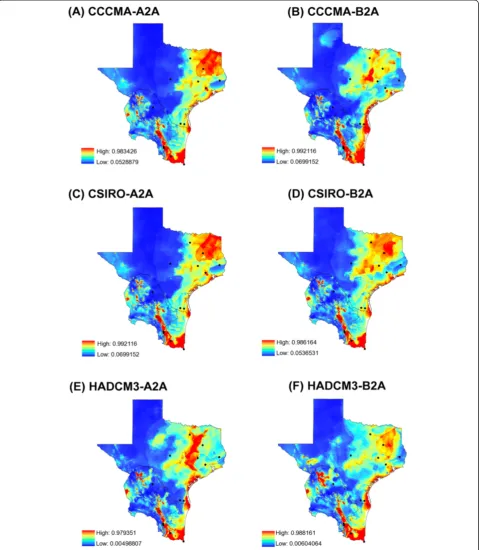
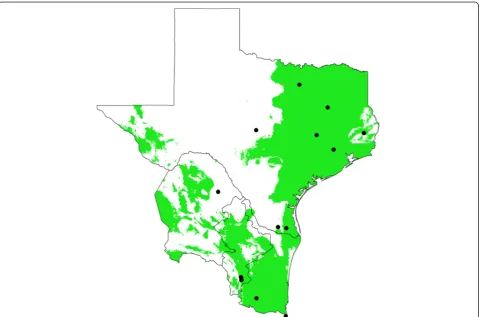
(Figure 2). From those, 94 came from the literature and 16 from our fieldwork: 9 were from Texas, and 7 were from NE Mexico states along the Texas-Mexico border (Table 2). The model of potential distribution forI. scapu-larishad an AUC =0.831. Comparison of present (Figure 4) and future (Figure 5A-F) suitable habitat shows potential
shifts in the distribution of suitable habitat forI. scapularis
due to climate change. As shown in Figure 4, the area of
I. scapularis distribution is expected to expand in North-eastern Texas as well as along the coastal areas, whereas in Mexico the model predicts maintenance of the distribution area in the three northeastern states. Interestingly, there is a continuous line along the gulf coast that will remain a highly suitable habitat for this tick vector in all of the fore-casting maps generated (Figure 5A-F).
[image:8.595.58.538.89.401.2]The climatic variables that contributed the most to the model are presented in Table 3. Briefly, isothermality ac-counts for 20% together with precipitation of the wettest quarter (18%), the maximum temperature of the warm-est month (14.6%), and the precipitation observed in the wettest month (11.5%). These parameters account for 64.2% of the average model. The correlation between each one of these four relevant environmental variables and the probability for the presence ofI. scapularis con-firm the close tie of this species to precipitation and temperature. Considering these environmental parame-ters, the suitable area for the survival ofI. scapularisthat will be maintained stable regardless of the forecasting model used will cover an area of 569,910 Km2 along
Eastern Texas all the way to Northern Mexico and along the Gulf Coast (Figure 6).
Discussion
As an emerging transboundary zoonotic tick-borne dis-ease, LD affects thousands of humans and domestic ani-mals around the world [5,7,90]. Transboundary zoonotic diseases can maintain a dynamic focus and have patho-gens circulating in a geographic region encompassing multiple geopolitical boundaries [64]. The sector of the US-Mexico border shared by south Texas and the states of Tamaulipas, Nuevo León, and Coahuila, is inhabited by millions of people and includes a biogeographic re-gion linking the Neotropic and Nearctic ecozones where foci of vector-borne diseases like LD exist [91-94]. The distribution map presented here documents the trans-boundary aspect for the risk of contracting LD in the re-gion encompassing Texas and northeast Mexico by taking into account the presence of the tick vectorI. sca-pularisinfected withB. burgdorferi.
There are a number of studies evaluating the distribu-tion ofI. scapularis, the competent vector for the trans-mission of LD [28,47,51,56,57,82,95-98], and how its distribution affects the risk for human disease. The ana-lysis in most of these studies is focused in the Northeast-ern and Midwest US as well as in Canada. A climate based model classified each of 3,628 0.5° grid cells,
covering the US, as places where established, suitable and unsuitable conditions to support I. scapularis exist, thus providing an estimation of its geographic distribu-tion in the US [89]. This model portrays most of East Texas as suitable habitats or where established popula-tions can exist [89]. Our current species distribution model of I. scapularis overlaps greatly over East Texas with the climate-based model but also expands the range of habitat identified as suitable for I. scapularis towards Central and South Texas through the Gulf Coast. Add-itionally, our model expands into northern Mexico as a continuous geographic landmark to maintain a stable I. scapularispopulation at this border region. Visualization of the predicted suitable area depicted in Figure 5 is fur-ther evidence that the Texas-Mexico transboundary re-gion is part of a continuum in the pathogenic landscape of LD serving as a corridor linking B. burgdorferi with tick vectors and mammalian reservoirs in the Neotropic and Nearctic ecozones. It remains to be determined if migratory birds are the only animals dispersing infected
[image:9.595.62.538.87.362.2]I. scapularisin the region, which could establish LD foci [99]. More detailed molecular studies of Borrelia spp. identified in I. scapularis and other ticks will enhance our understating of the diversity among species in theB. burgdorferi sensu lato complex and the tick vectors in-volved in the epidemiology of Lyme borreliosis in the Texas-Mexico transboundary region [5,61,100].
Figure 5Future (year 2050) suitable habitat forIxodes scapularisobtained with a maximum-entropy approach. (A-F)potential
distributions forI. scapularis. Black dots = geographic locations of infected and non-infected ticks. Red = high suitable habitat vs. blue = no suitable habitat forI. scapularis. General circulatory models and climatic scenarios:(A)CCCMA-A2A;(B)CCCMA-BA2;(C)CSIRO-A2A;(D)CSIRO-BA2;(E)
No specific distribution model exists forI. scapularisin Mexico but a distribution model for the genus Ixodes, generated with similar methodologies to our model, also predicts a wide distribution covering northeastern Mexico [61]. Although our model also overlaps greatly with this genus level model, especially over the mountainous re-gions of Tamaulipas, Nuevo Leon, and Coahuila, it ex-pands the distribution ofIxodes over the coastal plain of Tamaulipas thus connecting to the range in Texas along the Gulf Coast area. The level of resolution of our model is substantially greater than in previous climate
[image:11.595.57.292.112.200.2]based models [89,101] because of the smaller grid cell used (1 Km × 1 Km cells in our model versus roughly 55 × 42 Km cells), thus allowing a more precise predic-tion of sites whereI. scapulariscurrently occurs. To our knowledge, this report is the first attempt to model how the range of I. scapularis in the Texas-Mexico trans-boundary region will be affected under specific climatic change scenarios. Only one location in Texas showed no positive I. scapularis ticks for B. burgdorferi. We attri-bute this to the low number of ticks (only 7) collected with only oneI. scapularis. Geographical areas in which a species occur are determined by several ecological, evo-lutionary, and historical factors. These factors can be related to (1) abiotic aspects (e.g., elevation, climate); 2) biotic aspects (i.e., species interactions like competition and parasitism); 3) historical characteristics (e.g., barriers, speciation process); 4) dispersal capabilities; 5) accessible regions for dispersal; 6) evolutionary capability of a species to adapt to new conditions; and 7) anthropogenic influ-ences (e.g., changes in land use, translocation of organisms; [102,103]). The most frequently used factors to esti-mate species distributions are climatic variables [104,105].
Table 3 Environmental variables mostly affecting the model developed in this study
Variable Percent
contribution
Isothermality (Mean Diurnal Range/Temperature Annual Range) × 100
20.0
Precipitation of Wettest Quarter 18.1
Max Temperature of Warmest Month 14.6
Precipitation of Wettest Month 11.5
[image:11.595.59.539.366.683.2]Climate can limit the distribution of animals directly by af-fecting growth or survival (e.g., lower and upper lethal temperatures), and indirectly via interacting species (e.g., food sources, pathogens, competitors, or predators). While testing the model, two locations in the region under study, had low values of suitable habitat predicted by MaxEnt for I. scapularis. These two localities are in West Texas (Mason County) and in the Mexican state of Coahuila. These are two of the most western locations, sampled, whereI. scapulariswas detected in vegetation and feeding on exotic ungulates inhabiting gated properties. Conse-quently, these locations are considered of great biological relevance, because they could represent the western boundary of the geographic region suitable for I. scapu-laris. This observation highlights the need for ecological studies to understand the phenology and host preference in locations marginally suitable for the blacklegged tick.
Although our species distribution model is congruent with the spatial distribution of LD cases in humans for Texas (see maps in http://www.cdc.gov/lyme/stats/index. html), a direct correlation cannot be established because additional vector density and B. burgdorferi prevalence data need to be gathered, and human movement has epi-demiological consequences since infection can be ac-quired in a region different from the one where it is reported [27]. The density of infectedI. scapularisnymphs (DIN) has been suggested as a strong predictor for LD risk of infection [56,57,82,89,101]. For Texas this risk of infec-tion has been deemed low because no I. scapularis
nymphs were detected using standardized sampling tech-niques over nine localities in the state [56,82,106]. This contrasts with the continuous reports of human LD cases and the detection of canine LD in the state [107-109]. As an initial approach to understand where infectedI. scapu-laristicks occurred in Texas and Mexico, we performed a combination of passive and active searches of different de-velopmental stages of this competent LD vector. In our search we did find B. burgdorferiinfected adultI. scapu-laristicks in areas were human LD has been reported [8] and where canine LD has been observed [108]. The preva-lence ofI. scapularisinfected withB. burgdorferidetected was higher than the 1% recorded in the early 1990’s using classical culture and microscopy techniques for the detec-tion of B. burgdorferi [52,54,55], and than that observed more recently through a passive surveillance study and molecular techniques [13]. The adult ticks found in this preliminary study were either questing on vegetation or feeding on wildlife (WTD and gemsbok) and companion animals (mainly dogs). Therefore, our results suggest that infected I. scapularis nymphs are present in Texas, but sampling methods standardized for the conditions in Northeast and Midwest US sites might not be optimal to sample a representative I. scapularis nymph population questing in the Texas-Mexico transboundary region.
Variation in environmental conditions influencing quest-ing behavior may significantly impact the type of host ticks encounter and may lead to differential host use within a particular study area [110-113]. Therefore, further studies testing different sampling procedures, including different times of the day and seasons are currently being developed by our team. Our goal is to determine the phenology ofI. scapularisin the Southern US and Mexico and the questing behavior of the different developmental stages to determine how that will affect the risk for LD in humans and companion animals.
In forested regions of the northeastern US a strong de-terminant of nymph density, and percentage of Borrelia
infected nymphs, is the composition of the mammalian assemblage present at a given area [25,26]. At locales where the main competent reservoir, P. leucopus, is the dominant component of the assemblage, a higher preva-lence of Borrelia infected nymphs is present, and that prevalence diminishes as other small mammal species be-come more common [25,26].P. leucopushas a wide dis-tribution range from Canada to south Mexico and although it is the most common small mammal in mixed forests (deciduous and coniferous) at eastern states it can be more restricted in the western and southern parts of its range [114]. This rodent uses diverse habitats and the plant communities it inhabits in the northeastern US are strikingly different from the more xeric habitats in the south, to the point that it is rarely found in forests but is more common in highly disturbed habitats in Mexico [114]. Given these differences of habitat use between northern and southern localities, the relative abundance ofP. leucopusmay vary between different regions. Asses-sing host range forI. scapularisnymphs and the reservoir competence forB. burgdorferiof other small mammals is needed to understand the pathogenic landscape of LD in the Texas-Mexico transboundary region.
Current efforts are focused on additional sampling of Texas locations utilizing different sampling techniques to enhance detection ofI. scapularisnymphs. Ongoing sam-plings of small mammal assemblages in Texas will help us understand which are the vertebrate hosts for the imma-ture stages ofI. scapularisin Southern latitudes.
In our analyses isothermality, maximum temperature of the warmest month, precipitation of the wettest month, and the precipitation of the wettest quarter were the environmental factors that contributed the most to the model. The correlation between each one of these four relevant environmental variables and the probability for the presence of I. scapularisconfirm the close tie of this species to precipitation and temperature [58,62]. These results correspond with the fact that I. scapularis
survival depends on the temperature and humidity of a particular region [18,36,115]. Moreover, average precipi-tation in a certain area can explain the fluctuation of LD cases reported to CDC. The total number of LD cases re-ported appears to follow the 2-year tick density pattern, in which a year with more rain and higher number of ticks are followed by a peak in LD cases two years later [18]. Taken together, our results suggest that similar pa-rameters to those observed in other parts of the country govern the distribution of I. scapularis in Texas. How-ever, attention is required to adapt the timing and meth-odologies for tick sampling campaigns to optimize the collection of the different developmental stages of this tick species. Several combinations of climatic variables were explored to generate our current model, but no major changes in the distribution of infectedI. scapularis
were observed over the region of interest. More research is required to ascertain similarities and differences in the ecology of LD between the northeast and upper-midwest parts of the US and the Texas-Mexico transboundary region and their effect on the risk of exposure to B. burgdorferiamong human and domestic animal popula-tions. These efforts are expected to enhance the robust-ness of the I. scapularis distribution model presented here. In combination with genetic data, consideration of the entire black legged tick range in a refined version of our model would allow testing if genetic variation of I. scapularisis structured according to geography, to host use, or both. Geographic and host-based structure has been documented forI. ricinusand otherIxodesspecies [111,112,116-118].
Conclusion
The model presented here shows that, the distribution range of I. scapularis, the competent vector for the transmission of LD can potentially be widely occurring in Eastern Texas and Northern parts of Mexico along the Gulf Coast as a continuous region. Extreme climate change conditions predict the maintenance of suitable
areas forI. scapularissimilar to those currently observed and potentially expanding towards central Texas. The ecology of LD remains to be fully understood in the Texas-Mexico transboundary region. Under these condi-tions, it will be necessary to continue the study of the dis-tribution of this tick vector, at the western and southern edges of its known range. Consequently, research on the range of hosts the larvae and nymphs ofI. scapulariscan parasitize is required to enhance our understanding of the risk for LD transmission in the Southern US and México. The enzootic cycle of B. burgdorferi in this re-gion remains to be fully understood. A binational and collaborative approach to such scientific efforts is recom-mended to develop and adapt control and prevention strategies that will help manage the risk, and reduce the burden of LD in human populations living along the US-Mexico border.
Additional file
Additional file 1: Table S1.Correlations Pearson two-tiled.
Competing interests
The authors declare that they have no competing interests.
Authors’contributions
TPF participated in the design of the study, carried out the organization of data bases, developed the distribution models presented in the paper and participated in the organization and drafting of this manuscript. ICA and APL participated in the study design, data base analysis, and in the organization and drafting of this manuscript. GGP participated in the design of the study, coordinated the sample collection in Mexico, provided the Mexican database, and participated in the organization and drafting of this manuscript. ALC carried out the data analysis and participated in the generation of distribution models presented. MVS participated in the design of the fieldwork carried out in Mexico, identified tick species and provided the distribution data. AG participated in the design of the field work carried out in Texas and collected samples, analyzed DNA by PCR, analyzed sequencing sequences and provided data for Figure 1 of this paper. JT, coordinated the analysis of Mexican samples and participated in the organization and drafting of this manuscript, RFM participated in the organization and drafting of this manuscript. MDEG participated in the design of the study, coordinated and participated in the sample collection and analysis of the Texas samples, provided the Texan database, coordinated the organization and drafting of this manuscript as well as the acquisition of funds to carry out the study. All authors read and approved the final manuscript.
Acknowledgements
Author details 1
Department of Biology, The University of Texas-Pan American, Edinburg, TX 78539, USA.2Department of Biology, College of Science and Engineering, Texas State University, San Marcos, TX 78666, USA.3Unidad de Investigación en Enfermedades Infecciosas, Centro Médico Nacional SXXI, IMSS, Distrito Federal 06720, Mexico.4Facultad de Agrobiología, Universidad Michoacana de San Nicolás de Hidalgo, Uruapan 60090 Michoacan, Mexico.5Department of Veterinary Pathobiology, College of Veterinary Medicine and Biomedical Sciences, Texas A&M University, College Station, TX 77843, USA.6Department of Entomology, College of Agriculture and Life Sciences, Texas A&M University, College Station, TX 77843, USA.7USDA-ARS Knipling-Bushland U.S. Livestock Insects Research Laboratory, Kerrville, TX 78028, USA.
Received: 5 February 2014 Accepted: 18 April 2014 Published: 25 April 2014
References
1. Parola P, Raoult D:Ticks and tickborne bacterial diseases in humans: an emerging infectious threat.Clin Infect Dis2001,32(6):897–928. 2. Stanek G, Reiter M:The expanding Lyme Borrelia complex–clinical
significance of genomic species?Clin Microbiol Infect2011,17(4):487–493. 3. Stanek G, Wormser GP, Gray J, Strle F:Lyme borreliosis.Lancet2012,
379(9814):461–473.
4. Margos G, Vollmer SA, Ogden NH, Fish D:Population genetics, taxonomy, phylogeny and evolution ofBorrelia burgdorferisensu lato.Infect Gen Evol
2011,11(7):1545–1563.
5. Rudenko N, Golovchenko M, Grubhoffer L, Oliver JH Jr:Updates onBorrelia burgdorferisensu lato complex with respect to public health.Ticks Tick Borne Dis2011,2(3):123–128.
6. Siembieda JL, Kock RA, McCracken TA, Newman SH:The role of wildlife in transboundary animal diseases.Anim Health Res Rev2011,12(1):95–111. 7. Dubrey SW, Bhatia A, Woodham S, Rakowicz W:Lyme disease in the
United Kingdom.Postgrad Med J2014,90(1059):33–42.
8. CDC:Notice to readers: final 2012 reports of nationally notifiable infectious diseases.MMWR Morb Mort Wky Rep2013,62(33):669–682. 9. Kuehn BM:CDC estimates 300,000 US cases of Lyme disease annually.
JAMA2013,310(11):1110.
10. Mannelli A, Bertolotti L, Gern L, Gray J:Ecology ofBorrelia burgdorferi sensu lato in Europe: transmission dynamics in multi-host systems, influence of molecular processes and effects of climate change.FEMS Microbiol Rev2012,36(4):837–861.
11. Radolf JD, Caimano MJ, Stevenson B, Hu LT:Of ticks, mice and men: understanding the dual-host lifestyle of Lyme disease spirochaetes. Nat Rev Microbiol2012,10(2):87–99.
12. Jaulhac B, Heller R, Limbach FX, Hansmann Y, Lipsker D, Monteil H, Sibilia J, Piemont Y:Direct molecular typing ofBorrelia burgdorferisensu lato species in synovial samples from patients with lyme arthritis.J Clin Microbiol2000,38(5):1895–1900.
13. Williamson PC, Billingsley PM, Teltow GJ, Seals JP, Turnbough MA, Atkinson SF:Borrelia, Ehrlichia,andRickettsiaspp. in ticks removed from persons, Texas, USA.Emerg Infect Dis2010,16(3):441–446.
14. Gordillo-Perez G, Torres J, Solorzano-Santos F, de Martino S, Lipsker D, Velazquez E, Ramon G, Onofre M, Jaulhac B:Borrelia burgdorferiinfection and cutaneous Lyme disease, Mexico.Emerg Infect Dis2007,13(10):1556–1558. 15. Gordillo G, Torres J, Solorzano F, Cedillo-Rivera R, Tapia-Conyer R, Munoz O:
Serologic evidences suggesting the presence ofBorrelia burgdorferi infection in Mexico.Arch Med Res1999,30(1):64–68.
16. Gordillo-Perez G, Torres J, Solorzano-Santos F, Garduno-Bautista V, Tapia-Conyer R, Munoz O:Seroepidemiologic study of Lyme’s borreliosis in Mexico City and the northeast of the Mexican Republic.Salud Publica Mex2003,45(5):351–355.
17. Gordillo-Perez G, Vargas M, Solorzano-Santos F, Rivera A, Polaco OJ, Alvarado L, Munoz O, Torres J:Demonstration ofBorrelia burgdorferisensu stricto infection in ticks from the northeast of Mexico.Clin Microbiol Infect2009,
15(5):496–498.
18. Ostfeld RS:Lyme disease: the ecology of a complex system.New York: Oxford University Press; 2011.
19. Hoen AG, Margos G, Bent SJ, Diuk-Wasser MA, Barbour A, Kurtenbach K, Fish D:Phylogeography ofBorrelia burgdorferiin the eastern United States reflects multiple independent Lyme disease emergence events.Proc Natl Acad Sci U S A2009,106(35):15013–15018.
20. Kurtenbach K, Hanincova K, Tsao JI, Margos G, Fish D, Ogden NH:
Fundamental processes in the evolutionary ecology of Lyme borreliosis. Nat Rev Microbiol2006,4(9):660–669.
21. Kurtenbach K, De Michelis S, Sewell HS, Etti S, Schafer SM, Holmes E, Hails R, Collares-Pereira M, Santos-Reis M, Hanincova K, Labuda M, Bormane A, Donaghy M:The key roles of selection and migration in the ecology of Lyme borreliosis.Int J Med Microbiol2002,291(Suppl 33):152–154. 22. Levi T, Kilpatrick AM, Mangel M, Wilmers CC:Deer, predators, and the
emergence of Lyme disease.Proc Natl Acad Sci U S A2012,
109(27):10942–10947.
23. Bunikis J, Garpmo U, Tsao J, Berglund J, Fish D, Barbour AG:Sequence typing reveals extensive strain diversity of the Lyme borreliosis agents Borrelia burgdorferiin North America andBorrelia afzeliiin Europe. Microbiol2004,150(Pt 6):1741–1755.
24. Tsao JI:Reviewing molecular adaptations of Lyme borreliosis spirochetes in the context of reproductive fitness in natural transmission cycles.Vet Res2009,40(2):36.
25. LoGiudice K, Duerr ST, Newhouse MJ, Schmidt KA, Killilea ME, Ostfeld RS:
Impact of host community composition on Lyme disease risk.Ecology
2008,89(10):2841–2849.
26. LoGiudice K, Ostfeld RS, Schmidt KA, Keesing F:The ecology of infectious disease: effects of host diversity and community composition on Lyme disease risk.Proc Natl Acad Sci U S A2003,100(2):567–571.
27. Rosen ME, Hamer SA, Gerhardt RR, Jones CJ, Muller LI, Scott MC, Hickling GJ:
Borrelia burgdorferinot detected in widespreadIxodes scapularis(Acari: Ixodidae) collected from white-tailed deer in Tennessee.J Med Entomol
2012,49(6):1473–1480.
28. Ogden NH, Tsao JI:Biodiversity and Lyme disease: dilution or amplification?Epidemics2009,1(3):196–206.
29. Kurtenbach K, Sewell HS, Ogden NH, Randolph SE, Nuttall PA:Serum complement sensitivity as a key factor in Lyme disease ecology.Infect Immun1998,66(3):1248–1251.
30. Brisson D, Brinkley C, Humphrey PT, Kemps BD, Ostfeld RS:It takes a community to raise the prevalence of a zoonotic pathogen.Interdiscip Perspect Infect Dis2011. doi:10.1155/2011/741406.
31. Brisson D, Dykhuizen DE, Ostfeld RS:Conspicuous impacts of inconspicuous hosts on the Lyme disease epidemic.Proc Biol Sci2008,
275(1631):227–235.
32. Brisson D, Vandermause MF, Meece JK, Reed KD, Dykhuizen DE:Evolution of northeastern and midwesternBorrelia burgdorferi, United States. Emerg Infect Dis2010,16(6):911–917.
33. Ogden NH, Bigras-Poulin M, Hanincová K, Maarouf A, O’Callaghan CJ, Kurtenbach K:Projected effects of climate change on tick phenology and fitness of pathogens transmitted by the North American tickIxodes scapularis.J Theor Biol2008,254(3):621–632.
34. Ogden NH, Maarouf A, Barker IK, Bigras-Poulin M, Lindsay LR, Morshed MG, O’Callaghan CJ, Ramay F, Waltner-Toews D, Charron DF:Climate change and the potential for range expansion of the Lyme disease vectorIxodes scapularisin Canada.Int J Parasitol2006,36(1):63–70.
35. Ogden NH, Bigras-Poulin M, O’Callaghan CJ, Barker IK, Lindsay LR, Maarouf A, Smoyer-Tomic KE, Waltner-Toews D, Charron D:A dynamic population model to investigate effects of climate on geographic range and seasonality of the tickIxodes scapularis.Int J Parasitol2005,
35(4):375–389.
36. Estrada-Peña A, Sánchez N, Estrada-Sánchez A:An assessment of the distribution and spread of the tickHyalomma marginatumin the Western palearctic under different climate scenarios.Vector Borne Zoonotic Dis2012,12(9):758–768.
37. Gray JS, Dautel H, Estrada-Pena A, Kahl O, Lindgren E:Effects of climate change on ticks and tick-borne diseases in Europe.Interdiscip Perspect Infect Dis2009,2009:593232.
38. Estrada-Pena A, Horak IG, Petney T:Climate changes and suitability for the ticksAmblyomma hebraeumandAmblyomma variegatum(Ixodidae) in Zimbabwe (1974-1999).Vet Parasitol2008,151(2-4):256–267.
39. Margos G, Piesman J, Lane RS, Ogden NH, Sing A, Straubinger RK, Fingerle V:Borrelia kurtenbachiisp. nov.: a widely distributed member of the Borrelia burgdorferisensu lato species complex in North America.Int J Syst Evol Microbiol2014,64(Pt1):128–130.
40. Garza M, Feria ATP, Casillas EA, Sanchez-Cordero V, Rivaldi C-L, Sarkar S:
41. Sarkar S, Strutz SE, Frank DM, Rivaldi CL, Sissel B, Sanchez-Cordero V:Chagas disease risk in Texas.PLoS Negl Trop Dis2010,4(10). doi:10.1371/journal. pntd.0000836.
42. Carcavallo RU, Curto De Casas SI:Some health impacts of global warming in South America: vector-borne diseases.J Epidemiol1996,6(4):S153–S157. 43. IPCC:Summary for Policymakers.InClimate Change 2007: The Physical
Science Basis. Contribution of Working Group I to the Fourth Assessment Report of the Intergovernmental Panel on Climate Change.Edited by Solomon S, Qin D, Manning M, Chen Z, Marquis M, Averyt KB, Tignor M, Miller HL. Cambridge, United Kingdom and New York, NY, USA: 2007. http://www.ipcc.ch/publications_and_data/ar4/wg1/en/contents.html. 44. Asin S, Catala S:Development ofTrypanosoma cruziinTriatoma infestans:
influence of temperature and blood consumption.J Parasitol1995,81(1):1–7. 45. Wu X, Duvvuri VR, Lou Y, Ogden NH, Pelcat Y, Wu J:Developing a
temperature-driven map of the basic reproductive number of the emerging tick vector of Lyme diseaseIxodes scapularisin Canada.J Theor Biol2013,319:50–61.
46. Ogden NH, Radojevic M, Wu X, Duvvuri VR, Leighton PA, Wu J:Estimated effects of projected climate change on the basic reproductive number of the Lyme disease vector.Environ Health Perspect2014. (in Press) doi:10.1289/ehp.1307799.
47. Hamer SA, Tsao JI, Walker ED, Hickling GJ:Invasion of the lyme disease vectorIxodes scapularis: implications forBorrelia burgdorferiendemicity. EcoHealth2010,7(1):47–63.
48. Patz JA, Graczyk TK, Geller N, Vittor AY:Effects of environmental change on emerging parasitic diseases.Int J Parasitol2000,30(12-13):1395–1405. 49. Mantovani E, Costa IP, Gauditano G, Bonoldi VL, Higuchi ML, Yoshinari NH:
Description of Lyme disease-like syndrome in Brazil: is it a new tick borne disease or Lyme disease variation?Braz J Med Biol Res2007,
40(4):443–456.
50. Aviña A, CTiwari C, Williamson P, Oppong J, Atkinson S:A Spatially Explicit Environmental Health Surveillance Framework for tick-borne diseases.In
Geospatial Analysis of Environmental Health, Chapter 18, Volume 4. Edited by Maantay JA, McLalterty S: Springer; 2011:357–371.
51. Hamer SA, Hickling GJ, Sidge JL, Rosen ME, Walker ED, Tsao JI:Diverse Borrelia burgdorferistrains in a bird-tick cryptic cycle.Appl Environ Microb
2011,77(6):1999–2007.
52. Rawlings JA:Lyme disease in Texas.Zentralblatt fur Bakteriologie, Mikrobiologie, und Hygiene Series A, Medical microbiology, infectious diseases, virology, parasitology1987,263(3):483–487.
53. Rawlings JA, Fournier PV, Teltow GJ:Isolation ofBorreliaspirochetes from patients in Texas.J Clin Microbiol1987,25(7):1148–1150.
54. Rawlings JA, Teltow GJ:Prevalence ofBorrelia(Spirochaetaceae) spirochetes in Texas ticks.J Med Entomol1994,31(2):297–301. 55. Teltow GJ, Fournier PV, Rawlings JA:Isolation ofBorrelia burgdorferifrom
arthropods collected in Texas.Am J Trop Med Hyg1991,44(5):469–474. 56. Diuk-Wasser MA, Hoen AG, Cislo P, Brinkerhoff R, Hamer SA, Rowland M, Cortinas R, Vourc’h G, Melton F, Hickling GJ, Tsao JI, Bunikis J, Barbour AG, Kitron U, Piesman J, Fish D:Human risk of infection withBorrelia burgdorferi,the Lyme disease agent, in eastern United States.Am J Trop Med Hyg2012,86(2):320–327.
57. Pepin KM, Eisen RJ, Mead PS, Piesman J, Fish D, Hoen AG, Barbour AG, Hamer S, Diuk-Wasser MA:Geographic variation in the relationship between human Lyme disease incidence and density of infected host-seekingIxodes scapularisnymphs in the Eastern United States.Am J Trop Med Hyg2012,86(6):1062–1071.
58. Gordillo-Pérez G, Torres J, Solórzano-Santos F, Garduño-Bautista V, Tapia-Conyer R, Muñóz O:Estudio seroepidemiológico de Borreliosis de Lyme en la Ciudad de México y el Noreste de la República Mexicana.Salud Pública Mexicana2003,45:351–355.
59. Gordillo-Pérez G, Vargas-Sandoval M, Sosa-Gutierrez C, Minero-Gonzalez E, Schoeder-Lima E, Parra-Montiel G, Guzmán-Cornejo C, Sánchez-Cordero V, Torres J:Prevalencia de Infección deBorrelia burgdorferiyEhrlichiaspp en garrapatas y roedores provenientes de tres parques nacionales del Centro de la República Mexicana.Acarologia Latinoamerica2012,
1:291–295.
60. Martinez A, Salinas A, Martinez F, Cantu A, Miller DK:Serosurvey for selected disease agents in white-tailed deer from Mexico.J Wildl Dis
1999,35(4):799–803.
61. Illoldi-Rangel P, Rivaldi CL, Sissel B, Trout Fryxell R, Gordillo-Perez G, Rodriguez-Moreno A, Williamson P, Montiel-Parra G, Sanchez-Cordero V,
Sarkar S:Species distribution models and ecological suitability analysis for potential tick vectors of Lyme disease in Mexico.J Trop Med2012,
2012:959101.
62. Gordillo-Pérez MG, Solórzano-Santos F:Enfermedad de Lyme: experiencia en niños mexicanos.Boletin Médico del Hospital Infantil de México2010,
67:164–176.
63. Bosch J, Munoz MJ, Martinez M, de la Torre A, Estrada-Pena A:Vector-borne pathogen spread through ticks on migratory birds: a probabilistic spatial risk model for South-Western europe.Transbound Emerg Dis2013,
60(5):403–415.
64. Cartín-Rojas A:Transboundary Animal Diseases and International Trade.
InInternational Trade from Economic and Policy Perspective, Chapter 7. Edited by Bobem V: InTech; 2012:143–166. doi:10.5772/48151.
65. Piesman J, Eisen L:Prevention of tick-borne diseases.Annu Rev Entomol
2008,53:323–343.
66. Porretta D, Mastrantonio V, Amendolia S, Gaiarsa S, Epis S, Genchi C, Bandi C, Otranto D, Urbanelli S:Effects of global changes on the climatic niche of the tickIxodes ricinusinferred by species distribution modelling. Parasit Vectors2013,6:271.
67. Rubel F, Kottek M:Observed and projected climate shifts 1901-2100 depicted by world maps of the Köppen-Geiger climate classification. Meteorol Z2010,19(2):135–141.
68. KOTTEK M, GRIESER J, BECK C, RUDOLF B, RUBEL F:World Map of the Köppen-Geiger climate classification updated.Meteorol Z2006,15(3):259–263. 69. Correll DS, Johnston MC:Manual of the vascular plants of Texas.Renner:
Texas Research Foundation; 1970.
70. Archer S, Scifres CJ, Bassham CR, Maggio R:Autogenic succession in a subtropical savanna: conversion of grassland to thornwood land.Ecol Monogr1988,58(2):111–127.
71. de Leon AA P, Teel PD, Auclair AN, Messenger MT, Guerrero FD, Schuster G, Miller RJ:Integrated strategy for sustainable cattle fever tick eradication in USA is required to mitigate the impact of global change.Front Physiol
2012,3:195.
72. CONABIO:Actividades económicas en México por municipio, 2010’, escala: 1:250000. Comisión Nacional para el Conocimiento y Uso de la Biodiversidad.Edited by Datos estadísticos del 2010 dINdEyGI. México D.F; 2012.
73. Billings AN, Rawlings JA, Walker DH:Tick-borne diseases in Texas: a 10-year retrospective examination of cases.Texas Med1998,
94(12):66–76.
74. Keirans JE, Clifford CM:The genusIxodesin the United States: a scanning electron microscope study and key to the adults.J Med Entomol Suppl
1978,2:1–149.
75. Keirans JE, Durden LA:Illustrated key to nymphs of the tick genus Amblyomma(Acari: Ixodidae) found in the United States.J Med Entomol
1998,35(4):489–495.
76. Keirans JE, Litwak TR:Pictorial key to the adults of hard ticks, family Ixodidae (Ixodida: Ixodoidea), east of the Mississippi River.J Med Entomol
1989,26(5):435–448.
77. United States. Animal and Plant Health Inspection Service. Veterinary Services, Strickland RK, Diamant G:Ticks of veterinary importance.
Washington: Animal and Plant Health Inspection Service, U.S. Dept. of Agriculture: for sale by the Supt. of Docs., U.S. Govt. Print. Off; 1976. 78. Vargas M, Gordillo-Pérez G, Solórzano S, Rivera A, Polaco O, Muñoz O, Torres
J:Evidences of Borrelia burgdorferi in ticks of the Northeast of Mexico. Entomologia Mexicana2007,6:830–835.
79. Almazan C, Castro-Arellano I, Camacho-Puga E:Black-Legged ticks (Ixodes scapularis) on the jaguar (Panthera onca).Southwest Nat2013,
58(1):126–127.
80. Dennis DT, Nekomoto TS, Victor JC, Paul WS, Piesman J:Reported distribution ofIxodes scapularisandIxodes pacificus(Acari: Ixodidae) in the United States.J Med Entomol1998,35(5):629–638.
81. Diuk-Wasser MA, Brown HE, Andreadis TG, Fish D:Modeling the spatial distribution of mosquito vectors for West Nile virus in Connecticut.USA Vector Borne Zoonotic Dis2006,6(3):283–295.
82. Diuk-Wasser MA, Vourc’h G, Cislo P, Hoen AG, Melton F, Hamer SA, Rowland M, Cortinas R, Hickling GJ, Tsao JI, Barbour AG, Kilton U, Piesman J, Fish D:
83. Phillips SJ:Transferability, sample selection bias and background data in presence-only modelling: a response to Peterson et al. (2007).Ecography
2008,31(2):272–278.
84. Phillips SJ, Dudik M:Modeling of species distributions with Maxent: new extensions and a comprehensive evaluation.Ecography2008,31(2):161–175. 85. Elith J, Phillips SJ, Hastie T, Dudik M, Chee YE, Yates CJ:A statistical
explanation of MaxEnt for ecologists.Divers Distrib2011,17(1):43–57. 86. Phillips SJ, Anderson RP, Schapire RE:Maximum entropy modeling of species geographic distributions.Ecol Model2006,190(3-4):231–259. 87. Olson DM, Dinerstein E, Wikramanayake ED, Burgess ND, Powell GVN, Underwood EC, D’Amico JA, Itoua I, Strand HE, Morrison JC, Loucks CJ, Allnutt TF, Ricketts TH, Kura Y, Lamoreux JF, Wettengel WW, Hedao P, Kassem KR:Terrestrial ecoregions of the worlds: a new map of life on Earth.Bioscience2001,51(11):933–938.
88. Fielding HA, Bell JF:A review of methods for the assessment of predictions errors in conservation presence/absence models.Environ Conserv1998,24:38–49.
89. Brownstein JS, Holford TR, Fish D:A climate-based model predicts the spatial distribution of the Lyme disease vectorIxodes scapularisin the United States.Environ Health Perspect2003,111(9):1152–1157. 90. Dantas-Torres F, Chomel BB, Otranto D:Ticks and tick-borne diseases: a
one health perspective.Trends Parasitol2012,28(10):437–446.
91. Hotez PJ, Gurwith M:Europe’s neglected infections of poverty.Int J Infect Dis2011,15(9):e611–e619.
92. Hotez PJ:Fighting neglected tropical diseases in the southern United States.BMJ2012,345:e6112.
93. Andrus J, Bottazzi ME, Chow J, Goraleski KA, Fisher-Hoch SP, Lambuth JK, Lee BY, Margolis HS, McCormick JB, Melby P, Murray KO, Rico-Hesser R, Valenzuela JG, Hotez PJ:Ears of the Armadillo: global health research and neglected diseases in Texas.PLoS Negl Trop Dis2013,7(6):e2021. 94. Escalante T, Rodríguez-Tapia G, Szumik C, Morrone JJ, Rivas M:Delimitation
of the Nearctic region according to mammalian distributional patterns. J Mammal2010,91(6):1381–1388.
95. Killilea ME, Swei A, Lane RS, Briggs CJ, Ostfeld RS:Spatial dynamics of lyme disease: a review.EcoHealth2008,5(2):167–195.
96. Gatewood AG, Liebman KA, Vourc’h G, Bunikis J, Hamer SA, Cortinas R, Melton F, Cislo P, Kitron U, Tsao J, Barbour AG, Fish D, Diuk-Wasser MA:
Climate and tick seasonality are predictors ofBorrelia burgdorferi genotype distribution.Appl Environ Microbiol2009,75(8):2476–2483. 97. Rydzewski J, Mateus-Pinilla N, Warner RE, Hamer S, Weng HY:Ixodes
scapularisandBorrelia burgdorferiamong diverse habitats within a natural area in east-central Illinois.Vector Borne Zoonotic Dis2011,
11(10):1351–1358.
98. Hamer SA, Hickling GJ, Sidge JL, Walker ED, Tsao JI:Synchronous phenology of juvenileIxodes scapularis, vertebrate host relationships, and associated patterns ofBorrelia burgdorferiribotypes in the midwestern United States.Ticks Tick Borne Dis2012,3(2):65–74. 99. Reed KD, Meece JK, Henkel JS, Shukla SK:Birds, migration and emerging
zoonoses: west nile virus, lyme disease, influenza A and enteropathogens.Clinl Med Res2003,1(1):5–12.
100. Clark KL, Leydet B, Hartman S:Lyme Borreliosis in human patients in Florida and Georgia, USA.Int J Med Sci2013,10(7):915–931. 101. Brownstein JS, Holford TR, Fish D:Effect of climate change on Lyme
disease risk in North America.EcoHealth2005,2(1):38–46.
102. Pulliam H:On the relationship between niche and distribution.Ecol Lett
2000,3:349–361.
103. Soberón J, Peterson AT:Interpretation of models of fundamental ecological niches and species’distributional areas.Biodivers Informatics
2005,2:1–10.
104. Brown JH, Stevens GC, Kaufman DM:The geographic range: size, shape, boundaries, and internal structure.Annu Rev Ecol Syst1996,27:597–623. 105. Austin MP:Spatial prediction of species distribution: an interface
between ecological theory and statistical modelling.Ecol Model2002,
157:101–118.
106. Diuk-Wasser MA, Gatewood AG, Cortinas MR, Yaremych-Hamer S, Tsao J, Kitron U, Hickling G, Brownstein JS, Walker E, Piesman J, Fish D:
Spatiotemporal patterns of host-seekingIxodes scapularisnymphs (Acari: Ixodidae) in the United States.J Med Entomol2006,43(2):166–176. 107. Salinas-Melendez JA, Avalos-Ramirez R, Riojas-Valdez VM, Martinez-Munoz A:
Serological survey of canine borreliosis.Rev Latinoam Microbiol1999,
41(1):1–3.
108. Bowman D, Little SE, Lorentzen L, Shields J, Sullivan MP, Carlin EP:
Prevalence and geographic distribution ofDirofilaria immitis,Borrelia burgdorferi,Ehrlichia canis, andAnaplasma phagocytophilumin dogs in the United States: results of a national clinic-based serologic survey.Vet Parasitol2009,160(1–2):138–148.
109. Salinas-Melendez JA, Zarate-Ramos JJ, Avalos-Ramirez R, Hernandez-Escareno JJ, Guzman-Acosta G, Riojas-Valdes VM, Segura-Correa JC:
Prevalence of Antibodies AgainstBorrelia burgdorferiin Dogs from Monterrey, Mexico.J Anim Vet Adv2011,10(20):2720–2723.
110. Healy JA, Cross TF, Healy A:The alpha-Gpdh polymorphism in the tick Ixodes ricinus: similar diurnal trends in genotypic composition in Irish and Swedish population samples.Exp Appl Acarol2004,32(1-2):111–118. 111. Radulovic Z, Milutinovic M, Tomanovic S, Mihaljica D, Cakic S,
Stamenkovic-Radak M, Andelkovic M:Seasonal and spatial occurrence of glycerol-3-phosphate dehydrogenase variability inIxodes ricinus(Acari: Ixodidae) populations.J Med Entomol2012,49(3):497–503.
112. Radulovic Z, Milutinovic M, Andelkovic M, Vujcic Z, Tomanovic S, Bozic N, Marinkovic D:Allozyme polymorphism of Mdh and alpha-Gpdh inIxodes ricinuspopulations: comparison of borreliae-infected and uninfected ticks.Exp Appl Acarol2006,40(2):113–121.
113. Schulze TL, Jordan RA, Hung RW, Schulze CJ:Effectiveness of the 4-Poster passive topical treatment device in the control ofIxodes scapularisand Amblyomma americanum(Acari: Ixodidae) in New Jersey.Vector Borne Zoonotic Dis2009,9(4):389–400.
114. Wilson DE, Ruff S:The Smithsonian Book of North American mammals.
Washington: Smithsonian Institution Press; 1999.
115. Anderson JF, Magnarelli LA:Biology of ticks.Infect Dis Clin North Am2008,
22(2):195–215. v.
116. Kempf F, Boulinier T, De Meeus T, Arnathau C, McCoy KD:Recent evolution of host-associated divergence in the seabird tickIxodes uriae.Mol Ecol
2009,18(21):4450–4462.
117. Kempf F, De Meeus T, Vaumourin E, Noel V, Taragel’ova V, Plantard O, Heylen DJ, Eraud C, Chevillon C, McCoy KD:Host races inIxodes ricinus, the European vector of Lyme borreliosis.Infect Gen Evol2011,
11(8):2043–2048.
118. Dietrich M, Beati L, Elguero E, Boulinier T, McCoy KD:Body size and shape evolution in host races of the tickIxodes uriae.Biol J Linn Soc2013,
108:323–334.
doi:10.1186/1756-3305-7-199
Cite this article as:Feria-Arroyoet al.:Implications of climate change on the distribution of the tick vectorIxodes scapularisand risk for Lyme disease in the Texas-Mexico transboundary region.Parasites & Vectors 20147:199.
Submit your next manuscript to BioMed Central and take full advantage of:
• Convenient online submission
• Thorough peer review
• No space constraints or color figure charges
• Immediate publication on acceptance
• Inclusion in PubMed, CAS, Scopus and Google Scholar
• Research which is freely available for redistribution
![Figure 1 Geographic area of study.samples has been highlighted in gray. The locations of the positive samples for Each county within Texas, Tamaulipas, Nuevo León and Coahuila [72] from which we obtained Ixodes tick B](https://thumb-us.123doks.com/thumbv2/123dok_us/8329888.301454/4.595.58.543.88.487/figure-geographic-highlighted-locations-positive-tamaulipas-coahuila-obtained.webp)