• No results found

Leishmania genome dynamics during environmental adaptation reveals strain-specific differences in gene copy number variation, karyotype instability, and telomeric amplification

N/A
N/A
Protected

Academic year: 2019

Share "Leishmania genome dynamics during environmental adaptation reveals strain-specific differences in gene copy number variation, karyotype instability, and telomeric amplification"

Copied!
41
0
0

Loading.... (view fulltext now)

Full text

(1)

Leishmania

genome dynamics during environmental adaptation reveals

1

strain-specific differences in gene copy number variation, karyotype

2

instability, and telomeric amplification

3

4

Giovanni Bussotti

1,2

, Evi Gouzelou

2

, Mariana Côrtes Boité

3

,Ihcen Kherachi

4

, Zoubir Harrat

4

,

5

Naouel Eddaikra

4

, Jeremy C. Mottram

5

, Maria Antoniou

6

, Vasiliki Christodoulou

6

, Aymen

6

Bali

7,8

, Fatma Z Guerfali

7,8

, Dhafer Laouini

7,8

, Maowia Mukhtar

9

, Franck Dumetz

10

,

Jean-7

Claude Dujardin

10,11

, Despina Smirlis

12

, Pierre Lechat

1

, Pascale Pescher

2

, Adil El Hamouchi

13

,

8

Meryem Lemrani

13

, Carmen Chicharro

14

, Ivonne Pamela Llanes-Acevedo

14

, Laura Botana

14

,

9

Israel Cruz

14

, Javier Moreno

14

,Fakhri Jeddi

8,15

, Karim Aoun

8,15

, Aïda Bouratbine

8,15

, Elisa

10

Cupolillo

3

and Gerald F. Späth

2,

*

11

1

Institut Pasteur – Bioinformatics and Biostatistics Hub – C3BI, USR 3756 IP CNRS – Paris,

12

France;

2

Unité de Parasitologiemoléculaire et Signalisation, Institut Pasteur, Paris, France;

13

3

Laboratory on Leishmaniasis Research, Oswaldo Cruz Institute-Fiocruz, Rio de Janeiro,

14

Brazil;

4

Laboratoire d’Eco-épidémiologieparasitaire et Génétique des populations, Institut

15

Pasteur d’Alger, Alger, Algérie;

5

Centre for Immunology and Infection, Department of

16

Biology, University of York, United Kingdom;

6

Laboratory of Clinical Bacteriology,

17

Parasitology, Zoonoses and Geographical Medicine, School of Medicine, University of Crete,

18

VassilikaVouton, Heraklion, Greece;

7

Institut Pasteur de Tunis, LR11IPT02, Laboratory of

19

Transmission, Control and Immunobiology of Infections (LTCII)

,

Tunis-Belvédère, Tunisia;

20

8

Université Tunis El Manar, Tunis, Tunisia;

9

The Institute of Endemic Diseases, University of

21

Khartoum, Sudan;

10

Molecular Parasitology Unit, Institute of Tropical Medicine, Antwerp,

22

Belgium;

11

Department of Biomedical Sciences, University of Antwerp, Belgium;

12

Molecular

23

(2)

Greece;

13

Laboratory of Parasitology and Vector-Borne-Diseases, Institut Pasteur du Maroc,

25

Casablanca, Morocco;

14

WHO Collaborating Centre for Leishmaniasis,Instituto de Salud

26

Carlos III, Madrid, Spain;

15

Institut Pasteur de Tunis, LR11IPT06, Reasearch Laboratory

27

"Medical Parasitology, Biotechnology and Biomolecules",Tunis-Belvédère, Tunisia

28

29

* To whom correspondence should be addressed. Tel: +33.1.40.61.38.58; Fax:

30

+33.1.45.68.83.32; Email:

[email protected]

31

(3)

Abstract

33

Protozoan parasites of the genus

Leishmania

adapt to environmental change through chromosome

34

and gene copy number variations. Only little is known on external or intrinsic factors that

35

govern

Leishmania

genomic adaptation. Here, by conducting longitudinal genome analyses of ten

36

new

Leishmania

clinical isolates, we uncovered important differences in gene copy number among

37

genetically highly related strains and revealed gain and loss of gene copies as potential drivers of

38

long-term environmental adaptation in the field. In contrast, chromosome rather than gene

39

amplification was associated with short-term environmental adaptation to

in vitro

culture. Karyotypic

40

solutions were highly reproducible but unique for a given strain, suggesting that chromosome

41

amplification is under positive selection and dependent on species- and strain-specific, intrinsic

42

factors. We revealed a progressive increase in read depth towards the chromosome ends for various

43

Leishmania

isolates, which may represent a non-classical mechanism of telomere maintenance that

44

can preserve integrity of chromosome ends during selection for fast

in vitro

growth. Together our

45

data draw a complex picture of

Leishmania

genomic adaptation in the field and in culture, which is

46

driven by a combination of intrinsic genetic factors that generate strain-specific, phenotypic

47

variations, which are under environmental selection and allow for fitness gain.

48

49

Importance

50

Protozoan parasites of the genus

Leishmania

cause severe human and veterinary diseases

51

world-wide, termed leishmaniases. A hallmark of

Leishmania

biology is its capacity to adapt

52

to a variety of unpredictable fluctuations inside its human host, notably pharmacological

53

interventions thus causing drug resistance. Here we investigated mechanisms of

54

environmental adaptation using a comparative genomics approach by sequencing ten new

55

clinical isolates of the

L. donovani, L. major,

and

L. tropica

complexes that were sampled

56

(4)

adapt to environmental change in the field and in culture through a combination of

58

chromosome and gene amplification that likely causes phenotypic variation and drives

59

parasite fitness gains in response to environmental constraints. This novel form of gene

60

expression regulation through genomic change compensates for the absence of classical

61

transcriptional control in these early-branching eukaryotes and opens new venues for

62

biomarker discovery.

63

64

Introduction

65

Protozoan parasites of the genus

Leishmania

are transmitted by female blood-feeding sand

66

flies and can cause severe diseases in infected humans and animals. The success of this

67

pathogen relies on its capacity to sense changes in various host environments that trigger

68

various developmental transitions (1). Inside phlebotomine insect vectors, non-infectious

69

procyclic promastigote parasites differentiate into highly infectious metacyclic

70

promastigotes, which are transmitted to vertebrate hosts during a blood meal, where they

71

develop into the disease-causing amastigote form inside host macrophages (2, 3). Aside

72

from stage differentiation,

Leishmania

seem to adapt to a variety of environmental

73

fluctuations encountered in their hosts with important consequences for infection outcome,

74

such as drug treatment. Phenotypic shifts in

Leishmania

have been linked to genome

75

plasticity

,

with frequent copy number variations (CNVs) of individual genes or chromosomes

76

linked to drug resistance (4-9) or tissue tropism (10, 11). A better insight into molecular and

77

genetic mechanisms underlying

Leishmania

genetic diversity and evolution of new

78

phenotypes is therefore essential to understand parasite pathogenicity and hence the

79

epidemiology of

Leishmania

infection.

80

(5)

isolates and experimental clones, we recently established a direct correlation between

82

transcript abundance and chromosome amplification (12, 13) - a form of genomic regulation

83

of gene expression levels that compensates for the absence of classical transcriptional

84

control in these early-branching eukaryotes (10, 14, 15). Using the

L. donovani

LD1S

85

experimental strain and conducting

in vitro

evolutionary experiments, we demonstrated the

86

highly dynamic, reversible and reproducible nature of parasite karyotypic changes, and

87

correlated chromosome amplification to fitness gains in culture (13). Using recent clinical

88

isolates of

L. donovani

, we demonstrated that such karyotypic changes were strain-specific

89

(12), suggesting a potential link between the genetic background of the parasite and its

90

karyotype plasticity (12, 16)

.

Despite the potential relevance of genomic adaptation in

91

shaping the parasite pathogenic potential, only little is known about the dynamics of gene

92

and chromosome CNVs in

Leishmania

field isolates while they evolve to adapt to new

93

environments. Here we address this important open question by comparing the genomes of

94

ten clinical isolates belonging to three different

Leishmania

complexes (

L. donovani, L.

95

major, L. tropica

) from eight geographical regions. Read depth analysis revealed gene and

96

chromosome CNV as potential drivers of long-term and short-term adaptation, respectively.

97

Isolates during early and later stages of culture adaptation showed reproducible karyotypic

98

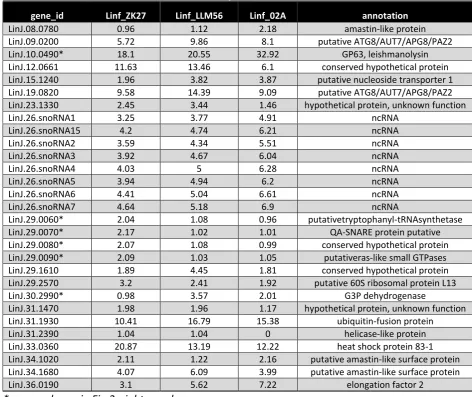
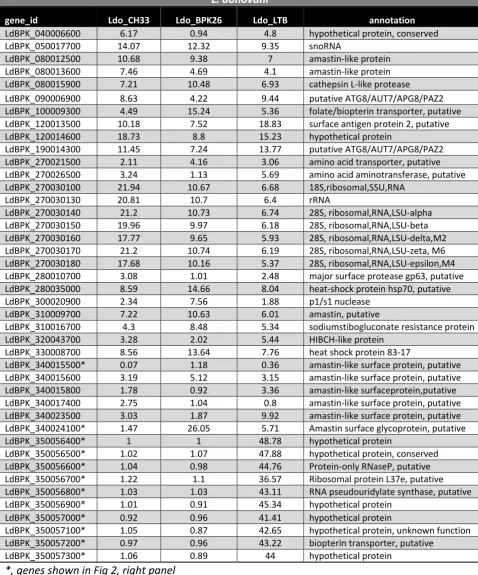
changes for a given strain, providing strong evidence that chromosomal amplification is

99

under positive selection. Significantly, these changes occurred in an individualized manner in

100

even highly related strains, thus implicating for the first time environment-independent

101

intrinsic genetic factors affecting

Leishmania

karyotypic adaptation.

102

103

(6)

Leishmania

parasite isolation and culture.

Ten

Leishmania

strains belonging to the

L.

105

tropica

,

L. major

and

L. donovani

complexes of eight different geographical areas were

106

isolated from infected patients, dogs or hamster (

Table S1

). Some strains were

107

cryopreserved in liquid nitrogen prior to culture adaptation until used for this study (

Table

108

S1

).

Leishmania

isolates were first stabilized

in vitro

in media that were optimized in the

109

various LeiSHield partner laboratories (‘Stabilization medium’,

Table S2

), prior to expansion

110

in classical RPMI culture medium for a defined number of passages (‘Expansion medium’).

111

Seven strains belonging to the

L. donovani

complex were selected for the comparison of

112

intra-species evolvability in culture. These include the four

L. infantum

strains Linf_ZK27

113

from Tunisia, Linf_LLM56 and Linf_LLM45 from Spain, and Lin_02A from Brazil (voucher to

114

asses this sample at Coleção de Leishmania do Instituto Oswaldo Cruz (CLIOC): IOCL3598),

115

and the three

L. donovani

strains Ldo_BPK26 from India, Ldo_LTB from Sudan, and

116

Ldo_CH33 from Cyprus. The latter strain belongs to the

L. donovani

MON-37 zymodeme

(17-117

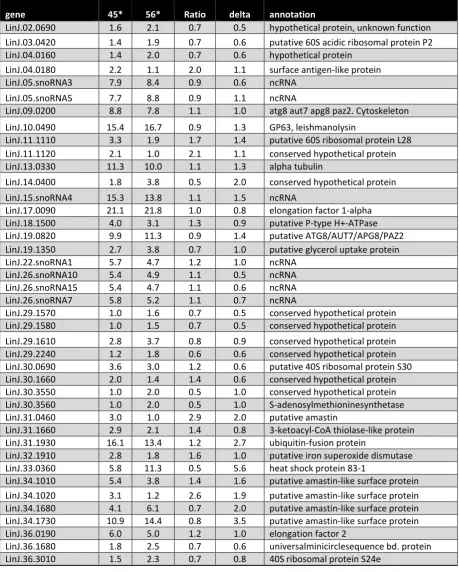
19) and multilocus microsatellite typing (MLMT) analysis has positioned it in a novel

L.

118

donovani sensulato

(s.l.) group (20). Our analysis further included two

L. major

strains

119

(Lmj_1948 from Tunisia, Lmj_A445 from Algeria) and one

L. tropica

strain (Ltr_16 from

120

Morocco) (

Table S1

). Genotyping methodologies were applied to confirm species identity of

121

the strains used in this work (

Table S1

). Standardized procedures for DNA sample

122

preparation and cell (sub)-culturing were used in all partner laboratories (

Table S2

).

123

Promastigotes from early cell culture (passage 2 of growth in Expansion medium, referred to

124

as early passage samples, EP) and derived parasites maintained in culture for three more

in

125

vitro

passages (EP+3) were processed for whole-genome sequencing (WGS) using parasites

126

from late logarithmic growth phase.

While different

Leishmania

strains can show differences

127

(7)

estimated that a single passage in culture corresponds to ca. 10 generations (13).

To

129

determine reproducibility of

in vitro

genome evolution, duplicate EP+3 samples (EP+3.1 and

130

EP+3.2) were generated for the Linf_ZK27, Lmj_1948, Lmj_A445, Ldo_BPK26 and Ltr_16

131

strains (

Figure S1

). Culture conditions and time in culture for the 25 samples are detailed in

132

Table S2

.

133

134

Nucleic acid extraction, sample preparation and sequencing analysis.

Procedures for DNA

135

sample preparation and quality control were standardized using common protocols. Briefly,

136

DNA extraction was performed using DNeasy blood and tissue kits from Qiagen according to

137

manufacturer instructions. Nucleic acid concentrations were measured with Qubit and the

138

DNA quality was evaluated on agarose gel. Between 2 to 5µg of DNA were used for

139

sequencing. The following samples showed low DNA amounts and were thus PCR amplified

140

before sequencing: Ldo_LTB_EP (five cycles), Ldo_LTB_EP+3 (five cycles), Linf_02A_EP (ten

141

cycles), Linf_02A_EP+3 (five cycles). No PCR amplification was performed for the other

142

samples.

143

144

Whole genome, short-insert, paired-end libraries were prepared for each sample.

145

Samples Ltr_16_EP, Ltr_16_EP+3.1, Ltr_16_EP+3.2, Ldo_BPK26_EP, Ldo_BPK26_EP+3.1,

146

Ldo_BPK26_EP+3.2, Lmj_A445_EP, Lmj_A445_EP+3.1, Lmj_A445_EP+3.2 were sequenced by

147

the Biomics sequencing platform (

https://research.pasteur.fr/en/team/biomics/

) with Hiseq

148

2500 rapid runs, resulting in 2

108bp reads using the NEXTflex PCR-Free kit. All other

149

samples were sequenced with the KAPA Hyper Prep Kit (Kapa Biosystems) at Centro

150

Nacional de Análisis Genómico (CNAG,

http://www.cnag.crg.eu/

) using the TruSeq SBS Kit

151

(8)

procedures, using a HiSeq2000 flowcell v3 generating 2

101bp paired-end reads. Reads

153

were deposited in the Sequence Read Archive database (SRA) database (21) and are publicly

154

available under the accession number SRP126578.

155

156

Read alignment.

Gene annotations and reference genomes of

L.major

Friedlin and

L.

157

infantum

JPCM5 were downloaded from the Sanger FTP server (22) (URL

158

ftp://ftp.sanger.ac.uk/pub/project/pathogens/gff3/CURRENT/

) on 09/05/2017, whereas

159

PacBio

L. donovani

LDBPK assembly and annotations were downloaded on 02/05/2017 (URL

160

ftp://ftp.sanger.ac.uk/pub/project/pathogens/Leishmania/donovani/LdBPKPAC2016beta)

.

161

The reads were aligned to the reference genomes with

BWA mem

(version 0.7.12) (23, 24)

162

with the flag -M to mark shorter split hits as secondary.

Samtools fixmate

,

sort

, and

index

163

(25) (version 1.3) were used to process the alignment files and turn them into bam format.

164

RealignerTargetCreator

and

IndelRealigner

from the

GATK

suite (26-28) were run to

165

homogenize indels. Eventually, PCR and optical duplicates were labeled with

Picard

166

MarkDuplicates

(

https://broadinstitute.github.io/picard/

, version 1.94 (1484)) using the

167

option ‘VALIDATION_STRINGENCY=LENIENT’. While the reads were aligned against full

168

assemblies, including unsorted contigs, just the canonical 36 chromosomes were considered

169

for downstream analyses of ploidy estimation and copy number alterations. This filter was

170

necessary because of the high content of repetitive elements and the absence of

171

comparable and high quality annotations in the contigs. Given that the

L. tropica

reference

172

genome is still unfinished, the sample Ltr_16 was aligned against the

L. major

Friedlin

173

genome. Overall, starting from a total of 1,011,803,806 short reads, 952,093,114 were

174

successfully aligned to the respective reference genomes (

Table S3

).

Picard

175

(9)

177

Comparative genome analysis.

Whole genome sequencing data from the EP

Leishmania

178

isolates were processed with

Trimmomatic

(29) (version 0.35) to remove low quality bases

179

(options LEADING:3 TRAILING:3 SLIDINGWINDOW:4:15) and adapter contaminations

180

(ILLUMINACLIP option, with values 2:30:12:1:true). Reads that were shorter than 36 bases

181

after filtering were discarded (option MINLEN:36). The trimmed reads were assembled with

182

SPAdes

(30) (version 3.7.0) with option ‘careful’. The resulting contigs were used to estimate

183

the average nucleotide identity (ANI) with

dnadiff

part of

MUMmer

system (31) (version

184

3.23). The analysis included the reference genomes of

L. donovani, L. infantum

and

L. major

185

that were retrieved from the Sanger database (see above), and reference genomes of

L.

186

braziliensis, L. mexicana

, and

L. panamensis

that were retrieved from ENSEMBL Protists

187

release 29 (32). The ANI values were converted to a matrix of distances, which in turn were

188

used for principal component analysis (PCA) and hierarchical clustering (R hclust function,

189

https://www.r-project.org/

).

190

191

Chromosome sequencing coverage.

For each read alignment file,

Samtools view

(version

192

1.3) and

BEDTools genomecov

(33) (version 2.25.0) were used to measure the sequencing

193

depth of each nucleotide.

Samtools

was run with options ‘-q 50 -F 1028’ to discard reads

194

with low map quality score or potential duplicates, while

BEDTools genomecov

was run with

195

options ‘-d -split’. Nucleotide coverage was normalized by the median genomic coverage.

196

The chromosome sequencing coverage was used to evaluate aneuploidy between EP

197

and EP+3 samples. For each sample and for each chromosome the median sequencing

198

coverage was computed for contiguous windows of 2,500 bases. For those strains where

199

(10)

statistical significance of amplification compared to EP. The distribution of the median

201

window coverage in EP and EP+3 were compared with 1-way ANOVA. To have an estimate of

202

the chromosome copy number differences, the window coverage was further normalized by

203

chromosome 19 median coverage and multiplied by two. For each chromosome the median

204

values in EP and EP+3 were compared. Both the ANOVA P-values and the chromosome somy

205

comparisons are reported in

Table S4.

206

207

Gene sequencing coverage.

Samtools view

(version 1.3) and

BEDTools coverage

(version

208

2.25.0) were used to measure the mean sequencing depth of every annotated gene and

209

were run respectively with options ‘-q 50 -F 1028’ and ‘-d -split’. Possible intragenic gap

210

regions were excluded from the calculation of the mean. Then the mean coverage of each

211

gene was normalized by the median coverage of its chromosome. To account for GC content

212

sequencing bias, the coverage values were corrected using a LOESS regression with a 5-fold

213

cross validation to optimize the model span parameter. Genes supported by reads with a

214

mean mapping quality (MAPQ) score < 50 were filtered.

215

To enable CNV analysis of gene arrays and genes sharing high sequence identity we

216

clustered the nucleotide sequence of the annotated genes into groups with

cd-hit

(34)

217

(version 4.6). We used the length difference cutoff option ‘-s 0.9’. Then we realigned the

218

clusters with MAFFT (35) and used

T-Coffee seq_reformat

(36) to select a representative

219

gene per cluster (RefGene) showing the highest average sequence similarity with the other

220

cluster members. If two genes had the same average similarity then the shortest was

221

chosen. We used

bwa

to build a database containing only the sequences of RefGene, adding

222

+/- 50 base pairs of the 5’ and 3’ ends to ease the read alignment and the quantification of

223

(11)

option ‘-M’. We then quantified the RefGene mean coverage (without considering the +/-50

225

base pairs extension) with

Samtools view

and

BEDTools coverage

using options ‘-F 1028’ and

226

‘-d -split’, respectively. Values were normalized by the median coverage of the RefGene’s

227

chromosome. Gene groups composed by members located on different chromosomes were

228

negligible and discarded.

229

230

Genome binning.

The reference genomes were divided into contiguous windows of a fixed

231

length, and the sequencing coverage of each window was evaluated and compared across

232

different samples. A window length of 300 bases was used for the shown scatter plots

233

assessing genome-wide CNVs. Both the mean sequencing coverage normalized by the

234

median chromosome coverage and the mean read MAPQ value were computed. To account

235

for GC content sequencing bias, the coverage values were corrected using a LOESS

236

regression with a 5-fold cross validation to optimize the model span parameter. The

237

windows with MAPQ score below 50 in either EP or EP+3.1 were discarded. Poorly

238

supported windows with median or mean sequencing depth smaller than one tenth of the

239

median chromosome coverage both in EP and EP+3.1 were also discarded. The windows

240

with EP+3/EP coverage ratio outside the axes limits were placed on the edge (value of 3). In

241

the genome browser tracks the repeat elements and low complexity regions were predicted

242

with

RepeatMasker

(RepeatModeler software: Smit, AFA, Hubley, R.

RepeatModeler

Open-243

1.0

. 2008-2015. 2008. Available:

http://www.repeatmasker.org

) (version 4.0.6) using options

244

‘-e crossmatch -gff -xsmall -s’ in combination with

Repbase

(37) to identify

Leishmania

-245

specific and ancestral repeats.

246

A window length of 2,000 bases was used for the shown circos plots assessing

247

(12)

aligning to that window were reported. The histogram function of

Circos

(version 0.68-1,

249

(38)) was used to visualize the coverage of the windows, using a cut off of 3. Windows with

250

mean MAPQ score below 50 or overlapping genomic gaps of over 1kb were assigned a

251

sequencing coverage of 1.

252

253

Single nucleotide variants analysis.

To call single nucleotide variants (SNVs) we used

254

Freebayes

(39) (version v1.0.1-2-g0cb2697) with options ‘--no-indels --no-mnps --no-complex

255

--read-mismatch-limit 3 --read-snp-limit 3 --hwe-priors-off --binomial-obs-priors-off

--allele-256

balance-priors-off --min-alternate-fraction 0.05 --min-base-quality 5 --min-mapping-quality

257

50 --min-alternate-count 2 --pooled-continuous’. The output was filtered to retain the

258

positions with just one alternate allele with a minimum frequency of 0.9, and a minimum

259

mean mapping quality of 20 for the reads supporting the reference or the alternative allele.

260

SNVs mapping inside homopolymers (i.e. simple repeats of the same nucleotide) were

261

filtered using a more stringent parameter, requiring at least 20 reads supporting the variant.

262

The homopolymers were defined as the DNA region spanning +/- 5 bases from the SNV, with

263

over 40% of identical nucleotides. We discarded SNVs with sequencing coverage above or

264

below four median absolute deviations (MADs). The predicted SNVs are reported in

Table

265

S5

.

266

267

Analysis of structural variants.

DELLY

(40) (version 0.6.7) was run with option ‘-q 50’ to

268

predict balanced structural variations, including translocations and inversion. To reduce false

269

predictions, the

DELLY

output was additionally filtered removing structural variants

270

overlapping for more than 50% of their size with either assembly gaps or repetitive

271

(13)

reduce false positive results caused by possible misassembled regions close to the

273

chromosome ends. Signals showing

DELLY

paired-end support of the structural variant (PE)

274

or the high-quality variant pairs score (DV) inferior to 20 were removed, as well as signals

275

showing high-quality variant pairs inferior to 20. The predicted structural variants were

276

represented with

Circos

.

277

278

Synteny analysis.

The synteny analysis was performed with

SyntView

(41), a software

279

package originally designed to compare microbial genomes. The tool was adapted to browse

280

interactively the genome of four

Leishmania

reference genomes and explore their syntenic

281

relation:

L. infantum

JPCM5,

L. donovani

PBQ7IC8,

L. major

Friedlin,

L. donovani

BPK282A1.

282

This new tool hosting

Leishmania

syntenic data is publicly available at

283

http://genopole.pasteur.fr/SynTView/flash/Leishmania/SynWebLinfantum.html

.

284

285

Supplementary tables availability.

All supplementary tables are publicly available at:

286

https://gitlab.pasteur.fr/gbussott/Leishmania_genome_dynamics_during_environmental_ad

287

aptation_reveals_strain_specific_differences/

.

288

289

Accession number.

Reads were deposited in the Sequence Read Archive database (SRA)

290

database and are publicly available under the accession number SRP126578.

291

292

293

(14)

Results

295

Analyzing the evolutionary relationship among

Leishmania

strains.

Ten

Leishmania

strains

296

belonging to the

L. tropica

,

L. major

or

L. donovani

complexes were obtained from different

297

sources and regions (see methods, see

Table S1

) and parasites from early and later culture

298

passages (designated EP and EP+3 respectively,

Figure S1

,

Table S2

) were subjected to

299

sequencing analysis.

300

We first used the EP sequence information to confirm species determination and to

301

characterize strain-specific genetic variations that may inform on mechanisms of adaptation.

302

PCA and clustering analyses based on the average nucleotide identity (ANI) among strains

303

confirmed the molecular determination of the various

Leishmania

species (

Figure S2 A

and

304

B

), with

L. infantum

and

L. donovani

or

L. major

and

L. tropica

grouping together,

305

respectively. Ldo_CH33 grouped with other

L. donovani

strains, thus confirming previous

306

zymodeme analysis (17-19)

.

Based on branch length that correlates with genetic distance,

307

the

L. infantum

isolates Linf_ZK27, Linf_LLM56, Linf_LLM45 and Linf_02A are highly related

308

as was expected by their common epidemiological classification as MON-1 (

Table S1

).

309

Comparing the repertoire of high frequency SNVs (>90%) across the

L. infantum

310

isolates (

Figure 1A

) confirmed the very close relationship among these samples despite their

311

geographic distance, with less than 600 strain-specific SNVs observed for a given isolate. The

312

majority of SNVs shows a low frequency (data not shown), suggesting that nucleotide

313

variants may not be under strong selection in this species. In contrast, the

L. donovani

strains

314

are evolutionarily more distant as judged by the presence of over 40,000 strain-specific

315

SNVs, with high frequency SNVs likely being associated with defined haplotypes that may be

316

under selection as previously suggested (13, 42), or may be the result of geographic

317

(15)

Finally, the SNV analysis revealed the close genetic relationship between the Tunisian

319

and Algerian

L. major

samples with 36,726 SNVs shared between the strains compared to

320

the reference genome (

Figure 1C

). The massive amount of SNVs identified in

L. tropica

321

confirmed the large evolutionary distance to

L. major

strains observed by PCA and the

322

clustering analyses (

Figure S2

). Differences in the evolutionary relationship were further

323

supported by the absence of inversions or translocations in the

L. major

and

L. infantum

324

strains compared to the corresponding reference genomes, and the presence of

325

translocations in the Cypriot Ldo_CH33 strain and the Sudanese

L. donovani

strain Ldo_LTB

326

(

Figure 1D

, and

Table S6

), revealing a potential role of these structural genome variation in

327

L. donovani

adaptation.

328

329

Strains-specific gene copy number variations.

Cross-comparing read depth among the EP

330

samples revealed important intra-species variations in copy number for single- and

multi-331

copy genes (

Table S7

, see methods). Plotting the gene coverage values for the three

L.

332

infantum

isolates, or the three

L. donovani

isolates, or the two

L. major

isolates together

333

with the

L. tropica

sample, resulted in strong, confined signals at the center of the ternary

334

plots that correspond to genes with equal copy number and thus a 33% distribution across

335

the three axes (

Figure 2

, left panels). Compared to the different reference genomes, we

336

observed important, strain-specific differences in gene copy number that are visualized on

337

these plots by shifts of the signals out of the centre. Overall, using a cut off of 0.5 increase or

338

decrease in normalized read depth of 1 (corresponding to the copy number per haploid

339

genome) we observed 67, 152 and 119 strain-specific amplifications for respectively

L.

340

(16)

Tables 1

and

2

(for the full panel see

Table S8

) and prominent examples are represented on

342

the right panels of

Figure 2

.

343

In

L. infantum

we observed (i) a 2.94-fold amplification in Linf_LLM56 of LinJ.30.2990

344

encoding for a glyceraldehyde 3-phosphate dehydrogenase, (ii) a cluster of seven genes

345

(Linj.29.0050 - Linj.29.0110) located in a ~23 kb region delimited by SIDER repetitive

346

elements that showed a two-fold amplification in Linf_ZK27, and (iii) the amplification (up to

347

32-fold) of the GP63 leishmanolysin cluster (LinJ.10.0490 - LinJ.10.0530) in Linf_02A. For

L.

348

donovani

we identified (i) a 48-fold amplification specific to Ldo_LTB of a cluster of ten genes

349

(LdBPK_350056400 - LdBPK_350057300), which includes a biopterin transporter, an

RNAse-350

P, an RNA pseudouridylate synthase and a putative ribosomal L37e protein, (ii) an up to

26-351

fold amplification in Ldo_BPK26 of a putative amastin surface glycoprotein

352

(LdBPK_340024100), and (iii) the deletion in Ldo_CH33 and partial depletion in Ldo_LTB of a

353

putative amastin-like surface protein (LdBPK_340015500). Finally, as expected from their

354

phylogenetic relationship, important differences were observed in gene CNVs between the

355

L. tropica

and

L. major

strains, including (i) an amplification on chromosome 35 in both

356

Lmj_1948 and Lmj_A445 (respectively of 3.51 and 2.63-fold), spanning a hypothetical

357

protein (LmjF.35.0250) and the 5’ of a putative GTP-ase activating protein (LmjF.35.0260), (ii)

358

an up to 6-fold amplification in Ltr_16 of a putative KU80 protein (LmjF.30.0340) flanked by

359

SIDER2 elements, and (iii) an Lmj_A445-specific amplification of a snoRNA cluster on

360

chromosome 26.

361

Together these results suggest that gene CNVs may drive or be the result of

362

adaptation of otherwise highly related

Leishmania

field isolates, causing phenotypic

363

differences with respect to stress resistance, nutrition, and infectivity as judged by gene

364

CNVs observed in heat shock proteins, transporters, and known virulence factors (see

Tables

(17)

1

and

2

). Thus gene CNV seems to shape the parasite genome and likely its pathogenic

366

potential in the field through positive (amplification) and purifying (deletion) selection,

367

potentially driving long-term adaptation to ecological constraints of local transmission

368

cycles.

369

370

Dynamic karyotype changes during extended growth in culture.

We next assessed

371

structural genomic variations that may drive short-term environmental adaptation

372

comparing EP and EP+3 samples that evolved

in vitro

during culture adaptation. WGS and

373

read depth analysis revealed important karyotype differences between the two

in vitro

374

passages of a given strain (intra-strain variation) and among different strains (inter-strain

375

variation). Aside an intra-chromosomal duplication at both EP and EP+3 observed in Ldo_LTB

376

spanning nearly half of chromosome 27 (453.410 bases) affecting 113 genes, changes in read

377

depth were homogenous across all chromosomes thus revealing frequent aneuploidy (

Figure

378

S3

). Linf_ZK27 and Ldo_LTB displayed the most stable karyotypes between EP and EP+3. As

379

judged by read depth values corresponding to integer or intermediate chromosome copy

380

number values, full or mosaic aneuploidy was observed for four (chromosome 6, 9, 31, 35

381

for Linf_ZK27) and six chromosomes (chromosome 13, 15, 20, 23, 31, 33 for Ldo_LTB), which

382

were established at EP and maintained at EP+3 (

Figure 3

and

Table S4

). All other isolates

383

showed higher intra-strain karyotype instability with both gain and loss of chromosomes

384

observed between EP and EP+3. Linf_02A represented the most extreme example showing

385

significant changes in read depth for twenty-one chromosomes (

Figure 3

and

Table S4

) and

386

five chromosomes with a somy score difference higher than 0.5 compared to the disomic

387

state corresponding to 2 (

Table S4

, see methods). Overall, chromosomes 20 and 23 showed

388

(18)

(mosaic aneuploidy, trisomy, tetrasomy) observed in respectively nineteen and fifteen

390

samples out of twenty-five, suggesting that amplification of these chromosomes may

391

provide fitness advantage during culture adaptation for most of the strains analyzed in our

392

study.

393

With the exception of the previously reported, stable aneuploidy for chromosome 31

394

(10), the dynamics of the observed karyotypic changes are substantially different among all

395

isolates. It is interesting to speculate that this heterogeneity reflects individualized solutions

396

driving fitness gains

in vitro

. While differences in culture conditions certainly account for

397

some of the observed karyotypic variability, the comparison of two closely related Spanish

L.

398

infantum

isolates Linf_LLM45 and Linf_LLM56 reveals a culture-independent component

399

implicated in genomic adaptation. Both isolates were adapted to culture at the same time

400

under the same conditions, yet showed important differences in karyotype dynamics, with

401

only Linf_LLM56 demonstrating changes in somy levels at EP+3 (

Figure 3

and

Table S4

).

402

These strains are genotypically identical (zymodeme MON-1) (

Table S1

) and are genetically

403

closely related with an average nucleotide identity of over 99.95%, suggesting that minor

404

genetic differences may have important impact on

Leishmania

karyotypic adaptation to a

405

given environment. Aside SNVs (see

Figure 1

), the difference in karyotype dynamics may be

406

linked to gene CNVs observed between the Linf_LLM45 and Linf_LLM56, which affected

407

genes implicated for example in protein translation, protein folding, or protein turnover

408

(

Table 3

).

409

Despite this remarkable plasticity of the

Leishmania

karyotype, we observed that

410

changes in chromosome number are highly reproducible in duplicate EP+3 samples that

411

were derived for

L. major

(Lmj_1948 and Lmj_A445),

L. infantum

(Linf_ZK27),

L. donovani

412

(19)

may arise in a stochastic manner -

either in the host or during culture adaptation

, our data

414

demonstrate that beneficial karyotypes are under strong selection during culture

415

adaptation. Significantly, the SNV frequency profiles for EP and EP+3 were largely identical,

416

ruling out the possibility that adaptation occurs through selection of sub-populations that

417

would cause important shifts in SNV frequency distribution (data not shown). Together our

418

results document the highly dynamic nature of karyotype management in

Leishmania

during

419

environmental adaptation that is likely governed by complex interactions between external

420

cues and intrinsic genetic differences.

421

422

Dynamic variations in gene copy number during

de novo

culture adaptation.

Plotting

423

genome-wide sequencing coverage of EP+3 against EP for all annotated genes resulted in a

424

largely diagonal distribution, suggesting that there are no major CNVs between the two

425

different passages (

Figure 4A

,

Figure S4

,

Table S9

). Overall, the majority of genes were

426

scattered around a normalized coverage of 1 (corresponding to the copy number per haploid

427

genome, see methods), suggesting that their copy number matches the one in the reference

428

strains. We nevertheless observed a significant number of genes across all isolates that

429

showed coverage either below 0.5 or above two-fold, independent of culture passage, thus

430

revealing important differences between the isolates and their corresponding reference

431

genomes. This analysis uncovered a significant increase in coverage at EP+3 for all

432

chromosomes of strain Linf_02A (

Figure 4B, Table S9

), indicating some form of CNV that

433

correlated with increased culture passage. In the following, we more closely investigated the

434

structural basis of these culture-associated CNVs in Linf_02A.

435

(20)

Telomeric amplification.

We partitioned the genome into contiguous windows and plotted

437

the coverage at EP or EP+3 samples, as well as the ratio between EP+3 and EP. We observed

438

a significant increase in read depth towards the telomeres in both EP and EP+3 for

439

Lmj_1948, while coverage fluctuations in EP+3 were observed for Ltr_16, Lmj_A445, and

440

Linf_02A, generating a repetitive pattern when plotting the entire genome (

Figure 5A

). The

441

observed increase in read depth is not discrete but gradual, spanning from sub-telomeric

442

regions to the telomeres and thus cannot be assigned to misannotation of the number of

443

telomeric repeats in the reference genome (that should cause a discrete but not progressive

444

increase in read depth at the telomeres only). The gradual increase in read depth supports

445

the increased gene coverage and contributes to the shift in the chromosome coverage

446

distribution we observed for strain Linf_02A at EP+3 (

Figure 4B

and

Figure 3

). We found the

447

gradual increase in read depth to be disrupted for chromosomes 7 and 13 by regions with

448

lower read depth (

Figure 5B

and

Figure S5

). According to our model, these genomic

449

elements should not be part of sub-telomeric regions and thus either reflect a strain-specific

450

recombination event or misassembly of the

L. infantum

reference genome. Synteny analysis

451

among available reference genomes showed that the disruptive sequence elements

452

observed in Linf_02A show sub-telomeric localization in

L. major

and the novel PacBio

453

generated LdBPK genome (12), revealing misassembly of these regions in the current

L.

454

infantum

and the previous

L. donovani

reference genomes (

Figure 5C

). This ‘diagnostic’

455

value of our result confirms that telomeric amplification is not a technical artefact, but

456

represents a non-conventional mechanism of telomeric amplification in

Leishmania

that may

457

be similar to those described in other organisms (43).

458

459

(21)

Drawing from newly generated genome sequences of

Leishmania

clinical isolates and

461

conducting longitudinal studies

in vitro

we demonstrate the existence of strain-specific gene

462

copy number variations that may drive long-term and short-term evolutionary trajectories in

463

Leishmania

. We show that highly related

Leishmania

isolates that evolved in different

464

regions are distinguished by both amplification and loss of genes linked to parasite

465

infectivity, such as GP63 or amastins. The fixation of these genetic alterations may not be

466

random but could potentially be the result of positive or purifying selection processes that

467

are functional and adapt parasite fitness to a given ecology or transmission cycle.

468

Identification of such genomic alterations that are under selection by the host can directly

469

inform on genetic loci that are clinically relevant. The corresponding genes may be

470

prioritized for functional genetic analysis (notably those genes that are not annotated) as

471

they may play important roles in virulence and may qualify as biomarkers with diagnostic or

472

prognostic value.

473

Monitoring genetic fluctuations using

de novo

culture as a proxy for short-term

474

environmental adaptation revealed two forms of dynamic genomic changes. First, as judged

475

by the establishment of reproducible aneuploidy profiles in duplicate cultures of a given

476

strain, chromosomal amplification is the result of selection rather than random genetic drift.

477

This result corroborates our previous observations in the

L. donovani

experimental strain

478

LD1S, where spontaneous karyotypic fluctuations generate genotypically and phenotypically

479

diverse mosaic populations that are substrate for evolutionary adaptation and fitness gain in

480

response to environmental change (13).

Whether chromosomal amplification occurs de novo

481

during culture adaptation or reflect an initial diversity in each clinical isolate remains to be

482

established, even though the karyotype mosaicism we previously observed in situ in

L.

483

donovani

infected hamster spleen and liver favours the latter explanation (13)

.

(22)

Second, we uncovered a novel mechanism of telomeric amplification in three

485

different

Leishmania

species (

L. major, L. tropica

and

L. infantum

) as revealed by a

486

progressive increasing in sequencing read depth towards the chromosome ends.

Non-487

classical mechanisms of telomere maintenance have been documented in a variety of

488

eukaryotes, including (i) rolling circle replication in

Kluyveromyces lactis

, implicating

extra-489

chromosomal circular templates (44), (ii) break-induced replication in

Saccharomyces

490

cerevisiae

involving recombination between tracts of telomeric repeats (45), or (iii) telomeric

491

loop formation first observed in human and mouse cells, where a telomere 3’ end loops back

492

to invade the duplex part of the same telomere and anneal with complementary telomeric

493

repeat sequence (43). Our observation of a gradual increase in read depth from large

sub-494

telomeric regions towards the chromosome ends is compatible with rolling circle replication,

495

considering the propensity of

Leishmania

to extra-chromosomal amplification (9), the

496

absence of telomeric repeats in sub-telomeric regions in Linf_02A that would allow for

497

telomeric loop formation (data not shown), and the presence of only very small telomeric

498

loops of less than 1kb in the related pathogen

Trypanosoma brucei

(46). Given that bona fide

499

amastigotes cannot be maintained or adapted to culture, our

in vitro

evolutionary

500

experiments were conducted with insect-stage promastigotes that were directly derived

501

from tissue-derived amastigotes. Thus, the various forms of genomic instability we observed

502

in our system likely drive adaptation and fitness gain in the sand fly vector. While we

503

previously documented the prevalence of chromosomal amplification in tissue amastigotes

504

(13), the presence of telomeric amplification at this stage remains to be established.

505

Our comparative genomics approach further provided a powerful tool to reveal

506

species- and strain-specific variations in genomic adaptation. Telomeric amplification was

507

(23)

even in closely related isolates under the same culture conditions, revealing the significance

509

of environment-independent, intrinsic factors in genomic adaptation. Using the highly

510

related Spanish isolates Linf_LLM56 and Linf_LLM45 as an example, various genetic

511

determinants may be implicated. Both strains were obtained from the same area at a short

512

time frame, suggesting a very recent common ancestor as confirmed by their genetic

513

similarity. Nevertheless, they were isolated from two stray dogs and genetic differences of

514

both mammalian and insect hosts during natural infection may have shaped the parasite

515

genomes in different ways through genotype-genotype interactions, as observed for

516

example in anopheline mosquitoes infected with

Plasmodium falciparum

, the causal agent

517

of malaria (47). Given the intrinsic instability of the

Leishmania

karyotype we observed

in

518

situ

during visceral infection in liver- and spleen-derived amastigotes (13), these interactions

519

may establish a very different chromosomal stoichiometry among canine isolates, which

520

then translates into the different karyotypic trajectories we observed during culture

521

adaptation. Likewise, differences in the number of single-copy genes or CNVs in multi-copy

522

gene arrays generated by intra- or extra-chromosomal amplification (9) may impact on the

523

karyotypic profile, with gene amplification alleviating the need for chromosome duplication

524

as previously suggested (10). Finally, we cannot rule out that individual SNVs in coding

525

sequences or regulatory elements 5’ and 3’ UTRs may impact on genomic adaptation, a

526

possibility that is supported by our previous observation of tissue-specific haplotype

527

selection in the liver and spleen of

L. donovani

infected hamsters (13).

528

In conclusion, our results draw a complex picture of

Leishmania

genomic adaptation

529

in the field and in culture that needs to be considered in epidemiological studies that

530

correlate parasite phenotypic variability and disease outcome. Adaptation is highly

531

(24)

heterogeneous parasite populations that thrive inside distinct and genetically equally

533

heterogeneous hosts (e.g. insects, rodents, humans). For environmental adaptation,

534

Leishmania

can draw from a vast genetic landscape of spontaneous karyotypic fluctuations,

535

stochastic gene amplifications, and nucleotide polymorphisms. Our comparison of highly

536

related Spanish

L. infantum

isolates revealed that even small variations in sequence might

537

result in important differences in karyotypic adaptation. Thus, closely related isolates

538

evolving in the same epidemiological niche can attain similar levels of fitness in a highly

539

pleotropic way using alternative genetic solutions (13). This form of pleiotropic adaptation is

540

characteristic for pathogenic microbes that maintain genetic heterogeneity and thus

541

evolvability despite strong selection. Our data indicates that

Leishmania

adopts a similar,

542

polyclonal adaptation strategy, which may strongly limit the identification of biomarkers

543

with broad clinical relevance across

Leishmania

species or even related

Leishmania

strains.

544

Future efforts need to take this complexity into account and approach the epidemiology of

545

Leishmania

infection on an integrative level, considering genotype-genotype and

546

environment-genotype interactions, and dissecting the population structure of individual

547

isolates by single cell, direct tissue sequencing.

548

549

Acknowledgements

550

This study was supported by a seeding grant from the Institut Pasteur International

551

Department to the LeiSHield consortium, the EU FP7 (Kaladrug-R, contract 222895), the

552

Belgian Science Policy Office (TRIT, P7/41), the Department of Economy, Science and

553

Innovation in Flanders (ITM-SOFIB) and the Flemish Fund for Scientific Research (G.0.B81.12)

554

(J.C.D., F.D.).

555

(25)

References

557

558

1.

Jun 2015. 5. A touch of Zen: post-translational regulation of the Leishmania stress

559

response.

Cell

Microbiol,

17.632-638.

560

http://eutils.ncbi.nlm.nih.gov/entrez/eutils/elink.fcgi?dbfrom=pubmed&amp;id=25801

561

803&amp;retmode=ref&amp;cmd=prlinks

.

562

2.

Apr 30 1984. 4643. Identification of an infective stage of Leishmania promastigotes.

563

Science,

223.1417-1419.

564

http://eutils.ncbi.nlm.nih.gov/entrez/eutils/elink.fcgi?dbfrom=pubmed&amp;id=67015

565

28&amp;retmode=ref&amp;cmd=prlinks

.

566

3.

1994. The role of pH and temperature in the development of Leishmania parasites.

567

Annu

Rev

Microbiol,

48.449-470.

568

http://eutils.ncbi.nlm.nih.gov/entrez/eutils/elink.fcgi?dbfrom=pubmed&amp;id=78260

569

14&amp;retmode=ref&amp;cmd=prlinks

.

570

4.

2013. 11. Proteomic and genomic analyses of antimony resistant Leishmania infantum

571

mutant.

PLoS

ONE,

8.e81899.

572

http://eutils.ncbi.nlm.nih.gov/entrez/eutils/elink.fcgi?dbfrom=pubmed&amp;id=24312

573

377&amp;retmode=ref&amp;cmd=prlinks

.

574

5.

Dec 2011. 12. Whole genome sequencing of multiple Leishmania donovani clinical

575

isolates provides insights into population structure and mechanisms of drug resistance.

576

Genome

Res,

21.2143-2156.

577

http://eutils.ncbi.nlm.nih.gov/entrez/eutils/elink.fcgi?dbfrom=pubmed&amp;id=22038

578

251&amp;retmode=ref&amp;cmd=prlinks

.

579

6.

2016. Plasticity of the Leishmania genome leading to gene copy number variations

580

and

drug

resistance.

F1000Res,

5.2350.

581

http://eutils.ncbi.nlm.nih.gov/entrez/eutils/elink.fcgi?dbfrom=pubmed&amp;id=27703

582

673&amp;retmode=ref&amp;cmd=prlinks

.

583

7.

May 2009. 5. Gene expression modulation is associated with gene amplification,

584

supernumerary chromosomes and chromosome loss in antimony-resistant Leishmania

585

infantum.

Nucleic

Acids

Res,

37.1387-1399.

586

http://eutils.ncbi.nlm.nih.gov/entrez/eutils/elink.fcgi?dbfrom=pubmed&amp;id=19129

587

236&amp;retmode=ref&amp;cmd=prlinks

.

588

8.

May 2013. 1. Telomeric gene deletion and intrachromosomal amplification in

589

antimony-resistant

Leishmania.

Mol

Microbiol,

88.189-202.

590

http://eutils.ncbi.nlm.nih.gov/entrez/eutils/elink.fcgi?dbfrom=pubmed&amp;id=23421

591

749&amp;retmode=ref&amp;cmd=prlinks

.

592

9.

Jun 2014. 5. Genome-wide stochastic adaptive DNA amplification at direct and

593

inverted DNA repeats in the parasite Leishmania. PLoS Biol, 12.e1001868.

594

http://eutils.ncbi.nlm.nih.gov/entrez/eutils/elink.fcgi?dbfrom=pubmed&amp;id=24844

595

805&amp;retmode=ref&amp;cmd=prlinks

.

596

10.

Dec 2011. 12. Chromosome and gene copy number variation allow major structural

597

change between species and strains of Leishmania. Genome Res, 21.2129-2142.

598

http://eutils.ncbi.nlm.nih.gov/entrez/eutils/elink.fcgi?dbfrom=pubmed&amp;id=22038

599

252&amp;retmode=ref&amp;cmd=prlinks

.

600

11.

Jul 2014. 7. Genetic analysis of Leishmania donovani tropism using a naturally

601

attenuated

cutaneous

strain.

PLoS

Pathog,

10.e1004244.

Figure

Table 1: Selection of gene CNVs in L. infantum field isolates (see full data in S7 Table)
Table 2: Selection of gene CNVs in L. donovani field isolates (see full data in S7 Table)
Table 3: Gene CNVs in the Spanish L. infantum isolates Linf_LLM45 and Linf_LLM56

References

Related documents

One route is through conventional legal consulting organs (xinfang) that were set up in county level women’s federations. These organs provide women with

Abbreviations: ABRAEAD, Brazilian Statistical Yearbook of Distance Education; DE, Distance education; FHP, Family Health Program; ICTs, Information and communication technologies;

Enzyme entrapped polyacrylamide and agar/agarose gels were fragile and could not withstand repeated use whereas enzyme entrapped in large calcium alginate beads was used

Experimental data indicate that the adsorption efficiency is dependent on operating variables such as adsorbent mass, pH, shaking speed, particle size, contact time

Various classical as well as soft computing based search and optimization methods are available in literature for the training of neural networks and are shown

In addition to developing a robust regime for its export of uranium, Greenland must also seek to ensure that indigenous groups are incorpo- rated into the mining decision-making

Aurora’s husband is willing to tolerate the fact that his wife keeps the house like a pigsty, that she doesn’t know how to make a sorry pot of beans, and that she can’t take care

This study was undertaken to (1) determine in- stitutional criteria to enable prediction of mortality based on Pa02 and A-aDo2 and then maximize the criteria with regard to