DESIGN A MAINTENANCE SCHEDULE USING RELIABILITY EVALUATION FOR ROLLING MACHINE AT POWER BOOSTER ENGINEERING & MAINTENANCE SDN. BHD.
MOHAMAD FITRI BIN MOHD HASHIM
i
DECLARATION
“I hereby declare that the work in this report is my own except for summaries and quotations
which have been duly acknowledged.”
Signature : ...
Author : Mohamad Fitri Bin Mohd Hashim
ii
SUPERVISOR DECLARATION
“I hereby declare that I have read this thesis and in my opinion this report is sufficient in terms
of scope and quality for the award of the degree of
Bachelor of Mechanical Engineering (Design & Innovation)”
Signature : ...
Supervisor : Dr. Mohd Asri Bin Yusuff
iii
DEDICATION
To my beloved mother and father,
My siblings,
My brother and sister in laws,
My nephews and nieces,
And to all my friend.
iv ABSTRACT
Maintenance is a process to conserve, maintain, operate and regulate its buildings,
equipment, system or machine. In the industry that fully operated by machine, maintenance
work are important to avoid from effect product production. If there is problem on the machine,
production will be delay, fault and this will company face losses. A good maintenance will help
to prolong life of the machine. Besides that, a good maintenance will help company bearing the
cost of machine maintenance. Reliability of the system or machine are depend on good
maintenance. In this study, one machine had been chosen to find reliability values and mean
time to failure. Data needed in this study are time to machine having failure. An analysis will
be used to determine failure distribution whether Weibull Distribution, Lognormal Distribution
or Exponential Distribution. This will conduct by using software Weibull++. Once the failure
distribution had been determined, mean time to failure of the machine will be find using specific
formula in the distribution. With the values of mean time to failure, one maintenance schedule
v ABSTRAK
Penyelenggaraan adalah satu proses memulihara, menjaga, mengendali dan
mengawalselia bangunan, kelengkapan, sistem atau mesin. Di dalam sesebuah industri yang
menggunakan pengunaan mesin dalam barisan produksi, penyelenggaraan ke atas mesin
amatlah penting bagi mengelakkan dari menggangu pengeluaran sesuatu produk. Jika berlaku
sebarang masalah ke atas mesin, pengeluaran sesuatu produk akan menjadi lewat, produk akan
mengalami kerosakan dan ini akan menyebabkan syarikat menanggung kerugian.
Penyelenggaraan yang baik dapat membantu meningkatkan jangka hayat sesebuah mesin.
Bukan itu sahaja, penyelenggaraan yang baik dapat membantu syarikat daripada menanggung
kos kerugian untuk membaiki mesin tersebut. Kebolehharapan sesebuah sistem atau mesin
untuk beroperasi adalah bergantung kepada penyelenggaraan yang baik. Di dalam kajian ini,
sebuah mesin telah dipilih dari sebuah kilang untuk dijadikan bahan ujikaji untuk mendapatkan
nilai keboleharapan dan juga mendapatkan nilai masa untuk mesin itu gagal. Data yang
diperlukan dalam kajian ini adalah masa untuk mesin mencapai kegagalan. Satu analisis akan
dilakukan untuk mengenal pasti taburan kegagalan sama ada taburan weibull, taburan
lognormal atau taburan exponential dengan menggunakan perisian Weibull++. Apabila
taburan kegagalan dikenal pasti, pengiraan untuk mendapatkan purata masa untuk gagal bagi
mesin tersebut dapat dicari. Dengan mengunakan purata masa untuk gagal, satu jadual
penyelenggaraan dapat di cadangkan.
vi
ACKNOWLEDGEMENT
First and foremost, I would like to express my sincere gratitude toward Allah
SubhanahuWa Ta’ala who makes my wishes a reality. Then, warmest appreciation to my
supervisor, Dr Mohd Asri B. Yusuff, who without fail has provided details guidance and
encouragement throughout the project. Always giving out good points and helpful critics
regarding my final year project right until the very end.
Secondly, would like thank to Power Booster Engineering & Maintenance Sdn Bhd
because believe in me to use the company maintenance data and also thank to production
manager, Mr. Servernius for giving explanation about the machine.
Besides that, I would like thank to my beloved parent Mr. Mohd Hashim B. Ahmad and
Mrs. Samarah Bt. Abd. Karim and also to my family who have been supporting me right from
the beginning and also their understanding of my commitment on this project. My gratitude is
for the pride they took for my accomplishment.
My appreciation also go to all my friends and classmates who provided me with moral
support and keeping a good, uplifting environment, making this project more bearable. Also
thank you for countless idea and all them sleepless night of knowledge sharing. Nevertheless,
sincerest appreciation to all those, directly or indirectly related people who help in making this
vii CONTENT
CHAPTER CONTENT PAGE
DECLARATION i
SUPERVISOR’S DECLARATION ii
DEDICATION iii
ABSTRACT iv
ACKNOWLEDGEMENT vi
TABLE OF CONTENT vii
LIST OF TABLE xi
LIST OF FIGURE xii
LIST OF APPENDIX xiv
LIST ABBREVIATIONS xvi
LIST OF SYMBOLS xvii
CHAPTER 1 INTRODUCTION 1
1.1 Project Overview 1
1.2 Problem Statement 2
1.3 Objective 3
1.4 Scope of Project 3
viii
CHAPTER 2 LITERATURE REVIEW 5
2.1 Rolling Machine 5
2.1.1 Type of Rolling Machine 6
2.1.2 Machine Component 6
2.2 Maintenance 8
2.2.1 Benefits/Important of Maintenance 9
2.2.2 Maintenance Schedule 9
2.2.3 Corrective Maintenance/Break-Down Maintenance
10
2.2.4 Preventive Maintenance/Fixed Time Maintenance.
11
2.2.5 Predictive Maintenance 11
2.3 Reliability 12
2.3.1 Importance of Reliability in Industries 12
2.3.2 Reliability Function 13
2.3.3 Reliability Bathtub Curve 13
2.3.4 Mean Time Between Failure (MTBF) 14
2.3.5 Mean Time To Repair (MTTR) 14
2.3.6 Mean Time To Failure (MTTF) 15
2.3.7 Probability Density Function (PDF) 15
2.3.8 Cumulative Distribution Function (CDF)
16
2.4 Typical Failure Distribution 16
2.4.1 Monte Carlo Analysis 17
CHAPTER 3 METHODOLOGY 18
ix
3.2 Method Carry Out 19
3.2.1 Project Flow Chart 19
3.3 Finding Machine 20
3.4 Gathering Information 21
3.5 Collecting Data 21
3.6 Study of Machine Failure Data 22
3.7 Distribution Model Prediction 23
3.7.1 Lognormal Distribution 23
3.7.2 Exponential Distribution 24
3.7.3 Weibull Distribution 26
3.8 Data Analysis 28
3.8.1 Monte Carlo Analysis 28
3.8.2 Flow Chart of Analysis 29
3.9 Proposal of an Optimum Maintenance Schedule
30
CHAPTER 4 RESULT AND DISCUSSION 31
4.1 Data Analysis 31
4.2 Failure Data Distribution Prediction 34
4.3 Polishing Machine Failure Data of 2014 35
4.4 Parameter Estimation for Failure Time Distribution
37
4.5 Mean Time Between Failure (MTBF) 41
4.6 Hazard Rate Function 42
4.7 Variance and Standard Deviation 43
x
4.9 Preventive Maintenance Model Optimization 46
CHAPTER 5 CONCLUSSION AND RECOMMENDATION 49
5.1 Overall Conclusion 49
5.2 Recommendation/Suggestion 50
REFERENCE 51
APPENDIX 55
xi
LIST OF TABLE
TABLE TITLE PAGE
4.1 Maintenance Record for Rolling Machine from PBEM 32
4.2
4.3
Time To Failure Data for Rolling Machine
Detail Data for Failure Component of Rolling Machine
33
36
4.4 Upper Roller Data Modeling and Parameter Estimation Output 39
4.5 Summary Output Parameter Estimation for Upper Roller 40
4.6 Parameter Values for Failure Distribution, MTBF, Failure Rate,
and Standard Deviation for 3R HSS Hydraulic 3 Rolls Plate
Bending Machine
44
4.7 MTBF True Value for Rolling Machine’s Component 47
4.8 Time Proposed to Maintenance 47
xii
LIST OF FIGURES
FIGURE TITLE PAGE
2.0 Rolling Machine 5
2.1 (a) Part of Rolling Machine 7
2.1 (b) Component Label of Rolling Machine 8
2.2 Example of Maintenance Schedule 10
2.3 Reliability Bathtub Curve 14
3.0 Project Flow Chart 20
3.1 3R HSS 30-320 Rolling Machine 21
3.2 Example Graph of Lognormal Distribution 24
3.3 Example Graph of Exponential Distribution. 25
3.4 (a) Bathtub Curve Parameter 27
3.4 (b) Graph of Weibull distribution 27
3.5 Weibull++ Analysis Software 28
3.6
3.7
Example of Monte Carlo Analysis
Software Flow Chart
29
xiii 4.0 (a) Upper Roller Distribution Analysis
4.0 (b) Lifting Cylinder Distribution Analysis 35
4.1 (a) Chart for Component Failure 36
4.1 (b) Percentage of Component Failure 36
4.2 An Example of Consecutive Failure Time Parameters 37
4.3 Fitted line graph Ln(Ln(1/(1-Median R)) versus LnTTF for
Upper Roller
38
4.4 Graph of Reliability versus Time 46
4.5 Comparison of Optimum Maintenance Schedule for each
Component.
48
xiv
LIST OF APPENDICES
TABLE TITLE PAGE
A1 Data Modelling Parameter Estimation For Upper Roller 56
A2 Data Modelling Parameter Estimation For Bottom Roller 57
A3 Data Modelling Parameter Estimation For Discharging Part 58
A4 Data Modelling Parameter Estimation For Hydraulic Motor Of
Bottom Roller
59
A5 Data Modelling Parameter Estimation For Hydraulic Motor Of
Upper Roller
60
A6 Data Modelling Parameter Estimation For Lifting Cylinder 61
A7 Data Modelling Parameter Estimation For Hydraulic Oil Add 62
A8 Data Modelling Parameter Estimation For Greace Add 63
B1 Parameter Estimation For Upper Roller 65
B2 Parameter Estimation For Bottom Roller 66
B3 Parameter Estimation For Hydraulic Motor Of Bottom 67
B4 Parameter Estimation For Hydraulic Motor Of Upper 68
xv
B6 Parameter Estimation For Hydraulic Oil Add 70
B7 Parameter Estimation For Greace Add 71
C1 Table Gamma Function 73
D1 Gantt Chart Final Year Project 1 75
D2 Gantt Chart Final Year Project 2 76
xvi
LIST OF ABBEREVATIONS
MTTF Mean Time To Failure
MTBF Mean Time Between Failure
MTTR Mean Time To Repair
PDF Probability Density Function
PSI Pound per Square Inch
CDF Cumulative Density Function
xvii
LIST OF SYMBOL
t= time
1
CHAPTER 1
INTRODUCTION
This study had been conducted through the whole year in order to design optimum maintenance
schedule for rolling machine at Power Booster Engineering & Maintenance SDN BHD and need
to study the previous maintenance record for the machine.
1.1 PROJECT OVERVIEW
Preventive maintenance is done in time available in an attempt in order to avoid costly
failure later which the maintenance activity includes cleaning, adjusting and recognizing
incipient failure before they occurs. For every maintenance that done towards the machine it
will be record in maintenance schedule form which followed the timing of the inspection either
yearly, monthly, weekly, daily and hourly follow the frequency that needed. Maintenance
schedule are plan or schedule that detail when work, either major or minor which need to be
completed. The maintenance activity can be required simply because of the age of the machine
which sometimes users do not expect the failure until the component or the systems of the
machine fails. When a part of the component in the machine fail, it will affect overall the
machine functional which will bring to downtime.
The optimum maintenance for every machine are play role to every industries or
factories in order to ensure the machine always in good condition and performance to increase
the lifespan of the machine. Other than, optimum maintenance very important to minimize the
2
The study had been conducted toward the rolling machine which is used widely by the
vessel manufactures.In order to fulfill this study, the information of machine operation record
for daily and monthly had been collected. Operation record is defined as the time taken for the
machine to run or to process the product, per hour for each day. The data collection is focused
on maintenance record of the machine which is part service, part chancing and shutdown. The
data is collected by months for year and all the raw data are convert to a statistical distribution
for ease to analyze and process by using a suitable method in order to get result for this study.
1.2 Problem Statement
In manufacturing engineering work, some machine are required to do some process. In
Power Booster Engineering SDN BHD, there manufacturing pressure vessel tank. Some of the
machine that use to manufacturing the pressure vessel tank is by using rolling machine. The
machine are used to form body shell of the pressure vessel tank. In this company, there have
two size of this machine which are bigger size and small size. Its price is quite high, so to prolong
the lifespan of the machine, maintenance are required. If this machine have any problem or
breakdown, production work will be delay and this will effect to company. Other than that, the
efficiency of the machine is being low.
This problem is actually plays a big role on effecting to company and then will effect to
clients. The main effect is it will costing to company to spending a lot of money for maintenance
process. Besides that, because of efficiency of the machine getting low, the time required to
manufacturing process take a long time and this will reduce the quantity of product produced.
To solve that problem, rolling machine at Power Booster Engineering SDN BHD must
always be maintenance in some period. Every component and part on the machine must be
maintenance. Technicians that handle of the machine must be monitor and record if has any
problem with the machine. So, the systematic maintenance schedule must be design to reduce
the damage caused to the machine and thus increasing the efficiency of the rolling machine at
3
1.3 Objective
This project has several objective that have to be achieved which are:
i. To design maintenance schedule to increase reliability of rolling machine at Power
Booster Engineering SDN BHD.
ii. To investigate how maintenance schedule will help to prolong the life of rolling
machine at Power Booster Engineering SDN BHD.
1.4 Scope of Project
This research will only focus on maintenance schedule by using reliability evaluation of
rolling machine at Power Booster Engineering SDN BHD. Collecting record of machine
maintenance for few month will be done as the first step any analyzing work take place. Every
function for each component and part of the rolling machine has been study before proceed to
research to help more understanding of the machine. To narrowing the research, one rolling
machine at Power Booster Engineering SDN BHD have been chose to be the specimens.
The data record of machine maintenance for a few year will be analyze to study how
many maintenance in some period, failure of the machine and which component are always have
a problem. This will getting help from technician that handling the machine.
The result will be interpreted and finding solution on how to design maintenance
schedule. These solution will be suggested to improving and increasing the efficiency of
4
1.5 Project Methodology
The actions that need to be carried out to achieve the objectives in this project are listed
below.
i. Literature review
Journals, articles, or any materials regarding the project will be reviewed.
ii. Analysis
Weibull and Fault tree analysis will be use and based on the analysis, solution
can be proposed.
iii. Calculation
Failure through time will count by using poison processes and possibility that
events may be more likely to occur at certain times that at another time will count
by nonhomogeneous Poison processes
iv. Proposed solution
Solutions will be proposed based on the analysis.
v. Report writing
5
CHAPTER 2
LITERATURE REVIEW
2.1 Rolling Machine
Nowadays, with technology many work can be done easily. In industry, many type of
machine are used to manufacturing a product which is to cut, assemble, and shaping. Normally,
in industry they manufacturing metal product, so they need some machine in cutting process
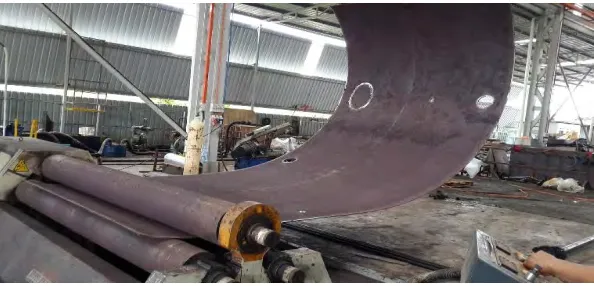
[image:23.612.201.498.485.628.2]and shaping process to help in manufacturing process. One of the machine is rolling machine
(Figure 2.0). The functioning of this machine is make a round or conical shape by roll metal
plate. The form of metal plate shape is by going a process bending continually of the piece along
a linear axis. This process will cause metal plate change from original shape to round or conical
shape.
6
Rolling can defined as one process of plate passing through between the rolls and
plastically deforming has occur. Rolling is the most widely used forming process, which
provides high production and close control of final product. The metal is subjected to high
compressive stresses as a result of the friction between the rolls and the metal surface (Tapany
Udomphol, 2007)
2.1.1 Type of Rolling Machine
According to David Donnel (2010), there have two categories for metal plate bending
roll which is single or double pinch and each categories have their own geometry and style.
There are few general machine styles which is three-roll double-pinch, three-roll initial-pinch,
three-roll variable translating, four-roll double pinch, three-roll pyramid and two-roll system.
Every machine have their limit of material that can apply to it and normally 36,000 to 38,000
pounds per square inch (PSI) baseline material yield strengths.
2.1.2 Machine Component
Rolling machine consist three main part ( Figure 2.1(a)) which is rigid forming roller,
free floating roller and a drive roller which to arranged triangularly with two handles for
shape-rolling. Process to shaping metal plate are continuously until the metal plate change into conical