EFEECT OF MASSED PRACTICE VERSUS DISTRIBUTED
PRACTICE IN SKILL ACQUISITION AND RETENTION OF
DISCRETE TASK PERFORMANCE AMONG COLLEGE
STUDENTS
-An Experimental Study
Dissertation submitted to The Tamil Nadu Dr. M.G.R. Medical University towards partial fulfilment of the requirements of MASTER OF PHYSIOTHERAPY (Advanced PT in Neurology) Degree programme.
K M C H COLLEGE OF PHYSIOTHERAPY
(A Unit of Kovai Medical Center Research and Educational Trust) Post Box No. 3209, Avanashi Road,
Coimbatore – 641 014. 2009 - 2011
CERTIFICATE
This is to certify that research work entitled “EFEECT OF MASSED PRACTICE VERSUS DISTRIBUTED PRACTICE IN SKILL ACQUISITION AND RETENTION OF DISCRETE TASK PERFORMANCE AMONG COLLEGE STUDENTS” -An Experimental study was carried out by the candidate bearing the Register No: 27091609, KMCH College of Physiotherapy towards partial fulfillment of the requirements of the Master of Physiotherapy (Advanced PT in Neurology) of the Tamil Nadu Dr. M.G.R. Medical University, Chennai-32.
PROJECT GUIDE PRINCIPAL
Mrs. A.BRAMMATHA, M.P.T, Dr. EDMUND M. D’COUTO, Professor, MBBS.Dip.Phy.Med & Rehab, KMCH College of Physiotherapy, KMCH College of Physiotherapy, Coimbatore- 641014. Coimbatore- 641014.
INTERNAL EXAMINER EXTERNAL EXAMINER
ACKNOWLODGEMENT
On the successful completion of my project, I wish to express my gratitude to so many people who have contributed to its completion.
First and foremost, I thank GOD for showering me with his divine blessings, enriched love and matchless grace, which gave me inner strength and guidance throughout my study.
I’m deeply indebted to My Beloved Parents and Brother for their unconditional love, sincere prayers, encouragement, constant inspiration and care without which I would not have accomplished anything.
My warm hearted thanks to the KMCH Management, especially to the Chairman Dr. Nalla G. Pallaniswami M.D.(AB), and the Trustee Dr. Thavamani D. Pallaniswamy M.D. (AB) F.A.A.P., who are the stalwarts of the institute.
I thank Dr. O.T. Bhuvaneswaran Ph.D, Chief Executive Officer, for his intensive efforts towards the academics.
I express my heartiest thanks in this instance to my project guide and my class in-charge Mrs. A. Brammatha, M.P.T. (Neuro) , Professor for his benevolent guidance, support and valuable suggestions throughout the course of the study.
I sincerely thank Mr.K.Senthil Kumar, M.P.T.(Neuro), Vice Principal, KMCH College of Physiotherapy for his generous support and encouragement.
I extend my gratitude to Mr. K. Venugopal,M.A.,M.Phil, Professor,
Research & Biostatistics for letting me know the intricacies of Biostatistics.
I wish to express my thanks to all the faculty members for their support.
I perpetuate my thanks to my librarian, Mr.P.Dhamodharan and his fellow members for their co-operation and patience in providing books for reference, which helped me to complete this project successfully.
CONTENTS
Page No. Abstract
1. Introduction 1
1.1. Background of the study 8 2. Review of Literature 13
3. Aim and Objectives 27
3.1. Aim of the study 27
3.2. Objectives 27
3.3. Operational definition 28 4. Materials and Methodology 30 4.1. Study design 30 4.2. Study setting 30 4.3. Sampling size 30
4.4. Study population 30
4.5. Sample selection 30
4.6. Criteria for Selection 30
4.6.1. Inclusion criteria 30
4.6.2. Exclusion criteria 31 4.7. Study Duration 31
4.8. Hypothesis 31
4.8.1. Null hypothesis 31
4.9. Study Protocol 4.10. Procedure 33 4.11. Photographic Illustrations 37 4.12. Outcome Measure 41 4.13. Statistical Analysis 42 5. Data Presentation 44
5.1. Tabulation 44
5.2. Graphical Presentation 44
6. Data analysis and results 55
7. Discussion 58
8. Summary and Conclusion 60 9. Limitations and Suggestions 61 Bibliography
Appendix
ABSTRACT
Extensive research has determined that new learning in healthy individuals is significantly improved when trials are distributed over time (spaced practice) compared to consecutive learning trials (massed practice). It has been shown to enhance free throw performance in college going student.
Aims
The purpose of this study was to analyze the effect of massed and distributed practice in skill acquisition and immediate retention of discrete task performance, whether learning in college going students is improved using a procedure.
Study design:
Pre test and post test experimental study design.
Procedure
practice) was taken on the first day and post test (acquisition) to assess retention was taken after three days.
Results
The result of this study shows that, the Paired‘t’ test shows that acquisition of the discrete task improved among students who led both type of massed and distributed practice. Unpaired‘t’ test shows that both the practices have improved but massed practice had developed better acquisition skill than the distributed practice.
Conclusion
This study can be concluded that discrete task performance of free throws increase among both massed and distributed practice. That is, acquisition improves in both the type of practice. But, distributed type practice group maintained the learning when compare with the massed type of practice. That is acquisition is better in massed type of practice group and immediate retention is better is distributed type of practice group.
Keywords – Motor learning, Practice, Free throw performance.
1.
INTRODUCTION
Motor learning has been traditionally referred as the study of the acquisition or modification of movement among normal subjects. It involves learning a new strategy for sensing as well as moving.
reach for the glass better during the constant session, the patient reaches for the glass better at retention after the variable session.
Training subjects on a task repeatedly in the rehabilitation centre may lead to improved performance in that particular task but not transfer to any activities of daily living (ADL) when they get back home. Improvement with the treatment increases with the amount of training and relates mostly to the task practiced during therapy, with little generalization to other motor tasks. Thus, recovery is related to spontaneous biological. Thus, a process improves performance across a range of tasks whereas recovery mediated by training, like learning in healthy subjects, is more task-specific. These differences increase the important issue of true recovery and compensation and how they both relate to motor learning.
any one engaged in teaching, coaching, or rehabilitation gains an understanding of these stages and considers the implications for skill acquisition.
Skilled movements are usually first undertaken using conscious, cognitively-driven control. Over a period of time, with practice, they are learned. Learning indicates information processing and the laying down of new neural pathways and connections that can be activated, when the specific movement pattern is required. These pathways are held in neural networks as a specific pattern of interconnections. Each set is a motor action that defines and executes a more-or-less specific pattern of specific muscle actions. When the brain is damaged by disease the networks may be disrupted, and at the same time the motor action plans disturbed or lost the function. Improvement after loss of neurological tissue will involve, restoring old or developing new motor action plans.
In motor learning theory, the assumption is that patients can improve with practice15. By practicing task specific and goal-oriented activities, researchers hypothesize that patients can possibly encourage cortical change through volitional movement. This brain plasticity, ability to change and adapt, is ultimately leads to “healing” in neurologic patients.
Therapy. The basic principle of this treatment technique is to help patients to overcome learned non-use.
In Constraint-Induced Movement Therapy, the goal is to force the use of the involved limb using massed and shaping techniques. With the upper extremity, this is achieved by placing the unaffected limb inside a sling for 90% of waking hours over 2 weeks. The affected limb is then used repeatedly for 6-7 hours per day over these 2 weeks in a different exercises and activities. Use of the affected limb, there may be a functional reorganization in the undamaged motor cortex, possibly resulting in improved motor ability40.
The key to tapping into the plasticity of the neurological system is to facilitate motor learning. “Practice makes man perfect.” It’s especially true for patients with neurological impairments that need motor learning.
rehabilitation and periodically after discharge to see whether or not performance gains have been maintained.
For several years, researchers have investigated the process of acquiring skill typically with healthy adults as they train to improve a specific skill and increasingly with people with neurological disability. As part of the training process, the therapist directs the patient’s focus of attention away from an internal body orientation. Focus (the feet or upper body movement) should be to an external focus which is directly related to the goal (avoiding obstacles on the floor)
33
. .
Goals should be concrete rather than abstract: “Reach out and take the glass from the table” rather than “Raise your arm”. “Reach sideways to pick up the glass from the floor” rather than “Shift your weight over to the left”.
When the educational process is studied, the area of practice and its performance is a topic of interest. Therapist are invariably trying to find more efficient, successful methods of teaching motor skills to their students to improve learning, performance, and retention that are occurring32. Practice is an active process of attempting to perform a task, and it leads to the acquisition of skill. In order to be effective, practice trials usually need to be repeated many times. Increased practice of a task would enhance learning and skill acquisition in that task. “Skill” is a commonly used word which means an activity or task that has a specific purpose or goal to achieve. Motor skills and actions are similar terms that refer to goal-directed activities that involve voluntary head, body, and limb movements23.
at a young age, developing basic skills such as walking, throwing, catching, and climbing early which allows incorporating these skills. Skills that require object manipulation are more difficult to perform than skills that involve no object manipulation because the person must do two things at once. First, the person must manipulate the object correctly, and second, he or she must adjust body posture to accommodate for the imbalance created by the object.
When learning a skill it must be remembered that practice in one context must often be transferred and repeated in another context. When planning practice, regardless of whether this is in the sporting educational or rehabilitation context, the frequency of practice and the length of recovery has to be decided.
When practice is massed there is more time spent in work [actual practice] than in resting between the trials. When a greater amount of time is spent in the rest periods than in practice trials, it is called distributed practice. The phenomena associated with Practice distribution have been studied extensively in continuous tasks and discrete tasks. Continuous tasks are tasks with no discernable ending. Discrete tasks are tasks with discernable beginning and ending. Discrete tasks are characterized by rapid movements with very short movement times.
transfer. Research in motor learning has shown that variations in practice scheduling may affect learning. Here we will look at two different factors; the amount of rest between practice trials [massed vs. distributed practice].
1.1 BACKGROUND OF THE STUDY
Carr JH, Shepherd RB et al 1987, Rehabilitation is predicated on the assumption that practice or training leads to improvement of skills. this underlying concept, study in motor control and motor learning has only begun to make an impact on the practice of rehabilitation. But, stroke rehabilitation has mainly focused either on passive facilitation of isolated movements or teaching patients to function independently using movement’s alternative to the ones they used before their stroke7.
influence of a single well-defined intervention. Hummelsheim and Eickhof et al (1999)12.
patients. Most human studies investigate short-term learning in a specific motor task in response to repetition. Rehabilitation of patients with cerebellar damage, however, requires a long-term learning process and the acquired motor patterns have to be transferred to everyday life9.
Latash LP, Latash ML et al (1994), Skill is task-specific. Even though, such actions as level walking and stair walking May share similar biomechanical characteristics, the demands placed on the individual by each action are different. The individual learns reshaping and adaptation to the basic movement pattern according to different contexts. Thus, improvement in a specific action therefore requires practice of that action; that is, the learner practices to become effective and efficient in achieving a specific goal. For some individuals, speeding the actions and improving power generation may be major performance goals. But, for those muscle strength and motor control is below a certain threshold, such practice may not be possible. Various exercises which increase strength and control may be necessary, together with practice of the action under modified conditions, for example, standing up from a higher seat which requires less muscle force generation. Many repetitions of an action are needed to increase strength and for the patient to develop an optimal way of performing the action20.
on a horizontal surface with feedback given as knowledge-of-results. The researchers found no difference in acquisition on day 1 or recall on day 2 between patients and controls although patients were less accurate overall41. Fits P.M and Posner et al concluded that The motor learning definition stresses the importance of achievement of new motor skill, improvement of previously learned motor skill or re-attainment of skills that are difficult to perform or cannot be performed due to injury or disease, changes that occur at neurological or performance levels as a result of motor learning and the factors influencing these changes are of particular interest for the rehabilitation of motor disorders. Van Cranenburg et al, 2004, concluded that explicit or declarative learning methods are the starting points in most rehabilitation programs aimed at motor-skill learning in the cognitively
unimpaired population. In general, with explicit learning people tend to pass
through three stages in the acquisition of motor skills (Fitts and Posner et al
1967).
The first stage is the “cognitive stage” in which the focus is on
understanding the task and developing strategies to perform it, requiring cognitive
activity such as attention and executive functions. The second phase is the
“associative stage” in which the learner has selected the best strategy and now
the “autonomous stage” in which the skill becomes automatic, requiring a low
degree of attention.
Variables like practice and feedback can be structured differently to enhance
learning at each stage. Schmidt and Wrisberg et al, 2000 concluded that fatigue
plays an important role in learning but the next question is how to alternate
practice with rest to maximize Learning in patients.
2. REVIEW OF LITERATURE
• Ebbinghaus et al, 1885, in his publication on human memory provided
convincing empirical evidence that learning and memory are significantly improved when repeated trials are distributed over time (spaced repetitions) compared to consecutive learning trials (massed repetitions).
• Hull et al, 1943, he was the first to formally the effect of practice
distribution on performance and learning. He found that given an equal number of trials, distributed practice for both cognitive and motor task produced better performance and skill acquisition than massed practice.
• Ammons et al, 1950, in this study seven different experimental groups, all
• Adams and Reynolds et al 1954, performed the classic experiment
commonly cited to support the conclusion’s that massing practice leads to a performance but not a learning decrement. Participants practiced the pursuit rotor task for 40 trials. Results of this study showed that after switching to a distributed schedule, subjects showed that immediately improvement and soon were performing similarly to the control group. These results concluded that massed practice only decreased the performance and did not influence the learning of this skill1.
• Bourne and Archer et al (1956), in this study, five different groups of
participants were compared. All groups had work periods of 30 seconds. In one group, they practised continuously for 21 trials (0-s rest group). For the other groups, each group had a different rest interval between work periods. One group had rest periods of 15 seconds, and the other three groups had rest periods of 30, 45, or 60 seconds. Bourne and Archer’s findings were very clear: the longer the rest period, the better the performance24.
• Singer et al, (1965) examined the effects of massed and distributed practice
consecutive shots with no rest, distributed group who shot 4 sets of 20 shots with 5 minutes rest between sets, and a second distributed group who shot 4 sets of 20 with a 24- hour rest between sessions over four days. Results of this study found that skill acquisition was favourable for the second distributed group with respect to immediate learning. However, performance did not differ significantly between the first retention tests. But, on the final retention test, the first two groups of massed and distributed practice were found to be favourable. In the discussion of the results, Singer believed that “performance rather than learning was dictated by the condition practice33.” • Paterson and Hallberg et al, 1965, since practice does play such a
prominent role in the learning of motor skills, it’s essential that those charged with teaching these skills have a thorough understanding of the role played by the practice situation during practice.
• Carron et al, 1967, massed practice almost always is used for discrete tasks.
Schmidt describes this best by writing: It is best to say that for these discrete tasks, such as shooting a basketball or fielding a baseball, there is no evidence that reducing the rest time through massed practice degrades learning, and it may even benefit learning24.
• Carron et al 1969, In his study practiced a discrete hand eye coordination
end, and reinsert it in the hole as quickly as possible. One attempt equalled one trial. Which lasted on the average between 1.3 and 1.7sec.people in the massed practice condition had a maximum300- milli sec inter trial interval; whereas those in the distributed group had 5sec between trials. The results of this study shows that the massed practice schedule led to better performance during both the practice trials and the retention test, which participants performed two days after completing the practicing trials24.
• Stelmach et al, (1969) studied the efficiency of motor learning with
that learning was based on the number of trials instead of the type of practice24.
• Whitley et al (1970) in his study, he separated the two groups of 30 college
males 35 trials in either massed practice or distributed practice methods. Results showed that distributed practice was significantly better in performance but learning was significantly for both groups. The methods used in this motor learning study are applicable to the shooting methods used in basketball36.
• Whitley et al, (1970) performed a similar study on fine motor tasks. He used
“performance rather than learning was affected by the type of practice condition.”36
• Murphree et al, (1971). In this study, there were four groups: massed
practice group (24 consecutive trials for 3 days), two distributed groups (practiced 12 times per day with rest intervals), and a control group (no trials practiced). The results of the study revealed that learning, measured by performance, was significantly higher for the distributed groups during the practice phrase. However, retention of the skill was significantly higher for the massed practice group. Thus, this experiment supported previous research that massed practice primarily affected performance and not learning36.
• Hintzman et al, 1974; in the present study we compared the effects of
massed versus distributed practice. In normal subjects, it has often been demonstrated that when repeated items are spaced during presentation, performance is better than when the repetitions occur on adjacent trials.
• Austin et al (1975) examined the effect of massed and distributed practice
each weekday, and the control group did not practice during the six weeks. Results showed the distributed practice better to the massed and control groups. Similar practice methods may be used to help improve free throw shooting accuracy in basketball.
• Singer et al (1975) believed that "warm-up will probably be more beneficial
for those skills that require a great deal of precision. Timing, and coordination, especially if there is a long layoff from the last experience to the present event"34
• Singer et al, 1975 stated that "practice is a necessary for learning a skill".
Skills are developed by practice allowing the learner to form associations between stimuli and responses, and practice is more effective when undertaken in an organized manner, the utilization of practice with specific goals and guidelines seems logical for improving skill development34.
• Sage et al, 1977, the massed practice method of free throw shooting may be
preferred for learning if the subjects are highly motivated and top performance is needed.
• Lawther et al, 1977, this study showed that there improvement in both the
more improvement than that of the massed practice group. Once the means were adjusted by using the statistical treatment, the massed pract.ice group showed the increase in improvement over the distributed practice group. • Burt McDonald et al, 1980, fifth and sixth grade boys (N = 38) participated
in the free throw study to examine the effects of massed and distributed practice during a 10-session experimental program. Ss were randomly assigned to two groups: amassed practice group (n: = 19). And a distributed practice group (n =- 19). The massed practice group practiced 20 consecutive free throws during each session. The distributed practice group practiced 20 free throws, attempted two free throws then waited until every other subject. In this sub group had attempted two free throws before taking his next turn. An AN0VA produced P >0.05 between the massed practice free throw shooting method and the distributed practice free throw shooting method. Results of using the adjusted mean scores indicated that the massed practice group showed the greater increase in improvement over the distributed practice group.
• Annet and piech et al 1985, in his study found that two 5- trial training
given one day after the end of the training sessions. The distributed group not has more hits on the test but also has error in the shooting attempts.
• Bouzid and crawshaw et al 1987, in these study researchers showed that
for the learning of word processing skills. Typist who practiced twelve skills during two sessions of 35 and 25min each, separated by a 10 min break required less time to learn the skills and had fewer errors on a test than typists who practiced the skills during one 60 min sessions.
• Lee and Genovese et al,1988, the advantage of distributed over massed
practice on performance at the end of practice is constantly large over experiments, they also, suggested that distributed practice conditions resulted in better learning than massed practice condition.
Merely observing and thinking about a motor skill will not work in the acquiring of a high level of skill. Skilful responses are developed only through repetition of the desired Movement pattern and improvement occurs only if conscientious attempts to improve are made34.
• Wek & Husak et al, 1989, one notable exception was a small study of
• Schmidt, et al 1991, this study distribution effect on learning, he gave all of
their participants a 5 minutes rest period following the last trial. After the rest period, participants were asked to perform the task under a massed condition (all trials were performed with 0-s rest periods of 30s of work. The results showed that groups that had initially practised with some rest between trials still performed better than the group that had practised with no rest. The finding suggests that precise distribution had a relatively permanent effect, which is supported by the literature (19,34).
• Schmitz et al, 1991, however, the most of massed and distributed practice
research had involved continuous skills analogous to real world tasks such as swimming or cycling and termed continuous tasks. Schmitz pointed out that the principles governing the effects of massed and distributed practice are different for ‘discrete and continuous’ tasks (19.34).
• Laird S. Cermak et al, 1996, this study showed the effects of repetition and
the variable encoding that spaced repetitions allow establishing additional retrieval cues. Although, the instructions to encode the repeated items in a variable manner, enhanced massed presentations to the point where spacing no longer produced an advantage for the normal controls17.
• Baddeley et al, (1999), he provides more evidence about the superiority of
Both massed and distributed practice can profit the learning of free throw shooting accuracy. The distributed practice of free throw shooting uses short interval periods of rest during practice. During these rest periods mental practice may take place. Distributed practice may be helpful in free throw shooting accuracy for immediate performance33.
• Schmitz et al, 1999, the amount of rest between the trials equals or exceeds
the amount of time in a trial”. When the practice is distributed .thus, it seems that the defining detail of distributed practice is that rest is “distributed “during the trials20.Since practice does play such a prominent role in the learning of motor skills, it is essential that those charged with teaching these skills have a thorough understanding of the role played by the practice situation during practice20.
• DeLuca, et al 2000, they determined that when the amount of information
• Hillary et al, 2003 they concluded from their studies that individuals with
moderate-severe TBI demonstrated significantly improved word list recall following spaced versus massed presentations of targeted words. Spaced retrieval (i.e., expanded rehearsal) is form of distributed practice that provides individuals with severe memory loss practice at successfully recalling information over expanded time intervals. Successful recall for prolonged time periods is thought to enhance the ‘‘durability’’ of learning11. • Son et al (2004) found that individuals tended to mass their practice on
Items that were hard to remember but spaced their practice on easy items. The decision to mass or space practice trials, of course, is based on metacognitive judgments and could fall prey to the same illusions-of-competence problems as discussed previously. Nevertheless, there does appear to be some advantage for learning when the individual is given some control over their learning environment34.
• Kristina S et al, 2005 this study suggests that massed practice may be useful
individuals with incomplete cervical SCI. It is recommended that a randomized controlled study be conducted to investigate the effects of these interventions with a larger sample size, as well as to investigate the effect of somatosensory stimulation alone on cortical plasticity and function in individuals with SCI17.
• Yan-hua Huang, 2009, potential Predictors of Motor and Functional
Outcomes after Distributed Constraint-Induced Therapy for Patients with Stroke, in this study concluded that The best predictor for motor outcomes after distributed CIT was greater motor ability of the distal part of the upper extremity, which is consistent with the presence of residual motor pathways that may respond to training. The FMA may be of value to form patients for their likelihood to use from distributed CIT protocols45.
• Dettmers C, Teske U et al,2007 massed and distributed training in
3. AIM AND OBJECTIVES
3.1 AIM OF THE STUDY
To analyse the effect of massed and distributed practice in skill acquisition and immediate retention of discrete task performance among college going students.
3.2 OBJECTIVES OF THE STUDY
To evaluate the effect of massed practice in discrete task performance among college going students.
To evaluate the effect of distributed practice in discrete task performance among college going students.
3.3OPERATIONAL DEFINITION-
• Motor learningMotor Learning is a change in the capability of a person to perform a skill that must be inferred from a relatively permanent improvement in performance as a result of practice or experience or experience. Schmidt (1991).
• Skill
Skill is an activity or task that has a specific purpose or goal to achieve, an indicator of quality of performance.R.Magill.2001
• Motor skill.
Activities or tasks that require voluntary head, body, limb movement to achieve a goal. R.Magill.(2001)
• Discrete motor skill
Motor skill clearly defined movement beginning and end points, usually requiring a simple movement. R.Magill.(2001)
• Massed practice
• Distributed practice
4. MATERIALS AND METHODOLOGY
4.1Study design
Pre and Post Test Experimental study design.
4.2 Study setting
Basketball court, NGP Arts and Science College, Coimbatore-14.
4.3 Sample size
20 subjects
4.4 Study population
In group A-10 College going students to be trained by massed practice.
In group B- 10 College going students to be trained by distributed practice.
4.5 Sample selection
Purposive sampling
4.6 CRITERIA FOR SELECTION:-
4.6.1 Inclusion criteria
• Age 18-22 years
• Height 165-178 cm
• `Right handed dominant students
4.6.2 Exclusion criteria
• Basketball players, experts, school players.
• Muscle strain and ligament sprain • Open wound over the hand.
• Cognitive deficit
4.7 Study duration
• Five days for a massed practice group (A)
• Seven days for a distributed practice group (B)
4.8 HYPOTHESIS
4.8.1 NULL HYPOTHESIS
Ho1-There is no significant effect of massed practice in improving skill acquisition
and immediate retention on free throw performance among college going students.
Ho2-There is no significant effect of distributed practice in improving skill
Ho3-There is no significant difference between massed practice and distributed
practice in improving skill acquisition and immediate retention on free throw performance among college going students.
4.8.2 ALTERNATE HYPOTHESIS
Ha1-There is significant effect of massed practice in improving skill acquisition and
immediate retention on free throw performance among college going students.
Ha2-There is significant effect of distributed practice in improving skill acquisition
and immediate retention on free throw performance among college going students.
Ha3-There is significant difference between massed practice and distributed practice
in improving skill acquisition and immediate retention on free throw performance among college going students.
4.9 STUDY PROTOCOL:-
All subjects were assessed in order to ensure that all of them meet the required selection criteria.
4.10 PROCEDURE
This study was carried out in Basketball court of NGP Arts and Science College, Coimbatore.
Participants
The subjects were 20 college students. The subjects were randomly assigned to one of the two groups.
Experimental task
In this study, basketball free throw is selected and it is chosen as skilled task to study the effect of two types of practice. A free throw is an unguarded shot that a player takes from the foul line of a basketball court. The foul line is the line fifteen feet from the backboard and parallel to the end line from which player shoot free throws.
The subjects were divided into two groups.
Group A is massed practice without rest interval. One by one the entire subjects complete the thirty shots while other subjects rebound and return the ball to the shooter.(As shown in picture 4.11.4).
The subjects in the massed practice perform thirty shots in one day practice session without rest intervals. Immediately after the practice session Post- test (acquisition) of group A was measured. Retention trial is measured after three days by using free throw test no practice sessions after the post test data collection.
Group B is distributed practice group. The subjects in this group shoot a total of ten shots with rest intervals between each two shots as per the instruction(As shown in picture 4.11.5).One subject performs two shots while another subjects rebounds the ball. At the completion of two shots, the subjects exchange positions until both subjects have completed ten shots each likewise all the subjects completed the task. The inter trial rest intervals are not kept constant because of the subject’s individual rate of performance.
INSTRUCTIONS:-
WARM-UP EXERCISE (10 MINUTES)
• Jogging: starting at one end of court (forward, backward; defensive sliding).
• Dribbling, passing and moving the ball in pairs and moving side line to side
line.
• Stretching: Calf’s, hamstrings, hip adductors, quadriceps and arms
stretching.
PREPARATION PHASE (As shown in picture 4.11.1) • see target (basket)
• feet shoulder width apart • toes straight
• knees flexed
• shoulders relaxed
• non shooting hand under ball • shooting behind the ball
• thumb relaxed
• elbow in flexed
• Ball between head and shoulder.
• See target (Basket)
• Extend legs, back and shoulders • extend elbow
• flex wrists and fingers forward
• release ball off index finger
• balance hand on ball until release(as seen in figure2)
RECOVERY PHASE (As shown in picture 4.11.3)
• see target (Basket)
• arm extended
• index finger points to target
• shooting hand palm down
• Balance hand palm up.(as seen in figure3)
COOL DOWN EXERCISE (10 MINUTES)
• Jogging: starting at one end of court (forward, backward; defensive sliding).
4.11 PHOTOGRAPHIS ILLUSERATION
picture 4.11.1 preparation phase
4.12 OUTCOME MEASURE
FREE THROW SHOT TEST
The tasks of ten free throws from the foul line are selected.
The shots are scored for-
• four points given for a clean shot,
• three points for a rim in or out,
• two points for a backboard in or out,
4.13 STATISTICAL ANALYSIS:-
The paired‘t’ test was used to find out the significance of each group Before practice and acquisition and retention values.
FORMULA-
PAIRED `t’ TEST: (within groups)
t = √ Where,
S = ∑
UNPAIRED `t’ TEST: (between groups)
The unpaired‘t’ test was used to compare the statistically significant difference of pain between Group A & B subjects.
1 2
Where,
∑ ∑
S=combined standard deviation
& =difference between initial & final readings in group A &group B
respectively.
& =number of patients in group A & group B respectively.
5. DATA PRESENTATION
[image:53.612.108.503.199.395.2]5.1 TABULATION
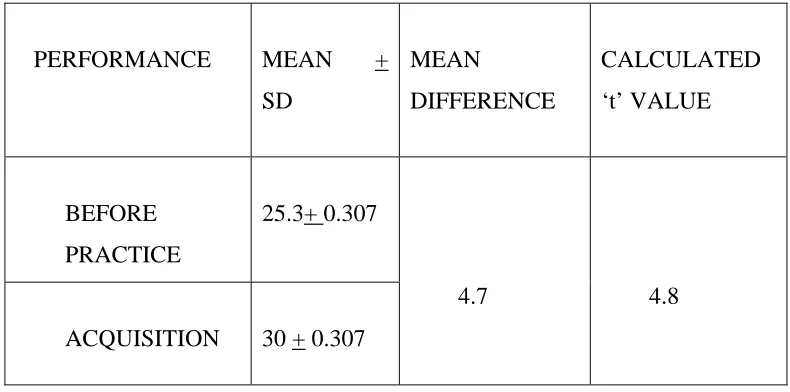
TABLE 5.1.1 - PAIRED ‘t’ TEST VALUES BETWEEN BEFORE PRACTICE
AND ACQUISITION AMONG MASS PRACTICE GROUP.
PERFORMANCE MEAN + SD
MEAN
DIFFERENCE
CALCULATED ‘t’ VALUE
BEFORE PRACTICE
25.3+ 0.307
4.7 4.8 ACQUISITION 30 + 0.307
Level of significance- p <0.05 *
The before practice and acquisition values of free throw test in massed practice Group A is analysed by paired ‘t’ test for the performance.
The table‘t’ value at the level of 5%significance and for 9degrees of freedom is 1.833 and the calculated‘t’ value is 4.8.As the calculated ‘t’ value is higher than the table‘t’ value, the null hypothesis rejected( Ho1). Hence, alternate hypothesis
accepted (Ha1) that there is significant effect of massed practice in improving skill
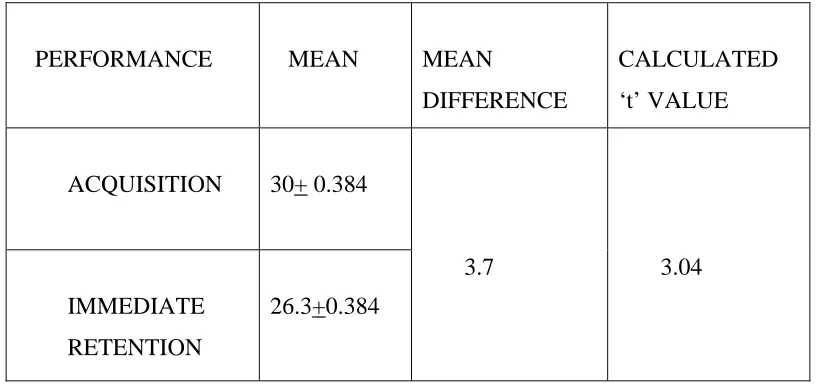
TABLE 5.1.2 - PAIRED ‘t’ TEST VALUES BETWEEN ACQUISITION
AND IMMEDIATE RETENTION AMONG MASS PRACTICE GROUP.
PERFORMANCE MEAN MEAN
DIFFERENCE
CALCULATED ‘t’ VALUE
ACQUISITION 30+ 0.384
3.7 3.04 IMMEDIATE
RETENTION
26.3+0.384
Level of significance- p <0.05 *
The acquisition and immediate retention values of free throw test in massed practice Group A is analysed by paired‘t’ test for the performance.
The table‘t’ value at the level of 5%significance and for 9degrees of freedom is 1.833 and the calculated t value is 3.04.As the calculated‘t’ value is greater than the table‘t’ value, the null hypothesis rejected( Ho1). Hence, alternate hypothesis
accepted(Ha1) that there is significant effect of massed practice in improving skill
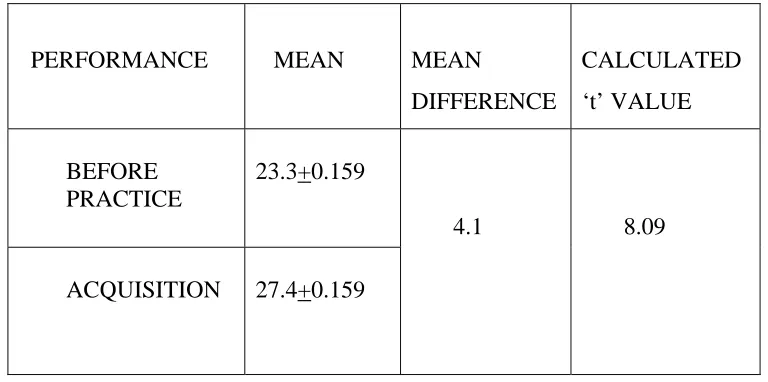
TABLE 5.1.3 - PAIRED ‘t’ TEST VALUES BETWEEN BEFORE PRACTICE
AND ACQUISITION AMONG DISTRIBUTED PRACTICE GROUP.
PERFORMANCE MEAN MEAN
DIFFERENCE
CALCULATED ‘t’ VALUE
BEFORE PRACTICE
23.3+0.159
4.1 8.09 ACQUISITION 27.4+0.159
Level of significance- p <0.05 *
The before practice and acquisition values of free throw test in distributed practice group is analysed by paired ‘t’ test for the performance.
The table‘t’ value at the level of 5%significance and for 9degrees of freedom is 1.833 and the calculated ‘t’ value is 8.09.As the calculated ‘t’ value is greater than the table‘t’ value, the null hypothesis rejected (H02 ) Hence, the alternate
hypothesis (Ha2) is accepted. That there is a significant effect of distributed practice
in improving skill acquisition and immediate retention on free throw performance among college going students.
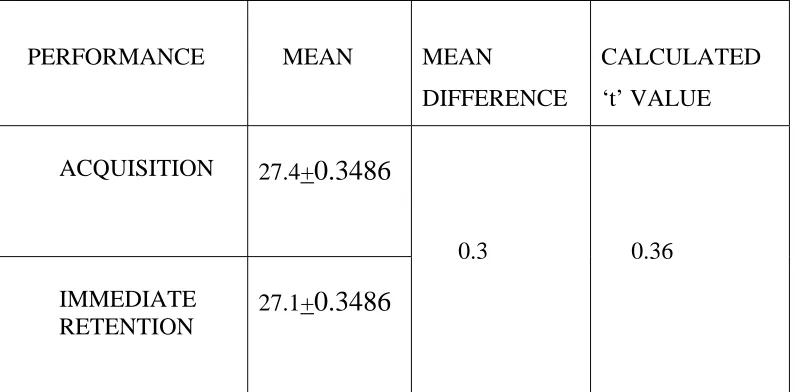
TABLE 5.1.4- PAIRED ‘t’ TEST VALUES BETWEEN ACQUISITION AND
IMMEDIATE RETENTION AMONG DISTRIBUTED PRACTICE GROUP.
PERFORMANCE MEAN MEAN
DIFFERENCE
CALCULATED ‘t’ VALUE
ACQUISITION 27.4+0.3486 0.3
0.36 IMMEDIATE
RETENTION 27.1+0.3486
Level of significance- p >0.05
The acquisition and immediate retention test values of free throw test in distributed practice group is analysed by paired‘t’ test for the performance.
The table ‘t’ value at the level of 5%significance and for 9 degrees of freedom is 1.833 and the calculated ‘t’ value is 0.36.As the table ‘t’ value is greater than the calculated ‘t’ value, the alternate hypothesis rejected(Ha2) Hence, null
hypothesis accepted(H02 ) That there is no significant effect of distributed practice
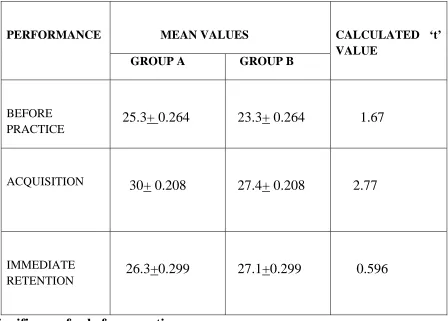
TABLE 5.1.5- UNPAIRED ‘t’ TEST VALUES BETWEEN MASSED PRACTICE GROUP AND DISTRIBUTED PRACTICE GROUP.
Significance for before practice:
Level of significance – p > 0.05
Significance for acquisition:
Level of significance – p < 0.05*
Significance for immediate retention:
Level of significance – p > 0.05
PERFORMANCE MEAN VALUES CALCULATED ‘t’
VALUE
GROUP A GROUP B
BEFORE
PRACTICE 25.3+ 0.264 23.3+ 0.264 1.67
ACQUISITION 30+ 0.208 27.4+ 0.208 2.77
IMMEDIATE
Before practice values of free throw test between Group A and Group B
For 8 degrees of freedom at 5 % level of significance, the table ‘t’ value is 1.860 and the calculated ‘t’ value is 1.67.As the calculated ‘t’ value is less than the table ‘t’ value, the null hypothesis (H03) is accepted. Thus, there is no significant
difference between massed practice and distributed practice in improving skill acquisition and immediate retention on free throw performance among college going students.
Acquisition values of free throw test between Group A and Group B-
For 8 degrees of freedom at 5 % level of significance, the table ‘t’ value is 1.860 and the calculated ‘t’ value is 2.77.As the calculated ‘t’ value is more than the table ‘t’ value, the alternate hypothesis (Ha3) is accepted. Thus, there is a
significant difference between massed practice and distributed practice in improving skill acquisition and immediate retention on free throw performance among college going students.
Immediate Retention values of free throw test between Group A and GroupB
5.2 GRAPHICAL PRESENTATION
5.2.1 - Mean values of free throw performance before practice and acquisition among massed practice group.
5.2.2 - Mean values of free throw performance acquisition and immediate retention among massed practice group.
22 23 24 25 26 27 28 29 30 31
Before Practice Acquisition
PERFORMANCE
GROUP A‐MASSED PRACTICE
FREE
THROW
TEST
Before Practice Acquisition 24 25 26 27 28 29 30 31
Acquisition Immediate Retention
PERFORMANCE
GROUP A‐MASSED PRACTICE
FREE
THROW
TEST
Acquisition
5.2.3
Mean values of free throw performance before practice and acquisitionamong distributed practice group.
5.2.4 Mean values of free throw performance acquisition and immediate retention among distributed practice group.
21 22 23 24 25 26 27 28
Before practice Acquisition
PERFORMANCE
GROUP B‐DISTRIBUTED PRACTICE
FREE
THROW
TEST
Before practice Acquisition 26.95 27 27.05 27.1 27.15 27.2 27.25 27.3 27.35 27.4 27.45
Acquisition Immediate retention
PERFORMANCE
GROUP B‐DISTRIBUTED PRACTICE
FREE
THROW
TEST
Acquisition
5.2.5
Comparison of mean values of Before practice between MassedPractice group and Distributed Practice group.
5.2.6 Comparison of mean values of Acquisition between Massed Practice group and Distributed Practice group
22 22.5 23 23.5 24 24.5 25 25.5
GroupA Before
practice
GroupB Before
practice
PERFORMANCE
GROUP A‐GROUP B
FREE
THROW
TEST
GroupA Before practice
GroupB Before practice
26 27 28 29 30 31
GroupA Acquisition GroupB Acquisition
PERFORMANCE
GROUP A‐GROUP B
FREE
THROW
TEST
5. 2.7 Comparison of mean values of immediate retention between Massed Practice group and Distributed Practice group
5.2.8 Mean values of free throw performance before practice and acquisition and immediate retention 25.8 26 26.2 26.4 26.6 26.8 27 27.2
GroupA Immediate
Retention
GroupB Immediate
Retention
PERFORMANCE
GROUP A‐GROUP B
FREE
THROW
TEST
GroupA Immediate
Retention
GroupB Immediate
Retention 0 5 10 15 20 25 30 35 BEFORE PRACTICE
ACQUISITION IMMEDIATE
RETENTION
PERFORMANCE
GROUP A‐GROUP B
FREE
THROW
TEST
GROUP A
6. DATA ANALYSIS AND RESULTS
The changes within the massed practice group and distributed group are analysed using paired‘t’ test. The difference between the groups were analysed using unpaired ‘t’ test.
Group-A massed practice group Paired ‘t’ test - Values between Before practice and acquisition.
Before practice and Acquisition values of group A results showed that the calculated‘t’ value is 4.8 at the level of 5%significance for 9 degrees of freedom and the ‘t’ table value is 1.833.As the calculated ‘t’ value is higher than the table ‘t’ value, the alternate hypothesis (Ha1) is accepted. Hence, that is there is
significant effect of massed practice in improving skill acquisition and immediate retention on free throw performance among college going student.
Paired‘t’ test values between acquisition and immediate retention.
significant effect of massed practice in improving skill acquisition and immediate retention on free throw performance among college going students.
Group B Distributed practice group Paired‘t’ test values between the Before practice and acquisition.
Before practice and Acquisition values of group B showed that the calculated ‘t’ value is 8.09 at the level of 5%significance for 9 degrees of freedom and the ‘t’ table value is 1.833.As the calculated ‘t’ value is higher than the table ‘t’ value, the alternate hypothesis (Ha2) is accepted. Thus, there is significant effect of distributed
practice in improving skill acquisition and immediate retention on free throw performance among college going students.
Paired‘t’ test values between acquisition and immediate retention
The acquisition and immediate retention values of group B the calculated ‘t’ value is 0.36 at the level of 5% significance for 9 degrees of freedom and the ‘t’ table value is 1.833.As the calculated ‘t’ value is less than the table ‘t’ value, that is (HO2) null hypothesis accepted. Thus, there is no significant effect of distributed
Unpaired ‘t’ test
Before practice values of Group A and Group B showed that, For 8 degrees of freedom at 5 % level of significance, the table‘t’ value is 1.860 and the calculated ‘t’ value is 1.67.As the calculated ‘t’ value is less than the table ‘t’ value, the null hypothesis (Ho3 ) is accepted. Thus, there is no significant difference between
massed practice and distributed practice in improving skill acquisition and immediate retention on free throw performance among college going students.
Acquisition values of Group A and Group B showed that, For 8 degrees of freedom at 5 % level of significance, the table ‘t’ value is 1.860 and the calculated ‘t’ value is 2.77.As the calculated ‘t’ value is more than the table ‘t’ value, the alternate hypothesis (Ha3) is accepted. Thus, there is a significant difference
between massed practice and distributed practice in improving skill acquisition and immediate retention on free throw performance among college going students.
between massed practice and distributed practice in improving skill acquisition and immediate retention on free throw performance among college going students.
7. DISCUSSION
Massed practice and distributed practice mostly involved in learning of free throw shooting performance. The distributed practice method of free throw shooting uses short interval periods of rest during practice. During these rest periods mental practice may take place (Schmidt et al, 1991)30.
The build-up of fatigue has been shown to have a slight negative effect on learning (Lee & Genovese et al, 1988) in massed practice20. Schmidt et al, 1991, found that it is “good to explain to the learner that even though fatigue may come during practice, participants are still learning effectively.” In addition, the student also should be informed that the learning gained during the fatigue will become evident in the future after the fatigue reduced30.
massed practice degrades learning, and it may even benefit learning in some cases30.
This study consisted of 20 college going students. The students were selected based on the inclusion and exclusion criteria and randomly assigned into 2 groups. Group A massed practice and Group B distributed practice. Outcome measure used was free throw test to measure the individual free throw performance, before practice and immediate acquisition and immediate retention values were taken. Aim of this study is to analyse the effectiveness of massed practice and distributed practice of a discrete task performance in motor learning.
The result of this study shows that there is improvement in both the massed and distributed practice groups. Then observing the difference in the mean scores of the acquisition and immediate retention, the distributed practice group had maintained the learning than that of the massed practice group.
Hence, this study includes two important methods of practice that is massed and distributed practice. Both the practice has widely used in the neurological rehabilitation in the physiotherapeutic aspects of a training the individual or patients to improve their disabilities or impairments.
8. SUMMARY AND CONCLUSION
In this study, we analyse the effect of massed practice and distributed practice improving on an acquisition and immediate retention in college going student. Students were selected and assigned into two groups, one group receiving massed practice and another group receiving the distributed practice.
The study is a pre-test and post-test experimental design. The results are analysed using‘t’ test. The results show significant improvement in massed practice and distributed practice.
CONCLUSION-
9. LIMITATIONS AND SUGGETIONS
This study is done on the small sample size. Further research will be done in the large sample size.
This study was done in the college going students. Further research must be done in the neurological population and continuous skill and sports people and school students.
Study was tested by seven days. This study should be tested for long days. New technique in neurological physiotherapy must be tested by varying methods of practice.
BIBLIOGRAPHY
1. Adams et al 1987 historical review of appraisal of research on the learning, retention and transfer of human motor skills. Psychological bulletin 101:41-74.
2. Ammons R.B 1988.distributed of practice in motor skill acquisition. A few questions and commands. Research quarterly fo exercise and sport.59.288-290.
3. Ammons, R.B. (1950). Acquisition of motor skill: III. Effects of initially distributed practice on rotary pursuit performance. Journal ofExperimental Psychology, 40, 777-787.
4. Baddeley, A.D., & Longman, D.J.A. (1978). The influence of length and frequency of training session on the rate of learning to type. Ergonomics, 21, 627-635.
6. Brush J, Camp C. using spaced retrieval as an intervention during speech-language therapy. Clin Gerontol 1998; 19:51–64.
7. Carr JH, Shepherd RB. A motor learning model for rehabilitation. In: Carr JH, Shepherd RB, editors. Movement science: foundations for physical therapy in rehabilitation. Rockville, MD: Aspen; 1987. pp. 31–91.
8. Cherry KE, Simmons SS, Camp CJ. Spaced retrieval enhances memory in older adults with probable Alzheimer’s disease. J Clin Geropsychol 1999; 5:159–175.
9. Classen J, Liepert J,Wise SP, Hallett M, Cohen LG (1998). Rapid plasticity of human cortical movement representation induced by practice. J Neurophysiology 79:1117-1123.
10. F.G. Hillary et al Spacing of Repetitions Improves Learning and Memory after Moderate and Severe TBI. Journal of Clinical and Experimental Neuropsychology 2003, Vol. 25, No. 1, pp. 49–58. 11. Hillary, F., Schultheis, MT, Challis, B.H., Carnivale, G. ,Galski, T.
12. Hummelsheim H, Eickhof C (1999). Repetitive sensorimotor training for arm and hand in a patient with a locked-in syndrome. Scand J Rehabil Med; 31: 250–256
13. Jacobs KM, Donoghue JP. Reshaping the cortical motor map by unmasking latent intracortical connections. Science 1991; 251:944– 950.
14. Jacobs KM, Donoghue JP. Reshaping the cortical motor map by unmasking latent intracortical connections. Science 1991; 251:944– 950.
15. Keh-chung Lin,et al Potential Predictors of Motor and Functional Outcomes after Distributed constraint-Induced Therapy for Patients with Stroke.Neural Repair Volume 23 Number 4 May 2009 336-342.
16. Krakauer, JW. Motor Learning: It’s Relevance to Stroke Recovery and Neurorehabilitation. Current Opinion in Neurology2006; 19:84-90.
17. Kristina S. Massed Practice versus Massed Practice with
18. Laird S. Cermak et al Effect of Spaced Repetitions on Amnesia Patients' Recall and Recognition Performance Neuropsychology 1996, Vol. 10, No. 2,219-227.
19. Langhammer B, Stanghelle JK (2000). Bobath or motor relearning programme? A comparison of two different approaches of
physiotherapy in stroke rehabilitation a randomized controlled study. Clin Rehabil; 14: 361– 369.
20. Latash LP, Latash ML et al. A new book by NA Bernstein: ‘On Dexterity and its Development’. Journal Motor Behaviour 1994; 26: 56-62.
21. Lee, T.D., & Genovese, E.D et al. (1988). Distribution of practice in motor skill acquisition: Learning and performance effects
reconsidered. Research Quarterly for Exercise and Sport, 59, 277-287.
22. Liepert J, Uhde I, Graf S, et al. Motor cortex plasticity during
forced-use therapy in stroke patients: a preliminary study. Journal of Neurology 2001; 248: 315-21.
24. Magill RA et all. Motor learning concepts and applications. 6th Ed Page no;239-246.and 9th Ed. New York: McGraw-Hill 2001.1998. 25. Mark VW, Taub E, Morris DM et al. Neuroplasticity and
Constraint- Induced Movement Therapy. Eura Medicophys2006; 42:269-284.
26. McNevin NH, Wulf G, Carlson C et al. Effects of attention focus, self-control, and dyad training on motor learning: implications for physical therapy. Physical Therapy 2000; 80: 373-85.
27. Nudo RJ, Plautz EJ, Frost SBet al. Role of adaptive plasticity in recovery of function after damage to motor cortex. Muscle Nerve 2001; 24:1000– 1019.
28. Plautz EJ, Milliken GW, Nudo RJet al. Effects of repetitive motor training on movement representations in adult squirrel monkeys: role of use versus learning. Neurobiol Learn Mem 2000; 74:27–55. 29. Schmidt KA et al. The search for invariance in skilled movement
behaviour1991. Research Quarterly for Exercise and Sport. 185; 56:188-200.
Behaviour: The Motor-action Controversy. Amsterdam: Elsevier; 1988. p. 3-44.
31. Schmidt RA et al. Motor learning principles for physical therapy. In: Foundation for Physical Therapy. Contemporary Management of Motor Control Problems, Proceedings of the II STEP Conference. Alexandria, VA: Foundation for Physical Therapy; 1991:49-63. 32. Schmidt RA, Lee TD et al. Moto Control and Learning:A
behavioural Emphasis. 3rd ed. Champaign, IL: Human Kinetics;
1999. 33. Shea CH, Kohl RM et al. Composition of practice: Influence on the
retention of motor skills. Res Q Exercise Sport 1991; 62:187–195. 34. Singer, R.N et al 1965. Massed and distributed practice effects on
the acquisition and retention of a novel basketball skill. Research quarterly 36:68-77.
35. Son, L.K. et al (2004). Spacing one’s study: Evidence for a
metacognitive control strategy. Journal of Experimental Psychology: Learning, Memory, and Cognition, 30, 601-604.
37. Totsika, and wulf et al 2005.the external and internal focus of attention on transfer to the novel situation and skills. Research quarterly for exercise and sport.74, 220-225.
38. Trombly CA, Wu CY et al. Effect of rehabilitation tasks on organization of movement after stroke. Am J Occup Ther 1999; 53:333-44.
39. Van Vliet P, Kerwin DG, Sheridan M, et al. The influence of goals on the kinematics of reaching following stroke. Neurology Repair 1995; 19: 11-16.
40. Winstein C, Wing AM, Whitall J. Motor control and learning principles for rehabilitation of upper limb movements after brain injury. In: Grafman J, Robertson IH, editors. Handbook of
neuropsychology, 2nd ed 2003.
41. Winstein CJ, Merians AS, Sullivan KJ. Motor learning after unilateral brain damage. Neuropsychologia 1999; 37:975–987. 42. Wu C, Trombly CA, Lin K, et al. A kinematic study of contextual
43. Wu CY, Lin KC, Chen HC, Chen IH, Hong WH. Effects of modified constraint-induced movement therapy on movement kinematics and daily function in patients with stroke: a kinematic study of motor control mechanisms. Neurorehabil Neural Repair. 2007;21:460-466.
44. Wulf G, Hof M, Prinz W. Instruction for motor learning: differential effects of internal vs external focus of attention. Journal of Motor Behavior 1998; 30: 169-179.
45. Yan-hua Huang et al,2009 Potential Predictors of Motor and Functional Outcomes after Distributed Constraint-Induced Therapy for Patients with Stroke, Neurorehabilitation and Neural Repair Volume 23 Number 4 May 2009 336-342
APPENDIX I
DATA PERFORMA
Name
Age
Gender
Height
Basketball player
Open wound in the hand
Any muscle strain and ligament sprain
APPENDIX- II
INFORMED CONSENT TO PARTICIPATE IN THE RESEARCH STUDY
I ____________ voluntarily consent to participate in the research study, “EFEECT OF MASSED PRACTICE VERSUS DISTRIBUTED PRACTICE IN SKILL ACQUISITION AND RETENTION OF DISCRETE TASK
PERFORMANCE AMONG COLLEGE STUDENTS” -An Experimental study
The researcher has explained to me about the research in brief, the risk of participation and has answered the questions related to the research to my
satisfaction.
Signature of the applicant:
Signature of the researcher: