Choice Advice
An Evaluation
Research Report DCSF-RW072
Bernadette Stiell, Lucy Shipton, John Coldron and
Mike Coldwell
Research Report No
DCSF-RW072
Choice Advice
An Evaluation
Bernadette Stiell, Lucy Shipton, John Coldron and Mike Coldwell
Centre for Education and Inclusion Research,
Sheffield Hallam University
The views expressed in this report are the authors’ and do not necessarily reflect those of the Department for Children, Schools and Families.
© Sheffield Hallam University 2008 ISBN 978 1 84775 270 3
2
Acknowledgments
This evaluation was funded by the Department for Children, Schools and Families (DCSF) and we are grateful to The Department and steering group for their advice and guidance with the execution of this project. We would particularly like to thank our research manager Joseph Lovell and policy adviser Ian Morrison for their support and encouragement.
We gratefully acknowledge all those who took part in the research. We are indebted to Choice Advice, Admissions and CAS&QAN staff, headteachers and all the parents who took part in interviews and provided other useful information for the evaluation.
Research team
SHU research team members and roles:
Bernadette Stiell Project Co-Director, Researcher
Lucy Shipton Project Manager, Researcher
Mike Coldwell Project Co-Director, Researcher
John Coldron Advisor, Researcher
Ben Willis Qualitative Researcher
Claire Wolstenholme Qualitative Researcher
Caroline Cripps Qualitative Researcher, Parental Data Analysis
Colin McCaig Qualitative Researcher
Ihsan Caillau Qualitative Researcher
Ian Chesters Administrator
Centre for Education and Inclusion Research Unit 7 Science Park
Sheffield Hallam University Howard Street
Sheffield S1 1WB
Telephone 0114 225 6051 Fax 0114 225 6068
3
Glossary of Terms
ABC Awards - Awarding body
ABG – Area Based Grant
AO – Admissions Officer
CA – Choice Adviser
CAF – Common Application Form
CAM - Choice Advice Manager
CAS&QAN – Choice Advisers Support and Quality Assurance Network
CEIR – Centre for Education and Inclusion Research (at SHU)
CIS - Children's Information Service1
CVA – Contextual Value Added
DCSF – Department for Children, Schools and Families (until June 2007 was DfES)
DfES – Department for Education and Skills
EAL - English as an Additional Language
EPS – Equal Preference System
ESOL – English for Speakers of Other Languages
FIS - Family Information Service
LA – Local Authority
MI – Management Information
OSC - Oversubscription Criteria
PP – Parent Partnership
PPS - Parent Partnership Service
SEN – Special Education Needs
SENCO – Special Education Needs Co-ordinator
SHU – Sheffield Hallam University
Reference to 'parents' throughout this document relates to parents/carers and includes anyone who has parental responsibility for the child.
4
Table of Contents
1 Introduction and background ... 6
1.1 Policy context ... 6
1.2 Pilot evaluation findings... 10
1.3 Aims of the current evaluation... 11
2 Methodology... 12
2.1 Sample selection ... 12
2.2 Parent background (tracker) data... 14
2.3 Data sources in summary... 15
2.4 Analysis ... 15
3 Models of delivery and independence ... 17
3.1 Admissions-based models ... 18
3.2 Parent Partnerships models ... 20
3.3 Independent Consultant models... 21
3.4 Voluntary sector model... 22
3.5 Other in-school support ... 23
4 Nature of provision ... 24
4.1 Service provision ... 24
4.2 Methods of delivering advice... 28
4.3 The nature of the advice given ... 31
5 Needs and demands ... 33
5.1 Factors leading to a high demand for Choice Advice... 36
5.2 Factors leading to high need for Choice Advice... 37
5.3 Factors leading to low demand for Choice Advice ... 38
5.4 Factors leading to low demand for Choice Advice, despite high need ... 39
6 Targeting... 41
6.1 ‘Soft’ targeting – chasing late applications ... 42
6.2 Pro-active targeting ... 43
6.3 Differences between targeted and self-referred parents ... 45
6.4 Backgrounds of parents advised ... 51
7 Headteachers' views and experience of Choice Advice ... 53
5
7.2 School staff views in areas of weak CA-school links or low take-up ... 55
8 Parents’ experiences of Choice Advice... 57
8.1 Interviews ... 58
8.2 Experience of the admissions process and contact with the CA ... 58
8.3 Nature of the advice received... 62
8.4 Parents' views on aspects of the Choice Advice service... 63
8.5 Outcomes for parents... 67
9 Advice and support for SEN and appeals ... 69
9.1 SEN advice and support... 70
9.2 Appeals ... 73
10 Success, impacts and effectiveness... 78
10.1 Choice Adviser and managers’ appraisals of success and impact... 79
10.2 Parents' satisfaction ... 86
10.3 Numbers of parents advised ... 86
10.4 Support for vulnerable/disadvantaged parents... 88
10.5 Other beneficial outcomes as a result of Choice Advice ... 90
10.6 Future of the Choice Advice Service ... 90
11 Conclusions ... 92
11.1 Admissions-based services... 93
11.2 Parent Partnership-based services ... 94
11.3 Independent Consultants ... 95
11.4 Voluntary and other in-school support Choice Advice services ... 95
11.5 Final thoughts... 96
12 Recommendations and areas to consider... 98
13 Ideal Choice Advice model ... 104
14 References... 110
6
1 Introduction and background
Section 86 of the School Standards and Framework Act, as amended by Section 42 of the Education and Inspections Act 2006, places a specific duty on English Local
Authorities (LAs) to provide independent advice and support to all local parents when they are deciding which secondary schools they want to send their children to. Appendix 5 of the School Admissions Code places a duty on LAs to provide Choice Advice to those parents most in need of support to navigate the admissions process at secondary transfer stage, to ensure the most vulnerable are supported to make informed choices. The overall aim of the Choice Advice service is to provide information for parents to make the school admissions process clearer, fairer and more equitable by supporting those families most in need of help.
The then Department for Education and Skills (DfES), now the Department for Children, Schools and Families (DCSF), commissioned the Centre for Education and Inclusion Research (CEIR) at Sheffield Hallam University to evaluate the
effectiveness of this initiative and identify good practice to date. This report builds on the pilot evaluation which examined the first year of the service (Shipton and Stiell et al, 2008), and presents the findings from the fuller evaluation conducted between September 2007 and July 2008.
This introductory chapter outlines the policy and research context for the study, the aims and methodology of the evaluation and the coverage of the report.
1.1 Policy context
Parental choice has been promoted by the Government as a driver for positive change within education and a way of making the school system more responsive to parents. However, evidence shows that the intakes of all types of school differ in terms of the socio-economic background of their parents (Atkinson and Gregg, 2004; Gibbons and Telhaj, 2007; Sutton Trust, 2006; Allen & West, 2007). This has led to concern about the way parental choice is operating and, by implication, the fairness of the admission system (Gewirtz et al, 1995; Ball, 2003; Coldron et al, 2008; Brook, 2008). Policy debate (e.g. Education and Skills Select Committee, 2004; Brook, 2008) has tended to conceive the unfairness as a problem of unequal access to the best schools, whereby more advantaged parents have an increased chance of getting into the 'better' and more popular schools. This leaves the children from less advantaged families to be allocated to the less popular and 'worse' schools. The fact that the children of more affluent parents generally attend the schools with the best results is taken as evidence that the problem is indeed one of fair access2.
2 It is the case that social segregation of school intakes is associated with unequal educational
7
There are various ways in which covert social selection by some schools and their admission authorities could occur such as manipulation of their admission
arrangements, the adoption of selective over-subscription criteria, requirements for certain kinds of supplementary information, or the use of interviews (Coldron et al, 2008; Flatley et al, 2001; West and Hind, 2003). To counter this, the Government has introduced stronger regulation of admission authorities through the School Admissions Code (DCSF, 2007 and see Coldron, 2008 for an overview of the governance of admissions). A possible source of inequity in admissions is the way parents manage the process of choice. There is a great deal of evidence (Gewirtz et al, 1995; Flatley et al, 2001; Ball 2003; Coldron et al, 2008; Reay and Lucey, 2007; Jordan et al, 1994) that advantaged parents are likely to be strongly engaged with the process of choice and access a wide range of information. On the other hand, less advantaged parents (with lower levels of education and in lower occupational groups) are likely to use a more restricted range of information and advice and are more willing to opt for the local school, and are thereby not gaining access to the best and most popular schools. This suggests that one way of making the system fairer would be to provide more advice, guidance and information to help parents who are less engaged or less informed to help them choose.
This was the rationale for the Choice Advice initiative. The White Paper3 (DfES,
2005) announced the Government’s plan to develop a national network of Choice Advisers. Section 86 of the School Standards and Framework Act 1988, later
amended by Section 42 of the Education and Inspections Act 2006, places a duty on
LAs to provide advice and assistance to parents expressing their preference.
Appendix 5 of the School Admissions Code requires them to provide an independent Choice Advice service focused on the needs of children in the transition between primary and secondary school whose families would normally find this process difficult to negotiate. Dedicated Choice Advisers offer a way of targeting parents from less affluent backgrounds, those who experience difficulties in understanding the admissions system, or parents who are disengaged from the admissions process. Choice Advisers support parents through the process of making this important, but often difficult, decision and in exercising their choices more effectively. As stated in the 2007 School Admissions Code (DCSF, 2007):
‘The primary aim of Choice Advisers is to empower those parents who may struggle with the admissions system, to make informed and realistic choices of which secondary school to apply for in the best interest of their child... the service will place these families on a level playing field with all other families when making the important decision of which secondary schools to apply for’
(Para 6 Appendix 5 Choice Advice - Guidelines for Local Authorities)
Other related policies, such as the emphasis on subsidised travel also support less affluent parents in making wider choices. Choice Advice is therefore only one of a number of policies aimed at greater equality of educational opportunity through a fairer admissions system.
8
The Government provided £12 million for Choice Advice during 2006/07 and 2007/08. Ring-fenced funding was available to LAs as a Standards Fund Grant to create a network of Choice Advisers. This consisted of a basic grant of £15K for each LA with additional funds calculated according to the number of children on Free School Meals (FSM) transferring to secondary school that year.
In September 2006 (at the start of the first year of the scheme’s operation), around 83 LAs were known to be setting up a Choice Advice service for parents of children commencing secondary school in September 2007. This number steadily increased as the academic year 2006/07 progressed (DfES correspondence, Sept 2006). During 2007/08, most LAs had established a service, but not all were running fully. By 31st July 2008 there were reported to be 250 Choice Advisers operating in 139 LAs (DCSF personal communication, 2008).
By September 2008, it was expected that every LA would be running a dedicated Choice Advice service which would:
• Provide independent advice, support and guidance to parents on accessing information about schools (performance and value-added tables, Ofsted reports, school prospectuses and admissions policies etc);
• Offer group and one-to-one sessions for parents as appropriate, tailoring services to individual needs and circumstances; and
• Enable all parents, carers and children to make well informed choices about the best and most realistic preferences for secondary schools, by advising but not deciding for them.
The initial guidance for LAs (DfES, 2006b) makes clear that the service should be targeted at local parents most in need of support. These include those who are disengaged from their child’s primary school or from the admissions process;
experience literacy or language difficulties; have children in care; are newly arrived or frequent movers; or live in areas of deprivation. It was envisaged that the proportions and types of families targeted would vary across LAs according to local
9
Under this guidance, LAs had considerable flexibility and freedom in deciding how to organise and deliver their services, according to locally defined priorities and needs. The 2006 guidance suggests that this could include extending the existing
Admissions service role by providing ‘arms-length’4 Choice Advice; mainstreaming
existing transition programmes; expanding current Parent Partnerships or Family Information Service provision; or contracting a voluntary sector organisation to deliver Choice Advice. Although mainly focused on the transfer from primary to secondary schools, LAs could also extend the service to primary school admissions and in-year school transfers.
In order to support the initiative, CAS&QAN (Choice Advisers Support and Quality Assurance Network, run by A4E in partnership with CENTRA) was set up in September 2006. CAS&QAN provides support for all Choice Advisers, Choice Adviser Managers and local authorities, as well as providing light-touch quality assurance. Support and guidance is offered in an integrated service via email, telephone, through regional network meetings focusing on key themes, and sharing good practice. A website provides information, comment and resources, and has daily chat rooms and forums for queries and peer support. CAS&QAN have also been involved in developing accreditation for Choice Advisers at Level 2 (with Level 3 still to be developed).
The current statutory guidelines for the running of Choice Advice services came into force in February 2007 as part of the new School Admissions Code (Appendix 5)
(www.dcsf.gov.uk/sacode) (DCSF, 2007). Whilst still encouraging LAs to develop their services flexibly to meet local needs, the Code was much stronger and more specific on the issue of independence:
'[LAs] must ensure as a minimum, that the Choice Advisers are not in the same management chain or reporting lines as the Local Authority Admissions staff. They must also satisfy themselves that the advice they offer is
genuinely independent…'
(DCSF, 2007:110)
Parental choice continued to form a central theme in government education policy with the publication of Every Parent Matters in March 2007, this further promoted the
Choice Advice initiative as a way of helping parents make informed choices of secondary schools.
4 The independence of the Choice Advice service is vital in order to assure that there is no conflict
10
In February 2008, the Government announced that funding for Choice Advice would no longer be via the ring-fenced Standards Fund Grant but would form part of the new Area Based Grant (ABG) allocated to LAs for 2008-11. As such, the ABG has fewer restrictions and Local Authorities are free to spend the funding as they see fit to support the delivery of local and national priorities in their areas. The Government has again provided £6 million for Choice Advice in each year from 2008/09 - 2010/11 with LA allocations being based on the same £15K and FSM calculation as in
previous years. Whilst ensuring further funding of the initiative, this change allows LAs more flexibility in the way they choose to prioritise and develop their local Choice Advice service.
In April 2008, Primary and Secondary School Admissions and Appeals: A Guide for parents (DCSF, 2008a) suggested that parents contact their LA to find out whether
they are eligible for help from the Choice Adviser, but does not mention Choice Advisers in relation to the appeals process. However, the School Admission Code does state that:
‘Choice Advisers may wish to support parents in preparing for their appeal as part of their role in supporting parents with their secondary school choices. Where this is part of their locally-agreed role, Choice Advisers may
accompany parents to the appeal as an adviser but cannot present an appeal on their behalf’
(DCSF, 2008b:23)
Therefore the current policy provides LAs and Choice Advisers with considerable leeway in defining who receives the service and whether that extends to supporting parents around appeals.
1.2 Pilot evaluation findings
Between September 2006 and July 2007 Sheffield Hallam University conducted a pilot evaluation of the Choice Advice service in six LAs during the first year of their operation (Shipton and Stiell et al, 2008) as part of a larger project on secondary school admissions. This initial evaluation found that the services that had been placed close to the existing Admissions team found it easier to 'hit the ground running', whereas other models5 operated more independently but tended to take
longer to establish close working relationships with Admissions teams.
5 The sample included services based within existing secondary transition programmes, Children's
11
The pilot evaluation established that Choice Advice enquiries mainly related to the admissions system and process, but that the services were also providing more intensive advice, information, guidance and reassurance than admissions staff previously had the capacity to provide. Although services were required to set up links with their Admissions teams, schools and local agencies in order to reach the target groups of parents, the development of these linkages varied considerably across the small sample. Given that this was the first year of the services’ operation, a number had found it challenging to address the needs of self-referring parents whilst also accessing those who were more hard-to-reach.
Overall, parents were very positive about the service they had received, and particularly appreciated the support, advice and reassurance provided by Choice Advisers, whilst many also noted that the admissions process as a whole had been confusing, difficult and stressful. This was particularly the case in selective local authorities where children were sitting additional tests.
1.3 Aims of the current evaluation
The aims of the evaluation were to:
• Examine the nature of Choice Advice provision for secondary school admissions;
• Examine the process by which Choice Advice is provided and identify which models of delivery of Choice Advice are used, and which are most effective;
• Examine the impact of Choice Advice provision for secondary school admissions; and
• Identify good practice to inform further development of the programme.
The next section of this report will outline the methodology used to conduct the evaluation. The main findings will then be discussed in relation to the models of delivery; the nature of the provision; the different services’ approaches to the needs and demands of parents; targeting; headteachers’ views; and finally parents’
12
2 Methodology
The evaluation used a case study approach to gather a range of data from the 15 LAs that were selected and agreed to participate.
2.1 Sample selection
2.1.1 Selecting Local Authorities and Choice Advice Services
Fifteen case study areas (representing a 10% sample of all 150 English LAs) were selected from CAS&QAN's list of 73 LAs known to have been providing a Choice Advice service in 2006/07 and were therefore about to commence the second year of operation in August 2007. The selection process excluded the original six LAs studied as part of the pilot evaluation in 2006-07, to encompass a wider range of Choice Advice services at the next phase of their development.
A purposive sampling frame was developed based on CAS&QAN information around their models of delivery6 ; population density; geographical region; LA types7 ; extent
of school selectivity; and preference data8 for 20069. A random number generator10
was used to select LAs within each of the different sub-groups across the full range of attributes. The named Choice Advice Managers (CAMs) in these LAs were then contacted in turn and asked if they were willing to participate, until the required 15 LA participants were achieved. The final sample of 15 LAs covered areas with different Choice Advice models and socio-economic characteristics that varied both between and within the case study areas. Indices of Deprivation from 200711 were later used to assess gross differences across the four main model types (see Figure 2).
Follow-up letters and project information was sent to Choice Advisers and their managers in July and August 2007 (before they made contact with parents). An information letter was also sent to their Heads of Service, informing them of the research project. Choice Advisers were also involved in assisting us set up the fieldwork interviews with their managers and Admissions Officers (AOs).
6 CAS&QAN information indicated that the most common model types were Admissions-based and
Parent Partnership based. There were small numbers of others including CIS/FIS (which have increased in number over time), voluntary sector, integrated services, and Independent Consultants. This initial information on model types informed this aspect of the sampling frame (In(in Feb 2008, additional information on the number and description of models was released by CAS&QAN. Appendix Table 1 compares the national CA picture in Feb 2008 with the sample drawn 6 months previously).
7 To ensure a mix of LAs this included city councils, metropolitan boroughs, unitary authorities, county
councils and London boroughs.
8 Data on the proportion of applicants being offered a place in one of their preferred schools 9 Data on the percentage of parents expressing a preference in each LA for 2006 was the latest
available at the time of sampling.
13
2.1.2 Choice Advice staff and Admission Officer interviews
All face-to-face interviews with Choice Advisers, their managers and Admissions Officers were conducted between September and November 2007. Choice Advice staff interviews explored their roles; their views on the development and
implementation of the Choice Advice service; staffing; targeting; service
independence and quality; support and training; linkages and signposting; and their evaluations of the service impacts.
Admissions Officer interviews explored their perspectives on local secondary
admissions issues; the support offered to parents prior to Choice Advice; their views on the service and its impact on their team since its implementation.
2.1.3 Parent sample and interviews
Parents of children in Year 6 (ages 10 and 11) were recruited using an opt-in method whereby at the end of their advice session/contact, Choice Advisers asked parents whether they would be willing to participate in the evaluation. Parents or Choice Advisers would then fill in a simple proforma which the CA would return to the research team using a Freepost address. Given the various (and often brief) forms of contact some CAs had with parents, this approach generated insufficient numbers of participants. In many cases Choice Advisers later re-contacted some of the parents they had advised, explaining the research and asking whether they were willing to participate. If they were, the Choice Adviser sought the parent’s verbal permission to pass their contact details on to the research team so that the researchers could arrange an interview directly.
To achieve the required sample - particularly with hard-to-reach parents in the more deprived areas - a £20 cash or voucher incentive was paid which helped secure the interview. The use of interpreters also enabled interviews with parents who did not speak English. Most interviews were conducted face-to-face in the parent's home and, where this was not possible, telephone interviews were arranged. Parent interviews were conducted between March and June 2008, after secondary school places had been allocated and parents had been informed about the initial outcome of the process. This provided parents with a greater chance to reflect on their experience of the admissions process; their satisfaction with the outcome; their experiences of the Choice Advice service and, where relevant, the appeals process. Although the aim was to achieve five parent interviews in each of the 15 LAs, in practice the actual number varied between from none in one LA and 10 in two LAs - depending on the nature of the advice given and the number of parents Choice Advisers had contact with. To make up for the lower numbers of parents in some authorities, three LAs were over-sampled where the Choice Advisers could provide additional willing participants. In addition to the semi-structured interview,
14
2.1.4 Headteacher sample and interviews
Primary school headteachers were identified using the information provided on the parent proformas12 or from information provided by Choice Advisers, their managers
or Admissions Officers. In the first instance, this enabled us to identify named schools or headteachers where there had been some direct or indirect contact or knowledge of the service, or where headteachers may have referred parents to the Choice Adviser. This information was then used to select two primary schools with differing characteristics in terms of location or pupil profile, in each of the 15 case study areas. In areas where there were weak relationships between Choice Advisers and local primary schools, recruiting headteachers to participate was generally more problematic. Telephone interviews with headteachers, or other nominated staff members, took place between November 2007 and January 2008.
Headteacher interviews sought to ascertain their views on local admissions issues; the support needs of parents in their school applying for secondary school; the role played by school staff in supporting parents; their views of the Choice Advice service; and its local impact.
2.2 Parent background (tracker) data
Choice Advisers in the 15 case study areas were asked to collect background information on all the parents they advised in a standardised database format. This was based on CAS&QAN’s Activity Tracker form which had been available to Choice Advisers since March 2007, but was not mandatory for them to complete or submit. The requested data included reason for contact; nature of the enquiry; the type of advice given; whether the parent was targeted; and information about the parent’s socio-economic background.
Despite designing the database in line with CAS&QAN’s tracker and with guidance from the DCSF Steering Group (which included Choice Advice representatives), a number of issues arose with the collection of this information. This resulted in the research team collecting parental background in four different formats (CAS&QAN’s tracker, the Choice Advice services’ own Management Information (MI) data, and paper and electronic versions of the research team’s parent background database). All the submitted data was combined and cleaned in one database which is
described in this report as parent background (tracker) data.
12 The parent proforma recorded the current primary school attended by the child whose parent(s)
15
Some Choice Advisers collected information or completed the database in an ad hoc
fashion, either not logging every parent they had advised, or only recording certain data about them. For example, a number of Choice Advisers reported their
sensitivities in asking parents about their household income, level of qualification, ethnicity, home occupancy and free school meal entitlement. Furthermore, not all of the records submitted by Choice Advisers were of equal weight, as was also
confirmed by CAS&QAN staff dealing with the Activity Trackers. Some Choice Advisers may complete a tracker only for parents given in-depth help, whilst others collect details after each brief contact. Therefore this dataset does not provide a comprehensive picture of all the work Choice Advisers do with parents. Nonetheless, it is indicative when triangulated with additional interview and other evidence.
2.3 Data sources in summary
Qualitative and quantitative data were gathered and analysed from each of the 15 case study areas, which included:
• 45 face-to-face interviews with Choice Advisers, their managers and Admissions Officers (three in each area);
• 30 telephone interviews with primary headteachers or other nominated school-based staff (two in each area);
• 75 face-to-face or telephone interviews with parents (varying numbers in each area);
• Attendance at CAS&QAN network meetings; MI data; and face-to-face interviews with key staff; and
• Background (tracker) data submitted by Choice Advisers on the parents who received Choice Advice between September 2007 and February/March 2008.
2.4 Analysis
Across the 15 case study areas, the research team carried out 151 qualitative interviews with Choice Advisers, managers, Admissions Officers, headteachers, parents and CAS&QAN staff. All case study interviews were tape-recorded,
anonymised and used to prepare a case interview report shortly after the fieldwork. Partial transcriptions of key discussions were made, with additional summaries of other information and issues. A thematic framework was used for the analysis, which allowed us to explore the emerging issues within and across case studies, model types and contexts. The reports then fed into thematic matrices, which were systematically interrogated and analysed by the team.
The background (tracker) data of parents receiving Choice Advice submitted by the 15 Choice Advice services and the additional comparable background data collected from interviewed parents were captured on Excel and analysed using SPSS13.
16
17
3 Models of delivery and independence
Key points
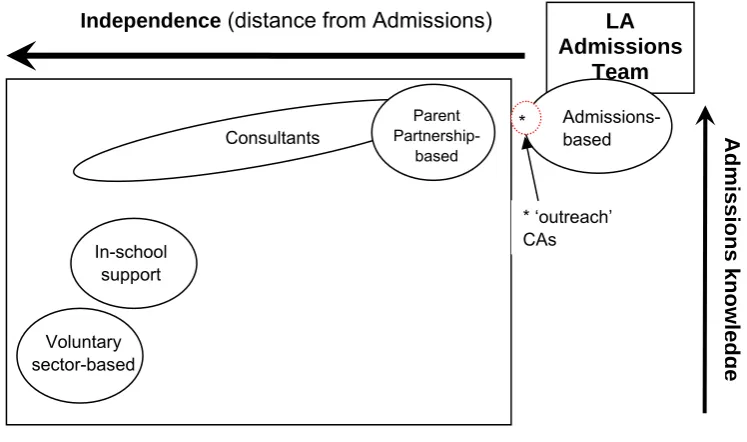
• The different model types can be mapped and described according to the
degree of independence or distance from the Admissions team and the relative importance of ‘admissions knowledge’, as expressed by Choice Advice staff.
• Different model types tended to highlight different rationales and
advantages associated with their position.
• None of the Admissions-based services had fully independent or separate
line management arrangements in place at the time of the interviews.
Amongst the sample of 15 local authorities (LAs), five different model types were identified, based on the organisational arrangements put in place by the LA to deliver the service:
• LA Admissions-based services (4LAs)
• Parent Partnership-based (7 LAs)
• Independent Consultants (2 LAs)
• Voluntary sector-based (1 LA)
• Other in-school support (1 LA)
These were based on CAS&QAN’s early categorisation of models which broadly followed the range of options outlined in the original DfES guidance (DfES, 2006b). Although the guidance stressed LAs' discretion over developing services to fit local priorities and needs, most of the case studies followed one of the suggested models. Their decisions about which one to adopt were mostly determined by balancing a number of pragmatic considerations: the desire to establish the service quickly over summer 2006 to ensure support to parents over the autumn admissions period; the priorities or fit with the Admissions service; the existence of, and relationship with other services through which the delivery could be outsourced; and additional staffing arrangements.
Varying degrees of importance were attached to independence and its outward projection and operationalisation (in terms of organisation, finance, branding, premises, uniforms, line management, and information sharing) by Choice Advice staff. Choice Advice staff views on independence were also linked to the way in which they perceived trust/mistrust between the different stakeholders (e.g. Choice Advisers who attached importance to independence were more likely to emphasise parents’ mistrust of the LA and vice versa). Similarly, the relative importance of knowledge of the admissions system varied, sometimes related to the perceived complexity of local issues. It did not necessarily follow that LAs with the most independent approaches to the service were any more likely to champion parents’ concerns.
Figure 1: Models of delivery and their independence from Admissions
LA Admissions
Team
Admissions-based
* ‘outreach’ CAs
*
Parent Partnership-
based
In-school support
Voluntary sector-based
Consultants
Independence (distance from Admissions)
Admissions
knowledge
Arms-length models
3.1 Admissions-based models
Four of the case study LAs based their Choice Advice service in, or very close to the Admissions service. Choice Advice staff in these areas tended to emphasise the importance of detailed admissions knowledge, often highlighting the issues that they considered added to the complexity of local admissions arrangements (e.g. selective schools, cross-boundary transfers, over-subscribed or Voluntary Aided schools etc). Here, close working with Admissions teams was seen as the priority, above
independence. Managers and staff believed that Admissions Officers had always provided accurate, impartial advice before the introduction of Choice Advice, so some stated that they were initially sceptical about the need for a ‘duplicating’ service.
19
Compared to other models, Admissions-based services did not tend to feel that local parents attached importance to the service’s independence from the LA14. Staff in
one case study highlighted instead, the need for dual role Choice
Advisers/Admissions Officers (CA/AOs) to be independent from local schools. In some services there was little or no distinction between the role or work of the Admissions Officer and the Choice Adviser.
As was also highlighted in the earlier pilot evaluation (Shipton and Stiell et al, 2008), the advantage of this model was that staff felt able to ‘hit the ground running’ in the first year of operation, but this has become less of a relative benefit now all the models have been established. The service was often seen as an extension of the existing Admissions service, developed by providing Admissions Officers with additional Choice Advice training and enhancing their role and responsibilities. This is represented by the overlap between the Choice Advice service and the Admissions team in Figure 1.
Two Admissions-based services extended the remit of their existing Admissions Officers in this way. In one case, the additional Choice Advice funding enabled Admissions staff to attend open evenings, give presentations at school meetings and provide drop-in sessions for parents in the autumn application period.
The other two Admissions-based services recruited or seconded new 'outreach' Choice Advice staff (see * in Figure 1), who brought a different range of community-focused skills and experience to those provided by the existing office-based
Admissions team. Although often based in or near the offices of their AO colleagues, outreach CAs tended to spend varying amounts of their time visiting and working directly with schools, organisations and parents. In contrast to using AO staff already in situ, the recruitment of new outreach staff delayed the full start of the service until much later in 2006 or 2007. As potentially isolated staff with an evolving role,
outreach Choice Advisers in these LAs still tended to continue working for, or closely with, Admissions managers and AOs. Given the clear guidance on independence and line management, this arrangement compromised their ability to be truly autonomous and independent from the Admissions service and LA. However,
outreach Choice Advisers acknowledged the advantages of this arrangement, in that it enabled them to gain valuable information and support, particularly during the initial period:
‘If I wasn’t working so closely with Admissions, and had a different line
manager, like in Parent Partnership, I feel I wouldn’t have as much support as I do from the Admissions, because I’m linked so closely with them I do get a lot of support off them and that’s really beneficial to me.’
(CA, Admissions-based service)15
14 Many parents interviewed in these areas did stress the importance of having a service they could trust
as being independent and separate from the LA that was making the allocation decisions.
20
‘I know we’re not supposed to work so closely with Admissions but they’ve been absolutely brilliant. I know I have my impartiality and independence but the information they have has been really beneficial for the Choice Advice service.’
(CA, Admissions-based service)
Both Admissions-based Choice Advisers quoted here were aware of the DCSF’s independent line management requirements, but at the time of the interviews line management arrangements were not always separate or clear cut. In all four Admissions-based areas, Choice Advisers were still being managed - directly or indirectly - by the person with responsibility for Admissions, or some aspect of Admissions. One of these services had plans to re-structure management responsibilities once the CA had established her role. The implications of line management arrangements being based within, or close to the Admissions team (e.g. the potential for conflict of interests regarding appeals) is discussed in further detail in Section 9.
CAs were aware that they were ‘giving the impression’ of being independent from Admissions to parents even though their service was often ‘branded’ in the same way as LA (e.g. uniforms, LA logos on literature), and in reality they often shared the same office or premises, information, and manager as the Admissions Officers. In one case, the senior manager justified this by stressing her ‘light touch’ management approach which was intended to encourage Choice Advisers to work with more autonomy and independence.
3.2 Parent Partnerships models
Of the 15 case studies, seven had used the local Parent Partnership (PP)
organisation to deliver the Choice Advice service. As a separate initiative, all LAs have a duty to provide Parent Partnership Services (PPS) to ensure that parents of children with special educational needs (SEN) have access to information,
independent advice and guidance on SEN, so that they can make informed decisions about their child’s education. Some PPSs also extend their remit to cover parents whose children are at risk of, or have been excluded from school. They are either run at arms-length from the Local Authority (LA), or partly or wholly provided by another provider.
For the seven LAs in our sample, PPSs were selected as suitable arms-length
21
As Figure 1 illustrates, these PP-based Choice Advisers operated at arms-length from Admissions but in relative proximity to them, given their close partnership working relationship. This enabled Choice Advisers to access accurate information and guidance about which families or areas to target their activities for example. Although it took longer for some newly appointed PP-based Choice Advisers to establish good working relationships with their local Admissions Officers (compared to Admissions-based models), there were many examples where they were able to support parents in complex admissions and challenging local contexts whilst also providing a genuinely independent service.
Compared to Admissions-based services, the notion of independence and separation from the LA was given much greater emphasis by PP-based staff. In some cases this was marked by separate branding from the LA. Where this wasn’t the case (e.g. where the LA logo had to be added to Choice Advice materials), it was seen as compromising the independence of their service and trust with local parents. Choice Advisers also commented that where the PP-based service had very close links with the LA, they sometimes felt that that independence was ‘more of a perception than a reality’.
PP-based Choice Advice staff at all levels tended to be more aware of, and
emphasise parents' concerns and mistrust of the LA and the Admissions team (more so than Admissions-based Choice Advice staff), and saw their more independent arms-length position as being important to establishing parents’ trust:
'I think they are more likely to open up to you, because as soon as you mention you are from the LA, parents can get very protective and, be 'oh I don't want to speak to you anymore', so on all my publicity I haven't got the education [LA] logo, and I do make sure that I am as far away from that as I can be’
(CA, PP-based service)
The distance PP models had from the Admissions team also enabled some Choice Advisers to act as a 'critical friend', as they felt more able to challenge Admissions staff and their decisions or practices, for the benefit of parents.
3.3 Independent Consultant models
22
As was also found in the pilot evaluation (Shipton and Stiell et al, 2008), these were the most senior group of Choice Advisers, often retired staff from senior posts across the education sector. They often had many high level contacts, but only some had good access to admissions information when required. Some Consultants worked on a number of concurrent, educational-focused projects for the LA and were already known to the parents they gave Choice Advice to in another role or educational context (e.g. as an adviser on home schooling issues). While some had flexible, part-time contracts, others confined their Choice Advice role to one day a week, which limited their availability to parents, AOs and schools who may have wanted Choice Advice. Concomitantly, this reduced their capacity to actively promote the service and deliver Choice Advice flexibly and as required. As Figure 1 suggests, more than any of the other models, Independent Consultant Choice Advisers tended to have considerably more autonomy and freedom in defining their role and degree of independence and distance from Admissions, as summed up by one consultant:
‘Independence is really good – I’m not beholden to anyone, I can criticise Admissions, schools, anybody and get away with it’
(CA, Independent Consultant-based service)
In reality though, most did not feel the need to exercise their independence, power and authority, but instead focused on providing information and support to parents at a fairly basic level. They did not see themselves as powerful ‘champions’ or
advocates for parents (as some PP-based Choice Advisers did). Given that they were still employed by the LA in a number of roles, one consultant expressed concerns about compromising their position by supporting parents through appeals, as they would be opposing their LA and employer.
3.4 Voluntary sector model
23
3.5 Other in-school support
One case study used professional support staff already in targeted primary schools to deliver Choice Advice. These Choice Advisers saw themselves as being
24
4 Nature of provision
Key points
• Although most services provided similar types of provision (advice via the
telephone, open evenings, one to ones etc), the nature of the provision varied depending on the rural/urban and admissions contexts.
• In the sample, PP-based services served slightly more deprived areas
overall, but the average Indices of Deprivation scores mask considerable variations between and within LA areas, which can also impact on
provision.
• Staffing levels and individual Choice Advice skills and experience also
varied across the case studies, and affected the nature of service provision.
• In most cases, telephone advice was the most frequent recorded form of
contact with parents, followed by face-to-face, 1:1 contact.
• Choice Advisers reported that the majority of enquiries were relatively
straightforward to answer, whilst a smaller proportion were more complex and required more time to resolve.
4.1 Service provision
Regardless of model type, most Choice Advice services were promoted and delivered through all or some of the following: letters and leaflets to schools and parents; dedicated phone line for enquiries; attendance at school open days; follow up face-to-face appointments; pre-arranged drop-in sessions; referral route contacts; and, in some cases, support around appeals. In addition, most Choice Advisers chased late applications and helped with form filling.
Some services also offered support for in-year admissions. Advice on primary admissions (new infants and juniors) was also seen as an important aspect of some Choice Advisers' work, as it prepared parents early for the procedure at subsequent transition points. To avoid the autumn rush and give parents more time to carefully consider their options, a few services were starting the secondary admissions process in Year 5 - often in the summer term when the bulk of the secondary admissions work was over.
25
4.1.1 Rural areas
Choice Advisers in rural areas often faced particular challenges because of the geographic spread of schools and dispersed locations where parents needed
support. Many had difficulties arranging face-to-face meetings with parents, covering school visits and attending open evenings, some of which were scheduled on the same day in different parts of the county. Similarly, parents in rural areas often experienced different concerns to their urban counterparts. As was also found in the pilot evaluation (Shipton and Stiell et al, 2008), the logistics of distance and transport often meant there were fewer realistic choices available to them, and therefore sometimes fewer dilemmas as well. One the other hand, in rural areas admissions considerations were often more closely tied to transport provision.
The original guidance to LAs suggested that in these circumstances, parents could be offered support for transition to secondary school rather than advice focused on ‘choices’ per se (DfES, 2006). Indeed, in some rural areas, Choice Advisers reported that there was limited demand or need for their services as most parents were
relatively satisfied with their local secondary school and the additional support already provided by staff in primary schools.
Hard-to-reach groups in rural areas, including traveller communities and recent Eastern European migrants were often more dispersed and were harder to identify and support because of their lower numbers and relative lack of visibility. The support infrastructure (e.g. translation services) was also less likely to be well developed in regions were the ethnic minority population was relatively low.
4.1.2 Urban areas
These areas are characterised by: population pressure; residential segregation; high levels of residential mobility; visible and contiguous social inequality; the close proximity of 'popular' and 'failing' schools; and relatively easy access to
transport/travel. This results in a hierarchy of schools and therefore a highly competitive market for school places in large cities and urbanised areas. Choice Advisers in the London case study areas also had to deal with the Pan-London co-ordinated admission system (which in many ways simplified some of the procedural issues), as well as the complexities of neighbouring boroughs' schools and
4.1.3 Levels of deprivation
Cutting across urban and rural areas were differing levels of deprivation in each of the case studies. Figure 2 illustrates the range of Indices of Deprivation scores for 2007 (highest, least and mean) for each model type, providing additional contextual background in relation to the possible needs of the target groups in their local population which may also have an impact on levels of provision. The higher the score, the more deprived the LA, with the national LA average scores ranging from four (least deprived) to 47 (most deprived). In this sample of 15, PP-based services had the greatest range of scores between the seven LAs with that model type, but also the highest mean (27) overall, skewed by one very deprived LA in this group. The average scores for services provided by Independent Consultants was 24, followed by Admissions-based (22) and Voluntary/other services (20) (see also Appendix Table A2). However, these group averages conceal marked variations in poverty and affluence within and between LAs.
Figure 2: 2007 Indices of deprivation across model types
Source: www.communities.gov.uk
4.1.4 Admissions complexities
Parents in areas with (or bordering areas with) selective or grammar schools; banding; faith schools; middle schools; academy and foundation schools tended to experience more complex issues regarding choice and expressing a preference. There were often more demands on Choice Advisers from highly stressed parents who needed much more information, advice and reassurance in the face of these often complicated decisions. In the light of the new Admissions Code, a small number of Choice Advisers played what they considered to be an important role in 'policing' schools, ensuring that information provided to parents by schools was accurate and that the Code was being followed correctly:
27
‘We see our role as working for the children, not for the schools…[But] our relationship with schools is generally very good, because they know that day in day out, we apply the rules and regulations. And if any of them says why have you done that, why have you done this, we say, it’s on page 25 of the Code of Practice. So you can’t have an argument with that’
(CA, Admissions-based service)
4.1.5 Staffing arrangements
The staffing arrangements put in place to deliver the service, varied greatly across the 15 case study areas, model types, and local contexts. The decision about how to staff the service was mainly affected by the level of funding, its initial two year
duration, and the need to get the service established quickly. Consequently, some services opted to select Choice Advisers from within their existing Admissions or PP teams, or from Consultants already known to the LA. Others seconded Choice Advisers from other parts of the LA, or recruited them externally.
There was a range of employment contracts and hours across Choice Advisers, including:
• part-time seasonal Choice Advisers drafted in to cover the busy autumn admissions period and post-allocation/appeals advice in the spring;
• one part-time, term-time only Choice Adviser;
• full-time Choice Advisers;
• teams of Admissions Officers tasked with additional Choice Advice duties;
• PP SEN advisers/advocates with additional Choice Advice responsibilities;
• school-based support professionals, with additional responsibility for Choice Advice for that school; and
• freelance Consultants.
There was evidence that some Choice Advisers – particularly those working in an outreach capacity alone or in a small team – were working very long and stressful hours during the busy autumn and spring periods, which was sometimes described by parents, and school staff as ‘going beyond the call of duty’. Much of this work related to intensively supporting individual parents over sustained periods, when Choice Advisers were often over-stretched and understaffed.
In February 2008, 132 LAs were able to confirm with CAS&QAN that they had named Choice Advisers in post. Of these, 84 had one Choice Adviser in post; 42 had
28
As described earlier, some of the Choice Advice staff tended to emphasise the importance of either independence or admissions knowledge, or tried to balance both – and this too, determined local staffing decisions. For example, some Admissions-based services sought to encourage independence and extend the teams’ skill-set by recruiting new staff with community outreach experience, even though these staff still worked closely with the Admissions-team and/or the Admissions Manager. In
defining the new Choice Advice role and developing the person specification, a number of services were guided by the exemplars provided by DfES/DCSF and CAS&QAN.
The skills, backgrounds, approach and organisational context of the appointed Choice Advisers seemed to have had a strong bearing on the nature and scale of the service delivered, and its effectiveness at reaching vulnerable parents. For example, Choice Advisers with strong admissions experience in selective areas were more likely to provide information and advice in more of a ‘matter of fact’ manner, and were in an authoritative position to ‘police’ schools. In comparison, those at arms-length from Admissions were in a more neutral position to act as critical friends and challenge the LA whilst also adopting a more affable, informal approach with distrustful or reluctant parents. Arms-length Choice Advisers (particularly those in PP-based services) tended to have staff with the skills, experience, time and
commitment to work in an intensive ‘hands-on’, persistent and patient manner which was effective in supporting the most vulnerable families. They also had the freedom to explore more innovative and creative approaches to promotion, targeting and supporting parents, without the same organisational or bureaucratic strictures experienced by some of their peers in LAs. There were occasions when this
extended to them actively championing the needs of parents who needed additional support.
Although Choice Advisers working alone were often constrained by what they could deliver, in a number of cases, their effective, determined working style enabled them to reach a greater number of targeted parents than much larger teams of Choice Advisers.
4.2 Methods of delivering advice
The parent background (tracker) data submitted to the research team by the 15 case study services recorded a total of 480 parents who received advice between
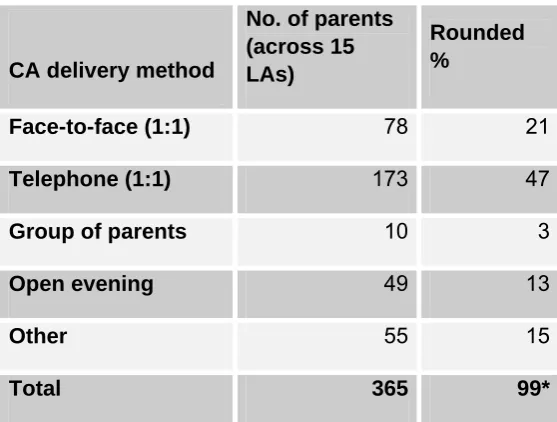
Table 1: Methods of delivering Choice Advice to parents (Sept 07-Feb 08), across all 15 LAs
CA delivery method
No. of parents (across 15 LAs)
Rounded %
Face-to-face (1:1) 78 21
Telephone (1:1) 173 47
Group of parents 10 3
Open evening 49 13
Other 55 15
Total 365 99*
Source: Parent background (tracker) data. Missing data for 115 parents not included
* Rounding to whole numbers results in total appearing less than 100%
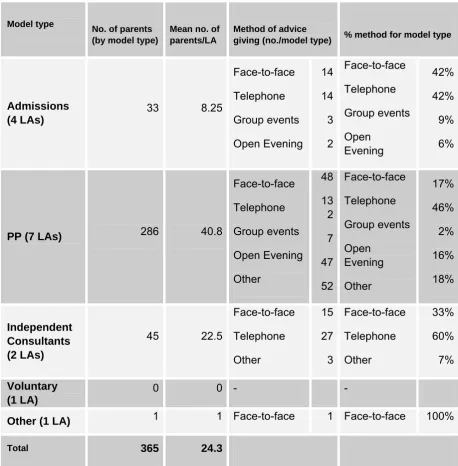
Given that some of this data is incomplete, these figures are likely to under-represent the total number of parents Choice Advisers had contact with, so are intended to be indicative rather than an absolute measure of activity. Interview evidence suggests that the Choice Advisers most likely to have under-recorded this aspect of their work were those based in very pro-active and productive PP organisations where there was insufficient time to record their more fleeting contacts with parents, and in Admissions-based services where some Admissions Officers with a dual Choice Advice role found it difficult to distinguish between their substantive job of giving admissions advice to parents (as before) and giving ‘new Choice Advice’. In both cases this often related to straightforward telephone queries and in some instances, the brief contact with parents at group events, school visits or parents’ evenings where Choice Advisers felt it was inappropriate to collect this additional data. Notwithstanding the limitations of the data collection and these caveats, this data indicates that PP-based Choice Advisers still recorded advising considerably more parents overall (averaged at 41 per PP-based LA, compared to 23 per consultant LA and eight in Admissions-based LAs – see Table 2). These general trends seem to reflect the other evidence that emerged from the interview data, including the very low numbers recorded in the poorly performing voluntary and ‘other’ services - as discussed in later sections.
30
Table 2: Methods of delivering advice to parents (Sept 07-Feb 08), by model type
Model type
No. of parents (by model type)
Mean no. of parents/LA
Method of advice
giving (no./model type) % method for model type
Admissions (4 LAs)
33 8.25
Face-to-face Telephone Group events Open Evening 14 14 3 2 Face-to-face Telephone Group events Open Evening 42% 42% 9% 6%
PP (7 LAs) 286 40.8
Face-to-face Telephone Group events Open Evening Other 48 13 2 7 47 52 Face-to-face Telephone Group events Open Evening Other 17% 46% 2% 16% 18% Independent Consultants (2 LAs)
45 22.5
Face-to-face Telephone Other 15 27 3 Face-to-face Telephone Other 33% 60% 7% Voluntary (1 LA)
0 0 - -
Other (1 LA) 1 1 Face-to-face 1 Face-to-face 100%
Total 365 24.3
Source: Parent background (tracker) data. Missing data for 115 parents not included – see Section 2.2 for further explanation.
CAS&QAN’s information for England indicates that 97 of the 149 LAs had submitted their Activity Tracker forms by April 2008. By this point (which included some post allocation/appeals advice work) a total of 4,363 forms had been received, an average of around 45 per LA, compared to case study average of 24. Their data combined all 1:1 sessions with parents (face-to-face and telephone contact) and found that 85% of Choice Advice activities fell into this category. Eleven per cent of Activity Tracker submissions related to open meetings with other organisations, teams or schools to promote the service and develop referral routes; and five per cent recorded activities with groups of parents (at parents meetings, open days etc). Again, given the partial completion and submission of CAS&QAN’s Activity Tracker forms, these figures give only a partial indication of some the activities Choice Advisers have been involved with.
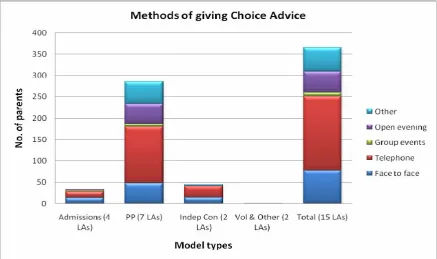
Figure 3: Methods of giving Choice Advice (Sept 07-Feb 08)
Source: Parent (tracker) data. Missing data not included
4.3 The nature of the advice given
From both the tracker data and interviews with Choice Advice staff, it appears that much of the advice given was relatively straightforward:
‘I was very surprised at how little in-depth information I have to give, I don’t get asked about complex school reports. On the whole the majority of parents need just talking through, at a fairly basic level, the process and their choices’
(CA, PP-based service)
32
‘Most of it [the advice requested] is at a really more basic level, 'where is there a school in my area that I can get my child into?', especially for the in-year admissions; 'am I going to get transport there?' or 'I need to change my child's school''
(CA, Admissions-based service)
However, in some cases, more complex admissions arrangements could require more detailed explanations (e.g. in selective areas), or a child’s or parent’s complex individual needs may require more time to resolve (e.g. specialist SEN requirements, appeals advice – see Section 9). Across all services, Choice Advice staff reported also providing some degree of more in-depth support:
'Some of our work requires repeat appointments, writing to parents, finding out information, on-going intensive work, follow-up phone calls and posting out other information that they need'
(CA, Admissions-based service)
33
5 Needs and demands
Key points
• Five types of advice that meet parents’ differing needs for support on
admissions and preferences were identified. The extent to which different models focused on these varied according to the profile of the parents they saw, the skills and background of the Choice Adviser – hence observable patterns across model types.
• A range of factors lead to high and low demand and needs.
• The evidence highlights the importance of careful targeting to uncover
more hidden pockets of need.
• Socio-economic disadvantage is not always an accurate indicator of the
need for Choice Advice. Targeting approaches should be flexible enough to continually identify and seek out hitherto unmet need.
Choice Advisers’ and their managers’ perceptions and descriptions of local needs influenced the focus and delivery of the service. Needs were referred to in terms of the Admissions process (e.g. the return of completed applications); meeting parents’ expressed demands (often from self-referring, info-seeking parents); and meeting more hidden needs for advice and support that required pro-active targeting.
From the triangulated analysis of Choice Adviser and parent interviews, and the parent background (tracker) data, it is possible to group the different types of
information or advice that Choice Advisers commonly offered to meet parents’ needs.
• Reassurance (type 1)
• Information, explanations, clarifications (type 2)
• Advice and guidance (type 3)
• An advocate or champion (type 4)
• Influencing/advisory or policing role (type 5)
As described and represented in Table 3, the extent to which these forms of support were predominant varied across the case studies, with some generalised patterns emerging across the model types.
Some Admissions-based services continued to focus on providing parents with accurate, factual information on schools and the admissions process, whilst offering additional in-depth support as required. Both aspects were particularly important in areas with complex admissions arrangements where anxious parents required more reassurance. Where out-reach Choice Advisers had been recruited by Admissions, or links with PP (and Consultants to a lesser extent) were well-established,
34
35
Table 3: Predominance of different forms of advice and support to meet parents’ needs, by model type
Extent/focus of activity by model type Types of
Choice Advice given to meet parents’ needs
Examples/details
Adm PP Con
Vol (post alloc)
Other
1. Reassurance Often for anxious, self-referring parents who may already have some information and understanding of the process.
●
●
● ●2. Information, explanations, clarifications
Such as ‘objective’ information on the admissions process and procedures; equal preference system (EPS); oversubscription criteria; distance and transport; ‘dispelling myths’; school performance (e.g. Ofsted report; league tables; Contextual Value Added data); signposting; appeals process etc. Much of this is standard information that Admissions officers would have dispensed in the
past.
●
●
●
● ●3. Advice and guidance
When parents required further help in understanding or interpreting information; making realistic choices; considering other options; ordering their preferences; filling in the form; appeals advice etc. Tends to be more time-consuming and in-depth. Reported by some as additional support that many Admissions staff would not have been able to provide prior to the introduction of Choice Advice. Includes instances where the CA explained to parents why some schools were considered more popular than others – something some Admissions staff stated they would not have done.
●
●
●
● ●4. An advocate or champion
Where a CA would support or challenge schools or the LA directly, on the parents’ behalf, or accompany a parent on school visits to help facilitate their decision-making. Some CAs provided extensive support throughout the appeals process but, as the new
Code makes clear, were not able to represent the parents at the appeals hearing.
●
●5. Influencing/ advisory or policing role
Feeding back information from schools and parents to affect change.
●
●
●●
A major focus/element of Choice Advice work for that model type●
A moderate focus/element of Choice Advice work across for that model type36
Evidence from the staff and parents interview data has enabled the identification of a range of factors, circumstances and Choice Advice approaches that can determine whether areas are of high or low ‘demand’ or ‘need’.
‘Demand’ refers to the incoming enquiries from local, information-seeking parents which creates pressure on the service to be reactive, whereas ‘needs’ refers to latent, but sometimes unrealised demand from local parents who may require help and support but are often unaware of the service or do not/can not access the service. These factors can then have a critical impact on a service’s focus, delivery and effectiveness and, to some extent, satisfaction for different groups of parents.
5.1 Factors leading to a high demand for Choice Advice
There is a high demand if all or some of the following factors are present
• The service is deemed ‘universal’ and equally open to all local parents, is well-publicised and is becoming increasingly well known locally by self-referring parents.
• There are many selective, faith or banded schools which results in highly complex, confusing admissions issues for local parents.
• There is high population pressure in areas with marked social segregation and good transport links (e.g. London and other large cities).
• High levels of competition exist for limited places in popular 'good schools' which neighbour undersubscribed ‘failing’ or unpopular schools (this requires Choice Advisers to dispel myths around 'good schools' and 'bad schools’; i.e. polarised perceptions).
• There are many aspirational, information-seeking parents who are likely to self-refer and ‘leave no stone unturned’. This includes some disadvantaged but engaged parents, many from ethnic minority and/or faith backgrounds who feel their choices are limited because of their deprived residential location or
catchment.
• Changes to the admission system/process have taken place (e.g. recent introduction of equal preference/default ranking system; promotion of on-line applications), which have a local impact.
37
‘Most of the parents that approached me are quite well aware of the system and how it works. Their main concerns were around applying for popular out of catchment schools. They weren’t really the parents I wanted to target, I’ll be honest, I wanted to target the more deprived families’
(CA, out-reach Admissions-based service)
5.2 Factors leading to high need for Choice Advice
Factors leading to high need are often found in areas of deprivation, where parents experience multiple and complex disadvantages, including:
• Chaotic family situations; complex social support needs; challenging personal circumstances; ill health etc.
• Traveller families; families in temporary accommodation; frequent movers16 ;
recent arrivals (including professionals moving into the area; foreign students, as well as more disadvantaged groups).
• Parents needing language support, whether from established ethnic minority communities or recently arrived immigrant groups in areas with limited support for ethnic minority groups (e.g. rural areas with high numbers of recent Eastern European immigrants).
• Parents with learning difficulties or literacy problems.
• Large numbers of ‘disengaged parents’ including those who do not submit application forms.
The main aim of the initiative is to address the admissions and preference advice needs of more vulnerable or disadvantaged parents, many of whom fall into these groups and may live in identifiable communities or parts of the LA. Others are often hidden (e.g. isolated pockets or smaller numbers) or find it difficult to access
mainstream services and sources of information because of the structural and personal barriers they face. Meeting the needs of these parents requires a much more pro-active, innovative, persistent, trust-based, patient and personalised approach to providing Choice Advice which is time-intensive (type 3). Targeting is critical and achieved through good links with Admissions teams, schools and
community-based organisations, as these provide potential referral routes and access to translators and interpreters:
16 The interviews did not pick up any issues relating to families of those in the armed forces, but in some
38
‘I target specific primary and secondary schools on the basis of conversations with the Admissions manager - these schools are historically those with the highest incidence of parents not applying or applying very late. So far I’ve done two or three rounds of visits to schools, around 35 – 40. But there has to be some sort of mechanism in place to try and engage