2008
Design patterns in level design: common practices
in simulated environment construction
Denise Bacher Iowa State University
Follow this and additional works at:https://lib.dr.iastate.edu/rtd Part of theArt and Design Commons
This Thesis is brought to you for free and open access by the Iowa State University Capstones, Theses and Dissertations at Iowa State University Digital Repository. It has been accepted for inclusion in Retrospective Theses and Dissertations by an authorized administrator of Iowa State University Digital Repository. For more information, please [email protected].
Recommended Citation
Bacher, Denise, "Design patterns in level design: common practices in simulated environment construction" (2008).Retrospective Theses and Dissertations. 15345.
by
Denise Bacher
A thesis submitted to the graduate faculty
in partial fulfillment of the requirements for the degree of MASTER OF SCIENCE
Major: Human Computer Interaction Program of Study Committee: Steven M. Herrnstadt, Major Professor
Anson B. Call Debra J. Satterfield
Eve Wurtele
Iowa State University Ames, Iowa
2008
Table of Contents
List of Figures...iii
Abstract...iv
Introduction...1
Levels & Level Design... 3
Theory of Practice... 3
Levels in Genres...5
Action Games... 5
Strategy Games...7
Role-Playing Games...8
Adventure Games... 9
Simulation and Sports Games... 10
Design Patterns... 12
Level Design Patterns... 15
Disbelief Suspension...15
Mood Ambiance...18
Artifact Affordance... 22
Boundary Affordance...24
Bread Crumbing... 26
Forking... 28
Stagnation...33
Pacing and Rhythm... 34
List of Figures
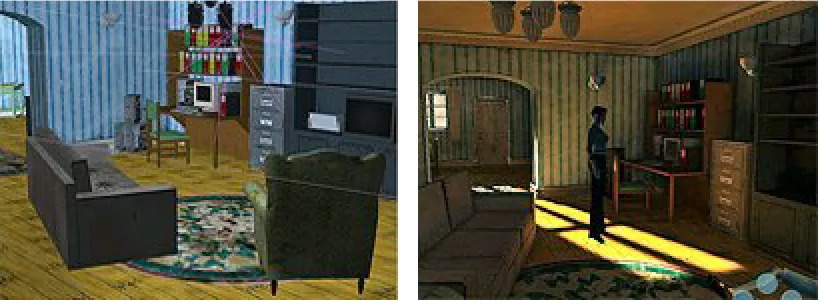
Figure 1: Broken Sword: The Sleeping Dragon, before with flat lighting and after with
atmospheric lighting (Adventure Gamers)... 21
Figure 2: Bread Crumbing in Prince of Persia: Sands of Time (Gamespot)... 28
Figure 3: Linear Choice-Point Model...29
Figure 4: Bottlenecking Choice-Point Model...29
Figure 5: Branching Choice-Point Model...30
Figure 6: Hub & Spokes Choice-Point Model...31
Figure 7: Open Ended Choice-Point Model...31
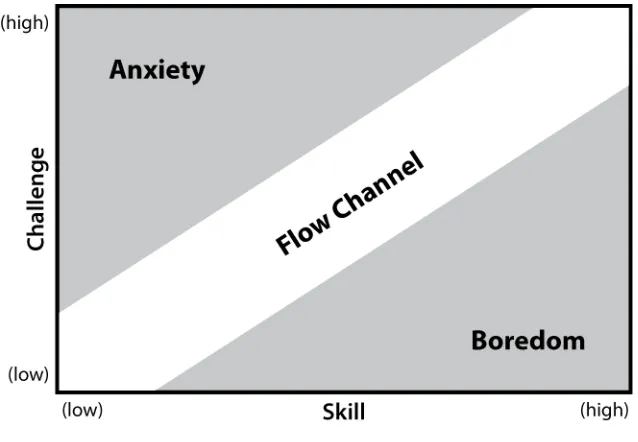
Figure 8: Csikszentimihalyi's flow channel (74)... 35
Abstract
The creation of video game levels is an inexact and often intuitive process. Currently, much of level design focuses on the “how” as opposed to the “why.” That is to say, level designers know how to build a level, but do not know why they built it the way they did. Before more immersive player experiences can occur, an understanding of what levels are, what common functionality exists between them, and a means of consistently reproducing player behaviors is necessary.
Introduction
In 1978, students at Essex University, Roy Trubshaw and later Richard Bartle, created the first multi-user dungeon (MUD), MUD. It was a multi-player, text-based virtual world inspired by single player, text-based adventure games that Trubshaw enjoyed (Bartle 4). While Spacewar! is commonly referred to as the grandfather of video games, its environment was limited to a one-screen gamespace. Although Spacewar! did have a graphical
representation, MUD and other text adventures were some of the first to create virtual environments and worlds for players to explore, but the visualizations were all in their imagination. As technology has advanced, so too has our ability to take the text descriptions of these worlds and turn them into visual, explorable, interactive, and immersive 3D worlds.
The foundation for creating the game world is a level. Levels are maps, missions, or stages that have some common characteristics such as: physical boundaries, entrances and exits, goals, and contains one, some, or all of the game's mechanics (Byrne 6). But in order to elicit the desired reactions from players we need to understand what compels the player to start and to keep playing. To elicit reactions from players what they want needs to be understood and then combine that with what the game needs in order for to progress and express the story. To accomplish this understanding, we can define common problems based on player wants and devise solutions based on gameplay needs, creating patterns that can be reused as necessary and combined with other patterns to create unique gameplay experiences. The use of patterns provides a common toolset for creating a variety of different types of levels for different types of games.
genre engenders. Next, we will examine what design patterns are, specifically in terms of architecture and interaction design. I will then introduce the technique of creating and using patterns to not only reveal common issues in level design, but also as a means of
Levels & Level Design
Theory of Practice
What a level is varies from genre to genre, and from game to game. Richard Rouse defines levels as distinct areas that “may be constrained by geographical area. . . by the amount of content that can be kept in memory at once, or by the amount of gameplay that 'feels right' before players are granted a short reprieve preceding the beginning of the next level” (450). This definition is a good start; however, it limits levels to a physical representation of space. I would like to expand this definition to not only include the physical representation but also the behaviors therein. More specifically, a level is:
(1) the physical representation of the environment; (2) the behaviors of the environment;
(3) the behaviors of the agents/actors;
(4) the culmination of the prior elements to direct the human player's behaviors. To clarify, agents are interactive characters with predetermined actions, while actors are not only interactive but they also have emotions, moods, personalities, and memories that are all determinants in their actions.
virtual world can range anywhere from a text-based MUD to a fully 3D world. Examples of virtual worlds include Second Life, The Sims Online, World of Warcraft, and Ultima Online. The common feature here is the creation of a virtual place for the user to exist and interact. Upon closer examination being multi-player, online, or displayed through the use of special hardware are just methods of presentation and additional characteristics of the virtual place, but are not the defining characteristics of the environment being designed. The same
principals and definitions that apply to levels also apply to virtual environments and virtual worlds. For the purposes of this paper levels, virtual environments and virtual worlds will be considered to be the same thing. The methods used to design levels are also applicable to virtual environments and virtual worlds.
Regarding the creation of levels, level design is the process of creating a universe, world, environment or space in which the game takes place and players interact and explore. The level is responsible for setting the premise of the game and for establishing the rules for gameplay therein. The space of the level is defined as well as its access points, entrances and exits, and the goals to be accomplished in the space. The behaviors of the environment and the entities existing therein also need to be established. Most importantly though, the level should be fun and compelling. Compulsion is what draws the player and is what keeps drawing the player back to the game time and time again. Past being compelling and fun, level design becomes more difficult to define on a whole as every game will present different requirements and challenges, though many of these requirements and challenges are the same across a genre. One game may call for distinct levels that progressively become more
placement of items and strategic positions needs to be taken into consideration, while another game may be more puzzle driven where multiple solutions may need to be taken into
account.
On a brief aside, the difference between level design and game design can very easily and quickly become blurred. Game design focuses on the story and mechanics of the game, whereas level design focuses the environment and inhabitants of the world created by the story and making the mechanics accessible to players. It follows that the level designer and game designer need to work together closely in order to make a good game. Because of this necessity, it can become difficult to determine precisely what level design is and what game design is.
Levels in Genres
To get a better understanding of each game genre's unique challenges they need to be assessed individually. The following descriptions are broad generalizations, and common connotations, of the characteristics that exist within each genre. These descriptions are not indicative of all games existing within the genre, and some games will exhibit characteristics from multiple genres.
Action Games
enemies, collectible items, checkpoints, and save points are common characteristics.
The physical representation of the environment is usually done through distinct levels that become more difficult as the game progresses. Each level is defined by obstacles that must be overcome, or a set of goals that must be completed before the player can advance to the next level. Sometimes the obstacle is a boss enemy, an especially powerful enemy, or a group of enemies. Other times a lock and key puzzle must solve before being allowed to progress. Note that these puzzles are not always lock and key in the literal sense, they could be a quest that needs to be completed before the player can progress.
Placement of enemies and enemy spawning are key to an action game level. Where they are placed, how many there are, and how hard they are to defeat all plays in to the difficulty of the level. Enemies can be placed in predefined locations and scripts or artificial intelligence may then instruct them to locate and/or attack the player. They can also be randomly generated using an algorithm to determine where to place them. Another way to introduce enemies into a level is through the use of spawn points. Span points can be created in two ways, (1) from a visible object that the player can destroy, or (2) from an invisible point that is placed out of the way that the player cannot destroy. As the game progresses and the challenges become more difficult, collectibles, checkpoints, and save points become important to the player's continued progress.
the end of the level, or a special ability or weapon will be place near an obstacle that is required to get passed it. Checkpoints are automatic mini saves usually occurring after players have progressed past certain places or difficulties in a level and allow the player to not lose their progresses if they die. They are also placed before areas that are particularly difficult, such as before a boss fight. Save points usually occur at the end of a level, allowing the player to save their progress before moving on to the next level and the next set of challenges.
Strategy Games
Strategy (including tactical) games include both turn-based and real-time strategy games. Strategy games are about management and have core themes of conquest, exploration and trade. These themes play an important role in the level design of the game as does the camera perspective. Most strategy games utilize the top-down or isometric views to allow the player to get a better overall vision of what is going on in the world. The creation of maps with balanced strategic locations and the placement of enemies, resources are critical
characteristics of strategy games.
Maps in strategy games are typically tile based, making it easier for players to thing tactically and plan their movements. Strategic terrain locations on the map allow for the creation of strongholds or advantages over opponents. They may also provide advantages to opponents that players may want to capture, giving them a goal in the game.
placement of resources needed by players to be able to advance across the map will play a role on where they decide to build and enforce their strategic locations to hold off and overcome advancing opponents.
Role-Playing Games
Role-playing games (RPG) focus primarily on character development and customization as in addition to story. The creation of the game-world for RPGs is crucial because of the role the world plays in the believability of the story and because of its sheer vastness. The worlds of RPGs consist of towns, outposts, dungeons, and the rural areas in between. Story
progression and exploration of the world transpires through quests and missions and the characters involved.
The development of towns, outposts, dungeons and/or rural areas has an important role in developing the world in which the game takes place. Towns and outposts are typically safe havens for players to sell items and buy supplies from merchant characters. Quest giving characters also have a tendency to exist in these areas. Dungeons and rural areas are typically the explorable areas of the world, where players will be completing quests and exploring the vastness of the world. Monsters and enemies exist and will need to be placed in this space.
their roles in the game.
Adventure Games
Adventure games are essentially interactive stories about a character that is controlled by the player. Along with story, adventure games also focus on exploration, puzzle solving, and the collection and manipulation of objects (often in the act of solving a puzzle). There is very little emphasis on action or combat, but that is not to say that it does not occur. The role of the camera plays an important role in the telling of the story and the creation of the
environment. Regardless of the type of camera used, immersive environment, puzzles, items, and NPCs are all common components of adventure games.
Adventure games typically have one of three different camera perspectives: context sensitive, first person, or third person. Context sensitive cameras depict the player character (PC) in a stationary background that will change to the next background when the PC reaches the edge of the current background. First person perspective is from the view of the PC and can be either done with stationary backgrounds or in real-time. In the third person perspective the camera usually tethered to the PC and moves with them as they explore the world.
When using the first or third person camera this is less of an issue since the camera is directly tied to the PCs movement within the world.
In adventure games progression of the story typically takes place through solving puzzles. Puzzles should be placed in such a way that they make sense in the context of the story and enhance it, not just slow the game down and get in the way of the player's progress. Often part of solving puzzles is having picked up the appropriate item somewhere else in the game. Placement of these items in the world needs to occur in such a way that players can find them and do not expend too much extra time searching for something they need but cannot find because it was hidden in the environment.
Non-player characters (NPCs) play an important role in helping tell the game's story. Where these characters are positioned in the environment will determine how much and when the story is imparted to players. NPCs may also help players solve puzzles by giving them items needed or hits that will aid them.
Simulation and Sports Games
Simulation games focus on the process of building and managing. Typically, there is no win case in a simulation game; the game has the potential to keep going. In simulation games it is all about understanding the rule set of the game. There is significantly less level design in simulation games since the player does most of the level design themselves. Like in strategy games, players are presented with a tile based map that players then develop their own worlds.
are all about the rules of the sport and the rules integrated into the game. With arenas, stadiums and race tracks based on real world arenas and stadiums the art department is left with the task of replicating these environments. In instances where a new environment is being created, like a new race track that does not exist in the real world, the level designer has the opportunity to create a new map. With a race track there's not only just the main track, but also shortcuts.
Design Patterns
Even though the design of levels differs between the various genres and games, there are still similarities that run through them all. These similarities include how the players move through the world, how they interact with other entities in the world, how they complete tasks and reach goals, and many other common activities that occur in all games. The reoccurring nature of these activities in the game world, while exhibiting themselves differently each time, cause patterns to emerge within the game world. By examining these patterns, we can create a language which can be used to consistently design compelling worlds while still maintaining the uniqueness of each game and its individual needs.
Design patterns are formalizations of solutions to common problems existing in a particular design paradigm. These patterns are “reusable solutions to solve recurring problems” (Kreimeier). The combination of patterns creates a language, as discussed by Alexander:
The elements of this language are entities called patterns. Each pattern describes a problem which occurs over and over again in our environment, and then describes the core of the solution to that problem, in such a way that you can use this solution a million times over without ever doing it the same way twice. (“Pattern Language” x)
These patterns have a distinct template consisting of five key components:
(1) the name of the pattern;
(2) the context in which the problem is being examined;
(3) the complete description of the problem, including the background of the problem and any ways the problem may occur;
(4) the solution to the problem in the context described earlier;
(5) any patterns that may work in conjunction with the current pattern.
used may include: why the pattern actually works; potential consequences and side effects cause by using the pattern; working examples of the pattern. The only necessary components are the name, the problem, and the solution. The other components used are customizable for the paradigm the patterns are being used for.
Using patterns to solve recurring problems is not a novel approach. This method was originally developed as an architectural concept by Christopher Alexander et al. in 1977, in his book A Pattern Language. Alexander created this methodology as a means of addressing specific needs and necessary features while still granting the architect freedom in the
execution. Design patterns as a methodology have also been adopted by other disciplines: interaction design, and more notably computer science as a means of describing solutions to common problems arising in software design, and made popular by the Gang of Four (Erich Gamma, Richard Helm, Ralph Johnson, and John Vlissides). The use of patterns helps characterize common issues encountered when designing systems and provides proven solutions to speed the development process. Patterns are also useful in translating the requirements of a particular project into manageable solutions.
The use of patterns in the creation of levels would be beneficial to development practices. It would allow for the consistent creation of compelling game worlds while still giving the level designer freedom in how and which patterns are applied. In terms of level design, patterns can be used in three ways: (1) proactively in the initial design of the level, (2) reactively when presented with a problem later in the design process, and (3) as a lexicon for academics and researchers to study the patterns in isolation.
level being designed. If levels for an adventure game were being designed, patterns that emphasis the story, character interactions, and exploration would be employed in the development of the game's environment. The patterns become the language of the level and shape the game world.
As a reactive method, patterns can be applied to address problems that arise during the development process. If a level for an action game was designed, but was later discovered to be difficult to navigate through, patterns may be used to resolve this issue. Regardless of whether patterns were used in preproduction, a pattern, such as Bread Crumbing, can be inserted to remedy the problem. If patterns were already being used, a new pattern can become part of the level's language.
Level Design Patterns
Patterns already exist in level design, and level designers continually use these patterns in creating levels, whether they realize it or not. The design patterns presented here are in no way new; rather, they are formalizations and explanations of practices already occurring in games. The following patterns do not form a complete or extensive language. They are a subset of more commonly seen problems that arise in level design.
Disbelief Suspension
Maintaining the fantasy increases the believability of the environment and provides a more immersive experience.
PROBLEM
“A major component of the popularity of storytelling art forms is the element of fantasy” (Rouse 7). Fantasy is the suspension of disbelief. This element exists passively in books and movies; but in games, players participate as an active role in the world and story, thus making the fantasy more immersive. Consistency of the fantasy maintains the suspension of disbelief and keeps players playing the game, drawing them deeper into the experience. If the fantasy is inconsistent, the illusion will be broken and players will return to the “real world.”
SOLUTION
virtual world reflects the real world. The first component, logical contradictions and
irregularities, is straight forward. As long as there are no contradictions amongst the various elements of the game Disbelief Suspension is established and maintained. If players are able to interact with a crate, they should be able to interact with similar crates, in a similar fashion. The second component, reflection of the real world in the virtual world, is more complicated. It is more than just maintaining consistency amongst the game elements, but also having some relation to real world functions. Real world functionality does not mean that the virtual world must mimic the real world, but that there are some resemblances of the real world in how things function (Björk and Holopainen 65 - 6).
Star Trek: The Next Generation is full of futuristic technologies that need to stay consistent with each other and the futuristic time period, but also maintain some relation to the real world since it is taking place in our future. Such an example is the Heisenberg compensators, which are part of the transporter system that is heavily utilized in the Star Trek universe. In quantum physics, the Heisenberg uncertainty principle says the quantum state of a subatomic particle cannot be known to arbitrary precision, which is believed to make the transportation of matter impossible, hence the invention for the Heisenberg compensators. The
compensators fill in the unknowns in quantum physics, allowing transporters to exist and function while maintaining the viewers’ suspension of disbelief. Additionally, even though the Heisenberg compensators are a completely fictional technology, the nomenclature used to describe them has relations to reality, making the concept more believable and
understandable.
presented should be what players expect. The actors and or agents that exist in the
environment should act reasonably. It would not make sense to have friendly monsters, just as it would not make sense to have a hostile mentor or sidekick.
CONSEQUENCES
When players are able to maintain their suspension of disbelief they become more immersed in the game and are able to stay immersed in the game. Immersion allows for more in depth and meaningful player experiences.
EXAMPLE
Grand Theft Auto III takes place in a resemblance of the real world. The realistic setting means the game needs to closely reflect the real world. Grand Theft Auto III achieves the necessary realism by creating realistic traffic and pedestrian simulations. In traffic, cars drive on the right side of the road, weave between other cars, stop at traffic lights, and honk at each other. While driving, when players run into objects their vehicle sustains damage as does the object hit, and eventually, with continued damage, the vehicle will explode. Pedestrians walk along the sidewalks and appear to be going about their daily lives. If players attack a
pedestrian, the surrounding pedestrians will flee the area. By realistically mimicking the real world, the suspension of disbelief is maintained.
ability of players to use the psychic abilities on all objects in the world maintains and increases their suspension of disbelief.
Mood Ambiance
Setting the mood of the game through environmental elements can enhance the experience.
PROBLEM
Players want to feel something when they play games, much in the same way that audiences want emotional experiences when they watch a movie, see a play, or read a book. While the story and play are responsible for the majority of the emotional experiences players have, the environment should facilitate and promote the mood of the story and play, drawing players further into the game. Often the range of emotions provided by games is limited to
excitement, tension, despair, and elation (Rouse 6). The expansion of the emotional experiences provided by games would make for more memorable and meaningful experiences.
SOLUTION
Ambiance can be created in two different ways: (1) visually with the use of light and color, or (2) audibly with the use of music and sound effects. In cinema and theater both visual and audio components are utilized to help convey a mood or emotion to the audience.
Visual
cool colors. Colors play an intricate role in affecting people's moods, but different colors can evoke different emotions in different people. Some individuals may feel excited by warm colors while others may be calmed; the same can be said about cool colors. Each color has various associations, though these associations will not be true for every individual:
Red: strength, anger, power, danger, excitement, passion Orange: happiness, creativity, stimulation
Yellow: joy, optimism, fear
Green: relaxation, calm, harmony, envy Blue: peace, hope, contemplation
Violet: spirituality, enlightenment, contemplation Brown: earth, nature, calm, narrow-mindedness Grey: dullness, loneliness, separation
White: purity, peace, reverence, innocence Black: restriction, absence, protection
(Mahnke and Mahnke 11 - 13; Osborne 31; Zelanski and Fisher 42)
Color use is not limited to an object's physical material. Color of the light and the way it reflects of the surfaces of objects can equally affect players. “In red illumination, and to a lesser extent orange and yellow light, one will tend to experience an increase of muscular tension. [. . .] Conversely, on exposure to bright green or blue light, one will tend to
experience a release of muscular tension, a slowing of heartbeat and slight lowering of body temperature” (Osborne 33). Beyond the use of color in lighting is the overall use of light and shadow. Lights emphasize and add clarity, while shadows conceal and add suspense.
create more shadows, and increase the amount of contrast between light and dark. The softness or hardness of the light contributes to the contrast created by shadow. The softer the light, the more diffused the edges of shadows will become. Conversely, harder light will create shadows with more defined edges (Birn).
Audio
Sound can be used to enhance the mood of the environment. While the level designer does not directly create the sounds, or may not even provide a list of sounds needed, the placement of sounds, specifically ambient and Foley sounds, can be significant in the emotions
experienced by players. Sound is often the initial indicator that an event is about to occur or something that needs attention is approaching.
CONSEQUENCES
Discretion needs to be taken when using this pattern. The use of audio and visual components can either allow players to subconsciously read the environment and better be able to
anticipate encounters. If used inappropriately these components can confuse players or be contrary to what is actually occurring in the space.
feel the effects but will not be distracted or necessarily even aware that anything has been done.
Regarding audio, if too many conflicting noises are used, players may simply turn the audio off completely eliminating a world's richness. If the wrong sounds are used players may get a false sense of security or may be tense for no reason.
EXAMPLES
In Broken Sword: The Sleeping Dragon, the effects of lighting can be seen. In Figure 1 are images of the same room from the game. The first image is the room with flat, ambient light. Under the flat light, the objects appear dull, unnatural and uninviting. The second image is the same room, but with atmospheric light, primarily coming in through the far window. With the warm light coming in through the window, the objects come to life, and the shadows and diffusion of light create interest in the room.
[image:27.612.111.522.466.618.2]The environment created in F.E.A.R. First Encounter Assault Recon sets the mood for its horror theme. The use of light and shadow keeps players unsure of what may be around the
corner or at the end of the hall. While there is sufficient light that players can still see, the shadows cast obscure parts of the environment, keeping players in suspense. F.E.A.R. also utilizes not only ambient sounds but periods of silence to keep players guessing. During down times in the game, when players are not in combat, the tension is built back up with little noises that cause them to turn around and make sure nothing is there. The atmosphere in
F.E.A.R. escalates the tension of the game only to bring it down to nothing, lulling players into a false sense of security in order to spring the next surprise on them.
Artifact Affordance
Providing visual clues for how to interact with objects encountered in the game.
PROBLEM
While playing a game, players will encounter artifacts, or objects, in the world that are pertinent to their progression through the game. In situations where these artifacts are not perceived as intractable objects, players have the potential to pass them by and later become stuck and be forced to back track for a missed artifact that is part of the solution to a problem they are faced with.
SOLUTION
Affordances can signal how an object can be moved, what it will support, and whether anything will fit into its crevices, over it, or under it. [. . .]
Affordances suggest the range of possibilities, constraints limit the number of alternatives. The thoughtful use of affordances and constraints together in design lets a user determine readily the proper course of action, even in a novel situation (“Everyday Things” 82).
An artifact's perceived affordances have the ability to improve players' progression through the game. By looking at an artifact and having an idea how it may work, players will gain insight into how to accomplish the current task, and may have a better idea how to address future challenges.
CONSEQUENCES
The artifact affordances perceived by players have the possibility of being incorrect. Since objects in the environment, including the environment itself, are virtual representations, they do not offer real affordance, and they only provide visual clues and cues to players. In this sense, care needs to be taken to ensure the objects players need to interact with do not send the wrong message.
EXAMPLE
The world of Fable: The Lost Chapters is a full of artifacts and intractable items. In Fable, the artifacts indicate to players not only what they can interact with but also what the interaction will be. For instance, there are beds located throughout the world and based on players real world experience, they know that by sleeping in the bed they will regenerate their health. Players also have the ability to fish, but not every lake or pond has anything in it. Players can observe the surface and know that if they see ripples or bubbles there is
objects the encounter in the game.
Boundary Affordance
Clearly defined environmental boundaries aid in world navigation.
PROBLEM
One reason people play games is to explore and experience new environments. The player wants to be able to explore the world created for them. They want to be able to take in the world and discover everything there is to discover. However, players quickly become frustrated when they encounter areas that they cannot explore and the game offers no immediate or clear reason as for why. The types of areas include, but are not limited to: invisible walls, locked doors that have no key, or any potentially interesting area that the player cannot reach.
SOLUTION
Allow players to explore, but give them clear, visual reasons why they cannot go somewhere. The level should clearly indicate where the player can and cannot go, and to some extent indicate where they should go. Physical barriers such as rows of bushes, a retaining wall, an unscalable stack of crates, or an expanse of impassable terrain, can replace invisible walls by giving the context and affordance to the boundary. Place hazard signs or other indicators that what exists on the side of the door is harmful to the player avatar. The key is to give players a clear reason why they cannot explore a certain part of the world.
CONSEQUENCES
expected to navigate the environment presented, Boundary Affordance needs to be taken into consideration. A potential caveat to this is if the boundaries are too clearly marked. An area that is explorable may not look like it is and players will consequently avoid it, thus missing an interesting story point or collectible item. Players may also begin to feel like they are walking a predefined path the level designer has set out for them if boundaries are set too tightly, not allowing for exploration off of the main path of the game.
EXAMPLE
In Grand Theft Auto III, an open-ended, freely explorable environment is presented to
players. The large city environment has very few restrictions in where players can and cannot go. The game takes place on an island and the majority of boundaries are created by the surrounding water. While initially some areas of the game are “locked” until certain missions are completed, those areas are clearly blocked off with blockades, construction barriers, tall walls and fencing. Part of what makes Grand Theft Auto III successful is the way it creates its boundaries. Even though the world has restrictions, players never feel the restrictions. They feel as though they have the freedom to go anywhere.
Bread Crumbing
Dividing the overall level goal into smaller tasks, which are interspersed throughout the level, provides players direction without forcing a specific path.
PROBLEM
Players want or need direction in order to progress through the game, however, not so much direction that they feel like they are being told how to play. Byrne states, “the more aware the player is of the level designer's influence, the less fun the level will be, just because it's obvious that things have been engineered to happen artificially” (62). As explained in
Boundary Affordance, players want freedom to explore, but if there is too much freedom and it becomes unclear where they are supposed to be going and what they are trying to
accomplish.
SOLUTION
Design the level in such a way that it draws the player through it without making them feel too directed. This way of designing can be done in how paths are created in the environment. Similar to Alexander et al. Paths and Goals pattern, that breaks down an end goal into intermediate goals with shorter paths between, breaking the end goal of a level down into smaller goals and placing those goals at points of interest players will naturally be drawn through the environment (“Pattern Language” 585 - 8). These sub goals will give players bread crumbs to follow without necessarily tying them to the path, and allowing them to still deviate a bit.
drawn to areas of light (Alexander et. al. “Pattern Language” 645). The careful position of light areas versus dark areas could be used to draw players to the next area in the game.
CONSEQUENCES
Be aware of becoming too heavy handed with the bread crumbs. Players may begin to feel as though they are being told where to go in the game. There is a very fine balance between giving players some light direction and forcefully pushing them through a space.
EXAMPLE
A good example of a level giving players clues of where they are supposed to go next is
Forking
Providing options or choices to players engenders for more personal and meaningful experiences.
PROBLEM
Players want the freedom to choose where they go and what they do. They want to feel like the choices the make are meaningful. But if their options are too open ended, they may become frustrated or confused as to what they are supposed to be doing in the game.
SOLUTION
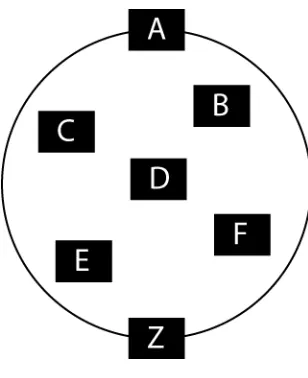
[image:34.612.186.445.87.280.2]The use of different choice-point models can be used to mitigate players' want for freedom and players' need for some direction in the game. Possible choice-point models include: linear, bottlenecking, branching, hubs and spokes, and open ended (Byrne 87 - 93).
Linear
Linear is exactly what it sounds like; there is only one path between the start point and the end point. This model is very straight forward but can also become boring and predictable. To keep it interesting, it is better if these types of levels are shorter and the encounters are diverse between the levels. These types of levels are the de facto standard in many video games.
Bottlenecking
Bottlenecking is similar to linear in the sense that there is a start point and end point. The difference comes in that there are multiple paths players can take between the two points. The availability of multiple paths to get through an area provides players with a choice in how they proceed through the game, although the final result of that choice is the same. Something to be aware of is that a level's bottleneck needs to be clearly defined so players do not accidentally end up backtracking down another path instead of proceeding to the next area.
Branching
[image:35.612.221.411.254.283.2]Branching is much like a tree structure; there is a common start point, but at a choice-point
Figure 3: Linear Choice-Point Model
[image:35.612.189.439.566.619.2]the path players choose will dictate and determine later choices available to them later in the game. Some options may not be available to players ever depending on which paths they choose to take. Unexplored options allow for all players’ experiences to be unique to them and also increase the re-playability of the game. Note that this model is commonly more difficult and time consuming to design.
Hubs & Spokes
In hubs and spokes levels, the hub is a central area that players will come back to multiple times through the course of the game. The spokes are adjacent levels that stem out from the hub. Some of the spokes may not be available to players all at once, and will gradually unlock as they play the game and complete other levels. This model can incorporate linear, bottlenecking, or branching models into the spokes and can thus provide more diverse types of levels and challenges.
Open Ended
[image:37.612.240.392.59.249.2]Open ended levels are often referred to sandbox levels as they allow players to effectively do whatever they want in whatever order they choose. This freedom allows players to set their own rhythm and pacing in their game. A common feature with an open ended level is that if the accompanying gameplay does not set or contains repeatable goals, there is no ending to the game. This style of play can become overwhelming or even boring for players because they have no direction.
Figure 6: Hub & Spokes Choice-Point Model
[image:37.612.237.391.504.693.2]CONSEQUENCES
The type of choice-point model used will largely be dictated to the type of game being developed and the story that is being told. Not all of the models will work in every situation, and some models are more adept to work in particular types of games than others. The game being developed needs to be closely analyzed to best determine the needed or desired choice-point model. Another issue that may arise is if players are presented with too many choices they may not be able to decide how to precede, or they may suffer from buyer's remorse.
EXAMPLES
Super Mario Brothers is an excellent example of the linear choice-point model. To get to the end of the level, players must overcome all encounters presented to them. How they choose to overcome the encounters is up to them, whether they choose to defeat enemies, or run past them is their decision to make, but there is only one path through the level.
As a bottlenecking choice-point model, Deus Ex gives players various methods to progress through its levels. Players can sneak past enemies or engage them in combat, go in through the front door or find and enter through the back door, pick the lock on the door or blow it off its hinges. While there are points that players must pass through, the path they choose to get to those points is up to them.
In The Elder Scrolls IV: Oblivion, players have the freedom to choose what they do in the game using the open ended choice-point model. Oblivion presents players a primary quest line they can choose to follow, but much more of the game's content exists in side quests that players have the option of doing. Regardless of how players choose to complete or not complete quests, Oblivion allows them to freely explore the world.
Stagnation
Becoming stuck in the environment can cause frustration if there are no means of liberation.
PROBLEM
“Stagnation occurs when players are playing a game and reach a point where they appear to be stuck, with no way to go on” (Adams and Rollings 276). If the only way out of a pit or chasm is for players to restart the game from a prior save point, they will become frustrated and stop playing. They will also become frustrated if they spend too much time running around looking for the last key so they can progress to the next area of the world.
SOLUTION
CONSEQUENCES
Some players, if they repeatedly become trapped, may just stop playing the game because the level has become too frustrating and is no longer enjoyable for them to continue trying to progress.
EXAMPLE
In Prince of Persia, it is impossible for players to become stuck in the environment. While there are places players can fall into pits, or off ledges, there is either a way for them to climb back up, or there are spikes at the bottom or the fall is high enough to kill the PC. While being killed and started from a previous save point can become frustrating, allowing players to get themselves out when they fall by using abilities of the PC can rewarding.
Pacing and Rhythm
Variations in the occurrence and the intensity of events.
PROBLEM
Anticipating what is going to happen next, and the release experienced after the event occurs draws players to continue a game. If the intensity is consistently high, players may become anxious because they are never granted a reprieve. If the game is at a constant low intensity, players will become bored and without any drama or action to participate in.
SOLUTION
When the game becomes too difficult, players will become anxious. Csikszentmihalyi proposes the use of the flow channel, is to balance between anxiety and boredom to create flow by increasing the challenge at the same rate as a person’s skill (74). By applying the idea of flow to Pacing and Rhythm, balance between tension and release can be achieved. By increasing players' tension and then granting them a reprieve, a moment to collect themselves before moving on, they will find their flow in the game.
[image:41.612.157.476.267.488.2]The balance between tension and release can be accomplished in a variety of ways: placement, frequency and difficulty of enemies; disbursement of problems and puzzles; placement of NPCs and the amount of story they tell. “To create tension – if only in the player's imagination – there has to be diversity of experience, pauses for effect, sudden and unexpected occurrences, and long, disturbing sections dripping with suspense” (Byrne 67).
CONSEQUENCES
Poor pacing and rhythm can lead to a boring and predictable game in which players will quickly lose interest.
EXAMPLES
The Pacing and Rhythm presented in F.E.A.R. keeps players guessing about what is going to happen next. While the anxiety level in the game stays fairly high throughout, the game does grant players a reprieve from combat by granting them a few moments to collect themselves before moving on to the next encounter. These interspersed breaks are long enough to allow players to regroup while being short enough that they do not have a chance to become bored, keeping them in the flow of the game.
Chunking
Placing the level breaks in a game.
PROBLEM
Having a load screen right in the middle of a high intensity section of a game is very disruptive to Disbelief Suspension. Forcing players to wait for the next area to load before being able to resume action interrupts their gameplay experience. Much of where level breaks are made depends on the constraints of the hardware. Hardware aside, level sections depend entirely on the flow and action of the game.
SOLUTION
complement the use of Pacing and Rhythm, placing breaks during down times, such as after the completion of a plot point or task in the game, will not break the game's flow. Similar to chapters in a novel, by creating chapters in a space, designers help define the Pacing and Rhythm of the game.
CONSEQUENCES
Poor placement of level breaks can break players' immersion. Where breaks are placed may cause players to lose their concentration and become frustrated if they are in the middle of a high intensity section of the game. When level breaks are well placed, players will stay immersed in the game and will also be given a chance to recollect themselves before moving on to the next section of the game. If placed in lower intensity sections of the game, the level breaks will work in with the Pacing and Rhythm of the game.
EXAMPLE
Indigo Prophecy follows the interwoven story of three characters: Lucas Kane, Carla Valenti, and Tyler Miles. The level breaks are worked into the story by placing them where the story switches between its main characters. By placing breaks this way, players know that not only will they be playing a different character, but it also gives them an opportunity to get in the mindset to play that character. Not placing breaks in the middle a character's portion of the story allows players to stay immersed in the game, while still giving them a break to get ready for the next portion of the game.
Scaling
for the camera point of view.
PROBLEM
When objects are scaled to their real world proportions they may seem claustrophobic to players, or they may be able to see things that the PC, or avatar, cannot depending on the camera's perspective. On the other hand, if objects are scaled to be bigger or smaller than their real world counterparts players' Disbelief Suspension may be disrupted.
SOLUTION
How objects in the gameworld are scaled is largely dependent on the camera perspective. A game using a first-person camera does not much require much rescaling. This perspective lends itself most readily to a direct real world scale, because players are viewing the world through the eyes of the PC, “walking through the space, objects need to look right for their surrounding area” (Rollings and Adams 62). The few items that may be slightly enlarged are those objects that players must see, pick up, or interact with.
In the third-person camera perspective, the issue of scaling requires deeper consideration. Because the camera is typically above and behind the PC's shoulder, players can see more than the PC can and scaling everything realistically does not always look correct. To balance the discrepancy between players and the PC, interiors are scaled up to provide the PC and players more space to navigate, while exteriors can be scaled down to make for quicker traversal of the world.
to each other. For instance, in a strategy game the height of a person may be the same as the height of the tank. The reason for skewing the scale in this manner is so the objects are easily identifiable to players (Rollings and Adams 63).
CONSEQUENCES
The use of scaling has the ability to enhance the maneuverability and aesthetics of the environment. Poor use of scaling, when things are scaled too small for the point of view being used, can make the environment unnavigable and almost impossible to maneuver well enough to be able to play the game. Objects that are scaled too large in relation to the size of the PC and the point of view of the camera may take on an unwanted cartoon effect.
EXAMPLE
In Sid Meier's Civilization IV, objects are not scaled proportionally amongst themselves. As seen in Figure 9, the defenders are giants in comparison to the towns they are defending. Because the game uses an isometric camera perspective, players are further removed from the action and to be able to see what is happening in the game objects, such as a group of troops, are scaled larger than they normally would be. This use of scaling in Civilization IV
Conclusion
The patterns introduced here are only a starting point in developing a language that can be used in designing and developing levels. These patterns cover some of the more commonly occurring interaction problems that arise during the conception of the game, and after a level has been completed. As previously discussed, patterns can be used proactively and reactively in the design process of levels. Using patterns in this manner is a means of creation that has the potential to lead to innovation and the formation of a lexicon for discussing and
evaluating levels.
Experience creation and organization are the primary uses of patterns in both architecture and software development. I submit that the use of patterns for creating game levels is an obvious and novel application. As in architecture and software development, a subset of appropriate patterns can be chosen to be used as the language of the level under development. The patterns chosen should be representative of the characteristics of the game being developed while being specific to the needs of the particular level within the game. The use of this subset of patterns should be used from the early conceptual stages of the level all the way to its completion and postmortem.
emerge and become integrated into the pattern language.
Patterns are a proven design methodology in both architecture and software development. As a methodology for developing levels in games, patterns provide a basis to begin
References
Literature
Alexander, Christopher, et al. A Pattern Language: Towns, Buildings, Construction. New York: Oxford University Press, 1977.
Alexander, Christopher. The Timeless Way of Building. New York: Oxford University Press, 1979.
Bartle, Richard A. Designing Virtual Worlds. United States: New Riders Publishing, 2004. Birn, Jeremy. Digital Lighting & Rendering. United States: New Riders Publishing, 2000. Björk, Staffan, and Jussi Holopainen. Patterns in Game Design. United States: Career &
Professional Group, 2005.
Bleszinski, Cliff. “The Art and Science of Level Design.” Gamasutra. 10 January, 2001. 10 October, 2007 <http://www.gamasutra.com/features/20010110/cliff_01.htm>
Byrne, Ed. Game Level Design. United States: Career & Professional Group, 2005.
Carson, Don. “Environmental Storytelling: Creating Immersive 3D Worlds Using Lessons Learned from the Theme Park Industry.” Gamasutra. 1 March, 2000. 8 August, 2007 <http://www.gamasutra.com/features/20000301/carson_01.htm>
Carson, Don. “Environmental Storytelling, Part II: Bringing Theme Park Environment Design Techniques to the Virtual World.” Gamasutra. 5 April, 2000. 8 August, 2007 <http://www.gamasutra.com/features/20000405/carson_01.htm>
Carson, Don. “Environmental Storytelling, Part III: Lessons Learned in the Virtual World.”
Gamasutra. 20 September, 2004. 8 August, 2007
<http://www.gamasutra.com/view/feature/2138/environmental_storytelling_part_.php> Carter, Kevin. “Living Worlds: The Ecology of Game Design. Gamasutra. 8 May, 2007. 10
October, 2007 <http://www.gamasutra.com/features/20070508/carter_01.shtml>
Chen, Steven, and Duncan Brown. “The Architecture of Level Design.” Gamasutra. 16 July, 2001. 10 October, 2007
<http://www.gamasutra.com/resource_guide/20010716/chen_01.htm>
Clarke-Willson, Stephen. “Applying Game Design to Virtual Environments.” Gamasutra. 1 January, 1998. 10 October, 2007
<http://www.gamasutra.com/features/19980101/virtual_environments_01.htm>
Csikszentmihalyi, Mihaly. Flow: The Psychology of Optimal Experience. New York: Harper & Row, 1990.
Course Technology PTR, 2005.
Folmer, Eelke. “Designing Usable and Accessible Games with Interaction Design Patterns.”
Gamasutra. 17 March, 2007. 10 October, 2007
<http://www.gamasutra.com/view/feature/1408/designing_usable_and_accessible_.php> Fraser, Tom, and Adam Banks. Designer's Color Manual: The Complete Guide to Color
Theory and Application. Cambridge: The Ilex Press Limited, 2004.
Laurel, Brenda. Computers as Theatre. United States: Addison-Wesley Publishing Company, Inc., 1991.
Kreimeier, Bernd. “The Case for Game Design Patterns.” Gamasutra. 13 March, 2002. 10 October, 2007 <http://www.gamasutra.com/features/20020313/kreimeier_01.htm> Mahnke, Frank H., and Rudolf H. Mahnke. Color and Light in Man-made Environments.
New York: Van Nostrand Reinhold Company, 1987.
Norman, Donald A. The Design of Everyday Things. United States: Basic Books, 1988. Norman, Donald A. “Affordance, Conventions, and Design.” Interactions 6.3 (1999): 38 –
42.
Osborne, Roy. Lights and Pigments: Color Principals for Artists. London: John Murray, 1980.
Pagán, Tito. “Where's the Design in Level Design? Part One.” Gamasutra. 16 July, 2001. 8 August, 2007 <http://www.gamasutra.com/resource_guide/20010716/pagan_01.htm> Pagán, Tito. “Where's the Design in Level Design? Part Two.” Gamasutra. 16 July, 2001. 8
August, 2007 <http://www.gamasutra.com/resource_guide/20010716/pagan_04.htm> Reid, Francis. Designing for the Theatre. London: A & C Black, 1989.
Rollings, Andrew, and Ernest Adams. Andrew Rollings and Ernest Adams on Game Design. United States: New Riders Publishing, 2003.
Rouse III, Richard. Game Design: Theory & Practice. 2nd ed. United States: Wordware Publishing, Inc., 2005.
Ryan, Tim. “Beginning Level Design, Part 1: Level Design Theory.” Gamasutra. 16 April, 1999. 22 August, 2007
<http://www.gamasutra.com/features/19990416/level_design_01.htm>
Ryan, Tim. “Beginning Level Design, Part 2: Rules to Design by and Parting Advice.”
Gamasutra. 23 April, 1999. 22 August, 2007
<http://www.gamasutra.com/features/19990423/level_design_01.htm>
Welker, David. Theatrical Set Design: The Basic Techniques. 2nd ed. Boston: Allyn and Bacon, Inc., 1979.
Zelanski, Paul, and Mary Pat Fisher. Color. 4th ed. Upper saddle River, New Jersey, Prentice Hall Inc., 2003.
Video Games
Bethesda Game Studios. The Elder Scrolls IV: Oblivion. 2K Games, 2006. BioWare Corporation. Neverwinter Nights. Infogrames, Inc., 2002.
Blizzard Entertainment Inc. World of Warcraft. Vivendi Universal Games, Inc., 2004. DMA Designs. Grand Theft Auto III. Rockstar Games, 2001.
Double Fine Productions, Inc. Psychonauts. Majesco Entertainment Company, 2005. Firaxis Games. Sid Meier's Civilization IV. Aspyr Media, Inc., 2006.
Ion Storm Inc. Deus Ex. Interactive, Inc., 2000. Linden Lab. Second Life. Linden Lab, 2003.
Lionhead Studios. Fable: The Lost Chapters. Microsoft Games Studios, 2004. Maxis Software. The Sims Online. Electronic Arts, Inc., 2002.
Monolith Productions, Inc. F.E.A.R.: First Encounter Assault. Recon. Vivendi Universal Games, Inc., 2005.
Nintendo Co., Ltd. Super Mario Brothers. Nintendo Co., Ltd., 1985. ORIGIN Systems, Inc. Ultima Online. Electronic Arts, Inc., 1997. Quantic Dream. Indigo Prophecy. Atari, Inc., 2005.
Revolution Software Ltd. Broken Sword: The Sleeping Dragon. The Adventure Company, 2003.
Russel, Steve, and et al. Spacewar!. 1962.
Trubshaw, Roy, and Richard Bartle. MUD. 1978.
Ubisoft Montpellier Studios. Beyond Good & Evil. Ubisoft Entertainment SA, 2003.
Ubisoft Montreal Studios. Prince of Persia: Sands of Time. Ubisoft Entertainment SA, 2003.
Other
Appendix
Acknowledgments
Thank you to all of those who have helped me along this journey...
And to those who have encouraged and believed in me.