Citation and Download Analysis
by
Shaoyi Hu, BComp
A dissertation submitted to
School of Computing
in partial fulfilment of the requirements for the degree of
Bachelor of Computing with Honours
Declaration
I declare that this thesis contains no material which has been accepted for
the award of any other degree or diploma in any tertiary institution, to my
knowledge and belief, this thesis contains no material previously
published or written by another person except where due reference is
made in the text of the thesis.
Abstract
Acknowledgement
First of all, I would like to express my gratitude to all those who gave me the possibility to complete this thesis.
I am deeply indebtedto my supervisor, Professor Arthur Sale, for the guidance and suggestions he contributed to this research.
I also wish to thank Lynn Davies, UTas ePrints Libarian, for her advice on improving the accuracy of results.
Thanks go to the School of Computing technical staff: Andrew and Christian for their technical assistance and advice that beyond the call of duty.
Thanks to all my Honours fellows for going through those tough days together.
To all of my housemates, Henry, Chris and Jenny, thanks for your patience and encouragement, as well as Edward looked closely at the final version of the thesis for English style and grammar.
To King, more thanks go to you than I can express. You always put up a lot without complaint. Thanks to Gary for reviewing the draft of thesis with lots of invaluable suggestions, and the food from Timmer and Maggie is always delicious.
Table of Contents
1. Introduction...1
2. Literature Review...2
2.1 Open Access...2
2.1.1 What is Open Access? ...2
2.1.2 Open Access to Scholarly Literature ...2
2.1.3 Open Archives Initiative Protocol for Metadata Harvesting...3
2.2 The Research Impact of Open Access ...5
2.2.1 Correlation of Open Access and Increased Citations ...5
2.2.2 Correlation between Citations and Downloads ...6
2.3 The Citation Indexes...7
2.3.1 ISI Web of Science ...7
2.3.2 Scopus ...8
2.3.3 Google Scholar ...8
2.3.4 Comparing among Web of Science, Scopus and Google Scholar...9
2.4 Development Tools ...10
2.4.1 PHP ...10
2.4.2 HTTP Client ...11
2.4.3 HTML Parser...12
2.4.4 JpGraph ...12
2.4.5 Cron Job ...13
3. Methodology ...14
3.1 Introduction...14
3.2 Data Collection Methods ...14
3.2.1 Documents Information ...14
3.2.2 Downloading Data ...16
3.2.3 Citation Data...18
3.2.4 Time-varying Data...21
4. Software Design and Implementation...22
4.1 Overview of Architecture ...22
4.2 Data Collection Layer...23
4.3 Data Storage Layer...27
4.3.1 Database Design ...28
4.4 Data Presentation Layer...29
4.4.1 Records of Documents View...29
4.4.2 History Records View...30
4.4.3 Statistics View ...31
5. Results and Discussion ...32
5.2 The Distribution of Downloads...33
5.3 The Distribution of Citations ...34
5.4 Demonstration of Versatility...36
6. Conclusion ...39
7. Further work ...40
7.1 Time-varying behaviour ...40
7.2 Aggregated Data Analysis ...40
7.3 Merging into UTas eprints ...41
7.4 Miscellaneous...41
8. References...42
Appendix A – How ISI Web of Science Works ...44
List of Figures
Figure 2-1: High-level OAI-PMH data flow-chart ...4
Figure 2-2: Correlation scatter-graph for all papers deposited between 2000-2004...6
Figure 2-3: An example query of HtmlSQL...12
Figure 2-4: Examples of JpGraph ...13
Figure 2-5: Crontab Specification...13
Figure 3-1: The html source page of the page that a document resides ...15
Figure 3-2: The total downloading data in the webpage ...17
Figure 3-3: The total downloading data in the html source page ...18
Figure 3-4: The result page by searching title ...18
Figure 3-5: The result Page by searching exact title...19
Figure 3-6: Google Scholar’s Advanced Scholar Search...20
Figure 3-7: The result page of Google Scholar...20
Figure 3-8: The html source page of the result page of Google Scholar ...21
Figure 3-9: The result page indicating no found document in Google Scholar...21
Figure 4-1: The architecture of the software system...22
Figure 4-2: An example of extracting document information...24
Figure 4-3: An example of extracting downloading data...25
Figure 4-4: An example of checking no found document...25
Figure 4-5: An example of extracting citation data ...25
Figure 4-6: The implementation of HTTP Client and HTML Parser ...26
Figure 4-7: Records of Documents View...29
Figure 4-8: The search feature...30
Figure 4-9: History Record View ...30
Figure 4-10: Statistics View ...31
Figure 5-1: The pattern between download and citation...33
Figure 5-2: Distribution of Downloads ...34
Figure 5-3: Distribution of Citations...35
Figure 5-4: The pattern between download and citation of thesis ...37
Figure 5-5: The pattern between download and citation of articles...38
Figure 5-6: The pattern between download and citation of conference papers...38
Figure 5-7: The pattern between download and citation of books...38
List of Tables
Table 2-1: Dublin Core Metadata Element Set...5Table 4-1: The table structure of “repository_records” ...28
Table 5-1: Standard deviation of downloads...34
1. Introduction
The failure of library budget in keeping up with the increasing cost of scholarly journals and the advent of the information age have led more and more universities to establish institutional open access repositories. These repositories allow scholarly material to be globally accessible for free via the Internet. Since an open access repository gives a competitive advantage, the research impacts of publications are increased. An OA paper tends to be more likely to be viewed and therefore cited. Existing research indicates that citation of an OA paper leads to 25-250% advantage (depending on discipline and year) than a NOA paper (Hajjem, Harnad & Gingras 2005).These have raised an interesting and unknown question as to whether there is an identifiable causal relationship between the time patterns of downloads from an open access repository, and the subsequent citations.
2. Literature Review
2.1 Open Access
2.1.1 What is Open Access?
There a variety definitions of Open Access. Budapest Open Access Initiative stated that Open Access is committed to provide free and instant access, for any user world widely, to full-text scholarly literature including unreviewed preprints online (Chan et al. 2002). Arthur Sale (2005) also suggested a similar point: “Briefly, the open access movement is about utilizing the Internet revolution to open the research literature of the world to any user wishing to access it, for free. All that is needed is access to the Internet, and enough bandwidth to download the document”. It is important to note that Open Access also requires the subsequent use of publication and is not restricted in subject to proper attribution of authorship (Charles W. Bailey 2005).
2.1.2 Open Access to Scholarly Literature
The open access movement is currently in a state of crisis and is calling for more scholarly literature to be open accessed. This is attributable to the increasing cost of scholarly journals and the failure of library budgets to keep up with these costs. There are two main complementary strategies to achieve open access to scholarly literature as suggested by BOAI (Budapest Open Access Initiative):
• Self-Archiving
• Open Access Journals
The second major strategy, referred to as “Gold Road”, are Open Access Journals, in which authors publish their peer-reviewed articles that are accessible without financial or other barriers on the Internet (Harnad et al. 2004). Instead of charging subscription fees as a primarily revenue source for traditional journals, open access journals have various funding strategies. The most common strategies include: “direct author fees, institutional memberships to sponsor all or part of author fees, funding agency payment of author fees, grants to open access publishers, institutional subsidies (such as paying the salaries of journal editorial staff), and priced add-ons (such as recommendation services, current awareness services, or print editions)” (Charles W. Bailey 2005). In addition, the copyright issue is deployed to guarantee open access to all articles published rather than to restrict access to and the subsequently use of the publications (Chan et al. 2002). Testa and McVeigh (2004) proposed that the impact factors of open access journals can be at least as good as those of conventional journals.
A review of the literature up to 2004 reveals that only 5% of journals are gold, while more than 90% of them are green meaning publishers have already endorsed authors’ self-archiving of their published peer-reviewed articles. However, only about 10-20% articles have been self-achieved (Harnad et al. 2004).
2.1.3 Open Archives Initiative Protocol for Metadata Harvesting
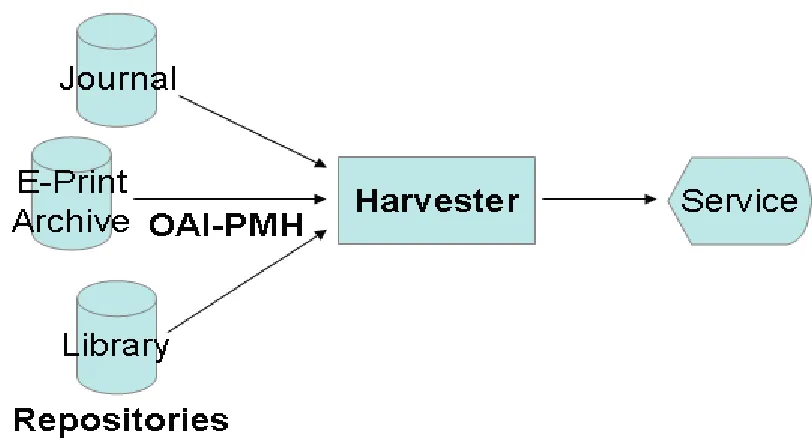
2003), to establish an aggregated collection, as illustrated in following figure (Brody, Timothy 2006):
Figure 2-1: High-level OAI-PMH data flow-chart
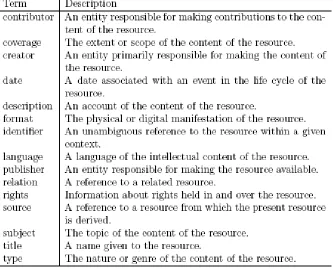
• Dublin Core
Table 2-1: Dublin Core Metadata Element Set
2.2 The Research Impact of Open Access
2.2.1 Correlation of Open Access and Increased Citations
In order to test the impact advantage of open access, Stevan Harnad and Tim Brody (2004) proposed to compare the citation counts of individual OA and non-OA articles appearing in the same (non-OA) journals. It was revealed that there was a dramatic advantage for articles that had been made OA. In their research, the citation impact of 20-40% of articles from the 98% non-OA journals that has been self-archived were compared with all the other articles published in the same journals and the same years in mathematics and physics fields from 1992-2001. The ratios of the two values ranged from 2.5 to 5.8 as increasing by years, which indicated that the ratios would even rise further in the following years.
generality of open access impact. They found that the overall percentage of OA articles varied from 5%-16% and was slowly increasing each year. OA articles always attracted more citations, which led to 36%-172% advantage depending on different disciplines and years, compared with NOA articles in the same journals published in the same years. They also estimated the frequencies of citations of OA and NOA articles, which revealed that the annual increase rate of OA articles was considerably higher than NOA articles in every citation range (0, 1, 2-3, 4-7, 8-15, 16+ citations) and this trend was even more significant with those articles having higher citation counts.
2.2.2 Correlation between Citations and Downloads
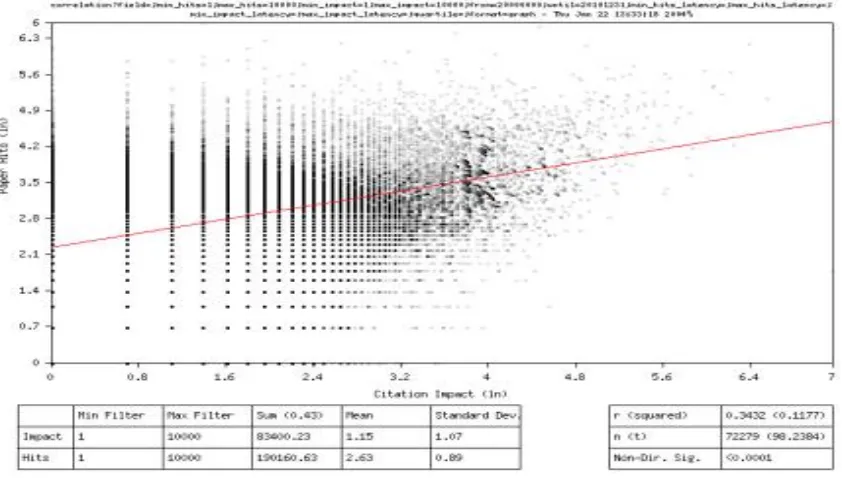
[image:13.595.93.514.441.680.2]In order to investigate the relationship between citations and downloads, Brody, Tim, Harnad & Carr (2006) built a “Correlation Generator” which is able to automatically generate statistical graphs for analytical use based on research articles from arXiv.org, illustrated as below:
Figure 2-2: Correlation scatter-graph for all papers deposited between 2000-2004
frequencies of citations and downloads are scattered. However, this is not always the case depending on different monitored sources.
2.3 The Citation Indexes
2.3.1 ISI Web of Science
ISI web of science is an online academic database provided by Thomson Scientific. It is combined with five databases that include Science Citation Index (SCI), Social Sciences Citation Index (SSCI), Arts & Humanities Citation Index (A&HCI), Index Chemicus, and Current Chemical Reactions. Its databases seamlessly access approximately 8,500 leading articles, including science, technology, social sciences, arts, and humanities (Atkins 1999). The Science Citation Index(SCI) was developed by Eugene Garfield in 1964 (Yancey 2005) and the idea to develop citation index was to “propose a bibliographic system for science literature that can eliminate the uncritical citation of fraudulent, incomplete, or obsolete data by making it possible for the conscientious scholar to be aware of criticisms of earlier papers” (Garfield 1955).
2.3.2 Scopus
Scopus is the largest abstracting and indexing database which is allowed to search for journal articles, books and quality web sources simultaneously (Library 2006). The content of the database covers scientific, technical and medical academic literature organizes from Europe, Latin America and the Asia Pacific region (Raynard 2007). It also contains references and abstracts for articles published in over 15,000 peer-reviewed journals from more than 4,000 international publishers including over 1000 Open Access journals, 500 conference proceedings and over 600 trade publications. The other content Scopus contains shows below:
• “33 million abstracts
• Results from 386 million scientific web pages • 21 million patent records from 5 patent offices
• Seamless links to full-text articles and other library resources
• Innovative tools that give an at-a-glance overview of search results and refine them to the most relevant hits
• Alerts to keep you up-to-date on new articles matching your search query, or by favorite author” (Elsevier 2007)
The advantage of using Scopus is that it will assist people in getting relevant results expediently and easily. Moreover, Scopus supply tools to sort, redefine and quickly identify results, to make people focus on the outcome of work. In addition, the aim of using Scopus is to spend less time managing the database and more time searching.
2.3.3 Google Scholar
Due to the fact that the operation of Google Scholar is based on the Google engine, when publishers and scholarly societies want their content to be accessible via Good Scholar, they just need to contact Google to arrange for Google's spiders to crawl their sites which must provide access for non-subscribers to bibliographic citations and abstracts (Quint 2004). The more easily open access scholarly materials can be accessed by Google Scholar, the lower the price for using academic journals and databases. Therefore, it is beneficial for the researchers to find out the greater valuable scholarly materials. Consequently, Anurag Acharya were correct in their assertion that the goal of Google Scholar was to “make it easier to find content, open access or not. The first step in any research is to find the information you need to learn and then build on that. Not being able to find information hinders scholarly endeavor.” (Noruzi 2005).
2.3.4 Comparing among Web of Science, Scopus and Google
Scholar
For WoS (Web of Science), the ISI citation databases mainly focus on North American, Western European, and English language titles and the range of search is limited from 8,700 journals which contain in its own database. When the researcher is using WoS, it is unable to list any citations from books and most conference proceedings and occasionally there will be some citation errors in the result of faculty of ISI indexing, such as homonyms, synonyms, and inconsistency in the use of initials and in the spelling of non-English names (I.Meho & Yang 2007).
For Scopus, it can access/reference the largest amount of literature and supplies some human-based services such like sort, redefine, and quickly identify results. All of these services will be beneficial for the preparation of papers. However, suffers from the same issues as the WoS which is only accessible by the specific databases (Elsevier 2007).
searching range of Google Scholar larger compared with others. As such, the key advantage of Google Scholar is to allow researchers to “trace what articles are cited by a particular article and where the article has been cited elsewhere. This can be useful for developing a bibliography or tracing the development of a topic or issue on the Web” (Noruzi 2005) even if Google Scholar sometimes gives duplicated citations.
2.4 Development Tools
2.4.1 PHP
PHP (Group 2007) originally stood for Personal Home Page and now stands for PHP Hypertext Preprocessor. It is a widely-used open source server-side scripting language designed specifically for the web and can be embedded into HTML. PHP was conceived by Rasmus Lerdorf in 1994 and it is originally designed to run under Linux, using Apache Web server. Until October 2002, it was in use on more than nine million domains worldwide and the number is rapidly increasing. Moreover, PHP can be deployed on most standard web servers and can be used for almost every operating platform such like UNIX, Linux, Windows and Mac OS. The principal reason for the popularity of PHP is that it has these following advantages:
High Performance
PHP is very efficient. Compared with other equivalent languages such as JSP and ASP.NET, PHP pages always take less time to execute. In addition, a single inexpensive server can be used in conjunction with PHP to serve millions of hits per day. Benchmark data published by Zend Technologies (http://www.zend.com) shows PHP is currently outperforming the competition (Welling & Thompson 2003).
Database Integration
Built-in Libraries
PHP can use many built-in functions to perform many useful web-related tasks. For instance, if there are GIF images or PDF documents which need to be generated by using PHP, only a few lines of code will be required to provide such functionality (Welling & Thompson 2003).
Open Source Code and Portability
The main reason for PHP’s popularity is its portability. First of all, PHP is available for many different operating systems. Consequently, the code syntax and the display format are the same on the different systems, no matter whether the system is UNIX or Windows. Furthermore, PHP is an open source language which means that developers can use it without any license and can make modifications without any support. In addition, developers can use PHP every time without worrying about whether “the manufacturer goes out of business and decide to stop supporting the product” (Welling & Thompson 2003).
2.4.2 HTTP Client
HttpClient is a client class for the HTTP (Hyper-Text Transfer Protocol). Firstly it was started in 2001 as a subproject of the Jakarta Commons and out of it in 2003, being an independent top level project in 2007 (Jakarta Commons HttpClient). Moreover, HttpClient is used for interacting with another web server from within PHP script. The POST and GET methods are used to interact with a server, as well as retrieving information from a server. It can therefore be used as part of any script that needs to communicate with an application running on another site (Willison 2003). An http client class which Supports (GuinuX 2002):
“HTTP Proxy with Basic Authentication
multipart/form-data AND application/x-www-form-urlencoded GET, HEAD and POST methods
HTTP cookies
HTTP 1.0 and 1.1 protocols Keep-Alive Connections Basic WWW-Authentication”
2.4.3 HTML Parser
The HTML Parser is used to parse HTML in either a linear or nested fashion which is used for transformation and extraction by using Java library which include filters, visitors, custom tags and easily use JavaBeans. In addition, “It is a fast, robust and well tested package” (HTML Parser 2006).
• HtmlSQL
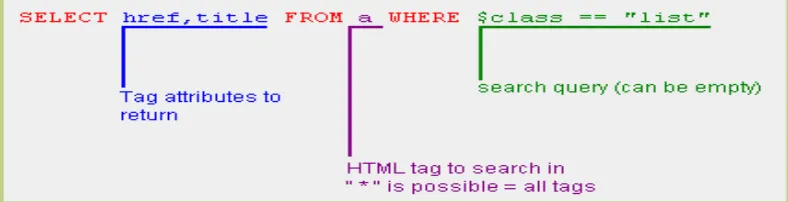
[image:19.595.108.502.435.536.2]The HtmlSQL is an experimental PHP class which is useful for querying the web by using SQL syntax rather than writing some complex functions. The sample shows below:
Figure 2-3: An example query of HtmlSQL
This query returns an array with all links that contain the attribute class="list" (John 2006).
2.4.4 JpGraph
complex graphs which require a very fine grained control. “The library is completely written in PHP and ready to be used in any PHP scripts (both CGI/APXS/CLI versions of PHP are supported)” (What is JpGraph? 2007). The sample pictures shows below (created by JpGraph Library):
Figure 2-4: Examples of JpGraph
2.4.5 Cron Job
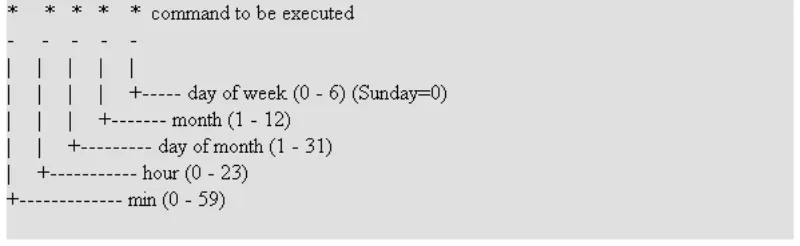
Cron Job is a time-based scheduling service in UNIX which allows tasks to be run automatically in the background in the regular intervals by the cron daemon. These tasks are often termed as cron jobs in unix , solaris and Cron Job driven by a crontab, a configuration file that specifies shell commands to run periodically on a given schedule (Crontab - Quick reference). There is a sample which includes the explanation to be shown below:
Figure 2-5: Crontab Specification
[image:20.595.88.488.482.605.2]3. Methodology
3.1 Introduction
This chapter describes the methodology adopted in testing the hypothesis of this research, as well as addressing the problems of existing system. It also presents an evaluation of whether there is an identifiable causal relationship between the downloads of articles and citation of the same articles from an open access repository, including the investigation of time-varying behaviours of downloading and the subsequent citations if time permits, a web-based system that capable of collecting both of downloading and citation data and producing data updated weekly in automated way is required to be developed. The implementation of the system based on the methodology described is introduced in the next chapter.
UTas eprints is an open access repository that provides free, online, full-text and open access to the research output of the University of Tasmania (ePrints home). UTas eprints is also placed in first position based on ratings of university coverage in Australia (Sale 2007), meaning the documents deposited in the repository are from a relatively variety of subjects compared with the others. In addition, the software system is running on an internal server in the School of Computing, so that the data transaction time between the server hosting the software system and the server hosting the repository itself would expedited, which saves time consumption in data collection. Taking the considerations outlined above into account, the UTas eprints is selected as a cornerstone to establish the experiment, from where the relevant data is collect.
3.2 Data Collection Methods
3.2.1 Documents Information
information on documents should be monitoring the Metadata accessible through OAI-PMH.
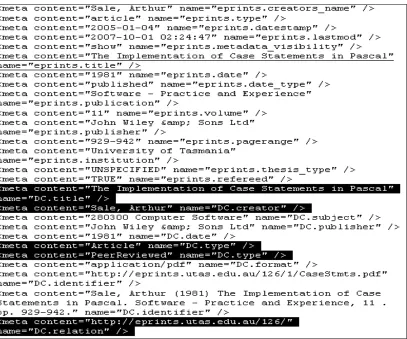
[image:22.595.97.504.399.738.2]In UTas eprints, there is a variety of information about documents defined in Metadata. Figure 3-1 illustrates the html source of the page from a document that resides in the repository. It can be seen that the document title is defined in the Metadata content having a name attribute identified as “DC.title” and “eprints.title”. It is important to note that these two elements contain the same content, however, the name attributes starting with “eprints.” may change when the version of the repository software gets updated, while those starting with “DC.” (‘Dublin Core’ – a set of international recognised metadata elements for cross-domain information resource description, more details in Chapter 2) stands. Thus, only those “DC” metadata are used when collecting the relevant data from the metadata. The name of the author is defined as “DC.creator”, and the other kinds of information about the document are also defined in the Metadata.
Figure 3-1 also shows that the definition of a document type, defined with a name attribute as “DC.type” , is not only confined to its category, but also indicates whether the document is peer-reviewed or not. This is a very important piece of information. Being consequent on the main objective of this research is to examine the patterns between download and citation, only those kinds of documents which are more likely to be cited are taken into account.
There are several document types defined in UTas eprints, such as “Article”, “Workshop or Conference Item”, “Thesis”, “Book”, “Book Chapter”, “Report” and “Other”, all of which are associated with “PeerReviewd” or “NonPeerReviewd”. When the citation count occurs to “Book Chapter” item, it is hard to differentiate whether the citation is caused by the book of which the chapter is a part or the chapter itself, which confuses the analysis. “Report” and “Other” items, almost of which appear as slides or images, tend to be not cited. The not peer-reviewed “Article” or “Workshop or Conference Item” items are drafts of scientific papers that have not yet been published in peer-reviewed scientific journals or presented in formal conferences, which would not attract citations from other papers. Consequently, only “Article” and “Workshop or Conference Item” are associated with “PeerReviewed”. “Thesis” and “Book” items are also monitored, but not the others.
Furthermore, the ID code of the document from a Metadata defined with a name attribute as “DC.relation” is also necessary to be collected when tracking back the document to the repository. In this stage, the information about its title, author’s name, document type and ID filtered with the defined document types for each document is collected for the later collecting citation data of the document, which is described in the later section.
3.2.2 Downloading Data
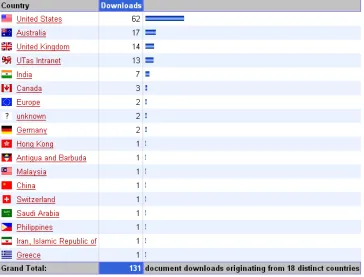
from where the downloads derive from each page that the document resides, as well as the total downloading data, illustrated in the Figure 3-2 below:
Figure 3-2: The total downloading data in the webpage
Therefore, the downloading data page for a particular document is identified in respect with its ID code defined in the last section. For example, if the ID code of the document is defined to be 126 (refer to the URL of document webpage - http://eprints.utas.edu.au/126/), the URL of the downloading data webpage should be http://eprints.utas.edu.au/es/index.php?action=show_detail_eprint;id=126;, which contains the same ID code accordingly and associated with the other parts of the URL that always stand over different downloading data pages.
Figure 3-3: The total downloading data in the html source page
3.2.3 Citation Data
With the competitive advantage of Google Scholar in searching scholarly literature available on the Web and providing the citation index to them as discussed in Chapter 2, it is utilized as the source of citation data for the documents from the repository in this research.
There are a variety of ways to search documents through Google Scholar. In order to search by the title of document, the double quotation mark is placed around the title. As a result, the result page that returned by Google Scholar contains the document (if any) and other documents that mention the title (Google Scholar Help 2007), making it difficult for the software to locate the citation data, illustrated as below:
In order to further restrict the exact phrase of the query term so that it only appears in the title but not anywhere else, the "allintitle:" operator should be placed in front of the double quoted title. This guarantees Google Scholar will only return results that include the search term in the document's title (Advanced Scholar Search Tips 2007). However, for those documents with short titles, the results returned are often erratic, as shown below:
Figure 3-5: The result Page by searching exact title
Therefore, the combination of title and author’s name of the document is necessarily to cross define the document, which restricts the document in the returned result not only to matching the title, but also to being written by the author provided in the search query.
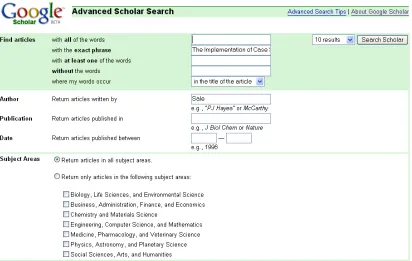
Figure 3-6: Google Scholar’s Advanced Scholar Search
It is important to note that only the surname of the name of the author is adopted to fill in the form in Figure 3-6. Noruzi(2005) argues that results are often erratic when the search is made by the entering the author’s full name, since the first name appears as an initial in some cases. Only using surname makes it possible to find all authors with that surname.
Then Google Scholar turns out the result page showing the search document as the first item in results if it is found, as illustrated in Figure 3-7 below:
The number of the times that the document cited, then, is seen from a “Cited by” link in that page and extracted from its html source page (Figure 3-8).
Figure 3-8: The html source page of the result page of Google Scholar
Google Scholar otherwise returns a result page indicating no document is found based on the entered query, as illustrated below:
Figure 3-9: The result page indicating no found document in Google Scholar
3.2.4 Time-varying Data
4. Software Design and Implementation
This chapter describes the design and implementation of software system based on the methodology that discussed in the last chapter. The detailed description of each step is explained in the following sub sections:
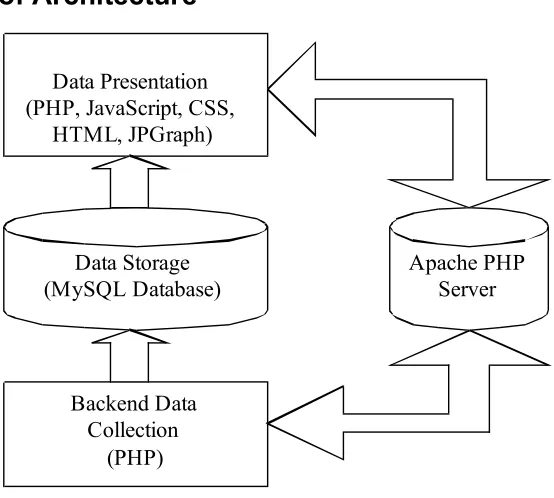
4.1 Overview of Architecture
Data Presentation (PHP, JavaScript, CSS,
HTML, JPGraph)
Data Storage (MySQL Database)
Backend Data Collection
(PHP)
[image:29.595.193.470.192.441.2]Apache PHP Server
Figure 4-1: The architecture of the software system
As discussed in the last chapter, the document information was defined in the Metadata accessible through OAI-PMH interface, while the downloading data and citation data existed on the relevant web pages themselves. In order to extract downloading data for documents from the web pages of the repository and their citation data from the web pages of the Google Scholar, then bring both of them together for analysis use, an automated software system that implements such function is developed by PHP script running on Apache Server, with integration of a MySQL database.
retrieved from the database and presented for the analysis use at the Data Presentation layer (top layer). The detailed description of each layer is given in the following sections.
4.2 Data Collection Layer
As mentioned in section 3.2, the document information is extracted from the metadata that lies in the html source page of the web pages that describe the document in the repository. Subsequently that information is passed to Google Scholar to be searched to obtain its citation data and used to correspond to the relevant downloading data page in the repository to identify the downloading data. Therefore, extracting the relevant data from web pages is the first phase of the software implementation.
At this layer, the implemented system needs not only to monitor both the repository and Google Scholar, but also to parse the html source code of the relevant web pages to extract the relevant data.
• HTTP Client
In order to monitor the relevant websites, communication must be established with the servers that host those websites. In respect of UTas eprints and Google Scholar, both are constructed to support the HTTP protocol, an Advanced HTTP Client (See Chapter 2), which is an open source PHP class developed by GuinuX (2002), and is adopted to interact with those servers from within a PHP script in this software system.
since the software is running on the server hosted by the School of Computing, the proxy authentication that is supported by this class needs to be set up.
• HTML Parser
Once the web page content has been retrieved by HTTP Client, we need a HTML Parser to extract the relevant data out from the HTML source code of that web page. HtmlSQL, an experimental PHP class that query websites or HTML code with an SQL-like Language created by Jonas John (See Chapter 2), is utilized as a part of scripts to implement such function. It makes the software be capable of extracting the data between a pair of defined html tags (<tag>…</tag>).
According the discussion in section 3.2, the first concern is taken into the extraction of document information. The following figure shows how to make HtmlSQL to extract the title of the document, the document type, the document ID code and its authors in the metadata from the webpage that the document resides in the repository.
[image:31.595.127.506.469.566.2]'SELECT content FROM meta WHERE $name=="DC.title" or
$name=="DC.type"
or
($name=="DC.relation"
and
preg_match("/^http: \/\/eprints.utas.edu.au \/[0-9]+\/$/i",
$content))
or
$name=="DC.creator" '
Figure 4-2: An example of extracting document information
Figure 4-3: An example of extracting downloading data
The earlier collected title and author’s name of document is also passed to Google Scholar to be searched to get the result page returned. The final phase is to extract citation data of the document from the result. As Figure 3-7 illustrated, the result page indicating no found document has a hyperlink - Try your query on the entire web, base on which the software is able to check whether there is a result page returned by Google Scholar:
'SELECT text FROM a WHERE preg_match("/^Try your query on the entire web/i", $text)'
Figure 4-4: An example of checking no found document
If no result returned by Google Scholar, the citation count is defined as “NULL”. The following figure shows how the HTML Parser extracts the citation data if the target document is found in the return page.
'SELECT text FROM a WHERE $class=="fl" and preg_match("/^Cited by [0-9]+$/i", $text)'
Figure 4-5: An example of extracting citation data
In case of no citation occurred to the target document, the citation count is defined as 0.
data and citation data for those of documents which types are not one of above defined types would not be tracked, and therefore not be stored into the database.
HTTP Client (CHttp.php)
HTML Parser (CHtmlSql.php)
[image:33.595.133.475.158.341.2]Implementation (http_tester.php)
Figure 4-6: The implementation of HTTP Client and HTML Parser
Figure 4-7: The algorithm of keeping records of documents
4.3 Data Storage Layer
The middle layer is the Data Storage Layer which is used to store and manage the records for the monitored documents, implementing by MySQL database due to its excellent compatibility with PHP script. The database would keep all the records that gathered at the different monitoring times, so that accumulated records for each monitored document can be used to trace the time-varying behaviour of each
Begin
1. Call HTTP Client to setup the connection with the repository 2. Assign the range of documents to be monitored
3. For each document, starting from the first one if the document exist then
call the HTML Parser to extract the document info if the document type is valid then
• pass the document ID code to locate the
downloading data page accordingly, and extract the downloading data
• call HTTP Client to setup the connection with Google Scholar
• pass the document title and the surname of the first author to Google Scholar to get the result page return
if no document found in Google Scholar then the citation count is defined as “NULL” else
if no citation data is found then
the citation count is defined as 0 else
extract the citation data • insert the relevant data into the database
elseif the document no found (based on the http error code, eg., 404) then ignore the current page and go on to the next page
4. Repeat the above processes over the range defined until no more document exist
4.3.1 Database Design
In this software system, all the records are stored in a single table – “repository_records” which includes the following information:
• id – The record ID of each document in the database • doc_id – The document ID code
• title – The document title
• author – The author’s name of each document
• download – The downloading data of each document • citation – The citation data of each document
• doc_type – The document type • data – The monitoring time
The Table 4-1 shows the table structure of “repository_records”:
Field Type Null Default Value and Meaning
id int(16) No auto_increment
doc_id int(16) No
title text No
author varchar(32) No
download int(16) Yes NULL
citation int(16) Yes NULL NULL: Not Found
doc_type int(16) No 0: Article
1: Conference Paper 2: Thesis
3: Book
[image:35.595.124.471.364.540.2]date date No
Table 4-1: The table structure of “repository_records”
4.4 Data Presentation Layer
The front layer is the Data Presentation Layer in which the data is retrieved from the database and presented for the analysis use. It consists of three main components, which are “Records of Documents View”, “History Records View” and “Statistics View”. The detailed description of each component is explained as following:
4.4.1 Records of Documents View
[image:36.595.91.504.342.556.2]It shows the last updated results of both downloading data and citation data of all the monitored documents, as illustrated in a very small sample in Figure 4-7:
Figure 4-7: Records of Documents View
users to search a particular document by entering a set of keywords at the top of the page.
Figure 4-8: The search feature
As shown in Figure 4-8, the documents with titles or parts of them matching the search query are returned in the result page.
4.4.2 History Records View
From the history records page, all the history records for a particular document are able to be traced back according to each monitoring time. The following figure shows an example of document having data changed during the monitoring period:
[image:37.595.98.499.444.708.2]The two graphs, generated dynamically depending on the change of the data by using JPGraph (See Chapter 2), illustrate the frequency of download and citation varied by each monitoring time, as a result, the time-varying behaviour can be examined by analysing these graphs.
4.4.3 Statistics View
[image:38.595.91.504.337.594.2]Since the main objective of this research is to provide data for the analysis use, some of statistics tables and graphs are required to be generated dynamically with the last updated data. In the statistics page, the patterns between download and citation and the distribution of download and citation are able to be provided to users to analyse, as illustrated in a very small sample below:
5. Results and Discussion
The following chapter examines some results that can be derived from the data produced by the software. Many different analyses are possible, to determine the patterns between downloads and citations, the distribution of downloads and citations, and to analyse the contents of the repositories. The key issue is the bringing together of two pieces of public information about a document; the analyses follow from the merging of this information.
Since the length of the Honours program did not permit collecting a long time series of data, the analyses that can be performed with the current data are limited. Only four weeks of data has been accumulated which is far too short to analyse any significant citation trends, which generally develop over periods of years.
5.1 The Patterns between Downloads and Citations
The scatter graph below, generated by the software dynamically, is a snapshot of the patterns between downloads and citations, as well as the basic distribution of them, for all the monitored documents in the repository. The downloading and citation data are the accumulated amounts up to the 29th of October 2007.
In general, the documents with higher value of downloads do not tend to have higher citation value, while some of documents have high numbers of citations but only a few downloads. It is important to note that there are a few of dots that lie on the Y-axis, in other words, those documents are cited, but not downloaded. Those documents might have been published in other print publications before they have been deposited in the repository, and might have been cited by other papers from viewing their original publications.
Figure 5-1: The pattern between download and citation
5.2 The Distribution of Downloads
downloads is very broadly scattered according to the value of coefficient variation. However, the distribution is not Gaussian, and these measures are only roughly applicable.
Figure 5-2: Distribution of Downloads
5.3 The Distribution of Citations
With the last updated data, the bar graph indicates the distribution of citations is shown in the following figure. The Y-axis denotes the number of documents, while the range of each block of citation data is indicated on the X-axis. Each column corresponds to the number of documents having citation data within the range of each block. The first block indicates those documents that could not be found in Google Scholar. It can be seen that the most of documents either have no citation number or a small citation number. This is typical of research articles. The number of documents
mean 102.7945
standard deviation 232.3306
[image:41.595.91.504.287.495.2]coefficient variation 226.01%
drops significantly when the citation number is more than 5, after then the number of documents keeps going down slowly as the number of citation increases. In addition, the Table 5-2 reflects the fact that the distribution of citation is also very large according to the value of coefficient variation. Again, the distribution is not Gaussian, and the coefficient of variation is only crudely applicable.
Figure 5-3: Distribution of Citations
mean 6.263682
standard deviation 12.11804
coefficient variation 193.47%
5.4 Demonstration of Versatility
The data are capable of being analysed in many other ways. As previously mentioned, the articles in the UTas repository have many characteristics that confuse simple analyses of the contents, For example:
1. There are a significant number of articles whose full-text is Restricted (in other words not available for download). The download data for all these articles is naturally always zero.
2. Many articles are published in subscription (print) journals and then deposited into the repository. If they have acquired citations, this may be because the citing authors saw the article in the paper journal, rather than online.
3. In some cases, authors place old articles in the repository for completeness of their record – much the same as the previous case but the deposit is much delayed after publication, perhaps as much as 20 years. The citation count for such items has little to do with the open access repository and its downloads. However, the downloads can be viewed as an expression of continuing interest in the item.
4. There are disciplinary differences in both citation and download behaviour. Some disciplines cite more; and the general public (as well as researchers) are more interested in some disciplines than others.
The results of this analysis for theses are shown below. A similar scatter graph is presented.
[image:44.595.90.502.143.368.2]• Patterns of Thesis
Figure 5-4: The pattern between download and citation of thesis
It can be seen that every thesis in this collection has at least one citation. There is a general trend for higher citations to be associated with higher download frequency; for example above 1000 downloads no thesis has a single citation. It would be desirable to do more work on analysing this data by discipline, and length of time in the repository. Identifications of self-citations (ie citations by the thesis author) could be identified. However, there was insufficient time for this further work.
• Patterns of Articles
Figure 5-5: The pattern between download and citation of articles
[image:45.595.93.505.347.522.2]• Patterns of Conference Papers
Figure 5-6: The pattern between download and citation of conference papers
• Patterns of Books
[image:45.595.92.505.567.748.2]6. Conclusion
The purpose of this research is to test whether there is an identifiable causal relationship between downloads of articles and citation of the same articles from an open access repository, including the investigation of time-varying behaviours of downloading and the subsequent citations if time permits.
The software system was developed by bringing together of both downloading data and citation data for documents in UTas repository. The results derived from the data produced by the software system developed suggest that there were no significant patterns between downloads and citations for all the documents in the UTas repository, while there was a general trend for higher citations to be associated with higher download frequency if only the theses deposited in the repository were taken into account. The general distribution of downloads and citations are relatively scattered.
7. Further work
The software system has been successfully implemented to test the initial hypothesis, even though not all of the aspects of them have been examined due to the time limitation issue. Therefore, many areas with potential for further research are suggested to be conducted in the future.
7.1 Time-varying behaviour
Obviously, the success of investigating the time-varying behaviour of downloads from open access repositories, and the subsequent citation would require a greater amount time, at least a couple of years according to the similar extant research.
If time permits, the downloading data and citation data will be tracked at a longer regular interval rather than only once a week along a long term, to investigate more significant changes from the data. The analysis, then, will be conducted into the download latency, which refers to the time between an article being deposited and the later downloaded, as well as the citation latency for the same article, from which the correlation between the time-varying behaviour of downloads of articles in an open access repositories, and similar characteristics of citations of the same articles will be investigated. The later citation impact therefore may be possible to predict from the known downloads, as least on average.
7.2 Aggregated Data Analysis
In addition to this, the data could be collected and aggregated by the disciplines to which articles belong and the journals in which they are published. The analysis will undertake to test whether the previous identified patterns between downloads and citations will vary by different categories.
Since the article quality may also be a factor, this will also be included in the research. The quality could be measured in terms of the Journal Citation Impact Factor (CIF), representing the number of times an average recent article is cited in a given year, of the journal in which it is published, or the Journal Usage Impact Factor (UIF) which represents the number of times an average recent article is downloaded in a given year (Rowlands & Nicholas 2007). Thus, the behaviours for a range of articles from high quality to low quality could also be examined.
Furthermore, it would be of interest to find out whether there is an identifiable pattern between the articles that published much earlier and those of recent articles.
7.3 Merging into UTas eprints
Following a request from a librarian of UTas eprints, the citation track feature that provided by the software system could be merged with the UTas repository, so that not only the downloading data, but also the citation data will be track on through their web pages. There are a variety of ways to present this.
7.4 Miscellaneous
8. References
Advanced Scholar Search Tips, 2007, Google, viewed 3 Nov 2007, <http://scholar.google.com/intl/en/scholar/refinesearch.html>.
Atkins, H 1999, 'The ISI® Web of Science® - Links and Electronic Journals', D-Lib Magazine, vol. 5, no. 9, pp. 1082-9873.
Bakkalbasi, N, Bauer, K, Glover, J & Wang, L 2006, 'Three options for citation tracking: Google Scholar, Scopus and Web of Science', Biomedical Digital Libraries, vol. 3, no. 7, pp. 1-8.
Brody, T 2006, 'Evaluating Research Impact through Open Access to Scholarly Communication', PhD thesis, University of Southampton.
Brody, T, Harnad, S & Carr, L 2006, 'Earlier Web usage statistics as predictors of later citation impact', Journal of the American Society for Information Science and Technology, vol. 57, no. 8, pp. 1060 - 1072.
Chan, L, Cuplinskas, D, Eisen, M, Friend, F, Genova, Y, Guédon, J-C, Hagemann, M, Harnad, S, Johnson, R, Kupryte, R, Manna, ML, Rév, I, Segbert, M, Souza, Sd, Suber, P & Velterop, J 2002, Budapest Open Access Initiative Budapest Open Access Initiative, viewed 19 June 2007,
<http://www.soros.org/openaccess/read.shtml>.
Charles W. Bailey, J 2005, OPEN ACCESS BIBLIOGRAPHY, Association of Research Libraries, Washington, D.C.
Crontab - Quick reference, Admin's Choice, viewed 30 Oct 2007, <http://www.adminschoice.com/docs/crontab.htm>.
Elsevier 2007, Scopus Overview: What is it?, Elsevier B.V., viewed 29 Oct 2007, <http://info.scopus.com/overview/what/>.
ePrints home, UTAS ePrints, viewed 30 Oct 2007, <http://eprints.utas.edu.au/>. Garfield, DE 1955, 'Citation Indexes for Science', Science, vol. 122, no. 3159, pp.
108-111.
---- 1994, 'The Concept of Citation Indexing', viewed 14 Oct 2007,
<http://scientific.thomson.com/free/essays/citationindexing/concept/>. Google Scholar Help, 2007, Google, viewed 2 Nov 2007,
<http://scholar.google.com/intl/en/scholar/help.html>.
Group, PD 2007, PHP Manual, The PHP Group, viewed 11 June 2007, <http://www.php.net/manual/en/index.php>.
GuinuX 2002, Class: Advanced HTTP Client, PHP Developer's Network, viewed 21 Oct 2007, <http://phpclasses.sitehost.co.nz/browse/package/576.html>. Hajjem, C, Harnad, S & Gingras, Y 2005, 'Ten-Year Cross-Disciplinary Comparison
of the Growth of Open Access and How it Increases Research Citation Impact', IEEE Data Engineering Bulletin, vol. 28, no. 4, pp. 39-47.
Harnad, S & Brody, T 2004, 'Comparing the Impact of Open Access (OA) vs. Non-OA Articles in the Same Journals', D-Lib Magazine, vol. 10, no. 6, pp. 1082-9873.
Harnad, S, Brody, T, Vallières, F, Carr, L, Hitchcock, S, Gingras, Y, Oppenheim, C, Stamerjohanns, H & Hilf, ER 2004, 'The Access/Impact Problem and the Green and Gold Roads to Open Accessstar, open', Serials Review vol. 30, no. 4, pp. 310-314.
HTML Parser, 2006, SOURCEFORGE.NET, viewed 17 Oct 2007, <http://htmlparser.sourceforge.net/>.
JOURNAL OF THE AMERICAN SOCIETY FOR INFORMATION SCIENCE AND TECHNOLOGY, vol. 58, no. 13, pp. 1-21.
Jakarta Commons HttpClient, 2007, Apache Software Foundation, viewed 10 June 2007, <http://jakarta.apache.org/httpcomponents/httpclient-3.x/>.
John, J 2006, htmlSQL, viewed 21 Oct 2007,
<http://www.jonasjohn.de/lab/htmlsql.htm>.
Library, HHS 2006, Scopus, The George Washington University, viewed 30 Oct 2007, <http://www.gwumc.edu/library/tutorials/PDF/Scopus_factsheet.pdf>.
Noruzi, A 2005, 'Google Scholar: The New Generation of Citation Indexes', LIBRI -COPENHAGEN-, vol. 55, no. 4, pp. 170-180.
OAI for Beginners: Overview, 2003, Open Archives Initiative, viewed 19 June 2007, <http://www.oaforum.org/tutorial/english/page1.htm>.
Poynder, R 2004, 'Ten Years After', Information Today, vol. 21, no. 9, p. 1.
Quint, B 2004, Google Scholar Focuses on Research-Quality Content Information Today, Inc., viewed 30 Oct 2007,
<http://newsbreaks.infotoday.com/nbreader.asp?ArticleID=16324>.
Raynard, M 2007, Scopus: What is it?, University of Manitoba, viewed 30 Oct 2007, <http://myuminfo.umanitoba.ca/index.asp?sec=1008&too=100&dat=10/18/20 07&sta=3&wee=3&eve=8&npa=13519>.
Rowlands, I & Nicholas, D 2007, 'The missing link: journal usage metrics', Aslib Proceedings, vol. 59, no. 3, pp. 222-228.
Sale, A 2005, Open Access, AuseAccess viewed 7 July 2007,
<http://leven.comp.utas.edu.au/AuseAccess/pmwiki.php?n=General.OpenAcc ess>.
---- 2007, Activity: Australian Repositories, viewed 30 Oct 2007,
<http://leven.comp.utas.edu.au/AuseAccess/pmwiki.php?n=Activity.Australia nRepositories>.
Self-Archiving FAQ, 2007, EPrints for Digital Repositories, viewed 30 Oct 2007, <http://www.eprints.org/openaccess/self-faq/#publisher-forbids>.
Testa, J & McVeigh, ME 2004, The impact of open access journals: A citation study from Thomson ISI, The Thomson Corporation, viewed 29 Oct 2007,
< http://www.thomsonscientific.com/media/presentrep/acropdf/impact-oa-journals.pdf>.
Weibel, S 1999, 'The Dublin Core: A Simple Content Description Model for Electronic Resources', NFAIS Newsletter, vol. 40, no. 7, pp. 117-119.
Welling, L & Thompson, L 2003, PHP and MySQL Web Development, Second edn, Sams Publishing, Indianapolis.
What is JpGraph?, 2007, Aditus Consulting, viewed 30 Oct 2007, <http://www.aditus.nu/jpgraph/index.php>.
Willison, S 2003, HttpClient - a PHP Web Client Class Incutio Limited, viewed 15 Oct 2007, <http://scripts.incutio.com/httpclient/>.
Yancey, R 2005, FIFTY YEARS OF CITATION INDEXING AND ANALYSIS, THOMSON, viewed 10 Oct 2007,
Appendix B – CD-ROM
The following items are available on the accompanying CD-ROM:
• Source Code
Data Collection
1. CHttp.php – HTTPClient 2. CHtmlSql.php – HTML Parser 3. httptester.php – Implementation file 4. dbfuncs.inc – Database Connection
Data Presentation
1. search.php – showing the records from database
2. history.php – showing all the history records for each document 3. statistic.php – showing some statistic graphs