COMPETENCY TO PRACTISE IN PHARMACY - DEVELOPMENT AND EVALUATION OF A SELF-ASSESSMENT TOOL
Mary Collins Bachelor of Pharmacy
Bachelor of Science (University College Cork, Ireland) Higher Diploma in Education (University College Cork, Ireland)
Submitted in fulfilment of the requirements for the degree of Master of Pharmacy at the University of Tasmania
DECLARATION OF ORIGINALITY
This thesis contains no material which has been accepted for the award of any other degree of diploma in any tertiary institution, and to the best of my knowledge and belief, contains no material previously published or written by another person, except where due reference is made in the text of the thesis, nor does it contain any material that infringes copyright.
STATEMENT Of AUTHORITY OF ACCESS
This thesis may be made available for loan and limited copying in accordance with the Copyright Act 1969.
Abstract:
Competency to practise has become an essential part of a health professional’s lifelong journey. It is defined in many ways to encompass the intellectual and experiential elements of training along with a person’s efforts to keep up-to-date. Many would describe competency as ‘fit for purpose’ to do the job, ensuring that the public are protected and given the professional service that meets their expectation. One of the conundrums of the regulators of pharmacy practice is how the competency of pharmacists can be measured and monitored to fulfil their statutory obligations to the public. Many agree that the best way of determining competency would be to observe people in their day-to-day practice. However, this would be a prohibitively costly exercise.
This thesis originated from the question of how competency could be assessed in a form that would give regulators confidence and that was cost effective. Most assessment methods used are de facto methods of measurement. However, regulators need to have confidence that the assessments are able to accurately measure the standard of a person’s professional practice.
Initial work on two competency assessment tools for pharmacists was undertaken in collaboration with the Pharmacy Board of Tasmania. The first competency assessment using a written questionnaire format was developed with practice-based scenarios to build a picture of what may be encountered in everyday pharmacy practice with typical patients. This involved fifteen common community-based scenarios. Questions were designed to test how a pharmacist would handle the situations in their practice along with multiple-choice questions relating to clinical information that would underpin their practice knowledge. However, members of the Pharmacy Board were concerned that the material was too ‘clinical’ and would create a negative attitude towards competency. A simpler version of the competency tool was refined to six of the fifteen cases of the first competency assessment tool; this asked pharmacists both therapeutic and professional questions. When evaluated, the internal reliability of this tool was found to be high (Cronbach’s Alpha = 0.9, N = 54).
The third and final competency assessment tool was designed with a different approach. This was developed as a self-assessment tool for pharmacists. It used a web-based format to facilitate pharmacist access to information along with feedback and reference material that could then be accessed for further reading if needed.
Pharmacists of Australia. Overall, two hundred and forty-one pharmacists requested access to these modules.
The self-assessments were received favourably by participating pharmacists. As a new concept, pharmacists reported having some difficulty with the design and layout of the Fourpoint Learning website. There was good internal reliability for the Asthma self-assessment (Cronbach’s Alpha = 0.7, N=21) and the Diabetes assessment (Cronbach’s Alpha = 0.8, N = 24), but not for the Pain self-assessment tool (Cronbach’s Alpha = 0.3, N = 21). Analysis of variance between the scores of each of the modules and participants’ opinions in the completed surveys did not provide any clear conclusions about relationships between their performance and their attitudes.
Analysis of competency illustrates that it is a complex process that is difficult to interpret. Self-assessment tools need to be considered as part of a suite of tools and not be relied upon as an independent entity.
Based on the experience gained in the course of this research I would make the following recommendations:
1. A cycle of competency should be nominated for each pharmacist over a five-year period that covers every aspect of their practice in both therapeutic and practice topics using a competency matrix to guide their Continuing Professional Development (CPD).
3. A greater emphasis on learning using personal practice should be promoted with more emphasis on the analysis of outcomes of personal practice. This could be explored using electronic recording systems such as the one developed in the Pharmacy Recording of Medication and Incidents and Services (PROMISe)1 research.
4. The validation instruments developed by Azzopardi2 should be explored and developed for the
Australian setting to support the process of competency.
5. The re-registration process for pharmacists should consider two categories of pharmacists’ registration – clinical and non-clinical registration. This may allay concerns amongst pharmacists who fear that their business and livelihood will be taken from them if their competency is under question.
1 Peterson G Tenni P Hasan O Liauw C Reeve J Turner P Vial J. Pharmacy Recording of Medication Incidence and Services electronic
ACKNOWLEDGEMENTS
I would like to acknowledge my principal supervisor – Gregory Peterson. Over a number of years Greg has patiently provided his guidance, encouragement and expertise. Despite his very busy schedule, Greg was always willing to give his time generously, something I appreciated very much.
I would like to thank the following for providing advice and guidance to me during the course of this thesis:
Peter Tenni, Senior Lecturer, School of Pharmacy
Kim Fitzmaurice, Research Manager, School of Pharmacy Peter Gee, MedeSupport, School of Pharmacy
James Reeve, National Prescribing Service for IT support Etech staff for guidance on Fourpoint learning platform Jayne Wilson, Registrar, The Pharmacy Board of Tasmania Members of the Pharmacy Board of Tasmania, past and present.
The Australian pharmacists who volunteered to participate in this research. Sean Collins and Helen Howarth, for editorial assistance.
Table of Contents:
Abstract:...v
Table of Contents:...x
List of tables: ...xii
List of figures: ...xiii
Chapter 1...1
1. Introduction ...1
1.1 Competency ...1
1.2 Australian competency development ...3
1.3 Continuing professional development...4
1.4 Overseas...6
1.5 Other health professions in Australia...10
1.6 Learning styles ...11
1.7 Assessing pharmacy competency...13
1.8 Assessment tools...14
1.9 E-learning assessment tools ...17
Chapter 2...18
2 Method ...18
2.1 Initial methodology...18
2.2 Phase 1 – Pharmacists’ survey 2000 ...19
2.3 Phase 1 - Competency assessment tool No 1...20
2.4 Competency assessment tool No 2 ...24
2.5 Phase 2 - Self-assessment modules...25
2.6 Evaluation...33
2.7 Continuing professional development (CPD)...40
2.8 Analysis ...42
Chapter 3...44
3 Results...44
3.1 Phase 1 ...44
3.2 Phase 2 - Self-assessment modules...52
3.3 Pharmacists’ opinions...86
Chapter 4...89
4 Discussion...89
4.1 Review of current research...89
4.2 Assessment of competency...89
4.3 Pharmacists’ acceptance of competency...91
4.4 Self-assessments as a tool for learning and competency ...92
4.5 Place in CPD of assessments...94
4.6 How could self-assessments be used...95
4.7 Acceptability of self-assessments to pharmacists...97
4.8 Self-assessments and the application on knowledge to practice ...98
4.9 Competency assessment research– lessons learned...99
4.10 Future of self-assessments in pharmacy practice ... 100
Chapter 5... 103
5 Conclusion... 103
6 References:... 106
Appendix 1: Survey of pharmacists examining the issue of... 113
competency... 113
Appendix 2: First Competency assessment tool for Pharmacy... 116
for the Pharmacy Board of Tasmania ... 156
Appendix 4: Second Board Competency Assessment Tool ... 188
Evaluation... 188
Appendix 5: Self-assessment module: Asthma... 190
Appendix 6: Self-assessment module: Diabetes ... 196
Appendix 7: Self-assessment module: Pain ... 203
Appendix 8: CPD survey: demographics... 209
Appendix 9: Online self-assessment flier... 211
List of tables:
Table 2.1: General questions asked in each module evaluation... 35
Table 2.2: Asthma tool evaluation questions ... 37
Table 2.3: Diabetes tool evaluation questions... 38
Table 2.4: Pain tool evaluation questions... 39
Table 3.1: Pharmacists’ rating of the importance of education activities in... 49
maintaining competency (N = 92) ... 49
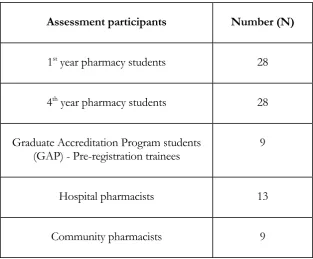
Table 3.2: Representation of pharmacist groups who participated in ... 50
Competency assessment tool No 2... 50
Table 3.3: Demographics of pharmacists who completed one or more... 55
self-assessments (N = 120)... 55
Table 3.4: Comparison of first and second Asthma self-assessments attempts... 61
Table 3.5: Demographics of pharmacists who completed the Asthma survey (N = 102)... 62
Table 3.6: Details of time since graduation and length of time taken to do ... 63
Asthma self-assessment... 63
Table 3.7: Asthma Survey: Number of Pharmacist responses (84) ... 64
Table 3.8: Analysis of variance between Asthma module scores and Asthma survey. ... 66
Table 3.9: Relationship of Asthma Self-assessment scores with variables ... 67
Table 3.10: Comparison of first and second Diabetes Self-assessments attempts... 69
Table 3.11: Demographics of pharmacists who completed the Diabetes Survey (N = 72)... 70
Table 3.12: Details of time since graduation and length of time taken to do ... 71
Diabetes Self-assessment... 71
Table 3.13: Diabetes survey - pharmacist responses... 72
Table 3.14: Analysis of variance between Diabetes Module scores and Diabetes Survey... 75
Table 3.15: Relationship of Diabetes Self-assessment scores with variables ... 77
Table 3.16: Comparison of first and second Pain Self-assessment attempts ... 79
Table 3.17: Demographics of pharmacists who completed the Pain Survey (N = 65)... 79
Table 3.18: Details of time since graduation and length of time taken to do ... 80
Pain Self-assessment. ... 80
Table 3.19: Summary of Pain Survey responses ... 81
Table 3.21: Relationship of Pain Self-assessment scores with variables ... 84
Table 3.22: CPD survey: summary of responses... 85
List of figures:
Figure 2.1: Screenshots of the Fourpoint QT assessment illustrating its properties... 28
Figure 2.2: Screenshot of the Fourpoint QT assessment showing a preview of QT... 29
assessment options... 29
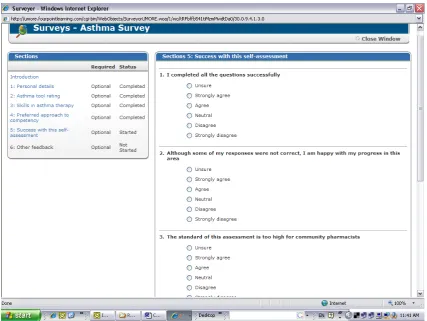
Figure 2.3: Screenshot of Asthma survey ... 33
Figure 2.4: Screenshot of Section 5 of Asthma Survey using Likert scales ... 34
Figure 3.1: Pharmacists’ Survey 2000: summary of registration years of... 45
participating pharmacists... 45
Figure 3.2: Pharmacists’ Survey 2000: Area of practice of participating pharmacists ... 45
Figure 3.3: Pharmacists’ Survey 2000: Methods of maintaining competency of... 46
participating pharmacists... 46
Figure 3.4: Summary of Pharmacists’ attitudes on the benefit of formats of educational... 47
delivery in Phase 1 (N = 92)... 47
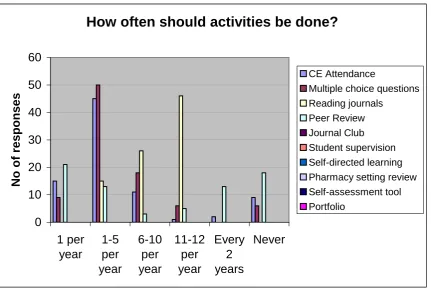
Figure 3.5: Pharmacists’ Survey 2000: Nominated frequency of CPD activities... 48
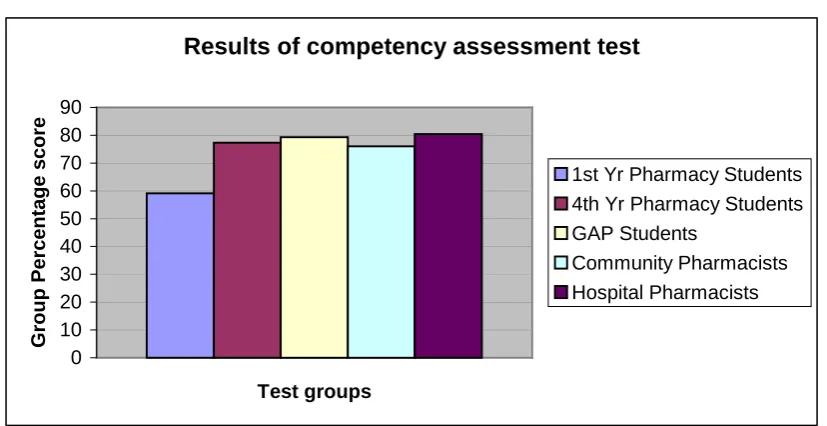
Figure 3.6: Competency assessment results summary for all participating... 51
groups (mean scores) ... 51
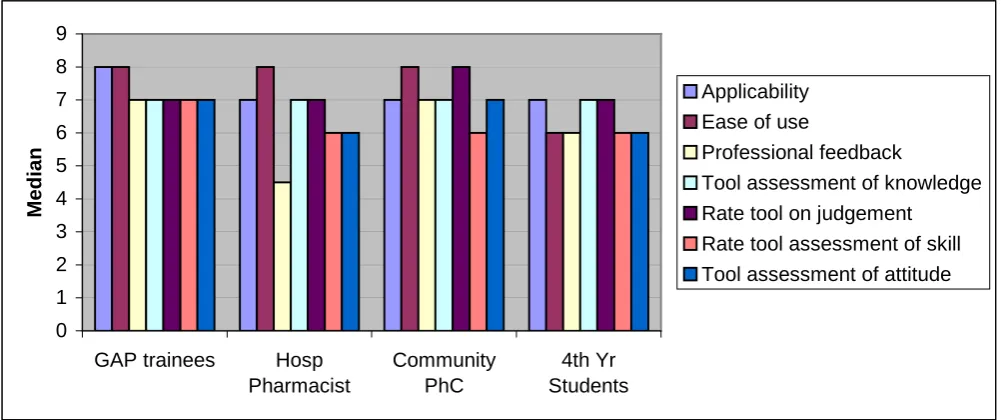
Figure 3.7: Summary of Competency Survey in 2002: Opinions about the survey: median... 52
of response from each group represented... 52
Figure 3.8: Year of graduation (as a range) for all participants who completed one ... 56
or more self-assessments... 56
Figure 3.9: Primary area of practice identified byall participants who completed one or ... 57
more self-assessments:... 57
Figure 3.10: CPD rating of participating pharmacists ... 58
Figure 3.11: Results of Asthma self-assessment: questions answered correctly ... 61
Figure 3.12: Results of Diabetes self-assessment: questions answered correctly ... 69
C h a p t e r 1
1. Introduction
One of the conundrums of the regulators of pharmacy practice is how the competency of pharmacists can be measured and monitored to fulfil their statutory obligations to the public. Many agree that the best way of determining competency would be to observe people in their day-to-day practice. However, this would be a prohibitively costly exercise. This thesis originated from the question of how competency could be assessed in a form that would give regulators confidence and that was cost effective.
1.1 Competency
‘the degree to which the individual can use knowledge, skills, and judgment associated with the profession to perform effectively in the domain of possible encounters defining the scope of professional practice’
Schön’s definition (1) is as follows -
‘Judgment and wise action in complex, unique, and uncertain situations with conflicting values and ethical stances. In addition to theoretical and technical knowledge, professional competency requires reflective and practical knowledge and competencies for dealing with areas that do not yield technical or familiar solutions.’
Competency of medical practitioners was reviewed by Epstein (6), expanding its definition not only to knowledge, skills, attitudes and beliefs, but to the context of competence to the task at hand. This will also depend on the training stage at which competency is measured. The competency of a student will mainly rely on the knowledge and problem solving they have experienced, whereas a qualified physician could draw on a higher level of experience.
Holland and Nimmo (1) examined competency in the context of the way that a pharmacist works – with their hands and their minds. They described it as a pharmacist’s skill set. This forms a combined professional socialization with judgment that is then applied, along with the knowledge and skills needed in the practice-model a pharmacist works in. To the average pharmacist, this definition may appear to be too abstract to be applied to their work. Epstein’s description (6) of competency is context-dependent and may be more applicable:
‘Competence is a statement of relationship between an ability (in the person), a task (in the world), and the ecology of health systems and clinical contexts in which those tasks occur’
1.2 Australian competency development
The majority of pharmacists accept that it is their responsibility to maintain competency at an appropriate level in order to continue to practise, recognizing that pharmacy as a profession is constantly evolving and they have an obligation of duty of care to the public. The issue of competency was discussed in Australian pharmacy circles for many years (8) with the original National Pharmacy Competency Standards published in 1992 (9, 10). However, they were primarily used as a guide for the registration of pharmacists. A complete revision was undertaken in 2002 and the Competency Standards for Australian Pharmacists was published in 2003 (11). These standards described competency as the ‘skills, attitudes and other attributes (including values and beliefs) attained by an individual based on knowledge (gained through study at bachelor’s degree level at least) and experience (gained through subsequent practice) which together are considered sufficient to enable the individual to practise as a pharmacist’. The Standards provide a comprehensive guide to pharmacists of each competency needed to practise, broken down into functional areas. This allows practitioners in any area of practice to determine and understand the criteria that fit into their practice. By doing this, the Standards can be applied in all circumstances where a pharmacist’s competency needs to be defined e.g. in employment, at registration or in self-assessment.
Currently pharmacists in Australia provide evidence of their participation in different forms of education, giving an indirect indication of their competency. Concern about the value of these has heralded a re-birth of the awareness of competency nationally and the implementation of the Continuing Professional Development program by the Pharmaceutical Society of Australia (PSA) in 2005 (12).
organizations in Tasmania. In 1999, a working party was set up to consider the pathway to competency-based re-registration in Tasmania. This group resolved to research a competency-competency-based assessment for pharmacist registration as the first step in the pathway to requiring competency assessment for annual re-registration.
The genesis of competency-based practice for registered pharmacists was formally introduced in Australia by a Report of the National Competition Policy Review of Pharmacy (Wilkinson Report) in 2000 (13). Its recommendations stated:
Recommendation 16(g)
‘States and Territories should move towards replacing qualifications-based criteria with solely competency-based registration requirements if and as appropriate workable assessable mechanisms can be adopted and applied.’
Recommendation 18
‘The review recommends that, within three to five years, States and Territories should implement competency-based mechanisms as part of the re-registration processes for all pharmacists.’
These recommendations were in recognition locally, as well as internationally of the need to protect the public and ensure that the practice of all registered pharmacists was kept up-to-date. This would also support the self-regulation model and reduce the need for government intervention in professional standards, a concern for many professions (14).
1.3 Continuing professional development
International Pharmaceutical Federation (16) (Fédération Internationale Pharmaceutique - FIP) as ‘the responsibility of individual pharmacists for systematic maintenance, development and broadening of knowledge, skills and attitudes, to ensure continuing competency as a professional, throughout their careers’. There is evidence that the learning style involved in CPD intervention can influence professional practice compared to conference and didactic lecture presentations. Davis et al (17) looked at how didactic and interactive continuing medical education (CME) influenced medical practitioners’ performance and health care outcomes. The didactic interventions did not significantly change or improve performance. However, interactive education such as case discussion, role-play, or hands-on practice sessions was more effective.
The recognition of CPD as a component of re-registration for pharmacists currently occurs only in South Australia and Tasmania. The Pharmacy Board of Victoria is introducing a similar program to the South Australian model in 2007.
The South Australian Pharmacy Board introduced the ENRICH (18) program as a framework for their professional development program to promote lifelong learning. The Board issues an annual practicing certificate and requires applying pharmacists to have attained 20 ENRICH Credits (ECs), gained through CPD activity.
pharmacists each year. Pharmacists who are chosen for audit are required to provide the Board with a copy of their portfolio as evidence of their competency.
The PSA introduced the Continuing Professional and Practice Improvement (CPD&PI) program in 2005. The aim of this program was to promote CPD for Australian pharmacists, introducing the concept of a professional portfolio and promoting the concept of greater value for education that had a more active learning style. The program encourages pharmacists to actively examine their own personal educational needs to improve their practice and to be more self-motivated in maintaining their own competency. The PSA CPD&PI program provides credit points to pharmacists based on an educational activity’s ability to be interactive, have multiple interventions linked to a pharmacist’s personal practice and be based on their own identified educational needs. The PSA credit system has categorized educational activities into:
Group 1 – Activities focusing on delivering information;
Group 2 – Activities focusing on improving knowledge and skills; and
Groups 3 – Activities focusing on facilitating change.
Activities over longer periods are also promoted – research, higher degree courses, participation in the pharmacy workplace Quality Care Pharmacy Program (QCPP) (19), medication review accreditation, self-audits, self-assessment and safety training.
1.4 Overseas
Survey (22) results indicated that CPD and/or CE is mandatory in nine countries and non mandatory in about twenty eight countries.
1.4.1 New Zealand
The Pharmaceutical Society of New Zealand introduced competency standards in 1995, defining the skills, knowledge and attitudes of a New Zealand registered pharmacist. The competency standards launched the New Zealand Continuing Competence program – ENHANCE in 2002. This outlined four steps in a CPD cycle:
• Reflect – Determine the competence standards that are relevant to practice, which will be documented on a pharmacist’s annual practicing certificate;
• Plan – Develop identified CPD needs into learning plans;
• Action – Implement the planned learning; and
• Evaluate – Evaluate the outcomes of learning and continue the cycle.
Re-registration(23) in New Zealand now requires a declaration of competency to practise within the competency standards that apply to current practice within the pharmacist’s scope of practice. The pharmacist is required to make an annual declaration on the basis that they:
• have undertaken CPD in any activities, relevant to their practice;
• have addressed any lack of evidence for elements and activities within the competence standards that currently form part of their practice and undertaken CPD in these;
• have assessed their practice if a change in practice area occurs and will assess themselves against any additional standards required relevant to the new role that they may not have evidence for; and
• are enrolled and participating in an accredited recertification programme and achieving the recertification requirements set by the Pharmacy Council of NZ.
In addition to the annual declaration, the re-registration process also requires –
1. Completing an assessment of their practice against the Pharmacy Council of NZ competence standards at least once every five years and when they change practice area;
2. Documenting CPD fully using record sheets of the Pharmacy Council of NZ;
3. Undertaking CPD activities in areas (identified from an assessment of their practice) that the Pharmacist does not have ‘evidence’ for; and
4. Undertaking CPD to accumulate a minimum of twelve (12) Outcome Credits in a three (3) year period and achieve a minimum of four (4) Outcome Credits in the first year enrolled in an accredited re-registration programme.
1.4.2 Canada
College of Ontario for 20% of registered pharmacists. In addition to this, randomly selected pharmacists were asked to complete a written clinical knowledge assessment that consists of cases and multiple-choice questions, as well as participating in a clinical skills assessment using an Objective Structured Clinical Examination (OSCE) with standardized patients and pharmacy staff. An OSCE consists of a series of role-plays where a scenario is presented that will assess a particular competency. A review by Croteau and Marini in 2002 (24) reported that since 1997, one thousand and thirty six had undertaken the practice review with the majority of pharmacists (86%) meeting or exceeding the standards.
The Canadian National Association of Registering Authorities (NAPRA) published a Model Continuing Competence Program Framework for Canadian Pharmacists in May 2003 (25). The plan outlined how continuing competency for practicing pharmacists would be achieved across all the Canadian provinces. The model suggested using four assessment tools:
• Assessment of clinical knowledge. This would consist of a knowledge assessment that would be administered nationally, with questions designed to address each of the major competencies required to practise as a pharmacist;
• Peer and patient assessment. Peer assessment would examine the decisions and actions of a pharmacist by their peers. Patient assessments would address communication skills, ethical considerations and general professional demeanor;
• Simulated scenarios administered through an OSCE; and
1.4.3 United Kingdom
Pharmacy practice in the United Kingdom (UK) has evolved from a supply-led service to a more patient focused practice. While many of the advances in pharmacy practice in the UK have occurred in hospital, increasingly community pharmacists are also providing new services and are subject to a process of accreditation e.g. pharmacist supplementary prescribing. The Royal Society of Great Britain is the regulatory and professional body for pharmacists. As a result of the UK government’s policy paper A first class service: Quality in the new NHS (20), the re-registration process for pharmacists in the UK has evolved from a system requiring continuing education participation of at least 30 hours per year to one of CPD for all registered pharmacists (26). After consultation with pharmacists between 1998 and 2002, the Royal Society of Great Britain received feedback from its implementation proposals in 2003 (27). As a result of this, pharmacists supported splitting the pharmacist register into two groups - practicing and non-practicing. Practicing pharmacists are required to comply with the Society’s CPD requirements. Non-practicing pharmacists have to declare that they would not engage in pharmacy practice or give professional advice. Each practicing pharmacist is expected to keep a CPD record reviewing their activities in a plan, do, study, and act format. CPD records are confidential and can be recorded online. Each pharmacist is expected to keep his or her record up-to-date and produce it to the Society when requested. There is no specific mix of activities and no minimum time requirement. The emphasis of the CPD program is that it is a personal and continual process with the emphasis on quality. At this stage the CPD process is being tested and re-tested, prior to a formal CPD process commencing.
1.5 Other health professions in Australia
the minimum requirements of the QA&CPD Program, patients of recognised GPs are eligible to receive higher rebates from Medicare. The focus of GP education is based on adult learning principles, designed to reflect evidence that works and involves peer and self-review processes. The current RACGP triennium (28) requires GPs to choose their education from two categories of educational delivery:
Group 1 activities (5 points per hour) – includes active learning modules, clinical audit modules, small group learning modules, supervised clinical attachment modules, learning plan and portfolio modules.
Group 2 activities (2 points per hour) – includes workshops, seminars, presentations, conference attendance, as well as teaching.
The requirements for GPs are 130 points over the triennium, with a minimum of two Category 1 activities.
The Australian Nursing Council and Midwifery Council (29) developed competency standards for registration of nurses in 1997 and they are updated regularly. Registering bodies in each state control the standards for nurse registration. In Tasmania, nurses renew their registration or enrolment each year and are issued with an annual practising certificate. Most states require registered nurses to undergo a process of self-assessment to determine professional competence. In Tasmania nurses are required to provide a statutory declaration of their competency on re-registration. On a national level, the National Nursing Organisations (30), a national lobby group for the nursing profession, issued a consensus statement supporting lifelong learning for nurses. It stated that nurses had a professional responsibility to maintain their competency using both formal and informal opportunities for education.
1.6 Learning styles
the sample in the study was small, it provides an insight into the trends of personality types of pharmacists in different careers and the format of teaching they preferred.
Wyatt stated that one of the many challenges in changing to a competency-based method of assessment was the need to re-examine the way in which learning takes place, especially in the workplace. He suggested that rather than passive listening in lectures, doing work activities with questions relating to clinical practice, combined with an open mind to errors, with evidence based information to assist with decision making, will begin to change the way in which learning in the workplace is done in the future (33). Shah proposed providing work-based clinical skills to students has been shown to be an excellent way of learning clinical skills needed in practice (34). Incorporating CPD into the workplace is an ideal way of learning. Wyatt (33) explored suggestions on how this could be approached in medical practice expanding on how cultural changes could be implemented; this included self-directed learning.
In pharmacy practice, the recognition that learning is lifelong provided support by using personal development plans (20). Developing strategies to support this approach has reinvigorated educators that are responsible for delivering education to reformulate how CPD is accounted for and delivered to pharmacists (11, 35, 36).
pharmacists. Training pharmacy students to reflect on their practice with a mentor was also used successfully to promote lifelong learning (37).
1.7 Assessing pharmacy competency
The way in which competency-based practice is assessed will be one of the many challenges faced by professionals. The traditional way of keeping up-to-date, by didactic educational sessions, is not regarded as an effective approach to adult learning (17) and competency. The cost effectiveness of continuing professional development to ensure competency is not known (39); this will need to be examined before deciding which approach is best. Future training will involve changing from the current structure and process-based curriculum to a competency-based curriculum and evaluation of outcomes. (40) Where pharmacy students demonstrate intrinsic motivation to learning, they are more likely to be lifelong learners (41).
may prompt a review of the academic standard of individuals entering a profession, the question of assessing competency of those already within a profession like pharmacy would require an expensive and complex process.
The level of competency is described as developmental by Epstein (6) because whereas students use the same cognitive skills to solving all problems, experienced practitioners draw on other strategies based on the professional experiences encountered. In his review, mixed results are quoted on the method of assessment. The design of an assessment tool and the type of practice it is designed to assess will also have an impact on results. In a study by Fielding (42), pharmacists had their knowledge and their competency tested by using a series of questions and an OSCE assessment respectively. The study noted that pharmacists who considered themselves specialists were likely to be found to have high ‘false negatives’ i.e. individuals who failed the knowledge assessments but passed the competency test in their study. The study suggested that the competency assessment used was designed for general pharmacists rather than a specialist who is likely to have a narrower range of practice. This suggests that competency assessment needs to be redesigned for specialist groups, rather than adding on competencies to a generic competency set. However, there is an acceptance that the profession needs to recognise specialty practice and there is a need to tailor a competency framework and assessments to fit (7, 44), allowing better validation of different areas of practice.
1.8 Assessment tools
designed to assess competency at the right level of practice (7, 42) and need to ensure that assessment does not focus too heavily on knowledge based competencies (45).
Prior learning is used in a number of circumstances where the cost of in-depth assessment is not possible. Austin looked at a systematic method of developing the prior learning assessment in Canada for foreign trained pharmacists (46). The results of this work highlighted the need to consider cultural and communication competencies that are difficult to do with normal paper based competency assessments.
Many professions use Objective Structured Clinical Examination (OSCE) assessment. They regard this as the most effective method for assessing a professional’s competency. However, to use OSCEs on an ongoing basis to measure competency would be prohibitively expensive to the health system.
Multiple-choice examinations are popular methods of assessment. However, these can only examine factual information and hypothetical problem solving. Many professional groups use multiple-choice exams in combination with evidence of participation in different learning strategies. However, this approach has also been reported to be used to apply clinical knowledge. Language proficiency is regarded as a factor in a pharmacist’s ability to respond to questions where the application of knowledge is assessed.
and can be promoted as part of the reflection process of personal learning (47). This can also provide balance to the use of peer review (48).
The Ontario College of Pharmacists started reviewing the competency of its pharmacists in the mid nineties (21). Each year, twenty per cent of registered pharmacists are randomly chosen to submit their self-assessment and about 240 of these are selected to participate in a Quality Assurance Review. This process was reviewed by Austin et al. (49) for the period from 1996 to 2001 and included a multiple choice test to assess clinical knowledge and an OSCE to assess the application of clinical knowledge, ability to gather information, ability to manage patients’ drug related needs and communication skills. In this five-year period, eighty six per cent of pharmacists met the standards – the remainder needed peer assistance. Pharmacists who had difficulty with this review tended to be those who were educated outside Canada, or in community practice or who had been in practice for 25 years or more. Mills et al (50) also noted that male, older pharmacists, who own their own pharmacy also need support to increase their competency skills.
One small study (51) examined self-assessment in competency of clinicians in the area of evidence based medicine (EBM). GPs were asked to rate their understanding of some EBM terms before participating in a structured interview where they were asked to explain each of the EBM terms to a student. The self-rating of EBM understanding did not match the objective criterion based assessment. This poses the question of how valid self-reporting and self-assessment are as an assurance that professionals are competent in critical areas of their practice.
very objective approach that focuses on the outcomes delivery by the pharmacy rather than assessing pharmacists in a CPD cycle process or against competency standards.
1.9 E-learning assessment tools
C h a p t e r 2
2 Method
The aim of this research was to explore how competency could be assessed to manage a pharmacist’s registration based on their competency. When this research started, the concept of competency was new and practical elements of how to implement an assessment of competency were being debated.
2.1 Initial methodology
In the initial stages, work for the Pharmacy Board of Tasmania was undertaken. The aim of this work was to develop, trial and assess a mechanism for competency based annual re-registration within Tasmania. Its main objective was to examine what approach could be taken by the Board to undertake a cycle of assessment ensuring that pharmacists registered in Tasmania are competent to practice. When this work was started in 2000, the Competency Standards in Australia (2003) for Pharmacists were not available. The Competency Standards for Entry Level Pharmacists (9) were used to underpin the initial work for a competency model with consideration of the PSA’s Professional Practice Standards (56), the Standards for the Provision of Pharmacist Only and Pharmacy Medicines in Community Pharmacy (57), other guidelines of the Society and guidelines produced by the Society of Hospital Pharmacists of Australia (58) and the Pharmacy Guild’s Quality Care Pharmacy Program (19).
The original objectives are outlined as follows:
• Inform all pharmacists about what competency standards are and how they apply to individual practice;
• Find out what the barriers are likely to be from practicing pharmacists;
• Investigate the most important pharmacy practice outcomes that need to be measured;
• Explore what choices will allow pharmacists to select their own methods of demonstrating their competency; and
• Develop, test and pilot an assessment tool that will be user-friendly.
The scope of this work involved consultation with pharmacists in Tasmania, by way of a survey sent to all Tasmanian registered pharmacists. It involved individual phone interviews and a formal consultation process with organisations representing pharmacists in Tasmania – the PSA and the SHPA. Prior to receiving any information, pharmacists were initially informed of the project by a letter sent to all Tasmanian registered pharmacists from the Pharmacy Board of Tasmania, explaining the project and inviting any interested pharmacists to contact Mary Collins as the project researcher.
2.2 Phase 1 – Pharmacists’ survey 2000
In 2000, pharmacists in Tasmania were invited to respond to a survey (Appendix 1) examining the issue of pharmacy competency. The main aim of the survey was to ascertain what Tasmanian pharmacists did at the time to maintain their competence and to gauge their attitude and opinions on which educational activities they would support as part of the process of maintaining professional competence.
The survey was posted to all registered pharmacists on the Pharmacy Board of Tasmania mailing list, including those who were living in other Australian states. A random sample of pharmacists was interviewed by phone, using the same survey questions as the basis of collecting demographic details about respondents. Interviewees were also asked the following questions:
3. If you were asked to test a pharmacist’s competency, what scenario would you use?
The results of these phone interviews were collated separately to the postal survey.
2.3 Phase 1 - Competency assessment tool No 1
The first competency assessment tool (Appendix 2) was developed by researcher Mary Collins at the request of the Pharmacy Board of Tasmania as part of a body of work they funded. This consisted of fifteen scenarios designed to allow pharmacists to reflect on a scenario and how they would approach this scenario problem from their own practice and knowledge point of view.
The 2001 Competency Standards(11) work undertaken by the PSA had not been undertaken when this assessment was undertaken. Accordingly, the 1993 Competency Standards for the initial registration as a pharmacist (entry-level) after pre-registration had been undertaken were used in the development of this assessment tool.
This assessment tool contained fifteen scenarios and each one was designed to portray a typical scenario in a community pharmacy. Each scenario had questions on knowledge and pharmacy practice approach, designed to allow reflection of a pharmacist’s action and how they would apply their knowledge. The knowledge-based questions were in multiple-choice format. The practice approach questions asked the pharmacist to indicate what they would do in the normal practice circumstance in their pharmacy – ‘Always’, ‘Sometimes’, ‘Never’ in response to a proposed action in the scenarios. The scenarios were designed to cover all pharmacist competencies.
The assessment tool covered the following scenarios:
Scenario 1:
(aspirin) to your assistant. When you are finished dispensing his Imdur, he also asks you for some Anginine (glyceryl trinitrate); a nurse at the hospital said he could buy them without a prescription.
Scenario 2:
A 17-year-old girl M.L. presents a prescription for doxycycline 100 mg daily. She appears anxious, indicating that she would like to have a talk with the pharmacist and says that she will call back for her medicine the following day. Some hours later M.L’s mother calls into the pharmacy and asks your assistant if her daughter has had a prescription dispensed.
Scenario 3:
A 15-year-old asthmatic Miss Gaze presents at your pharmacy and asks if she could get two Ventolin (salbutamol) inhalers because she is going on holidays for two weeks. She said she wanted a spare inhaler in case she loses one. In conversation she tells you that she has been very wheezy in the last few days.
Scenario 4:
Mrs H is a nursing home patient in her early seventies with a history of diabetes, hypertension, depression and anxiety. An endocrinologist recently reviewed her during a hospital admission. Her current medications are buspirone, glibenclamide, enalapril and paroxetine. The RN telephones you requesting a prescription for erythromycin that had just been prescribed for a URTI. Mrs H administers her own medication and uses a dose administration aid. The RN would like you to prepare an updated one as a matter of urgency.
Scenario 5:
Mrs Long has been a regular customer in your pharmacy for various minor ailments in the past. She has mentioned that she dislikes taking medication and once confided in you that she regularly visits a herbalist. Mrs Long was dispensed sertraline a few days ago in your pharmacy by a locum and said she was fine for the first few days but now has returned saying that she has the shivers, sweats a bit and feels agitated. She thinks that she has caught flu and asks you what you would recommend.
Scenario 7:
Mrs Long is a 50-year-old with a history of chronic back pain and has been prescribed Panadeine Forte (paracetamol/codeine phosphate 500/30 mgs) by her doctor. She has been requesting preparations for constipation from you for some time. She has seen an article in a woman’s magazine on bowel cancer and is very concerned that she is at risk and has asked your assistant if there is a herbal remedy that can be used to prevent any problems developing.
Scenario 8:
A 34-year-old mother of two regularly has prescriptions filled for Ventolin (salbutamol) and Becotide (beclomethasone). She is occasionally prescribed prednisolone for exacerbations of her asthma. She has not had any prescriptions filled for prednisolone in the past six months. She requests a small box of aspirin and asks for a fungal cream for the itchiness between her toes.
Scenario 9:
Scenario 10:
Mrs Scott has had her prescriptions dispensed at your pharmacy for the last five years. She has had a fall recently but has generally been in good health as far as you are aware. She had her prescriptions filled yesterday. At the time she appeared to be very energetic. She has been stable on irbesartan and hydrochlorothiazide for 6 months.
Her daughter Ms Scott arrives in your pharmacy two weeks later and presents her prescription for the pill. She says that she is concerned about her mother and tells you that her mother is now very dizzy and seems a bit off. She said that her mother pulled a muscle in her shoulder a week ago, but that the pain was under control after she gave her some of her own pain killers for it.
Scenario 11:
A consumer presents at your pharmacy in a distressed state. He shows you a very inflamed area on his lower arms and hands. He has a burning sensation on these areas since he started using a cream prescribed by his dermatologist that was prepared in your pharmacy. He says it has been very itchy and inflamed and he has a burning sensation on his skin. The initials on the cream label indicate that your registration student prepared this cream a week ago.
Scenario 12:
Mr Smith, a 65-year-old, has fallen in your pharmacy on his way out after having his prescription filled for Imdur (isosorbide mononitrate) and Dyazide (hydrochlorothiazide and triamterene). Mr Smith was able to get up unaided but received a few cuts and grazes on his right hand and lower arm. Your dispensing assistant was the only person who witnessed the accident.
(irbesartan), frusemide (Lasix) and warfarin. On investigation it was found that Aropax (paroxetine) was dispensed as a single item by a locum instead of Avapro.
Scenario 14:
Mrs Jones, who is thirty weeks pregnant comes into your pharmacy with her 4-year-old son James. She asks you for advice on what preparation she should use to treat James’ rash. The rash is behind his ears and she has been treating it with hydrocortisone 1% that you gave her some time ago for a previous rash. After taking a history, you determine that her son is most likely to have a head lice infestation.
Scenario 15:
Mr McGraw is a 79-year-old male who has been on gemfibrozil for the past three years and on nefazodone for depression. His GP has recently started him on simvastatin. Mr McGraw’s GP contacts you requiring some information regarding the medications Mr McGraw is taking because the latter has presented to him with severe muscle cramps.
2.4 Competency assessment tool No 2
A second competency assessment tool (Appendix 3) was developed when the first assessment tool did not meet the approval of the Pharmacy Board of Tasmania. This was developed, using the scenarios of the first assessment tool, in accordance with the needs and concerns of the Pharmacy Board of Tasmania and incorporating their feedback into its design.
This assessment tool presented a simpler version of six of the fifteen case scenarios developed by the first self-assessment tool. The questions were written in simpler form, asking questions about both therapeutic and professional decisions in multiple-choice format. For each scenario, a brief feedback summary was provided.
This was evaluated by community pharmacists, hospital pharmacists, 4th year and pre-registration
students would have little knowledge and ability to respond to pharmacy practice scenarios commonly experienced in the day-to-day practice of pharmacy.
2.5 Phase 2 - Self-assessment modules
Using the experience of this work, a different approach was taken with the last self-assessment tool developed. In line with the philosophy that competency is driven by an individual’s needs for education and training, this tool was developed as a pharmacist’s self-assessment in the form of web-based modules. These would link with personal continuing professional development rather than being an assessment provided to a third party. The topics covered were diabetes, asthma and pain management.
2.5.1 Module design:
The case-based modules were designed to explore the level of knowledge that participants had and their ability to apply their knowledge to a case-based based scenario. Modules were based on the national priority areas of chronic diseases – Asthma (Appendix 5) and Diabetes (Appendix 6), and Pain management (Appendix 7). Feedback on the correct responses to each question was provided when each question was attempted. The case study for each module was based on typical patients who had complex disease presentations that pharmacists would have to deal with on a regular basis in community practice. Participants were given unlimited time; question attempts were voluntary and could be deferred. Each of the modules could be attempted twice, giving participants a second chance at choosing answers with the ability to look up references that would provide them with background material to the question.
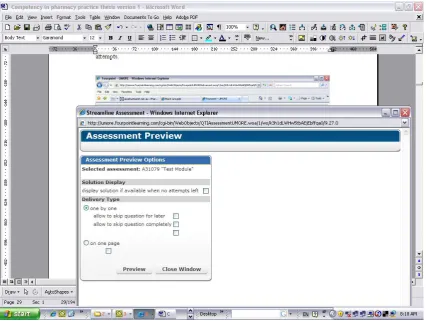
Completed modules were posted on FourPoint Learning (60), a web based platform for education (See screenshot below). Fourpoint is an online Learning Delivery System designed to facilitate interactive, self-paced, just-in-time learning run by a company called Etech. The platform provides an ability to put educational content into modules consisting of questionnaire and survey formats that can be accessed by learners to complete work assigned for student work, professional development or formal assessment.
self-their performance on that topic. When all the self-assessment modules were completed, pharmacists were asked to complete a general CPD survey to gain CPD points (See Appendix 8). This CPD survey canvassed each pharmacist’s personal views of pharmacy practice. A prize was offered as an incentive for pharmacists to complete all three surveys.
The self-assessments were designed to allow some modification according to need e.g. amount of time a participant to compete a task and the number of attempts.
Figure 2.1: Screenshots of the Fourpoint QT assessment illustrating its properties
Figure 2.2: Screenshot of the Fourpoint QT assessment showing a preview of QT assessment options
2.5.2 Asthma Module:
Module Education Objectives:
• Review the pharmacist’s professional knowledge of rational therapy for asthma management;
• Improve knowledge to support the pharmacist’s role in asthma drug therapy management;
• Using a case study, review asthma therapy and medication changes required for optimal patient benefit.
Asthma Module Case study:
A regular pensioner patient of yours, 72-year-old Mrs Brown asks you about an asthma drug she has just heard about – Singulair and whether it would have any benefit for her asthma. She tells you that she finds her current medications are not working any more and she has trouble using her inhalers. Her hands are arthritic and she finds that they are not strong enough to actuate her inhalers.
She has been a smoker for twenty years and has a history of hypertension and arthritis that mainly affects her hands. You know that she has had several admissions to hospital in the past year mainly due to asthma. Recently her doctor told her that she has emphysema. She is one hundred and sixty eight centimeters tall, weighs sixty-two kilograms (BMI = 22), and at present finds it almost impossible to take daily exercise. When you question her further, she tells you that she wakes up wheezing each morning and she gets short of breath when walking up the footpath to her house.
Her current medications are: ramipril 5 mg once daily, paracetamol 500mg – one or two four times daily, prednisolone 5 mg daily, fluticasone/salmeterol (Seretide) inhaler 250/50mg - two puffs twice daily, ranitidine 300 mg daily, ipratropium bromide 42 micrograms/dose (Atrovent Forte) two puffs three times daily when required.
2.5.3 Diabetes Module:
Module Education Objectives:
• Review the pharmacist’s professional knowledge of rational drug therapy in managing type 2 diabetes;
• Improve knowledge to support for the pharmacist’s role in the management of type 2 diabetes;
• Review the role of cardiovascular disease management in type 2 diabetes;
• Using a case study, review type 2 diabetes therapy and medication changes for optimal patient benefit.
Diabetes Module Case study:
A retired 70-year-old teacher Mr Smith is a regular patient of your pharmacy. His current medications are: aspirin 150 mg once daily, ramipril 5 mg once daily, amlodipine 10 mg once daily, simvastatin 20 mg once daily and celecoxib 200 mg once daily. He smokes, has a history of hypertension and has elevated lipid levels. He is five feet three inches tall, his weight is poorly controlled, (at present his weight is one hundred and two kilograms) and he finds it almost impossible to take daily exercise because of arthritic knees. He is on metformin 500 mg four times daily, and has also been on gliclazide MR 30 mg daily for the past two months.
He suffers regularly from flu and is just recovering from a recent bout of illness. He has told you that he had been visiting his daughter in Brisbane with his wife for the last four weeks. During that time he was admitted to the local hospital to investigate his complaints of dizzy spells. This dizziness was thought to have precipitated a recent severe fall that fractured his arm.
2.5.4 Pain Module:
Module Education Objectives:
• Review the pharmacist’s professional knowledge of rational therapy in managing chronic pain;
• Improve knowledge to support the pharmacist’s role in chronic pain management;
• Using a case study, review pain management therapy and medication changes needed for optimal benefit.
Pain Module Case study:
A 60-year-old patient, Mr Parker, until recently had a small business but was forced to retire because of severe osteoarthritis. He has restricted dexterity in his hands, has difficulty walking any distance because his knee joints have become very painful and he is unable to do any physical work after he was involved in a motor vehicle accident about five years ago. He also has a past history of asthma since childhood. However, his current pain regimen does not exacerbate this. He now presents a prescription for Oxycontin (oxycodone) 10 mg twice daily. His GP has prescribed increasing numbers of medicines to manage his pain. He started coming to your pharmacy two years ago, shortly after he had reconstruction surgery of his right knee. He was taking paracetamol and indomethacin and seemed to cope well with his pain.
About six months ago, Mr Parker’s GP prescribed Codalgin Forte. When he had a laminectomy about three months ago, he was discharged from hospital and prescribed celecoxib and ketorolac. However, these did not control his pain post surgery and tramadol was initiated six weeks ago. At the time, you spoke to his GP about his pain control. He told you that Mr Parker’s pain was complex, and that the specialist indicated that some of his pain was neuropathic in origin, as a result of his surgery. He also drinks about six cans of beer daily to cope with his pain.
Your records tell you that he is currently taking the following prescribed medications: Celebrex (celecoxib) 200 mg daily, Codalgin Forte (codeine and paracetamol 30/500 mg) two four times daily, diazepam 5g four times daily when required, Endep (amitriptyline) 50 mg three at night, Indocid (indomethacin) suppositories 100 mg twice daily when required, Lipitor (atorvastatin) 20 mg at night, Panamax (paracetamol) 500 mg one to two four times daily when required, Rani-2 (ranitidine) 150 mg two twice daily, Seretide Accuhaler (fluticasone and salmeterol 100/50 mcg) one inhalation twice daily, Temaze (temazepam) 10 mg one to two at night, Toradol (ketorolac) 30mg amps for injection by GP and tramadol 150 mg SR twice daily.
OTC medicines you know that he buys from your pharmacy regularly - Voltaren Emulgel (diclofenac), apply to knee as required and glucosamine 1000 mg daily.
taking his new Oxycontin (oxycodone), he wants to know if he could increase the doses of other pain medicines instead.
2.6 Evaluation
All the modules were evaluated using questions that centred on aspects of competency – knowledge, skills, attitude and beliefs as well as opinions about each participant’s performance. The evaluation for each topic module was in survey format using Likert (61) scales to gauge pharmacist opinion.
[image:47.595.62.487.418.738.2]Figure 2.3 and Figure 2.4 illustrate how the module surveys were presented to pharmacist participants. Table 2.1 provides a list of general questions asked in each module and Table 2.2, Table 2.3 and Table 2.4 list the questions asked in the Asthma, Diabetes and Pain surveys respectively.
Table 2.1: General questions asked in each module evaluation
Section 1. Personal details
Questions
1. Gender
2. Age (Range)
3. Year of graduation
4. Pre-registration training area of practice
5. Accredited to conduct medication reviews
6. Since you graduated have you gained any formal clinical qualifications?
7. What is your current area of practice?
8. What activities listed below do you do to maintain your competency?
Questions Other feedback
Section 4. Preferred approach to competency
Questions Rating Scale: Likert Scale
1. A self-assessment tool is my preferred approach to revise my competency in this area
2. Self-assessments provide an additional support to my competency development
3. Self-assessment tools are useful to support other forms of learning
4. I feel uncomfortable having my competency assessed in this way
1. Please write any comments or suggestions that you would like to make about this self-assessment
Section 5. Success with this self-assessment
Questions Rating Scale: Likert Scale
1. I completed all the questions successfully
2. Although some of my responses were not correct, I am happy with my progress in this area
3. I need further continuing education in this area
4. The standard of this assessment is too high for community pharmacists
5. The standard of this assessment is too clinical
Table 2.2: Asthma tool evaluation questions
Section 2. Asthma tool rating
Questions Rating Scale: Likert Scale
1. Prior to doing this self-assessment I was not confident with my knowledge on asthma therapy
2. This assessment tool helped me revise my current knowledge on asthma therapy
3. This assessment has not provided additional information for me beyond my current knowledge on asthma
therapy
4. This assessment tool has not helped me
5. This assessment tool helped me assess my knowledge of current asthma therapy
Section 3. Skills in asthma therapy
Questions Rating Scale: Likert Scale
1. I feel confident with my professional skills in this area
2. I feel confident about assessing my patient's asthma therapy needs after completing this assessment
3. I feel confident that I am able to counsel patients on how to use asthma devices after completing this
assessment
Table 2.3: Diabetes tool evaluation questions
Section 2. Diabetes tool rating
Questions Rating Scale: Likert Scale
1. Prior to doing this self-assessment I was not confident with my knowledge on diabetes therapy
2. This assessment tool helped me revise my current knowledge on diabetes therapy
3. This assessment tool did not provide additional information for me beyond my current knowledge of diabetes
therapy
4. This assessment tool has not helped me
5. This assessment provided me with new information on current diabetes therapy
Section 3. Pharmacy skills in diabetes therapy
Questions Rating Scale: Likert Scale
1. I feel confident with my professional skills in this area
2. I feel confident about assessing my patient's needs for diabetes counselling after completing this assessment
3. I feel confident about assessing my patient's drug management needs for diabetes after completing this
assessment
4. I feel confident that I am able to counsel patients on lifestyle issues after completing this assessment
Table 2.4: Pain tool evaluation questions
Section 2. Pain tool rating
Questions Rating Scale: Likert Scale
1. Prior to doing this self-assessment I was not confident with my knowledge on pain management therapy
2. This assessment tool helped me revise my current knowledge on pain management therapy
3. This assessment tool has not provided additional information for me beyond my current knowledge on pain
management therapy
4. This assessment tool has not helped me
5. This assessment tool helped me assess my knowledge of current pain management therapy
Section 3. Skills in pain management therapy
Questions Rating Scale: Likert Scale
1. I feel confident with my professional skills in this area
2. I feel confident about assessing my patient's pain management therapy after completing this assessment
3. I feel confident that I am able to counsel patients on how to control their pain using their medication
4. I am now confident in being able to assist patients with minimising risks associated with long-term pain
medication management
When participating pharmacists completed the self-assessments and surveys linked to asthma, diabetes
and the pain topic, they were asked to complete a CPD survey. This survey asked pharmacists about
their attitudes to statements about pharmacy practice and what they thought of the website and modules
2.7 Continuing professional development (CPD)
CPD points were applied for to provide recognition for completing modules as an educational activity from the PSA and the SHPA. The self-assessment tools were categorised by PSA as Category 2 activities with 2 CPD points per hour and SHPA approved their members to claim the number of hours taken to complete the activity. The competencies(11) for each of the modules were:
Asthma:
Functional Area 1: Practice Pharmacy in a professional manner - 1.2.3, 1.3.1 and 1.3.2.
Functional Area 2: Manage work issues and interpersonal relationships in pharmacy practice - 2.1.3.
Functional Area 3: Promote and contribute to optimal use of medicines -3.1.1, 3.1.2, 3.1.3, 3.1.4, 3.1.5, 3.2.1, 3.2.2, 3.2.3, 3.3.1 and 3.3.2.
Functional Area 4: Dispense Medicines - 4.2.2 and 4.2.3.
Functional Area 6: Provide primary health care - 6.1.1, 6.1.2, 6.2.2, 6.2.4, 6.2.5 and 6.3.2.
Functional Area 7: Provide medicines and health information and education - 7.1.5, 7.2.2, 7.2.3, and 7.3.2.
Diabetes:
Functional Area 1: Practice Pharmacy in a professional manner - 1.2.3, 1.3.1 and 1.3.2.
Functional Area 2: Manage work issues and interpersonal relationships in pharmacy practice - 2.1.3.
Functional Area 4: Dispense Medicines - 4.2.3 and 4.3.3.
Functional Area 6: Provide primary health care - 6.1.1, 6.1.2, 6.2.2, 6.2.4 and 6.3.2.
Functional Area 7: Provide medicines and health information and education - 7.1.5, 7.2.2, 7.2.3 and 7.3.2.
Pain:
Functional Area 1: Practice Pharmacy in a professional manner - 1.2.3, 1.3.1 and 1.3.2.
Functional Area 2: Manage work issues and interpersonal relationships in pharmacy practice - 2.1.3.
Functional Area 3: Promote and contribute to optimal use of medicines - 3.1.1, 3.1.2, 3.1.3, 3.1.4 and 3.3.2.
Functional Area 4: Dispense Medicines - 4.2.1, 4.2.2, 4.2.3 and 4.3.3.
Functional Area 6: Provide primary health care - 6.1.1, 6.1.2, 6.2.2, 6.2.4 and 6.3.2.
2.8 Analysis
The Pharmacist Survey 2000 was summarised in Microsoft Excel according to the year of pharmacist registration, their area of practice, how they maintained their competency, their attitude to the mode of education delivery (e.g. lectures, multiple choice questions) and how often they felt it should be undertaken.
The Competency assessment tool No 2 was collated and analysed in SPSS. The question responses were summarised as correct or incorrect answers and a Cronbach’s Alpha analysis was used to test the inter-reliability of the questions. The responses of the evaluation of this assessment were collated in Excel and graphs were prepared of response summaries.
The results of the self-assessment modules and their surveys were downloaded from Etech’s Fourpoint learning web platform in an Excel spreadsheet format. An analysis of data from all surveys and statistical analysis was undertaken in SPSS 14.0 for Windows. The self-assessment results provided information on a pharmacist’s answer, whether they were completed, their points, the maximum score and time spent. Unfortunately, the Etech platform did not provide accurate and consistent reports on the time each of the participants spent on their self-assessments. Consequently, this information was not used in the analysis. The data provided in both the self-assessments and surveys had to be re-designed and all linked to each participant to allow analysis in SPSS.
• with groups of pharmacists (accredited and not accredited3) using unpaired samples t-test;
• their opinions about their performance in the self-assessments and their area of practice using One-way between groups ANOVA;
• if there was a relationship between scores and the pharmacist’s time since graduation using Pearson product-moment correlation coefficient (r); and
C h a p t e r 3
3 Results
This research was conducted in two phases over a six-year period, during which time the environment of pharmacists’ practice has evolved significantly. In 2001, the PSA published Competency Standards for Pharmacists in Australia (10). This was revised in 2003 (11) to cover a wider range of practices and was designed to be used as a primary reference for the profession as well as a reference for registering and credentialing bodies, employers, universities and providers of pharmacy education. In this landscape the relevance and application of competency to the day-to-day practice of pharmacists had evolved to such an extent that the learnings in Phase 1 were factored into planning educational activities for Phase 2.
3.1 Phase 1
A survey developed in consultation with the Pharmacy Board of Tasmania was sent to all Tasmanian registered pharmacists in 2000. Phone interviews with individual pharmacists and a formal consultation process with organisations representing pharmacists in Tasmania (PSA and SHPA) were undertaken.
3.1.1 Pharmacist’s Survey 2000
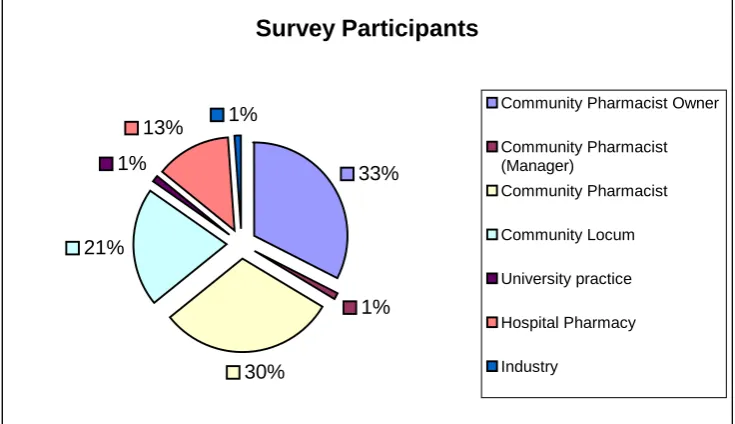
This survey was designed to find out what pharmacists did for their continuing education and their opinions of different forms of continuing education activities (See Appendix 1). Ninety-two pharmacists responded to the survey, giving a response rate of nineteen per cent.
Survey Participants 33% 1% 30% 21% 1% 13% 1%
Community Pharmacist Owner
Community Pharmacist (Manager) Community Pharmacist Community Locum University practice Hospital Pharmacy Industry
[image:59.595.51.419.474.686.2]Because this survey was only circulated to Tasmanian pharmacists, it is not surprising that the number of hospital pharmacists would be low compared to community pharmacists. However, the percentage of hospital pharmacists in this group (13%) compares to the national figure of 15% (63).
Figure 3.1: Pharmacists’ Survey 2000: summary of registration years of participating pharmacists
Figure 3.2: Pharmacists’ Survey 2000: Area of practice of participating pharmacists 0 2.5 5 7.5 10 12.5 15 17.5 20 22.5 Pe rc e n t
1930 1940 1950 1960 1970 1980 1990 2000 2010 YRS REGISTERED
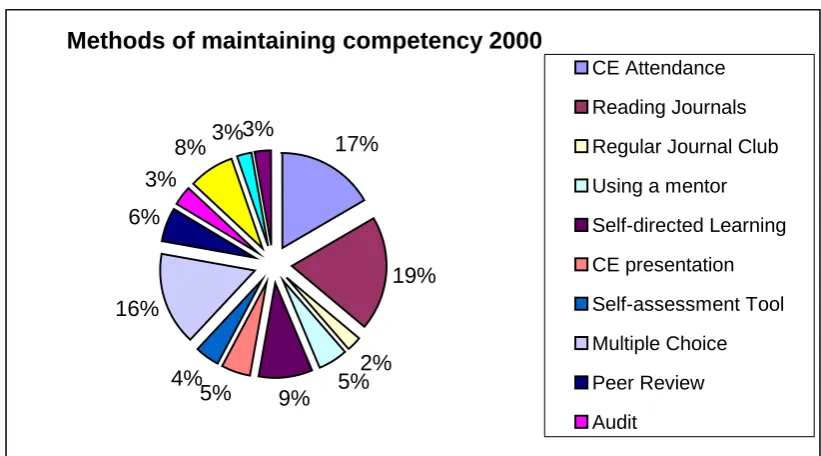
Figure 3.3 summarises the activities that participating pharmacists used to maintain their competency. The most common activities nominated were continuing education (CE) attendance (17%) and journal reading (19%). The reason why a high proportion of pharmacists nominated multiple choice questions (16%) as one of the top three CE methods is likely to be because at the time of the survey the Pharmacy Board of Tasmania sent out a multiple choice questionnaire to all Tasmanian registered pharmacists, similar to the PSA’s Gold questionnaire, on an annual basis.
Methods of maintaining competency 2000
17%
19%
2% 5% 9% 5%
4% 16%
6% 3%
8%3%3%
CE Attendance
Reading Journals
Regular Journal Club
Using a mentor
Self-directed Learning
CE presentation
Self-assessment Tool
Multiple Choice
Peer Review
[image:60.595.79.490.286.514.2]Audit
Figure 3.3: Pharmacists’ Survey 2000: Methods of maintaining competency of
participating pharmacists
0 5 10 15 20 25 30 35 40 45 50 CE Attendance
Multiple choice questions Reading journals
Peer Review Journal Club
Student
supervision Self-directed learning Pharmacy
setting review CE
presentation
Number of pharmacists
Excellent benefit Good benefit Definite benefit Some benefit No benefit
Figure 3.4: Summary of Pharmacists’ attitudes on the benefit of formats of educational
delivery in Phase 1 (N = 92).