Exchanges
Exchanges
Call for Contributions
CLIVAR is an internationalre-search programme dealing with climate variability and predict-ability on time-scales from months to centuries.
CLIVAR is a component of the World Climate Research Pro-gramme (WCRP). WCRP is sponsored by the World Mete-orological Organization, the In-ternational Council for Science and the Intergovernmental Oceanographic Commission of UNESCO.
This issue has been sponsored by the China Meteorological Administration through the Chinese Academy of Meteorological Sciences
Latest CLIVAR News
http://www.clivar.org/recent/
See the CLIVAR Calendar
http://www.clivar.org/calendar/ index.htm
No. 31 (Vol 9, No.3)
October 2004
Atlantic Predictability
C
LI
VA
R Atlan
tic
We would like to invite the CLIVAR community to submit papers to CLIVAR Exchanges for issue 33 . The overarching topic will be on science related to Asian Monsoon. The deadline for this issue will be January 31st 2005.
Guidelines for the submission of papers for CLIVAR Exchanges can be found
un-Papers from the
Efforts to improve climate prediction are at the heart of CLIVAR. In TOGA, and in the first phase of CLIVAR, much attention was focused on the problem of forecasting ENSO and its climate impacts, particularly those in the Indo-Pacific region. Rather less attention has been addressed to forecasting the climate of the Atlantic region, although a number of centres do now routinely issue seasonal forecasts for various aspects of Atlantic climate. Moreover, significant progress has been made both in identifying potentially predictable phenomena in the Atlantic region, and in developing statistical and dynamical prediction systems. It was to give focus to
the challenges of Atlantic Sector climate prediction that a workshop was organised at the University of Reading in April of this year. The specific aims of the workshop were:
1. To provide an up to date assessment of the state of knowledge concerning the predictability of climate in the Atlantic Sector, with particular emphasis on the role of the Atlantic Ocean.
2. To improve communication between the operational prediction centres and regional fora and the research community concerning the predictability of Atlantic Sector climate.
Guest Editorial
CLIVAR Workshop on Atlantic Predictability, 19-22 April 2004, University of Reading, UK
Rowan Sutton
It is now over 3 months since the 1st International CLIVAR
Science Conference in which many of you will have participated. The Conference, held in Baltimore USA from June 21-25 2004, was, by any measure, an enormously informative, enjoyable and successful event. It provided a comprehensive overview of progress with CLIVAR science over the past 5 years, a host of new results expressed in a wide variety of talks and posters, and directional pointers for the future progress of our science. The Conference attracted over 640 registered attendees from 56 countries. More than 650 posters were displayed on all aspects of CLIVAR science and we were pleased to present 16 awards for student posters at 2 “breakfast” events. 35 multi-author oral presentations were made and 9 individuals led end of day discussions. In addition 4 press briefings involving 17 panelists and 4 moderators were held with several stories going to print. On page 18 you can see a few of the photographs taken over the five days.
Such a conference cannot be organised without a lot of hard work in preparation and behind the scenes effort during the event. CLIVAR is immensely grateful indeed to David Legler, Director of the US CLIVAR Office, who led the Local Organising Committee and who bore the brunt of much of the detailed organisational planning and implementation. Many thanks also to those who so ably supported him, including most notably Cathy Clark from UCAR/JOSS, Cathy Stephens (US CLIVAR Office), Jill Reisdorf (UCAR/JOSS), and Sandy MacCracken of the US Climate Change Science Program office as well as Valery Detemmerman of the Joint Planning Staff for WCRP and the ICPO staff involved. We are most grateful indeed also to Lennart Bengtsson who ably led the formulation of the scientific programme and to the members of the Scientific Organising Committee for their help and input. Finally many thanks to the 14 sponsors
Editorial
of the conference (see www.clivar2004.org) who provided the financial support necessary to hold the event.
The Conference was followed by a meeting of CLIVAR’s Scientific Steering Group, the primary business of which was to review and assess the outcomes of a self-assessment of CLIVAR carried out in the months previously and to which the Conference itself formed part of the input. Thanks to our assessors, David Anderson, Mike Manton, Ed Sarachik, Fritz Schott, Neville Smith and Jurgen Willebrand for all their help with this process and well as to those involved in CLIVAR’s Panels and Working Groups who provided input. The next edition of Exchanges will include an article providing a summary of outcomes from the Conference and the SSG from the SSG co-chairs Tony Busalacchi and Tim Palmer.
As you will see, this edition of CLIVAR Exchanges is devoted to the topic of Atlantic Predictability, following from the very successful CLIVAR Workshop on that topic held at the University of Reading, UK from 19-22 April 2004. Rowan Sutton acted as chair of the Organising Committee. He outlines the Workshop’s rationale, aims and participating bodies below and, in the article following, also summarises the challenges it raised. CLIVAR is indeed thankful to the US National Oceanographic and Atmospheric Administration (NOAA), the UK Natural Environment Research Council (NERC) through its Centres for Atmospheric Science Centre for Global Atmospheric Modelling (NCAS/ CGAM) and Coupled Ocean Atmosphere Processes and European Climate (COAPEC) Directed Programme, the Met Office, UK and WCRP for co-sponsoring the Workshop. Thanks also to Rowan and the Organising Committee for organising such a successful and productive programme.
3. To identify gaps in knowledge, and in observing systems, required for the further development of systems for forecasting Atlantic Sector climate. 4. To recommend priorities for future research,
observational programmes and development of prediction systems.
The workshop brought together scientists from operational forecasting agencies with academics and others involved in more basic research. The first session focused on reports from the operational centres and similar organisations involved in routine climate forecasting. Organisations represented included international bodies, such as the International Research Institute (IRI) and the European Centre for Medium Range Weather Forecasting (ECMWF), National Meteorological Services, and Climate Outlook Fora. These reports provided an excellent survey of the current achievements and challenges in climate prediction around the Atlantic Basin. The developing experience of interaction with user groups was a major theme in many of the presentations.
In the second session a series of 9 “White Papers” was presented. The purpose of these papers was to review the current state of the art and highlight important issues that need to be addressed, and summaries of these papers provide the core of this issue of CLIVAR Exchanges. The papers break into three groups. First are two papers on
the physical basis for climate prediction in the Atlantic Sector. Second are two papers on the infrastructure for climate prediction: on the observing system and the climate prediction systems themselves. Third are five papers, each of which focuses on a particular region: West Africa, Southern Africa, North America, South America and Europe. Collectively these papers provide a thorough survey of the state of Atlantic climate prediction at this time.
In addition to the above elements the workshop programme was significantly enhanced by a lively poster session and two guest lectures. Dr Tim Palmer (of ECMWF) discussed “Developments and future prospects in understanding predictability”. Dr Neil Ward (of IRI) discussed “Merging forecasts with applications”.
Following the formal oral presentations, discussions were held to identify priorities for future progress. A short summary of the recommendations from these discussions is also included in this issue of Exchanges. The full proceedings of the workshop are being published by the International CLIVAR Project Office (CLIVAR Publication Series no. 81 (Unpublished manuscript); WCRP Informal Report No. 11/2004) and will be available soon on request. The organising committee would like to acknowledge generous support for the workshop from the U.S. NOAA, the U.K. Met Office and the U.K. Natural Environment Research Council.
Challenges in the development of prediction systems for Atlantic Sector Climate A synthesis of discussions held at the CLIVAR Workshop on Atlantic Predictability 19-22 April 2004, University of Reading, UK
Rowan Sutton
Corresponding author: [email protected]
Climate prediction is a complex task which requires the effective bringing together of many components -fundamental understanding, the observing network, climate models, data assimilation systems, user “interfaces” - if success is to be achieved. It is no surprise, therefore, that discussions held at the workshop, both in break out groups and a plenary session, highlighted a wide range of specific issues that need to be addressed to advance climate prediction for the Atlantic Sector. There is not space here to discuss all these issues in any detail. However, two overarching challenges were recognised, and these provide a useful synthesis of the discussions:
1. To realise fully the potential of seasonal predictions for the tropical Atlantic region
The potential skill and value of seasonal forecasts is highest in the tropical Atlantic. The challenge is to build a seasonal climate prediction system for the tropical Atlantic region that is comparable (in terms of data coverage, model fidelity, and – subject to physical limits – forecast skill) to that in the tropical Pacific. This will entail:
•
Significant enhancement of sustained observations in the tropical Atlantic region, in the ocean, at the land surface, and in the free troposphere.•
Major effort to reduce the systematic errors in simulation of tropical Atlantic climate in models used for seasonal prediction.•
Research to better understand the fundamental ocean-atmosphere-land processes that control the climate of the tropical Atlantic region, its variability and predictability, including the statistics of sub-seasonal variability.•
Improvement of data assimilation systems for the Atlantic Ocean (especially the treatment of salinity).•
Development of reliable methodologies for making seasonal forecasts relevant and useful to decision makers.2. To take the lead in the development of systems for decadal climate prediction
The Physical Basis For Predicting Atlantic Sector Seasonal-to-Interannual Climate Variability
Yochanan Kushnir1, Walter A. Robinson2, Ping Chang3, Andrew W. Robertson4, 1Lamont-Doherty Earth Observatory, Palisades, NY, USA
2University of Illinois at Urbana-Champaign, IL, USA 3Texas A&M University, College Station, TX, USA
4International Research Institute for Climate Prediction, Palisade, NY Corresponding author: [email protected]
Introduction
Attempts to describe and predict seasonal to interannual (S/I) climate anomalies tend to make use of the existence of coherent, large-scale atmospheric anomaly patterns and their link to anomalies at the land or sea surface. In the Atlantic Basin there are three such major patterns (Marshall et al. 2001): (i) The North Atlantic Oscillation (NAO), which describes the variability of the Northern Hemisphere circulation from the subtropics to the polar latitudes; (ii) El Niño, which influences the climate anomalies, primarily of rainfall in the tropics and North America, and (iii) tropical Atlantic variability (TAV), which involves the relationship between regional SST variability and, in particular the seasonal migration of the Atlantic ITCZ and its associated rainfall over South America and West Africa. Here we summarize what recent studies reveal about the dynamical aspects of the NAO and TAV relevant to their role in S/I prediction. A full version of this paper will appear in the Proceedings of the CLIVAR Workshop on Atlantic Predictability, held during April 2004 at the University of Reading, UK (International CLIVAR Project Office (2004))
Predictability of the NAO
The NAO (Hurrell et al. 2002) is an intrinsic atmospheric structure, which dominates the regional geopotential height variance. It is excited by the chaotic dynamics of the atmosphere and its spatial scale is determined by its quasi-stationary nature. The NAO is also seen as a self-maintaining meridional shift in the location of the eddy-driven extratropical jet and its associated stormtrack across the North Atlantic. Time series calculated by projecting daily data on the NAO pattern are nearly indistinguishable from red noise with a decorrelation time during winter, the season of its greatest persistence,
of less than 10 days. There is plentiful evidence that this persistence is provided by reinforcing interactions with transient baroclinic eddies in the Atlantic storm track. The fall and winter decorrelation curves display a curious “shoulder” at lags between 15 to 30 days. Wintertime monthly means of the NAO index (December to January and January to February) correlate at a level of about 0.3, a value larger than expected based on time averages of a red-noise model with a decorrelation time based on daily data (about 0.2).
One of the candidates for the increased wintertime persistence is the upper ocean with its long thermal memory. Barsugli and Battisti (1998)(hereafter B&B) provide a simple linear framework useful for quantifying the role of the upper ocean in enhancing atmospheric persistence stemming from a responsive ocean mixed layer. The B&B model can be tuned to produce the observed daily and monthly persistence of the winter NAO but with parameter values different from the ones chosen based on coupled and SST-forced GCM integrations. These bring the model close to its stability threshold and thus may be unrealistic. Recent GCMs that realistically reproduces the observed structure and variability of the NAO do not show any increased persistence in the NAO when coupled to an ocean mixed layer. Thus this issue is not resolved.
When it comes to persistence between seasons there is evidence that the early winter NAO pattern is preceded in summer and fall by a distinct SST pattern referred to as the “North Atlantic Horseshoe” pattern. It apparently evolves from the “tripole” pattern, which is forced by the NAO in winter. This phenomenon is currently exploited in an experimental prediction procedure used by the Hadley Centre. However, the horseshoe was found whose importance is increasingly recognised. Because
of the key role played by the Atlantic Ocean in the global overturning circulation, the Atlantic climate community is naturally placed to take a lead in this area. A number of specific challenges may be identified, for example:
•
Development of an observational system for monitoring the meridional overturning circulation (MOC) (already in progress).•
Understanding the limits of predictability in the MOC and the mechanisms that determine predictability.•
Identifying which aspects of the oceanic initial conditions most constrain the future behaviour of the MOC.•
Development of data assimilation methods for initialisation of decadal MOC forecasts•
Understanding how initial conditions and changing external forcings combine to determine climate evolution on decadal timescales, and (relatedly) development of suitable ensemble techniques for sampling forecast uncertainty.•
Understanding and quantifying the regional climate impacts of MOC change and the predictability of these impactsineffective in forcing the NAO in a recent GCM study (Peng et al. 2004). That experiment and observational evidence suggest that the cause for the summer-to-winter SST influence is in the tropical Atlantic part of the SST tripole pattern. This tropical portion may also be responsible to the horseshoe pattern. Quantitatively, the typical GCM response to the tripole is 20 m in 500 hPa geopotential height per degree. Since the tripole is typically about 0.5°C, this suggests that at most 10 m out of 80 m of the typical, NAO-related wintertime 500 hPa height anomaly may be predicted from SST.
A discussion of NAO predictability is incomplete without addressing the role of the stratosphere. Evidence is accumulating that the strength of the boreal stratospheric polar vortex influences the tropospheric circulation on intraseasonal timescales, especially the Northern Annular Mode (NAM), which is well correlated with the NAO. Because the polar vortex exhibits dynamical memory over tens of days, such stratospheric influences can extend the persistence of the NAM or NAO when there is strong dynamical coupling between the troposphere and stratosphere (i.e., winter). The dynamical mechanisms for this downward influence are not entirely understood, but presumably involve the secondary circulations induced by anomalous stratospheric wave driving, altered planetary wave propagation, tropospheric transient eddy feedbacks, and possibly planetary-scale baroclinic waves. The stratospheric influences may also provide some interseasonal or interannual predictability via the quasi-biennial oscillation (QBO) of the equatorial stratosphere. The last influences the polar vortex and affects the NAO through that link. The stratosphere plays a predictable role in climate forcing after volcanic eruptions and may be important in explaining an observed relationship between fall snow cover over Eurasia and the NAO, in the following winter.
Climate predictability in the tropical and South Atlantic
Two, well known types of atmosphere-ocean interaction govern tropical Atlantic (TA) variability: in boreal spring, changes in the meridional SST gradient and related convection and surface wind response in the western TA, and in summer equatorial SST variability with changes in the eastern TA atmosphere (Marshall et al. 2001).
TA boreal spring variability is closely tied to two sources of forcing, El Niño and the anomalous distribution of SST within the TA. An example of how these two agents act to force one aspect of TAV is given by a comparison between observed and simulated indices of Nordeste (in northeast Brazil) rainfall during March to May. Three atmospheric GCMs forced with observed, time-varying global SSTs from 1950 to 1994, tropical Pacific SST only (with climatology values elsewhere) and tropical Atlantic SST only, produce Nordeste rainfall, which correlates with observations at 0.76, 0.4, and 0.65, respectively. This suggests that information on SST anomalies in the TA Ocean is crucial for seasonal climate forecasting in the
region. While El Niño can affect TAV directly through an atmospheric bridge, the TA ocean-atmosphere responds through local feedbacks to create influential internal SST variability. In a similar way, climate variability in the extratropics, primarily NAO-related tradewind variability also brings into play TA SST anomalies. In general, both ENSO and NAO-related tradewind variability forces SST changes in the subtropics with direct influence on the ITCZ. Local ocean thermal advection acts as a damping mechanism, so the ocean is rather passive. Close to the equator however, an important wind-evaporation-SST (or thermodynamic) feedback kicks in to enhance the SST pattern. Lately, attention has also been called to the importance to the tropics of climate variability originating from the Southern Hemisphere that acts similarly to the way the NAO does from the north (i.e., through affecting the trades). The problem of the summer, eastern TA variability is referred to as the Atlantic Niño because it seems to involve a similar coupled, dynamical interaction. This process however, is much more elusive when prediction is considered (Zebiak. 1993).
To summarize, addressing the predictability of climate variability in the tropical Atlantic requires, in the first place, addressing the predictability of the state of El Niño, the NAO, and the Southern Hemisphere anticyclone, but also handling the local SST interactions well (Goddard and Mason 2002). Most present generation coupled global models do not simulate the climatological state in the equatorial Atlantic correctly (Davey et al. 2002) and this appears to be important in coupled model initialization and prediction.
Variability over the tropical Atlantic has strong ties to the South Atlantic (SA). The meteorological equator over the Atlantic, as given by the latitude of the ITCZ, is mostly north of 0oN, so that a large segment of the equatorial
mode of TAV resides in the SA, bounded to the north by West Africa; a landmass with no counterpart in the eastern Pacific. The SST pattern extends southward along the Lower Guinea Coast where it represents fluctuations in the strength of the seasonal cold tongue (Bengula Niños). Tropical SE Atlantic SSTs affect rainfall over Angola and Namibia and possibly over larger regions of South Africa. The southern pole of the gradient mode of TAV, located over the SA, appears to play an important preconditioning role on the impact of ENSO on NE Brazil rainfall during the February–May rainy season.
Conclusions
Abstract
This white paper discusses the physical basis and the potential for decadal climate predictability over the Atlantic and its adjacent land areas. Many observational and modelling studies describe pronounced decadal and multidecadal variability in the Atlantic Ocean. However, it needs still to be quantified to which extent the variations in the ocean drive variations in the atmosphere and over land. In particular, although a clear impact of the tropics on the midlatitudes has been demonstrated, it is unclear if and how the extra-tropical atmosphere responds to midlatitudinal sea surface temperature (SST) anomalies. Recent studies, however, indicate that there is indeed a discernable impact of the midlatitudinal ocean on the atmosphere at decadal timescales.
from the Pacific (El Niño). In seeking to advance Atlantic climate prediction in the extratropics, future research should focus on better quantifying and understanding the apparent marginal persistence of monthly and seasonal anomalies. While small, this marginal predictability can be useful to certain users. The challenge in making forecasts of such variability is to prove that they are reliable. In the tropics the potentially predictable signal is large compared to the chaotic variability. Thus breakthroughs in tropical Atlantic climate prediction will be of high value to a broad range of social activities. Future research should focus on developing better coupled models or new coupling strategies that can overcome the limitations of the present models in tracking the combined evolution of the atmosphere and the ocean.
Continued improvement of ENSO prediction methodology is clearly important to the cause of advancing Atlantic Sector prediction. Not enough is known on the interplay between local conditions and the remote forcing and its dependence on the intensity of the remote forcing and the season. In the particular case of the tropical Atlantic, the influence from the relatively unpredictable extratropical dynamics can be thought of as an external source of variability, interfering with the more predictable ENSO influence. Better understanding of this interference is warranted.
References
International CLIVAR Project Office 2004: Proceedings of the CLIVAR workshop on Atlantic Climate Predictability, Reading, UK,19 – 22 April 2004., CLIVAR Publication
Series no. 81 (Unpublished manuscript); WCRP Informal Report No. 11/2004.
Barsugli, J. J. and D. S. Battisti, 1998: The basic effects of atmosphere-ocean thermal coupling on midlatitude variability. J. Atmos. Sci., 55, 477-493.
Davey, M. K., M. Huddleston, K. R. Sperber, P. Braconnot, F. Bryan, D. Chen, R. A. Colman, C. Cooper, U. Cubasch, P. Delecluse, D. DeWitt, L. Fairhead, G. Flato, C. Gordon, T. Hogan, M. Ji, M. Kimoto, A. Kitoh, T. R. Knutson, M. Latif, H. Le Treut, T. Li, S. Manabe, C. R. Mechoso, G. A. Meehl, S. B. Power, E. Roeckner, L. Terray, A. Vintzileos, R. Voss, B. Wang, W. M. Washington, I. Yoshikawa, J. Y. Yu, S. Yukimoto, and S. E. Zebiak, 2002: STOIC: a study of coupled model climatology and variability in tropical ocean regions. Clim. Dyn., 18, 403-420.
Goddard, L. and S. J. Mason, 2002: Sensitivity of seasonal climate forecasts to persisted SST anomalies. Clim. Dyn., 19, 619-631.
Hurrell, J. W., Y. Kushnir, G. Ottersen, and M. Visbeck, 2002: An overview of the North Atlantic Oscillation. The North Atlantic Oscillation: Climatic Significance and Environmental Impact, J. W. Hurrell, Y. Kushnir, G. Ottersen, and M. Visbeck, Eds., American Geophysical Union, Geophysical Monograph Series Volume 134, 1-35.
Marshall, J., Y. Kushnir, D. Battisti, P. Chang, A. Czaja, R. Dickson, J. Hurrell, M. McCartney, R. Saravanan, and M. Visbeck, 2001: North Atlantic climate variability: phenomena, impacts and mechanisms. Int. J. Climatol., 21, 1863-1898.
Peng, S., W. A. Robinson, and S. Li, 2004: Mechanisms of the NAO response to the North Atlantic SST tripole. J. Climate, submitted.
Zebiak, S. E., 1993: Air-Sea Interaction in the Equatorial Atlantic Region. J. Climate, 6, 1567-1568.
Although the mechanisms behind the decadal to multidecadal variability in the Atlantic Sector are still controversial, there is some consensus that the longer-term multidecadal variability is driven by variations in the thermohaline circulation (THC). The variations in the thermohaline circulation appear to be predictable one to two decades ahead, as shown by a number of perfect model predictability experiments. The next few decades will be dominated by these multidecadal variations, although the effects of anthropogenic climate change are likely to introduce trends. A clear impact of the variations of the thermohaline circulation on the atmosphere can be demonstrated, so that useful decadal predictions with economic benefit are in reach.
M. Latif 1), M. Collins 2), R.J. Stouffer 3), H. Pohlmann 4), and N. Keenlyside 1) 1)Leibniz-Institut für Meereswissenschaften, Kiel, Germany
2)Hadley Centre for Climate Prediction and Research, Met Office, Exeter, UK 3)GFDL, Princeton, New Jersey, U.S.A.
4)Max-Planck-Institut für Meteorologie, Hamburg, Germany Corresponding author: [email protected]
1. Introduction
Over the last twenty years we have seen major developments in seasonal forecasting, and now many centers around the world routinely make seasonal forecasts. The success of these efforts is largely based on the predictability of the El Niño Southern Oscillation (ENSO) phenomenon, and in our ability to capture it in our models and statistical schemes. Process studies, observations and simple models have played a central role in the development of seasonal forecasting and have lead to the design and implementation of the TOGA/ TAO observational array (McPhaden et al. 1998) which is integral in monitoring and prediction.
In contrast to seasonal forecasting, decadal to multidecadal climate predictions are at an infant stage1.
Nonetheless, there are many things that can be learned from seasonal forecasting experience. Paramount among these is the recognition that better understanding of the physical mechanisms involved and better monitoring systems are needed for advances to be made. In terms of understanding decadal variability, we are handicapped much more significantly by a lack of adequate data, and we shall have to wait much longer to get it. Thus, in decadal variability studies there has been a heavy reliance on models. But models do not always agree with each other or with observations, and thus while models have been helpful in identifying possible mechanisms, the true mechanisms for decadal variability are still not known. However in this respect, observations can play a crucial role: They can be used to reduce model uncertainties, through improvements in model physics, especially those aspects believed important to decadal and multidecadal timescales, and on which models disagree.
As with seasonal forecasting, decadal to multidecadal climate predictions are of economic, political and public interest. Their value lies in planning the future in all fields that depend on climate to some degree. This includes for example the choice of agricultural species, insurance fees, plans of infrastructure, the energy sector, or simply the diameter of gutters. Unlike seasonal forecasting, the relevant periods are longer than a single political reign, and anthropogenic forcing of climate becomes an issue.
2. Global pattern of decadal to multidecadal predictability
In this section we examine the global pattern of decadal predictability as found in potential (diagnostic) and classical (prognostic) predictability studies, which are
two common methods for estimating decadal predictability. Decadal potential predictability is defined as the ratio of the variance on the decadal timescales to the total variance (Boer 2000). A value approaching one indicates an enhancement of variability on decadal timescales, and would argue for the presence of an oscillatory mode of variability and against the null hypothesis of the stochastic climate model (Hasselmann 1976). Classical predictability studies consist of performing ensemble experiments with a single coupled model perturbing only the initial conditions (e.g. Griffies and Bryan 1997). In these studies, the predictability of a variable is given by the ratio of the ensemble variance to the actual signal variance. These experiments provide an upper limit of predictability, since they assume a perfect model and near perfect initial conditions. Although potential predictability can be estimated from observations, in practice data records are rather short and tend to be less reliable for earlier periods, and hence, it is often estimated from model simulations. Thus, both these predictability estimates rely heavily on models. A third method exists that is also model-based. This method compares the variability simulated with and without the inclusion of active ocean dynamics and identifies those regions in which ocean dynamics are important in generating the variability. It is likely that these regions are also the regions of high predictability potential (Park and Latif 2004).
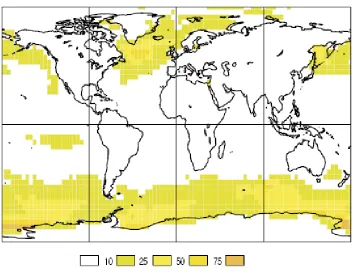
All three methods, the potential predictability approach (Boer 2001), the classical predictability studies (e.g,. Pohlmann and Keenlyside 2004), and the ocean dynamics approach indicate four regions where predictability may exist at decadal timescales: The North Atlantic, the Southern Ocean, the North Pacific, and the Tropical Pacific. The identification of regions is shown to be largely model independent by Boer (2001), where the potential predictability of decadal means of surface air temperature (SAT) from an ensemble of eleven climate models was calculated (Fig. 1 page 15). The most prominent regions are the North Atlantic and the Southern Ocean, where more than 50% of the variance exists in the decadal band.
3. Decadal climate predictability in the North Atlantic-European region
There have been several classical decadal predictability studies of North Atlantic variability. As discussed below, they all seem to indicate that North Atlantic THC variations are predictable out to a decade or more However, there are major disagreements on the level and extent of predictability of SST and atmospheric quantities, such as SAT and sea level pressure (SLP). But there are some positive indications of decadal predictability of SAT and SLP over Europe.
In the PREDICATE project (Sutton et al. 2003) a systematic comparison of the predictability of five state-of-the-art European CGCMs (HadCM3, ECHAM5/MPI-OM, ARPEGE3/ORCA, BCM, ECHAM4/ORCA) was made. The results indicate that in general the strength of
1 The term “decadal to multidecadal” is a rather loose
the Atlantic THC is potentially predictable at least a decade in advance and, in some situations, multidecadal predictions of the THC may be possible (Fig. 2 page 15, left panel). In addition, THC-related variations in SST and SAT are potentially predictable one or two decades in advance (Fig. 2 page 15, right panel). The exact level of predictability is dependent on the oceanic initial conditions and on the coupled model used.
4. Anthropogenic climate change
Climate models predict that anthropogenic climate change will become more and more important. How precisely global and regional climate will evolve, however, is highly uncertain. The strong internal decadal to multidecadal variability is likely to mask the anthropogenic climate signal during the next few decades. Likewise the regional climate of the Atlantic sector during the twentieth century was, in contrast to global climate, dominated by the internal variability. Global warming will, however, introduce a warm bias on the multidecadal timescale. The predicted strength of this warming depends on the selected scenario and the selected climate model. The warming may well override the amplitude of the internal decadal to multidecadal variability on the global scale. Regionally, however, changes in the ocean circulation may provide important feedbacks. For the Atlantic sector, the fate of
the thermohaline circulation will be important in shaping regional climate change.
References
Boer, G., 2000: A study of atmosphere-ocean predictability on long time scales. Clim. Dynamics, 16, 469-472.
Boer, G. J.,2001: Decadal potential predictability in coupled models. CLIVAR Exchanges, 19, p3 (unpublished manuscript) .
Griffies, S. M., and K. Bryan, 1997: Predictability of North Atlantic multidecadal climate variability. Science, 275, 181-184.
Hasselmann, K., 1976: Stochastic climate models. Part I: Theory.
Tellus, 28, 473-485.
McPhaden et al., 1998: The tropical ocean-global atmosphere observing system: A decade of progress. J. Geophys. Res.,
103, 14,169-14,240.
Park, W., and M. Latif, 2004: Ocean dynamics and the nature of air-sea interactions over the North Atlantic at decadal timescales. J. Climate., accepted
Pohlmann, H. and N. Keenlyside, 2004: Review: Decadal-Multidecadal Climate Predictability. Proceedings of the “Workshop on Decadal Climate Variability”, Hawaii, 23-26 February 2004.
Sutton, R. T., et al., 2003: PREDICATE final report. http:// ugamp.nerc.ac.uk/predicate/
Ocean Based Observations.
The current existing components of the international effort in the Atlantic comprise in situ 1) Fixed Point Time Series 2) Global Surface Drifting Buoy Array; 3) Argo Profiling Float Array 4) Global Tide Gauge Network; 5) Global Ships of Opportunity Network; 6) Ocean Carbon Monitoring Network; 7) VOS Surface Marine Network: 8) Moored Buoy Networks. Several elements are part of the Sustained Ocean Observing System for Climate while the rest are short-term measurements as part of specific process studies. More information can be found at: http:/ /www.clivar.org/organization/atlantic/IMPL/ index.htm http://www.clivar.org/organization/ atlantic/IMPL/proc-stud.html
Fixed Point Time Series.
Fixed-point time series are an essential element of the global ocean observing system. These Eulerian Observatories are uniquely suited for fully sampling 2 of the 4 dimensions (depth and time), thus complementing other components of the observing system (satellites, floats, ships). They resolve a wide range
of temporal variability and sample the water column from the surface to the bottom. Fixed-point stations will resolve multi-disciplinary variability and processes like fluxes of heat, freshwater momentum and other properties between the ocean and atmosphere.
Global Surface Drifting Buoy Array.
The primary goal of this project is to assemble and provide uniform quality control of sea surface temperature (SST) and surface velocity measurements. These measurements are obtained as part of an international program designed to make these data available in an effort to improve climate prediction. Climate prediction models require accurate estimates of SST to initialize their ocean component. Drifting buoys provide essential ground truth SST data.
Subsurface Floats and Argo Project.
Argo is a new method of collecting information from the upper ocean using a fleet of robotic floats. Argo data complement other in-situ observations (many restricted to shipping routes) and data from earth-observing Antonio J. Busalacchi1, Roberta Boscolo2, Bob Dickson3, Alberto Piola4, Jacques Servain5 and Ning Zeng6
1 ESSIC, University of Maryland, 2ICPO, 3CEFAS, UK, 4Servicio de Hidrografia Naval, Argentina, 5IRD, France, 6Meteorology/ESSIC, University of Maryland
Corresponding author: [email protected]
satellites. Argo floats drift at depths between 1 and 2 km. Every 10 days each float surfaces and measures a profile of temperature and salinity.
Global Tide Gauge Network.
The tide gauge data from the international program Global Sea Level Observing System (GLOSS) aims at the establishment of high quality global and regional sea level networks, including the South and tropical Atlantic Ocean, in an evenly distributed spatial sampling. The NODC and the University of Hawaii provide access to the sea level data through the Joint Archive for Sea Level (JASL). These data, primarily since 1980, are hourly, daily and monthly from stations in tropical and subtropical areas of all ocean basins, including the South and tropical Atlantic. However present data are measured with different standards and have a Northern Hemisphere bias.
Global Ships of Opportunity Network.
The Ship-of-Opportunity Program (SOOP) is an international effort directed primarily towards the continued operational maintenance and co-ordination of the XBT ship of opportunity network but other types of measurements are being made (e.g. TSG, XCTD, CTD, ADCP, pCO2, phytoplankton concentration).
Ocean Carbon Monitoring Network.
Between 1990 and 1998 the WOCE Hydrographic Programme (WHP) occupied a grid of 20000 full depth hydrographic stations (the WHP One Time Survey). Together with other occupations of some of these sections (repeat hydrography), these sections document changes in oceanic properties and circulation on decadal timescales based on physical, chemical and transient tracer measurements. They also form the basis for determining oceanic heat and freshwater transports. During the WHP, collaboration between WOCE and JGOFS led to the complementary measurement of parameters to enable ocean carbon storage and transports to be determined. CLIVAR is concerned with further refining the WOCE determinations of oceanic heat and freshwater transports and with documenting decadal and shorter period ocean changes based in large part on the reoccupation of a subset of the hydrographic sections that formed the WHP.
VOS Surface Marine Network.
The international scheme by which ships plying the various oceans and seas of the world are recruited by National Meteorological Services (NMSs) for taking and transmitting meteorological observations is called the World Meteorological Organization (WMO) Voluntary Observing Ships (VOS) scheme. During the past few decades, the increasing recognition of the role of the oceans in the global climate system has placed even greater emphasis on the importance of marine meteorological and oceanographical observing systems. As might be expected, real-time reports from the VOS are heavily concentrated along the major shipping routes,
primarily in the North Atlantic and North Pacific Oceans. Of course, as VOS reports are part of a global data capture program, their reports are of value from all the oceans and seas of the world, and even the well frequented North Atlantic and North Pacific Oceans require more observational data.
Moored Buoy Networks.
Moored buoys are deployed in the coastal and offshore waters to measure and transmit barometric pressure; wind direction, speed, and gust; air and sea temperature; and wave energy spectra from which significant wave height, dominant wave period, and average wave period are derived. Even the direction of wave propagation is measured on many moored buoys. In addition to their use in operational forecasting, warnings, and atmospheric models, moored buoy data are used for scientific and research programs. The PIRATA (Pilot Research Moored Array in the Tropical Atlantic, http:// www.pmel.noaa.gov/pirata/) is a project designed by a group of scientists involved in CLIVAR, and is implemented by the group through multi-national cooperation. The purpose of PIRATA is to study ocean-atmosphere interactions in the tropical Atlantic that are relevant to regional climate variability on seasonal, interannual and longer time scales. The scientific goals of the PIRATA array are: to provide a description of the seasonal-to-interannual variability in the upper ocean and at the air-sea interface in the Tropical Atlantic; to improve our understanding of the relative contributions of the different components of the surface heat flux and ocean dynamics to the seasonal to interannual variability of SST within the tropical Atlantic basin; and to provide a data set that can be used to develop and improve predictive models of the coupled Atlantic climate system. To achieve these objectives PIRATA designed, deployed and maintain a pilot array of ATLAS moored oceanic buoys that measure a set of oceanic and atmospheric parameters. Data are collected and transmitted in real time via satellite and posted in a web page.
North Atlantic MOC Observations and Link to Arctic.
changes we observe, and as our understanding has grown, we have begun to appreciate both the complexity and the systematic nature of these changes.
A substantial portfolio of process studies and observations targeting the Atlantic MOC in the Northern Hemisphere is now taking shape (http:// www.clivar.org/organization/atlantic/IMPL/proc-stud.html#moc). This includes ongoing national CLIVAR programs in Canada, Norway, France, Germany, and USA as well as two international thematic programs:
•
The activities under and associated with the Arctic -Subarctic Ocean Fluxes study (ASOF; http:// asof.npolar.no/). The ASOF program is structured around 7 main tasks: warm water inflow to Nordic Seas, exchanges with Arctic Ocean, ice and freshwater outflow, Greenland-Scotland Ridge exchanges, overflows and storage basins to Deep Western Boundary Current (DWBC), Canadian Arctic Archipelago (CAA) throughflow and modeling processes and predictions. ASOF is an international programme funded mainly by NSF, NOAA, ONR and EC Framework Programme V. ASOF has received the status of a CLIVAR endorsed project by the CLIVAR SSG.•
The activities under and associated to the UK RAPID Climate Change programme (http:// www.nerc.ac.uk/funding/thematics/rcc/). In particular a moored array at 26.5°N to measure directly the meridional mass flux, time series of transient tracers in North Atlantic deep waters, an array along the western margin of the Atlantic to look at boundary wave signals, and an array between New England and Bermuda which has been jointly funded by the UK and USA.The South Atlantic Climate Observing System.
The South Atlantic (SA) is a relatively poorly sampled ocean. Long-term observations are needed to better quantify the role of the SA on climate, one example of which would be the role of the SA on the shallow tropical cells in the upwelling areas in the eastern basin and their influence on the SST gradients at low latitude. It is expected that the Argo float program and the repeat XBT lines will contribute to fill in the data gap, but it will take several years to obtain the observational base required to improve our understanding of the SA subsurface tropical – subtropical interactions and its long-term variability. Extension of the existing PIRATA array both to the SW and SE should allow the monitoring and prediction of the Benguela Niño. A monitoring program for the SA should involve measurements of the varying ocean meridional fluxes and the air-sea fluxes and estimates of the modifications in the two major blending regions in the southwest and southeast Atlantic. To monitor the net effect of the varying interocean exchanges and subsequent mixing and water mass modifications on the buoyancy characteristics of the SA and the basin-scale overturning fluxes, a zonal section is proposed
across the SA at about 25-30S. In addition, direct, long-term current and temperature measurements are needed in the eastern and western boundaries. Maintaining these observations is essential for the detection and understanding of large-scale climate fluctuations in the South Atlantic. The observations include expendable bathythermograph sections and Argo profiling floats, designed to monitor the heat content of the upper ocean and its space – time variability. Two additional lines were initiated this austral summer between southern Brazil and Argentina and the Antarctic Peninsula. Multidisciplinary, long-term time series stations are planned in the central subtropical South Atlantic and in the Cape Basin. In addition two time series stations will be deployed in the western South Atlantic. Surface drifters provide information on the circulation in the Ekman layer and also sea-level pressure data in remote areas, where observations are dramatically sparse. Summer repeat surface CO2 lines have been in place in the western South Atlantic since 2000. These measurements are to continue until 2010. Additional CTD and XBT sections will be occupied across Drake Passage in South of Africa.
Atlantic Region Land Observations.
It is generally agreed that seasonal to interannual variability is mostly influenced by ocean-atmosphere interaction, with land processes playing a secondary role. However, as our ultimate goal is to predict climate over continental regions where people live, the importance of land-surface processes is much elevated. Land processes become particularly important in semiarid regions located at the edge of the seasonal migration of convective centers where a slight weakening or shift of monsoon rainfall can make large differences to the climate and ecosystem. The circum-Atlantic region includes some of the world’s most climatically sensitive zones such as the West Africa Sahel and northeastern Brazil (Nordeste), where the impact of climate variability is far reaching and the sensitivity to land processes is highest. The American monsoon system has only recently been widely accepted as a coherent continental scale climate system that straddles the Pacific and the Atlantic Ocean basins. For example, the shear size of tropical South America, namely the Amazon basin, may enable it to play an important role in Atlantic climate variability.
(WWW) upper-air stations on the basis of their location, quality and record length. Similarly, for surface observations, GCOS worked with climate change detection experts to define a global network of high-quality stations for monitoring global temperatures. The GCOS Surface Network (GSN) consists of 989 stations. The Coordinated Enhanced Observing Period (CEOP) initiated by GEWEX, with its emphasis on global reference sites and satellite observation, collects consistently formatted land and atmosphere data from around the world for the period 2001-2004. Most of the reference sites coincide with sites used by CLIVAR programs such as VAMOS and AMMA. Thus there is an opportunity for the CLIVAR-Atlantic program to provide the impetus and coordination for linking the land observations on both sides of the Atlantic. Compared to ocean observations, a great challenge with land observation systems is how to extrapolate point observations to larger scales. Remote sensing provides one of the most useful scaling tools. For this reason, projects such as CEOP coordinate closely with the Committee on Earth Observation Satellites (CEOS). Success in TRMM, TERRA, AQUA, ESA ENVISAT missions have provided or will provide key information in integrating ground based land observations. For instance, the MODIS sensor on board TERRA, with its balanced resolution and coverage has already provided a suite of information from vegetation characteristics to land cover change of unprecedented quality since 1999.
Remotely-Sensed Observations.
The present suite of remotely sensed observations that provide coverage of the Atlantic Ocean and adjacent continents is expected to continue into the foreseeable future. NASA, NOAA, ESA, CNES, and JAXA are all striving to ensure data continuity from the research and operational satellites that provide SST, scatterometry, altimetry, and chlorophyll concentration for the ocean, temperature profiles, humidity profiles, radiation, cloud properties, aerosols, and precipitation for the atmosphere, and surface temperature and vegetation cover for the land surface. This suite of Earth observations will continue via a series of discipline specific Earth Probe and Earth Explorer research missions and multi-discipline/operational platforms such as ENVISAT, NPOESS, GOES, and EUMETSAT platforms. New sensors expected over the next decade will focus on the hydrological cycle. ESA’s SMOS mission will provide information on Soil Moisture and Ocean Salinity (SMOS), NASA’s Aquarius and HYDROS satellites will provide complementary information on salinity and soil moisture, respectively. NASA’s Global Precipitation Mission will serve to extend in both space and time rainfall rate estimates that began with the Tropical Rainfall Measurement Mission (TRMM).
A particular difficulty to be confronted in the years to come is that most of the measurements mentioned above are either from research satellites or from operational platforms that serve the needs of Numerical Weather
Prediction (NWP). The fundamental requirements (e.g., accuracy, calibration, continuity, reprocessing, data stewardship) for remotely-sensed observations in support of climate monitoring and prediction are not equivalent to those for NWP. Although many of the satellite agencies have taken on or support the mandate to understand climate variability and change, most have not yet marshaled the resources necessary to produce and maintain climate quality data records from remotely-sensed platforms. Moreover, the synthesis and integration of remotely-sensed observations together with in situ observations is only now beginning for the climate problem.
Challenges for the Future.
Introduction
On a global scale, it is the ENSO related SST variability in the Pacific which is the biggest single driver of seasonally averaged climate anomalies. In comparison to ENSO, Atlantic Sea Surface Temperature (SST) variability is typically weaker, and is often given little attention in ‘global’ seasonal forecast systems. Yet Atlantic SST variability is by no means negligible, and can have a substantial impact on the atmosphere and on seasonal weather patterns. In this summary (as in the full paper) we focus on our present capabilities to predict tropical Atlantic SST anomalies on seasonal timescales, and the implications this has for seasonal prediction of climate anomalies in the Atlantic sector.
There are relatively few coupled models that have been used to investigate seasonal prediction skill in the Atlantic sector, and many operational seasonal forecast systems still use empirical methods to specify Atlantic SST. As will be clear by the end of this paper, such a strategy is not unreasonable at the present time, given the challenges involved in trying to get coupled model forecasting systems to work. Some global coupled model forecasting systems do exist, for example those at ECMWF and the UK Met Office and the NASA Seasonal to Interannual Prediction Project (NSIPP). An especially useful set of integrations for looking at Atlantic prediction skill are those from the EU-funded DEMETER project, which has run seasonal forecasts with a set of 7 different global coupled models, for a period covering more than 40 years in some cases (Palmer et al, 2004). This gives a fairly rich dataset for investigating Atlantic predictability, and particularly in understanding the model dependence of the results.
The ability of coupled GCMs to simulate the mean climate of the Atlantic sector
The first challenge for a coupled General Circulation Model (GCM) prediction system is to produce a reasonable simulation of the mean state of the Atlantic sector. Past experience has shown that simulating the mean state in the tropical Atlantic is not easy. For example, the STOIC project (Davey et al, 2002) showed that the SST gradient along the equator had the wrong sign in all but one of a set of non-flux corrected coupled GCMs. In forecasting systems that run for only 6 months, the errors typically are not that large, but the DEMETER runs show that today’s models still have difficulty in reproducing the seasonal cooling in the eastern equatorial Atlantic in July, and that at this time of year the zonal SST gradients are poorly represented.
Many errors in coupled GCMs can be traced to problems with the atmospheric model. Common problems include
Coupled prediction systems for Atlantic Sector climate
T. Stockdale and M. Balmaseda, ECMWF, Shinfield Park, Reading, UK Corresponding email: [email protected]
wrongly distributed precipitation, inaccurate surface winds in the equatorial oceans, and a lack of low-level stratus over the eastern sub-tropical oceans. Progress is being made on the stratus problem, but the location and magnitude of convection with respect to land seems still to be a challenging problem. The limited size of the Atlantic basin (compared to the Pacific, for example) makes this a particularly vital issue for the Atlantic sector.
The quality of ocean analyses in the Atlantic
The ocean provides the most important part of the initial conditions for making a seasonal forecast. In the Pacific, the observing system for the equatorial ocean is good, and comparing analyses against independent data (eg altimetry in the case of the ECMWF system, which does not use altimeter data in the ocean analysis) shows the ocean analyses to be good. The quality of analyses in the Atlantic is much more problematic. Firstly, if no in-situ ocean data are used and an ocean model is driven with different estimates of the wind field, the resulting estimates of the ocean state can be very different. Secondly, assimilating in-situ data actually reduces the agreement between the ocean analyses and (independent) altimetry. Two difficult aspects of the tropical Atlantic are (i) the extreme paucity of the in-situ observing system and (ii) the bigger role of salinity in setting density gradients. We might hope that analyses will be improved in the future, both by the further improvement of assimilation techniques and ocean models, and by enhancement of the observing system. At present, however, the level of uncertainty in the ocean initial conditions is comparable to the size of the interannual signal.
The skill of coupled GCM forecasts for the tropical Atlantic sector
Analysis of the DEMETER runs teaches us many things about SST predictability and prediction in the Atlantic. The impact of sub-surface perturbations on the ensemble spread of SST forecasts shows that the sub-surface (i.e.
5. When it comes to predicting atmospheric response, whether forced from within the Atlantic sector or remotely, the limitations of the models are important.
So how can we take things forward? Several points seem worth making on this topic:
1. The observing system has recently improved, both in terms of in-situ data and data available to create forcing fields. Testing of our models and their forecast abilities might benefit from detailed work in this (very short) recent period. Note that the adequacy of today’s observing system has not yet been established.
2. Serious work is needed on assimilation schemes to reconstruct the tropical Atlantic ocean state from limited data, in order to have reasonable estimates for some historical period.
3. Improved models are needed to improve both our forecasts and our understanding of the predictability of the system.
4. Over the last few years, many global coupled GCM forecasting experiments have been run, but little attention has been given to the tropical Atlantic. More analysis is needed. Note that a lot of model output is available to outside researchers, for example data from the European DEMETER project can be freely downloaded from http:/ /www.ecmwf.int/research/demeter/data/index.html.
5. The possible role of soil moisture, vegetation and aerosol sources in both seasonal and longer timescale variability in the Atlantic sector should be investigated.
6. Although the tropical Atlantic is not a globally dominant source of seasonal predictability, it is important to acknowledge that the Atlantic does have an impact and is inadequately treated at present. Until the Atlantic is better handled, our forecasting capabilities are incomplete, and thus we need to commit the resources and the effort to improve the situation.
References
Davey, M. K., M. Huddleston, K. R. Sperber, P. Braconnot, F. Bryan, D. Chen, R. A. Colman, C. Cooper, U. Cubasch, P. Delecluse, D. DeWitt, L. Fairhead, G. Flato, C. Gordon, T. Hogan, M. Ji, M. Kimoto, A. Kitoh, T. R. Knutson, M. Latif, H. Le Treut, T. Li, S. Manabe, C. R. Mechoso, G. A. Meehl, S. B. Power, E. Roeckner, L. Terray, A. Vintzileos, R. Voss, B. Wang, W. M. Washington, I. Yoshikawa, J. -Y. Yu, S. Yukimoto, and S. E. Zebiak, 2002: STOIC: a study of coupled model climatology and variability in tropical ocean regions. Clim. Dyn., 18, 403-420
Palmer, T.N., A. Alessandri, U. Andersen, P. Cantelaube, M. Davey, P. Délécluse, M. Déqué, E. Díez, F.J. Doblas-Reyes, H. Feddersen, R. Graham, S. Gualdi, J.-F. Guérémy, R. Hagedorn, M. Hoshen, N. Keenlyside, M. Latif, A. Lazar, E. Maisonnave, V. Marletto, A. P. Morse, B. Orfila, P. Rogel, J.-M. Terres, M. C. Thomson (2004): Development of a European multi-model ensemble system for seasonal to inter-annual prediction (DEMETER). Bull. Amer. Meteor. Soc., 85, 853-872.
We can also compare predictability estimates with the actual forecast skill. In the northern part of the Tropical Atlantic the forecasts compare relatively well with the estimated predictability limit, and in particular seem to do a reasonable job in picking up ‘remotely driven’ SST variability. In the equatorial and southern Tropical Atlantic, performance is not so good, and errors are substantially worse than the predictability limit. Plots of actual forecasts show that although some anomalous episodes are predicted (notably in 1997/98), others are missed, and variability is underestimated.
The behaviour of multi-model ensembles in the equatorial and southern Tropical Atlantic shows that, unlike the Pacific, the forecast errors from the different models are quite correlated. Unless our estimates of predictability are badly wrong, this cannot be explained by lack of predictability in the observations, but must be due either to common errors in the initial conditions, and/or common errors in the forecast models. Since we have good reasons for not trusting either the analyses or the coupled models in this part of the ocean, and since we also know rather little about the ultimate causes of SST variability in this region, it is difficult at present to know where our biggest problems lie, and what predictive skill might ultimately be obtained with a good observing system and good models.
Conclusions
Our abilities to predict the future evolution of tropical SST anomalies in the Atlantic Ocean seem to be still rather limited. In the northern Tropical Atlantic, the main issue seems to be the fundamental predictability limit: our model forecasts are not too bad when measured against this. For the equatorial and southern Tropical Atlantic, there seem to be other problems as well. There are a number of reasons behind our overall performance:
1. The potentially predictable signal is relatively small. Stochastically forced damped persistence, with a bit of remote forcing from the Pacific, is not a bad approximation to what happens in much of the Atlantic, at least on seasonal timescales. There are other signals present, but they are modest.
2. Partly because the signals are not large, past observing systems give a rather inadequate basis for initialising and sometimes even verifying model forecasts.
3. The latest wind-forced ocean model runs capture a moderate amount of the altimeter-estimated sea-level variability over the last decade, but assimilation of data to produce consistent ocean analyses remains difficult. Treatment of salinity and appropriate multivariate constraints remain important issues.
Introduction
Some of the first studies of tropical Atlantic variability were driven by an interest in climate variations over West Africa. This review article focuses on the teleconnections between ocean-atmosphere features and the West African monsoon. These teleconnections are particularly relevant because they have been shown to lead to a degree of predictability on seasonal timescales. Other factors also will contribute to the way in which the monsoon varies from one year to the next and over decades, including continental land surface characteristics and internal atmospheric processes, so the prediction skill from ocean-atmosphere coupling alone will never be perfect. Some, and conceivably most, of these other aspects of variability may be fundamentally unpredictable. Research into other potential sources of predictability, such as initial land surface conditions, is still emerging and discussion of some of the issues will be included in the concluding section. That final section also touches on predictability at smaller spatial scales and of weather statistics through the season, features which often strongly project on environmental aspects that most matter for society.
The Sahel region, lying along the southern fringe of the Sahara desert, receives almost all its 100-400mm of annual precipitation during April-October, with the peak of the rainy season during June-September. Moving south from the Sahel, annual rainfall totals increase (Fig. 1), but in West Africa, during the Sahel rainy season, conditions to
Seasonal-to-Decadal Predictability and Prediction of West African Climate
M. Neil Ward1, Kerry Cook2, Arona Diedhiou3, Bernard Fontaine4, Alessandra Giannini1, Andre Kamga5, Peter J. Lamb6, A. Ben Mohamed7, Abdallah Nassor5, Chris Thorncroft8
1International Research Institute for Climate Prediction, Columbia University, Palisades, USA, 2Cornell University, Ithaca, USA, 3Laboratoire d’Étude des Transferts en Hydrologie et Environnement, IRD, Grenoble, France, 4Centre de Recherches de Climatologie, Dijon, France, 5African Centre of Meteorological Applications for Development, Niamey, Niger, 6Cooperative Institute for Mesoscale Meteorological Studies, University of Oklahoma, Norman, USA, 7Université de Niamey, Niger, 8University at Albany, SUNY, Albany, USA
the south are relatively drier toward the Gulf of Guinea coast. Indeed, these regions have a bimodal annual cycle of rainfall, with August usually marking a reduction of rainfall in the annual cycle, defining a “Little Dry Season” at the time when the heaviest rains associated with the Inter-Tropical Front (ITF) are usually at their most northerly location. The July-September rainfall in this southern region (here referred to as the Guinea Coast Region) is climatically interesting because, in some years, the ITF remains active further south than normal and rainfall is substantial in this region too, often at the expense of rainfall in the Sahel. The transition seasons of March-June and October-December are of interest in both the Sahel and the regions to the south. In the Sahel, they include the characteristics of the onset and recession of the rainy season. To the south across the Guinea Coast region and Central Africa, they form the two main rainy seasons. The Sahel dry season is also included in this review as there is increasing interest in interannual and decadal climate variability at this time of year as well as, in particular, the variations in atmospheric dust.
This review builds upon an earlier one with an ocean-atmosphere focus (Lamb and Peppler 1991) and complements a more recent one with a more land-atmosphere perspective (Nicholson 2000). Due to space limitations, readers are referred to the full article (International CLIVAR Project Office, 2004) for other references and to the West African monsoon experiment known as the African Monsoon Multidisciplinary Analysis (AMMA) at http://medias.obs-mip.fr/amma/ english/doc/livre_blanc.html
Ocean-Atmosphere Variations and West African climate
[image:14.595.41.286.566.733.2]A series of papers during the 1970s and 1980s used the newly available historical datasets of near-surface oceanic and atmospheric climate variables in combination with continental rainfall records. They identified relationships between West Sahel rainfall, tropical Atlantic sea-surface temperatures (SSTs), and tropical Atlantic near-surface atmospheric circulation. Wetter years appeared to be associated with a warmer tropical North Atlantic, cooler tropical South Atlantic and an associated northward displacement of the Inter-tropical Convergence Zone (ITCZ) over the tropical Atlantic. Drought years essentially exhibited opposite characteristics. Further research established that wetter years in the Sahel were associated with warmer SSTs throughout much of the
Fig 1.Climatology of Africa (North of the Equator). Mean annual rainfall (cm). (From Nicholson, Mon. Wea. Rev., 1980, Vol. 108, 473-487)
From Latif et al (page 6) The Physical Basis for Prediction of Atlantic Sector Climate on Decadal Timescales
Figure 1: Map of potential decadal predictability as derived from extended-range control integrations with coupled ocean-atmosphere general circulation models. From Boer, 2001
[image:15.595.112.490.503.699.2]Courtesy of R. Boscolo, ICPO
From Busalachi et al (page 8) Climate Observing System for the Altantic Sector
20 21 22 23 24 25 26 27 28 29 30 31
1 8 15 22 29 6 13 20 27 3 10 17 24 31
200325253555
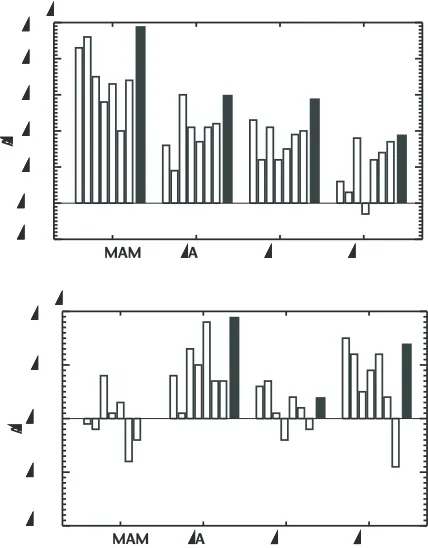
[image:16.595.86.532.93.411.2]From Rodwell et al (page 28) Predictability and prediction of European climate
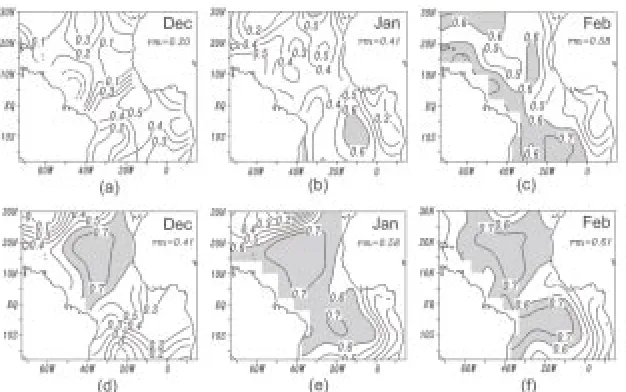
From Nobre et al (page 25) Season-to-decadal predictability and prediction of South American Climate
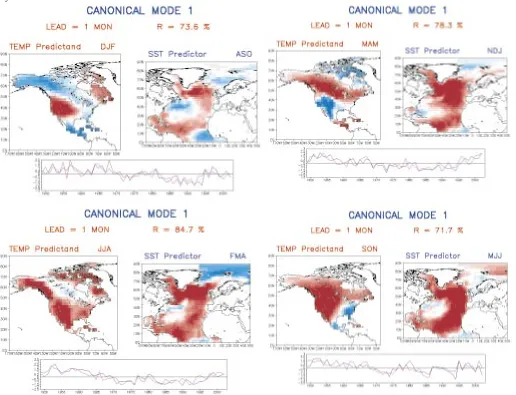
[image:17.595.44.560.92.487.2]From van den Dool et al (page 23) Seasonal-to-Decadal Predictability and Prediction of North American Climate - The Atlantic Influence
First International CLIVAR Science Conference,
June 21st - 25th 2004, Baltimore, U.S.A.
Baltimore’s inner harbour was the excellent setting for the 640 delegates
Poster sessions provided time to peruse the 650+ poster and catch up with old friends
Keynote speakers set the framework for formal and informal discussions
The packed auditorium was the setting for the formal sessions
But the event was not all work and no play!
Northern Hemisphere and cooler SSTs throughout much of the Southern Hemisphere, including the whole Indian Ocean. The potential influence of these large-scale SST anomalies on West African rainfall was confirmed in General Circulation Model (GCM) experiments forced with prescribed SST anomalies throughout the globe and/or in individual ocean basins. It has nonetheless emerged that while some GCMs capture the variability of the West African monsoon very well and are excellent tools for its study and potential prediction, many other GCMs have a very poor representation of this aspect of the climate system.
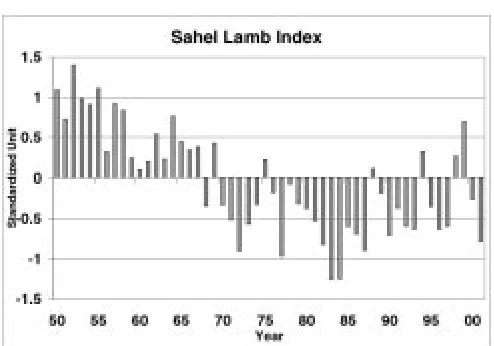
One problem posed to the diagnostic analyses is the strong multi-decadal variability that exists in time series of the West African monsoon (Fig. 2). Thus, it has proved useful to study the decadal and interannual variability separately. At the sub-decadal timescale for the West African monsoon, two key controls on July-September rainfall that have emerged are ENSO (in which covarying Indian Ocean SSTs likely play an active forcing role) and the Equatorial Atlantic SST mode, supplemented with additional components of tropical Atlantic variation, including the tropical North Atlantic. The warm phase of the Equatorial/tropical South Atlantic SST is associated with reduced rainfall in the Sahel and enhanced rainfall over a region south of about 10oN. The
warm phase of ENSO is associated with reduced precipitation in the Sahel, with no clear tendency of rainfall anomalies south of about 10oN, at least for the
July-September season that is under consideration here. Statistically, the influence of ENSO has been stronger during the drought epoch, whereas the tropical Atlantic influence has been stronger during the wetter Sahel epoch. While mechanisms to explain this have been proposed, due caution is needed as such variability can also be attributed to sampling variations given the
magnitude of the correlations and small sample size. At zero lag, the ENSO and Equatorial Atlantic mode appear to have little linear correlation in boreal summer, though possible interactions with lags between the two ocean basins may play a role in determining the West African monsoon variability. Also critical is how forcing from the tropical Pacific and tropical Atlantic interact over West Africa.
At multi-decadal timescales, teleconnections are found between Sahel drought epochs and anomalies in the interhemispheric SST gradient, both within the Atlantic and more globally, especially involving the Indian Ocean. The atmospheric circulation anomalies are large scale, connecting the South Atlantic and West Africa with other regional circulation systems in the Indian and Pacific Oceans. Some of these large-scale decadal atmospheric features resemble those associated at the interannual timescale with ENSO. In contrast, the circulation anomalies associated with the Equatorial/tropical South Atlantic SST anomalies (see above) appear more local from the Atlantic into West Africa, driving the dipole of rainfall anomalies across the Sahel and Guinea Coast regions.
In addition to the West Africa monsoon, more work is also now emerging for the other seasons in West and Central Africa. Predictability has been demonstrated for the October-December season, especially in western parts of Central Africa. For the variability of dry season dustiness in West Africa, demonstrations have been made that it too is part of large-scale teleconnection modes reaching into tropical ocean-atmosphere variability as well as into mid-latitude variability related to the North Atlantic Oscillation. Deducing causality is complex, as the needed research is led into the fully coupled nature of ocean-atmosphere-land system.
Seasonal Prediction
[image:19.595.41.288.537.710.2]The early work on Atlantic and global SST relationships with West African rainfall was translated into experimental seasonal forecast methods for the July-September season using both statistical and dynamical approaches. Early work with a UK Met Office GCM suggested substantial sensitivity to persisting SSTs even a couple of months ahead. This sensitivity is emerging in studies with other GCMs as well. Linear statistical methods with observed SST predictors are less sensitive to SST changes, and provide moderate skill from April and May SSTs, though SST prediction is still a key issue to enhance skill and lead-time. National Meteorological and Hydrological Services (NMHSs) have been using such statistical models, included as part of the West Africa Climate Outlook Forum (PRESAO), which, through a consortium of partners bringing statistical and dynamical forecast methods, has produced seasonal rainfall outlooks for the region for the July-September season each year since 1998. An addition that requires consideration is stimulated by the proposed importance of meridional moist static energy gradients for the West
Fig. 2. Index of April-October Sahel rainfall, 1950-2002. Rainfall indices are found to be consistent and reliable records of climate variations in the region, provided sound analysis procedures are applied to the rainfall stations. (Lamb, personal communication)

![Fig. 1: Observations (red) and forecasts (black and grey) made by ECMWF at the beginning of June of European 2m landtemperatures in the box[5oW-25oE, 35-55oN] (oC)](https://thumb-us.123doks.com/thumbv2/123dok_us/8515160.351348/16.595.86.532.93.411/observations-forecasts-black-ecmwf-beginning-june-european-landtemperatures.webp)