Full Terms & Conditions of access and use can be found at
https://www.tandfonline.com/action/journalInformation?journalCode=kbie20
Bioengineered
ISSN: 2165-5979 (Print) 2165-5987 (Online) Journal homepage: https://www.tandfonline.com/loi/kbie20
Bio-processing of algal bio-refinery: a review on
current advances and future perspectives
Apurav Krishna Koyande, Pau-Loke Show, Ruixin Guo, Bencan Tang, Chiaki Ogino & Jo-Shu Chang
To cite this article: Apurav Krishna Koyande, Pau-Loke Show, Ruixin Guo, Bencan Tang, Chiaki Ogino & Jo-Shu Chang (2019) Bio-processing of algal bio-refinery: a review on current advances and future perspectives, Bioengineered, 10:1, 574-592, DOI: 10.1080/21655979.2019.1679697 To link to this article: https://doi.org/10.1080/21655979.2019.1679697
© 2019 The Author(s). Published by Informa UK Limited, trading as Taylor & Francis Group.
Published online: 31 Oct 2019.
Submit your article to this journal
Article views: 90
View related articles
REVIEW
Bio-processing of algal bio-refinery: a review on current advances and future
perspectives
Apurav Krishna Koyandea, Pau-Loke Show a, Ruixin Guob, Bencan Tangc, Chiaki Oginod, and Jo-Shu Chang e,f aDepartment of Chemical Engineering, Faculty of Science and Engineering, University of Nottingham Malaysia, Selangor Darul Ehsan, Malaysia;bSchool of Science, China Pharmaceutical University, Nanjing, China;cDepartment of Chemical and Environmental Engineering, Faculty of Science and Engineering, The University of Nottingham Ningbo China, Ningbo, China;dDepartment of Chemical Science and Engineering, Graduate School of Engineering, Kobe University, Kobe, Japan;eDepartment of Chemical and Materials Engineering, College of Engineering, Tunghai University, Taichung, Taiwan;fDepartment of Chemical Engineering, National Cheng Kung University, Tainan, Taiwan
ABSTRACT
Microalgae biomass contains various useful bio-active components. Microalgae derived biodiesel has been researched for almost two decades. However, sole biodiesel extraction from microalgae is time-consuming and is not economically feasible due to competitive fossil fuel prices. Microalgae also contains proteins and carbohydrates in abundance. Microalgae are likewise utilized to extract high-value products such as pigments, anti-oxidants and long-chain polyunsa-turated fatty acids which are useful in cosmetic, pharmaceutical and nutraceutical industry. These compounds can be extracted simultaneously or sequentially after biodiesel extraction to reduce the total expenditure involved in the process. This approach of bio-refinery is necessary to promote microalgae in the commercial market. Researchers have been keen on utilizing the bio-refinery approach to exploit the valuable components encased by microalgae. Apart from all the
beneficial components housed by microalgae, they also help in reducing the anthropogenic CO2
levels of the atmosphere while utilizing saline or wastewater. These benefits enable microalgae as a potential source for bio-refinery approach. Although life-cycle analysis and economic assess-ment do not favor the use of microalgae biomass feedstock to produce biofuel and co-products with the existing techniques, this review still aims to highlight the beneficial components of microalgae and their importance to humans. In addition, this article also focuses on current and future aspects of improving the feasibility of bio-processing for microalgae bio-refinery.
Microalgae Biomass Water
Nutrients Sunlight
CO2
Microalgae biomass disruption and
extraction
Proteins Biodiesel
Bioethanol
Carotenoids
PUFA Vitamins Anti-oxidants
Bio-char Syngas
ARTICLE HISTORY Received 2 August 2019 Revised 16 September 2019 Accepted 3 October 2019
KEYWORDS Biodiesel; bio-refinery; extraction; lipids; microalgae; poly-unsaturated fatty acids; proteins
1. Introduction
The booming world population, climate change, depletion of fossil fuels and ever increasing demand for food and energy are some of the
concerns of the century [1]. The ever-increasing dependence on nonrenewable fuel sources has sparked an interest in securing alternative sustain-able options when the fossil fuels run dry. The main external source of energy to Earth is from
CONTACTJo-Shu [email protected]; Pau-Loke Show [email protected] Department of Chemical and Materials Engineering, College of Engineering, Tunghai University, Taiwan
2019, VOL. 10, NO. 1, 574–592
https://doi.org/10.1080/21655979.2019.1679697
© 2019 The Author(s). Published by Informa UK Limited, trading as Taylor & Francis Group.
the Sun. The major part of this energy is harnessed by cultivating oil crops to photosynthetically con-vert solar energy into fuel [2]. Researchers have looked into crops such as sugar cane for bioetha-nol, soybean, palm oil and rape seeds for bio-diesel to secure the future demands via renewable sources. A second generation of biofuels were experimented by utilizing residual waste from agricultural biomass. Although, these biofuels pos-sess various drawbacks, one of them was the insuf-ficient or irregular supply of the biomass required for fuel production [3]. In addition, these crops compete with the resources required for food security such as fertile land and freshwater. In the current scenario, only specific parts or com-pounds of these oil crops/plants are utilized for biofuel generation [4]. To overcome these bottle-necks, an approach of bio-refinery is required to exploit all the components of the biomass. The concept of bio-refinery for extracting various pro-ducts from biomass is similar to the conventional refinery of a petroleum industry. Although, in bio-refinery, the raw material used is biomass of either crops, plants or microalgae [5]. Additionally, these bio-refineries should be energy efficient in order to be feasible [6]. The optimization of economics is
crucial in the bio-refinery of any raw material. In the past few years, various plants and crops have been evaluated for a bio-refinery approach to extract useful products by utilizing suitable tech-nology [7].
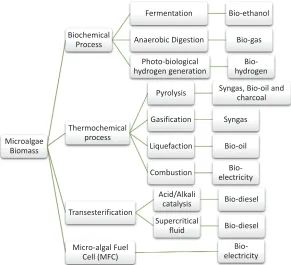
Nonetheless, the void created by drastic deple-tion of fossil fuels cannot be filled by tradideple-tional oil crops. Therefore, a third generation of biofuels derived from microalgae biomass have emerged in the last decade [8,9]. The various routes of biofuel production from microalgae are depicted in Figure 1. Compared to conventional oil-crops, microalgae can be cultivated on non-arable land with saline, brackish water or wastewater as a medium [10]. Microalgae species are reported to have high efficiency for photosynthetic conver-sion of sunlight compared to the first and second-generation biofuel sources [11]. The microalgae biomass can be directly converted to bio-fuel via four techniques. They are bio-chemical conver-sion, thermochemical converconver-sion, transesterifica-tion and microbial fuel cell. The choice of selecting a suitable process depends on various factors such as specification of the project, type and availability of crude biomass feedstock and budget of the project. The biochemical process
Microalgae Biomass
Biochemical Process
Fermentation Bio-ethanol
Anaerobic Digestion Bio-gas
Photo-biological hydrogen generation
Bio-hydrogen
Thermochemical process
Pyrolysis Syngas, Bio-oil and charcoal
Gasification Syngas
Liquefaction Bio-oil
Combustion
Bio-electricity
Transesterification
Acid/Alkali
catalysis Bio-diesel
Supercritical
fluid Bio-diesel
Micro-algal Fuel Cell (MFC)
[image:3.594.152.443.444.709.2]Bio-electricity
involves the biological processing of microalgae feedstock into biofuels. This conversion includes fermentation, anaerobic digestion and photo-biological hydrogen generation. Fermentation of microalgae to alcohol yields bio-ethanol. The frac-tion of microalgae containing cellulose, starch and other organic components will be transformed to alcohols via fermentation with yeast [12]. Anaerobic digestion could also convert microalgal biomass into bio-gas. The biogas produced from microalgae is considered to possess high energy content and recovery when compared to biodiesel production from microalgal lipids. The composi-tion of biogas obtained via anaerobic digescomposi-tion ranges from 50-70% CH4, 20-30% CO2, 0.1–0.5% H2S and trace amounts of water, N2, NH3, H2 and SO2[13]. Due to the high cost of biodiesel produc-tion from microalgae, anaerobic digesproduc-tion is being favored [14]. In photo-biological hydrogen pro-duction, microalgae convert water into hydrogen and oxygen. Although, the enzyme responsible for biological hydrogen production reaction (hydroge-nase) is inhibited by oxygen. To tackle this draw-back, a temporal separation method has been proposed to separate hydrogen and oxygen [15]. Melis et al., developed a temporal separation method for Chlamydomonas reinhardtii [16]. In this study, the separation of oxygen and hydrogen production was conducted by modifying two phases. In the first phase, the microalgae fixed atmospheric CO2via photosynthesis and thus pro-duced carbohydrates and oxygen. This was fol-lowed by the second phase in which the culture medium was deprived of Sulfur which inhibited photosynthesis and subsequently oxygen genera-tion. In these conditions, hydrogenase enzyme favored hydrogen production.
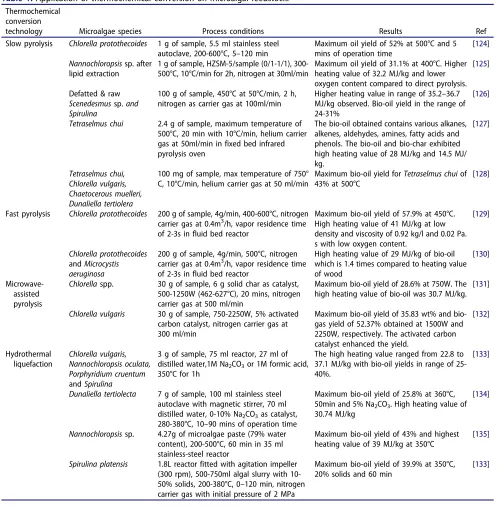
Thermochemical conversion is the thermal decom-position of microalgae biomass to obtain various types of fuel. Table 1discusses the application of thermo-chemical conversion of microalgae. Thermothermo-chemical conversion of microalgae includes pyrolysis, gasifica-tion, liquefaction and direct combustion. In pyrolysis, microalgae biomass is thermally degraded in the absence of oxygen. Pyrolysis of microalgae biomass is capable of producing medium to low calorific value biofuels in a large-scale facility. In the process of gasification, the organic substrate is converted to syn-gas by chemical biotransformation. Synsyn-gas is utilized
as an intermediate for the production of various bio-fuels or can be directly utilized in turbines and engines. An optimization study conducted by Raheem et al. utilized a high temperature tubular furnace at 703°C, heating rate of 22°C/min, biomass loading of 1.45 g and equivalent ratio of 0.29 to obtain H2 yield of 41.75 mol%, CO yield of 18.63 mol%, CO2 yield of 24.40 mol% and CH4 yield of 15.19 mol% [17]. Liquefaction is a process of bioconversion of wet microalgae biomass to bio-fuel. This process utilizes a low temperature of about 300-350 C and high pres-sure of 5–20 MPa in the presence of hydrogen and a catalyst yields bio-oil [18]. In combustion, microal-gae biomass is combusted directly in the presence of oxygen to yield heat, water, and carbon dioxide. The electricity is produced by operating a steam engine with the heat produced and the efficiency can be increased by coupling it with conventional coal oper-ated power plants [19]. Transesterification is the con-version of triglycerides found in micro-algal lipids to fatty acid methyl esters (FAME). The process involves the reaction of triglycerides with methanol to produce FAME and glycerol. The process is enhanced by either acid or alkali catalyst. Transesterification is described in detail insection 2.1.
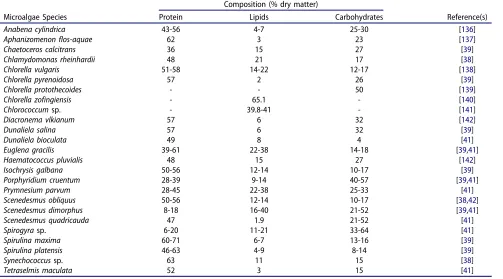
and pigments. The cell constituents of various microalgae are listed in Table 2. A bio-refinery approach is necessary for the complete valorization of microalgae biomass. The benefits provided by microalgae are noticeable at the cellular level as well. As described in Table 2, it is evident that microalgae biomass majorly encompasses a high concentration of lipids, proteins, carbohydrates. Microalgae cultivation and harvesting processes are both energy and labor-intensive activities. The harvesting and extracting of valuable components
[image:5.594.50.554.58.573.2]are expensive in terms of capital and maintenance costs. Therefore, optimization with respect to energy and expenditure for obtaining these pro-ducts is crucial [24]. The lipids extracted can be utilized for biofuel production while proteins and whole biomass can be consumed as feed in livestock rearing and aquaculture. Additionally, carbohy-drates obtained from microalgae can be fermented to produce bioethanol. The carbohydrates can be used as an alternative carbon source to lignocellu-lose biomass or simple sugars in the fermentation
Table 1.Application of thermochemical conversion on microalgal feedstock. Thermochemical
conversion
technology Microalgae species Process conditions Results Ref
Slow pyrolysis Chlorella protothecoides 1 g of sample, 5.5 ml stainless steel autoclave, 200-600°C, 5–120 min
Maximum oil yield of 52% at 500°C and 5 mins of operation time
[124]
Nannochloropsissp. after lipid extraction
1 g of sample, HZSM-5/sample (0/1-1/1), 300-500°C, 10°C/min for 2h, nitrogen at 30ml/min
Maximum oil yield of 31.1% at 400°C. Higher heating value of 32.2 MJ/kg and lower oxygen content compared to direct pyrolysis.
[125]
Defatted & raw Scenedesmussp.and Spirulina
100 g of sample, 450°C at 50°C/min, 2 h, nitrogen as carrier gas at 100ml/min
Higher heating value in range of 35.2–36.7 MJ/kg observed. Bio-oil yield in the range of 24-31%
[126]
Tetraselmus chui 2.4 g of sample, maximum temperature of 500°C, 20 min with 10°C/min, helium carrier gas at 50ml/min in fixed bed infrared pyrolysis oven
The bio-oil obtained contains various alkanes, alkenes, aldehydes, amines, fatty acids and phenols. The bio-oil and bio-char exhibited high heating value of 28 MJ/kg and 14.5 MJ/ kg.
[127]
Tetraselmus chui, Chlorella vulgaris, Chaetocerous muelleri, Dunaliella tertiolera
100 mg of sample, max temperature of 750° C, 10°C/min, helium carrier gas at 50 ml/min
Maximum bio-oil yield forTetraselmus chuiof 43% at 500°C
[128]
Fast pyrolysis Chlorella protothecoides 200 g of sample, 4g/min, 400-600°C, nitrogen carrier gas at 0.4m3/h, vapor residence time of 2-3s in fluid bed reactor
Maximum bio-oil yield of 57.9% at 450°C. High heating value of 41 MJ/kg at low density and viscosity of 0.92 kg/l and 0.02 Pa. s with low oxygen content.
[129]
Chlorella protothecoides andMicrocystis aeruginosa
200 g of sample, 4g/min, 500°C, nitrogen carrier gas at 0.4m3/h, vapor residence time of 2-3s in fluid bed reactor
High heating value of 29 MJ/kg of bio-oil which is 1.4 times compared to heating value of wood
[130]
Microwave-assisted pyrolysis
Chlorellaspp. 30 g of sample, 6 g solid char as catalyst, 500-1250W (462-627°C), 20 mins, nitrogen carrier gas at 500 ml/min
Maximum bio-oil yield of 28.6% at 750W. The high heating value of bio-oil was 30.7 MJ/kg.
[131]
Chlorella vulgaris 30 g of sample, 750-2250W, 5% activated carbon catalyst, nitrogen carrier gas at 300 ml/min
Maximum oil yield of 35.83 wt% and bio-gas yield of 52.37% obtained at 1500W and 2250W, respectively. The activated carbon catalyst enhanced the yield.
[132]
Hydrothermal liquefaction
Chlorella vulgaris, Nannochloropsis oculata, Porphyridium cruentum andSpirulina
3 g of sample, 75 ml reactor, 27 ml of distilled water,1M Na2CO3or 1M formic acid,
350°C for 1h
The high heating value ranged from 22.8 to 37.1 MJ/kg with bio-oil yields in range of 25-40%.
[133]
Dunaliella tertiolecta 7 g of sample, 100 ml stainless steel autoclave with magnetic stirrer, 70 ml distilled water, 0-10% Na2CO3as catalyst,
280-380°C, 10–90 mins of operation time
Maximum bio-oil yield of 25.8% at 360°C, 50min and 5% Na2CO3. High heating value of
30.74 MJ/kg
[134]
Nannochloropsissp. 4.27g of microalgae paste (79% water content), 200-500°C, 60 min in 35 ml stainless-steel reactor
Maximum bio-oil yield of 43% and highest heating value of 39 MJ/kg at 350°C
[135]
Spirulina platensis 1.8L reactor fitted with agitation impeller (300 rpm), 500-750ml algal slurry with 10-50% solids, 200-380°C, 0–120 min, nitrogen carrier gas with initial pressure of 2 MPa
Maximum bio-oil yield of 39.9% at 350°C, 20% solids and 60 min
industry [25]. The unsaturated long-chain fatty acids extracted from microalgae exhibit important health benefits including potential anti-inflammatory and anti-carcinogenic effect on humans [26,27]. Apart from the three major frac-tions, microalgae contains various pigments such as chlorophylls, carotenoids, phycocyanin and astax-anthin [28]. These are employed in the pharmaceu-tical and cosmetic industry [29,30].
It is evident that microalgae encase numerous ben-eficial and high-value components. Although current industrial practices only focused on single product extraction, this review discusses the current extraction practices and focuses on updating the current under-standing of processing in the microalgae bio-refinery. This review highlights the basic processes of extracting bio-active components from microalgae biomass. The value-added products explained in this review include lipids, proteins, carbohydrates and poly-unsaturated fatty acids (PUFAs). This review also emphasizes on the economic feasibility and life-cycle analysis on microalgae bio-refinery. The chal-lenges faced in implementing the bio-refinery approach to microalgae biomass are also mentioned
and future prospects of microalgae biomass feedstock are addressed.
2. Bio-refinery of microalgae
Bio-processing of microalgae is utilizing various pro-cesses to extract bioactive components such as lipids, proteins, carbohydrates. The bio-refinery approach is a process of obtaining energy and other bio-active components from microalgae biomass as feedstock. The bio-refinery of microalgae is a promising approach to alleviate global warming caused by emis-sion of polluting greenhouse gases like CO2 in the environment [31]. However, in the microalgae bio-refinery, the separation of different fragments without any significant loss of other components is crucial. This issue can be solved by employing scalable, low-cost and energy-efficient separation techniques [32]. Microalgae biomass is a great raw material for bio-refinery approach as it can yield multiple components suitable for various industries such as food, energy, pharmaceutical and nutraceutical industry.
[image:6.594.52.555.68.347.2]Regardless of the huge potential portrayed by the microalgae biomass, the current bottlenecks of an
Table 2.Microalgae cell composition.
Composition (% dry matter)
Microalgae Species Protein Lipids Carbohydrates Reference(s)
Anabena cylindrica 43-56 4-7 25-30 [136]
Aphanizomenon flos-aquae 62 3 23 [137]
Chaetoceros calcitrans 36 15 27 [39]
Chlamydomonas rheinhardii 48 21 17 [38]
Chlorella vulgaris 51-58 14-22 12-17 [138]
Chlorella pyrenoidosa 57 2 26 [39]
Chlorella protothecoides - - 50 [139]
Chlorella zofingiensis - 65.1 - [140]
Chlorococcumsp. - 39.8-41 - [141]
Diacronema vlkianum 57 6 32 [142]
Dunaliela salina 57 6 32 [39]
Dunaliela bioculata 49 8 4 [41]
Euglena gracilis 39-61 22-38 14-18 [39,41]
Haematococcus pluvialis 48 15 27 [142]
Isochrysis galbana 50-56 12-14 10-17 [39]
Porphyridium cruentum 28-39 9-14 40-57 [39,41]
Prymnesium parvum 28-45 22-38 25-33 [41]
Scenedesmus obliquus 50-56 12-14 10-17 [38,42]
Scenedesmus dimorphus 8-18 16-40 21-52 [39,41]
Scenedesmus quadricauda 47 1.9 21-52 [41]
Spirogyrasp. 6-20 11-21 33-64 [41]
Spirulina maxima 60-71 6-7 13-16 [39]
Spirulina platensis 46-63 4-9 8-14 [39]
Synechococcussp. 63 11 15 [38]
algal bio-refinery needs to be highlighted. The current industrial microalgae biomass production is roughly 15,000 tons/year [2]. This is very low compared to the demands required in the industry. A huge factor gov-erning this low production rate is the high cost involved in cultivation, harvesting and extraction. Therefore, microalgae is currently employed in extracting high-value niche products [33]. Bio-fuel production is on the lower end of the spectrum due to the strict competition with fossil fuels. The price of bio-fuel doesn’t necessarily have to be lower than its nonrenewable counterpart. However, the biofuel pro-duction needs to be performed at a lower energy expenditure. Unfortunately, this constraint has not been successfully overcome. Many studies have been conducted in investigating the production of value-added products from microalgae [2]. The major stages of microalgae bio-refinery are upstream and down-stream processing. The updown-streaming process mainly consists of microalgae cultivation. The raw materials involved in the upstream process are nutrients, water, light and CO2[24]. The nutrients such as phosphor-ous and nitrogen govern the growth of microalgae. An optimum amount of nutrient supply will ensure higher biomass production and a shorter maturation period [34]. The source of illumination also affects the growth rate of microalgae. Several studies were con-ducted which confirmed that illumination via artificial lighting such as LED is more effective than direct sunlight for microalgae cultivation [35,36].
The downstream processing of microalgae bio-mass consists of harvesting, extraction and
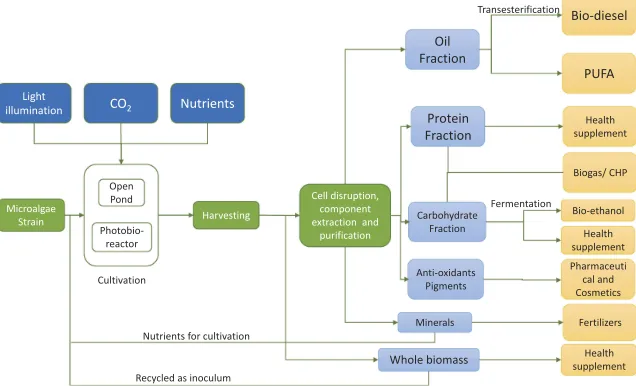
purification of the value-added products. The con-ventional extraction techniques include mechani-cal methods such as bead beating and blending, high-pressure homogenization and ultrasound and chemical methods such as solvent extraction. Other processes such as freezing-thawing, auto-claving and supercritical fluids have also been uti-lized [37]. These processes are complex, involve multiple steps and are costly. The economic bur-den incurred due to these processes is huge and extraction of various high-value products from microalgal biomass should be viable at industrial scale [25]. The microalgae biomass can be majorly divided in three fractions, including oil, protein and carbohydrate fraction. Figure 2 focuses on possible product streams to obtain numerous pro-ducts from a single energy flow. The by-propro-ducts or residual wastes obtained can be either recycled in the culture medium as nutrients or used to produce power in the form of combined heat and power (CHP) plant in the bio-refinery.
2.1. Lipids fraction
Microalgae species such as Chlorella vulgaris, Scenedesmus spp. and Spirogyra sp. are reported to accumulate lipids in the range of 15-40% of their dry matter [38–42]. However, at extreme environments microalgae can accumulate lipids as high as 70-90% of their dry matter [43,44]. The accumulation of higher lipid content depends on the stress levels imposed on the microalgae
Microalgae Strain
Photobio-reactor
Open Pond
Harvesting
Nutrients CO2
Light illumination
Cell disruption, component extraction and
purification
Oil Fraction
Protein Fraction
Carbohydrate Fraction
Whole biomass
Bio-diesel
PUFA
Health supplement
Bio-ethanol
Health supplement
Cultivation
Health supplement Anti-oxidants
Pigments
Pharmaceuti cal and Cosmetics Transesterification
Biogas/ CHP
Fermentation
Minerals Fertilizers
[image:7.594.139.457.522.715.2]Recycled as inoculum Nutrients for cultivation
culture while cultivation [9]. When the culture medium contains a high carbon-nitrogen (C/N) ratio, the nitrogen is exhausted faster and lipids are accumulated by microalgae due to the absence of nitrogen in the culture broth [45,46]. The lipid productivity vastly depends on high culture pH, high salinity, high temperature and limited nitro-gen source [47]. The lipids from microalgae are classified into two categories. The first type con-tains fatty acids with 14–19 carbon atom chains while the second one contains more than 19 car-bon atom chains. The former type is usually bio-transformed into biodiesel as it is saturated fatty acid without any double bonds in the hydrocarbon chain. While the latter one is utilized in food industry as poly-unsaturated fatty acids (PUFAs) as it is unsaturated and contains double bonds in the hydrocarbon chain. Lipid productivity of microalgae is considered to be higher than that of traditional oil-crops. Table 3 lists the typical lipid yield and amount of resources required for it. It is evident from Table 3 that lipids from microalgae biomass are considered favorites for production of biodiesel.
Lipids are commercially extracted from micro-algae via solvents, ultrasonication, electrolysis or microwaves. These processes are energy intensive and utilize hazardous solvents. These methods also have low selectivity and require high temperature [48–50]. There are various solvent-free methods, which are environment-friendly and simple. One of the most promising technique is extraction via super-critical carbon dioxide [51]. This method does not require hazardous solvents and is very
selective to the nonpolar lipid fraction of micro-algae. This method also allows for further compo-nent extraction from residual cell debris [25]. The CO2 engaged in this technique can be recycled in the process. However, due to the super-critical nature of this technique, high capital and main-tenance costs are levied on the production. The high costs can be neutralized by converting the remaining cell debris to fertilizer, fish feed or recycled back into microalgae cultivation for higher productivity as this method is solvent-free. The fragment of lipids that is required for biodiesel production is triglycerides (TAGs). These TAGs are transformed to biodiesel by transesterification [52]. The process of transesterification is carried out by reacting methanol with microalgae lipids to obtain glycerol and fatty acid methyl esters (FAME). In the mass balance of transesterification process, 3 moles of FAME and 1 mole of glycerol are obtained with 1 mol of TAG and 3 moles of methanol [53]. The process of transesterification is accelerated by supplementing with an acid catalysis. Alkali-catalyzed reaction is 4000 times faster than the acid-catalyzed reaction [54]. Alkalis such as NaOH and KOH are usually employed in the alkali-catalyzed reaction. However, a saponification reaction might occur due to the occurrence of free fatty acids in the TAGs. Therefore, a lipid-rich high-quality biomass is necessary to pre-vent such reaction [55]. The upstream processing of microalgae biomass accounts for 65-70% of the bio-diesel production process. Acid-catalyzed reactions have slow reaction rates and lower yields compared to alkali catalyzed ones [56]. Due to the slower reac-tion rate and longer reacreac-tion time, acid catalysis is coupled with a base catalyst in a two-step process [57]. In this two-step process, free fatty acids (FFA) are converted to methyl esters via acid catalysts fol-lowed by conversion of residual triglycerides to methyl-esters by alkali-catalysts [58–61]. This process is beneficial as it can utilize low-quality feedstock.
[image:8.594.52.288.576.729.2]Biodiesel production from microalgae biomass is advantageous in various aspects; however, it is not as simple as its traditional counterparts. The processes involved in extraction and purification are complex. Recently numerous studies have been carried out to reduce the intricacies involved in harvesting, extrac-tion and further bio-diesel producextrac-tion. An increase in FAME yield up to 84% was observed by using a wet microalgae biomass with 50% (w/w) water content
Table 3.Biodiesel production and characteristics of various sources. Adapted from [94,138].
Type of source
Biomass Oil content (wt
%)
Yield (L oil/ ha year)
Land required (m2/kg biodiesel year)
Biodiesel production (kg/ha year)
Corn 44 172 66 152
Hemp 33 363 31 321
Soybean 18 636 18 562
Jatropha 28 741 15 656
Camelina 42 915 12 809
Rapseed 41 974 12 862
Sunflower 40 1070 11 946
Castor 48 1307 9 1156
Palm Oil 36 5366 2 4747
Microalgae 30 58,700 0.2 51,927
Microalgae 50 97,800 0.1 86,515
[62]. The co-solvent used was methanol. Another study conducted recently utilized microalgae culture with 90% (w/w) water content to produce biodiesel using hexane and methanol in excess as co-solvents [63]. This process eliminated the extraction process, producing FAME via direct transesterification. A similar study was successful in achieving a 97.3% conversion rate of biodiesel by utilizingChlorella vul-gariswith 71% of water content [64].
Poly-unsaturated fatty acids (PUFAs) are part of human cell membrane and function as energy storing compounds and cell signaling molecules [65]. Humans are capable of synthesizing these lipids, how-ever some of the essential lipids must be obtained externally with the help of dietary fats or oils. These lipids are also known as glyco- or phospholipids. They contain two fatty acids chains and a polar head group. The most noteworthy group of phospho- or glycoli-pids is long chain poly-unsaturated fatty acids (LC-PUFA) [66]. LC-PUFA are fatty acids comprising of three or more double bonds in a chain of 18 or more carbon atoms [67]. They are generally classified in two families, namely, linolenic acids (ω-3 fatty acids) and
α-linolenic acids (ω-6 fatty acids). Among the two,ω-3 fatty acids have been reported to have numerous health benefits and has been incorporated in food products [68]. The essential fatty acids (EFA) inω-3 PUFA family areα-linolenic acid (ALA; 18:3), doco-sapentaenoic acid (DPA; 22:5), docosahexaenoic acid (DHA; 22:6) and eicosapentaenoic acid (EPA; 20:5). The LC-PUFA composition of various microalgae species are described inTable 4.
Consumption of ω-3 fatty acids have shown effectiveness in the prevention of various diseases such as arthritis, asthma, cancer, cardiovascular disorders, inflammatory bowel disorders, depres-sion, schizophrenia and type-2 diabetes [67]. The Food and Drug Administration (FDA) has recog-nized that ω-3 PUFA containing foods, particu-larly DHA and EPA, to reduce the risk of coronary heart diseases [69]. DHA plays an important role
in development of infants, especially brain and retina [70]. Dietary supplementation with DHA is considered as a vital nutrient during pregnancy and breastfeeding as it actively contributes to the development of nervous system of the young fetus. It can also affect the cognitive function and visual acuteness of the child [71].
The main source of LC-PUFA is fish and fish oil. Due to the potential contamination of fishes with toxins, several other alternatives are required. Over-exploitation of fishes, unpleasant odor and taste and their oxidative instability are other fac-tors for this shift [67]. The primary producers of LC-PUFA are marine microalgae and contain these fatty acids in the purest form. They are accumulated through various tropic food chains. During this process, various changes occur in the algal lipid content thus affect the dietary make-up of the mollusks, shells, larvae and fishes [72]. Due to the rapid global warming and ocean acidifica-tion, there are reports of reduced supply of these fatty acids in higher food chain [73]. Therefore,
extracting LC-PUFA from microalgae is
a promising alternative. Ryckebosch et al., reported that to achieve daily ω-3 PUFA intake of 250 mg, 0.8 g of fish oil is required. The amount of Nannochloropsis sp. oil required is in range of 1.3–1.4 g oil per day [74]. This definitely shows the potential of microalgae as an alternative to fish oil (especially for vegetarians/vegans) as the required amount is less than half tablespoon a day.
2.2. Carbohydrate fraction
[image:9.594.55.543.665.732.2]Microalgae are reported to contain carbohydrates as high as 50% dry matter (Table 2). The carbohydrates secreted by microalgae majorly consist of monosac-charides such as glucose, fructose, mannose, galactose and polysaccharides such as starch and cellulose. The glucose and starch extracted from microalgae are
Table 4.LC-PUFA composition of various microalgae species. Adapted from [143].
LC-PUFA
Chlorella vulgaris (green)
Chlorella vulgaris (orange)
Diacronema vlkianum
Haematococcus pluvialis
Isochrysis galbana
Spirulina maxima
ALA 661 ± 12 3665 ± 1 14 ± 1 3981 ± 2 421 ± 5 40 ± 0.1
DHA 16 ± 1 80 ± 1 836 ± 41 - 1156 ± 40
-EPA 19 ± 1 39 ± 1 3212 ± 57 579 ± 6 4875 ± 108
utilized in the production of biofuels such as biohy-drogen and bioethanol [75]. However, the polysac-charides majorly function as structural molecules and for storage purposes. Microalgal polysaccharides are reported to activate the function of macrophages and induce production of nitric oxide, reactive oxida-tive species and various cytokines thus modulating the immune system [76]. These macrophages are able to secrete chemokines and cytokines such as tumor necrosis factor (TNF-α) and interleukin (IL-6, IL-β). These compounds signal the inflammatory and immunomodulation reactions [77]. Tannin-Spitz et al., reported that major function of cell-wall sulfated polysaccharide obtained from red microalgae Porphyridiumsp. is to provide protection from exter-nal oxidative stresses [78]. Matsui et al., reported that sulfated polysaccharides obtained fromPorphyridium sp. have an ability to hinder the adhesion and migra-tion of polymorphonuclear leukocytes thus exhibiting anti-inflammatory properties [79]. The immunomo-dulating properties of sulfated polysaccharides from Haematococcus lacustrisare evident as they stimulate the synthesis of pro-inflammatory cytokine from mur-ine macrophages. Microalgal sulfated polysaccharides also exhibit wide spectrum antiviral activity due to their interactions with surface molecules of virus cells. This not only inhibits the growth of host-type cells such as virus but also blocks internal cellular fusion [80]. Therefore, sulfated polysaccharides have various medical applications due to their pharmaceu-tical and therapeutic benefits including antitumor, anti-inflammatory, antioxidant and antiviral activities [29].Table 5summarizes the pharmacological proper-ties of microalgae.
Apart from pharmaceutical benefits, microalgal carbohydrates are mainly utilized for bioethanol pro-duction by fermentation. In that case, microalgae are hydrolyzed using acids or alkalis to produce mono-sugars in the saccharification process [81], which is
usually the rate-limiting step in bioethanol production [82]. The hydrolysis of complex polysaccharides such as cellulose and starch is mainly carried by chemical methods or enzymatic methods. Chemical hydrolysis or acid-catalyzed hydrolysis is rapid and the chemicals used are cheaper than enzymes; however, they create various residual byproducts that potentially inhibit the next step of fermentation. On the other hand, enzy-matic hydrolysis requires less energy but it is highly selective and thus requires high amounts of enzymes for effective hydrolysis [83]. The monomers obtained after saccharification are fermented to ethanol using yeast, bacteria or fungi. The conventional process includes separate hydrolysis and fermentation or simultaneous hydrolysis and fermentation, which involve different micro-organisms and unit opera-tions. Several studies have also been conducted for the production of bioethanol by hydrolysis and fer-mentation by microalgae itself [84,85]. Hirano et al. [86] observed that intracellular ethanol production is possible in Chlamydomonas reinhadtii. The culture was kept under anaerobic and dark conditions. This process also eliminated the expensive step of micro-algae harvesting, but the ethanol yield and production rate were lower than the conventional two-step process [82].
[image:10.594.51.545.626.733.2]The polysaccharides extracted from microal-gae are utilized as stabilizers, thickening agents, emulsifiers, cosmetics, water-soluble lubricants, textiles, clinical drugs and in food and beverage industry [87]. The extracellular polysaccharides found in microalgae are beneficial with respect to bio-processing as cell disruption is not neces-sary to extract these polysaccharides. Despite the multiple advantages of microalgal polysacchar-ides, it has not been successful in the commer-cial market due to the cheaper alternatives like xanthan gum, agar, guar gum and carragee-nan [88].
Table 5.Pharmacological effects of micro-algal carbohydrates.
Microalgae species Type of carbohydrate Pharmacological effects Ref
Chlorella stigmatophora Crude polysaccharide Anti-inflammatory, immuno-modulating [144]
Chlorella vulgaris Crude polysaccharide Anti-oxidant [145]
Gyrodinium impudicum KG-03 Sulfonated polysaccharide Anti-viral [80,146]
Haematococcus lacustris Water-soluble polysaccharide Immuno-stimulating [77] Phaeodactylum tricornutum Crude polysaccharide Anti-inflammatory, immuno-modulating [144]
Porphyridiumsp. Crude polysaccharide Anti-oxidant [78]
Sulfonated polysaccharide Anti-inflammatory [79]
Rhodella reticulata Extracellular polysaccharide Anti-oxidant [147]
2.3. Protein fraction
The microalgae biomass consists of 40-70% of pro-teins, although their quality is determined by its amino acids composition. Human body requires nine essential amino acids (EAA) which are not synthesized in-situ. Conventional sources of proteins include meat, dairy, eggs, pulses and soybean. Although compared to the conventional sources, microalgae The potential of microalgae biomass to produce high-value bio-active components enables it as a promising raw material for bio-processing. This review focused on obtaining various products from microalgae via the bio-refinery approach. The lipids extracted can be utilized as health supplements in form of PUFA in addition to biodiesel production; while proteins and carbohydrates can be used in diets and in the fermentation industry, respectively. Furthermore, the pharmaceutical and cosmetic industry rely heavily on the niche items extracted from microalgae such as pigments and vitamins. Various technologies are being investigated for obtaining the components with a high production rate, ease of operation, higher yield and lower cost. However, these processes are still in the infant stage. Life-cycle analysis and economic assessment of cur-rent large-scale processes with a single product or two products system from microalgae deem it unfea-sible. The possibility of producing multiple bio-active components from a single microalgae strain has attracted the attention of researchers to optimize and streamline the material and energy balances. However, with current downstream processing tech-niques, multiple product extraction is not econom-ical as the whole bio-refinery creates more emissions. This issue can be tackled by research and develop-ment of simple and cheap downstream processing technologies. Hence, in-depth investigation and further research in microalgae bio-refinery are still necessary prior to commercialization.
reported to be above-par source with respect to EAA composition. It has the potential to meet the protein requirements for the growing population as it uses the least amount of land while producing a higher yield compared to traditional meat sources. A Life-Cycle Assessment (LCA) con-ducted by de Vries et al., concluded that micro-algae-based food products require less than 2.5 sqm of land per kg of protein whereas, pork,
chicken and beef require 47–64, 42–52 and 144–258 sqm of land per kg of protein, respec-tively, [89,90]. Additionally, microalgae can be cultivated in non-arable land and potentially use wastewater or seawater instead of freshwater. Their raw material requirements are lower than plant-based proteins such as pea protein, soybean protein [91]. Proteins are extracted from microal-gae via various methods. The conventional extrac-tion process utilized filtraextrac-tion or centrifuge to obtain the cellular components from soluble com-pounds in the liquid phase. These processes resulted in the loss of functional properties of extracted proteins. Although, utilization of solvent extraction, retains the functional properties of the proteins. In this process, the soluble proteins are obtained by liquid-liquid extraction after cell-disruption [24]. The proteins are solubilized in organic solvents containing surfactants. The pro-teins are transferred from the aqueous phase to the organic phase via electrostatic interactions between proteins and surfactants [92]. The para-meters driving this process are pH, concentration and type of salts utilized and type of organic sol-vents [25]. There has been an attempt to obtain proteins via super-critical CO2 extraction which eliminated the use of toxic solvents [93].
3. Life-cycle analysis (LCA) and techno-economic analysis
understand the feasibility of microalgae as a feedstock. These tools provide an understanding of current scenarios and generate various path-ways to achieve commercial industrialization of microalgal bio-refineries.
The evaluation of LCA is conducted on the basis of two indicators, namely, Global Warming Potential and Net Energy Ratio. Global Warming Potential or GWP is quantified by the amount of CO2 emitted per unit of energy. Ideally, all the greenhouse gases are considered for this quantifi-cation but literature data are limited to CO2 emis-sions. Positive results of biofuel production from microalgae are however limited to hydrothermal liquefaction at carbon credit of −220 g CO2-eq MJ-1 compared to conventional diesel with carbon credit of +15 g CO2-eqMJ-1 [95]. The Net Energy Ratio (NER) is evaluated based on the total energy flow of the process. It is the ratio between the energy required to obtain the final products from microalgae and the total energy stored in the final product. The life-cycle analysis has been carried out in various studies but is limited to biofuel or bioenergy production from microalgae. Jorquera et al. [96] conducted an LCA on biomass produc-tion of Nannochloropsis sp. and evaluated the NER for three different cultivation setups. The NER values were obtained as 8.34, 4.5 and 0.2 for open/raceway ponds, flat reactors, and tubular reactors. However, this study was only based on biomass cultivation and no further product extrac-tion. On the other hand, Tredici et al. [97] con-ducted LCA of Tetraselmis suecica cultivation with harvesting for biomass production. The study compared NER of flat panel bioreactors with and without a photovoltaic panel. The NER of a bioreactor with the photovoltaic panel was 1.73 compared to 0.82 without the external renewable energy supply. However, these values are still not sufficient when compared to NER of 3.71, 4.11 and 7.57 for soybean, corn, and cassava, respectively.
Recently, Bennion et al. [98] studied NER values of microalgae biofuel production from cultivation until the transportation of biofuel to the fuel sta-tion. The NER values in this study ranged from 0.44 to 2. Although these values were high, they are not sufficient when compared to a NER value of 5.55 for fossil fuels. However, the NER values of biofuel production from microalgae fluctuate due
to different system boundaries and are not com-parable to the conventional fossil fuel NER values. Chowdhury et al. [99] conducted LCA on four scenarios based on energy production from micro-algae by utilizing dairy waste as a substrate. The four cases studied include anaerobic digestion, biodiesel production, pyrolysis, and enzymatic hydrolysis. These scenarios resulted in NER values of 0.35, 0.48, 0.50 and 0.68, respectively. The authors concluded that the production of biofuel alone is not feasible and thus bio-refinery approach is necessary. An LCA study conducted by Soh at al [100]. Based on energy consumption, greenhouse gas emissions and the potential of eutrophication concluded that optimizing extrac-tion from a single fracextrac-tion of microalgae does not result in a positive environmental outcome. It is required to undergo further post-lipid processing of the residual microalgae feedstock to extract valuable niche components such as pigments and PUFA while the starch fraction should be digested anaerobically. This could lead to a much pleasant outcome rather than single product extraction.
In contrast, a bio-refinery economic assessment con-ducted by Lam et al. [103] predicted that the highest total revenue generated from microalgae biomass is around€31 per kg of dry weight compared to the production cost of €6-7 per kg of dry weight. Although these values can only be achieved when the cost for downstream processing is minimized. Apparently, developing simpler and cost-effective downstream processing techniques is critical to achieve the economic feasibility of microalgae bio-refinery systems.
4. Challenges and future prospect
The techno-economic evaluation concluded that with the existing downstream-processing techni-ques, the microalgae bio-refinery approach is not sustainable and feasible. The major hurdle faced by the microalgae cultivation process is the limited bio-mass concentration in the matured algae culture. The maximum biomass concentration in the auto-trophic microalgae culture is limited to around 3 g/L compared to 30–100 g/L biomass concentration of heterotrophic bacteria. Microalgae cultivation is also expensive compared to the bacterial fermentation due to the utilization of photobioreactors (PBRs) equipped with artificial light for optimum cultivation parameters. The low biomass concentration of microalgal culture coupled with high downstream processing costs (around 40% of total cost) hinders the success of the bio-refinery approach for effective extraction of all valuable components from micro-algae. Gifuni et al. [104] analyzed various studies conducted on microalgae bio-refinery and con-cluded that cascade extraction was the most suitable approach for the effective utilization of microalgae components. Various studies conducted using cas-cade extraction utilized a novel approach of extract-ing high-value-added components such as lutein, astaxanthin and carotene followed by recovery of other by-products such as proteins and carbohy-drates [105–108]. In this approach, the costs of microalgae cultivation and extraction are offset by the high-value pigments while extraction of the remaining fraction can be profitable. Ansari et al. [109] conducted a bio-refinery study of microalgae by extracting proteins with aqueous extraction tech-niques preceded by extraction of high-value pro-ducts such as pigments and PUFA. The study was
conducted with cascade extraction of proteins fol-lowed by lipids and carbohydrates. Utilization of mild liquid-based extraction resulted in limited damage to other fractions. This study concluded that recovery of the maximum number of products from microalgae is dependent on the severity of the extraction technology and utilization of wet micro-algae paste which reduces the drying costs.
Current large-scale open-pond or lagoon micro-algae cultivation and biomass production are based on harvesting microalgae from natural habi-tations [91]. They are cheaper to install and easy to run; however, they have high chances of predator contamination, irregular growth due to varying light and temperatures [115]. The future of micro-algae production might be dependent on recently developed compact large-scale photobioreactors (PBRs). These PBRs can be operated at optimized parameters with a minimum risk of contamina-tion. However, they are expensive and in small-scale currently [116]. The scale-up of such systems is hindered by the inefficient use of light by the microalgae. Recent studies have overcome this issue by designing special diodes and optical fibers to efficiently provide internal illumination to the PBRs [117,118]. Despite all these issues with scale-up of PBRs, extraction of high value-added bio-components and nutraceuticals is still feasible with the current PBRs. However, it is too small and unprofitable for biofuel production [67].
Addition of bioactive components extracted from microalgae to commonly consumed food pro-ducts can ensure nutritional benefits to majority of the population. Recently microalgae cells have been used as ingredients in various food products includ-ing biscuits, cookies and pasta. Gouveia et al. and Raymundo et al. [119,120]. reported promising changes in the anti-oxidizing activity of food emul-sions when certain microalgae species were infused in it. Incorporation of microalgae with dairy pro-ducts has been successful as well [121]. It is reported that the addition ofArthrospiraspp. stimulates pro-biotic growth in fermented milk and yogurt [122]. The presence of vitamins, minerals and other trace metals in microalgae enhances the growth of pro-biotic bacteria [121,122]. Cookies and biscuits on the other hand are much simpler products to deli-ver bio-active components of microalgae. They have higher acceptance in the general population due to their appearance, taste, texture and are easier to store and transport. There have been successful attempts of adding microalgae to pasta. Fradique et al. [123]. reported that microalgae-added pasta presented very appealing colors and had a similar appearance to pasta cooked with vegetables. The use of microalgae enhances the sensory and nutri-tional quality of the pasta. Microalgae, if utilized to
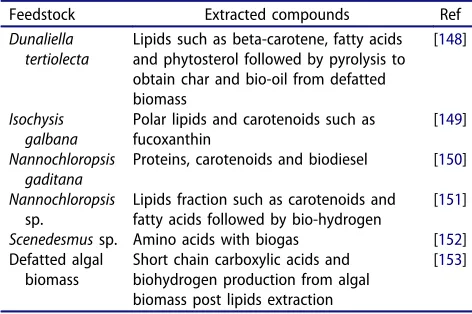
[image:14.594.306.542.62.219.2]its full potential, can benefit human population immensely in the long run. It is useful in many ways from the production of biofuels, animal feed, human food products, cosmetics, nutraceutical and pharmaceutical industry. Although, it is expensive to cultivate if only one product is extracted. Until today, various studies have been conducted to con-duct the bio-refinery approach on microalgae. Table 6 summarizes an overview of the studies conducted till date. Although, for sustainability and profitability of microalgae cultivation, further research in an integrated bio-refinery approach is required which will extract multiple products including biofuels, pigments, PUFAs and antioxi-dants [25].
5. Conclusions
The potential of microalgae biomass to produce high-value bio-active components enables it as a promising raw material for bio-processing. This review focused on obtaining various pro-ducts from microalgae via the bio-refinery approach. The lipids extracted can be utilized as health supplements in the form of PUFA in addi-tion to biodiesel producaddi-tion; while proteins and carbohydrates can be used in diets and in fer-mentation industry, respectively. Furthermore, the pharmaceutical and cosmetic industries rely heavily on the niche items extracted from micro-algae such as pigments and vitamins. Various technologies are being investigated for obtaining the components with a high production rate, ease of operation, higher yield and lower cost. However, these processes are still in the infant
Table 6.List of bio-refinery studies conducted on microalgae.
Feedstock Extracted compounds Ref
Dunaliella tertiolecta
Lipids such as beta-carotene, fatty acids and phytosterol followed by pyrolysis to obtain char and bio-oil from defatted biomass
[148]
Isochysis galbana
Polar lipids and carotenoids such as fucoxanthin
[149]
Nannochloropsis gaditana
Proteins, carotenoids and biodiesel [150]
Nannochloropsis sp.
Lipids fraction such as carotenoids and fatty acids followed by bio-hydrogen
[151]
Scenedesmussp. Amino acids with biogas [152] Defatted algal
biomass
Short chain carboxylic acids and biohydrogen production from algal biomass post lipids extraction
stage. Life-cycle analysis and economic assess-ment of current large-scale processes with a single product or two products system from microalgae deem it unfeasible. The possibility of producing multiple bio-active components from a single microalgae strain has attracted the atten-tion of researchers to optimize and streamline the material and energy balances. However, with cur-rent downstream processing techniques, multiple product extraction is not economical since the whole bio-refinery creates more emissions. This issue can be tackled by research and development of simple and cost-effective downstream proces-sing technologies. Hence, in-depth investigation and further research in microalgae bio-refinery are still necessary prior to commercialization.
Research Highlights
Bio-refinery approach can be applied for microalgae biomass Lipids, proteins and carbohydrates are major cell consti-tuents of microalgae
Microalgae biomass can be employed in pharmaceutical, nutraceutical, fermentation, feed and fuel industry
Current challenges and future aspects in microalgae bio-refinery approach are reviewed
Acknowledgements
This work was supported by the Fundamental Research Grant Scheme, Malaysia [FRGS/1/2019/STG05/UNIM/02/2]; the Ministry of Science and Technology, Malaysia [MOSTI02-02-12-SF0256]; and the Prototype Research Grant Scheme, Malaysia [PRGS/2/2015/SG05/UNIM/03/1]. The authors also gratefully acknowledge the financial support received from Taiwan’s Ministry of Science and Technology under grant number 107-3113-E-006 −009, 107-2221-E-006 −112 -MY3, 107-2621-M-006−003, and 107-2218-E-006−016.
Disclosure statement
No potential conflict of interest was reported by the authors.
Funding
This work was supported by the Fundamental Research Grant Scheme, Malaysia [FRGS/1/2019/STG05/UNIM/02/2]; the Ministry of Science and Technology, Malaysia [MOSTI02-02-12-SF0256]; and the Prototype Research Grant Scheme, Malaysia [PRGS/2/2015/SG05/UNIM/03/1]. The authors also gratefully acknowledge financial support received from Taiwan’s Ministry of Science and Technology
under grant number 107-3113-E-006 −009, 107-2221-E-006
−112 -MY3, 107-2621-M-006 −003, and 107-2218-E-006
−016;Ministry of Science and Technology, Taiwan [107-3113-E-006 −009, 107-2221-E-006 −112 -MY3, 107-2621-M-006−003, and 107-2218-E-006−016];
ORCID
Pau-Loke Show http://orcid.org/0000-0002-0913-5409
Jo-Shu Chang http://orcid.org/0000-0003-3469-9553
References
[1] Pimentel D, Marklein A, Toth MA, et al. Food versus biofuels: environmental and economic costs. Hum Ecol.2009;37:1.
[2] Hariskos I, Posten C. Biorefinery of microalgae – opportunities and constraints for different produc-tion scenarios. Biotechnol J.2014;9:739–752. [3] Hill J, Nelson E, Tilman D, et al. Environmental,
economic, and energetic costs and benefits of biodie-sel and ethanol biofuels. Proc Natl Acad Sci.
2006;103:11206–11210.
[4] Ajanovic A. Biofuels versus food production: does biofuels production increase food prices? Energy.
2011;36:2070–2076.
[5] Dias MOS, Junqueira TL, Cavalett O, et al. Cogeneration in integrated first and second genera-tion ethanol from sugarcane. Chem Eng Res Des.
2013;91:1411–1417.
[6] Abels C, Carstensen F, Wessling M. Membrane pro-cesses in biorefinery applications. J Memb Sci.
2013;444:285–317.
[7] Menon V, Rao M. Trends in bioconversion of ligno-cellulose: biofuels, platform chemicals & biorefinery concept. Prog Energy Combust Sci.2012;38:522–550. [8] Lee RA, Lavoie J-M. From first- to third-generation biofuels: challenges of producing a commodity from a biomass of increasing complexity. Anim Front.
2013;3:6–11.
[9] Gour RS, Bairagi M, Garlapati VK, et al. Enhanced microalgal lipid production with media engineering of potassium nitrate as a nitrogen source. Bioengineered.2018;9:98–107.
[10] Ji M-K, Abou-Shanab RAI, Kim S-H, et al. Cultivation of microalgae species in tertiary munici-pal wastewater supplemented with CO2 for nutrient removal and biomass production. Ecol Eng.
2013;58:142–148.
[11] Dillschneider R, Steinweg C, Rosello-Sastre R, et al. Biofuels from microalgae: photoconversion efficiency during lipid accumulation. Bioresour Technol.
2013;142:647–654.
and extractions of biofuels and co-products. Renewable Sustainable Energy Rev.2010;14:557–577. [13] Gabriel Acien Fernandez F, González-López CV, Fernández Sevilla JM, et al. Conversion of CO 2 into biomass by microalgae: how realistic a contribution may it be to significant CO 2 removal?. Appl Microbiol Biotechnol.
2012;96:577–586.
[14] Suganya T, Varman M, Masjuki HH, et al. Macroalgae and microalgae as a potential source for commercial applications along with biofuels produc-tion: A biorefinery approach. Renewable Sustainable Energy Rev.2016;55:909–941.
[15] Show KY, Yan Y, Ling M, et al. Hydrogen production from algal biomass – advances, challenges and pro-spects. Bioresour Technol.2018;257:290–300. [16] Melis A, Zhang L, Forestier M, et al. Sustained
photo-biological hydrogen gas production upon reversible inactivation of oxygen evolution in the green alga Chlamydomonas reinhardtii. Plant Physiol.
2000;122:127–136.
[17] Raheem A, Wan Azlina WAKG, Taufiq Yap YH, et al. Optimization of the microalgae Chlorella vul-garis for syngas production using central composite design. RSC Adv.2015;5:71805–71815.
[18] Goyal HB, Seal D, Saxena RC. Bio-fuels from ther-mochemical conversion of renewable resources: A review. Renewable Sustainable Energy Rev.
2008;12:504–517.
[19] Kadam K. Environmental implications of power gen-eration via coal-microalgae cofiring. Energy.
2002;27:905–922.
[20] Cabanelas ITD, Arbib Z, Chinalia FA, et al. From waste to energy: microalgae production in wastewater and glycerol. Appl Energy.2013;109:283–290. [21] Baicha Z, Salar-García MJ, Ortiz-Martínez VM, et al.
A critical review on microalgae as an alternative source for bioenergy production: A promising low cost substrate for microbial fuel cells. Fuel Process Technol.2016;154:104–116.
[22] Cheah WY, Show PL, Ling TC, et al. Biosequestration of atmospheric CO2 and flue gas-containing CO2 by microalgae. Bioresour Technol.2015;184:190–201. [23] Khoo HH, Koh CY, Shaik MS, et al. Bioenergy
co-products derived from microalgae biomass via ther-mochemical conversion – life cycle energy balances and CO2 emissions. Bioresour Technol.
2013;143:298–307.
[24] Vanthoor-Koopmans M, Wijffels RH, Barbosa MJ, et al. Biorefinery of microalgae for food and fuel. Bioresour Technol.2013;135:142–149.
[25] Wayne K, Ying J, Loke P, et al. Bioresource Technology Microalgae biorefinery : high value products perspectives. Bioresour Technol.2017;229:53–62. [26] Jaswir I. Anti-inflammatory compounds of macro
algae origin: A review. J Med Plants Res.
2011;5:7146–7154.
[27] Jha D, Jain V, Sharma B, et al. Microalgae-based Pharmaceuticals and Nutraceuticals: an Emerging Field with Immense Market Potential. Chem Bio Eng Rev.2017;4:257–272.
[28] Begum H, Yusoff FMD, Banerjee S, et al. Availability and Utilization of Pigments from Microalgae. Crit Rev Food Sci Nutr.2016;56:2209–2222.
[29] Yen H-W, Hu I-C, Chen C-Y, et al. Microalgae-based biorefinery – from biofuels to natural products. Bioresour Technol.2013;135:166–174.
[30] Wichuk K, Brynjólfsson S, Fu W. Biotechnological production of value-added carotenoids from microalgae. Bioengineered.2014;5:204–208.
[31] Juan JC, Kartika DA, Wu TY, et al. Biodiesel produc-tion from jatropha oil by catalytic and non-catalytic approaches: an overview. Bioresour Technol.
2011;102:452–460.
[32] González-Delgado Á-D, Kafarov V. MICROALGAE BASED BIOREFINERY: ISSUES TO CONSIDER. Tecnol Y Futur.2011;4:5–22.
[33] Benemann J. Microalgae for Biofuels and Animal Feeds. Energies.2013;6:5869–5886.
[34] Wang X, Lin L, Lu H, et al. Microalgae cultivation and culture medium recycling by a two-stage cultiva-tion system. Front Environ Sci Eng.2018;12:1–14. [35] Hsia S-Y, Yang S-K. Enhancing Algal Growth by
Stimulation with LED Lighting and Ultrasound. J Nanomater.2015;2015:1–11.
[36] Aravantinou AF, Manariotis ID. Effect of operating conditions on Chlorococcum sp. growth and lipid production. J Environ Chem Eng.2016;4:1217–1223. [37] Jacob-Lopes E, Merida LGR, Queiroz MI, et al. Microalgae biorefineries. In: Jacob-Lopez E, Zepka LQ, editos. Biomass Production and Uses. InTech Open;2015. p. 81–106.
[38] Spolaore P, Joannis-Cassan C, Duran E, et al. Commercial applications of microalgae. J Biosci Bioeng.2006;101:87–96.
[39] Gouveia L, Batista AP, Sousa I, et al. In: Papadopoulos KN, editor. Microalgae in novel food product. In: Food chemistry research developments. New York, NY: Nova Science Publishers, Inc.;2008. p. 1–37.
[40] Mata TM, Nio Martins AA, Caetano NS. Microalgae for biodiesel production and other applications: A review. Renewable Sustainable Energy Rev.
2009;14:217–232.
[41] Bruton T. A review of the potential of marine algae as a source of biofuel in Ireland. Ireland: Sustainable Energy Ireland;2009.
[44] Hu Q, Sommerfeld M, Jarvis E, et al. Microalgal triacylglycerols as feedstocks for biofuel production: perspectives and advances. Plant J.2008;54:621–639. [45] Zhang J, Fang X, Zhu X-L, et al. Microbial lipid
production by the oleaginous yeast Cryptococcus cur-vatus O3 grown in fed-batch culture. Biomass Bioenergy.2011;35:1906–1911.
[46] Fakas S, Papanikolaou S, Batsos A, et al. Evaluating renewable carbon sources as substrates for single cell oil production by Cunninghamella echinulata and Mortierella isabellina. Biomass Bioenergy.
2009;33:573–580.
[47] Kwak HS, Kim JYH, Woo HM, et al. Synergistic effect of multiple stress conditions for improving microalgal lipid production. Algal Res.2016;19:215–224.
[48] Adam F, Abert-Vian M, Peltier G, et al. “ Solvent-free” ultrasound-assisted extraction of lipids from fresh microalgae cells: A green, clean and scalable process. Bioresour Technol.2012;114:457–465. [49] Biller P, Friedman C, Ross AB. Hydrothermal
micro-wave processing of microalgae as a pre-treatment and extraction technique for bio-fuels and bio-products. Bioresour Technol.2013;136:188–195.
[50] Hernández D, Solana M, Riaño B, et al. Biofuels from microalgae: lipid extraction and methane production from the residual biomass in a biorefinery approach. Bioresour Technol.2014;170:370–378.
[51] Mendes RL, Reis AD, Palavra AF. Supercritical CO2 extraction ofγ-linolenic acid and other lipids from Arthrospira (Spirulina)maxima: comparison with organic solvent extraction. Food Chem.
2006;99:57–63.
[52] Lin H, Wang Q, Shen Q, et al. Genetic engineering of microorganisms for biodiesel production. Bioengineered.2013;4:292–304.
[53] Muthukumaran C, Sharmila G, Manojkumar N, et al. Optimization and kinetic modeling of biodiesel production. Ref Modul Mater Sci Mater Eng.2018. [54] Chen C-L, Change J-S, Huang -C-C, et al. A novel
biodiesel production method consisting of oil extrac-tion and transesterificaextrac-tion from wet microalgae. Energy Procedia.2014;61:1294–1297.
[55] Huang GH, Chen F, Wei D, et al. Biodiesel produc-tion by microalgal biotechnology. Appl Energy.
2010;87:38–46.
[56] Surendhiran D, Razack Sirajunnisa A, Vijay M. An alternative method for production of microalgal bio-diesel using novel Bacillus lipase. Biotechnology.
2015;5:715–725.
[57] Behzadi S, Farid MM. Review: examining the use of different feedstock for the production of biodiesel. Asia-Pacific J Chem Eng.2007;2:480–486.
[58] Zhang Y, Dubé MA, McLean DD, et al. Biodiesel production from waste cooking oil: 1. Process design and technological assessment. Bioresour Technol.
2003;89:1–16.
[59] Zhang Y, Dubé MA, McLean DD, et al. Biodiesel production from waste cooking oil: 2. Economic assessment and sensitivity analysis. Bioresour Technol.2003;90:229–240.
[60] Van Gerpen J. Biodiesel processing and production. Fuel Process Technol.2005;86:1097–1107.
[61] Goff MJ, Bauer NS, Lopes S, et al. Acid-catalyzed alcoholysis of soybean oil. J Am Oil Chem Soc.
2004;81:415–420.
[62] Wahlen BD, Willis RM, Seefeldt LC. Biodiesel production by simultaneous extraction and conversion of total lipids from microalgae, cyanobacteria, and wild mixed-cultures. Bioresour Technol.2011;102:2724–2730. [63] Tran D-T, Yeh K-L, Chen C-L, et al. Enzymatic transesterification of microalgal oil from Chlorella vulgaris ESP-31 for biodiesel synthesis using immo-bilized Burkholderia lipase. Bioresour Technol.
2012;108:119–127.
[64] Tran D-T, Chen C-L. Effect of solvents and oil con-tent on direct transesterification of wet oil-bearing microalgal biomass of Chlorella vulgaris ESP-31 for biodiesel synthesis using immobilized lipase as the biocatalyst. Bioresour Technol.2013;135:213–221. [65] Eyster KM. The membrane and lipids as integral
participants in signal transduction: lipid signal trans-duction for the non-lipid biochemist. Adv Physiol Educ.2007;31:5–16.
[66] Holdt SL, Kraan S. Bioactive compounds in seaweed: functional food applications and legislation. J Appl Phycol.2011;23:543–597.
[67] García JL, de Vicente M, Galán B. Microalgae, old sustainable food and fashion nutraceuticals. Microb Biotechnol.2017;10:1017–1024.
[68] Caporgno MP, Mathys A. Trends in microalgae incorporation into innovative food products with potential health benefits. Front Nutr.2018;5:1–10. [69] Vaz B Da S, Moreira JB, Morais MG, et al. Microalgae
as a new source of bioactive compounds in food supplements. Curr Opin Food Sci.2016;7:73–77. [70] Sun GY, Simonyi A, Fritsche KL, et al.
Docosahexaenoic acid (DHA): an essential nutrient and a nutraceutical for brain health and diseases. Prostaglandins Leukot Essent Fat Acids.
2018;136:3–13.
[71] Echeverría F, Valenzuela R, Catalina Hernandez-Rodas M, et al. Docosahexaenoic acid (DHA), a fundamental fatty acid for the brain: new dietary sources. Prostaglandins Leukot Essent Fat Acids.
2017;124:1–10.
[72] Adarme-Vega TC, Lim DKY, Timmins M, et al. Microalgal biofactories: a promising approach towards sustainable omega-3 fatty acid production. Microb Cell Fact.2012;11:1–10.
[74] Ryckebosch E, Bruneel C, Termote-Verhalle R, et al. Nutritional evaluation of microalgae oils rich in omega-3 long chain polyunsaturated fatty acids as an alternative for fish oil. Food Chem.
2014;160:393–400.
[75] Chochois V, Dauvillée D, Beyly A, et al. Hydrogen production in chlamydomonas: photosystem ii-dependent and -independent pathways differ in their requirement for starch metabolism. Plant Physiol.2009;151:631–640.
[76] Schepetkin IA, Quinn MT. Botanical polysaccharides: macrophage immunomodulation and therapeutic potential. Int Immunopharmacol.2006;6:317–333. [77] Park JK, Kim Z-H, Lee CG, et al. Characterization and
immunostimulating activity of a water-soluble polysac-charide isolated from Haematococcus lacustris. Biotechnol Bioprocess Eng.2011;16:1090–1098. [78] Tannin-Spitz T, Bergman M, van-Moppes D, et al.
Antioxidant activity of the polysaccharide of the red microalga Porphyridium sp.. J Appl Phycol.
2005;17:215–222.
[79] Matsui MS, Muizzuddin N, Arad S, et al. Sulfated polysaccharides from red microalgae have antiinflam-matory properties in vitro and in vivo. Appl Biochem Biotechnol.2003;104:13–22.
[80] Kim M, Yim JH, Kim S-Y, et al. In vitro inhibition of influenza A virus infection by marine microalga-derived sulfated polysaccharide p-KG03. Antiviral Res.2012;93:253–259.
[81] Miranda JR, Passarinho PC, Gouveia L. Bioethanol production from Scenedesmus obliquus sugars: the influence of photobioreactors and culture conditions on biomass production. Appl Microbiol Biotechnol.
2012;96:555–564.
[82] Chen C-Y, Zhao X-Q, Yen H-W, et al. Microalgae-based carbohydrates for biofuel production. Biochem Eng J.2013;78:1–10.
[83] Simas-Rodrigues C, Villela HDM, Martins AP, et al. Microalgae for economic applications: advantages and perspectives for bioethanol. J Exp Bot.
2015;66:4097–4108.
[84] Ueno Y, Kurano N, Miyachi S. Ethanol production by dark fermentation in the marine green alga, Chlorococcum littorale. J Ferment Bioeng.
1998;86:38–43.
[85] Markou G, Angelidaki I, Georgakakis D. Microalgal carbohydrates: an overview of the factors influencing carbohydrates production, and of main bioconversion technologies for production of biofuels. Appl Microbiol Biotechnol.2012;96:631–645.
[86] Hirano A, Ueda R, Hirayama S, et al. CO2 fixation and ethanol production with microalgal photosynth-esis and intracellular anaerobic fermentation. Energy.
1997;22:137–142.
[87] Arad S (Malis). Levy-Ontman O. Red microalgal cell-wall polysaccharides: biotechnological aspects. Curr Opin Biotechnol.2010;21:358–364.
[88] Bleakley S, Hayes M. Algal proteins: extraction, appli-cation, and challenges concerning production. Foods.
2017;6:1–34.
[89] De Vries M, De Boer IJM. Comparing environmental impacts for livestock products: A review of life cycle assessments. Livest Sci.2009;128:1–11.
[90] van Krimpen MM, Bikker P, van der Meer IM, et al. Cultivation, processing and nutritional aspects for pigs and poultry of European protein sources as alternatives for imported soybean products [Internet]. Wageningen: Wageningen University & Research;2013.
[91] Smetana S, Sandmann M, Rohn S, et al. Autotrophic and heterotrophic microalgae and cyanobacteria cul-tivation for food and feed: life cycle assessment. Bioresour Technol.2017;245:162–170.
[92] Koyande AK, Chew KW, Lim J, et al. Optimization of protein extraction from Chlorella Vulgaris via novel sugaring-out assisted liquid biphasic electric flotation system. Eng Life Sci.2019;1–10.
[93] Bjornsson WJ, MacDougall KM, Melanson JE, et al. Pilot-scale supercritical carbon dioxide extractions for the recovery of triacylglycerols from microalgae: a practical tool for algal biofuels research. J Appl Phycol.2012;24:547–555.
[94] Faried M, Samer M, Abdelsalam E, et al. Biodiesel production from microalgae: processes, technologies and recent advancements. Renewable Sustainable Energy Rev.2017;79:893–913.
[95] Barsanti L, Gualtieri P. Is exploitation of microalgae economically and energetically sustainable? Algal Res.
2018;31:107–115.
[96] Jorquera O, Kiperstok A, Sales EA, et al. Comparative energy life-cycle analyses of microalgal biomass pro-duction in open ponds and photobioreactors. Bioresour Technol.2010;101:1406–1413.
[97] Tredici MR, Bassi N, Prussi M, et al. Energy balance of algal biomass production in a 1-ha “Green Wall Panel” plant: how to produce algal biomass in a closed reactor achieving a high Net Energy Ratio. Appl Energy.2015;154:1103–1111.
[98] Bennion EP, Ginosar DM, Moses J, et al. Lifecycle assessment of microalgae to biofuel: comparison of thermochemical processing pathways. Appl Energy.
2015;154:1062–1071.
[99] Chowdhury R, Franchetti M. Life cycle energy demand from algal biofuel generated from nutrients present in the dairy waste. Sustain Prod Consum.2017;9:22–27. [100] Soh L, Montazeri M, Haznedaroglu BZ, et al.
![Table 3. Biodiesel production and characteristics of varioussources. Adapted from [94,138].](https://thumb-us.123doks.com/thumbv2/123dok_us/8551798.363026/8.594.52.288.576.729/table-biodiesel-production-characteristics-varioussources-adapted.webp)
![Table 4. LC-PUFA composition of various microalgae species. Adapted from [143].](https://thumb-us.123doks.com/thumbv2/123dok_us/8551798.363026/9.594.55.543.665.732/table-lc-pufa-composition-various-microalgae-species-adapted.webp)