CLIMATE:
THE
COUNTER CONSENSUS
A
PALAEOCLIMATOLOGIST SPEAKSRobert M. Carter
Climate: The Counter Consensus
STACEY INTERNATfONAL
~ 28 Kensington Chure h SW::'tt LonJon W8 411H
Tel, +44 (0)20 1221 7166; E,X: +44 (0)207792 9288
Email; jnf()@"itdcey~j nto:wntionaLco.uk
!SBN, 978 I 906768294
{i Rehert lvt Carte' 2010 1357908642
elf Dat<l: A camiogue record (or rhb hook i.., /)v}ld,abk"":: from th~ Briti:-;h Libra£)·
AU rights re;i.crved. Nn r~Ut ,;.If this rubiicH;~m m;'"Ey"be {.;,:pro\.1LKt:d,
;-;wred in a r~trie'v011 system, or tr-dnsmin<?d in ,my fmrn or by ~mv Inl2-anS, el~ctn)nic. m~chanicai,
phorucopying, recording ~ir mherwise, with~)Ul the pr~m permission of rhe copynghr DWnef,';'.
To the scientists, technicians, administrative swff and ships' and ddfinp: crews of the
Deep Sea and Ocean Drilling Pmgrammes,
The idea that hum,m beings have changed and are changing the basic climate system of the Earth through their industrial acti vi tics and burning of fossil fuels - the essence of the Cireens' theory of global warming - has about as much basis in science as Marxism and Freudianism.
C110bal
warming, like Marxism,is
a political theory of actions, demanding campI iance with its rules.Marxism, Freudianism, global warming. These are proof -of which history -offers so many examples - that people can be Slickers on a grand scale. To their fanatical foLLowers they are a substitute for religion. Global \varming, in particular, is a creed, a faith, a dogma that has little to do with science. If people are in need of religion, why don't they just turn to the genuine article?
Paul Johnson
CONTENTS
List of figures 9
Prehtory essay by Tom Stacey 11
Acronyms and abbreviations 20
Author's Preface 21
Introduction
25
1.
The geological context of natural climate change "38 2. Dangerous T,ventieth-Cemury warming?The
short
meteorological record55
3. Climate sensitivity - how now COl! 70
4.
Ocean matters: hobgoblins nf alarm87
5.
Computermodels:
projection not pn:diction115
6. Circumstantial evidence and the null hypothesis 1307.
Noble cause corruptilln150
8. Communicating the story 172
9.
Science is not about consensus,nor even the IPee's authority 1 t) 1
10. Thc cost of precaution 211
11. Plan B: a fresh approach 218
12. Who are the climate denialists now? 229
13. Postscnptum 243
Acknowledgements 247
Notes on the figures
Recommended reading and reference material Chapter notes
Index
LIST OF FiGURES
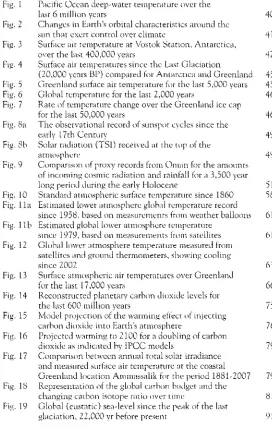
Fig. 1 P,lotk UCC[U1 deep-water temperalure (lver the
Lt.,! () III i II ion years 40
Fig. 2 Ch,mgcs in E:lrth', orbItal characteri,l ies around dK
Slln th~l cxcrr connol o\·e, climate 41 Fig. 3 Surface :1Ir rempc'mture at Vostok :)t<1tlOn, Antarcric,l,
over the l,lSl 400,000 years 42
fig. 4 Surface: air rempcrm.ures sincc the Last GhlCwrion
(20,000 YC;lrs BP) eomp,1)"ed for Ant:·m:f1ca and Grecnbnd 45
Fig. 5 Cireenhmd ~uriac£' air temperature for thc last 5,000 years 45 Fig, 6 Glohal tcmrerllture for the last 2,000 year:; 46 Fig. 7 Rate elf temperature change over d1e Gn:.'enianJ icc car
for the last 50,000 years 46
Fig. Sa The obsen·otional record uf suns!,ot cycles ~ince the
early l7th Century 49
Fig.3b Sohlr [;llkmon (TS1) reeeheJ at the Ilip of the
a rmo,,!, 11l"n.' 49
Fig. 9 Comparison of proxy records from OI)1<\n for the amOlll1[o of incoming cosmic raJiation and rainfall [('r ~l .3,500 ycar long period during the early ]·loloccne 51
Fig, 10 StandarJ atmospheric surface tcmp~rature since 1860 ')8 Fig.11a Estimated lower clTll10sphcrc glohd rempcrature record
sincc 1950, based on measllrcmcnr~ from weather balloom 61 Fig. lIb Estimmcd global lower atl11(]~phere temperature
since 1979, based on mensuremel11s irum s8ldlttes 61 Fig. 12 Global l<lwer ~ltlnosphere temperalure me<lsured irom
sarellites ,mol ground thermometers, showing cllo1mg
since 2002 (»)
Fig. 13 Surhu: ~ll:l1lUsphcril: air temperatures over Greenhm,j
for the last 17,000 ye'1f.' 66
Fig. 14 Reconstructed pbnetary C>lrbc)!1 dioxide lcvd~ for
the bst 600 million \'ears 75
Fig, 15 Model pn.ljecmm of the wonnin~ efreer (If injecting
carh()l1 ,jioxidc into Earth's <Hmosphere 76 fig. 16 Projected w:mning to 2100 for a doubling of carbon
dioxide' as In,licated hy lPCC modcls
79
Fig. 17 Comparis(Jn bet ween annuul wwl ~olar irmcliance and measured :;urf,1(e air tcmper;.lturc ~lt the coastal
Greenland location Ammaosalik fnr the period 1881-2007 79 Fig. Jo Representation '1f the gloh,)] CClrhon blldget il11d the
changing carbon isotope ratio nvt'f lllTll' 01
Fig. 19 Global (custZltic) seo-le\·el since the I'edk of the la"t
glaCiation, 22,000 yr before l're~enl 91
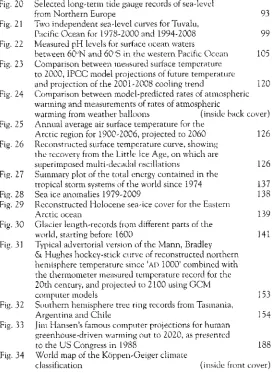
[image:4.842.443.715.103.535.2]Fig. 20 Selected long-term tide gauge records of sea-level
from Northern Europe 93
Fig. 21 Two independent ,e;:dcvcl curves for Tuvalu.
Fig. 22
Fig. 23
Fig. 24
Fig. 25
Fig. 26
Fig. 27
Fig. 28 Fig. 29
Fig. 10
Fig. 31
Fig . .32
Fig. 33
Fig. 34
10
Pacific Ocean for 1978-2000 and 1994-2008 99 Measured pH levels for surface ocean \vaters
between 60'N and 60'S in the we~tem PacifIc Ocean 105 Comparison between mea:;med smface tempermurc
to 2000, lPCC model projections of future temperature
und projection of the 2001-2008 cooling trend 120 c.:olT1pari~on between model-predicted rates of atmospheric warming and measurements of rates of atmospheric
warming from weather ball[)()n~ (inside hack cover) Annual average air surface temperature for the
Arcnc region for 1900-2006, projected ro 2060 126 Reconstructed surface temperature curve, showmg
the recovery from the Little Ice Age, 011 which <Ire
,uperimposed multi-dec8llal oscIllations 126 Summnry plot of the tour! energy cont:l.ined in the
tropical storm systems DE the world since 1974 137 Sea ice anomalies 1979-2009 138 Rc:constructed Holocene sen-ice cover for the Eas[em
l\rcri.C ocean 139
Glacier length-records from different parts of the
world, starting before 1600 141
Typical advertorial \'erSlon of the Mann, Bradley & Hughes hockey-stick Cllrve of reconstructed northern
hemisphere temper8turl~ since 'AD 1000' combined with the lhennometer measured tcmperature record for the 20th cemury, and projected ro 2100 using GeM
computer models I 53
S"Lllhcm hemisphere tree ring records from Tasmania,
Argentina and Chile 154
Jim Hansen's famolls computer projections for hum"n greenhouse-driven w,mning nut to 2020, as prcsented
to [he US Congress in 198fl 188
World map of the Kcippen-Geir.:-er climate
classification (inside front cover)
Prefatory Essay
The author of Climate: the Counter C0F15ensu5 and I disputed over the book's title. Professor Robert M. (Bob) Carter resisted the notion that anything he wrote might he taken to imply that science could ever be about. 'consensus': science was about verifiable fact. I saw his point, But I argued that the popular 'consensus' was indeed that science was 'ahout' consensus; here was the democratic virus gomg about its bminess. Hence, precisely, said I, was how so much
llf
the world, spoken (orby
the (largely democratically attuned) GS, had allowed itself to be aroused to a hemy of alarm at climate change. The 'comcmus' among scientists was that global warming was taking piaCt, that it was an imminenr threat to the 'survival of the planet', and that it was attributable wholly or at least significantly to man-generated emissions of carbon dioxide.I was aware that that very statement of mine contained four
faouaL mis-assumptions, including that scientific truth could ever
be determined by 'consensus'. As others have surely pointed out, the prevailing 'consensus' among astronomers in the early seventeenth century was that the sun circled the Earth: Galileo was locked up for upholding the reverse.
The title of your book, I could assure ollr author, countered not merely the supposed consensual opinion of collective scientific peers but the validity of the very concept of a 'consensus' of scientific opinion.
As
we are all now well aware, and Bob Carter makes clear in this work, such 'consensus' as may have been thought to prevail among the scientific community concerning the warming of the glohe was sustained throughoutby
data assembled hy a small clique of well-placed and often lately-arrived climatologists who have [image:5.842.124.403.86.467.2]CUf.HTE: THE CUUNTER CONSENSUS
been selective, slovenly or wilfully distortive in their evaluation
of
it.
They
have led the dance on this issue - a dance joined, I need not stress, since the 2008 Presidential election in the US, by the leaders of all but one of the democra(Ic West, and all but one of the official Oppositions, the exceptions being, respecrively, the economist Vaclav Klaus, President of the Czech Republic, and (somewhat shyly J Australia's Liberal-National Party opposition. There are symptoms at the rime of my writing this of America's Republicans adopting a similar srance.All others were responding, oblivious of cost and consequence, to what they and, mosr persuasively, their electorates had been gulled into accepting as scientific truth concerning anthropogenic global warming. The clique itself dung to its tenets for dear life, for
it prospered from the ardent funding of their institutions, programme~, and university departments, and the fame and influence of the protagonists themsclve~.
An absence of academic discipline and personal scruple in this fidd of fast expanding international significance was evident early, not least to the present author. In the late 1980s the economist Professor Lester Lave of the Carnegie Mellon University of Pittsburgh, giving evidence to the Senate Committee on Energy and Natural Resources on the 'controversiality' of the theory of anthropogenic emissions of C02 affecting global temperature, was summarily silenced by Senator At Gore. In 1992, Dr Richard Lindzen, America's pre-eminent atmospheric physicist, wrote a rmper warning of the extraordinary pressure to stifle dissent or even debate on the issuc. Meanwhile, alarmist predictions multiplied, were Widely upheld, and left unchallenged. They were emanating, after all, from bodies or organizations of apparent authority and presumed objectivity, including of course the tntergovernmental Panel on Climate Change OPCC), established in 1988 by two organs of the United Nations, at the instigation of the Swedish meteorologist Bert Bolin. Alongside the [PCe as a prime source of its opinions, were the Hadley Centre for Climate Prediction, simultaneously established at the instigation of Margaret Thatcher as an adjunct to
J 2
PREHT()RY ESSAY
the UK Met 01fice, and the Climatic Research Unit of the University of East Anglia. The IPCC's 31-person directorate, currently headed by the Indian busines,man and economist Dr Rajendra Pachauri, was drawn not from scientists as such but from a miscellany of senior civil servants, academics and savants from a politically correct span of nationalities and continents.
Human responsibility for gloh:d warming rapidly took centre stage in the workingb of the IPCC, its pronouncements, protocols and successive 'Earth Summits' at Rio de ];:l1leiro, Kyoto, Bali, Bonn and Copenhagen between 1992 and 2009. Worldwide sentiment was mobilized by the traditional 'green' movements such as Friends of the Earth, Greenpeace and the World Wildlife Fund. There was a promise here of votes. The wmld'~ most gleaming poitticians joined Al Gore in his declaration that 'thc time for debate is over'. 'This dibaster,' declared Tony Blair in 2006, 'is not set to happen in some science fiction future, many years ahead, but in our own lifetime.' 'The science is beyond dispute,' confirmed Baraek Obama, campaigning for the Presidency against a Republican Party still tainted by scepticism, 'and the facts are dear.' So dear were the facts to the Chief Negotiator of the G77 (group of developing nations, including China) at the Copenhagen Earth Summit of 2009, Lumumba Stanislaus Oi-Aping, from Sudan, that he declared the $lOO billion being offered to fund the containment of his members' carbon emissions and adapting to change \vould not be enough to buy the poor nations the coffins' for those swamped in their island states and facing 'certain death' in an Africa condemned to 'absolute devastation'.
Let LlS recall that the science of anthropogenic global warming
(AGW) had been fertilized at its inception
by
the Green-ish, New Age-ish miasma of the Sixties, and its aura of ideological anarchism. The 'consensus' was visceral and visionary, even apocalyptic: to question or challenge its tenets was an emotional and, quite soon, ideoiogicfll affront. Young thinkers at climate and economic summits expressed their protestsby
smashing windows ofglobal structures, be they banks or restaurants, winning honour in the name of 'saving the planet' from catastrophic warming. The somewhat hermetic doctrines of the qua~i-M<Jrxist Jerome Raverz, proposing the right of what he called 'post-normal science' to manipulate scientific findi.ngs for social purposes, attained i me llectual fash ionabili ty.
Yet from the early 19905, especially in North America. a few voices of informed dissem have persistently and intelligently challenged the scientific basis of the alarmist consensus. By around 2005, the number of well qualified 'climate sceptics' had swelled considerably anJ their voices were beginning to be heard and even heeded. Among them was that of Professor Bob Carter, doyen of that rare international species, the palaeoclimato[ogist, whose discipline is central to the truth on this issue. Given the measure of stifling, and indeed intimidation, of the scientific community, dissent was perhaps heard more from those of other diSCIplines, especially economics and statIstics. Thatcher's esteemed Chancellor of the Exchequer and former Secretary of State for Energy, Nigel Lawson, was an early voice counseHing caurion: he remains a force for clarity of thought and analysis. Elsewhere in Europe ,vas his {ellm", statesman Vaclav Klaus, who like Lawson wrote his own book on the subject, and the distinguished scientist and France's former Minister for Education, Claude Allegre. The list of expert dissent in thc first decade of the century prominently includes the mImes of the Canadian statistician and mining financial analyst, Steve Mclntyre; the French engineer Christian Gerondeau, whose work C02 --
Un M)'rhe Planetaire
we are ahout to publish in an updated edition as Climate: the Great Delusion; and the economists Ross McKitrick and David Henderson, formerly sen!or statistician at the Organisation for Economic Co-operation and Development (OEeD). Carter's feHow Australian, Ian Plimer, Professor of Mining Geology at the University of Adelaide, has valuably authored Heaven and Earth.Reaching the sophisticated public through the media have been the campaigning author and journalist Christopher Booker;
the researcher Andrew Montford, author of The Hockey Stick Tllusion, recently published to wide acclaim in this same Stacey International series, Independent Minds, consnlidating his formidable following in the blogosphere. Several influcnual journalists in, at Least, the British and American press were since
2009
beginning to perceive a monstrous deception at work. Among them (in Britain) is the feisty polemicist James Delingpole who dubbed as Climatega[e the exposure of the doctoring of the data by East Anglia University's Climatic Research Unit by emails leaked in December2009.
In Australia, the opinion writer Andrew Bolt has created a much visited blog which provides almost daily excoriation of global warming propaganda.Professor Carter lays out in the present succinct yet comprehensive work a scenario \vhich future generations \'lill regnrcl as a period of collecove insanity. Investigations at that future time will be concerned not with climate change but with the Dionyswc delusion of a style and magnitude comparable to that which induced (for instance) the mass fcrvour for the promise offascism in Italy and Germany in the 19205 and '30s, such as included within its range of dupes or fellow-travellers many of the cognoscemi
of the period. We are already three generations beyond that period yet still await our serious historians to delve the full answer 85 to
how
itcould have been so.
CUM,'\TE: THE COUNTER CONSENSUS
Our flagship title was the 170"page Blueprint for Survival. Over two million copies were sold or distributed.
It
was \vrltten by the editor of theEcologist,
Edward Goldsmith, and four others, and listed in the opening pages were.38
of Britain's most honoured scientists, economists and environmentalists who endorsed the work, including18
Professors, two Nobel laureates, and seven Fellows of the Royal Society. The jacket explained that itconcerned 'our imminent future, which individuals Hnd governments can ignore only at their peril'. Armageddon was
forecast
w~ll
ahead of the year 2000, by which date, incidentally, hydrocarbon fuel sources would be exhausted as well as the world's copper, mercury, molybdenum, nickeL lead, platinum, zinc, silver and gold. There would be extensive desertification around rhe world, since the supply of cultivable land would have been exceeded by demand for it. As publisher, I wrote the Foreword, in which I opined 'the publication of a Blueprint for Survival will prove in years to come to have marked a turning point in attitudes which will affect the course of our civilisation.' The cause, however,of
this impending catastrophe \vas not global warming: it was over" population.We were fooled, were we not! We had got the science and demographics ridiculously wrong, the Nohel laureates, Fellows of the Royal Society, and the rest of us.
Edward Ooldsmith's Ecologist magazine, supported
by
his brother Jimmy (the late Sir James), myoid school friend, has come in due course to be edited by Jimmy's son Zac who for better or for worse is environmental adviser to David Cameron, Britain's Conservative leader. May my younger friend David take caution. These Goldsmiths are highly plausibie.The difference between that earlier and halfforgonen surge of alarmism and today's is in the more emphatically
religious
character of our present movement. There is the ethical dimension. As with over-population global warming is an issue to be given not only close academic attention but political action too; but the postulation of willed anthropogenic emissions of carbon dioxide16
PREFATORY EsSAY
being responsible for irreversible \varming carries an implication of blame and attendant guilt. Given the ideological tilt of the Green movement, the massive pollution of monolithic industry in
socialized countries has been overlooked. The culprit inlmediately
to hand was capitalism and 'big business'. Green, in Lawson's
aphorism, became the new
red.
New Age sentiment sanctifying a vaaue return to nature and Oandhian craft, espoused the alatmism, bespecially in the burning of fossil fuels. John Houghton, a former Chair of the IPCC and a Fellow of the Royal Society, had purportedly been overheard passing the word around, 'Unless we announce disasters, no one
will
listen', and were it he to have uttered those words (for he has energetically denied it) they were surely listened to assiduously. The tendentiousfilm
to which Ai Gore had given his name set the pulses racing. Even the Churches joined in. Man'~ greed, ran the rune, was about to destroy God's Earth.A factor of what I venture to call genuine religion had come into play, in that it is presem in the Abramic traditions. We recall Adam who in eating of the Tree of the Knowledge of Good and Evil attained to consciousness and chose to disobey; and hence his inherent sense of original sinfulness. For although Man may feel himself to be made in the image of God as the
Book of
Oenesis avers, he at once discovers he cannotbe
God.Instead, utopian fantasies possess and beguile the ever" seducible human psyche: in the century just past, most obViously and calamitously, Marxism ~ an apert;u, 1 may mention, of Dr Benny Peiser, the social anthropologist: who is at present a colleague of Nigel Lawson on the latter's Global \X/arming Policy Foundation, That utopian brand outflanked and outlasted fascism, albeit not by
all
that much in the longer view ofhisrory. Into the ensuing world of morc"odess godless consumerism, the sense of sinful inadequacy has ineluctably persisted. The deeper live"abliity of life, one daresaymeaning, has remained teasingly elusive. The young of the developed world, so-caUed, and especially the idealistic, find themselves with the need to ascribe a sense of internal smear to
CLl~!ATE' THE COUNTm CONSI'NSUS
something or someone. Whom shall they blame, our innocents? Who must now wipe the planet clean of Man's carbon footprints? Why, the racketeers who have constructed the blighted world the innocent have been saddled with: the selfish and the greedy. By demonising other~, the blight of guilt is eased.
To be fair to the Christian churches, in parricular the Anglican, the dualism between creation and creation's dominant species, Man, is a heresy justly perceived: it has been on the prowl since Eden. But Canterbury's Archbishop, whom I admire, and who spoke at the Copenhagen summit, is found to be astride the wrong horse in the present somevlhat fantastical guise which the contrae dualist contest appears. Christians are more readily gulled than most, and forgivably so.
This factor of encircling gullt, in which naturally the Green protesters are themselves complicit, IS underlain
by
a deeperneurosis of our aeon, namely the presumed chasm of differentiation of Man from the Cosmos, ~uch as has laid upon the human race a
Manichaeistic obligation to exert its will upon the totality of the creation in which he exists. A characteristic of the Earth Summit
:H Copenhagen in December 2009 was the dismaying
hubris
by which such a politician as Gordon Brown could presume to promise thathe
would see to it that the rise in global temperatures would be restricted to 1.5 degrees Celsius. Not even the courtiers of King Canute would have suppressed a smirk. Yet the presumption still prevails that if the climate of the world is going awry, it must be Man's doing, and that it is for Man to rescue himself from his own folly.That there is no evidence of the climate going awry in the longer view of climate history is what Professor Carter sets forth in this work. This is a proposition offensive to many since it removes from them what has hecome an alleviation of the neurosis - that is, removes the pretext to foist their opaque sense of guilt
by
loading it on others. The invented chimera of anthropogenic glohal warming, clutched at by the psyche, is in danger of being snatched away.indeed so, by such as I30b Carter. The self-declared innocents
arc noW to learn they have been betrayed by their prophets, who have dissembled, told half-truths, cherryepicked their data,
t~111tastically exaggerated, and suppressed the circulation of better science. A great cloud of doubt and disillusion lowers over the entire issue on which the fate of the planet was supposed to hang.
At last the scientists wirh tbe right to be heard arc writing for the general reader and for the common voters. Outstanding among them is Professor Carter, author of the present work.
No
other palaeoclimatologist stands above him in the range, precision of knowledge, and ability to communicate it. He writes with balance, humour and caution, and the courage to define the boundaries of both the known and unknmvn. But he knmvs the sophisticated world has been massively deceived. This work tdls the measuredtruth
of
that deception.How shall it all turn out? The vastly ramified financial edifice~ of carbon trading, inflated subsidies for essentially wasted sources of 'renewable' energy, the brokers and middlemen, the bankers' ramps, the existing and impending carbon taxes levied not only nationally
but
hy multi-lateral treaty, the subsidized scourge of hiofuels production so devastating to creation's diversity in the rainforests _ what shall become of it all! The voters are getting to know: a potential democratic selfeheal. We publish this work at that point where that decisive player in the drama, the electorare, is ready to wake up and face up to the truth. They \'lil! awake to impositions of formidable public expenditure which they know to be futile.Something ha5 to give.
Tom
StaceyAcronyms and abbreviations
/\EF ~ Au,rr,llian En\Cironment FOlIndatil1ll
A:-VK) - Ad:mtit multHkcadal ",cillation AI' Index - average plnner'lfY magnenc inLlex CERN -- Emupean Org<lni~:ltipn for !\'uclear Re,earch efT - (en! ral England temper:HlI!"!; index
ClZU - Climatic Research Unn (Unin:t·sity llf Edst Angl izd
CSIRO - Commonwealth Science <lnd Indw;u-i,,1 Rcse,lrch Organi:alion (AlIslr,di:l)
EM/\ - Emergenc)' 1\·1,magement All~lralia
ENSO - .El Ninu·Suuthcrn O:;cilLII i()n
EPA - Etl\'ironmcnt l'rutcction Agency (US)
FUvlA - FeJeral Emergency Mamlgcment f\gcncy (US) C,RR - Greal Barrier Red
CCM - general circubti())1 model Clr -Gigmonne
(Jr e/yr -Uigaronne lll" clrbun
ref
yearlMO - Inrcrnational MeLeorological Organ i:atiun
INCCCA -Indian Nerwllrk on COHll'reh<:mi\'l' Clim'lle Changl' !\sses,;ment IPCC - [ntergovernmenlal Panel on Clim<lk. Change (United N::mons)
lAR - FiN Asse~sll1l'l1t Rep(,IT by IPCC (1990) 2AR - ~ccond Asscssm~nt Report bv lPee (j 996) .JAR - Third A"e"l11cm Report by
[pee
(20('1)4AR - h.lurlh A"C'SIlLent Rq>OlL by lPee (2007) ky, ka - rh('lIs,md year.', I hou'~lIld years ago
LlA. - Lirtle lee Age LOD - length of chw
LRSL -10C:11 rebow ,,<::1 [('vel MSL - nll'~\l1 sea le\'l~1
MSU --microwave sensing unit
lll\'{I/m' - mdliwatt:i per 'quare metre
tv\y, !vb - million year" million \TarS ago
NERC - N:Hional Ennl"onmenml Research C:llunci (UK)I
NOAA - N;nionai Oceamc and Armo,pher,~ Administr<llion (US)
PDO - Pactl!c Decadal OsciHao,'n ppm - r'lrts per million
RSS ~ Remute Senslng Systems TS[ - total ,dar irradi,mcc
UAH - Uni\'crsiry uf Ahlh.lma, Huntsville
UNEP - United NatllH1.' EnvirOI1Il1<'nt Pmgr,lmmc
UNFCCC: - United Nc!lions Framework Convention on Climate Change
\'{I/m~ - w~ltts !,er squ,m; mew:
W/viO - Wl)r!d :vlereorological Organizmiull
Author's Preface
Climate change knows three realities. Science realit)" which is whm working scientist~ dell with on :1 daily basis. Virttwl realit"}" which is the whully imaginary world inside computer climate models. And
jmblic realit)', which is the socio-political system withm whIch politiciclllS, business people and the general citizenry work.
The science reality is that clirnate is a complex, dynamic, natural system that no one wholly comprehends, though many scientists understand differenr small pans. So far, and despite the
very strong public concern, science provides no ul1<H11biguous evidence that dangerous or even mc,lsurable human-caused global warming is occurri ng. Second, the q}inual reality is that cumputer models predict future climate according to the assumptions that are programmed into thetH. There is no estahlished Theory of Climate, and therefore the potential output of all realistic computer general circulation models (GCtvls) encompasses a range of both fmure warmings and coDlings, the uutcomc depending upon the way in which:1 particular model run 15 constructed. Different results can he produced at wili simply by adjusting sLlch poorly known parameters as the effects of cloud cover. Third, jJUblic realic)' is theIr, driven by strong environmental lobby groups and evangelistic scientists and journalists, m whom politicians in turn respond, there wa~ a WIdespread but erroneous helief in our society in 2009 that cbngerous global warming is occurring and that it has human causation.
The regular occurrence arollnd the world of natural climate or climate-related disasters such as storms, fl.ouds, droughts and hushfires makes it self-evident that all countries, be they Western ()r third-world nations, need to possess sensible policies to deal with
Cl.IMATE; THE Cm;!',rrEIZ CONSENSvS
national climate hazard. Furthermore, such policies need to be tailored to the particular risk environment in each country or large region (for instance, alert to typhoons in] apan and bush wildfires in California) rather than tailored to some amorpholls 'global climate'; no-one, but no-one. Lives in a global climate. Yet expensive television advertisements nm in 2009 by, for example the British and Australian governments, make it clear that their current 'climate policy' is concerned with addressing the virtual reality of hypothetical human-caused global warming rather than the actual reality of everyday climate variability. I n truth, Western nations don't have national climate policies at all, hut rather imaginary global warming policies instead.
The current public 'debate' on climate is nm so much a debate as it is an incessant and shrill campaign to scare the global citizenry into accepting dramatic changes in (heir way of life in pursuit of the false god of preventing dangerou~ global warming. Furthermore, this debate is persistently misrepresented
by
the media as being between morally admirable 'believers' and morally challenged 'deniers'. In reality, such shallow moralities have nothing to do with science, which derives its own considerable moral and practical authority from the objective me of facts, experiments and analytical reasoning to test hypothe~es about the natural world.It is widely believed, and wrongly, that the study of climate change is the exclusive province of meteorologists and climatologists. In reality, scientists who study climate change come from a very wide range of disciplines that can be grouped into three main categories. The first group comprises scientists who are expert in meteorology, atmospheric physics, atmospheric chemistry and computer modelling, who mostly study change over short periods of time, and are primari ly concemed with weather Imxesses (and, by extension, climate processes); a second group comprises geologists and other earth scientists, who hold the key to delineating climate
histor)' and the inference of ancient climate processes; finally, a third category compri~es those persons who study enabling
PREFACE
disciplines like mathematics, statististics and (perhaps) engineering.
In this context, competent scientlsts from all these three groups accept, first, that globaL climate has always changed, and always \vill; second, that human activities (not just carbon dioxide emissions) definitely affect local climate, and have the potential, summed, to measurably affcct global climate; and third, that carbon dioxide is a mild greenhouse gas, The true scientific debatc, then, is about none of these issues, but rather about the sign and magnitude of any global human effect, and its likely significance when considered in the context of natural climate change and variability.
As a generalization, it can be said that most of the scientific alarm about dangerous climate change is generated by scientists in the meteorological and computer modelling group, whereas many (though not all) geological scientists see no cause for alarm when modern climate change is compared with the climate history that they see every time they smnd at an outcrop, or examine a drill core, Of course, attaining a full perspective on climate change requires at least a passing familiarity with all of the three groups of disciplines, a demand that tests even the most polymathic of the scientific brethren. The fact th<lt scientific opinion is divided over the global warming issue is therefore not unusual, and in part follows inevitably from the diversity of knowledge involved; discussion and rational argument are the lifeblood of science, and is indicative of a heal thy rather than unhealthy state of affairs.
Unlike policy, science IS never 'settled'.
In this book I
will
describe the natural variations in climate that we are heir to, examme the possibility of an additional and measurable human effect, explain why carbon dioxide taxation is a non-soLution to a non-problem, and finally shmv how a cost-effective and prudent climate policy can be included within national plans that address all major climatic hazards.computer modelling. Chapters 7 -10 contain a discussion of the p(lwelful social and political forces that are still call ina for action
'"
against global warming at a time when the globe hali actually been cooling for a decade. Chapter 11 identifies the forward path, which should be preparation for, and adaptatilll1 to, climate change as it happem irrespective of its causation. For many nf the greatest human disaster5 are caused by natural climatic events, and it is self-evident that we need to handle them hetter. At the same time, it is simply hubris to imagine that our present understanding of planet
Earth is aclequate to allow us to successfully engineer future climate.
Finally, Chapter 12 descrihes briefly the breaking of the Climategate scandal in November
2009
and the closely followinaIPCC climate summit meeting in Copenhagen in December, and Chapter 13 (Postscriptum) presents a final and balanced summary statement about the possible human intluence on global climate.
My
aim in this book has been not unly to crc,He an alternative narrative for the 1988-2009 global warming story. Rather, I wish also to encourage people to trust authority less and their own hraim more as they assess the likely dangers of' hoth known natural and hypothetical human-caused global climate change. Towards that end, as well as to enhance readahility of the main text, most of the technical detail is provided in the sources listed in the end-notes, which provide many independent references to published rapers, amcLes and high-quality web commentaries. Consulting these sources is rewarding in its own right, and it is abo an excellent antidote for those who hitherto have heard only the 'authoritative' views of vested interest organizations such as the United Nation~, government science ;lgencics and national science academies.Climate is, and \vill continue to be, created and controlled
by
immense and complex natural forces, not by political fiat. Any practical way forward out of the present \tup global \varming' fiasco must ncknov;ledge th'lt reality, as does the adaptive policv Plan Boutlined in Chapter 11 of this hook. ,"
24
Introduction
n.(~ality is only an illuslOll, albeit ,1 very persisrenr one.
(A!b~rt Eimltin)
To effectively COll1ll1Unic,lte, we lllust realize thar we are ,111
different in the W(lY we perceive the world und lise thi~
undcrst3l1ding as a gUIde to our communication with nrhers. (Tony Robbins)
l:3efore human-causeJ global warming! can become an economic, social or el1vironmencll problem, it first has to be identified by
~cjentific study as a dangerous hazard for the planet, distinct from
natural climate change.
This nlltwithstanding, several distinguished economists have recently written compendious papers or reports on the issue, for exmnple the UK's Nicholas Stern2, USA's William Nordbusl and Australia's Ross ()mnaut4. These persons, and lllany other public commentators and politicians as well, have naively accepted that there is a scientific consensus (the phrase itself being an oxymoron) that dangerous, human-caused global warming is occurring, a~ set
by the views and advice nf the Intergovernmental
Pand
on Climate Changeopec)'.
The lPCC is the United Natiuns hody that in 1995 allowed a
s~ngle activist scientist, Ben Santer, t:() rewrite parts of the key
Chapter 8 (Detection of Climate Change and Attribution of CaLise,,) of
its Second Assessment Repurt in alarmist terms,
~hanging
a previolls wording that had neen agreed among the other scientific authors. The rewriting was undertaken in order to make the chapter agree with a politically contrived statement in the.,
CUMATE: THE COUNTER CONSENSL:S
influential Summary for Policymakers, to whit 'the balance of evidence suggests a discernibLe human influence on global climate'. This statement being the opposite of the conclusion drawn in the original Chapter 8 text, it was obvious from that point onward that
IPCC pronouncements needed to be subjected to independent
critical analysis. Instead, the opposite has happened and increaSingly the world's press and politicians have come to treat IPCC utterances as if they were scribed in stone by Moses. This is
a reflection, first, of superb marketing by the tPCC and its
supporting cast of influential environmental and scientific organizations (not to mention the bucket-loads of money that have been available in their support6 ); second, of S(l"ong media bias towards alarmist news stories in general, and global warming political correctnes~ in particular; and, third, of a lack of legislators and senior bureaucrats possessed of a sound knowledge of even elementary science, coupled with a similar bck of science appreciation throughout the wider electorate - our societies thereby having become vulnerable to frisbee science, or spin.
Having decided around the turn of the twentieth century that
'the science was settled',
for the IPeC said so, politicians in industrialized societies and their economic advisers started to implement poLicies that they assured the public would'stop global
warming', notably measures to inhibit the emission of the mild greenhouse gas carbon dioxide into the atmosphere. However, the acronym GIGO (garbage in, garbage out) that has long been applied to computer modelling endeavours applies
also
to economic studies that purport to give policy advice against tIle threat of future climate change. For the reality is that no-one can predict the specific way in which climate will change in the future, beyond the general statement that multi-decadal warming and cooling trends, and abrupt climatic changes, are all certain to continue to occur. It is also the case that the science advice of the IPCC is politically cast, and thereby fundamentally flawed and unsuitable for use in detailed economic forecasting and policy creation. This is why Stern's work,for
example, has been able to be so severely criticizedINTRODUCTlON
on both scientific and economic grounds1, with respect to which the criticaL essays of Melbourne climate analyst John McLean8 provide searing insights into the unreliability of the IPCe.
MIT atmospheric physicist Richard Lindzen famously remarked of giobal warming aiarmhm a few years ago that 'The consensus was reached before the research had even begun.' Another distinguished natural scientist, the late Sir Charles Fleming from New Zealand, made a similarly prescient statement when he observed in 1986 that 'Any body of scientists that adopts pressure group tactics is endangering its status as the guardian of prinCIples
of
scientific philosophy that are worth conserving.'These quotations are apposite, because pressure-group tactics in pursuit of a falsely daimed consensus are now the characteristic
modus operandi
of the lPCC-led global warming alarmists who surround us at every turn. The recent sensational public exposure of email exchanges between climate scientists at the UK's Climatic Research Unit (an organization closely linked with the Meteorological Office's Hadley Centre) and their coUeagues around the world has revealed the malfeasance involvedfor
thewhole world to see (Chapter 12).
The realities of climate change
Science reality
My
rderence files categorize climate change into more than one hundred subdiscipline areas of relevant knowledge. Like most other climate scientists, I possess deep expertise in at most two or three of these subdisciplines. Chris Essex and Ross McKitrick have observed9:Global warming is a topiC that sprawl;; in a thousand
directions. There is no such thing as an 'expert' on global warming, because no one can master all the relevant
subjects. On the subject of climate change everyone is an
CLIMATE: THE COUl'TER CONSE:-.ISUS
It is therefore a hrave sckntist who e~says an expert public opmion on the global warming issue, thLlt bravery being always but one step
from foolhardiness. And as for the many public dignitaries amI celebrities whose global warming prcachings
fill
out our daily news bulletins, their enthusiasm for a perceived worthy cause greatly exceeds their clarity of thuught about climate change science, regarding vihich they are palpably innocent of knowledge.In
these difficult circumstances of complex science and public ignorance, how is science reality to be judged? This question was first carefully thought through in the late 1980s by the senior hureaucrats and scientists who \Vere involved in the creation of the United Nations's lPCe. Key players at the time were Bert Bolin (Sweden), John Houghton (UK) and Maurice Strong (Canada), the two fonner persons going on to become Chairman of the IPCC and Chairman of Workmg Group 1 (science), respectively. The declared intention of the {PCe wa:; to provide disinterested summaries of the state of climate science as judged from the published, refereed scientific literature. Henceforward, in the public and political eye, science reality was to be decided by the authority of theIPee.
Accordingly, in four successive Assessment Reports in 1990, 1996, 2001 and 2007 the IPeC has tried toimprint its belief in dangerous human-caused warming on politicians and the public alike, steamrollering relentlessly over the more balanced, non-alarmist views held
by
thousands of other qualified scientists. Inevitably, and despite the initial good intentions, what started in ] 988 as a noble cause had by the timeof the 2007 Fourth Assessment Report degenerated into a
politically driven science and media circus.
2R
As Chris Essex and Ross McKitrick have written10:
We do not need to guess what is the world view of the IPCC leaders. They do not attem!x to hide it. They are committed, heart and soul, to the Doctrine [of dangerous human,c3used global warming]. The)" believe it and they
afC advocates on its behalf. They have assembled a body of
iN II" )l)l!CTION
evidence that they feel supports it and they travel the world
promoting it.
There would be nothing wrong with this if it were only one half of a larger exercise in adjudication. But governments
aroLind the world have made the staggering error of treating the lPCC as if It is the only side we should listen to in the acijudicacilm process. What is worse, when on a regular basb other scientists and scholars stand up and publicly
disagree with the [PCe, govenuncnts panic because they are afraid the issue will get complicated, and undermine the sense of certainty that justifies their policy choices. So
they label alternative view5 'marginal' and those who hold rhem'dissidenrs'.
The basic flmv that was incorporated into IPee methodology from
the begmning was the assumption that matter~ of science can
be
decided on authority or consensus; in fact, and as Galileo early showed, science as a method of investigating the world is the very antithesis of authority. A scientific truth is so not because the lPCC:or an Academy of Science blesses it, or because most people believe
it, but because it is formulated a~ a rigorous hypothesis that has survived testing by many different scientists.
The hypothesis of the IPee was, and remains, that human greenhouse gas emissions (especially of carbon dioxide) are causing dangerous global warming. The lPCe concentrates its analyses of climate change on only the last few hundred years, and has repeatedly failed to give proper weight to the geological context of the short, ISO-year long instrumental record. \Vhen viewed in geologicaL context, and assesseJ against factuaL data, the greenhouse hypothesis fails. There is no evidence that late
twentieth century rates of temperature increase were unusually rapid or reached an unnaturally higb peak; no human-caused greenhouse signal has been measured or identified despite the expenditure since 1990 of many tens of billions of dollars searching
CUMt'iTE: THE COUNTER CON::iENSUS
for it6; and global temperature, which peaked within the current natuml cycle in the warm 1998 El Nino year, has been declining since then despite continuing increases in carbon dioxide emission. Recognition of the post-1998 cooling has been strongly resisted by warming alarmists since it first became evident afound
2006, despite which acknowledgement of the cooling has now
spread to mainstream journals such as
Geol)hysica! Research
Letters (GRL). A recent GRL paper by Judith Perhvitz and co-authorsll refers to. 'A precipitous drop in North American temperature in 1998', and continues that 'Doubts on the science of human-induced climate change have been castby
recent cooling. Noteworthy has been a decade-long decline (1998-2007) in globally averaged temperatures from the record heat of 1998.' In support of this staremem, Perlwitz cites another GRL paper by Easterling and Wehner!", who, whilst acknowledging the cooLing, put a brave face on the matter by concluding that 'climate over the twenty-first century can and likely will produce periods of a decade or two where the globally averaged surface air temperature shows no trend or even slight cooling in the presence of longer-term warming.' It is clearly difficult for even the most straightforward of facts to shift the fierce belief in human-caused warming that is heldby these and many other scientists.
In summary, the science reality in 2009 was that the lPCC's hypothesis of dangerous, human-caused global warming had been repeatedly tested and failed. in contrast, the proper null hypothesis that the global climatic changes that we observe today are natural in origin has yet to be disproven (Chapter 6). The only argument that remains to the IPCC - and it is solely a theoretical argument, not evidence of any kind - is that their unvalidated computer models project that carbon dioxide driven dangerous warming will occur in the future: just you wait and see! It is therefore to these
models that we now turn.
INTRODUCTION
Virtual reality
The general circulation computer climate models (OCMs) used by the IPeC are deterministic. Which is to say that they specify the climate system using a series of mathematical equations that are. derived from the first principles of physics. For many parts of the climate system, such as the behaviour of turbulent fluids or the processes that occur within clouds, our incomplete knO\vledge of the physics requires the extensive use of parameterisation. (read 'educated guesses') in the models, especially for the many climate processes that occur at a scale below the lOO~300 km2 size of the
typical modelling grid.
Not surprisingly, therefore, the OCMs used by the IPCC have not been able to make successful climate predictions, nor to match the expected 'fingerprint' of greenhouse gas-driven temperature change over the late twentieth century. Regarding the first point, none of the models was able to forecast the path of the global average temperature statistic as it elapsed between 1990
and 2006. Regarding the second, GCMs persistently predict that
greenhouse warming trends should increase with altitude, especially in the tropics, wid1 most warming at around 10 km height; in contrast, actual observations show the opposite, with either flat or decreasing warming trends with increasing height in the troposphere 1_,.
TIle modellers themselves acknowledge that they afe unable
alternative future worlds that could be simulated Llsing the self-same models.
It is clear from all of this, and from the more detailed discussion in Chapter 5, that climate C;CMs d() not produce predictive outputs rhm arc suitable for chrect application in policy making; it is therefore inappropriate to lise IPCC model projections for planning, or even precautionary, purposes, as if they were real forecasts of future climate. NotWithstanding, it remains the case, amazingly, that the IPCC's claims of a dangerous human influence on climate now rest almost solely on their unre<l1isric, invalidated GCM climate projections. \Vhich makes it intriguing that during recent planning for the next (5 th) IPCC assessment report, due in
2015, senior UK I'belley Centre scientlst, Martin Pmry, is reponed in a Nnture mticle as saymg: 'The case for climat:e change, from a
scientific point of VIew, has been made. We're persuaded of the need for action. So the question is what action, and when.'
\'Xlell, the lPee may be so persuaded, but the key question, of course, is wh at a bout the rest of us?
Public reali [)'
The answer to that question is thm opinion rolls in 2007 and 2008
showed that most of the rest of us had become severely alarmed about the threat of human-caused cltmatc changei4 . Therefore, public reality, a~ perceived until recently by most Western governments, is that their electorates have been expecting them
to 'do something' about global warming, i,e. to introduce a carbon dioxide taxation system. Despite rapid swings in public opinion towards less alarmist beliefs in late 2009, it remains the case that there exists a strong disjunction between climate alarm as perceived by the puhlic (strongly egged on by the press) and tbe science justification (or that alarm. How come I
The means
by
which the public lus been convinced (ha(dangerous glob,'d warming is occurring are nO!" sub de. The three main agenrs are the repurts from the IPCC that I have already
de~cribed: incessant bullying by environmental NGOs (such as
32
I NTHOI lV::TIUN
Grcenpeace, World Wide Fund for Nature, Australian Conservation Foundation, Pew Foundation) and their allied scientists, and by science organizations, political gruups and business; and the obliging promulgation of selectively alarmist clLmate information by the media. Indeed, the combinccl alarmist activities of the
IPee,
crusading environmental NGOs, some individual leading climate scientists and many science agencies and academies can only be termed a propaganda campaign, However, because all of these many interest groups communicate with the public primarily through the gatekeepers of the press, it is the press that carries the prime responsibilityfor
the unbalanced stateof
the current public discussion and opinion on global wmming.Note
onLanguage
Language is the essence
()f
communication. Much science is couched in precise language that appears as jargon, even to well-educated non-scientists. Beyond lhat, where science bears on environmental issues, choice of language becomes more complex still because of its deliberate politicisation by special-interest groups. Thus phrases such as nuclear waste dump, alternative energy, dirty power, green power, carbon footprint, and lllore, have heen ~kilfully coined and deployed precisely in order to innuencethe terms of the social debate.
Sometimes entirely I1n,-, and inaccurate terminology is
involved, as for example when the emotional phrase 'acidification of the ocean' appeared in the early 19905. Earlier SCIentific papers related to this topic had carried pro~aic, descriptive titles such as: The effect of increases in the atmospheric carbon dioxide content ()n the carbonate ion concentratioll of surface ,vater at 25"C' (paper
ill Limnology & OceanograjJh'y, 1975), but soon an altogether more
portentous style of title emerged, viz: 'Impacts of ocean acidification on marine fauna and ecosystems processes' (paper 1l1.
J
Dumalof
Mari ne Science, 2008).CU,IATE: THE COL~TER CO:-.l~ENSLS
climate change, and especially where the three key terms global warming, climate change and greenhouse are concerned.
Global wanning. climate change. !,1l"cenhouse
To ask the question 'is global \varming occurring;' might seem innocent enough. But the accurate answer is actually that 'it depends', and one of the things th8t it depends upon is what you mean by global warming in the first place (but see also Chapter 2). Global warming is merely one of the two alternative directions of clim~te change. Over time periods of decades or longer, average global temperature rarely remains static but either increases or
decreases in accord with natural cyclicity on many time-scales. Between ahout 1965-98, the instrumental record at the Earth's surface suggests that average global temperature increased by a modest few tenths of a degree, Le. gLobal warming
sensu
stricto occurred during the lare twentieth cenrury. However, ro the general r)1lhlic, the phrase global warming has come to carry the meaning'human caused
global warming', and it is simply not true that the late twentieth century temperature increase can be sh.0\vn to havea primary human calise.
Between 1988 Hnd 2005, most media reporters writing about the 'global warming' issue used that term to headline or describe it. On 3 February 2005, that changed; almost overnight, and across the world, the phenomenon became re-referenced in the public arena under the phrase 'climate change'. This redefinition, which al!mvecl weather and climate change of all types to be beaten up as a matter of concern, did not happen
by
accident but was the outcome of a now infamous'Avoiding Dangerous Climate Change'
meeting in Exeterl5 , co-otdinated by the UK Meteorological Office's I-lad ley Centre with the close invoLvement of several large green NGO's. The Exeter meeting had two main aims: first, replacing the term global warming (which was no longer happening) ,,vtth climate change (which always would be); and, second, adopting, for entirely political reasons, a fanciful 2"C target as the 'dangerous' amount of warming that politicians should be
advised that they were to prevent. It is a trihute to the Power of language,
as
well as depressing, to note that five years later the same twO dishonesties continue to permeate nearly all public disclLssionof the global warming issue.
In fact, however, misllse of the term climate change significantly predates the Exeter meeting,
for
the term achieved the exalted status of legal misdefinition in the United Nation's Framework Convention on Climat.e Change (FCCC)I{,. This convention, which came into force in 1994. states in Article 1.2that:
'Climate change' means l-l change of climate which is anribmcd directly or indirectly to human activity that
alters the composition of rhe global atmosphere and which is in addition to narum! climate variability observed over
compar<lble time periods.
In FCCC diplospeak, then, 'climate change' doesn't mean climate change, but rather 'human-caused by atmospheric alteration climate change'. Humpty DUl1lpty comes to mind.
To add to the confusion, the lPeC, which operates under the aegis of the FCCC, uses the term climate change in a more usual scientific way, for example in its Fourth Assessment Report5:
Climate change may he due to natural inrernal processes or
extern"l forcings, or to persistent anthropogenic changes in [he composition of the atmosphere or in land use.
CI1~IArE: THE COU\lTER CO:--JSENSUS
Averages
Another powerful word thClt is much misapplied in the climate debate is 'average', for almost the entire public discussion conCentr3tes on perceived deleterious ch,mges in properties such as 'glohal average temperature' or 'global average sca~level'.
Such averages have no physical existence, but represent instead convenient statistics that are generated from many separate pieces of data gathered from disparate places. It is precisely for this reason that there is 50 much argument about the accuracy of
varioLis clifferent estimates of temperature and sea-lew
1
history. For the constrllction of such averages requires data ["0 be selected,corrected and statisttcally manipulated, activities which may be quite legitimately undertaken in different ways by different investigators and which then mCl)' lead to different outcomes.
Real world environmental effects are not imposed by changes in glohill average conditions, but by changes in specific local conditions. WhClt is of concern to the citizens of the i.sland of Tuvalu l~ whether their local relative sea-level is going up or down (and, despite much alarmist propaganda to the conlrary, it exhibits no significilnt long-tefm trend - see Chapter 4), not what an imaginary global average sea-level may be doing.
Tim point is particularly important when Rpplied to predictions of a future, warmer world. \'(1ere the world temperature average to increase appreciably, scientific principles, computer model predictions and current trends
all
agree that the manifestation of this will be that much of the warming will take place at high IRtitudes and in winter. In some places, such \-varming will have virtually no environmental impact: for example, an uninhabitable ice cap at -30"e will remain an uninhabitable icc cap at-2TC.
In other places, such as at the fringes of such an ice cap, w8rming is likely to be heneficial (from our perspective, the planet being entirely neutral about the matter) because warmer temperatures and longer growing seasons will enhance the chances of the establishment and sllrviv<ll of biota there.36
INTROl JI)C nul"
These comll1ent~ notwithstanding, it is inescapable that most of the discussion regarding climate change presented in this bonk
has had to be fralned in the same terms as the public debate, i.e. in terms of changes to 'world average temperature'. But the reader should never forget that such ahstraction is far removed from rhe physical realities of what will happen ro his or her own local environment when climate change occms. There, the relevant questions must always be 'how are the local conditions going to change?' (with temperature and secdcveJ each able to go either Lip
or down), and 'will rhe environmental response to that change he positive or negali vel' from a human point of view (with either outcome possible at a particular location).
To simply assert, as m8ny do, that global warming is going to rake place and that its impact is everywhere going to
be
negative is to make neither a scientifically based nor Cl sensible statement. Rather, it is a statement of devotion to the green religion that hasbeen aptly called ceo-salvationism.
Coda
'Do you hdictJe in global warming-I' the reporter asks (meanmg, 01 course 'do you helieve in dangerou, glohal
wanning caused by human carhon diOXIde emissions?').
'It depcnLt\,' I reply. 'For there are man)' different realities of climate ciwllge. '
In chapters 1 to 4, we wtll turn to the first of those realities, that of science.