Contents lists available atScienceDirect
Contemporary Clinical Trials Communications
journal homepage:www.elsevier.com/locate/conctc
Development of a standardized de nition for clinically signi cant bleeding
fi
fi
in the ASPirin in Reducing Events in the Elderly (ASPREE) trial
Karen L. Margolis
a,∗,
Suzanne E. Mahady
b,
Mark R. Nelson
c,
Diane G. Ives
d,
Suzanne Satter eld
fi
e 1,,
Carlene Britt
b,
Saifuddin Ekram
b,
Jessica Lockery
b,
Erin C. Schwartz
a,
Robyn L. Woods
b,
John J. McNeil
b,
Erica M. Wood
ba
HealthPartners Institute, Mailstop 23301A, PO Box 1524, Minneapolis, MN, 55440-1524, USA
b
School of Public Health & Preventive Medicine, Monash University, Melbourne, Australia
cMenzies Institute for Medical Research, University of Tasmania, Hobart, Australia d
Department of Epidemiology, Graduate School of Public Health, University of Pittsburgh, Pittsburgh, PA, USA
e
University of Tennessee Health Science Center, Memphis, TN, USA
A R T I C L E I N F O
Keywords:
Aspirin Primary prevention Methods Hemorrhage Bleeding
A B S T R A C T
Background:Bleeding is the major risk of aspirin treatment, especially in the elderly. A consensus de nitionfi clinically signi cant bleeding (CSB) in aspirin primary prevention trials is lacking in the literature.fi
Methods:This paper details the development, modi cation, application, and quality control of a de nitionfi fi clinically signi cant bleeding in the ASPirin in Reducing Events in the Elderly (ASPREE) trial, a primaryfi vention trial of aspirin in 19,114 community-dwelling elderly men and women. In ASPREE a con rmed bleedingfi event needed to meet criteria both for substantiated bleeding and clinical signi cance. Substantiated bleedingfi was de ned as: 1) observed bleeding, 2) a reasonable report of symptoms of bleeding, 3) medical, nursingfi paramedical report, or 4) imaging evidence. Bleeding was de ned as clinically signi cant if it: 1) requiredfi fi transfusion of red blood cells, 2) required admission to the hospital for > 24 h, or prolonged a hospitalization, with bleeding as the principal reason, 3) required surgery to stop the bleeding, or 4) resulted in death. Bleeding sites were subclassi ed as upper gastrointestinal, lower gastrointestinal, intracranial (hemorrhagic stroke,fi subarachnoid hemorrhage, subdural hematoma, extradural hematoma, or other), or other sites. Potential events were retrieved from medical records, self-report or noti cation from treating doctors. Two reviewers adjudicatedfi each event using electronic adjudication software, and discordant cases were reviewed by a third reviewer. Adjudication rules evolved to become more strictly de ned as the trial progressed and decision rules were addedfi to assist with frequent scenarios such as post-operative bleeding.
Conclusions:This paper provides a detailed methodologic description of the development of a standardized de nition for clinically signi cant bleeding and provides a benchmark for development of a consensus de nitionfi fi fi for future aspirin primary prevention trials.
Trial registration:ASPREE is registered on the International Standard Randomized Controlled Trial Number Register (ISRCTN83772183) and on clinicaltrials.gov (NCT01038583).
1. Background
Aspirin has long been recommended to prevent recurrent events in patients of all ages with established cardiovascular disease because of its favorable bene t to risk ratio in this population [ , ]. Evidence isfi 1 2 also building for use of aspirin in primary prevention of cardiovascular disease and cancer, but the balance of risk of bleeding and benefit of
disease prevention is much more closely matched [3 5– ]. Meta-analyses of primary prevention trials and a large cohort studies found a 50 60%– increased risk for major gastrointestinal or extracranial bleeding with low-dose aspirin, with age as the strongest risk factor [5 8– ].
The ASPirin in Reducing Events in the Elderly (ASPREE) trial primary prevention trial examining the bene ts and risks of dailyfi pirin 100 mg or placebo in 19,114 US and Australian adults aged
https://doi.org/10.1016/j.conctc.2018.05.015
Received 19 January 2018; Received in revised form 16 May 2018; Accepted 21 May 2018 ∗Corresponding author.
1 Deceased.
E-mail addresses:[email protected](K.L. Margolis),[email protected](S.E. Mahady),[email protected](M.R. Nelson), [email protected](D.G. Ives),[email protected](C. Britt),[email protected](S. Ekram),[email protected](J. Lockery),
[email protected](E.C. Schwartz),[email protected](R.L. Woods),[email protected](J.J. McNeil),[email protected](E.M. Wood).
Available online 22 May 2018
years and older (65 years and older for US minorities) [ ]. The primary9 outcome is disability-free survival , with primary endpoints comprising‘ ’ all-cause mortality, incident dementia, or persistent physical disability. The composite outcome was chosen to allow an overall assessment of the bene t of aspirin, and di ers from previous primary preventionfi ff trials which generally have focused on cardiovascular outcomes. The primary safety endpoint is major hemorrhagic events. Hemorrhagic stroke and non-stroke clinically signi cant bleeding (CSB) are includedfi within this composite outcome. CSB includes non-stroke intracranial bleeding and extracranial bleeding.
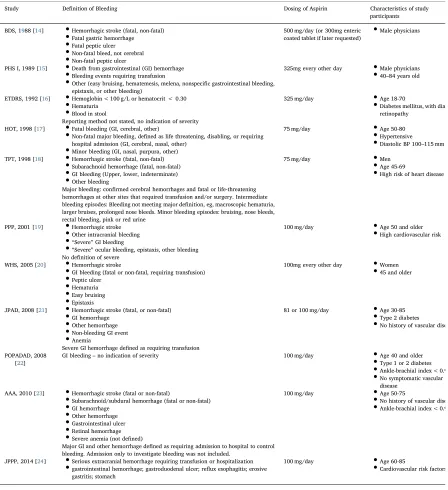
[image:2.595.96.544.174.664.2]While a consensus de nition for bleeding in cardiovascular trialsfi has been proposed [10], no similar attempt has occurred for in trials aspirin for primary prevention. Previous primary prevention trials have varied in the sites and severity of bleeding that were reported, de nition of severe or major bleeding, and whether anemia or a specifi hemoglobin level was included (Table 1). During the initial stages developing a de nition of CSB for the ASPREE protocol, operationalfi de nitions from published primary and secondary prevention trials,fi well as interventional cardiovascular trials, were consulted. These finitions were revisited by the co-chairs of the Endpoint Adjudication Table 1
De nitions of bleeding from aspirin primary prevention trials.fi
Study De nition of Bleedingfi Dosing of Aspirin Characteristics of study
participants
BDS, 1988 [14]
•
Hemorrhagic stroke (fatal, non-fatal)•
Fatal gastric hemorrhage•
Fatal peptic ulcer•
Non-fatal bleed, not cerebral•
Non-fatal peptic ulcer500 mg/day (or 300mg enteric coated tablet if later requested)
•
Male physicians
PHS I, 1989 [15]
•
Death from gastrointestinal (GI) hemorrhage•
Bleeding events requiring transfusion•
Other (easy bruising, hematemesis, melena, nonspeci c gastrointestinal bleeding,fi epistaxis, or other bleeding)325mg every other day
•
Male physicians•
40 84 years old–ETDRS, 1992 [16]
•
Hemoglobin < 100 g/L or hematocrit < 0.30•
Hematuria•
Blood in stoolReporting method not stated, no indication of severity
325 mg/day
•
Age 18-70•
Diabetes mellitus, with diabetic retinopathyHOT, 1998 [17]
•
Fatal bleeding (GI, cerebral, other)•
Non-fatal major bleeding, de ned as life threatening, disabling, or requiringfi hospital admission (GI, cerebral, nasal, other)•
Minor bleeding (GI, nasal, purpura, other)75 mg/day
•
Age 50-80•
Hypertensive•
Diastolic BP 100 115 mm–TPT, 1998 [18 ]
•
Hemorrhagic stroke (fatal, non-fatal)•
Subarachnoid hemorrhage (fatal, non-fatal)•
GI bleeding (Upper, lower, indeterminate)•
Other bleedingMajor bleeding: con rmed cerebral hemorrhages and fatal or life-threateningfi hemorrhages at other sites that required transfusion and/or surgery. Intermediate bleeding episodes: Bleeding not meeting major de nition, eg, macroscopic hematuria,fi larger bruises, prolonged nose bleeds. Minor bleeding episodes: bruising, nose bleeds, rectal bleeding, pink or red urine
75 mg/day
•
Men•
Age 45-69•
High risk of heart diseasePPP, 2001 [19]
•
Hemorrhagic stroke•
Other intracranial bleeding•
“Severe GI bleeding”•
“Severe ocular bleeding, epistaxis, other bleeding”No de nition of severefi
100 mg/day
•
Age 50 and older•
High cardiovascular riskWHS, 2005 [20]
•
Hemorrhagic stroke•
GI bleeding (fatal or non-fatal, requiring transfusion)•
Peptic ulcer•
Hematuria•
Easy bruising•
Epistaxis100mg every other day
•
Women•
45 and olderJPAD, 2008 [21]
•
Hemorrhagic stroke (fatal, or non-fatal)•
GI hemorrhage•
Other hemorrhage•
Non-bleeding GI event•
AnemiaSevere GI hemorrhage de ned as requiring transfusionfi
81 or 100 mg/day
•
Age 30-85•
Type 2 diabetes•
No history of vascular diseasePOPADAD, 2008 [22]
GI bleeding–no indication of severity 100 mg/day
•
Age 40 and older•
Type 1 or 2 diabetes•
Ankle-brachial index < 0.99•
No symptomatic vasculardisease AAA, 2010 [23]
•
Hemorrhagic stroke (fatal or non-fatal)•
Subarachnoid/subdural hemorrhage (fatal or non-fatal)•
GI hemorrhage•
Other hemorrhage•
Gastrointestinal ulcer•
Retinal hemorrhage•
Severe anemia (not de ned)fiMajor GI and other hemorrhage de ned as requiring admission to hospital to controlfi bleeding. Admission only to investigate bleeding was not included.
100 mg/day
•
Age 50-75•
No history of vascular disease•
Ankle-brachial index < 0.95JPPP, 2014 [24]
•
Serious extracranial hemorrhage requiring transfusion or hospitalization•
gastrointestinal hemorrhage; gastroduodenal ulcer; re ux esophagitis; erosiveflgastritis; stomach
100 mg/day
•
Age 60-85Committee in planning how to operationalize the ASPREE CSB endpoint as de ned in the protocol. They decided that a focus on bleeding thatfi was fatal or required transfusion, hospitalization, or surgery was in keeping with the trial's overall emphasis on major functional outcomes. Less serious bleeding episodes or isolated changes in laboratory values were therefore not included.
As adjudication proceeded, the ASPREE investigators further re nedfi the CSB de nition and aimed to establish adjudication rules that couldfi be applied consistently over time and between di erent adjudicators,ff and could potentially be adopted for use in future primary prevention trials. In this paper, we describe the methods for ascertaining possible bleeding episodes, the development of a standardized de nition of CSB,fi and methods to achieve consensus through the use of decision rules .“ ” We use illustrative cases that highlight issues commonly encountered during adjudication.
2. Methods
2.1. ASPREE study design and participants
The study design and baseline participant characteristics are de-scribed elsewhere [ ,9 11]. Brie y, ASPREE is a double-blind, rando-fl mized trial comparing oral enteric-coated acetyl salicylic acid 100 mg or matching placebo. Participants age 70 years and older (65 and older for U.S. minorities) were recruited from Australian general practice and
U.S. community settings. They were free of dementia, physical ability, cardiovascular disease, and other conditions contraindicating the use of aspirin or requiring its use. All participants were screened anemia, and were excluded if their hemoglobin level was < 12 g/dl men or < 11 g/dl in women. People taking aspirin without a clear dication were able to participate if they and their physician agreed discontinue aspirin. ASPREE has multiple Institutional Review Board approvals in the U.S. and Australia.
Recruitment ended in December 2014 with 16,703 Australian 2411 U.S. participants. The median age of participants at randomiza-tion was 74 (range 65 98) years and 56% were women. Approximately– 55% of the U.S. cohort were from minority groups. Following enroll-ment, participants were seen for annual visits and contacted by tele-phone at the 6-month mark following each visit.
2.2. ASPREE CSB event collection and adjudication process
[image:3.595.99.541.351.704.2]A structured questionnaire was administered to participants at month phone calls and annual visits for the purpose of detecting events that may be primary or secondary endpoints, including CSB events. With regard to bleeding events, participants were asked In the past“ months, or since we last saw or spoke with you, has your doctor agnosed or treated you for clinically signi cant bleeding requiringfi hospitalization? A rmative responses were followed by queries about” ffi the name of the hospital and date of admission. Participants and family
members may have also reported bleeding events at any time by con-tacting study sta . In addition, medical records from all overnightff hospitalizations and deaths were screened for possible bleeding events. Following detection of any potential endpoint, supporting documenta-tion for events was sought from hospitals, specialists, and general practitioners or primary care providers (Fig. 1).
A case summary was compiled for each event by trained sta at theff Australian National Coordinating Centre. Thefirst page of the case summary included a description of the key information points from the available supporting documents. Case summaries were reviewed by an experienced medical practitioner and then assigned electronically to two adjudicators for review who were presented with the case summary and asked to provide an adjudication outcome. For CSB events, one of the adjudicators also entered data for event sub-classi cation. Bleedingfi sites were sub-classi ed as upper gastrointestinal, lower gastro-fi intestinal, intracranial, multiple trauma, or other sites. Intracranial bleeding was further sub-classi ed as traumatic or non-traumatic.fi Discordant case were reviewed by a third adjudicator who provided a final adjudication outcome and sub-classi cation. CSB adjudicatorsfi were also able to mark di cult cases for discussion on teleconferenceffi calls.
Between 2010 and 2016 intracerebral bleeds were reviewed by the stroke adjudication committee and intracranial extracerebral bleeds such as extradural, subdural and subarachnoid hemorrhage, were re-viewed by the CSB adjudication committee. This process was changed in late 2016 at the request of the ASPREE Data Safety and Monitoring Board. Starting in 2017, cases of subarachnoid hemorrhage and cases where the site of intracranial bleeding was unclear were seenfirst by the stroke adjudication committee. This change was made to better align with the extensive neurological expertise on the stroke ad-judication committee. It also streamlined the adad-judication process, since subarachnoid extension of intracerebral hemorrhage then only required adjudication by one committee. Events adjudicated to be non-stroke intracranial bleeds were then sent for further assessment by the CSB committee. Non-stroke intracranial bleeds were sub-classi ed byfi anatomical location (subdural, extradural, other.)
2.3. Adjudicator web portal
Adjudication of primary and secondary endpoints was facilitated by the adjudication module of the ASPREE Web Accessible Database. Upon logging in to the module, adjudicators were only able to access cases
assigned to them and were blinded to the decision of the other judicator. Following entry of adjudication outcome by the second judicator, the program detected if the results were discordant, and if the case automatically appeared on the list of pending adjudications the third adjudicator.
2.4. Protocol and initial development of clinically signi cant bleedingfi
de nitionfi
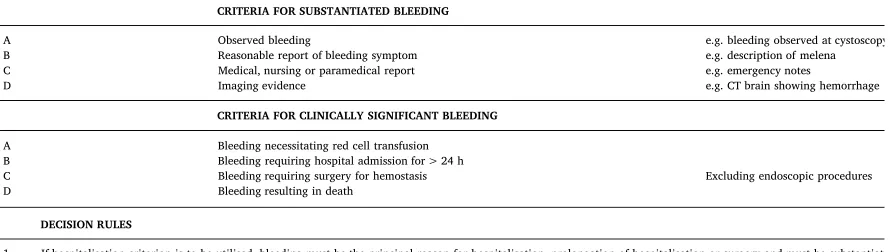
At the commencement of the study, the ASPREE protocol defi clinically signi cant bleeding as non-stroke intracranial bleedingfi extracranial bleeding that was fatal or required transfusion, hospitali-zation, or surgery. To test the de nition, the co-chairs of the Endpointfi Adjudication Committee independently adjudicated 67 events between 2011 and 2013 and then discussed discordance and cases that outside the protocol de nition but were considered to be signi cantfi fi bleeding events. As a result of these discussions transfusion was“ ” fined as intravascular transfusion of red blood cells;‘”hospitalization was defined as admission to the hospital for > 24 h, or prolongation a hospitalization with bleeding as the principal reason; and surgery“ was de ned as any surgical procedure required to stop the bleeding,fi excluding endoscopic procedures and colonoscopies (Table 2). Fatal hemorrhage was de ned as death due to a bleeding event.fi
In addition to meeting the clinically signi cant de nition above,fi fi ASPREE a con rmed CSB event needs to meet the criteria for subfi stantiated bleeding (Table 2). Decision rules were developed to support the protocol de nitions as follows: substantiated bleeding wasfi “ ” fined as: 1) observed bleeding, including through endoscopic instru ments, 2) a reasonable report of symptoms of bleeding (e.g. melena hematemesis), 3) medical, nursing or paramedical report, or 4) imaging evidence such as a computed tomography or magnetic resonance port. Low hemoglobin level, a drop in hemoglobin level, or a positive fecal occult blood test alone did not satisfy the criterion of substantiated bleeding.
[image:4.595.99.544.542.668.2]Following con rmation of the protocol de nition and supportingfi fi decision rules, a committee with expertise in internal medicine, matology, and gastroenterology was convened. In 2016, a neurologist consultant was included in the CSB adjudication committee to assist with di cult cases of intracranial bleeding. Quarterly conference callsffi were held to discuss di cult cases and discordant adjudications,ffi leading to further re nements described below.fi
Table 2
Criteria for substantiation and clinical signi cance of bleeding events in the ASPREE trial, and decision rules. Bleeding events were required to meet both criteriafi before being recorded as clinically signi cant. Decision rules were applied for relevant cases to ensure consistency over time and between adjudicators.fi
CRITERIA FOR SUBSTANTIATED BLEEDING
A Observed bleeding e.g. bleeding observed at cystoscopy
B Reasonable report of bleeding symptom e.g. description of melena
C Medical, nursing or paramedical report e.g. emergency notes
D Imaging evidence e.g. CT brain showing hemorrhage
CRITERIA FOR CLINICALLY SIGNIFICANT BLEEDING
A Bleeding necessitating red cell transfusion
B Bleeding requiring hospital admission for > 24 h
C Bleeding requiring surgery for hemostasis Excluding endoscopic procedures
D Bleeding resulting in death
DECISION RULES
1 If hospitalisation criterion is to be utilised, bleeding must be the principal reason for hospitalisation, prolongation of hospitalisation or surgery and must be substantiated. 2 A positive fecal occult blood test, anemia, or haemoglobin drop is insu cient to substantiate bleeding.ffi
3 Additional adjudication will occur on whether intracranial bleeding was spontaneous (non-traumatic) or induced (traumatic).
4 Elective inpatient surgical procedure (includes therapeutic endoscopic procedures) with prolonged stay, repeat surgery, or transfusion: Does not meet criteria 5 Elective inpatient surgical (includes therapeutic endoscopic procedures) readmitted after discharge primarily for bleeding: Does meet criteria
6 Elective outpatient procedure (includes therapeutic endoscopic procedures) admitted primarily for bleeding: Does meet criteria
2.5. Development of additional clinically signi cant bleeding decision rulesfi
During the trial the CSB committee found it necessary to develop decision rules related to elective surgery because of the frequency of elective procedures and peri-operative bleeding in this age group. The study protocol states that participants will be advised to contact the research staffor research clinic when any surgery is planned. In gen-eral, cessation of study medication was managed by the treating phy-sician. If queried about how study medication should be managed prior to surgery, ASPREE trial sta advised physicians to treat the patient asff if they were taking aspirin and to tell the patient accordingly whether to temporarily cease the study medication.
The CSB committee reasoned that bleeding rates should thus be similar in the aspirin and placebo groups for elective procedures, but might not be similar for non-elective procedures where study medica-tion cannot be stopped in advance. Furthermore, because bleeding is common and expected for many procedures, it was di cult for ad-ffi judicators to determine what constituted excess bleeding above an ex-pected threshold. To reduce over-reporting of bleeding and mis-classi cation,fi bleeding following elective inpatient surgery or endoscopic procedures was not counted as CSB, even if the bleeding was severe, required prolongation of the hospital stay, required trans-fusion, or required re-operation to stop the bleeding. For patients who were discharged from the hospital and later readmitted for bleeding, or were admitted due to bleeding following elective outpatient surgery or therapeutic endoscopic procedures, the event was adjudicated as a CSB event. Bleeding following non-elective hospitalized surgery (such as for hip fractures or emergency coronary bypass surgery) was also classi edfi as a CSB event if it prolonged the hospital stay, or required transfusion, another operation to stop the bleeding, or re-admission. After several rounds of case discussion the CSB committee found these rules for post-surgical bleeding reduced the number of discordant cases and were generally straightforward to apply.
We describe cases that illustrate how the ASPREE CSB de nitionfi and decision rules were applied.
1)Anemia without overt bleeding: The participant was admitted to the hospital with iron de ciency anemia, epigastric discomfort, andfi weight loss, and had recently received an iron and blood transfu-sion as an outpatient. During the admistransfu-sion, upper gastrointestinal endoscopy showed multiple gastric and duodenal erosions but no active bleeding. Colonoscopy also did not reveal any bleeding source. Proton pump inhibitors were prescribed. This case was not considered to be a CSB event because there was no record of overt bleeding, and therefore did not meet criteria of substantiated bleeding. The participant was hospitalized several months later with hematemesis and that case was adjudicated as a CSB event. 2)Bleeding not the principal reason for admission to hospital or death: The
participant was in a head-on automobile crash and was admitted to the hospital with facial fractures, pneumocephalus, sternal frac-ture, bilateral pulmonary contusions, and multiple rib fractures. A subarachnoid hemorrhage and a subdural hematoma were treated conservatively. The participant died 24 days later following a complicated course that included pneumonia. At post-mortem ex-amination the immediate cause of death was judged to be large volume aspiration and the underlying cause of death was multiple injuries sustained in a motor vehicle accident. This case was judged not to be a CSB event because the intracranial bleeding was not the principal reason for the hospital admission or the death and the bleeding was not treated surgically.
3)Bleeding not the principal reason for admission to hospital or death: The participant had several episodes of hematuria that led to an out-patient evaluation. A renal ultrasound scan showed multifocal bladder tumors likely to be transitional cell carcinoma. He was admitted for elective transurethral resection of the bladder tumor. Several bladder tumors were resected. Free clot was observed in the
bladder and continuous irrigation was instituted post-operatively. The patient was discharged after a successful test of void on post-operative day 2. Although the patient had hematuria and blood clots were observed in the bladder, the case was adjudicated as a CSB event because the principal reason for the hospital admission was to resect the bladder tumors rather than to treat the bleeding. (Similar cases in women involve hospitalizations for elective uterine surgery to diagnose or treat suspected malignancy after outpatient evaluations for vaginal bleeding.)
4)Management of bleeding as an outpatient: The participant fell struck his head. A week later an outpatient CT scan showed subdural hematoma that appeared chronic rather than acute. participant was advised to return in 4–6 weeks for a repeat scan sooner if he had more symptoms; the repeat scan showed resolu-tion. This case was judged not to be a CSB event because the patient was not admitted or treated surgically.
5)Elective surgical procedures with bleeding complications: The partici pant had an elective lumbar laminectomy and later during same hospital stay required surgery to drain a lumbar epidural hematoma. This case was adjudicated as not a CSB event because the laminectomy was elective, even though the hospital stay prolonged and surgery was required to treat post-operative bleeding.
6)Emergency procedure with documented bleeding: The participant and sustained a hip fracture requiring emergency surgery transfusion of 2 units of red blood cells for intraoperative bleeding with a post-operative hemoglobin drop from 11.6 to 6.3 g/dl. This case was adjudicated as a CSB event as the patient had traoperative and postoperative blood loss and the procedure non-elective.
7)Post-operative bleeding requiring re-admission: The participant derwent elective knee replacement surgery and was discharged, re-admitted four days later for severe bleeding at the surgical that required re-operation and drain placement. Although the knee replacement was elective, this case was adjudicated as a CSB event since the bleeding required re-admission.
8)Outpatient procedure that required hospital admission for bleeding: participant had a rectal polyp removed as an outpatient. Following the procedure there was rectal bleeding with a hemoglobin drop 7.3 g/dl. The participant was admitted to the hospital for servation and transfusion. Although the polypectomy was elective, the case was adjudicated as a CSB event since the patient required admission and transfusion.
9)Death due to bleeding: The participant unexpectedly developed throat discomfort, rapidly lost consciousness, and could not resuscitated. Post-mortem examination showed hemopericardium and dissection of the thoracic aorta that was judged to be the cause of death. This case was adjudicated as a CSB event since there substantiated fatal bleeding.
signi cant bleeding criteria were applied systematically across all casesfi over the 7 year period of the study. The audit was conducted by two members of the committee, two independent clinicians and the clinical Chair of the Endpoint Adjudication Committee. A future publication will include quantitative information about the number of case reports, positive and negative con rmation rates, discordance rates, and qualityfi control audit results.
3. Discussion
The purpose of capturing and adjudicating CSB events in ASPREE is to understand the risk of aspirin treatment for primary prevention in the elderly, speci cally bleeding events that are important enough tofi require surgery, transfusion or hospitalization, or to result in death. A de nition of CSB was established that would make clear which clinicalfi categories of bleeding were included and which were not. In most previous aspirin primary prevention trials to date, the working de ni-fi tion of clinically signi cant bleeding is not readily available in thefi published literature and often needs to be inferred from tables and footnotes. Given the absence of clear guidance, the CSB committee developed decision rules over the course of ASPREE to deal with new types of bleeding cases as they arose, with features outside the protocol de nitions, to ensure that similar cases in the future would be ad-fi judicated systematically in accord with the decision rule. Holding reg-ular adjudicator teleconferences to discuss di cult and discordantffi cases was an essential tool for developing consensus about bleeding events that occurred in a wide variety of circumstances and organ systems.
A consensus bleeding de nition has been proposed to address thefi heterogeneity in bleeding de nitions used in cardiovascular trials infi acute coronary syndromes and percutaneous coronary interventions [10]. This de nition describes ve levels of bleeding from none to fatal,fi fi focuses heavily on procedural bleeding, and incorporates both clinical events and changes in hemoglobin levels. Other cardiovascular trial bleeding de nitions include Thrombolysis in Myocardial Infarctionfi (TIMI), International Society on Thromobosis and Hemostasis (ISTH), and Global Utilization of Streptokinase and Tissue Plasminogen Acti-vator for Occluded Coronary Arteries (GUSTO) trial criteria [12]. All three of these have subclassi cations of bleeding severity, and the TIMIfi and ISTH major bleeding de nitions include change in hemoglobinfi levels. Similarly, the de nition of major bleeding in the de nitionfi fi proposed for trials of antihemostatic agents (anticoagulants, anti-platelet drugs, and brinolytic agents) includes a change in hemoglobinfi level [13]. These trials regularly measure hemoglobin peri-procedu-rally, particularly with signi cant interventions. None of these de ni-fi fi tions was well-suited for a primary prevention trial in which there is no procedural intervention likely to precipitate bleeding and study he-moglobin measures are conducted annually.
Previous primary prevention studies have widely variable de ni-fi tions of what constitutes signi cant bleeding (fi Table 1) [14–24]. For example, the Hypertension Optimal Treatment (HOT) trial reported major bleeding from gastrointestinal, cerebral and other sites that was fatal, life-threatening, disabling, or required hospital admission, but did not include transfusion as an indicator of severity [17]. In contrast, the Aspirin for Asymptomatic Atherosclerosis (AAA) trial included as major bleeds only those that required hospital admission to control the bleeding, but not admissions for diagnostic purposes or observation [23]. The Japanese Primary Prevention of Atherosclerosis with Aspirin in Diabetes (JPAD) reported bleeding from gastrointestinal and other sites, but did not report the level of severity of bleeding other than to state that 4 episodes of severe gastrointestinal bleeding required transfusion in the aspirin group [21]. Only a few studies reported on anemia (not de ned further in AAA or JPAD) or low hemoglobin levelsfi (Early Treatment of Diabetic Retinopathy Study [ETDRS]) [16 21 23, , ]. This lack of consensus prompted the ASPREE investigators to develop their own criteria that would represent clinical and patient-important
outcomes related to bleeding. In addition, the di culty of determiningffi from the medical literature clear de nitions of terms or the methodsfi adjudicating bleeding events prompted the development of this report.
There are a number of limitations to the ASPREE de nition of CSB.fi First, we cannot be certain we have captured all important aspirin-re-lated bleeding, as some bleeding may result in a subclinical blood where overt bleeding does not occur and a source is never localized. However, hemoglobin is measured annually as a safety laboratory measure in ASPREE; thus di erential changes in hemoglobin andff development of anemia will be reported separately from CSB. Second, while our decision rules regarding elective surgical procedures were developed to improve consistency and concordance of adjudication, they may have resulted in misclassi cation of some serious bleedingfi events that could have been related to aspirin. Third, we did not include patients in developing the CSB de nition, and in future work, it willfi important to consider including bleeding events of signi cance tofi tients quality of life that may not have been captured in our criteria.’ Examples of bleeding that patients may consider important are pre-sentation to the emergency department for epistaxis management subdural hematomas that are managed in the outpatient setting. Finally, whether this de nition is broadly generalizable in otherfi pulations and healthcare settings is unknown. The strengths of approach include independent adjudication of all CSB endpoints by least two reviewers and ongoing re nement of criteria and decisionfi rules that adjudicatorsfind easier to apply with consistency. 4. Conclusion
This paper presents a detailed description of the development, adaptation, and application of a de nition of clinically signi cantfi fi bleeding in a large primary prevention trial of aspirin in community-dwelling elderly men and women. To our knowledge no other trial presented similarly detailed methods, which are needed given the portance of bleeding risk in this population. This detailed methodologic description of the adjudication process and de nition of bleeding eventsfi will aid in the interpretation of the ASPREE trial results. It provides benchmark for development of a consensus de nition for future aspirinfi primary prevention trials.
Funding
The work was supported by the National Institute on Aging and National Cancer Institute at the National Institutes of Health (grant number U01AG029824); the National Health and Medical Research Council of Australia (grant numbers 334047, 1127060); Monash University (Australia); the Victorian Cancer Agency (Australia). Acknowledgements
Bayer AG provided aspirin and matching placebo. The authors knowledge the dedicated and skilled staffin Australia and the U.S. the conduct of the trial. The authors also are most grateful to ASPREE participants, who so willingly volunteered for this study, the general practitioners and medical clinics who support the partici-pants in the ASPREE study. The authors would like to thank Sue Duval, PhD and Corinne Evans, MPP for their assistance with locating identifying bleeding de nitions in previous aspirin primary preventionfi trials.
References
[1] Antithrombotic Trialists Collaboration, Collaborative meta-analysis of randomised trials of antiplatelet therapy for prevention of death, myocardial infarction, and stroke in high risk patients, BMJ 324 (7329) (2002) 71 86– https://www.ncbi.nlm. nih.gov/pubmed/11786451.
doi.org/10.1016/j.amjmed.2007.10.002.
[3] J.M. Guirguis-Blake, C.V. Evans, C.A. Senger, E.A. O'Connor, E.P. Whitlock, Aspirin for the primary prevention of cardiovascular events: a systematic evidence review for the U.S. Preventive Services Task Force, Ann. Intern. Med. 164 (12) (2016) 804 813,– http://dx.doi.org/10.7326/M15-2113.
[4] J. Chubak, E.P. Whitlock, S.B. Williams, A. Kamineni, B.U. Burda, D.S. Buist, M.L. Anderson, Aspirin for the prevention of cancer incidence and mortality: sys-tematic evidence reviews for the U.S. Preventive Services Task Force, Ann. Intern. Med. 164 (12) (2016) 814 825,– http://dx.doi.org/10.7326/M15-2117. [5] E.P. Whitlock, B.U. Burda, S.B. Williams, J.M. Guirguis-Blake, C.V. Evans, Bleeding
risks with aspirin use for primary prevention in adults: a systematic review for the U.S. Preventive Services Task Force, Ann. Intern. Med. 164 (12) (2016) 826 835,–
http://dx.doi.org/10.7326/M15-2112.
[6] Antithrombotic Trialists Collaboration, C. Baigent, L. Blackwell, R. Collins, J. Emberson, J. Godwin, R. Peto, J. Buring, C. Hennekens, P. Kearney, T. Meade, C. Patrono, M.C. Roncaglioni, A. Zanchetti, Aspirin in the primary and secondary prevention of vascular disease: collaborative meta-analysis of individual participant data from randomised trials, Lancet 373 (9678) (2009) 1849 1860,– http://dx.doi. org/10.1016/S0140-6736(09) 60503 1–.
[7] G. De Berardis, G. Lucisano, A. D'Ettorre, F. Pellegrini, V. Lepore, G. Tognoni, A. Nicolucci, Association of aspirin use with major bleeding in patients with and without diabetes, JAMA 307 (21) (2012) 2286 2294,– http://dx.doi.org/10.1001/ jama.2012.5034.
[8] L. Li, O.C. Geraghty, Z. Mehta, P.M. Rothwell, S. Oxford Vascular, Age-speci c risks,fi severity, time course, and outcome of bleeding on long-term antiplatelet treatment after vascular events: a population-based cohort study, Lancet 390 (10093) (2017) 490 499,– http://dx.doi.org/10.1016/S0140-6736(17) 30770 30775– .
[9] Aspree Investigator Group, Study design of ASPirin in Reducing Events in the Elderly (ASPREE): a randomized, controlled trial, Contemp. Clin. Trials 36 (2) (2013) 555 564,– http://dx.doi.org/10.1016/j.cct.2013.09.014.
[10] R. Mehran, S.V. Rao, D.L. Bhatt, C.M. Gibson, A. Caixeta, J. Eikelboom, S. Kaul, S.D. Wiviott, V. Menon, E. Nikolsky, V. Serebruany, M. Valgimigli, P. Vranckx, D. Taggart, J.F. Sabik, D.E. Cutlip, M.W. Kruco , E.M. Ohman, P.G. Steg, H. White,ff Standardized bleeding de nitions for cardiovascular clinical trials: a consensusfi report from the Bleeding Academic Research Consortium, Circulation 123 (23) (2011) 2736 2747,– http://dx.doi.org/10.1161/CIRCULATIONAHA.110.009449. [11] J.J. McNeil, R.L. Woods, M.R. Nelson, A.M. Murray, C.M. Reid, B. Kirpach,
E. Storey, R.C. Shah, R.S. Wolfe, A.M. Tonkin, A.B. Newman, J.D. Williamson, J.E. Lockery, K.L. Margolis, M.E. Ernst, W.P. Abhayaratna, N. Stocks, S.M. Fitzgerald, R.E. Trevaks, S.G. Orchard, L.J. Beilin, G.A. Donnan, P. Gibbs, C.I. Johnston, R.H. GrimmAspree Investigator Group, Baseline characteristics of participants in the ASPREE (ASPirin in reducing events in the elderly) study, J Gerontol A Biol Sci Med Sci (2017),http://dx.doi.org/10.1093/gerona/glw342. [12] C.M. Gibson, R. Mehran, C. Bode, J. Halperin, F.W. Verheugt, P. Wildgoose,
M. Birmingham, J. Ianus, P. Burton, M. van Eickels, S. Korjian, Y. Daaboul, G.Y. Lip, M. Cohen, S. Husted, E.D. Peterson, K.A. Fox, Prevention of bleeding in patients with atrial brillation undergoing PCI, N. Engl. J. Med. 375 (25) (2016)fi 2423 2434,– http://dx.doi.org/10.1056/NEJMoa1611594.
[13] S. Schulman, C. KearonSubcommittee on control of anticoagulation of the Scienti cfi Standardization, committee of the International Society on Thrombosis Haemostasis, Definition of major bleeding in clinical investigations of antihemo-static medicinal products in non-surgical patients, J Thromb Haemost 3 (4) (2005) 692 694,– http://dx.doi.org/10.1111/j.1538-7836.2005.01204.x.
[14] R. Peto, R. Gray, R. Collins, K. Wheatley, C. Hennekens, K. Jamrozik, C. Warlow,
B. Hafner, E. Thompson, S. Norton, et al., Randomised trial of prophylactic daily aspirin in British male doctors, Br Med J (Clin Res Ed) 296 (6618) (1988) 313–
https://www.ncbi.nlm.nih.gov/pubmed/3125882.
[15] Steering Committee of the Physicians' Health Study Research Group, Final report the aspirin component of the ongoing Physicians' Health Study, N. Engl. J. Med. (3) (1989) 129 135,– http://dx.doi.org/10.1056/NEJM198907203210301. [16] ETDRS Investigators, Aspirin e ects on mortality and morbidity in patients withff
diabetes mellitus. Early Treatment Diabetic Retinopathy Study report 14, JAMA 268 (10) (1992) 1292 1300– https://www.ncbi.nlm.nih.gov/pubmed/1507375 [17] L. Hansson, A. Zanchetti, S.G. Carruthers, B. Dahlof, D. Elmfeldt, S. Julius,
J. Menard, K.H. Rahn, H. Wedel, S. Westerling, E ects of intensive blood-pressureff lowering and low-dose aspirin in patients with hypertension: principal results of Hypertension Optimal Treatment (HOT) randomised trial. HOT Study Group, Lancet 351 (9118) (1998) 1755 1762– https://www.ncbi.nlm.nih.gov/pubmed/ 9635947.
[18] Thrombosis prevention trial: randomised trial of low-intensity oral anticoagulation with warfarin and low-dose aspirin in the primary prevention of ischaemic heart disease in men at increased risk. The Medical Research Council's General Practice Research Framework, Lancet 351 (9098) (1998) 233 241– https://www.ncbi.nlm. nih.gov/pubmed/9457092.
[19] G. De GaetanoCollaborative Group of the Primary Prevention Project, Low-dose aspirin and vitamin E in people at cardiovascular risk: a randomised trial in general practice, Lancet 357 (9250) (2001) 89 95– https://www.ncbi.nlm.nih.gov/pubmed/ 11197445.
[20] P.M. Ridker, N.R. Cook, I.M. Lee, D. Gordon, J.M. Gaziano, J.E. Manson, C.H. Hennekens, J.E. Buring, A randomized trial of low-dose aspirin in the primary prevention of cardiovascular disease in women, N. Engl. J. Med. 352 (13) (2005) 1293 1304,– http://dx.doi.org/10.1056/NEJMoa050613.
[21] H. Ogawa, M. Nakayama, T. Morimoto, S. Uemura, M. Kanauchi, N. Doi, H. Jinnouchi, S. Sugiyama, Y. Saito, I. Japanese Primary Prevention of Atherosclerosis With Aspirin for Diabetes Trial, Low-dose aspirin for primary vention of atherosclerotic events in patients with type 2 diabetes: a randomized controlled trial, JAMA 300 (18) (2008) 2134 2141,– http://dx.doi.org/10.1001/ jama.2008.623.
[22] J. Belch, A. MacCuish, I. Campbell, S. Cobbe, R. Taylor, R. Prescott, R. Lee, J. Bancroft, S. MacEwan, J. Shepherd, P. Macfarlane, A. Morris, R. Jung, C. Kelly, A. Connacher, N. Peden, A. Jamieson, D. Matthews, G. Leese, J. McKnight, I. O'Brien, C. Semple, J. Petrie, D. Gordon, S. Pringle, R. MacWalter, D. Prevention of Progression of Arterial, G. Diabetes Study, G. Diabetes Registry, E. Royal College of Physicians, The prevention of progression of arterial disease and diabetes (POPADAD) trial: factorial randomised placebo controlled trial of aspirin and tioxidants in patients with diabetes and asymptomatic peripheral arterial disease, BMJ 337 (2008) a1840,http://dx.doi.org/10.1136/bmj.a1840.
[23] F.G. Fowkes, J.F. Price, M.C. Stewart, I. Butcher, G.C. Leng, A.C. Pell, P.A. Sandercock, K.A. Fox, G.D. Lowe, G.D. Murray, T. Aspirin for Asymptomatic Atherosclerosis, Aspirin for prevention of cardiovascular events in a general po-pulation screened for a low ankle brachial index: a randomized controlled trial, JAMA 303 (9) (2010) 841 848,– http://dx.doi.org/10.1001/jama.2010.221. [24] Y. Ikeda, K. Shimada, T. Teramoto, S. Uchiyama, T. Yamazaki, S. Oikawa,