in the primary classroom through purposeful
movement
By Emily McGregor
A dissertation submitted in partial fulfilment of the requirements
for the degree of
Bachelor of Education (Honours)
Faculty of Education
University of Tasmania, Launceston
DECLARATION
I certify that this dissertation contains no material that has been accepted for the award of any other degree or diploma in any institute, college or university. In addition, to the best of my knowledge and belief, it contains no material previously published or written by another person, except where due reference is made in the text of the dissertation.
…………..……….
Table of Contents
Chapter 1 Introduction ... 1
Chapter Introduction ... 1
Background of Classroom Practices ... 1
Research Questions ... 2
Definition of Terms ... 3
Personal Justification of Research ... 4
Background ... 5
The Significance of the Research ... 5
Assumptions ... 7
Limitations ... 7
Chapter Summary ... 8
Chapter 2 Literature Review ... 9
Chapter Introduction ... 9
Theoretical Framework ... 9
Benefits of Movement... 10
Strategies to Employ Movement ... 13
Gender Differences ... 15
Chapter Summary ... 16
Chapter 3 Methodology ... 18
Chapter Introduction ... 18
Participants ... 18
Methodological Framework ... 19
Ethical Considerations ... 20
Procedure ... 22
Data Analysis ... 23
A Timeline for Implementation ... 23
Chapter Summary ... 24
Chapter 4 Results and Discussion ... 26
Chapter Introduction ... 26
Research Question 1: What strategies do primary school teachers use to incorporate physical movement into classroom learning? ... 27
Research Question 2: Why do primary school teachers incorporate physical movement into classroom learning? ... 43
Chapter Conclusion ... 48
Chapter 5 Conclusion ... 49
Chapter Introduction ... 49
Answering the Research Questions ... 49
Key Findings ... 49
Recommendations ... 52
Future Research ... 53
Chapter Summary ... 55
References ... 56
Appendix A ... 63
Appendix B ... 65
Appendix C ... 66
Appendix D ... 69
PERMISSION TO COPY
ACKNOWLEDGMENTS
I would like to express my appreciation to everyone who has supported and guided me though the process of writing this thesis. I especially thank my supervisors Dr Karen Swabey and Dr Darren Pullen. The advice and guidance which you have provided have enabled me to make this research my own. I value the patience which you have both demonstrated each time I asked for your assistance.
I would also like to thank the participants who were willing to take part in my study. Without the support, cooperation and enthusiasm of the teachers, this research would not have been possible. Thank you for your courteous responses that made the study a success. Thank you to the Honours students of 2014, my family and friends for the continual support and
Abstract
It is estimated that 85 percent of students in school are natural kinaesthetic learners. It has been suggested that these particular learners are not being catered to through traditional teaching practices. There is a growing body of evidence to support the connection between physical movement and increased student academic achievement. This research differs from existing literature as it focuses on teachers’ inclusion of physical movement in everyday classroom learning. The aim of this research was to investigate how and why primary school teachers incorporate movement into everyday classroom learning.
Qualitatively, significant differences were found between how teachers believed they integrated movement into their everyday classroom learning, and how movement can be integrated to benefit students’ engagement and academic achievement. These findings suggest that the integration of movement into everyday classroom learning significantly increases student engagement. Professional development for teachers as well as communities of practice, need to be accessible by teachers in order for them to learn how to integrate movement into their
everyday classroom learning and therefore increase their students’ academic achievement as well
List of Tables
Table 1. Gantt Chart Showing Timeline for Implementation... 24
List of Figures
Figure 1. Themes which Evolved from the Responses Received from Participant Data ... 26
Chapter 1 Introduction Chapter Introduction
This chapter outlines the importance of the research in light of a clear and fundamental gap in the current literature between how teachers should incorporate movement in everyday activity for their students, and how it is incorporated at the classroom level. The chapter begins with a discussion of the background of classroom movement practice and the needs of students that are not currently being met. Following this, my personal justification for the study is stated, along with the research questions, definition of terms, background and significance of the research. The final sections of this chapter discuss the assumptions and limitations of the research.
Background of Classroom Practices
catering to the needs of kinaesthetic learners. As a result of this, kinaesthetic learners have
become disengaged and their academic performance has suffered (Kraft, 1990; Spielmann, 2012). Research suggests that the inclusion of physical movement into children’s lives does improve
academic performance and levels of engagement (Smith & Pellegrini, 2013; Wade, 2008). The aim of this research is to investigate the reasons why teachers either incorporate or do not incorporate physical movement into their everyday classroom learning activities, and to look at the strategies they might use if they do incorporate physical movement into their teaching practices. The findings of this investigation will provide future primary teachers with first hand, authentic insights into the specific reasons and strategies for the incorporation of physical movement in the primary classroom; assisting primary school teachers to feel more confident and comfortable integrating these strategies into their classroom in a range of curriculum areas to improve their students’ learning. Teachers do however, need to ensure the strategies they use to incorporate physical movement into the classroom are culturally appropriate to the situation and needs of their students (Ashman & Elkins, 2012).
Research Questions
In order to ascertain if and how primary school teachers were incorporating physical movement into their everyday classroom learning, two research questions were formulated:
1. What strategies do primary school teachers use to incorporate physical movement into classroom learning?
they use it as a teaching strategy. To understand the two research questions, qualitative data was gathered and analysed from a phenomenological theoretical perspective with aspects of grounded theory.
Definition of Terms
In the context of these research questions, the term ‘physical movement’ was defined as “any bodily movement produced by skeletal muscles that require energy expenditure” (World
Health Organisation, 2014, p. 1). For the purpose of clarity throughout this research project, the terms ‘movement’ and ‘physical movement’ are used interchangeably as the terms varied in
literature and participants’ responses. ‘Kinaesthetic learners’ are defined by the World Health Organisation (2013) as those who “process new information best when it can be touched or manipulated” (p.11). The term, ‘strategies’ refers to content in the teacher lesson plans which
detail the practical methods teachers use to incorporate physical movement into their classroom. ‘Classroom learning’ is defined as students achieving the intended outcomes based on the
Australian Curriculum (ACARA, 2014a). These definitions were used to provide boundaries to the research questions, as well as allowing for breadth of exploration. For example one key learning area such as mathematics, which includes numeracy but does not necessarily
incorporate transferable skills throughout the primary school mathematics curriculum, does not become the focus.
The term ‘explicit’ is defined by the Oxford University Press (2014b) as “stated clearly and in detail, leaving no room for confusion or doubt” (p. 1). The explicit integration of
which will include movement and why they are doing so. The term ‘embedded’ is defined by the Oxford University Press (2014a) as “implant (movement) so that it becomes ingrained within a particular context” (p. 2). Embedded movement is the inclusion of movement which is integrated into everyday classroom learning and various curriculum areas for the purposes of student
engagement and increased academic performance.
Personal Justification of Research
I arrived at these research questions after having a conversation with my Mother about ending my amateur dancing career, and how learning multiple styles of dance for 10 years may have influenced my intellectual development as a child. This led her to relate the experiences of my elder brother, who learnt multiplication facts in grade 3 through the use of aerobic activities in the school grounds. Traditionally, multiplication facts were taught through a rote learning style also known as skill and drill. A kinaesthetic learning style seemed to have a more effective level of retention and engagement for my brother and his peers (Kraft, 1990).
The research questions held my interest and curiosity for the duration of the research since, as a pre-service teacher, I am constantly striving to improve my pedagogical content knowledge, teaching performance and practices. Based on my personal experiences from
research questions produce qualitative results that can be trialled and potentially proved to improve students’ engagement, the kinaesthetic learning style may then be used to reengage
students to become more active learners.
Background
Gardner’s theory of multiple intelligences (1983), and more specifically
bodily-kinaesthetic intelligence, reinforces the benefits of movement, physical activity, hands-on
learning and role play for students to communicate with others through their learning (Campbell, Campbell, & Dickinson, 1996). Gaining a keen sense of bodily awareness within a classroom context will broaden students’ opportunities in other areas of the curriculum, not explicitly the key learning areas of English and Mathematics education (Kraft, 1990).
The Significance of the Research
This research seeks to investigate how and why primary school teachers incorporate movement into everyday classroom learning. Recent research suggests that learning is enhanced when movement is used as a strategy in the teaching process (Smith & Pellegrini, 2013).
Learning is enhanced through an increase in students’ level of engagement throughout everyday classroom learning (Spielmann, 2012). Kinaesthetic learners are often left behind in class as their learning style is rarely catered for by classroom teachers (Whitmire, 2010). Juxtaposing this, Kraft (1990) believed that kinaesthetic learning styles were more effective at enhancing retention levels and engagement in primary school students, as students are actively involved in the
learning by engaging students in the learning, drawing on the students’ interests and linking this
to their planning when including movement in everyday classroom learning. Movement promotes blood flow in the body, increasing the levels of oxygen in the brain and in turn, supporting increased neural transmission and synaptic connections (Ratey, 2008). The above statements demonstrate the insight this research will provide to primary classroom teachers, and also the valuable contribution kinaesthetic movement can have on students’ engagement and
retention of information. One of the intended outcomes of this research is to increase the
engagement of students who are natural kinaesthetic learners, which is estimated to be 85 percent, whilst also engaging others with differing learning styles (Spielmann, 2012). Ozbas’ (2013) study found that 29.5 percent of students learned kinaesthetically, while 41.7 percent learned visually and 18.9 percent learned through auditory means. Although Spielmann (2012) and Ozbas (2013) have differing views about the exact percentage of students who learn
kinaesthetically, they both believed that a significant percentage of students learn kinaesthetically. Therefore, teachers need to be catering to kinaesthetic learners equally as much as they are to the other learning styles. Some additional benefits of the incorporation of movement in the
classroom are towards increasing students’ physical health and wellbeing as well as their social and emotional health (DoE, 2007). These benefits, however, will not be investigated during this study due to limited time constraints of an embedded honours project.
Wade (2008) and Weggelaar (2006) present sufficient evidence to support the use of movement with dyslexic and autistic children. Wade (2008) analysed the extent to which
in anecdotal records, that students’ academic achievement has increased in classrooms where
movement has been actively incorporated into everyday learning practices (Donnelly &
Lambourne, 2011). It is the absence of the rationale as to why primary school teachers do or do not incorporate movement into everyday classroom learning in the literature, that creates the gap for this research to break new ground and this is therefore why it is of particular significance.
This research is also culturally relevant to Australian and in particular Tasmanian teachers, as the strategies are linked to the new Australian Curriculum (ACARA, 2014a). The findings of this research will benefit future primary teachers by identifying factors which may impact upon the use of movement in primary classrooms. These factors were identified, when the researcher asked how teachers incorporated movement into their everyday classroom practices. The strategies and pedagogical content knowledge the participants revealed will be published and considered for adoption by their teaching colleagues.
Assumptions
The major assumption that was made in the present study was that there would be at least 1 out of the 10 teachers interviewed at the selected school, who incorporated movement into their everyday classroom learning. This assumption was based on my personal observations when on professional experiences, as discussed in Chapter 1.
Limitations
The research questions provide a degree of uncertainty due to the absence of knowledge of the number of primary school teachers who, if at all, incorporate movement into their
adaptation and change, upon further reflection and development of research results. Another limitation of this research was that I only interviewed teachers from one school with one
particular demographic of students, at one point in time. The research could have encompassed a broader range of participants from differing socio-economic areas, but again due to embedded honours time constraints, this was ruled out for the purpose of this research.
Chapter Summary
Chapter 2 Literature Review
Chapter Introduction
Chapter 2 reviews a broad body of literature spanning the fields of learning, pedagogy, brain development and physical movement. By drawing on a vast body of relevant literature across multiple fields of study, the chapter gives a background of the current context in relation to kinaesthetic learning and the benefit of strategies to incorporate movement into everyday classroom learning practices.
This chapter presents the literature relevant to this research investigation. The existing research relating to the inclusion of physical movement in everyday classroom learning and the reasons for this has identified some areas of interest. These reflect the strategies and reasons teachers incorporate physical movement into classroom learning and include a theoretical framework, benefits of movement, strategies to employ movement and gender differences.
Theoretical Framework
Gardner’s (1983) theory of multiple intelligences is the foundation on which the
self...” (p. 235). Learning with only the mind limits students’ opportunities for learning and as a
result of this students often fail to engage in higher order thinking. Thus, due to the definition and evidence highlighting the need for a holistic approach to learning, Gardner’s (1983) theory
of multiple intelligences was deemed appropriate to underpin this study.
Benefits of Movement
Whilst there is much literature on the impact of physical activity on children's physical health, mental function and psychological wellbeing, there is little known about learning whilst undertaking physical activity (Tomporowski, Davis, Miller, & Naglieri, 2008). There is also a lack of empirical evidence within scientific studies as to whether moving whilst undertaking teaching instruction causes brain development or whether movement assists in behaviour management which readies students for learning. It seems that brain-based learning strategies require the flow of the chemical dopamine as pleasure must be part of learning (Willis, 2006). Exercise stimulates the release of dopamine, which is a neurotransmitter in the brain; this affects a person’s ability to learn (Ratey, 2008).
Health Benefits
undertake 60 minutes or more of physical activity per day at least three days a week; it should include aerobic, muscle-strengthening and bone-strengthening exercise (US Department of Health and Human Services, 2008; Department of Education [DoE], 2007). When Lobstein, Baur and Uauy (2004) described the rising crisis of childhood obesity, they estimated that 10 percent of school-aged children in the US have excess body fat which leads to significant risk factors for heart disease and type 2 diabetes, amongst other serious health issues. Similarly, within Australia one in four children are overweight or obese (Australian Institute of Health and Welfare [AIHW], 2013). Lobstein et al., (2004) also discussed the issue of overweight boys maturing later than their non-overweight school friends. These issues, once perhaps rare, are now routinely observed and managed by health departments the world over. It is believed that limited physical activity, particularly in lower income families, could be minimised if non-competitive physical activities were offered at school (Lobstein et al., 2004).
Benefits to Student Learning
To be valid for classroom use research must be extensive, repeated and relevant (Sprenger, 2010). Currently there is much anecdotal evidence that movement improves learning outcomes, but few published studies. Some of the studies focus on a particular student group, for example one study analysed to what extent students with autism could increase achievement when kinaesthetic learning processes were used (Wade, 2008). Weggelaar (2006) also found that dyslexic students could be assisted in learning to read and write by using kinaesthetic feedback.
Bodrova and Leong (2007) based on Vygotsky’s research (1978). Vygotsky emphasised the importance of social pretend play for the early development of executive functions. Children who follow this curriculum spend a lot of time moving whilst undertaking pretend play. This accentuates the importance of the inclusion of movement in everyday classroom learning for the development of students’ executive functions at all year levels.
Lengel and Kuczala (2010) believed teachers become facilitators of learning and
designers of the learning environment by using the six part theoretical framework that they have devised in order to thoughtfully and purposefully use movement to raise student achievement standards. Their six purposes of movement are: prepare the brain, produce brain breaks, support exercise fitness, develop class cohesion, and review and teach content. They also stated that engagement and enthusiasm are natural by-products of kinaesthetic classroom training.
Benefits to Student Learning in the Classroom
Goldin-Meadow, Alibali, and Church (1993) identified that gesturing by students may not only identify them as ready to learn, it may actually aid in their learning. Goldin-Meadow, Cook and Mitchell (2009) explored the role of gesturing in learning. They studied whether children gestured during a mathematics lesson, and also the particular gestures they produced. The outcome was that the foundation for new knowledge may be laid by simply telling learners how to move their hands. In this example, children were shown a mathematics problem 6+3+4=_+4; children were taught a script “I want to make one side equal to the other side” and also pointed
with a V hand to 6+3 and their index finger to the blank (Note that if these two numbers are grouped together and summed, they generate the number that belongs in the blank) (Goldin-Meadow, Cook & Mitchell, 2009, p. 3). It was found that students who used correct gestures learned more than those using partially correct gestures or those using no gestures. Although the above studies provide evidence of the benefits movement can have on student learning in the classroom, it does not investigate the attitudes or strategies teachers use to do so. Research detailing both the strategies used by teachers, as well as, the benefits of student learning in the classroom, was unable to be located due to the limited volume of research in this specific field of research.
Strategies to Employ Movement
In analysing the literature there appears to be two styles of teaching that promotes movement. The ‘architectural’ style has a carefully defined method, scaffold or system.
and combines the three modes of learning: oral, visual and kinaesthetic (Cardinale, 1990). The whole brain learning system was developed by three teachers in California, Chris Biffle, Jay Vanderfin, and Chris Rekstad in 1999 (Pederson, 2011). Critics of the whole brain method believe that it is based on rote learning and does not help to develop higher order thinking, abstract reasoning or problem solving and there is no research on its effectiveness. However, its supporters believe that it creates a readiness for learning, builds motivation and engages students (Wees, 2012).
The other style of teaching that promotes movement is more flexible and relies on the teacher to find, evaluate or develop what they think is appropriate for their class; this is known as “bespoke” (do it yourself/ renovator/ tailor made/ adapted for a specific purpose). This is easier
to implement than the architectural style, as the teacher can progress at their own pace, can experiment with what they think will work in their classroom and with their students, and it can also be adapted to be culturally appropriate. An example of this in a numeracy context is to ask students to form a circle and have one to walk around the circle and the class counts the steps to illustrate the circumference. Following this, the student walks across the circle and the steps are counted to illustrate the diameter and then the two figures are compared and discussed and the formula that contains the relationship between radius and diameter is constructed (Lengel, & Kuczala, 2010). Another example is for students in an English class to role play epilogues from a drama they have studied or to research poets they are studying and present findings using a talk show format in which a moderator interviews three guest poets in their historical context
investigate teachers’ and students’ attitudes towards the shift in their pedagogy to implement one
of the strategies listed or another that is yet to be investigated.
Gender Differences
The other issue that has provided much discussion in the research literature is that of gender differences in learning, particularly in the area of literacy. McBride (2011) believed that boys need movement to learn, and that many "teaching methods don't accommodate the boy's spatial mechanical brain. Most of what students do in school involves language" and "the chief cause of boy failure in school is literacy failure" (p. 18). Whitmire (2010) noted in his book about why boys fail, that girls mature faster in language development as their verbal skills develop quickly in the preschool environment. King and Gurian (2006) discussed that the
differences in the decision making areas of the brain lead to girls being less impulsive than boys, resulting in their ability to sit still and thus are better at literacy than boys. They also believed that teachers were generally unaware of the differences in the brains of girls and boys and thus boys may be misdiagnosed as having learning disabilities when in fact they are normal.
Gurian (2011) discussed differences in the need for movement between girls and boys. He believed that girls don’t need to move when learning as much as boys, and in fact movement stimulates the area of the brain that promotes learning in boys more than girls. This is thought to be due to the basal ganglia, which is the area of the brain responsible for the actions of the sensory and motor systems interacting with the motor cortex that is responsible for
co-ordinating the body’s ability to move from side to side differently in boys and girls (Gurian,
main areas of learning (kinaesthetic, auditory and visual) but that throughout their lives, each of the intelligence areas will not be limited to those levels, but are capable of developing. This would therefore seem to indicate that boys have the capacity to improve their abilities in visual learning, and girls on the other hand have the capacity to improve their abilities in kinaesthetic learning.
Younger et al., (2005) discussed the apparent under-achievement of boys, a debate that has been going on for years, and described some of the reasons for the gender gap as possibly being related to brain differences between boys and girls, boys’ disregard for authority, differences in attitudes to work and aspirations; girls’ increased maturity, and differences in interactions with teachers in the classroom. They also concluded that boys’ under-achievement was complex and multi-faceted but did not affect all boys and thus stereotyping can be an issue. Younger et al., (2005) also believed that boys should not be taught any differently to girls, but that pedagogies that engage boys should be equally engaging for girls and that quality teaching should be provided to both genders equally.
Chapter Summary
teachers’ attitudes towards the use of these strategies. The following chapter details how the
Chapter 3 Methodology Chapter Introduction
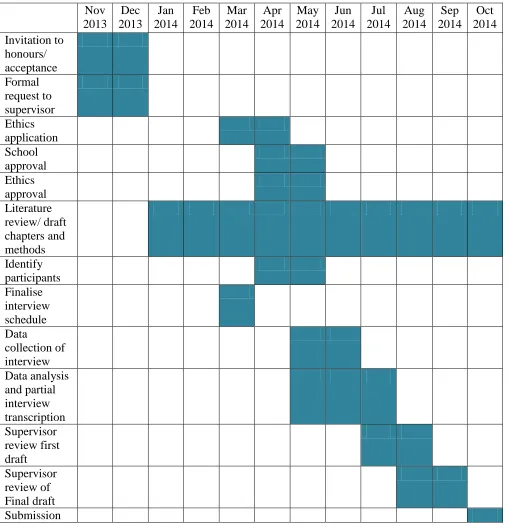
This chapter outlines the design of the research. It begins with a discussion about the participants and why they were selected for this research as well as a justification for the size of the sample. The methodological framework is then introduced, outlining the qualitative methods used. A discussion of the methods used to collect and analyse the raw data from the interview transcripts is underpinned by the ethical considerations. The procedure of this research is then outlined, and reinforced with a Gantt chart of the timeline for implementation (Table 1).
Participants
A purposeful sampling style was used in this research. A school was purposefully chosen for this honours research due to ease of access and the location being convenient to the
University of Tasmania’s Newnham campus. The school has 10 primary school teachers;
therefore all teachers from this school were invited to participate in an interview. Centralising the study to a particular area of Tasmania enabled a minimisation of travel and maximisation of the time available for teacher interviews. As the participants interviewed were employed at an
independent education facility, the results may have varied had the participants been employed in Government schools; this is discussed further in Chapter 5. Also, this research provides a
platform for future insights into inter-area differences. The inclusion of interviews for data collection allowed the research to explore the participants lived experiences of teaching using purposeful movement in the classroom.
(Appendix B), to conduct the research at their school. At a nominated staff meeting the student investigator informed teachers of the research and invited them to participate. Those who chose to participate were provided with an information sheet (Appendix C) and consent form
(Appendix E). The investigator responded to any questions the participants had at the end of the meeting. Participants were then offered a one-on-one interview appointment to discuss the research and to provide their responses to semi-structured interview questions. Participants were informed that they were free to withdraw at any time from the study without providing an explanation and that any data that could be attributed to them would be removed.
Methodological Framework
This research project followed an interpretive research paradigm, where the meaning of the process or experience constitutes the motives of behaviour (Creswell, 2005). This paradigm was used to uncover the reasons why teachers either incorporate or do not incorporate physical movement into their everyday classroom learning activities. Research data was obtained by using a qualitative process (O’Leary, 2010) to interview 10 teacher participants.
An aim of this project was to enhance the meaning given to physical movement in primary classrooms and the potential it has to improve student learning and engagement as described by the teacher participants. The methodological approach that best describes this research is phenomenology with aspects of grounded theory (O’Leary, 2010). Grounded theory
discussion of themes. Phenomenology is the study of phenomenon as it presents itself in an individual’s direct awareness and experience (O’Leary, 2010).
The inclusion of interviews for data collection allowed the research to explore the participants lived experiences of teaching using physical movement. This then linked to the use of thematic analysis in the data analysis phase, as the theory was derived from the data collected and this data was used to find common themes (Cohen, Manion, & Morrison, 2011). This was the most appropriate methodological approach for this research as there was a degree of uncertainty as to how many primary school teachers actually use or incorporate physical movement into their classroom learning practices.
Ethical Considerations
Participation in this study posed no known specific risks or threats to participants. Questions and activities were based around participants sharing their observations, experiences, judgements and reflections of the use of movement in everyday learning in a primary classroom, which were not intended to cause feelings of distress. The approach used for this research, replicated existing community of practice (Wenger, 1998) approaches, as it allowed teachers to discuss their practices in a communal and developing manner with the student investigator as a peer and colleague.
Data Collection
Through an exploratory study of the two qualitative research questions (What strategies do primary school teachers use to incorporate physical movement into classroom learning? and
teachers were interviewed and the reasons for including or not including physical movement into their everyday classroom practice recorded; their strategies for doing this were also noted
(O’Leary, 2010). Each interview contained 18 questions that resulted in the interviews being
approximately 10 minutes in duration; this was dependent on whether or not teachers used movement in their everyday classroom learning (Appendix D). Considering the data that was processed and recorded, it was clear that 10 interviews around 10 minutes in duration was a sufficient amount of data to adequately answer the research questions.
Through the use of a semi-structured interview schedule, all questions were given to the participants prior to the interview taking place (O’Leary, 2010). However, this style of interview
is flexible and was open for exploration of particular topics, when the interviewee wished to expand upon their answer or the interviewer wished to ask an additional question. Some participants were especially enthusiastic or engaged in a particular area. This caused a slight diversion in the interview, and was slightly off topic but was acceptable as long as the
conversation was still relevant to the research and interview questions. An interview schedule was the most appropriate form of data collection for this research as it gave teachers who were enthusiastic and excited about using physical movement in the classroom a professional platform in order to expose other professionals in the field to these education strategies (Wenger, 1998). It also allowed for insight to be gained into the in-depth meanings behind why teachers choose to use physical movement in the classroom that could not be gained through another data collection technique (Cohen et al., 2011).
Interviews were recorded and stored digitally and the interview recordings were
transcribed for reporting purposes. Confidentiality and anonymity of participants was protected through the use of assigning pseudonyms to participants in all transcripts and subsequent reports.
Procedure
Formal permission was sought via email from the Principal of the school to allow the teachers to participate in the interview (Appendix B). The school has 10 primary school teachers; therefore, all teachers from this school were invited to participate in the research. An information sheet (Appendix C) and consent form (Appendix D) was distributed to the teachers at the
nominated staff meeting. Questions were answered at the end of the meeting by the investigator and any teachers who agreed to participate in the study were asked to sign the consent form and hand it to the investigator. The interviews were semi-structured and varied according to
participants’ responses; they took approximately 10 minutes and occurred in a private and
confidential place nominated by the teacher at the school. The audio file of the interviews was recorded with the participants’ permission. Participants were aware that a transcript of the recording was available for review. However, no re-recording of any aspects of the interview based on participants viewing of the transcript occurred, though amendments were made to the transcript to better reflect what the participant intended to say. All names revealed in audio recordings were replaced with pseudonyms for transcribing and publishing purposes. The original audio recordings were deleted after analysis.
responses, add additional information and clarify any ambiguities and misunderstandings (Kervin, Vialle, Herrington & Okely, 2006). The member checking allowed the participants to reflect on the results and make any amendments to the final transcripts.
Data Analysis
The interviews that occurred during the data collection phase were recorded using a sound recorder. This was played back afterwards to organise the raw data and a transcript of the interview recording was made, reducing the data by omitting the irrelevant parts of the
conversation, and systematically reducing the data to a manageable size. The data was then coded, into categories and themes according to the different topics. A thematic analysis was used to investigate the participants’ intrinsic beliefs and to identify and analyse the data. This was then interpreted with conclusions and meanings being drawn from the transcripts. The implications for theory and practice were also selected and analysed (Saldana, 2009).
A Timeline for Implementation
Table 1. Gantt Chart Showing Timeline for Implementation Nov 2013 Dec 2013 Jan 2014 Feb 2014 Mar 2014 Apr 2014 May 2014 Jun 2014 Jul 2014 Aug 2014 Sep 2014 Oct 2014 Invitation to honours/ acceptance Formal request to supervisor Ethics application School approval Ethics approval Literature review/ draft chapters and methods Identify participants Finalise interview schedule Data collection of interview Data analysis and partial interview transcription Supervisor review first draft Supervisor review of Final draft Submission Chapter Summary
Chapter 4 Results and Discussion Chapter Introduction
Chapter 4 presents the results and discussion together. These have been amalgamated to ensure clarity of the findings and to prevent duplication of information. To comply with the ethical guidelines for this research; the participant’s names have been omitted and interviewees
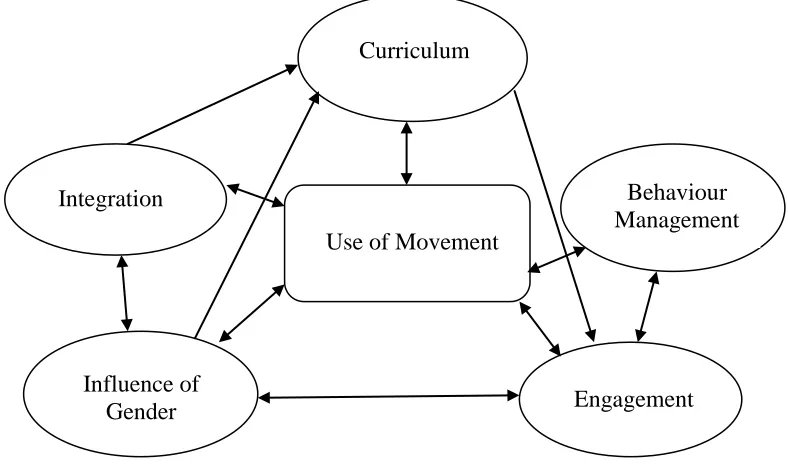
[image:34.612.101.495.412.646.2]are referred to as ‘Participant’ followed by the number, representing the order in which they were interviewed. The results examine and discuss data from the interviews. Six core themes were developed from the responses participants provided to the interview questions. Within each of the themes, other themes may be discussed as this was how the participants answered the interview questions. The themes are illustrated in Figure 1.
Figure 1. Themes which Evolved from the Responses Received from Participant Data
The introductory section of this chapter presents overarching concepts relevant to this research. Participants’ background information (interview questions 1, 2 and 3) is presented for
Engagement Influence of
Gender
Behaviour Management Curriculum
Integration
verification. The participant interviews indicate that the background information of the participants (such as age, year level taught and qualification held) failed to influence the
strategies teachers used when incorporating movement into everyday classroom learning or their reasons for doing so. The findings and analysis of the two research questions will be presented in research question order.
Research Question 1: What strategies do primary school teachers use to incorporate physical movement into classroom learning?
From research question 1, four key themes emerged from the data: Use of Movement
(derived from interview questions 5, 7, 9, 10, 13 and 15c), Curriculum (interview question 8),
Influence of Gender (interview questions 12a, b and 14) and Integration (interview questions 17a, b and 18). Data received from each theme is presented and discussed below in order of the
volume of data received from the participants.
Theme 1: Use of Movement
Use of Movement is the first of four themes which evolved from semi-structured interviews undertaken for this research. Participants were asked how they define movement (interview question 4). Responses varied, but the majority of participants, 80 percent, defined it very broadly and similarly to Participant 5 who defined it as “the act of moving your body, could be any limb, arms, legs, to move to another spot, very broad, yes”. Participants were then
presented with the researcher’s definition of movement “as any bodily movement produced by skeletal muscles that require energy expenditure”. This definition was sourced from the World
that they would use this definition for the duration of the interview (interview question 5). Participants were then asked if they implement movement in their classroom (interview question 6), to which all participants agreed. Herein lays the largest finding of this research. Even though all participants believed they were implementing movement in their classroom, when asked to describe a lesson to the researcher (interview question 9) on how they did so, it became evident that in fact only 20 percent of participants actually implement movement in their classrooms. Participant 2 was the first interviewee to describe a lesson in which movement was implemented in their classroom:
I was teaching compensations with fractions, and I asked them to show me/make an action that means something to you. I find it’s more meaningful for students and when I just do a visual cue rather than verbalising it. It’s about transferring from short-term
memory to long-term memory. For example, a boy came up to me last week, and said he was doing fractions in grade 6 this week and that he remembered that whatever you do to the top, you do to the bottom, and he demonstrated the action, so he remembered what action he created for fractions and remembered it almost a year later. So that was like oh tick, great.
By allowing students to create their own action that is meaningful to them, they are more
If I had of just stood up at the whiteboard and written it he would have been switched off, but because, especially with boys, and their concentration span is short, I say get with a partner and show me an action that whatever, and it’s usually something conceptual. So
they have to demonstrate an understanding of it; but also it has to be meaningful. From Participant 2’s experiences, it is clear that when movement is incorporated into everyday
classroom learning, students are given opportunities to not only develop greater conceptual understandings of topics but also to enhance their communication skills. Supporting this statement is Diamond and Lee’s (2011) study that used TOOLS to aid the development of the executive function in 4 to 12 year olds. Weggelaar (2006) also reported the effectiveness of kinaesthetic feedback when teaching students with dyslexia to read and write.
The 80 percent of participants who believed they were implementing movement in their classrooms were actually using movement as a behaviour management tool, a respite from sedentary behaviour, or to draw students’ attention. Although these uses of movement are effective according to participants, there are other richer strategies for the incorporation of movement into classroom learning such as those used by Participant 2 and Participant 4.
As can occur in a semi-structured interview, the interviewer added a question to the interview, which branched off the initial interview question seven and asked if the participant had been taught about the benefits of the inclusion of movement in everyday classroom learning or any strategies for doing so. Participant 2 revealed that:
I’ve done this since a conference I went to a few years ago with Rich Allen, doing
Green-light learning. He was talking about catching the waves of engagement and how children have a set amount of time where they can concentrate and it’s relative to the age, so a 10 year old can only concentrate for ten minutes at a time so you need to change states frequently. Whether you need to change the music or movement to keep the engagement; it (movement) was never, however, mentioned at uni.
Professional development for teachers is an important way to keep up to date with the latest research and findings in education (Wenger, 1998). As discussed in Chapter 5 (Conclusion), more of these conferences need to be readily available for teachers to attend and teachers
themselves need to be openly dialoguing their practices with their peers and colleagues (Wenger, 1998). The insight and value gained from specialists such as Rich Allen is invaluable for teachers who implement Rich’s strategies and for students who are particularly disengaged in schooling.
The use of music when teaching handwriting is an example of this and is discussed in detail by Participant 2 in the second theme.
Participants were asked about the effect they believed movement has on student engagement in learning. All participants believed that movement has a positive effect on
Astoundingly positive, but you have to have the parameters. You need to have the guidelines and understanding to go with it. And realise that some children in the room find it quite disruptive for example a student with autism which required the movement to be structured in a timetable.
Similar to Participant 4, Participant 9 agreed that “it has the potential to have an outstanding affect in regards to confidence; their social skills; their understanding of their body and their ability to express ideas creatively”.
There were, however, three participants who believed that as well as having a positive effect on student learning, movement had the potential to have a negative impact. Participant 5 stated that “usually a positive effect, for lots of reasons, but it can also have a negative effect, it
can be very distracting and students can often be very silly when using movement”. Hoffman and Lee (2014) supported Participant 5’s belief and state that some students can decide to focus on another student during the activities or tasks that involve movement. This focus can lead to silly behaviour where the outcomes of the lesson can be lost as students feed off each other’s
distractions. This can often occur due to lack of boundaries set by the teacher.
Similar to the manipulatives mentioned below in the theme Influence of Gender, some strategies for implementing movement in everyday classroom learning need to be trialled in different settings to gauge their effectiveness of engaging students. Kennedy (1986) defined manipulatives as objects that promote the use of several senses as they can be touched, moved about, rearranged, and otherwise handled by students. Participant 3 believed that:
It depends on the day. If it’s a rainy day it can have a negative effect and it can exacerbate
they are a lot more focused, um, they also kind of expect it I think, so when I don’t include it one day they will notice it.
Similar to the context of the class being an influence on the incorporation of movement in everyday learning, each teaching period may need to be evaluated for the effectiveness of the incorporation of movement. If it is clear that students do not want to participate in movement activities for that particular period of time, teachers need to be flexible and adapt to the circumstances that present themselves in the classroom.
The participants were asked if the movement they incorporated in their classroom was embedded or explicit (interview question 10). Students may not necessarily be aware that their teachers are using movement to learn, particularly if it is a strategy that many of their teachers have used before. This is also explored in theme 3, Influence of Gender. The number of participants who used explicit approaches to incorporate movement in their lessons was 30 percent whereas 40 percent embedded the movement into their lessons. The remaining 30 percent of participants used a combination of explicit and embedded approaches to include movement in their everyday classroom learning.
The Use of Movement theme uncovered issues relating to teachers’ understandings of the inclusion of movement in their everyday classroom learning and the missed opportunities for the integration of movement into everyday classroom learning for the purposes of increasing student engagement and academic performance.
Theme 2: Curriculum
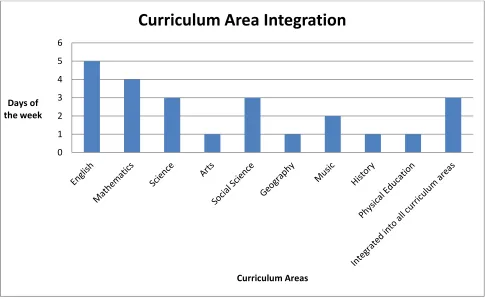
movement into and how frequently during the week they do so. The figure below (Figure 2) displays their responses (interview question 8).
Figure 2. Curriculum Areas
The most frequently used curriculum area to integrate movement into, according to the participants, was English. Participant 5 described one of their English lessons to the researcher:
Yep, so I could do a lesson on nursery rhymes and looking at perspective, and then the students would have to show a movement or frame of what that character might be feeling or portraying and they could also role play the nursery rhyme with movement. Many of the participants used role play and other drama activities to communicate different literary texts that the students were studying in class which they found to be effective. Although movement is generally associated with the arts, such as drama role plays, only Participant 4 used
0 1 2 3 4 5 6
Days of the week
Curriculum Areas
this curriculum area when implementing movement into classroom learning; however they did not elaborate on their response.
Participants are incorporating movement into literacy above all other curriculum areas. McBride (2011) believed that boys are falling behind in all curriculum areas but particularly in literacy. The data from this research demonstrated the attention these primary school teachers were giving to literacy and the use of movement to engage both genders in learning and produce greater academic achievements. This is strengthened by Younger et al., (2005) who believed that boys should not be taught differently to girls, but that pedagogies should be inclusive and engage boys and girls equally, and that quality teaching should be provided to both genders.
Participant 3 incorporated movement into several different curriculum areas such as: Science in particular, lots of outdoor things and walking around the school area, exploratory and inquiry based stuff. In the start of maths we do a lot of group work, manipulate things, moving them to show a position, um, even just going through exploring getting into groups physically themselves and um, moving back to their positions.
Although manipulatives are commonly used as a behaviour management tool in classrooms as discussed below, Participant 3 has described their use for beginning to understand concepts. Manipulatives are often used as concrete experiences which represent abstract or conceptual ideas.
Mathematics was the second most curriculum area used by participants for the incorporation of movement into their everyday classroom learning. It was common for
based learning often lends itself to the inclusion of movement as students are often finding, observing and recording their own data from contexts beyond the school grounds (Taylor, Fahey, Kriewaldt, & Boon, 2012). Participant 1 supported the inclusion of movement in by stating that “I certainly do include movement in other social science areas that I do after lunch. Some
subjects lend themselves to movement more than others”. The social sciences also frequently involve students constructing their own knowledge guided by an over-arching inquiry question in much the same way that participants use them in science. Participant 2 discussed the connection between music and movement and believed that:
It is particularly powerful to use music and movement together. Songs might trigger the children to start to get books organised and they have until the song ends to get organised. You need to be in charge of the music though not students. Use playlists and keep it ready with the lyrics checked. The beats of the song is important. Sometimes I use it in
handwriting to when it goes, up up up, as a count of four or loop, loop, loop. So you’ve got the movement happening but they’re relaxed too then because they’ve got the music there and it’s a positive experience rather than, ew we’re doing handwriting. You need to
be sneakily putting in the rhythm. So it’s another way of using movement. The classroom example Participant 2 presented to the researcher reflected years of
implementation and time to create such a strong link between the beats of music and accents in handwriting. The scope of this research has not located literature that examines this connection or that provides definitive research to support Participant 2’s example for implementing
movement in music in everyday classroom learning.
movement by only integrating it into particular curriculum areas. However, none of these participants were able to elaborate on this belief.
The theme of Curriculum examined the areas of the curriculum that integrated movement and the frequency of some more than others. The curriculum area that was reported as integrating movement the most by participants was English. Many participants found the use of role play and other drama activities to be effective in communicating different literary texts the students were studying in class. The data from this research demonstrated the attention these primary school teachers are giving to literacy and the use of movement to engage both genders in learning and produce greater academic achievements. Another outcome of the research was that participants reported that they integrate movement across all curriculum areas, supporting Spielmann’s (2012) belief that movement needs to be incorporated across all curriculum areas
for specifically kinaesthetic learners to achieve highly academically in the classroom.
Theme 3: Influence of Gender
From the interview data collected, all of the participants believed that gender does have an influence on the way that students learn. It was suggested that boys have a shorter attention span and because of this, they ought to be given “tangible manipulatives” to assist in holding
their focus for a longer period of time (Participant 2). Moyer and von Haller Gilmer (1954) challenged this perspective as they believed that if a student of either gender is sufficiently interested and challenged within their appropriate ability level, their attention span can be extended for a longer period of time than generally accepted. Teachers may hand out fiddle blocks or stress balls to these students as an outlet for their energy so they are able to sit quietly without disturbing other students (Wells, 2012). Although manipulatives are often used as a behaviour management tool, Stalvey and Brasell (2006) found a significant decrease in the number of student distractions while the teacher was delivering instructions during the lesson when students were permitted to manipulate a stress ball. Although the use of manipulatives for behavioural management purposes seems to be successful, teachers are missing out on the opportunity to incorporate these manipulatives to assist in the understanding of conceptual and abstract ideas. This is discussed further in theme 5, Behaviour Management.
Participant 8 expanded on this point stating that “boys in particular need a lot more of that physical body movement”. Humphreys and Smith (1984) supported this statement and
believed that boys are just more physical than girls and engage in rough-and-tumble play far more than girls. Furthermore, Participant 2 discussed that boys should be given the opportunity to “go outside and have a quick run around” to release some of their built up energy before
classroom, the boys were instructed to exert themselves outside for a few minutes. Participant 2 stated that “once the boys returned to the classroom they were much more able to engage in the
task at hand and produce a higher quality of work due to a higher rate of concentration”.
Participant 2 explained that this was evident in students’ assessments, as when this strategy was not implemented the boy’s concentration levels and academic achievement decreased. Spielmann
(2012) suggested that such physical exercise as running, jumping, and aerobic game playing have a definite impact on children’s frontal primary brain area which is used for mental
concentration, planning, and decision-making. King and Gurian (2006) stated that teachers are often not aware of the differences in the decision making areas of the brain which can lead to girls being less impulsive than boys and in turn boys being misdiagnosed as having a learning disability. However, there was no evidence in the interview data that supported these findings.
Furthermore, Smith and Pellegrini (2013) supported the belief that the inclusion of physical movement in classrooms does have a positive effect on the engagement as well as academic performance of boys, which aligns with Participant 6 and Participant 7’s interview responses. Participant 5 also supported this by saying:
Definitely it does. I find most girls to be working more receptively from my instruction in day to day lessons, where as boys in general within my class this year, need more hands on understandings and tools to conceptualise different things in a range of curriculum areas.
movement activities in everyday classroom learning to assist in their conceptualisation which Participant 2 believed was affected by boys having a shorter attention span than girls.
Younger, et al., (2005) believed that gender stereotyping is an issue in today’s society. They found that differences in attitudes to work and aspirations for life are incredibly gender specific. They believed that not all boys are under-achievers and it is unfair to assume all boys fit the same mould. Participant 3 adds further to this argument by stating that:
We stereotype quite a lot which is an issue, but I find that if you target the way that boys learn in particular, it covers your bases and applies to everyone in general. Especially the girls who learn kinaesthetically so they aren’t missing out because they learn the
way a typical boy does.
Younger et al., (2005) supported Participant 3’s belief by similarly stating that pedagogies that engage boys will equally engage girls and are highly effective. The quality of teaching should be improved to assist both genders to perform to the best of their abilities (Younger et al., 2005). Participant 10 agreed and elaborated, “I think students learn in different ways. Um, but I think that movement can benefit all, both genders”.
Participant 1 and Participant 9 shared a differing view compared to some of the other participant’s responses to this interview question. They believed that it is the year level of
students that has the greatest influence on the ease and success of integrating movement into everyday classroom learning. Participant 9 stated that “it was certainly far more challenging to take a grade 6 boy’s class for expressive movement or creative dance as it was for a girl’s class”.
The Influence of Gender themeuncovered issues relating to the perceived differences in the way boys and girls learn. There was general consensus amongst interviewees that boys in particular need a lot more physical body movement than girls within the classroom. Gurian (2011) discussed the differences between girls and boys that teachers need to consider when planning the frequency of movement in classroom learning activities. There was also a belief amongst interviewees that the inclusion of physical movement in classrooms does have a
positive effect on the engagement as well as academic performance of boys; and, pedagogies that engage boys will equally engage girls. Participants agreed that both genders should be treated and taught equally in everyday classroom learning situations. There was also a belief that students’ willingness to cooperate and participate in lessons that use movement, may be influenced by both a student’s year level and gender.
Theme 4: Integration
The fourth theme that emerged from the data was the Integration of movement at
different year levels. The participants were asked to reflect upon their prior teaching and to recall if they had integrated movement into their everyday classroom at different year levels (interview question 17 a). They were also asked how effective they thought this was (interview question 17 b).
All participants interviewed had trialled the integration of movement at varying year levels; however, the effectiveness of this on students’ learning did seem to differ when
primary”. Graham, Holt-Hale and Parker (2005) believed this was due to students in the upper
primary years not wanting to participate in physical activities because as games become more competitive they do not want to embarrass themselves in front of their peers (Gardner, 1983). The younger years are focused on playing and having fun whilst learning. This is a quality Graham et al., (2005) believed is lost as students enter the upper primary years of education. Participant 3 supported this by stating that:
Kinder (Kindergarten students) respond really well (to the integration of movement in classroom learning), particularly because their attention span is significantly shorter so it’s fairly essential to use it with them. I also find it really necessary in upper primary;
they (teachers) can just end up doing it (movement) in sport. Only because you get so busy in the classroom and already have to cram a lot in. I however, think it’s equally
important in all areas of the curriculum.
Robinson (2011) believed that schools are educating students out of creativity through the
hierarchy of subjects taught in school. He discussed that at the top is mathematics and languages, then the humanities and at the bottom are the arts. He believed that the arts should be highly embedded in the classroom as often as mathematics as they both of equal importance to students learning. As Participant 3 discussed above, ECE students responded positively to the
One specific interview question (question 18) asked the participants about their thoughts of students’ awareness of the inclusion of movement in their everyday classroom learning. Participant 3 stated that:
I notice a difference when we haven’t had it (movement) as much during the day. I notice the difference and the changes with them. But I can guarantee that they wouldn’t
be able to say that they are doing it for a specific reason.
It appears that if teachers are embedding movement into their everyday classroom learning that students are less likely to recognise this. However, Participant 4 discussed, “I think at first they don’t notice, but later after you’ve been doing it a bit, they recognise that that is part of the way
that you teach, so they begin to ask questions if I don’t include it”. It seems to be evident from Participant 4’s response that when students have grown accustomed to the use of movement in
their classroom, they particularly notice when there is a distinct lack of it. Although this movement may not be integrated into the learning taking place; the breaks from learning were still noticed and often missed by students. Hillman, Pontifex, Raine, Castelli, Hall and Kramer (2009) found that bouts of exercise throughout the day have the ability to enhance cognitive function in preadolescents. Participant 10 believed that “it depends how you introduce it (movement) to the students, and you know if you use it on a regular basis, as part of their learning. I think they do consider it to be an important aspect and are aware of it”. Participant 10’s statement refers to an explicit approach to the inclusion of movement in classrooms, which
Although Participant 2, Participant 7 and Participant 8 did not elaborate on their opinion of students recognising the integration of movement into their classrooms, they do not believe that students are largely aware of the pedagogies being used or what strategies are or are not being implemented by teachers. It appears to be largely dependent on the approach used to integrate movement into student learning that has the greatest influence on students’ recognition of the use of movement, be it an embedded or explicit approach.
The theme, Integration discussed younger students enjoying the incorporation of
movement more than upper primary students and why this was so. There was a perception that if teachers embed movement into their everyday classroom learning that students are less likely to recognise this which was found as neither a negative or positive aspect. However, students may become aware when there is a distinct lack of movement in classroom learning that they have grown accustomed to. Now that the strategies participants used to incorporate movement in their everyday classroom learning have been outlined above, the following two themes discuss the participant’s reasons for incorporating movement.
Research Question 2: Why do primary school teachers incorporate physical movement into classroom learning?
For research question 2, two key themes emerged from the data: Behaviour Management
learning outcomes in the classroom. Participant 6 stated that “they just need it (movement); kids need to move to grow and develop”. Data collected from the interviews is presented and
discussed below in order of the amount of data received from the participants.
Theme 5: Behaviour Management
The first of the two key themes that emerged from the data is the use of behaviour management by participants as a motive to include movement into everyday classroom learning. As discussed above in the third theme, Influence of Gender, tangible manipulatives are often used as a tool to prevent students who find it difficult to focus for a period of time from
disrupting others. Participant 7 believed that “manipulatives do not work in my classroom as it
simply distracts other students who think it is unfair that some people got to use the manipulative and they did not”. This conflicted with participant 1’s view that “it does not matter if you like
manipulatives or not, if they work in your class then use them, that is the goal at the end of the day right?!” When asked why they use movement in their everyday classroom learning, participant 2 said:
Well it (movement) can be good for when students are getting restless. Also I’ve done
some work with brain gym, something as simple as look out the window, look up, look left, look at me works pretty well. Or some stretches when they’ve been sitting for a while. But usually it’s either to manage behaviour by increasing engagement, or to try
and cater for kinaesthetic learners in particular who might need a different mode to understand the concepts, especially when it’s something conceptual.
use movement as a tool to manage negative behaviours; while 90 percent of interviewees used movement to engage students in learning which is explored below in theme 6, Engagement.
Participant 2 also declared “that if students are engaged in what they are doing, there will be no negative behaviour to manage”. This statement may however, be subject to a particular
context. Variables such as the socio-economic status of the school or the range of students in a class with varying abilities or IEP’s may affect this.
As Participant 2 mentioned above, Brain Gym (Dennison, 1986) is a program that was implemented two years ago in the participant’s school. The trial lasted for a year and was found
to be unsuccessful for their school context (Participant 1). Several teachers however, 20 percent of interviewees, still implement particular strategies from Brain Gym as they found these were actually effective in their classrooms. Carroll (2014) challenged Dennison’s (1986) Brain Gym phenomenon, by stating that the research it is based on has been largely discredited and that the follow-up research is fundamentally inadequate and extremely limited, with only a few being published in journals where the researcher pays for the publication.
From the discussion above, it was determined that the use of manipulatives can be
affectively used as a behaviour management tool in particular contexts (Stalvey & Brasell, 2006; Wells, 2012). Teachers however, may be missing out on the opportunity to use tangible
manipulatives as a tool when integrating positive movement into their classroom instead of a way to manage negative behaviour (Ofsted, 2012). The scope of this research has not found literature that examines the multiple purposes for manipulatives in everyday classroom learning, which will be elaborated on in the Conclusion chapter. This research has however, begun to examine this connection and is discussed in further detail in Chapter 5.
Behaviour Management was seen by participants as a motive for the inclusion of movement into everyday classroom learning. The use of manipulatives was discussed as an effective behaviour management tool; however, the use of manipulatives is extremely context specific. Some participants believed that if students are engaged in what they are doing, there will be no negative behaviour to manage.
Theme 6: Engagement
The sixth and final theme that evolved from this study was Engagement. This theme explores the reasons 90 percent of the interviewees gave engagement or the means to engage students in everyday classroom learning, as their reason for using movement. Spielmann (2012) believed that it is essential for people of all ages to have breaks in concentration to aid in
engagement and alertness. Respite from sedentary behaviour was a key motive for the inclusion of movement in everyday classroom learning for Participants 1, 3, and 8. Participant 8 stated that they use movement to “reengage them (students); to get the blood flowing, you know the
Influence of Gender as a way of allowing students to move around and “wake themselves up from whatever task they had been assigned”. Some would argue that students should not need to be “woken up” from tasks they have been given; that the teacher needs to engage students
through the use of movement or otherwise so that students achieve some level of satisfactory academic performance.
Some interviewees believed that they were using movement as a reason to draw students’ attention throughout the school day. Participant 6 stated that “I use clapping, touching body parts,
so hands-on-heads, shoulders; lots of different things like that to get their attention so I can give the next instruction”. Although Participant 6’s statement does indicate they incorporate
movement into their classroom, it does not indicate that their use of movement directly
influences student learning. It may be effective as a brain break but it is not used to specifically engage students in classroom learning which was what this research was trying to uncover (Spielmann, 2012).
When the interviewees were asked how they thought students respond to the lessons where movement is incorporated; 50 percent believed that students responded well and that their learning was enhanced because of it. Participant 2 stated that “well, they seem more engaged and
I notice that if we review a concept after a few weeks they remember it more if we used movement when introducing it. They also make connections conceptually sometimes as well”.
There is currently a limited body of knowledge of the positive effect movement can have on the retention of information. However, Participant 4 supported Participant 2’s statement by saying that: