
Comparative study on freeze dried lactic cheese starters and ripening cultures for the production of camembert cheese : a thesis submitted in partial fulfillment of the requirements for the degree of Master of Food Technology, Massy [i e Massey] Universi
303
0
0
Full text
(2) COMPARATIVE STUDY ON FREEZE-DRIED LACTIC CHEESE STARTERS AND RIPENING CULTURES FOR THE PRODUCTION OF CAMEMBERT CHEESE. A thesis submitted in partial fulfillment of the requirements for the degree of Master of Food Technology. Massy University Albany, New Zealand. Wei Qiao April 2013.
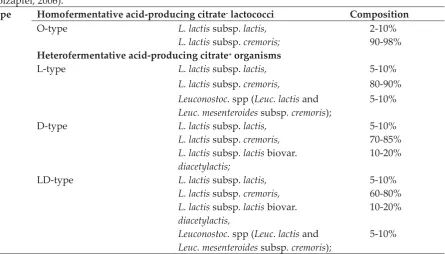
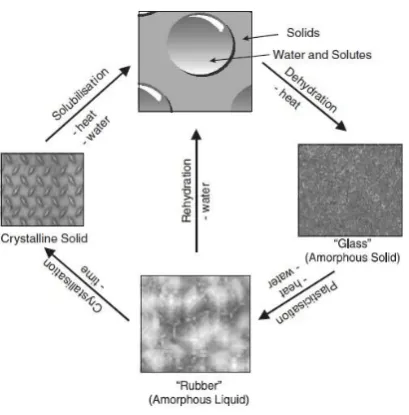
(3) ABSTRACT Background and Methodology The key to success in producing cheeses is the performance of the starter cultures (Parente and Cogan, 2004). Storage of freeze-dried cheese cultures at refrigeration and ambient temperature or higher provides convenience to culture handling and transportation, as well as reduce cost. This study investigated the effects of 4 storage temperatures: -18°C, 4°C, 20°C and 37°C on the stability of mesophilic lactic cheese starters and ripening cultures intended for Camembert production. In phase one, a 22 randomized complete block design (RCBD) was used to determine the potential of 14 commercial freeze-dried direct-vat-set (DVS) mixed cultures to produce Camembert after 5 months storage at the 4 temperatures. The cultures used were: O-type: Lactococcus (L.) lactis subsp. lactis, L. lactis subsp. cremoris; LD-type: L. lactis subsp. lactis, L. lactis subsp. cremoris, L. lactis subsp. lactis biovar. diacetylactis and Leuconostoc species (Leuconostoc (Leuc.) lactis and Leuc. mesenteroides subsp. cremoris) and a mould, Penicillum (P.) camemberti. During storage, the cultures were analysed for cell viability, acid production, colour and species composition. The characterised cultures were screened to select the most stable cultures with good potential for Camembert production. In phase two, a 23 RCBD design was used to study the potential of the cultures to produce prototype Camembert cheese using I-Make® Limited domestic cheese kits. The prepared cheeses were characterised for acidity, viable cell counts content, texture, volatile aromatic compounds and proteolysis using standard procedures. Results and Discussion Viable cell counts and acidification potential of cultures decreased (P<0.05) during storage at selected temperatures for 5 months. Cultures stored at 37°C were the most affected. Proportion of citrate-fermenting lactic acid bacteria (LAB) in LD-type starters also decreased in a similar pattern. Cell inactivation at high temperature was probably attributed to high oxidation, browning reactions, lactose crystallization, changes in glass transition temperature (Tg) of culture-lactose matrix and loss of β-galactosidase enzyme activity, which were possibly also affected by water activity (aw) of the culture during storage (Higl et al., 2007; Kurtmann et al., 2009c). Viability and activities of cultures stored at 4 and 20°C after 5 months were comparable to those of -18°C cultures and levels normally used in industry. Thus, the cultures demonstrated good potential for Camembert cheese production. Similar patterns of microbial growth (LAB and P. camemberti) and acidification were observed in both cheeses (O- and LD-types) during cheese fermentation. However, cheeses fermented with O-type starters had better growth and acidification activity (P<0.05), which may be attributed to compositional differences of culture, leading to variable metabolic patterns (Mcsweeney and Fox, 2004). Cheeses produced with cultures stored at 4 and 20°C had lower levels of cell growth and acidity (P<0.05), suggesting that the microorganisms could have been affected by prolonged storage at relatively high temperatures. During cheese ripening, changes in microbial content, acidity, proteolysis, texture and aroma compounds, were similar, and significantly changed (P<0.05) with ripening time. Viable cell counts of LAB reduced, while pH and P. camemberti counts increased. Increase of pH may result from lactate metabolism by P. camemberti creating an alkaline environment due to the deamination activity of the mould (Spinnler and Gripon, 2004). Proteolysis of cheeses was correlated (P<0.05) with LAB and P. camemberti activity as well as the pH of I.
(4) samples. Softening of cheese was associated with increased proteolysis and pH due to the growth of P. camemberti (Spinnler and Gripon, 2004). A range of volatile organic compounds, dominated by fatty acids, alcohols and aldehydes were identified in cheese samples as reported in other studies (Sable and Cottenceau, 1999). Changes in 3-methylbutanal and 3-methylbutanol profiles of samples reflected the degradation of leucine,, synthesis of the aldehyde and its degradation to branched alcohols as a consequence of peptidolytic activity of LAB (Yvon and Rijene, 2001) and enzymatic activity of P. camemberti (Molimard and Spinnler, 1996). Increased concentrations of 2-heptanone, 2-nonanone and butyric acid in cheese samples suggested lipolytic activity in all samples (Molimard and Spinnler, 1996). The activity of P. camemberti involved in β-oxidation pathway for producing methyl ketones was also demonstrated confirmed by identified metabolites. Higher proteolysis and softness in LD-cheeses than O-type, suggested a higher degree of cheese ripening (Ardö, 1999), which may be attributed to proteolytic and peptidolytic activity of LD-starters (Tzanetaki et al., 1993). Higher proteolysis may be also associated with higher pH of cheese curd at draining, which facilitated higher syneresis. Increased whey content of curd may retain higher concentration of coagulant enzyme in the curd (Guinee and Wilkinson, 1992) and effectively stimulate the growth of P. camemberti, thus probably allowing proteolysis to occur more readily (Grappin et al., 1985). A relatively higher concentration of 3-methylbutanal was found in O-type cheeses than in LD-type. This suggests that LAB in O-type starters may exhibit higher activity in degrading leucine to 3-methylbutanal than LD-type starters (Yvon and Rijene, 2001). 2,3-butandione was suspected in LD-type cheeses but not in O-type samples, demonstrating the active role of citrate-fermenting bacteria of LD-starters (Mcsweeney and Fox, 2004). Results indicate that storage temperature of cultures had a significant (P<0.05) impact on viable cell counts and acidity of samples. In spite of reduced cell counts, proteolysis, texture and aroma of the prototype cheese samples were not affected (P<0.05). Although there were no differences between the Camembert cheeses, 4 and 20°C cultures used in cheese-making may enhance the ripening process (Ardö, 1999) than -18°C cultures, as indicated by relatively higher proteolysis and degree of softening. Lower levels of 3-methylbutanal in samples containing 4 and 20°C cultures was probably due to the reduced aminotransferases activity of LAB (Yvon and Rijene, 2001) after prolonged storage at the two temperatures. The slightly higher levels of 2-heptanone, 2-nonanone and butyric acids in samples with 4 and 20°C cultures were probably due to increased lipolytic activity of enhanced growth of P. camemberti (Molimard and Spinnler, 1996) during cheese ripening. Conclusion LAB starter cultures and P. camemberti can be stored for 5 months at 4 and 20°C without affecting their activities and the quality of prototype Camembert produced. Camembert cheese samples produced in this study had typical characteristics of this type of cheese. Cheese fermented with LD-type starters showed extra flavour enhancement potential and the products had higher degree of softening due pronounced proteolysis. Cultures stored at 37°C for 5 months were characterised by poor viable cells and capability to the produce acid, therefore, they were not suitable for Camembert cheese production.. II.
(5) ACKNOWLEDGEMENTS It has been a great experience for me to pursue my masters in Food Technology at Massey University. There are several people I am grateful to who helped me to accomplish my studies and enjoy my stay at Massey University. First and foremost, I would like to thank Dr. Tony Mutukumira, my supervisor, who believed me and gave me unlimited support, training and guidance throughout the whole process of my master’s study. It has been an honor to be his student and thank you for giving me the opportunity to work with you. I appreciate all his contributions of time, ideas, expertise and encouragements. At I-MakeTM Ltd New Zealand, I especially thank Anabelle Boret, Technical Manager for her support and giving me the opportunity to work on a challenging, yet interesting commercial-oriented project which gave me invaluable insight of ‘industry’ experience. I thank the I-Make™ Ltd New Zealand for financial and technical support; Ministry of Science and Innovation (MSI) for financial support (Project Number RM 16273), and Massey University Scholarship Department. I would like to thank Associate Prof. Marie Wong and Yang Wang at Massey University for SPME-GC/MS training and sharing knowledge and experiences in analysis of volatile organic compounds. I would like to thank Rachel Liu and Helen Matthews for training in microbiology and chemistry analytical techniques as well as assistance in the laboratory. I want to thank Dr. Daniel Walsh for spending time to explain and advise on statistical analysis. I am also greateful to Dr. Aladin Bekhit, who has adequately trained me during my Bachelor study in various research skills essential to complete this master project. I also thank Maureen Kosasih, Natalie d’ avila, Becky Jin and Pinlei Lu for sharing experiences in research and conducting experimental work. I thank Professor Judith Narvhus at The Norwegian University of Life Sciences, in Norway for sharing information on volatile aroma compounds. I also acknowledge the contribution and help giving by various other individuals or groups whose names I may have omitted due limitations of space. Lastly, I would like to thank my parents for all their unconditional love and encouragement, as well as financial support. I am also thankful to have Michael Chang as my partner, who is always with me, supports me, gives warm encouragements and love in every situation. Thank you. I love you all.. III.
(6) TABLE OF CONTENTS. ABSTRACT ............................................................................................................................................................ I ACKNOWLEDGEMENTS ............................................................................................................................... III TABLE OF CONTENTS .................................................................................................................................... IV LIST OF TABLES ................................................................................................................................................ VI LIST OF FIGURES........................................................................................................................................... VIII LIST OF ABBREVATIONS ................................................................................................................................ XI. 1 1.1. 2. INTRODUCTION.................................................................................................... 1 Aim and objectives.............................................................................................................. 4. LITERATURE REVIEW .......................................................................................... 5. 2.1. General aspects of cheese technology .............................................................................. 5. 2.2. 2.1.1 World production and classification of cheese ........................................................5 2.1.2 Cheese-making .............................................................................................................7 Camembert cheese ............................................................................................................ 14. 2.3. 2.2.1 World consumption of surface mould-ripened cheeses .......................................14 2.2.2 Industry definition of Camembert cheese ..............................................................14 2.2.3 Technology ..................................................................................................................15 Characteristics of lactic starter cultures and ripening bacteria important for. Camembert cheese production ....................................................................................... 18. 2.4. 2.3.1 Introduction ................................................................................................................18 2.3.2 Lactic acid starter bacteria.........................................................................................19 2.3.3 Secondary ripening microflora.................................................................................24 Cheese starter and ripening culture ............................................................................... 26. 2.5. 2.4.1 Types of commercial preserved cheese cultures ....................................................26 2.4.2 Selection criteria for cheese cultures........................................................................28 2.4.3 Stability of freeze-dried cultures during long-term storage ................................29 Microbiology and biochemistry of Camembert during manufacture and ripening 37. 2.6. 2.5.1 Introduction ................................................................................................................37 2.5.2 Microbiological changes of cheese and their interactions ....................................38 2.5.3 Biochemical reactions of cheese and their effects on cheese quality ...................39 Aroma development in Camembert and their relative perception notes ................. 50. 2.7. 2.6.1 Development of aromatic compounds during glycolysis ....................................52 2.6.2 Aromatic compounds developed from casein metabolism..................................53 2.6.3 Production of aromatic compounds from fat metabolism ...................................57 Textural development during cheese manufacture and ripening .............................. 61. 2.8. Analytical methods used for monitoring Camembert cheese ripening .................... 63 2.8.1 Partitioning Camembert cheeses and sampling.....................................................63 2.8.2 Biochemical assessment of Camembert cheese ripening ......................................63 2.8.3 Microbiological analysis of Camembert cheese .....................................................75 IV.
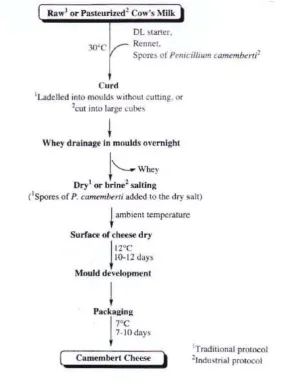
(7) 2.8.4. Instrumental analysis of cheese texture ..................................................................77. 3. MATERIALS AND METHODS .......................................................................... 79. 3.1. 3.2. Screening and selection of cheese starter and ripening cultures ................................ 79 3.1.1 Experimental Design .................................................................................................79 3.1.2 Cheese starter and ripening cultures .......................................................................80 3.1.3 Storage of cultures at various temperatures ...........................................................83 3.1.4 Characterization of cultures .....................................................................................83 3.1.5 Selection criteria of cultures......................................................................................88 Production, ripening and characterization of Camembert cheese ............................. 89. 3.4. 3.2.1 Experimental Design .................................................................................................89 3.2.2 Camembert Cheese Preparation ..............................................................................90 3.2.3 Camembert Cheese Characterization ......................................................................94 Statistical Analysis .......................................................................................................... 102. 4. STABILITY OF CHEESE STARTER AND RIPENING CULTURES .......... 104. 4.1. Cell counts of samples during storage ......................................................................... 104. 4.2. 4.1.1 Lactic starter cultures...............................................................................................104 4.1.2 Ripening (P. camemberti) cultures ...........................................................................109 4.1.3 Rate of viability loss .................................................................................................111 Acidification..................................................................................................................... 112. 4.3. Colour of samples ........................................................................................................... 119. 4.4. Composition of starter cultures (LD-type) .................................................................. 123. 4.5. Discussion ........................................................................................................................ 126. 5. SCREENING AND. SELECTION OF STARTER AND RIPENING. CULTURES .......................................................................................................................... 132 6. PRODUCTION,. RIPENING. AND. CHARACTERIZATION. OF. CAMEMBERT CHEESE .................................................................................................... 134 6.1. Fermentation profiles of Camembert cheese samples ............................................... 134. 6.2. 6.1.1 Growth of lactic starters and increase of pH ........................................................135 6.1.2 Growth of P. camemberti ...........................................................................................138 Ripening profile of Camembert cheese samples ........................................................ 140 6.2.1 Microbial and pH changes during cheese ripening ............................................140 6.2.2 Proteolysis changes in cheese during ripening cheeses......................................144 6.2.3 Texture changes in ripening cheeses .....................................................................157 6.2.4 Aroma changes in ripening cheeses .............................................................................162. 7. OVERALL SUMMARY AND CONCLUSION .............................................. 188. 8. RECOMMENDATIONS FOR FURTHER INVESTIGATIONS .................. 191. 9. REFERENCES ....................................................................................................... 194. Appendix 1 Material and Method .................................................................................. 206 Appendix 2 Screen and selection of cheese starter and ripening cultures ............. 210 Appendix 3 Production, ripening and characterization of Camembert cheese ..... 237 Appendix 4 Statistical outputs ........................................................................................ 257. V.
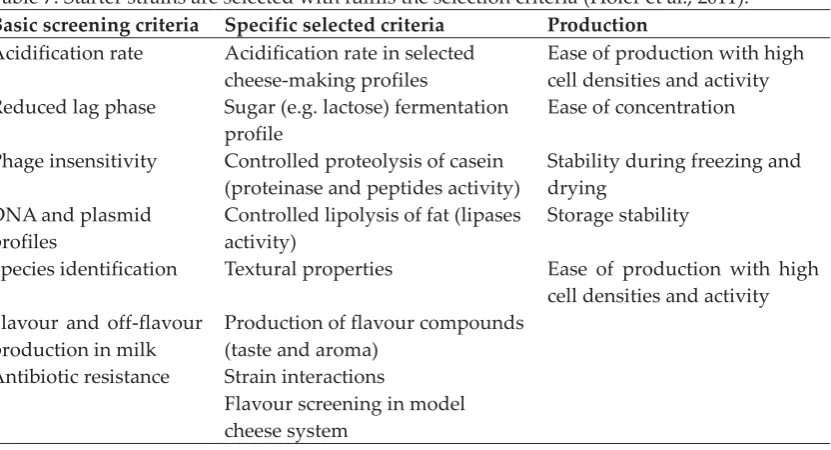
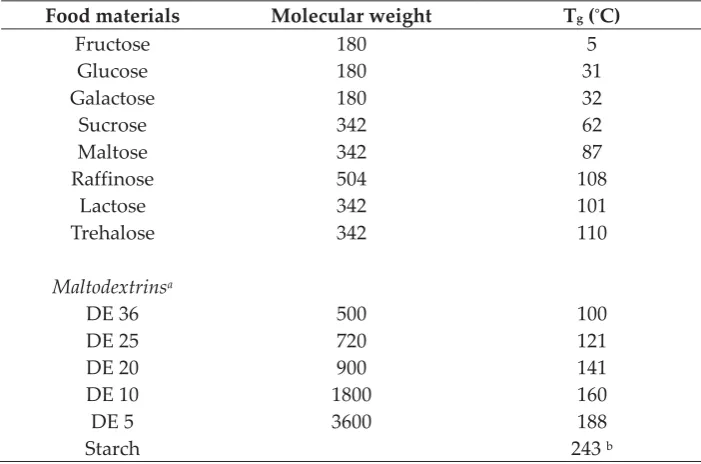
(8) LIST OF TABLES Table 1. Classification of cheese varieties. ........................................................................................ 6 Table 2. Manufacture of Camembert ............................................................................................... 17 Table 3. End-products of lactose fermentation by various LAB .................................................. 19 Table 4. LAB species, of mesophilic and thermophilic, are employed in the manufacture of a broad array of cheese types and typical cheese products, irrespective of the type of milk. ....................................................................................................................................................... 21 Table 5. Composition of different types (O-, L-, D- and LD type) of mesophilic starter cultures for cheese types with few or small eyes ................................................................... 24 Table 6. Different forms of white variants of P. camemberti (P. caseicolum or P. candidum) sold commercially. .............................................................................................................................. 25 Table 7. Starter strains are selected with fulfils the selection criteria . ....................................... 29 Table 8. Glass transition temperature of anhydrous sugars and carbohydrate polymers ....... 37 Table 9. Proteolytic agents in Camembert cheeses ........................................................................ 46 Table 10. Flavour notes, perception thresholds, and quantities of key volatile compounds identified in Camembert cheese. .............................................................................................. 51 Table 11. Solvents used for fractionation of N components in cheese. ....................................... 67 Table 12. Fractions of N components in a citrate dispersion of cheese....................................... 67 Table 13. HS-SPME1/GC-MS methods used for the analysis of volatile compounds in cheese samples. ....................................................................................................................................... 72 Table 14. Description of mesophilic lactic starter cultures (O type*)........................................... 81 Table 15. Description of mesophilic lactic starter cultures (LD type*). ....................................... 82 Table 16. Description of P. candidum1 ripening cultures. ............................................................... 83 Table 17. Differential mediaa used to enumerate mesophilic lactic starters (O- and LD-type) and P. camemberti used for Camembert production. .............................................................. 85 Table 18. Selection criteria of freeze-dried cheese starter and ripening cultures. ..................... 88 Table 19. Randomised complete block design (2 factors) of six unique treatments for the preparation of Camembert cheeses.......................................................................................... 90 Table 20. 1Mean viable cell counts (log cfu/g) and survival rates (%) of mesophilic O-type2 and LD-type3 starter LAB samples after 5 months of storage time at various temperatures4. ........................................................................................................................... 108 Table 21.1Mean viable cell counts (log cfu/g) and survival rates (%) of P. camemberti samples2 after 5 months of storage at various temperatures3. ............................................................ 110 Table 22. First order rate constant (k, month-1)* of viability loss of freeze-dried starter bacteria stored at -18, 4 and 20°C. .......................................................................................... 111 Table 23. First order rate constants (k, month-1)* of viability loss of freeze-dried P. camemberti ripening cultures stored at -18, 4 and 20°C. .......................................................................... 111 Table 24. 1Mean pH values of mesophilic O-type2 and LD-type3 starter LAB samples (freeze-dried) after 5 months of storage at various temperatures4. ................................... 118 Table 25. 1Mean T.A. values of mesophilic O-type2 and LD-type3 starter LAB samples (freeze-dried) after 5 months of storage at various temperatures4. ................................... 118 Table 26. 1Changes in colour (Hunter’s L*, a*, b*) of mesophilic O-type2 and LD-type3 LAB starter cultures (freeze-dried) after 5 months storage at various temperatures4. ............ 121 Table 27. 1Changes in colour (Hunter’s L*, a*, b*) of P. camemberti samples2 (freeze-dried) after 5 months of storage at various temperatures3. ..................................................................... 122 VI.
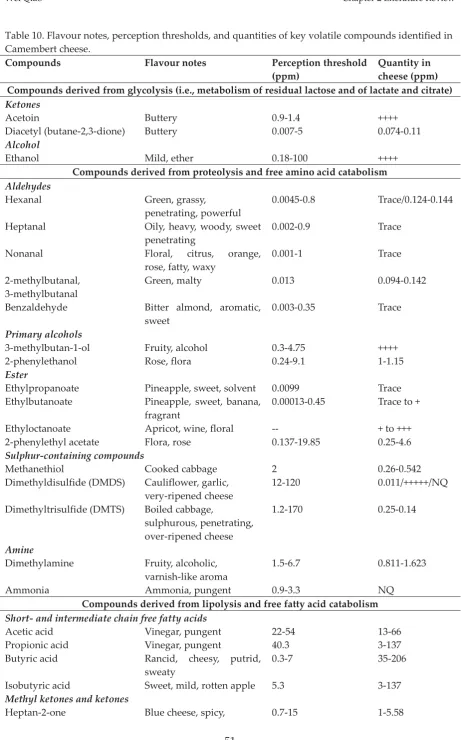
(9) Table 28. Mean cell counts of constituent species (log cfu/g) in LD-type starter cultures after 5 months of storage at various temperaturea ........................................................................... 124 Table 29. Levels of (log cfu/g) LAB starters and P. camemberti and pH values (mean ±SD) (n=4) in cheese samples during fermentation for 24 h. ................................................................. 135 Table 30. LAB1 and P. camemberti2 cell counts (log cfu/g) and pH3 values (mean±SD) (n=4) in cheese samples at 21 d of ripening. ........................................................................................ 140 Table 31.Nitrogen fractionsa,c and FAAc in Camembert cheese samples1 during ripening for 21 d. ............................................................................................................................................ 145 Table 32. Correlation matrices1 between viable cell counts of LAB and P. camemberti, pH and proteolytic variables measured during ripening of Camembert cheese........................... 151 Table 33. Mean1 firmness (N) of Camembert cheese samples (with rind) during ripening for 21 d. ............................................................................................................................................ 157 Table 34. Concentration (μg/kg)1 of volatile compounds in Camembert cheese samples (without rind) at different stages of ripening. ...................................................................... 167 Table 35. Concentration (μg/Kg)1 of volatile compounds identified in Camembert cheese samples (without rind) after 21 d of ripening and their corresponding flavour notes and perception thresholds levels. ................................................................................................... 172 Table 36. Common volatile compounds in Camembert cheese samples (without rind) at 21 d of ripening. ................................................................................................................................ 181. VII.
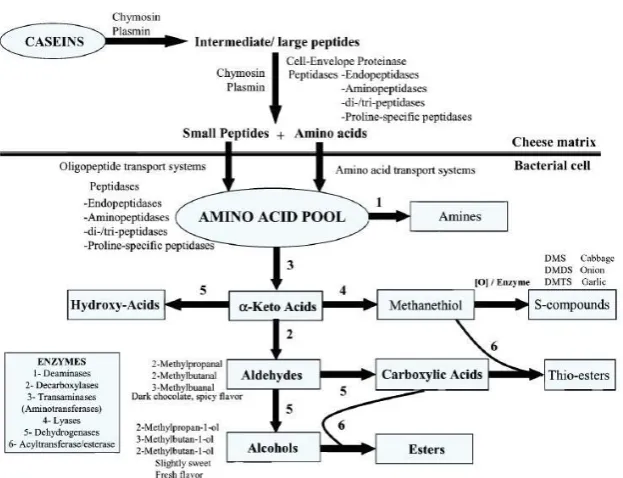
(10) LIST OF FIGURES Figure 1. The diversity of cheese ........................................................................................................ 6 Figure 2. Classification of cheese varieties ....................................................................................... 7 Figure 3. Action of the principle enzyme of rennet (chymosin) on the casein micelles during milk coagulation ......................................................................................................................... 12 Figure 4. Manufacturing protocol for Camembert cheese. .......................................................... 16 Figure 5. Morphology of P. camemberti species.. ............................................................................ 25 Figure 6. pH development in Gouda-type cheese manufactured using 2% bulk starter or 0.02% frozen direct-vat-set (DVS) cultures. ....................................................................................... 27 Figure 7. A simplified state diagram shows the glass transition curve which relates the glass transition to storage temperature and cell moisture content. .............................................. 33 Figure 8. Formation of amorphous structure and the relationship between equilibrium (solution, crystalline solid) and non-equilibrium (amorphous solid and liquid) states. . 34 Figure 9. Inactivation rate of freeze-dried Lb. paracasei subsp. paracasei in a lactose matrix ... 35 Figure 10. Water activity-temperature state diagram of amorphous lactose ............................ 35 Figure 11. Probable pathways for the metabolism of lactose by mesophilic and thermophilic lactic acid bacteria ...................................................................................................................... 42 Figure 12. Schematic representation of changes which occur in Camembert-cheese during ripening as a consequence of the growth of P. camemberti at the surface. .......................... 43 Figure 13. Metabolism of citrate in Camembert cheese (in the presence of lactose) in citrate-fermenting (Cit+) strains of L. lactis subsp. lactis biovar. diacetylactis and Leuc. lactis and Leuc. mesenteroides subsp. cremoris. ................................................................................... 45 Figure 14. Summary of the proteolysis system of Lactococcus. The proteolysis systems of other lactic acid bacteria are generally similar ....................................................................... 48 Figure 15. Generation of flavour compounds from milk protein degradation. ........................ 54 Figure 16. Pathways for the production of flavour compounds from fatty acids during cheese ripening ........................................................................................................................................ 58 Figure 17. General pathways for the metabolism of milk triglycerides and fatty acids. ......... 59 Figure 18. Partition and sampling of Camembert cheese. ............................................................ 63 Figure 19. A scheme of cheese fractionation of water (soluble water content) to determine proteolysis. .................................................................................................................................. 65 Figure 20. A scheme for the fractionation of a citrate suspension of cheese to determine proteolysis ................................................................................................................................... 66 Figure 21. A schematic of the HS-SPME sampling process .......................................................... 70 Figure 22. Commercial HS-SPME .................................................................................................... 70 Figure 23. Gram staining of P. camemberti grown on YGC agar under oil immersion (100×magnification) of Carl Zeis (model HBO 50/AC, Germany) transmission light microscope. .................................................................................................................................. 86 Figure 24. Preparation of Camembert cheese using Mad Millie™ cheese kits ......................... 92 Figure 25. Whey-draining of cheese curds at ambient temperature. .......................................... 93 Figure 26. Camembert cheese at day 14 before wrapping showing the white fluffy P. camemberti. ................................................................................................................................... 93 Figure 27. Cheese sampling plan. .................................................................................................... 95 Figure 28. Mean (± SD) viable cell counts (n=2) of (a) O-type- and (b) LD-type starter cultures (freeze-dried), at each temperature level during storage for 5 months. ........................... 107 VIII.
(11) Figure 29. Mean (± SD) viable cell counts (n=2) of O-type and LD-type lactic starter samples after storage for 5 months at four different temperatures. ................................................. 109 Figure 30. Mean (±SD) viable cell counts (n=2) of P. camemberti ripening cultures (freeze-dried), at each temperature during storage for 5 months. .................................... 110 Figure 31. Mean (±SD) viable cell counts (n=2) of P. camemberti culture samples after stored for 5 months at four different temperatures.. ....................................................................... 111 Figure 32. Mean (±SD) (a) pH and (b) titratable acidity values (n=2) of O-type starter cultures, at each temperature level during storage of 5 months. ....................................................... 115 Figure 33. Mean (a) pH and (b) titratable acidity values (n=2) of LD-type starter cultures, at each temperature level during storage of 5 months.. .......................................................... 117 Figure 34. Mean (±SD) pH values (n=2) of O-type and LD-type LAB starter samples after 5 months storage at four different temperatures.. .................................................................. 119 Figure 35. Mean±(SD) T.A. values (n=2) of O-type and LD-type LAB starter samples after 5 months storage at four different temperatures. ................................................................... 119 Figure 36. Cit+ and Cit- bacteria growing on Nickels and Leesment medium with X-gal. .... 123 Figure 37. LD-type starter samples, consisting of species of L. lactis subsp. cremoris, L. lactis subsp. lactis, Leuc. lactis, Leuc. mesenteroides subsp. cremoris and L. lactis subsp. lactis biovar. diacetylactis, were stored at three temperatures....................................................... 125 Figure 38. (a) aw-temperature state diagram of amorphous lactose. (b) aw-temperature state diagrams of Lb. acidophilus freeze-dried in sucrose or lactose matrix ............................... 130 Figure 39. Growth of lactic acid starters in Camembert cheese samples during 24 h of fermentation and 21 d of ripening. Each point represents mean log cfu/g of four independent samples with error bars representing ±SD. Cheese samples with rind. .... 136 Figure 40. Changes in pH in Camembert cheese samples during 24 h of fermentation and 21 d of ripening. Each point represents mean pH values of four independent samples with error bars represented as ±SD. Cheese samples without rind. .......................................... 136 Figure 41. Growth of P. camemberti in Camembert cheese samples during 24 h of fermentation and 21 d of ripening. Each point represents mean log cfu/g of four independent samples with error bars representing ±SD. Cheese samples with rind. .... 139 Figure 42. Changes in acid-soluble nitrogen (ASN as %TN) in Camembert cheese samples (without rind) during 21 d of ripening. Each point represents mean of four independent analyses (n=4). Error bars are ±SD. ........................................................................................ 146 Figure 43. Changes in non-protein nitrogen (NPN as %TN) in Camembert cheese samples (without rind) during 21 d of ripening. Each point represents mean of four independent analyses (n=4). Error bars are ±SD. ........................................................................................ 146 Figure 44. Changes in protein content in Camembert cheese samples (without rind) during 21 d of ripening. Each point represents a mean of four independent analyses (n=4). Error bars are ±SD. .............................................................................................................................. 148 Figure 45. Changes in casein content in Camembert cheese samples (without rind) during 21 d of ripening. Each point represents a mean of four independent analyses (n=4). Error bars are ±SD. .............................................................................................................................. 148 Figure 46. Changes in peptide concentration in Camembert cheese samples (without rind) during 21 d of ripening. Each point represents a mean of four independent analyses (n=4). Error bars are ±SD. ........................................................................................................ 149 Figure 47. Changes in FAA in Camembert cheese samples (without rind) during 21 d of ripening. Each point represents a mean of four independent analyses (n=4); Error bars are ±SD. ...................................................................................................................................... 150 IX.
(12) Figure 48. Changes in force (N) at 50% deformation (firmness) for Camembert cheese samples (with rind) during ripening for 21 d. Each point represents the mean of gel firmness of 6 independent analyses (n=6 for each treatment); Error bars are ±SD. ........ 158 Figure 49. (a) Softening texture of Camembert cheese at 21 d of ripening. (b) LD-type cheese fermented with 20°C cultures showing very soft texture which is about to lose its structural integrity; (c) Core of O-type cheese (produced by -18°C cultures) with ‘uneven’ texture with soft texture in the outer portion, and a firm core.. ........................................ 160 Figure 50. Chromatogrammes of a mixed standard solution. (a) Peaks of standard compounds; (b) Retention time of standard compounds. .................................................. 164 Figure 51. Concentration of 3-methylbutanal in cheese samples (without rind) during 21 d of ripening. Each data point represents mean±SD of two independent analyses (n=2). Error bars represent SD of the mean. ............................................................................................... 164 Figure 52. Concentrations of 3-methylbutanol in cheese samples (without rind) during 21 d of ripening. Each point represents mean±SD of two independent analyses (n=2). Error bars represent SD of the mean. ............................................................................................... 165 Figure 53. Concentration of 2-heptanone in cheese samples (without rind) during 21 d of ripening. Each data point represents mean±SD of two independent analyses (n=2). Error bars represent SD of the mean. ............................................................................................... 165 Figure 54. Concentrations of 2-nonanone in cheese samples (without rind) during 21 d of ripening. Each data point represents mean±SD of two independent analyses (n=2). Error bars represent SD of the mean. ............................................................................................... 165 Figure 55. Concentrations of butyric acid in cheese samples (without rind) during 21 d of ripening. Each data point represents mean±SD of two independent analyses (n=2). Error bars represent SD of the mean. ............................................................................................... 166 Figure 56. PCA score plot of volatile compounds in 21 d old Camembert samples............... 178 Figure 57. PCA score plot of cheese samples. .............................................................................. 179 Figure 58. Chromatogrammes of an ‘O-type’ cheese sample (3.413 g) at day 21. ................... 180. X.
(13) LIST OF ABBREVATIONS ALA. =. α-acetolactate (α-acetolactic acid). ArAAs ANOVA ASN aw BcAAs C CCP CAR-PDMS Cit+ Cit+ cfu/g cfu/ml CN CO2 (Ca3(PO4)2 Cd C/F CV% d Da DVS DVI DMC DNA DSS DMS DMDS DMTS FA FFA FAO/WHO FSANZ FDM g GLM GLY pathway h H2O HCl HS-SPME/GC-MS. = = = = = = = = = = = = = = = = = = = = = = = = = = = = = = = = = = = = = = = =. i.d. IDF IMCU. = = =. Aromatic amino acids Analysis of variance Acid soluble nitrogen Water activity Branched chain amino acids Carbon Colloidal calcium phosphate Carboxen/Polydimethylsiloxane Citrate-fermenting Non-citrate-fermenting Colony forming unit per gram Colony forming unit per milliliter Casein nitrogen Carbon dioxide Calcium phosphate Cadmium chloride (CdCl2) Casein-to-fat ratio Coefficient of variation Day Dalton Direct vat set Direct vat inoculation Dry matter content Deoxyribonucleic acid Defined-strain starters Dimethyl sulfide Dimethyl disulfide Dimethyl trisulfide Fatty acid Free fatty acid Food and Agriculture Organization/World Health Organization Food Standard Australia New Zealand Fat-in-day matter Gram General linear model Glycolytic pathway Hour Water Hydrochloric acid Headspace solid phase microextraction/gas chromatography-mass spectrometer Internal diameter International dairy federation International milk clotting units. XI.
(14) Ile k k-casein KHP kg LAB Leu Log cfu/g LPL mmol/L MRS MSS MNFS Met m/z mV N n nm NaOH NaCl2 NSLAB NPN NH3 NQ PA pH 4.6-SN PTA-SN PCA PDA PK pathway Phe pI ppm Pa.s r2 RTE RH RSM RT RCBD RNA SD SN Tg T.A. TCA TCA-SN TN. = = = = = = = = = = = = = = = = = = = = = = = = = = = = = = = = = = = = = = = = = = = = = = = =. Isoleucine Rate constant Kappa-casein Potassium hydrogen phthalate Solution Kilogram Lactic acid bacteria Leucine Logarithm colony forming unit per gram Lipoprotein lipase millimoles per litre Molten de Man Rogosa Sharpe Mixed-strain starters Moisture in non-fat substance Methionine Mass-to-charge ratio millivolts Nitrogen mole nanometer Sodium hydroxide Sodium chloride Non-starter lactic acid bacteria Non-protein nitrogen Ammonia Not quantified Polyacrylate Soluble nitrogen at pH 4.6 Phosphotungstic acid soluble nitrogen Principle component analysis Potato dextrose agar Phosphoketolase Phenylalanine Isoelectric point parts per million Pascal-second Correlation coefficient Ready-to-eat Relative humidity Reconstituted skim milk Retention time Randomized complete block design Ribonucleic acid Standard deviation Soluble nitrogen Glass transition temperature Titratable acidity Trichloroacetic acid Trichloroacetic acid soluble nitrogen Total nitrogen. XII.
(15) Tyr Trp TAG Trace μ μg U v/v Val VC w/v WSN X-gal Ø. = = = = = = = = = = = = = =. Tyrosine Tryptophan Triacylglyceride Trace amount Micrometer Microgram Unit Volume/volume Valine Volatile compounds Weight/volume Water soluble nitrogen 5-Bromo-4-chloro-3-indolyl-β-D-galactopyranoside Diameter. XIII.
(16) Wei Qiao. Chapter 1 Introduction. 1 INTRODUCTION Cheeses are popular household fermented dairy products that, since early history, have formed an integral part of the human diet (Fox et al., 2000). The production of cheese involves complex interactions between milk, rennet and bacteria (Fox and McSweeney, 2004). Originally, the fermentation of milk in cheese manufacture occurred spontaneously by advent microbial population from the indigenous flora in raw milk, milk handler, atmosphere and utensils. This practice, however, often results in an unpredictable fermentation process, leading to economic losses and inconsistent product quality, as well as unsafe products (Fox et al., 2000). In modern industry, an upsurge of interest in providing suitable starter cultures for cheese production has been observed in order to control the fermentation process. Indigenous flora has largely been replaced by defined commercial starter cultures for the production of safe and consistent high quality products with stable shelf life (Spinnler and Gripon, 2004; Parente and Cogan, 2004; Bockelmann, 2010). Commercial starter cultures of cheese industry are conveniently divided into mainly lactic acid bacteria (LAB) starters and ripening cultures, respectively. LAB belonging to the genera Lactococcus (L.), Streptococcus (S.), Leuconostoc (Leuc.) and Lactobacillus (Lb.) are widely used in the cheese industry as starter bacteria due to their ability to produce acid during milk fermentation (Singh et al., 2003; Fox and McSweeney, 2004; Parente and Cogan, 2004; Singh and Cadwallader, 2008). In addition to acid production, LAB also contribute to cheese ripening since their enzymes are involved in various biochemical reactions, including citrate metabolism, proteolysis, lipolysis and conversion of amino acids and free fatty acids to flavor compounds, and gas production in selected products. The development of acid also influences the texture of cheeses and plays a vital role in preservation, thus contributing to the microbial safety of cheese products (Banks, 1998; Fox and McSweeney, 2004; Parente and Cogan, 2004). For certain cheese varieties, secondary cultures are essential for ripening. Secondary ripening microorganisms do not play any active role during cheese milk fermentation, but are involved with the starter bacteria in the ripening process to induce organoleptic and biochemical changes in or on the cheese (Law, 1997; Bockelmann, 2010). For example, Penicillum (P.) camemberti, a white mould, is used to assist in the ripening of Camembert for developing white, fluffy appearance and producing distinct flavor, as well as promote softening of body texture (Spinnler and Gripon, 2004). In Swiss cheese, propionic bacteria are used to promote eye formation (Fox et al., 2000; Spinnler and Gripon, 2004). In modern dairy industry, cultures are available in different forms such as liquid, air-dried (spray-dried and vacuum-dried), frozen and freeze-dried (lyophilized) forms. The most 1.
(17) Wei Qiao. Chapter 1 Introduction. popular cultures are the Direct Vat Set (DVS) which are also called Direct-Vat Inoculation (DVI). The popularity of DVS is attributed to convenience in during handling and retention of high activity (Kindsedt, 2005; Hoier et al., 2011). DVS cultures are preserved in many forms, either as frozen liquid concentrate, or in powdered freeze-dried form. While cultures preserved in frozen form only exhibit maximum survival in frozen environment, the cost of storage conditions limits their use. Instead, preservation of cheese starter cultures by freeze-drying technique has generated much interest due to lower storage costs, transportation and easier handling compared to freezing liquid cultures (Morgan et al., 2006; Santivarangkna et al., 2007; Santivarangkna et al., 2008). The performance of freeze-dried cultures is vital in cheese production, both technologically and economically. Prior to commercial applications, freeze-dried culture strains are screened to determine cell viability, storage stability and important technological properties (rapid acid production, ability to produce flavor production in milk and bacteriophage resistance) to obtain desired performance in the final cheese manufacture (Parente and Cogan, 2004; Hoier et al., 2011; Nollet and Toldra, 2012). During production of freeze-dried cultures, the process of freezing and drying can damage the bacterial cell membrane (Tamime and Robinson, 1999; Santivarangkna et al., 2008). The damage however can be minimized with the addition of protectants (e.g., lactose and milk) prior to treatment that prevent cellular injury by stabilizing the cell membrane constituents during preservation procedure (Cerrutti et al., 2000; Strasser et al., 2009). The major problem after freeze-drying is the loss of viability during storage (Tamime and Robinson, 1999; Parente and Cogan, 2004). Among the several factors that cause injury and instability of cultures during storage, temperature has been singled out as being critical; inactivation of freeze-dried bacteria has been reported when exposed to high temperatures. As the storage temperature increases, so does the mortality of the culture, resulting in lower acidification activity (Morgan et al., 2006; Santivarangkna et al., 2007; Santivarangkna et al., 2008). Storage temperature, humidity and length of storage have combined negative effects on viability and acidification activity of cultures (Law, 1997; Fox et al., 2000; Parente and Cogan, 2004; Higl et al., 2007; Hoier et al., 2011). Camembert cheese is a surface mould-ripened cheese with a soft consistency in a flat cylindrical form and has a soft plastic texture which becomes semi-liquid as the cheese matures (Spinnler and Gripon, 2004; Codex Standard, 2010). In New Zealand, Camembert is made from pasteurized milk with the addition of mesophilic lactic starter bacteria which include lactococci species (L. lactis subsp. lactis, L. lactis subsp. cremoris, L. lactis subsp. lactis biovar. diacetylactis and Leuconostoc species (Leuc. lactis and Leuc. mesenteroides subsp. cremoris and ripening microorganisms which may include yeasts (Kluyveromyces (K.) lactis, Saccharomyces (S.) cerevisiae and Debaryomyces (D.) hansenii) and moulds (P. camemberti and Geotrichum (G.) candium) and smear bacteria (Corynebacterium and Brevibacterium (B.) linens) (Fox et al., 2000; Parente and Cogan, 2004; Spinnler and Gripon, 2004). LAB starters produce sufficient acid to reduce pH of milk to desirable levels, followed by addition of rennet at 2.
(18) Wei Qiao. Chapter 1 Introduction. about pH 6.4 and coagulation occurs for 30-45 min. The coagulum is then transferred to cheese moulds and whey is allowed to drain at 26-28oC with gradual cooling to 20°C. At this stage, a curd with pH of 4.6-4.7 and low mineral content is obtained. The cheese is dry-salted and ripened for 21 days (d) or more at 11-13oC under 90% relative humidity (RH) (Spinnler and Gripon, 2004). The vast majority of Camembert cheeses in the current market are produced industrially and sold as ready-to-eat (RTE) products (Spinnler and Gripon, 2004). While the commercial products have served the market well for a long time, a common complaint today is that cheese is often boring and bland; and this is a result of pasteurization and standardization of cheese making processes (Law, 1997; Fox et al., 2000). International travel and increased communication about food ingredients and nutritional values have increased people interest for high quality, nutritious, flavoursome food. Many people are now reverting back to preindustrial practises and this has lead an increase in commercial domestic kits that allow consumers to produce own healthy, nutritious, tasty, cost-effective cheese products with no harmful preservatives, which is often described as ‘do-it-yourself’. Several ‘do-it-yourself’ commercial domestic kits are being marketed including equipment for making Camembert cheese. Giving consumers the opportunity to produce own cheese in their own homes has enormous business potential. The main challenge facing domestic production of cheese is maintaining a sufficient cold chain. Optimum storage temperatures are essential to maintaining viable cell population of freeze-dried cheese starters and ripening cultures. The commonly used freeze-dried cultures should be stored at -18 °C or lower to maintain viability of bacteria cells needed for cheese-making (Tamime and Robinson, 1999; Hoier et al., 2011); this may be difficult to maintain at household level, as well as when exporting to distant markets. In Camembert cheese production, lactic starters and ripening cultures are involved in biochemical activities that are vital to the development of important sensory properties such as appearance, texture, taste, mouth-feel and aroma (Leclercq-Perlat et al., 2004a; Spinnler and Gripon, 2004). The biochemical activities are largely determined by the viability of the cultures, which in turn may be affected by storage and handling conditions (Parente and Cogan, 2004). Generally, there is scanty information on stability of freeze-dried cheese cultures at ambient temperature or higher, nor in refrigerators for prolonged storage time (Gyosheva et al., 1995; Andersen et al., 1999; Tamime and Robinson, 1999; Higl et al., 2007). The effect of cheese culture activity on physicochemical, biochemical and microbiological aspects of Camembert cheese have been investigated with the aim of understanding their behaviour during ripening (Sousa and McSweeney, 2001; Leclercq-Perlat et al., 2004a; Leclercq-Perlat et al., 2004b; Spinnler and Gripon, 2004; Sullivan et al., 2005; Guizani et al., 2007; Lessard et al., 2012). However, no attempts were made to study their ability to make Camembert after prolonged storage at higher temperatures. Thus, there is a gap in the knowledge on the ability of cheese cultures that have been stored at refrigeration, ambient 3.
(19) Wei Qiao. Chapter 1 Introduction. and higher temperatures for prolonged storage period to produce Camembert. In addition, cheese starter and ripening cultures have also not been investigated in Camembert cheese production using commercial domestic cheese-making kits.. 1.1 Aim and objectives The main objective of the study was to investigate the effects of four selected temperatures on the stability of mesophilic cheese starter and ripening cultures during storage. The experiments were conducted in three integrated phases with the following specific objectives: 1. To analyse the properties (cell viability, acid production, colour and culture composition) of 14 different commercial freeze-dried mesophilic cheese starter (Lactococcus and Leuconostoc species) and ripening cultures (Penicillium) when stored at refrigeration (4°C), ambient (20°C) and elevated ambient (37°C) temperatures for 5 months, using -18°C as treatment control. 2. To screen and select cheese cultures with potential to produce prototype Camembert cheeses using a commercial domestic kit. The cheese was used as a model to test the capability of potential starter cultures to produce high quality products. 3. To characterise the prepared prototype Camembert during ripening, with respect to microbiological, physicochemical and biochemical properties which comprised analyses of viable cell counts, acidity, rheology, nitrogen fractions, free amino acids and aroma compounds.. 4.
(20) Wei Qiao. Chapter 2 Literature Review. 2 LITERATURE REVIEW 2.1 General aspects of cheese technology 2.1.1. World production and classification of cheese. The history of cheese making dates back to about 2000 BC (Fox and McSweeney, 2004). Over time, the technology has evolved from a village cottage industry to large-scale, high technology fermentation commercial enterprises. However, the traditional technology is still being practised in communities around the world, both in the developed and developing regions (Kosikowski and Mistry, 1997; Johnson and Law, 2010). The Food and Agriculture Organization/World Health Organization (FAO/WHO) (Shaw, 1981) defines ‘cheese’ as: ‘Cheese is the fresh or matured solid or semi-solid product obtained by coagulating milk, skimmed milk, partly skimmed milk, cream, whey cream, or buttermilk, or any combination of these materials, through the action of rennet or other suitable coagulating agents, and by partially draining the whey resulting from such coagulation’. Meanwhile, the definition of cheese given by the Food Standard Australia New Zealand (FSANZ, 2008) is that: ‘Cheese means the ripened or un-ripened solid or semi-solid milk product which may be coated and is obtained by one or both of the following processes: (a) coagulating wholly or partly milk, or materials obtained from milk, or both, through the action of rennet or other suitable coagulating agents, partially draining the whey which results from such coagulation; or (b) processing techniques involving concentration or coagulation of milk, or materials obtained from milk, or both, which give an end-product with similar physical, chemical and organoleptic characteristics as the product described in paragraph (a)’. The world produces significant quantities of cheeses, with over 2000 varieties of cheeses accounting for about 35% of total milk production. In 2005, FAO/WHO estimated the world production of cheese at 19 million, with Europe contributing nearly 10 million tonnes of cheese (FAO, 2008). According to Johnson and Law (2010), the major cheese-consuming regions remain the European Union and the United States of America which is about 80% of world consumption. Traditionally, most of the international trade in cheese has been between the developed countries. Trade is dominated by the European Union, New Zealand and Australia which together account for about 75% of the world market (Banks, 1998). There is no definitive list of cheese varieties. In 1971, a comprehensive study of cheese varieties was undertaken by the International Dairy Federation (IDF) and 395 cheese 5.
(21) Wei Qiao. Chapter 2 Literature Review. varieties were classified (Banks, 1998) as summarised in Table 1. Fox and Mcsweeney (2004) and Johnson and Law (2010) suggested that a classification scheme for cheese should also include an indication of manufacturing procedure, ripening characteristics (e.g. method of coagulation, ripening agent) (Figures 1 and 2).. Table 1. Classification of cheese varieties (Banks, 1998). Raw material. Cheese type. Cows’ milk. Hard. Sheeps’ milk. Semi-hard. Goats’ milk. Soft. Buffaloes’ milk. Semi-soft Acid-curd Whey. Interior Large-round opening Medium sized opening Small around openings Irregular openings No openings Blue-green mould veins White mould veins Added spices Added herbs. Characteristics Exterior Hard dry rind Hard rind with smeary surface Soft, dry rind. Composition Fat in dry matter Moisture Moist in non-fat milk solid. Soft rind with smeary surface Soft rind with white mould Soft rind with green mould Soft rind with paraffin No rind. Figure 1. The diversity of cheese (Fox and McSweeney, 2004). Acid-coagulated cheese is made through direct acidification by adding acid to the milk to coagulate the proteins; Rennet-coagulated cheese is made using rennet (enzyme) in addition to starter cultures to coagulate the milk; Process cheese is made using ‘natural cheese’ plus other ingredients that are cooked together to change the textural and/or melting properties and increase shelf life. The term ‘natural cheese’ is an industry term referring to cheeses that is made directly from milk. Moisture content for extra hard: < 25%; hard: 25-36%; semi-hard: 36-40% and soft: >40%.. 6.
(22) Wei Qiao. Chapter 2 Literature Review. Figure 2. Classification of cheese varieties (Johnson and Law, 2010). w/p (water:protein ratio) represents the water content of cheese curd; 1Kept in brine; 2Milk may differ from cow’s milk; 3Usually by acid coagulation; 4Salting of the curd prior to pressing; 5Stretched curd. ‘×’ means that the parameter involved applies as well.. 2.1.2. Cheese-making. Cheese-making is a rather simple process in itself, but the production involves complex chemical and physical interactions between milk, rennet and bacteria (Fox and McSweeney, 2004). The manufacture of cheese is fundamentally a method of preserving milk over the short and medium term. The main purpose of this preservation method is to lower the pH (achieved through acidification by controlled lactic acid fermentation) and water activity (through coagulation, draining and salting of cheese curd). There is no standard method of cheese-making; however the basic technology for the manufacture of all cheese types is similar. The manufacture of cheeses can be divided into two distinct phases: (a) manufacture of cheese curd (conversion of milk to curd), which is essentially completed within 24 h; and (b) cheese curd maturation (ripening of the curd) both of which involve several processes.. 2.1.2.1. Manufacturing. The manufacturing phase is generally defined as those operations performed during the first 24 h and the basic steps are: (a) selection, standardization and pasteurization of cheese milk, (b) acidification, (c) coagulation, (d) dehydration, (e) shaping and (f) salting (Kosikowski and Mistry, 1997; Banks, 1998; Fox et al., 2000; Fox and Cogan, 2004; Johnson and Law, 2010).. 7.
(23) Wei Qiao. Chapter 2 Literature Review. (a) Selection, standardization and pasteurization of cheese milk Most cheese varieties commence with the selection and pre-treatment of milk of high microbiological and chemical quality. Cheese can be made using milk of any species (cow, goat, sheep), while cow’s milk is most common (Fox and Cogan, 2004; Fox and McSweeney, 2004). Due to major compositional abnormalities, milk from cows in the very early or late stages of lactation and those suffering from mastitis should be excluded. The milk should also be of good microbiological quality in low contamination level, free of chemical taints and free fatty acids, which cause off-flavours in the cheese, and antibiotics, which inhibit starter culture activity (Kosikowski and Mistry, 1997; Fox et al., 2000; Fox and Cogan, 2004; Johnson and Law, 2010). In regions where fresh milk is scarce, cheese has also been successfully made from recombined anhydrous milk fat and reconstituted skim milk powder (Johnson and Law, 2010). Before milk is used for cheese production, it is subjected to several pre-treatments, with various objectives. Fat and protein are important components of cheese milk that have large influence on fat-in-dry matter (FDM) and moisture in non-fat substances (MNFS; which in turn the ratio of moisture to protein), which are important compositional factors of cheese. The ratio of casein-to-fat (C/F) in milk determines FDM; and the total amount of casein and fat, in part, determines the yield potential of milk (Fox et al., 2000; Fox and McSweeney, 2004; Johnson and Law, 2010). Due to inevitable variations in milk composition caused by weather, animal-feeding, breed, the cheese milk needs to be standardised with respect to fat and casein prior to cheese-making to ensure the production of consistently high quality products. Based on the definitions for cheeses specified by FAO, standardization of milk is necessary for cheeses with FDM (g 100 g-1) < 50 or > 57. If a higher FDM (or lower C/F) is required, cream is added; if a lower FDM (or higher C/F) is desired, either cream is removed or condensed skim milk powder is added (Johnson and Law, 2010). Raw milk has a long tradition for cheese-making. The adventitious micro-flora of raw milk, especially the indigenous lactic acid bacteria, may contribute to the acidification and ripening of raw milk cheese (Johnson and Law, 2010). Some of the best cheeses are made from raw milk and the practice is widely used in France (Kosikowski and Mistry, 1997; Johnson and Law, 2010). However, food safety may compromise because the microbial quality of raw milk is difficult to maintain and often results in uncontrolled fermentations. Camembert cheese made from raw milk have been implicated with contamination by pathogens such as Staphylococcus aureus, Escherichia coli, Clostridium perfringens, Salmonella spp., Listeria (L.) monocytogens, Yersinia enterocolitica and Campylobacter spp. (Bockelmann, 2010). For modern large-scale cheese-making operations, pasteurized (72°C/15sec) milk is preferred and selected starter LAB cultures are used for inoculation, for more uniform 8.
(24) Wei Qiao. Chapter 2 Literature Review. bacteriological quality of products. Pasteurisation is not intended to kill all micro-organisms in milk. Although the majority of psychrotrophic spoilage bacteria and several pathogens (Campylobacter, Salmonella, etc) are effectively eliminated by pasteurization, spore-forming bacteria such as Clostridium and Bacillus were reported in pasteurized milk (Banks, 1998). Some species of Lactobacillus and Streptococcus can also survive. Pasteurization can inactive indigenous milk enzymes (except for heat-stable) that may cause off-flavours. Pasteurization process also partially denatures whey proteins and alters the mineral constituent of milk that interferes with gel formation in cheese manufacture (Johnson and Law, 2010). Pasteurization of milk also influences the characteristics of proteolysis during cheese ripening (Singh et al., 2003). Milk pasteurization causes very limited heat-induced interaction of whey proteins with casein and therefore results in the retention of additional whey proteins in cheese beyond the normal amount which is soluble in the aqueous phase of cheese. The presence of heat-denatured whey proteins in cheese can decrease the accessibility of caseins to proteinases during ripening (Singh et al., 2003). Most cheese milk is not homogenised as the process reduces the fat globules and increases the fat surface area where casein particles adsorb. This results in a soft, weak curd at renneting and increases hydrolytic rancidity, which is a defect in cheese (Singh et al., 2003; Johnson and Law, 2010).. (b) Coagulation of milk After the cheese milk has been standardized and pasteurized, it is transferred to cheese vats, where it is coagulated to cheese curd. Coagulation is essentially the formation of a gel by destabilizing the casein micelles, causing them to aggregate and form a network which partially immobilizes the water and traps the fat globules if present (Guinee and Wilkinson, 1992; Fox et al., 2000; Dalgleish and Corredig, 2012). Coagulation in various cheese productions is derived from acid-coagulation or enzymatic (rennet)-coagulation, or by a combination of two activities (Fox and McSweeney, 2004).. (c) Microorganisms Acidification (lowering of pH) achieved by controlled lactic acid fermentation is essential in the formation of a gel from the milk casein; the organisms responsible for acid production during cheese-making are the LAB (Singh et al., 2003; Fox and McSweeney, 2004; Parente and Cogan, 2004; Singh and Cadwallader, 2008). LAB used as starter cultures in the cheese industry belong to the genera Lactococcus, 9.
(25) Wei Qiao. Chapter 2 Literature Review. Streptococcus, Leuconostoc and Lactobacillus. Of these microorganisms, the lactococci are the most widely used (Fox et al., 2000; Parente and Cogan, 2004). The choice of starters is primarily based on the temperature used in cheese-making and their acid profile. Desired lactic starters reduce milk pH to less than 5.0-5.3 within 6-12 h at 30-37oC depending on cheese variety (Fox et al., 2000; Parente and Cogan, 2004). Mesophilic starter cultures (e.g., L. lactis subsp. lactis and L. lactis subsp. cremoris) are used in the production of a variety of soft cheeses in which the processing techniques incorporate only moderate scald temperatures of up to about 40oC. In the production of hard cheeses such as Parmesan and Emmental, the processing techniques require the use of high scald temperatures up to about 53 °C and thermophilic cultures (e.g., S. thermophilus, Lb. helveticus or Lb. delbrueckii subsp. bulgaricus) are used (Banks, 1998; Fox and McSweeney, 2004; Singh and Cadwallader, 2008). Acid-damaged and bacteriophage-attacked LAB starters however have the potential to slow and even stop the rate of acid development (Hoier et al., 2011). In addition to acid production, starter cultures also contribute to cheese ripening since their enzymes are involved in various biochemical reactions, including citrate metabolism, proteolysis, lipolysis and conversion of amino acids and free fatty acids to flavor compounds, and gas production. The development of acid also influences the texture properties of the cheeses by encouraging the contraction of rennet-curds and the expulsion of moisture from the cheese curd by syneresis. Furthermore, by lowering the pH and producing antimicrobial compounds (e.g., nisin), lactic starters also have a role in preservation and contribute to the microbial safety of cheese products (Banks, 1998; Parente and Cogan, 2004; Fox and McSweeney, 2004). Secondary ripening microorganisms are also used in cheeses, for certain varieties, to produce distinct flavour and texture properties. For example, P. camemberti, a white mould, is used to assist in the ripening of Camembert, for developing white, fluffy appearance and producing distinct flavor, as well as promotes a softening of body texture. In Swiss cheese, propionic bacteria are used to promote eye formation (Fox et al., 2000; Spinnler and Gripon, 2004). In spite of their significant roles in cheese ripening, secondary bacteria do not play an active role in acidification during fermentation.. (d) Coagulation Milk contains on average 3.3% protein, which exists in two forms: as a suspension/colloidal (casein) and in a soluble form (whey protein), which are distinguished by their behaviour on lowering the pH to 4.6. The casein proteins will precipitate at pH 4.6, whereas the whey proteins will not (Fox et al., 2000). The casein is composed of several constituents designated as α-s1-, α-s2-, β- and κ-caseins, all of which show differences in their polypeptide chain structure. In milk at normal pH (about 6.8), the caseins are bound together with colloidal 10.
(26) Wei Qiao. Chapter 2 Literature Review. calcium phosphate (CCP) in the form of spherical particles, known as casein micelles (Fox et al., 2000; Dalgleish and Corredig, 2012). According to Dalgleish and Corredig (2012), the structure of casein micelle is that the α-s1, α-s2 and β-caseins are surrounded by a layer of κ-casein. The behaviour of casein micelles has great importance in determining the properties of milk. In milk at normal pH, κ-casein, which is located on the surface of casein micelles, provides steric stabilization to the micelle so that they remain soluble. Coagulation occurs when casein micelles destabilize, and the stability of the micelles depends on the loss of electrostatic- and/or stearic-repulsions, which is related to rate of pH changes and the presence of chymosin (Banks, 1998; Singh et al., 2003; Singh and Cadwallader, 2008). When caseins are aggregate, fat globules and microorganisms are trapped in the developing curd. Acid-coagulation During acid-coagulation, acid-production by starter cultures causes casein micelles to destabilize or aggregate by decreasing their high negative electric charge on the κ-casein layer of casein micelle to nearly no net charge, as their isoelectric point (pI) is approached (pI = 4.6). Meanwhile, acidity increases the solubility of CCP, a structural unit within casein micelles which acts as a neutralizing bridge between two negatively charged phosphoseryl groups. As pH drops below 6, calcium phosphate is cleaved from the inside of casein particles and gradually become soluble in the aqueous phase of milk, causing a ‘loosening’ of the casein network. At pH 5.3-5.2 (≥ 20°C), gelation starts as casein micelles become loose in their structural integrity and unstable to form the beginning of agglomeration. Below pH 5, gel firmness increases considerably, which continues to increase, reaching maximum around the pI. While at pH 4.6 (≥ 20°C), the pI of casein is reached and the micelle no longer carrying any charge to keep it suspended by repelling forces, casein becomes completely insoluble and precipitates out. This results in the formation of a fragile coagulum which is a 3-dimensional. heterogeneous. casein. network. held. together. by. covalent. and. protein-to-protein interactions (Banks, 1998; Fox et al., 2000; Singh et al., 2003; Singh and Cadwallader, 2008; Dalgleish and Corredig, 2012). Since acidity influences the onset of gelation and coagulum formation, the rate and the extent of acid production by cheese starter cultures is critical for textural attributes of finished cheese products. Enzymatic (rennet) coagulation In cheese manufacture, a coagulant is primarily used to coagulate milk. The predominant coagulant used in cheese manufacture is calf rennet, with the active enzyme component, chymosin, which is secreted by the young of several mammalian species. Lamb and kid rennet pastes are also used in cheese manufacture as coagulants. Microbial proteases secreted by Cryphonectria parasitica, Rhizomucor pusillus and Rhizomucor miehei are other sources of coagulants (Banks, 1998; Fox et al., 2000; Singh et al., 2003; Singh and Cadwallader, 2008; Dalgleish and Corredig, 2012). Many plants also have coagulating properties. Ancient 11.
(27) Wei Qiao. Chapter 2 Literature Review. Greeks used ficin from the fig tree to coagulate milk. Other examples include papain from papaya tree, and bromelin from pineapple (Guinee and Wilkinson, 1992). The milk clotting activity of rennet is due to the presence of the enzyme chymosin, which is a two-phase reaction (Figure 3). Phase one involves enzymatic hydrolysis of κ-casein by chymosin through converting κ-casein to para-casein. Chymosin specifically cleaves κ-casein at the Phe105-Met106 position and releases the C-terminal region resulting in the formation of soluble CCP, which diffuses from the micelle and para-κ-casein, leaving a distinctly hydrophobic peptide on the micelles. Phase two is the coagulation (aggregation) of the altered casein micelles by Ca2+ at >20oC. The micelles aggregate due to the loss of stearic repulsion of the para-κ-casein and the surface potential which inhibits the micelles from coming close together (Banks, 1998; Fox et al., 2000; Dalgleish and Corredig, 2012). When acid-coagulation is also involved, the aggregation of para-κ-casein micelles aggregates further contributing to the loss of electrostatic repulsion due to the decrease in pH as it approaches its isoelectric point (pH 4.6). Once a critical degree of proteolysis has been reached (80%), then aggregation can occur, and a coagulum is formed. In the second phase, coagulation requires a temperature in excess of 20°C; the rate of rennet reaction was reported to increase with increasing temperature up to 40°C (Dalgleish and Corredig, 2012). Enzymes present in rennet also play an important role in the generation of flavour compounds during cheese ripening (Section 2.6.2).. Figure 3. Action of the principle enzyme of rennet (chymosin) on the casein micelles during milk coagulation (Dalgleish and Corredig, 2012). (a, b) casein micelles with intact k-casein layer being attacked by chymosin; (c) micelles partially denuded of k-caseins; (d) extensively denuded micelles during aggregation.. (e) Syneresis Cheese coagulum is stable if maintained under quiescent conditions, but it rapidly undergoes syneresis (expulsion of whey from cheese coagulum) when cut or broken (Fox et. 12.
(28) Wei Qiao. Chapter 2 Literature Review. al., 2000). Syneresis occurs when casein molecules re-arrange after a coagulum has formed resulting in tightening of the casein network, thereby removing moisture from the casein network; water activity of the curd is thus reduced (Fox et al., 2000; Fox and McSweeney, 2004; O'Callaghan and Guinee, 2004). When first formed, the cheese coagulum has a water content of about 87%. Due to dehydration, syneresis essentially concentrates the fat and casein of milk by a factor of 6-12 with the water content of coagulum being reduced to between 20-56%, depending on cheese variety (Banks, 1998; Singh et al., 2003; Fox and McSweeney, 2004; Singh and Cadwallader, 2008). Moisture retention in the coagulum is influenced by variations in the processing conditions following curd formation. Of particular significance, is the rate of acid development which increases syneresis resulting in a firmer curd. The development of acidity during cheese syneresis is affected by the type of starters used (Banks, 1998). Increasing the temperature (cooking) of the curd after cutting additionally increases the rate of moisture removal from the curd, depending on the cheese variety (Fox et al., 2000). The extent to which the coagulum is cut, the agitation of the curd in the whey, together with the level of salting also determine the moisture level in the cheese (Banks, 1998).. (f) Salting When cheese curds are salted, the concentration of the salt diffuses rapidly throughout the curd from the surface to the centre until equilibrium is reached, while the cheese curd undergoes intense syneresis. The concentration of salt-in-cheese moisture has a major effect on the growth of microorganisms in cheese (Mcsweeney and Fox, 2004; Parente and Cogan, 2004). Salt increases the osmotic pressure of the aqueous phase of cheese, causing dehydration of bacterial cells and retard the growth of microorganisms, including pathogenic and spoilage bacteria, cheese starter cultures and secondary ripening microorganisms if applicable. However, although the growth of the starter reduces shortly after salting, metabolism of lactose continues, and the concentration of lactic acid gradually increases (Fox et al., 2000). The growth of Lactococcus strains used as starters is stimulated by low levels of NaCl but is strongly inhibited at levels above 5%, when metabolism of lactose may also terminate (Banks, 1998; Fox et al., 2000; Fox and McSweeney, 2004; Spinnler and Gripon, 2004). If starter activity (cell growth and lactose metabolism) is inhibited after manufacture owing to excessive level of salt-in-moisture (>5%), residual lactose will be metabolised relatively late during ripening, when the number of non-starter lactic acid bacteria (NSLAB) is high. Furthermore, some secondary ripening microorganisms are salt-tolerant and their growth is stimulated by low levels of NaCl. For example, the growth of P. camemberti on Camembert cheese is poor and patchy at levels below 0.8% NaCl. 13.
Figure



+7
Outline
Lactic acid starter bacteria
Stability of freeze-dried cultures during long-term storage
Biochemical reactions of cheese and their effects on cheese quality
Aromatic compounds developed from casein metabolism
Production of aromatic compounds from fat metabolism
Characterization of cultures
Camembert Cheese Characterization
Acidification
Discussion
Related documents
and ultxacentrifuged in Beckman L2-65B Ultracentrifuge, using rotor # 42.1 at 124,000 x g All nuclei obtained were subsequently treated with extracting buffer and centrifuged at
Due to the continued interest and debate in this area, we conducted a scoping systematic literature review and meta-analysis of all observational studies
logical Development, Egypt. Lactic cultures role in Ras cheese ripening. Microbiological and chemical studies on Egyptian Ras cheese. A culture collection of lactic
5.0 EMPLOYMENT: The contractor will not engage the services of any person or persons now employed by the State of Wisconsin, including any department, commission or board thereof,
Frequent users significantly differed from non-frequent users with regard to being female rather than male, higher mobile device ownership, more frequent exchange about obtaining
Also, both diabetic groups there were a positive immunoreactivity of the photoreceptor inner segment, and this was also seen among control ani- mals treated with a
For example, dedicated HT and Monalytics CB which has best performance in linear runtime analysis are among the worst in quadratic time, which suggests that, instead of using a
, When [Control for HDMI] in [HDMI Settings] is set to [On] (page 29), the display language on the screen automatically switches according to the language setting of the connected
