This is a repository copy of
Constituent-Likelihood Grammar
.
White Rose Research Online URL for this paper:
http://eprints.whiterose.ac.uk/81687/
Version: Published Version
Article:
Atwell, ES (1983) Constituent-Likelihood Grammar. ICAME Journal: International
Computer Archive of Modern and Medieval English Journal, 7. 34 - 67. ISSN 0801-5775
[email protected]
https://eprints.whiterose.ac.uk/
Reuse
Unless indicated otherwise, fulltext items are protected by copyright with all rights reserved. The copyright
exception in section 29 of the Copyright, Designs and Patents Act 1988 allows the making of a single copy
solely for the purpose of non-commercial research or private study within the limits of fair dealing. The
publisher or other rights-holder may allow further reproduction and re-use of this version - refer to the White
Rose Research Online record for this item. Where records identify the publisher as the copyright holder,
users can verify any specific terms of use on the publisher’s website.
Takedown
If you consider content in White Rose Research Online to be in breach of UK law, please notify us by
CONSTITUENT-LIKELIHOOD
GRAMMAR
E r i c S t e u e n A t w e Z Z
Univerezty of Lancaster, England
A INTRODUCTION
The paper by Leech e t 0 2 . describes the aims o f the LOB Corpus Gramma-
tical Tagging project, and explains the suite of programs we are
u s ~ n g to achieve these aims. In this paper, I would like to look in
greater detail at the theoretical basis of these programs; I shall
attempt to explain exactly what
constituent-ZikeZiilood
grammar in-volves, and suggest some other applications of this probabilistic
approach to natural language syntax analysis.
A.l General principles of CL grammar
The CL qrammar used in the LOB Corpus project is specifically designed
to be used in tagging, that is, in assigning a grammatical-class
marker to each word in a text. In fact, the basic principles could
be generalized to apply to other levels of linguistic analysis
(parsing, semantic analysis, etc.); in general, if the analysis in-
volves assigning 'labels' to 'constituents', then a CL qrammar could
be devised for this analysis.
The CL method of grammatical analysis involves two steps:
li) Each 'constituent' is first assigned a set of potential 'labels'.
This can be done by some quite simple mechanism such as dictio-
nary-lookup; this may well mean that some of the possible labels
are i n fact inappropriate in the given context, but this does
not matter, since they will be eliminated during the second
stage.
(ii) Each of the potential labels of a constituent is then assigned
a ~ , u Z n t i o s ZikeZiiroad figure, using a formula which takes into
accrilnt contextual and other relevant factors; having done this,
w e u e n then choose the single 'best' label for the constituent,
and disregard all the others (no matter how many others there
Thus a CL grammar should not be viewed as a set of rules for genera-
ting sentences; rather, it is characterized by:
lil an algorithm for assigning a set of possible 'labels' or tags
to any given constituent; and
Cii) a general r e Z n t i v e Z i k e Z i h o o d f o r m u l a which can be used to calcu-
late the relative likelihood of any given label or tag in any
given context.
A . 2 The LOB CL grammar
In the CL grammar used to analyse the LOB Corpus, the 'labels' are
grammatical tags, and the 'constituents' are words (in this special
c a s e , all the 'constituents' are at the same 'level'; but this does
not mean that CL grammar could not be generalized to deal with more
complex Structuring).
The tag-assignment algorithm is embodied in the program WORDTAG. Tags
are assigned mainly by dictionary-lookup; but since the set of
possible words in the English language is open-ended, the algorithm
also includes a number of 'default' routines to deal with words which
'fall through the net' (as explained in Leech e t O Z . ) . This means
that the tag-assignment algorithm can he used to assign a set of
potential tags to an3 word, and this set will almost always include
the 'intuitively correct' tag.
Probably the most innovative part of the LOB CL grammar is the gene-
ral r e Z o t i u e l i k e l i h o o d f o r m u l a used by the 'tag-disambiguation'
program CHAINPROBS. When a word has been assigned more than one
potential tag, this formula is used to find the relative likelihood
of each candidate. We have found that a very simple formula, taking
into account only the immediate context, will correctly choose the
'best' tag in c. 96-97% of all cases lmo~eovcr, this high success
rate is consistent regardles~ of style: novels, newspapers, magazines,
etc. all have approximately the same success rate). Section B explains
the Tag Relative Likelihood formula in greater detail.
A.3 Other applications of CL grammar
The CL-grammar approach to language analysis was developed speclfl-
cally for the LOB Corpus Grammatical Tagging research project. How-
ever, it ha5 become clear that this methad of analysis has many other
over other methods of natural language analysis are:
111 C e n e r a L i t y and r o b u a t n e e e : 'Rule-based' analysis algorithms
tend to work only with sentences that 'follow the rules', and
wlll fail if presented with 'non-standard' English, accidental
misspellings, or other 'deviant' input. Unfortunately, as become
clear when researching with a large corpus, 'real-life' English
texts are often dotted with many of these 'imperfections'! In
Contrast, the LOB Corpus Tagging programs are extremely general
and 'robust', since they will produce a reasonably acceptable
analysis of an# input (they have successfully dealt with news-
paper 'telegraphese', 'foreigner English', Sci-Pi neologisms,
and even a 'humorous' text peppered with d e z i b e r o t e mis-
spellings!).
liil Simplicity: Most syntax-analysis programs build a complex 'parse
tree' for each sentence, which requires much complicated and
time-consuming computation. CL grammar, on the other hand, in-
volves analysis at a 'local level' only; the tag-likelihood
function looks at the immediate context only, not at a whole
sentence; and even within this localized context, the computa-
tion is very straightforward. This means that the amount of
computation is much less; the analysis is much simpler and
faster.
These advantages make CL grammar particularly suitable for applica-
tions requiring a simple and fast analysis of a wide range of possible
linguistic input. In sections C, 0 , and E I shall look briefly at
three potential uses of CL grammar; a spelling and grammar 'checker'
for use in Word Processors, a speech analysis program for converting
from spoken to written English, and a general Grammatical Parser for
the LOB Corpus.
B THE LOB TAG RELATIVE LIKELIHOOD FUNCTION:
110P1 WE DEVELOPED THE FOPSlULA
To glve the reader a clearer idea of how 'likelihoods' are calculated
~n a CL grammar, I will attempt in this section to explain the Tag
Relatrve Llkellhood Functlon used in tagging the LOB Corpus; I will
do this by explaining stcp hy step how we developed the mathematical
B.l A formalism for words and tags
The programs before CHAINPROBS (where the likelihood formula is
applied) divide the texts of the LOB Corpus into records, where each
record contains a single word and a set of potential tags, and each
record has a unique reference number (in fact, each record is a
separate line of text; but I prefer the tern 'record' (rather than
'line'), since this avoids confusion (different words which were on
the same line in the original Corpus are in different recordsll. If
we denote the record-number by r, the word by W < = > , and the set of
tags hy T<r,l>, T<r,2>, T<r,3>,
...
T<r,nlrl>, where nlrl is thenumber of potential tags in the record r, then a typical sequence
of records from the LOB Corpus is:
record-no. word tags
r-l W<r-l> Te-l,l>, T<r-1,2>,
. . .
T<r-1,nIr-ll>r W<r> T<r,l>, T<r,2>,
...
T<r,nlr)>r+l W<r+l> T<r+1,1>, Te+1.2>,
...
T<r+l,n(r+l)>B.2 Relative and absolute likelihood
CHAINPROBS assigns a percentage likelihood figure to each tag in a
record. This percentage is the relative likelihood of the tag, rela-
tive to all the other potential tags in the record. The relative
likelihood 1 of a tag T e , a > is the a b a o Z u t e likelihood L of that tag,
divided by the sum of the absolute likelihoods of all the potential
tags in the record r:
8.3 'Factorizing' likelihood: L = Lb
*
Lf r LWThe absolute likelihood function must now be defined. Ideally, we
would like this function to take into account nZZ relevant contextual
information; this would be the 'perfect' absolute tag-likelihood
function. Unfortunately, it is not immediately apparent exactly whit
such a fonnuli! should look like. However, we can work towards this
'perfect' formula, step by step: first we must write some simple
formula which approximates to the 'ideal'; then, we can add on extra
Eactors to take into account more peripheral information.
TO begin with, we can say that the absolute likelihood of a tag is
dependent on the ' b a c k w a r d contest' (i.e. the preceding tags) and the
' f o r w a r d context' (i.e. the following tagsl; this allows us to sepa- rate out ' b a c k w a ~ d Z i h e Z i h o o d ' Lb and ' f o r w a r d Z i k e Z i h o o d ' Lf. Anothe: important factor in deciding the likelihood of a tag is of course
the w o r d it is to be assigned to: for example, with the word "water",
the tag NN (noun1 is likelier than the tag V 2 (verb). Thus the
absolute ?iRelihcod formula must also take into account LW, the
' A ' . J Y Z - L O ~ L i k e Z i l t o o L ' .
The simplest formula for absolute likelihood which takes these three
factors into account is:
(where represents multiplication). This is our first approximation
to a 'perfect? likelihood function.
B.4 Tag-palr bond B
TO calculate the likelihood of a tag T a , a > , let us assume to begin
with that the records immediately before and after r each have only
one unambiguous tag. Furthermore, let us assume that the only thing
relevant in the 'backwards context' is the single tag in the pre-
vious record, Ttr-l,l>; and likewrse that the only relevant factor
in the 'forward llkellhood' is the tag T<r+l,l>.
Thls means that the 'backward lzkellhood' can be defined as s m p l y
the ' b o ~ i t i ' between T e , a > and the preced~ng tag Te-l,l>; and l ~ k e -
Values of the tog-pair bond function B are stored in a table with a
TOW and column for every tag in the LOB tagset.
The 'bond' between a pair of tags Tl, T2 is dependent on the freguen-
cy of cooccurrence, f(Tl,T2), compared ta the frequency of occurrence
of each tag individually, f(T1) and f(T2). These statistics must be
extracted from texts which have already been tagged unambiguously
(in the LOB Corpus Grammatical Tagging project, we extracted these
figures from the Brown Corpus initially (making adjustments where the
tassets differ). but later statistics include figuree drawn from the
first sections of the LOB Corpus to be analysed).
B.5 Calculating values of B for each tag-pair IT1,TZ)
If tags were combined randomly 1i.e. if context had no influence on
the choice af tag with a word), then the I'random') probability of
tag T1 being followed by tag T2 would be
l N 1 . i ~ a constant, dependent on the number of tags in the sample.)
The actual ('true') probability of the tag-pair ITl,T2) is
IN2 is another constant.)
If we divide P<truc> by Pcrandom,, we get a very simple measure of
the 'correlat~on' or bond between T1 and T2; ignoring the constant
factor (N1/N2) we get the formula:
The value of BlT1,TZ) for any tag-pair (T1,TZ) is thus dependent on
the sample from which the frequency statistics are derived, so clear-
ly it is important that the sample is representative, and reasonably
that the figures are perfect, especially if a particular frequency
figure happens to b e very low or zero; for example, if for a given
sample f(DT,DODl=O, does this mean that the tag-pair (DT,DOD) can
n e v e r cooccur in English, or is this simply a failing of this parti- cular sample? It is safer to assume the latter; so we must add a
constant kl to nZZ tag-pair frequency figures, to ensure that all
values are greater than zero. Similarly, we should add a constant k2
to all single-tag frequency figures, to ensure that we can never
divide by zero. Thus, the new definition of B is
B.6 Word-tag likelihood LW
'Word-tag likelihood' is the likelihood that a given word will have
a given tag, regardless of other factors. Dictionary-lookup (or
equivalent mechanisms1 can give us a very crude measure of LW: if
the tag occurs with the word in the dictionary, then Lw is 1, other-
wise 0 (e.g. L~('~the".ATIl=l, but Lw~'~the'~,VBl=Ol.
In the LDB Corpus CL grammar, we found that this 'binary' likelihood
funct~on was too crude and simplistic, so we included four 'levels'
of word-tag likelihood. The 'binary' values of Lw, 0 and 'l, are im-
p l i c i t l ~ assigned by straightforward dictionary-lookup, as explained
above; in addition, the Wordlist used in the LOB Corpus CL grammar
has two e s p l i ~ i t LW 'weighting markers' l @ and 91: if a tag appears
with a word only rarely, then that tag is marked C, and if the tag
is veru rare with a given word, it is marked %, for examp1.e:
alert JJ VB NNP
watsr NN VB%
major JJ N N B VB%
(Not~onally @ means that the tag appears with the given word in 10%
or less of all uses, and % means 1% or less. In fact often the
assignment of weightings was based on 'intelligent guesses', particu-
larly wlth rare words; this is one reason why we decided to limit
ourselves to only four 'grades' of word-tag likelihood (this decision
has since been vindicated by the consistently high success rate of
the tagging programs: it is clear that a much more 'refined' system
These weighting-markers appear in the LOB WORDLIST, SUFFIXLIST, and
IDIOMLIST, and are assigned by WORDTAG (end IDIOMTAG). In fact,
within the theoretical framework of a CL grammar, the assignment of
these weightings is not a necessary part of the tag-assignment
algorithm; more correctly, it 'belongs' with the mechanism for calcu-
lating tag likelihoods. In other words, if the two tasks of
lil assigning potential tags to each word, and
(ii) calculating likelihoads for each potential tag
were autonomously dealt with by WORDTAG and CHAINPROBS respectively,
then the @and B 'weighting-markers' would not be assigned by WORDTAG;
instead, every time CHAINPROBS applied the tag-likelihood function
to a tag, it would have to find the appropriate value of LW for that
word-tag combination. Of course, this would require exactly the same
word-tag lookup algorithm as was used by WOROTAG to assign the poten-
tial tag in the first place; so, to save time, WORDTAG assigns potcn-
tial tags a n d LW weighting-markers (where appropriate) in a single
search.
B.7 Generalizing the formula to deal with ambiguous contexts
Thy formulae for Lb and Lf given in 8.4 assume that the records
immediately before and after the current record are unambiguously
tagged, so that in working out the likelihood of tag T<r,a> the only
tags we need take into account are T<r-1.1) and T<r+l,l>. However,
if either of these records are in fact o m b i g u o u o , we must take the
other tags into account also. For example, if the immediately pre-
ceding record is ambiguously tagged, then the formula for b o c k w a r d Z i k e Z i i t o o d Lb must take into account not only T<r-l,l>, but also all
the other potential tags in record r-l: T - 2 T - 1 3
...
TO-l,n(r-l)>.
For each potential preceding tag T<r-l,i>, we must take into account
the b o n d between T<r-l,i> and T<r,a>, 'weighted' by the Backward
Likelihood in turn of T<r-l,i>, and also the Word-Tag Likelihood LW
of T<r-l,i>. Thus, b a c k w a r d l i k e l i h o o d must be redefined as a re-
F O F W ~ P ~ Z i k e Z i h a a d must also be redefined, so it can deal with sequen
ces of tag-ambiguities:
Notice that the recursive definition of Lb means that the bnokward
Z i k a t i h o o d of a tag T<r,a> theoretically takes into account oZZ tags
preceding T<r,a>; however, in calculating ~ e t o t i v e likelihood, the
set of possible 'backward contexts' before the last unambiguoun tag
is the same for all the potential tags in record r, so this can be
"cancelled out". Similarly, forword Z i k e Z i h o o d recursively defined
should theoretically involve oZZ tags after T a , a > ; but in calcula-
ting r e S a t - i v e likelihood all bonds after the next unambiguous tag
"cancei out" and can thus be ignored.
In other words, when calculating the relative likelihood of any tag
using the general formulae for Lb and Lf, we need only 'look back'
as far as the t o o t unambiguouo t a g , and w e need only 'look forward'
as far as the n a z t unornbiguoua t a g . In general, tags are 'disambigu-
ated' by looking onZy at the words in the irnrnediote c o n t e r t .
B.8 The relative likelihood function
As an example, let us take a sequence of five records, with five con-
secutive w o r d s : A, B, C. D , E; and with tags: a, h, b', c , c', d. d',
e (the ilrst and last records are unambiguously tagged, while the
r e c o r d no. word t a g s
To show how t h e f o r m u l a e a r e a p p l i e d , l e t u s c a l c u l a t e l l d ) , t h e
r e l a t i v e l i k e l i h o o d of t h e t a g d . The f o r m u l a from 8 . 2 t e l l s u s
L l d ) and L ( d ' ) c a n be expanded u s i n g t h e f o r m u l a from 8.3:
we can thlnk of a term such
asas a chain, represented by [abcdel. This notational simplification
allows us to rewrite the equation for the relative likelihood thus:
lldl = L(d1
Lldl
+
L(d'1= [abcde]
+
[ab'cdel+
[abc'del+
[ab'c'del[abcde]
+
[ab'cdel+
[abc'del+
[ab'c'dcl+
[abcd'el c [ab'cd'el+
[abc'd'e]+
lab'c'd'el= (SUM OF ALL POSSIBLE 'CHAINS' FROM a TO e THROUGH d)
(SUM OF ALL POSSIBLE 'CHAINS' FROM a TO el
This can be generalized to give us the relative likelihood of any
tag T in terms of ' c h o i n a ' :
1lTl = (sum of all possible 'chains' from the last unambiguous tag
to the next unambiguous tag THROUGH TAG Tl
(sum of all possible 'chains' from the last
unambiguous tag to the next unambiguous tag)
CHAINPROBS actually uses a definition of the likelihood function in
terms of 'chains', since it is computationally more efficient; but
this new definition is entirely equivalent to the likelihood formulae
previously given.
B.9 Modifying the 'one-step' formula in special cases
SO far, we have assumed that the tag-likelihood function is a
Flrst-Order Markov process: we have assumed that a 'chain' is com-
posed of a sequence of independent 'links', b o n d s between poira of
tags. In trials on a s e c t ~ o n of the LOB Corpus lover 20,000 words),
we found that the formulae above correctly yielded the 'best' tag
for C 9 3 - 9 4 8 of words; 5 0 the 'one-step' function is in fact a very
However, among the errors in the remaining 6-7%, there were a
significant number of cases where the function clearly needed to
look two tags backwards or forwards (rather than just one) to calcu-
late the likelihood of a 'link' in a 'chain'. These exceptional cases
fell into two main categories:
(il tag-sequences involving a "noise-tag" such as RB (adverb), e.g.
in
"she began to seductively reveal herself"
PP3A VBD TO RB VB PPL
the forward likelihood of TO is much more dependent on VB than on RB,
and the backward llkelxhood of VB is more dependent on TO than RB.
In effect, when calculating the likelihood of the tag-sequence, we
would like to 'ignore' the "noise-tag" RB.
(ii) tag triples around CC (coordinating conjunction), of the form
T<a> CC T<h> : Tag-triples in which T<a5 and T<b> are in fact the
same tag (e.g. NN CC NN, JJ CC JJI are far likelier than tag-triples
in which T<a> and T<b> differ (e.g. JJ CC NN).
The 'one-step' likelihood function can be used to calculate a
likelihood figure for any sequence of three tags T1, T2, T3.
essentially by multiplying B(Tl.T2) r B(TZ,T31. In a few special
c a s e s , this tag-triple likelihood must be modlfied by a t a g - t r i p L e ~ c o l i n g f o c t o r , S(Tl,TZ,T3). These special c a s e s are ones where the overall likelihood of the tag-triple depends on the 'bonding' of
T1 and T3, rather than B(T1,TZ) and B(T2,T3).
8.10 Summary of the final formula
HOW is S(Tl,TZ,T3) to be incorporated into the likelihood formulae?
If the immediate context were assumed to be unambiguous, we could
simply add a new factor to the formula for absolute likelihood
(L('r<r,a>) :
To be able to deal with ambiguous contexts, we must generalize this
The formulae for Lb and Lf must be similarly modified to take S
lnto account. The above formula for L is considerably more complex
than that of 8.3. However, since S(Tl,TZ.T3) only 'comes into play'
In a few special cases, the extra computation is often redundant.
There is an alternative (equivalent) formula which is computationally
much more efficient (even though the formula looks more complicated
at first sight); it contains a separate factor dealinq with S, which
'cancels out' to 1 land can thus be ignored) in most c a s e s . This
formula is given below, in the following summary of the LOB CL
Grammar tag likelihood formulae:
A b o o l u t e L i k e l i h o o d :
L t T < r , a > l = L b l T < r , a > l t L f I T < r . a : l i L w t W : r > , T < r , a ) l t
F o r w a r d likelihood:
Lf I T < r , a > ) =
j-l. . " W + l )
The a l t e r n a t r v e d e f i n i t i o n o f r e l a t i v e l i k e l i h o o d i n terms o f
' c h a i n s ' i s now:
11T) = sum o f a l l p o s s i b l e 'CHAINS' FROM t h e LAST unambiguous t a g
n o t i n t h e middle o f a ' s p e c i a l c a s e ' t a g - t r i p l e
TO t h e NEXT unambiguous t a g
n o t i n t h e middle of a ' s p e c i a l case' t a g - t r i p l e THROUGH TAG T
sum o f a l l p o s s i b l e 'CHAINS' FROM t h e LAST unambiguous t a g
n o t i n t h e middle of a ' s p e c i a l c a s e ' t a g - t r i p l e
TO t h e NEXT unambiguous t a g
n o t i n t h e middle of a ' s p e c i a l case' t a g - t r i p l e
8 . 1 1 P ~ t e n t l a l f o r f u r t h e r Improvement
The c u r r e n t success r a t e of CllAINPROBS is c o n s i s t e n t l y 9 6 . 5 - 9 7 8 .
T h c o r c c ~ c a l l y this could be rmproved by addrng f u r t h e r f a c t o r s t o
t h e formulae, takxng mare c o n t e x t u a l l n f o r m a t ~ o n i n t o a c c o u n t by g o ~ n g beyond t h e s i m p l e 'Augmented F l r s t - O r d e r Markov' model ( C L
However, the law of diminishing returns suggested to us that it
would probably be easier simply to correct remaining tagging-errors
'by hand' than to spend time and effort enhancing the formulae
further (at least, this is quicker in the short term, for the
immediate task of tagging the LOB Corpus; for new corpora, improve-
ments may well be worthwhile).
The types of construct in which the remaining errors tend to occur
are listed in the Manual Postedit Handbook (Atwell e t a t . ) . In
general, many of these problem-cases call for 'higher-level' gramma-
tical or semantic analysis, which would require major enhancements
of the present tagging programs. Nevertheless, we feel that our
remarkable success rate using such a simple model of language is
highly significant.
C ADAPTING THE LOB CL GRAMMAR TO DETECT SPELLING AND GRAMMATICAL ERRORS
A s explained in section A, the LOB Grammatical Tagging Program5
perform a Very simple grammatical analysis of input texts. This
'surface' approach makes the programs much faster than 'full-blooded'
parsers; so they are ideally suited to applications where a 'basic'
level of grammatical analysis is all that is required.
One such application is in the automatic detection of spelling and
grammatical errors in input English texts. In this section, I shall
explain how the current LOB Grammatical Tagging programs have been
superficially modified to detect such errors in a short sample text;
and I shall discuss what further research is required to produce an
efficient general-purpose a u t o m a t i c e r r o r - d e t e c t i o n program for
commercial Word Processing applications.
C.l Current 'spelling-checkers' do not look at context
A number of programs are currently available which claim to 'check
spelling' in English texts. However, these programs are limited to
simple dictionary-lookup: each input word is checked against a large
Lexicon, and any word not found is assumed to be misspelt. Unfortuna-
tely, this simple method allows many errors to 'slip through' un-
detected: if a misspelling happens to coincz.de with another valid
word (as in "I now how to prophecy the whether!"), then it is
Errors such a5 'nowa', "prophecy", and "whether' in the example c o u t d
be detected by simple grammatical analysis: for example, the sub-
ordinating conjunction "whether" is easily confused with the noun
"weather"; and a noun is much likelier than a subordinating conjunc-
tlon in the context
' l . . . the X!"
so "whether" is probably a misspelling of "weather" in this context.
C . 2 Adapting the LOB Grammatical Tagging Programs
Notice that this sort of error can be detected simply by comparing
relative likelihoods of word-tags; no higher level of grammatical
cnalysis is required. Clearly the LOB CL Grammar is ideally suited
to this kind of analysis. Only a few superficial modifications were
needed to convert the current Grammatical Tagging Programs into a
prototype 'context-sensitive' spelling-checker (these mainly related
to input/output formats).
More important than the adjustments to the programs was the change
in the role of the wordlist. In Grammatical Tagging, wordlist-
lookup is just one of several methods of tag-assignment available
to WORDTAG: there were a number of 'default' routines for words not
found in the wordlist. In a spelling-checker, these 'default'
routines are not required, in fact, they must not be used at all:
if a word is not found in the wordlist, then we can assume it is a
misspelling immediately, without the need for 'context-compatibil~ty'
checking. Therefore, the Lexicon of a spelling-checker must be much
larger than the current LOB wordl~st.
Another difference is that each entry in the Lexicon must not only
contaln a word's 'own' tags, but also the tags of any similar words,
the e r r o r - t o g n . For example, in the sentence given above ("I now
how to prophecy the whether!"), the misspelt word "prophecy" can be
detected by grammatical analysis onZy if we know that it is a noun,
and that there exists a very similar verb ("prophesy"); so the
Lexicon entry for "prophecy' must give not only the word's 'own'
tag NN, but also the error-tag VB:
I+ORD TAGIS) ERROR-TAG IS l
prophecy MN VBE
Note that errar-tags are marked with E to distinguish them from 'own'
C.3 Trial run of the adapted LOB tagging programs
TO put the theory to the test, a short text was devised, full of
deliberate spelling mistakes which could ant(/ be detected by gramma-
tical analysis. Also, a sample Lexicon was compiled, with an entry
for each word in the text. This text was then processed by the
adapted LOB tagging programs:
(i) VERTICALIZE put each word on a separate line (record), and
also tagged punctuation marks (so these do not have to be in-
cluded in the Lexicon)
(ii) WORDTAG assigned a set of tags and error-tags to each word,
by Lexicon-lookup (any word not found in the Lexicon can be
marked as an error at this stage)
(ili) CHAINPROBS used the Tag Likelihood function to choose the
'best' tag for each word; if an error-tag (marked £ ) was
chosen, then this indicated a probable misspelling
(iv) LOBFORMAT (renamed MARKERRORS) 'rehorizontalized' the text,
writing the message "ERROR?" underneath all words which had
been 'error-tagged'.
The output from this trial run is shown in Appendix A. Almost all
the errors in the text are flagged; but none would be uncovered by
current 'spelling-check' programs.
C.4 From prototype to general-purpose program
Much research still has to be carried out to transform a 'prototype'
into a general-purpose spelling-checker for commercial Word Processing
packages :
li) Compile a very large wordlist, much bigger than the current
LOB wordlist.
(ii) Modify the LOB Tagset (and Tag-Pair Bond function tahle): the
number of tags in the current LOB Tagset is 134, but experience
has shown that many tags could be 'merged' or eliminated with
little loss of accuracy (many of the finer distrnctions drawn
in the LOB Tagset are linguistically interesting, but not
required for spelling-checking); this makes the program much
smaller and more effrcient.
(iii) A set of potential tags must be added to every word in the
Lexicon: this can he done by running WORDTAG over the untagged
(iv) We must design an algorithm to discover, for each word in the
Lexicon, a set of 'similar' words. This algorithm must find
words whlch have very slmilar spellings to the 'target' word
(e.g. n o w is a common 'typo' misspelling of k n o w ) ; and also, it
must find words which can easily be confused hecause they s o u n d
the same (e.g. there vs. their).
Using this 'similar-word-finding' algorithm, every word in the
Lexlcon must be assigned a set of error-tags: first, a set of
similar words is associated with each 'targct' word; then, the
tags from these similar words become the error-tags of the
'target' word.
(vi) The current LOB Tagging programs were originally written to be
run on University Mainframe computers, and we paid scant
attention to questions of speed and efficiency; the programs
contain a number of routines which, in the light of experience,
are clearly not necessary in a spelling-checker (for example,
the programs are designed to collect large amounts of statisti-
cal feedhack; but once a satisfactory success level is achieved,
t h ~ s Will not be needed). Everything but the essential 'core'
of the analysis can be cut out, and the suite of programs can
be combined into one single program, performing the analysis
in a single pass. In effect, then, the LOB CL Analysis suite
must he completely rewritten, to make it much faster and more
efficient.
C.5 Checking grammar and style
So far, we have only discussed opelZing errors which can be detected
by grammatical analysis. In essence, such errors are detected because
the misspelling causes an incongruity in the grammatical structure
of the sentence; the position of the incongruity is marked by the
warning message "ERROR?", which is to be interpreted as a spelling-
error.
In general, though, a n y striking grammatzeal incongruity is liahle
to be marked by the warnrng message "ERROR?"; and although up till
now we h2vc assumed this indicates a spelling-error, this is not
necessarily so: the user of the system must be aware that this warn-
ing may be triggered by e grommotical infelicity (for example, if a
then if an 'ungrammatical' sentence results, an "ERROR?" warning will
be triggered.
Rather more insidious and problematic than blatantly 'incorrect'
grammar is the use of obscure and unnecessarily complex grammar,
which can make documents unintelligible; thls is a problem of ntyle
rather than simple qrammatlcality. Fortunately, the spelling-check
program is readily adapted to check 'grammatical style' as well.
Currently, the tagging programs choose the 'best' analysis by compa-
ring the peZotiue Likelihoodn of alternative analyses. A fairly
simple modification would allow us to eliclt an o b n o Z u t e Z i k e Z i h o o d
figure for the 'best' analysis of each sentence (normalized to fall
wlthin the range 0 to 1). This figure amounts to a measure of
' g ~ o m m n t i c a Z
deviance':
sentences with a normalized absolute likeli-hood of nearly 1 have simple, 'ordinary' grammatical structure,
while sentences with a normalized absolute likelihood near zero are
highly 'deviant'.
Thus,the 'Automatic Text-Checker' will not only mark out blatant
errors in spelling and grammar, but it will also grade sentences
along a sliding scale according to 'grammatical devrance' (sentences
which fall below an 'acceptability threshold' (chosen by the user1
can even be specifically marked out). word Processors equipped with
this Automatic Tcxt-Checker will hopefully encourage the use of
Plain English in official and business documents!
D CL GRAMMAR IN SPEECH SYNTHESIS AND ANALYSIS
Converting between written and spoken English is a trivial operation
for humans, but has proven extremely difficult for computers. CL
Analysis may prove a useful tool in tackling this problem.
D.l Grophemlc to phonemlc transcription
It is generally agreed that an important stage in speech synthesis
is the translation of ordrnary written text into some phonetic form,
in which each symbol corresponds to some specific sound. Some simple
speech-synthesis systems have a straightforward dictianary-lookup
algorithm to do this, using a dictionary which gives a single phone-
tic equivalent of each written word. A more refined version of this
algorithm also has a 'default' rule-system to translate wards not
phonetic transcription; this is analogous to the default routines in
WORDTAG, which ensure that any input word is assigned a set of
potential tags.
tinfortunately, some words turn out to be 'ambiguous', in that they
can have varying pronunciation and/or stress, depending on their
grammatical function, e.g. :
"John wanted to = c a d the paper"
VS.
"Has he r e a d it yet?',
"She seems to r e j e c t all my advances"
vs.
''I put the eject in the dustbm"
A grammatical tagging algorithm could be used to disambiguate such
examples. The great advantage of CL Analysis is that we do not have
to analyse a whole sentence, but only the immediate context; a
'Grapheme-to-Phoneme Transcription' program could 'turn on' the CL
tagging and disambiguation algorithm whenever such an ambiguity
arose, but keep it 'turned off' the rest of the time.
However, if we wish to include sentence intonation in our phonetic
transcription, then grammatical analysis of the whole sentence
clearly i a required. For this, the CL Grammatical Parser to be
described in Section E would be a useful tool.
D.2 Speech analysis in terms of constituent-likelihood analysis
CL Analysis plays an even more important part if we view the whole
process of speech analysis, from sound to written form, in terms
of 'tagging', that is, assignment of 'labels' to 'constituents'.
The first step in speech analysis is to convert 'raw' sound into a
digltal form which can be readily manipulated by digital computer
(the Lancaster University Linguistics Department has a n ACT Sirius 1
computer whlch has this facility). Next, this 'digital sound' must
be converted Into a sequence of phonetic symbols; and then, the
sequence of phonetic symbols must be converted into normal written
English. Yowcver, these two conversion processes are far from trivi-
al. The 'units' of speech sound (phones1 are of variable length
utterance recorded several times will yield a slightly different
digital recording each time. This leads to uncertainty and ambiguity
in the phonetic transcription of a digital recording af an utterance.
Moreover, even if we could be sure of choosing the correct phonetic
transcription, converting this to normal written English is still a
big problem. Again, the 'units' are of variable length (unlike
written English, spoken utterances generally have nothing like a
space at every word-boundary). Also, there is another level of
ambiguity, e.g. m a k e up and ma!, clip may both be valid interpretations
of a given phonetic transcription.
T h l ~ second level of ambiguity can only be resolved by grammatical
analysis: the 'best' interpretation must be chosen on the basis of
contextual compatibility. Clearly, this problem can be tackled in
terms of CL Analysis:
(i) given a phonetic transcription of an utterance, assign a set
of potential written English interpretations; then
(ii) assign a likelihood to each potential 'labelling' or grapheme-
string, Using a Likelihood Function (L<g>) which measures the
internal grammatical consistency of the grapheme-string in terms
of the contextual compatibilities of the constituent graphemes
(so that grapheme-strings which constitute 'grammatical'
sentences are assigned higher likelihoods than grapheme-strings
which involve grammatical inconsistencies).
In fact, the first level of ambiguity, encountered when moving from
digital recording to phonetic transcription, can also be dealt with
in terms of CL Analysis:
(i) given a digital recording of an utterance, assign a set of
potential phonetic transcriptions; then
(ii) assign a likelihood to each potential 'labelling' or phone-
symbol-string using e Likelihood Function (L<p>) which measures
the intei-nal lexical consistency of the phone-symbol-string in
terms of the contextual compatibilities of the constituent
phone-symbols (so that phone-symbol-strings which constitute a
sequence of valid lexical items (words) are assigned higher
likellhoods than phone-symbol-strmgs which involve non-existent
'words' )
.
A great advantage of this approach is that it allows both levels of
we can calculate the overall likelihood that a particular grapheme-
string 1s the correct interpretation of a given drgital recording,
simply by multiplying L<p> by L<¶>. This is useful for two reasons:
(i) the 'best' phonetic transcription of a digital recording may
turn out to be grammatically inconsistent, while a 'less likely'
phonetic transcription (rejected during the first stage of dis-
ambiquationl might have had some graphemic interpretation which
is grammatically 'acceptable'. In other words, if the two
stages of disambiguation are separate, we may eliminate some
of O U T options 'too early'; by disambiguating only on the basis
of 'overall' likelihood, we are effectively hedging our bets
until oZZ relevant factors have been taken into account.
(iil The division of the problem of speech analysis into two main
subtasks, as described above, is in fact contentious; for
example, many linguists would say that the transition from
phonetic transcription to phonemic transcription is an important
separate subtask. However, if the aim of the CL Analysis is to
assign some 'overall' Likelihood figure to any given mapping
between digital recording and grapheme-string, then it does not
really matter how many subtasks this 'overall' process is
divided into: the 'ovsrall' Likelihood is aimply a product of
a number of factors, one for each subtask.
0 . 3 A CL Grammar of spoken English
The CL Grammar used by the LOB Corpus Tagging program suite is based
on statistics derived from written English texts (initially, texts
from the Brown Corpus). In a sense, we can say that the CL Grammar
was 'extracted' from these texts: although w e decided upon the tagset
(using 'intuitive' knowledge of the important grammatical word-
classes of Englishl, the texts provided the frequency statistics
which constituted the 'rules' of syntactic patterning.
The grammar of spoken English is statistically different from the
grammsr of written English (for example. written English tends to
include lrorc lengthy, complex sentences); the CL approach allows us
to quant~ty these differences systematically. First, a Corpus of
spoken Enqllsh is needed (the London-Lund Corpus of Spoken English
could be used, or alternatively, if a sufficiently general and robust
new Corpus using this program (the actual compilation of this new
Corpus would serve as a very thorough 'test' of such a program!).
This Corpus must then be grammatically analyzed, by running the
present LOB Grammatical Tagging programs over it, and then 'manually'
correcting the errors (many of which will be due to the imposition
of a Written English Grammar over Spoken English). rrom the analyzed
Corpus, we can then 'extract' a CL Grammar of Spoken English, by
gathering the relevant frequency statistics. The differences between
this CL Grammar of Spoken English and the LOB CL Grammar of Written
English will be reflected in the differences in Tag-Pair Bond
function values for certain tag pairs, and also in other related
statistical differences such as the average Absolute Likelihood
assigned to a sentence.
Thus, a speech-analysis program can be used in the compilation of a
Corpus of Spoken English, from which we can 'extract' a CL Grammar
of Spoken English; and this grammar will then be very useful to
researchers in speech analysis and synthesis, since it is specific-
ally geared to spoken English. Potentially, the two fields of CL
Grammar and Speech Synthesis and Analysis have much to offer each
other.
E CL GRAMMATICAL PARSER
The current LOB Corpus Grammatical Tagging programs assign a
grammatical tag to each word in a text, showing its grammatical
function; but 'higher-level' constituents are not analysed. To do
this, we need a grommotienl p a r s e r ; and it turns out that it should
be possible to perform a grammatical parse of the LOB Corpus using
algorithms very similar to those of the present tagging-suite.
E.1 Tags and hypertags
In general, each tag in the LOB Tagset can only appear in certain
syntactic (syntaqmaticl positions, for example:
AT (article) comes et the start of a Noun Phrase;
IN (preposition) comes at the start of a Prepositional Phrase;
CS (subordinating conjunction1 comes at the start of a Subordinate
Clause;
MN (singular common noun) comes
(il at the start of a Noun Phrase or
(ri) at the end of a Noun Phrase or
(iiil within a Noun Phrase o r
(ivl as a Noun Phrase in its own right (i.e. start ond end of a
Noun Phrase1
These syntactic positions within higher-level constituents can be
symbolized by 'higher-level tags' or h ! j p e r t o g e . By analogy with the
present WORDLIST (a list of words and their possible tags), we could
Construct a TAGLIST of tags and their possible hypertags, with
entries such as
tag possible hypertags
AT [N
S1
IN [P
CS [ F
NN NI N [NI [N@
PP$ [N
vs
[V1 V] V@ [V@etc.
(NB [Vldoes not include the object Noun Phrase, but only Verb-
constituents; however, [NI d o e e include subordinate prepositional
phrases, etc. ) .
As with tags in the WORDLIST, hypertags are ordered, with @ and %
markers for rare syntagmatlc functions.
A program analogous to IVORDTAG could glve each tag i n a sentence
its appropriate hypertags, as given by the TAGLIST (thrs program
would in fact be much slmpler than WORDTAG, as there are only 134
tags i n the LOB Tagset, Instead of an open-ended set of posslble
words).
Sometimes, the hypertaglsl requlred isl/areI indicated better by a
particular : o m i ~ i , ~ o t i o n of tags, rather than by the tags taken indivi-
dually. For example, IN (preposition) is 'hypertagged' [P (open pre-
pos1tmnal phrase), and wDT (we-determiner) is 'hypertagged' [F[N
taq-pair IN WDT must be 'hypertagged' [F[P [N (this is for clauses
beginning "of which...", "for what...", etc.). These 'special-case'
taq-pairs and their corresponding hypertag-pairs must be listed in
a TAG-PAIR-LIST, analogous to the current IDIOMLIST of exceptional
ward contbinations; a program analogous to IDIOMTAG could 'overwrite'
hypertags assigned by simple TAGLIST-lookup whenever a tag-pair
matches an entry in this TAG-PAIR-LIST.
Since these two 'hypertag-assignment' programs will be considerably
simpler than IVORDTAG and IDIOMTAG, it will be practicable to combine
them into a single program: each tag-pair in a text is first looked
up in the TAG-PAIR-LIST; but if no match is found, then hypertags
are assigned to the tags individually, according to the TAGLIST.
This unified hypertag-assignment program will be much more efficient,
since unnecessary lookups arc avoided, and all hypertags are assiqned in a single pass.
Each record has now been assigned a set of potential hypertags. Next,
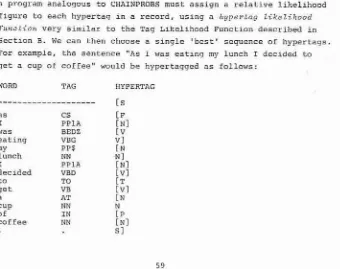
[image:27.419.12.352.282.551.2]a program analogous to CHAINPROBS must assign a relative likelihood
figure to each hypertag in a record, using a i i y p e r t a g Z i k e Z i h o a d
f u n c t i o n very similar to the Tag Likelihood Function described in
Section B. We can then choose a single 'best' sequence of hypertags.
For example, the sentence "As I was eating my lunch I decided to
get a cup of coffee" would be hypertagged as follows:
WORO TAG HYPERTAG
as CS [ F
I PPlA [NI
was BED2 [V
eating VBG V]
my PPS [N
lunch NN
I PPlA NI [NI
decided VBD [V]
to TO LT
get VB
tvl
a AT N
CUP NN N
of IN [P
coffee NN [NI
E.3 Building a syntactic parse tree
Tags have now been grouped into higher-level constituents IN, V , S,
etc.); but there are still some 'unmatched brackets'. This is
because certain tags specifically mark the a t o r t of a higher-level
constituent (e.g. CS-[F; IN-[P; AT-[N), but often there is no such
corresponding 'end-of-phrase word'.
What we need now is a program which can insert extra closing brackets
where needed. One way to find out where to add these brackets is to
try to Convert the labelled bracketing into a tree data-structure,
following simple 'conversion rules':
(i) X [ Y means ' Y is the daughter of X"
lii) X
1
Y means "X is the daughter of y"liii) X 1 [ Y means "Y is the right sister of X"
(IV) X
...
X is represented by a single node X if both Xs are atsame 'level' of nested bracketing and they are not sisters
.
there is nol [
interposing between the two Xs at t h eoame ZeUeZ as the Xs. Note that X
.. .
Y (where X and Y aredifferent, and X is at the same level as Y but not a sister)
is invalid, since it requires a single node to be tagged both
X and Y; this is an indication that some phrase-boundary
(labelled bracketlsl) is missing.
E . 4 I n s e r t i n g m i s s i n g c l o s i n g b r a c k e t s
The ' c o n v e r s i o n r u l e s ' c a r r y on adding d a u g h t e r s t o a node u n t i l t h a t
n o d e ' s c l o s i n g b r a c k e t i s found; s o , i f t h e c l o s i n g b r a c k e t i s
m i s s i n g , t h e node w i l l c o n t i n u e t o have d a u g h t e r s a t t a c h e d t o it
u n t i l t h e sentence-end i s r e a c h e d . T h i s means t h a t t h e r i g h t m o s t
d a u g h t e r s of a n ' u n c l o s e d ' node a r e s u o p e c t : each non-leaf node i n t h e t r e e should have a t l e a s t o n e d a u g h t e r ( t h e f i r s t o r l e f t - m o s t d a u g h t e r ) , b u t t h e nodes f u r t h e r t o t h e r i g h t c o u l d w e l l be n o t
d a u g h t e r s b u t r i g h t - h a n d s i s t e r s ( o r even ' a u n t s ' ! ) o f t h e ' u n c l o s e d '
node.
An example of t h i s i s t h e u n c l o s e d [ F node (marking a s u b o r d i n a t e
c l a u s e ) i n t h e t r e e above; i t s d a u g h t e r s a r e a p p a r e n t l y
C l e a r l y t h i s is wrong
-
t h i s sequence of d a u g h t e r - c o n s t i t u e n t s c o u l d n o t be a v a l i d s u b o r d i n a t e c l a u s e . The r e a s o n f o r t h i s e r r o r i n t h et r e e i s t h a t t h e m i s s i n g c l o s i n g b r a c k e t F] should be i n s e r t e d between l u n c h and I , s o t h a t t h e s u b o r d i n a t e c l a u s e becomes
[NI
[V] [NIand t h e remaining ' d a u g t h e r s ' become s i s t e r s of [ P ] . However, t h e
t r e e - b u i l d i n g a l g o r i t h m does n o t know t h i s , so i t c a r r i e s on addinq d a u g h t e r s t o t h e unclosed [ F node i n s t e a d o f t h e r o o t [ S ] .
N e v e r t h e l e s s , d e s p i t e being ' l o p s i d e d ' , t h e t r e e b u i l t i n t h i s way
i s s t i l l u s e f u l . The t r e e shows u s where m i s s i n g c l o s i n g b r a c k e t s
m i g h t be i n s e r t e d : f o r example, t h e t r e e becomes well-formed o n l y
i f t h e
F1
i s i n s e r t e d a f t e r a d a u g h t e r o f [ F .I n g e n e r a l , an unclosed node [ X w i t h n d a u g h t e r s i n t h e o r i g i n a l
t r e e can be ' c l o s e d ' i n n d i f f e r e n t ways, l e a d i n g t o n d i f f e r e n t p a r s e - s u b t r e e s . So, i f a n ' u n c l o s e d ' t r e e such a s t h e one shown
above h a s q ' u n c l o s e d ' hypertag-nodes [ I i < l > , [H<2>, [ H < 3 > ,
. .
.
,
[H<q>, where[ H < l > h a s n < l > d a u g h t e r s [H<2> h a s n < 2 > d a u g h t e r s
[H<3> h a s n<3 > d a u g h t e r s
[H<¶> h a s n < q > d a u g h t e r s
E.5 Choosing the 'best' parse-tree
The final stage in parsing is a program which, starting from an
'unclosed' tree such as the one above, generates all possible parse-
trees and compares the likelihood of each (note the analogy with
CIIAINPROBS: this program effectively generates all possible tag-
sequences and compares their likelihoods; the difference is that now
we are dealing with trees rather than simple strings). To do this,
we must be able to associate a likelihood with a potential pnrse-
tree; thls is done using a h y p e r t a g - n o d e Z i k e l i l ~ o o d function Lhn
which assigns any given node a likelihood figure dependent on its
daughter nodes and their likelihoods in turn. If a node A has
daughters B, C. D:
m
B C D
then at A we must store the likelihood that BCD is a 'valid' A (the
c o n o t i t u e n t l i k e z i h o o d Lc(A,BCD)
I ,
multiplied by the hypertag-node likelihoods of B, C, and D in turn:This recursive definition allows us to calculate a likelihood figure
for the root [ S 1 node which takes into account all nodes and subtrees
in the parse-tree.
E.6 The phrase dictionary
Values of the Constituent-Likelihood function Lc are stored in a
Phraoe D i c i i o n o r y , which states, for each of the higher-level
constztuents (N. S, V, P, etc.), the set of possible 'daughter-
cOnstituent-~equence5', along with the relative likelihood of each
poss~ble sequence. For example, the Phrase Dictionary will tell us
that, in a subordinate clause (hypertagged [F]), the following
daughter-constituent-sequences are very likely:
CS [NI !V1 [ N I
CS
IN?
[v1
; but the following sequences are very unlikely:
Any daughter-sequences not found in the Phrase Dictionary get a very
low default probabil~ty (just above zero); in this way, we are
ensured of o o m e analysis for any sentence (the analogy in CFIAINPROBS
is that the Tag-Pair Bond function always has a value greater than
zero, to ensure that no potential tag is ever assigned a zero likeli-
hood; see Section B.5).
E.7 A parse in three passes
TO summarize, the CL Grammatical Parser outlined above will build a
syntactic parse-tree in three passes. First, every tag in a text is
assigned a set of potential hypertaggings, using a tag-poir-Zist
and t a g z i o t . Secondly, the set of hypertags at each tag ia disambigu-
ated, by eliminating a11 but the likeliest hypertag-sequence; this
is done using a h y p e r t n g - L i k e l i h o o d f u n c t i o n very similar to the
tag-likelihood function currently used by CHAINPROBS. Thirdly, this
'disambiguated' hypertag-sequence is converted into a set of poten-
tial paree-trees, where each potential parse-tree has the missing
closing brackets inserted differently; a h y p e ~ t o g - n o d e Z i k s Z i h o o d
f u n c t i o n is used to compare likclihoode of competing potential parse-
trees.
In the final output, it will probably be useful to include not only
the single 'best' parse-tree, but also a number of 'runners-up'
(say three), in case t h e 'best' parse is found to be incorrect in
postediting. This can he done quite easily, if we adopt an output
format similar to that shown in Section E.3: there are columns for
w o r d , t a g , and h y p e r t n g ; and in addition, we need three more columns
to show the three 'likeliest' combinations of inserted closing
brackets. For example, the flnal output of the 'parse' of our
VlORO TAG HYPERTAG THREE LIKELIEST PARSES
59% 39% 2 %
---
[Sa s CS [F
I PPlA
was BED2 [V [NI
eating VBG V1
my PPS [ N
lunch NN N
1
I PPlA [NI
declded VBD
to TO [V1 [ T
get VB [V1
a AT N
c
'+' NN NI
of IN [P NI NIT]
coffee NN [NI
PINIT]
PIT]
P]S
l
This representation may seem difficult to understand at first; but
hopefully posteditors will soon get to grips with it. The great
advantage is of course the economy of space: to show three potential
analyses, we do not need three complete trees.
E.8 Residual problems
Finally, it must be remembered that, of course, not all sentences
will be as straightforward as the example above! There are many
problems not touched upon (e.g. when the phrase-boundary is not
explicitly marked, as in "I gave the baby milk to drink"); but then,
ony approach to syntactic parsing will encounter difficulties with
these and other stumbling blocks. The success rate of CHAINPROBS
turned out to be much higher than we expected; the lesson to be
learnt was that in the 'real' language found in a corpus, very few
'pathological cases' actually turn up: Therefore, we have every hope
that the CL Grammatical Parser will also be very successful.
F OTiiER APPLICATIONS OF CL GRAMMAR
AS explained in Sect-ion A . 3 , CL Grammar is generally applicable to
many different forms of linguistic analysis. So far we have not
explored all. the possibilities: for example, CL Analysis may also
be useful i n formal semantic analysis. Other applications will
In general, we hope w e have shown that s t a t i o t i c n l , p r o b n b i l i s t i c
methods of analysis d o have a place in linguistzcs, and specifically
in the field of syntax. Furthermore, statistical analysis should
n o t be seen simply a s a 'heuristic' to fall back on when all else
fails; CL analysis is entirely based on probabilities, and the
Tagged LOB Carpus will be overwhelming evzdence that this approach
works.
REFERENCES
Atwell, Eric Steven. 1982. 'LOB Corpus Tagging Project: Manual Pre- edit Handbook'. Department of Linguistics and Modern English Language and Department of Computer Studies, University of Lancaster.
Atwell, Eric Steven. 1982. 'LOB Corpus Tagging Project: Manual Post- edit Handbook (A mini-grammar of LOB Corpus English, examining the types of error commonly made during automatic (computational) analysis of ordinary written English)'. Department of Linguistics and Modern English Language and Oepartment of Computer Studies, University of Lancaster.
Francis, W. Nelson and Henry KuEera. 1964 (rev. eds. 1971 and 1979).
MonuaZ o f I n f o ~ m o t i o n t o Accompany o S t a n d a r d S a m p l e of P r e s e n t - Day E d i t e d A m e r i c a n E n g l d o h , f o r Uae w i t h D i g i t a 2 C o m p u t e r e . Department of Linguistics, Brown University.
Garside, Roger and Geoffrey N. Leech. 1982. 'Grammatical Tagging of
the LOB Corpus: General Survey'. In Stig Johansson, ed. C o m p u t e r
C o r p o r a i n E n g l i n ? ~ Language R a n e a r c h . Norwegian Computing Centxe for thc ilurnanities, Bergen.
Greene, Barbara and Gerald Rubin. 1971. A u t o m a t i c G r a m m a t i c a l
T a g g i n g of E n g Z i o l i . Department of Linguistics, Brown University.
Johansson, Stig, Leech, Geoffrey N. and rielen Goodluck. 1978. Elnnuat
of I n f o r r n a t i o , i t o Accompan!, t i r e L n n ~ a ~ t e r - O s l o / R e r g ~ n C D F P U D o f R r i t i o h E n g l i s h , f o r U e e w i t h D i g i t a l C o m p u t e r e . Department of English, University of Oslo.
Johansson, Stig and Mette-Cathrine Jnhr. 1982. 'Grammatical Tagging of the LOB Corpus: Predictinq Word Class from Word Endings'. In Stig Johansson, ed. C o m p u t e r C o r p o r a i n F n g l i n h L a n g u a g e R a s e o r c h Norwegian Computing Centre for the Humanities, Bergen. 118-146.
Leech, Geoffrey N., Garside, Roger and Eric Steven Atwell. 1983. 'The Automatic Granmatlcal Tagging of the LOB Corpus' (pp. 13-33
in this issue of ICAXE N c w o ) .
P e t e r s o n , James. 1 9 8 0 . 'Computer Programs f o r D e t e c t i n g and Correc- t i n g S p e l l i n g E r r o r s ' . I n C o m n i u n i c o t i o , ~ ~ of t h e A s e o c i a t i o n f o r
APPENDIX A: Output from the trial run of the prototype 'spelling-
c h e c k e r '
*
-
n u x o
c 4 U C
D a r n *
m 1)
.
LD C
D l - 0
-= ' - I .
a E
G.
*
= = E - .
C
m
"
F. mC
.v. m- C O p.
.-
5=
O E4. m 0 DLI
Z U _ Y C
C I I L
"
W 0.-
-
.
D C 1= m 0
,.
n0 U m
2 m n 3
n = m
.-
W I Y
4.
- - n u
-
-
m.-
.?
C 4-
U c
.
-
CE 3
C . v
5
-m
.-
U c 2
C . E 0
0 p.
-
0 r. 1 YO L I a
.
cnLI 4-0
Y . ? E Z
..
m _
*
U
c W -m (D n
0 C
C f r E
h.
m C
..
C
- p . .C.
.
2 0 LI
".
m p . C O r. u p .
L = O L I a - 0
Y Y L E Y O .-a
h W n a , E 6 L I Y
L D
U
-
WO C .
3
m T2 W
I I Y .
C . . .
'.
C 1U C "7 m
5 CI 1
..
C O E
L= . -
..
Em = C
.-
- W L C
=
E m
* o c c