
Shakedown, ratchet, and limit analyses of 90° back-to-back pipe bends under cyclic in-plane opening bending and steady internal pressure
Full text
Figure
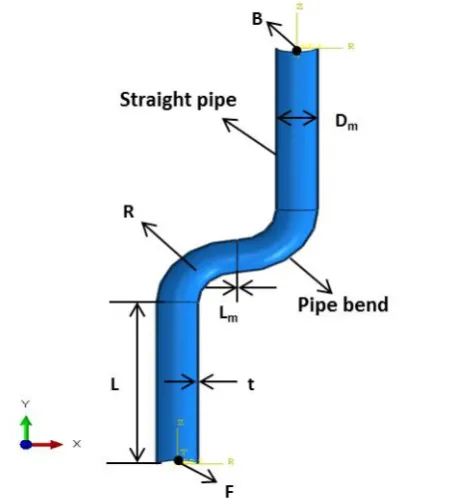
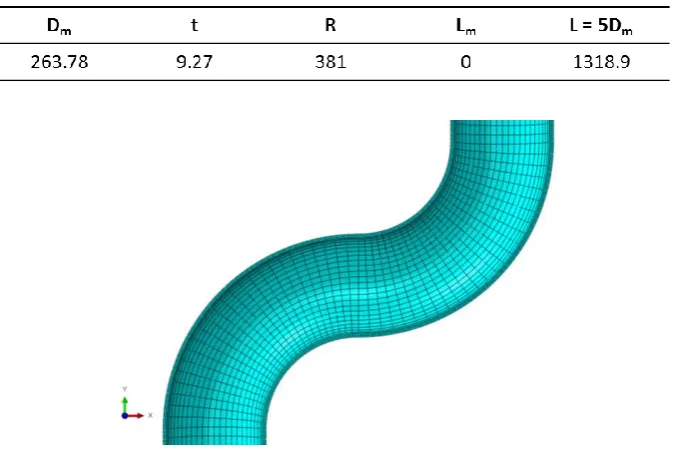
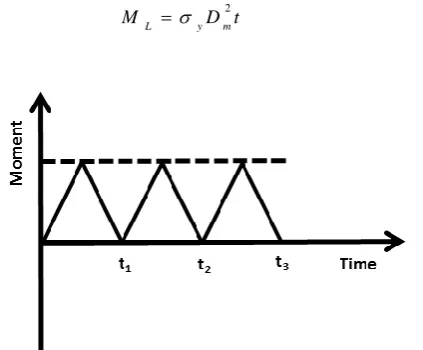
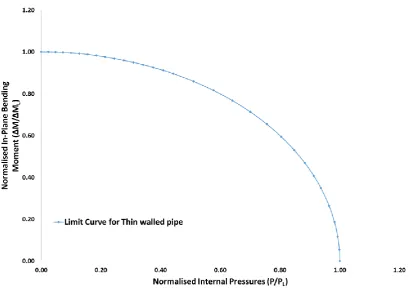
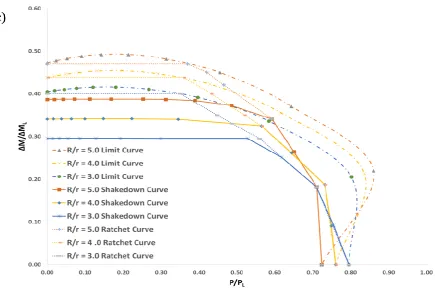
![Fig. 5. Equivalent stress [MPa] contours from linear elastic stress analyses for a) in-plane opening](https://thumb-us.123doks.com/thumbv2/123dok_us/1439197.96321/10.595.113.486.73.263/equivalent-stress-contours-linear-elastic-stress-analyses-opening.webp)
Related documents
Supramolecular chain aligned along the c axis mediated by N–H···O hydrogen bonds (blue dashed lines). Color code: oxygen, red; nitrogen, blue; carbon, grey; and hydrogen,
Hierdie beweging verkondig 'n kosmiese dualisme, waarvolgens God en die Skepper van die wéreld onderskei moet word en hiermee saam 'n antropologiese dualisme, waarvolgens
The results of the test indicated that Pullout load required for Circular headed bars is maximum as compared to other headed bars at different embedded depth also as
Earth Planets Space, 53, 261?273, 2001 Lateral variations of effective elastic thickness of the subducting Philippine Sea plate along the Nankai trough Shoichi Yoshioka1 and Yoshihiro
Based upon this test case, modelling a dwelling which is poorly insulated, a good match is seen between IDEAS and SAP/BREDEM for both comfort temperature and energy
In the 2000-06 period, INTERREG continued into a third phase, with three strands: A - cross-border cooperation, promoting cooperation between adjacent regions with the aim
Recovery values (%) obtained when the HXLPP-WCX, Strata-X-CW and Oasis WCX sorbents were applied in SPE for the preconcentration of 1000 ml of a Milli-Q sample spiked at 20 μ g l -1
A particular kind of bubble enrichment of the velocity space is the so-called residual-free bubble (RFB) method (cf. [7, 8, 12]), in which the bubble function is now the solution of
