Place du Congrès 1 B-1000 Brussels Tel: (32.2) 229.39.11 Fax: (32.2) 219.41.51 VAT: BE 424.123.986 EUROPEAN
POLICY STUDIES
CEPS W
ORKINGD
OCUMENTN
O. 189
O
CTOBER2002
I
MPROVING THE
G
OVERNANCE
OF
E
UROPEAN
F
OREIGN
A
ID
D
EVELOPMENT
C
O
-O
PERATION AS AN
E
LEMENT OF
F
OREIGN
P
OLICY
C
ARLOS
S
ANTISO
CEPS Working Documents are published to give an indication of the work within CEPS’ various research programmes and to stimulate reactions from other experts in the field. Unless otherwise indicated, the views expressed are attributable only to the author in a personal capacity and not to any institution with which he is associated.
ISBN 92-9079-401-1
Available for free downloading from the CEPS website (http://www.ceps.be)
OF
E
UROPEAN
F
OREIGN
A
ID
D
EVELOPMENT
C
O
-O
PERATION
AS AN
E
LEMENT OF
F
OREIGN
P
OLICY
CEPS W
ORKINGD
OCUMENTN
O. 189
C
ARLOSS
ANTISO∗∗Introduction: An uncertain future
Should European Union (EU) member states ‘re-nationalise’ foreign aid? Considering the dismal record of the aid managed by the European Commission, this is a legitimate question that European leaders nevertheless seem unwilling to address seriously. Like in America, there is heightened debate across Europe on the purpose of the aid it provides to developing countries. The current debates on poverty reduction, debt relief and, more broadly, the effectiveness of development assistance have brought renewed light on foreign aid.
The reform of external relations is a critical dimension of the newly launched Convention on the Future of Europe. In 2000, €8.3 billion (about $US8 billion) were allocated to finance external relations activities, of which almost €5 billion to foreign aid. In the draft 2002 budget of the EC (excluding European Development Fund resources), €12.5 billion are committed to external actions, including €5 billion pre-accession aid. Yet, the contentious discussions tend to focus exclusively on the core dimensions of foreign policy, namely on enlargement, security and defence policy. They only tangentially address the no less crucial reform of foreign aid policy. As Europe embarks on yet another attempt to define its purpose in the world, the uncertain future of European foreign aid has received scant attention. Renewed criticism, both within and outside the EU, renders the reform of European Community (EC) aid all the more urgent.1
However, EC foreign aid is in disarray, lacking political thrust, strategic purpose and institutional support. Recurrent reform initiatives have left the bureaucracy responsible for its management on the defensive and increasingly frustrated. EU aid officials are the first victims of the dysfunctional governance of European foreign aid. Institutional structures have run amok and have created perverse incentives, which inhibit the innovation and boldness that is often required to promote sustainable development and democratic governance in poor countries. Instead, structural flaws have created a risk-averse bureaucracy driven by the
∗ Carlos Santiso is a political economist at the Paul H Nitze School of Advanced International Studies of Johns
Hopkins University in Washington, D.C. He specialises in the political economy of democratisation, governance reform and public finance accountability in emerging markets, as well as the reform of international financial institutions and multilateral development organisations, especially the European Union. He previously served at the International Institute for Democracy and Electoral Assistance (1996-2000), the Cabinet of the French Prime Minister (1996) and a Paris-based country risk consulting firm (1995). He is also an independent consultant to various bilateral aid agencies, multilateral institutions and policy think tanks. E-mail: [email protected]. The author gratefully acknowledges the support and insights of Luis Tejada Chacón, Roel von Meijenfeldt, and Massimo Tommasoli.
1
tortuous procedures of financial accountability. The EU thus seems unable of articulating a European identify in development co-operation capable of challenging the latest fads of the prevalent ‘Washington consensus.’
Current debates on the reform of European foreign aid remain an insider affair, exclusively dealt with by Euro-technocrats. They are obscured by the impossibility of most outside observers to comprehend how EU foreign aid actually works. Developing countries have long given up on attempting to comprehend it. They have, at times, expressed frustration with the EC’s inchoate bureaucratic procedures and the added burden these create, as they are struggling to strengthen their own systems of governance. Complying with EC interminable procedural and financial requirements often over-stretches their limited administrative capacities.
Ironically, improving governance has become both a condition and objective of European foreign aid. Yet, the governance of European foreign aid is hardly an example to be followed. EC aid policies applicable to any given sector or geographical region are made of a thicket of regulations, resolutions, declarations, and communications, which often lack an overarching purpose and strategic objectives. This abstruse complexity has also enabled the Commission to elude public scrutiny, except from European non-government organisations, most of which either depend or seek EC financing.
It has become almost impossible to navigate the complex labyrinth of the Commission bureaucracy and in particular its foreign aid apparatus whose Kafkaesque structures and procedures are beyond comprehension. The exasperation with the failure of the Commission to reform its ways was bluntly expressed by Britain’s development minister, Clare Short, in June 2000: ‘the Commission is the worst development agency in the world. The poor quality and reputation of its aid brings Europe into disrepute.’2 Similarly, alluding to the dismal record of EC foreign aid to Albania, Chris Patten, the European Commissioner for External Affairs, has recognised that ‘The EU’s capacity for making political promises is more impressive than our past record on delivering financial assistance.’3 Why, then, have EU countries repeatedly failed to harness the aid managed by the Commission?
This study argues that the root cause of the current state of affairs is linked to the very process of European integration and the birth defects of European foreign aid policy. Europe has never clearly decided whether it wants development aid to be an instrument of its diplomacy or an autonomous policy with its own objectives and rationale. Time has probably come to make such a decision. The reform of the aid it provides is a critical dimension of its foreign policy, a dimension often overlooked by the debates on foreign, security and defence policies. It should be a critical component of any meaningful debate on the reform of EU external relations and added on the agenda of the constitutional convention launched in 2002. The main question arising from recent reforms is who will set development co-operation policy and how will it be translated into operational aid strategies. A corollary question is which organisational structure is most appropriate to achieve the EU’s development goals.
The ELUSIVE quest for reform
European foreign aid, as a core aspect of EU’s external relations, is progressively coming under greater scrutiny. The reform of EC foreign aid is at the centre of the current overhaul of EU governance initiated after the resignation of the Commission en masse in 1999 amid
2
Clare Short, ‘Aid that Doesn’t Help’, Financial Times, 23 June 2000.
allegations of fraud and mismanagement. However, the reform process initiated in 1998 is beset with both promises and dilemmas and, as Chris Patten recognises, lack of significant improvement by the end of 2004 would constitute failure.
In 1998, the European Court of Justice criticised the Commission for the lack clarity of purpose and coherence as well as the insufficient legal basis of the aid it provides.4 Two subsequent reports of the European Court of Auditors in 2000 further criticised the management practices of the Commission, forcing it to suspend and review its programs to promote democracy and good governance abroad.5 Acid commentators have thus called on the Commission to improve its internal governance before attempting to reform the domestic governance of those countries it aims to assist.
The 2000 White Paper on Reforming the Commission and the 2001 White Paper on European Governance provide critical assessments of the root causes of the EC crisis of legitimacy and credibility.6 Only in late 2000 did the EU adopt a policy statement on development policy, the first such statement in decades, policy which outlined a comprehensive approach to development, focussed on poverty reduction.8 The statement on development policy provides a clear statement of objectives, and a benchmark against which the EC can and should be held accountable for its development assistance, to ensure that its policy aspirations produce results.
With the adoption in May 2000 of the Communication on the Reform of the Management of External Assistance, the Commission embarked on what it proclaimed to be a radical overhaul of its aid programmes with the objective of increasing the coherence and effectiveness of the aid it provides.9 The stated objectives of the reform are to improve the quality and speed of delivery of projects, ensure sound financial management, and increase the impact of European development assistance. In February, and then in May 2001, the Commission produced a rolling programme of action, setting out clearly the reform programme in terms of aims, actions, expected results, an indicative timetable, and the progress made.
In January 2001, an autonomous implementing agency, the European Aid Co-operation Office, was established as a single department to handle the EC’s external aid, with the exception of pre-accession programmes. The intention is to enhance the effectiveness of aid and rationalise the management and implementation of development assistance in the context of a deconcentration of responsibilities towards the EC offices in developing countries. The new set-up moves further away from the traditional division of responsibilities between the
4
The European Court of Justice contested the legal basis for EC democracy aid in its ruling of 12 May 1998 (Case C-106/96) on an injunction from the European Parliament concerning the lack of a proper legal basis for certain EC programmes.
5 European Court of Auditors, 2000, Special Report 12/2000 (Brussels: OJEC C 230/1 10.8.2000); and European Court of Auditors, 2000, Special Report 21/2000 (Brussels: OJEC C57/01 22.02.2000).
6
European Commission, Reforming the Commission: A White Paper (Brussels, 05.04.2000 COM(2000)2000 final); and European Commission, European Governance: A White Paper (Brussels, 25.07.2001, COM (2001) 428 final).
7
European Commission, Communication to the Council on the Reform of the Management of External Assistance (Brussels, 16 May 2000).
8
Council of the European Union, The European Community’s Development Policy: Statement by the Council and the Commission (Brussels, 10 November 2000, 2304th Council Meeting 12929/00); and European Commission, Communication from the Commission to the Council and the European Parliament on the European Community’s Development Policy (Brussels, 26.04.2000 COM (2000) 212 final).
Commission’s Directorate Generals (DG) along geographical lines – mainly ACP and non-ACP countries. DG Development and DG External Relations are now charged with the programming phase of the project cycle – policy and strategies – for ACP and non-ACP countries respectively.
Thus far, the allegedly historic reform of EC aid has produced disappointing results. In many ways, it is aggravating the situation by converting foreign aid essentially in a technical activity. Since the adoption of the Maastricht Treaty in 1992, foreign aid has become a community’ policy, managed by the Commission under the supervision and guidance of the European Council, where EU countries are represented. EU member states have thus delegated to the Commission responsibility for managing a substantial portion of their development assistance to developing countries. They have ‘locked in’ their commitment to further European integration by bounding themselves by treaty to develop a common development assistance policy. However, they have kept alongside EC aid their own bilateral aid programs, with different political objectives and diverging strategic approaches, a tension that often generates frictions and creates unnecessary duplication and even competition.
Furthermore, European development aid remains strongly compartmentalised across geographic lines, along four main regions – Africa, the Caribbean and the Pacific (ACP), Asian and Latin America (ALA), the Mediterranean countries (MED), and East and Central Europe and the Commonwealth of Independent States (CIS). The co-operation with each one of these regions is governed by its own set of agreements and is often captured by those EU member states with a special political interest in a specific region of the world. The aid apparatus of the Byzantine Commission is divided between three directorate generals and one implementing agency within the purview of the Commission. This structure has created insurmountable inertia that makes it particularly difficult to reform it and define sectoral strategies and apply them consistently across regions. Hence the multiple standards that are applied to different countries, according to the legal basis of the co-operation agreement.
Good intentions
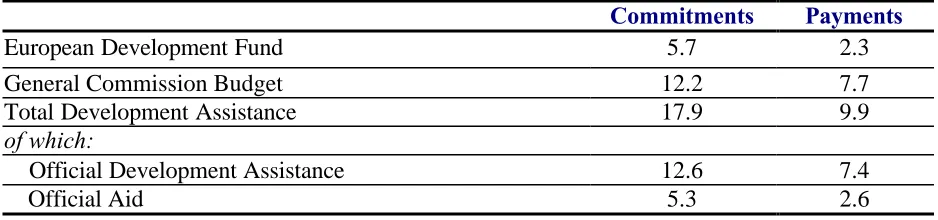
The generosity of Europe is uncontested and undisputed. This does not mean however that it should be critically scrutinised and substantially improved. The core issue is that, despite being the world’s most generous donor, Europe’s influence in world affairs remains inhibited by the lack of coherence of the policies and structures guiding its development co-operation. According to the Development Assistance Committee (DAC) of the Organisation for Economic Co-operation and Development (OECD), Europe (i.e. the EU and its member states) has provided 25 of the world’s US$54 billion dollars of development assistance in 2000 (representing 46 percent of total official development assistance).10 The EC alone provided US$5 billion (8.5 percent of total foreign aid), representing a 13 percent increase from 1999 and most of it in grant form.11 This makes the EC the fourth provider of aid in volume in 2000. By comparison, the United States provided US$10 billion in aid in 2000. In 2000, EC’s overall aid commitments (both from the EC’s own budget and the European Development Fund) totalled over US$12 billion, as shown in Table 1.
10
OECD DAC, Development Co-operation Report 2001 (Paris: OECD, 2002); and OECD DAC, A Mixed Picture of Official Development Assistance in 2001 (available at http://www.oecd.org/dac consulted on 13 May 2002).
Table 1. European Development Assistance in 2000 (in € billion)
Commitments Payments
European Development Fund 5.7 2.3
General Commission Budget 12.2 7.7
Total Development Assistance 17.9 9.9 of which:
Official Development Assistance 12.6 7.4
Official Aid 5.3 2.6
Source: European Commission, Annual Report on the Implementation of the European Commission’s External Assistance – situation as at 1 January 2001 (Brussels: European Commission, 2001).
Furthermore, EC foreign aid has continued to grow over an extended period, both in relative and absolute terms, when many other programmes have declined. Over the past decade, it has grown faster than other OECD countries precisely because EU member states have agreed to channel a growing share of their aid budgets through the EC. In 1970 EU member states were channelling 7 percent of their aid through the EC. By 1990, this ratio was up to 13 percent and in 1997 it was over 17 percent.
Moreover, at the European Council meeting in Barcelona, Spain, on 15 and 16 March 2002, the EU agreed to increase its aid commitment so that collectively EU member states increase their average from 0.32 to 0.39 percent of GDP by 2006 – compared to the pale 0.1 percent of the United States. The Scandinavian countries lead the race, most of them surpassing the 0.7 percent threshold established by the United Nations. These trends reflect EU countries’ continuing commitment to an ‘ever closer union’ as well as Europe’s commitment to alleviating poverty in developing countries. However, giving the widespread criticism regarding the ineffectiveness and mismanagement of EC aid, why do member states continue to delegate further responsibilities and transfer increasing resources to the EC – often imposing new demands?
In part, these developments reflect the new-found realisation of the importance of development aid not only to alleviate poverty and promote development, but also to prevent the seeds of lawlessness and terrorism to grow in the fertile environments of economic deprivation and state failure. They also reflect a race for generosity and altruism between Europe and America. The EU announced its intention to increase aid levels at the eve of the United Nations-sponsored conference on Financing for Development held in Monterrey, Mexico, on 18-22 March 2002, partly to put the United Statesto shame. However, the EU announcement was overshadowed by that of President George Bush who, on 14 March 2002, revealed a new bold initiative to increase US core development assistance by 50 percent over the next three years, resulting in a US$5 billion annual increase over current levels.12
At Monterrey, rich countries agreed to increase the flows of aid to developing countries, promising to direct most of the increase towards the poorest countries.13 The Monterrey’s commitment is conditioned, however, on the recipient countries’ adherence to the rule of law and democratic governance. As a result, on 2 July 2002, donor countries reached an
12
Access to the Millennium Challenge Fund will nevertheless be conditioned by three factors: the recipient country’s commitment to respect human rights, strengthen the rule of law and combat corruption.
13 United Nations, Draft Outcome of the International Conference on Financing for Development, Note by the
agreement on a three-year plan to fund the World Bank’s concessional lending program to 79 poor countries. The thirteenth replenishment of the resources of the International Development Association (IDA) will make US$23 billion available to poor countries over the next three years (2003-2006), US$13 billion coming from new contributions from 39 donor countries. This represents an increase of approximately 20% over levels of the previous replenishment in 1998. As a result of pressure from the Bush administration and despite European concerns, a compromise was reached according to which between 18 and 21 percent of those resources shall be provided in the form of grants.
The reform of aid was at the centre of the discussions of the recent meeting of the industrialised countries of the G8 in Kananaskis, Canada, on 25-26 June 2002, which focused on Sub Saharan Africa. At this meeting, African leaders formally submitted their proposals for a New Partnership for Africa’s Development (NEPAD), an initiative launched by African countries in 2001, under the leadership of South Africa, Nigeria, Senegal, Algeria and Egypt.14 The plan commits African countries to promoting good governance and democracy in return for increased aid commitments and foreign investment. At a meeting sponsored by the World Economic Forum on 5 June 2002 in Durban, South Africa, President Thabo Mbeki outlined the main contours of NEPAD, based on an expected price tag of US$64 billion a year in aid and investment to reduce poverty by half by 2015.
At Kananaskis, the G8 gave its qualified blessing to the African-led plan, although doubts remain regarding Africa’s genuine commitment to democratic governance and the rule of law.15 It decided that at least half of the extra aid agreed upon at the Monterrey conference should be directed towards Sub Saharan Africa, representing about $US12 billion. However, A recent report by the African Development Bank and the World Bank suggests that for the 30 or so African countries judged to be in a position to use aid effectively, it is estimated that an increase of US$20-25 billion in official development assistance – from the current US$13 to US$33-38 billion – would be required to enable them to reach the development targets agreed upon at the UN Millennium Summit, the Millennium Development Goals.16.
An innovative mechanism of the NEPAD initiative is the peer review mechanism it creates. Despite its inherent flaws, this mechanism appears to have more credibility than its many predecessors. NEPAD countries recognise that equitable development requires good governance and democracy and agree to exercise peer pressure to prevent democratic reversals and respond to crises of governance. Peer review constitutes a genuinely African mechanism to monitor compliance with commitments made and assess performance in advancing the goals of NEPAD. Although the details of the mechanism are still unclear and untested, it provides an unprecedented opportunity to hold African leaders accountable for their abuses. However, turning rhetoric into reality has always been Africa’s challenge and, according to Marina Ottaway, it ‘is too grandiose of a plan to inspire much confidence.’17
14
Patrick Chabal, ‘The quest for good government and development in Africa: is NEPAD the answer?’ International Affairs 78:3, July 2002, pp. 447-462; Alex De Waal, ‘What’s new in the ‘New Partnership for Africa’s Development’?’ International Affairs 78:3, July 2002, pp. 463-476; and Simon Maxwell and Karin Christiansen, ‘Negotiation as simultaneous equation’: building a new partnership with Africa,’ International Affairs 78:3, July 2002, pp. 477-491.
15
‘An African cure for Africa’s ills,’ The Economist, 22 June 2002, p. 15. 16
African Development Bank in collaboration with the World Bank, Achieving the Millennium Development Goals in Africa: Progress, Prospects, and Policy Implications (Abidjan: ADB Global Poverty Report 2002, June 2002).
African government is traditionally reluctant to condemn undemocratic behaviour and corruption perpetrated by their peers, as the controversies surrounding Africa’s response to the crises in Zimbabwe and Madagascar in early 2002 has shown. The credibility of the peer review mechanism will remain in doubt as long as African leaders effectively address instance of democratic decay and institutional crises of governance.18
The United States Secretary of the Treasury, Paul O’Neill, appears genuinely convinced of the need to alleviate the suffering of the poor, as he embarks on numerous trips with his new found ally, the rock star Bono. Yet, he remains highly critical of the performance of multilateral aid agencies in tackling world poverty and in particular the international financial institutions, which have come under greater parliamentary scrutiny since the ‘Meltzer report’ of the US Congress of 2000. In a recent diatribe against the international aid bureaucracy, the acerbic former research economist of the World Bank William Easterly contends that the reason why foreign has so far failed to attain its stated objectives is due to the inefficiency of the international bureaucracy administering.19 The perverse incentives that have been built over the years have converted what he calls the Cartel of Good Intentions into a self-serving bureaucracy. This criticism echoes that of another former World Bank economist and Nobel laureate, Joseph Stiglitz, of the IMF’s handling of recurrent financial crises in emerging markets.20 Since then, Stiglitz and the IMF, defending itself, its reputation and its record., are embroiled in an openly confrontational debate. The World Bank has defended itself an its record, making ‘a case for aid’ before the Monterrey conference.21
While these views are exaggerated and probably not deserved, they point out to the inadequacy of the current institutional architecture of the global aid regime. Undoubtedly, the international financial institutions and the multilateral development organisations must reform to embrace the new challenges of the twenty-first century. Yet, EC foreign aid has remained largely untouched by the contentious debates on the development assistance and the institutions responsible for administering it.
Broken promises
So, where does the EU stand? Regrettably, mostly unprepared, as the EU continues to debate how EC aid should be managed. There is clearly a mismatch between the objective of poverty reduction and the allocation of resources.
EC aid to developing countries remains largely concentrated on middle-income countries, despite the renewed calls from EU member states to focus efforts on poor countries. EC aid to
18
African renewal was also marked by the mutation of the Organization of African Unity (OAU) into the African Union (AU) at a ceremony in Durban, South Africa, in July 2002. In attendance were Libya’s Mouammar Kadhafi, Zimbabwe’s Robert Mugabe and Togo’s Gnassingbè Eyadema, who declared ‘c’est avec les anciennes cordes qu’on en tisse de nouvelles’. ‘L’Union africaine mal partie à Durban,’ Libération, 11 July 2002, p. 10.
19
William Easterly, The Cartel of Good Intentions: Bureaucracy versus Markets in Foreign Aid (Washington DC: Centre for Global Development Working Paper 4, March 2002). Also: William Easterly, The Elusive Quest for Growth: Economists’ Adventures and Misadventures in the Tropics (Cambridge, Massachusetts: Massachusetts Institute of Technology, 2001).
20 Joseph Stiglitz, Globalization and Its Discontents (New York: W.W. Norton & Co., May 2002).
21
low income countries has sharply fallen over the last decade to an all time low, from 76 percent in 1990 to less than 40 percent in 2000. While the total volume of the EC’s aid has nearly doubled over the last decade, EC aid to poor countries has declined 12 percent in absolute terms (or about US$220 million).22
Table 2. Aid allocations to low-income countries (1990-2000) (in percentage of total ODA)
1980 1990 2000
DAC Countries 60 58 63
European Community 85 76 39
Source: OECD 2001 International Development Statistics Online (2002)
During the decade of the 1990s, an increasing share of EC aid has been redirected towards East and Central Europe and the Mediterranean basin. Although investing in Europe’s ‘near abroad’ middle-income countries may be in the strategic interest of EU member states, this assistance does not constitute poverty-focused development aid. According to the British non-governmental organisation BOND, while in 1990 the main recipients of EC aid were Côte d’Ivoire, Cameroon, Mozambique, India and Ethiopia, in 2000, the main recipients were Yugoslavia, Morocco, Bosnia and Herzegovina and Egypt. Asia, which is home to over two thirds of the world’s poor, received only 7 percent of EC aid in 1999. Only 2 percent of EC aid was allocated to basic health in 2000.23
Furthermore, the procedures for allocating aid remain a mystery to most observers. The aid allocation process remains imbued with confusion. As the United Kingdom’s parliamentary committee on international development recently noted, it is not possible to state with any precision how much of the budget for external action is intended for development.24In theory, aid allocations correspond to an objective assessment of the needs and performance of would-be aid recipients, according to indicators measuring the level of poverty and human development and criteria gauging the country’s commitment to alleviating poverty and promoting good governance. In practice, however, they are the result of protracted political negotiations in which each participating country, including EU member states, has its own vested interests. Despite efforts at introducing greater selectivity in the selection of aid recipients and the allocation of aid resources,25 aid flows tend to remain relatively stable, within a set fluctuation band, reflecting the persistence of an entitlement culture.
22
House of Commons of the United Kingdom, International Development Committee, The Effectiveness of the Reform of European Development Assistance (London: House of Commons, Special Report HC 417 23, April 2002).
23
BOND, Tackling Poverty: A Proposal for European Union Aid Reform (London: BOND, May 2002); and Aidan Cox and Jenny Chapman, The European Community External Co-operation Progammes (Brussels: European Commission, 1999).
24
House of Commons of the United Kingdom, op. cit. 25
However, the European Commission is not the only one at fault for the inertia of aid flows, as aid allocations remain under the control of EU member states. One of the reasons why EC development assistance is less focussed on low-income countries than that of member states is because member states have decided that their assistance to the ‘near abroad’ is best managed at the European level. Furthermore, pre-accession funds for candidate countries are also included in the overall aid budget, generating a further source of confusion as to the definition and the ultimate ends of aid spending. The EC spends in Poland every year more than it spends in Asia and Latin America together. The concern expressed by some EU member states is that development objectives and development spending run the risk of being marginalised by concerns about the ‘near abroad’ and other foreign policy objectives. EC development spending and aid budget lines are particularly vulnerable to capture by other foreign policy objectives, for instance to foster stability and reconstruction in the Balkans or in Afghanistan and the surrounding region.
Overall allocation of resources is determined by short-term political priorities rather than by development objectives. For example, EC co-operation with 78 ACP countries is funded by the extra-budgetary resources of the European Development Fund (EDF). In contrast to budgetised aid, spending from the European Development Fund (EDF) is not subject to approval by the European Parliament. The EDF, which is made up of voluntary contributions from member states, is managed by a Committee consisting of member states’ representatives. This EDF Committee considers for approval both general strategies for supporting partner countries, and specific larger projects. Decisions regarding allocations are made only by those member states that contribute to the EDF and their voting weight of each member state is proportional to their financial contribution. Since France, Germany and the United Kingdom are the largest contributors, these countries have a decisive influence on the final outcome.
It is increasingly suggested that, to enhance coherence and consistency, EDF resources should be integrated into the EC’s aid budget. Those in favour of budgetisation, particularly the European Parliament’s Committee on Development and Co-operation, and Committee on Budgets, also argue that budgetisation would also increase oversight, transparency and accountability by subjecting the funds to approval by the European Parliament. However, budgetisation would significantly reduce member states’ control and make the funds earmarked for ACP countries more vulnerable to capture by other foreign policy objectives. Improving financial management and aid delivery systems is undoubtedly important, but more important is that country assistance strategies reflect and translate shifts in political priorities.
As Britain’s House of Commons notes:
The debate about budgetisation illustrates an issue, which runs throughout discussions of European development assistance: the role of member states. It is member states that decide on the geographical and political priorities of aid programmes through their participation in the Council. This in no way relieves the European Commission of its responsibility to manage its development assistance efficiently and effectively, but it does usefully refocus attention on the role of member states in determining development policy and the allocation of resources.26
There is an urgent need to clarify the criteria guiding aid allocations across regions and countries, grounding the allocation of European aid on firmer and more objective grounds. These indicators should reflect both the objective needs of developing countries and their performance in alleviating poverty and strengthening democratic governance (or at least adhering to it). They should measure the levels of poverty, economic performance and the quality of governance. Unpublished research by David Dollar of the World Bank shows that in 1998, while 63 percent of global aid went to countries with high poverty levels, only 38 percent of EC aid did, and 18 percent of EC aid went to countries which had both low levels of poverty and poor government policies.27 This is not to suggest that countries which are not the poorest, or which have less than ideal policies, should be ignored. Rather more thought should be given to the quality and type of assistance that is provided to such countries. However, as long as the reach of its development aid remains global, radical strategies of selectivity are largely unavailable to the EC.28 Because of the competing demands of EU countries, the Commission cannot discriminate among aid recipients, concentrating aid exclusively in a subset of good performers. The principle of selectivity can only be applied to the scope and amount of aid, not to its direction.
Lack of transparency in the management and allocation of aid is compounded by the confusion in the budget process. Development and Co-operation Committee of the European Parliament stated in its opinion on the Budget for 2002 that, ‘The system for budget classification is beneath contempt, making it more or less impossible to establish the detailed distribution of EU aid money sector by sector’.29 Significant progress remains to be bone in terms of budget clarity and transparency. A separate and single budget heading for development co-operation has been proposed in order to make it clear which funds are specifically earmarked foreign aid objectives, to ensure that decisions about policy priorities are fully informed by related resource requirements and to enable accurate comparisons with other donors. The activity-based budgeting currently being introduced is a first step towards a clarification of EC aid expenditure and making EC budget process comply with the guidelines of the Development Assistance Committee (DAC).
To these shortcomings must be added the inadequacy of the procedures to define its purpose, monitor its use and evaluate its impact. For example, the Israeli government has claimed that part of the aid provided by the EU to strengthen the governing institutions of the Palestinian Authority is diverted to fund terrorist groups and activities, a claim vehemently denied by the European Commission. In another example of dysfunctional governance, in 2001 the evaluation of the EC aid programme to Albania found serious delays in the delivery of emergency aid, inefficient management, financial improperties, contractual irregularities as well as a ‘total breakdown of team-work’ between Brussels and the delegation in Albania.30 As a result of an ill-conceived change of strategy in 1999, most projects funded by the EC consisted of stand-alone projects with little synergy among them.31 This example illustrates the inadequacy of current arrangements and in particular the lack of overall policies and sectoral strategies.
27
David Dollar, An assessment of the poverty efficiency of European Commission aid, Unpublished paper. 28
Concentrating aid to a limited number of poor countries that show genuine commitment to reduce poverty and combat corruption is the most common strategy of selectivity. Such a strategy has been adopted by most EU countries in the course of the 1990s.
29
European Parliament Committee on Development and Cooperation, Opinion on the draft budget for 2002 (Brussels: European Parliament, 12 September 2001).
30
‘Evaluating Aid: Rattling Europe’s Skeletons,’ The Economist, 14 March 2002. 31
The exasperation with the inadequacies of the institutional architecture of aid and the deficiencies in its governance have prompted EC policy-makers to create autonomous implementing agencies, which circumvent the central aid bureaucracy in Brussels. An example is the European Agency for Reconstruction (EAR), created by a decision of the European Council at its meeting in Cologne, Germany, in June 1999. The Agency is responsible for the management of EC aid to Serbia, Kosovo, and Montenegro, and, since December 2001, Macedonia. Formally established in February 2000 with its headquarters in Thessaloniki, Greece, it is an independent agency of the EU, accountable to the Council and the Parliament, and overseen by a governing board composed of the European Commission and representatives from EU member states. The Agency oversees a total portfolio of some €1.6 billion.
Furthermore, the Commission’s has grown increasingly reluctant to expose itself to external scrutiny, financial auditing and impact evaluation, embedding itself in a defensive corporate culture lacking transparency. As Chris Patten laments, ‘Every time they open a cupboard, a skeleton falls out.’32 According to a British consulting firm, Development Strategies, which have undertaken a dozen country evaluations, there exist ‘very serious weaknesses in commission internal controls, monitoring and insufficient external audits.’ These problems have grown worse, they claim, since Europe Aid was set up. This secretive tendency has grown to a point that it has become almost impossible to assess the effectiveness of EC foreign aid, let alone whether or not European aid works at all.
Since 1998, the Commission has come under increased pressure to improve accountability and enhance transparency in the management of foreign aid. However, as distrust breeds bureaucracy, demands for increased transparency and accountability have tended to reduce flexibility and effectiveness, illustrating the trade-offs that exist between accountability and efficiency.
Foreign policy and development co-operation
Beyond the esoteric debates on the efficiency and effectiveness of European foreign aid is the boarder debate on the ultimate purpose of development co-operation, and in particular its relationship with foreign policy. Should development aid be an instrument of foreign policy or an autonomous policy?
This question deserves more attention than it has received so far, especially because since the end of the Cold War the boundaries between foreign policy and development assistance have become blurred. Since the early 1990s, foreign aid has become increasingly political and politicised. Promoting democracy, strengthening good governance and enhancing the rule of law are now both explicit conditions and specific objectives of development co-operation.33 EC aid has been at the forefront of this trend, systematically integrating democracy clauses in its association and co-operation agreements with third countries since 1995.34
32
Ibid. 33
On the recent literature on democracy assistance and good governance support in development co-operation, see: Peter Burnell, ed., Democracy Assistance: International Cooperation for Democratization (London: Frank Cass, 2000); Thomas Carothers, Aiding Democracy Abroad: The Learning Curve (Washington, DC: Carnegie Endowment for International Peace, 1999); Gordon Crawford, Foreign Aid and Political Reform: A Comparative Analysis of Political Conditionality and Democracy Assistance (Palgrave, Basingstoke, 2001); Carlos Santiso, ‘International Co-operation for Democracy and Good Governance: Moving Towards a Second Generation?’ European Journal of Development Research, 13:1, 2001, pp.1 54-180.
34
However, there is no consensus within the EU on how best to co-ordinate foreign policy and development co-operation. Moreover, individual member states have often changed their minds on how this should be done, as newly elected governments regularly reform the ministerial apparatuses to administer their bilateral aid programmes. The diversity of opinions is reflected in the different organisational models adopted. An autonomous development co-operation entails the existence of an independent ministry, while the integration of development aid into foreign policy requires the existence of a single ministry. In reality, most countries share dimensions of both models, often oscillating between the two along a continuum between the autonomous agency model and the integrated ministry model.
There are two broadly competing models, reflecting two diverging opinions on the most appropriate relationship between foreign policy and development assistance. On the one hand, those in favour of an independent policy on development co-operation tend to opt for the model of autonomous agencies with broad operational autonomy. While government sets the priorities of development co-operation, autonomous agencies implement it with relatively broad discretion. This enables them to sustain a focus on poverty reduction and the basis for their own legitimisation. This model reflects the belief that the objectives and purpose of foreign aid are specific and should be relatively unfettered by the intricacies of diplomacy. The short time-span of diplomacy and the long-term objectives of development co-operation are not always compatible, and, as Clare Short suggested, there may often be a ‘clash between the perspective of foreign affairs ministers and development ministers.’35 Examples of this model are the United Kingdom and, to some extent, Sweden and Germany. Beyond Europe, the United States, Canada and Australia also belong to this group, albeit with some nuances.
In 1997, the United Kingdom increased the independence of its development co-operation by instituting the Department for International Development (DFID) headed by a Secretary of State with ministerial rank. Succeeding to the Overseas Development Administration (ODA), which was a functioning wing of the Foreign and Commonwealth Office (FCO) since 1979, DFID possesses significant functional autonomy, which enables it to exclusively focus on the reduction of poverty in developing countries. The new International Development Act adopted in 2002, which replaced its outdated 1980 predecessor, for the first time enshrines the objective of poverty reduction in law, protecting the aid budget from uses for other ends.
Similarly, in Sweden, the Swedish International Development Co-operation Agency (Sida) possesses significant functional autonomy in the management of bilateral co-operation, although under the supervision of the Ministry of Foreign Affairs (UD) where a state secretary and, since 2002, a cabinet minister are responsible for articulating Sweden’s development co-operation policy. This organisational setting reflects Sweden’s tradition strong support for development assistance, deeply rooted in its definition of the national interest. For Sweden, development co-operation is a foreign policy in itself, with its own set of objectives. Nevertheless, the Swedish government recognises the need for greater policy coherence among the country’s different policies and priorities affecting developing countries. In 1995-96, a major re-organisation of UD and Sida were carried out as part of an effort to
(Brussels, Belgium: CEPS Working Paper No.182, March 2002); and Carlos Santiso, ‘Sisyphus in the Castle: Reforming European Development Strategies for Political Dialogue and Governance Conditionality,’ European Journal for Development Research (forthcoming 2003).
bring more coherence to Sweden’s external relations. While the objectives have mostly been achieved, UD is still faced with some key policy coherence issues.36
The alternative model is that of an integrated ministry overseeing external relations. In this organisational model, development co-operation is a strategic instrument of foreign policy. Its management is closely integrated into the diplomatic apparatus of government, ensuring greater coherence between the different instruments of a country’s external relations. However, integration does not necessarily generate a greater politicisation of aid. This is the model of most continental European countries, including the Netherlands, Belgium or Spain. It is also the model that appears to gain momentum with the recent reforms of the development aid apparatuses of France, Denmark, and Finland.
For example, since the inception of its foreign aid programme in the late 1970s, Spain’s development co-operation is an integral component of its foreign policy. The Secretary of State for International Co-operation and Iberoamerica (SECIPI), created in 1985 within the Ministry of Foreign Affairs, is responsible for articulating Spanish aid policy, under the supervision of the Inter-ministerial Commission for International Co-operation (CICI), established in 1986 and responsible for inter-ministerial co-ordination. In 1986, the Spanish Agency for International Co-operation (AECI) was formally established, as the implementing arm of the SECIPI. In 1995, an advisory body, the Council for Development co-operation, was also established.37
In Belgium, the Directorate General for International Co-operation (DGCI), headed by a secretary of state, is integrated in an all-encompassing Ministry of Foreign Affairs, Foreign Trade and International Co-operation. It is entrusted with the policy-framing and planning function. A public corporation – Coopération technique belge (CTB) – was set up in late 1998 to implement government-to-government co-operation. In addition, a new function of special evaluator was attached to the Secretary-General of the Ministry of Foreign Affairs, reporting directly to Parliament.38 Similarly, responsibility to manage Dutch development co-operation rests with the Minister for Development Co-operation, who is part of a ‘two-headed’ Ministry of Foreign Affairs. Within the ministry, the Directorate General for International Co-operation (DGIS) is responsible for much of the Netherlands’ development assistance, which represents the bulk of the ministry’s budget. According to a recent review by the OECD DAC, the Dutch organisational structure has also its flaws.39
In recent years, countries such as France and Denmark have moved towards the integrated model. In Denmark since 1991 policy responsibility for all matters relating to development co-operation, foreign policy, and international trade have been integrated under the responsibility of the Ministry of Foreign Affairs (MFA), divided between the North and South Groups. In Denmark’s case, the integration of the previously autonomous aid agency, Danida, appears to have helped achieve greater policy coherence, but has tended to downgrade aid policy.40 When the government changed in late 2001, the post of development minister was abolished, together with 10 percent of the development budget. Similarly, in 1998, France has dismantled the Ministry for Development Co-operation and integrated it into the Ministry of
36
OECD DAC, Development Co-operation Review: Sweden (Paris: OECD, DAC Journal 1:4, 2001). 37
José Antonio Alonso, ed., Estrategia para la Cooperación Española (Madrid: Ministerio de Asuntos Exteriores, SECIPI, 1999).
38
OECD DAC, Development Co-operation Review: Belgium (Paris: OECD, DAC Journal 2:2, 2001). 39
Foreign Affairs where the Directorate General for International Co-operation and Development (DGCID) is now responsible for overseeing French bilateral aid. Nevertheless, the functional autonomy of the implementing agency, the French Agency for Development (Agence Française de Développement, AFD), has been preserved. An Inter-ministerial Committee for International Co-operation and Development (CICID) was set up for the purpose of ensuring cross-ministry co-ordination, a weak point of the former system and a consultative body, the High Council on International Cooperation (HCCI) was established in 1999. 41
Outside the EU, Norway has also adopted the integrated model since 1968, albeit with some nuances. The Norwegian Agency for Development Co-operation (NORAD) is a directorate under the purview of the Norwegian Ministry of Foreign Affairs (UD). Before 1968, it was an autonomous agency. It administers Norwegian bilateral aid while UD is responsible for the formulation of development policy and adopts strategies for co-operation with individual countries and overseas multilateral programmes. The Minister of International Development is politically accountable for Norwegian development co-operation. Parliament determines the objectives of development co-operation, decides which countries and regions are to be prioritised, and how much money is to be involved. The Norwegian government proposes the guidelines governing development co-operation through parliamentary bills, and draws up annual proposals for the development budget.
As the few examples described above, it is also clear that there does not exist an overall consensus, not even within Europe, on the most appropriate links between foreign policy and development aid. Furthermore, as the British experience since the 1960s suggests there have been constant fluctuations, as individual countries have often reformed their internal governmental structures to adopt feature of the concurrent model. The 1997 and 1998 reforms of the British and French foreign aid apparatuses are just the last episodes of an unfinished saga.
More fundamentally, there exist multiple trade-offs between the two competing organisational models. While the autonomous agency model tends to provide for greater consistency and efficiency, the integrated structure model tends to enhance coherence and co-ordination. Inevitably, development aid is bound to serve the broader objectives of foreign policy, as it must respond to the government’s priorities. The question then becomes how these priorities are defined. On the one hand, by becoming a mere appendix of diplomacy, development co-operation runs the risk of diluting its main purpose, that of reducing poverty. On the other hand, an overly independent development policy risks insulating itself from the broader considerations of foreign policy, thereby wasting opportunities for greater synergy.
The EC has adopted a de facto hybrid model, combining elements of both models and often alternating between one model and the other. However, the choices made by the EU, especially since 1999, do not seem to result from an explicit and informed political decision. Instead, they appear to reflect successive ad hoc responses to reiterated criticism. The creation of Europe Aid, rather than unifying the project cycles, tends to accentuate the split between, on the one hand, policy and planning and, on the other hand, programming and implementation. Different donors organise their development assistance in a broad range of ways. But the EC’s arrangement is particularly confusing, if not counter-productive. The lack of clarity about roles and responsibilities seems to exist at the level of Commissioners too. There remains a split between Commissioner Poul Nielson’s DG Development, which has
programming responsibility for the ACP countries, and Commissioner Chris Patten’s DG External Relations, which has programming responsibility for non-ACP countries.
It is thus urgent to open the debate on the purpose of development co-operation and its relationship with foreign policy in the context of the current institutional reform of European governance. The constitutional convention chaired by Valéry Giscard d’Estaing appears the perfect occasion to do so.
Furthermore, the eastward enlargement of the EU will add new problems and considerations, as candidate countries have little, if any experience with development co-operation as a donor.42 This new perspective may, in fact, enhance the quality of European foreign aid, as it may enable a better integration of the recipients’ perspective in the formulation and implementation of aid programmes. Nevertheless, enlargement will likely compound the current problems, by adding a new divide within the EU. This new divide will add another ‘concentric circle’ to the EU and may lead to the creation of policy caucuses. After enlargement, the governance of European foreign aid is likely to become significantly more complex.
The Seville reforms
These debates on the organisational structures of national governments and the EU are compounded by the unsettled and ill-defined nature of European foreign policy. They are also affected by the traditional concurrence between the two competing models of European integration, the federalist one versus the inter-governmental one.43
Keen federalists want a single European foreign policy, preferably under the sole prerogative of the Commission. Foreign policy would be formulated by a European foreign minister sitting within the Commission and decided on by a majority vote of the EU member countries. The inter-governmental approach, on the other hand, argues that EU foreign policy must continue to be agreed upon by sovereign states, favo uring a greater role for the Council and its high representative for foreign policy. The unanimity rule, and hence the veto power of each individual member state, should be retained, although rendered more flexible.
Notwithstanding the aforementioned considerations, EU’s nascent foreign policy appears to be overriding those of its development co-operation. The gradual overtaking of development aid by foreign policy is illustrated by the recent efforts to reform the manner in which the Council works and to improve policy coherence by ‘reorganising the responsibilities of the college around a limited number of essential tasks’ and ‘rationalising the Commission’s internal decision-making.’44 At the European Council held in Seville, Spain, on 21-22 June
42 Candidate countries do not possess any prior experience as aid donors and do not have development ministries.
43
‘Charlemagne: Valéry Giscard d’Estaing, Europe’s Conductor,’ The Economist, 22 June 2002, p. 50; ‘Permanent Revolution for Europe’s Union,’ The Economist, 3 February 2001, pp. 49-50; ‘Europe's convention: The tortoise is thinking of moving,’ The Economist, 18 July 2002. On the institutional architecture of European governance, see the following articles in the special issue of the journal Governance on the institutional balance and the future of EU governance: Helen Wallace, ‘The Council: An Institutional Chameleon?’, Governance 15:3, July 2002, pp. 325-344; David Judge and David Earnshaw, ‘The European Parliament and the Commission Crisis: A New Assertiveness?’, Governance 15:3, July 2002, pp. 345-374; and Giandomenico Majone, ‘The European Commission: The Limits of Centralization and the Perils of Parliamentarization,’ Governance 15:3, July 2002, pp. 375-392.
44 Giovanni Grevi, Towards a Collective Government for the Union (Brussels, Belgium: EPC Working Paper 20
2002, EU member states acceded to the proposals put forward by the Secretary General of the European Council and High Representative for Common and Foreign Security Policy, Javier Solana. The number of Council formations has been reduced from 16 to 9 formations, with the creation of a ‘super Council of Ministers’ in charge of external relations.45 The Council’s rules and procedures were amended accordingly in late July 2002 and became immediately operational during the Danish presidency of the EU in the second semester of 2002.
The Solana proposals and the decisions adopted at the Seville summit mark the end of the Development Council as a separate entity, weakening the autonomy of European foreign aid. They also create new balance of power between the Council and the Commission. The newly-created General Affairs and External Relations Council will deal with all matters pertaining to the EU’s external action, including foreign, security and defence policy, as well as international trade, development co-operation and humanitarian aid. Each government will be represented by the minister of its own choosing, most likely the minister for foreign affairs. This new formation will also be responsible to supervising, co-ordinating and rationalising the work of the European Council. It will prepare pluri-annual strategic programmes covering three-year periods (the first such programme shall be adopted in December 2003) as well as the annual operating programmes of the Council (the first one to be adopted in December 2002). These radical organisational changes are part of the reform of the European Council and the Council of Ministers initiated in December 1999 at the Helsinki Summit, in the broader context of the reform of European governance.
Hence, with the integration of the Development Council into the new General Affairs and External Relations, development aid will progressively become fully integrated in the foreign policy structures, where member states have a greater voice. Hidden behind a fog of countless policy documents, the reforms reflect a desire by EU member states to ‘re-nationalise’ the management of EC aid and inject a stronger political dimension into EC foreign aid. The abysmal record of the Commission is the other reason. However, tensions if not contradictions are likely to emerge between foreign policy (which is firmly anchored in the inter-governmental pillar of the EU) and development aid (which is a community policy).
On the positive side, these reforms will significantly strengthen the political thrust of EC foreign aid in a period when the EU has reiterated its commitment to promote democracy, good governance and the rule of law abroad. It will also enhance the policy coherence between foreign policy, development aid, and international trade. Indeed, EU member countries have themselves failed to satisfactory address the inconsistencies between their aid and trade policies. However, concerns have been raised regarding the rationale and implications of these institutional reforms, especially considering the lack of in-depth debate on the reforms required.46 In the medium and longer term, there is a risk to weaken the poverty reduction focus of development policy.
There remains a series of unanswered questions, especially regarding how the political objectives of foreign policy will be translated into operational strategies. In general, autonomous executing agencies such as Europe Aid tend to be less able to make policy than
45 European Union Council Meeting, Presidency Conclusion, Seville, Spain, 21 and 22 June 2002, in particular Annex I on ‘Rule for Organising the Proceedings of the European Council’ and Annex II on ‘Measures Concerning the Structure and Functioning of the Council.’
46
cabinet ministries. They actually do not have the statutory power and mandate to do so. More fundamentally, the contours of European foreign policy themselves remain highly contentious, marred in a fierce rivalry between the Commission and the Council. The reform package adopted at the Seville summit also reflects a deep-seated rivalry between the different bureaucratic departments in charge of external relations, both between the Commission and the Council and within the Commission itself.
Within the Commission, the current institutional setting is clearly unsatisfactory. Yet, recent reforms have tended to ‘de-politicise’ foreign aid by converting it essentially as a technical issue managed by a non-political implementing agency. The reforms adopted in 1999 and implemented over the 2000-02 period, have left DG Development essentially in charge of the co-operation with the 78 ACP countries, while DG External Affairs supervises relations with the rest of the world, including development co-operation with these countries. A specific directorate general handles enlargement. The expected dissolution of DG Development,47with the integration of its functions within Europe Aid, will result in the transformation of foreign aid into an essentially technical activity. Poul Nielson, the Commissioner for Development, had himself expressed doubt about the relevance of DG Development. 48 The reforms adopted at the Seville Summit also dissolve the European Parliament’s Development Committee, thus undermining an important mechanism for accountability.
Furthermore, the Commission’s External Affairs Directorate General has always been in competition with the EU High Representative for Common and Foreign Security Policy, sitting firmly in the Council, which represents the interests of member states. EC external relations and development aid often conflicts with the foreign policy objectives of EU member states and the Council. Foreign policy remains an inter-governmental affair jealously guarded by member states, a prerogative that they are unwilling to delegate to the Commission. The Seville reforms should thus been seen in the context of the member states’ desire to re-centralise foreign policy by shifting power back to the Council instead of delegating further responsibilities to the Commission.
For its part, the Commission has launched a bold initiative to secure greater independence in the conduct of foreign policy for itself. In May 2002, Romano Prodi, President of the European Commission, unveiled his own proposal for a common foreign policy, which would entail further delegation of powers to the Commission. A single ‘high representative’ for European foreign policy would be based in the Commission, not the Council. In his audacious proposals of 18 June 2002 to reform EC decision-making and streamline the Commission management structures before enlargement, Prodi suggests a single ‘super vice presidency’ to oversee all foreign policy areas, including international trade, external relations, development aid and humanitarian assistance. Prodi’s bold proposals have nevertheless generated resistance, even within the Commission itself, and will likely be resisted by most EU member countries.49
47
The disappearance of DG Development is seen in some quarters as a very likely, if not already decided, outcome, although there appears to be great confusion among EU member states in that regard.
48
Eurostep, 2002, ‘EU Commissioner for Development Calls for Commission Development Directorate to be Scrapped – The End of EU Development Policy?’ Eurostep News Update No.262 (March).
49
These controversies leave European foreign aid vulnerable and fighting for its own relevance. They also reflect two competing visions of European integration, one driven by member states with a strong Council, and another driven by a strong Commission, led by a president with a powerful ‘inner cabinet.’ No wonder all the energies of the aid bureaucracy are spent to defend its right to exist. The Seville reforms leave unanswered the question of who will be responsible for defining the EC’s development co-operation policies and how these will be translated into operational strategies.
Tentative conclusions: Fix it or scrap it
Europe is on the brink of dramatic changes in size, shape and governance. However, the reform of European foreign aid is being pursued essentially as technical issue, designed to increase the efficiency and effectiveness of the institutions responsible for its management. It has thus far avoided the broader issue of the ultimate purpose of European foreign aid and the best administrative structure to pursue it. However, EU member states share the blame of the current state of EC foreign aid, as they have been unable or unwilling to provide a clear mandate and coherent guidelines.
A radical solution would be to relegate foreign aid to the exclusive responsibility of EU member states, in effect ‘de-communitising’ and ‘re-nationalising’ European foreign aid. Europeanintegration is built on the principle of the ‘acquis communautaire’ according to which delegations of responsibilities are presumed to be permanent and non-revocable. However, a case could be made that foreign aid should be simply ‘de-communitised,’ returning it to the exclusive responsibility of individual countries and their bilateral aid programs. To maintain aid levels constant, EU member states could recur to a range of options. These include, for instance, increasing the contributions to other multilateral development institutions such as the World Bank and regional development banks as well as to civil society organisations, or engaging more aggressively in the risky strategies of direct budget support to developing countries. However, as these organisations are themselves in dire need of reform, this seems highly unlikely. Moreover, since the United States dominates the agenda of the Bretton Woods institutions, European countries will not agree to this solution.
Alternatively, the EU could engage in a wide-ranging reform of its aid bureaucracy by integrating it more explicitly in the external relations’ apparatus. The reform proposals adopted at the Seville Summit appear to indicate that the EU is gradually moving in that direction, by pursuing an integrationist strategy and anchoring development aid more firmly into the intergovernmental pillar of foreign policy. Yet, these changes do not appear to reflect an informed decision on the purpose and governance of European development aid. Rather they are a by-product of the reform of foreign and defence policy. In any event, the EU should more openly discuss whether it wants to maintain EC foreign aid as an autonomous policy field or as an instrument of foreign policy. Any serious reform of European foreign aid and its administrative apparatus must be conditioned by a prior debate on the model of external relations best suited to the EU, hence clarifying the linkages between foreign policy and development co-operation. The constitutional convention on the future of Europe is the perfect opportunity to do so.50
50 The Danish government has included amongst the priorities of its presidency (running from July until
Any serious reform of European foreign aid and its administrative apparatus must be conditioned by a prior debate on the model of external relations best suited to the EU and clarifying the linkages between foreign policy and development co-operation. These considerations emerged only marginally in the recent debate on foreign policy reform in the context of the Convention on the Future of Europe on 11 July 2002.51
Undoubtedly, there has been considerable change in the way the Commission manages the aid it provides and structures its aid bureaucracy.52 However, daunting challenges remain to make the Commission aid apparatus a more strategically effective aid organisation. The following four proposals could be considered.
Foreign policy and development co-operation. There is an urgent need to widen the current debate on the reform of European governance and foreign policy to include considerations on the purpose of development co-operation. In particular, beyond technical improvements and administrative restructuring, the reform of European development aid should also reassess its contribution to foreign policy. A key challenge of the reform of European foreign aid is to bring together the management of relations with ACP and non-ACP developing countries. The structures that govern European development assistance should be systematically reviewed, and proposals for their reform examined very carefully. The current geographical organisation has become largely inadequate. The working group on external relations of the European constitutional convention should explicitly address these issues, informing its discussions by a comparative analysis of foreign policy and development aid in EU member countries. This would participate in the broader debate in Europe over the ultimate purpose of foreign aid and the most adequate structures to pursue it.
Institutional reforms. From the previous debate, a decision will need to be made regarding the more adequate and efficacious institutional arrangement to govern European foreign aid. The Convention on the Future of Europe should thus endeavour to provide the necessary political guidance to the administrative reform of the Commission and its aid apparatus. Otherwise European foreign aid is likely to remain a dormant Sisyphus confined in the straightjacket of political incoherence. EU member states must also assume their responsibilities, not always blaming the Commission for the institutional flaws and perverse incentives they contributed to create. The institutional reforms required are likely to entail establishing mechanisms for setting clear policies and translating these policies into operational strategies across regions. The now defunct Development Committee of the European Parliament could have played a critical role in that respect. The missing link in the European aid apparatus resides precisely in the disconnect between the high politics of foreign policy (decided upon by the newly-created General Affairs and External Relations Council and managed by DG External Affairs) and development assistance (which will be exclusively managed by Europe Aid when DG Development disappears). Indeed, to enhance policy coherence, one could argue that DG Development should have been integrated in the apparatus of external affairs, not Europe Aid.
Administrative reforms. More fundamentally, serious consideration should be given to creating a strong development co-operation department within DG External Affairs. A radical shake-up of the Commission’s external relations apparatus would entail re-organising DG External Relations and creating stronger development co-operation department with it with responsibility over aid policy towards both ACP and non-ACP countries. A single DG and a single Commissioner should have responsibility for development as regards both ACP and
51
non-ACP countries. This change would also guarantee the maintenance within the Commission of an institutional focus for development. The development co-operation department would be responsible for defining development policy, strategic planning and co-ordination, and devising sectorial policies applicable across regions. It would also oversee the implementation of aid programmes by Europe Aid, which would become its operational arm It would also support EC field delegations in the design of country assistance strategies, assist them in the conduct of political dialogue and provide guidance on governance conditionality and aid suspension. More fundamentally, it would ensure that the decisions of the Council are implemented in a coherent, co-ordinated and consistent manner. The aid systems of the Scandinavian countries, especially Sweden and Denmark, offer interesting models.
Similarly, the policy research and evaluation capabilities of Commission should be dramatically enhanced to assess the effectiveness of aid strategies and develop an autonomous voice in the global aid regime capable of challenging the intellectual monopoly of the World Bank. The organisation of evaluation within the Commission remains largely inadequate to guarantee transparency and accountability. The Evaluation Unit is located within the very implementing agency, Europe Aid. It should be instead transferred to this department yet-to be created.53 More fundamentally, the research capacities of the Commission remain anaemic. Regrettably, the European aid establishment still lacks the research capacities of countries like the United States or institutions such as the World Bank. It thus encounters difficulties in setting its own agenda and having its voice heard in multilateral forums.
Governance reforms. In terms of the governance of foreign aid, the EU must devise a credible and systematic mechanism for allocating aid. This system should allow for greater selectivity in aid flows, enabling the EU to establish a sharper distinction between good and poor performers. Such a mechanism would need to provide the adequate incentives for enhancing aid effectiveness, allowing the Commission to adjust aid levels according to both needs and performance in terms of poverty alleviation and democratic governance. Its objective would be to increase the effectiveness of aid by rewarding good performance with increased levels of aid and sanctioning poor performance by decreasing them. It is now believed that the effect of aid on growth tends to increase with the quality of policy. As a consequence, it is argued, aid would be more effective if it were either more systematically targeted to poor countries with sound economic reform programs or used to promote good policies. While the principle of predictability of aid flows should be preserved, the entitlement tradition should be firmly rejected. This will require establishing a more transparent process of allocating aid amongst countries, with objective indicators to assess needs and performance.54
53 The Evaluation Unit might best be described not as being independent of the Commission, but as having independence within the Commission.
54