Research Report DCSF-RR011
Effective Teaching and
Learning for Pupils in
Low Attaining Groups
Máiréad Dunne, Sara Humphreys and Judy Sebba
University of Sussex
Alan Dyson, Frances Gallannaugh and Daniel Muijs
University of Manchester
Effective Teaching and Learning for
Pupils in Low Attaining Groups
Máiréad Dunne, Sara Humphreys and Judy Sebba
University of Sussex
Alan Dyson, Frances Gallannaugh and Daniel Muijs
University of Manchester
The views expressed in this report are the authors’ and do not necessarily reflect those of the Department for Children, Schools and Families.
© University of Sussex 2007 ISBN 978 1 84775 048 8
Acknowledgments
The authors of this report would like to thank the staff and pupils of the thirteen case study schools for their willing assistance and support during the course of this research study. Thanks are also extended to the twelve Local Authority, Education Officers and to DCSF staff for their guidance and active support that facilitated the progress and development of this research. We are extremely grateful to Sylvie Lomer in the University of Sussex for her efforts with the literature review and in putting this report together. Finally we acknowledge the assistance and
Contents
Acknowledgements... ii
List of Tables ……… ...vi
List of Appendices ... vii
List of Abbreviations ... viii
Executive summary... ix
Chapter 1.
Introduction
1
1.1 The education of low attaining pupils 1
1.2 The current study 2
1.3 Parameters of the study 4
1.4 Limitations of the study 4
1.4.1 Limitations of the Survey 1.4.2 Attainment and ability
1.4.3 Defining low attaining groups 1.4.4 Access to schools
1.5 Structure of the report 6
Chapter 2. Background
7
2.1 Rationale 7
2.2 Literature Review 7
2.2.1 Organisational grouping 7
2.2.2 What are the positive effects that have been linked to
attainment grouping? 8
2.2.3 What are the negative effects that have been linked to
attainment grouping? 8
2.2.4 How do schools motivate pupils in lower attaining groups? 9
2.2.5 Within-class grouping 10
2.3 The Policy Context 10
2.3.1 Pupil grouping 10
2.3.2 Within-class grouping 11
Chapter 3. Research Design
13
3.1 Approach to the Research 13
3.2 The Sample 13
3.3 Methods and Analysis 16
3.4 Ethics 18
3.5 Limitations 18
Chapter 4. Predictors of Set Placement
19
4.1 Introduction 19
4.2 Variables 19
4.3 Characteristics of low set members 21
4.3.2 Ethnicity 22 4.3.3 Free School Meal Eligibility 23
4.3.4 ACORN categories 23
4.3.5 Special Educational Needs 24
4.3.6 Prior attainment 25
4.4 Modeling the predictors of setting 26
4.4.1 Year 6 numeracy 26
4.4.2 Year 6 literacy 27
4.4.3 Secondary mathematics 27
4.4.4 Secondary English 28
4.4.5 Discussion 28
4.5 Summary 30
Chapter 5. The Organisation of Pupil Groups
31
5.1 Introduction 31
5.2 Patterns of Organisation and Rationales for Grouping Systems 31
5.2.1 Key Stage Two 31
5.2.2 Key Stage Three and Key Stage Four 33
5.3 How is the Composition of Attainment Groups Decided? 37
5.3.1 Who makes decisions? 37
5.3.2 Criteria for allocating pupils to different attainment groups 38
5.3.3 Adjustments to groups 40
5.4 Who are the low attainers? 42
5.5 Summary 46
Chapter 6.
Key Institutional Strategies Supporting
the Learning of Low-attaining Pupils
48
6.1 Introduction 48
6.2 Managing resources to support the learning of low attainers 48
6.2.1 Investing in support staff 48
6.2.2 Other resource support 52
6.3 Curriculum provision and assessment at Key Stage 2 55
6.3.1 Curriculum differentiation 55
6.3.2 Reviewing performance 55
6.3.3 Literacy 55
6.3.4 Assessment for Learning 56
6.4 Curriculum provision and assessment at Key Stages 3 and 4 56
6.4.1 Curriculum pathways 57
6.4.2 Collaboration with neighbouring schools 58 6.4.3 Other learning support strategies 58 6.4.4 Assessment and examinations 59
6.4.5 Mathematics 60
6.4.6 English 60
6.4.7 Science 62
6.5 Building positive relationships 63
6.5.1 School ethos 63
6.5.2 Discipline/reward systems 65
6.6 External Involvement 67
6.6.1 Parents/carers 67
6.6.2 External agencies 68
Chapter 7.
Key Classroom Strategies Supporting
the Learning of Low-attaining Pupils
72
7.1 Introduction 72
7.2 Resources 72
7.2.1 Deploying teaching assistant support 72 7.2.2 Views on support interventions 73 7.2.3 Maximising the use of material resources 75
7.3 Curriculum, pedagogy and assessment 76
7.3.1 Addressing the needs of low attainers in the classroom 76 7.3.2 Differentiating and ensuring success 76 7.3.3 Varying forms of learner engagement 78 7.3.4 Expectations and challenge 81
7.4 Interpersonal relations 82
7.4.1 Teacher-pupil relations 82
7.4.2 Peer relations 85
7.5 Summary 87
Chapter 8.
Effective Teaching and Learning for Low
Attaining Pupils – an overview discussion.
89
8.1 Introduction 89
8.2 What are the population characteristics of pupils in low
attainment sets? 89
8.3. What practices and processes do schools use to identify
and organise low attainment groups? 90
8.3.1 Pupil grouping practices 90 8.3.2 Identifying low attainers 91
8.4 How do schools and teachers motivate and inspire low
attaining pupils to learn? 92
8.4.1 Concentration of resources 92
8.4.2 Customisation 94
8.4.3 Positive learning environment 97
8.5 Are different approaches used for pupils from specific social groups (minority ethnic/social class/ gender) who are over-represented in low attainment groups and/or ‘at risk’ of low
educational outcomes? 98
Chapter 9. Implications of the study
100
9.1 Introduction 100
9.2 The grouping debate 100
9.3 Practice 101
9.4 Policy 103
9.5 Research 104
References
106
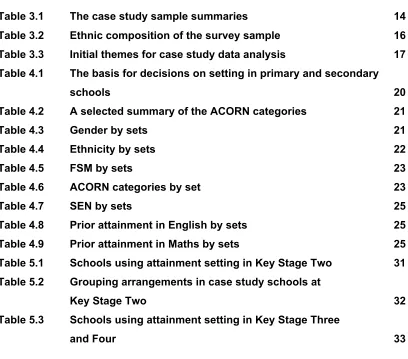
List of Tables
Table 3.1 The case study sample summaries 14
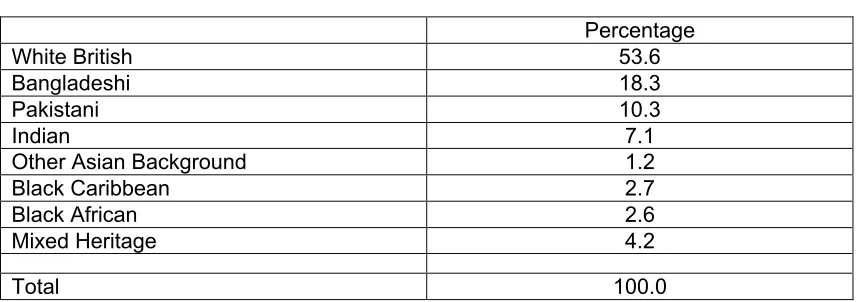
Table 3.2 Ethnic composition of the survey sample 16
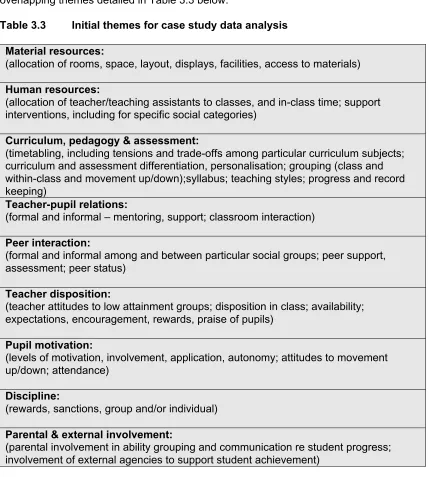
Table 3.3 Initial themes for case study data analysis 17
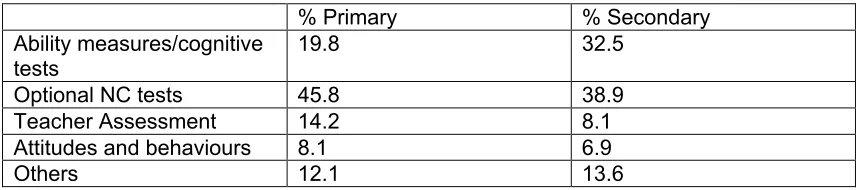
Table 4.1 The basis for decisions on setting in primary and secondary
schools 20
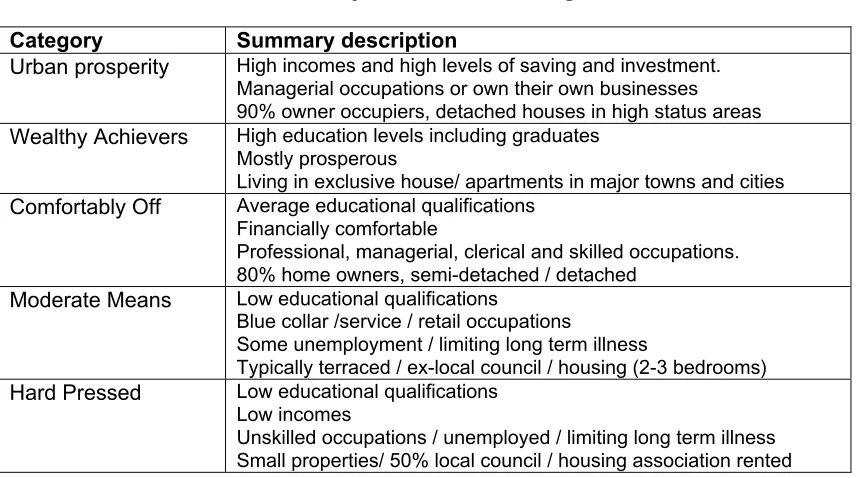
Table 4.2 A selected summary of the ACORN categories 21
Table 4.3 Gender by sets 21
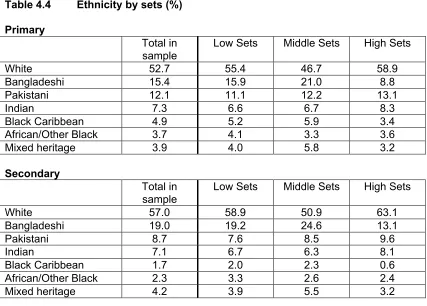
Table 4.4 Ethnicity by sets 22
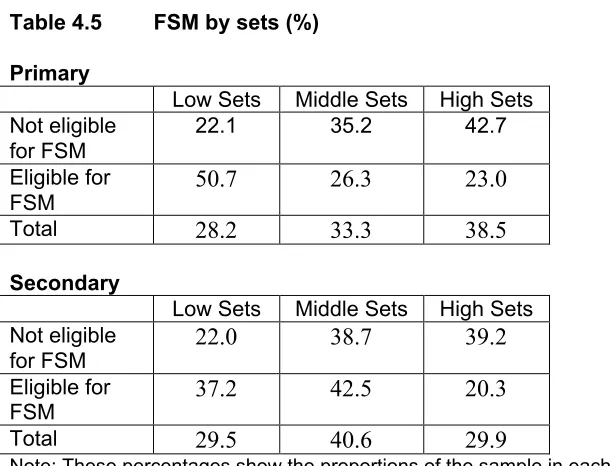
Table 4.5 FSM by sets 23
Table 4.6 ACORN categories by set 23
Table 4.7 SEN by sets 25
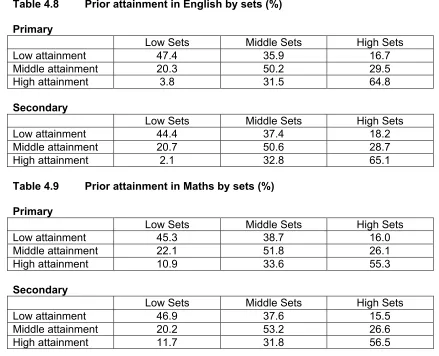
Table 4.8 Prior attainment in English by sets 25
Table 4.9 Prior attainment in Maths by sets 25
Table 5.1 Schools using attainment setting in Key Stage Two 31
Table 5.2 Grouping arrangements in case study schools at
Key Stage Two 32
Table 5.3 Schools using attainment setting in Key Stage Three
List of Appendices
Appendix I Case study sample
Appendix II Survey Instrument
Appendix III Interview Schedule
Appendix IV Acorn Categories
Appendix V Analysis of Key Stage 2 numeracy
Appendix VI Analysis of Key Stage 2 literacy
Appendix VII Analysis results of secondary mathematics
Appendix VIII Analysis results of secondary English
Appendix IX Technical rational for the analytical approach
List of abbreviations
ACORN A Classification of Residential Neighbourhoods CAT Cognitive Abilities Test
DfEE Department for Education and Employment DfES Department for Education and Skills
EAL English as an Additional Language
GCSE General Certificate of Secondary Education KS1-4 Key Stages 1-4
LM Learning Mentor
MLR Multinomial Logistic Regression NPD National Pupil Database
PLASC Pupil Level Annual School Census PLUM Polytomous Universal Model SEN Special Educational Needs FSM Free School Meals
LA Local Authorities
LEA Local Education Authority NC National Curriculum
Ofsted Office For Standards in Education PTA Parent Teacher Association
QCA Qualifications and Curriculum Authority SATs Scholastic Aptitude Tests
SEN Special Educational Needs SES Socio Economic Status
SPSS Statistical Package for the Social Sciences TA Teaching Assistant
EXECUTIVE SUMMARY
Background
The research investigated the characteristics of pupils in low attainment sets, the factors that determine the composition of these sets and the approaches to effective teaching of pupils in low attainment groups used by schools. Central to the aims of the study was the identification of how schools and teachers maximise the benefits of attainment grouping and mitigate its disadvantages. It was conducted by the
Universities of Sussex and Manchester, on behalf of the Department for Children, Schools and Families (DCSF). While the main focus was on low attainment sets, consideration was also given to effective teaching approaches with pupils regarded as low attaining in other grouping arrangements and more generically within the broader school context.
The study sought to answer four key research questions:
1. What are the population characteristics of pupils in low attainment sets? 2. What practices and processes do schools use to identify and organise low attainment groups?
3. How do schools and teachers motivate and inspire pupils in low attaining groups to learn?
4. Are different approaches used for pupils from specific social groups (minority ethnic/social class/ gender) who are over-represented in low attainment groups and/or ‘at risk’ of low educational outcomes?
Key Findings
There were three main ways in which schools and teachers motivate and inspire low attaining pupils to learn. The advantages of attainment grouping for low attainers were maximised and the disadvantages were minimised in these three ways:
concentration of resources: lower attainment groups were smaller allowing greater personal learning support and attention, teachers were similarly qualified and experienced across sets, teaching assistants, learning mentors and sometimes more senior pupils, were involved in providing learning support. This was effective where it was well coordinated by schools and teachers. The use of technology was widespread in teaching and learning with low attainers.
customisation to specific learning needs: curriculum materials were drawn from multiple sources and customised to meet the learning needs of low attaining pupils. Materials incorporated a range of cognitive demands to allow pupils to select the level of challenge. Literacy and numeracy were infused effectively across the curriculum. Test level entry decisions were delayed to reduce demotivation and vocational pathways including college attendance and work placements were provided. Curriculum programmes with strong coursework components or modular tests were offered, effective school monitoring systems for tracking pupil progress were in place, peer-support and more feedback and praise. Use of a range of in-class grouping
creation of a positive learning environment: the school ethos promotes mutual respect and value for the contribution of all pupils irrespective of attainment group, teacher-pupil relations are strengthened in and out of class and improved communications between schools, teachers, pupils and their communities sustain motivation. A more relaxed disciplinary regime in class is offered with emphasis on participation and teamwork, praise and positive affirmation to encourage and motivate active pupil participation and engagement in learning. Pupils’ views are solicited and used in productive ways to inform teachers and school change and provide a more conducive and comfortable environment. Co-ordinated multi-agency support and involvement are provided to support learning needs. The support of
parent/carers, the community and local businesses are drawn in as important contributors to a positive and motivating learning environment.
Schools working effectively with pupils in low attaining groups were not found to adopt specific approaches for particular groups of pupils such as minority ethnic groups, but instead personalised the curriculum, pedagogy and assessment such that pupils in any group could benefit.
Demographic patterns (social class, ethnicity, gender) within low attainment sets were not widely acknowledged by teachers except with respect to gender. This was discussed with regards to the relative underachievement of boys although this was not found to be statistically significant predictor of set placement in the survey. The only significant survey finding on gender is the relationship between being female and low attainment set placement in Key Stage 2 literacy which contradicts other recent research findings. This survey finding deserves further investigation to establish its robustness.
Social class is a significant predictor of set placement. Pupils from lower socio-economic backgrounds have a higher probability of being placed in lower sets irrespective of prior attainment. SEN is another significant predictor of set placement and these pupils are concentrated in the low attainment sets. Ethnicity is a weaker predictor of set placement. These results are in-line with a range of research findings elsewhere that have explored school experiences and outcomes for different social groups.
Even in those schools with the most widespread setting practices, pupils in low attainment groups also enjoyed opportunities to learn in other kinds of groups, for example, mixed attainment groups or in-class grouping arrangements.
Methodology
The research included a brief review of the literature, in particular to update the previous review on pupil grouping undertaken by Kutnick et al, (2005) and to add evidence more specifically relating to pupils in low attaining groups. It also involved undertaking a survey of schools in 12 Local Authorities (LAs) and in-depth case studies in 13 schools in four of these LAs.
A national survey of 404 schools (302 primary; 102 secondary) in 12 Local
Authorities (LAs) was undertaken. In total, 168 were returned completed, providing a response rate of 41.6% (41% for primary; 43.1% for secondary). Of these, 44
The completed questionnaires included data on the specified school populations with Unique Pupil Numbers (UPNs) as well as data about school setting and grouping procedures. Hence the definitions of low, middle or high set were those identified by the schools.
In order to address some of the limitations of using only Free School Meal (FSM) eligibility as a proxy for social class, the analysis in this research also employed the residential neighbourhood classification (ACORN) schema. ACORN categories are based on the approximately 2 million postcodes in the United Kingdom, the average postcode being shared by around 14/15 addresses.
Thirteen schools were selected as case studies from four of the LAs, two of which were shire counties and the other two metropolitan areas. The schools were selected on the basis that they were making good progress with low attaining pupils and represented a wide range of pupil populations with respect to social class and minority ethnic intakes. However, they were more socio-economically disadvantaged than the national average and specific ethnic groups, such as Bangladeshi pupils were overrepresented and others, such as White British pupils were
underrepresented. The data collection in these case studies focused on Years 5, 8 and 10 in the specific subjects of English/literacy and mathematics/numeracy, and additionally science in Years 8 and 10. Data collection included documentary evidence, individual and group interviews with staff, classroom observations of low attainment groups in the specified subjects/years, shadowing of selected low attaining pupils and focus group interviews with these shadowed pupils. Subject to the advice of the school, some parents were also approached.
The research focuses on the experiences of pupils in low attaining sets. The term ‘attainment’ has been adopted throughout this report in preference to the more commonly used term ‘ability’, which is problematic, since there is no means of
measuring ‘ability’. ‘Attainment’ in the context of this report, is measured by the proxy of National Curriculum Test results, which are one common predictor of allocation of pupils to groups.
It is acknowledged that there are a number of methodological weaknesses that may have influenced these findings, such as a significant time lag of up to three to four years between the measures of attainment (the Key Stage test results) used.
Main Findings
School policies on pupil grouping
Schools varied in the extent to which grouping practices were a matter of whole school policy or decided by departments.
In some schools broad principles (for example to group by attainment) were set at school level and departments had discretion only over the details of organisation, for example the number of sets in different subjects. In other schools decisions about whether or not to group by attainment were devolved entirely.
The characteristics of pupils in low attaining sets
In the survey, schools indicated that setting decisions are based predominantly on prior attainment and perceived ‘ability’.
The analysis of data on pupils’ allocation to groups confirms prior attainment as the main, albeit a relatively poor predictor of set placement, for example, with over half the pupils with low prior attainment in English ending up in middle or high sets. Although prior attainment remains statistically significant, setting decisions are clearly not made on this basis alone.
Social class is a significant predictor of set placement. Pupils from higher socio-economic status (SES) backgrounds are more likely to be assigned to higher sets and less likely to be assigned to lower sets. This was confirmed by the analysis based on both FSM and ACORN categories.
Special Educational Need (SEN) is a significant predictor of set placement (after controlling for social class and prior attainment), with these pupils concentrated in the low attainment sets. Less than 10% of pupils in the highest sets have SEN. This suggests that SEN and low attainment are seen as closely related or overlapping and that set placement may also be
confounded by the effect of behaviour.
Ethnicity was a weaker significant predictor of set placement, (after controlling for social class and prior attainment), with pupils of Bangladeshi origin being slightly less likely to be selected for the higher sets.
Gender was not a significant predictor of set placement (after controlling for social class and prior attainment), except in Key Stage 2 literacy where, against recent trends, females were more likely to be placed in a low set. Overall, males are slightly overrepresented in the low sets and under-represented in the middle sets but this difference was not statistically significant.
Other factors including teacher assessments, teacher judgements and pupil characteristics such as behaviour are likely to influence set placement. Some schools allocated pupils with behavioural difficulties to high sets irrespective of prior attainment because they believed that the classroom context provided in these groups would promote positive behaviour. Other schools allocated these pupils to lower sets because they were smaller and provided higher staff ratios.
Key institutional strategies
Human and material resources
In almost all cases, resources were allocated to keep the class size of low attainment groups small to allow the concentration of resources and more individualised teaching and learning.
The use of teaching assistants (TAs) to support the learning of low attainers was a key strategy across the case studies schools. They were used in a wide variety of ways to support both the teacher and teaching as well as the pupil and learning.
Support for the learning of low attainers was most effective when it was co-ordinated and the TAs and teachers worked together as a team. More consistent levels of support were in place at Key Stage 2 but school size and timetabling complexities made this more difficult at Key Stages 3 & 4.
The teachers in low attainment groups in the vast majority of cases were as experienced and well-qualified as staff in higher attaining groups. In addition, pupils in low attaining groups usually enjoyed and benefited from the support of teaching assistants although by Key Stages 3 & 4 some pupils were sensitive about very focused attention by a teaching assistant in the classroom.
Curriculum, pedagogy and assessment
Many subject departments tried to maintain set flexibility by teaching the same topics across different sets using appropriately differentiated materials.
Pupils’ progress and set placement was monitored using National Curriculum test results, a range of other school tests / assignments and teacher
judgements. In many cases the results of tests were used to identify learning needs which were often fed back individually to pupils.
At Key Stage 4, low attaining pupils were often provided with alternative curricular programmes either in specific subjects or through a comprehensive vocational programme that included parts of the week outside the school in college or work-based placements.
Irrespective of the grouping practices there were explicit attempts to vary approaches to teaching in low attainment groups to provide activity-based learning and to appeal to different learning styles.
In many schools, curriculum texts, classroom arrangements and testing formats were often adapted to facilitate the learning experiences and outcomes for low attaining pupils. Assessment for learning was widely promoted as a way to provide feedback on learning and as a motivation device for low attaining pupils.
School ethos
In all schools, there was an explicit school ethos that provided an inclusive and nurturing environment. This included valuing the positive but often non-academic related achievements of low attaining pupils.
Although schools adopted different and often contrasting approaches in their efforts to improve learning they all used prizes and awards for achievement, effort and attendance to motivate pupils’ engagement in their learning.
External involvement
Involving parents / carers was effective in improving the learning of low attaining pupils. This was encouraged in a variety of ways including outreach to homes, inviting parents / carers into school and through homework
activities and reading schemes.
Some schools hosted classes for parents / carers, especially in English as an Additional Language (EAL), which was reported to have positive effects on their children’s self-esteem and confidence.
All schools had access to specialist services for low attaining pupils including speech and language therapists, behaviour support officers, psychologists and language and communication support officers who were usually co-ordinated by the Special Educational Needs Coordinator (SENCO).
Although these were not specifically targeted at the low attaining pupils, some schools enjoyed the involvement of local businesses supporting learning in a variety of curricular and extra- curricular sessions, schemes and activities. These opportunities were usually more available in the city schools that could also draw on other resources including EMAG and Excellence in Cities.
Key classroom strategies
Resource use
TAs were used in a wide variety of ways to support the learning of low attainers. The imaginative use of TAs extended their role beyond their attachment to, and focus on, the learning of one or two identified pupils. Strategies were also employed to encourage some independence from the TA and to facilitate focused teacher attention on the learning needs of the low attainers.
Low attaining pupils were assured equal access to learning materials and media through the organisation of school and class sharing systems. This was especially important in the less well-resourced schools.
Curriculum, pedagogy and assessment
Teachers addressed the learning of low attainers by considering both the cognitive demands and affective outcomes. Strategies employed included a slower pace of delivery, increased scaffolding, reduced levels of challenge, peer-support and more feedback and praise.
Differentiated materials were used to specifically address learning needs of low attaining pupils although in many cases teachers attempted to cover the same topics across the attainment range.
To avoid the potential to impose limits to attainment through differentiation, teachers gave pupils opportunities to select and vary the level of challenge in their learning. Pupil selection of learning task also worked to reduce stigma associated with pupils being given easier classwork tasks.
Practical and interactive approaches, often involving ICT and/or the
interactive whiteboard, were popular with pupils and often used by teachers to motivate low attainers and as a reward for good behaviour.
The balance between providing pupils with appropriate challenge,
opportunities for success and maintaining high expectations was particularly difficult in low attainment groups. Assessment for Learning (AfL) and peer-evaluation were identified as effective strategies in achieving this balance.
Interpersonal relations
Teacher-pupil relations were widely regarded as highly significant to the effective learning of low attaining pupils. Teachers described their approach as more negotiated with low attainers in which practical, interactive or fun activities were used as a reward for good behaviour and/or task completion.
Low attaining pupils referred to a more relaxed disciplinary environment in their classrooms as well as the difficulties of maintaining order experienced by some teachers. Although there was mixed opinion about this, most pupils preferred an explicit disciplinary context to help them avoid distraction and disruption.
Many teachers went out of their way to cultivate positive relations with low attaining pupils and made efforts to respond flexibly to provide a positive learning environment that encouraged pupils’ participation. This was
accomplished through the use of praise, treating mistakes as part of learning, careful questioning techniques and paying attention to cultural sensitivities.
Teachers and pupils alike, regarded peer relations as having an important influence on learning. In the classroom most pupils were more sensitive to gender than to ethnic differences.
Although social stigma and low self-esteem were associated with being identified as a low attainer, most pupils seemed less disturbed by this once settled into their class and engaged in their learning.
Conclusions and implications
There is no single form of attainment grouping. Different schools adopt different practices, and the same schools may adopt a range of practices for different subject areas or different year groups, which may differ from year to year.
In practice, schools operate under a wide range of practical constraints which mean that the ‘ideal’ pupil grouping may be impossible to create. Low
attainment groups contain a wide range of attainment and overlap greatly with other, ‘higher’ groups.
Low attainment groups, created in similar ways might function and be experienced quite differently in different contexts affected by the curriculum, teaching approaches and level of support available.
disadvantages of low attainment groups. These were concentration of resources, customisation and learning environment.
In considering the implications of these findings, five broad principles have been identified. These are:
1. Flexibility: the case study schools, placed pupils in low attainment groups for particular parts of the curriculum, or at particular stages of their school career, reviewed placements regularly and transferred pupils between groups as seemed appropriate.
2. Breadth: the case study schools offered innovative ways for pupils in low attaining groups to access the curriculum without sacrificing breadth and which have the potential to raise rather than lower expectations.
3. Support: the case study schools paid as much, or more attention to the quality of support as to the level of support. Moreover, they offered pupils opportunities to support each other on shared tasks without generating a sense of stigma.
4. Involvement: pupils in the case study schools often had clear views about what they find helpful about the groups in which they are placed. The implication is that pupils (and, indeed, their parents/carers) could be more involved in making decisions about where they are placed, and in offering feedback about the quality of their placements.
5. Responsiveness: the case study schools had robust means of understanding how their practices impact on pupils in their particular situations. This is partly about listening to pupils. It is also about looking for impacts on pupil progress and attainment, and about monitoring the quality, breadth and flexibility of provision. Beyond these considerations of practice are wider social implications. Schools should consider whether the creation of low attainment groups is the most appropriate response to pupils’ difficulties if those difficulties are systematically associated with social class, ethnicity or gender.
Chapter 1.
Introduction
1.1 The education of low attaining pupils
The longstanding government commitment to raising standards of achievement for all pupils in schools was re-affirmed in Every Child Matters: Change for Children in Schools (DfES, 2004) that focussed on the need to raise the educational
achievement of the lowest attaining pupils. The need for greater differentiation in teaching and learning was highlighted and precipitated government support for attainment grouping in schools. In the White Paper, Higher Standards, Better Schools for All: More choice for parents and pupils, (DfES, 2005) the benefits of attainment grouping were described in terms of improved motivation, social skills and standards of achievement.
Research has also indicated a range of advantages of setting for pupils and for teachers (Slavin, 1990; Harlen and Malcolm, 1997; Kutnick et al, 2006). However, research has also suggested some negative effects of attainment grouping especially for low attainment groups (Harlen and Malcolm, 1997; Hallam, 2003; Ireson and Hallam, 2001; Kutnick et al., 2005). These studies point to lower pupil motivation and self-esteem, poor behaviour, a less stimulating classroom environment, lower
teacher expectations and a more restricted curriculum for pupils in low attainment groups. In addition, the research suggests that boys and low attaining pupils prefer mixed ability classes (Ireson and Hallam, 2001). Despite this less than conclusive research evidence on the positive and negative effects of attainment grouping, schools have increasingly adopted setting practices as a means to provide more differentiated and appropriate learning experiences for pupils and to improve standards.
A research focus on classroom practice has continued to support innovation and professional development around the characteristics of effective teaching (see for example, Day et al, 2006; Sammons, 2006). Teacher-pupil relationships have been identified as of considerable importance to pupils’ experiences of schooling (Corrie, 2002; Gillborn & Youdell, 2000; Munn et al, 2000) with different teaching approaches adopted by teachers for pupils in different attainment groups (Harlen, 1999;
Gallannaugh and Dyson, 2003; Kutnick et al, 2006).
While research has shown that within the classroom, teachers have a significant influence over pupils’ educational experiences and outcomes of schooling in terms of attainment and affect (Day et al, 2006; Downey, 1977; Harlen and Malcolm 1997; Dunne, 1998, 1999; Sammons, 2006), there has been little research that has focussed explicitly on teaching and learning in low attainment sets. The study reported here has a contribution to make to improved knowledge and understanding of this research gap. Grouping practices, however, remain variable, with some schools operating flexible systems with set and mixed ability groups in different curriculum areas and across different year groups. While the focus in this study was primarily on teaching and learning of pupils in low attainment sets, it has drawn on the experiences of these pupils in other grouping contexts and in the school as a whole.
The influence of the teacher is not simply restricted to the classroom; it extends beyond to their participation in broader institutional structures and processes which lead to pupils from different social groups experiencing school in different ways (Gillborn & Youdell, 2000). Significantly here, the group composition and pedagogical context of low attaining pupils’ learning within attainment sets, while crucially
processes. The critical importance of understanding the school decision-making processes that lead to the composition of low attainment pupil groups has been highlighted by recent research. This not only shows some persistent patterns of poor educational outcomes for pupils from low socio-economic groups, minority ethnic groups and boys, studies also indicate differentiated experiences of schooling and the over-representation in low attainment sets (Cooper and Dunne, 2000; Gillborn & Mirza, 2000; Demie, 2001; Marshall, 2002; Singh Ghuman, 2004; Mamon, 2004; DfES, 2005; OFSTED, 2005; Connolly, 2006; Kutnick et al, 2006). Through either quantitative, qualitative or mixed research approaches that range from smaller case studies to wider ranging surveys, these studies, taken together, provide evidence of educational inequalities that disadvantage pupils from lower socio-economic groups and black ethnic minority groups in particular.
Pupils’ experiences within school setting processes and practices are highly
significant to their learner identities, their expectations, aspirations and motivations. While prior performance data (e.g. Cognitive Abilities Test (CAT) scores and
National Curriculum levels) inform this process, teachers inevitably play a significant part in setting decisions, which in turn influence their pedagogical approaches with low attainment pupil groups (Keddie, 1971; Nash, 1973; Kutnick et al, 2006). In this sense, the organisational structures and processes in schools are highly pertinent to the pedagogical context for low attaining pupils and their teachers.
Recent research asserts that no one grouping practice suits all and suggests that within-class grouping can mitigate some of the negative effects of attainment
grouping/setting (Kutnick et al, 2006). The impact of within-class grouping strategies will vary according to group size and composition, as well as the learning task (Blatchford et al, 2003).
With some notable successes in raising attainment of, for example, minority ethnic pupils through the Excellence in Cities programme (Kendall, et al, 2005), it has been suggested that, through innovative practice, standards within low attainment groups can be raised by increased motivation, expectations and social skills (DfES, 2005). There remains, however, limited in-depth and systematic research on effective teaching and learning for pupils in low attainment sets. In the spirit of the persistent government efforts both for inclusion and to raise standards, this research set out to explore, analyse and report on whole school and classroom procedures and
practices that best support and encourage pupils in low attainment groups to achieve their potential through positive attainment and affective outcomes.
1.2 The current study
The research reported brings together a strong focus on effective teaching and learning for pupils in low attainment groups, an emphasis on the school processes that determine the composition of low attainment sets and analyses of the
characteristics of pupils in low attainment sets. While the primary concern is with low attainment groups, this is supplemented by a focus on low attainers in other grouping arrangements and more generically within the broader school context. In-depth case studies and a survey were used to provide both qualitative and quantitative data which were integrated and triangulated to address the research questions. This study provides rich data on school and classroom level practices and processes; statistical analyses of the populations in low attainment sets and indicates how these might connect and interact. In particular, the study sought to answer four key research questions:
2. What practices and processes do schools use to identify and organise low attainment groups?
3. How do schools and teachers motivate and inspire pupils in low attaining groups to learn?
4. Are different approaches used for pupils from specific social groups (minority ethnic/social class/ gender) who are over-represented in low attainment groups and/or ‘at risk’ of low educational outcomes?
These research questions were addressed in a three dimensional approach that incorporated:
• A review of the relevant literature including national policy and previous academic research (all research questions);
• A series of in-depth cases studies of schools seen to be doing well with low attaining pupils (research questions 2-4); and
• A national survey of schools using the National Pupil Database (NPD, research questions 1-2).
Informed by insights from the literature, the case studies of schools doing well with low attaining pupils reported here have provided detailed descriptions of school contexts. These include the formal records, structures and processes in schools together with the multiple personal accounts, experiences and perspectives of teachers and pupils in low attainment groups. This was vital for providing evidence and illustrations of the ways that schools and teachers capitalise on the positive effects and mitigate the negative effects of attainment grouping.
The survey was the first one to link individual pupil characteristics to pupil grouping practice on a national sample and as such, provided a unique opportunity to examine comprehensively the nature of pupils in lower attainment sets. These analyses also provided a broader sample within which to locate the case study data. This was especially significant for illuminating school processes that determine the formation of sets and highly pertinent to questions about pupil populations (minority ethnic,
gender, social class) in low attainment sets. In turn, this has provided opportunities for analytical reflection upon the ways that institutional processes construct and circumscribe the context for the teaching and learning of pupils in low attainment groups.
The findings of this research have important implications for policy and practice aimed at improving the educational outcomes of all pupils. In particular, it highlights examples of good practice from schools and classrooms where low attaining pupils are doing well. By providing data and illustrations of teaching and learning in low attainment groups, it focuses attention on the educational experiences and outcomes for these pupils and their relationships with their teachers and within schools. This, in itself, provides some stimulation for teachers and school managers to critically reflect on the impact of everyday school practices and procedures and to develop strategies that aim for better cognitive and affective outcomes for this group of pupils.
1.3 Parameters of the study
This study has focused predominantly on processes of the formation of attainment sets and on effective teaching and learning of pupils in low attainment groups. There are three key dimensions to this study that might be simply represented by the following questions:
• Which pupils get into low attainment groups?
• How do they get into (or out of) low attainment groups?
• How do schools maximise the advantages and minimise the disadvantages of teaching and learning for pupils in low attainment groups?
It was not a study of whether setting by attainment was right or wrong in principle. Rather, the research intention was to provide evidence of school and classroom strategies that encourage good progress of low attaining pupils, to explore the institutional processes of this form of school organisation and to investigate its broader population effects.
The central focus of this research has been upon pupils in low attainment sets. As the background section indicates however, the research about the impact of different in-class grouping strategies has much to offer that is pertinent to this study. Further, and as described above, the variability and flexibility in school practices has led to some case study data and analysis drawn from teaching and learning of low attaining pupils in other grouping contexts. It has also included a range of learning support strategies available more widely in the school and beyond the classroom.
1.4 Limitations of the study
1.4.1 Limitations of the survey
There is an extensive literature on the definition of social class. Hence, measurement of social class as a key indicator of educational success is both contested and
problematic. The standard proxy indicator of eligibility for Free School Meals (FSM) commonly used in the past in educational research has well-rehearsed limitations (Gillborn and Mirza, 2000; Marshall, 2002). The FSM eligibility measure does not reflect wider aspects of social class beyond stated income, such as occupation, educational background, attitudes and other characteristics known to contribute to longer term outcomes. However, the National Pupil Database used in this study does not carry all these data and the researchers did not wish to further burden schools or participants. These issues were partially addressed by extending the social class analysis to include the ACORN categories, a more differentiated
classification based on postcode data, but nevertheless, the analysis although more reliable, is still an approximation in terms of social class.
The ethnic categories, although more reliable, have associated difficulties of
The final presentation of the research has emerged from the discussions of the literature, the data and the analysis. In this sense, the final framing and articulation of the research, its findings and implications has been the result of a dynamic research process in which we have made and rationalised research decisions, informed by the practical contingencies of school contexts. The findings of the research reported here, clearly demand additional studies for further substantiation and elaboration. There are evidently some aspects of this research that would benefit from further focussed research.
1.4.2 Attainment and ability
We acknowledge the effort required by schools in the larger sample to provide the data on sets. Besides the attendant difficulties with data transfer and entry that influence data quality, there are a number of added limitations for the statistical analysis.
Ability is a contested concept and the difficulties with definition mean that any direct measure is unavailable. The use of attainment levels (i.e. Key Stage Assessments) as a proxy measure is also problematic as they are an outcome of very complex and contingent social processes. In these terms this is a major limitation of the
quantitative analyses.
Within policy and practice, the range of nomenclature has added to a general lack of linguistic clarity and presented multiple opportunities for misunderstanding and disagreement. In this research, we used the term attainment rather than ability in an attempt to be clear that attainment data are a key national indicator of pupil learning and progress. It is also the indicator against which effective teaching and learning may be gauged.
While we acknowledge the common usage of ‘ability’ to indicate groups or personal pupil attributes and potential, it is not an objective term. It is often used
interchangeably with terms like attainment and achievement to focus on learning outcomes and implies (innate) individual cognitive capacities. However, it has been argued that attainment outcomes are influenced by, and produced through, the multiple, complex and inter-subjective social processes in schools (Dunne, 1999; Zevenbergen, 2005). While this is an important analytical distinction for us, respondents in the case studies nevertheless referred to ability groups, and where pertinent, we have reported their contribution in their own words.
1.4.3 Defining low attaining groups
Another difficulty in negotiating our research interest with schools relates to their arrangements for pupils identified as having Special Educational Needs (SEN). Variations in local school practices demanded clarity about our focus on pupils in low attainment groups but not those specifically constructed to meet the needs of pupils identified as SEN although pupils with SEN very often comprised the majority of pupils in the lowest attainment group.
attainment groups and we have incorporated the additional data to provide more comprehensive insights into teaching and learning of low attaining pupils in set and mixed attainment classroom contexts.
1.4.4 Access to schools
Access to schools for in-depth case study work is always something of an imposition that takes teacher and pupil time, energy and focus away from the main purposes of schooling. In this research, these difficulties appeared to be exacerbated by the rather sensitive nature of the research focus on pupils in low attainment groups. While the schools were all welcoming and in the main had structured an itinerary for the data collection, there were inevitable gaps in the case studies. In some cases, access was not given to the lowest set but rather to, for example, set 3 out of 4 sets. The reasons for this were not stated but it is possible that the greater challenges present in some ‘bottom’ sets were shielded from observers. Although this has provided greater congruency with the survey analysis which refers to three
attainment categories, this effectively altered the focus from the lowest to the lower
attaining pupils and groups.
Another consequence of the negotiated research engagement in schools was that access to parents and external agencies was severely limited. Our access was based on specific school guidance and recommendation. It is possible that this was too demanding a request for schools or that the researchers might have raised issues with parents such as the criteria used to determine group composition, that the schools themselves had not made explicit to parents. This is clearly an important dimension for the understanding of educational processes, experiences and
outcomes that will need further specific research attention.
1.5 Structure of the report
This report continues with a background chapter that reviews both the relevant literature and national policy. It draws on the findings of recent research that has explored issues related to the key research questions.
This is followed by a chapter that outlines the main features of the research design. Then in Chapters 4-7 we present the data analysis.
In Chapter 4, the findings of the survey are presented with statistical analyses and a national profile of pupils in low attainment sets. Details of the statistical analyses may be found in the appendices.
Next, in Chapter 5, both survey and case study data are combined in a presentation of the findings concerned with the school processes that inform the composition of low attainment sets.
The findings on effective teaching and learning strategies for the pupils in low
attainment groups are reported in Chapters 6 and 7. Details of the key strategies that schools and subject departments use to provide the conditions for the effective teaching and learning of low attainers are presented in Chapter 6. This is followed by detail from the classroom level in Chapter 7, which provides illustrations of good practice.
Chapter 2. Background
2.1 Rationale
Throughout the policies of the last 10 years there is evidence of the attempt to pursue equity and excellence and not to regard these as in conflict. Priorities identified in The Five Year Strategy for Children and Learners: Maintaining the Excellent Progress (DfES, 2006a), included closing the gap in educational attainment between children from lower income and disadvantaged backgrounds and their peers, while raising standards for all. This echoed the concerns expressed inEvery Child Matters: Change for Children in Schools (DfES, 2004) that focussed on the need to raise the educational achievement of the lowest attaining pupils and the recognition of the urgent need to reduce the social class attainment gap (DfES, 2006b). Another priority has been increasing the post -16 participation rate while ensuring that the curriculum in secondary schools is relevant and engaging. These priorities reflect a commitment to equity and might be seen as focusing in particular, on the pupils likely to be found in lower attainment groups. Reducing the number of young people on a path to poverty and an unfulfilled adult life was a further priority which again suggests a focus on those pupils in lower attainment groups (Palmer et al., 2007). Furthermore, the focus on personalised learning throughout recent policy documentation has emphasised the need to design the educational service to the needs of the child not to adopt practices that are determined at the convenience of the service providers.
The White Paper Higher Standards, Better Schools for All (DfES, 2005) encouraged further use of attainment grouping but reiterated that decisions about grouping reside with the schools:
It will continue to be for schools to decide how and when to group and set by ability. But we will encourage more schools to adopt such grouping and help them to learn from the innovative practices that some schools are already employing without lowering expectations for pupils in lower ability groups or limiting choices in the curriculum. (p.53)
This report is aimed at highlighting ‘good practice’, defined as practice that effectively supports the learning of pupils in lower attainment sets. We acknowledge that ‘good practice’ is contextually variable and may be interpreted in a range of ways by schools and teachers (Fielding et al, 2005).
2.2 Literature Review
2.2.1 Organisational grouping
The review of the research evidence on the impact of pupil grouping practices (Kutnick et al., 2005), drawing on earlier literature (e.g. Slavin, 1990; Sukhnandan & Lee, 1998),concluded that no one form of organisational grouping benefits all pupils. A number of studies (e.g. Wiliam and Bartholomew, 2004; Hallam and Ireson 2003; Ireson, et al., 2005; Boaler et al., 2000) have evaluated different approaches to pupil grouping within schools. The lack of clear evidence to support one form of grouping may reflect the greater influence that other factors have on outcomes such as composition of the group, effectiveness of teaching (Day et al, 2006) and the
2.2.2 What are the positive effects that have been linked to attainment grouping?
Attainment grouping in practice, appears to advantage some pupils while
disadvantaging others. Ireson et al., (2002) found that pupils with higher Key Stage 2 test scores in mathematics subsequently did better in sets, while those with lower scores did better in mixed attainment groups. Higher sets were found to have the more experienced and highly qualified teachers (Sukhnandan & Lee, 1998), an advantage for those pupils but a disadvantage for pupils in lower sets. Only in one study (Boaler, 1997b) have pupils in higher sets appeared to be disadvantaged by attainment grouping. Boaler found that one third of the girls in top sets in
mathematics wanted to move down a set because they found the pace and style of teaching unhelpful. Furthermore, pupils identified as exceptionally able may try to hide their talents and / or appear to attract a disproportionate amount of teacher attention in mixed attainment classes (Butler-Por, 1993, cited in Freeman, 1999), suggesting that setting may enable attention to be more evenly distributed although the balance of this attention to learning or behaviour across different attainment sets is less clear.
There is some evidence that pupils prefer setting (Hamer, 2001; Hallam & Ireson, 2007), though Hallam and Ireson noted that pupils were more likely to prefer
whatever arrangement they had experienced. Overall, however, those in higher sets were more likely to report preferring setting whereas those in lower sets preferred mixed attainment groups. Teachers are also reported to prefer setting (Hallam & Toutounji, 1996; Hallam & Ireson, 2007) perhaps because setting is seen as allowing pupils to learn at the appropriate level and pace for the group (Hallam & Ireson, 2007; Hamer, 2001; Kutnick et al., 2005; 2006). This suggests that teachers may assume that a set contains pupils all at the same level, a view confirmed in one study in which some maths sets were taught as if identical in attainment (Boaler et al, 2000). Some studies (e.g. Slavin, 1990) have suggested that grouping by attainment increases the motivation of the lower attaining pupils by removing any competition or intimidation from working alongside higher attainers but more recent research (e.g. Boaler et al., 2000) consistently contradicts this. In research across three countries, Hufton et al., (2002) noted that motivation was associated with vocational aspirations rather than academic performance, such that lower attaining groups can focus on areas of relative strength that might be better recognised by subsequent potential employers.
2.2.3 What are the negative effects that have been linked to attainment grouping?
Group compositionand possibilities of difficult group dynamicsin lower sets can be a major disadvantage of attainment grouping. Lower sets are usually smaller and have a disproportionate number of boys, pupils from lower socio-economic groups and in some schools, pupils from specific ethnic groups (Boaler, 1997a; Boaler et al., 2000; Kutnick et al., 2006; Wiliam & Bartholomew, 2004). Set placement can have critical effects on Key Stage 3 results such that pupils of the same prior attainment achieve higher levels in the tests if placed in a higher set (Ireson et al, 2002). This is
A more consistent finding in the literature concerns the effects of being in lower sets on pupils’ motivation and self-esteem. Lower sets were noted to damage self esteem and lower aspirations in Hamer’s (2001) study, were less likely to be taught by subject specialists and more likely to experience changes of teacher (Boaler et al, 2000). Moreover, the pupils in lower sets in Boaler et al’s, (2000) study reported being insufficiently challenged. Kutnick et al. (2006) found that pupils in higher sets worked more in small groups whereas pupils in lower sets worked more of the time as a whole class and less in pairs or small groups. This was noted to allow teachers to present information and maintain control over behaviour. This finding is of concern given the conclusions of a recent systematic review (Smith et al., 2005) on what impacts on students’ motivation to learn, in which group work was concluded to increase engagement in learning.
There is evidence (e.g. Harlen & Malcolm, 1997; MacIntyre & Ireson, 2002) that some pupils are allocated to inappropriate groups where setting is used. This is a concern in particular, since many studies (e.g. Hallam & Ireson, 2007) have reported that there is relatively little movement between groups mainly because the allocation is rarely reviewed. This is of particular relevance given the acknowledged widening of the attainment gap as pupils move through secondary school and the way that early disadvantage tends to be consolidated by the use of prior attainment data (DfES, 2006b). The way schools organise sets and groups and the influence of the teacher have been highlighted as important to the educational experiences and attainment for minority ethnic pupils in particular, such that these in-school factors often entrench wider social inequalities (Richardson and Wood, 2004; DfES, 2006d; 2007).
2.2.4 How do schools motivate pupils in lower attaining groups?
There is little evidence from research that specifically identifies the approaches used in lower attaining sets. However, there is evidence that teachers can mitigate some of the negative effects associated with membership of lower attaining groups. The review by Kutnick et al, (2005) concluded that the use of differently constituted within-class groups appeared to reduce the negative effects. Hart et al., (2004) argued that all pupils can become better learners and Sammons (2006) identified the
characteristics of effective teaching in areas of high socio-economic disadvantage as including high expectations, good communication with feedback and assessment through interaction with pupils.
In school case studies of personalised learning, Sebba et al. (2007), noted that approaches to motivate lower attaining pupils included providing a more flexible range of curricular accreditation and work-related learning opportunities, strongly developed assessment for learning practices and flexible use of learning mentors and administrative staff to ensure adequate individual support. Above all else, the schools in which lower attaining pupils were most highly motivated and engaged were characterised by an ethos that reflected strong, genuine pupil voice. This included for example, pupils choosing from tasks offered at different levels, selecting with whom they worked on different tasks and observing teachers through the school council to provide evaluative feedback on the effectiveness of teaching.
2.2.5 Within-class grouping
Studies of the overall impact of pupil grouping offer limited insight into within-class teaching and learning processes and how these processes are affected by pupil attainment. In contrast to specific forms of organisational grouping, within-class attainment grouping may have greater potential to raise standards through personalising the learning experience (Kutnick et al., 2005). Some studies show positive effects of within class grouping (Sukhnandan & Lee, 1998) and it has been shown that within-group teaching may make differences in progress between lower and higher sets less significant (Wiliam & Bartholomew, 2004).
Prior to the study by Blatchford et al. (2005), there was limited evidence from studies involving pupils who have received training in group work skills. The relationship between group size, composition and learning task was found by Blatchford et al. to be critical in promoting or inhibiting learning. For example, pupils assigned an individual practice task may be inhibited if asked to undertake the task while seated in a small group, or discussion-based tasks will be facilitated if pupils work in pairs. These issues were reported in the research (e.g. Blatchford et al., 2005; Kutnick et al., 2006) to be inadequately addressed in classrooms.
2.3 The Policy Context
2.3.1 Pupil grouping
Policy statements have contributed to the debates about pupil grouping for many years. The debate about pupil grouping in primary schools was re-energised in the early 1990s by the Curriculum Organisation and Classroom Practice in the Primary School paper, also known as the Three Wise Men report (Alexander, Rose and Woodhead, 1992). This report focused mainly on curricular organisation, but introduced consideration of pupil grouping by attainment within curriculum subjects and described various sizes of pupil grouping within primary classes (including individual, small group, and whole class). In secondary schools, the debate has focused more on grouping strategies as a means of raising achievement. In 1997, the Government White Paper Excellence in Schools stated that:
We do not believe that any single model of grouping pupils should be
imposed on secondary schools, but unless a school can demonstrate that it is getting better than expected results through a different approach, we do make the presumption that setting should be the norm in secondary schools.
(DfEE, 1997, p.38). The White Paper Higher Standards, Better Schools for All (DfES, 2005) noted that Ofsted data show that the proportion of Key Stage 3 lessons which are set has risen since 1997 to over a third in 2005, with greater rises in English and maths. The significant majority of English, science and modern foreign language lessons in secondary schools, and about nine in ten maths lessons are already organised by setting. At several points in the White Paper (e.g. pp.11, 42, 53) it was reiterated that it is for schools to decide how pupils are grouped. It was acknowledged that whether pupils are in sets or not, all classes contain pupils with a range of attainments, interests, motivation and different home and background circumstances.
different types of grouping for different purposes. So for example, the national strategies guidance Grouping pupils for success (DfES, 2006c), noted that grouping by age not by attainment, is the principal way in which pupils are organised into classes. It suggested that some small schools provide useful examples of how teachers form and reform groups to suit the learning objectives, on the basis of age, attainment, need or by giving pupils the choice. The guidance recommended close monitoring of the over-representation of boys, some minority ethnic groups and pupils with special educational needs in lower sets, acknowledging the curricular limitations that this might create. The Teaching and Learning in 2020 Review Group (2006) acknowledged the need for teachers who have high expectations, to work in lower sets in order to challenge low attainers.
A major issue that arises in the research reviewed above is that pupils in lower sets are restricted in the levels that they can achieve in Key Stage tests and GCSE grades, by the curriculum that they follow and test or examination tiers for which they are entered. The recent focus in policy on personalised learning has included a strong emphasis on broadening curricular entitlement and choice, including through a wider range of qualifications. For example, Blair’s speech to the Specialist Schools and Academies Trust (30 November 2006) suggested that a major increase in qualifications could be realised through the new diplomas being introduced in 2008, in ICT, engineering, construction, care and media. He stated that young people with these diplomas will be able to progress when they are ready, and go on to university or apprenticeships. Time will tell whether these vocational routes will increase post-16 participation for pupils who are in lower sets in school.
The policy relating to inclusion is an area in which the motivation, engagement and achievement of all pupils, including those in lower attainment groups has been addressed. In Removing Barriers to Achievement - The Government's Strategy for Special Educational Needs (DfES, 2004a), the need to develop the skills and capacity of schools to work with the full range of pupils was acknowledged. The strategy outlined the need to monitor pupil progress to ensure that some children did not remain unidentified as underachieving. Concerns expressed in this document about pupils with identified special educational needs, such as lack of access to relevant curricular pathways and limited opportunities for progression, are also noted in the literature review, to apply to pupils in lower sets in general.
The Every Child Matters (DfES, 2004b) policy and the Children Act which followed, provided five outcomes for children seen as key to their well-being: being healthy; staying safe; enjoying and achieving; making a positive contribution and achieving economic well-being. The radical changes that were set out in the Children Bill are leading to a reconfiguration of services with greater shared responsibility across agencies. The bill also emphasises the importance of listening to children, young people and families. This policy offers significant opportunities for pupils in lower sets since children with additional social or emotional needs are over-represented in these sets and should be able to access more coherent, multi-agency support to reduce barriers to learning.
2.3.2 Within-class grouping
The DfES (2005) White Paper acknowledged that within-class attainment grouping was commonplace in primary schools and noted the benefits:
Chapter 3. Research Design
3.1 Approach to the Research
A broad and comprehensive approach was adopted in this research study which included the collection of qualitative and quantitative data. This was accomplished through in-depth case studies as well as survey research in a larger sample of Local Authorities (LAs) and schools. While each element of the research offers its own data and potential for analysis, we have taken the opportunities to draw these together to complement each other where appropriate. In addressing the research questions we structured the data collection around four dimensions:
1. School and low attainment group populations and characteristics;
2. School organisation and processes including those that related to allocation of pupils to sets;
3. Classroom practices and experiences with specific reference to teaching and learning in low attainment groups; and
4. The multiple perspectives of a broad range of stakeholders including teaching and support staff and pupils.
3.2 The Sample
The samples for the survey and the case studies were overlapping. For the survey, twelve LAs were sampled and the case study schools were drawn from four of these. The specificity of the selection criteria for the case studies was the primary concern and for this reason the broader survey sample was finalised after the confirmed participation of appropriate schools in four LAs. The case study sample needed to include a range of contexts and schools in which pupils in low attaining groups were making good progress. Two metropolitan and two shire county LAs were selected to provide four locations that provided a range of contexts representing rural/ urban and northern/southern locations. Each of these LAs provided a long list of schools with positive Value Added scores, then, with more detailed reference to time-series data on school achievement over the previous four years on available data bases e.g. Ofsted, LA and school web-sites, a short list of schools with appropriate profiles was compiled and these schools were approached to participate.
The sensitivity of the issues addressed in this research was indicated by the responses from schools. In some cases, school heads declined immediately or eventually after a lengthy process of staff consultation. Six LAs were approached initially to provide the case study sample but two were unable to identify any
appropriate schools that agreed to participate. Across the four LAs, thirteen schools were selected and agreed to participate as case studies. School population
Table 3.1 The case study sample summaries
Name Type & Location
Pupils on roll1
FSM 2 Ethnicity / EAL 3 SEN 4 Attainment range 5
Value Added Measure6
HP1 Primary
City south 350 VeryHigh Multi-ethnic30% Bangladeshi High EAL
7.4% 253 – 286 103
HP2 Primary
City south 300 High Multi-ethnicHigh EAL 13.1% 203 - 246 101 KP1 Primary
City north 300 VeryHigh 33%+ Minority ethnicHigh EAL 7.6% 200 - 208 100 FP1 Primary
Shire county north
200 High 95%+ White British Low EAL
9.0% 240 - 277 100
GM2 Middle Shire county north
600 Low 90% White British 10% Minority ethnic Low EAL
3.0% 278 - 291 100
GM1 Middle Shire county north
200 Low 95%+ White British 5.7% 235 - 275 99
HS1 Secondary
City south 1200 High Multi-ethnic50% Bangladeshi 30% White British High EAL
9.0% 45 - 75 1020
HS2 Secondary
City south 1150 High Multi-ethnicHigh EAL 76% 4.8% 77 - 87 1060 KS1 Secondary
City north
1100 Low Multi-ethnic 24% Indian
6.1% 54 – 63 990 FS1 Secondary
Shire county north
800 High 95%+ White British Low EAL
11.1% 29 - 51 1040
FS2 Secondary Shire county north
800 Average 95%+ White British 6.7% 37 - 61 1000
GH1 High Shire county north
750 Low 95%+ White British Average EAL
7.2% 49 - 65 1010
GH2 High Shire county north
1350 Low 95%+ White British Very low EAL
3.8% 71 - 80 1020
Source: http://www.dfes.gov.uk/performancetables/ [Date accessed 14/05/07] and http://www.ofsted.gov.uk/ [Date accessed 14/05/07]. The Ofsted reports refer to school data that were collected at different times for each school.
1 Pupil numbers have been rounded to the nearest 50.
2 FSM data are approximated in 4 categories in relation to a notional average of less than 15% : low; average
(15-39%); high and very high (40% plus)
3 Approximate proportions of pupil ethnicity are indicated followed by the available data on EAL 4 This refers to statemented pupils only.
5The aggregated attainment scores have been contracted to show the range of results over the last four years.
Secondary and high school figures refer to the percentage of A*-C grades at the end of Key Stage 4..
6 The Value Added Measure in primary school refers to a base of 100 and have been rounded to the nearest
whole number. In secondary schools it refers to a base of 1000 and these have been rounded to the nearest 10.
The intensive case studies were carried out in a variety of schools including four primary, two middle1, two high and five secondary schools with a combined sample of
five Year 5 classes, seven Year 8 classes and seven Year 10 classes (See Appendix
I). Given there were more secondary schools in the sample and, as expected, the secondary schools were larger than the primary schools and more likely to use setting, more Year 8 and 10 classes than Year 5 were included in the sample. Within all schools the main focus was upon the specific subjects of English/literacy and mathematics/numeracy, and additionally science in Years 8 and 10.
The survey was administered to schools in a much larger sample of twelve LAs that was broadly representative of the context in England, with a regional spread and an appropriate balance between metropolitan, urban and rural locations. The survey sample included schools in the four LAs within which the case studies were carried out. All the LAs lent support to the research. The survey questionnaire requested the unique pupil numbers (UPNs) by set groups in English / literacy and
mathematics/numeracy in Years 6, 7, 8 and 10 as appropriate to the age-range in each school. In addition, information about schools procedures for set composition was requested (See Appendix II). In total, 404 questionnaires (302 primary; 102 secondary) were sent out to schools across the twelve LAs, 168 were returned completed, providing a response rate of 41.6% (41% primary; 43.1% secondary). Of these, 44 (26.2%) were from the secondary range (years 7, 8 and 10) and 124 (73.8%) primary range (Year 6). A total of 4688 usable returns related to primary pupils, a total of 6674 related to secondary pupils. Not all are used in all analyses, due to missing values on key variables for some.
In terms of demographic characteristics, 46% of pupils in the surveyed schools were girls, and 54% boys. Free School Meals eligibility was 38.8%,, significantly above the national average. In terms of Special Educational Needs