Research Report DCSF-RR024
Behavioural Impact of
Changes in the Teachers
Pension Scheme
Mark Peters
1
, Merryn Hutchings
2
, Gareth Edwards
1
,
Sarah Minty
2
, Ken Seeds
1
and Sarah Smart
2
BMRB Social Research (1) and Institute for Policy
Studies in Education, London Metropolitan
Behavioural Impact of Changes in the
Teachers Pension Scheme
Mark Peters
1, Merryn Hutchings
2, Gareth Edwards
1, Sarah Minty
2,
Ken Seeds
1and Sarah Smart
2BMRB Social Research (1) and Institute for Policy Studies in
Education, London Metropolitan University (2)
The views expressed in this report are the authors’ and do not necessarily reflect those of the Department for Children, Schools and Families.
© British Market Research Bureau 2008 ISBN 978 1 84775 108 9
Table of Contents
Acknowledgements ...viii
Executive summary... ix
1 Introduction ... 1
2 Literature review ... 2
2.1 Introduction ... 2
2.2 TPS changes ... 3
2.3 Retirement decisions ... 4
2.4 Factors in teachers’ retirement decisions... 12
2.5 The pattern of teacher retirements ... 14
2.6 Factors that may impact on the take-up of new pensions flexibilities ... 19
2.7 Summary ... 21
3 Research design ... 23
3.1 Introduction ... 23
3.2 Quantitative design ... 23
3.2.1 Sampling ... 24
3.2.2 Questionnaire ... 26
3.2.3 Questionnaire packs and the information sheet ... 26
3.2.4 Questionnaire format and dress rehearsal pilot... 26
3.2.5 Main stage fieldwork... 27
3.2.6 Coding, data editing and outputs ... 29
3.2.7 Weighting ... 29
3.3 Sample profile ... 30
3.3.2 Headteachers as employers survey ... 32
3.3.3 Local authorities surveys ... 34
3.4 Qualitative design... 34
3.4.1 Case studies ... 34
3.4.2 Follow-up interviews ... 37
3.4.3 About the interviewees ... 37
3.4.4 Qualitative analysis ... 37
3.5 Explanatory Notes ... 39
3.5.1 Interpreting the survey findings ... 39
3.5.2 Employees and employers (survey data)... 39
3.5.3 Local authorities (survey data) ... 39
3.6 Data Tables... 40
3.7 Structure of report... 40
4 Teacher and headteacher retirements: the current context ... 41
4.1 Introduction ... 41
4.2 The school context... 41
4.2.1 Schools that supported flexibility for older teachers ... 42
4.2.2 Schools that did not support flexibility for older teachers ... 44
4.2.3 What caused the differences between schools?... 45
4.2.4 Other differences that related to the school context... 51
4.3 Decisions about retirement ... 51
4.3.1 Factors encouraging teachers to remain in teaching ... 51
4.3.2 Factors encouraging teachers to leave the profession ... 56
4.3.3 The place of finance in retirement decisions ... 63
4.5 Summary ... 71
5 Changes to the Teachers’ Pension Scheme... 74
5.1 Introduction ... 74
5.2 Awareness and understanding of TPS changes... 74
5.2.1 Levels of awareness of TPS changes prior to the survey... 74
5.2.2 Awareness and understanding of particular changes ... 80
5.2.3 Sources and provision of information... 86
5.3 Summary ... 102
6 Current retirement plans ... 104
6.1 Introduction ... 104
6.2 Retirement patterns in schools ... 104
6.3 Career plans before retirement ... 108
6.4 Retirement plans ... 112
6.4.1 Anticipated retirement age ... 112
6.4.2 Types of pension award ... 117
6.4.3 Early retirement ... 119
6.4.4 Plans to retire at 60 ... 122
6.4.5 Plans to retire after 60... 125
6.5 Post-retirement plans ... 127
6.6 Summary ... 130
7 Impact of the changes to the TPS on teacher behaviour... 132
7.1 Introduction ... 132
7.2 Actual impact: behaviour changes so far... 132
7.2.1 Teachers who had already acted in response to TPS changes... 132
7.3 Perceptions of potential impact on teachers and school staffing 139
7.4 Barriers and constraints ... 155
7.5 Potential impact on school leaders and succession planning ... 164
7.6 Summary ... 173
8 Summary and implications for policy ... 176
8.1 Introduction ... 176
8.2 Employers... 176
8.3 Employees ... 179
8.4 Implications for policy ... 183
8.5 Summary ... 186
References... 188
Appendix A: Questionnaires ... 192
Appendix B: Information sheet... 219
Appendix C: Technical appendix ... 221
Appendix D: Cluster analysis ... 226
Index of Tables
Table 2.1: Summary of factors in retirement decisions...11
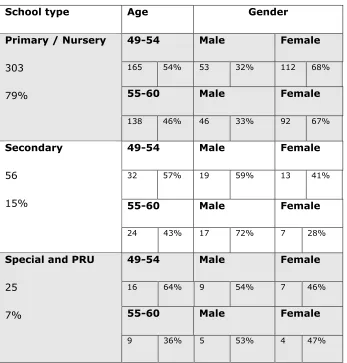
Table 3.1 Weighted breakdown of returned questionnaires from teachers...30
Table 3.2 Weighted breakdown of returned questionnaires from headteachers...31
Table 3.3 Employees: Total pensionable teaching years and total pensionable years (by gender)...32
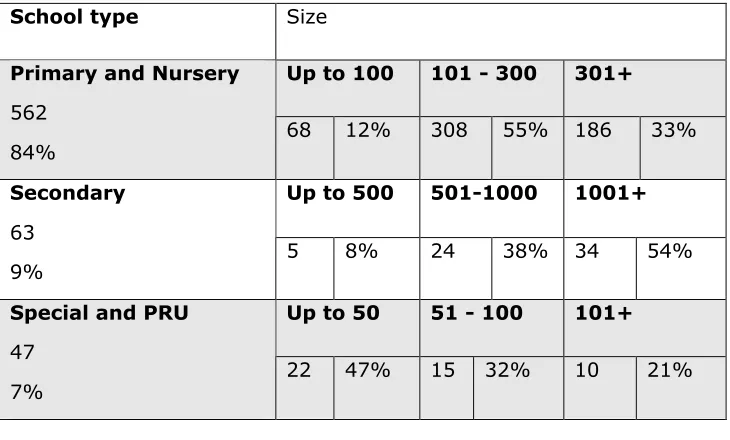
Table 3.4 Weighted breakdown of returned questionnaires from headteachers as employers...32
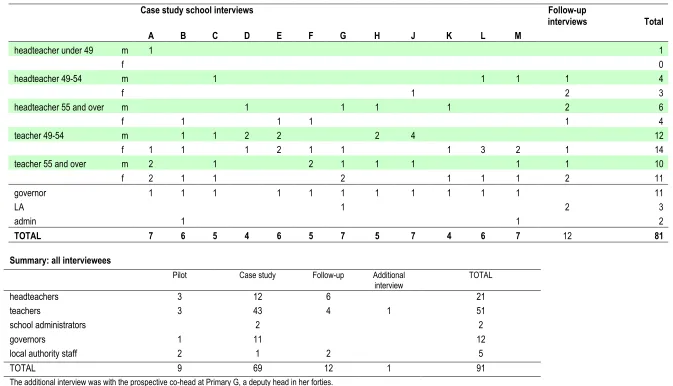
Table 3.5 Case study and follow-up interviews...38
Table 4.1 Headteachers as employers: Attitudes to flexibility for teachers (by school phase)...46
Table 4.2 Headteachers as employers: Attitudes to part-time and job-share teachers...48
Table 4.3 Employees: Highest ranked factor encouraging employees to stay in teaching (by age)...52
Table 4.4 Employees: Highest ranked factor encouraging employees to leave teaching (by age full-time / part-time status)...57
Table 4.5 Employees: Importance of size of teachers’ pension / ability to access pension when thinking about retirement...63
Table 4.6 Employees: Attitude to Teachers Pensions information (by age and gender)...68
Table 5.1 All respondents: Levels of awareness of the changes to the TPS prior to the survey...74
Table 5.2 Headteachers as employers: Levels of awareness of TPS changes prior to the survey (by age)...76
Table 5.3 Employees: Levels of awareness of the changes to the TPS prior to the survey (by age)...78
Table 5.4 Headteachers as employers: Awareness only of increase to employees’ and employers’ contributions or of other changes as well (by awareness of TPS changes)...83
Table 5.5 Employees: Awareness only of increase to employees’ and employers’ contributions or other changes as well (by awareness of TPS changes)...84
Table 5.6 Local authorities: Sources from which found out about changes to TPS...87
Table 5.7 Headteachers as employers: Sources from which found out about changes to TPS...89
Table 5.8 Headteachers as employers: Communication of information to staff (by age)...93
Table 5.9 Employees: Sources from which found out about changes to TPS...96
Table 5.11 Employees: Understanding of TPS changes after reading survey information sheet (by awareness of
changes prior to the survey)... 101
Table 6.1 Local authorities: Statements on school leader retirements in local authority... 105
Table 6.2 Headteacher as Employer: Anticipated retirements in next three school years as a proportion of number of teachers in school (by school size)... 106
Table 6.3 Employees: Career plans before retirement... 108
Table 6.4 Employees: Anticipated age leaving teaching (by gender / pensionable teaching service years)... 113
Table 6.5 Employees: Anticipated age start drawing pension (by gender / pensionable teaching service years)... 114
Table 6.6 Employees: Certainty of anticipated retirement age and age start drawing teacher pension... 115
Table 6.7 Employees: Career plans before retirement (by certainty of plans / anticipated retirement age)... 116
Table 6.8 Employees: Main anticipated retirement option and 1st / 2nd alternatives of employees that unsure... 117
Table 6.9 Employees: Main anticipated retirement option given in survey, compared with actual retirements in 2005-6 (DfES, 2002005-6b) (excluding those anticipating or taking health or premature retirement)... 118
Table 6.10 Employees: What employee will do after leaving teaching (by gender)... 127
Table 7.1 Headteachers as employers: Discussion of potential roles (by school phase)... 137
Table 7.2 Headteachers as employers: Discussion of potential roles (by age of teacher workforce) ... 137
Table7.3 Employees: Discussion of phased retirement with local authority (by age and by role ) ... 138
Table 7.3b Employees: Discussions of phased retirement with headteacher – (headteachers excluded) by age ... 138
Table 7.4 Local authorities: The potential impact of phased retirement arrangements... 140
Table 7.5 Headteachers as employers: How useful it would be for older and more experienced teachers to take on the following roles…. (by school phase)... 142
Table 7.6 Headteachers as employers: Proportion who agree with the following statements about the impact of more flexible retirement patterns on their school…... 144
Table 7.7 Employees: Whether retirement plans have changed as result of changes to the TPS (by age, gender and role) ... 146
Table 7.8 Employees: Retirement shift patterns (previous versus current retirement plans) ... 148
Table 7.9 Employees: Retirement shift patterns (previous versus current anticipated age of leaving teaching)... 148
Table 7.11 Employees: Whether changes to the TPS made it more likely that will stay in teaching longer than
anticipated (by age)... 149
Table 7.12 Employees: Whether would consider phased retirement (by age)... 151
Table 7.13 Employees: Proportion interested in each of the following roles in a phased retirement position (by role)... 153
Table 7.14 Employees: Whether anticipate difficulty finding employment in which to take phased retirement (by age and role)... 160
Index of Figures
Figure 2.1: Teacher retirements by type of award, 1989-90 to 2005-6 (DfES, 2006b) ...15Figure 2.2: Average benefits awarded by type of award, 2005-6...16
Figure 2.3: Average benefits awarded by type of award and sex, 2005-6...16
Figure 2.4: Type of award by sex 2005-6 ...17
Figure 2.5: Type of award by grade (maintained schools)...18
Figure 2.6: Primary full-time teachers: age by role, March 2005...18
Figure 2.7: Part-time teachers as percentage of total FTE teachers...20
Acknowledgements
The authors would like to thank all those who have contributed to this project. We are grateful to Gillian Redfearn, Project Manager at the DCSF, together with all members of the Steering Group - Vernon Adamson, David Churchill, Ian Harrop, Kerena Hunter and Ianthe Wright - for their invaluable help and support with the project.
We want to thank all those teachers and local authority staff who took the time to complete questionnaires. We are particularly grateful to the headteachers and all the staff involved in the case study schools, who made the researchers welcome and answered all our questions. And we also thank all those who took part in pilot and follow-up interviews.
Finally, many thanks to Nathan Fretwell, project administrator in IPSE, for his valuable contributions and support.
Information about Teachers’ Pensions
Information about teachers’ pensions can be obtained from the Teachers’ Pensions website. This gives details of the scheme and the various possibilities open to teachers. It also includes a facility for members of the scheme to obtain an on-line estimate of their pension benefits, and one for making specific enquiries.
Alternatively, Teachers’ pensions can be contacted by telephone on 0845 6066166, this is a BT local call rate number.
Executive summary
Aims
The main aims of this research were to investigate:
awareness and perceptions amongst teachers and teachers’ employers of the changes to the Teachers’ Pension Scheme (TPS), which came into force on 1 January 2007; and
the impact of the TPS changes on teachers’ decisions to remain in the profession and employers’ decisions to support them.
Background
The changes to the TPS took place in a context in which rising life expectancy is leading to moves to encourage people to work longer and to save more for retirement, and many pension schemes are changing in ways that reflect this. This report is concerned with those changes that affect existing members of the scheme: the two that are likely to have the greatest impact are the introduction of phased retirement (enabling older teachers to reduce their hours and/or responsibilities and to draw on some of their accrued pension benefits), and the changes to average salary calculation (through which the pension is based either on the best three consecutive years in the last 10, or on the average salary in the final year).
The potential impact of the pension scheme changes must be considered in the light of current behaviour. The pattern of teacher retirements in the last 20 years shows that the number retiring before the age of 60 has consistently exceeded the number retiring at or after 60. Those in leadership grades and men more often retire before 60 (in comparison with classroom teachers and women) (DfES, 2006b). Some older teachers have moved to part-time work or to supply teaching as ways of reducing their hours or responsibilities (DfES, 2006b; Hutchings et al., 2006a).
Research design
The evidence in this report is based on both quantitative and qualitative research. The following groups were surveyed:
• local authorities: separate surveys were conducted with pensions staff (67 responses – 48 per cent response rate) and HR staff (39 responses – 28 per cent response rate)
• ‘employees’ aged 49 to 60 who were members of the TPS: (3865 responses in all, 939 from headteachers - 47 per cent response rate; and 2926 from other teachers - 44 per cent response rate).
Design weights were applied to the achieved samples of employees and of headteachers as employers to correct for the over- and under-sampling during the sample selection phase. The percentages reported throughout the report are based on weighted data. Differences are reported only when they are statistically significant at the 95 per cent confidence level.
Case studies were conducted in twelve schools selected to illustrate diversity in phase, size and location; in each case the headteacher and between two and five teachers aged 49 to 60 were interviewed, and in all but one a governor was interviewed. Local authority advisors and inspectors were also invited to take part, but generally did not agree to do so. Following the survey, a further twelve interviews were conducted with local authority staff, headteachers and other teachers to pursue particular lines of enquiry. In total, interviews were conducted with 21 headteachers, 51 teachers, two school administrators, 12 governors and staff in five local authorities.
Findings
Attitudes of headteachers as employers to flexibility for employees to reduce hours or responsibilities
training. Heads of schools that employed a high proportion of part-time teachers1
were more likely than those with a low proportion to agree that they would be happy to employ more (28 versus 18 per cent). But in the schools with higher proportions of older teachers2, retention was less often identified as a priority, and
headteachers were more likely to agree that they would like older teachers to move on so that younger ones could be recruited (47 versus 24 per cent with a low proportion of older teachers).
Factors in teachers’ retirement decisions
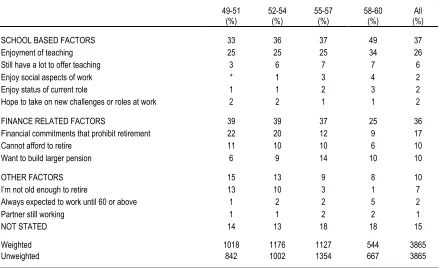
The likelihood of benefiting from the TPS changes may also be affected by the range of factors that teachers take into account in making decisions about retirement. Teachers were asked to select, and rank in order of importance, three factors that encouraged them to stay in teaching and three that encouraged them to leave. The factors that most encouraged them to stay in teaching were enjoyment of teaching (26 per cent selected as the most important); financial commitments that prohibit retirement (17 per cent); not being able to afford to retire, and wanting to build up a larger pension before retirement (each 10 per cent). The qualitative research indicated that for some teachers, the earliest date at which they would consider retiring related to financial commitments (in particular, mortgages, and children’s higher education). However, once these had been met, whether work was enjoyable became the central factor. Thus older teachers were more likely than younger to choose school-based factors as encouraging them to stay in teaching, and younger teachers more likely than older to choose financial factors. For some other teachers, finance was less central, and the main reason for staying in teaching was their enjoyment of their role.
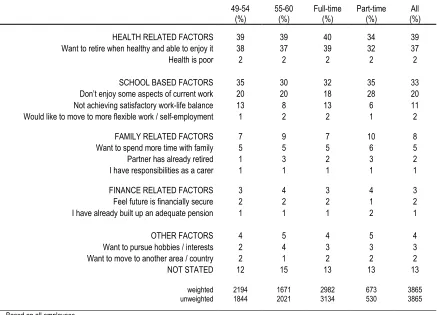
The factors that were most frequently ranked first in encouraging teachers to leave were wanting to retire while still healthy and able to enjoy it (selected by 37 per cent as the most important); not enjoying some aspects of their current work (20 per cent); and not achieving a satisfactory work-life balance (11 per cent). The qualitative data identify a perception that at a certain age (generally located in the late fifties), energy will drain away. Eight out of 65 interviewees cited a variety of ‘mortality myths’ suggesting that those who continue to teach (or who move from full-time work straight into retirement) are likely to die sooner than those who retire early or gradually; however, there is no evidence to support these. Headteachers were more likely than teachers to select not achieving a satisfactory work-life balance as one of the three factors encouraging them to leave (47 versus
1 Schools in the sample were divided into three groups of approximately equal size based on the proportion of teachers (headcount) that worked part-time; a low proportion was 0 to 15 per cent, and a high proportion over 30 per cent.
37 per cent) while teachers were more likely than heads to select not enjoying some aspects of current work (58 versus 42 per cent).
Teachers’ understanding of their pensions
While 24 per cent of the employee sample said they kept up to date with pensions information, and 59 per cent that they had a broad understanding of how their pension is calculated, the qualitative research found that in many cases awareness was partial or inaccurate. In particular, almost all those who talked about actuarial reduction underestimated the extent of the reduction. More than one in 10 interviewees believed that working part-time would vastly reduce their pension, because they did not understand the calculations correctly. One in six teachers in the survey indicated that they found pensions information ‘confusing’, or had not yet looked at it. Both the interviews and the survey showed that many teachers investigate their pensions only when they expect to retire in the next year or so; only 12 per cent of those aged 49 to 51 said they kept up to date with pension information, compared to 39 per cent of those aged 58 to 60. Those teachers who have misunderstandings or who find pensions information confusing may be less likely to understand and take advantage of the new options available. The qualitative research found that some teachers had not received annual statements from Teachers’ Pensions, and this contributed to their vagueness about their pensions.
Awareness and understanding of TPS changes
Within local authorities, those who worked directly with teachers’ pensions generally reported a detailed awareness and understanding of the TPS changes (72 per cent), but HR staff were more likely to report only a general awareness (36 per cent detailed understanding, 49 per cent general awareness). Governors interviewed reported limited or no awareness. Amongst headteachers as employers, 11 per cent said they had a detailed awareness and understanding, while a further 50 per cent reported that they had at least a general awareness. A similar pattern was found among employees, with slightly fewer reporting either a detailed (nine per cent) or general (46 per cent) awareness. Some groups had a greater awareness: headteachers (68 per cent of those aged 49 to 60 reported a detailed or general awareness); men (68 per cent); older teachers (62 per cent aged 58 to 60 versus 46 per cent 49 to 51); and those who were closer to their anticipated retirement date. However, 31 per cent of all employees had a limited awareness, and 13 per cent said that they were unaware that the scheme had changed.
interviewees were ‘aware’ of changes that had not in fact taken place, such as raising normal pension age to 65 for teachers over a certain age. Thus survey respondents’ claims to awareness of changes other than increased contributions must be treated with some caution. Some headteachers in their role as employers and some employees said they knew very little about the TPS changes: some 15 per cent of each group were aware only of the increase in contributions, while 16 per cent of headteachers as employers and 22 per cent of employees indicated that they were ‘not aware of many changes at all’.
Sources of information about the TPS changes
In relation to sources of information about the changes, local authority staff were most likely to have learned about the changes from the Employers’ Toolkit (81 per cent pensions staff, 62 per cent HR), the TPS website (76 per cent pensions, 46 per cent HR), and from training provided by Teachers’ Pensions or the DfES3 (72 per
cent pensions, 56 per cent HR). The majority of governors interviewed had heard about the changes only through the research; some felt strongly that they should be provided with more information. The most important source of information for headteachers as employers and for employees was teacher unions (56 per cent, 59 per cent). The next most frequently cited source for employees was talking with colleagues (39 per cent). Among employees, headteachers were more likely than teachers to indicate that they had heard about the changes through written information or official sources, and teachers more likely than heads to say their information came from talk with colleagues (42 versus 28 per cent). Less than a quarter of headteachers as employers and of employees had found out about the changes from the TPS website. Almost a third of headteacher employers had received letters from their local authorities, but only 14 per cent of employees said that they had heard about the changes from the local authority, and just nine per cent of teachers said that they had been informed by their headteacher. These data suggest that communication about the TPS changes has been limited, and that there was no consistent method through which information had been passed to all teachers. Chance and misunderstanding played a role in what information was noticed. In addition, some individuals had received information but had not paid any attention to it. The information sheet provided with the survey and to all interviewees was reported to be clear and comprehensible, and appeared to have increased understanding in many cases. But for some respondents it revealed that they did not understand as well as they had thought.
Teachers’ career plans before retirement
Before retirement, 60 per cent of the employees surveyed anticipated that they would continue to work on the same salary scale and for the same hours. Almost a
fifth (18 per cent) indicated that they would reduce their hours or responsibilities, and only eight per cent (mainly those who were younger) indicated that they would seek promotion. Slightly more of the deputy and assistant headteachers said they intended to seek promotion (12 per cent), with seven per cent of this group looking to achieve headship. Headteachers were less likely than other groups to intend to move to part-time work (six per cent) or to reduce their responsibilities (two per cent, compared with six per cent of teachers).
Teachers’ retirement plans
There was some contrast between the data about teachers’ retirement plans from the surveys, in which those responding were channelled into a definite choice, and the data from interviews, which indicate very much more fluid and nebulous plans. Far fewer employees indicated that they would retire before the age of 60 than has been the case in recent years: just a quarter indicated that they would draw an actuarially reduced pension (22 per cent), or take premature or ill-health retirement (two per cent, one per cent). This contrasts with the 2005-6 figures (DfES 2006b) which show that 57 per cent of all teachers’ pension awards fell in these categories. It is impossible to tell whether this contrast represents a dramatic change in retirement patterns, or simply illustrates the size of the gap between intentions and actions in this respect. It is of course possible that some of those who might otherwise have retired before the age of 60 had decided to extend their working lives by taking phased retirement, but only five per cent of employees indicated that they planned to do so. Some groups were more likely to anticipate retiring before age 60: those in secondary schools, headteachers, men and those with more years of pensionable service.
Employees were asked how definite their retirement plans were. Overall, just 13 per cent indicated that their retirement age plans were certain, and 15 per cent that their type of pension award was certain. Those whose anticipated retirement was some years ahead indicated a higher degree of uncertainty. Those who intended to retire before age 60 indicated a higher level of certainty than those who indicated they would work to age 60 or beyond.
Actual impacts of the TPS changes
The survey was sent out just five months after the changes came into effect, and was too early to capture action in response to the changes. The qualitative research took place over a longer period, and interviews were conducted with four teachers who had changed work patterns in response to the changes (two in case study schools and two in follow-up interviews). Eight per cent of the employee sample had had either formal or informal discussion about taking phased retirement with their headteachers, and two per cent with the local authority. Around one in 10 headteachers indicated that discussions about potential roles for older teachers who opted to reduce their hours or responsibilities had taken place. This had more often occurred in schools with higher proportions of older teachers.
Potential impact of the changes
There was no clearly agreed view among teachers’ employers (local authorities and headteachers) as to what the future impact of the changes would be. Some headteachers as employers viewed the changes very positively, identifying potential roles for older teachers working who had reduced hours or responsibilities such as enrichment work with small groups (79 per cent), mentoring less experienced teachers (73 per cent), and taking classes during PPA time (75 per cent of primary headteachers). Sixty-four per cent of headteachers as employers agreed that work-life balance for teachers would be improved, and 50 per cent agreed that there would be greater opportunities for older teachers to pass on their skills and experience. While 41 per cent of headteachers agreed that teachers would extend their working lives, working beyond the age at which they would otherwise have retired, 54 per cent thought that teachers who would otherwise have continued to work full-time to age 60 would now reduce their hours and responsibilities before that age. Headteachers interviewed argued that the changes would benefit the school because those who were no longer able to contribute fully could take on reduced capacity roles in which their skills and experience would be valuable, and they would have more energy and increased motivation. A minority of the headteachers who were interviewed identified the potential for human resource management, and offering positive ways forward to some older teachers who are not coping with their current responsibilities. Some of these identified the potential for encouraging retention, but none linked this specifically to shortage secondary subjects.
who said that their plans had definitely or possibly changed, 62 per cent said that this resulted from the introduction of phased retirement, 44 per cent from the change to average salary calculation, and 28 per cent from increased flexibility in relation to the lump sum (some indicating more than one of these changes).
Two fifths of all employees indicated in the survey that they would consider phased retirement, but qualitative data showed that many misunderstood what was involved in this, thinking the term referred to any reduction in hours or responsibilities before retirement. Of those who said that they would consider phased retirement, half thought they would reduce both their hours and their responsibilities in such a role; a further 38 per cent that they would reduce only their hours; and just four per cent that they would reduce only responsibilities.
Barriers and constraints
Local authority staff noted that phased retirement can only be taken if the salary is reduced by at least 25 per cent, but that this does not fit well with teachers’ work patterns. If this figure were reduced to 20 per cent it would allow teachers to work four days a week in a phased retirement role. Some 14 per cent of those teachers who would consider phased retirement indicated they would like to work four days a week, and they would be unable to do this under the current regulations.
The survey data showed that both local authority staff and headteachers as employers identified cost as a concern. When asked to write on the questionnaire the main difficulties in creating roles for older teachers who reduced their hours or responsibilities, 11 out of 39 local authorities and 41 per cent of headteachers wrote comments about the cost. Older teachers were seen by some as a costly resource in comparison with NQTs or support staff. As reported earlier, some headteachers were also reluctant to allow teachers to move to part-time work, which they saw as creating timetabling problems and reducing continuity for pupils; 49 per cent of primary and 56 per cent of secondary headteachers said that they would not be happy to employ more part-time teachers. Some headteachers and governors also indicated reluctance to use the possibilities opened up by the TPS changes proactively in managing staff, because they felt it would not be appropriate to approach teachers and suggest that they reduced their hours or responsibilities.
Potential impact on school leaders and succession planning
There was considerable interest among headteachers in system leadership roles; 85 per cent of those headteachers who said they would consider phased retirement (or 30 per cent of all headteachers) said they would be interested in mentoring less experienced school leaders. However, most of those interviewed intended to do this after ‘retirement’, or saw no need to make use of the new pensions flexibilities. The NCSL (2006) have suggested that one benefit of headteachers taking on system leadership roles would be that their deputies have a chance to ‘act up’, which might make them in turn more likely to apply for headship. The research showed that such opportunities had had varying impacts (either encouraging or discouraging them to apply for headship, and either increasing or reducing their confidence); if such roles are to be a positive step towards headship it seems important to support acting heads, and mentor them as they move on to headship.
There was some interest among headteachers in co-headship, with 76 per cent of those who would consider phased retirement (27 per cent of all headteachers) identifying such a role as a possibility. The qualitative research investigated a number of existing co-headship arrangements, most of which had the impact of supporting the younger co-head to move to full headship when the other retired. One such arrangement had been explicitly designed as a mentoring arrangement. While none of these arrangements was taking advantage of the TPS changes, it was obvious that these could be useful in promoting similar arrangements.
Implications for policy
There findings have a number of implications for policy and practice, and some suggestions for future strategies and actions have been identified:
• a further modification to the pension scheme which would reduce the salary reduction needed for phased retirement to 20 per cent;
• improved communication about the TPS which is sent directly to teachers; is in simple language; includes worked examples; and aims to counteract common misunderstandings;
• ensuring that all active members of the TPS receive annual statements;
• informing school governors about the changes;
• seeking out those who have taken phased retirement and writing case studies to publicise the arrangement;
• encouraging headteachers to discuss the difficulties of approaching older teachers on this topic, and sharing examples of successful human resource management;
• making ongoing efforts to raise awareness of the potential that the TPS changes open up for co-headship arrangements;
1
Introduction
The Teachers’ Pension Scheme (TPS) is administered by Teachers’ Pensions (TP) on behalf of the Department for Children, Schools and Families (DCSF). BMRB Social Research and the Institute for Policy Studies in Education, London Metropolitan University were commissioned by the DCSF to research the impact of changes to the TPS, which came into force on 1 January 2007. These changes are summarised in Chapter 2.
The main aims of the study were to investigate:
• awareness and perceptions of the TPS changes amongst teachers and teachers’ employers; and
• the impact of the TPS changes on teachers’ decisions to remain in the profession and employers’ decisions to support them.
In relation to measuring the impact of the changes, a distinction has been made throughout the report to the impact that the changes may have had on behaviour (e.g. discussions that had taken place between employer and employee) and impact on perceptions (e.g. employees’ future plans and anticipated impacts). In addition to the above two aims, the research aimed to explore a number of specific research questions related to how flexibilities facilitate new ways of working as well as the barriers that individuals may face. Various communication issues were also addressed in terms of awareness and understanding of the TPS changes.
The research drew heavily on what is already known about retirement decisions and patterns of teacher retirements. In doing so, a range of literature and other data were analysed and have been presented in the literature review that follows (Chapter 2). This research aimed to build on existing and ongoing research work.
2
Literature review
2.1
Introduction
In most OECD countries, arrangements for state and occupation pension provision are changing. The report Factors Affecting Retirement (DfEE, 2000a) states that these countries face marked population ageing – that is, the number claiming pension benefits is set to increase considerably, while the numbers entering the working age population supporting pensioners decrease. In addition, life expectancy is rising, and workers are likely to claim their pensions for longer than previously.
In response to these factors, many pension schemes are changing in ways that encourage people to work longer and save more for retirement. This was the main thrust of the Government’s Green Paper, Simplicity, security and choice: working and saving for retirement (DWP, 2002a). This was followed in June 2003 by a recommendation that all public sector pension schemes should be reviewed to increase normal pension age and to reflect improved longevity and modern working patterns (DWP, 2003).
Teachers’ pension arrangements had already undergone changes in 1997 that encouraged teachers to stay in the profession longer and reduced government spending on pensions; from November 1997 LEAs had to pay the additional costs for retirement before age 60, and consequently early retirement packages became less common. (In 1999, actuarially reduced pensions were introduced; this made early retirement more widely available to teachers, but with an actuarial reduction to the pension.) Also in 1997, the ill-health retirement regulations were changed such that teachers had to prove that they were ‘permanently unable to teach’, rather than that that the incapacity should last for the foreseeable future
This research is designed to investigate the behavioural impact of the changes to the scheme on teachers aged 49 and older. In that the majority of the fieldwork has been conducted less than six months after the changes came into force, inevitably the focus is more on perceptions of the likely impact than on actual changes in behaviour.
Section 2.2 sets out the changes to the TPS. The sections that follow review the literature that has been used in designing this research. They consider the various factors taken into account in retirement decisions, and the role of finance and pensions in these; the current pattern of teacher retirements; and a variety of factors that may affect the way that new flexible retirement options are taken up.
2.2
TPS changes
The current changes to the TPS have been devised in the context of concern about the increased life expectancy and the lower proportion of the population in employment. Thus the main change is that the age at which the teachers’ pension can be drawn has been raised for new members of the scheme.
There are also significant changes for current members. The two that are likely to have the greatest impact on teachers’ retirement decisions are:
a) the introduction of phased retirement arrangements that enable teachers aged 55 and above to continue working as a teacher (or in education, for example as a teaching assistant) and at the same time draw some of their accrued pension benefits; and
b) the new ruling which allows the pension to be based either on the best three consecutive years in the last 10, or on the average salary in the final year. (This replaces the former procedure in which the best 365 days in the final three years were used.) In this report, we refer to this as the change to average salary calculations.
It is an explicit intention that the second of these changes will do something to ameliorate the discontent of teachers who have lost Management Allowances and have not gained Teaching and Learning Responsibilities, and as a result are concerned that they have will have a lower pension (see Hutchings et al., 2006b).
grounds that they needed to maximise their pensions, may now decide to take phased retirement or move to part-time work or a role with fewer responsibilities.
While these are the main TPS changes that may impact on career planning, there are also other changes, set out below, that could potentially impact on teachers’ retirement decisions.
change potential impact
The option of taking a larger lump sum and a smaller
pension This may impact on teachers who are still workingbecause they have mortgages to pay off, or who wish to buy property for their retirement. In each case it may enable the teacher to retire earlier than previously expected.
The opportunity to buy £5000 worth of extra pension, AND
the lifting of the 15 per cent limit on pension contributions.
While in financial terms there seems little difference between the first of these and the previous scheme through which teachers could buy in extra years, there is a possibility that a teacher with capital available may choose to invest in extra pension and then retire earlier.
The introduction of a five year limit to breaks of service for those on the existing scheme (or if longer breaks are taken, the teacher will join the new scheme and have a retirement age of 65)
AND
the provision that those currently on career breaks can retain 60 as their pension age if they return to teaching by the end of 2007, regardless of the length of the career break
A potential impact of these provisions could be a larger than usual number of teachers attempting to return to teaching during 2007.
It is possible that this group are less aware of the changes and their potential impact than teachers currently in service. However, this research des not include out of service teachers
There are also changes to the TPS that may increase teachers’ overall satisfaction with the scheme (including the provision that spouses and civil partners will be guaranteed a pension for life, and increases in the death grant), and others that may reduce satisfaction (such as the increased contribution rate). However, it is unlikely that these changes will affect teachers’ career plans.
2.3
Retirement decisions
The probable behavioural impact of pension scheme changes depends on the role that occupational pensions play in retirement decisions. While there is considerable literature on retirement decisions in general, there is very little research specifically about teachers’ retirement decisions. In this section we therefore review the wider literature, and then focus on what is known about teachers.
to work, either in other paid employment or in self-employed capacity. Indeed, they may even ‘retire’, and then take up a new contract in the same employment (Vickerstaff et al., 2004). Thus some writers differentiate between ‘retirement’ and ‘early exit’ (e.g. Lissenburgh and Smeaton, 2003), and others refer to ‘definitive withdrawal from the labour market’ (e.g. Guillemard, 1997). In this research, we are considering retirement from teaching, rather than from the labour market. However, even this is not clear-cut as teachers may retire and move into supply teaching, for example.
Research about retirement decisions
The factors involved in the decision to retire are complex and inter-related. Key factors in the retirement decision are health and finance related, but other considerations include psycho-social, workplace and socio-economic factors, and gender differences (DfEE, 2000b; Phillipson and Smith, 2005). The retirement process may be deliberate or unplanned, willing or resisted, gradual or sudden, chosen or imposed (Arthur, 2003). It also involves many emotions (Butters, 2002) which may make the transition more difficult to manage.
In a study of retirement decisions among civil servants, Higgs et al. (2003) identified seven ‘ideal types’ of possible routes into retirement. They emphasised that these represented a simplification of the complexity of real-life decision-making in order to emphasise essential features. They identified three types that continue to work until the mandatory age of retirement despite having the option of retiring earlier: those who are financially attached to work; those who enjoy work, and those with a traditional work ethic who had never considered retiring early. The study also identified four types who took early retirement: those who take a financial exit (involving an early retirement package and full pension); those who leave because they are dissatisfied with work; those who leave because of illness or disability of themselves or a dependant; and those who take what they identified as ‘third age exit’ (involving the pull factors of outside interests and hobbies).
The sections that follow focus on the roles of financial, workplace and other factors in retirement decisions. The extent to which differing pension arrangements may affect retirement decisions is also discussed.
Financial factors
Various factors affect financial attachment to work. Pension schemes rely on years of service and level of income, so women’s lower rates of pay and shorter working histories mean that women generally gain lower rates of occupational pension income than men, and may be more financially attached to work in order to gain the level of income they require in retirement (DfEE, 2000b; Phillipson and Smith, 2005).
In contrast, some may choose to retire because financial packages that they are offered ‘solve’ particular financial commitments (e.g. the lump sum completes the paying off of the mortgage) (Higgs et al., 2003).
Some research has suggested that financial factors are the main consideration in retirement decisions (e.g. Myers, 1983, McGoldrick and Cooper, 1989 and Maule et al., 1996, cited in DfEE 2000b), but other research indicates that financial factors tend not to be the primary driving force, although they provide the constraints within which retirement decisions are made (Arthur, 2003). In that most research has been qualitative and involves small numbers, there is limited evidence about the relative importance of various factors.
However, these decisions do not relate simply to the size or type of pension people expect, or to their financial commitments, but also to their perceptions and understandings of pensions and of their personal financial situation. Vickerstaff et al. (2004), researching retirement decisions in three organisations with occupational pension schemes, found that many people delayed getting information about their pension options; there was considerable confusion about how pensions are calculated; and some people were poorly advised. They concluded that: ‘A lack of knowledge and understanding of pension policies and retirement options seriously undermines many people’s capacity to plan ahead for retirement’ (2004: v)
.
Similarly, Byrne and Rhodes (2005) reported that employees often have limited knowledge of both pensions in general and of the details of the particular scheme of which they are a member. Phillipson and Smith (2005) show that while financial security is an important factor in retirement decisions, only a minority of people in their fifties have a clear understanding of the income they will have in retirement. Almost half of the UK population agree that they find it hard to understand financial products and leaflets (Financial Services Consumer Panel, 2006).Nevertheless, there is evidence from a variety of different countries that illustrates how different social welfare systems, pension arrangements and employment laws and policies can influence financial attachment to work. For example, in countries where there have been policies encouraging and supporting early retirement (e.g. France) early exit from the workforce is more frequent (DfEE, 2000b).
individuals do not have a clear understanding of their financial position when they are making decisions about pensions and retirement, and so these decisions cannot be understood in a purely rational, technical way.
Work factors
Research shows that some people continue to work rather than retire because they enjoy their work (e.g. Higgs et al., 2003; Vickerstaff et al., 2004). Access to further career progression opportunities and training are also factors that act to encourage people to continue to work.
A related issue is the social role of work. Some individuals choose to keep working because they value the social contacts they have in the workplace (this is a particular issue for single individuals), or because they particularly value the self-esteem they get from their employment (DfEE, 2000b; Phillipson and Smith, 2005).
In contrast, some aspects of work encourage people to retire. These include dissatisfaction with organisational and technical changes in work (Higgs et al., 2003); age discrimination (Hirsch, 2003); intensification of work (Hirsch, 2003); and the physical demands of some jobs (Phillipson and Smith, 2005). These factors can lead to stress, which may encourage employees to retire.
Other factors
Health is a key factor in some retirement decisions (Higgs et al., 2003). Both ill health and caring responsibilities are factors in decisions about retiring for a significant number of workers. The 2001 census showed that about one in five of those in their fifties had responsibilities as unpaid carers, and benefits data show that, in 2003, one in seven people between the ages of 50 and state retirement age was claiming incapacity benefit (Hirsch, 2003).
Somewhat different was the type of retirement decision Higgs et al. (2003) termed ‘Third Age exit’. This described those who took early retirement to become more involved in outside interests and hobbies, including voluntary groups, charitable groups, spending more time with family or travelling. Retirement was a positive choice in order to enjoy things they were less able to do whilst working. This was particularly the case for those who were better off (Hirsch, 2003). In a study of how those who had retired spent their time, Barnes et al. (2002) discovered a strong sense of fairness: retirees argued they had contributed to society for a long time and now wanted more choice about how they spent their time.
Studies of retirement decisions show that expectations also play a key role. For many people, the age at which they can draw their pension (either state occupational) is seen as the ‘natural’ time to retire, and they simply did not contemplate leaving work before this point (Humphrey et al., 2003). The way in which different expectations shape retirement decisions can be seen in comparative research, where one explanation for the substantial level of gradual retirement and working after age 65 in Japan is ‘the confucionist work ethic’ (Casey, 2004).
In contrast, in the UK, expectations of retiring early have increased. In 2005 the Employers Forum on Age released a report suggesting that more than half of UK workers wanted to retire as soon as possible, and of those who said they hadn’t saved enough for their retirement, less than a third were willing to consider working for longer.
Potential for ‘downshifting’ in the transition to retirement
Vickerstaff et al. (2004) note that a major theme of research about retirement patterns has been to investigate the extent of interest in, and potential barriers to, people ‘downshifting’ their workload prior to retirement. They use this term to include reducing hours worked; reducing responsibilities; leaving the main ‘career employer’ and finding another job to bridge the gap until retirement age; and moving to self-employment. It should be noted that there is no common agreement about the vocabulary used to describe such patterns; DWP (2002b), for example, use ‘flexible retirement’ to describe this whole range of options, and restrict the use of ‘downshift’ to mean only reduction in responsibilities. The NHS refers to ‘flexing retirement’, which includes ‘stepping down’ (reducing responsibilities), ‘winding down’ (reducing hours), and retiring and coming back (Department of Health, 2000).
Vickerstaff et al. found widespread support for downshifting among employees. However, not all were enthusiastic; in particular those in management positions often felt it would not be feasible to ‘downshift’ and remain in the same organisation, and others expressed concern about the potential impact on their pensions. There was ‘a common misapprehension that working reduced hours would have a dramatic effect on pension entitlement’ (2004: 34). The next section reviews ways in which employers have introduced measures to facilitate flexible retirement options.
The role of pension arrangements in flexible retirement options
These kinds of opportunities have previously been limited in the UK, but over the last decade there have been policy moves to encourage firms to provide flexibility in relation to the age at which employees retire, and the nature and intensity of work in the lead-up to final retirement (DWP, 2002). For example, BT offers a range of flexible working options to all employees (including ‘wind down’ which includes part-time, job-share, term-time working; ‘step down’ including lower responsibilities; ‘time out’ which is phased sabbaticals; ‘helping hands’ which is secondments and ‘ease down’ which is gradual reduction in hours or responsibilities). They removed their Normal Retirement Age of 60 in 2006 and now assume that individuals will continue to work for BT until they make their retirement plans known. They suggested that in 2005, 83 per cent of employees approaching 60 wished to stay on, compared to only 43 per cent two years previously (People Management, 2005). Loretto et al. (2005) suggest that while retail and service industries have had relative success in introducing flexible working, this experience may not be transferable to other sectors with different skills profiles and work routines.
Another example of flexibility is the ‘winding down’ option included in the Teachers’ Superannuation regulations in Scotland (2005, amended 2007). This enables those with 25 years teaching service (which may include five years break in service) to move to part-time work (0.5 or more) for a maximum of four years before retirement whilst protecting their overall final pension entitlement. Each year of part-time work is counted as one full year for pension purposes.
However, while some employers provided flexible options, much of the early research into flexible retirement identified legal and administrative barriers. The majority of these barriers have now been addressed; legislation introduced on April 6th 2006 (colloquially known as ‘A-day’) included simplification of various tax and pension rules. This has made it possible to draw part of a pension while continuing to pay into the same pension fund, and this is designed to encourage flexible retirement. Such schemes are generally referred to as ‘partial pension schemes’ or ‘progressive retirement’ (in the TPS, ‘phased retirement’).
There is some evidence that employers are not enthusiastic about such flexibility. For example, while BT offered flexible options to workers, they were not planning to offer a partial pension system (DWP, 2006). A survey of pension schemes in 2006 reported that only 10 per cent of schemes intended to introduce partial pensions. A larger proportion of schemes (30 per cent) indicated that they might set up arrangements where employees drew one pension, continued to work and paid into another separate pension. This low provision of partial pension options has been attributed to the highly complex administration such a facility requires (Mercer HR Consulting, 2006).
countries, and Norway (Pedersini, 2001). This progressive retirement can have a range of goals, including: reducing the financial burden on pension schemes, providing equal opportunities to older workers and reducing labour shortages. In some cases progressive retirement schemes are for the period before the statutory retirement age, in others for the period after. The balance between easing the exit of older workers and reducing the burden on the pension scheme varies from country to country (DfEE, 2000b; Pedersini, 2001).
Take-up on flexible pension schemes has remained low, the highest rate (3 per cent) reported in Finland (Fornero and Monticone, 2007). Research in other countries reveals a mixed picture. The effects have varied, in particular according to the extent to which early exit from the labour market is culturally ingrained, and the prevailing pension arrangements. In some countries, the introduction of gradual retirement schemes is thought to have encouraged workers (particularly high earners) to leave the labour market earlier than they would otherwise have done. In addition, partial retirement for older workers can reinforce stereotypes that older workers are less able to cope (Loretto et al., 2005).
The effects of partial retirement schemes can operate in several directions: some workers choose to work part-time instead of full-time, while others work part-time instead of leaving the labour market. In Sweden, the net effect of this has been estimated to be an increase in the number of hours worked (Wadensjo, 2006). In contrast, in France, the majority of employees who use the progressive retirement option also retire early. As there have not been strong financial incentives for preferring partial retirement to full early retirement, many workers have decided to leave their job rather than moving to part-time work, and it is thought that the partial retirement option has been part of creating a culture of early exit. France does have a gradual retirement scheme which is designed to extend workers' activity beyond the statutory retirement age of 60. Take-up of this has been very low (Pedersini, 2001). In Germany, progressive retirement may often result in early retirement as (for example) employees work full-time for two years and have two years off, rather than working part-time for four years. It has been noted in Germany that larger firms are far more likely to use the option of progressive retirement than smaller firms (Pedersini 2001).
A key issue emerging from European research is where responsibility lies for the initiation and implementation of progressive or partial retirement. Usually access to early retirement is seen as a personal choice by the employee and is generally implemented through individual agreements between the worker and the employer (Pedersini 2001).
younger staff and difficulties in communication between pension funds and HR (DWP, 2006).
The extent to which employees may be interested in specific options for reducing their hours or responsibilities in their current workplace as they approach retirement also depends on the possibilities of engaging in other forms of flexible or part-time work after formal retirement. Analysis of the Labour Force Survey suggested that, in 2003, nearly as many of those leaving full-time permanent jobs between 50 and state pension age entered part-time, temporary or self-employed work as stopped working immediately. Self-employment, which most often provides high job satisfaction is more often taken up by men and those with high levels of qualifications, while women more commonly take up part-time work, with lower rates of pay (Lissenburgh and Smeaton, 2003). A transition to retirement through a bridge job or ‘second career’ is particularly common in the USA (Hirsch, 2003).
Retirement decisions: summary
While this review has covered some of the major elements of retirement decisions, a key characteristic of retirement decisions is that they are complex combinations of the factors that we have discussed above (Hirsch 2003, Higgs et al., 2003). Table 2.1 summarises the factors that have been identified in research.
Table 2.1: Summary of factors in retirement decisions
Factors encouraging people to stay in employment Factors encouraging people to retire
Factors in the workplace Other factors Push factors (push out of workplace) Pull factors (of retirement) Opportunities for flexible
employment before retirement
Enjoyment/satisfaction of work
Access to training and further skill development
Partner still working
Financial insecurity Being single
Gender (financial insecurity more likely to affect women)
Poor health and disability
Stress
Perceived intensification of work
Age discrimination
Financial security (those retiring early have higher incomes) Access to an occupational pension A desire for a new lifestyle (“Third Age Exit”)
Responsibility as carers (more likely to impact on women) Partner / friends who have retired Opportunities for voluntary and/or flexible work (including self-employment) when retired
2.4
Factors in teachers’ retirement decisions
There is very little research that directly focuses on teachers’ retirement decisions. One exception is an investigation by Draper and McMichael (1996) of 14 headteachers taking early retirement in Scotland. While the number of headteachers was small, the research process was rigorous. Focus groups were held in which a wide range of factors that played a part in retirement decision were identified, and from this a set of task sheets were prepared which were completed individually. These sought information about career decisions and the factors that had influenced them; factors in the job and in the teachers’ own lives that had encouraged retirement (pushes and pulls); the aspects of their jobs that headteachers perceived as losses; and pre-retirement fears about retirement.
The most significant pressures towards a decision to retire were ‘job expansion / overload’ and ‘bureaucracy’. These included increased paper work; overload; too many initiatives; increased reading required; increased attendance at meetings; and moves towards devolved school management. One headteacher spoke of ‘one initiative coming in the door before you’ve finished dealing with the last one’ (Draper and McMichael, 1996: 153). The authors suggest that the headteachers’ comments indicate that they had not delegated their management functions sufficiently to make their own lives bearable.
Pulls towards retirement were divided into ‘facilitators’ (family and financial situations) and ‘positive gains’. The facilitators were not identified as strong pulls towards retirement; only two of the 14 saw the size of their pension as a significant factor influencing their decision to retire. The ‘positive gains’ were identified as much more important factors in retirement decisions. These included having control over time; having opportunities to do other things (learn new skills, travel, read etc.); enjoying time with the family; and enjoying better health and life prospects than would have been the case if they had stayed in teaching. Headteachers commented that actuarial lists showed that those who stayed in teaching longest were more likely to die early than those who took early retirement (Draper and McMichael, 1996). Such beliefs have been reported in a wide range of professions, and research shows that there is no evidence to support them (see, for example, Morris et al.,1994; Trichopoulos, 1996; Tsai et al., 2005)
The main factor in their jobs that these headteachers missed was their relationships with colleagues, and to a lesser extent with parents and the community. Very few expressed concerns about loss of status or not having a time structure to the day. Only three out of 14 anticipated that the loss of income would be hard to cope with.
replenished by a variety of personal sustainability strategies or there will be individual burn out or drop out.’ (2003: 2). Rather than focusing on the external factors (which included work-life balance, a period of accelerated change in education, and specific critical incidents in school) Flintham focused on the headteachers’ ‘sustainability strategies’, which he categorised as follows:
• ‘strider’ heads – who moved on after successful experience, in accordance with a clear career plan and with a proactive exit strategy, and found the new context reenergising
• ‘stroller’ heads – who walked away from headship in a controlled manner as a result of concerns over work-life balance, change pressure or philosophical issues
• ‘stumbler’ heads – who suffered burn-out though the failure of their sustainability strategies to cope, resulting in stress-related or ill-health
retirement. (Flintham, 2003: 3)
Flintham reported that the headteachers recognised a ‘plateau effect’ after seven to 10 years in headship, and suggests that early departure could have been prevented by ‘re-energising professional development’ at that time.
Further evidence about the factors that teachers take into account in retirement decisions comes from a variety of sources. Smithers and Robinson (2003: 33), investigating factors affecting teachers’ decisions to leave the profession, reported that ‘the picture that emerges is of many teachers having had enough of teaching by their fifties’. Some said that they were able to retire early because they ‘could afford to’ (for example, having paid the mortgage and their children having completed higher education). However, others were prepared to leave without an immediate pension, and were contemplating other employment or self-employment to make ends meet; their priority was simply to leave teaching. Smithers and Robinson do not indicate the relative sizes of these two groups. Similarly, research conducted for the DfES about supply teachers (Hutchings et al., 2006a) found that many supply teachers aged 50 and over had chosen supply rather than regular work because it involved less work outside school hours and a lower total workload.
Similarly Wilkins et al. (2004), in a study focusing on older teachers, drew attention to the importance of creating an organisational culture in which older staff are valued, respected and trusted. This involves developing a style of human resource management which is responsive to individuals. For example, it can offer increased, decreased or different responsibilities, and support or development activity tailored to meet individual needs. It can also respond where appropriate to individual needs for flexibility in patterns of working.
The previous section reported that many people delay getting information about their pension options, and are confused about how pensions are calculated. The same issues have been found among teachers. The TES reported that a survey of 2,500 teachers conducted by the DfES and the Prudential in 2005 found that two-thirds of teachers did not think they had sorted out their finances for retirement or did not know whether they had. Two-thirds also criticised information from employers (Northern, 2005).
There is then, some evidence suggesting that teachers who retire early often do so because they are discontented with teaching, and evidence that some older teachers are discontented. While there is little evidence about the relative importance of financial and other factors, the evidence above shows that some teachers identify the ‘push’ factors that encourage them to leave teaching as the main influence on their retirement decisions, in many cases leading them to leave teaching before normal pension age. The next section reviews data about the pattern of teacher retirement.
2.5
The pattern of teacher retirements
Figure 2.1 shows the numbers of teachers taking different types of retirement since 1989-90. The recent increase in the total number of retirements must partly be a reflection of the age composition of the teacher workforce. The proportion of full-time teachers aged 50 and over has increased from 20 per cent in 1998 to 30 per cent in 2005 (DfEE, 1999; DfES, 2006b4).
Figure 2.1 shows that the number of premature and actuarially reduced retirements dropped significantly after the changes of 1997, through which opportunities to retire early were reduced because LEAs became responsible for the costs involved. However, since 1998, the number of early retirements has slowly increased. Age retirements have increased from around 3,500 a year in the years before 1997, to 6,430 in 2004-5 and 6,180 (provisional figure) in 2005-6.
Figure 2.1: Teacher retirements by type of award, 1989-90 to 2005-6 (DfES, 2006b)
-10,000 -5,000 0 5,000 10,000 15,000 20,000
number of awards
Notes: Premature includes actuarially reduced benefits from 2000-1. The figures for the last three years are provisional.
Figure 2.1 also shows that the number of teachers retiring before age 60 (whether premature, ill-health or actuarially reduced) has consistently exceeded the number taking age retirement. The number taking ill-health retirement decreased around 1997, when the regulations changed. Before that date, teachers could be granted ill-health retirement and could subsequently teach in schools. The regulations that came into force in April 1997 require evidence that a teacher’s illness or disability is such that he or she will be unable to work again as a teacher in any school (Bowers and McIver, 2000).
The ‘age retirement’ figure is made up of two distinct groups: teachers who have continued to work until they reach normal pension age and have drawn their pension on retirement, and teachers who have left teaching before they are 60 but have not claimed their pensions until they reach 60. The data available do not specify how many teachers are in each of these groups. However, some indication can be gained by comparing the number of ‘age retirement’ pension awards as recorded in the Pensions Statistical System with the numb