0022-538X/94/$04.00+0
Copyright © 1994, American
Society
forMicrobiologyInducible and Cell
Type-Specific
Expression of VL30 U3
Subgroups Correlate with Their Enhancer
Design
MATS NILSSONAND STAFFAN BOHM*
Centerfor Nutrition and Toxicology, Karolinska Institute, NOVUM, S-141 57 Huddinge, Sweden Received 26 May 1993/Accepted 19October1993
The murineVL3O elements constituteonefamilyofretrotransposons represented in100to200copies that aredispersed amongthemousechromosomes. Onthebasisofsequencehomology,wehave subdivided mouse VL30 members intofour distinct U3subgroups. Theuse ofsubgroup-specific probesinNorthern (RNA) blot analysesshows that individualVL30U3subgroupsareexpressedin atissue-specific manner.We showby in situhybridization of mouse skintreatedwith12-O-tetradecanoylphorbol-13-acetate (TPA)thatVL3O expres-sion is induced inepidermal keratinocytesbut not in dermalfibroblasts.Transient transfections ofreporter gene plasmidstogetherwith in vitrobinding
analysis
indicatethat TPA-inducedVL30transcription specific for keratinocytes is mediated by twocooperating sequence motifsinjuxtaposedposition. One sequence motifis shown toconstitutively bind CREB- and Jun-related proteinsinbothkeratinocytes andfibroblasts,whereas theother is a target for TPA-induced c-Rel/p65(NF-KB)-binding activity specifically in keratinocytes.These binding sites are found to be conserved within U3 subgroups and individual U3 regions showing induced expression in TPA-treated mouse epidermis. These results togetherwith a sequence comparison between different U3 subgroups indicate that cell type-specific activity oftranscriptionfactors known toregulate VL30 transcription andthepresenceorabsenceof their cognate binding sites within individual U3regions determine inducible andcell type-specificVL30expression. The variableVL30U3 regions might thus be usefultools to study inducible and celltype-specifictranscription inmanydifferent cell systems.The long terminal repeat(LTR) is a distinctive feature that structurally unites proviruses with the broad collection of
eukaryotic transposable elements known as retrotransposons
(reviewed in references 5, 37, and38). A particularly potent genetic determinant within the retroviralLTRis the U3region which contains the transcriptional enhancer and promoter sequences. When the U3 region is viewed as an array of multiple short binding sites for numerous trans-acting proteins,
it islikely that a difference in the sequence between distinct U3 regions will produce a functional change. Several studies have provided evidence for such akey role for specific U3 sequences in determining viral tissue tropism and transcriptional regula-tion (12, 13, 16, 40-42,59, 67,70).
The murine VL30 elements constitute onefamily of retro-transposonsrepresented in 100to200copies thataredispersed among the mouse chromosomes (11, 15, 36, 37). The levels of VL30transcripts are elevated byawide variety of agents, such asserum,growth factors,calcium, peptide hormones,
glucocor-ticoids, retinoic acid, 12-O-tetradecanoylphorbol-13-acetate (TPA),forskolin, and cycloheximide(6-8, 19, 25,27, 32, 39, 44,
57, 65). Other studies have shown induction of VL30 expres-sion in response toionizingradiation, anoxia, and transforma-tion causedby simian virus 40 infectionorthe Ha-ras oncogene
(3,19,50, 52, 68).Because oftheheterogeneityinVL30 LTRs, it ispossible that only a small fraction of the VL30 population responds to these signals. Three distinct VL30 retrotrans-posons (NVL3, B10, and RVL3) have been used to map
specific bindingsites for nuclearproteins involved in mediating
transcriptional induction caused by an activated Ha-ras onco-gene, TPA, forskolin, retinoic acid, epidermal growth factor, and thapsigargin (6, 7, 32, 39, 50).
*Correspondingauthor. Mailing address: Harvard Medical School,
Departmentof Neurobiology, 220 Longwood Ave., Boston, MA 02115. Phone: (617)432-4802. Fax:(617) 734-7557.
276
VL30 transcripts are ubiquitously expressed at relatively high levels inmost somatic tissues examined (22, 27, 44, 48). However,analysisof VL30expressionwithprobesthat donot discriminate between different VL30 membersmight be mis-leading, in that the predominant size class (5.6 kb) of VL30 RNAprobably correspondstotranscripts encoded by different VL30 elements at particular chromosomal locations and/or
havingunique U3 regions. By theuseofS1 nucleasemapping experiments,which distinguish transcriptsfrom distinct VL30
elements,Norton andHogan have shown both temporal and tissue specific expression of VL30 elements during mouse development (48). Itwas recentlyshown by Schiffet al. that VL30 retrotransposonsare specifically expressedin
steroido-geniccells within all four endocrine tissuesengagedin synthe-sis of steroid hormones in response to their respective
pitu-itary-derived trophic hormone (65). Tworelated VL30LTRs which contained hormone-responsive enhancers were cloned from ovaries stimulated with luteinizing hormone. Further support for distinct transcriptional regulation of different VL30 LTRs hascomefrom studiesshowing that the transcrip-tional efficiencies mediated by VL30 LTRs differ when
ana-lyzedinthesamecell type(61). Moreover,induced
transcrip-tion in response to serumadditionis correlated withaspecific
U3 sequence variant, whereas transformation induces the
expression of additional types ofVL30 elements(19).
Inthisstudy,wehaveanalyzed therelationshipbetween the structural diversity in the U3 region and cell type-specific
regulation of VL30transcription. Wehave dividedsequenced VL30 U3 regionsinto four U3subgroupsthat possess distinct conserved sequence motifs known to be involved in cell
type-specific transcriptional regulation. By the use of
sub-group-specific probes in Northern (RNA) analysis, it was revealed that U3subgroupsshowing high levels of expression in either muscle tissues or spleen specifically contained con-served sequence motifs known tobe involved in muscle- and
lymphoid-specifictranscription, respectively. Furthermore,
on November 9, 2019 by guest
http://jvi.asm.org/
ENHANCER DESIGN AND EXPRESSION OF VL30 U3 SUBGROUPS 277 ratinocyte-specific c-Rel/NF-KB-binding activity to a distinct
TPAresponse element was found to correlate with keratino-cyte-specifictranscriptional regulation in cultured cells and the presence of this TPA response element within VL30 U3 regions correlated with TPA-induced expression in keratino-cytes in mouse skin in vivo. These results indicated that the specific enhancer design of the individual U3 subgroup deter-mined in which cell type it was expressed or activated in responseto extracellular signals.
MATERIALS AND METHODS
Cell culture conditions. All chemicals and media were purchased from Sigma, unless stated otherwise. The mouse fibroblastcell lineSwiss/3T3 wascultured in Dulbecco's mod-ifiedEagle's medium (GIBCO)containing 10% (vol/vol) fetal calf serum (Hyclone), 100 IU of penicillin per ml, 100 ,ug of streptomycin per ml, and 0.25 ,ug of amphotericin B (Fungi-zone) per ml. The keratinocyte cell line BALB/MK was cultivated in MCDB 153 medium supplemented with 50 ,uM CaCl2, 0.1 mMethanolamine, 0.1 mMphosphoethanolamine, epidermal growth factor (10 ng/ml), insulin (5
Rg/ml),
0.5% Chelex-treated fetal calfserum, penicillin (100 IU/ml), strep-tomycin (100 jLg/ml), and amphotericin B (0.25 jLg/ml).Animal treatments. Female SENCARmice, 6 and 9 weeks old,werepurchasedfrom Harlan Sprague-Dawley. The backs ofthemicewereshaved48hpriortotopical treatment with 10 nmol of TPA (Pharmacia). TPA was applied in 200
RlI
of acetone. Control mice were treated with 200RI
of acetone only. Mice were killed by cervical dislocation 3 h after treat-ment.Insituhybridizationanalysis.Formalin-fixedskintissue was embedded inparaffin, transversallysectioned at 6 to 7jLm,and mounted ontomicroscope slides pretreated with 3-aminopro-pyltriethoxysilane (56).Sectionswere deparaffinized inxylene and hydrated (99-90-70% ethanol). Tissue permeabilization and acetylationwere carriedout as described previously (54). Sectionswereprehybridized for 1 to 2 h in amixture of50% formamide, 10% dextran sulfate,3 x SSC (1 x SSC is 0.15 M NaCl plus 0.015Msodium citrate),0.2 Mdithiothreitol,bovine (F-V)serumalbumin(Pharmacia) (2mg/ml),yeast tRNA (0.2 mg/ml), and single-stranded calf thymus DNA (1 mg/ml). Hybridization wasperformed at52°C for 3 h in a humidified chamberwith 1 x 10"cpmof35S-labeledRNAprobes in 40pl of thebuffer described above per cm2. cRNA was generated from linearized pGEM-3Z containing the cDNA insert from XB10(full-length3' LTR and309-bp internalVL30sequences) by usingT7 orSP6 RNA polymerase (Promega). 355-labeled cRNA size wasestimated tobe 50 to 200 bases by formalde-hyde-agarose gel electrophoresis. Sections were washed at 52°C twice for 20 min each time in 50% formamide-2x SSC-10mMdithiothreitol and then four timesfor 10 min each time in 2x SSCat roomtemperature. Nonspecifically bound probe was removed by treatment with RNase A (100 jig/ml)
andRNaseTi (1 jg/ml) (Boehringer Mannheim)at 37°C for 30 min and then washed in 50% formamide and 2 x SSC at 52°C for 10 min. Sectionswere dehydrated (70-90-99% etha-nol), dipped in photographic emulsion (K-5; Ilford), and left for I to 2 weeks at 4°C in the presence of desiccant. The emulsion was developed for 5 min (D19) and fixed (AL4; Kodak), and thesectionswerecounterstainedwith hematoxy-lin.
RNA analysis. Total RNA was isolated from SENCAR mouse epidermis by guanidinium thiocyanate-phenol-chloro-form extractionasdescribedpreviously (14).Total RNA(5
Rg)
was fractionated by electrophoresis through
formaldehyde-agarose gels,blotted onto nylon membranes, and fixed by UV irradiation. The mouse multiple tissue Northern blot was obtained from Clontech (Palo
Alto,
Calif.). The source of RNA on the tissue blot was BALB/c mice. Northern filters wereprehybridized,hybridized,
and washed according to stan-dard procedures (62) prior to autoradiography.Sequencing andreporter plasmid constructs. cDNA inserts of A clones were subcloned into the EcoRI site of pGEM-3Z (Promega). Double-stranded DNA was used for dideoxy se-quencing (United States Biochemical Corp.). The construction of BlO.CAT, which contained the 3' U3 region of the VL30 cDNA clone B10 fused to the bacterial chloramphenicol acetyltransferase (CAT) gene, has been described elsewhere (6). pBLCAT2 and pTlO9.Luc contained the - 109 to +51 promoterregion of the herpes simplexvirus thymidine kinase (TK) promoterfused to the CAT or luciferase (Luc) reporter gene, respectively (43, 47). VLTRE.Luc, VLX.Luc, and VLY.Luc were created by subcloning oligonucleotides corre-sponding to the sequences shown below into the HindIII and XhoI sites ofpT109.Luc.Theintegrityof all plasmidconstructs was confirmed by sequence analysis. All plasmids were pre-pared byalkalinelysis, treatedwith RNase, and purified using Qiagen columns (Diagen).
Transfections and treatments of cells. Preconfluent fibro-blasts were transiently transfected by the calcium phosphate precipitation method (24), while BALB/MK cells were trans-fectedwithcationic liposomes (lipofectin; Bethesda Research Laboratories). Cells were grown on 25-cm2 dishes and trans-fected with S jig ofreporter plasmid DNA. The medium was changed 24 h aftertransfection, and thecells were cultured in the presence orabsenceof100 ng of TPA per ml for 16 h. CAT and luciferase activities obtained after transfection were quan-tified as described previously (62), and the activities of the differentreporter plasmids werenormalizedto theactivity of a cotransfected (1 jLg per transfection) Rous sarcoma virus LTR-driven luciferase (pRSV.Luc) orCAT (pRSV.CAT) re-porter plasmid (47).
Preparationofnuclearextracts and gel shift assay. Nuclear cell extracts wereprepared bythe method of Struhl et al. (72). Gel shiftanalysis was performedwith 8 jgof extract protein, 0.8 jLg of poly(dI-dC), 0.8 jig of poly(dG-dC), 0.6 jig of poly(dA-dT), and 30,000 to 40,000 cpm of32P-labeled oligo-nucleotide in 20 mM HEPES (N-2-hydroxyethylpiperazine-N'-2-ethanesulfonic acid, pH7.8)-80 mMKCl-4mMMgCl2-4% Ficoll. The probe andcompetitorwere addedtogether,and the binding reactions were then incubated for 30 min at room temperature.Forsomeprotein-DNAbindingexperiments(see Fig. 5),bindingreactionsandnuclearextractpreparationwere done in thepresence of leupeptin (10 p.g/ml),5 pLMpepstatin (Boehringer), and aprotinin (Bayer, Inc.) (100 protein kinase Kinhibitingunits[KIU]/ml).Theresultingprotein-DNA com-plexes detected with the VLX probe were resolved on a preelectrophoresed 5% polyacrylamide gel (29:1), with 0.5x TBE (45 mM Tris-borate, 0.5 mM EDTA) as the running buffer. Protein-DNA complexes detected with the VLY and the NF-KB probes were resolved as described above but with Ix TGE(50 mM Tris, 2.7 mM EDTA, 380 mM glycine) as the running buffer.
Oligonucleotidesand antibodies used in gel shiftanalysis. Theextractswerepreincubatedwithdifferent antibodiesfor 30 min at 4°C prior to gel shift analysis.Antibodies recognizing p65(NF-KB) or c-Rel were purchased from Santa Cruz Bio-technology, Inc. These affinity-purified polyclonal antibodies were raisedagainst an amino terminal peptide ofhuman p65 and a carboxy terminal peptide of murine c-Rel, respectively (4, 31). Complementary synthetic oligonucleotides were
syn-VOL. 68, 1994
on November 9, 2019 by guest
http://jvi.asm.org/
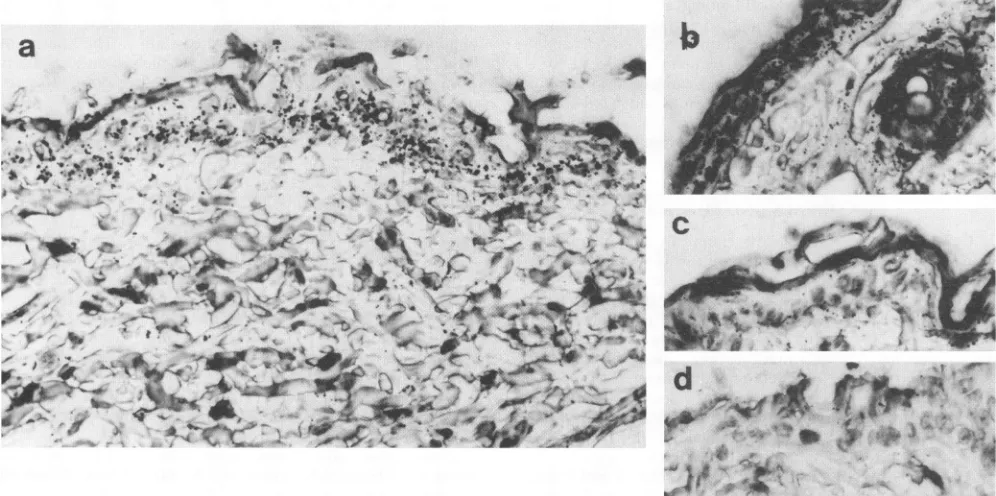
FIG. 1. In situ hybridization showing TPA-induced VL30 expression localized to epidermis and hairfollicles. Formalin-fixed sectionswere hybridizedwith a 315S-labeled antisense RNAprobe derived from the cDNA clone B10 (309-bp element and the 3' LTR of clone B10). The exposuretimewas10days, and all sectionswerecounterstained withhematoxylin. (a) VL30mRNAexpression4hafter TPAtreatment(100nmol). (b)VL30 mRNA expression4hafterTPAtreatmentinacrosssection ofahair follicle.(c) VL30mRNAexpression inacontrol section(4hafter acetone treatment). (d) The negative control, a section from a TPA-treated mouse hybridized to a 335S-labeled B1O sense RNA probe. Magnification, x462.
thesized on an Applied Biosystems oligonucleotide synthe-sizer. The double-stranded oligonucleotides used as gel shift probeswere labeled with anappropriate
[a-32P]deoxynucleo-side triphosphate by Klenow polymerase and purified by electrophoresis througha 12% polyacrylamide gel(29:1). The NF-KB oligonucleotide corresponded to the NF-KB-binding sequence found in the K light chain enhancer (66). The otCG-CRE oligonucleotide corresponded to the cyclic AMP (cAMP) response element (CRE), including flanking se-quences, found in the choriogonadotropin cx gene (17). The sense strands ofthe annealed oligonucleotides are asfollows (lowercase letters denote nucleotides present in double-stranded oligonucleotides after a fill-in reaction): VLTRE,
agctTCCCTAGTGATGTAAACTTGTACTTTCCCTGCCC
AGTtcga; VLX, agctTCCCTAGTGATGTAAACtcga; VLY,
agctTAAACTTGTACTTTCCCtcga; NF-KB, agctTGGGGA
CTTF'lCCCtcga;
oCG-CRE, agctCGAGAAATTGACGTCATGGTAAGtcga.
Nucleotide sequence accession numbers. The nucleotide sequences reported inthis article have been submitted to the GenBank/EMBL data bankunder accessionnumbers X75481 and X75482.
RESULTS
Induction of VL30 mRNA expression specifically in mouse
epidermis. By differential screening of a mouse epidermal cDNA library, we previously isolated several cDNA clones corresponding to members of the VL30 family that showed induced expression in mouse epidermis 4 h after a single topical application of the skin tumorpromoter TPA(8). The localization ofmRNA expression before and after treatment
with 10nmol of TPA was studiedby thein situ hybridization technique. As a source of a VL30-specific probe, we used a 929-bp-long probe that correspondedtothe 3'LTR and 309bp of internal sequences of aTPA-responsive VL30 clone desig-nated B10 (6). BlO cRNA probes labeled with 35S in either antisense or sense orientation were synthesized. Figure 1 shows that the site of induced VL30 expression was the keratinocytes in the epidermis, whereas in dermal fibroblasts nosignificantVL30expressionwasdetected.VL30 mRNA was inducedin bothbasallyandsuprabasally located differentiating keratinocytes (Fig. IA). Enhanced VL30 expression wasalso seen in keratinocytes within the hair follicles (Fig. IB). In untreated skin(Fig. 1C), VL30expressionwasvery low and did notexceed backgroundlevel. As TPA appliedtopically pene-trates the epidermis (2, 58), this result indicated that the mechanism behind TPA-induced VL30 transcription is cell type dependent.
The function of a TPA response element within a U3region expressedin the epidermis is cell type dependent. We previ-ously used the U3 region ofthe VL30clone BIG to identify sequences mediatingTPA-induced VL30transcription in the keratinocyte cell line BALB/MK(6).The capacity of theBIG U3regiontomediate TPA-inducedtranscriptionwasanalyzed
by transient transfections ofa fibroblastcell line (Swiss/3T3) and BALB/MK cells.Transfections were done with aplasmid (B1O.CAT) which contained the CAT reporter gene under control of the U3region andthe promoterof the VL30clone Bi1 (6). Figure2 shows the CATactivity obtained from this plasmidin untreated and TPA-treated BALB/MKandSwiss/
3T3 cells. Basal and TPA-induced CAT activities were de-tected in keratinocytes but not in fibroblasts, asjudged from the activities generated in parallel transfections with an
on November 9, 2019 by guest
http://jvi.asm.org/
[image:3.612.59.557.76.324.2]ENHANCER DESIGN AND EXPRESSION OF VL30 U3 SUBGROUPS 279
CONT. TPA CONT. TPA
Balb/MK
IF
Balb/MK || S1Sw iss/PLASMID-:~
FIG. 2. Cell type-specific transcriptional activation mediated bya VL30 U3 region isolated from TPA-treated epidermis. Shown are representative autoradiographsofthin-layerchromatography analysis
of CAT activity in untreated (CONT.) orTPA-treated keratinocytes (BALB/MK) and fibroblast (Swiss/3T3)cells. Preconfluent cellswere transientlytransfected withaplasmidinwhich the CATreportergene
wasunder thecontrol of the U3 regionfromaVL30retrotransposon
expressed in TPA-treated epidermis (BIO.CAT). Cells were
trans-fected inparallelwith theSV2.CATplasmid,in which CATexpression
is drivenbythesimian virus 40 promoterand enhancer. A
promoter-and enhancerless CAT plasmid was used as a negative control
(O.CAT).Transfection conditions andTPA treatmentaredescribedin
Materials and Methods. Aliquotsof cellextractswere taken for CAT assay,with theamount adjustedwith respect to the protein
concen-tration. CM,chloramphenicol; AcCM,acetylatedchloramphenicol.
9.
8
--
6-5.
z
0
0* 6
E-0
=4
3-2
-O
-nI
E pTlO9.Luc
*VLTRE.Luc
E1VLX.Luc
I
VLY.Luc-rI
I
Swiss/3T3
SV2.CAT plasmid. This plasmid contained the CAT gene under the control of the simian virus 40 promoter and en-hancer(43). As a negative control, we used the parental CAT reporter plasmid (O.CAT), which lacked promoter and en-hancer sequences. This result indicated that a VL30 U3 region, which was isolated by a method that selected for VL30 elements induced by TPA in keratinocytes in vivo, could mediate transcription in a keratinocyte cell line but not in a fibroblast cell linewhen analyzed invitro. A39-bpVL30 TPA response element (VLTRE), which is functional in keratino-cytes, waspreviously identified within the BIO U3 region (6). Todetermine whether this response element alone was suffi-cient to mediate a cell type-specific response, a plasmid containingtheherpes simplexvirusthymidinekinase promoter (TK) and a luciferase reporter gene under the control of the VLTRE was transiently transfected into keratinocytes and fibroblasts. This construct (VLTRE.Luc, schematically shown in Fig. 3) mediated TPA-induced transcription in keratino-cytes, whereas it was inactive as a TPA response element in fibroblasts (Fig. 3). This result indicated that the transcrip-tional activity of VLTRE was controlled by cell type-depen-dent trans activation inTPA-treated keratinocytes. The TPA-responsive phenotype, with regard to induced transcription mediated byVLTRE, is not restricted to the BALB/MKcell line. (As we have previously shown, VLTRE is functional in primary human keratinocytes
[6].)
Furthermore, no induced reporter gene activityin response to TPA was obtainedwhen BIO.CAT and VLTRE.Luc were analyzed in two additional fibroblastcell lines, BALB/3T3 and NIH 3T3(9).Balb/MK
-109 TK promoter
pTlO9.Luc ...
VLX.Luc TCCCTAGTGATGTAAAC...
VLY.Luc .AAACTTGTACTTTCCC.
[image:4.612.59.297.76.213.2]VLTRE.Luc TCCCTAGTGATGTAAACTTGTACTTTCCCTGCCCAGTTCI
FIG. 3. 39-bp VL30TPA response element mediated TPA-inducedtranscription in keratinocytesbut notinfibroblasts. Shown are thefold inductionsof luciferaseactivity byTPA(100
jig/ml)
intransientlytransfectedkeratinocytes (BALB/MK)andfibroblasts(Swiss/3T3).Thecellsweretransfected inparallelwithathymidinekinase(TK) promoter-drivenluciferaseplasmid(pTIO9.Luc)and threederivativesof thisplasmidwhich contained theVL30TPAresponse element(VLTRE.Luc)or oneof thetwoprotein-bindingsequences within VLTRE(VLX.LucandVLY.Luc), respectively.Transfection conditions and TPAtreatmentaredescribed in Materials and Methods. Proteinaliquotsweretakenforluciferaseassays, with theamountsadjustedwith respecttothe relative transfection efficiencies,asdeterminedbyCATactivityofcotransfectedpRSVCATvector.
The bars representthemeanvalues of the relative foldinduction obtained in threeindependentexperiments.Thestandard deviation of themean
(Tbars) is also indicated.SequencescorrespondingtoVLTRE, VLX,andVLYbindingsitesareshown. VOL. 68, 1994
on November 9, 2019 by guest
http://jvi.asm.org/
[image:4.612.155.465.395.650.2]Previous results have indicated that two nuclear protein-binding sequences within VLTRE collaborate in mediating TPA-induced transcription in keratinocytes (6). To determine whether either of these two sequences alone was able to mediate TPA-induced transcription, two additional plasmid constructs, designated VLX.Luc and VLY.Luc (Fig. 3), were made. These plasmids were found to be nonresponsive to TPA treatmentin bothSwiss/3T3and BALB/MKcells(Fig. 3). This result supported the conclusion that the presence of both the VLX- and the VLY-binding sites on the same template was essentialfor TPA-inducedVL30 transcription in keratinocytes. The VLY sequence is a target for TPA-induced c-Rel/NF-KB-binding activity in BALB/MK cells but not in
Swiss/3T3
cells. Given the functional importance of VLTRE, we em-ployed gel shift analysis in order to identify the proteins binding to this sequence. The VLY-binding site contained a sequence,GTACTT'TCCC, which was identical to a previously identified DNA element involved in TPA-induced transcrip-tion of the human urokinase gene (26). Hansen et al. desig-nated this DNA sequence the Rel related binding element (RRBE) since it was found to bind bothNF-KB(p50/p65)
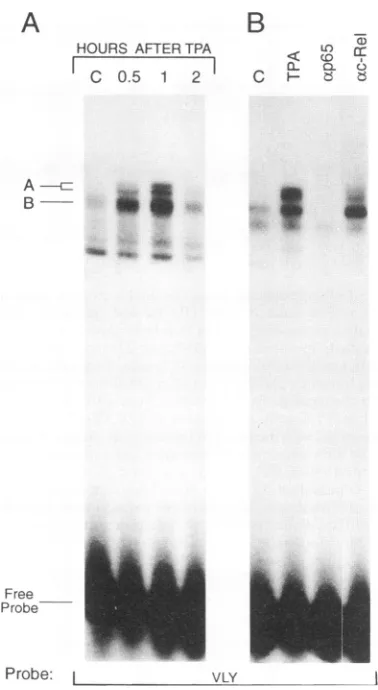
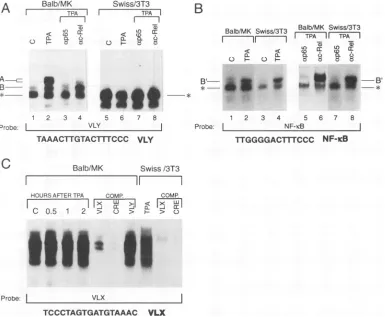
and anovelcomplex between the p65 subunit of NF-KB and c-Rel (26). Figure 4A shows that an oligonucleotide corresponding to the VLY sequence was the target for a transient TPA-induced binding activity in BALB/MK cells, which reached a maximum 1 h after the treatment. Two closely migrating complexes, designated A, and a faster-migrating complex, designated B, were detected with the VLY probe. Figure 4B shows thatformation of both A and B complexes was inhibited by antibodies specific for the p65 subunit of NF-KB, while complexformation of A but not B was inhibited by antibodies specificforc-Rel.Interestingly, with nuclear extracts prepared fromuntreatedandTPA-treated Swiss/3T3 cells, no complexes comigrating with A and B were detected (Fig. 5A). When nuclear extractswereprepared from BALB/MK and Swiss/3T3 cells inthe presence different protease inhibitors (see Materi-als and Methods), a fast-migrating complex was formed. This complexformation (indicated with an asterisk in Fig.SA)
was not affectedby theTPA treatment; nor was it supershifted or abolished when antibodies specific for p65 and c-Rel were included in the binding reaction. We next compared the complexformation observed with the VLY sequence with that generated by the classical NF-KB-binding site present in the enhancer ofthe Klight chain gene (66). Figure 5Bshows that this type ofNF-KB-binding site formed a TPA-induced com-plex in both BALB/MK and Swiss/3T3 nuclear extracts. This complex, designated B', comigrated with complex B and was recognized by antibodies specific for p65, while no supershift orabolished complex formation was obtained in the presence of the c-Rel-specific antibodies (Fig. 5B). These results sug-gested that the VLY sequence was a target for TPA-induced binding activity of a c-Rel/p65 heterodimer (complex A) as well as ap65-containing complex (B) in keratinocytes but not in fibroblasts. We did not detect any c-Rel/p65 heterodimer-containing complexwhen the KB sequence was used as probe. However, the NF-KB-binding site formed a p65-containing complex (B') which lacked the c-Rel component in both TPA-stimulated keratinocytes and fibroblasts. This result was intriguing since it implied that the B or the B' complex contained aprotein which together with p65 could distinguish between VLY and the NF-KB-binding site present in the enhancer of the K light chain gene. The use of antibodies specificfor the p50 subunit may resolve whether B and/or B' contained a factor differentfrom ap65/pSO
heterodimer.The VLX sequence corresponds to a nonconsensus CRE-binding sequence (CREB).The other sequence motif present
A
HOURS AFTER TPA
C 0.5 1 2
B
D:i :
WV.-0i
I:A -c
B ~
Free Probe
Probe: VLY
FIG. 4. TPA-induced complex formation in nuclear keratinocyte extracts between VLY and a c-Rel/p65 heterodimer and a factor containing p65 but not c-Rel. (A) Gel shift analysis using nuclear extracts (8
jig
per incubation) prepared from BALB/MK cells. Protein-DNA complexes (indicated as A and B) were resolved by 5% nondenaturating polyacrylamide gel electrophoresis and autoradiog-raphy of the fixed and dried gels. Cells were treated for the time indicated with TPA prior to the preparation of nuclear extracts. C, control extracts from untreated cells. Equal amounts of protein from the different extracts were incubated with a32P-labeled
probe corre-sponding to the VLY sequence (see Materials and Methods or Fig. 5 for the sequence). (B) The extracts were preincubated for 30min
at4°C
with antibodies recognizing the p65(NF-KB) subunit(tp65)
and c-Rel(oc-Rel), respectively.within VLTRE is the VLX-binding sequence (shown in Fig. 5). We previously showed that this sequence formed a large number of complexes containing proteins related to members of the CREB and Jun families of transcription factors (7). Figure 5C shows gel shift analysis using an oligonucleotide corresponding to the VLX-binding site as the probe. The individual nature of these complexes has been studied in gel shift analysis using CREB- c-Jun-, JunB-, and JunD-specific antibodies and bacterially expressed CREB (7). Use of an excess of unlabeled oligonucleotides corresponding to VLX-and VLY-binding sites VLX-and a consensus CRE present in the choriogonadotropin
ox
gene(oCG-CRE)
(17) as competitors confirmed that the proteins binding to VLX were related to CREB proteins (Fig.SC).
Most of the proteins binding to VLX in BALB/MK and Swiss/3T3 cells were also found to be immunochemically related to CREB and c-Jun (data noton November 9, 2019 by guest
http://jvi.asm.org/
[image:5.612.342.531.71.416.2]ENHANCER DESIGN AND EXPRESSION OF VL30 U3 SUBGROUPS 281
A Balb/MK Swiss/3T3
TPA TPAI
m~~~~~
m
B
!Y"1
531
*
1 2 3 4 5 6 7 8
Probe: VLY
TAAACTTGTACITTCCC VLY
B
Balb/MK Swiss/3T3 Balb/MK Swiss/3T3 I 11
IiI
I I TPA TPA I0 0 f 10 g
B'-Probe:
L
-B'
U
2 3 4 5 6 7
NF-icB
TTGGGGAC1TTCCC NF-KB
C
Balb/MK Swiss /3T3I
11
IHOURSAFTER TPA COMP. COMP.
a
C05
a:C 0.5 1 2 > o >~- > o
Probe: L VLX
TCCCTAGTGATGTAAAC VLX
FIG. 5. Thecomplex formation with the VLY sequence was cell type specific and differed from that of theNF-KB-bindingsite in theK light chainenhancer.Equalamountsofprotein from BALB/MKandSwiss/3T3nuclear extracts(8p.gperincubation)wereincubatedwith32P-labeled oligonucleotides correspondingtothe VLY sequence(A), theNF-KB-binding site in the K light chain enhancer(B),orthe VLX sequence(C). Protein-DNA complexes (labeled in left and right margins) were resolved by 5% nondenaturating polyacrylamide gel electrophoresis and autoradiography of thefixed and driedgels. The complexes indicated by asterisks were detected when a number of protease inhibitors were includedin nuclear extractpreparationandbindinganalysis(seeMaterials and Methods). Extracts were prepared from untreatedcells(C)or1 haftertreatmentwithTPA, and theimmunologicalanalysis was performed as described in the legend to Fig. 4. ap65,antibodytop(65)NF-KB subunit; ac-Rel, antibody to c-Rel. (C) Competition experiments (Comp.) used a 100-fold molar excess of unlabeled oligonucleotides correspondingtoVLX, VLY, anda consensusCRE, respectively (see Materialsand Methodsfor the correspondingsequences).
shown).NoincreasedVLXcomplexformationwasobserved in nuclear extracts prepared from TPA-treated BALB/MK and
Swiss/3T3 cells(Fig.5C and datanot shown).
Nucleotide sequence analysis of three TPA-induced VL30 clones. Aninteresting questionwaswhetherTPAinducedthe expression ofa single,as opposed to multiple, distinct VL30 elements inmouse epidermis. To answer this, wesequenced the 3' LTRs of three cDNA clones: B10, PA2, and PB10. These VL30 cloneswere individually isolated by differential
screening, andwehavepreviously published the U3 sequence of clone B10(6). Figure6shows thataligned3'LTRsequences of these clones displayed a low rate of divergence, although
differences included nucleotide substitutions, deletions, and
shortinsertions
(ranging
between 5 and 23bp).
These typesof sequence differences were typical of the heterogeneityfound betweendistinct VL30 elements andwere notindicative of the sequence variation normally associated with alternativepro-cessing pathwaysofasingleRNA precursorspecies. Thus,this result led us toconclude that at least three VL30 sequences that were TPA inducible in epidermiswere encoded by
dis-tinct, independent retrotransposon elements in the genome. The VLTRE sequence (boxed in Fig. 6) was found to be conserved within the isolatedVL30 U3regions.
Division ofVL30 genes into four U3 subgroups. To relate the VL30 sequences induced by TPAinmouse epidermis to other members of the VL30family,wecalculated the percent sequence similarity in the U3 and R regions between the isolated LTRs and all VL30 LTR sequences previously
pub-lished. Shown in Fig. 7 is a dendrogrambased on similarity
scores between every possible pair of published VL30 U3 sequences. The computer program and parameters used for this calculationaregiveninthelegendtoFig.7.TheRregions
of all memberswerefoundtobehighly homologous, showing
87to99% sequencesimilarity (datanotshown). With respect totheinternal VL30 sequences of B10(230bp),PA2(410 bp),
and PB1O (130 bp) characterized so far, all hada very high
percentsimilarity (96to98%)totherecentlysequencedVL30 clones NVL3 (1) and BVL1 (28) (data not
shown).
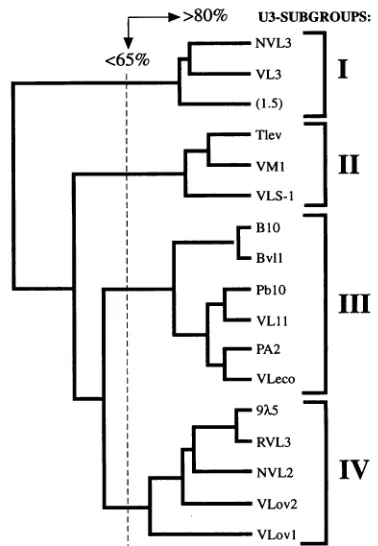
One interesting observation was that four distinct VL30 U3 sub-groupscould bedistinguished (Fig. 7). The percent sequencesimilarity within a particular U3 subgroup was in
general
>80% of their nucleic acid sequences, whereas between groups sequencesimilaritywasingeneral <65%. Three differ-ent VL30 elements, NVL3, VL3, and 1.5, constituted U3 subgroup I (U31). VL3 was isolated from agenomic library,
while NVL3 was isolated from type C retroviralparticles
VOL.68,1994
I
on November 9, 2019 by guest
http://jvi.asm.org/
[image:6.612.119.504.76.393.2]PA2 CCTTATTCTGTTTTTTGTTCCCATGTTAAAGATAGAGTAAATGCAGTATT
PB10 CCTTATTCTGTTTC.TGTTCCCATGTTAAAGATAGAGTAAATGCAGTATT
B10 CCTTATTCTGTTTT.TGTTCCCATGTTAAAGATAGAGTAAATGCAGTATT PA2 CTCCACATAGAGATATAGACTTCTGAAATTCTAAGATTAGAATTACTTAC
PB10 CTCCACATAGAGATATAGACTTCTGAAATTCTAAGATTAGAATTACTTAC
B10 CTCCACATAGAGATATAGACTTCTGAAATTCTAAGATTAGAATTACTTAC PA2
PB10 B10
PA2
PB1O B10
AGAAGAAGTGGGG AATGAAGAATAGAAAA.TTACTGGCC.TCTTGTGAG AAGAAGAAGTGGGG AATGAAGAATAGAAAA.TTACTGGCC.TCTTGTGAA AAGAAGAAGTGGGG AGAAGAATAGAAAAATTACTGGTCCTCTTGTGAA
PBS U3
AACATGAATTTTTTACCTCGGAGCCCACCCCCTCCCATCTAGAGATTGTT
AACATGAATTTTTTACCTCGGAGCCCACCCCCTCCCATCTAGAGATTGT.
AACATGAACTTTTTACCTCGGAGCCCACCCCCTCCCATCTAGAGGTTGTT
PA2 CCCAGAACACTCCTAAACTTTTCACCCCAAAACTCCTCACCCTAAAGTTC
PB10 ...AACACTCCTAAACTTTTCACCCCAAAACTCCTCACCCTAAAGTTC
B10 CTCGGAACACTCCTAAACTTTTCACCCCAAAACTCCTCACCCTAAAGTTC
PA2 GAACCCTCCCAACTAAAAACTGTTCCAAGAACATTTTTGAGATAAAGGCC
PB10 GAACCCTCCCAACTAAAAACTGTTCCAAGAACATTTTTGAGATAAAGGCC B10 GA.. CCAAGAACATTTTTGAGATAAAGGCC PA2 TCCTGAAACAACCTCAAAATGAACCAGGT...
PB1O TCCTGGAACAACCTCAAAATGAACCAGGT...
B10 TCCTGAAACAACCTCAAAATGAACCGGGTACATTGCCAAATGATAGGACA
PA2 ..ACTCCTTAGTTACGTAGATTCCTTGATAGGACATGACTCCTTAGTTAC
PB10 ..ACTCCTTAGTCACGTAGGTTCCTTGATAGGACATGACTCCTTAGTTAC
B10 TGACTCCTTAGTTACGTAGGTTCCTTGATAGGACATGACTCCTTAGTTAC
PA2 GTAGATTCCTTGATAGGACATGACTCCTTAGTTACGTAGATTCCTTTGGC
PB1O GTAGATTCCT .TTGGC
B10 GTAGATTCT..TGGC
PA2
PB1O
B10
PA2 PB1O B10
PA2
PB10 Bl0
AGAAC$TCCCTAGTGATGTAAACTTGTACTTTCCCTGCCCAGITCTCCCCC AGAAC1TCCCTAGTGATGTAAACTTGTACTTTCCCTGCCCAG1TCTCCCCC AGAACITCCCTAGTGATGTAAACTTGTACTTTCCCTGCCCAG1ITCTCCCCC
VLTRE
TTTGAGTTTTA TATATAkGCCTGTGAAAAATTCTGGCTGACCGTCGAGA TTTGAGTTTTA TATATAkGCCTGTAAAAAATTTTTGGTGACCGTCGAGA TTTGAGTTTTA TATATAkGCCTGTGAAAAATTTTGGCTGGTCGTCGAGA
ATA-BOX U3< I rR
CTCCTCTACCCTGTGCTAAGGTGTATGAGTTTCGACCCCAGAGCTCTG... CTCCTCTACCCTGTGCAAAGGTGTATGAATTTCGACCCCAGAGCTCTGGTC CTCCTCTACCCTGTGCAAAGGTGTATGAGTTTCGACCCCAGAGCTCTG...
PA2 ...TGTGCTTCCATGTTGCTGCTTTA ..TTTCGACCCCAGAGCTCTGGTCT
PB10 CTCTGTGCTTTCATGTTGGTGGTTTATTTTTCGACCCCAGAGCTCTGGTCT
B10 ...TGTGCTTTC.TGTTGCTGCTTTA ..TTTCGACCCCAGAGCTCTGGTCT
PA2 GTGTGCTTTCATGTTGCTGCCTATT TCTTGCCTTCTACATTTTaaaa
PB1O GTGTGCTTTCATGTCGCTGC TTATTAA TCTTGCCTTCTACATTTTaaaa B10 GTGTGCTTTCATGTTGCTGCC TATTATCTTGCCTTCTACATTTTaaaa
[image:7.612.338.527.74.347.2]Poly-A Signal U3-J
FIG. 6. Nucleotide sequences of isolatedVL30LTRsof B10,PA2, andPB10. Nucleotide sequences ofVL30 LTRs(3') withpartial 5' VL30 element flanks corresponding to three VL30 cDNA clones isolatedbya differential screening strategywhich selectedforgenes inducedbyTPAin mouseepidermis. The VL30 element-U3 and U3-R borders are indicated. The plus primer binding site(PBS),TATAbox, polyadenylation signal (poly-A signal), and theVL30TPAresponsive element(VLTRE)areboxed. The internal35-bpdirect repeatregion is underlined with arrows.
produced in NIH 3T3fibroblasts(10).The 1.5 element corre-sponded to a partial VL30 U3 sequence identified by differ-entialscreening ofa cDNAlibrary,among genesinduced inT
lymphocytes in response to glucocorticoid treatment and in-creased cAMP levels (27). The U3 regions present in three distinct genomic VL30 clones, Tlevl (51),
VM-1
(33), and VLS-1 (60), constituted U3 subgroup II (U311). The TPA-inducible VL30 elements which were characterized in epider-mis together with some previously characterized VL30 ele-ments designated BVL-1, VL11, and Vleco constituted the third U3 subgroup (U3111). BVL-1, VL11, and VLeco were isolated from genomic libraries (28, 29, 34). Vleco was a solo LTRthat wasfound to be integrated within a murine leukemia provirus (29). Five different VL30 U3 regions constituted U3subgroup IV (U3IV). These were the U3 regions present in
I
>80%
U3-SUBGROUPS:
NVL3
<65%or
l
I~~VL
:
~~~~~(1.5)
| I
~~~Tlev
i
~~~~VLS-
1VI
IIII
\ L{ ~~PA2
' 7{ ~RVL3
1ltNV~NL2
IV
VLov2
| ~~~VLovl
FIG. 7. Subdivisionof 17sequencedVL30 U3regionsintofour U3 subgroups. The dendrogram is based on similarity scores between every possible pairing of 17 different VL30 U3 sequences. VL30 elements for which U3 sequences were compared are described in Results. The sequencecomparisonand theclusteringstrategy repre-sented by the dendrogram were done according to the PILEUP computer programof the sequenceanalysissoftwarepackagefrom the Genetics Computer Group, Inc. (GCG package) (23).The gap cre-ation penalty and gap extension penalty used were 5.0 and 0.3, respectively. The PILEUP programuses the unweighted pair-group methodusingarithmetic averages (69) for clusteringstrategyand the methodofNeedleman and Wunsch(46) tocalculatepairwise
align-ment. U3regionssharing >80% oftheir nucleic acid sequenceswere consideredtoconstituteasubgroup(I, II, III,andIV). Between U3 subgroups, sequence similaritywas usually <65%. Bracketsindicate that the calculationsperformedwith the sequence of the 1.5VL30U3 regionweredonebyusingapartialsequencewhichrepresented 57% in length of the corresponding U3 regions contained in the other members of U31. The sequence analysis was performed with U3 sequences derived from 3'LTRs,exceptforVL11, RVL3,and the solo LTRs(VLecoandVLS1).
9X5, whichwas isolated by differential screeningof acDNA
library preparedfrom simian virus 40-transformedfibroblasts (68);RVL3, whichwasrecentlyusedtodefine sequencemotifs
mediating induced transcription in the Rat-1 cell line to treatment with thapsigargin in combination with epidermal
growth factororTPA(39); NVL1,whichwasidentified in type Cretrovirus particles produced in NIH 3T3 fibroblasts
(10);
and VLovl and VLov2, which were cloned from a cDNA library made from luteinizing hormone-stimulated ovaries(65). The VLovl U3 region was placed in U3IV, since it showed thehighest sequence homology with members within this group,althoughits sequence homologytothese members waslower than 80%.
From this sequence comparison, it was evident that those VL30 members that were known to be expressed could be found in three different U3 subgroups (I, III, andIV). Thus,
on November 9, 2019 by guest
http://jvi.asm.org/
[image:7.612.62.297.75.466.2]VOL.68, 1994 ENHANCER DESIGN AND EXPRESSION OF VL30 U3 SUBGROUPS 283
VL3 TGAA... ATTAC'GGC7CTCTTAGAGACATGCAACT7rl'TTACCTC....GGAGCCC.ACCCCCACCCATCTGG... NVL3 TGAAGA.IGAAGAATAAAAA7TACTGGCCTCTTGTGAGAACAT¶3AACTTT.CACCTC...GGAGCCC.ACCCCCTCCCATCTGG...L.U31
VLSi TGAAGAATAAAGA.TAAAAAATTACTIGAACTCTT ...CCTCACCCCAGAGCCCGACCCC.TCCCATCTAGAGGTTGTTCCCAGA.ACACTCCTGAACTCTrCACCCCAG
VM1 TGAAGAATAAAGA.TAAAAAATTACTGAACTCTrT...CCTCACCCCAGAGCCCGACCCC.TCACTGGTT U31ACCTCGAC1TACCA
TLEV TGAAGAATAAA....AAAATrAC-A.CT(Ir ArCrCAarCCGACCCC.CA7TGATTCCGAATCGATTThcQU 1
VLII TGAAGAATAG...AAAATrACTGGCCTC?rGTGA.AAACATGA.AT1TrTrAC"CTC...GCAGCCC.ACCCCCTICCCGTCTAGAGATTGT....AACAC7`CCTAAACTTNTCACCCCAA
PA2 TGAAGAATAG...AAAA7TACTGGCCTCTTGTGAGAACATGA.ATrrTTrACCTC....GGAGCCC.ACCCCCTCCCATCTAGAGATrGTTCCCAGAACACTICCTAAAC7TNTCACCCCAA
VLECO TGAAGAATAG...AAAATrACTGGCCTCTTGTGAGAACATGAATrITrTACCTC....GGAGCCC.ACCCCCTrCCCATCTAGAGATTGTTCCCAGAACACTCCTAAACTTrTCACCCCAA PIT PBlO TGAAGAATAG...AAAATrACTGGCCTCTTGTGA.AAACATGAATrTTTrACCTC...GGAGCCC .ACCCCCT1CCCATCTAGAGATTGT....ACCCTAATTCQ" U Il
BVLI TGAAGAATAG...AAAATTACTGGCCTCTTGTGAGAACATIGAATITTrTACCTC...GGAGCCC.ACCCCC7C¶CCATCTAGAGGT1'TrCTCGGAACACTCCTAAAQXlaCACC.
B10 TGAAGAATAG....AAAAATrACTIGGCCTCTTGTGAAAACATIGAACTTT-rTACCTC....GGAGCCC.ACC CC lrCArA~TCAA.,,rcA
NVL2 TGAAGAAT.GG....AAAAATTACTGGCCTCTTGTG.AGAACATGAACTTr.CACCTC....GAGCCC.ACCCCCT`CCCATCTAGA... VLOV2 TGAAGAAT.GG....AAAAATrACTGGCCTCTIGTGAGAACATIGAACTPTTTACCTC...GGAGCCC .ACCCCCT'CCCATCTAGA... 9?.5 TGAAGAAT.G.A..AAAATACTGGCCTCTTITAGAACATGAACTTr .CACCTC....GGAGCCC.ACCCCCT`CCCATCTAGA...U31V RVL3 TGAAGAAT.G...AAAAArACTG.GCCTCTTGTSAGAACATG.AACTTrT.CACCTC...GGAGCCC.ACCCCCTCCCATCTAGA... VLOVI TGAAGAAG.GG....AAAA...TGAGA
TTGCCAAATGATAAGACATGACTCCTrAGTrACGTCTTATCATr¶TGGCAATCG
VL3.AAA...AJ.M.CATACTTG-AGA.AAAA.AMCAT I--ILrCGGAACCCACAG.AAT.G7=TAACAGG... .CCAGA7rTG U3
NVL3...CAAA.CATAC GMAGAAA.AA.CA77TCTGGA.ACA.ACCACAGAAT.GTrTCA.ACAGC.... Q= 3
VLS1AGATCGiTCCCCAATCACCCCATAGCTTCAGAA71AAAGGCTCGACACCGAT ...AACCGGGTAC....
V/MiATACC"TCTACTGGTGACTCACAAATGTCAACT'GGTA.GCAGACACCGA. ...AACCGGGTAC....U3
TLEV ATTgAcCTCACCCTAGAGTTCGAACCCTCCCAACTAAAGACTGTTCCAAGAACATPr7IIAGATAAG.GGCCWrCTGGAACAACCTCAGAAT.G...AACCGGATAC....
V/LII...AAC7CCTCACCCTAAAGTTCGAACCCTCCCAACTAAAACTGTrICAAGAACAT lI'r.TA.AA.GGCCTCCTAGA.ACAACCTCAAAAT.G....AACCATGT...
PA2 ...AACTCCTJCACCC-TA.AGTrCMGAACCCTCCCAACTA.A-LA ACIGTCCAAGA.ACA'TrTrTAGATA.AA.GGCCTCCTGAAACAACCTCAA.AAT. G....AACCAGGT...
V/LECO...AAC7CCTCACCCTAAGIrTAACCCTCCCAACTAAAA.ACTGTI1CAA.AAACAT'rT'rTGAGATAAA.GGCC¶IXWTGGAACA.ACCTCA.AAAT.G....AACCAGGT...U3111
PBiO... AQCrACCCTAAAGTTGAACCCTCCCAACTAAAAACI1GTTCCAAGAACATTTrTrGGATAAA.G4GCCTCC¶IIGAACAACCTCAAAAT.G....AACCAGGT... BVLi... TCCTICACCCTAAAGTTCGA...CCAAGAACATrT=GAGATAAA.GGCCTCCTGAAACAACCTCAAAAT.G....AACCGGGTAC.... BlO ... TCACCTrArr P~A---C- AAOAArAT'1IAOAA CCCTCCTGAAACAACCTCAAAAT.G....AACCGGOTAC....
NVL2...AAACATI'T'TGAGATAAA.GGCCTCCTGGAACAACCTCAAAAT...AC.... VLOV2...AAACATrTrTGAGATAAA.GGCCTOCCTGAAACAACCTCAAA.T.G....AACCGGGTAC....
9)5...AAACATTTTrTGAGATAAA.GGCCTCCTGGA.ACAACCTCAAAAT.G...AC...U31V
Rv3...AAACATrTrTOAGAT&A.A. GCZCTCCTGGAACAACCTCAAKAT..G...AC.... 1/LOVi...CATST.GAGATAAA.GGCCTCCTAGAACAACCTCAAAAT.G....AAC....AC....
VL3 ATrGCCAAACAC.AGGATATOACTICTrOGCTTGAGTAAACT ...U3...
NVL3
C.AGATATGACTCTTrGGTrIGAGTA.AATITr...U3
VLSi ATrGTCAAATAATAGG.CATOACTCCTTAGTrATGTAGAATr ...CCC .T1GGCATGACCCM1/M ATrGCCAAATAATAGGACATG-ACCCCTrAGTrACGTAGAATT...CCC.TTGGCAGAAccc U31I
TLEV ATTGCCAAATAATAGGACATOACCCCTTAGTTACGTAGAAT...CCC.TTGGCAGAACCC
VLII...ACTCCTTAGTTACGTAGGTrCTTGATAGGACATGACT.CTTAGTrACGTAGATICCTT...
PA2...ACTOCCTAGTTACGTAGATTCCTrGATAGGACATGACTCCTrAGTTACGTAGAT'CCTGATAGGACATGACTOCTTAGTTACGTAGG7TCCIT... V/LECO...ACTCCTTAGrTACGTAGGrTCCTGATAGGACATGACTCCTTAGTTACGTAGAAflCC?T...GCAGAACCC
PB10...ACTOCcrAOTTACGTAGGTTCC7TGATAGGACATGACTCCTTAGTTACGTAGATTCTT...U311
BVLi ATrGCCAAATGATAGGACATO.ACTTCTTAGTTACGTAGATrCCITGATAGGACATGACTCCTrAGTTACGTAGATMCCT...
510 ATrGCCAAATGATAGGACATGACTOCCTrAGTrACGTAGGTrCCITrGATAGGACATGACTCCITAGfTACGTAGA¶1-ICCiT...
NVL2 ArCATAAGCTATCTGTCTGTC7GTGAAGCCIATAGAGICTGTGAAGCCTATAGAATCTGCGAC
VLOV2ATGCATAAGCTATCTGrCTGTrCTAAhCTATCTGrCTG T...CTGACAGAACCC
9)L5 ATGCATA)AAAGCCTATAGAGrCTAAGCTATCTGrCTGTMTIAAGCTATCTGTCTGAC7MCGAC U3IV
RVL3 =Q TGTAAAGCCTArCGAGTCTAAGATACCTATAGAGTCTAAGCTATCTGrCTGACTIGCGAC
VL.GTGCAAGTAGCTATGCTGTTACGTAGGTT.CCITGTAGGACATGCTCCCrAGTTACGCTOCAGGT~TOCAGTAGGCAGC~-TCCATAGTTACGTAGAAAATCC.GAGCAGACCCU3
NVL3 ...GTGG~TTGTAAACTT....CCCCTATrCCCTCCCCATrCCCCTOCCCAGT TTGT¶-GITT7TCTITAAAAGCIT~GTGAAAA T.GAGTC TC
VLSi CTrGTCCCTTGGCAGAACCCCTTAGTrA.TG.CAAACTrGTAC..TCCCT.TOCCCCGCTC..TCCCCCC....TrGAG. TI"ITCTATATALAGCC.GTGAAAAATTT.GGCTCAA.G
M1/M CTI'GTCCCTTGGCAGAACCCCTrAGTrA.TG.CAAACTrGTACTrTCCCT..GCCCCGCTC.. TCCCCCC....TTGAG.TCNTTCCTATATACGCCTGTGAAAAATrTGGCTCGA.GU311 TLEV CTrGTCCCTTGGCAGAACCCCTTAGTrA.TG.TAAACTrGTACTrTCCT..ACCCCGCTC..TCCCCCCC...TTA ...ATrCCTATATAAGCCTGTGAAAAATrT.GGCTGGTCG
VLII...TGGCAGAACTCCCTAGTGA.TOG.TAAACTI'GACTrTCCT..GCCCAGTTC.. TCCCCC...IMA..TTTTACTATATAAGCCTGTAAAAAATO-rrTOTCGACCG
PA2 ...TOCAGAACTCCTAGTGA. TO.TAAACTrGACTrTCCT..GCCCAGTTO..TCCCCC...'MA...TTIACTATATAAGCCTGTGAAAAAI-rCGGCTGACCG V/LECOCTrGTCCCTTG.GCAGAACTCCCTAGTGA.TOG.TAAACTrGTACTSTCCCT..GCCCAGTTC..TCCCCC...TGG...T7TTACTATATAAGCCTGTGAA.AAATrCTGGCTGACCG U311
PB10...TGGCAGAACTCCCTAGTGA.TOG.TAAACITGTACTrTCCT..GCCCAGTTC..TCCCCC...1TA...TP1ACTATATAAGCCTGTAAAAA.AT7rIFIGGTGACCG
BVL1...TGGCAGAACTCCCTAGTGA.TOG.TAAACTrGTACIrTCCT..GCCCAGTTCX..TCCCCC...rTA..¶I-I-TACTATATAAGCCTGTGAAAAATII-GGCTGOTOCG
B10 ...TGGCAGAACTCCCTAGTGA.TOG.TAAACITGTACTrTCCT..GCCCAGTrCM..TOCCCC...7A...ITTACTATATAAGCCTGTOAAAAATCIGGCTGGTOG
NVL2 CTTGTCCCTTOGCAGAACTCCCTAGTOA.TO.TAAACTrOTACTrTCCCT. .GCCCAGTTO.. TCCCCCC...rGG....TTrACTATATAAGCCTGTGAAAAATPTrGGCTGGTCG
1/LOV2 CTrGTCCTrTOGCAGAACTCCCTAGTGA.TOG.TAAACTI'GTACTrTOCCT..GCCCAGTTC.. TCCCCC...TrTGG..TrACTATATAAGCCTGTGAAAAAITCTGGCTGACGT
9?x5 ITGOTCCCTTGGCAGAACTCC.TAGTOA.TO. TAAACTrGTACTrTCCCT..GCCCAGT`C.TCCCCCC ...TGG....T0rACTATATAAGCCTGTGAAAAATTrTTGCTGGTCG U3IV
[image:8.612.83.523.70.582.2]RVL3 CTrOTCCCTTGGCAGAACTCCCTAGTGA.TOG.TAAACT rGACTTOCCCT..GCCCAGTTC..TCCCCCC...TGA...TTrrACTATATAAGCCTGTGAAAAATrTGGCTGGTCG 1/LOVi CTTGTCCCTrGGCAGAACTCCCTAGTGA.TOG.TAAACTrGTACTrTCCCT..GCCCAGTTC..TCCCCC...TGA...TTTTrACTATATAAGCCTGTGAAAAATrCTGGCTOACGT
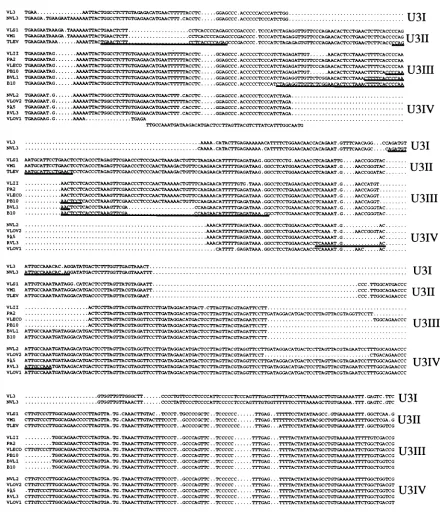
FIG. 8. Sequence alignmentofVL30 U3regions comprisingfour distinct U3subgroups designatedU31, U311, U311, and U31V.Underlined sequencescorrespondtoU3-specific oligonucleotide probesused for the Northern blotanalysis shown inFig.9.
expressed
VL3Omembers that have been isolatedfrom differ- U3regions
within each U3subgroup
displayed
blocks of entsourcesshowahigh
percentsequencevariation in their U3 conserved sequences, whereas between groups, numerousregions.
We showed in thisstudy
that threeexpressed
VL3O point mutations, sequenceduplications,
deletions, and/or in-elements(BlO,
PA2,andPB10)
isolatedfrom thesamesource, sertions could be observed. Totestthepossibility
thatdifferenti.e.,TPA-treated
epidermis,
hadhigh
percentagesofsequence U3subgroups
wereexpressed
in atissue-specific
manner, wesimilarity
in their U3regions.
This result indicated that theemployed
subgroup-specific oligonucleotides
asprobes
inspecific
sequencecomposition
of a U3region
correlates to Northern blothybridization experiments
withpoly(A)'
RNAexpression
ina cell type- and/orstimulus-specific
manner. isolated fromeight
different types of tissue of adult mice.Tissue-specific expression
of U3 subgroups. A sequenceInitially,
this tissue blot washybridized
to ageneral
VL3O,alignme~-nt o%f ther diffe-rent U3T subgaroups is shown in Fig 8. The- probecorresponnding to 600bpofthe-3A' e-nd ofthe- BIOclone
on November 9, 2019 by guest
http://jvi.asm.org/
A
PROBE:
LTR
0
c ; ;Y
to
E.
o;';i
aa
0toZ B!4
I
III _
Iv
GAPDH
-B EPIDERMIS
CT CT C TC T C T
PROBE: I II V
U3-SUBGROUPS <e
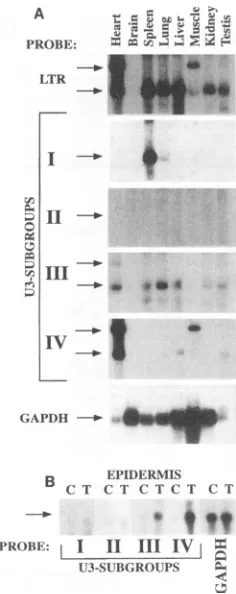
FIG. 9. Tissue-specific expressionof distinct U3subgroups. Auto-radiographsofNorthernblotsanalysis usingRNAwerepreparedfrom
differentmouse tissues(theRNAsources aregiven inMaterials and
Methods). Hybridizationswereperformedwitholigonucleotide probes (for sequences, see Fig. 8) specific for each of the defined U3
subgroups or a U3-nonspecific probe (LTR) corresponding to the
full-length3' LTRand309-bpinternalsequencesof theVL30clone B10. The upper and lower arrows indicate VL30 transcripts corre-spondingto10 and5.6kb,respectively.Forcomparison, hybridization
toa glyceraldehyde-3-phosphate dehydrogenase (GAPDH) probeis
included.(A)VL30-specificsignalsonNorthernblotsgeneratedafter repeated hybridizationsandrehybridizationsofasingletissue blotwith
group-specific probes. (B) Northern blotanalysis performed (as for
panel A) with U3-specific probes and RNA preparations from
un-treatedmouse epidermis (C)and 4 hafterasingle topicaltreatment with 10 nmolof TPA(T).
containing the full-length 3' LTR and a 309-bp internal sequence. Figure 9A shows that this probe recognized VL30 transcriptsfrom alltissues testedexceptthebrain. In addition tothe 5.6-kbtranscript,weobserved ahighly expressed RNA transcriptofapproximately 10 kb inheart andskeletalmuscle. This hybridization pattern is in agreement with that obtained by Harrigan et al. (27).The tissueblotwas thenrehybridized
with probes specific for each U3 subgroup. A U31-specific probe hybridized predominantly to a 5.6-kb VL30 RNA in spleen. A relatively weak signal corresponding to this U3 subgroupwas also obtained using lung poly(A)+ RNA. Two different U311-specific probes did not give rise to significant signals in any tissue analyzed. Two U3111-specific probes hybridized weaklytotranscriptsin alltissuesexaminedexcept brain and muscle. Amore intensesignalwasdetected inlung
poly(A)+ RNA with these probes. A U3IV-specific probe predominantly recognized the 5.6-kb transcript in poly(A)+
RNAfrom heart and the 10-kb transcriptsinpoly(A)+ RNA from heart and muscle. Relatively weak signals were also
generatedby thisprobe inlung, liver,and testissamples. Asa reference,the filter was rehybridized with a probe that recog-nized glyceraldehyde-3-phosphate dehydrogenase mRNA (21). These results showed that members of the VL30family were expressed in a tissue-specific manner and that a rough
assignment of expressed VL30 elements to different U3 sub-groups could be done. Assuming that the nonspecific LTR probe used recognized all expressed VL30 U3 regions, a comparison of the relative signal intensities (datanot shown)
indicated that additional VL30 members not included in the four subgroups were expressed, for example, in tissues suchas kidney.
TPA inducibility ofVL30in epidermis correlates with the presence of VLTRE.To testthe correlationbetweenregulated
VL30 expression and the presence of a characterized response element, we prepared RNA from untreated and TPA-treated mouseepidermis.Figure 9B shows that U3111- and U3IV- but not U31- and U311-specific probes recognized TPA-induced VL30 expression inepidermis. This expression pattern corre-lated with the presence of a conserved VLTRE in U3111 and U3IV, while in U31 and U3II the corresponding region con-tained conserved core and OCT motifs, respectively (see the discussion below).
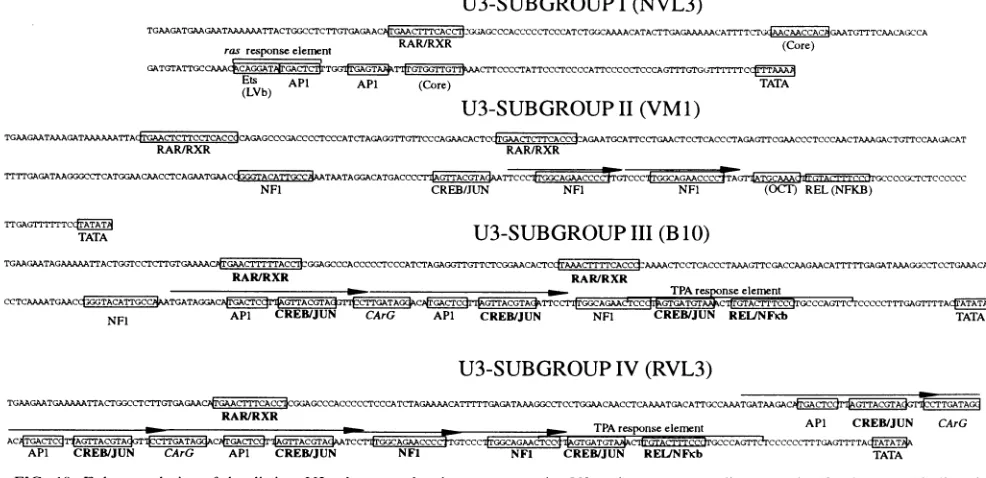
Enhancerdesign of U3 subgroups.Figure 10illustrates that the sequence variation between the U3 subgroups correlated with variations in the number and types of sequence motifs known to be involved in VL30 transcriptional regulation as well as to a large number of putative binding sites for other known transcription factors. VL30 U3 regions corresponding to each U3 subgroup were marked as follows. Retinoic acid response elements (boxed within the B1O U3 region), which have been shown to bind heterodimers ofretinoic acid recep-tor (RAR) and the retinoid X receptor (RXR), mediated retinoic acid-induced B10 transcription in normal human keratinocytes but not in normal skin fibroblasts (32). The corresponding sequences (also boxed) in the other U3 sub-groups differ fromthose in the B10 U3 region in the nucleotide spacing between the direct repeats of these putative retinoic acid elements. Moreover, CRE- and Jun-binding sequences, one ofwhich is identical to the VLX site within the VLTRE, are located within the B10 U3 region. These sites cooperated in mediating adrenocorticotropin- and forskolin-induced tran-scription in thesteroidogenic adrenal cell line Y1 but not in the BALB/MK, Swiss/3T3, or Hepal cell line (7). During the characterization of TPA-, cAMP-, and retinoic acid-induced transcription, we encountered other binding activities in nu-clearextracts recognizing sequence motifs within the B10 U3 region (9). These DNA motifs were similar to the CArG box and API- andNFl-binding sequences (Fig. 10). Formation of the complex with oligonucleotides corresponding to these sequence motifs as probes was inhibited by an excess of unlabeled oligonucleotides corresponding to the serum re-sponse element in the c-fos promoter, the
APi-binding
sitein the collagenase promoter, and a consensus NFl-binding site, respectively (9). The activities of the CREB and Jun-binding sites, theCArG box, andthe putativeAPi-binding
motif within theRVL3 U3 region (U3IV) have also been studied inRat-1 fibroblasts by Lenormand et al. (39). Owenet al.identified two juxtaposed binding sites for nuclear factors which mediated induced NVL3 (U31) transcription in response to an activated Ha-ras gene in NIH 3T3 fibroblasts (50). These two sites resembled the Ets- and APi-binding sites, respectively (55). The site resembling an Ets-binding sequence has been shown toberecognized bya 120-kDaprotein designated ras-respon-sive factor-1 (55). Three putative binding sites for additional transcription factors are the leukemia virus b sequence (LVb),on November 9, 2019 by guest
http://jvi.asm.org/
[image:9.612.119.237.71.368.2]ENHANCER DESIGN AND EXPRESSION OF VL30 U3 SUBGROUPS 285
U3-SUBGROUP
I
(NVL3)
TGAAGATGAAGAATAAAAAATTACTGGC'CTCTTGTGAGAACgGAACT t'GGAGCCCACCCCCTCCCATCTGC;CAAAACATACTTGAGAAAAAC'A=TTTCT4ACACCAAATGTTCAACAG(CCA
ras responseeleinent RAR/RXR (Core)
GATGTATTGCCAAA CCAGGATTGIC .TCTT CCCCTATTCCCTCCCCATTCCCCCTCCCAGTTTGTG rTT cTA
Ets API
(LVb) APN (Core)
U3-SUBGROUP
II
(VM1)
TGAAGAATAAAGATAAAAAATTA TGAACTCTTCCTCACCCAGAGCCCGACCCCTCCCATCTAGAGGTTGTTCCCAGAACACTC GAACTCTTCACC AGAATGCATTCCTGAACTCCTCACCCTAGAGTTCGAACCCTCCCAACTAAAGACTGTTCCAAGACAT
RAR/RXR RAR/RXR
~~ TGCAAA
GCCCCAGCTCTCCCCCCc;CCIFGCAAACCC TTTTGAGATAAGGGCCTCATGGAACAACCTCAGAATGAACdGGGTACATTGCCATAATAGGACATGACCCTTC GGAACCCGCCTAG7CAAACCC MCCCCGCTCTCCCCCC
NF1 CREB/JUN NFI NFI (OCT) REL(NFKB)
rrGAGTCI-rTCAT
U3-SUBGROUP
III
(B 10)
TGAAGAATAGAAAAATTACTGGTCCTCTTGTGAAAACPTACT GGAGCCCACCCCCTCCCATCTAGAGGTTGTTCTCGGAACACTCtrAAACTTTTCACCCAAAACTCCTCACCCTAAAGTTCGACCAAGAACATTTTTGAGATAAAGGCCTCCTGAAACAA
RAR/RXR RAR/RXR
_CTCAAAATGAAC~~GCTGATAGG_ACT TPAresponseelement
CCTCAAAATGAACCtGGTACATTGTGCCATGATAGGAGAr~~~CA~~~~TTCC17 ~ ~ ~~CGG~ CGTACTTTCCT GCCCAGTTCTCCCCCTTTGAGTATTA
NFI API CREB/JUN CArG APN CREB/JUN NFI CREB/JUN REUINFKb TATA
U3-SUBGROUP
IV
(RVL3)
TGAAGAATGAAAAA.TTACTGGCCTCTTGTGAGAAC gAATTCACtGGAGCCCACCCCCTCCCATCTAGAAAACATTTTTGAGATAAAGGCCTCcC'TGGAACAACCTCAAAATGACATTG;CCAAATGATAAGAC
RAR/RXR APN CREB/JUN CArG
ACACTGACTCTTC~~MCCTTGATAGdACCCCMTGGCAGAAC*CTTATAC4CP~~IGTTACTA(:IATC=E~E~~ICCCIGGCAGAA&CTCtGTGATGTAGCTPATAGAicticzcrrcresponseeleenTit CCCTA=A~
APi CREB/JUN CArG APN CREB/JUN NFI NFI CREB/JUN REUNFKb
FIG. 10. Enhancer design ofthe distinct U3 subgroups showing representativeU3regionscorrespondingtoeach U3subgroup. Bindingsites
for nuclear proteins,which are conserved withineach U3 subgroup,are enclosed(boxes). The origins of the binding sites chosen aregiven in
Results.The directrepeatregions in U3111 and U3IVareindicated with arrows.Knownbinding activities such asRAR/RXR, CREB/Jun, and c-Rel/p65(NF-KB)areindicated in boldface letters. Identifiedresponseelements suchasthe CArG box and theHa-rasoncogeneresponseelement
areindicated in italics. Bindingactivitiestoknownbindingsequencesidentified by competition experimentsareindicated, and putative binding
sites whichareconserved in aU3-specificmanner are indicated inparentheses.
the core sequence, and a consensus OCTsequence (Fig. 10) (20, 35, 70, 71).
DISCUSSION
One characteristic feature ofVL30 retrotransposons is the remarkable inducibility of their expression byawide range of
agents and physiological stimuli. One possibility is that this feature is determined by the structural diversityofVL30 U3
sequences. Inthiswork,we show thatahomology study of 17
sequenced VL30 LTRs reveals one interestingobservation: it
ispossibletoorganizeVL30retrotransposonsinto fourdistinct U3 subgroups (U31, U311, U311, and U3IV). A sequence
alignment of allgroupsreveals that each U3subgroup contains
different variants and/or acombination of response elements known to regulate VL30 transcription. We have previously identified response elements that determine cell type-specific
VL30 transcription inresponsetoretinoicacid inkeratinocytes
aswell ascAMP-induced transcription in steroidogenic
adre-nal cells (7, 32). On the basis of these findings, we have addressed the question of whether thepresence orabsence of
specific transcription factor-binding sites within distinct U3 subgroups correlates with theirexpression in different mouse
tissues. In situ hybridization ofmouse skin reveals that kera-tinocytes in epidermis, but not dermal fibroblasts, show an
increase in VL30 expression in response to TPA treatment.
Previously, we have identified a 39-bp sequence, designated VLTRE, which mediates TPA-induced VL30 transcription in keratinocytes.Wereporthere that VLTRE isconserved within the U3regions of three different VL30 LTRs identifiedamong
cDNA clones corresponding to genes induced in mouse
epi-dermis by TPA (8). The fact that all sequences regulating transcription of retrotransposons are contained in the
tran-script provides the opportunity to use short oligonucleotides
specific for each U3 subgroupasprobestostudytheregulation of expression of individual U3 subgroups by Northern blot analysis. By thisstrategy,wehavefound that VL30expression
correspondingto U3111 andU3IV is TPA inducible inmouse
epidermis, whereas both U31 and U311aresilent.Interestingly, both U3111 and U3IV contain a conserved VLTRE,whereas
the corresponding positions in nonresponsive subgroups U31 and U311 have a core motif and an OCT motif, respectively,
which also is a specific feature of their U3 subgroup. By
transienttransfection analysis, VLTREwasshown tomediate
induced transcription in response toTPA in cultured
kerati-nocytes,whereas it is inactiveasaTPA-responsive element in
a fibroblast cell line. By in vitro binding analyses, we have
identifiedtwonuclearfactors inkeratinocytes that show TPA-induced complex formation with a sequence (VLY) present
within the VLTRE. One of these DNA-protein complexes is recognizedbybothc-Rel- andp65(NF-KB)-specific antibodies, while the othercomplex is recognized only by the p65(NF-KB)-specificantibody. Correlating with the nonresponsive
pheno-type of fibroblasts, TPA-induced binding to VLY is not
detected in nuclearextractsmade from this cell type. In fact,
we have not detected any proteins related to c-Rel and p65 binding to VLY in fibroblast extracts. TPA-induced binding activityofap65-containing complexcan,however,be detected inextractsfrom both celltypesby using theNF-KB-bindingsite presentinthe Klight chain enhanceras aprobe.Mostnotably, the c-Rel/p65-containing complex is not formed with the KB
sequence asprobe. Furthermore, the differential appearance
oftwop65-containing complexes (Band B'), produced bythe
useofkeratinocyte and fibroblastextracts, indicates that VLY and the classicalNF-KB-bindingsitearespecifically recognized
by two different p65-containing factors lacking c-Rel. The TATA
TATA VOL.68, 1994
on November 9, 2019 by guest
http://jvi.asm.org/
[image:10.612.63.556.83.322.2]functional studies indicate that the VLY sequence alone is insufficient to mediate a full response, as is a juxtaposed
sequence, VLX, which is a target for constitutive binding of proteinsbelonging tothe CREB and Jun families of transcrip-tion factors.It is thus possible that TPA-induced transcription specific forkeratinocytes includes cell type-specific activation and/or expression of factors within the c-Rel/NF-KB family of transcription factors as well as cell type-specific constraints imposed by attractive or repulsive interactions with
CREB-andJun-related proteins bindingto thejuxtaposed VLX site. Since it isgenerally believed that the VL30 expression level is high in alltissues,wewantedto testthe possibility that VL30 expression appears ubiquitous when expression is analyzed
with a probe recognizing all VL30 members but cell type
specific whenU3-specific probesareused.Indeed, thispattern
of VL30 expression is evident in Northern blot analyses of RNA isolated from eight differentmousetissues.
U31 is found to be specifically expressed in spleen. One VL30 element within U31 that is known to be expressed (element 1.5) has been isolated among genes specifically
induced by cAMP and glucocorticoids in T cells (27). Specific
tothisU3subgroupare conserved LVb andcoremotifs which have been shown to mediate T cell-specific expression of the Moloney murine leukemia virus (70, 71). These results indicate that U31might be expressed in theT-cellpopulationofspleen. Another VL30 member within U31 is NVL3, which is
ex-pressed in NIH 3T3 fibroblasts and has been used to study induced transcription in response to an activated Ha-ras
oncogeneand TPA inthese cells(50). The correlation between Ha-Ras/TPA-induced transcription in fibroblasts and the high level ofconstitutive expression in spleen tissue remainsto be determined. However, it is interesting that both the LVband thecoremotifs in theMoloney murine leukemia virusLTRare
essential forTPA-induced transcription in JurkatTcells (71). Members within U311 have not been reported to be
ex-pressed, and accordinglynoexpression of these U3 regions is
found in the tissues examined in this study. The fact that all tissues (except epidermis) have been taken from the BALB strain of mice and that the members of U3 subgroup II are
cloned from genomic libraries made from the same strain argues against the possibility that a mouse strain-specific
difference in the existence of genomic U311 members can
explain the lack of expression. From thestructural analysisof U3 regions within this subgroup, it is evident that many
transcriptional regulatorysequencemotifsarepresent,suchas a TATA box, RAR/RXR-, CREB/Jun-, NFI-, and c-rel/NF-KB-binding sites. We therefore favor the hypothesis that membersof this U3 subgrouparetranscriptionallycompetent,
but it remains tobe determined in which cell type and/or by whichintracellularsignalpathway their expression is regulated. Schiffetal. have usedthe method of in situhybridizationto
analyze the distribution of VL30expression in mice fromlate embryonic stages (65). In their study, it was shown that the
level of VL30 expression is high in steroidogenic tissues and detectable in the epithelial tissue layers of most internal
organs. The only U3 regions within U3111 that have been showntobeexpressedaretheonesdescribed in thisstudy. The
fact that these U3 regions correspond to VL30 elements expressed in epithelial tissue (epidermis) suggests that the relatively low level ofconstitutive expression of U3111 detect-able inmostorgansmayarise fromexpression in theepithelial layers of these organs. However, the highest relative level of
expression of U3111isdetected in lung and expression of both U3111 and U3IV is detected in thetestis, which isa
steroido-genic organ. Memberswithin U3IV have been isolated from
steroidogeniccells, andwehaveused BIO(belongingtoU3111)
to identify sequence motifs that mediate steroidogenic cell-specific transcription.U311I expression is found to be relatively weak in testes. However, it should be noted that high levels of VL30 expression inLeydigcells of testes can be detected after administration of human chorionicgonadotropin, atreatment mimicking a luteinizing hormone stimulation (65).
Constitutive high levels of U31V expression are detected specifically in cardiac and skeletal muscles. The LTRs corre-sponding to this U3 subgroup may therefore be useful in the elucidation of transcriptional regulatory mechanisms specific for muscle genes in both skeletal and cardiac muscle cells. In this respect, it isintriguing thatU3IVspecificallycontains two copiesof the CArGelement, which has been shown to be one element involved in muscle-specific gene regulation (45, 53, 64).The finding thatU3 subgroup IV shows ahigher relative level of expression in heart than in skeletal muscle and the identification of a heart-specific 5.6-kb VL30 transcript are observations that can be explored in studies concerning differ-encesin thetranscriptional regulationbetween skeletal muscle and cardiac muscle cells. The U3IVsubgroup has also been shown to respond to cAMP, TPA, epidermal growth factor, andCa2+ agonist-induced transcriptionincell types other than muscle cells (39, 65). Onepossibility isthatcardiac cells have constitutive activation of a particular signal pathwaywhich is utilized for inducible gene transcription in other celltypes.
The 100 to 200VL30members are dispersedin the mouse genome (11, 36, 37). It is therefore likely that mechanisms other than trans repression and/or trans activation contribute tothe individualpatterns ofconstitutiveexpressionin different mousetissues. The lackofdetectableVL30expressionin brain might be an indication of such acis-acting regulatory mecha-nism. However, it is possible that the fraction of VL30 elements which is present in a transcriptionally accessible chromatinconfigurationin agiven situationisonlytranscribed when it contains the appropriate transcription factor binding siteswhichare utilized in that particularcell type.
The high level of VL30 expression in kidney that can be detected with a probe recognizing all VL30 membersand the relatively lowlevel of VL30expression inthis organdetectable with the U3-specific probes argue for the existence of addi-tional U3 subgroups. Another indication of this possibility is the finding that the U3 region of VLovl shows the highest sequence similaritytomembers of U3IVbutto alesserdegree (<80%) than theother members within this U3 subgroup.
Retroviral recombination in general is thought to require prior transcription ofthevirus andpackagingof therespective RNA molecules (30, 73). Thus, transcriptional activation and subsequent packaging are prerequisites and the driving force for recombinogenic activity. Of the known retrotransposon families, VL30s are the only ones which so far have been shown to be packageable and hence rescuable as C-type pseudoviruses(37). The relativelyhighnumber ofVL30family members havingvariable U3 regionsis therefore most likelya consequence of a high rate of recombination, errors during replication, and transposition into the germ line (37). One established theory is that a DNA entitywhich is successful in replicating itselfcould stay in thegenome as a"selfish" DNA (18, 49, 63). VL30 members may therefore prosper in the mouse genome by retaining and/or acquiring specific binding sites for transcription factors, or combinations thereof. We present results here that strongly support the conclusion that VL30 members are transcribed independently in a stimulus-andcell type-specificmanner and that the regulationof VL30 transcription isdependenton both the presenceofspecificcis elements within the U3regionand cell type-specific differences in theactivityoftransactingfactors. Thus, thecloseassociation
on November 9, 2019 by guest
http://jvi.asm.org/
ENHANCER DESIGN AND EXPRESSION OF VL30 U3 SUBGROUPS 287 betweentranscriptionandrecombination,theexistenceof U3
with variations in transcription factor binding sites, and the expressionof these in acelltype-andstimulus-specificmanner implies a novel approach to the study of cell type-specific
transcription by comparing expressed U3 regions with other U3 regions that are not affected by the particular transcrip-tional regulatorymechanism of interest.
ACKNOWLEDGMENTS
WeareverygratefultoGail A.Baughman andSuzanne Bourgeois forprovidingthesequenceof the 1.5 VL30 clone andtoR.Toftgard fordiscussions and criticalreadingof the manuscript.This workwas
supported bythe Swedish Work Health Fund (project 88-0162) and the SwedishCancer ResearchSociety (project 3161-B91-01XAB).
REFERENCES
1. Adams, S.E., P. D.Rathjen,C.A.Stanway,S.M.Fulton, M. H. Malim,W.Wilson, J. Ogden,L.King,S. M.Kingsman,and A.J. Kingsman. 1988.Completenucleotidesequenceofa mouseVL30 retro-element. Mol. Cell. Biol. 8:2989-2998.
2. Aldaz,C. M., C. J. Conti, I. B. Gimenez, T.J. Slaga, and S.A. Klein. 1985. Cutaneouschanges during prolonged applicationof 12-O-tetradecanoylphorbol-13-acetateonmouseskin and residual effects after cessation oftreatment.Cancer Res. 45:2753-2759. 3. Anderson, G.R.,D. L. Stoler, and L.A. Scarcello. 1989.
Retro-transposon-like VL30elements are efficiently induced in anoxic
ratfibroblasts. J.Mol. Biol. 205:765-769.
4. Ballard,D.W.,E. P.Dixon,N.J.Peffer,H.Bogerd,S.Doerre,B. Stein, and W. C. Greene. 1992. The 65-kDa subunit of human NF-kappa Bfunctionsas apotenttranscriptional activator anda
targetfor v-Rel-mediated repression.Proc. Natl. Acad.Sci. USA 89:1875-1879.
5. Boeke,J. D.,and V. G. Corces. 1989. Transcription andreverse
transcription ofretrotransposons. Annu.Rev. Microbiol. 43:403-434.
6. Bohm,S. 1991. Identificationofprotein-bindingsequences
medi-ating constitutive and 12-O-tetradecanoylphorbol-13-acetate-in-duced VL30 transcriptionin cultured mouse and human kerati-nocytes. J. Biol. Chem. 266:24834-24841.
7. Bohm, S.,M. Bakke,M.Nilsson,G.Spyrou,U.M.Zanger,andJ. Lund. 1993. Cooperating non-consensus cAMP responsive
ele-ments are mediators ofadrenocorticotropin-inducedVL30
tran-scription insteroidogenic adrenalcells. J. Biol. Chem. 268:3952-3963.
8. Bohm, S.,A.Berghard,M.C.Pereswetoff,andR.Toftgard. 1990. Isolation and characterization of complementary DNA clones
corresponding to genes induced in mouse epidermis invivo by
tumorpromoters. Cancer Res. 50:1626-1633. 9. Bohm, S.,M. Nilsson,andJ.Lund.Unpublisheddata.
10. Carter, A. T., J. D. Norton, and R. J. Avery. 1983. A novel approachtocloning transcriptionallyactiveretrovirus-likegenetic elements from mousecells. Nucleic Acids Res. 11:6243-6254. 11. Carter,A.T.,J.D. Norton,and R.J. Avery. 1988. Thegenomic
DNA organisation and evolution of a retrovirus-transmissible familyofmouse(VL30) geneticelements. Biochim.Biophys.Acta
951:130-138.
12. Celander, D.,and W. A. Haseltine.1984.Tissue-specific transcrip-tion preference as a determinant of celltropism and
leukaemo-genic potentialofmurine retroviruses. Nature(London) 312:159-162.
13. Chatis, P.A., C.A. Holland,J.E. Silver,T. N. Frederickson,N.
Hopkins,andJ.W. Hartley.1984.A3' endfragment
encompass-ing the transcriptional enhancers of nondefective Friend virus confers erythroleukemogenicity on Moloney leukemia virus. J. Virol. 52:248-254.
14. Chomczynski, P.,andN.Sacchi.1987.Single-stepmethodof RNA isolationbyacid guanidinium thiocyanate-phenol-chloroform
ex-traction. Anal. Biochem.162:156-159.
15. Courtney,M.G.,P.K. Elder,D. L.Steffen,and M.J. Getz.1982. Evidence foranearly evolutionary originandlocuspolymorphism ofmouseVL30DNA sequences.J.Virol. 43:511-518.
16. Dai, H.Y., M. Etzerodt, A. J. Baekgaard, S. Lovmand, P. Jor-gensen, N. 0. Kjeldgaard, and F. S. Pedersen. 1990. Multiple sequenceelements in the U3 region of the leukemogenic murine retrovirus SL3-2 contribute to cell-dependent gene expression. Virology 175:581-585.
17. Deutsch, P.J., J.P.Hoeffler,J. L. Jameson, J. C. Lin, and J. F. Habener.1988. Structural determinants for transcriptional activa-tion by cAMP-responsive DNA elements. J. Biol. Chem. 263: 18466-18472.
18. Doolittle,W.F., and C. Sapienza. 1980. Selfish genes, the pheno-typeparadigm and genome evolution. Nature (London) 284:601-603.
19. Eaton, L., and J. D. Norton. 1990. Independent regulation of mouseVL30 retrotransposonexpression in response to serum and oncogenic cell transformation. Nucleic Acids Res. 18:2069-2077. 20. Falkner,F.G., and H. G. Zachau. 1984. Correct transcription of an immunoglobulin kappa gene requires an upstream fragment con-taining conserved sequence elements. Nature (London) 310:71-74.
21. Fort, P., L. Marty, M. Piechaczyk, S. el Sabrouty, C. Dani, P. Jeanteur, andJ. M. Blanchard. 1985. Various rat adult tissues expressonlyone majormRNAspecies from the glyceraldehyde-3-phosphate-dehydrogenase multigenic family. Nucleic Acids Res. 13:1431-1442.
22. Gavinski, S.,andG.E. Woloschak. 1989.Expression of viral and virus-like elements in DNA repair-deficient/immunodeficient "wasted"mice. J. Immunol. 142:1861-1866.
23. GeneticsComputer Group. 1991. Program manual for the GCG package, version 7. University of Wisconsin, Madison.
24. Graham,F.L.,and A.J.van der Eb.1973.Anewtechnique for the assayofinfectivity of human adenovirus 5 DNA. Virology 52:456-467.
25. Han, K. A., P. Rothberg, andM. Kulesz-Martin. 1990. Altered levels ofendogenous retrovirus-like sequence (VL30) RNA during mouseepidermal cell carcinogenesis. Mol. Carcinog. 3:75-82. 26. Hansen, S. K.,C.Nerlov, U. Zabel, P.Verde, M.Johnsen,P. A.
Baeuerle, and F. Blasi. 1992. A novel complex between the p65 subunit of NF-kappa B and c-Rel binds to a DNA element involved in thephorbol esterinduction of the human urokinase gene. EMBO J. 11:205-213.
27. Harrigan,M.T.,G.Baughman,N. F.Campbell,andS.Bourgeois. 1989. Isolation andcharacterization of glucocorticoid- and cyclic AMP-induced genes in Tlymphocytes. Mol. Cell. Biol. 9:3438-3446.
28. Hodgson, C. P., R. Z. Fisk, P. Arora, and M. Chotani. 1990. Nucleotide sequence ofmousevirus-like (VL30) retrotransposon BVL-1.NucleicAcids Res. 18:637.
29. Horowitz, J. M., G.D.Holland, S. R. King,and R.Risser. 1987. Germ line integration of a murine leukemia provirus into a retroviruslike sequence. J. Virol. 61:701-717.
30. Hu,W.S.,and H. M. Temin. 1990.Retroviral recombination and reversetranscription.Science 250:1227-1233.
31. Inoue, J.,L. D. Kerr, L.J. Ransone,E. Bengal,T. Hunter,and I. M. Verma.1991. c-rel activates but v-rel suppressestranscription fromkappaBsites. Proc. Natl. Acad.Sci. USA 88:3715-3719. 32. Islam-Cohudori, T., T. Bugge, and S. Bohm. 1993. The long
terminal repeats ofVL30 retrotransposons contain sequences that determine retinoic acid-induced transcription incultured kerati-nocytes. J.Biol. Chem. 268:3251-3259.
33. Itin, A., and E. Keshet. 1983. Apparent recombinants between virus-like(VL30) and murine leukemia virus-related sequences in mouseDNA.J.Virol.47:178-184.
34. Itin, A., and E. Keshet. 1986. Diverselong terminal repeats are associated with murine retroviruslike(VL30)elements. Mol. Cell. Biol. 6:1276-1282.
35. Kemler, I.,and W.Schaffner. 1990.Octamertranscriptionfactors and the cell type-specificityofimmunoglobulin gene expression. FASEB J. 4:1444-1449.
36. Keshet, E.,and A.Itin. 1982. Patternsofgenomicdistribution and sequence heterogeneity ofa murine "retrovirus-like" multigene family.J. Virol.43:50-58.
37. Keshet, E.,R.Schiff,and A.Itin. 1991. Mouse retrotransposons:a cellular reservoir oflong terminal repeat (LTR) elements with VOL.68, 1994