BIS RESEARCH PAPER NUMBER 267
Impact of Poor English and Maths
Skills on Employers: Literature Review
The views expressed in this report are the authors’ and do not necessarily reflect those of the Department for Business, Innovation and Skills.
Department for Business, Innovation and Skills 1 Victoria Street
London SW1H 0ET www.gov.uk/bis
Contents
Introduction ... 6
About the wider project ... 6
Objectives of this literature review ... 7
Method ... 7
Scope ... 8
Context: the drive to improve literacy and numeracy skills in England ... 9
Structure of this review ... 11
1. Literacy and numeracy skills in English workplaces ... 12
1.1 Basic skills and employment ... 12
1.2 Basic skills and occupation ... 13
1.3 Basic skills and industry sector ... 15
1.4 Growing demands for basic skills ... 16
1.5 Implications for research design ... 21
2. Employer views on the literacy and numeracy skills of their employees ... 24
2.1 Theoretical considerations: literacy and numeracy as essential parts of a broad array of employment skills ... 24
2.2 Evidence from employers ... 25
2.3 Implications for research design ... 33
3. Economic costs associated with poor English and maths in the workplace ... 38
3.1 Theoretical considerations: Possible costs to businesses who may be affected by poor literacy and numeracy ... 38
3.2 Evidence from employers (UK) ... 40
3.3 Evidence from employers (International) ... 45
3.3 Implications for research design ... 47
4. Motivations and incentives for employers to invest in basic skills provision ... 50
4.1 Theoretical considerations: human capital theory, general education and job-specific training ... 50
4.2 Evidence from employers ... 51
4.3 Implications for research design ... 73
5. Disincentives, constraints and market failure ... 76
5.1 Theoretical considerations: market failure and suboptimal investment in workplace literacy and numeracy ... 76
5.2 Evidence from employers ... 76
5.3 Implications for research design ... 86
6. Costs and benefits of workplace English and maths programmes ... 90
6.2 Costs of provision ... 95
6.3 Benefits of provision ... 96
6.4 Barriers to robust evidence on the impacts of workplace basic skills programmes .... 97
6.5 Perceived benefits ... 98
6.6 Implications for research design ... 109
References ... 113
About the authors
David Mallows is Director of Research at NRDC, UCL Institute of Education, London. He has over 25 years experience in adult education as a teacher, teacher trainer, manager and researcher.
JD Carpentieri is a Lecturer in Adult Education at NRDC, UCL Institute of Education, London. He has extensive experience conducting research and evaluation projects in the field of adult learning.
Introduction
About the wider project
Ipsos MORI and the National Research and Development Centre for Adult Literacy and Numeracy (NRDC) have been commissioned by Department for Business,
Innovation and Skills (BIS) to undertake research to assess the impact of poor English and maths skills on English employers. The overall goal of the study is to
communicate to employers the benefits of investment in relevant provision by
addressing the lack of quantifiable evidence of the costs of poor literacy and numeracy skills to English employers, and the costs and benefits of literacy and numeracy
provision for these employers. This research project has five aims:
• To establish employer views of the levels of English and maths skills difficulties among their adult workforce.
• To quantify the impact and costs to employers of poor English and maths skills on business performance – including deriving a quantitative
estimate of the cost of poor English and maths skills to employers nationally.
• To quantify approximate costs and benefits for those providing or funding relevant training.
• To explore facilitators and barriers for employers providing or funding relevant training.
• To inform BIS and provider policies and activities in support of developing an internationally competitive skills base.
To achieve these aims, two employer surveys will be conducted:
• a survey of employers who have recently provided relevant training, assessing the perceived costs and benefits of this training.
These quantitative data will be supplemented by qualitative data gathered from case studies conducted across a range of employer types to provide greater insight into their motivations for providing support to address poor English and maths, and experiences of doing so.
Objectives of this literature review
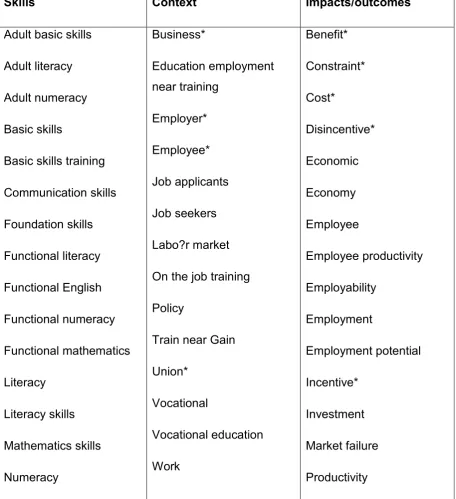
The following literature review has been undertaken as the first stage in producing a theoretical framework of the routes through which business performance may be affected by workforce English and maths skills. This theoretical framework will in turn inform the questionnaire design for the employer surveys and case studies, and the review offers a number of preliminary suggestions as to content.
The literature review synthesises evidence from qualitative and quantitative studies that shed light on the costs to employers of poor English and maths skills. It also addresses the benefits of, and the barriers to, workplace training, with a focus on employer perceptions of the need for and efficacy of workplace training in English and maths. The review also considers and summarises key theoretical and methodological issues.
Method
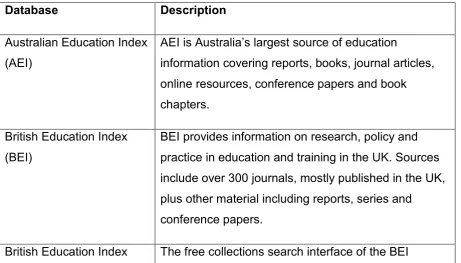
The literature review search strategy built upon the search strategy carried out for the 2011 BIS “Review of research and evaluation on adult literacy and numeracy skills” (Research paper 61), led by NRDC (Vorhaus et al, 2011).
In order to ensure thorough coverage of the evidence base, three types of sources were searched:
• bibliographic databases
• websites of key organisations
The review draws on English-language literature accessed through the main international research databases, taking advantage of NRDC's extensive library of research on adult literacy, language and numeracy. Searches were supplemented by information requests from NRDC's extensive range of LLN contacts globally and a review of grey literature related to international policymaking in adult English and maths. Where there is a lack of evidence specific to adult English and maths, the project team will explore other potentially relevant evidence, for example in the broader field of adult education and training.
The literature review takes a critical approach to the evidence: close attention has been given to the quality of the available evidence, with higher quality research highlighted and given greater priority in the assessment. Particular focus has been given to high-quality quantitative evidence, with informal "weighting" of the research evidence particularly important in the field of adult English and maths given the mixed quality of the overall evidence base.
Scope
This review is concerned with employers’ perceptions and attitudes, not those of employees. Employee surveys are therefore outside of the scope of this review,
except where evidence from these surveys is relevant to employers. For example, one frequently cited benefit of workplace basic skills programmes is an improvement in employees’ attitudes to education. Workplace LLN courses have a strong track record of giving many previously disaffected adults their first experience of enjoyable,
Context: the drive to improve literacy and numeracy skills in
England
Public interest in and awareness of low literacy skills among adults began in the late 1960s and 1970s and led to a series of government-backed strategies and campaigns to improve adult literacy and numeracy levels. As technology and globalization have continued to bring about major changes in the workplace, so too have poor skills levels become an issue for governments aiming to increase the UK’s productivity and build sustainable growth. Adult basic skills became a renewed priority with the election of the New Labour government in 1997. The Moser Report (DfEE, 1999) identified Level 1 literacy and Entry Level 3 numeracy as the standards necessary for adults to function at work and society in general, and recommended that there should be a national survey of literacy and numeracy need in England. The resulting survey, which took place between June 2002 and May 2003 under the auspices of the then
Department for Education and Skills (DfES), assessed the literacy and numeracy skills of 8,730 randomly selected adults aged between 16 and 65 over five broad levels of competence (Entry level 1 to Level 2). The survey report (Williams et al., 2003) estimated that 6.8 million adults aged 16-65 in England had numeracy skills below Entry level 3 and 5.2 million adults had literacy levels below Level 1.
To meet the challenge of raising the literacy and numeracy skills of the adult
population in England, £5 billion was invested between 2001 and 2008 (DIUS 2009, p. 4). International surveys, such as the OECD’s International Adult Literacy Survey (IALS) and the Adult Literacy and Life Skills Survey (ALLS), using similar (but not directly comparable) techniques to the Skills for Life survey, showed that ‘while many other countries have a large number of adults with low basic skills, the UK lies in the bottom half of the OECD’ (Leitch, 2006: 43). Poor skills have been blamed for the UK’s relatively low productivity compared to other EU countries: the Skills for Life strategy document claimed that ‘Productivity per hour worked is 20% lower in Britain than in Germany, and our poorer literacy and numeracy skills account for a third of that shortfall’ (DfEE 2001, p. 23).
publication of the Leitch review, which recommended that by 2020, 95% of adults should have achieved functional literacy and numeracy (an increase on estimated 85% literacy and 79% numeracy in 2005), emphasis has moved to the importance of functional skills at a time of economic challenge, with a particular focus on
employability and ensuring that people have skills that enable them to find, stay and progress in work.
The UK Commission for Employment and Skills, in assessing the progress of the UK toward the 2020 ambitions for employment and productivity, signals the danger that although the skills profile of the country is improving, other countries are improving at a faster rate. Indeed, the UK’s ranking has changed little. In fact, based on current progress, UKCES predicts that the international skills standing of the UK is unlikely to improve by 2020 let alone become World Class (UKCES 2009a, p. 7) with the overall skills gap between the UK and higher ranked countries widening. Since 2005, the proportions of the population with functional literacy skills were estimated by the UKCES to have edged up to just above 86% in 2008 (i.e. just less than 14% had poor literacy skills) and the proportion with functional numeracy skills had increased to 81% (i.e. 19% had poor numeracy skills).
In Skills for Sustainable Growth (November 2010), the new Coalition Government, while supporting the ambitions of Leitch, rejected the Leitch targets in favour of
encouraging local responses to local needs. For literacy and numeracy, the removal of targets will instead introduce a programme focusing on:
‘…equipping individuals with the skills and qualifications they need to get a job, progress in work and play a full part in society’ (BIS, 2010, p. 32).
proportion falling below Entry Level 2.
The current Government’s Further Education and Skills Reform Plan, New Challenges, New Chances (December 2011), sets out a vision for the future landscape of further education and skills.
Structure of this review
This review is presented in six main sections:
• Sections 1 considers general evidence about workplace skills levels
• Section 2 presents evidence on employer views of the skills gaps and needs in the workplace
• Section 3 reviews evidence on the economic costs associated with poor English and maths skills in the workplace
• Section 4 considers the incentives employers have to invest in basic skills provision
• Section 5 considers the constraints, disincentives and market failures to employer engagement with workplace basic skills provision
• Section 6 presents evidence on the costs and benefits of workplace English and maths programmes
1. Literacy and numeracy skills in
English workplaces
This section summarises general evidence (i.e. not collected from employers, but through more general surveys) about employees’ literacy and numeracy skills. In particular, this section draws on findings from the most recent English study providing evidence on employment-related basic skills levels, the 2011 Skills for Life Survey by the Department of Business, Innovation and Skills.
This section also provides evidence from a range of sources looking at the growing demand for English and maths in the workplace. These sources include surveys and other studies targeted at employers and seeking to gain insights into their own
perspectives on workplace changes.
1.1 Basic skills and employment
The 2011 Skills for Life (SfL) survey provides an overview of the English and maths skills of working age adults in England, including those in English workplaces. This survey assessed the literacy and numeracy skills of a representative sample of more than 5800 adults in England aged 16-65, 70% of whom were classified as working (BIS, 2012). This percentage includes people in paid labour (all but 3% of the 70% classified as working) and those in a range of other circumstances, including those on government-funded training schemes. It does not include those in full-time education. As in its predecessor, the 2003 SfL Survey (DfES), adults who were employed tended to have better literacy and numeracy than those who were not (BIS, 2012). This was particularly true with regard to literacy. In literacy, part-time workers performed as well as full-time ones: the primary gap in literacy was between adults in paid labour and those who were not. In numeracy however, full-time employees’ average scores were much higher than part-time employees’: the primary gap in numeracy performance was between full-time workers and everyone else, as it had been in 2003.
for functional literacy (Level 1), and 19% did not achieve government targets for functional numeracy (Entry level 3). Table 1.1 provides additional detail.
Table 1.1 Literacy and numeracy levels of employed adults in England
Literacy/numeracy level % at this level, literacy % at this level, numeracy
Level 2 or above 61 25
Level 1 28 32
Entry level 3 6 24
Entry level 2 2 14
Entry level 1 below 3 5
Source: Skills for Life survey 2011, page 163.
1.2 Basic skills and occupation
The 2011 SfL Survey uses the eight-class version of the National Statistics Socio-Economic Classification (NS-SEC) system to categorise respondents’ occupations. In the survey, there was a clear relationship between respondents’ occupation and their literacy and numeracy skills. Table 1.2 shows the percentages of respondents within each category achieving the government recommended minimum level for the literacy and numeracy.
Table 1.2 Occupational categories achieving English government targets for literacy and numeracy
Occupation % of % achieving % achieving
respondents* Level 1 literacy Entry level 3
Higher managerial and 8 95
numeracy
94 professional
Lower managerial and 26 95 88
professional
Intermediate 11 93 84
Small employers and own 8 88 78
[image:13.595.73.529.563.760.2]Occupation % of
respondents* % achieving Level 1 literacy % achieving Entry level 3 numeracy
Lower supervisory and
technical 10 83 73
Semi-routine 14 84 72
Routine 12 76 70
Source: Skills for Life survey 2011, page 166.
*Figures in this category do not add up to 100, because they do not include other categories, including those who have never worked, the long-term unemployed, full-time students, and respondents providing insufficient information for categorisation.
Looking first at literacy assessments, there is a step-wise gradient, with more than 90% of adults in the three highest occupational categories achieving Level 1, 83-88% of those in the next three categories achieving that level, and only 76% of those in routine occupations doing so. In numeracy, overall performance is lower and the gradient is steadier, with each occupational category performing better than the one below it.
Although having lower skills cannot be equated with having a skills need, these figures suggest that those in routine, semi-routine and lower supervisory and technical
occupations, categories which accounted for more than one third of the total sample, may be most in need of improving their skills.
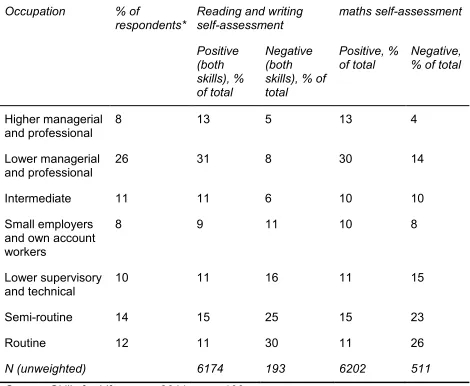
Table 1.3 Occupational categories and self perceived literacy and numeracy levels in England
Occupation % of
respondents* Reading and writing self-assessment maths self-assessment Positive
(both skills), % of total
Negative (both skills), % of total
Positive, %
of total Negative, % of total
Higher managerial
and professional 8 13 5 13 4
Lower managerial
and professional 26 31 8 30 14
Intermediate 11 11 6 10 10
Small employers and own account workers
8 9 11 10 8
Lower supervisory
and technical 10 11 16 11 15
Semi-routine 14 15 25 15 23
Routine 12 11 30 11 26
N (unweighted) 6174 193 6202 511
Source: Skills for Life survey 2011, page 166.
*Figures in this category do not add up to 100, because they do not include other categories, including those who have never worked, the long-term unemployed, full-time students, and respondents providing insufficient information for categorisation.
1.3 Basic skills and industry sector
The 2003 and 2011 SfL Survey found significant variation in literacy skills between industry sectors. Using the 2007 Standard Industry Classification (SIC) to classify the industries in which respondents worked, the Skills for Life surveys found that the sectors with the highest average literacy levels were: Education; Public administration; Professional, Scientific and technical; and Information and communication. For
Level 1 or above in literacy. The survey further found that respondents in the
“Construction” and “Accommodation and food service” sectors were less likely than average to achieve Level 1 literacy. Only 76% of those who worked in
“Accommodation and food service” achieved this level or above. The same industries which performed well in literacy tended to have above average numeracy, while those which performed poorly at literacy also tended to perform poorly at numeracy.
1.4 Growing demands for basic skills
1.4.1 General evidenceThere is a tendency, when thinking of changes in the workplace in recent years, to focus on the growing need for digital literacy. For example, research looking at workplace needs found that the proportion of workers for whom computers are an essential part of work rose from 31% to 40% between 1997 and 2001, while the number for whom they were not important at all fell from 31% to 21% (Wolf, 2005). However, alongside the very visible growing digitisation of the workplace, a range of other changes also appears to be driving increased demand for better literacy and numeracy. Nonetheless, most of the evidence on this topic is anecdotal or
observational and insufficiently nuanced. Levenson (2004, p. 85) argues that “little systematic evidence is available to evaluate whether skill upgrading is occurring in jobs throughout the economy.” One example of such evidence is that produced in the United States by Capelli (1993) which provides “the only systematic evidence on skill upgrading within individual companies” (Levenson 2004, p. 85). Capelli investigated changes in skills requirements for production jobs in 93 manufacturing establishments between 1978 and 1986, and for clerical jobs in 211 firms between 1978 and 1988. He found significant skill upgrading in most production jobs, and a mix of skill upgrading and deskilling in clerical jobs. However, the relevance of the clerical aspect of this study to modern workplaces is questionable, given the mass computerisation of the workplace that has occurred since the 1980s.
good quality communication and interpersonal skills on the part of front line staff. Within manufacturing and other industries, some job roles have become less narrowly defined, requiring more problem-solving and intra- and inter-team communication. In all industries (albeit not in all organisations), there has been a move towards more direct employer-employee communication on topics requiring good language and numeracy skills, e.g. staff pensions.
Increased demand for report-writing at all levels of the organisational hierarchy has been cited by employers as a motivating factor behind the setting up of Skills for Life workplace courses (Evans et al 2004). For example, in one local authority Evans and Wolf found that estate caretakers were increasingly expected to provide written documentation of cases of crime, vandalism and general disrepair, demanding higher literacy skills. A bus company in the Midlands ran a compulsory “customer service and literacy” course for 400 employees, partly in response to new requirements for drivers to fill in incident report forms, a requirement which was itself partly shaped by
company fears over litigation from customers.
Employers tend to be slightly less likely to cite employees’ numeracy problems, but Hoyles et al (2002) found that, despite the occasional invisibility of numeracy in the workplace, it is widely present and is growing ever more frequent. Investigating the level and nature of mathematical skills required in seven different occupational sectors – electronic engineering and optoelectronics; financial services; food processing; health care; packaging; pharmaceuticals; and tourism – Hoyles et al found an increase in the average level of skills required in every sector.
Some common trends were identified in all these sectors:
• the need for mathematical skills was being progressively extended throughout the workforce as a result of the pressure of business goals and the spread of computers
• there was a growing need to communicate information effectively, based on mathematical data and inferences, and involving colleagues,
• there was a growing need for hybrid skills, e.g., combining technical and analytic knowledge with the ability to communicate analytical information. Hoyles et al also found the need to perform maths being pushed further down the employment hierarchy. These researchers concluded that “mathematical skills in the workplace are changing, with increasing numbers of people engaged in mathematics-related work, and with such work involving increasingly sophisticated mathematical activities” (p. 5). Hoyles et al pointed to the following aspects of mathematics as significant components of what a burgeoning phenomenon on they referred to as ‘techno-mathematical literacy’:
• integrated mathematics and IT skills
• an ability to create a formula (using a spreadsheet if necessary)
• calculating and estimating (quickly and mentally)
• proportional reasoning
• calculating and understanding percentages correctly
• multi-step problem-solving
• a sense of complex modelling, including understanding thresholds and constraints
• use of extrapolation
• recognising anomalous effects and erroneous answers when monitoring systems
• an ability to perform paper and pencil calculations and mental calculations as well as calculating correctly with a calculator
• communicating mathematics to other users and interpreting the mathematics of other users
1.4.2 Employers’ perspectives
Do employers share this perception that literacy and numeracy skills are becoming increasingly important to employees in the modern workplace?
There is evidence to suggest that employers have recognised the increased need for basic skills for some time, and that this change is evident across a wide range of sectors. Three quarters of respondent employers1 reported by Frank and Hamilton (1993) highlighted an increase in the need for basic skills in manual jobs over the previous five years, and Atkinson and Spilsbury (1993) found that nearly half of employers in their sample2 reported the increasing importance of oral communication
skills and also basic skills related for working with ICT (Brooks et al 2001). In the 2008 Scotland Employer Skills Survey3 (Futureskills Scotland, 2008), in which one in five
Scottish workplaces reported a skills gap, those gaps were partly attributed to changes in the workplace, including new technologies, products and services.
Moore and Benseman (2003), in a small New Zealand survey investigating literacy needs in the workplace, examined whether or not employees experienced difficulties performing workplace literacy tasks and whether these demands were increasing over time. A total of 330 randomly chosen respondents (shop floor employees, supervisors and employee relations managers) at 17 companies representing a range of industries in New Zealand participated. The authors found that almost all managers reported that the demands being made on employees’ literacy skills were more or much more than only two or three years ago. When asked what was driving the demand for higher literacy skills, almost all cited a drive for higher quality services and/or products. The study concluded that changing work practices and more fluid organisational structures placed greater demands on workers. Three quarters of employee relations managers rated literacy skills as very important; the remaining quarter rated them as important. According to the authors, these percentages are consistent with similar research carried out in the mid-1990s.
1 There were 73 respondents to this survey
273 Training and Enterprise Councils covering approximately 1.3 million jobs below the professional and technical level in 24,000 establishments were consulted
3 6,274 workplace/establishment interviews were completed during June and July 2008. The response
rate for the survey was 45 per cent
Several supervisors in the Moore and Benseman study said that their companies were coping with rising literacy demands by raising the entry qualifications of new
employees, but that the present workforce often had literacy problems that could not be sufficiently addressed by standard workplace training programmes. This finding, though only tentative, may have implications for long term national skills plans. Nations who wish to increase their competitiveness in the global marketplace by upskilling their economies may need to invest significant resources into improving workers’ basic literacy and numeracy skills so that these workers can meet new workplace demands. Atkinson and Williams (2003) found that while having poor
1.5 Implications for research design
Area Observations Recommendations
i. Level of skills
• The 2011 Skills for Life survey (SFL2011) provides the fullest and most recent data on the English and maths skills of working age adults in England.
• Findings from SFL2011 show a relationship between basic skills level and occupation: the lower the
occupational category, the lower the basic skills.
• Findings from SFL2011 show a relationship between numeracy skills and employment type: full-time workers are more likely to have higher skills than part-time workers.
• Findings from SFL2011 show a relationship between basic skills level
• In order to ensure that the data from the current study are comparable to this robust source, classifications in the questionnaire should be matched where possible to those used in this larger study.
• It is recommended that, if practicable, the survey obtains data on the proportion of employees in occupation types at each establishment.
• It is recommended that, if possible, the Inter-departmental Business Register be used to provide data on the proportion of full-time and part-time employees within each establishment. This can then be verified in the interview.
• The sampling process should take account of the considerable variation in basic skills level
Area Observations Recommendations
and industry sector: in some sectors (such as Education) almost all respondents had functional literacy.
Construction” and “Accommodation and food service”) where skills levels are lowest. Size and occupational structure should also be taken account of in the sampling.
ii. Changing skills landscape
• Evidence on whether better and/or different basic skills (upskilling and deskilling) are required in the current/future workforce is largely anecdotal or observational.
• The evidence suggests that to gather data on the changing role of literacy and/or numeracy skills in the
workplace, instrumentation should 1) explore the drivers behind upskilling or deskilling, and 2) recognise that employers may not view the new skills required as literacy and/or
• In establishing employer views on their
employees’ basic skills difficulties, the general employer survey could:
o Ascertain whether there are they perceive that there are fewer job opportunities in the establishment for low skilled workers than there were previously (within a defined reference period, or range of reference periods).
o Investigate whether the establishment projects few opportunities for low skilled workers in the future.
Area Observations Recommendations
numeracy skills per se, but rather as other employability skills.
deskilling: for example, the effect of new reporting requirements, technological changes, customer service commitments, new work practices, new organisational structures. These drivers could then be analysed across a range of industry sectors and occupation types.
2. Employer views on the literacy
and numeracy skills of their
employees
This section provides a summary of research evidence on employers’ perceptions of the basic skills levels, needs and gaps in their workforce. This evidence is
contextualised within a broader theoretical discussion of the relationship between literacy, numeracy and other employment-related skills.
2.1 Theoretical considerations: literacy and numeracy as essential
parts of a broad array of employment skills
There is a lack of consensus on the precise literacy and numeracy skills that adults need in many socio-economic contexts. The Programme for the International
Assessment of Adult Competencies (PIAAC), which will begin reporting later in 2013, is making efforts to remedy this by asking respondents to report on the specific skills they use in the workplace (OECD 2009). This should provide valuable evidence, not just on the literacy and numeracy skills that employees need in the workplace, but on the ways in which those skills interact with other skills, including ICT. However, the evidence gathered through this repeated international cross-sectional survey will not include employers’ perspectives.
More evidence is needed on the literacy and numeracy skills required in the workplace, the ways in which these skills relate to other workplace skills and
characteristics, and how this broader combination of workplace skills comes together to improve productivity and performance. The UK Commission for Employment and Skills has developed a theoretical framework attempting to place literacy and
numeracy within the broader context of ‘employability skills’, which are defined as ‘the skills that must be present to enable an individual to use the more specific knowledge and technical skills that their particular workplaces will require’ (UKCES 2009: 9-10c). Drawing on an international review covering 20 years of research, UKCES has
digital literacy and broader employment-related skills. According to the UKCES scheme, English, maths and ICT skills can be considered “functional skills” and are supported by personal characteristics and traits sought by employers; being ready to participate, make suggestions, accept new ideas and constructive criticism, and take responsibility for outcomes. This combination of functional skills and personal
characteristics are exercised in the context of four additional personal skills: self management, thinking and solving problems, working together and communicating, and understanding the business.
While this framework helps to conceptualise the relationships between different types of skills, including English and maths, it also highlights some of the challenges
inherent in attempts to separate out literacy and numeracy as isolated influences on worker performance and company productivity. Employers tend to take a more holistic view of worker skills, seeing literacy and numeracy not in isolation but as part of a more general group of functional and personal skills. From a research perspective, this makes it difficult to accurately assess the contribution of literacy and numeracy skills alone to productivity.
This tendency is evidenced in a number of English and international surveys.
2.2 Evidence from employers
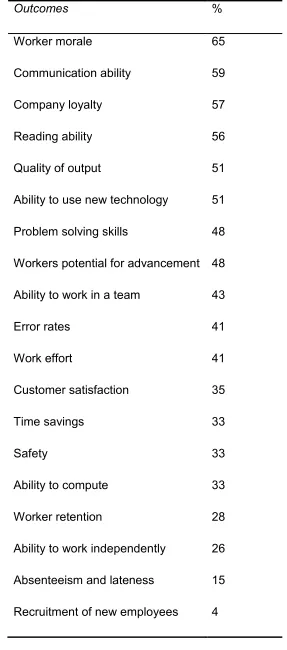
A 2009 survey (Martin et al) of more than 1000 employers by the Learning and Skills Network found that the key skills that employers want from the young people entering their first job were: timekeeping (80%); literacy (79%); numeracy (77%); enthusiasm and commitment (75%). The survey also asked employers about "deal breakers" what were the skills gaps that would prevent them from hiring young staff, no matter how good their other skills. 55% of employers cited a lack of literacy skills as a deal breaker; 51% a lack of communication skills; 48% focused on enthusiasm and commitment; and 47% said poor numeracy skills would prevent them from hiring young candidates.
Approximately one in five Scottish workplaces report skills gaps. In the 2008 Scotland Employer Skills Surveys (Futureskills Scotland 2008), for example, one fifth of Scottish employers reported that their employees lacked literacy (21%) and numeracy (20%) skills, yet higher proportions cited problems with oral communication (44%) and written communication (33%). The implication of this is that English and maths skills need to improve, but such improvements will not in themselves be sufficient. Basic skills are essential, but not in isolation.
In a small study of 13 managers, Boyle et al (2001) found that managers were much more interested in skills such as punctuality, team work and compliance with
regulations than with basic skills. However, Boyle et al observed that these managers appeared to have limited understanding of the amount of reading, writing and
numeracy required to perform the jobs in question, leading the authors to conclude that either managers were unaware of the level of basic skills required or that they took the possession of such skills by their recruits for granted.
2.2.1 Evidence on literacy and numeracy levels and skills and gaps (UK) The subject of what employers perceive to be the literacy and numeracy skills
employees need to be productive has been the focus of a number of surveys in the past two decades, due in large measure to increasing concerns about the basic skills needs of the workforce. However, the majority of this research has focused on
employees’ skills, rather than their impacts on employers. This may be because, in England at least, much of the funding for workplace basic skills programmes has come from adult literacy and numeracy policy streams.
relatively few jobs could be done without basic skills, with oral communication and reading skills considered particularly important. The survey found that there was substantial variation in occupational basic skills needs, depending on the type of job, industry and company size. Skills were summarized by six broad occupational
categories: clerical/secretarial; personal service; selling; skilled/craft manual; plant, vehicle, and machine operatives; and other manual jobs. Notably for policymakers, employers felt that staff needed reading, writing and oral communication skills at higher than Entry level for all types of jobs.
The UK Commission’s Employer Skills Survey 2011 is now “the key UK data source on employer demand for and investment in skills” (Davies et al, 2012, p. iv). The England-specific survey report includes findings from more than 74,000 interviews conducted with employers in England, and enables time series comparisons with earlier National Employer Skills Surveys carried out in 2005, 2007 in 2009. (Surveys of employers in Scotland, Wales and Northern Ireland produce results very similar to those of England, and will not be discussed in this paper.)
generally thought in its efforts to provide young people with employment-ready literacy and numeracy skills.
Unlike the 2011 survey, the 2009 National Employer Skills Survey for England 2009 (Shury et al, 2010) did report employers’ perceptions of literacy and numeracy needs amongst all employees, rather than just education leavers. In 2009, 19% of employers reported a skills gap – that is, they had employees who were not fully proficient in their jobs. Amongst employers reporting such a skills gap 24% said that there was a literacy skills gap, and 21% reported a numeracy skills gap. This means that 4.5% of
employers reported a literacy skills gap and 4% of employers reported a numeracy skills gap.
In the 2009 employer survey, 16% of all vacancies were skill shortage vacancies (SSVs). Literacy was mentioned in connection with 30% of SSVs; numeracy was mentioned in connection with 26%. These figures represent an increase from 2007, when literacy and numeracy were mentioned in connection with 22% and 18% of SSVs, respectively.
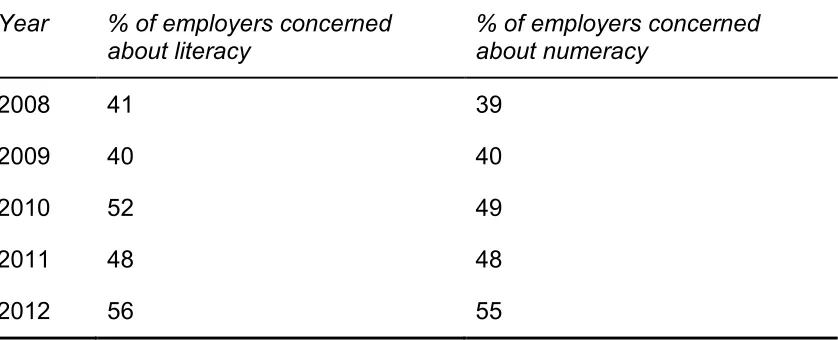
England’s 2007 National Employers Skills Survey found that literacy and numeracy deficits were most often reported amongst personal service, plant and machinery staff. Another major national survey, and one which tends to generate considerable policy and media attention, is the annual Confederation of British Industry (CBI) Education and Skills survey (CBI, 2012), which questions employers about workplace basic skills gaps, among other related issues. Over the course of five surveys (2008-2012), the survey has polled CBI members at senior executive level across all employment sectors (735 employers in 2008, 581 in 2009, 694 in 2010, 566 in 2011, 542 in 2012). Based on these surveys, the CBI argues that the majority of employers suffer because of the poor basic skills of their staff. Year on year, increasing proportions of
Table 2.1 CBI survey findings, 2008-12
Year % of employers concerned
about literacy % of employers concerned about numeracy
2008 41 39
2009 40 40
2010 52 49
2011 48 48
2012 56 55
For employers expressing concern about literacy skills, the quality of written English was consistently the major concern. In numeracy, spotting errors and rogue numbers was the main shortcoming. In the CBI surveys, employers in the retail and
manufacturing sectors, and employers in larger organisations employing over 5,000 people, are more likely to report poorer literacy and numeracy among their employees. Evidence from the CBI surveys suggests that poor literacy and numeracy are major problems for education leavers. For example, in the 2012 survey, two thirds of
employers (65%) saw a “pressing need” (6) to raise literacy and numeracy standards amongst 14-19-year-olds. The survey report argues that only if literacy and numeracy “are properly addressed can young people begin to use their other skills and abilities to contribute in the workplace” (CBI, 2012, p. 18). The suggestion implicitly points to the UKCES’s theoretical framework which places literacy and numeracy as essential but not isolated aspects of employability. It also highlights issues raised in research on the nature of “academic” versus “real world” skills. For example, Mikulchecy et al (1994) have argued that there may be little transfer from literacy learned at school to literacy as practised in the workplace. Fitzsimons (2000) has made a similar argument with regard to numeracy. The CBI report (2012, p. 21) further argues that the
apparently widespread weakness of young people’s literacy and numeracy “represents a major handicap at the start of their working lives”.
those of the National Employer Skills Surveys, in which only a small percentage of employers indicate that education leavers suffered from literacy and numeracy problems which affected their work performance. The CBI survey also differs greatly from the employer skills survey in its assessment of the scope of employer literacy difficulties. In the 2009 employer skills survey, only 4-5% of employers pointed to literacy/numeracy gaps in their workplace. In the 2011 CBI survey, however, “employers report[ed] widespread weaknesses in core skills among their existing employees – with almost half reporting problems with literacy and numeracy” (21). Although the CBI appears to identify a worrying trend of increasing employer dissatisfaction with employee literacy and numeracy skills, caution is due as these surveys offer employers limited options for reporting their concerns, and the reports conflate the responses of employers reporting either that there are skills problems to some extent and to a significant extent within their establishment.
One possible explanation for the large differences between the Employer Skills Surveys and the CBI surveys may be found in the large-scale Skills Needs in Britain surveys conducted during the 1990s. In these surveys, employers with more than 25 employees were asked whether they believed a significant gap existed between the skills that their current employees had and those needed to meet the employer’s business objectives. Data from one sweep of this survey were used by the National Skills Task Force (1997) to argue that a large percentage of employers thought their employees lacked basic literacy and numeracy skills. As reported by Brooks et al (2001), Robertson (1997) challenged this conclusion, arguing that employer respondents were sensitised to literacy and numeracy issues by the concentrated focus of the survey. By averaging the findings from surveys conducted in 1994, 1995 and 1996, he showed that only 4% of respondent employers felt that their business objectives were impeded in this way, although 11% did express concern about
employees’ ‘general communication skills’, a finding Brooks et al (2001) suggest could be taken as evidence of a larger employer concern over oral communication skills in the workplace.
basic skills, the CBI survey may encourage employers to overstate the significance and centrality of literacy and numeracy to workplace performance and productivity. This is an area that requires further investigation.
2.2.2 Evidence on literacy and numeracy levels and skills and gaps (International)
A New Zealand study explored the job-specific literacy demands placed on employees, by investigating whether or not employees experienced difficulties
performing workplace literacy tasks and whether these demands were increasing over time (Moore and Benseman, 2003). The study’s sample consisted of 330 randomly chosen respondents (shop floor employees, supervisors and employee relations managers) at 17 companies representing a range of industries in New Zealand. Moore and Benseman found that employees were much less likely to assess
themselves as having workplace-related literacy difficulties than were supervisors and employee relations managers. That is, supervisors and employee relations managers identified a greater level of skills need in employees than the employees themselves did. This finding may have implications for staff recruitment when and if employers do offer workplace literacy and numeracy programmes. That is, while employers may see a clear need for Workplace Learning (WPL) programmes, employees may not, thus limiting enrolment.
The findings of the 2006 Australian Adult Literacy and Life Skills Survey (ABS, 2008) indicate that four million Australians who are in employment have literacy levels below the recommended government level, i.e. that required to ‘meet the complex demands of everyday life and work in the emerging knowledge-based economy’ (Statistics Canada 2005, cited in ABS, 2008a). Employers are aware of this and feel that it is impacting upon productivity. More than 75% of employers consulted in the Australian Industry Group’s National Workforce Literacy Project said that their businesses
suffered because of low levels of literacy and numeracy among employees; reported negative impacts included reduced productivity (Taylor, 2011; AIG, 2012).
Basic skills difficulties may be a particular issue for employees in insecure jobs, including those who move in and out of unemployment. In an American study, Holzer and Stoll (2001) surveyed 750 establishments that had hired adults who had
2.3 Implications for research design
Area Observations Recommendations
i. Survey respondents and sampling unit
(establishme nt vs
enterprise)
• The evidence base for this review includes surveys that have been administered to supervisors, managers, employee relations managers (and others). Although who the survey is administered to influences the type and quality of data received, there is no clear message from the evidence that one specific type of respondent is more suitable for the current study.
•
• Because the current project methodology is based on short, twenty minute surveys, it is recommended that no final decision on survey respondents is made until the questionnaire is drafted.
ii. Staff
recruitment
• A range of measures (objective and
subjective) will need to be used to get close to an accurate assessment of the extent of basic skills need in the workplace.
• One such measure is the extent to which employers specify basic skills in in the recruitment process.
• To build up a picture of employers who perceive no need for workplace basic skills training in their establishment, data could be gathered on the importance of basic skills at recruitment level.
Area Observations Recommendations
• There is mixed evidence on whether the basic skills of education leaver(s)/younger job candidates are perceived to be
particularly poor.
•
numeracy skills fail to make it through the recruitment process, and in which sectors and occupations this is more likely to happen.
• The subject of basic skills and recruitment could be explored further in the employer case studies, particularly perhaps with employers who do not report skills gaps at their organisation.
•
iii. Employer perceptions of employee literacy and/or numeracy skills
• This study faces two linked challenges: to isolate literacy and numeracy skills in assessing skills need/gaps and to evaluate the contribution of these two isolated skills to business productivity and profitability.
• The evidence considered in this literature review strongly suggests that to most
employers, literacy and numeracy skills form
Area Observations Recommendations
part of a larger platform of employability skills.
• An emphasis on the personal skills associated with employability (such as communication skills and problem-solving skills) may mask the role of literacy and numeracy.
• There is some evidence to suggest that poor basic skills are associated with specific employee cohorts (younger employees, employees in insecure jobs).
employees carried out? If so, when (for example, prior to changes in job role, as part of the promotion process)? Do
employers attempt to track skills’ loss over time? These issues could be examined in depth in case studies.
iv. Skills gap • Survey respondents may have only a limited understanding of the literacy and numeracy skills that are required in the various job roles at their workplace; research has tended to focus on employee skills rather than the impact on employers.
• Evidence on the scale of the skills gap in
• The challenges involved in getting
employers to think about the use of literacy and numeracy skills within their
Area Observations Recommendations
English workplaces is contradictory. In the National Employer Skills Survey, fewer than 5% of all employers reported literacy or numeracy skills gaps in their organisation. The annual CBI Education and Skills survey show an increasing proportion of employers reporting concerns about the impact of poor literacy and numeracy, with over half of all employers expressing concern in 2012. This variation highlights the importance of
question wording in the current survey. Broad brush questions can be insufficiently sensitive to capture data on the scale of need.
• Evidence from various sources links basic skills gaps in the workplace to certain occupations (personal service, plant and machinery staff), sectors (retail and manufacturing) and to larger
with (for example, with writing reports, responding in writing to complaints,
calculating percentages, spotting numerical errors).
• Previous studies should be mined for examples of literacy and numeracy skills in practice. For example, self-assessment questions used with respondents to BCS70 may provide useful source material and a point of comparison. Other sources include the CBI’s Education and Skills Survey and the National Employer Skills Survey.
Area Observations Recommendations
3. Economic costs associated
with poor English and maths in
the workplace
This section offers an assessment of the economic impacts of literacy and numeracy skill deficits in the workplace. Offering such an assessment is a challenge, as there is little reliable evidence on the scale of such costs. Most of the research in this area has focused on basic skills requirements and gaps, rather than the monetising the cost to employers of skills deficits. International research has examined issues relating to the impacts of basic skills in the workplace (although without seeking to attach a cost to these problems). To this end, this section includes literature assessing estimated cost, for example through qualitative interviews with employers, as well as research seeking to accurately quantify economic cost.
3.1 Theoretical considerations: Possible costs to businesses who
may be affected by poor literacy and numeracy
Studies such as the Skills for Life survey show that employees’ basic skills levels differ significantly depending on their occupational category and the industry they work in. However, this does not in itself imply that particular occupations caused higher cost to firms because of skills gaps. For example, while workers in routine occupations may have lower basic skills levels, many may also have limited basic skills needs.
Cleaners, for example, may need to read and write a little or even no English, and may only need a limited spoken vocabulary to function effectively in their job. On the other hand, skills needs in many occupations may negatively affect on product quality and/or company productivity.
3.1.2 What is affected
Efficiency: Literacy and numeracy skill deficits can have a range of impacts on
workplace efficiency. Difficulties interpreting the information arising through production processes can result in inefficient use of technology (and potentially constraining introduction of more efficient processes or higher quality products). Employers may also find it challenging to deploy workers on a flexible basis, constraining managerial innovation. Finally, those with basic skills needs are more susceptible to making errors, resulting in greater levels of lost time and waste.
Time costs: Past research has also shown that basic skill needs amongst the workforce can depress productivity by unnecessary absorption of the time of line managers. This can occur via upward referral of basic work issues, additional time absorbed by quality assurance (supervision costs), or through dealing with higher volumes of customer complaints. The time absorbed will represent an opportunity cost to employers: the time of supervisory staff may be more productively employed on other tasks, leading to lower levels of total output (GVA).
Accidents: Errors driven by basic skill needs may cause additional costs through greater risk of accidents. These costs could include one-off costs associated with an accident (damage to machinery, for example), but may also to on-going costs for firms (such as higher insurance premiums). Accidents could also lead to lost output (GVA) where production is stopped or halted.
3.2 Evidence from employers (UK)
Most UK research in this field has not sought to estimate costs, but has instead focused on the avenues through which firms might incur such costs. For example, employers responding to the CBI’s Education and Skills surveys routinely express concern about the impact of poor basic skills on business performance: in 2008, for example, 40% of respondents reported poor customer service and 34% lower productivity linked to literacy and numeracy skills problems. Likewise, research on poor literacy and numeracy skills in the Armed Forces (NRDC, 2013) has found that individuals with poor basic skills can place a burden on the chain of command. Poor literacy and numeracy among service personnel is associated with: being detained at the Militarily Corrective Training Centre; being involved in accidents; being Absent without Leave; and being given lower performance ratings by commanding officers. The main UK effort to estimate costs to employers (and industry as a whole) of poor basic skills is the survey conducted by Gallup, who were commissioned by the (then) Adult Literacy and Basic Skills Unit (ALBSU) in 1992 to conduct a survey of
employers4. This survey (ALBSU 1993) aimed to establish the levels of basic skills difficulties among the workforce as perceived by employers; and to quantify and describe the costs to employers of poor basic skills and the effect of these on their operation. Data were gathered in telephone interviews with 400 managers in firms with 51 or more employees, using a randomly selected sample weighted to be
representative for the UK.
Employers were asked three questions:
1. how many customer orders were cancelled per year because of errors, problems or misunderstandings?
2. how many orders were despatched/produced incorrectly?
3. how many customers were lost per year through errors, problems or misunderstandings?
4 This survey and its impacts have been ably summarised by Ananiadou et al (2003); our own summary
draws heavily on that one.
Employers were then asked to estimate what percentage of these problems could have been avoided if their staff had better literacy, language and numeracy skills. Further questions were asked about the additional supervisory costs incurred because of poor staff basic skills, and the cost of recruiting staff externally because poor basic skills limit their own employees’ potential for internal promotion.
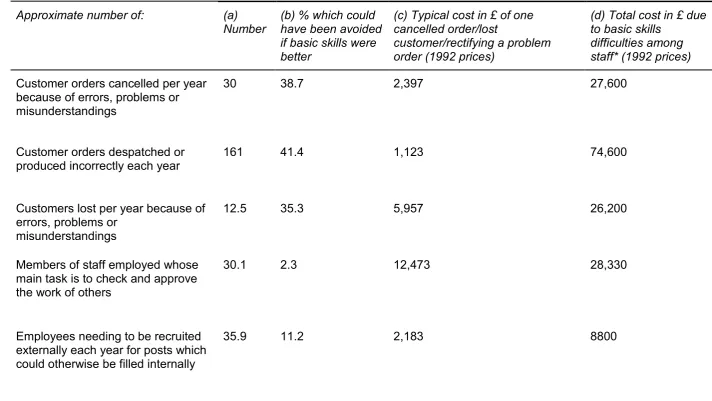
Table 3.1 Average cost of poor basic skills per company
Approximate number of: (a)
Number (b) % which could have been avoided if basic skills were better
(c) Typical cost in £ of one cancelled order/lost
customer/rectifying a problem order (1992 prices)
(d) Total cost in £ due to basic skills
difficulties among staff* (1992 prices)
Customer orders cancelled per year because of errors, problems or misunderstandings
30 38.7 2,397 27,600
Customer orders despatched or
produced incorrectly each year 161 41.4 1,123 74,600
Customers lost per year because of errors, problems or
misunderstandings
12.5 35.3 5,957 26,200
Members of staff employed whose main task is to check and approve the work of others
30.1 2.3 12,473 28,330
Employees needing to be recruited externally each year for posts which could otherwise be filled internally
Approximate number of: (a)
Number (b) % which could have been avoided if basic skills were better
(c) Typical cost in £ of one cancelled order/lost
customer/rectifying a problem order (1992 prices)
(d) Total cost in £ due to basic skills
difficulties among staff* (1992 prices)
ALBSU then used these data to provide an estimate of the total cost of basic skills problems to industry as a whole, i.e. all 40,000 UK companies estimated to employ 51 staff or more. As Table 3.2 shows, the overall cost was
estimated to be £4.8 billion per year, in 1993 currency. ALBSU further argued that these costs were likely to be underestimates, as they did not account for a range of other costs, such as those associated with lost future business, the need for additional staff training, and the cost of repeating work that was done poorly because of basic skills problems.
Table 3.2 Summary of the estimated total cost to industry of poor basic skills for companies employing 51 or more people (from ALBSU, 1993)
Grossed-up estimates (million pounds)
Cost of customer orders cancelled through poor basic skills 911 Cost of rectifying customer orders dispatched incorrectly through poor basic skills
2,500
Cost of customers lost through errors etc., due to poor basic skills 886 Cost of staff who could be dispensed with if basic skills were better 197 Cost of recruiting employees externally because poor basic skills
limits internal promotion
334
Total 4,828
sample provided responses. Furthermore, almost three-quarters (71%) of those surveyed said that their company had never experienced a financial loss which they felt could be attributed to poor basic skills, and a further 16% said that while this had happened, it occurred only rarely. In addition, the survey was based on subjective estimates by employers, rather than objective measures of true costs.
3.3 Evidence from employers (International)
A study on the literacy and numeracy difficulties in the Irish workplace (Kelly et al 2012) used data from an Irish employer-employee linked the dataset, the October 2006 National Employment Survey (NES), to assess the impact of literacy and numeracy difficulties on companies’ training expenditures. The study also sought to ascertain the overall incidence of literacy and numeracy difficulties in the Irish workplace, the correlations between literacy and
numeracy needs and other skills gaps.
In 2006, 1.5% of Irish employees indicated they had a literacy difficulty, while 2% reported a numeracy difficulty. Similar proportions of public and private sector employees reported literacy difficulties, while private sector workers were slightly more likely to report numeracy problems. The highest incidence of literacy problems was reported by employees in the transport sector, while the lowest was in the financial and education sectors. Turning to numeracy, higher than average problems were reported in the wholesale and retail, transport, and other services sectors. The lowest incidence of self-reported problems was again in the education and financial sectors.
In this study, a private firm was regarded as having a literacy and/or
indicate a lower level of corporate awareness of basic skills problems in the workforce. That is, employers may have incomplete information about the gaps in their employees’ basic skills, and these gaps may, in turn, have a negative effect on productivity and profitability.
There are clear difficulties with this study’s methodology. First, the 20% figure appears to be an arbitrary cut-off point, and one that may be artificially high. The company may see negative impacts of literacy and/or numeracy gaps even if a much smaller percentage of employees struggle with those skills. Most importantly, however, is the self-reported nature of these skills needs. As has been rigorously documented elsewhere (see e.g. Bynner and Parsons 2006), individuals tend to perceive themselves as having better literacy and numeracy skills than they actually do, at least as measured on standardised tests. As the Irish workplace literacy and numeracy study is based on
employee self-report of difficulties, it may significantly underestimate literacy and numeracy needs.
In Australia, O'Neill and Gish (2001) found that poor staff literacy was seen by employers as impacting on business in two ways. A lack of clarity of meaning in written texts was believed to expose companies to unnecessary risks and costs. Second, poor literacy was viewed as detracting from the image
businesses wished to project to customers. Employers in this study said they wanted written text to be presentable in terms of legibility, accurate in terms of spelling and punctuation, and to have clear sentence cohesion in meaning. In workplaces where written texts – for example, inspection reports, service reports, quotations and correspondence with customers – were particularly important, the ability to produce high quality written documents was viewed as an essential skill. Managers did not want to spend their time correcting
3.3 Implications for research design
Area Observations Recommendations
Cost • There is a dearth of robust evidence on the
economic costs to enterprises of poor basic skills in the workforce. Little evidence monetises the cost to employers of skills deficits; what evidence there is, is more likely to be based on costs estimated by employers in qualitative interviews than on quantitative data.
• This suggests that respondents to the current study may also struggle to ascribe a monetary value to costs of basic skills.
• A 1993 ALBSU/ Gallup study measured the costs of poor basic skills in five areas: 1) customer orders cancelled due to errors, problems or
misunderstandings; 2) orders dispatched or
• The survey should look at different cost types, such as HR, number of accidents, absenteeism, quits, sale costs, customer complaints etc. based on what the literature suggests) and see if the differences across firms are explained by their deficits in basic skills.
• The five measures of the costs to business of poor basic skills used in the ALBSU/ Gallup study could be used in the current study to provide comparable data. In order to avoid replicating the earlier study’s
Area Observations Recommendations
produced incorrectly; 3) customers lost due to errors, problems or misunderstandings; 4) cost of supervisory staff needed due to poor basic skills; 5) cost of external recruitment due to poor basic skills in house.
• Most UK research in this field focuses on the
avenues through which firms might incur costs from poor basic skills. These include: poor customer service, lower productivity, costs in management time, costs associated with poorly written texts (for example reports, correspondence), costs associated with understanding and interpreting information (for example quality assurance and health and safety requirements).
measures rather than subjective estimates are used to measure costs
• The scale used will be key here as respondents are unlikely to be able to specify exact numbers of cases of, for example, complaints, but are likely to be able to judge the extent to which this is an issue.
• The greatest challenge will be in attempting to monetize such information. It is
Area Observations Recommendations
• Another possible area for inclusion is costs due to inefficient use of technology or increased supervisory costs.
• Some previous studies will provide tried and tested items to include here (see for
example Schick (2005)). It is recommended that the survey be scripted to filter
4. Motivations and incentives
for employers to invest in
basic skills provision
This section focuses on motivations and incentives for employers to invest in basic skills provision. By motivations, we refer to companies’ stated reasons for implementing or maintaining WPL programmes – for example, the desire to improve product quality or increase productivity. By incentives, we mean external push/pull factors aimed at encouraging programme implementation – for example, government subsidies. Evidence on both these topics is
discussed within the context of evidence on employer provision of workplace basic skills and the characteristics of companies providing it.
4.1 Theoretical considerations: human capital theory,
general education and job-specific training
In Becker’s seminal theoretical work (e.g. 1962), he divided human capital into two broad forms, general and specific. General human capital is portable – it is a skill or trait could benefit more than one firm. Specific human capital, on the other hand, has limited portability; at its most extreme, it can benefit only one firm. Broadly speaking, efforts to increase general human capital are considered to be education, while efforts to increase specific human capital are thought of as training. More practically, the lines between education and training are often blurred; this is particularly the case with workplace basic skills.
As Wolf and Evans (2011, p. 113) observe, “it is hard to think of anything more ‘general’ in applicability than basic skills”, particularly literacy. Theoretically, therefore, firms should refuse to pay for basic skills
should be paid for by some combination of the firm and the individual. The argument that the state should be responsible for workers’ basic skills is evident in the CBI’s regular conclusion that schools must do a better job of providing the workers of the future with good literacy and numeracy skills (see e.g. CBI 2012). It is also evident in the frequent use of government subsidies to incentivise the implementation of workplace basic skills programmes. In theory, workplaces should not provide basic skills provision; in practice, some workplaces do. These workplaces clearly see such programmes as a rational investment. This may be because the economy is not perfectly competitive: for example, workers are not completely mobile, and those who improve their general skills may not be able to advertise that fact to competing firms. Furthermore, the available evidence does not appear to support the theorised impacts of workplace basic skills on turnover. If anything, the provision of such programmes appears to reduce turnover (Ananiadou et al, 2003).
4.2 Evidence from employers
4.2.1 What percentage of employers provide basic skills training? UK evidence
There is limited evidence on the amount of workplace basic skills training provided by English employers. Generally speaking, employer surveys collect data only on of the total amount of training provided to employees. The 2011 Employer Skills Survey, for example, found that 66% of establishments had trained some of their staff in the preceding 12 months, and that 53% of the workforce had received some training – figures consistent with findings from previous iterations of this survey. However, this survey does not attempt to ascertain the percentage of employers offering basic skills training.
Some other surveys have attempted to gather such data. For example,
Results from the survey showed that larger establishments were more likely to offer basic skills training: in workplaces with five or more employees,
numeracy was offered by 11% and literacy by 10%, rising to 22% in both literacy and numeracy for establishments with 100 to 199 employees, 25% for numeracy and 27% for literacy for workplaces of between 200 and 499
employees, and 42% for numeracy and 44% for literacy with 500 or more employees.
In the Gallup/ALBSU survey (ALBSU, 1993), 27% of respondent companies indicated that they had a formal policy addressing the issue of basic skills difficulties among employees; 71% had no policy at all. Although 39% of responding companies reported offering some basic skills training, most employers reported that such training was not offered because staff already had adequate skills for their jobs, and it is likely that non-respondents to this survey are less likely to offer courses than respondents. Within companies offering basic skills training, instruction was most likely to focus on oral communication skills (71%), followed by numeracy (61%), writing (56%) and reading (41%).
4.2.2 What percentage of employers provide basic skills training? International evidence
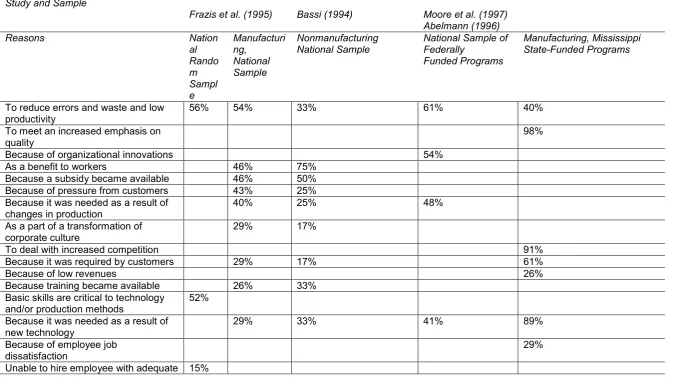
In the US, a large (8467 establishments) nationwide random sample of employers undertaken in the 1990s found that 2.2% provided basic skills training (Frazis et al, 1995; Levenson 2004). Company size was a key factor in determining the presence or absence of WPL programmes: 19.3% of establishments with 250 or more employees provided basic skills training, compared to 7.2% of establishments with 50-249 employees and only 1.7% of companies with fewer than 50 staff. Industry-based differences were also apparent. More than 5% of manufacturing enterprises provided basic skills training, compared to 3% of companies in
approximately triple the rate found by Frazis et al (1995). As Bassi’s sample was much smaller, it seems sensible to place more trust in Frazis et al’s findings. Both Bassi and Frazis’ surveys yielde