International Journal of Innovative Technology and Exploring Engineering (IJITEE)
ISSN: 2278-3075, Volume-9 Issue-2, December 2019
5143
Published By:
Blue Eyes Intelligence Engineering & Sciences Publication
Retrieval Number: B6628129219/2019©BEIESP DOI: 10.35940/ijitee.B6628.129219
Abstract: Increase of production efficiency through generalization of design practices of integrated product quality management of the industry is a necessary condition for sustainable development of domestic production.
The purpose of the study is to assess the existing system of quality management of the enterprise on the example of a separate business unit and identify directions to increase its effectiveness. Object of study — Production Association of Software (Polished Glass) JSC AGС “Borsky Glass Factory”. The subject of study is an integrated quality management system. Research methods — method of economic analysis, and method of expert assessments. A practical significance of the work lies in the possibility of using the results to control non-conforming products in the process of industrial production. These studies allow to draw conclusions about the effectiveness of the technology used for product quality management and production processes of the industry enterprise on the example of a separate production.
Keywords : production, quality management, non-conforming product management, causes of defects
I.
INTRODUCTION
In
the conditions of implementation of the
competitiveness policy of domestic products at the world
level, the economic importance of adaptive quality
management systems of production increases. The initial step
towards formation of integrated quality systems was the
transition of domestic production to compliance with
international standards ISO 9000 series in the 1990s. This
opened up the possibility of increasing the efficiency of
economic activity by entering new sales markets,
strengthening logistics systems and resource support for
production, forming a federation of systems, and conditions
for entering the CALS system. In the 2000s, the expertise
(certification) of product quality was distributed on a
systematic basis — according to the results of the research of
the international organization for standardization ISO. In the
Revised Manuscript Received on December 05, 2019. * Correspondence Author
Garina E.P. Minin Nizhny Novgorod State Pedagogical University
Garin A.P. Minin Nizhny Novgorod State Pedagogical University
Romanovskaya E.V. Minin Nizhny Novgorod State Pedagogical University [email protected]
Andryashina N.S. Minin Nizhny Novgorod State Pedagogical University [email protected]
Kuznetsova S.N. Minin Nizhny Novgorod State Pedagogical University [email protected]
Batsyna Ya.V. Institute of Food Technologies and Design — the branch of Nizhny Novgorod State University of Engineering and Economics
Russian Federation for the period from 2012 to 2018, the
number of quality management systems has reached more
than seven hundred. In the 2010s in the context of improving
tools and mechanisms for integration of system participants
based on appropriate regulatory and institutional support for
production processes. The focus is on ensuring the
adaptability of quality management systems not for
experimental products sites, but the production as a whole.
Problems of system management of quality and safety of
products, management of non-conforming products in the
production process are solved.
II.
THEORETICAL
AND
METHODOLOGICAL
APPROACHES
In the research process, the method of observation,
systematization, process approaches to the technology of
production and organization of production were used. The
objectives of the research were: 1) evaluation of the quality
management system separate production processes; 2) the
formation of decisions to improve production efficiency
based on the principle of end-to-end integrated quality
management and requirements of international ISO standards.
III.
RESULTS
OF
THE
STUDY
In order to formulate the content of a product quality and
safety management system, the generally accepted definition
of a quality management system and product quality were
used in the following interpretation: product quality is a set of
essential properties quantified by the system of technical and
economic indicators, distinguishing products from other
similar purposes, determining demand on products in market
conditions at socially needed costs and market - generated
prices for these products.
Under the system of product quality management in the
research, we mean an integrated system for managing the
processes of ensuring product quality by identifying
appropriate (meeting the requirements of standards) and
non-conforming products in the production process: detection
and identification of non-conforming products at different
stages of the manufacturing process; preventing the
unintended delivery of non-conforming products to
consumers; Identify ways to manage inappropriate products.
In fact, the quality and safety management system of
industrial integrated structures is a complex multifactor
system of interrelated elements and procedures: 1. Automatic
detection of non-conforming products (first control point); 2.
System Quality Management of the Industry
Enterprise (on the Example of Separate
Production)
5144
Published By:
Blue Eyes Intelligence Engineering & Sciences Publication
Retrieval Number: B6628129219/2019©BEIESP DOI: 10.35940/ijitee.B6628.129219
Identification of non-conforming products by personnel on
the assembly line (second control point); 3. Control of
product elements “on the way” in the assembly (third control
point).Considering the issue on the example of a separate
production (production of sheet glass), we determine:
- In the glass industry, in accordance with the existing GOST,
quality control in the production of sheet glass is carried out
by various methods and tests.
- Management of non-conforming products in the process of
production of polished glass includes several stages: 1)
detection and identification; 2) maintenance of records of
non-conformities;
3)
recycling,
repair
of
blocks,
reclassification of non-conforming products. Sources of
non-conforming products are the results of automated
continuous control.
The sequence of actions to control non-conforming products at control points is shown in Figures 1-2.
Glass tape entry to the control point
1. Detection and identification of defects on the glass tape
4. Disposal no 2. Compliance with the Optimization Program
[image:2.595.62.535.165.518.2]3. Transfer sheets to the stowing tool
Figure 1 — The first control point. Automated control of glass tape
Transportation of glass sheets to the inspection site
1. Identification of inconsistencies Controllers Log
2. Informing the decision maker
3. Block delay Marking blocks
Identification 4. Control of delayed blocks
5. Deciding to manage non-conforming products 6. Reclassification
7. Disposal
8. Corrective Action
9. Re-control
10. Final decision on compliance
11. Transfer of glass to the warehouse
Figure 2 — The second control point. Glass inspection by personnel on the line*
* Third control point — The control of glass blocks by the personnel on the stowing is similar
Description of work in the management of non-conforming
products is given in Tables 1-3.
.
Table 1 - Automatic detection of non-conforming products (first reference point)
Process Operations
Name equipment/responsible
person
Deadline Log in to the operation Exit the operation
1 Detection and
identification of defects on the glass tape
Laser detector/controller SP -PPS
Constantly Glass Tape Detected and identified defects, information on electronic carrier
2 Optimization Program Compliance Decision
Automatically (optimization program)/Supervisor of the SP-PPS
After identification
Glass Tape Optimization Program, Replacement Cutting Job, Internal Specifications
Information on electronic carrier Yes: related products; No: non-conforming products Yes:
3 Transfer of sliced sheets to the stowing
Automatically (cutting line)/cutting control operator
After decision Information on electronic carrier Information on electronic carrier, suitable products
No:
4 Disposal: trimming a sheet with unacceptable defects from the tape
Automatically /Adjusters of glass machines
After decision Information on electronic carrier Information on electronic carrier, cullet
Table 2 - Identification of non-conforming products by the glass controller (second control point on line) (fragment)
Process Operations Responsible
performer Deadline Log in to the operation Exit the operation 1 Detection of nonconformities
and their identification
Comptroller of SP-PPS
At least once every 2 hours
GOST R 54170, STP 02, RI, sheet of glass (2 linear meters)
International Journal of Innovative Technology and Exploring Engineering (IJITEE)
ISSN: 2278-3075, Volume-9 Issue-2, December 2019
5145
Published By:
Blue Eyes Intelligence Engineering & Sciences Publication
Retrieval Number: B6628129219/2019©BEIESP DOI: 10.35940/ijitee.B6628.129219
2 Informing decision maker Comptroller of SP-PPS
After identification
Information on discrepancies identified
Awareness of the responsible persons (PPS quality engineer, shift supervisor, quality service controller)
3 Block delay: Identification of delayed blocks;
- Marking blocks;
- entry of the delay code in AS “KIS-FLOAT”
Comptroller of SP-PPS Comptroller SP Quality Service
Immediately after receiving information about
non-compliance
Information on discrepancies identified
Delayed blocks.
Records in checklists. Information in AS “KIS-Float”: entering a delay code and notes to blocks. Identification of delayed blocks
4 Control of delayed blocks Quality Engineer of Quality Service Comptroller SP Quality Service
In the day shift GOST R 54170, MDI, identified delayed blocks, information in AS “KIS-Float”, checklist
Control results: records in the checklist, information in AS “KIS-Float”
5 Deciding on non-conforming products
Quality Engineer After the control of the delayed blocks
GOST R 54170, information on revealed inconsistencies
Decision: Reclassification Repair
Reclassification: Head of PPS Disposal
….
Table 3 — Identification of non-conforming products by the GP quality controller (third control point — on the stowing
tool)(fragment)
Process Operations Responsible
performer Deadline Log in to the operation Exit the operation 1 Detection and identification
of defects on glass sheets in the block
Comptroller SP Quality Service, Adjusters of glass machines
Constantly GOST R 54170, STP 02, RI, cut blocks on the pyramid
Information in the KIS technological journal, information in AS “KIS-Float”
2 Informing decision maker Comptroller SP Quality Service
After a block delay Information on discrepancies identified
Awareness of responsible persons (quality service engineer, shift master)
3 Block delay: Identification of delayed blocks;
- Marking blocks;
- entry of the delay code in AS “KIS-FLOAT”
Comptroller SP Quality Service
Immediately after receiving information about non-compliance
Information on discrepancies identified
Delayed blocks.
Records in checklists. Information in AS “KIS-Float”: entering a delay code and notes to blocks. Identification of delayed blocks
4 Control of delayed blocks Quality Engineer QS,
Comptroller SP Quality Service
In the day shift GOST R 54170, MDI, identified delayed blocks, information in AS “KIS-Float”, checklist
Control results: records in the checklist, information in AS “KIS-Float”
…
If large, unacceptable defects or a high level of defect are
detected, then the optimization program automatically
triggers and the glass is sent to the disposal machine for
further use of a return glass.
If discrepancies are detected, the volume produced between
the last two tests if the discrepancy was detected by the
controller. Also from the moment, the discrepancy appears if
this can be accurately determined by the control devices, for
example, interruption of the glass tape, equipment shutdown,
etc.
For an appropriate decision (disposal, reclassification, or the
possibility of shipment) for delayed blocks, a production
commission is assembled consisting of interested managers
and specialists (Figure 3).
.
Form of write-off act
OPEN JOINT-STOCK COMPANY “AGC BORSKY GLASS FACTORY” Polished Glass Department
ACT NO. ____ Approved:
Head of Department “Polished glass” About discarding of glass sheet
Сommission:
Quality manager of “Polished glass” Head of GSP LLC “AGC Glass Russia” Head of the shipment section
Quality Engineer of Polished Glass Quality Service Quality Engineer KIS “Polished Glass”
Senior Engineer-Technologist of the cutting section Specialist in accounting of glass SSP “Polished glass” Quality Service Controller of “Polished Glass”
Senior engineer-technologist of the PPS responsible for the glass production Date:
The Commission carried out a control check of polished glass:
Block
No. Color
Size, mm Thickness,
mm Quality Pcs.
Weight, t.
m2 RS The reason of
5146
Published By:
Blue Eyes Intelligence Engineering & Sciences Publication
Retrieval Number: B6628129219/2019©BEIESP DOI: 10.35940/ijitee.B6628.129219
length breadth
Subtotal
Conclusion:
[image:4.595.57.552.47.213.2]Signatures of commission members:
Figure 3- Form of deduction of non-conforming (defective) products
In case of identification of non-conforming products
after delivery to a consumer, further work is carried out in
accordance with the procedure of ISM P 212-1 on work with
claims.
[image:4.595.53.287.259.392.2]Based on the above, detection of defects, their
classification and obtaining quantitative characteristics are
necessary to build a modern quality control system for sheet
glass. The conclusion is confirmed by statistical data — the
number of non-conforming products for the 1st quarter of
2018 was (Figure 4):
Figure 4 — Quantity of non-conforming products for Q1 2018 by individual production
The main problems leading to production of non-conforming
products, as well as the actual value of defects during the
period under study, are shown in Table 4
Table 4 — Main issues and number of product defect for 1st
quarter of 2018 by individual production
Main problems
1st quarter of 2018
Total August
2018 Scratches
631 043
thousand rubles Defective
workpieces
113 pcs. 30 pcs. 70%
Cost of 1 defective workpiece
5584,46 rubles
26,5%
Savings 167 533 thousand rubles.
At the same time, the planned value in the forecast period is a
decrease in the number of defects on glass by 70% (nominal
value of 2.1 mm).
The list of root causes of these statistics is shown in Table 5:
Table 5 — List of root causes of high percentage of non-conforming products by individual production for the
period
1. Staff: - High staff turnover;
- Violation of the required instructions. 2. Material: - The presence of defects in blocks;
- Low service life of the original belts; - High cost of original spare parts;
- Wear of coating and “components pyramids”; - Lack of special containers.
3. Method: - Small stock % of components;
- Delivery time of spare parts from 4 weeks; - Manual manipulation;
- There is no additional transfer on manual tables; - There is no 100% control
4. Equipment:
- Wear of the belt surface;
- Lack of the crane on a carved table; - Wearout of parts;
- The presence of glass fragments on tables and
roller coils. 5.
Environment :
- Seasonality;
- Low lighting on the site; - Glass dust.
6.
Management :
- Lack of staff; - Low wages
Assessment of existing problems showed: untimely
replacement of belts and components; lack of spare belts. The
source of the problem is the high cost of original belts and
broken glass on tables for disposal. Also: manual
manipulations — throwing away the defect; scratches on the
sheets; poor visibility in production and lighting on tables.
To solve the identified problems, it is necessary to:
1. Install missing belts on sections;
2. Replace the carved table cover;
3. Install additional lighting of the table in the section;
4. Set the brushes for cleaning with belts.
5. Install an additional crane for blowing the carved table.
6. To eliminate the problem with personnel, it is necessary to
hold a meeting on implementation of instructions on labor
protection.
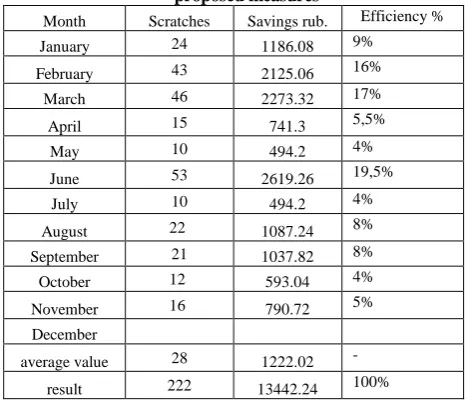
[image:4.595.303.539.449.651.2]Implementation of these solutions will allow in the forecast
period to increase production efficiency, and reduce the
percentage of inappropriate products (table 6):
Table 6 — Savings and benefits after implementation of proposed measures
Month Scratches Savings rub. Efficiency %
January 24 1186.08 9%
February 43 2125.06 16%
March 46 2273.32 17%
April 15 741.3 5,5%
May 10 494.2 4%
June 53 2619.26 19,5%
July 10 494.2 4%
August 22 1087.24 8%
September 21 1037.82 8%
October 12 593.04 4%
November 16 790.72 5%
December
average value 28 1222.02 -
result 222 13442.24 100%
[image:4.595.41.292.454.548.2]International Journal of Innovative Technology and Exploring Engineering (IJITEE)
ISSN: 2278-3075, Volume-9 Issue-2, December 2019
5147
Published By:
Blue Eyes Intelligence Engineering & Sciences Publication
Retrieval Number: B6628129219/2019©BEIESP DOI: 10.35940/ijitee.B6628.129219
IV.
CONCLUSION
To sum up, we can say that ISO/TS -16949 can be
implemented only if:
— with interest of the top management of the enterprise;
— participation in the work of all personnel and constant
training of personnel;
— understanding the relationship between requirements of
the standard and special methods.
Implementation of ISO requires a deep understanding of
management decisions which based on assessment of the
effectiveness of the quality management system and
implementation of preventive and corrective actions for
analysis and control of management processes of
non-conforming products.
REFERENCES
1. Andryashina N.S. Analysis of the best practices of domestic machine-building enterprises // Bulletin of Saratov State Socio-Economic University. 2014. № 1 (50). P. 24-27
2. Garina E.P., Garin A.P. The use of modern methods of quality management to improve the production efficiency of complex product // Bulletin of NGIEI. 2017. № 11 (78). P. 111-119
3. Garina E.P., Garin A.P., Vinogradova S.A., Batsyna Ya.V. Formation of risk management system in project practice of enterprises // Financial economy. 2019. №3. P. 459-463
4. Guskova N.D., Salimova T.A., Gorin I.A. Analysis of the status of import substitution problems in the Russian Federation // Bulletin of the Samara State University of Economics. 2016. “2 (136). P. 11-17 5. Garina E.P., Kuznetsov V.P., Andryashina N.S., Romanovskaya
E.V., Kuznetsova S.N. (2019) Exploring Alternative Strategies for Managing the Complexity of a Product. In: Popkova E. (eds) The Future of the Global Financial System: Downfall or Harmony. ISC 2018. Lecture Notes in Networks and Systems, vol 57. Springer, Cham
6. Parshina A.A., Levchuk V.V., Shpilevskaya E.V., Garina E.P., Garin A.P. (2019) The Study of Modern Approaches to Development of Economic Systems Through Managing Their Complexity. In: Popkova E. (eds) The Future of the Global Financial System: Downfall or Harmony. ISC 2018. Lecture Notes in Networks and Systems, vol 57. Springer, Cham
7. Romanovskaya E.V., Kuznetsov V.P., Andryashina N.S., Garina E.P., Garin A.P. (2020) Development of the System of Operational and Production Planning in the Conditions of Complex Industrial Production. In: Popkova E., Sergi B. (eds) Digital Economy: Complexity and Variety vs. Rationality. ISC 2019. Lecture Notes in Networks and Systems, vol 87. Springer, Cham
8. Romanovskaya E.V. Development of production and technologies: Teaching and Methodological Manual / Minin University. Nizhny Novgorod, 2018. 84 p.
9. Shpilevskaya E.V. Economic security of the country: Threats and ways of its provision // International Research Journal. 2016. №5-1 (47). P. 188-193
10. Shushkin M.A., Aleksandrovsky S.V., Fomenkov D.A. Research on the implementation of catch-up innovative development strategies by companies: monograph /National Research University “Higher School of Economics”. Nizhny Novgorod, 2016. 187 p.
AUTHORS
PROFILE
Garina Ekaterina Petrovna, Candidate of Economic Sciences, Associate Professor, Minin Nizhny Novgorod State Pedagogical University
Garin Alexander Petrovich, Candidate of Economic Sciences, Associate Professor, Minin Nizhny Novgorod State Pedagogical University
Romanovskaya Elena Vadimovna, Candidate of Economic Sciences, Associate Professor, Minin Nizhny Novgorod State Pedagogical University
Andryashina Natalia Sergeevna, Candidate of Economic Sciences, Associate Professor, Minin Nizhny Novgorod State Pedagogical University
Kuznetsova Svetlana Nikolaevna, Candidate of Economic Sciences, Associate Professor, Minin Nizhny Novgorod State Pedagogical University