International Journal of Innovative Technology and Exploring Engineering (IJITEE) ISSN: 2278-3075, Volume-8 Issue-9, July 2019
Abstract: The pervasiveness of diabetes is rising everywhere throughout the world because of populace development, maturing, urbanization and expansion of obesity and physical latency. The International Diabetes Federation (IDF) evaluates the complete number of individuals in India with diabetes to be around 70 million in 2017, ascending to 109.0 million by 2030. This article is to spread the awareness of diabetes in India in both urban and rural areas. The present examination demonstrates that overweight and weight rates in youngsters and youths are expanding among the higher financial gatherings, as well as in the lower pay groups where underweight remains a remarkable concern.
Index Terms: Diabetes Mellitus, Smoking, Alcohol, Cardiovascular disease, Obesity, Data Analysis, India
I. INTRODUCTION
Diabetes is a deep-rooted condition that causes an individual's glucose level to end up excessively high. Diabetes has developed as a noteworthy medicinal issue in India. As indicated by the Diabetes Atlas distributed by the International Diabetes Federation (IDF), there are an expected 40 million people with diabetes in India in 2007 and around 74 million in 2017 and this number is anticipated to ascend to right around 109 million individuals by 2030 by which time each fifth diabetic subject on the planet would be an Indian[1]. The predominance rates of diabetes for urban and country are expanding quickly, thus the danger of coronary illness likewise is expanding, patients enduring with intense perpetual ailment ought to experience diabetes screening with glucose resistance test. There is especially less consciousness of diabetes among country population. India has been referenced as the Diabetes capital of the world by Times of India. There are 69.1 million individuals with diabetes in India, the second-most astounding number on the planet after China, which has 109 million individuals with diabetes. Of these, 36 million cases stay undiscovered, as per a 2015 Diabetes Atlas discharged by the International Diabetes Federation (IDF). Almost nine percent in the age gathering of 20-79 have diabetes. Smoking can make that task fundamentally progressively troublesome. Smoking may make your body dynamically impenetrable to insulin, which can provoke higher glucose levels. Uncontrolled glucose can provoke issues with your kidneys, heart, and veins. High glucose levels can cause dangerous inconveniences, for example, diabetic ketoacidosis (DKA) – a condition brought about by the body expecting to separate fat as a wellspring of vitality, which can prompt a diabetic trance state; this will in general influence individuals with sort 1 diabetes hyperosmolar hyperglycemic state (HHS) – extreme lack of hydration brought about by the body endeavoring to dispose
of abundance sugar; this will in general influence individuals with sort 2 diabetes Consistently having high glucose levels for significant lots of time (over months or years) can result in lasting harm to parts of the body, for example, the eyes, nerves, kidneys and veins. Diabetes mellitus (DM) is seen clinically as a trouble of alcohol misuse, and both alcohol misuse and DM impact a huge people by and large [1]. Incessant, overpowering alcohol usage, a free risk factor for sort 2 diabetes mellitus (T2DM), upsets the glucose homeostasis and is identified with the headway of insulin impediment.
II. METHODS
[image:1.595.299.563.430.500.2]The articles were searched through PubMed, Google Scholar, and Google search. Beautiful soup was used to obtain the articles from newspaper and python was used to estimate the correlation between Obesity, Alcohol, Hypertension, Tobacco and Sugar level.
Table 1. The top five countries with respect to diabetes in South East Asia
1 India 74,047,266
2 Bangladesh 7,349,526
3 Sri Lanka 1,248,310
4 Nepal 679,207
5 Mauritius 236,795
Current Status and Data Analysis of Diabetes in
India
Current Status and Data Analysis of Diabetes in India
1921
Published By:
Blue Eyes Intelligence Engineering & Sciences Publication
[image:2.595.69.528.67.369.2]Retrieval Number:I8403078919/19©BEIESP DOI:10.35940/ijitee.I8403.078919
Fig 1. Showing the number of people diagnosed with Diabetics who attended NCD clinic in 2017 and is found to be in second number
III. RESULTS
[image:2.595.72.568.425.737.2]International Journal of Innovative Technology and Exploring Engineering (IJITEE) ISSN: 2278-3075, Volume-8 Issue-9, July 2019
Fig 3. Number of cases increases till age 50-54 and after that start declining Adults with diabetes (20-79) in 1,000s(Male)
[image:3.595.70.534.347.638.2]Current Status and Data Analysis of Diabetes in India
1923
Published By:
Blue Eyes Intelligence Engineering & Sciences Publication
[image:4.595.55.543.74.387.2]Retrieval Number:I8403078919/19©BEIESP DOI:10.35940/ijitee.I8403.078919
Fig 5. Number of women reported diabetes in India
[image:4.595.46.538.384.657.2]International Journal of Innovative Technology and Exploring Engineering (IJITEE) ISSN: 2278-3075, Volume-8 Issue-9, July 2019
Fig 7. Blood sugar level in women from NHFS (2015-2016)
Fig 8. Use of Tobacco in women (15-49)
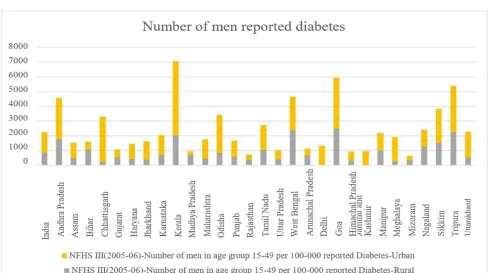
The results in Fig 3, 4 shows number of diabetes cases in Urban and Rural areas where Urban and rural cases are high at age of 20-24 in male and in female it is high
Current Status and Data Analysis of Diabetes in India
1925
Published By:
Blue Eyes Intelligence Engineering & Sciences Publication
[image:6.595.56.544.79.600.2]Retrieval Number:I8403078919/19©BEIESP DOI:10.35940/ijitee.I8403.078919
Fig 9. Alcohol taken by women
International Journal of Innovative Technology and Exploring Engineering (IJITEE) ISSN: 2278-3075, Volume-8 Issue-9, July 2019
Fig 11. Predictive analysis of Diabetes in 2030.
IV. ONSET OF DISEASE
Infantile-onset diabetes mellitus (IODM) is a remarkable metabolic turmoil in youngsters. Babies with the beginning of diabetes mellitus (DM) at age short of what one year is probably going to have transient or lasting neonatal DM or infrequently type 1 diabetes. Diabetes with beginning
beneath 6 months is a heterogeneous ailment brought about by single quality changes. Writing on IODM is meagre in India. About 83% of IODM cases present with diabetic
ketoacidosis at the beginning [3].
V. CORRELATION BETWEEN BLOOD SUGAR LEVEL, OBESITY, ALCOHOL, HYPERTENSION AND TOBACCO
Table 2: Correlation between Blood sugar level, Obesity, Alcohol, hypertension and tobacco as generated by python.
Obesity isn't just a noteworthy hazard factor for cardiovascular sickness; it likewise assumes a focal job in diabetes insulin opposition and has been connected to hypertension (another hazard factor for diabetes). Loss of unwinding because of aggravation and oxidative damage of the endothelium by angiotensin II prompting restraint of endothelium-subordinate nitric oxide generation is the significant donors of the liquor instigated hypertension [4].
Obesity is firmly connected to glucose unsettling influences because in heftiness, there is a diminished affectability to insulin. At the point when the body isn't reacting to insulin, glucose stays high and can cause unnecessary weight to increase even without indulging. Heftiness goes before 90% of grown-up beginning diabetes (DMII). A few signs and side effects of diabetes mellitus
[image:7.595.86.503.514.658.2]Current Status and Data Analysis of Diabetes in India
1927
Published By:
Blue Eyes Intelligence Engineering & Sciences Publication
Retrieval Number:I8403078919/19©BEIESP DOI:10.35940/ijitee.I8403.078919
hunger, weakness, weight reduction, vaginal tingling, visual changes, poor injury mending, hyperpigmented skin labels, and endless candida.
VI. CAUSESOFDIABETES
A.OBESITY
Ongoing investigations have revealed that all-inclusive, more than 1.9 billion grown-ups are overweight and 650 million are hefty. Around 2.8 million passing’s are accounted for because of being overweight or fat. Because of the utilization of vitality thick sustenance (for example unfortunate sustenance propensities), stationary way of life, absence of social insurance administrations and budgetary help, the creating nations are confronting high danger of obesity and their antagonistic outcomes (for example diabetes, ischemic coronary illness, and so on). In India, in excess of 135 million people were influenced by obesity. The pervasiveness of corpulence in India shifts because of age, sexual orientation, geological condition, financial status, and so forth [5]. Obesity and overweight may prompt significant medical issues and relate to diabetes and heart failure. As per BMI list overweight is said to be BMI 25– 29.9 kg/m2 and weight are said to be 30 kg/m2 and above [6] Obesity from 2005-2006 has increased in 2016 and is more in Uttarakhand followed by Pondicherry, Lakshadweep, Chandigarh, Andhra Pradesh and Kerala. Obesity among men have also increased from 2005-2006 to 2016 [5].
B. Smoking
Smoking is one of the modifiable hazard factors for some incessant ailments, for example, cardiovascular illness (CVD), asthma, and diabetes. Tobacco use executes almost six million individuals worldwide every year. As per the World Health Organization (WHO) gauges, internationally, there were 100 million unexpected losses because of tobacco in the twentieth century, and if the present patterns of tobacco use proceed, this number is relied upon to ascend to 1 billion in the 21st century. Apart from diabetes, smoking can harm
your cardiovascular framework. This twofold weight can be deadly.
C. Physical Inactivity
Physical inactivity appears to be unequivocally and autonomously connected with diabetes and diabetes-related comorbidities [7]
D. Alcohol
There is currently very little proof that interminable substantial utilization of liquor has a pernicious impact on metabolic control and may even be related to limited insulin resistance. The pancreatic islet β-cells regularly increment the insulin discharge enough to overcome the reduced effectiveness of insulin activity. In this manner, keeping up typical glucose resistance. Be that as it may, unending substantial liquor use prompts debilitated glucose resilience, which is a blend of useless discharge of insulin and a decreased insulin affectability or obstruction. Glucose prejudice is the change stage between ordinary glucose resistance and diabetes, additionally alluded to as pre-diabetes [2].
E. Genetics
International Journal of Innovative Technology and Exploring Engineering (IJITEE) ISSN: 2278-3075, Volume-8 Issue-9, July 2019
Fig 12 Prevalence of obesity in Male and Female.
Current Status and Data Analysis of Diabetes in India
1929
Published By:
Blue Eyes Intelligence Engineering & Sciences Publication
[image:10.595.75.541.75.326.2]Retrieval Number:I8403078919/19©BEIESP DOI:10.35940/ijitee.I8403.078919
Fig 14 Prevalence of obesity in Male and Female.
[image:10.595.56.568.369.640.2]International Journal of Innovative Technology and Exploring Engineering (IJITEE) ISSN: 2278-3075, Volume-8 Issue-9, July 2019
[image:11.595.61.534.73.313.2][image:11.595.56.544.86.608.2]
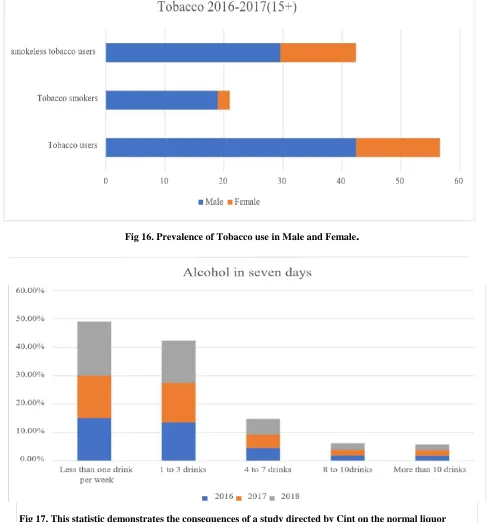
Fig 16. Prevalence of Tobacco use in Male and Female.
Fig 17. This statistic demonstrates the consequences of a study directed by Cint on the normal liquor utilization in seven days in India somewhere in the range of 2016 and 2018
VII AWARENESS OF DIABETES THROUGH LEADING NEWSPAPERS
The data scrapped with the help of beautiful soup from two newspaper from that of Times of India shows around 341 articles were published of awareness of Diabetes in India from 2019-2016 and around 543 articles in the Hindu from
2019-2006. Overall about 554 articles from Times of India were obtained for Diabetes in India
Current Status and Data Analysis of Diabetes in India
1931
Published By:
Blue Eyes Intelligence Engineering & Sciences Publication
[image:12.595.49.547.54.288.2]Retrieval Number:I8403078919/19©BEIESP DOI:10.35940/ijitee.I8403.078919
Fig 18. No of articles from the Hindus newspaper from 2019-2014 for awareness.
[image:12.595.75.523.429.687.2]International Journal of Innovative Technology and Exploring Engineering (IJITEE) ISSN: 2278-3075, Volume-8 Issue-9, July 2019
VIII. MEDICATION
Metformin- It is one of a gathering of medications known as oral hypoglycaemics, which work by diminishing the dimension of sugar in blood. The tablets are utilized for the sort of diabetes which as a rule happens in grown-ups and isn't serious to instigate insulin, yet which does not react to dietary estimates alone. In certain patients’ metformin might be utilized in blend with other enemy of diabetic prescriptions called sulphonylureas.
Sulphonylureas – These are among the most seasoned diabetes tranquilizes still utilized today. They work by invigorating the pancreas with the assistance of beta cells. This makes your body make more insulin [13].
▪ These medications include: ▪ glimepiride (Amaryl)
▪ glimepiride-pioglitazone (Duetact) ▪
glimepiride-rosiglitazone (Avandaryl) ▪ gliclazide
▪
glipizide (Glucotrol)
▪ glipizide-metformin (Metaglip)
▪ glyburide (DiaBeta, Glynase, Micronase) ▪
glyburide-metformin (Glucovance) ▪ chlorpropamide (Diabinese) ▪ tolazamide (Tolinase) ▪
tolbutamide (Orinase, Tol-Tab)
Other Drugs- Individuals with sort 1 and sort 2 diabetes regularly need to take different meds to treat conditions that are basic with diabetes.
▪ These medications can include: ▪ aspirin for heart wellbeing ▪
drugs for elevated cholesterol ▪ hypertension drugs
IX. CURRENT PROPOSALS FOR THE COUNTERACTIVE ACTION OF DIABETES
Diabetes can't be restored; it must be forestalled and oversaw. The accompanying advances could be pursued to abstain from falling prey to the sickness and to monitor it:
Exercise every day: Morning walk, yoga, running, vigorous exercise would all be able to help in anticipating diabetes. Settle on solid sustenance decisions: Choose nourishments with lower fat, immersed fat, calories, and salt. Attempt crisp vegetables and new natural products. Supplant soda pops with crisp squeezes and water. Endeavor to eat reasonable suppers and snacks at ordinary occasions for the duration of the day. Use stairs as opposed to a lift. Eat gradually: It takes 20 minutes for your stomach to send a flag to your cerebrum that you're full. [18]
X. ACCOMPLISHING BETTER CONTROL OF DIABETES
Diabetes, in India, has reached out from well-off and rich individuals to the centre pay and less fortunate areas of society. In India there exists a general poor standard of diabetes care and significant inconstancy diabetes care, which relies on different factors, for example, Openness to administrations. There is a decent social insurance conveyance framework set up in India. A great deal of
network wellbeing programs is as of now running which give a chance to contact the all-inclusive community. Be that as it may, in numerous spots the post of restorative officers is lying empty. Additionally, research centre offices are likewise in poor shape. A substantial fragment of the populace is served by fringe specialists, who have minimal specialized foundation learning. They can't endorse medications to diabetics, yet they can in any event recognize people with a high danger of diabetes and give wellbeing instruction regarding hazard factors. Besides, for the control of diabetes numerous mediations are non-pharmacological, and long-haul adherence is significant, thusly network wellbeing specialists can assume a significant job through patient instruction or encouraging adherence to treatment. [15] Reasonableness of medications. In India, basic medications for the treatment of diabetes are accessible at lower than worldwide costs, however are still unreasonably costly for a noteworthy extent of patients.Earlier, the minimal effort of locally delivered medications together with government controlled costs, and the nonappearance of patent guidelines had made the Indian market less alluring for outside enemy of diabetic medication organizations. Be that as it may, with the new patent laws set up the market situation will change and will end up appealing for outside companies. [16] Nature of administration. In India there is impressive inconstancy consideration and the general standard of diabetes care. Quality of consideration relies on the nature of administrations for example the mastery accessible, mentalities and recognitions among diabetes care suppliers. There is likewise an absence of institutionalization in lab methods for the estimation of glucose levels and HbA1c levels. There is an absence of agreement for target esteems and standard administration guidelines. Results oriented sorted out projects including understanding instruction alongside refreshing the therapeutic brotherhood on different improvements and standard rules for the executives of diabetes. More up to date research and activities. Chances to utilize and break down more up to date treatment choices as observational examinations and clinical preliminaries are required to battle the diabetes pandemic in India. Treatments are accessible in various indigenous frameworks of meds in India. Learning and practices from these indigenous frameworks of prescription, including Ayurveda, Yoga and so forth can be saddled for contriving preventive and treatment strategies subsequent to being discovered successful in preliminaries.[17]
XI. DISCUSSION
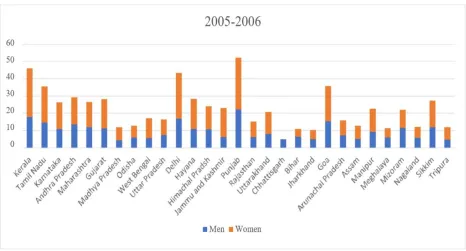
Map shows the newspaper articles mostly from that of South India whereas it lacks articles from northern states. UP and West Bengal have high number of smokers from the data obtained in 2015 in Men and that of obesity cases are more from Punjab, Kerala, Tamil Nadu and Delhi. Data from 2005-2006 in women shows Kerala, Tamil Nadu and Meghalaya having high number of Diabetes cases and in 2015-2016 shows Kerala, Andhra Pradesh and Goa having high Blood sugar level (>140mg/dl). It shows the lack of awareness in Kerala and Goa for
Current Status and Data Analysis of Diabetes in India
1933
Published By:
Blue Eyes Intelligence Engineering & Sciences Publication
Retrieval Number:I8403078919/19©BEIESP DOI:10.35940/ijitee.I8403.078919
from 2005-2006 to 2015-2016. Prevalence of diabetes and prediabetes expanded in all areas of Kerala; the ascent was huge just in the town and PUVs (peri urban villages). Obesity is fundamentally connected with expanded pattern even among the locals. Country populaces might be focused for future general wellbeing measures to battle diabetes [14]. Tobacco and Alcohol uptake is more in Mizoram in women in 2015-2016. Obesity is found to be increasing in Men from the data obtained in 2011 obesity increased to 50.2, prevalence rate is also found more in men as compared to women in 2016 and data from South Asia in 2017 shows increase in Diabetes cases in Men till 55-59 age and then decrease in Diabetes and increase of cases in women. Does the diabetes increase with age and whether the women have high risk of diabetes at age of 60 then men? The data from that of IDF atlas in 2017 shows the increase in diabetes cases in South East Asia in women after age 55-59 then men and men show decrease in diabetes cases. As individuals age, they may create moderate insulin obstruction, a circumstance in which the body doesn't successfully utilize the insulin it produces. The beta cells in the pancreas generally make enough insulin to redress, and the blood glucose remains typical. If the beta cells can't completely redress, diabetes may result. Numerous individuals turn out to be less dynamic as they age, and this can result in weight gain. Both physical dormancy and weight addition can add to higher glucose levels. At long last, with maturing comes an expanded commonness of diseases, for example, fiery conditions, contaminations, and malignancy, all of which may prompt expansion in blood glucose. A continued ascent in blood glucose levels might be the primary indicator of one of these conditions. Various prescriptions can prompt higher glucose levels, the principal wrongdoer being steroids (prednisone and comparable medications), which are regularly infused into joints and spinal territories to treat aggravation and joint inflammation. This can cause stamped rises in blood glucose.
XII. CONCLUSION
Diabetes is the leading cause of death worldwide. Lack of awareness and knowledge among Urban and rural areas is the main cause of diabetes in India. Like in Urban area, in rural area also diabetes is increasing. Both Men and women are at high risk for diabetes. Obesity cases is increasing in men and thus sugar level is increasing and risk to Diabetes. It can be prevented by doing exercises, avoiding fat food and sweets. Aside from being restricted to the norms of diabetes care in India, there is a particular requirement for an extensive diabetes care program which must be all the more wide going. Basic diabetic consideration ought to be all around available, regarding innovation and skill, to the all inclusive community and worthy to them at a reasonable expense. To lessen horribleness and mortality because of diabetes, deliberate endeavors of specialists rehearsing diabetes care, family doctors, people with diabetes, the all inclusive community, applicable affiliations and those endowed with general wellbeing in India are an absolute necessity. In perspective on the holes between the rules and
genuine practice and so as to improve diabetes control in India, a fair way to deal with improve mindfulness about diabetes and its control both among patients and the restorative club is the dire need of great importance. For the Indian subcontinent likewise, the best fit relevance of item and administration structure for patient focused diabetes care may be surveyed and mindfulness levels among the diabetic patients may be stretched out to include them in their treatment plans.
REFERENCES
1. IDF diabetes atlas - Home.
2. Kim, S.-J. and Kim, D.-J. (2012). Alcoholism and diabetes mellitus. Diabetes & metabolism journal 36(2), 108–115.
3. Varadarajan, P. (2016). Infantile onset diabetes mellitus in developing countries - India. World journal of diabetes 7(6), 134–141.
4. Husain, K., Ansari, R. A. and Ferder, L. (2014). Alcohol-induced hypertension: Mechanism and prevention. World journal of cardiology 6(5), 245–25
5. Ahirwar, R. and Mondal, P. R. (2019). Prevalence of obesity in India: A systematic review. Diabetes & metabolic syndrome 13(1), 318–321. 6. Plourde B, Sarrazin J-F, Nault I, Poirier P (2014) Sudden cardiac death
and obesity. Expert Rev CardiovascTher 12: 1099–1110. doi:10.1586/14779072.2014.952283.
7. Sullivan, P. W., Morrato, E. H., Ghushchyan, V., Wyatt, H. R. and Hill, J. O. (2005). Obesity, inactivity, and the prevalence of diabetes and diabetes-related cardiovascular comorbidities in the U.S., 2000-2002. Diabetes Care 28(7), 1599–1603.
8. Shah AD, Langenberg C, Rapsomaniki E, Denaxas S, Pujades-Rodriguez M, et al. (2015) Type 2 diabetes and incidence of cardiovascular diseases: a cohort study in 1·9 million people. Lancet
Diabetes Endocrinol 3: 105–113.
doi:10.1016/S2213-8587(14)70219-0.
9. Ramachandran A, Snehalatha C, Shetty AS, Nanditha A (2012) Trends in prevalence of diabetes in Asian countries. World J Diabetes 3: 110–117. doi:10.4239/wjd.v3.i6.110.
10. Tamragouri RN, Martin RW, Cleavenger RL, Sieber WK (1986) Cardiovascular risk factors and health knowledge among freshman college students with a family history of cardiovascular disease. J Am Coll Health 34: 267–270. doi:10.1080/07448481.1986.9938948. 11. 11.Chang SA (2012) Smoking and type 2 diabetes mellitus. Diabetes
Metab J 36: 399–403.
12. doi:10.4093/dmj.2012.36.6.399.
13. Dwivedi S, Pathak R, Agarwalla R, Ali W (2016) The intergenerational transmission of tobacco habit: Role of parents and the family. J Family Med Prim Care 5: 373–377. doi:10.4103/2249-4863.192379. 14. List of Common Diabetes Medications.
15. Nanditha, A., Snehalatha, C., Satheesh, K., Susairaj, P., Simon, M., Vijaya, L., Raghavan, A., Vinitha, R. and Ramachandran, A. (2019). Secular TRends in DiabEtes in India (STRiDE-I): Change in Prevalence in 10 Years Among Urban and Rural Populations in Tamil Nadu. Diabetes Care 42(3), 476–485
16. Renders CM, Valk GD, Griffin SJ, Wagner EH, Eijk Van JT, Assendelft WJ. Interventions to improve the management of diabetes in primary care, outpatient, and community settings: a systematic review. Diabetes Care. 2001;24(10):1821–33
17. Corporate Catalyst India. A brief report on pharmaceutical industry in India [document on the Internet]. New Delhi: CCI; 2013 [cited 2005 Jun
30]. Available from:
http://www.cci.in/pdfs/surveysreports/Pharmaceutical-Industry-in-Indi a.pdf
18. Dilley J, Ganesan A, Deepa R, Deepa M, Sharada G, Williams OD, Mohan V. Association of A1C with cardiovascular disease and metabolic syndrome in Asian Indians with normal glucose tolerance. Diabetes Care. 2007;30:1527–32.
International Journal of Innovative Technology and Exploring Engineering (IJITEE) ISSN: 2278-3075, Volume-8 Issue-9, July 2019
AUTHORSPROFILE
Sonia singla, she has done msc in biotechnology from
bangalore university, india and msc in bioinformatics from university of leicester, u.k, she have published her
first research paper in ijpbs.
Http://dx.doi.org/10.22376/ijpbs.2019.10.2.b155-169 and have four papers under consideration. Is interested in data analysis, bioinformatics and research related to health science and web development. Currently doing internship in csir-cdri under dr sukant khurana. She can be contacted at
Dr. Minu kesheri has been serving as assistant
professor in the field of life sciences for around a decade in several universities of repute. She is a prominent researcher in the field of microbiology and proteomics. She has contributed to a number of research articles in national and international journals and has authored several books published by international publishers. She has shared her research work at international platforms like france and spain. She is an active reviewer and editorial board member of various international journals.
Dr. Swarna Kanchan Has Been An Eminent
Researcher In The Area Of Computational Molecular Evolution And Protein Modelling And Has Worked As Assistant Professor At Various Prestigious Universities. He Has Published About A Score Of Research Articles In Eminent National And International Journals And Has Authored Several Books At International Level. He Has His Research Exposure To Foreign Countries Like France And Switzerland Etc. He Has Been Serving As Reviewer And Editorial Board Member In Journals Of International Repute
Aswath S, b.tech. Computer science student at pes
university, bangalore, india. He worked as an associate data scientist at minionlabs. As a machine learning and nlp enthusiast, he loves coding and firmly believes that deep learning and computer vision will change the way “we live our life” and revolutionize it for the betterment of humans. He has also done a machine learning and a data science internship at csir_cdri under dr. Sukant khurana. He worked on enhancing the default spark scheduler and proved to achieve desirable results by exploiting four algorithms. He can be reached at [email protected]. .