EFFECTIVENESS OF CAPACITY BUILDING PROGRAMME REGARDING CARE OF PATIENT WITH INTRA AORTIC BALLOON PUMP (IABP) UPON
THE KNOWLEDGE AND PRACTICE AMONG NURSES
By
D.NEELAVATHI
A DISSERTATION SUBMITTED TO THE TAMILNADU DR.M.G.R MEDICAL UNIVERSITY, CHENNAI, IN PARTIAL FULFILMENT OF THE
REQUIREMENTS FOR THE DEGREE OF MASTER OF SCIENCE IN NURSING
EFFECTIVENESS OF CAPACITY BUILDING PROGRAMME REGARDING CARE OF PATIENT WITH INTRA AORTIC BALLOON PUMP (IABP) UPON THE LEVEL OF KNOWLEDGE AND PRACTICE AMONG NURSES
Approved by the Dissertation committee on : ____________________________
Research Guide : ____________________________ Dr. Latha Venkatesan,
M.Sc (N)., M.Phil.(N), Ph.D.(N).,
MBA (HM), Ph.D (HDFS).,
Principal cum Professor, Apollo College of Nursing, Chennai - 600 095.
Clinical Guide : ____________________________
Prof. Jaslina Gnanarani M.Sc (N)., M.Sc (Psychology) Reader, Dept of Medical Surgical Nursing, Apollo College of Nursing, Chennai - 600 095.
Medical Guide : ____________________________ Dr.N. Salgunan MS, M.C.H.,
Senior Consultant Cardiothoracic Surgery, Apollo Hospitals,
Greams Road, Chennai-600 006.
A DISSERTATION SUBMITTED TO THE TAMILNADU DR.M.G.R MEDICAL UNIVERSITY, CHENNAI, IN PARTIAL FULFILMENT OF THE
REQUIREMENTS FOR THE DEGREEOF MASTER OF SCIENCE IN NURSING
DECLARATION
I hereby declare that the present dissertation entitled “Effectiveness of Capacity Building Program regarding Care of Patient with Intra Aortic Balloon Pump (IABP) upon the Level of Knowledge and Practice among Nurses” is the outcome of
the original research work undertaken and carried out by me under the guidance of Dr. Latha Venkatesan M.Sc(N)., M.Phil(N)., Ph.D.(N)., MBA (HM)., Ph.D (HDFS).,
Principal cum Professor, Apollo College of Nursing, and Mrs.Jaslina Gnanarani., M.Sc(N), M.Sc (Psychology)., Reader of Medical Surgical Nursing Department, Apollo College of Nursing, Chennai. I also declare that the material of this has not found in any way, the basis for the award of any degree or diploma in this university or any other university.
i
ACKNOWLEDGEMENT
I thank the God almighty for being with me and guiding me in my entire endeavor and for clearly showing me the way to conduct my work, with a spirit of joy and enthusiasm throughout of study.
I dedicate my heartfelt thanks and gratitude to our esteemed leader Dr. Latha Venkatesan, M.Sc.(N)., M.Phil.(N)., Ph.D.(N)., MBA (HM), Ph.D. (HDFS)., Principal cum Professor, Apollo College of nursing for her tremendous help, continuous support, enormous auspice, valuable suggestions and motivation to carry out my study successfully.
I also extend my thanks to Dr. A.Lizy Sonia, M.Sc.(N)., Ph.D.(N).,Vice principal and Head of Medical Surgical Nursing Department, Apollo college of nursing for her commendable support throughout my study.
My sincere thanks to Dr. K.Vijaya Lakshmi, M.Sc(N)., M.A(Psy)., MBA., Ph.D (N)., Research Coordinator, Apollo college of nursing for her prolonged patience and continuous guidance in completing my study.
I take this opportunity to express my great pleasure and deep sense of gratitude to my guide Prof. Jaslina Gnanarani, M.Sc(N)., M.Sc.(Psychology)., Reader Medical Surgical Nursing Department for her kind support, patience, valuable suggestions, enlightening ideas and willingness to help at all times for successful completion of the research work .
ii
My deep gratitude to Prof. Nesa Sathya Satchi.M.sc(N)., HOD, child health nursing department, Course Coordinator for her constructive ideas and enormous concern. With the special word of reference, I thank all experts for validating my tool and offering worthy suggestions to make it effective.
I also extend my special thanks to Mrs. Sasikala. D, M.Sc.(N). Reader, Medical Surgical Nursing, Mrs.G.Kanchana M.Sc.(N)., M.Sc.(Psychology)., Reader, Medical Surgical Nursing Department for their guidance and profound support to complete my study.
I am thankful for the kind heartedness and contagious energy will that always be remembered, I am indeed indebted to Dr.M.Muralidharan., M.B.B.S., M.RC.S (Edin), F.R.C.S (GLAS)., F.M.A.S (Laparoscopic surgery), Director of Medical services, Apollo Hospitals, Chennai.
It’s my privilege to thank all the HODs, teaching and non-teaching faculty and my colleagues who helped me directly or indirectly in carrying out my study.
A note of special thanks to the Librarians of Apollo College of Nursing and Netway Prints. I honestly thank all the participants of my study for their wonderful participation and cooperation without whom I could not have completed my study.
I am always thankful to my parents Mr.Duraisamy , Mrs.Jothi, my husband Dr. Madhu, M.B.B.S., DCH, my brothers D.Udhaya Kumar, D.Devidhraran, my classmates for their support in all times of ups and downs, their prayers, blessings, love and help rendered to me enabled the successful completion of the study.
iii
SYNOPSIS
A Pre Experimental Study to assess the Effectiveness of Capacity building programme regarding care of patient with Intra Aortic Balloon Pump (IABP) upon the level of Knowledge and Practice among Nurses at Selected Hospitals, Chennai.
Objectives of the Study
1. To assess the level of knowledge and practice regarding care of patient with
IABP in pretest and posttest.
2. To determine the effectiveness of capacity building program regarding care of patient with IABP by comparing the pre and posttest level of knowledge and practice among nurses.
3. To determine the level of acceptability of nurses regarding capacity building program on care of patient with IABP among nurses.
4. To determine the correlation between the scores of knowledge and practice regarding care of patients with IABP among nurses.
5. To find out the association between the level of knowledge regarding care of patient with IABP and the selected demographic variables of the nurses, in pretest and posttest.
6. To find out the association between the level of Practice regarding care of patient with IABP and the selected demographic variables of the nurses, in pretest and posttest.
iv
sampling. The independent variables of the study was the capacity building programme regarding care of patient with IABP and dependent variables were knowledge and practice regarding care of patient with IABP.
An extensive review of literature and guidance by experts laid the foundation of development of demographic variable Proforma, structured knowledge questionnaire, practice observational checklist on IABP care and satisfaction rating scale on capacity building programme on IABP care. The validity was obtained from various experts and reliability was established. Pilot study data was done from 1st December, 2017 to 22st December, 2017. The main study was done Apollo specialty data collection was done from 1st January, 2018 to 21st January, 2018.
The investigator used the demographic variable proforma, structured knowledge questionnaire to assess the level of knowledge regarding care of patient with IABP and observation checklist to assess the level of practice regarding care of patient with IABP. The data collection tools were validated and reliability was established. The main data collection was done after determining the feasibility and practicability through a pilot study.
v
IABP) and demonstration regarding care of patient with IABP Then the posttest level of knowledge and practice was conducted after 7 days of the Capacity Building Programme care of patient with IABP. The collected data was tabulated and analyzed by using descriptive statistics such as mean and standard deviation and inferential statistics such as t test, chi square test and Karl Pearson’s coefficient correlation test.
Major Findings of the Study were
Majority of the nurses were aged between of 21 to 25 years (80%), females (73.3%) with an educational level of B.Sc. nursing (70%), And more than half of them had up to two years experience in ICU and (53.4%) and most of them had previous experience in the care of patients with IABP (76.7%).
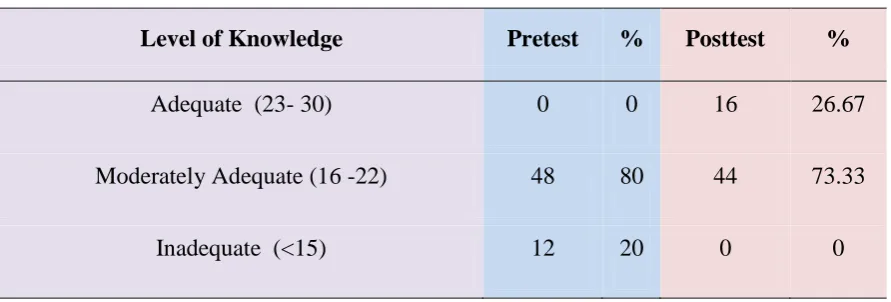
Most of the nurses had moderately adequate knowledge (80%) and 20% of them had inadequate knowledge regarding IABP care in the pretest, while majority of staff nurses gained moderately adequate knowledge (73.33%) and 26.67 % of them had gained adequate knowledge in the posttest.
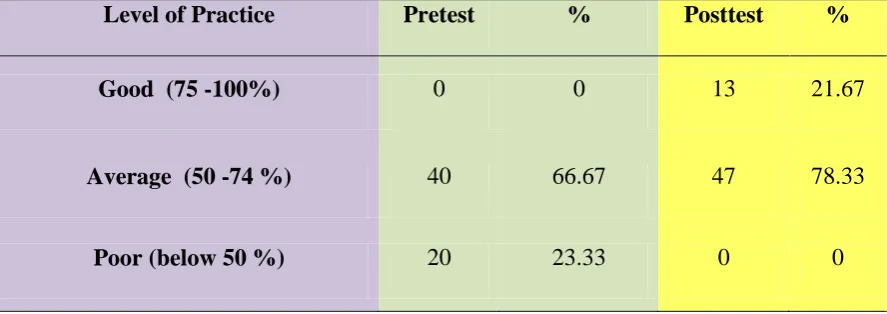
Majority of the Nurses had average level of practice (66.67%) and 23.33% of them had poor practice regarding IABP care in the pretest. In the posttest majority of the nurses had average level practice (78.33%), and 21.67% of them had good practice after the capacity building programme on IABP care.
vi
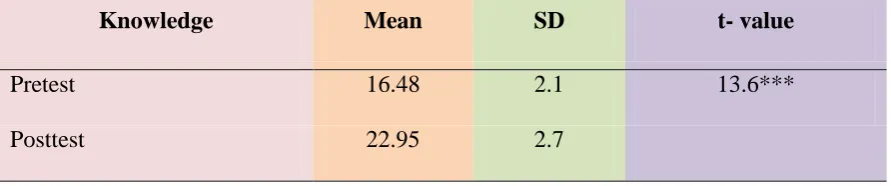
There was a significant difference between pretest knowledge score (M = 16.48, SD = 2.1) and posttest knowledge score (M =22.95, SD = 2.7) regarding IABP care among nurses with t-value of 13.6 which was significant at p < 0.001 level. Hence the null hypothesis H01 stating that, “There will be no significant difference between the pretest and posttest level of knowledge and practice regarding IABP care among Nurses” was rejected.
Majority of the Nurses found the capacity building programme highly acceptable with regard to the approach of the researcher (95%), Administration of capacity building programme (90%) and about its effectiveness of (90%).
There was a positive correlation between the posttest knowledge and practice of (r=0.41) nurses significant at p<0.001 level. Hence the null hypothesis H02 stating that, “There is no significant correlation between the posttest level of knowledge and practice of nurses regarding IABP”, was rejected.
There was a significant association between pretest level of knowledge regarding IABP care among nurses and gender (x2 = 3.94) at p<0.05 level and there was no significant association between pretest and posttest level of knowledge and other demographic variables of Nurses such as age, educational level, ICU experience and previous experience of IABP patient care.
Hence the null hypothesis H03 stating that, “There will be no significant association between the selected demographic variables and the pretest and posttest level of knowledge of nurses regarding IABP care nurses” was retained with regard to age, educational level, ICU experience and previous experience of IABP patient care except with regard to gender .
vii
gender, educational level, years of ICU experience and previous experience. Hence the null hypothesis H04 stating that, “There will be no significant association between the selected demographic variables of nurses and their level of practice regarding IABP care” was retained.
Recommendations The researcher recommends the following studies
The same study may be conducted on larger samples for better generalization. The similar study can be conducted for different samples.
viii
TABLE OF CONTENTS
Chapter Contents Page No
I INTRODUCTION 1-13
Background of the Study 1
Need for the Study 3
Statement of the Problem 5
Objectives of the Study 5
Operational Definitions 6
Assumptions 8
Null Hypotheses 8
Delimitations 9
Conceptual Framework of the study 9
Projected Outcome 13
Summary 13
Organization of the reports 13
II REVIEW OF LITERATURE 14-28
Literature Related to IABP care, Complications 14 Literature Related to Knowledge and Practice on IABP Care 18
III RESEARCH METHODOLOGY 29-41
Research Approach 29
Research Design 30
Variables of the Study 30
Research Setting 31
Population, Samples, Sampling technique 31
ix
Selection and Development of Study Instruments 35 Psychometric properties of study instruments 37
Intervention protocol 38
Pilot Study 38
Protection of Human Rights 39
Data Collection Procedure 39
Plan for Data Analysis 41
Summary 41
IV ANALYSIS AND INTERPRETATION 42-56
V DISCUSSION 57-64
VI SUMMARY, CONCLUSION, NURSING IMPLICATIONS RECOMMENDATIONS
65-71
REFERENCES 72-76
x
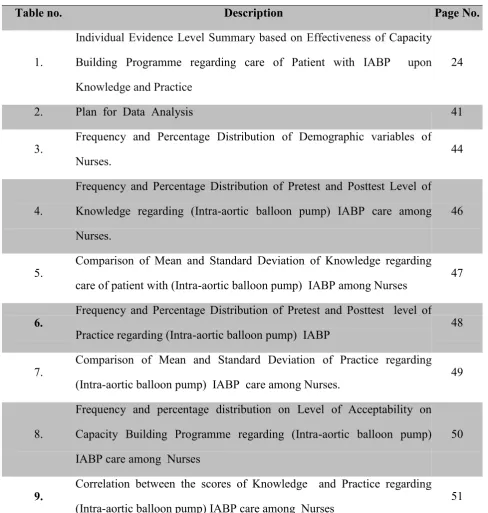
[image:13.595.64.553.91.605.2]LIST OF TABLES
Table no. Description Page No.
1.
Individual Evidence Level Summary based on Effectiveness of Capacity Building Programme regarding care of Patient with IABP upon Knowledge and Practice
24
2. Plan for Data Analysis 41
3. Frequency and Percentage Distribution of Demographic variables of
Nurses. 44
4.
Frequency and Percentage Distribution of Pretest and Posttest Level of Knowledge regarding (Intra-aortic balloon pump) IABP care among Nurses.
46
5. Comparison of Mean and Standard Deviation of Knowledge regarding care of patient with (Intra-aortic balloon pump) IABP among Nurses 47
6. Frequency and Percentage Distribution of Pretest and Posttest level of Practice regarding (Intra-aortic balloon pump) IABP 48
7. Comparison of Mean and Standard Deviation of Practice regarding (Intra-aortic balloon pump) IABP care among Nurses. 49
8.
Frequency and percentage distribution on Level of Acceptability on Capacity Building Programme regarding (Intra-aortic balloon pump) IABP care among Nurses
50
9. Correlation between the scores of Knowledge and Practice regarding (Intra-aortic balloon pump) IABP care among Nurses 51
10
Association between Selected demographic variables and the level of knowledge before and after capacity building programme regarding (Intra-aortic balloon pump) IABP care among Nurses
52
11
Association between Selected demographic variables and the level of practice before and after capacity building programme regarding (Intra-aortic balloon pump) IABP care among Nurses
xi
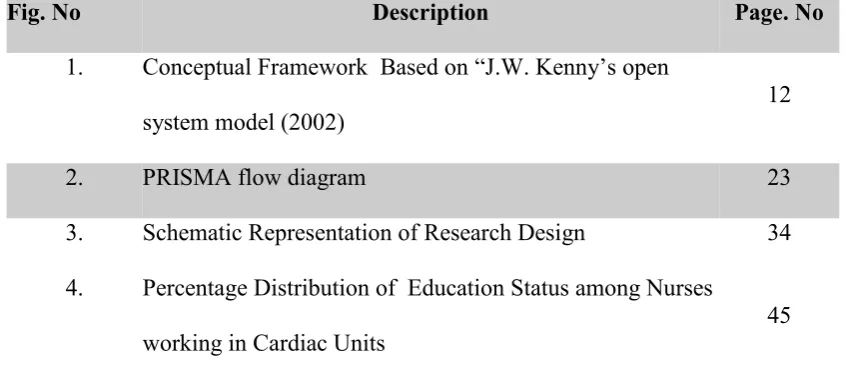
[image:14.595.95.518.122.307.2]LIST OF FIGURES
Fig. No Description Page. No
1. Conceptual Framework Based on “J.W. Kenny’s open
system model (2002) 12
2. PRISMA flow diagram 23
3. Schematic Representation of Research Design 34 4. Percentage Distribution of Education Status among Nurses
working in Cardiac Units
xii
LIST OF APPENDICES
Appendix Title Page No.
I Letter Seeking Permission to Conduct the Study xiii
II Ethical Committee Letter xv
III Letter seeking Permission for Content Validity xvii
IV Plagiarism Originality Report xviii
V Evidence based Practice Model and Tools xix
VI Certificate for Content Validity xx
VII List of Experts for Content Validity xxi
VIII Letter seeking Consent from Participants xxiii
IX Certificate for English Editing xxiv
X Demographic Variables Proforma for the Nurses xxv
XI Structured knowledge Questionnaire regarding care of Patient with
IABP xxvii
XII Practice Observational Checklist regarding care of patient with IABP xxxvi
XIII
Rating scale on Level of Acceptability of Capacity Building
Programme regarding care of patient with IABP xxxviii
XIV Lesson Plan on care of Patient with IABP xli
XV Data code sheet lxii
XVI Master Code Sheet lxiii
1
CHAPTER I
INTRODUCTION
Background of the study
“If I see, I forget, If I hear, I remember, If I do, I Know” - Confucius Quotes
The coronary artery disease and myocardial infarction occurs when myocardial tissues are abruptly and severely deprived of oxygen. Ischemia can lead to necrosis of myocardial tissues if blood flow is not restored. Infarction does not occur instantly but evolves over several hours. Coronary artery diseases is a narrowing or obstruction of one or more coronary arteries as a result atherosclerosis, which is an accumulation of lipid containing plaque in the arteries. Its causes decreased myocardial tissues perfusion. (World Health Organization, 2013)
The Intra-aortic balloon pump (IABP) is a mechanical device that increases myocardial oxygen perfusion while at the same time increasing cardiac output. Increasing cardiac output increases coronary artery blood flow and therefore myocardial oxygen delivery. It consists of a cylindrical polyethylene balloon that sits in the aorta, approximately 2 centimetres (0.79 inches) from the left subclavian artery and counter pulsates. That is, it actively deflates in systole, increasing forward blood flow by reducing after load. It actively inflates in diastole, increasing blood flow to the coronary arteries. These actions combine to decrease myocardial oxygen demand and increases myocardial oxygen supply.(Kocogullari et al ,2008)
2
patients worldwide receive this therapy annually. The primary purpose of IABP is the support of the failing heart by simultaneously increasing myocardial oxygen supply and decreasing myocardial oxygen demand. IABP catheter consists of a single, sausage – shaped polyurethane balloon that is wrapped around the distal end of a vascular catheter and positioned in the descending thoracic aorta just distal to the take off the left subclavian artery and is attached to an external drive console which inflates and deflates the IAB in synchrony with cardiac contraction. (Wan et .al ,2016)
The intraaortic balloon pump is a device widely used in patients whose cardiac function is compromised or potential compromised. IABP requires the positioning of an intraaortic balloon catheter in the descending thoracic aorta, immediately inferior to the origin of the left subclavian artery and superior to the renal arteries (Onorati el al .2009)).
The catheter is then attached to an external pump which will inflate and deflate it in synchrony with the cardiac contractions. Balloon inflation occurs at the onset of diastole when blood ceases to eject from the heart. Inflation of the catheter results in displacement of blood volume within the descending thoracic aorta. Proximal blood is returned to the heart to oxygenate the coronary arteries while blood in the distal descending aorta is circulated around the body. Catheter deflation is timed to occur immediately before the onset of systole and the heart commences ejection. This action ensures that after load is reduced and blood is ejected into a partially empty aorta. Cardiac workload and the consequent demand for oxygen can thus be reduced. This reduction in afterload also for improves cardiac output and increases systemic perfusion (Lewis, 2016).
3
pressure transducer at the distal tip of the catheter some IABP, such as the data scope system 98XT, allow asynchronous counter pulsation at a set rate, though this setting is rarely used. Helium is used because its low viscosity allows it to travel quickly through the long connective tubes, and has a lower risk than air of causing an embolism should the balloon rupture (American Heart Association, 2016).
The study was conducted by Glasius,P (2012) The IABP device was pioneered at Grace Sinai hospital in Detroit during the early 1960s by Bergman in 2016 at New York Presbyterian hospital. The first clinical implant was performed at Maimonides medical Centre, Brooklyn, New York in Oct 1967. The patient a 48 year old woman was in cardiogenic shock and unresponsive to traditional therapy. An IABP was inserted by a cut down on the left femoral artery, pumping was performed for approximately 6 hours. Shock was reversed and the patient was discharged.
Need for the Study
Intra-aortic balloon pump, remains the most widely used circulatory assist device in critically ill patients with cardiac disease. The national center of Health Statistics estimated that IABP was used in 42,000 patients in the India in 2002. Advance in technology. Including percutaneous insertion, smaller diameter catheters, sheaths insertion techniques, and enhanced automation, have permitted the use of counter pulsation in a variety of setting, with greater efficacy and safety .
4
According to the American Heart Association (2016), Coronary heart disease was the cause of 1 in every 6 death in the United States in 2007. It estimates that 1. 2 million American will have an MI (myocardial infarction) annually and about one fourth of these will die in an emergency department or before reaching a hospital Also 1 in 9 death certificates (277 193) in the united states mentioned heart failure, and more than 2200 American die of coronary vascular diseases (CVD) each day. The average life expectancy of American is 77. 9 years, but nearly 33 % of death occurs due to CVD before the age of 75 years.
A retrospective study was conducted in a teaching hospital, on the routine use of an IABP in high risk patients undergoing cardiac surgery to prevent or treat low cardiac output syndrome and to reduce preoperative mortality. The result shows that the use of a preoperative IABP was 0.7 % at the beginning of the observation ( Journal of cardiac surgery,2016).
Improvement in diagnostic and treatment modalities for heart diseases has lead to a steady increase in the number of patient surviving after an acute cardiac event with some rehabilitation measures. The ultimate goal of cardiac rehabilitation is to restore the patients to an optimal level of recovery and all these activities help to prevent the recurrence of a cardiac event after CABG ( New England journal of medicine,2011).
5
building programme regarding care of patient with Intra-Aortic Balloon Pump (IABP) upon the level of knowledge and practice among nurses at selected hospitals, Chennai.
Statement of the Problem
A Pre Experimental Study to Assess the Effectiveness of a Capacity Building Programme regarding Care of Patient with Intra-Aortic Balloon Pump (IABP) upon the Level of Knowledge and Practice among Nurses at Selected Hospitals, Chennai.
Objectives of the Study
1. To assess the level of knowledge and practice regarding care of patient with IABP in pretest and posttest .
2. To determine the effectiveness of capacity building program regarding care of patient with IABP by comparing the pre and posttest level of knowledge and practice among nurses.
3. To determine the level of acceptability of nurses regarding capacity building program on care of patient with IABP among nurses
4. To determine the correlation between the scores of knowledge and practice regarding care of patients with IABP among nurses.
5. To find out the association between the level of knowledge regarding care of patient with IABP and the selected demographic variables of the nurses, in pretest and posttest
6
Operational Definitions and Conceptual Definitions Effectiveness
It is defined as the degree to which something is successful in producing a desired result or success (World Health Organization , 2013).
Operational definition
In this study effectiveness refers to the degree to which objectives are achieved in terms of improvement in the level of knowledge and skill after providing capacity building programme regarding IABP care as measured by comparing the pre test and post test scores.
Capacity Building Program Conceptual definition
It is a planned development of (increase in) knowledge, output rate, management, skill of an organization through training, for a selected group of people (Business Dictionary, 2018)
Operational definition
In this study, it refers to a structured educational programme provided for the selected samples of nurses regarding IABP care which includes concepts of IABP care, care provided before, during and after insertion of IABP through power point presentation, demonstration and videos conducted 3 days (4 hours/day) for each batch of nurses.
Intra-Aortic Balloon Pump (IABP)
7
increasing cardiac output. Increasing the cardiac output, increases the coronary blood flow and therefore myocardial oxygen delivery (American Heart Association, 2016).
Operational definition
It’s a mechanical device which is used for patients with LV dysfunction, severe hypotension to support patients in cardiac units such as AICCU, CT ICU and Cath Lab.
Knowledge
It refers to the facts, information and skills acquired through experience or education. It is also a theoretical or practical understanding of a subject (World Health Organization, 2013).
Operational definition
In this study it refers to the awareness and understanding of nurses regarding the various aspects of care of patients with intra-aortic balloon pump (IABP) as measured by structured questionnaire developed by the investigator.
Practice
It is the actual application or use of an idea, belief, or method as opposed to theories relating to it ( World Health Organization, 2013).
Operational definition
In this study, it refers to degree of ability of the nurses to perform the steps in the care of patients with IABP as measured by structured practice observational checklist developed by investigator.
Nurses
8 Operational definition
In this study, it refers to those qualified and registered nurses working in the cardiac units of Apollo Hospitals, Chennai.
Assumptions
Many patient on IABP, can develop complications and nurses can play a vital role in preventing the complications.
Nurses must have adequate knowledge regarding IABP care
Protocol guides the Nurses to perform standardized care and helps to prevent errors.
Knowledge level influences practice, to promote quality outcomes and prevent complications after insertion
Teaching is a vital element that impacts the knowledge level and practice
Adequate knowledge is essential for the nurses to care for patients with IABP care.
Null hypotheses
Ho1: There will be no significant difference between pretest and posttest scores of knowledge and practice regarding care of patient with IABP among nurses. Ho2: There will be no significant correlation between the scores of knowledge and
practice regarding care of patient with IABP among nurses
Ho3: There will be no significant association between the level of knowledge, regarding care of patient with IABP and selected demographic variables.
9 Delimitations This study was limited to
nurses who were working in cardiac units of the selected Hospital, Chennai. data collection period for 6 weeks only.
nurses who are present during the time of data collection.
Conceptual Framework of the Study
A conceptual framework is a group of concepts and a set of propositions that spell out the relationship between them. Their overall purpose is to make scientific findings meaningful and generalized. A Conceptual framework deals with the interrelated concepts of abstraction that are assembled together in some rational scheme by virtue of their relevance to a common theme. It is a device that helps to stimulate the research and the extension of knowledge by providing both direction and impetus. A framework is the spring for scientific advancement. (Polit & Beck, 2016).
A conceptual framework for a particular study is the abstract, logical structure that enables the researcher to link the findings to nursing body of knowledge. It is developed from the existing theory and helps in identifying and defining the concept of interests and proposing the relationship among them. The model gives a direction for planning research design, data collection and interpretation of findings.
10
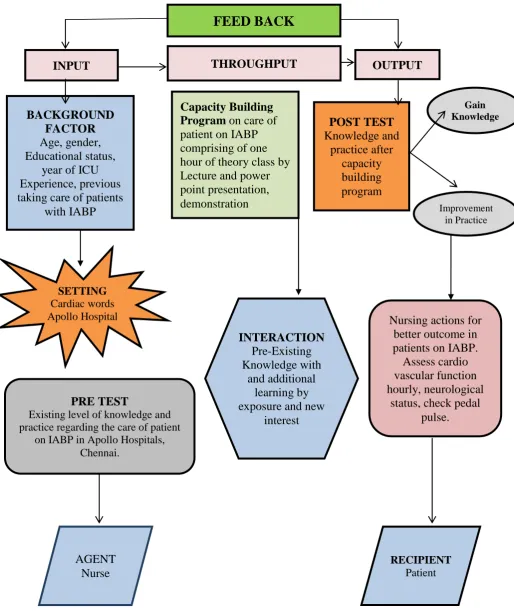
The concepts of Kenny’s open system model (2002) are input, throughput, output and feedback. Input refers to matters and information, which are continuously processed through the system and released as outputs. After processing the input, the system returns output (matter and information) to the environment in an altered sate; affecting the environment for information to guide its operation. This feedback information of environment responses to the systems output is used by the system in correlation with the environment. The Feedback may be possible, negative or neutral. In this study, the concepts have been modified as follows.
The present study aims at describing the effectiveness of knowledge of nursing personnel regarding care of patients with intra-aortic balloon pump (IABP). Here Von Bertalanffy’s general systems of theory of learning is used. A system is a set of interrelated parts that came together to form a whole. It has four major aspects.
Input Throughput Output Feedback
Input
11 Throughput
Throughput is the processing of structured capacity building programme which includes power point presentation, demonstration and videos, regarding information and steps and guidelines about care patient with IABP.
Output
The expected outcome was obtained by assessing the posttest level of knowledge and practice regarding care of patient with intra-aortic balloon pump (IABP) using structured knowledge questionnaire and practice observation checklist. The output was ascertained by comparing pretest and posttest level of knowledge and practice among nurses.
Feedback
12
Figure 1: Modified Conceptual Framework J.W. Kenny’s Open System Model (2002)
FEED BACK
THROUGHPUT
INPUT OUTPUT
BACKGROUND FACTOR Age, gender, Educational status,
year of ICU Experience, previous taking care of patients
with IABP
Capacity Building Program on care of patient on IABP comprising of one hour of theory class by Lecture and power point presentation, demonstration POST TEST Knowledge and practice after capacity building program SETTING Cardiac words Apollo Hospital INTERACTION Pre-Existing Knowledge with and additional learning by exposure and new
interest PRE TEST
Existing level of knowledge and practice regarding the care of patient
on IABP in Apollo Hospitals, Chennai.
Nursing actions for better outcome in patients on IABP.
Assess cardio vascular function hourly, neurological
13 Projected outcome
The projected outcomes may be the increase or decrease in the level of knowledge and practice on IABP care among nurses. It is useful for the Nurses to gain adequate knowledge and practice on IABP care. In turn, it will improve quality of IABP care. The intervention is affordable and easy to administer.
Summary
This chapter dealt with the background of the study, need for the study, statement of the problem, objectives of the study, operational definitions, assumptions, null hypothesis, delimitations and conceptual framework.
Organization of the Report
Further aspects of the study are presented in the following chapters.
Chapter II Review of literature.
Chapter III
Research methodology which includes research approach, research design, setting, population, sample, sampling technique, tools used in the study, data collection Procedure and plan for data analysis. Chapter IV Analysis and Interpretation of data.
Chapter V Discussion.
Chapter VI
14
CHAPTER II
REVIEW OF LITERATURE
A review of literature is the critical summary of research on a topic of interest, often prepared to put a research problem in context. (Polit & Beck, 2016)
In this chapter, an attempt has been made to bring out the available literature which helps in projecting the widened perspective of this study. This chapter deals with a review of published and unpublished research studies and from related material for the present study. The review helped the investigator in building the foundations of the study. The collected reviews were organized under the following headings.
Review of literature is the reading and organizing of previously written material relevant to the specific problem to the investigated, framework and methods appropriate to perform the study.
Review of literature related to this study has been divided into the following categories
1. Studies related to IABP usage in Coronary Artery Bypass Graft, complications, and impact of IABP in cardiac patients.
2. Studies related to the knowledge and practice of Nurses regarding IABP.
1. Studies related to IABP Usage in Coronary Artery Bypass Graft
Wan et .al, (2016) conducted randomized trials enrolling 2155 patients and found that stable in patients with acute myocardial infarction with or without cardiogenic shock.
But in high-risk CABG patients, IABP was associated with reduced mortality and
15
significantly decrease mortality. But high-risk CABG patients may be benefit from IABP.
Rigorous criteria should be applied to the use of IABPs.
Kocogullari et. al, (2008) conducted a study to determine the isolated role of sheaths in the development of vascular complications following IABP catheterization. They evaluated around 81 patients who had received an intra-aortic balloon pump (IABP) for hemodynamic stability between January 2003 and October 2007 following Cardio vascular surgery.
Kim et. al, (2011) conducted a study about IABP therapy facilitation of posterior vessel off pump coronary artery bypass grafting in high risk patients. There were no differences in ventilator support time, length of stay in the intensive care unit hospital stay and morbidity between the two groups. The results shows that intra aortic balloon pump (IABP) therapy was more effective in posterior vessel off pump coronary artery bypass grafting in high risk patients.
16
Qiu et. al, (2009) conducted a study about evaluation of pre-operative, intra-aortic balloon pump in coronary patients with severe left ventricular dysfunction undergoing off pump coronary artery bypass surgery between march 2000 and December 2008. They studied the insertion of pre-operative IABP in 115 (7. 4 %) and post-operative IABP in 106 (6.8 %) of the 1560 consecutive patients group A in pre-operative IABP therapy. There was no significant difference in the number of grafts used between the two groups. The statistically significant difference was in the hospital mortality and there was a significant reduction in postoperative low cardiac output , malignant arrhythmia, acute renal failure and length of stay in ICU in group A when compared with group B.
IABP complications
Elahi et. al, (2009), conducted a study about complication of intra-aortic balloon pump in a cohort of hospitalized patients. Of the total 104 patients included, with mean age 65 +/ - 11 years, 52% were men and among them 26 (25%) of them presented with vascular complications, more frequently ischemia (25%). Peripheral vascular disease was the risk factor more frequently related to complication. Nursing records showed that the use of catheter was recorded in 30 cases (29%). Peripheral vascular disease was the most common complication of intra-aortic balloon pump (IABP).
17
Unverzagt et. al, (2011) performed a retrospective cohort study by collecting detailed clinical and device data from all 150 consecutive patients who received IABP in their institution between 2004 and 2009. The purpose was to describe the temporary utilization, clinical outcomes and complication rates of IABP in this current age. Thrombocytopenia occurred in 50% fever, bleeding in 27%, and vascular embolic event in 1%. Those who developed fever had higher in hospital mortality. In this temporary cohort of IABP patients, complication rates of thrombocytopenia, fever and bleeding were relatively high as anti-platelet medications are involved.
Impact of IABP
Velazquez et. al, (2011), conducted a study of randomized controlled trials on patients with myocardial infarction complicated by cardiogenic shock. Data collection and analysis were performed according to a published protocol. Data from a total of 190 patients with acute myocardial infarction and cardiogenic shock were included in the meta analysis, about 105 patients were treated with IABP in which 85 patients served as controls, 40 patients were treated without assisting device and 45 patients with left ventricular assist device. Available evidence suggested that IABP may have a beneficial effect on hemodynamics, irrespective of myocardial infarction related cardiogenic shock.
18
had a lower TNI peak as well as CRP level after PCI. The study suggested that the use of a prophylactic intra-aortic balloon pump (IABP) in high risk patients before percutaneous coronary intervention could reduce mortality.
2. Studies related to the knowledge and practice of Nurses regarding IABP
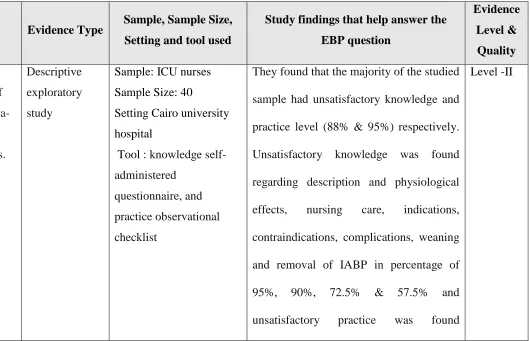
Rushdy et. al, (2015) performed a descriptive exploratory study among 40 nurses
in ICU of Cairo University Hospitals by knowledge self-administered questionnaire, and
practice observational checklist. They found that the majority of the studied sample had
unsatisfactory knowledge and practice level (88% & 95%) respectively. Unsatisfactory
knowledge was found regarding description and physiological effects, nursing care,
indications, contraindications, complications, weaning and removal of IABP in
percentage of 95%, 90%, 72.5% & 57.5% and unsatisfactory practice was found
regarding about preparation and initiation of IABP therapy, nursing practice during
therapy, weaning and removal of IABP in percentages of (97.5%, 97.5% & 90%),
respectively. Finally, knowledge level was found to differ significantly in relation to
gender (t=2.46, at P ≤ 0.018).
19
A quasi-experimental one group pre and post-test design, consisted of 60 staff nurses selected by purposive sampling technique. Majority 71.7% staff nurses had reported adequate knowledge regarding IABP after structured teaching programme. The assessment of effectiveness of structured teaching programme on knowledge of staff nurses regarding IABP, revealed that, the knowledge increased after intervention is 48.96 percent at p <0.05 level.( Rajni Thapa, 2018)
Development of Nursing Evidence-Based Practice Protocol
For the development of evidence based practice guidelines, an extensive systematic review was carried out by the researcher. The electronic data bases and various hand search strategies were adopted for the systematic review. The search engines included were Pubmed Central, Google Scholar, Science Direct, Cochrane Library and Proquest. All the studies identified through this search were subjected to quality check by using Johns Hopkins evidence Practice Model. The researcher obtained permission from Johns Hopkins University (https://www.ijhn-education.org) to use the Johns Hopkins Nursing Evidence Based Practice (JHN EBP) model and tools. (Annexure K)
The Protocol includes the following aspects in this study : 1. Nursing Evidence Based Practice Question Development 2. PRISMA Flow Diagram
20
1. Nursing Evidence Based Practice Question Development What is the problem and why is it important?
This research focuses on, care of patient with IABP upon knowledge and practice among nurses. This research work was undertaken by the researcher to seek evidence as nurse faces problems in the care of Critically ill patients and equipment.
What is the current practice?
The number of patients placed on IABP is on the rise. Nurses with GNM or BSc Nursing, do not automatically develop skills, though a few of them may have chances to see an IABP. India is becoming the health care destination of the world. A number of complications may occur during, before and after insertion of IABP care. The lack of knowledge and practice of health care providers can have a negative impact on patient outcomes and the organization.
What is the focus of the problem?
The focus of the problem is both of clinical and educational concern. IABP care is, with care provided to preserve life, prevent the condition from worsening, and promote recovery. IABP care is the initial temporary and immediate care should be given to.
How was the problem identified?
The problem was identified by the researcher as there is a lack of knowledge and practice of care of patient with IABP .
What is the scope of the problem?
21 What are the PICO Components?
P - Population / Patient. Here it is the nurses.
I – Intervention. Capacity building programme is the intervention planned. C – Comparison a comparison group is also identified who follows regular
practices / routines without the given intervention.
O – Outcome. The expected outcome is improvement in knowledge and practice of capacity building programme on care of patient with IABP and is based on an intervention measured by using structured knowledge questionnaire, and practice observation checklist thus increasing level of acceptability on the Intervention and enhancing Quality of Life.
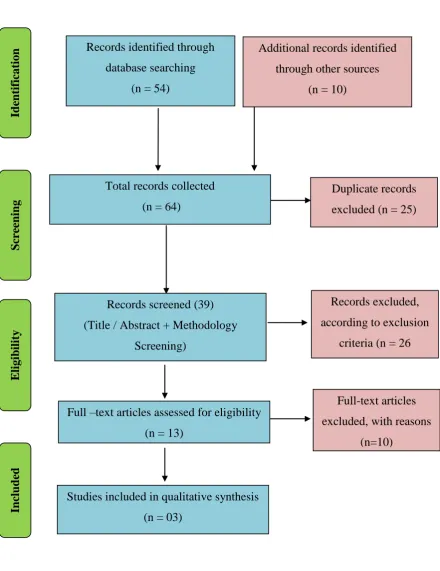
PRISMA (Preferred Reporting Items for Systematic Reviews and Meta – Analyses) Is an evidence based minimum set of items aimed at helping authors to report a wide array of systematic reviews and meta-analyses that assess the benefits and harms of a health care intervention. PRISMA focuses on ways in which authors can ensure a transparent and complete reporting of this type of research.
The two important components of PRISMA are The PRSMA checklist and The PRISMA flow diagram. In this research work, the researcher used the PRISMA flow diagram to depict the flow of information through the different phases of systematic review.
22
23
Fig.2 PRISMA Flow Diagram Total records collected
(n = 64)
Full –text articles assessed for eligibility (n = 13)
Studies included in qualitative synthesis (n = 03)
Full-text articles excluded, with reasons
(n=10)
No Clear Inference.
S cr ee n in g E li gib il ity In clu d ed Duplicate records excluded (n = 25) Records identified through
database searching (n = 54)
Additional records identified through other sources
(n = 10)
Records screened (39) (Title / Abstract + Methodology
Screening) (n=58)
Records excluded, according to exclusion
24
[image:39.842.290.820.172.513.2]EBP Question: Is Capacity Building Programme on IABP care as an Intervention Effective in Improving Knowledge and Practice
Table.1 Individual Evidence Summary Level based on Effectiveness of Capacity Building Programme regarding care of Patient with IABP upon Knowledge and Practice
Article
No Author & Date Title / Objective Evidence Type
Sample, Sample Size, Setting and tool used
Study findings that help answer the EBP question
Evidence Level &
Quality 1. Rushdy et al
(2015)
Nurses' knowledge and
practice regarding care of
patients connected to
intra-aortic balloon pump at
Cairo university hospitals.
Descriptive
exploratory
study
Sample: ICU nurses Sample Size: 40 Setting Cairo university hospital
Tool : knowledge self-administered
questionnaire, and
practice observational
checklist
They found that the majority of the studied
sample had unsatisfactory knowledge and
practice level (88% & 95%) respectively.
Unsatisfactory knowledge was found
regarding description and physiological
effects, nursing care, indications,
contraindications, complications, weaning
and removal of IABP in percentage of
95%, 90%, 72.5% & 57.5% and
unsatisfactory practice was found
25 Article
No Author & Date Title / Objective Evidence Type
Sample, Sample Size, Setting and tool used
Study findings that help answer the EBP question
Evidence Level &
Quality
regarding about preparation and initiation
of IABP therapy, nursing practice during
therapy, weaning and removal of IABP in
percentages of (97.5%, 97.5% & 90%),
respectively. Finally, knowledge level was
found to differ significantly in relation to
gender (t=2.46, at P ≤ 0.018).
2. Asmaa. et al. (2017).
Effect of Implementing Intra-Aortic Balloon Pump Teaching Program on Critical Care Nurse's knowledge and Practice
Quasi experimental research
Sample: ICU nurses Sample Size: 40
Setting: ICU Assuit Main University hospital. Tool : knowledge self-administered
questionnaire, and
They revealed that the majority of nurses had poor knowledge and practice related to IABP before teaching program which has been improved after Also, a positive correlation was found between knowledge
26 Article
No Author & Date Title / Objective Evidence Type
Sample, Sample Size, Setting and tool used
Study findings that help answer the EBP question Evidence Level & Quality practice observational checklist
and practice scores of the study subjects. they concluded that empowerment of critical care nurse's knowledge and practice would have a positive impact upon their knowledge and performance. The study recommended that continuous In service training programs for the purpose of updating the knowledge and practice about IABP for critical care nurses.
3 Rajni Thapa and Gita Neupane (2018).
Intra Aortic Ballon Pump Implantation Therapy
A quasi experimental study
Sample: ICU nurses Sample Size: 60 Setting: ICU Dehradun.
They found that majority 71.7% staff nurses had reported adequate knowledge regarding IABP after structured teaching
27 Article
No Author & Date Title / Objective Evidence Type
Sample, Sample Size, Setting and tool used
Study findings that help answer the EBP question
Evidence Level &
Quality hospital.
Tool : knowledge self-administered questionnaire,
and practice observational
checklist
28 Synthesis of Evidence
There were Three evidences on the topic, found appropriate for Individual Evidence Summary and they were tabulated and all of the Evidences belonged to Level II.
Summary
29
CHAPTER III
RESEARCH METHODOLOGY
The methodology of the research study is defined as the way data are gathered in order to answer the question and analyze the research problem. It enables the researcher to project a blueprint of the research undertaken. The research methodology involves the systematic procedure by which the researcher starts from the time of initial identification of problem to its final conclusion.
This chapter deals with a brief description of different steps undertaken by the researcher for the study. It includes research approach, research design, variables, under study, setting, population, sample size, sampling techniques, criteria for selecting sample, method of developing questionnaire, description of research instrument, validity of the tool, ethical consideration, pilot study, data collection procedure and data analysis. The present study is conducted to assess the effectiveness of a capacity building programme regarding care of patient with Intra-aortic balloon pump (IABP) upon the level of knowledge and practice among nurses.
Research approach
A research approach is the most significant part of any research. The appropriate choice of research approach depends on purpose of the research study which is undertaken.
30
To accomplish the objectives of the study, a pre experimental approach was used as the researcher will assess the effectiveness of a capacity building programme regarding care of patient with IABP upon level of knowledge and practice among nurses.
Research design
The research design is the overall plan for addressing a research question, including, specifications for enhancing the study’s integrity (Polit & Beck, 2016). It is the overall blue print for the researchers to select and carry out the study. A research design incorporated is the most important methodological design that a researcher works in conducting a research study. It helps the investigator in the selection of the subjects, observation, types, of statistical method to be used to interpret the data.
The research design used to in this study was a pre experimental one group pretest and posttest research design. It fulfills the criteria such as manipulation without control.
O1 x O2
O1 - Pretest assessment of knowledge and practice regarding IABP care
X- Capacity building program, a structured educational programme, regarding information, steps and guidelines about care of patient with IABP followed by demonstration was provided to the selected samples of nurses in 10 session, 3 days (4 hours/day) for each batch of 10 nurses using power point presentation and demonstration. O2 - Posttest assessment of knowledge and practice IABP care among Nurses.
Research Variables
Variables are anything that can change or anything that is liable to vary.
Independent variable
31
which includes care of patient with IABP, before insertion, during insertion and after insertion of IABP.
Dependent variables
The variables hypothesized to depend on or be caused by independent variable is the called the dependent variable. In this study, the dependent variables were Knowledge and practice regarding care of patient with IABP among Nurses.
Attribute variables
It is the variable that describes the study sample characteristics. In this study the attribute variables were demographic variables of the nurses such as Age, gender, educational level, years of experience, previous information regarding care of patient with IABP.
Research setting
Polit and Beck (2016), stated that it is the physical location and conditions in which data collection takes place in a study. The study was conducted in 1200 bedded Apollo Main Hospitals at Greams road and 350 bedded, Apollo Specialty Hospital, Vanagaram, Chennai. Cardiac unit comprises of cardiac cathlab, Acute Intensive Coronary Care Unit (AICCU) and Cardio Throacic Intensive Care Unit (CT ICU). Apollo Main Hospitals at Greams Road has 50 bedded cardiac unit and Apollo Specialty Hospitals, Vanagaram has a 20 bedded cardiac unit. An average of 2 to 3 patients per day are on IABP .
Population
32
to whom the study findings was generalized. The accessible population is the aggregate of cases that conform to the designated Criteria and that are accessible as subjects for a study.
Target population
Target population is the group that the researcher aims to study and on whom the study findings will be generalized. In this study, the target population included all those nurses who met the inclusion and exclusion criteria.
Accessible population
It is the group that the researcher finds in the study area. In this study, the accessible population was the group of nurses working in the selected hospitals in Chennai.
Sample
Sample consists of subject of units that comprises of the population of those selected to participate in a study. (Polit &Beck 2012) who fulfill the inclusion and exclusion criteria.
Sample size
The sample consisted of 60 nurses (30 nurses in Apollo Main Hospital and 30 Apollo specialty hospital ) who meet the inclusion and exclusion criteria .
Sampling technique
33
Sampling Criteria Inclusion criteria
The study included the nurses who are
working in cardiac units of Apollo Main Hospital and Apollo Specialty Hospital with Diploma or B.Sc (N) qualification.
available at the time of data collection. who are willing to participate in the study.
Exclusion criteria
34
Fig 3 : Schematic Representation of the Research study Post-test knowledge and practice Preventive complications IABP care
Analysis and interpretation by descriptive and inferential
statistics 60 Nurses (30 Nurses Apollo main hospital, 30 Nurses Apollo
specialty hospital) Data collection tools
Demographic Variable Proforma Structured knowledge
Questionnaire Practice observational
checklist
satisfaction rating scale
Target population (Nurses)
Pretest level of knowledge and
Practice Accessible Population
Apollo main hospital and Apollo Vanagaram Hospital
Purposive sampling
35
Selection and Development of Study Instruments. Method of developing tool
The data collection instrument was developed through extensive review of literature and consultation with experts and guidance of faculty members. Instrument used in this study were demographic variable Performa, structured knowledge questionnaire, practice observation checklist, rating scale for level of satisfaction regarding care of patient with IABP.
The instruments to be used in the study are- • Demographic variable Performa of nurses.
• Structured questionnaire on Knowledge regarding care of patient with IABP. • Observation checklist to assess the Practice regarding care of patient with IABP. • Rating scale on the acceptability of capacity building programme .
Demographic variables Proforma of nurses
Demographic variables for nurses consist of age, gender, education, years of
experience in ICU, previous experience of taking care of IABP patients.
Structured Knowledge Questionnaire for Nurses Regarding Intra-Aortic Balloon Pump (IABP) care
36 Scoring Interpretation:
Percentage Interpretation
<50 Inadequate knowledge 51-75 Moderately adequate knowledge
76-100 Adequate knowledge
Practice Observation Checklist to Assess the Practice of Nurses about IABP Care This observation checklist was developed by the investigator to assess the practice of Nurses. The checklist consists of 20 items that include items related to care of patient with IABP, monitor vital signs, pedal pulse, all coagulation levels (ACT, PT INR, and APTT) and input and output chart. The scoring ranges performed 2, partially performed -1 and not performed-0. Hence the obtainable score was 0-40. Total marks was converted to percentage and the converted percentage was interpreted as a following.
Scoring interpretation
Percentage Interpretation
Less than 25 Poor
26-50 Good
51-75 Very good
Rating scale on the acceptability of Capacity building programme
37
Total marks scored were converted to percentage and the converted percentage was interpreted as the following.
Scoring interpretation:
Percentage Interpretation
76-100 Highly acceptable
51-75 Acceptable
25-50 Unacceptable
Less than 25 Highly unacceptable
Psychometric Assessment of the study instruments Validity of the instruments
Content Validity is the degree to which an instrument adequately represent the universe of content for the concept being measured (Polit & Beck, 2016).
Content validity of the tool was obtained from the experts in the field of cardiology, cardiac thoracic surgery) medical surgical nursing. Based on their suggestions the investigator modified the items and finalized the tool for study.
Reliability of the instruments
Reliability is the degree of consistence or dependability with which an instrument measures an (Polit& Beck, 2016). It refers to the extent to which the same results are obtained on repeated administration of the instrument.
Components Method r value
Knowledge Test retest reliability (Pearson correlation coefficient )
0.78
38
Intervention Protocol
In the initial or pre assessment phase a good rapport was established with the Nurses. The knowledge was assessed using a self-administered questionnaire consisting of 30 questions and each of them too 30 minutes to complete the questionnaire. After that the nurses were assessed about their practices on pre and post procedural care of patients 2-3 days undergoing IABP without their knowledge. A criteria checklist was used to assess the pre and post procedural care of patients undergoing IABP.
The Nurses who completed pretest were given educational intervention on IABP care in groups using power point presentation and each session lasted for 1½ hours. The program covered the general aspects of care of IABP and its indications, contraindications, pre procedural care, and complications. All the Nurses participated in the educational program with great interest.
A post test was conducted after 7 days from the day of capacity building program with self-administered questionnaire and observational checklist for the same group in same manner which was followed in pretest.
Pilot Study
According to Polit & Beck (2016) the pilot study is a small scale version, or trial run, done in preparation for a major study, sometimes called a feasibility study. The purpose is to find the feasibility and practicability of the study and to finalize the tools. Tools were modified as required .pilot study was conducted on the sample comprising of at least 10 % population for the main study.
39
purposive sampling technique. Structured knowledge questionnaire was used to assess the pretest knowledge on IABP care. The practice of nurses on IABP care was observed using observational checklist. After 7 days interval, a posttest was done with same structured knowledge questionnaire. Analysis of the data was done using paired t test and results revealed that the study was feasible.
Protection of Human Rights
Permission was obtained from the principal, Apollo College of Nursing for conducting the study.
The study was conducted after obtaining approval from Ethical Committee, Apollo Hospitals, Chennai.
The setting permission was obtained from Apollo Main Hospitals & Apollo Specialty Hospitals, Chennai.
The participants were given explanation of the study and written consent was obtained from them.
Confidentiality of the data was maintained throughout the study. Data collection procedure
40
December, 2017 and in Apollo specialty hospitals from 15th January to 23th January, 2018.
The session was started at 2 pm. After initial introduction, the researcher obtained consent from the nurses to participate in the study. Demographic variable proforma was distributed among the participants and collected after 10 minutes. A pretest knowledge and practice regarding care of patients with IABP, was measured for all the samples using predetermined and pretested tools through self-administration method for 30 minutes. Then the capacity building programme regarding care of patient with IABP was started at 2.00 pm for participants by using power point presentation, (introduction, definition, purposes, indications, contraindications, steps of IABP care, care of patient before, during, after insertion of IABP) and demonstration regarding steps of taking care of patient with IABP. Tea break was given from 3.30 pm to 4.00 pm to the participants after 30 minutes of the debriefing session. Return demonstration was done by participants from 4.00 pm to 5.00 pm and the session concluded .The samples were followed up after 1 week to assess the level of knowledge and practice regarding care of patient with IABP and level of acceptability of capacity building programme. The data were organized and analysis was done using descriptive and inferential statistics.
41
Plan for Data Analysis
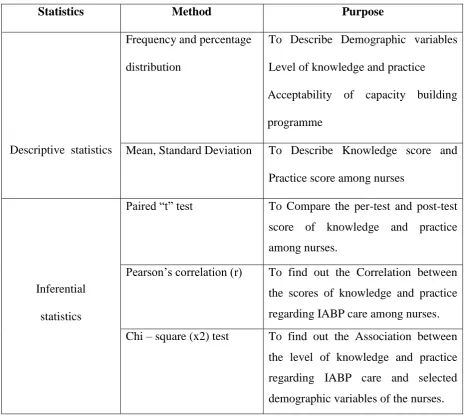
[image:56.595.74.543.151.569.2]Data was analyzed by using Descriptive and Inferential Statistics Table 2: Plan for Data Analysis
Statistics Method Purpose
Descriptive statistics
Frequency and percentage distribution
To Describe Demographic variables Level of knowledge and practice
Acceptability of capacity building programme
Mean, Standard Deviation To Describe Knowledge score and Practice score among nurses
Inferential statistics
Paired “t” test To Compare the per-test and post-test score of knowledge and practice among nurses.
Pearson’s correlation (r) To find out the Correlation between the scores of knowledge and practice regarding IABP care among nurses. Chi – square (x2) test To find out the Association between
the level of knowledge and practice regarding IABP care and selected demographic variables of the nurses.
Summary
42
CHAPTER IV
ANALYSIS AND INTERPRETATION
Data analysis is conducted to reduce, organize and provide a meaning to the data. The results obtained from data analysis require interpretation to make the finding meaningful. Interpretation of data involves examining the results obtained from analysis of data, forming conclusions, considering the implications for nursing, exploring the significance of the findings and suggesting further studies (Polit & Beck, 2016).
This chapter deals with analysis and interpretation including both descriptive and inferential statistics. Statistics is the field of the study concerned with techniques or methods of collection of data, classification, summarization, interpretation, drawing inferences, testing of hypothesis, making recommendations, etc. (Polit & Beck, 2016)
Data was analyzed according to the objectives and hypothesis of the study. Analysis of the study was compiled after all data was transferred to the master coding sheet. The investigator used descriptive and inferential statistics for analysis. The data were analyzed, tabulated and interpreted using appropriate descriptive and inferential statistics.
Organization of Findings
The findings of the study have been organized and are presented under following headings:
Frequency and Percentage Distribution of Demographic Characteristics of Nurses.
43
Comparison of the Mean and Standard Deviation of Knowledge Scores of Nurses regarding IABP care.
Frequency and Percentage Distribution of Pretest and Posttest Level of Practice regarding IABP.
Comparison of the Mean and Standard Deviation of Practice Scores of Nurses on IABP care.
Correlation between the scores of Knowledge and Practice Scores of Nurses regarding IABP care.
Frequency and percentage distribution on Level of Acceptability of Nurses on Capacity Building Programme regarding IABP care.
Association between Selected demographic variables and the Level of Knowledge of Nurses before and after Capacity Building Programme regarding IABP care among Nurses.
44 Table: 3
Frequency and Percentage Distribution of Demographic Variables of Nurses.
(N = 60)
Demographic Characteristics f %
Age in years
21 to 25 years 48 80
26 to 30 years 7 11.7
31 to 35 years 5 8.3
Above 35 years 0 0
Gender
Male 16 26.7
Female 44 73.3
Years of ICU Experience
Up to 2 years 32 53.4
3 to 5 years 22 36.6
6 to 10 years 4 6.7
Above 10 years 2 3.3
Previous experience of IABP patient care
Yes 46 76.7
No 14 23.3
45
Figure. 4 : Percentage Distribution of the Educational Level of Nurses 23.4
70 3.33.3
GNM
B.Sc ( Nursing )
Post.B.Sc ( Nursing )
46 Table .4
Frequency and Percentage Distribution of Pretest and Posttest Level of Knowledge of Nurses regarding care of Patient with IABP. (N = 60)
Level of Knowledge Pretest % Posttest %
Adequate (23- 30) 0 0 16 26.67
Moderately Adequate (16 -22) 48 80 44 73.33
Inadequate (<15) 12 20 0 0
47 Table: 5
Comparison of Mean and Standard Deviation of Knowledge of Nurses regarding
care of Patient with IABP. (N = 60)
Knowledge Mean SD t- value
Pretest 16.48 2.1 13.6***
Posttest 22.95 2.7
***p <0.001
It is inferred from the table 5 that there was a significant difference between pretest knowledge score (M = 16.48, SD = 2.1) and posttest knowledge score (M =22.95, SD = 2.7) regarding IABP care among nurses with t-value of 13.6 significant at p < 0.001 level. Hence the null hypothesis H01 stating that, ―There will be no significant difference
between the pretest and posttest level of knowledge and practice regarding IABP care among Nurses‖ was rejected.