Mortality levels, patterns and differentials and
their correlates in the pre-development context:
the case of Lao PDR
Rattanatay Luanglatbandith
A thesis submitted for the degree of
Doctor of Philosophy
Demography Program
Division of Demography and Sociology
Research School of Social Sciences
The Australian National University
Declaration
Except where otherwise indicated, this thesis is my own work undertaken as
a scholar in the Demography Program, Division of Demography and Sociology,
Research School of Social Sciences, the Australian National University.
Acknowledgements
I wish to thank the Australian Agency for International Development (AusAID)
for granting me financial support to undertake my PhD work in demography at the
Australian National University. My sincere thanks also extend to the United Nations
Population Fund (UNFPA) which provided me with funding for pursuing my post
graduate study in Australia, especially Dr J. S. Parsons who gave me strong support and
introduced me to this subject in the first place. I am grateful to the people of Lao PDR
who entrust me with this prestigious assignment of bringing home knowledge and skills
to contribute to the economic and social development of Laos.
I am deeply indebted to my panel comprised of Prof. Geoffrey McNicoll as the
chair, Dr Heather Booth and Prof. Peter McDonald, who vigorously gave me guidance
and encouragement. These people tirelessly pulled me through difficult times and
provided me with helpful comments and input into the development of this thesis.
Without their help my work would not have achieved its goals. I wish to thank my
former panel Dr Habtemariam
Tesfaghiorghis and Dr ChingChoi who gave me
constructive comments on analytical methods during the commencement of my work.
My special thanks to all the staff and students of the Demography Program, Research
School of Social Sciences, the Australian National University who made my work and
stay in Australia enjoyable and fruitful.
I wish to thank Prof. Peter Warr of the Economic Department, Research School
of Pacific and Asian Studies and Prof. Gavin Jones, Dr Terry Hull, Dr Chris Wilson, Dr
David Lucas and Dr Chris McMurray of the Demography Program for giving emotional
support and motivation.
I am certainly indebted to all staff members of the National Statistical Centre
(NSC),
State
Planning
Committee,
Vientiane,
especially
Mr
Bounthavy
Sisouphanthong, the Director, Ms Sudachanh, Ms Phonesaly and Mr Bouangeun for
their generous assistance during my field work at the NSC.
Abstract
Until recently Lao PDR (Laos) has lacked mortality data for use in planning and
social analysis. Mortality estimates came mostly from indirect estimation techniques
and were mainly confined to infant mortality rates. Adult mortality was largely
neglected. Although it was estimated that mortality in Laos is among the highest in the
world, no comprehensive study of mortality and its correlates has been undertaken for
Laos.
This study made use of newly available data from nationally representative
surveys on adult, infant and child mortality to investigate the patterns and differentials
in adult mortality, and to examine the levels, differentials and determinants of infant and
child mortality. This allowed the calculation of first national life tables by sex. The
1989-91 Multi-round Vital Statistics Survey (MVSS) is used for the adult mortality
estimation while the 1994 Fertility and Birth Spacing Survey is the basis of infant and
child mortality estimates.
This study first assesses the quality of the MVSS to determine errors in coverage
of the population and deaths and identify data inconsistencies and other non-sampling
errors. It then evaluates age-sex reporting of the population, and derives age-specific
death rates by sex for national population and subgroups using direct methods of
estimation.
39. At ages 40 and above, differential mortality is less clear. Mortality is higher among
people living at high altitudes and practicing slash-and-burn cultivation, among
populations in regions other than the central region of the country, among rural
populations and among people belonging to ethnic minorities. This clearly indicates that
mortality is linked to level of development, elevation, food security and cultural factors
such as health beliefs and health seeking behaviour, access to health care and sanitation,
housing and food habits.
Life table survival analysis is employed to estimate infant and child mortality
levels and differentials, while Cox regression is used for study of determinants of infant
and child mortality. Infant and child mortality has declined over time, especially during
the period from 1975-89, but is still very high. Mother's age at childbirth and birth order
are strongly correlated with infant and child mortality. Among socio-economic
covariates, maternal education is the strongest determinant of mortality followed by
urban or rural residence,
paternal education and father's occupation. Multivariate
analysis indicates that occupation of mothers and regions of residence are not
statistically significant determinants of infant and child mortality. Overall, morality is
higher for males than for females.
CONTENTS
page
Acknowledgments
iii
Abstract
v
List of Tables
x
List of Figures
xii
List of Appendices
xiv
Chapter 1
INTRODUCTION
1
1. 1 The study of mortality in Lao People's Democratic Republic 1 1. 2. Theoretical review of mortality transition and differentials 4 1.3. Literature review on mortality studies in Lao PDR 8 1. 4. Research problems and importance o f the research 11
1.4. 1. Research problems 11
1.4.1.1. Persistent high mortality 11
1.4.1.2. Health problems 12
1. 4. 2. Importance of the research 15
1. 5. Background and context of the research 17
1.5. 1. Land 17
1.5.1.1 Geography 17
1.5.1.2. Climate 19
1. 5. 2. Population and society 20
1.6. Brief history 22
1. 7. The socio-economic development of Lao PDR 26
1. 8. Thesis objectives 29
1.9. Thesis organization 30
Chapter 2 ADULT MORTALITY
31
2. 1. Introduction 31
2. 2. Data set 33
2. 2. 1. Sample design 33
2. 2. 2. Method of enumeration 35
2. 2. 3. Data limitations 37
2. 3. Data evaluation 38
2. 3. 1. Data inconsistencies 39
2. 3. 2. Coverage of events 41
2. 3. 3. Age reporting errors 43
2. 3. 4. Digit preference 44
2. 3. 5. Evaluation of the age distribution of the population 46
2. 3. 6. Evaluation of sex ratios 48
2. 3. 7. Summary 52
2. 4. Estimation o f adult mortality 53
2. 4. 1. Methodology in adult mortality estimation 53
2. 4. 2. Adult mortality patterns 55
page
Chapter 3 INFANT AND CHILD MORTALITY: LEVELS AND
61
TRENDS
3. 1. Introduction 61
3. 2. Methodology and measures 62
3. 3. Data set 65
3 .3 . 1. Sample design and method of enumeration 66 3. 3. 2. Construction of a childfile for the analysis of infant 67
and child mortality
3. 3. 3. Data evaluation 67
3. 3. 4. Data limitations 70
3. 4. Levels of infant and child mortality 70
3. 5. Estimated trends in infant and child mortality 73
3. 6. Summary 76
Chapter 4
NATIONAL LIFE TABLES
79
4. 1. Data and method 79
4. 2. Abridged life tables 80
4. 3. Conclusion 86
Chapter 5 DIFFERENTIALS IN ADULT MORTALITY
87
5. 1. Introduction 87
5. 2. Classifications o f variables used for the analysis o f 88 mortality differentials
5 .2 . 1. Agro-ecological classification 88
5. 2. 2. Regional classification 90
5. 2. 3. Urban-rural place of residence 92
5. 2. 4. Ethnic classification 92
5. 3. Adult mortality differentials 93
5. 3. 1. Differentials by agro-ecological zone 95
5. 3. 2. Differentials by region 99
5. 3. 3. Differentials by urban or rural residence 103
5. 3. 4. Differentials by ethnicity 106
5 .4 . Summary 111
Chapter 6 INFANT AND CHILD MORTALITY DIFFERENTIALS
113
6. 1. Introduction 113
6. 2. Differentials by demographic factors 114
6. 2. 1. Differentials by mother's age at birth 114 6. 2. 2. Differentials by birth order 115 6. 3. Differentials by region and urban or rural residence 117 6 .4 . Differentials by maternal and paternal education 120 6. 5. Differentials by occupations o f parents 124
6. 6. Bivariate analysis 129
page
Chapter 7 MULTIVARIATE ANALYSIS OF INFANT AND CHILD MORTALITY DETERMINANTS
7. 1. Introduction 135
7. 2. Models 136
7 .3 . Covariates used in the analysis 138
7. 4. Results of the multivariate analysis 140
1. 5. Summary 146
Chapter 8 DISCUSSION AND POLICY IMPLICATIONS
8.1 Introduction 148
8.2 Findings on mortality in Lao PDR 150
8.3. Lao PDR in comparative perspective 154
8.4. Food supply and nutrition 165
8.5. Health services 173
8.6. Disease environment and sanitation 176
8.7. High fertility 177
8. 8. Education 179
8 .8 . Cultural factors : housing conditions, health beliefs 180 and cultural practices
8. 9. Policy implications 186
References 189
LIST OF TABLES
page
Table 1.1. Percentage share o f major industry groups in gross 28 domestic product (GDP), annual GDP growth rate,
and real GNP per capita, Lao PDR, 1990-94.
Table 2.1. Number o f sampled villages and their population 34 in relation to total population.
Table 2.2. Migrants and dead migrants as percentages o f total 42 population and total deaths, respectively, and ratios
o f dead migrant percentages and migrant percentages by sex, MVSS, 1990.
Table 2.3. Percentage o f population estimated in each terminal digit, 45 deviation from 10 per cent at each terminal digit and
Myer’s Index, MVSS Round 1.
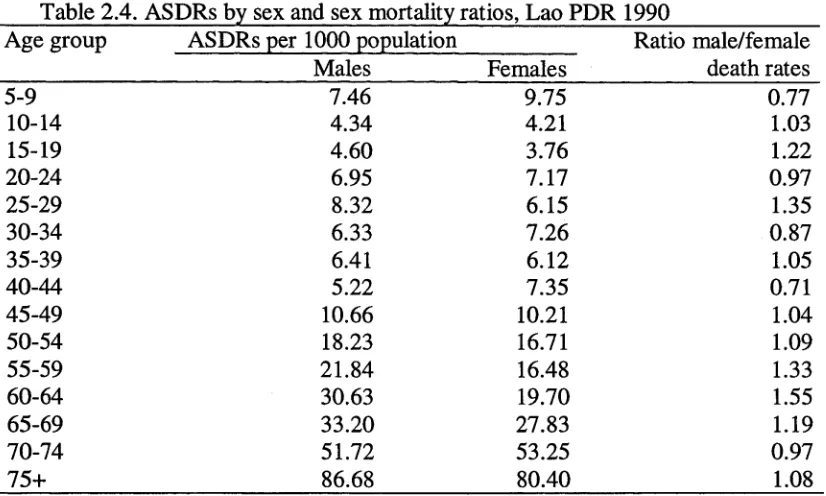
Table 2.4. ASDRs by sex and sex mortality ratios, Lao PDR 1990 56
Table 3.1. Values o f iqo, 4qi and sqo, 1965-94, FBSS, Lao PDR. 71
Table 3.2. Values o f iqo, 4qi and sqo for both sexes and Gehan test 74
statistics o f survival experience by birth cohort, 1965-94, FBSS, Lao PDR.
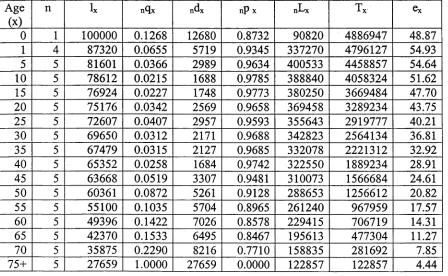
Table 4.1. Abridged life table, males, Lao PDR, 1990. 81
Table 4.2. Abridged life table, females, Lao PDR, 1990. 82
Table 6.1. Infant, child and under-five mortality rates by mother’s 115 age at childbirth and birth order and Gehan statistics,
Lao PDR, 1965-94, FBSS, 1994.
Table 6.2. Infant, child and under-five mortality rates by region and 117 urban-rural place o f residence and Gehan statistics,
Lao PDR, 1965-94, FBSS, 1994.
Table 6.3. Infant, child and under-five mortality rates by parental 123 education and Gehan statistics, Lao PDR, 1965-94,
FBSS, 1994.
Table 6.4. Infant, child and under-five mortality rates by occupation 125 o f parents and Gehan statistics, Lao PDR, 1965-94,
FBSS, 1994.
of residence and parental education, Lao PDR, 1965-94, FBSS, 1994.
Table 6.5.2. Infant and child mortality according to occupation of 132 parents and parental education, Lao PDR, 1965-94,
FBSS, 1994
Table 7.1 Definitions of covariates and their percentage distribution. 139
Table 7.2. Relative risks of infant and child death and Wald test 142 probabilities, FBSS, 1994, Lao PDR.
Table 8.1. Estimates of the infant mortality rates (IMR) and life 155 expectancy at birth, e(o), for 1994 and selected
socio-economic indicators for elected countries in Asia.
LIST OF FIGURES
page
Figure 1.1. Administrative map of Lao PDR. 18
Figure 2.1. Comparison of proportion of age distribution, males. 47
Figure 2.2. Comparison of proportion of age distribution, females. 47
Figure 2.3. Comparison o f sex ratio between the MVSS subset 49 Round 1 and the 1995 Census, Laos.
Figure 2.4. Age-specific death rates by sex, Lao PDR, 1990. 56
Figure 3.1. Age at death in months reported in the FBSS 1994, Lao PDR 69
Figure 3.2. Infant, child and under-five mortality by birth cohort, 74 FBSS 1994, Lao PDR.
Figure 4.1. Values of q(x) by sex plotted against a logarithm scale, 80 Laos, 1990.
Figure 4.2. Values of l(x) by sex plotted against a logarithm scale,
Laos, 1990. 81
Figure 4.3. Values of q(x) for Lao PDR, Thailand, Malaysia and 84 W est model life table level 13, males.
Figure 4.4. Values of q(x) for Lao PDR, Thailand, Malaysia and 84 West model life table level 13, females.
Figure 5.1. Topographic map of Lao PDR. 89
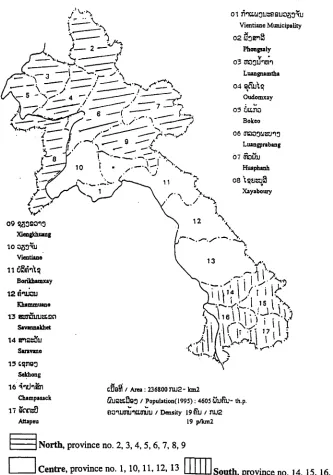
Figure 5.2. Map of provinces and regions of Lao PDR covered by the MVSS 91
Figure 5.3. Geographical distribution of Lao population by 94 ethno-linguistic affiliations.
Figure 5.4.a. Adult age-specific death rates by agro-ecological zone, 96 males, 1990.
Figure 5.4.b. Adult age-specific death rates by agro-ecological zone, 96 females, 1990.
Figure 5.5.a. Adult age-specific death rates by region, males, 1990. 100
Figure 5.5.b. Adult age-specific death rates by region, females, 1990. 100
Figure 5.6.b. Adult age-specific death rates by place o f residence, females, 1990.104
Figure 5.7.a. Adult age-specific death rates by ethnic group, males, 1990. 107
LIST OF APPENDIX TABLES
Table A.2.1 : Percentage distribution of population by sex, and sex, 203 MVSS sample, Round 1 and the 1995 population census.
Table A.2.2. Estimated number of population and deaths for 203 MVSS sample subset, by sex, 1990.
Table A.3.1: Data for the estimation of nqx, 1965-1994, 204 FBSS, 1994, Lao PDR
Table A.3.2: Data for the estimation of nqx, 1965-1994, 204 FBSS, by sex
Table A.3.3. Data for the estimation o f nqx, 1965-1994, 205 FBSS, by birth cohort
Table A .4.1. Definitions of life table columns 206
Table A .5.1. Number of population, deaths and age-specific death rates, 207 per 1000 persons, males, by agro-ecological zone,
Lao PDR, 1990.
Table A.5.2. Number of population, deaths and age-specific death rates, 208 per 1000 persons, females, by agro-ecological zone,
Lao PDR, 1990.
Table A.5.3. Number of population, deaths and age-specific death rates, 209 per 1000 persons, males, by region,
Lao PDR, 1990.
Table A.5.4. Number of population, deaths and age-specific death rates, 210 per 1000 persons, females, by region,
Lao PDR, 1990.
Table A.5.5. Number of population, deaths and age-specific death rates, 211 per 1000 persons, males, by urban-rural place of residence,
Lao PDR, 1990.
Table A.5.6. Number of population, deaths and age-specific death rates, 212 per 1000 persons, females, by urban-rural place of residence,
Lao PDR, 1990.
Table A.5.7. Number of population, deaths and age-specific death rates, 213 per 1000 persons, males, by ethnic group,
Table A.5.8. Number of population, deaths and age-specific death rates,
214
per 1000 persons, females, by ethnic group,
Lao PDR, 1990.
Table A.6.1. Data for the estimation of nqx, 1965-1994, FBSS,
215
by mother's age at childbirth
Table A.6.2. Data for the estimation of nqx, 1965-1994, FBSS,
216
by birth order
Table A.6.3. Data for the estimation of nqx, 1965-1994, FBSS,
217
by region
Table A.6.4. Data for the estimation of nqx, 1965-1994, FBSS,
218
by urban-rural residence
Table A.6.5. Data for the estimation of nqx, 1965-1994, FBSS,
219
by maternal education
Table A.6.6. Data for the estimation of nqx, 1965-1994, FBSS,
220
by paternal education
Table A.6.7. Data for the estimation of nqx, 1965-1994, FBSS,
221
by mother's occupation
Chapter 1
Introduction
1.1. The study of mortality in Lao People’s Democratic Republic
While the world advances towards the new millennium with tremendous
achievements in many areas, particularly in the information and computer technologies,
hundreds of millions of people in the Third World are still living in absolute poverty and
precarious health conditions (World Bank, 1990; Singer, 1993). The majority of the
population in the least developed countries still do not have access to safe drinking
water, electricity, education, adequate nutrition and health care, and transportation
(World Bank, 1990).
Development in Lao People's Democratic Republic (Lao PDR or generally
known as Laos) has begun recently, following the end of Indochina war, with social
development still lagging behind economic development (World Bank, 1995b). The
mortality situation of its population echoes that of the developed world more than a
century ago. In most of the world mortality experienced a rapid decline following the
end of the Second World War (UN, 1982). In Lao PDR, however, mortality and fertility
continue stand at very high levels (SSC, 1986, NSC/LWU, 1995).
(UN, 1982; Schofield, 1984). Inevitably, there factors are inter-related: their interactive
effects emerge not only in the analysis of mortality, but also in the assessment and
evaluation of the impact of health care and other interventions (Ruzicka and Kane,
1986:35).
Like the situation in some other developing countries, until quite recently
demographic information for Lao PDR hardly existed. Vital registration is too
incomplete to provide a source for reliable and regular death statistics or information on
causes of death. There is even less information to support refined mortality rates,
mortality determinants and mortality differentials among the population subgroups of
Lao PDR.
The mortality estimates for the country that were available from various sources
were often conflicting and of doubtful value, often apparently not based on empirical
data. Policy makers were not able to assess health problems in Lao PDR, or to design
appropriate intervention measures. The result was that insufficient resources were
allocated to public health and health intervention programs and spending was directed
towards expensive-hospital-based therapeutic measures rather than prevention
(UNICEF, 1992; 1996). Information on factors influencing health and mortality which
might have enhanced the efficiency of the formulation and implementation of public
health program was simply absent. Health policies and programs were formulated in a
uniform manner without regard to the regional, social class and ethnic diversity of the
potential beneficiaries. This was partly due to the lack of knowledge of the differentials
and determinants of mortality for the country.
Evidence from studies covering a wide range of societies at different levels of overall
mortality shows that there is a direct association between infant and child mortality and
a range of indices o f economic and social resources available to the family (Ruzicka and
Hansluwka, 1982: 104; Ruzicka, 1989). This relationship holds even for population
subgroups such as population by geographic subdivision, including urban or rural
subdivisions (Ruzicka, 1989). It has been shown that over time, despite any general
decline of mortality, the differences in the chances of child survival among various
socio-economic subgroups of the national population persist (Ruzicka, 1989: 3, Cleland
et al., 1992).
However, no comprehensive study on mortality differentials over various
population subgroups and on infant and child mortality determinants has so far been
undertaken for Lao PDR. A sound understanding o f the interacting and correlated risk
factors underlying mortality forces and causes of death prevailing in the country,
particularly with respect to infant and child mortality which is very high in Lao PDR, is
necessary to throw light on the health problems and to assist health planners to work out
appropriate policies and measures to improve the health status of the population.
Poor condition of roads and transport infrastructure is a major problem for
development in Lao PDR. The majority of the population at low densities across
difficult terrain, and most of the institutions for implementing government programs and
projects are weak and inefficient. Hence different segments and subgroups o f the
population have reached different degrees of development. Ruzicka and Kane (1990: 6)
argue that the association between mortality and development is dominated by different
forces at different stages and levels o f development. Such differentials may well be
found in the Lao population. Knowledge of the mortality levels, patterns and
economy would pave the way to better policy formulation and better health care and
other social services.
This chapter begins with a discussion of the theoretical background of mortality
transition and differentials, a literature review of mortality studies in Lao PDR and a
statement of research problem. The sections that follow discuss the context under which
the mortality situation will be studied. The chapter concludes with an outline of the
thesis.
1.2. Theoretical review of mortality transition and differentials
The classical or western model describes the transition of mortality from high
death rates to low death rates which took place over the past 200 years in western
societies. In this model, mortality declined gradually in response to improvements in
social, economic and environmental conditions including improved nutrition and
personal health habits. Mortality transition in the accelerated variant of the classical
model is a transition over a shorter period of time. This model describes the transition in
Japan, and Eastern European countries including the former USSR. Changes in
mortality that have been observed in most developing countries are described by the
delayed model. There, mortality has declined dramatically since the end of the World
War II, while fertility remains at high levels. The mortality transition observed in certain
developing countries such in East Asian countries and Singapore can be described by
the transitional variant of the delayed model.
With regard to mortality decline in Europe, Schofield and Reher identify three
distinctive phases. The first phase was during the eighteenth century when the incidence
of crisis mortality diminished drastically in most of Europe. The second phase was the
period of the reduction of epidemics when endemic infectious diseases became
relatively more important and gains in life expectancy slowed considerably. It was not
until the latter part of the nineteenth century that mortality once again declined sharply
in most areas of Europe. The third phase of mortality decline begun after World War II
and spread throughout the world. It seems inextricably, though not exclusively, linked to
the use of sulpha drugs and antibiotics (Schofield and Reher, 1991: 1).
imported medicines and the implementation of western health care systems. However,
the causal relationships between mortality decline in the developing world and other
socio-economic factors are far from uniform and not readily summarized (Arriaga and
Davis, 1965; Omran, 1971; Caldwell, 1986; Palloni, 1990; Ruzicka and Kane , 1990).
For quite some time mortality and the factors correlated with its decline in the
low-income developing countries have been the focus of studies carried out by various
researchers. The findings vary in different contexts. However, general guidelines for the
investigation of the factors behind mortality and its decline can be drawn from these
studies. Various conclusions have been reached by Gwatkin (1980) in his study of the
change in mortality trends in developing countries, by Ruzicka and Hansluwka (1982) in
their studies of mortality transition in South and East Asia , and by Ruzicka and Kane
(1986) in their assessment of the effects of the socioeconomic changes on mortality
decline in selected countries of the ESCAP region. One of the conclusions reached by
these authors is that sustained mortality decline could not be achieved in developing
countries in the face of only limited improvements or even retrogression in the
economic growth and living standards. As just noted that the rapid decline in mortality
in developing countries have been the result of the health programs to control infectious
and communicable diseases. Nevertheless, the increased availability of food supplies
and other socio-economic changes also play an important role in the decline (McKeown
et al,. 1975; McKeown, 1976; Hull and Jones, 1986:1). According to Stolnitz (1989),
the explanations of mortality decline must refer to both sets of causal factors: socio
economic factors and health-related progresses including improved sanitation.
when education and income are controlled, major cultural and ethnic differentials still
exist (Caldwell, 1990: 44-59). Similar conclusions are reached by Mensch et al. (1983)
and Defo (1993) in their studies of mortality differentials in African countries.
Other studies on factors related to mortality and morbidity decline in developing
countries of Africa, Latin American and Asia by Caldwell (1979), Cochrane, (1980),
Meegama, (1980); McDonald (1982), Mosley (1983), Jain (1984), Hobcraft et al.
(1984), United Nations (1985), Palloni (1985), Caldwell (1990), Caldwell and Caldwell
(1991), among others, have found that parental education, especially maternal
education, is an important factor among social and economic characteristics of
individuals and households leading to lower mortality. Children's probability of dying is
inversely related to mother's years of schooling; although there may be several other
factors at work, maternal education is one of the strongest socio-economic factors
associated with child survival (Hobcraft et al., 1984; Cleland and van Ginneken, 1989;
Cleland, 1990; Kent, 1991). Caldwell (1986, 1990), suggested that social determinants
play the key roles as predictors of the levels of mortality in the third world countries
whereas levels of income and health services are weak predictors. Maternal education
has multiplicative effects at both the individual family and societal levels.
control of diseases and to the spread of medical and public health services which to a
great extent, are not related to the economic conditions of the region (Ruzicka and
Hansluwka, 1982). However, Hill and Pebley (1989) found that there are differences in
the pace of mortality decline among different regions and countries depending on the
initial mortality levels, and that the effects of the deterioration in economic conditions
on the general slowdown in the pace of mortality decline in the early 1980s are contrary
to what might be expected (Hill and Pebley, 1989: 680-81).
As noted earlier, levels of income and health services are not strong predictors of
mortality outcomes in the developing world (Caldwell, 1990). This may be because
income and health services themselves are influenced by other socio-economic and
cultural factors, such resource endowments, and because access to health care is
influenced by the state of roads and transportation, by health beliefs and health seeking
behaviour, and by customs and traditional practices.
Therefore, although epidemiological transition theory can help shed light on the
different variants of mortality transition, there is still much to be understood about
mortality differentials and the factors influencing them, particularly for a population like
Lao PDR which is at the earliest stages of development. As far as mortality and its
determinants are concerned, knowledge in the area of mortality transition still lags
behind that of fertility (McDonald, 1982).
1. 3. Literature review on mortality studies in Lao PDR
launched by the new socialist regime immediately after the liberation of the country, for
the eradication of the traits of the former regime. This may have led to the loss or
destruction of documents produced during the old regime, and also to a general lack of
interest in any kind of research within government and academic circles. One example
of such a survey was a health survey for the Mekong valley which was carried out in
order to determine the disease patterns, sanitary and hygienic conditions, health related
attitudes, fertility and mortality, and environment conducive to epidemiological trends
in Laos. However, the survey covered only a very limited area (fifteen villages along the
Mekong basin): the universe from which the sample was drawn consisted of the
approximately one-third of the country, which was under Royal or rightist government
control (Breakey and Voulgaropoulos, 1976).
The first vital statistics survey after the establishment of the new regime was
conducted in 1986, with a main purpose of providing estimates of fertility and mortality
for the purpose of deriving the rate of natural increase needed for a population
projection for the country. Except for providing crude death rate and total fertility rate,
no other analysis has been done on mortality differentials and patterns prevailing in the
country, let alone on the cultural, social and economic correlates (SSC, 1986). It was not
until 1993-94 that the first comprehensive fertility and mortality survey was
incorporated into a living- standard-type of survey called the Lao Expenditure and
Consumption Survey and the Lao Social Indicator Survey (LECS and LSIS). However
the published results of these two surveys only gave the national estimates of infant and
child mortality and maternal mortality (NSC, 1995b).
the courtesies of the World Health Organization, Ministry of Health and various non
government organizations were not nationally representative and far from providing
information on mortality differences and the underlying factors of mortality outcomes
(for example, Kripps, 1984; Douangmala and Philavong, 1990; Ministry of Health,
1990; UNICEF, 1987, 1989; Enfants et Developpement, 1990; cited in UNICEF, 1992).
The most recent mortality analysis reported by the Institute for Maternal and
Child Health Care( 1994), using data from the Lao Social Indicator Survey (LSIS)
mostly focuses on fertility and its determinants, and estimates of fertility and mortality
rates, including maternal mortality by the sisterhood method. However, these estimates
are those officially agreed upon by the National Statistical Centre (NSC) and necessarily
the same figures as those published by the NSC. The Institute's report also looks at
seasonal variations in births and infant mortality. It is found that the majority of births
and infant deaths occur during dry season, around March to April, and peri-natal deaths
constitutes the majority of infant death. It also examine infant mortality differentials by
mother's education, rural or urban residence and ethnicity (MCHI, 1994).
(Fauveau, 1995), which sought to determine the causes of maternal deaths and their
determinants among Lao women. This study, however, is far from providing any
satisfactory maternal mortality rate for the country due to its small number of cases. In
general it can be said that mortality and its determinants in Lao PDR and their variations
across regions and population subgroups still remain unexplored.
1.4. Research problems and importance of the research
1.4.1. Research problems
1.4.1.1. Persistent high mortality
A major demographic feature of the population of Laos is the persistence of
relative high mortality by world standards. The mortality level in Laos has declined only
modestly: from an annual crude death rate (CDR) of 23 deaths per 1000 population in
the 1960s and early 1970s to just over 20 during the period 1975-80 (ESCAP, 1983).
The reported CDR was 17 per 1000 population in 1985 and 16 per 1000 population in
the period 1987-90 (SSC, 1990).
Life expectancy at birth of the Lao people is low. The Economic and Social
Commission for Asia and the Pacific (ESCAP)(1983) estimates suggest that life
expectancy for both sexes increased from 40.4 years in the 1960s and early 1970s to
43.5 years during 1975-80. However, the accuracy of these estimates is in question since
they are not accompanied by any sound analysis as to the validity and reliability o f the
data on which they are based.
Estimates of mortality for Laos obtained from various sources differ greatly.
ESCAP's estimates of infant mortality rate for Lao PDR were 180, 150 and 135 per
thousand live births for the 1960s, 1970s and the 1975-1980 period, respectively
(ESCAP, 1983). Later statistics gave an infant mortality rate in 1985 of 117 per
Maternal and Child Health Institute of the Ministry of Health revealed that infant
mortality rate stood at 125 per thousand live births and maternal mortality rate was 656
per 100,000 live births (MCHI, 1994: 47).
Given the background of a subsistence agrarian society with as yet limited
progress in development and poor health conditions, two important questions need to be
answered, based on sound analysis. What are the levels and patterns of mortality in
Laos? Are there any mortality differentials between different ethnic groups, regions and
urban or rural residence and from where do they arise?
I.4.I.2. Health problems
The most important obstacles to better health in Lao PDR are believed to include
malnutrition and under-nutrition, environmental contamination, style of living, ethnic-
specific health beliefs and behaviours, high fertility, inadequacy and poor quality o f and
access to health services, and lack of preventive health programs.
With respect to health and morbidity, the most prevalent diseases in Laos are
infectious, parasitic and respiratory diseases such as malaria, diarrhoea, dysentery,
leprosy, tuberculosis and respiratory infections (ESCAP, 1983 ; Ruzicka and Kane,
1986). Throughout the last two or three decades malaria has remained the major killer in
the country (UNICEF, 1992). There exists a severe nutritional problem among Lao
people (MCHI, 1994: 48; World Bank, 1995b).
Environmental contamination is another factor leading to high mortality.
Housing conditions including toilet, water supply facilities, type of kitchen and lighting
can presumably affect health largely through their impact on sanitation, thus affecting
the incidence of infectious diseases (Kent, 1991: 33). Housing conditions in Laos differ
differ greatly between urban and rural areas and between various socio-economic groups
o f the population.
The problems of illiteracy, poor health and poverty in Lao PDR affect the ethnic
minorities more seriously (Batson, 1991: 142). Different localities and regions, to some
extent provinces, within the country have different levels of economic and social
development and are inhabited by people with different ethnic background, culture,
religion and beliefs, and practices. In many parts o f the world, significant differences
have been observed in child mortality rates among different ethnic or religious groups,
and such differences are generally accounted for in terms of substantial differences in
other variables such as education or economic status (Kent, 1991). Ruzicka and Kane
(1986) suggest that it may be that in the developing countries the environment and
living conditions differ widely between different regions within the country in many
respects: for instance, in the structure of endemic diseases and disease incidence and
prevalence, in provisions for adequate medical care and access to such services not only
in terms o f distance but also in economic and social terms.
In addition to housing materials, other factors such as access to clean and safe
water, electricity, toilet facilities, household outlays on food and health, personal health
beliefs and health control, food habits and taboos to some degree are suspected to have
influences on mortality and to produce mortality differentials across the various regions
and subgroups of population in Lao PDR. However, little is known about health beliefs,
practices and health seeking behaviour of the various Lao ethnic groups.
Another factor that could produce a negative effect on health, particularly on
mother's and child's health, is high fertility. High parity and close birth intervals are
common among Lao women. Northrup (1986) stated that an unreported major factor in
particularly high, the highest in South East Asia. The total fertility rate in 1985 was
estimated at 6.8 children per woman (SSC, 1986: 5). High mortality may sometimes be
a response to high fertility instead of a stimulus to it (Scrimshaw, 1978).
Experience in the Third World countries shows that many diseases are
preventable or controllable at fairly low cost. In the case of Laos, preventive health
programs are theoretically in place, but they are haphazardly conceived and poorly
implemented (ShuiMeng, 1991). Primary health care is unfortunately in its infancy
stage. Preventive and curative intervention measures may be of limited efficacy in
societies with a high prevalence of malnutrition of children, poor sanitation and
inadequate education and health care (Ruzicka and Hansluwka, 1982).
The estimated proportion of children aged 12-13 months in the whole country
immunized by the extended program for immunization (EPI) against all six childhood
diseases was only 2 to 3 per cent in 1985 (ShuiMeng, 1991: 163). The poor
immunization coverage, is, however, compounded by poor communications and
transportation infrastructure, the lack of medicines and facilities (refrigerators to keep
vaccines, electricity to run the refrigerators, no access to rural areas and so on).
Access to safe drinking water is another health issue in Lao PDR (UNICEF,
1992). This situation is even worse for rural people. The majority of the rural population
must fetch water from rivers, streams or even ponds (UNICEF, 1992:112).
services becoming more expensive for the majority of people) and new development
strategies adopted by the government, the effects of the health services strategy on the
health of the population and survival of infants and children need to be investigated. It is
possible that the mortality situation will get worse. However, Hill and Pebley (1989)
have suggested that it is difficult to evaluate whether structural adjustment policies have
altered or will alter a family's economic status sufficiently to affect mortality rates.
1.4. 2. Importance of the research
Lessons from the Third World settings covered by the studies mentioned earlier
indicate that so far mortality decline has occurred in the countries where development
has, to some extent, taken place and reached a large proportion of the population. In
most developing countries, particularly in Asia, there is a certain degree of development
in the areas of health and sanitation facilities, public utilities, education, road and
transportation infrastructures, which in turn makes possible the expansion of health care
and sanitation services, distribution of food and other life necessities, and the spread of
education to reach even the rural and remote population. Knodel et al. (1987: 32), in
their study of fertility decline in Thailand, found that both fertility and mortality are
declining in a setting where educational and health care facilities are improving in the
countryside and where a wide variety of consumer commodities is increasingly available
to villagers coupled with the easier access to urban areas for villagers.
This thesis constitutes the first mortality research for Laos using reliable and
nationally representative datasets. For demography, it seeks to provide new knowledge
o f the mortality situation of a multi-ethnic, subsistence agrarian society in almost a
predevelopment context - a setting, moreover, which is quite different from other least
developed and low-income countries. Not only does this research provide an insight into
the mortality conditions of a population little known to the outside world, it is hoped it
will also provide health authorities, policy makers and program designers with a more
precise knowledge o f the mortality levels and differentials they are facing, and better
understanding of the inter-related factors underlying the mortality conditions in Laos.
It is also worth noting that, the social development objectives with respect to
mortality, set out by the Ministry of Health and the Committee for Planning and
Cooperation (Douangdy, 1995: 86-90) of the government of Lao PDR from now to the
year 2000 are as follows :
i) To reduce the infant mortality rate from 125 to 50 per 1000 live births.
ii) To bring down the under-five mortality rate from 182 to 70 per 1000 live births.
iii) To reduce the maternal mortality rate from 656 to 300 per 100,000 live births.
iv) To bring down measles deaths and measles cases by 90 per cent.
v) To lower deaths due to diarrhoea among children aged below five years old by
50 per cent and to reduce diarrhoea incidence rate by 25 per cent.
This research will contribute to attaining these objectives if it can provide a
sound basis for understanding the mortality patterns and differentials across regions,
ecological zone and other population subgroups. Hence, a broad aim of the thesis,
1.5. Background and context of the research
Before examining mortality differentials in any country, it is helpful to have
some knowledge of its geographical location, land and people, climate, society and
political development. All these characteristics potentially have some influence on the
observed levels and differentials in mortality.
1.5.1. Land
1.5.1.1 Geography
Being located in the center of the South East Asia peninsula, Lao PDR is a
landlocked country. Lao PDR shares common borders with China (505 Kilometers) and
Myanmar in the north, with Vietnam (2069 Kilometers) in the east, with Thailand (1835
Kilometers) in the west and with Cambodia (435 Kilometers) in the south. The northern
most point of the country lies at north latitude 220 30’; the southern-most point is at
north latitude 130 04’. The eastern- and western-most points are located at longitudes of
1070 38’ and 1000 05’ respectively (NSC, 1995a).
Lao PDR occupies a narrow but long-stretched area of 236,800 square
kilometers. The length of the country from north to south is about 1000 kilometers. The
width of the country in the north, at latitude 20°, is about 500 kilometers, while that in
the south, at latitude of 16°, is approximately 200 kilometers (Sisaliao et al. 1989: 5).
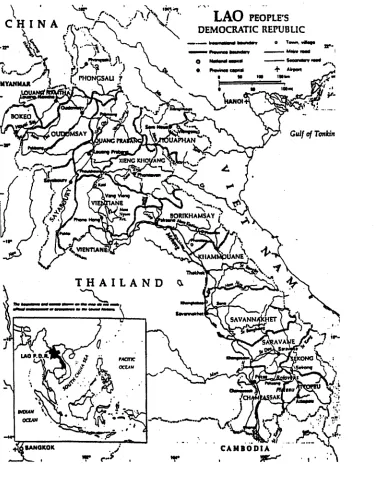
Figure 1.1. gives a map of the location in the Southeast Asian region and provinces of
Lao PD R.
Figure 1.1. Administrative map of Lao PDR
LAO
PEOPLE'SDEMOCRATIC REPUBLIC
C H I N A
PHONGSAU 7
BOKEO
G ulf of Tonkin
Im s a y
XIENC KJIOVANC
BOR1KHAMSAY
:HAMMPUANE
T H A I L A N D
SAVANNAKHET
[image:33.523.99.475.231.709.2]and south eastern parts of the country are mainly mountainous. The highest peak (2000
meters), Phu Bia, is located in the northeastern province of Xiengkhuang. In the central
and southern part of the country, the terrain is mountainous in the east along the
Annamite chain which forms the natural eastern border with Vietnam. Westwards, the
elevations gradually diminish through various plateaus until becoming extensive plain
areas extending beyond Lao PDR ‘s border the (Mekong river) into the plain of
northeastern Thailand.
The lowland plain mainly lies along the basin of the Mekong river stretching
from Vientiane province to the Lao-Cambodia border (Sisaliao et al., 1989: 89). The
Mekong river, originating in the Himalayas in Tibet, is the main artery of the country. It
flows through Lao P DR for a distance of 1865 kilometers or 44 per cent of its total
length ( Sisaliao et al., 1989 : 89). Lao PDR possesses a large potential for hydro
electric power generation and rich natural resources such as forests and mineral
resources, the majority of which remain unexplored.
1.5.1.2. Climate
Climate conditions in Lao PDR exert a major influence on the types and
outcomes of the production and livelihood of the Lao population. Lao PDR lies in the
tropical warm and humid zone of South East Asia. Its climatic conditions are influenced
by the monsoon in both seasons. Because of its particular location and topography, Lao
PDR experiences quite different weather from that occurring in its neighbouring
countries. Differences in climatic conditions between different regions within Lao PDR
are also observed. The temperature patterns vary according to elevation.
production in Lao PDR is predominantly a subsistence and rainfed system, and more
than 80 per cent of the Lao population live in the agricultural sector, the rainy season is
considered the production season. During it, protein sources from fishing are also
relatively abundant. The dry season lasts from October to April. The average yearly
humidity varies from 51% in the centre to 96% in the north of the country (NSC,
1995:14). The average yearly rainfall varies between different parts of the country and
differs from year to year. With the increased rate o f rain forest destruction, during the
last twenty years rainfall has shown more irregularity ( NSC, 1995).
1.5.2. Population and society
Until 1985 when the first complete national population census was held, little
was known about the population profile of Lao PDR. A number of censuses had been
taken during the colonial period and the Indochina war, but they covered only parts of
the country (NSC, 1995:4). Prior to the establishment of Lao PDR, the only known
estimate o f population size, claimed to come from a census specifically carried out for
the whole country in 1959-61, was 1.9 million persons ( NSC, 1995: 4).
The population of Lao PDR, as of March 1, 1985, was estimated to be 3.58
million persons, of which 49 per cent were male and 51 per cent are female. This gives a
sex ratio for the whole country of 96 males per 100 females (SSC, 1992: 4). The Lao
population as of March 1, 1995 was 4.58 million persons, and the sex ratio for this year
had increased to 97.8 males per 100 females. Based on the intercensal increase, the
average annual growth rate of the Lao population is 2.4 per cent (NSC, 1995: 10).
In 1985, the population density o f Lao PDR was 15 persons per square
kilometer. This figure had risen to 19 persons per square kilometer by 1995.
and southern provinces of the country to 96 persons per square kilometer in Vientiane
Municipality, the capital city o f the country (NSC, 1995: 18).
In 1985, the population in the age groups from 0 to 14 years old made up about
44 per cent of the total population, while persons in the age groups 15 to 64 years old
and persons aged 65 and above accounted for 52 per cent and 4 per cent respectively.
This age structure, together with the results of the 1986 Fertility and Mortality Survey
which gave a crude birth rate of about 42 per thousand population and a crude death rate
o f 17 per thousand, describes a population which has persistently experienced a regime
o f high fertility and high mortality, and a population still in the early stage o f the
demographic transition (SSC, 1992: 15, 20).
The Lao population is officially classified into three major ethnic groups, namely
Lao Loum (Lowland Lao), Lao Theung (Upland Lao) and Lao Soung (Highland Lao).
The classification is mainly based on the older concepts of ethno-geomorphics rather
than o f modern ethno-linguistics (Chazee, 1994: 10). However, this classification is
widely accepted, since it coincides with differences in the geographic locations
inhabited by these three groups and with differences in the methods of livelihood
adopted by them. If the classification is made according to ethno-linguistic concepts,
Lao Loum belong to the family of Lao-Tai language groups, Lao Theung are under
Mon-Kmer language groups, while Lao Soung are classified under Miao-Yao and
Tibeto-Burman family (NSC, 1992: 13) (Chazee, 1994: 13-14).
Each of these major ethnic groups have their own language, dialects, culture,
customs and traditions which vary greatly one from the other. However, Lao, the
language o f the Lao Loum family, is the official language of the country and, with the
exception of the older people in a number of tribes, is understood by all ethnic groups.
the four major dialects spoken by Lao Soung including Hmong (UNICEF, 1992).
As indicated by their name, the Lao Loum, whose main livelihood is rainfed rice
cultivation, prefer to live in the plain, in valleys surrounding rivers and their tributaries,
usually at altitudes not above 400 meters above the sea level. Lao Theung live at
altitudes between 500 meters and 1000 meters on hilly terrain and plateaus. Lao Soung
live on the mountain tops or in terrain higher than that inhabited by Lao Theung, usually
between 800 meters and 1600 meters. Both the Lao Theung and Lao Soung practice
slash and burn cultivation. Rice, mainly sticky (glutinous) rice, is the main staple
food of the Lao people of all ethnic groups, with the exception some minority groups of
Chinese or Vietnamese origin.
1.6. Brief history
The Lao PDR was founded in 1975 following the victory of the Pathet Lao
Army (the socialist regime) over the rightist government of the Kingdom of Laos after a
protracted war which had lasted for more than 30 years. According to the history written
by Maha Sila Vilavong (1958, 1964), the present country is only part of a much larger
kingdom of Lane Xang, which means a million elephants, established by King Fa Ngum
in A.D. 1357. The territory to the West of Lane Xang Kingdom extended beyond the
right bank of the Mekong river to cover almost all Korat plateau of the present Thailand.
The Kingdom of Lane Xang enjoyed prosperity from the mid 14th century until the end
of the 17th century (Sisaliao et al., 1989 : 167). After the death o f King Fa Ngum in
1373 A.D. about 20 kings reigned over the Lane Xang Kingdom before it was
eventually divided into three separate kingdoms (Vilavong, 1958, 1964).
King Samsenetai, son of King Fa Ngum, ruled the Lane Xang Kingdom until the
means King of 300,000 Tai). Several kings ruled after him until the mid 16th century
when King Sayasetha moved the capital of Lane Xang Kingdom from Xiengthong ( the
present Luangphrabang) to Vientiane, the present capital of Lao PDR, following several
invasions by the Burmese ( Vilavong, 1964; Sisaliao et al., 1989 : 229).
The civilization of Lane Xang Kingdom reached its peak during the reign of
King Suriya Vongsa ( A.D. 1637-1694) when Gerrit Van Wusthof, a Danish envoy and
the first European, paid a visit to the Kingdom. Vientiane became a centre for Buddhist
education where monks from neighbouring countries came to study. Following the death
of King Souriya Vongsa in the early 18th century, Lane Xang Kingdom split into three
autonomous kingdoms: Luangphrabang, Vientiane and Champassack. These kingdoms
engaged in war with each other on a constant basis, and each sought alliance with its
more powerful neighbouring countries. By taking this opportunity, the Siamese invaded
Vientiane in A.D. 1778. In the early 19th century, King Anu organized a series of
revolts against the Siamese in order to free Laos from Siamese suzerainty. He was
defeated in 1827 by the Siamese who destroyed the whole of Vientiane town and
deported most o f the population of the Vientiane Kingdom to Siam. All the three
kingdoms were then colonized by Siam until the end o f the 19th century when the
French begun their occupation of Indochina in 1886. Laos was incorporated as French
protectorate in 1893 when France and Siam signed a treaty that ceded all Lao territory
on the western bank of the Mekong river to Siam. It was only in 1902 and 1904
respectively that the two Lao provinces, Champassack and Xayaburi provinces, on the
left bank of the Mekong river were added to the present territory of Laos.
Under French rule, little development took place. The French imposed heavy
taxes on the people. The colonial administration issued currency notes and collected
majority o f Lao people lived in poverty with poor health and extremely limited access to
education. Education was in the French language and only open to the elite class of
people who later would find employment in the colonial administration. Until 1939,
there were few primary schools and only one lower secondary school in the entire
country. A small number of students, mostly the off-spring o f royal families, high
officials or officers of the colonial authority, had to travel to Tonkin or Cochinchina or
France for high secondary or vocational education (Sisaliao et al., 1989: 175). In terms
of health care, in 1938, there were only one hospital and six dispensaries, eight mobile
medical trucks, 27 pharmaceutical outlets and three mobile therapeutic units in the
country. The high prevalence of diseases and epidemics were likely to have inhibited the
growth of the Lao population ( Sisaliao et al., 1989:176).
Although in the late 19th century and early 20th century, there were a number of
unorganized anti-French resistance movements carried out by the Lao Theung and
Hmong, it was in the early 1940s that the organized anti-French movement of the Lao
people to win independence for the country really gained strength under the leadership
of the so-called " Noe Lao Issara" ( United Front of Free Laos) headed by Prince
Phetsarath and Prince Souphanouvong (the " Red Prince") . In 1945 the country, for the
first time, proclaimed independence from France. However, after the defeat of the
Japanese army, the French, with the help of a southern prince, Boun Oum, suppressed
the patriotic movement and re-established the administrative control over Laos. This
forced the Lao movement to seek refuge in Thailand where it formed an a government
in exile.
It was only in 1954, after the defeat of the French army in Dien Bien Phu that
backed by the United States and the Patriotic Front army backed by Vietnam, China and
the USSR. After 1964, the eastern part of Laos played an important part in the Indochina
war, since most of the famous Ho Chi Minh trail lay along the liberated zone of Laos.
During this time Laos was heavily bombed by US planes. It is claimed that the
tonnage of bombs dropped in Lao territory was higher than that dropped in Europe
during the whole of World War II. Hundreds o f thousands o f people became displaced
persons (Sisaliao et al., 1989). During this time, mortality in both the zones was very
high. In Laos alone, about 100,000 persons became casualties of the Indochina war
(UNICEF: 1992: 5).
The rightist government heavily depended on assistance from the United States,
which averaged around 350 million dollars per year. Of this, only 50 million dollars
were economic aid; the rest for military aid (Sisaliao et ah, 1989: 181). In spite of this,
the Patriotic Front gradually gained territory from the rightist government until 1975
when it finally achieved victory. The Patriotic Front's zone increased in size, from 50
per cent of the area and one-third of the population in 1954 to about four-fifths of the
area and more than half o f the population in 1973 when a truce was reached between the
two armies ( Sisaliao et al., 1989:183).
In 1975, the royalist government was overthrown and on the 2nd of December
1975 an extraordinary session of the national assembly was held and the foundation of
the Lao People's Democratic Republic was proclaimed. From that time onwards, Lao
PDR has been under single-party rule by the Lao People's Revolutionary Party (LPRP),
and governed by a socialist government. As noted earlier, thousands of people have fled
the country to escape communist rule. The Party ruled by decree rather than by law and
it sought to control all political and economic aspects of the country. It was only in 1991
In the government administrative structure, all important positions such as
ministers, provincial and district governors, chiefs of police and defense department
officials are filled by members of the LPRP. All members of the Politburo of the LPRP
are also members of the government cabinet, while almost all provincial governors are
members o f the LPRP Central Committee, which is next to the Politburo in the party
hierarchical line.
Although the Lao PDR is a socialist country, it is socialist only in political sense
and it is a Lao type of socialism that tries to mould together the national identity,
traditional values and culture, and Marxist-Leninist ideas. Except for the wealth
belonging to the bureaucrats of the royalist government who fled the country, no private
land or property has ever been confiscated by the State, unlike what happened in China
and Vietnam. (A brief effort at collectivization was soon abandoned - see below.)
1.7. The socio-economic development of Lao PDR
The very low level of socio-economic development is one of the important
features of the context under which study o f mortality in thesis is carried out. The
structure of the Lao economy is heavily agrarian. The agricultural sector makes up about
three-fifths o f the total production of the country and employs more than 90 per cent of
the labour force (SSC, 1991). Lao PDR is abundantly endowed with forests (it is the
largest remaining forest area in South East Asia), mineral deposits such as tin,
aluminum, iron, gold, precious stones, gypsum, potassium and many other minerals, and
hydro-power potential. Much of these resources have not so far been exploited for
commercial purposes.
Partly because road and transportation infrastructure is poorly developed, the
or bartered within or with neighbouring villages. Immediately after the take over of the
country, the present regime has been putting a major effort into the development of
agricultural production, through heavy investment in large scale irrigation and the
establishment of the state-owned farms. Manufacturing, construction and services
constitute only a small proportion in the gross national product of the country.
In its urgent drive to achieve food self-sufficiency in its early years of rule,
in 1977 the government attempted to organize peasant production on a collective basis
through the formation of agricultural cooperatives, state farms, collective working units,
etc. This move was only realized in a few parts of the country. Farmers were asked to
consolidate their land and other productive assets and labour. The subsequent
production was divided, after payment of the agricultural tax, among members of the
cooperatives according to the work points accumulated by each member. Such efforts at
collectivization turned out to be a failure. Instead of achieving self-sufficiency in food
production, many localities suffered food deficits, partly due to unfavourable weather
during these years, but mainly due to the lack of experience, inefficient management and
absence of incentives in collective production. By the early 1980s, almost all
agricultural cooperatives and state farms had been dissolved, and production was carried
out privately.
as rice, salt, meat, and other life necessities was controlled and carried out only by State-
run organizations.
During the course of the implementation of the NEM, trade, prices and exchange
rates, which had been controlled by the State, were liberalized, and the role of the
private sector has been promoted. Table 1.1 below provides a brief summary of the
economic performance of the country in the early 1990s.
Table 1.1: Percentage share of major industry groups in gross domestic product (GDP),
annual GDP growth rate, and real GNP per capita, Lao PDR, 1990-94.
Industry
1990
1991
1992
1993
1994
Agriculture
60.7
57.3
58.0
56.3
56.4
Manufacturing
14.4
16.6
16.7
17.4
17.8
Services
24.1
24.6
23.9
24.3
23.7
Import duty
0.9
1.4
1.4
2.0
2.1
GDP annual growth rate (%)
6.7
4.0
7.0
5.9
8.1
Real GNP per capita ($)
200
220
250
290
n/a
Source: Adapted from Table 92, p. 130 and Table 114, p. 169 of the 1975-1995 Basic Statistics about the Socio-economic Development in the Lao PDR, NSC, 1995a.