
R E S E A R C H
Open Access
Implementing a training intervention to support
caregivers after stroke: a process evaluation
examining the initiation and embedding of
programme change
David James Clarke
1*, Mary Godfrey
3, Rebecca Hawkins
3, Euan Sadler
2, Geoffrey Harding
5, Anne Forster
1,
Christopher McKevitt
2, Josie Dickerson
1and Amanda Farrin
4Abstract
Background:Medical Research Council (MRC) guidance identifies implementation as a key element of the development and evaluation process for complex healthcare interventions. Implementation is itself a complex process involving the mobilization of human, material, and organizational resources to change practice within settings that have pre-existing structures, historical patterns of relationships, and routinized ways of working. Process evaluations enable researchers and clinicians to understand how implementation proceeds and what factors impact on intended program change. A qualitative process evaluation of the pragmatic cluster randomized controlled trial; Training Caregivers after Stroke was conducted to examine how professionals were engaged in the work of delivering training; how they reached and involved caregivers for whom the intervention was most appropriate; how did those on whom training was targeted experience and respond to it. Normalization Process Theory, which focuses attention on implementing and embedding program change, was used as a sensitizing framework to examine selected findings.
Results:Contextual factors including organizational history and team relationships, external policy, and service development initiatives, impinged on implementation of the caregiver training program in unintended ways that could not have been predicted through focus on mechanisms of individual and collective action at unit level. Factors that facilitated or impeded the effectiveness of the cascade training model used, whether and how stroke unit teams made sense of and engaged individually and collectively with a complex caregiver training intervention, and what impact these factors had on embedding the intervention in routine stroke unit practice were identified. Conclusions:Where implementation of complex interventions depends on multiple providers, time needs to be invested in reaching agreement on who will take responsibility for delivery of specific components and in determining how implementation and its effectiveness will be monitored. This goes beyond concern with intervention fidelity; explicit consideration also needs to be given to the implementation process in terms of how program change can be effected at organizational, practice, and service delivery levels. Normalization Process Theory’s constructs help identify vulnerable features of implementation processes in respect of the work involved in embedding complex interventions.
Keywords:Process evaluation, Implementation theory, Stroke, Caregiver training, Normalization process theory
* Correspondence:[email protected] 1
Academic Unit of Elderly Care and Rehabilitation, Temple Bank House, Bradford Royal Infirmary, Bradford BD9 6RJ, UK
Full list of author information is available at the end of the article
Introduction
Health services research aims not only to develop effec-tive evidence based interventions, but to understand what is required to produce replicable outcomes in the context of day-to-day practice. Addressing the problem of developing, implementing, and evaluating complex in-terventions within increasingly complex organizational and clinical environments, poses major theoretical, methodological, and resource challenges [1] and requires focus on several questions. Does the intervention work; is it effective? How is it intended to work; what is the theory of change underpinning it? What are the human and material resources necessary to implement and sus-tain it in specific health settings and how are these mo-bilized to deliver it? How do local, contextual features of the setting in which the intervention is introduced affect how it is implemented and shape patterns of variation in outcomes achieved. Although Medical Research Council (MRC) guidance [1] on complex interventions includes implementation as a key element of the development and evaluation process, the focus is primarily on inter-vention development and evaluative work.
We examine implementation as a process involving the mobilization of human, material, and organizational resources to change practice within settings that have pre-existing structures, historical patterns of relation-ships and routinized ways of working. This is explored through a process evaluation of the pragmatic cluster randomized controlled trial (RCT), Training Caregivers after Stroke (TRACS), which was funded separately from the trial and conducted by an independent research team. The process evaluation objectives were to: de-scribe how the training program was implemented in different settings; provide insight into patients’, care-givers’, and multidisciplinary team (MDT) members’ ex-perience of the training process; understand patients’ and caregivers’perceptions of their preparedness for dis-charge and what shaped their views and experiences; provide data to assist in interpreting the trial outcomes; and contribute to knowledge of current clinical practice in stroke units in England. We focus on one component of the process evaluation, namely how change was intro-duced and implemented, which is integral to establishing
‘what works’in a complex intervention.
TRACs is one of the largest rehabilitation trials conducted to date; 930 patients and caregivers were re-gistered. The intervention—a training program targeted at caregivers of stroke survivors, the London Stroke Carer Training Course (LSCTC), was intended to be de-livered by MDT members within stroke units to secure positive outcomes for patients and their caregivers. The research questions addressed in the process evaluation included: how were professionals engaged in the work of delivering the training; how did they reach and involve
those caregivers for whom the intervention was most appropriate; how was it delivered to caregivers; and how did those on whom it was targeted experience and re-spond to it.
This paper briefly considers implementation theories in respect of complex interventions and provides an over-view of process evaluations to set the context for the study. We draw on Normalization Process Theory (NPT) [2] as a conceptual lens through which to explore those features of the implementation process that were intended to secure practice change and to engage caregivers in the program. We also consider the interaction between influ-ential macro and micro contextual factors that affected delivery by multi-disciplinary stroke unit staff and suggest that prior focus on generative mechanisms identified within NPT can be used to inform implementation pro-cesses within complex healthcare settings.
Background
Process evaluations
Process evaluations are increasingly viewed as necessary elements of the methodological toolkit, alongside RCTs. The objectives of such evaluations have been variously described:
‘To explain discrepancies between expected and observed outcomes, to understand how context influences outcomes, and to provide insights to aid implementation’[1] (2008:4);
‘To examine the views of participants on the intervention; study how the intervention is implemented; distinguish between the components of the intervention; monitor dose to assess the reach of the intervention; and study the way the effects vary in sub-groups’[3] (2006:413).
Munro and Bloor [4] argue that considerable explana-tory burden is being placed on this type of evaluation, which embraces enormous variation in objectives, re-search designs, and methods as well as depth and breadth of understanding attained. Typically, process evaluations focus on such questions as the acceptability of the intervention, whether it was implemented as intended (the fidelity ‘problem’), and how and why it had its effects—and are often empirically driven. How-ever, developing and evaluating complex interventions demands considerably more, given the multiple layers of questions posed to develop and translate evidence-based knowledge into routine clinical practice.
Theory oriented approaches to process evaluations
inside the ‘black box’ of complex interventions; which Stame [5] describes as the ‘space between the actual input and the expected output of a program’(2004:58). These in-clude realist evaluation [6] and ‘theory of change’ ap-proaches [7,8]. Realist evaluations explore the relationship over time between‘context’(organizational setting and ex-ternal constraints), ‘mechanisms’ (how change will be achieved) and‘outcomes’(intended and unintended conse-quences of change efforts).‘Theory of change’approaches aim to explicate assumptions and causal chains linking in-puts and activities to desired outcomes, comparing what is intended with what actually happens in real life. Theories of change have two components:‘programmatic theory’based on the mechanisms that make change happen; and‘ imple-mentation theory’ that forecasts in a descriptive way the steps to be taken in program implementation. These are the focus of the process evaluation components reported in this paper.
Implementation theories
Introducing and embedding a new technique, interven-tion or way of working into organizainterven-tions requires un-derstanding of what behaviours and practices need to change, what systems and mechanisms need to be put in place to support implementation and what resources are needed to achieve both. These factors, familiar to theo-rists interested in implementation science, may not fea-ture prominently in the planning undertaken by trial management groups in advance of introducing interven-tions into clinical settings. Fixsen et al. [9] noted that,
‘there is very little information about the processes used to gain access to and secure the cooperation of individ-uals, organizations, departments, and political groups. Thus, organizational and systems intervention strategies and skills represent a critical research area’ (2005:74). The ‘implementation problem’raises new challenges for the design and conduct of process evaluations [10-12]. First, implementation is more accurately conceived of as a process and not just a single event, requiring attention on what needs to occur at different stages and over time [9]. May and Finch [11] develop this further to consider the mechanisms that facilitate or hinder implementing and embedding change in routine practice. Normalization Process Theory (NPT) [2], focusing primarily on practice change, addresses explicitly the issue of how interventions are adopted, embedded, and integrated into organizational routines. Second, there is what Haweet al. [13] term the
‘program in context‘ problem: interventions or programs are introduced into organizations with varied histories, cultures, learning climates, and readiness for implementa-tion, all of which will affect outcomes [14-16]. Pawson [17] and Campbellet al. [18] argue that emphasis on de-termining underlying causal mechanisms provides a basis for examining how organizational contexts can shape
implementation of particular interventions and their out-comes. Hoddinottet al. [19] also suggest that contextual and organizational features of healthcare environments re-quire more attention as these may have a significant im-pact on how far work groups can implement complex interventions. Additionally, individual level change may draw upon behavioral, motivational, and psychological theories to shape implementation strategies. Critical is that the theory or conceptual framework informing the development or evaluation of the intervention and imple-mentation processes is appropriate for the level and type of change being implemented; and that change at multiple levels may draw on multiple theories [20].
TRACs trial: program theory
Increasingly, there is an expectation that family mem-bers will provide support for stroke patients following their return home [21-24]. Despite improvements in out-comes, many patients have some residual disability and require assistance with daily living activities, including washing and dressing, eating, drinking, and walking [23]. Informal caregivers face the dual challenge of coming to terms with the sudden onset and subsequent disabling impact of stroke and the realization that the person may require long-term support [25]. There is considerable evidence to suggest that caregiving insofar as it results in role captivity, role overload, and loss of reciprocal companionship, leads to considerable stress and sense of burden [26,27]. Interventions that reduce caregiver bur-den and stress are therefore a high priority for stroke service providers [28].
The‘theory of change’underpinning caregiver training
Information and skills training to provide physical care for stroke patients is among caregivers’most important pre-discharge needs [26]. Preparation and support has been deficient in meeting these needs; and caregivers’ ability to provide such care is not normally assessed by health professionals [26,27,29-31]. Moreover, evaluations of interventions providing psychological, emotional, and informational support report little impact on patients and only modest improvements for caregivers [31]. The empirically based LSCTC was designed to train care-givers in practical skills for supporting patients. When tested in a single center the LSCTC was effective in de-creasing burden, anxiety, and depression for the care-giver, in improving psychological outcomes for patients, and in reducing overall costs [28].
that are beyond the experience and skills of most care-givers; a knowledge and skills gap will be present. Teach-ing basic skills in movTeach-ing and handlTeach-ing, how to support activities of daily living, developing understanding of the causes, and psychological and physical consequences of stroke will enable caregivers to support stroke survivors in the home. This should result in reductions in burden, stress, anxiety and depression, in improvements in social engagement, and in overall activity. In the Kalra et al. [28] study, knowledge of the ineffectiveness of existing interventions appears to have led to the development of the competency-based training program (the LSCTC) delivered within the stroke unit prior to discharge. In this model, it was expected that caregiver training will contribute to the work of rehabilitation. In the single-center study, the LSCTC was designed, managed, and delivered by a small, committed, and enthusiastic team (an occupational therapist, physiotherapist and (nurse) stroke coordinator).
TRACS- a modified training program
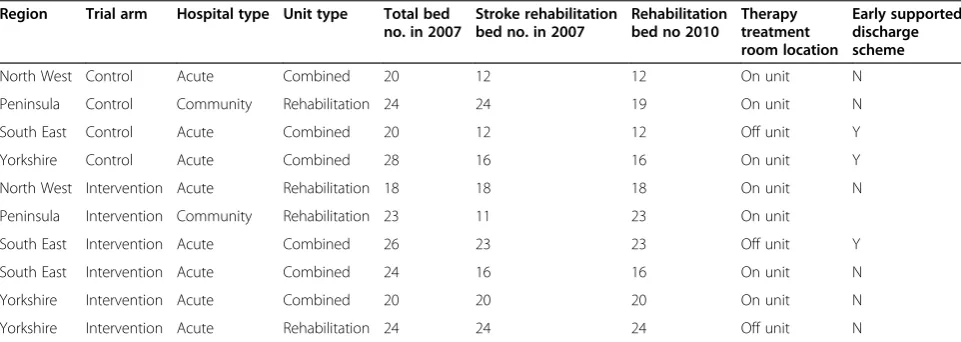
The TRACS trial tested whether a modified version of the LSCTC introduced into usual practice in 18 stroke units could replicate observed improvements in clinical outcomes and cost effectiveness with a more diverse pa-tient and caregiver population (18 control units provided usual care based on national clinical guidelines [32]). Process Evaluation Sites were independently selected by Clinical Trials Unit staff using a purposive sampling frame of control/intervention (four intervention, four control), quality of care (based on 2006 Stroke Sentinel Audit scores), and geographical site (four English re-gions) (Table 1). The modified LSCTC was a 14-item competency based program, intended to be delivered by MDT in intervention units. Six of the 14 items were mandatory, e.g., providing information on the nature of stroke and the importance of medication adherence.
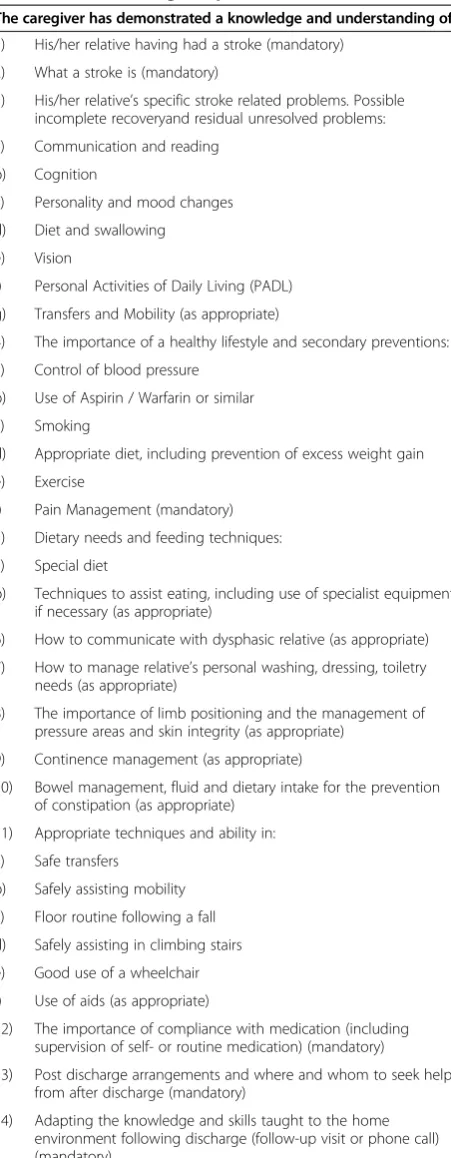
Remaining items were addressed based on individual caregiver need,e.g., providing nutritional support for pa-tients with swallowing difficulties. Caregiver competence was to be assessed by team member(s) who had pro-vided training using a standardised training record. A follow-up visit or phone call to help caregivers adapt knowledge and skills taught, to the home, completed the intervention (Table 2).
MRC guidance [1] on developing and evaluating com-plex interventions, notes that these‘are usually described as interventions that contain several interacting compo-nents’ (2008, p. 6). The original and modified LSCTC epitomise a complex intervention. This is apparent in the heterogeneity of patient and caregiver needs and cir-cumstances and the tailoring of the intervention in re-sponse to these; in the requirement for ‘buy-in’ at different professional and organizational levels; in the collective and individual behaviors of MDT members de-livering training; and in the willingness and capacity of caregivers to engage with stroke teams and participate in training. Complexity is also evident in the multiple out-comes anticipated at different levels; these would be pro-duced through long implementation chains, operating through recursive, feedback loops, involving a non-linear and multi-directional process of change [33,34].
TRACs trial results
[image:4.595.57.538.561.732.2]The TRACS trial commenced in February 2008 and ceased recruitment in February 2010. The trial results are reported in full elsewhere [35]; a brief summary of the main findings is reported here to place our process evaluation findings in context. Results at six months demonstrated no clinical or statistical differences be-tween groups on the primary outcomes of functional independence (patients), or caregiver burden. Similarly, for the range of secondary outcomes measured at 6 and 12 months, no clinical or statistical differences were
Table 1 Stroke units participating in the TRACS trial and process evaluation study
Region Trial arm Hospital type Unit type Total bed no. in 2007
Stroke rehabilitation bed no. in 2007
Rehabilitation bed no 2010
Therapy treatment room location
Early supported discharge scheme
North West Control Acute Combined 20 12 12 On unit N
Peninsula Control Community Rehabilitation 24 24 19 On unit N
South East Control Acute Combined 20 12 12 Off unit Y
Yorkshire Control Acute Combined 28 16 16 On unit Y
North West Intervention Acute Rehabilitation 18 18 18 On unit N
Peninsula Intervention Community Rehabilitation 23 11 23 On unit
South East Intervention Acute Combined 26 23 23 Off unit Y
South East Intervention Acute Combined 24 16 16 On unit N
Yorkshire Intervention Acute Combined 20 20 20 On unit N
evident. The single-center trial outcomes [28] were not replicated in TRACS. To assist in understanding the trial outcomes, we report selected findings from the process evaluation. Specifically we examine how the intervention was implemented to effect practice change within stroke unit environments, how practitioners were engaged in the work of delivering the LSCTC, and how they in-volved caregivers in the program.
Methods
The process evaluation began in February 2009. Ethical approval was gained for all sites (National Health Service Research Ethics Reference: 08/H1307/104). Participants provided written informed consent prior to observations and interviews; process consent was sought prior to and during observations.
The study was conducted initially in a sub-sample of eight stroke units in four English regions selected from the 36 sites participating the TRACS trial. Sites were in-dependently selected by Clinical Trials Unit staff using the same selection process as in the trial (Table 1). Par-ticipant eligibility were as used in the TRACS trial [35].
To address the process evaluation objectives, we employed an ethnographic approach, combining obser-vations, interviews with MDT members, patients, and caregivers, and documentary analysis. In intervention units, we evaluated how the LSCTC was understood by staff and received by caregivers; what factors facilitated or inhibited its implementation; and caregivers percep-tions of the impact of training on them. In control units, researchers recorded usual practice including any in-stances of caregiver training. Four researchers each undertook fieldwork over six months in two Stroke Units (SUs); to test emerging interpretations of data, ob-servations were later conducted in two additional inter-vention units over a further three months.
[image:5.595.60.286.98.678.2]We utilized an observational framework that sought qualitative data entries on features of clinical practice de-termined prior to study commencement. The framework encouraged observations of unplanned and emergent areas of practice related to the implementation of the LSCTC and progressive focusing on specific aspects of caregiver training,e.g., instances of caregiver practice under supervision. Observational records were supplemented by field notes, including researchers’reflexive accounts [36,37] of how conducting observations impacted on participants in specific instances and over time. Over 1,200 hours of ob-servations were completed. Observation included therapy, nursing and medical practice, team and family meetings, home visits, some outreach therapy, informal interactions between staff, between staff and patients, and between pa-tients and family members. We observed papa-tients with dif-ferent kinds and levels of impairment. Observations took place on weekdays because staff indicated caregiver training
Table 2 LSCTC training components
The caregiver has demonstrated a knowledge and understanding of:
1) His/her relative having had a stroke (mandatory)
2) What a stroke is (mandatory)
3) His/her relative’s specific stroke related problems. Possible incomplete recoveryand residual unresolved problems:
a) Communication and reading
b) Cognition
c) Personality and mood changes
d) Diet and swallowing
e) Vision
f) Personal Activities of Daily Living (PADL)
g) Transfers and Mobility (as appropriate)
4) The importance of a healthy lifestyle and secondary preventions:
a) Control of blood pressure
b) Use of Aspirin / Warfarin or similar
c) Smoking
d) Appropriate diet, including prevention of excess weight gain
e) Exercise
f) Pain Management (mandatory)
5) Dietary needs and feeding techniques:
a) Special diet
b) Techniques to assist eating, including use of specialist equipment if necessary (as appropriate)
6) How to communicate with dysphasic relative (as appropriate)
7) How to manage relative’s personal washing, dressing, toiletry needs (as appropriate)
8) The importance of limb positioning and the management of pressure areas and skin integrity (as appropriate)
9) Continence management (as appropriate)
10) Bowel management, fluid and dietary intake for the prevention of constipation (as appropriate)
11) Appropriate techniques and ability in:
a) Safe transfers
b) Safely assisting mobility
c) Floor routine following a fall
d) Safely assisting in climbing stairs
e) Good use of a wheelchair
f) Use of aids (as appropriate)
12) The importance of compliance with medication (including supervision of self- or routine medication) (mandatory)
13) Post discharge arrangements and where and whom to seek help from after discharge (mandatory)
did not routinely occur at weekends. Observations occurred at different times of the day, normally in three to four hour blocks between 0700 and 2200. Patient/caregiver dyads to be interviewed post-discharge were a specific focus of observations.
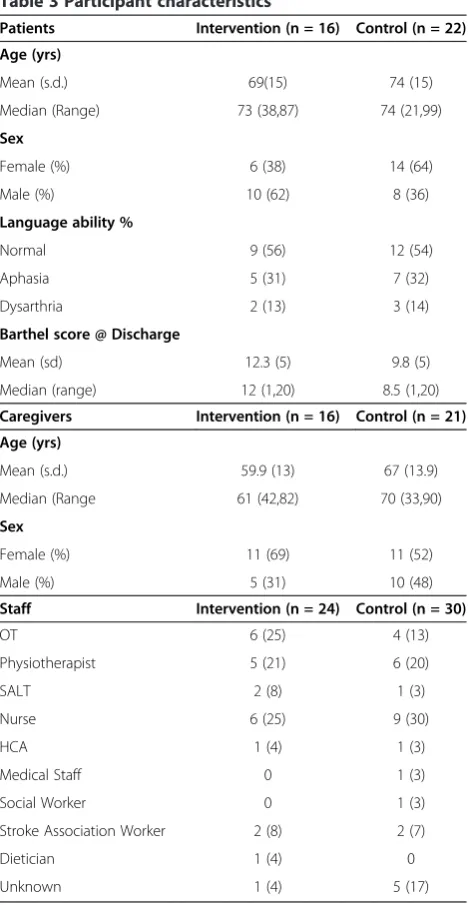
Semi-structured interviews were conducted with MDT members after TRACS trial recruitment ceased in Feb-ruary 2010 (n = 53). A purposive sampling approach was used to recruit staff at different grades, with different levels of experience, staff who were present throughout the TRACS trial and some who were on training rota-tions and less experienced with the LSCTC. Staff beliefs about caregiver training, their understanding of the LSCTC, and their preparation for and engagement with the intervention were explored. Interviews were also undertaken with a sub-sample of patient/caregiver dyads three months after discharge from hospital (n = 37 pairs). Potential interviewees were identified by re-searchers during the observational phase, and written in-formed consent was sought to interview them post hospital-discharge. A record of socio-demographic char-acteristics and impairment (disability, cognition) status was made. When sufficient patients were available, pur-posive sampling was used to ensure that a diverse sam-ple was recruited (Table 3). Patients’ and caregivers’ in hospital and overall post discharge experiences were ex-plored before focusing more specifically on their experi-ences of caregiver training and whether this prepared caregiver and patient for life at home. All interviews were audio-recorded with participants’ permission and subsequently transcribed.
Documentary analysis was undertaken using therapy, nursing, or MDT records for these dyads to identify recorded caregiver training. After on-site data collection ceased, we also accessed intervention compliance data for each unit through training record returns.
The process evaluation generated a very large volume of data. To manage and effectively explore this rich data set, we drew on grounded theory analytic methods across all data sets; this included constant comparison, progressive focusing of field observations, and memo-writing to construct categories and sub-categories [38,39]. Researchers met every eight weeks to review analytic categories and develop interpretations that might provide a credible and plausible account of pat-terns in the data. Emerging interpretations were also reviewed by steering group members every twelve weeks. We employed NPT [2] concepts as a sensitizing frame-work to develop insight into those factors that facilitated or presented barriers to introducing and embedding the practice change in stroke units. Use of sensitizing con-cepts are not antithetic to a grounded theory approach; rather they suggest lines of enquiry to pursue that do not act as a straight jacket thereby closing off fruitful
areas to explore that might not have been anticipated [38,39]. Of the different theories of implementation, NPT was selected for its focus on individual and collec-tive practices within organizational settings.
NPT as a sensitizing framework
[image:6.595.305.540.93.546.2]Individual and collective components of complex inter-ventions are important areas for research, specifically how those charged with responsibility for implementa-tion understand and deliver them. Even where interven-tions are considered as building upon or enhancing existing practice, planning for and introducing complex interventions into healthcare settings represent a pro-gram change that will necessarily have implications for
Table 3 Participant characteristics
Patients Intervention (n = 16) Control (n = 22)
Age (yrs)
Mean (s.d.) 69(15) 74 (15)
Median (Range) 73 (38,87) 74 (21,99)
Sex
Female (%) 6 (38) 14 (64)
Male (%) 10 (62) 8 (36)
Language ability %
Normal 9 (56) 12 (54)
Aphasia 5 (31) 7 (32)
Dysarthria 2 (13) 3 (14)
Barthel score @ Discharge
Mean (sd) 12.3 (5) 9.8 (5)
Median (range) 12 (1,20) 8.5 (1,20)
Caregivers Intervention (n = 16) Control (n = 21)
Age (yrs)
Mean (s.d.) 59.9 (13) 67 (13.9)
Median (Range 61 (42,82) 70 (33,90)
Sex
Female (%) 11 (69) 11 (52)
Male (%) 5 (31) 10 (48)
Staff Intervention (n = 24) Control (n = 30)
OT 6 (25) 4 (13)
Physiotherapist 5 (21) 6 (20)
SALT 2 (8) 1 (3)
Nurse 6 (25) 9 (30)
HCA 1 (4) 1 (3)
Medical Staff 0 1 (3)
Social Worker 0 1 (3)
Stroke Association Worker 2 (8) 2 (7)
Dietician 1 (4) 0
organizations, their staff, and service users [9,15,19]. These issues are highlighted in NPT [11] as central to understanding implementation and how integration of innovations proceeds. May et al. [2] argue two ‘ prob-lems’ have to be considered by process evaluations, the
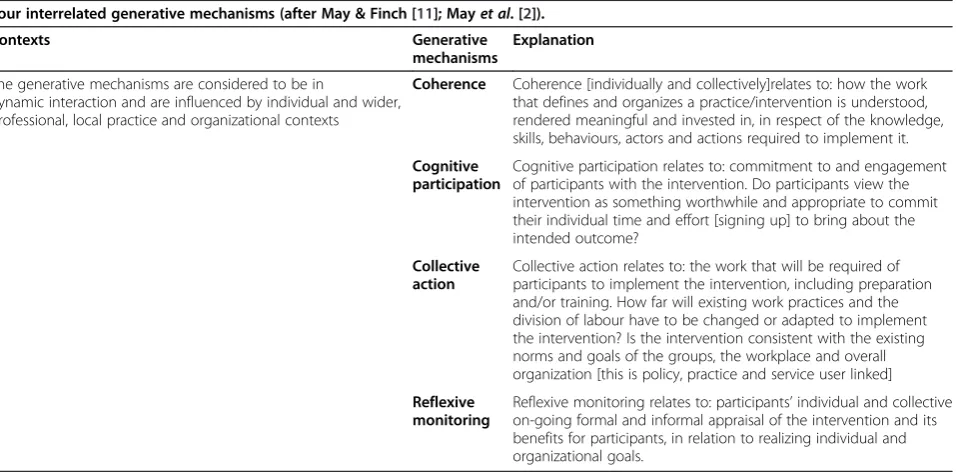
‘process problem,’seen as part of implementing change in professionals’ thinking and behavior, and the ‘ struc-tural problem’ that is concerned with integration of a new practice into existing settings [2]. NPT identifies four generative mechanisms that explicate how interven-tions are embedded and ‘normalized’ within routine care. These are: coherence, cognitive participation, col-lective action, and reflexive monitoring; that are singly and together envisaged as interacting with the healthcare context [2] (See Table 4 for more detail on these mecha-nisms). We reviewed the process evaluation data through the lens of these generative mechanisms, con-sidering them in terms of MDT members’ actions and also those of patient/caregiver dyads; we draw from the extensive observational data generated. Interview data are reported elsewhere.
Results
Training model
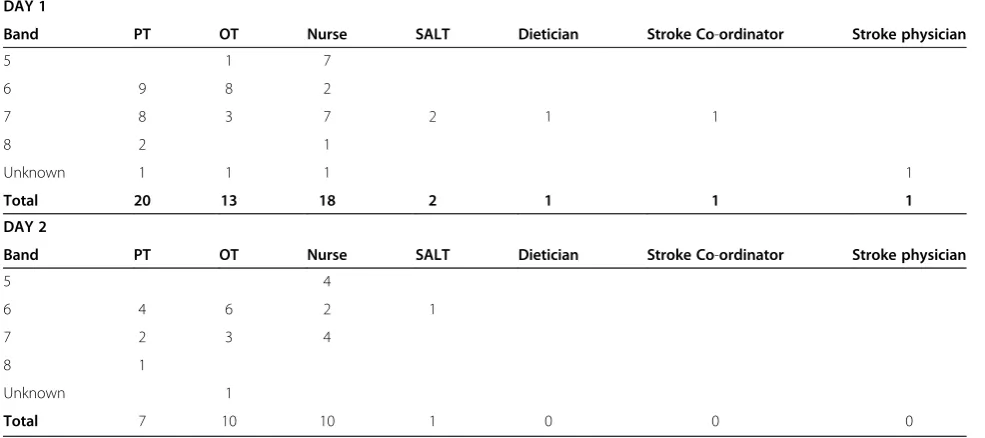
To prepare teams to deliver the LSCTC in 18 interven-tion units across four regions two full-day workshops were held (one month apart) for two or three represen-tatives from each unit. These MDT members volunteered to undertake initial training and then cas-cade training to MDT members in their own units. All intervention units were represented at day one and day
two, except for one unit that had no staff member at day two. Workshops were led by three professionals who implemented the original LSCTC. A participative for-mat, getting representatives to focus on examples of competencies and how these might be taught and assessed on their units was adopted. Between work-shops, attendees were to begin cascade training, but not expected to implement the LSCTC program immedi-ately; this was to occur gradually over three to four months before TRACS trial recruitment commenced.
Critical to implementation was how other stroke unit staff were engaged with the LSCTC through cascade training, this relates to what the NPT model terms co-herence or making sense of the intervention before it is implemented; and how far existing working practices within stroke units required adaptation to bring about the cognitive participation and collective action that would be required to successfully embed the LSCTC in practice.
Cascade training
[image:7.595.62.541.488.725.2]Cascade training is commonly used in the National Health Service (NHS), with those receiving primary training referred to as change champions; their selection is considered critical to the method’s effectiveness [40]. The majority of MDT members attending workshop training in the TRACS trial were senior, experienced therapists and nurses with the necessary skills to deliver caregiver training, and authority in respect of MDTs in their units (Table 5). They had direct access to original LSCTC staff; they had a focused and extended period of
Table 4 Normalization process theory: the work of implementation
Four interrelated generative mechanisms (after May & Finch [11]; Mayet al. [2]).
Contexts Generative
mechanisms
Explanation
The generative mechanisms are considered to be in
dynamic interaction and are influenced by individual and wider, professional, local practice and organizational contexts
Coherence Coherence [individually and collectively]relates to: how the work that defines and organizes a practice/intervention is understood, rendered meaningful and invested in, in respect of the knowledge, skills, behaviours, actors and actions required to implement it.
Cognitive participation
Cognitive participation relates to: commitment to and engagement of participants with the intervention. Do participants view the intervention as something worthwhile and appropriate to commit their individual time and effort [signing up] to bring about the intended outcome?
Collective action
Collective action relates to: the work that will be required of participants to implement the intervention, including preparation and/or training. How far will existing work practices and the division of labour have to be changed or adapted to implement the intervention? Is the intervention consistent with the existing norms and goals of the groups, the workplace and overall organization [this is policy, practice and service user linked]
Reflexive monitoring
time to think through and engage with program ele-ments and to discuss implementation in their units. They had time to make sense of the LSCTC, to develop coherence in a group context, and to develop individual and small group commitment to it; progress to cognitive participation, i.e., determining whether implementing the LSCTC was worthwhile. This required consideration of how far existing practice could accommodate the intervention or how far practice might require adjust-ment and how the effectiveness of the proposed change would be monitored. These represent the work of col-lective action and reflexive monitoring, which are con-sidered to be integral to embedding practice change [2]. In contrast, MDT members participating in secondary cascade training received much shorter introductions to the LSCTC. While the average length of secondary ses-sions was 40 minutes, some were as short as 10 or 15 minutes, albeit these were repeated in each unit. Oppor-tunities to make sense of, develop commitment to, and ownership of the intervention through cascade training for MDT members at unit level were limited and were further constrained by the division of labor within stroke units.
The division of labor in stroke units
The cascade-training model was not universally effective in securing coherence and cognitive participation for all MDT members in the intervention units studied. The di-vision of labor in most intervention units impacted nega-tively on cascade training and LSCTC implementation. Physiotherapists (PTs), occupational therapists (OTs) or the trial manager provided most cascade training; nurses
led training in only three of 18 units. Across units there was variable attendance, with lower rates of attendance by nurses, physicians, social workers, and psychologists. Therapists provided the bulk of cascade training; this may have implied ownership of the intervention by them. Organizational factors also impacted on attendance. The-rapy work is typically organized around activity with pa-tients at specified times. Therapy sessions could be delayed or postponed, enabling therapists to provide or participate in LSCTC training. This contrasted with nurses’ working practices; they reported that attending training during shifts was difficult due to continuous de-mand for nursing care. Routine MDT working practices could have provided additional opportunities for MDT members to make sense of, assess the relevance of, and engage with the intervention. We observed this occurring for rotational and newly appointed therapists as they were introduced to the LSCTC and caregiver training. However, for other MDT members including nurses, unidisciplinary working practices and the particular locations in which therapists engaged with caregivers (off unit or in therapy rooms), meant that non-therapy MDT members did not observe and did not participate in caregiver training. A DVD of the training workshops and a training manual was located in each intervention unit; observations recorded no instances of these being used to support cas-cade training and interviewees made no reference to these resources.
Implementing the LSCTC
[image:8.595.55.548.104.323.2]The LSCTC was presented as an intervention reliant on collaborative inputs from all MDT members. LSCTC
Table 5 TRACS: attendance at pre-trial LSCTC training workshop 1 & 2
DAY 1
Band PT OT Nurse SALT Dietician Stroke Co-ordinator Stroke physician
5 1 7
6 9 8 2
7 8 3 7 2 1 1
8 2 1
Unknown 1 1 1 1
Total 20 13 18 2 1 1 1
DAY 2
Band PT OT Nurse SALT Dietician Stroke Co-ordinator Stroke physician
5 4
6 4 6 2 1
7 2 3 4
8 1
Unknown 1
Total 7 10 10 1 0 0 0
competencies can be interpreted as reflecting the existing division of labor in stroke units. The focus of specific competencies, e.g., on transfers and mobility or compliance with medication was associated by MDT members with particular disciplines; the first example was with PTs and OTs, the second with nurses. Dividing responsibility for delivering different competencies be-tween the team was perhaps logical and consistent with the division of labor observed. However, this relied hea-vily on individual professionals, their disciplinary work groups, and the MDT developing ownership and taking responsibility for delivering, recording, and reporting caregiver training. All intervention units displayed char-acteristics of established MDT working, including weekly structured meetings to agree goals for patients and co-ordinate MDT member inputs [41]. However, as reported in other studies, outside of those events, MDT members in almost all units tended to work in parallel unidisciplinary groups [42,43]. Parallel working in itself was not problematic provided that the required caregiver competencies were addressed by a team member. How-ever, although observations identified that team mem-bers regularly reported to each other on their actions against patient goals, this largely did not include discus-sion of caregivers’achievement of LSCTC competencies. No mechanism appeared to exist for review of LSCTC delivery in any of the intervention units. While this was not required by the trial, its absence led to assumptions about what training had or had not been provided, which was reflected in incomplete implementation of the LSCTC.
Cognitive participation, collective action and reflexive monitoring
A critical factor in implementing complex interventions is the degree to which professionals perceive that the intervention will be consistent with existing work, will necessitate practice change, or will require additional skills and time [44]. In short, professionals may question whether the work of implementation will be worthwhile if they cannot see that the benefits of the change out-weigh the time and skills costs involved in changing practices. In keeping with the pragmatic nature of the TRACS trial, workshops had emphasized that the LSCTC, including training and assessment of caregiver competence, could be incorporated into routine practice. The only identified changes to existing work were the specification of six mandatory training competencies and documentation of training and assessment of care-giver competence in a record designed for the trial. This approach was premised on an assumption that stroke unit MDTs were already engaged in structured caregiver training to some degree. This assumption, while consist-ent with the perceptions of many MDT members, was
not supported by observations in intervention and con-trol units. In reality, LSCTC implementation required some changes to existing practice (e.g., assessing care-giver competence) for all intervention units and had additional time implications for most MDT members.
Observational and interview data indicated that soon after cascade training, variations were evident in respect of coherence, cognitive participation, and collective ac-tion between disciplines and across units. Senior thera-pists in most units were more likely to understand the requirements of the intervention; and in informal con-versations they noted that for less experienced thera-pists, working through relevant LSCTC competencies and using the training record as an aide memoire, en-hanced provision of training for individual caregivers. In contrast, senior nurses commonly expressed the view that the LSCTC intervention was consistent with good practice, was an important team goal, and that compe-tencies associated with nursing (e.g., training in medica-tion use or nutrimedica-tional support) were already being delivered. In practice, neither observations nor LSCTC training records demonstrated that nurses were consist-ently engaged in implementing the intervention. Most junior nurses, healthcare assistants (HCAs), some junior therapists, and most junior doctors showed little or no knowledge of the intervention. In units where compe-tency records were infrequently completed, lost, or not completed at all, therapists and senior nurses reported that caregiver training was still occurring; these claims were often not supported by our observations.
Documenting caregiver competency
section of the record resulted in remaining MDT mem-bers deciding to stop record keeping. Inconsistency in completing documentation is not necessarily evidence of lack of engagement of MDT members with the LSCTC; but it poses important questions about accomplishments in respect of cognitive participation, collective action, and reflexive monitoring at team level in some units. These is-sues are indicative of the‘process problem,’some of which were features of participants’ interaction with the trial teams’ implementation strategy; others related to the organizational and professional contexts into which the intervention was introduced. We now consider contextual features influencing stroke units during implementation of the intervention.
Contextual factors impacting on implementation of the LSCTC
Shiellet al. [45] draw a distinction between complex inter-ventions that involve a range of identifiable but interacting components, the effect of which can be difficult to separ-ate out, and complex systems such as hospitals or primary care settings. In these settings, complexity is a property of the interaction between local contexts, the behavior and actions of staff, and service users in particular organiza-tions and local structures. Such systems are never static but are subject to variation, change, adaptation, and deve-lopment over time as a result of external and internal fac-tors [14]. There is international consensus on the essential characteristics of stroke units [41], but there is less cer-tainty about their specific contribution to the improved outcomes associated with organized stroke care. Stroke units in the TRACS trial met five key stroke sentinel audit criteria [46] (Table 6).
Despite the presence of these characteristics, variability is likely due to differences in staff expertise and skill mix, local management, and organizational policies and infrastructure [47-49]. Such variation was evident in the units observed. Major changes have occurred in the organization and delivery of stroke services in the last five years [41]. Service quality improvement initiatives have been driven by the Stroke Improvement Program [50] and the National Sentinel Audit for Stroke [41], which reports on the quality of stroke care achieved against agreed criteria for stroke services [46].
Recruitment to the TRACS trial began in February 2008, soon after the National Stroke Strategy (NSS) [51] provided impetus and funding to improve stroke services in England. Also, Stroke Research Networks designed to increase participation in stroke research were supporting an expanding portfolio of RCTs in stroke units across England. In some intervention units, LSCTC implemen-tation competed with other stroke research or service improvement projects for MDT members’, patients’, and caregivers’ commitment and participation. Change, de-velopment, and quality improvement are inherent fea-tures of modern health services but we contend that stroke units were subject to numerous local and national pressures that impacted on LSCTC implementation. Some pressures were similar for all units; for example, all hospitals were working toward increasing the number of stroke survivors spending part or all of their inpatient stays on a stroke unit, and most were planning or intro-ducing thrombolysis services [41]. Other pressures reflected local priorities, for example the introduction of early supported discharge (ESD) schemes or service reconfigurations requiring changes in staff location or roles.
Kaplan et al. [14] define context as anything not part of the intervention or the implementation process and that may include factors relating to the characteristics of the organizational setting, the individual, his or her role in the organization, and the wider environment. Thus, contextual factors may operate at a micro-level as for ex-ample in relation to groups of people that work together routinely to provide care as in a stroke unit. Such units moreover are embedded within miso-level organizations as hospitals that in turn are located within larger or macro-level environments that impinge on them. It is the combined and interactive effect of particular con-textual factors at these different levels that will affect variation in implementation. Here, we focus on two ex-amples of contextual factors at SU level where the im-pact of national and local policy decisions, staff responses to them, and their effect on LSCTC imple-mentation, differed markedly.
[image:10.595.56.290.662.734.2]All intervention units were examining ways to respond to NSS [51] recommendations outlined above. In one unit providing acute and rehabilitation care, direct admission of patients to the stroke unit were prioritized. This MDT was working with more acutely ill people, and there was pressure to transfer non-acute patients to a generic re-habilitation unit, sometimes more quickly than staff con-sidered appropriate. For therapists, the net effect was that they had insufficient time to assess the needs of some pa-tients and reduced time to work with them due to the em-phasis on early transfer or discharge of non-acute patients. Caregivers for this group proved unlikely to par-ticipate in the LSCTC. Observations indicated that these
Table 6 Stroke unit key criteria (RCP national sentinel audit for stroke 2006 [46])
1) Consultant physician with responsibility for stroke
2) Formal links with patient and carer organizations.
3) Multidisciplinary team meetings at least weekly to plan patient care.
4) Provision of information to patients about stroke.
issues were compounded by extended staff sickness, expe-rienced senior staff leaving, and delays in their replacement. These factors directly affected leadership, management, and staff morale, and meant LSCTC implementation was only one of many demands faced by the MDT. Communication and interprofessional relations between MDT members were observed as strained due to the increasingly stressful workload and the staffing pressures highlighted. Informal conversations indicated that historical problems related to utilization of healthcare and rehabilitation assistants by the team were an additional source of strain.
While nurses and therapists in this unit were affected similarly by the above pressures, they expressed different views about LSCTC implementation. This reflected, in our view, differences in respect of coherence and cognitive participation. Most therapists concentrated their efforts on assessment and establishing short-term goals. Some se-nior therapists argued that despite non-completion of training records, caregiver training was being provided where opportunities existed. Others questioned the feasi-bility of training caregivers in what were regarded as complex skills, arguing that much more time would be ne-cessary to develop confidence and competence in some of them. The majority of nurses and HCAs appeared to be unaware of the LSCTC and did not routinely deliver care-giver training, prioritizing instead physical care activity. Senior nurses were aware of the LSCTC; however, the ward sister expressed concern about the capacity and readiness of nurses and HCAs to participate in caregiver training. Lack of knowledge of the interventions was not confined to nurses and HCAs; therapists on training rota-tions and a senior therapist all claimed they were unaware of the trial. Working relations between team members in the unit were already strained so when local pressures changed admission practices and staff shortages occurred, implementation of the LSCTC did not progress. Orga-nizational and professional conditions at SU level for em-bedding the LSCTC were unfavorable, coherence was not evident, and progression through cognitive participation was not apparent at individual or team level.
In another hospital subject to the same external pres-sures, there were separate acute and rehabilitation units; therapists and physicians worked across both. Local po-licy prioritized development of an ESD scheme provided by existing staff. This placed considerable demands on senior therapists who became the main providers of the ESD in patients’ homes. With no replacement staff to cover inpatient work and with ESD visits taking thera-pists out of the unit for up to two hours, these MDT members could have withdrawn from LSCTC imple-mentation in order to manage increased workload de-mands. In practice, they appeared to interpret ESD as providing opportunities to train and assess caregivers’ competence in the home. For these MDT members,
cognitive participation, collective action, and reflexive monitoring were evident. The LSCTC, despite requiring additional work to deliver and document, was perceived to be consistent with service goals, with local policy in-tentions and NSS [51] standards. Despite increases in workload, this setting experienced stability and continu-ity in leadership and LSCTC champions engaged with caregiver training. Hoddinottet al. [19] termed this kind of response a‘can-do culture’; there was evidence that in this and other units, responses to change were charac-terized by this kind of problem-solving approach. Organizational culture in this unit facilitated implemen-tation of the LSCTC particularly by therapists. However, collective action and reflexive monitoring were confined to the therapy team, nurses’ observed lack of engage-ment with the LSCTC was not altered by the introduc-tion of the ESD scheme.
These contextual factors were partly consequent on managerial and resource allocation decisions; nonetheless, they impacted directly on MDTs, on implementation of program change through the LSCTC, and indirectly on patients and caregivers. Such factors were present to a greater or lesser degree across all intervention and control units. However, stable and established MDTs generally were able to‘make the change’[9,19] as well as maintain implementation of the LSCTC. MDTs in the units ob-served existed on a continuum from strong collaborative cultures to loose confederations of different disciplines; existing research confirms these findings [42,52,53]. MDT working is considered to be a key contributor to improved outcomes after stroke but this kind of working can be problematic for interventions that are reliant on collective action if no explicit agreement on activity allocation is made, or if assumptions are made about completed activ-ity without verification.
Discussion
practice as it occurred. However, we did not gather any evidence that indicated that the presence of observers resulted in increased compliance with the LSCTC. This could have occurred through MDT members being more aware of the intervention. There was no observed change in behavior related to caregivers. This was con-firmed through review of compliance data for the TRACS training records that indicated no increase or decrease in intervention unit caregiver training activity during the observational period. Due to the delay in commencing the process evaluation study, observers were not present at initial training or initial implementa-tion of the LSCTC. However, observaimplementa-tions and informal and formal interview data provided strong supporting evidence consistent with MDT members claims regard-ing the ways in which the LSCTC intervention was in-troduced and how staff engaged or did not engage with caregiver training during the course of the trail.
Features of LSCTC implementation across the sample of trial sites observed, posed questions as to the imple-mentation factors that point to vulnerability of the inter-vention. First, it was evident that in the majority of intervention units, achieving coherence in respect of the LSCTC was not perceived (in advance of implementa-tion) as difficult because it was assumed that MDT members were already engaged to some extent in pro-moting caregiver involvement in supporting patients in hospital. Moreover, by combining education and sensi-tizing senior staff to review taken for granted practices, the initial training program engaged and motivated them to participate in a change process and facilitated coher-ence at their level. Extending this knowledge and under-standing to the wider MDT and securing individual and collective sign-up to the LSCTC was more problematic; in the majority of units, coherence and progression to cognitive participation did not move beyond senior ther-apists and some senior nurses. That participation in training sessions was more variable among nursing and HCA staff may have reflected the fact that nursing work has a structured rhythm organized around the provision of time-sequenced care, treatment, and observational tasks that are also prone to disruption as a result of cri-sis events. To engage such staff in cascade training would require an approach that takes account of their work rhythm. Because cascade training was most often delivered by therapists with nurses claiming difficulty in being able to attend training, nurses’participation in the training for delivery of the LSCTC was not highlighted, reinforcing the conception of caregiver training as pri-marily therapy-related work.
Second, organizational legitimacy in the sense of staff viewing caregiver training as a problem that required specific action was not evidenced across disciplinary groups. Nursing staff, in particular, with whom patients
and caregivers had most sustained day-to-day involve-ment, generally considered that the LSCTC was no more than what they did routinely whereas our evidence con-tradicts this perception. Establishing a process whereby staff can compare their existing practice with caregivers, and assess the nature of the changes required to imple-ment a new model such as the LSCTC intervention, for example through peer observation and review, is likely to be essential for cognitive engagement and as a precur-sor to collective action. Further, development of systems and mechanisms to establish the LSCTC within routine care would be necessary to translate cognitive engage-ment into collective action. For example, systems for identifying caregivers for training, the point in the in-patient episode that it should commence, and mecha-nisms for co-ordinating team activity with caregivers linked with patient goals and discharge planning. Ele-ments of these occurred spasmodically in the main, and were primarily limited to particular disciplinary groups (mostly therapy). Only in one unit, a dedicated rehabili-tation unit where interdisciplinary working practices and nursing and physician engagement were reported by staff, did they appear to occur consistently and systemat-ically across the whole MDT. Variation in the extent to which these systems and mechanisms were in place within and between disciplinary groups, helps to explain some of the variation in implementation between sites. Finally, because achievement of caregiver competencies were not linked with goal setting and discharge planning more broadly, evidence of benefits given the resources expended (reflexive monitoring), were not clearly visible to staff. Feedback on the impact of caregiver training in the home setting, where supporting the patient was part of caregivers’ everyday activity was not available to the majority of MDT members.
successfully captured through NPT. While Mayet al. [2] acknowledge that the NPT generative mechanisms are in dynamic interaction with local contexts and external drivers, the framework primarily addresses the mecha-nisms. Indeed, the theory tends to place undue emphasis on individual and collective agency without explicitly lo-cating this within, and as shaped by, the organizational and relational context in which implementation occurs.
The trial sought to be explicit about the nature of the settings within which the intervention was implemented, drawing on Stroke Sentinel audit criteria to establish that the units within the study all met the minimum criteria of what was a stroke unit. What is revealed through the process evaluation is the speed and impact of national pol-icy and organizational changes at national and local level that substantially altered the nature of the care environ-ments within which the intervention was delivered with impact on implementation (e.g. shift of rehabilitation to other settings). With regard to the LSCTC, local context-ual factors, including organizational history and relation-ships in interaction with external policy and service development initiatives, impinged on implementation in unintended ways that could not have been predicted through focus on mechanisms at the level of individual and collective action at unit level. The LSCTC was predi-cated on the assumption that the work of training care-givers was appropriately located within specialist stroke units that provided rehabilitation to facilitate the transi-tion from acute care to the person’s own home. Pressure on acute services on the one hand and the emergence of a range of alternative settings within which rehabilitation was provided on the other, highlighted that continuity of LSCTC engagement with caregivers was necessary to se-cure competencies through co-ordination with those de-livering rehabilitation in whatever setting this was provided.
In some sites, continuity was creatively achieved through ESD schemes that involved in-hospital therapists continu-ing to work with patients at home. More typically, dis-charge of stroke survivors to general rehabilitation or to intermediate care marked a premature end (or failure to commence) the intervention. Hoddinott et al. [19] note that the reasons why complex interventions become em-bedded and work in some places and not others are diverse and complex, but commonly involve barriers and facilita-tors at the human resource and team level. In stable orga-nizations with co-located, committed, enthusiastic, and skilled teams, change is an accepted part of service provision, and evidence-based interventions are more likely to become embedded. The interplay between these contextual elements is significant in understanding how complex interventions are introduced and engaged with by staff in healthcare settings [19,56]. Further, the NPT framework does not appear to place sufficient emphasis
on those who receive complex interventions, especially when in contemporary healthcare settings the ‘service user’is referred to as a partner in care. The conception of the LSCTC as facilitating a partnership between caregivers and staff in supporting the stroke survivor added another layer of complexity to implementation as well as posing different challenges with regard to the operation of the NPT generative mechanisms.
Conclusion
not only on the theory and practice of the intervention or on the ‘fidelity’ problem, explicit consideration also needs to be given to the implementation process so as to effect change at organizational, practice, and service de-livery levels. Combining theory driven approaches to implementation and their refinement through empirical examination of what happens in concrete instances of actual interventions represents a way forward [57,58].
Competing interests
The authors declare that they have no competing interests.
Authors' contributions
AF, CM, JD, DJC, MG, and AJ F designed the process evaluation study. DJC, RH, ES, and GH collected and analysed the data in the study. DJC and MG developed the manuscript. AF, CM, RH, ES, JD, GH, and AJF reviewed the manuscript and made recommendations for changes and additions. All authors read and approved the final manuscript.
Acknowledgements
The Process Evaluation team thanks the many people who assisted in the set up and operation of the study referred to in this paper. We are extremely grateful to all the patients, caregivers, and staff who participated in this study.
Funding
This paper refers to, and draws on, independent research commissioned by the National Institute for Health Research (NIHR) under its Research for Patient Benefit (RfPB) Program (Grant Reference Number PB-PG-0407-13308). The views expressed are those of the authors and not necessarily those of the NHS, the NIHR or the Department of Health.
Author details
1
Academic Unit of Elderly Care and Rehabilitation, Temple Bank House, Bradford Royal Infirmary, Bradford BD9 6RJ, UK.2Department of Primary Care and Public Health Sciences, King’s College London, 7th Floor, Capital House, Guy’s Hospital, 42 Weston Street, London SE1 3QD, UK.3Leeds Institute of Health Sciences, University of Leeds, 101 Clarendon Road, Leeds, West Yorkshire LS2 9LJ, UK.4Clinical Trials Research Unit, University of Leeds, Leeds LS2 9JT, UK.5Peninsula College of Medicine and Dentistry, University of Exeter, Prince of Wales Road, Exeter, Devon EX4 4SB, UK.
Received: 30 November 2012 Accepted: 31 July 2013 Published: 23 August 2013
References
1. Medical Research Council:Developing and evaluating complex interventions: new guidance.London: MRC; 2008.
2. May C, Murray E, Finch T, Mair F, Treweek S, Ballini L, Macfarlane A, Rapley T:
Normalization Process Theory On-line Users’Manual and Toolkit; 2010. Available from http://www.normalizationprocess.org [Accessed on 9th August 2011]
3. Oakley A, Strange V, Bonell C, Allen E, Stephenson J:RIPPLE Study Team Process evaluation in randomized controlled trials of complex interventions.BMJ2006,332:413–416.
4. Munro A, Bloor M:Process evaluation: the new miracle ingredient in public health research?Qual Res2010,10(6):699–713.
5. Stame N:Theory based evaluation and types of complexity.Evaluation
2004,10(1):58–79.
6. Pawson R, Tilley N:Realistic Evaluation.London: Sage; 1997. 7. Connell JP, Kubisch AC:Applying a theory of change approach to the
evaluation of comprehensive community initiatives: progress, prospects and problems.The Aspen Institute: Washington D.C; 1998.
8. Weiss C,et al:Nothing as practical as good theory: exploring theory based evaluation for comprehensive community initiatives for children and families. InNew approaches to evaluating community initiatives: concepts, methods and contexts.Edited by Connell J. Washington DC: The Aspen Institute; 1995.
9. Fixsen DL, Naoom SF, Blase KA, Friedman RM, Wallace F:Implementation Research: A Synthesis of the Literature.Tampa, FL: University of South Florida, Louis de la Parte Florida Mental Health Institute, The National
Implementation Research Network (FMHI Publication #231); 2005. 10. Rogers EM:Diffusion of Innovation.5th edition. New York: The Free Press;
1995.
11. May C, Finch T:Implementing, embedding, and integrating practices: an outline of normalization process theory.Sociology2009,
43(3):p535–p554.
12. Dixon-Woods M, Bosk C, Aveling E, Goeschel C, Pronovost P:Explaining Michigan: developing an ex-post theory of a quality improvement program.Milbank Q2011,89(2):167–205.
13. Hawe P, Shiell A, Riley T, Riley L:Methods for exploring implementation variation and local contexts within a cluster randomized community intervention trial.J Epidemiol Community Health2004,58:788–793. 14. Kaplan H, Brady P, Dritz M, Hooper D, Linam W, Froehle C, Margolis P:
The influence of context on quality improvement success in health care: a systematic review of the literature.Milbank Q2010,88(4):500–559. 15. Greenhalgh T, Robert G, McFarlane F, Bate P, Kyriakidou O:Diffusion of
innovations in service organizations: Systematic review and recommendations.Milbank Q2004,82(2):581–629.
16. Ovretveit J, Bate P, Cleary S, Cretin D, Gustafaon K, McInnes K, McLeod H,
et al:Quality collaborative: lessons from research.Qual Saf Health care
2002,11:345–351.
17. Pawson R:Evidence-based policy: a realist perspective.London: Sage; 2006. 18. Campbell NC, Murray E, Darbyshire J, Emery J, Farmer A, Griffiths F,et al:
Designing and evaluating complex interventions to improve health. BMJ2007,334:445–449.
19. Hoddinott P, Britten J, Pill R:Why do interventions work in some places and not others: a breast-feeding support group trial.Social Sci Med2010,
70:769–778.
20. Foy R, Ovretveit J, Shekelle PG, Pronovost PJ, Taylor SL, Dy S, Hempel S, McDonald KM, Rubenstein LV, Wachter RM:The role of theory in research to develop and evaluate the implementation of patient safety practices. BMJ Qual Saf2011,20(5):453–459.
21. Ellis-Hill C, Robison J, Wiles R, MacPherson K, Hyndman D, Ashburn A:
Going home to get on with life: patients and carers experiences of being discharged from hospital following a stroke.Disabil Rehabil2009,
31(2):61–72.
22. Greenwood N, Mackenzie A, Wilson N, Cloud G:Managing uncertainty after stroke: a qualitative study of the experiences of established and new informal carers in the first 3 months after discharge.Int J Nurs Stud
2009,46:1122–1133.
23. McKevitt C, Fudge N, Redfern J, Sheldenkar A, Crichton S, Wolfe C:
The Stroke Association UK Stroke Survivor Needs Survey.London: The Stroke Association; 2010.
24. Cameron JI, Gignac MAM:Timing it right: a conceptual framework for addressing the support needs of family caregivers to stroke survivors from the hospital to the home.Patient Educ Couns2008,70:305–314. 25. Brereton L, Nolan M:‘You do know he’s had a stroke, don’t you?’
Preparation for family care-giving - the neglected dimension.J Clin Nurs
2000,9(4):498–506.
26. Brereton L, Nolan M:Seeking: a key activity for new family caregivers of stroke survivors.J Clin Nurs2002,11:p22–p31.
27. Brereton,et al:Interventions for adult family carers of people who have had a stroke: a systematic review.Clin Rehabil2007,21(10):867–884. 28. Kalra L,et al:Training care givers of stroke patients: randomized
controlled trial.Br Med J2004,328(7448):1099–1101.
29. Grant JS, Davis LL:1997 Living with loss: the stroke family caregiver. J Fam Nurs1997,3(1):36–56.
30. Simon C, Kendrick T:Community provision for informal live-in carers of stroke patients.Br J Community Nurs2002,7:292–298.
31. Smith J, Forster A, House A, Knapp P, Wright JJ, Young J:Information provision for stroke patients and their caregivers.Cochrane Database Syst Rev2008(2):Art. No.: CD001919. doi:10.1002/14651858.CD001919.pub2. 32. Royal College of Physicians National clinical guidelines for stroke:Prepared
by the Intercollegiate Stroke Working Party.3rd edition. London: Royal College of Physicians; 2008.
33. Patton MQ:Utilisation focused evaluation: the new century text.3rd edition. Thousand Oaks CA: Sage; 1997.
35. Forster A, Dickerson J, Young J,et al:A cluster randomized controlled trial and cost effectiveness analysis of a structured caregiver training programme for caregivers of inpatients after stroke (TRACS).Health Technology Assess. In Press.
36. Lofland J, Lofland L:Analyzing social settings : a guide to qualitative observation and analysis.3rd edition. Belmont, California: Wadsworth; 1995. 37. Hammersley M, Atkinson P:Ethnography: Principles in practice.3rd edition.
London: Routledge; 2007.
38. Strauss AL, Corbin J:Basics of qualitative research.2nd edition. London: Sage; 1998.
39. Charmaz K:Constructing grounded theory: a practical guide through qualitative analysis.London: Sage; 2006.
40. Jacobs RL, Russ-Eft D:Cascade training and institutionalizing organizational change.Adv Dev Hum Resour2001,3(4):496–503. 41. Royal College of Physicians:Summary report on the National Sentinel Stroke
Audit.London: Royal College of Physicians; 2010.
42. Baxter SK, Brumfitt SM:Benefits and losses: a qualitative study exploring healthcare staff perceptions of team working.Qual Saf Health care2008,
17:127–130.
43. Seneviratne CC, Mather CM, Then KL:Understanding nursing on an acute stroke unit: perceptions of space, time and interprofessional practice. J Adv Nurs2009,65(9):1872–1881.
44. Murray E, Treweek S, Pope C, McFarlane A, Ballini L, Dowrick C, Finch T, Kennedy A, O’Donnell Ong BN, Rapley T, Rogers A, May C:Normalization Process Theory: a framework for developing, evaluating and implementing complex interventions.BMC Med2010,8:63. 45. Shiell A, Hawe P, Gold L:Complex interventions or complex systems?
Implications for health economic evaluations.BMJ2008,336:1281–1283. 46. Royal College of Physicians:Summary report on the National Sentinel Stroke
Audit.London: Royal College of Physicians; 2006.
47. Campbell M, Fitzpatrick R, Haines A, Kinmouth AL, Sandercock P, Spiegelhalter D:Framework for design and evaluation of complex interventions.BMJ2000,321:694–696.
48. Rudd AG, Hoffman A, Irwin P, Pearson M, Lowe D, on behalf of the Intercollegiate Working Party for Stroke Stroke Units: research reality:
Results from the National Sentinel Audit of Stroke.Qual Saf Health care
2005,14:7–12.
49. McPherson KM, McNaughton HK:When is a stroke unit not a stroke unit? Qual Saf Health care2005,14:6.
50. Improvement NHS:Stroke.Leicester: NHS; 2008.
51. Department of Health:National Stroke Strategy.London: Department of Health; 2007.
52. Pryor J:A nursing perspective on the relationship between nursing and allied health in inpatient rehabilitation.Disabil Rehabil2009,30(4):314–322. 53. Clarke DJ:Achieving teamwork in stroke units: the contribution of
opportunistic dialogue.J Interprof Care2010,24(3):285–297. 54. Grol R, Grimshaw J:From best evidence to best practice: effective
implementation of change in patients’care.Lancet2003,362:1225–1230. 55. Bate P, Mendel P, Robert G:Organising for quality: the improvement journeys
of leading hospitals in Europe and the United States.Oxford: Radcliffe Publishing; 2008.
56. Sobo EJ, Bowman G, Gifford AL:Behind the scenes in healthcare improvement: the complex structures and emergent strategies of implementation science.Soc Sci Med2008,58(10):1530–1540. 57. Middleton S, McElduff P, Ward J, Grimshaw JM, Dale S, D’Este C, Drury P,
Griffiths R, Chueng NW, Evans M, Cadihac D, Levi C:Implementation of evidence based treatment protocols to manage fever, hyperglycaemia, and swallowing dysfunction in acute stroke (QASC): a cluster randomized controlled trial.Lancet2011,378:1699–1706.
58. Grimshaw JM, Thomas RE, Maclennan G,et al:Effectiveness and efficiency of guidelines dissemination and implementation strategies.Health Technol Assess2004,8:1–72.
doi:10.1186/1748-5908-8-96
Cite this article as:Clarkeet al.:Implementing a training intervention to
support caregivers after stroke: a process evaluation examining the
initiation and embedding of programme change.Implementation Science
20138:96.
Submit your next manuscript to BioMed Central and take full advantage of:
• Convenient online submission
• Thorough peer review
• No space constraints or color figure charges
• Immediate publication on acceptance
• Inclusion in PubMed, CAS, Scopus and Google Scholar
• Research which is freely available for redistribution
![Table 6 Stroke unit key criteria (RCP national sentinelaudit for stroke 2006 [46])](https://thumb-us.123doks.com/thumbv2/123dok_us/7974467.200713/10.595.56.290.662.734/table-stroke-unit-criteria-rcp-national-sentinelaudit-stroke.webp)
