UNIVERSITI TEKNIKAL MALAYSIA MELAKA
DESIGN AND ANALYSIS OF CASTING VALVE FOR HIGH
VOLTAGE ABC DEAD END CLAMP BY USING FINITE
ELEMENT ANALYSIS
This report submitted in accordance with requirement of the Universiti Teknikal Malaysia Melaka (UTeM) for the Bachelor Degree of Manufacturing Engineering
(Manufacturing Design)
by
SITI NUR MADIHAH BT APANDI B050810074
UNIVERSITI TEKNIKAL MALAYSIA MELAKA
BORANG PENGESAHAN STATUS LAPORAN PROJEK SARJANA MUDATAJUK: Design and Analysis of Casting Valve for High Voltage ABC Dead End Clamp by
Using Finite Element Analysis
SESI PENGAJIAN: 2011/12 Semester 2
Saya SITI NUR MADIHAH BT APANDI
mengaku membenarkan Laporan PSM ini disimpan di Perpustakaan Universiti Teknikal Malaysia Melaka (UTeM) dengan syarat-syarat kegunaan seperti berikut:
1. Laporan PSM adalah hak milik Universiti Teknikal Malaysia Melaka dan penulis.
2. Perpustakaan Universiti Teknikal Malaysia Melaka dibenarkan membuat salinan untuk
tujuan pengajian sahaja dengan izin penulis.
3. Perpustakaan dibenarkan membuat salinan laporan PSM ini sebagai bahan pertukaran
antara institusi pengajian tinggi. 4. **Sila tandakan (√)
PENYELIA PSM
Tarikh: _______________________
** Jika Laporan PSM ini SULIT atau TERHAD, sila lampirkan surat daripada pihak berkuasa/organisasi berkenaan dengan menyatakan sekali sebab dan tempoh laporan PSM ini perlu dikelaskan sebagai SULIT atau TERHAD.
Alamat Tetap:
Lot 201, Kg. Kayu Kelat,
22300 Kuala Besut,
Terengganu. Tarikh: _________________________ TIDAK TERHAD TERHAD SULIT Disahkan oleh:
(Mengandungi maklumat TERHAD yang telah ditentukan oleh organisasi/badan di mana penyelidikan dijalankan)
DECLARATION
I hereby, declared this report entitled “Design and Analysis of Casting Valve for ABC Dead End Clamp, HV by using Finite Element Analysis” is the results of my
own research except as cited in references.
Signature : ……….
Author’s Name : ………
APPROVAL
This report is submitted to the Faculty of Manufacturing Engineering of UTeM as a partial fulfilment of the requirements for the degree of Bachelor of Manufacturing Engineering (Manufacturing Design). The member of the supervisory committee is as follow:
i
ABSTRAK
ii
ABSTRACT
iii
DEDICATION
For My Industrial Supervisor, Mr. Hirmanto Bin Suib and all my family members that support me physically and mentally, Father & Mother, Apandi Bin Yaa’cob & Ramlah
iv
ACKNOWLEDGEMENT
v
TABLE OF CONTENT
Abstrak i
Abstract ii
Dedication iii
Acknowledgement iv
Table of Content v
List of Tables ix
List of Figures x List Abbreviations xii
1. INTRODUCTION 1
1.1 Background of Company 1
1.2 Background of Product 2
1.2.1 Casting Valve 4
1.2.2 Tensile Test 5
1.2.3 Application of Casting Valve 6
1.3 Problem statement 6
1.4 Objectives of research 8
1.5 Scope of research 8
1.6 Structure of research 8
1.7 Gantt Chart 10
2. LITERATURE REVIEW 11
2.1 Finite Element Analysis 11
2.1.1 Matrix Analysis of Trusses 14
2.2 Factor of Safety 15
2.2.1 Mohr Columb 18
vi
2.4 High Pressure Die Casting (HPDC) 21
2.5 Aluminum Ingot A380 24
2.6 3D Modeling in CAD System 26
2. 6.1 Methods for 3D Solid Modeling 27
2.6.2 Solid Modeling 28
3. METHODOLOGY 29
3.1 Flow Chart 30
3.1.1 Phase 0: Planning 31
3.1.2 Phase 1: Research Establishment 31
3.1.3 Phase 2: Design Development 31
3.1.4 Phase 3: Analysis & Comparison 32
3.1.5 Phase 4: Report Submission & Presentation 32
3.2 Analysis of Casting Valve 32
3.2.1 Finite Element Model 33
3.2.2 Geometrical Modeling 34
3.2.3 Loading 34
3.2.4 Material Properties 35
3.2.5 Static Structural Analysis 36
3.2.6 Finite Element in ANSYS 41
3.2.7 Selection of Safety Factor 41
3.3 Cause & Effect Analysis 43
3.4 Design Parameter 46
4. PROCEDURE FOR ANALYSIS BY USING ANSYS 48
4.1 Create Analysis System 48
4.2 Engineering Data 51
4.3 Geometry 52
4.4 Stiffness Behaviour 53
vii
4.5.1 Physics Based Meshing 55
4.6 Establish Analysis Setting 57
4.6.1 Fixed support 57
4.6.2 Force 58
4.7 Solve 60
4.7.1 Equivalent (Von-Mises) Stress 60
4.8 Stress Tool 61
4.8.1 Safety Factor 62
4.8.2 Safety Margin 63
4.8.3 Stress ratio 64
4.9 Review result 65
5. RESULT OF ANALYSIS 66
5.1 Results for Current Design Analysis 66
5.1.1 Safety Factor 66
5.2 Results for Improvement Design of Casting Valve 69
5.2.1 Improvement Design 1 69
5.2.1.1 Safety Factor 70
5.2.2 Improvement Design 2 72
5.2.2.1 Safety Factor 73
5.2.3 Improvement Design 3 75
5.2.3.1 Safety Factor 76
6. COMPARISON & DISCUSSION 78
6.1 Comparison 78
viii
7. CONCLUSION AND RECOMMENDATION 82
7.1 Conclusion 82
7.2 Recommendation 83
REFERENCES 84
APPENDICES
A General Concept Design B Gantt Chart PSM 1 & PSM 2
ix
LIST OF TABLES
1.1 The description of HV ABC Dead End Clamp 3
1.2 Result of Sample Test 7
2.1 Description of Shear Strength Reduction Algorithm 16
3.1 Alloy Composition in Aluminum Ingot A380 35
3.2 The mechanical properties of Aluminum Ingot A380 35
3.3 The characteristics of Aluminum Ingot A380 36
3.4 Description of factor of safety 42
5.1 Result of Safety Factor for Current Design Analysis 68
5.2 Result of Safety Factor for Improvement Design 1 71
5.3 Result of Safety Factor for Improvement Design 2 74
5.4 Result of Safety Factor for Improvement Design 3 77
x
LIST OF FIGURES
1.1 HV ABC Dead End Clamp 2
1.2 Casting Valve 4
1.3 Tensile Test 5
1.4 Application of casting valve 6
1.5 Sample fracture of Casting Valve during Sample Test 7
2.1 The yield surface of the Deviatoric Plane 18
2.2 Mohr-Coulomb’s failure criterion 19
3.1 Flow Chart for PSM I and PSM II 30
3.2 3D Model of Casting Valve 33
3.3 The illustration of Casting Valve during Sample Test 34
3.4 Cause & Effect Analysis of Casting Valve 45
3.5 Design parameter at front view of casting valve 46
3.6 Design parameter at bottom view of casting valve 47
4.1 New Analysis System was created for Static Structural (ANSYS) 49
4.2 Windows for attaching geometry from SolidWorks 2010 50
4.3 Engineering Data workspace 51
4.4 Length unit option before start DesignModeler workspace 52
4.5 DesignModeler workspace 53
4.6 Details view toolbox for current design 54
4.7 Meshing option in Mechanical application 55
4.8 Meshing result for current design analysis 56
4.9 Fixed Support on Current Design Analysis 58
4.10 Graph Force vs Time 59
4.11 Force Load on Current Design Analysis 59
xi
4.13 Safety Factor of Current Design Analysis 62
4.14 Safety Margin of Current Design Analysis 63
4.15 Stress Ratio of Current Design Analysis 64
4.16 Solution Information in Worksheet 65
5.1 Minimum Safety Factor 67
5.2 Improvement Design 1 of Casting Valve 69
5.3 Safety factor for Improvement Design 70
5.4 Improvement design 2 of Casting Valve 72
5.5 Safety Factor for Improvement Design 2 73
5.6 Improvement design 3 of Casting Valve 75
5.7 Safety Factor for Improvement Design 3 76
6.1 Design parameter at front view 78
6.2 Design parameter at bottom view 79
6.3 Comparison between current and improvement design 80
xii
LIST OF ABBREVIATIONS
2D - Second Dimensional
3D - Third Dimensional
ABC - Area Bundle Cable
API - Application Programming Interface
ANSI - American National Standards Institute
ASTM - American Standard Testing Method
CAD - Computer-Aided Design
CFD - Computational Fluid Dynamics
CSG - Constructive Solid Geometry
FEA - Finite Element Analysis
GUI - Graphical User Interface
HV - High Voltage
IGES - Initial Graphics Exchange Specification
JBSB - Jati Beringin Sdn.Bhd.
SPH - Smoothed Particle Hydrodynamics
TM - Telekom Malaysia Berhad
1
CHAPTER 1
INTRODUCTION
This first chapter discussed about the introduction of casting valve for ABC Dead End Clamp, HV. Casting valve is a part of ABC Dead End Clamp, HV that is one of pole accessories for TNB’s product. The background, problem statement, objectives and scope of this research are discussed. The expected of this research is briefly discussed in this chapter.
1.1 Background of Company
2
1.2 Background of Product
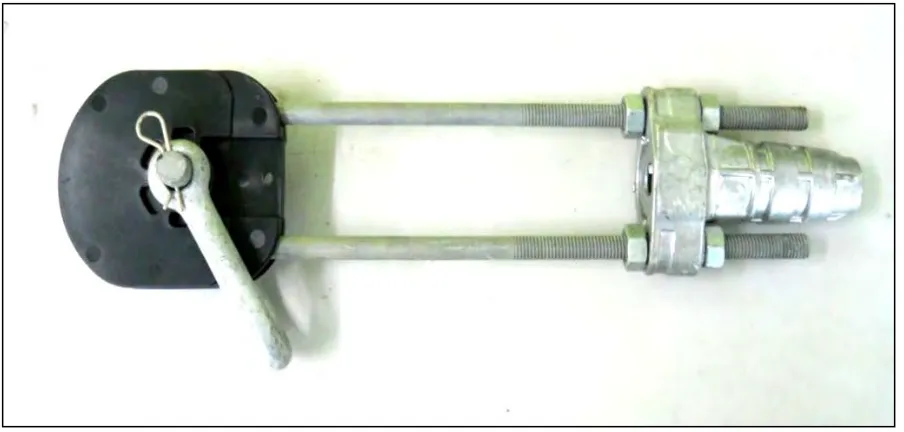
[image:18.612.115.567.304.520.2]The HV ABC Dead End Clamp is used as an accessory for High Voltage (HV) ABC System and suitably designed to hold and grip the 11kV and 33kV HV ABC 50 mm2 galvanized standard messenger steel wire to support it on to 10m-19-5kN spun concrete poles via HV Dead End Clamp Brackets (Single or Double). The HV ABC Dead End Clamp capable to withstand a minimum breaking load of 65 kN or 6630 kg-force or 7.3 ton kg-force for 60 seconds. The general concept design of High Voltage ABC Dead End Clamp is shown in Appendix A. Meanwhile, figure 1.1 shows High Voltage ABC Dead End Clamp for current use.
3
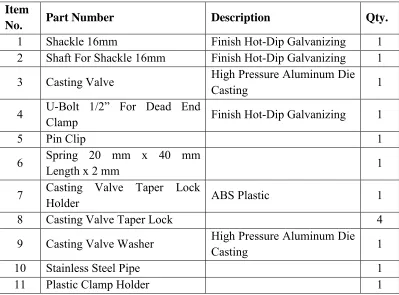
[image:19.612.115.514.129.424.2]The description of High Voltage ABC Dead End Clamp is shown in the table 1.1.
Table 1.1: The description of HV ABC Dead End Clamp Item
No. Part Number Description Qty.
1 Shackle 16mm Finish Hot-Dip Galvanizing 1
2 Shaft For Shackle 16mm Finish Hot-Dip Galvanizing 1
3 Casting Valve High Pressure Aluminum Die Casting 1
4 U-Bolt 1/2” For Dead End Clamp Finish Hot-Dip Galvanizing 1
5 Pin Clip 1
6 Spring 20 mm x 40 mm Length x 2 mm 1
7 Casting Valve Taper Lock Holder ABS Plastic 1
8 Casting Valve Taper Lock 4
9 Casting Valve Washer High Pressure Aluminum Die Casting 1
10 Stainless Steel Pipe 1
4
1.2.1 Casting Valve
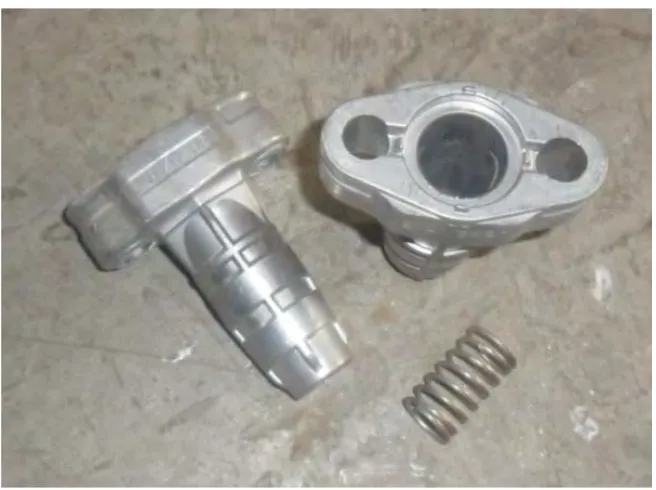
[image:20.612.165.493.216.461.2]Casting valve is one of the parts in the HV ABC Dead End Clamp. The function of the casting valve is to hold and grip the galvanized standard messenger steel wire to support it on the spun concrete poles via HV Dead End Clamp Brackets (Single or Double). Figure 1.2 shows casting valve before make the Sample Test.
5
1.2.2 Tensile Test
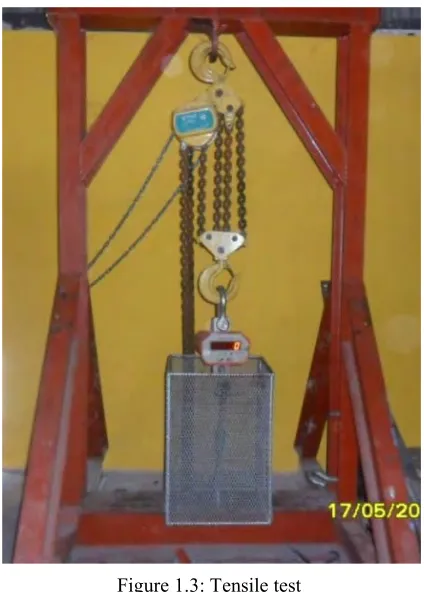
In mechanical testing, tensile test is used as the testing to test the structural failure of casting valve. Basically, there are two classes of testing machines; electromechanical and hydraulic. Tensile test that is provided by this company is hydraulic machine. A hydraulic testing machine uses either a single- or dual-acting piston to move the crosshead up or down. (Richard Gedney, 2005)
[image:21.612.223.435.341.637.2]Mechanical properties are an important measure of product quality in production line and tensile testing is a way to certify the product included to test the structure of casting valve for High Voltage ABC Dead End Clamp. Figure 1.3 shows the tensile test that used during Sample Test for Casting Valve and other product in this company.
6
1.2.3 Application of Casting Valve
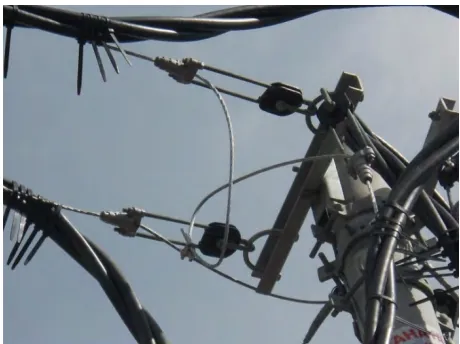
[image:22.612.213.443.218.390.2]Casting valve is one of the important parts of High Voltage ABC Dead End Clamp. Figure 1.4 shows one of the applications for High Voltage TNB distribution that is held and grip the galvanized standard messenger steel wire to support it on the spun concrete poles via HV Dead End Clamp Brackets (Single or Double).
Figure 1.4: Application of Casting Valve (Source: Jati Beringin Sdn. Bhd., 2011)
1.3 Problem statement
7
Figure 1.5: Sample fracture of casting valve during sample test (Source: Jati Beringin Sdn. Bhd., 2011)
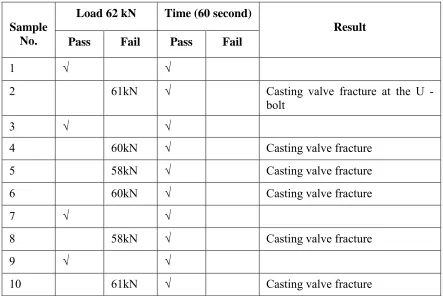
[image:23.612.106.549.398.694.2]Figure 1.5 shows a few samples of casting valve during sample test by using tensile test. Meanwhile, table 1.2 shows the summary of the result for the sample test. From the table 1.2, the fracture of casting valve happened five times during 10 samples of casting valve is tested. It shows that the design of casting valve is failing to maintain 10% and it will be improved.
Table 1.2: Result of sample test
Sample No.
Load 62 kN Time (60 second)
Result
Pass Fail Pass Fail
1 √ √
2 61kN √ Casting valve fracture at the U -
bolt
3 √ √
4 60kN √ Casting valve fracture
5 58kN √ Casting valve fracture
6 60kN √ Casting valve fracture
7 √ √
8 58kN √ Casting valve fracture
9 √ √
8
1.4 Objectives of research
The objectives of this research are:
a) To investigate design parameter of casting valve for ABC Dead End Clamp, HV. b) To analyze the current design of casting valve for ABC Dead End Clamp, HV by
using Finite Element Analysis (FEA) software.
c) To propose new design of casting valve for ABC Dead End Clamp, HV.
1.5 Scope of research
This research investigates the current design of casting valve for ABC Dead End Clamp, High Voltage weakness, strength, and fracture or structure failure of this part. ANSYS software will be used to carry out this analysis and improvement on existing design based on the founding. The cover topic for this research is use design parameter and factor of safety for design improvement by using finite element analysis (FEA). It is used to study on current design by comparing actual experimental data from sample test. Then, new design of casting valve is drawn by using SolidWorks software.
1.6 Structure of research