This is a repository copy of Adapting Adaptation: Expanding Adaptive Strategy Theory to Account for the East Asian Business Context.
White Rose Research Online URL for this paper: http://eprints.whiterose.ac.uk/117944/
Version: Accepted Version Article:
Fowler, R, Gajewska-De Mattos, H orcid.org/0000-0003-2673-5235 and Chapman, M (2018) Adapting Adaptation: Expanding Adaptive Strategy Theory to Account for the East Asian Business Context. Journal of World Business, 53 (3). pp. 323-336. ISSN 1090-9516 https://doi.org/10.1016/j.jwb.2017.06.008
© 2017 Elsevier Inc. This manuscript version is made available under the CC-BY-NC-ND 4.0 license http://creativecommons.org/licenses/by-nc-nd/4.0/
[email protected] https://eprints.whiterose.ac.uk/
Reuse
Items deposited in White Rose Research Online are protected by copyright, with all rights reserved unless indicated otherwise. They may be downloaded and/or printed for private study, or other acts as permitted by national copyright laws. The publisher or other rights holders may allow further reproduction and re-use of the full text version. This is indicated by the licence information on the White Rose Research Online record for the item.
Takedown
If you consider content in White Rose Research Online to be in breach of UK law, please notify us by
1
Adapting Adaptation: Expanding Adaptive Strategy Theory to Account for the East Asian
Business Context
Fowler, R.
Gajewska-De Mattos, H
Chapman, M.
Abstract: This paper extends international business theory by providing insights into contextual
boundaries of the dominant strategic adaptation model, based on assumptions of low power
distance and a bottom-up management style. We challenge them by examining the context of
Asian organizations with contrasting management style and ask how it is possible for them to
adapt. We propose a supplementary “top-down” model of adaptation, supported by empirical
data from East Asian organizations. The model involves low autonomy of lower- and
middle-level managers, but fluid communication from bottom to top, enabling informed but authoritarian
adaptive decision-making exclusively at the behest of top management.
Key words: Context; National Culture; East Asian Business Environment; Strategic Adaptation
2 Introduction
There is a tension in international business (IB) research to distinguish the universal from
the particular (Buckley et al., 2014) as well as between scientific explanation and context (Welch
et al., 2011). The field has been predominantly focused on theories applicable to all
organizations and social groups (Birkinshaw et al., 2011). With the rise of the emerging
economies and increasingly more diverse IB environments, taking into consideration contextual
dimensions has never been more timely and important for theory building and practical
relevance. Context can be integrated in theorizing by explaining “empirical puzzles” through
existing theories or by “modifying theories through the study of novel phenomena with the aim
to enhance the theory” (Meyer, 2015, p. 370). This paper falls into the second category as it
extends IB theory by providing insights into contextual boundaries of the dominant strategic
adaptation model, which is based on the assumptions of low power distance and the potential for
bottom-up adaptation and which sees managerial autonomy as necessary for adaptation. We
challenge these assumptions by examining the context of Asian organizations which represent a
contrasting high power distance and top-down management style and also whether managerial
autonomy is necessary for Asian firms’ adaptation. We ask: Given the strategic adaptation
literature’s assumption that adaptation is intrinsically a bottom-up process, how is it possible for organizations in a high power distance East Asian context to adapt?
The proper balance between a fixed long-term strategy and adapting to a rapidly
changing environment has been an important topic in international strategic management.
“Intended” (also referred to as “deliberate”) and “emergent” strategies are the terms which were coined by Mintzberg (1978) and have subsequently been used by strategic management scholars
to describe the original strategy vs. the one developed in response to environmental stimuli.
Mintzberg & Waters (1985) further elaborated on this concept by describing eight different types
of strategies (planned, entrepreneurial, ideological, umbrella, process, unconnected, consensus,
and imposed) and describing where they fall along the spectrum from deliberate to emergent.
Andersen & Nielsen (2009) combined the two by proposing and supporting an adaptive model
where emergence fostered by autonomous and participatory strategy-making by lower and
middle level management facilitates adaptive behavior; this, partially mediated by strategic
3
Andersen & Nielsen’s model rests on cultural assumptions about the nature of adaptive behavior – as, in fact, does all of the literature on the subject, including Mintzberg’s original
elaborations of the terms. In this view, emergent strategy is a “bottom-up” process, which
contrasts with deliberate strategies’ emphasis on “central direction and hierarchy” (Mintzberg & Waters, 1985, p.271). Andersen & Nielsen’s (2009) research supports the point that autonomy for lower and middle level managers is necessary for emergent strategy to emerge.
So what happens in a high power distance culture where a high level of managerial
autonomy is presumed not to be the norm? How then does “emergent” strategy emerge? Are
these organizations doomed to be purely driven by intended, non-adaptive strategies, unless they
switch over to a Western model which emphasizes more egalitarian values that may be
incongruent with their own cultures? Or are there other means of adaptation? This is a crucial
point, because Andersen and Nielsen (2009) demonstrated that incorporating emergent strategy
into the planning process results in better performance for firms. Thus, if adaptation requires
greater egalitarianism, then organizations in high power distance cultures may be intrinsically at
a disadvantage, unless they are able to change their entire organizational cultures. And creating
organizational change on that scale may create perils of its own, since Newman and Nolan
(1996) found that organizations do not perform as well when they engage in management
practices which are not a good cultural “fit.”
In this paper we examine the literature from three disparate streams: strategic adaptation,
East Asian firms (with reference to possible implications for adaptation), and power distance
(including the cultural, historical context specific to East Asia). In order to reconcile these three
streams we ask: Given the strategic adaptation literature’s assumption that adaptation is
intrinsically a bottom-up process, how is it possible for organizations in a high power distance
East Asian context to adapt? Through deductive reasoning, a number of consonant and
contrasting propositions are put forward as possible answers to this question. We ultimately
propose a “top-down” model of adaptation, involving low autonomy of lower- and middle-level
managers, but fluid communication from bottom to top, enabling informed but authoritarian
adaptive decision-making exclusively at the behest of top management. In our paper we draw on
data from the East Asian region which is characterized by high power distance cultures, to create
a richer and more nuanced picture than could be gleaned otherwise.The alternate model we
4
supplements the existing model and it enables a more complete understanding of the different
ways organizations adapt.
Strategic Adaptation
High power distance (Hofstede 1980) and the consequent presumed lack of autonomy for
lower and middle level managers pose some interesting issues for the question of how it is
possible for East Asian firms adapt. Looking at Andersen and Nielsen’s (2009) adaptive strategy
model, which zeroes in on the aspect of Mintzberg’s (1978, 1985) work relating most directly to lower and middle level managerial autonomy, underscores this point.
The authors’ model was supported using a sample of manufacturing companies culled
from the Compustat database. Their supported model is presented in Figure 1 below:
Figure 1: Andersen and Nielsen’s (2009) Adaptive Strategy-Making Model
Participation Strategic Planning
Adaptive Behavior Performance
Autonomy
Andersen & Nielsen (2009, p. 95)
According to this model, adaptive behavior is created through autonomy and participation
in strategic decisions by middle and lower management. Thus, middle and lower management
are actually the drivers of emergent strategy, and top level management’s role is primarily to
(partially) filter the decisions and actions of these managers through the broader corporate
strategic plans (the intended strategy). If adaptation does indeed take place in Asian
organizations, and assuming that high power distance would preclude (or at least reduce)
decision-making autonomy from lower and middle level management, then what is the process
by which they adapt?
In fact, while the environments in which managers operate have become increasingly
5
model of strategic adaptation which Mintzberg first developed back in 1978 and solidified in
1985. Andersen and Nielsen’s (2009) model slightly refines it by emphasizing the important
synergy created by the fusion of emergent with deliberate strategy. Mintzberg’s theoretical work
is generally used as a reference for related but separate issues within strategy and organizational
behavior, and occasionally economics (see for example: Grant, 1991, Lumpkin & Dess, 1996,
Tsoukas, 1996). These are not articles which develop the idea of strategic adaptation, but rather
reference Mintzberg’s work in connection with related subjects. And Andersen and Nielsen’s
(2009) research, despite its tweaking of Mintzberg’s work, has garnered relatively limited
attention thus far, with 49 citations since its publication. To the extent it has been cited, the focus
of the referencing papers has not been to refine or qualify the model they (or Mintzberg) present,
but rather to use their work as a springboard for investigating issues such as ways of increasing
lower and middle level management autonomy (in order to help performance) (Linder, 2015),
case studies looking at, for example, the importance of intended strategy on firm performance
(Iaquinto, 2011) or the relative influence of intended and emergent strategies on particular firms
(Bozkurt & Kalkan, 2013), as well as papers reemphasizing the importance of both top and
middle level management to the strategic planning process (see for example Schaefer &
Guenther, 2016). Andersen and Nielsen themselves bring their work into the related subjects of
adaptation from a psychological, cognitive perspective (Andersen & Fredens, 2013) and dynamic
capabilities (Wilden et al., 2013). These works underscore further the perspective that an
inclusive strategic planning process is necessary for better firm performance. The former paper
stresses the psychological importance of bringing a great variety of many different people into
the strategic planning process, in order to tap the value of shared experiential insights. The latter
paper finds that an “organic” organizational structure (which among other characteristics is less
hierarchal than other types of organizations) facilitates the impact of dynamic capabilities on
firm performance. These papers further invite the question of whether Asian firms face a cultural
handicap if a top-down management approach creates an impediment to performance.
Most research on the general subject of middle management involvement in strategy
assumes that more autonomy and participation by middle level managers is a boon to firms’
performance. Researchers often analyze subjects such as how to increase middle level
entrepreneurship (e.g. Hornsby et al. (2002)), or ways that middle managers may strive to gain
6
subject is the cultural assumption that autonomy is generally wanted by middle level managers—
an assumption that we will show later in the paper should not necessarily be taken for granted
with employees in high power distance cultures. Occasionally, empirical data is collected that
seeks to demonstrate a connection between middle level managerial participation and autonomy
with improved firm performance. Burgelman (1994) found, in a longitudinal study of a high-tech
firm, that the successful exit from the firm’s core business was driven by its emergent strategy,
which in turn ended up redefining the official corporate strategy. The foundation of this
emergent strategy was the technology decisions made by middle level management. Nonetheless,
Woolridge et al. (2008), in a summation of research on the middle management perspective, note
that “although there is some evidence for a positive association between middle management’s
involvement in strategy and organizational outcomes, on the whole, much more research in this
area is warranted” (p.1209).
In general, despite a plethora of articles over the years related to this topic, in terms of
theory Mintzberg still remains the towering go-to reference on the subject of strategic adaptation.
His model of intended and emergent strategy, and the bottom-up approach which he portrays as
intrinsic to the process of strategic emergence, remains the standard one. It has been left to other
papers to perpetuate and reinforce it.
East Asian Firms and Adaptation
In this paper, we use the term East Asia to refer to the area once known as the Far East.
As Reischauer (1958) notes:
“When Europeans traveled far to the east to reach Cathay, Japan, and the Indies, they
naturally gave those distant regions the general name ‘Far East.’ Americans who reached China, Japan, and Southeast Asia by sail and steam across the Pacific could, with equal logic, have called that area the ‘Far West.’ For the people who live in that part of the world, however, it is neither ‘East’ nor ‘West’ and certainly not ‘Far.’ A
more generally acceptable term for the area is ‘East Asia,’ which is geographically
more precise and does not imply the outdated notion that Europe is the center of the
civilized world” (p.3).
Webster’s Dictionary (Merriam-Webster.com) defines East Asia as a “region of indefinite boundaries usually thought of as including Japan, China, and Korea and also
7
both Southeast and Northeast Asia. While noting some historical distinctions between these two
areas, Reischauer states, “In recent centuries, [Southeast Asia]…has become increasingly linked
with the rest of East Asia, economically, culturally, and strategically” (p.5). And since the focus of this paper is on business practices, it is particularly relevant that Southeast Asia shares with
Northeast Asia a heavy Chinese influence and even dominance in the area of business. In
Thailand, for example, which has an ethnic Chinese population of 14%,
(Cia.gov/library/publications/the-world-factbook/geos/th.html), Thai Chinese control 96% of the
70 most powerful business groups. Similarly, Chinese Malaysians, which make up 22.6% of the
population (Cia.gov/library/publications/the-world-factbook/geos/my.html), control 70% of the
economy. A similarly outsized Sinic influence can be found throughout the region (Chua, 2003).
And Singapore’s census statistics show Chinese ethnic dominance in terms of the general
population as well, with 73% of Singapore residents being of Chinese ethnicity
(singstat.gov.sg/publications/publications-and-papers/cop2010/census10_stat_release1). Given
that the focus of our research question is to explore how a high power distance culture may
present problems for the strategic adaptation process as it is usually conceptualized, the fact that
the entire East Asian region is rated as high in power distance (Hofstede, 1980) makes excluding
the South from the North particularly gratuitous for our purposes.
It should also be noted that in addition to the strong Chinese influence on the area, East
Asia has for many years, and especially since the 19th century, been repeatedly exposed to
Western influences. So although we may expect differences between the two regions, we should
not assume that modern East Asian culture is something that has arisen in isolation, entirely
separated from the Western world. Hong Kong and Singapore are two of the more obviously
Western-influenced nations of the region, given the history of British colonialism, and the fact
that in both islands, English is widely spoken (in Singapore, as the official native language). But
the rest of East Asia is certainly not without a strong Western influence as well. Whether it is the
Dutch in Indonesia, the French (and later the Americans) in Vietnam, the Spanish (and later the
Americans) in the Philippines, the Japanese’ quick adaptation of Western military might and imperialist expansion, or China’s “century of humiliation” followed by their adoption of
Marxism and a communist government, Western influence is abundant. And of course, many
students from the region, especially China, now seek business education in the West.
8
still suggest that differences between the hemispheres remain. And exposure need not
necessarily equal imitation. As one of our Taiwanese respondents mentioned on the subject of
exposure to Western business practices, “We try to learn something from Western culture, but
maybe it’s not 100% suitable for us, so we will change to our own way.”
In terms of discerning the likely adaptive processes (or non-adaptive processes) of East
Asian firms, the existing literature on the region – which, unsurprisingly, is dominated by studies
of China – is self-contradictory. For example, Yasdani et al. (2011) pay tribute to the strengths of
Asian leadership and state that Sinic upper management is “closed door.” At the same time, they
offer reassurance that, “the objective of this type of bureaucracy is not control but ordering of the
group, organizations and society…The Sinic corporate leaders have generally exhibited a sense of obligation and responsibility for the lives and emotions of their subordinates…Bureaucracy is
not used to control and dominate but to order and create discipline” (p. 262). However, in the
same paper that they present this “closed door” theory, the authors also offer this analysis: “The search for consensus and involving employees in both decision making and implementation is a
hallmark of Sinic way of managing (sic)” (p.261). They state that Asian organizations are
“participative” and “horizontal.” This is contradicted both by their own aforementioned “closed door” analysis as well as by other anecdotal and case study evidence of the way
Chinese-dominated hierarchal organizations are run. For example, in Worm’s study of Chinese -Scandinavian joint ventures (1997), the author details how decision making in Chinese
organizations is purely top-down and authoritarian, while responsibility is collective—creating
an unfortunate situation where decision makers are not held accountable for their decisions,
while middle managers are powerless and seek to avoid getting into trouble.
Without citing any specific research to confirm this, Haley and Tan (1999) aver,
seemingly anecdotally, that Chinese-dominated firms depend on a network of friends and
government officials for information – a notion suggesting the possibility that East Asian firms
adapt through an inter-organizational network of contacts. They also acknowledge the possible
severe limitations of such an approach. Redding (1990) and Worm (1997) both describe an
extreme lack of information flow from bottom to top. Redding also notes a lack of quality market
research information for the Asian region, thus fostering a purely “intuitive” approach to
decision-making from top management. He also states, consistent with the notion of high power
9
The existing literature on East Asian organizations gives no conclusive view on how and
if these organizations adapt. On the other hand, the literature on East Asians in general suggests
that they may be extremely adaptive people. Pye’s chapter from Culture Matters (Harrison &
Huntington, 2000) describes how the Chinese try to “make” their own luck, constantly scanning
the environment for opportunities to turn fortune in their favor. He writes that the “role of
fortune makes for an outward-looking and highly reality-oriented approach to life, not an
introspective one” (p. 249). Perhaps this could lead to a greater adaptiveness for Asian organizations, but the power distance, information flow, and top-down decision making
suggested by some of the literature on organizations suggested the opposite could occur as well.
Individual adaptive inclinations may have to be distinguished from adaptive organizational
practices.
It should also be considered that there may be a difference in terms of an organization’s
size, since, as Redding (1990) notes, Chinese firms are often able to adjust matters like their
product offerings with amazing speed. He attributes this to their often small size and
authoritarian, dictatorial structure, which increases efficiency. However, it seemed reasonable
that such advantages may evaporate when it comes to larger organizations, since the very
dictatorial approach which increases efficiency in a small company may be outweighed by
communication problems and difficulty accessing important information from those are who are
more connected to different parts of the organization and its external environment.
Although not addressing China, Hampden-Turner and Trompenaars (1993), describe
United States organizations as “inner-directed,” contrasting with, for example, Japan, which
belongs to a group of nations that “can adapt fast to an environment changing beforetheir eyes.” They can do this, the authors claim, because they “keep their antennae tuned to the outside world” (p.49). Hampden-Turner and Trompenaars do not define this trait according to an East-West divide; Holland and Sweden, for example, are put into the same category as Japan. So it
was not clear into which category Chinese-dominated organizations might be placed, especially
given the structural issues already mentioned; nor whether the authors’ claims would entirely
hold up to a detailed analysis of the specifics of corporate decision-making processes in Asia.
Power Distance
10
Hofstede (1980) introduced the concept of power distance, and he defines it as “the
extent to which the less powerful members of organizations and institutions (like the family)
accept and expect that power is distributed unequally… It suggests that a society’s level of
inequality is endorsed by the followers as much as by the leaders” (geerthofstede.com). The last
sentence is slightly problematic if taken literally. According to this definition, a society with an
extremely egalitarian distribution of power would be considered high power distance if the
followers endorsed the low level of inequality as much as the leaders did. However, we may
reasonably assume that the definition is intended to describe endorsement of existing high
inequality by followers, not endorsement of existing low inequality.
Power distance, and its associated endorsement of power distribution highly skewed
toward the top, may present issues about decision-making dispersal, information flow, and the
source of environmental feedback. In terms of the prevalence of high power distance in Asian
organizations, both the literature and anecdotal evidence strongly suggest its presence. As noted,
Hofstede (1980) introduced the concept of power distance, and his country ratings remain the
standard reference on the subject. He rates all East Asian countries as having high power
distance. A dissonant voice has been raised by the GLOBE studies (House et al., 2004), which
claim China, for example, to have no more power distance than western countries like Great
Britain and the United States. In fact the “Anglican” group of countries is rated to have the
highest power distance practices of any culture in the world. Nonetheless, it is worth noting that
anecdotal evidence from those who have had the experience of working for both Asian and
Western organizations would seem to cast serious doubt on this assertion. A methodological flaw
seems likely to be that direct questions were asked of people in each country to rate their
organization’s level of power distance. Since most of the respondents are unlikely to have had
any experience working outside their own countries, it would be extremely difficult for them to
rate either their organizations or their societies relative to others. Thus, Chinese employees might
have perceived their organizations to be average in power distance relative to other companies
they had worked for. And they likely had little basis for comparison in questions which asked
them to rate the power distance of their societies as a whole.
Hofstede himself pointed this out in response to the GLOBE study, stating that “asking
‘as is’ questions basically assumed that these people were in a position to compare their societies
11
an unusually open mind to produce anything like a credible comparison between one’s own
society and others” (Hofstede, 2006, p. 886). In the GLOBE team’s response to this critique, they
state, “We find this assertion perplexing. At no time did GLOBE ask the respondents to compare
their societies to others…There was no reference to other cultures.” (Javidan et al., 2006: p.900). This rebuttal may not be persuasive however, since most of GLOBE’s questions require implicit
comparison to something. As Smith (2006) notes, “Faced with a series of Likert rating scales, a
respondent needs to employ some frame of reference in order to judge what is high and what is
low (Heine et al., 2002)…characterizing one’s nation is…problematic, because suitable
comparators against which to make judgments are either going to be less well known or less
relevant. Russians, for instance, rate themselves as generous, rash and impractical, whereas
others rate them as serious, hardworking and persistent (Peabody & Shmelyov, 1996)” (p. 916).
Power Distance in Confucian Philosophy
Although no assumption should be made that an ancient philosophical system necessarily
determines modern East Asian business practices, some discussion of Confucius seems
appropriate, given the historically vast influence Confucius has had on Chinese culture, and as
noted, the strong influence of Chinese culture on the rest of East Asia, particularly in the area of
business. Several major themes emerge in Confucius’s writings of relevance to the subject of
power distance. First is the assumption that humans do possess higher and lower (unequal) ranks
and that this is appropriate, with different realms of responsibility and different protocols of
appropriate behavior for each rank. This ranking system begins in the home, and then continues
out into the world. Confucius emphasizes that different ranks of people are suited for different
tasks and scopes of responsibility. “The Master said: ‘A man of the higher type may not be
distinguishable in minor responsibilities, but he can undertake great ones. An inferior man can
not undertake great responsibilities, but may be distinguished in minor ones’” (Analects, Book
15, Chapter 33). One can see potential implications from this regarding management protocol. In
terms of communication and decision-making authority, the following is instructive: “The
Master said, ‘He who does not occupy the office does not discuss its policy’” (Analects, Book 8,
Chapter 14). Regarding inter-level communication, Confucius is quite specific: “Confucius said:
‘There are three errors to be avoided when in the presence of a superior: To speak before being
12
termed reticence; and to speak before noting his superior’s expression, which may be called
blindness’” (Analects, Book 16, Chapter 8).
Confucius emphasizes the important of rank and adherence to behavior suitable to one’s
position. He never questions the appropriateness of having a top echelon extracting full
obedience from those below, and he assumes that influence is a top-down process, with those
above shaping the behavior of those below. However, a recurring theme is the duty of those at
the top behave in a morally righteous manner. Without correct behavior from those above, they
lose their entitlement to rule, and the lower ranks become disobedient. It would seem that high
rank and obedience from others is something which must be earned.
Of particular relevance to the subject of strategic adaptation, and how this seemingly high
power distance structure may or may not affect lines of communication and feedback from
subordinates, is the following intriguing quote:
“The disciple [Zengzi] said, ‘I have heard your instructions on the
affection of love, on respect and reverence, on giving repose to (the minds
of) our parents, and on making our names famous; – I would venture to
ask if (simple) obedience to the orders of one’s father can be pronounced filial piety.’ The Master replied, ‘What words are these! what [sic] words are these! Anciently, if the Son of Heaven had seven ministers who would
remonstrate with him, although he had not right methods of government,
he would not lose his possession of the kingdom; if the prince of a state
had five such ministers, though his measures might be equally wrong, he
would not lose his state; if a great officer had three, he would not, in a
similar case, lose (the headship of) his clan; if an inferior officer had a
friend who would remonstrate with him, a good name would not cease to
be connected with his character; and the father who had a son that would
remonstrate with him would not sink into the gulf of unrighteous deeds.
Therefore when a case of unrighteous conduct is concerned, a son must by
no means keep from remonstrating with his father, nor a minister from
remonstrating with his ruler. Hence, since remonstrance is required in the
case of unrighteous conduct, how can (simple) obedience to the orders of a
13
This quote serves as an interesting contrast with the previously-mentioned statement
made by Confucius in the Analects: ‘He who does not occupy the office does not discuss its policy’” (Analects, Book 8, Chapter 14). Perhaps we may gather that the latter statement is applicable when the leader is following the right course, but not when he has deviated from it. As
in other aspects of leadership, the ruler forfeits the rights of usual obedient conduct from
subordinates when he has failed to earn it. In such a case, usual protocol must be abandoned in
order to ensure the survival of the existing order. From an organizational standpoint, it suggests
at least that when an organization is on the brink of disaster, subordinates must remonstrate with
their leaders. Whether they should do so in less serious conditions, and the judgment of what
would constitute a sufficiently serious condition to do so, would seem to remain a grayer
question.
As noted, we should not assume that an ancient philosophical system necessarily informs
modern East Asian business practices. But this philosophical background, combined with more
modern research on cultural values by researchers like Hofstede, strongly suggests that East
Asian organizations and cultures are likely to have greater power distance than those in the West.
Additionally, Confucius’s particular focus on the proper protocol between superiors and
subordinates, as well as his warnings about a leader who does not receive the benefit of
“remonstrance” from those below him, seems to tie in very closely with issues of interest to the strategic adaptation field. It would seem that even thousands of years ago, Confucius may have
shared our concerns about what a top-down management approach might engender if such an
approach inhibited a community’s ability to correctly change course.
Implications of Literature for East Asian Firm Adaptation
If adaptation does indeed take place in Asian organizations, and assuming that high
power distance would preclude (or at least reduce) decision-making autonomy from lower and
middle level management, then it must be asked how it is possible for these firms to adapt. Given
the lack of clarity in the literature on East Asian firms regarding adaptation, we must rely on
deductive reasoning to arrive at a series of propositions. And by necessity, these propositions
must reflect the broad range of possibilities required by a body of literature of which the most
14
The first and most obvious proposition must center on the lack of evidence (in either
direction) for East Asian firms adapting at all. While the notion of zero adaptation seems extreme
and unlikely, given the inherent possible conflicts, as discussed, between power distance and
bottom-up adaptation, consideration must be given to the notion that East Asian firms are at least
strongly compromised when it comes to their ability to adapt. Thus:
Proposition 1: East Asian Organizations may not be strategically adaptive
If the above is valid, given Andersen and Nielsen’s (2009) finding that strategic
adaptation is positively correlated with firm performance, this could have quite ominous
implications in terms of suggesting a cultural limitation on East Asian businesses’ collective
success. However, other means of adaptation seem possible if we turn our focus to information
accessible from the outside of the organization:
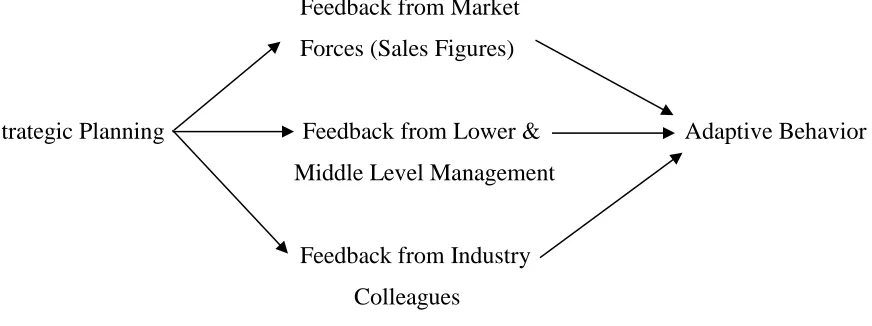
Proposition 2: Top management in East Asian organizations may make strategic
changes based on information from other top managers in its network (or business group)
Proposition 3: Top management in East Asian organizations may make strategic
changes by relying on market research data
Both of the above, especially if used together, would certainly allow for some
adaptability. And neither of these intrinsically involve granting their subordinates any
decision-making power. Haley & Tan (1999) suggest that East Asian organizations may engage in
activities congruent with Proposition 2. On the other hand, Redding (1990) suggests that using
market research data is uncommon, casting doubt on Proposition 3. Of course, another clear
source of information is simple sales figures. No intra-organizational protocol, aside from
outright deception, should stand in the way of top management gaining access to valuable
information in the form of revenues. Poor sales performance should lead to adaptation, although
targeting the reason for the bad performance could be difficult without the active involvement of
lower and middle level managers, and thus make it hard to determine in what direction and
15
Proposition 4: Top Management in East Asian organizations may make strategic
changes based on market forces (in the form of sales data)
In terms of information flow within the organization, there seems no intrinsic reason why
lack of autonomy from middle and lower managers should inhibit the ability of top management
to retrieve information from them. Therefore:
Proposition 5: There may be social mechanisms in East Asian organizations
whereby top management regularly communicates with lower and middle level managers
for the purpose of procuring information, while withholding decision making power for
themselves.
However, Worm (1997) and Redding (1990) both believe (at least during the 1990s at the
time they were writing) that there is a severe lack of information flow in Chinese firms, which
could make Proposition 5 unlikely. Of course, in the absence of any outside input at all, it could
still be speculated that East Asian firms adapt without recourse to any externally derived
information:
Proposition 6: East Asian firms may adapt through pure intuition
Finally, despite the extensive and persuasive literature we have discussed arguing for the
existence of high power distance in East Asia, we can still consider the possibility either that it
does not really exist there or that what seems logical in theory is not actually manifested in
business practices. If this were the case, lower and middle level managers would have autonomy
and would be active decision-makers in response to environmental information. Thus there
would be no contradiction between behavior and the potential for adaptation; in this case the
power distance literature would need to be amended to account for the fact that it is not
predictive (at least not in a way that is discernible a priori) of East Asian business practices. In
16
Proposition 7: High power distance may not actually exist in East Asia
Or:
Proposition 8: High Power Distance may not be predictive of low autonomy and
decision-making power of lower and middle level managers
Any combination of Propositions 2-8 could offer some explanation for the possibility of
East Asian firm adaptation. However, if the firms are limited to Propositions 2, 3, 4, and/or 6 –
whereby Asian managers only adapt based on these three sources of information (or
“inspiration” in the case of the Proposition 6) East Asian organizations may seem to be at a major disadvantage compared with Western firms. At least this would be the case if indeed
environmental adaptation is as crucial to strong performance as Western scholars seem to think it
is (Andersen & Nielsen, 2009). Not accessing any significant feedback from those closer to the
“front lines” would seem severely to limit the factual basis from which strategic adjustments might be made. In the case of Proposition 5, if it were found that Asian firms are able to adapt
based on information, but not autonomous action, from the bottom up, that would suggest that
the adaptive strategy literature would need to be amended to account for an alternative adaptation
style in the East. On the other hand, if Propositions 7 or 8 held true, the literature on power
distance would need to be amended, either to reflect skepticism for its existence in East Asia or
to reduce our assumptions about its translation from theory into actual business practices.
For the purpose of theoretical completeness, we have listed possible propositions which
may be derived from the literature and/or from deductive reasoning. Because the literature is so
inconclusive on these points, that means our propositions are wide ranging and do not seem to
point in any definitive direction. However, the reader may well dismiss some as unlikely.
Proposition 6, for example, the notion of adaptation by pure intuition without recourse to
evidence, may seem intrinsically absurd. We would tend to agree. However, it is interesting to
note that during the course of our research we came across a minority of firms which relied on
Chinese belief systems to help them make strategic decisions. This included bringing in Feng
Shui specialists for guidance on what new business practices to initiate and setting prices
17
demonstrate the importance of keeping an open mind in advance of conducting the research.
Proposition 7 may also seem unlikely, given what we have discussed of the compelling reasons
for assuming the existence of high power distance in East Asia - although not necessarily a
definitive picture of how it may or may not be manifested.
Proposition 1 is an extreme wording; but we would suggest that the possibility of
inhibited adaptation is certainly worthy of consideration, given the ambiguities of the literature.
And this possibility provides a major imperative for conducting the research.
Methodology
The review of the literature gives us no definitive picture of how East Asian firm
adaptation is even possible, given the contradictions inherent between the bottom-up
requirements assumed to be necessary for adaptation to occur and the issues of power distance
and implied lack of autonomy for lower and middle level managers. We have put forth 8
propositions for East Asian firm behavior, running the gamut from adaptive to non-adaptive to
extremely limited in adaptive potential, as ways of reconciling these contradictions. However,
finding at least one example of East Asian firm adaptation would help us to move beyond
speculation to delineating a more detailed picture of how this adaptation may occur. Although a
study of one East Asian firm could be sufficient to fill in the theoretical hole we have addressed
– how is it possible for an East Asian firm to adapt, given the bottom-up requirements assumed by the strategic adaptation literature? – we take our cue from Mintzberg’s (1978, 1985) original
qualitative work. He uses what Tracy (2009) refers to as “maximum variance” sampling, using a small but incredibly broad range of examples across vastly different industries – from the airline
industry to the film industry to the U.S. government’s handling of the Vietnam War– to illustrate
the underlying logic applicable to all (although, crucially, none from high power distance
societies). By focusing on one particular country or industry or type of firm, we may have risked
only uncovering the peculiarities of a particular industry or country rather than the common high
power distance context that was the object of our investigation. By providing data from our
research on 14 organizations which all share East Asian locations and consequent high power
distance culture, we hope to find patterns that transcend the particulars of industry and other
idiosyncratic firm attributes – with the intention not of generalizing to all of East Asia, but rather
18
We should emphasize that the cultural differences between the countries in East Asia are
no doubt great. By lumping them together, we are not suggesting that this is a culturally
homogenous region. But since our research goal was to look at how strategic adaptation in a high
power distance context is possible, looking at a broad range of East Asian countries helped us to
find varied examples that did not merely represent the idiosyncrasies of a single East Asian
country.
In keeping with this, it should be noted that we did not assume that power distance would
necessarily manifest itself in the same way across all the countries in our study. In line with our
Proposition 8, the element of power distance that was the most pertinent to our research question
– the potential constraints of a high power distance context on the autonomy of middle level managers – was something we were interested to investigate, regardless of whether behavior
within these constraints or the constraints themselves were uniform or varied amongst our
sample. As our research question was “How is it possible for East Asian firms to adapt in a high power distance context?”, any examples of adaptation or non-adaptation, and any similar or
varied manifestations of power distance, were all of potential interest to us for the purposes of
answering the question.
Brannen & Salk (2000) note that culture has been conceptualized in a variety of ways
across different research studies, including as a contextual variable, an explanatory variable, and
a dependent variable. Our research treats culture as the context within which adaptation does or
does not occur. Looking at Webster’s Dictionary definition of culture (“The integrated pattern of
human knowledge, belief, and behavior that depends upon the capacity for learning and
transmitting knowledge to succeeding generations” (merriam-webster.com)), our study is a
depiction of patterns of behavior – although our respondents often attributed their behavior to
knowledge and/or beliefs. Similarly, Brannen & Salk (2000) conceptualize culture (at the
national level) as “sources of values, meanings, and norms,” although in their study of
intercultural international joint ventures , these sources serve as an “anchor” or “point of
departure,” in light of the unique organizational culture which is created through the interplay of
people from different cultures (p.458). Again, “norms” may be the visible component of culture,
similar to “behavior,” but these norms may be influenced by values and meanings. In our study, we cannot know whether or not the behavior we observed is a manifestation of power distance,
19
autonomy which could make organizational adaptation problematic. Our purpose was not to
discover a causal link between power distance and some other variable, which would have
required isolating power distance and controlling for other variables, but again, to discover how
adaptation may or may not be possible in a high power distance context. If we had observed, in
keeping with our Proposition 8, examples of East Asian organizations where lower and middle
level managers were granted high levels of autonomy, then one answer to this research question
would have been that adaptation is possible by means of this high autonomy – an autonomy
which could exist, according to our data in this hypothetical scenario, even in a culture which is
ostensibly high in power distance.
Interviews were conducted with professionals, mostly middle and lower-level managers1,
from 14 East Asian organizations across 6 regions (Taiwan, Thailand, Singapore, Hong Kong,
Mainland China, and Cambodia). All of the regions in this sample are rated by Hofstede as
having the high power distance which form the basis for investigating firms in these locations.
The goal of the study—to find out how and if East Asian organizations adapt—was best
achieved through semi-structured interviews. There were key topics that needed to be addressed,
however the inductive nature of the study meant that it was necessary to keep an open mind and
to keep presuppositions to a minimum. The goal was to learn from respondents facts of which no
one was aware prior to the study. Given that nobody has yet researched this topic in the East
Asian context, the answers of respondents were likely to be surprising, and might even have
fallen completely outside the realm of what could have been considered beforehand as
possibilities for how Asian organizations plan and adapt, even on a conceptual basis. Therefore
an unvarying list of questions in advance of the study would have needlessly constrained the
insights to be gleaned, and would not have considered that the respondents might have a much
better grasp of basic structural issues which the researcher might have been wrong to assume had
already been determined.
Easterby-Smith et al.’s (2012) description of a “topic guide” was followed as a means of
keeping the interview on track while allowing for extensive flexibility. “Although [researchers]
1 Some top management was included in this study, and the different managerial levels did not contradict each other
20
are to some extent tied to their frameworks, they should not be ‘tied up by them.’ One way in
which this can be achieved is to prepare a checklist, sometimes referred to as a topic guide,
which can be used as a loose structure for the questions. Although there may be some deviation
from the sequence in order to follow interesting lines of inquiry and to facilitate an unbroken
discussion, the interviewer should attempt to cover all the issues mentioned” (p. 127). Appendix
A includes examples of some preliminary questions, with a label next to each one defining under
which topic it falls. Most questions attempt to identify observable phenomena—the frequency
and subject matter of meetings, the inclusion of organizational members in planning, the
incentive systems, the rituals and procedures of organizational life. Some broader questions
were also included near the end of the interviews, in order to tap any possible unconsidered
insights from respondents.
It should be noted that although individuals were interviewed, the individual was not the
unit of analysis. The unit of analysis was organizational practices (formal and informal)—but as
organizations are comprised of individuals, only they could tell us about these practices.
The sample approach, for strategic reasons, incorporated a fusion of three different types
of sampling plans as identified by Tracy (2013). Because this was an investigation of East Asian
organizations, the approach used was a “theoretical construct” sampling plan, to the extent that a sample was chosen which helped to fill in a gap in the existing theory on organizational planning
and adaptive behavior. Existing theory rests on Western cultural assumptions to explain firm
behavior, ignoring conditions peculiar to the East, so it was necessary to specifically target East
Asian organizations to fill in this research gap and to answer the research question. However,
within the broad category of East Asian organizations, a “maximum variance” sampling plan was
used, as noted earlier. The goal was to research patterns which transcended particulars of
industry and other firm-level variables, and to make sure that respondents were not overly
similar to each other in terms of their positions within the organization, to provide multiple
perspectives. Therefore professionals were interviewed who were either directly involved in or in
a position to observe managerial planning and adaptation practices (mostly middle and lower
level managers) across a broad range of departments, in companies extremely varied in industry,
size and location. The central research question of this study is not presumed to be
industry-specific, and Mintzberg (1978, 1985), as noted, has studied an extremely wide range of types of
21
to the U.S. government’s escalation of the Vietnam War. The industries included in our sample
were clothing, banking, brokering, engineering contract work, telecommunications, oil & gas,
logistics, and luxury products. Since some research on East Asian organizations, as noted earlier,
attributes Asian firm flexibility partly to the small size of many of them, firms of widely varying
sizes were also included in the sample. Nielsen and Andersen (2009) suggest that middle level
marketing managers may be more likely to participate in strategic planning, but Scott (2007)
notes the increasing dominance of finance managers in corporate strategy. In either case, both
departments are well represented in this study.
The rationale for a maximum variance sample, in all respects except for the shared high
power distance context which as discussed was for “theoretical construct” purposes, is therefore
the same as for Mintzberg’s original work: to find commonalities, patterns, and an underlying logic which transcends the particulars of industry, firm size, etc. We thus do exactly the opposite
of what we would do if we were trying to analyze the effects of an independent variable. Instead
of looking for differences between firms caused by one changing variable while all other
variables remain constant, we look for similarities between firms in which all variables, except
for the high power distance context, are heterogeneous. Any patterns which can emerge in the
midst of such diversity of industry, size, etc. are likely not peculiarities of a particular industry or
other idiosyncratic factor, but we hope are closer to the broader truths Mintzberg was trying to
uncover. As noted, we conceive of a high power distance society as a context not as an
independent variable. However, a high power distance context may impose certain constraints,
and our aim was to examine how it may be possible for firms to adapt in such an environment.
Finally, “snowball” sampling was used for practical reasons, but with the goal of achieving the aforementioned sampling plans: maximum variance within the category of East
Asian organizations. To reduce the major problem of snowball sampling—the tendency of the
“snowball” to collect respondents which are overly similar to each other—Tracy’s (2013)
proposed solution was used: recruiting “a handful of participants who represent a maximum variation, and then…generat[ing] several smaller snowballs from that diverse initial sample” (p.
136). Given the research question and that therefore only professionals at East Asian
organizations were relevant, nonetheless the sample began with representation from three
different East Asian countries and several different types of companies, respondent departments,
22
Thailand, Singapore, Hong Kong, Mainland China, and Cambodia), from respondents, mostly
middle and lower level managers, representing a broad range of departments (finance,
accounting, marketing, human resources, sales and technology). 10 of the organizations were
East Asian-owned, and 4 were Western-owned. Western-owned firms were included to note any
similarities to or differences from the patterns observed in firms owned by East Asians. As
noted, all of the regions in this sample are rated by Hofstede as having the high power distance
which form the basis for investigating firms in these locations.
In keeping with the previously described heavy Chinese dominance in East Asian
business, all of our respondents were of at least partial Chinese ethnicity. This was true despite
having started our aforementioned “snowball” sampling in 3 separate countries, and having made no active attempt to seek out respondents based on ethnicity—only based on region. In some
cases, the Chinese ethnicity was not discovered until after the interview had commenced.
Interviews were conducted by one of the authors who has lived and worked in several East Asian
countries. In most cases, the English level of the respondents was sufficient to conduct the
interviews entirely in English. When interviewing respondents from mainland China, a Chinese
translator was used.
Given the relatively indirect manner by which East Asians often communicate, the
interviewer stayed attuned to subtexts and nuances, often probing deeper and asking for
clarification when any ambiguity seemed to exist. The interviewer would frequently check to
make sure his understanding was correct, and ask for verification from the respondent. He would
also try to bring to the surface a direct statement where previously only a hint or an allusion may
have been made. And he would confirm with the respondents that they had properly understood
the question if there was any doubt.
Given the importance of trusting relationships for gaining cooperation in East Asia,
“snowballing” was used so that one respondent could enlist another potential respondent. Respondents seemed remarkably forthcoming and cooperative with the interview process. The
interviewer at the same time was careful never to probe for information that was irrelevant to the
research aims. Anonymity was assured for both the respondent and the company. Most of the
beginning and middle of all interviews were spent discussing details of company processes
without alerting respondents to the overall concepts which were being investigated. This was
23
mere discussion of abstractions, rather than letting the details of company life speak for
themselves. We also wanted to avoid “auto-stereotyping” (Heine et al., 2002), the tendency of
people to stereotype about their own nationality, despite the unlikeliness that they would have
suitable comparators against which to make such generalizations. However, to glean any
unconsidered insights from respondents, more general questions were asked toward the end of
interviews in order to elicit more of their thoughts and interpretations on the concepts under
investigation.
All interviews were recorded and transcribed. They were analyzed and coded, using a
“thematic” analysis (See Braun & Clarke, 2006, for example). The interview data were read all the way through, and then re-read and carefully scrutinized for recurring themes. As it happens,
and perhaps unsurprisingly, the broad themes divided into categories which had already been
identified as the main areas of investigation in advance of data collection: Autonomy (discerning
how and if presumed power distance affected the planning and adaptation process), Making
Plans, and Changing Plans (Adaptation). Although the research was inductive and flexible, no
surprising themes emerged in terms of the broad categories, despite efforts to locate any.
However, once the interview data was divided into these categories, sub-themes within each
category were identified and analyzed, with often surprising content, and these are described in
detail within the text of the results sections.
The goal was to identify commonalities amongst the organizational stories, while making
note of any important nuances, differences, and exceptions, in order to increase the potential for
being able to generalize to theory, as well as to properly qualify any such generalizations. As
Jick (1979, p. 607) notes, divergence can often be an opportunity for enriching the explanation.
The multi-case format was well-suited for these purposes (Eisenhardt & Graebner, 2007). In
dividing up the interview transcripts into each thematic category, care was taken to copy the
entire surrounding dialogue into each section, so as not to rob quotes of their context in the
re-reading. Data from all 14 organizations were thus re-read and scrutinized within each thematic
category, making note first of what commonalities emerged across organizations, and then noting
any nuances, variations, and exceptions if they existed.
Consistent with the protocol of the time, Mintzberg (1978, 1985) does not feel compelled
to describe in mechanistic terms the analytical process by which he arrived at his enlightening
24
care was taken not to neglect what Nayak (2008) describes as “the role of imagination in
theorizing” (p. 185). In fact, the opportunity to make use of the human instrument is a major
advantage of having conducted the research qualitatively. McCracken (1988) writes, “In
qualitative research, the investigator serves as a kind of ‘instrument’ in the collection and analysis of data” (p.18). He adds, “The process of detection is hard to mechanize…” and he describes “find[ing] (or fashion[ing]) a match for the patterns evidenced by the data” (p. 19). This indeed seems a congruent and appropriate frame of reference to match Mintzberg’s (1985) search for “patterns in streams of organizational actions” (p. 272).
Results
As noted, the broad themes analyzed and confirmed to discover how (and if) East Asian
firms adapt were Autonomy, Making Plans, and Changing Plans. Since the strategic adaptation
literature assumes that adaptation occurs as a result of the autonomous actions of middle and
lower level management, the level of autonomy of Asian managers would have a direct bearing
on how and if these firms adapt. Changing Plans is of course the theme which captures the actual
change process, but Making Plans is also relevant, because lower and middle level
management’s (non-) involvement in this process provides the initial context from which subsequent changes either occur or do not occur.
Autonomy
High power distance would suggest that lower and middle level managers would have
low autonomy (again, Hofstede’s definition of power distance: “The extent to which the less
powerful members of organizations and institutions (like the family) accept and expect that
power is distributed unequally”) (geerthofstede.com), and this assumption was, overall, not
contradicted in our study. A number of managers on initial questioning averred that they had a
high level of autonomy, but on detailed probing of the specifics of what decisions they were
authorized to make without pre-approval by top management, it was found there were very few
which fell into that category. The great majority of the responses stated that pre-approval from
the top was necessary, so it is important to pay particular focus to the exceptions to the rule – the
few responses where some level of autonomy seems to exist, so we can try to determine whether
25
For example, the Head of the Marketing division for a small Taiwanese clothing
company said, “I can make decision which salesperson or saleswoman I want to hire or don’t hire.” She also has the authority to reject potential clients (which she might do, if for example,
she was concerned the outlet would sell the products at too low a price). However, for any other
decision, including trying or introducing a new product, she needs approval first.
This response from a lower-level Finance Manager at a large Taiwanese bank was typical
of many: “It depends. If it’s a big thing, then we have to check with the supervisor to make sure that the supervisor knows and…you know…they have to know and to make the decision. If it’s
just small things on a regular basis, then normally we can just make our own decision, it doesn’t
really matter…It depends on how important that thing is.” Many respondents gave an answer
like this on initial questioning, and it was left to the remainder of the interview to discern what
constitutes a “big thing” and what is considered a “little thing.” In the case of this respondent, big things were “what” to do, and little things were “how” to do it:
“Just like when we have a project with another company…let me see…We
know that we want to build a model, and the model needs to be very accurate.
As to how…My supervisor would say, ‘I want the model, and I want it to be accurate, and I want to make sure it works,’ and that sort of decision she makes.
But how you build the model and how you work with the other company as a consultant; and how you gather the data, how you analyze—there are lots of
possibilities and various ways to do it. For those parts, we don’t need to ask our supervisor… So she just wants to see the results. ‘Okay, this is what I want.’
For how you build it or something, she doesn’t care. So those are the parts we
can make our own decision.”
An Incubation Program Manager, who previously worked as a Product Manager, at a
large telecommunications company, said that “You mostly have to check with your chain of
command.” He says that internal rules and policies are set “mostly set from the top, HR side.”
For decisions in his division, he states that the amount of money at stake is a determinant.
“Something that involved about [$9,000 USD] doesn’t need top approval. Something that goes
out more than, what, I would say [$15,000 USD] or [$30,000 USD] then you need formal
approval.”
The Technical Director for an engineering SME initially said, “For right now, I can make all the decisions.” But sheimmediately added, “But I have to discuss with my supervisor,
Managing Director. For example, quotations. The price, how to make the price, I need to discuss
26
would be free to start a major marketing activity without getting the approval first of the
Managing Director or the owner, she replied, “Oh, of course not…We have to report them. I mean, anything we want to do actually (laughter)…” She states however that internal HR policies are set by the Technical Director, below the level of top management. Similarly, one
other company, a Singaporean medium-sized logistics company, was found to have internal HR
policies determined by the head of HR, and not necessarily subject to pre-approval by the very
top.
Among Asian-owned firms, therefore, the exceptions to pre-approval of all decisions was
a Head of Marketing who was free to hire her own salespeople and reject potential clients, an
investment manager who could initiate investment decisions costing less than about $9,000 USD,
a lower level finance manager at a large bank who could determine how to build financial
models with bank clients, but not the goals or purposes of such models, and some autonomy of
HR policies from the Head of HR departments. The default in all other cases was pre-approval
from top management. Most notably, there is an absence of any autonomy which appears to be
strategic in nature. The investment manager who can initiate projects costing less than $9,000
USD perhaps has some potential for autonomously affecting strategy. But considering the very
large size of the telecommunications firm he works for, any project with such a price tag may be
considered negligible on the scale of this company’s annual revenues and budget.
Things become somewhat more nuanced and interesting when we look at the four
Western-owned firms in this study. Three out of four of these firms have an overwhelming
majority of Asian employees, despite the Western ownership. But for one German-owned
banking firm in Taiwan, the majority of employees are Western – primarily American-born
Chinese (“ABCs”). This firm alone displays a level of managerial autonomy entirely at odds
with the other firms in the study. According to a lower level Finance Manager:
“In the end I felt freedom. But in the beginning I was very scared. Because… Taiwanese do not like the autonomy. We don’t know how to do that. Please do not give me so…But if I getting used to my job, I hope I can get more…So in the
end I feel…That’s the most difficult thing for us…” She adds, “The higher level
27
This picture is particularly interesting in light of the fact that the manager directly above
her was Taiwanese. Yet, whether coincidental or not, this firm – the only one in the sample with
a majority Western employee base – displays a strikingly different attitude regarding autonomy,
even amongst managers who are Taiwanese. It could be speculated that a “tipping point” has
been reached in the managerial population, such that with a Western majority, even local
managers begin behaving differently, as our respondent eventually learned to. It is also notable
that despite the extensive (mostly Western) literature detailing the desirability for employees of
increased autonomy, that the respondent expressed primarily discomfort and dissatisfaction with
this arrangement, particularly at first. She also notes that the turnover rate amongst local
Taiwanese employees was extremely high – the only Taiwan-located company in the sample
(Western-owned included) for which this was true.
Additional color is provided by the Marketing Manager of a French luxury goods
company in Cambodia, with a majority Asian population. As was typical of the respondents, he
began by stating that he has a high level of autonomy, but further probing placed qualifications
on this statement: “All [my decisions] need approval. But it’s all like…Because every quotation I
approve, [the top manager] needs to sign.” His description suggests that although the respondent
technically does not have autonomy (reference Webster’s dictionary definition of autonomy as “self-governing”) he is clearly not without influence. Everything must be communicated and approved, but he nonetheless may have an effect on corporate strategy, since he avers that the top
manager usually approves his decisions. However, this is a Western-owned company, so this
initiative on the respondent’s part should not necessarily be assumed to apply to Asian-owned
firms.
Given the need for pre-approval for virtually every decision made by the respondents in
this sample, it needs to be asked whether Mintzberg’s (1978, 1985) idea of an “emergent” strategy is really possible. And in the absence of such emergent strategies, how does the firm
adapt? Or does it?
Referring back to our propositions, while it may be possible that Proposition 8 is
correct—that high power distance is not predictive of low autonomy and decision-making power
of lower and middle level managers—we did not find any examples among Asian-owned firms
to explore and flesh out this possibility. Instead, every example was congruent both with the