RESEARCH
Effects of a health educational intervention
on malaria knowledge, motivation,
and behavioural skills: a randomized controlled
trial
Ahmed Dahiru Balami
1*, Salmiah Md Said
1, Nor Afiah Mohd Zulkefli
1, Norsa’adah Bachok
2and Bala Audu
3Abstract
Background: The levels of insecticide-treated net use among pregnant women and uptake of intermittent preven-tive treatment in pregnancy, have been sub-optimal in Nigeria. Previous studies have reported posipreven-tive correlations between knowledge, attitude and practice of malaria preventive measures. It has also been reported that information and motivation, act through a mediator (behavioural skills), to cause a health behaviour change. The aim of this study was as such to develop, implement, and assess the effects of a health educational intervention based on the informa-tion–motivation–behavioural skills (IMB) model on the levels of knowledge, motivation, and behavioural skills for ITN use and IPTp uptake among pregnant women in a hospital in north-eastern Nigeria.
Methods: This was a randomized controlled parallel-group trial in which 372 antenatal care attendees were randomly assigned to either an intervention or control group after collecting baseline data using a structured questionnaire. The intervention group received a 4-h health education on malaria, guided by a module developed based on the IMB theory, while the control group received health education on breastfeeding for a similar duration and by the same facilitator. Follow-up data were subsequently collected at 2 months and at 4 months post-intervention using the same questionnaire. The generalized linear mixed models analysis was used to determine the between-group and within-group effects of the intervention. The intention-to-treat analysis was used after missing data had been replaced. This was followed by a sensitivity analysis, where the analyses were repeated without replacing the missing values.
Results: The intervention was significant in achieving a 12.75% (p < 0.001), 8.55% (p < 0.001), and 6.350% (p < 0.001) higher total knowledge, motivation, and behavioural skills scores respectively, for the intervention group over the control group. The sensitivity analysis revealed no great differences in the effect sizes, even when missing data were not replaced. Conclusion: The intervention module was effective in improving knowledge, motivation and behavioural skills. It is as such recommended to be adopted and incorporated into the routine antenatal health education schedules. It is also recommended that booster doses of the module be given say 2 months after the first dose to sustain levels of motivation and behavioural skills.
Trial registration Pan African Clinical Trial Registry, PACTR201610001823405. Registered 26 October 2016, http://www. pactr .org
Keywords: Randomized controlled trial, Health education, Pregnant women, Knowledge, Motivation, Behavioral skills
© The Author(s) 2019. This article is distributed under the terms of the Creative Commons Attribution 4.0 International License (http://creat iveco mmons .org/licen ses/by/4.0/), which permits unrestricted use, distribution, and reproduction in any medium, provided you give appropriate credit to the original author(s) and the source, provide a link to the Creative Commons license, and indicate if changes were made. The Creative Commons Public Domain Dedication waiver (http://creat iveco mmons .org/ publi cdoma in/zero/1.0/) applies to the data made available in this article, unless otherwise stated.
Open Access
*Correspondence: [email protected]
Background
Malaria infection during pregnancy is associated with complications like anaemia [1–3], abortion [4, 5], stillbirth [6, 7] low birth weight [8, 9] and pre-term delivery [1]. An estimated 25 million pregnancies are believed to occur annually, in malaria-endemic regions of sub-Saharan Africa [10]. A higher risk of contract-ing malaria has also been reported among pregnant women [11, 12]. Sleeping under an insecticide-treated net (ITN) every night and receiving at least two doses of intermittent preventive treatment with sulfadoxine-pyrimethamine during pregnancy (IPTp) have been proven to decrease the risk of malaria infection and its complications during pregnancy [13–16] and have been recommended by the World Health Organization (WHO), for all pregnant women in sub-Saharan Africa [10, 17]. However, the level of compliance with these recommended practices has been very poor, as only 18% of pregnant women in Nigeria were reported to sleep under any type of net, while only 23% of women who delivered within the last 2 years preceding the sur-vey had received IPTp [18–25], many of which showed positive associations between these variables [21, 23,
26–29]. Some items of knowledge, motivation and self-efficacy for ITN use, had also been reported to predict ITN use itself [30], suggesting that improvements in these constructs is likely to improve compliance with ITN and IPTp.
A few health educational interventions have been studied among different groups, to determine their effectiveness in improving malaria knowledge and pre-ventive practices among the target groups [31–35], most of which were not guided by a health theory. The information–motivation–behavioural skills model con-sists of three constructs, and was first proposed to help explain HIV preventive behaviours among students [36]. Its first construct, information, refers to the req-uisite knowledge about the particular health behav-iour [37]; motivation is the second construct, of which attitude is a component; while the third construct, behavioural skills, comprises of both the actual and perceived abilities to carry out the behaviour change [36]. None of the previous health education interven-tions for malaria among pregnant women had targeted these three constructs as its outcome variable. This model, which suggests that information and motivation work through a mediator (behavioural skills), to cause a behaviour change has also been validated with diabe-tes self-care [38] and curb-cycle behaviour [39]. It was therefore hypothesized that giving health education on malaria to pregnant women using a module devel-oped based on the IMB model is likely to improve their knowledge, motivation and behavioural skills towards
those preventive measures. The aim of this study was as such, to develop, implement, and assess the effects of a health educational intervention based on the IMB model on knowledge, motivation, and behavioural skills scores among pregnant women in a hospital in north-eastern Nigeria.
Methods
Study location
The study was conducted in Maiduguri, the Borno state capital of north-eastern Nigeria. Borno state lies between latitudes 10° 30′ and 13° 50′ north and longitudes 11.00° and 13° 45′ east, with a total land area of 69,435 km2 [40].
Its population is reported to be 540,016 consisting of 282,409 males and 257,607 females [41]. The literacy rate among adult females in Maiduguri was 30.2% for Eng-lish language, and 33.1% for any language [42]. The study location was the antenatal care clinic of the State Special-ist Hospital Maiduguri, which is the biggest government secondary-level health centre in Borno state.
Study design and selection of participant
The study was a randomized controlled parallel-group study conducted from 30 January 2017 to 14 June 2017. Participants were drawn from hospital’s antenatal care attendees. To ensure a uniform starting point, only those who were coming for their first antenatal care visit in their index pregnancies were included in the study. In addition, to maximize retention and allow for comple-tion of the study before delivery, those not resident in Maiduguri as well as those with over 5 months period of amenorrhoea were excluded from the study. Those who do not speak Hausa language were also excluded, as the intervention was in Hausa language. Participants were selected over a period of 8 weeks, from 30 January, 2017 to 20 March, 2017 from the booking clinic sessions which are held on Mondays, in the hospital. The mini-mum required sample size for the study was calculated using the sample size formula for randomized controlled trials with continuous outcomes [43] for which the total knowledge scores from a previous intervention study were substituted [44]. This gave a total sample size of 296 for which an additional 30% was added for anticipated attrition to give a final sample size of 384 participants. After the selection of participants, baseline data was col-lected by trained enumerators using a structured ques-tionnaire (Additional file 1), before randomly allocating them to either the intervention or control group.
Randomization
Sequence generation and allocation concealment
was not part of any of the other research processes. The sequences consisted of permuted blocks of size four, each containing two interventions and two controls. The ran-dom function of Microsoft Excel was used to generate the random sequences of these permutations after which they were then placed in opaque envelopes and sealed.
Implementation
After the sequence generation, two other staff of the antenatal clinic who were also not involved in any other part of the study were responsible for the allocation. The first staff serially handed over the opaque envelopes to the respective participants without opening them, and then directed them to meet the second staff. The second staff then opened each envelope, gave the participant her study hand card, then documented her serial number and the group to which she belonged, and accordingly, informed her of the date to come her health education session.
Blinding
The study was double-blinded, as participants as well as the enumerators, were blinded to the groups they belonged, as it was not disclosed to them and it was not indicated on their study cards. The enumerators were also not involved in any other part of the study.
Intervention
The intervention group received a 4-h health education on malaria. The session was strictly guided by a mod-ule developed by the researchers based on the informa-tion–motivation–behavioural skills (IMB) model. The module had four sections, the first two of which covered aspects of malaria transmission; clinical features; com-plications of malaria during pregnancy, and preventive measures. These sections were named, ‘understanding malaria in pregnancy’ and ‘the main preventive meas-ures for malaria in pregnancy’ respectively, and lasted for approximately 30 min each. The third section was named, ‘Insecticide treated net and Fansidar’, and lasted for about an hour and a half. Participants were taken through the details of how to use, and take care of their ITNs and how to take IPT, with regards to identifying the correct drug, timing, dosing, side-effects, and what to do in case they experienced one. The fourth section which lasted for about an hour and a half was named, was an interactive session named, ‘motivation for malaria pre-vention during pregnancy’. During this session, deterrent factors to the use of ITN and IPT, as identified from pre-vious studies were highlighted, followed by brainstorm-ing among the participants and the facilitator, on possible ways of overcoming those deterrent factors. The module was prepared and delivered in Hausa language, and it
was pre-tested with a sample of 25 pregnant women who were not part of the study participants and appraised by a mid-wife, health educationist, and an Obstetrics and Gynecology specialist for necessary corrections and modifications.
The IMB model was chosen because it conceptualizes the psychological determinants of performing health behaviours [37]. It has three components which are: information about the health behaviour, motivation to carry out the behaviour, and the requisite skills for per-forming the behaviour [36]. A single session health edu-cation programme based on the IMB model was also effective in improving HIV preventive practices even 10 months post intervention [45]. In a systematic review of intervention studies based on the IMB model, ten out of the twelve included studies were effective in leading to positive behavioural changes, suggesting that the IMB provides a strong theoretical framework for behavioural interventions [46]. A theory such as the Protection Moti-vation Theory however, while laying much emphasis on motivation, fails to identify other environmental and cog-nitive factors that can affect attitude change [47].
Control group
The control group received health education on breast-feeding, which was designed to last for approximately the same duration as the health education on malaria. It was also delivered by the same facilitator.
Outcome variables and instrument
IPT. The fourth section assessed behavioural skills with a total of seven items, the first three of which asked of the level of ease or otherwise of carrying the preventive measures, while the next four asked of how effectively or otherwise the participant could use and care for their ITN. For motivation and behavioural skills, the sum of all the points were calculated to obtain the total motivation and total behavioural skills scores.
Statistical analyses
The data obtained (Additional file 2) was analysed using IBM SPSS version 22. Each of these total scores were con-verted to percentages of the total obtainable scores for that construct, for further statistical analyses. Normal-ity tests performed on the total knowledge, motivation and behavioural skills scores, using the test of Kurtosis and histogram plots showed there was no substantial non-normality, and as such the data could be handled as normal data. Chi squared test was performed to compare the baseline characteristics as well as responses to other items of the questionnaire between the intervention and
control group. Repeated measures analysis of variance (ANOVA) was performed to determine the main effect of group, time, and group-time interaction, on the respec-tive scores. For both the mixed-design and one-way repeated measures ANOVA for knowledge, motivation and behavioural skills scores, the assumptions of sphe-ricity were violated (Mauchly’s test p-value < 0.001) and the Epsilon values were all less than 0.75, and as such, the Greenhouse–Geisser corrected estimates were used in the interpretation of those results. Missing values were then replaced using the multiple imputations method and then the generalized linear mixed models (GLMM) analysis was performed to determine the effect size of the intervention. For sensitivity analysis, the GLMM analysis was repeated without missing value replacement. Permis-sion to conduct the study as well as ethical approval, was obtained from the Ethical Committee of the State Spe-cialist Hospital (SSH/GEN/64/Vol.1) and the Universiti Putra Malaysia [UPM/TNCPI/RMC/1.4.18.2 (JKEUPM)]. The trial was also registered with the Pan African Clini-cal Trial Registry (PACTR201610001823405). Informed
[image:4.595.57.541.361.711.2]Table 1 Baseline socio-demographic characteristics of the participants
* Significant p < 0.05
ap for t-test
Socio-demographic
factor Groups χ
2 df p
Intervention
Freq. (%) (n = 186) Control Freq. (%) (n = 186)
Age (years) − 1.399 370 0.163a
Mean (SD) 26.1 (5.8) 26.9 (5.9)
(Range) (15–40) (17–45)
Ethnicity 4.054 6 0.669
Kanuri 73 (37.7) 63 (33.9)
Hausa 30 (16.1) 28 (15.1)
Babur 13 (7.0) 18 (9.7)
Shuwa 6 (3.2) 12 (6.4)
Marghi 14 (7.5) 12 (6.4)
Fulani 21 (11.3) 17 (9.1)
Others 32 (17.2) 36 (19.4)
Family type
Monogamous 143 (76.9) 144 (77.4) 2.016 2 0.365
Polygamous 41 (22.0) 42 (22.6)
Widowed 2 (1.1) 0 (0.0)
Educational status 3.365 3 0.339
None 82 (44.1) 71 (38.2)
Primary 32 (17.2) 32 (17.2)
Secondary 54 (29.0) 54 (29.0)
Tertiary 18 (9.7) 29 (15.6)
Employment status 2.380 4 0.666
None 104 (55.9) 101 (54.3)
Self-employed 56 (30.1) 65 (34.9)
Government 9 (4.9) 9 (4.9)
Private 14 (7.5) 10 (5.4)
Student 3 (1.6) 1 (0.5)
Income 0.768 2 0.681
None 106 (57.0) 102 (54.8)
< 18,000 65 (34.9) 72 (38.7)
≥ 18,000 15 (8.1) 12 (6.5)
Type of residence 5.541 1 0.019*
Permanent resident 127 (68.3) 147 (79.0)
IDP 59 (31.7) 39 (21.0)
Table 2 Baseline comparison of the mean total knowledge, motivation and behavioural skills scores of the intervention and control groups
Scores Mean df t-value Mean difference (95% CI) p-value Intervention n = 186 Control n = 186
[image:5.595.59.540.96.557.2] [image:5.595.64.540.616.689.2]consent was also obtained from the participants, after they had been taken through the respondent information sheet which was in Hausa language; and this was docu-mented in the consent form by the enumerators.
Results
Response rate
The flow chart for participant recruitment is presented in Fig. 1. Three hundred and seventy-two pregnant women were finally selected to participate in the study, with 186 in the intervention group and 186 in the con-trol group. As presented in the chart, 81.2% and 85.5% of participants from the intervention and control groups, respectively, had attended their respective health educa-tion sessions. At the end of the study, the total drop out from the intervention and control groups were 25.3% and 31.2% respectively.
Baseline socio-demographic characteristics of participants The ages of the respondents ranged from 15 to 45 years, with mean (SD) age of 26.5 (5.9) years. There was no divorced or single woman among the respondents, though two of them were widowed (0.5%). Most of the respondents (77.2%) were at the time of the research, married in monogamous settings, while 22.4% were in polygamous marriages. About a third (26.3%) of all the respondents were internally displaced persons (IDP) from other local government areas of Borno State, Nige-ria. Over a half (58.9%) of them had some form of educa-tion, from primary to tertiary, but less than a half (44%) were employed. As shown in Table 1, with the exception of place of residence, for which there were more IDPs in
the control group, both groups were comparable on their socio-demographic characteristics.
Knowledge, motivation and behavioural skills at baseline, 2-months and 4-months post-intervention
At baseline, almost all the respondents (94.1%) stated that malaria could be transmitted through mosquito bites. Higher proportions of participants in the control group gave correct answers to each of the questions on malaria cause and transmission, though this difference was only significant for three out of the eight questions. At their first follow-up visit however, the proportions of correct answers were significantly higher among the intervention group, all of which were statistically significant, except the question on whether malaria transmitting mosqui-toes can bite during the day. Over three-fourths of par-ticipants in both groups correctly identified the malaria
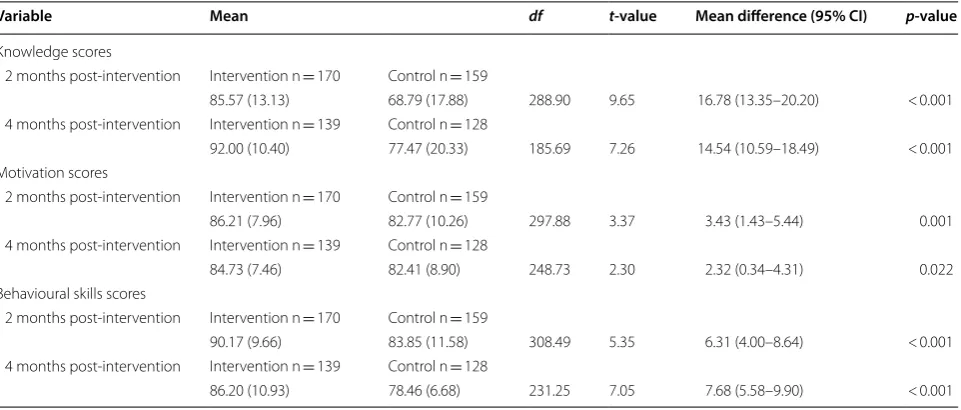
Table 3 Comparison of mean knowledge, motivation, and behavioural skills scores of intervention and control groups at 2 months, and 4 months post-intervention
Variable Mean df t-value Mean difference (95% CI) p-value
Knowledge scores
2 months post-intervention Intervention n = 170 Control n = 159
85.57 (13.13) 68.79 (17.88) 288.90 9.65 16.78 (13.35–20.20) < 0.001 4 months post-intervention Intervention n = 139 Control n = 128
92.00 (10.40) 77.47 (20.33) 185.69 7.26 14.54 (10.59–18.49) < 0.001 Motivation scores
2 months post-intervention Intervention n = 170 Control n = 159
86.21 (7.96) 82.77 (10.26) 297.88 3.37 3.43 (1.43–5.44) 0.001 4 months post-intervention Intervention n = 139 Control n = 128
84.73 (7.46) 82.41 (8.90) 248.73 2.30 2.32 (0.34–4.31) 0.022 Behavioural skills scores
2 months post-intervention Intervention n = 170 Control n = 159
90.17 (9.66) 83.85 (11.58) 308.49 5.35 6.31 (4.00–8.64) < 0.001 4 months post-intervention Intervention n = 139 Control n = 128
86.20 (10.93) 78.46 (6.68) 231.25 7.05 7.68 (5.58–9.90) < 0.001
Table 4 Change in mean knowledge, motivation,
and behavioural skills scores from baseline to 4-months post-intervention for both groups
Source variable F df p-value Partial Eta η2
Knowledge scores
Intervention 82,719.415 1.667 < 0.001 0.693 Control 15,947.520 1.681 < 0.001 0.291 Motivation scores
Intervention 12.573 1.872 < 0.001 0.086 Control 0.529 1.903 0.581 0.005 Behavioural skills scores
[image:6.595.304.539.125.254.2] [image:6.595.59.540.520.725.2]symptoms mentioned in the questionnaire, with no sig-nificant difference between the groups at baseline. How-ever, the intervention group showed a higher percentage of persons who gave correct answers at the time of first and second follow-up visits.
At baseline, even though there were significantly more in the control group who correctly identified anaemia and low birth weight as complications of malaria dur-ing pregnancy, this was reversed, at the time of the first and second follow-up visits. For knowledge of insecti-cidal nets, there was no significant difference between the groups at baseline, except for the items under net care, where more participants from the control group knew that ITNs should not be dried under the sun. The intervention group however exhibited better levels of
knowledge about ITNs at the times of their subsequent visits. At baseline, significantly more participants among the control group correctly identified that not two tablets are given for IPTp and that the medicines are not harmful to pregnancy. However, at the subsequent visits, the cor-rect responses given to these questions were significantly higher among the intervention group.
For the items of personal motivation which assessed participants’ perception of the level of goodness or other-wise, and perception of level of pleasantness or otherwise of sleeping under an ITN and taking IPTp, there were no differences between the groups at baseline. At the subse-quent follow-up visits however, all the items were signifi-cantly better for the intervention group. There remained no difference between the groups at all the three time points, in terms of social motivation which assessed the support they were likely to get from their significant oth-ers in complying with ITN and IPTp. The degree of ease or otherwise of sleeping under an ITN and taking all the IPTp medicines was not different for both groups at baseline and 2-months post-intervention, but was better among the intervention group at 4-months post-inter-vention. Their level of effectiveness for ITN use and ITN care was the same, but subsequently remained better for the intervention group.
Baseline comparison of mean knowledge, motivation and behavioural skills scores between groups
At baseline, the participants’ knowledge scores ranged from 4.4 to 93.3% with mean (SD) percentage score of 60.0 (15.8) percent. Their total motivation scores ranged from 44.4 to 100%, with mean (SD) percentage score of 81.6 (10.8) percent, while total behavioural skills scores ranged from 42.9 to 100%, with mean (SD) percentage score of 83.7 (12.7) percent. As pre-sented in Table 2, there were no significant differences between the mean knowledge, motivation and behav-ioural skills scores of the groups at baseline.
Follow-up change in total knowledge, motivation, and behavioural skills scores for the two groups
Results of independent t-test to determine group sim-ple effect on total knowledge, motivation, and behav-ioural skills scores are presented in Table 3. The mean knowledge, motivation, and behavioural skills scores of the intervention group were higher than that of the control group at 2-months, and 4-months post-intervention. Also as shown in Table 4, the difference in mean knowledge, motivation, and behavioural skills scores over the repeated times were significant for both the intervention as well as control group.
Table 5 Effect of group with regards to time on the mean knowledge scores
Results adjusted for type of residence Source variable:
knowledge scores F df p-value Partial Eta η 2
Group 44.332 1, 249 < 0.001 0.151 Residence 1.196 1, 249 0.275 0.005 Group*residence 0.653 1, 249 0.420 0.003 Time 184.182 1.712, 426.204 < 0.001 0.425 Time*group 36.752 1.712, 426.204 < 0.001 0.129
Table 6 Effect of group with regard to time on the mean motivation scores
Results adjusted for type of residence Source variable
self-efficacy scores F df p-value Partial Eta η 2
Group 1.636 1, 249 0.202 0.007 Residence 2.808 1, 249 0.095 0.011 Time 8.659 2, 498 < 0.001 0.034 Time*group 2.356 2, 498 0.096 0.009
Table 7 Effect of group with regard to time on the mean behavioural skills scores
Results adjusted for type of residence Source variable:
behavioural skills scores
F df p-value Partial Eta η2
[image:7.595.56.292.115.204.2] [image:7.595.56.290.276.354.2] [image:7.595.57.292.414.501.2]The mean knowledge scores showed an increas-ing trend from baseline to the time of second follow-up for both grofollow-ups, as shown in Fig. 2 (see Table 5). As illustrated in Fig. 3 (see Table 6), while there was a continuous rise in motivation scores for the control group, there was an initial rise followed by a drop, for the intervention group. However, for behavioural skills scores, Fig. 4 shows that while there was an initial rise, followed by a fall, for the intervention group, there was a continuous drop from baseline to the time of the sec-ond follow-up visit, for the control group (see Table 7).
Main effects of the intervention
For the generalized linear mixed models (GLMM) analy-sis, the participants’ baseline characteristics were con-trolled for, using the combination of variables which gave the best model, evidenced by lowest Akaike corrected information criterion (ACIC) and Bayesian information criterion (BIC). Table 8 shows that controlling for these factors, group and time had significant effects on total knowledge, motivation, and behavioural skills scores.
The significant interaction between group and time also shows that the changes in these scores, were different between the groups over time.
Magnitude of the intervention effect
Table 9 presents the fixed coefficients of the outcome variables studied. The results show that controlling for all other variables, a person in the intervention group was expected to have total knowledge, motivation, and behavioural skills scores of 12.75%, 8.55% and 6.35% respectively, above one in the control group.
Sensitivity analysis
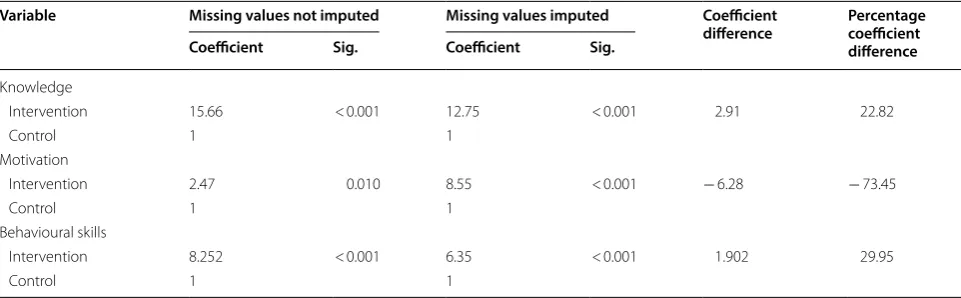
As presented in Table 10, the effects of the group on the outcome variables remained significant even after the GLMM analysis was conducted without replacing miss-ing values. A comparison of the fixed coefficients for group, with, and without replacement of missing values is presented in Table 11. A decrease in the effect of the
[image:8.595.62.539.86.402.2]intervention on motivation as a result of drop out was seen only for motivation scores.
Discussion
That almost all the participants in the study were aware of mosquito bites as a means through which malaria infection could be transmitted is not surprising, con-sidering the Hausa name for malaria being ‘zazzabin cizon sauro’, a term, literally translated to mean, ‘fever caused by mosquito bite’. At the first follow-up visit, all respondents in the intervention group correctly identi-fied mosquito bites as a means of malaria transmission, while four respondents in the control group answered the question wrongly; a finding similar to that of a pre-vious study among refugee mothers in Central America [32]. The intervention was also impactful in raising their
knowledge about ITNs at the times similar to findings from a previous study [35].
There was significant increase in the total knowledge scores for both groups, which is not unexpected, since the routine health talks given during the ante-natal care visits, also include discussions on malaria in pregnancy. Attending antenatal care has been also been reported to predict having higher accurate knowledge of malaria [48]. Previous studies have shown that even health education interventions on malaria which were not guided by any health theory, were still effective in leading to higher malaria knowledge [31, 35]. In Bangladesh, a community-wide distribution of insecticidal nets alongside health education by the distributors, was effective in leading to increased knowledge of malaria and insecticidal nets [33]. In contrast to a prior study which showed no dif-ference between the effects of a plain health education
[image:9.595.58.539.86.416.2]session and one based on the IMB model [45], this study had demonstrated the superiority of the IMB-based health education over a plain one in improving knowl-edge levels. The decreased effect size after replacing missing values is indicative of a likely lesser outcome among those who dropped out, similar to findings from a previous study where the odds of having higher knowl-edge of malaria transmission and prevention were higher among those who had completed the intervention pro-gramme, compared to those who had not [35].
Level of motivation showed a quite different trend from that of knowledge, with different patterns for both groups. The scores for the intervention group however remained higher all through after the baseline, indicating the effectiveness of the intervention. This was probably because behavioural belief, which is an important sub-item of the motivation construct [49], had been exten-sively addressed in the intervention module. Considering
Fig. 4 Trend of mean behavioural skills scores for intervention and control groups. The behavioural skills scores, shows that while there was an initial rise, followed by a fall, for the intervention group, there was a continuous drop from baseline to the time of the second follow-up visit, for the control group
Table 8 Fixed effects of group, time, and group-time interaction on total knowledge, motivation and behavioural skills scores
Missing data replaced
Source F df1 df2 Sig.
Knowledge
Group 85.85 1 1063 < 0.001
Time 200.87 2 1063 < 0.001
Group*time 31.80 2 1063 < 0.001 Motivation
Group 52.07 1 1062 < 0.001
Time 1119.76 2 1062 < 0.001 Group*time 23.44 2 1062 < 0.001 Behavioural skills
Group 48.38 1 1062 < 0.001
Time 29.00 2 1062 < 0.001
[image:10.595.61.538.86.404.2] [image:10.595.56.290.513.681.2]the nature of the intervention, improvements should only be expected in personal motivation and not social motivation, which is dependent on others, not involved in the study [37]. This could explain the relatively lesser effect of the intervention on motivation scores, compared to knowledge scores. It seems a special intervention, especially one guided by a health theory, is requisite for achieving increases in motivation. This could be inferred from this study as well as a previous study, where a plain health education, led to no increase in attitude towards malaria [31], but another, guided by a health theory, led to an increase in motivation [34]. Similarly, an intense 5-h health educational intervention with lectures and practical exercises did not lead to any change in attitudes towards malaria prevention [35]. The results for motiva-tion scores also point to the robustness of the GLMM analysis over the mixed method repeated measures ANOVA.
The trend for behavioural skills scores indicates that the routine health education given to the antenatal
Table 9 Fixed coefficients of outcome variables
Missing data replaced
Variable Coefficient Std. error t Sig. 95% CI
Lower Upper
Knowledge
Intervention 12.75 1.659 7.686 < 0.001 9.50 16.01
Control 1
Motivation
Intervention 8.55 0.921 9.286 < 0.001 6.74 10.36
Control 1
Behavioural skills
Intervention 6.35 0.989 6.419 < 0.001 4.41 8.29
Control 1
Table 10 Fixed effects of group, time, and group-time interaction on total knowledge, motivation and behavioural skills scores
Missing data not replaced
Source F df1 df2 Sig.
Knowledge
Group 144.92 1 914 < 0.001
Time 296.22 2 914 < 0.001
Group*time 50.27 2 914 < 0.001 Motivation
Group 10.64 1 914 0.001
Time 11.87 2 914 < 0.001
Group*time 4.38 2 914 0.013
Behavioural skills
Group 60.45 1 914 < 0.001
Time 19.93 2 914 < 0.001
Group*time 19.84 2 914 < 0.001
Table 11 Comparison of fixed coefficients for group, with and without imputed missing values Variable Missing values not imputed Missing values imputed Coefficient
difference Percentage coefficient difference Coefficient Sig. Coefficient Sig.
Knowledge
Intervention 15.66 < 0.001 12.75 < 0.001 2.91 22.82
Control 1 1
Motivation
Intervention 2.47 0.010 8.55 < 0.001 − 6.28 − 73.45
Control 1 1
Behavioural skills
Intervention 8.252 < 0.001 6.35 < 0.001 1.902 29.95
[image:11.595.56.547.101.249.2] [image:11.595.56.291.324.491.2] [image:11.595.57.538.554.703.2]attendees was not impactful in increasing their level of behavioural skills, since only a continuous decrease in the mean scores was seen throughout the study period for the control group. Self-efficacy, an important com-ponent of behavioural skills, was reported to increase among the intervention group, following a malaria health educational intervention based on the protec-tion motivaprotec-tion theory [34], indicating that guiding a health education intervention with a valid health the-ory may be necessary to improve behavioural skills.
The similarities in the baseline characteristics of the intervention and control groups suggest that the ran-domization was adequate. The Nigerian Demographic and Health Survey of 2013 [18] sampled respondents between the ages of 15–49 years, which was similar to the age range in this study. Respondents from both studies also had similar average ages at first marriage (17 versus 17.3), and proportion of those married in monogamous settings (77.2% versus 73.6%). This com-parability of participants’ characteristics with those from the national survey, suggests the possibility of a wider generalization of its results.
Some strengths of the study included the randomiza-tion and blinding of participants. Also, in contrasts to many health education modules in Nigeria which are prepared in English language, with translation and inter-pretation left solely at the discretion of the facilitator, the module for this study was developed ab initio in the tar-get language, which would have ensured greater uniform-ity in its delivery. The placebo intervention given to the control group on a relevant topic like breast feeding, is likely to have minimized resentful demoralization among them. Having had all sessions for both groups delivered by a single facilitator is likely to have eliminated or mini-mized experimenter effects. With regards to data analy-sis, the robust method used (generalized linear mixed models analysis) which handles both clustering effect as well as random effects, while also controlling for multiple confounding factors, was likely to allow for visualization of the pure effects of the intervention. Also, the intention to treat analysis ensured that the randomization was pre-served. The sensitivity analysis allowed for estimating the impact of attrition on the results obtained, giving an idea of their robustness.
Among the limitations of this study were the inability to maintain an absolutely controlled environment, as the results from the control group suggest that other external factors had played some roles in influencing the outcome variables. The possibility of contamination from informa-tion sharing which could occur at home or other meeting places cannot also be excluded. At 4 months post-inter-vention, the number of respondents still retained in the study was a little short of the minimum calculated sample
size (267 against 296), which could have dampened the effect of the intervention, as the chances of a type II error were higher. Attrition is also likely to have affected the accuracy of the results, as the multiple imputations technique was used to replace missing data points of par-ticipants who had dropped out of the study. The extrapo-lated data points were unlikely to have been a hundred percent accurate since they were not actually measured, but estimated. A drawback of the IMB model is its failure to account for environmental and cultural factors, which are important in predicting and explaining behaviours [37].
Conclusion
From the findings of higher knowledge, motivation and behavioural skills scores among the intervention group at the time of the first and second follow-up visits, it can be concluded that the intervention was effective in improv-ing the study outcomes. There is however room for improvement, considering the magnitude of the respec-tive effect sizes. It is, therefore, recommended for the study module to be adopted and incorporated into the routine ante-natal care programs. Also considering the relatively shorter duration of sustainability of the effects of the intervention on motivation and behavioural skills level, it is recommended that at least an additional ses-sion be delivered say, 2–3 months after the first, to serve as a re-enforcement. Qualitative studies need to be con-ducted to explore the extraneous factors which had led to positive increases in the study outcomes among the con-trol group. This would open doors to the development of more effective interventions in the future. Since the module was developed within the Nigerian context, there exists the need to have the module translated into other Nigerian languages and evaluated for its effectiveness.
Additional files
Additional file 1. Study questionnaire. Additional file 2. Raw data of the study.
Authors’ contributions
AB and SS conceived the study. AB, SS, NZ, NB and BA participated in the study design and manuscript review. AB and SS did the data analysis and manuscript writing. All authors read and approved the final manuscript.
Author details
Acknowledgements
The authors acknowledge and wish to express their appreciation to the women who participated in this study. They also thank the enumerators and all ante-natal care staff of the State Specialist Hospital, Maiduguri, for their tremendous support.
Competing interests
The authors declare that they have no competing interests.
Availability of data and materials
The data set for this study are available as Additional files.
Clinical Trial Registration
The trial was also registered with the Pan African Clinical Trial Registry (PACTR201610001823405).
Consent to publish
The authors have given their full consent to the journal to publish this work.
Ethics approval and consent to participate
Permission to conduct the study as well as ethical approval, was obtained from the Ethical Committee of the State Specialist Hospital (SSH/GEN/64/ Vol.1) and the Universiti Putra Malaysia [UPM/TNCPI/RMC/1.4.18.2 (JKEUPM)]. Informed consent was also obtained from the participants, after they had been taken through the respondent information sheet which was in Hausa language; and this was documented in the consent form by the enumerators.
Funding
No external funding was received for this study.
Publisher’s Note
Springer Nature remains neutral with regard to jurisdictional claims in pub-lished maps and institutional affiliations.
Received: 19 August 2018 Accepted: 14 February 2019
References
1. Steketee R, Nahlen B, Parise M, Nenendez C. The burden of malaria in pregnancy in malaria endemic areas. Am J Trop Med Hyg. 2001;64:28–35. 2. Douamba Z, Bisseye C, Djigma FW, Compaoré TR, Bazie VJT, Pietra V, et al. Asymptomatic malaria correlates with anaemia in pregnant women at Ouagadougou, Burkina Faso. J Biomed Biotechnol. 2012;2012:198317. 3. Okafor IM, Mbah M, Usanga EA. The impact of anaemia and malaria
parasite infection in pregnant women, Nigerian perspective. IOSR J Dent Med Sci. 2012;1:34–8.
4. McGready R, Lee SJ, Wiladphaingern J, Ashley EA, Rijken MJ, Boel M, et al. Adverse effects of falciparum and vivax malaria and the safety of anti-malarial treatment in early pregnancy: a population-based study. Lancet Infect Dis. 2012;12:388–96.
5. Umar NJ, Olubiyi SK, Aliyu U, Aminat GU, Imam AA, Ibraheem MA, et al. Spontaneous abortion among women admitted into gynaecology wards of three selected hospitals in Maiduguri, Nigeria. Int J Nurs Midwifery. 2014;6:24–31.
6. Poespoprodjo JR, Fobia W, Kenangalem E, Lampah DA, Warikar N, Seal A, et al. Adverse pregnancy outcomes in an area where multidrug-resistant Plasmodium vivax and Plasmodium falciparum infections are endemic. Clin Infect Dis. 2008;46:1374–81.
7. de Beaudrap P, Turyakira E, White LJ, Nabasumba C, Tumwebaze B, Mue-hlenbachs A, et al. Impact of malaria during pregnancy on pregnancy outcomes in a Ugandan prospective cohort with intensive malaria screening and prompt treatment. Malar J. 2013;12:139.
8. Sirima SB, Sawadogo R, Moran AC, Konate A, Diarra A, Yameogo M, et al. Failure of a Chloroquine chemoprophylaxis program to adequately prevent malaria during pregnancy in Koupela district, Burkina Faso. Clin Infect Dis. 2003;36:1374–82.
9. Menendez C, Ordi J, Ismail MR, Ventura PJ, Aponte JJ, Kahigwa E, et al. The impact of placental malaria on gestational age and birth weight. J Infect Dis. 2000;181:1740–5.
10. WHO. A strategic framework for malaria prevention and control during pregnancy in the African region. Geneva: World Health Organization; 2004.
11. Samak AC. Malaria in pregnancy: an overview. McGill J Med. 2004;8:66–71.
12. Raimi OG, Kanu CP. The prevalence of malaria infection in preg-nant women living in a suburb of Lagos, Nigeria. Afr J Biochem Res. 2010;4:243–5.
13. Gamble C, Ekwaru PJ, Garner P, ter Kuile FO. Insecticide-treated nets for the prevention of malaria in pregnancy: a systematic review of ran-domised controlled trials. PLoS Med. 2007;4:e107.
14. Ter Kuile FO, Terlouw DJ, Kariuki SK, Phillips-Howard PA, Mirel LB, Hawley WA, et al. Impact of permethrin-treated bed nets on malaria, anemia, and growth in infants in an area of intense perennial malaria transmission in western Kenya. Am J Trop Med Hyg. 2003;68:68–77.
15. Menéndez C, Bardají A, Sigauque B, Romagosa C, Sanz S, Serra-Casas E, et al. A randomized placebo-controlled trial of intermittent preventive treatment in pregnant women in the context of insecticide treated nets delivered through the antenatal clinic. PLoS ONE. 2008;3:1–9.
16. Eisele TP, Larsen D, Steketee RW. Protective efficacy of interventions for preventing malaria mortality in children in Plasmodium falciparum endemic areas. Int J Epidemiol. 2010;39:88–101.
17. WHO. WHO policy brief for the implementation of intermittent preven-tive treatment of malaria in pregnancy using sulfadoxine–pyrimethamine (IPTp-SP). Geneva: World Health Organization; 2014.
18. NPC. Nigeria demographic and health survey 2013. Abuja: National Population Commission; 2014.
19. Sam-Wobo SO, Akinboroye T, Anosike JC, Adewale B. Knowledge and practices on malaria treatment measures among pregnant women in Abeokuta, Nigeria. Tanzania J Health Res. 2008;10:226–31.
20. Iriemenam NC, Dosunmu AO, Oyibo WAFB. Knowledge, attitude, percep-tion of malaria and evaluapercep-tion of malaria parasiteamia among pregnant women attending antenatal care clinic in metropolitan Lagos, Nigeria. Int J Vector Borne Dis. 2011;48:12.
21. Akaba GO, Otubu JAM, Agida ET, Onafowokan O. Knowledge and utilization of malaria preventive measures among pregnant women at a tertiary hospital in Nigeria’s federal capital territory. Niger J Clin Pract. 2013;16:201–6.
22. Fuge TG, Ayanto SY, Gurmamo FL. Assessment of knowledge, attitude and practice about malaria and ITNs utilization among pregnant women in Shashogo District, Southern Ethiopia. Malar J. 2015;14:235.
23. Kallamu H, Abdul Rahman H, Hayati KS, Ismaila UG. Association between knowledge, attitude and preventive practices on malaria among pregnant women with and without malaria attending ante-natal care in Zamfara State, Nigeria. Int J Public Health Clin Sci. 2015;2:68–78. 24. Obieche AO, Enato EFO, Ande ABA. Assessment of knowledge,
interven-tional practices for, and impact of malaria in pregnancy among parturient women in a Nigerian tertiary healthcare facility. Trop J Pharm Res. 2015;14:1103–10.
25. Chukwurah JN, Idowu ET, Adeneye AK, Aina OO, Agomo PU, Otubanjo AO. Knowledge, attitude and practice on malaria prevention and sulf-adoxine–pyrimethamine utilisation among pregnant women in Badagry, Lagos State, Nigeria. Malar World J. 2016;7:1–6.
26. Amoran OE, Ariba AA, Iyaniwura CA. Determinants of intermittent pre-ventive treatment of malaria during pregnancy (IPTp) utilization in a rural town in Western Nigeria. Reprod Health. 2012;9:12.
27. Ankomah A, Adebayo SB, Arogundade ED, Anyanti J, Nwokolo E, Ladipo O, et al. Determinants of insecticide-treated net ownership and utilization among pregnant women in Nigeria. BMC Public Health. 2012;12:69486328.
28. Ezire O, Adebayo SB, Idogho O, Bamgboye EA, Nwokolo E. Determinants of use of insecticide-treated nets among pregnant women in Nigeria. Int J Women’s Health. 2015;7:655–61.
•fast, convenient online submission •
thorough peer review by experienced researchers in your field • rapid publication on acceptance
• support for research data, including large and complex data types •
gold Open Access which fosters wider collaboration and increased citations maximum visibility for your research: over 100M website views per year •
At BMC, research is always in progress.
Learn more biomedcentral.com/submissions
Ready to submit your research? Choose BMC and benefit from:
30. Balami AD, Said SM, Zulkefli NM, Bachok N, Audu B. Knowledge, motiva-tion, self-efficacy, and their association with insecticidal net use among pregnant women in a secondary health centre in Maiduguri, Nigeria. Malar J. 2018;17:359.
31. Amoran OE. Impact of health education intervention on malaria preven-tion practices among nursing mothers in rural communities in Nigeria. Niger Med J. 2013;54:115–22.
32. Cropley L. The effect of health education interventions on child malaria treatment-seeking practices among mothers in rural refugee villages in Belize, Central America. Health Promot Int. 2004;19:445–52.
33. Ahmed SM, Hossain S, Kabir MM, Roy S. Free distribution of insecticidal bed nets improves possession and preferential use by households and is equitable: findings from two cross-sectional surveys in thirteen malaria endemic districts of Bangladesh. Malar J. 2011;10:357.
34. Ghahremani L, Faryabi R, Kaveh MH. Effect of health education based on the protection motivation theory on malaria preventive behaviors in rural households of Kerman, Iran. Int J Prev Med. 2014;5:463–71.
35. Cox SN, Guidera KE, Simon MJ, Nonyane BA, Brieger W, Bornman MS, Kruger PS. Interactive malaria education intervention and its effect on community participant knowledge: the malaria awareness program in Vhembe district, Limpopo, South Africa. Int Q Community Health Educ. 2018;38:147–58.
36. Fisher J, Fisher W. Changing AIDS risk behavior. Psychol Bull. 1992;111:455–74.
37. Manoj S. Information-motivation-behavior skills (IMB) model: need for uti-lization in alcohol and drug education. J Alcohol Drug Educ. 2012;56:3–7. 38. Osborn CY, Amico KR, Fisher WA, Egede LE, Fisher JD. An
information-motivation-behavioral skills analysis of diet and exercise behavior in Puerto Ricans with diabetes. J Health Psychol. 2010;15:1201–13. 39. Seacat JD, Northrup D. An information-motivation-behavioral
skills assessment of curbside recycling behavior. J Environ Psychol. 2010;30:393–401.
40. Waziri M. The geography of Borno state: an overview. Issues Geogr Borno State. 2009;1:6–12.
41. NBS. The national literacy survey. Abuja: National Bureau of Statistics; 2010.
42. NBS. Annual abstract of statistics, Federal Republic of Nigeria. Abuja: National Bureau of Statistics; 2012.
43. Noordzij M, Tripepi G, Dekker FW, Zoccali C, Tanck MW, Jager KJ. Sample size calculations: basic principles and common pitfalls. Nephrol Dial Transplant. 2010;25:1388–93.
44. Rhee M, Sissoko M, Perry S, McFarland W, Parsonnet J, Doumbo O. Use of insecticide-treated nets (ITNs) following a malaria education intervention in Piron, Mali: a control trial with systematic allocation of households. Malar J. 2005;4:35.
45. Cornman DH, Schmiege SJ, Bryan A, Joseph BT, Fisher JD. An information-motivation-behavioral skills (IMB) model-based HIV prevention interven-tion for truck drivers in India. Soc Sci Med. 2007;64:1572–84.
46. Chang SJ, Choi S, Kim SA, Song M. Intervention strategies based on information-motivation-behavioral skills model for health behavior change: a systematic review. Asian Nurs Res. 2014;8:172–81. 47. Munro S, Lewin S, Swart T, Volmink J. A review of health behaviour
theories: how useful are these for developing interventions to promote long-term medication adherence for TB and HIV/AIDS? BMC Public Health. 2007;7:104.
48. Yaya S, Bishwajit G, Ekholuenetale M, Shah V, Kadio B, Udenigwe O. Knowledge of prevention, cause, symptom and practices of malaria among women in Burkina Faso. PLoS ONE. 2017;12:e0180508.