POTENTIALS OF FOREST ECOSYSTEM SERVICES FOR
PRIMATE CONSERVATION AND HUMAN WELLBEING
Abu Saleh Md. Golam Kibria
Candidate ID: u5429511
Dissertation has been submitted for the fulfilment of the requirements for the degree of Doctor of Philosophy
Department of Biological Anthropology
School of Archaeology and Anthropology
College of Arts and Social Sciences
2
STATEMENT OF ORIGINALITY
The work presented in this thesis is, to the best of my knowledge and belief, original and my own work except where otherwise acknowledged. This material has not been submitted either in whole or in part, for a degree at this or any other university.
The chapter-3 has been published and Chapter-5 is in press for publication in the journal
Ecosystem Services. The details are as follows:
Chapter 3:
Kibria, A.S.M.G., Behie, A., Costanza, R., Groves, C., Farrell, T., 2017. The value of ecosystem services obtained from the protected forest of Cambodia: The case of Veun Sai-Siem Pang National Park. Ecosystem Services 26, Part A, 27-36.
Chapter 5:
Kibria, A.S.M.G., Costanza, R., Groves, C., Behie A., (in press). The interactions between livelihood capitals and access of local communities to the forest provisioning services of Sundarbans mangrove forest, Bangladesh. Ecosystem Services.
I hereby certify that the above information are true and correct as to the best of my knowledge.
………..
Abu Saleh Md. Golam Kibria
3
Acknowledgements
All praise to Allah SWT, for cherishing my life with this wonderful achievement by enabling me to complete the dissertation with great patience and perseverance. I am immensely grateful to Dr. Alison Behie (Chair) and other supervisors Prof. Robert Costanza, Prof. Colin Groves from The Australian National University and Dr. Tracy Farrell (Vice President, Strategy and Fundraising, Asia Pacific Division, Conservation International (CI)) for their incredible support at every stage of the research.
This research is supported by an Australian Government Research Training Program (RTP) Scholarship. I am also very grateful to the Rufford Foundation, UK and The Australian National University (ANU), Australia for funding the research. I acknowledge the support from the Statistical Consultation Unit of ANU for providing valuable advice during data analysis. I also thank two anonymous examiners for helpful comments on this thesis.
I would like to thank CI for providing support on the field during data collection. In particular, Bunra Seng (Country Director, CI Cambodia), Andrew Billingsley (Landscape Manager, CI Cambodia), Chenton Cheb (CBET site officer, CI Cambodia) and other anonymous indigenous people without who I would be able to gather data in the remote area of Veun Sai- Siem Pang National Park (VSSPNP).
4
support for data collection as well as their concern in maintaining safety and welfare in the field.
5
Table of Contents
Content Page
Title ... 1
Statement of originality ... 2
Acknowledgements ... 3
Table of contents ... 4
List of tables ... 10
List of figures ... 12
List of appendices ... 13
Abstract ... 14
Chapter 1: General introduction and thesis overview ... 17
1.1 Research objectives ... 21
1.2 Thesis Overview ... 23
1.3 Ethics and permissions ... 24
Chapter 2. Background literature ... 25
2.1 Ecosystem services (ESS) ... 25
2.1.1 Provisioning services ... 27
2.1.1.1 Food ... 27
2.1.1.2 Raw materials ... 28
2.1.1.3 Genetic resources ... 29
2.1.2 Regulating services ... 30
2.1.2.1 Harmful gas regulation ... 30
2.1.2.2 Climate regulation ... 32
2.1.2.3 Disaster prevention ... 33
2.1.2.4 Water regulation and supply ... 34
2.1.2.5 Soil retention ... 36
2.1.2.6 Soil fertility ... 37
2.1.2.7 Pollination ... 37
2.1.2.8 Biological control ... 38
2.1.3 Cultural services ... 39
2.1.3.1 Aesthetic value ... 39
6
2.1.3.3 Cultural, spiritual and inspirational ...41
2.1.3.4 Scientific and educational information ...42
2.2 ESS valuation ...43
2.2.1 Ecosystem valuation methods ...45
2.2.1.1 Direct market valuation methods ...45
2.2.1.1.1 Limitations of direct market valuation ...46
2.2.1.2 Revealed preference methods ...47
2.2.1.2.1 Limitations of revealed preference methods ...47
2.2.1.3 Stated preference methods ...48
2.2.1.3.1 Limitations of stated preference method ...50
2.3 Access to Ecosystem Services ...50
2.3.1 Different ways of access ...52
2.3.1.1 Access through law ...52
2.3.1.2 Access by technology ...55
2.3.1.3 Access by money ...56
2.3.1.4 Access by the market ...57
2.3.1.5 Access to information and knowledge ...58
2.4 Livelihood capitals and access ...59
2.4.1 Human capital-access ...59
2.4.2 Physical capital-access ...60
2.4.3 Natural capital access ...62
2.4.4 Financial capital-access ...63
2.4.5 Social capital-access ...63
2.5 Human Wellbeing ...64
2.5.1 Human wellbeing and Criteria: the poor’s perspective ...64
2.5.2 Human wellbeing and ESS ...67
2.5.2.1 Basic needs of life ...67
2.5.2.2 Food and ecosystem ...68
2.5.2.3 Good social relation and ecosystem ...70
2.5.2.4 Security and ecosystem ...71
2.5.2.5 Freedom of choice and ecosystem ...73
2.5.3 Human wellbeing and sustainability ...74
7
Chapter 3: The value of Ecosystem Services Obtained from a Conservation Forest
in Cambodia: The Case of Veun Sai-Siem Pang National Park ... 80
Abstract ... 80
3.1 Introduction ... 81
3.2 Methodology ... 84
3.2.1 Study site ... 84
3.2.2 Valuation of ESS ... 86
3.2.2.1 Provisioning services ... 86
3.2.2.2 Carbon sequestration ... 87
3.2.2.3 Water storage ... 88
3.2.2.4 Soil erosion prevention ... 89
3.2.2.5 Soil fertility improvement ... 90
3.2.2.6 Air purification ... 91
3.2.2.7 Recreational value ... 92
3.2.2.8 Educational and scientific value ... 92
3.3 Results ... 93
3.3.1 Monetized value ... 93
3.3.2 Non-monetized value ... 95
3.3.2.1 Academic and non-academic knowledge ... 95
3.3.2.2 Network development ... 98
3.3.2.3 Ethno-cultural ... 99
3.3.3 Total value of ESS and its composition ... 100
3.4 Discussion ... 101
3.5 Conclusion ... 105
3.6 Limitations of the study ... 106
Chapter 4: Potentials of Yellow Crested Gibbon tourism in Veun Sai Siem Pang National Park as a recreational service for sustainable conservation ... 108
Abstract ... 108
4.1 Introduction ... 109
4.2 Methodology ... 113
4.2.1 Study site ... 113
4.2.2 Community-Based Ecotourism Project (CBET) ... 114
8
4.3 Results ...118
4.3.1 The Tourists ...118
4.3.2 Benefit distribution ...120
4.3.3 Rank of attractions ...122
4.3.4 Changes in human wellbeing ...124
4.3.4.1 Basic material of good life ...124
4.3.4.2 Health and sanitation ...126
4.3.4.3 Freedom of choice ...129
4.3.4.4 Social relation ...131
4.3.4.5 Security ...133
4.3.4.6 Composite wellbeing score ...136
4.4 Discussion ...138
4.4.1 Tourism ...138
4.4.2 Human Wellbeing ...139
4.5 Conclusion ...142
4.6 Limitations of the study ...143
Chapter 5: The interactions between livelihood capitals and access of local communities to the provisioning services of the Sundarbans Mangrove Forest, Bangladesh ...144
Abstract ...144
5.1 Introduction ...145
5.2 Methodology ...148
5.2.1 Study area ...148
5.2.2 Sample design and data collection ...151
5.2.3 Data analysis ...152
5.3 Results ...154
5.3.1 Level of access and trade-offs ...154
5.3.2 Access mechanism: control and maintenance ...155
5.3.3 Livelihood capitals and access to PS ...159
5.3.3.1 Human capital ...159
5.3.3.2 Financial capital ...161
5.3.3.3 Natural capital ...162
5.3.3.4 Physical capital ...162
9
5.3.3.6 Composite effect of capitals ... 166
5.4 Discussion ... 168
5.5 Conclusion ... 173
Chapter 6: Potentials of ecosystem services for improving human wellbeing of directly dependent communities ... 174
Abstract ... 174
6.1 Introduction ... 175
6.2 Methods ... 177
6.2.1 Study site ... 177
6.2.2 Sampling, data collection and analysis ... 178
6.3 Results ... 184
6.3.1 Resource access ... 184
6.3.2 Basic materials of good life ... 185
6.3.3 Freedom of choice ... 189
6.3.4 Health and sanitation ... 192
6.3.5 Security ... 194
6.3.6 Social relations ... 196
6.3.7 Composite scores of wellbeing ... 198
6.4 Discussion ... 200
6.5 Conclusion ... 203
Chapter 7: Discussion and Implications for Conservation Management ... 204
7.1 Ecosystem Services at Veun Sai- Siem Pang National Park, Cambodia ... 205
7.1.1 The value of the forest ecosystem ... 205
7.1.2 Community-based management of human wellbeing ... 206
7.2 Ecosystem Service of the Sundarbans Forest, Bangladesh ... 207
7.2.1 Livelihood capitals and access to ESS ... 207
7.2.2 ESS and human wellbeing ... 209
7.3 Importance of these forests for the subsistence of local people ... 211
7.4 Implications of results for conservation management ... 213
7.4.1 The VSSPNP ... 213
7.4.2 The SMF ... 215
10
List of Tables
Table Page
Table 2.1: Different types of ecosystem services ...26
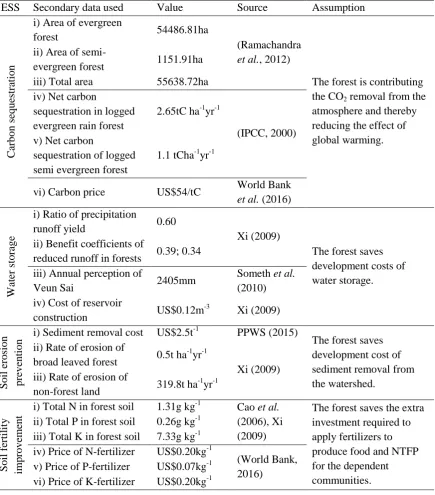
Table 3.1: Data used in measuring the values of ESS of VSSPNP ...90
Table 3.2: Major provisioning services harvested from the forest and their
values ... 94
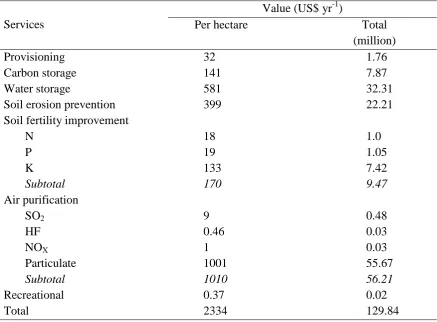
Table 3.3: Major ecosystem services and their values of the conservation
forest ... 95
Table 3.4: Contribution of VSSPNP in generating academic knowledge ...97
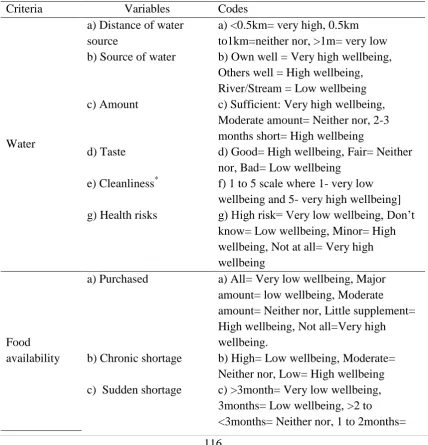
Table 4.1: coded variables of human wellbeing of the study area ...116
Table 4.2: Demography of the ecotourists who visited the CBET program in
in Veun Sai-Siem Pang National Park ...119
Table 4.3: Benefit distribution of the gibbon eco-tourism of Veun Sai-Siem
Pang National Park ...121
Table 4.4: Comparing gibbons potentials in improving perception of the
ecotourism program ...123
Table 4.5: Comparison between the basic materials of life of between before
and after community based Yellow Crested Gibbons tourism ...125
Table 4.6: Comparing health and sanitation between before and after
community based Yellow Crested Gibbons tourism ...127
Table 4.7: Comparing freedom of choice between before and after community
based Yellow Crested Gibbons tourism ...130
Table 4.8: Comparing good social relation between before and after
11
Table 4.9: Comparing security level between before and after community
based Yellow Crested Gibbons tourism ... 135
Table 4.10: Comparing composite wellbeing score of before and after
community based Yellow Crested Gibbons tourism ... 137
Table 5.1: Different types of livelihood capitals and their components ... 147
Table 5.2: Household percentage involved in collecting different PS of the
Sundarbans Mangrove Forest ... 155
Table 5.3: Correlation between the access levels to the different PS of the Sundarbans Mangrove Forest identified as important based on interviews
with nine local villages ... 155
Table 5.4: Results of an OLS regression model showing the relationship between livelihood capitals and level of access to the PS of the Sundarbans
Mangrove Forest ... 164
Table 6.1: Variables of human wellbeing of the ecosystem services in the
Sundarbans Mangrove Forest ... 181
Table 6.2: Resource access of both lower access (LA) and higher access (HA)
households in the Sundarbans Mangrove Forests ... 184
Table 6.3: Comparison between the basic materials of life of lower and higher
access groups around the Sundarbans Mangrove Forest ... 187
Table 6.4: Comparing freedom of choice between higher and lower access
groups around the Sundarbans Mangrove Forest ... 190
Table 6.5: Comparing health and sanitation between lower and higher access
groups around the Sundarbans Mangrove Forest ... 193
Table 6.6: Comparing security levels between lower and higher access groups
12
Table 6.7: Comparing good social relations between lower and higher access
groups to ecosystem services around the Sundarbans Mangrove Forest ...197
Table 6.8: Comparing wellbeing scores of lower and higher access groups
around the Sundarbans Mangrove Forest ...199
Table 7.1: The influence of livelihood capitals to gain access to the ESS in
the Sundarbans Mangrove Forest ...208
List of Figures
Figure Page
Figure 2.1: Transfer of services of natural ecosystems to the human development .34
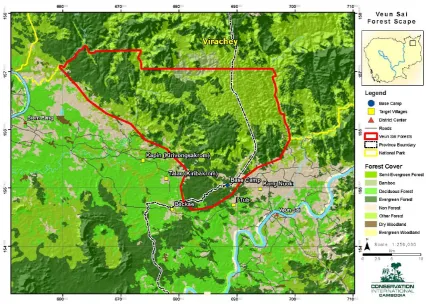
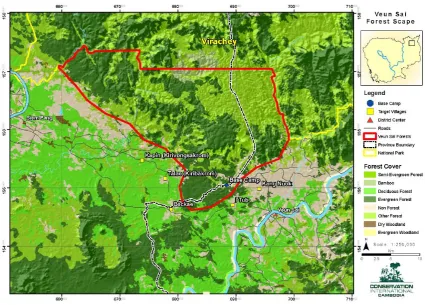
Figure 3.1: The Veun Sai-Siem Pang Conservation Forest (red boundary) ...85
Figure 3.2: a) Two indigenous villagers is drinking traditional wine. b) An indigenous man is praying to the Araks by sprinkling traditional wine ...100
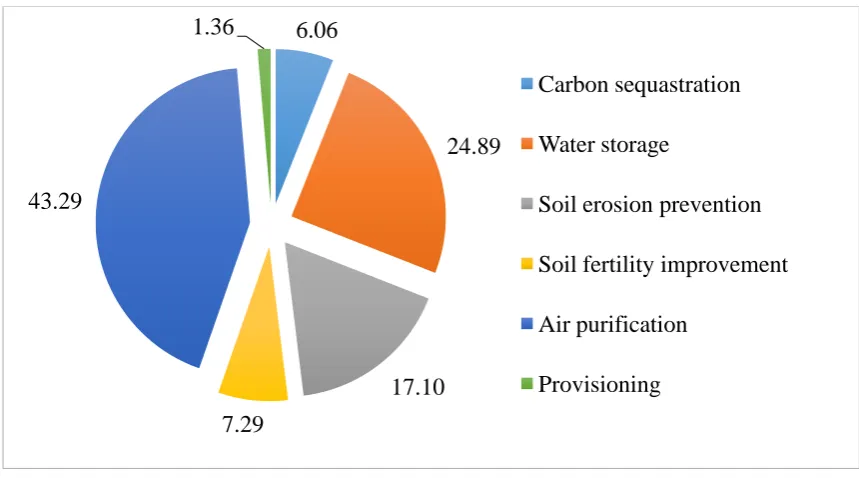
Figure 3.3: Contribution percentage of different ESS in relation to the total benefit 101
Figure 4.1: The Veun Sai-Siem Pang Conservation Forest (red boundary) ...114
Figure 4.2: Bridge funded by profits made by the CBET program in the first tourist season ...120
Figure 4.3: Benefit composition of local people and others from the CBET ...121
Figure 5.1: Map of: a) the forest zones of Bangladesh, b) the Sundarbans Mangrove Forest, c) Shyamnagar upazila of Satkhira district marked with the study villages in blue dots ...150
Figure 5.2: Access mechanisms and flow of capital among different stakeholders .157
13
Figure 5.4: A group of people going to collect honey inside the forest. They will live
in this boat about a month ... 159
Figure 5.5 (a,b): Shrimp fry collection river along the Sundarbans Mangrove Forest by approximately hundred boats under the scorching sun ... 160
Figure 5.6: Composite effects (i.e. average value of standardized effect size) of livelihood capitals on the access to PS in Sundarbans Mangrove Forest ... 167
Figure 6.1: Map of: a) the forest zones of Bangladesh, b) the Sundarbans Mangrove Forest, c) Shyamnagar upazila of Satkhira district marked with the study villages in blue dots ... 180
Figure 6.2: Common sweet water pond used by the villagers of Purba Kalinagar near the Sundarbans Mangrove Forest ... 186
List of Appendices
Appendix Page Appendix 1: First page of the published paper ... 266Appendix 2: Notification letter of the accepted manuscript ... 267
Appendix 3: Questionnaire used to interview tourists ... 268
14
Abstract
15
16
fully understand how important forests are for local people. This will help make better conservation action plans that ensure forests are maintained and that people’s
17
Chapter 1
General introduction and thesis overview
Forest ecosystems include the land areas with vegetation, fauna, and micro-organisms which are the sources of diverse goods and services which are collectively referred to as Ecosystem Services (ESS). According to the common definition of ESS, these include food, water, fuel, timber, fibre, climate regulation, flood regulation, disease regulation, water purification, spiritual and recreational services, just to name a few (MEA, 2003, Fisher et al., 2014). These services have been the part and parcel to maintain and flourish human existence on earth (Daily, 1997, Daw et al., 2011). Despite their recognised importance, ESS have been largely ignored in the development of forest and environmental policies. Although some contributions of forests (e.g. timber, bush-meat, honey, fuelwood, medicines etc.) are considered in the conventional economic contributions, the true values of forests are grossly underestimated in conservation plans. This simplified view of forest value often led to the conversion of forests to agricultural land and a lower investment in forest conservation (Daily et al., 2009, Costanza et al., 1997). Given this, it is necessary to scale up efforts to quantify as well as explicitly integrate the entire and complex picture of ESS in policy decisions and management plans in order to ensure sustainable conservation of forest ecosystems and human wellbeing.
There is a general concern showed by some researchers and activists that valuation of ESS would eventually privatize our nature and put them in the market for trading (Monbiot, 2012, Costanza, 2006). This argument has failed to differentiate between ‘price’ and ‘value’ (Dodds, 1991). Knowing the value of ecosystem services is crucial for
18
include financial incentives. The values of ecosystems are considered sub-consciously or unconsciously in deciding trade-offs between nature conservation and development; hence, the values remain hidden in actual policy decisions. Hence, precise valuation of ESS would assist us to formulate better policy for sustainable development of the humanity (Costanza et al., 2014). Monetary and non-monetary values can complement each other and assist in generating greater ESS by facilitating communications between stakeholders and enabling comprehensive evaluation that frames all the aspects of an ecosystem’s contribution within the broader ESS framework (Daniel et al., 2012, deGroot
et al., 2010). Hence, an attempt has been taken to measure the contributions of the
ecosystem by considering the services it has been generating. These values would make the ecosystem more important and thereby, would assist in convincing policy makers for more proactive actions to conserve the forest.
Communities living around forests are largely dependent on them for their subsistence as they utilise many forest products in daily life. For example, many local communities rely heavily on the collection of different provisioning services including timber, bamboo, honey, resin, rattan, bush-meat, medicinal plants etc. from the forests for income, household consumption, and coping with stresses and shocks (Babulo et al., 2008, Kalaba
et al., 2013). Increasing population size and decreasing fertility of cleared lands are likely
19
interactions of livelihood capitals. Access to the resources ensures essential benefits to local communities. One way to assess the level of access (or ability to benefit) is by the income generated from a resource (Ribot and Peluso, 2003, Ribot, 1998). Considering the natural resources as the ‘things’ the ability of people to benefit from ‘things’ depends on
the range of powers exercised through various mechanisms (Ribot and Peluso, 2003). Thus, a given type of benefits and beneficiaries embody various sets of power relations around them (Ribot and Peluso, 2003, Brosius and Russell, 2003). Equitable and sustainable wellbeing depend heavily on the links with ecosystem services, and who gains and who loses from their use. Thus, wellbeing is largely reliant on the ability of the people to use the resources. Therefore, the access analysis involves identifying and mapping the flow of the benefit, mechanisms by which different actors gain access (Ribot and Peluso, 2003). The ability to benefit can be presented as the interactions among the five types of livelihood capitals- natural, human, financial, physical and social capital (Fisher et al., 2014, Costanza et al., 2014). Livelihood capitals are undoubtedly interrelated with each other and thereby, make the human-nature relation so dynamic. Wider understanding the livelihood capital-access nexus is crucial to protect any ecosystem from over-exploitation as well as improve human wellbeing.
20
2011). The SMF is also home of many magnificent animals notably Royal Bengal Tiger
(Panthera tigris). Both ecosystems offer myriad ESS which are crucial to the local people
to survive. However, increased demand from the growing population around the forests forced many species to be endangered leading to the unsustainable management of the ecosystems.
21
1.1 Research objectives
The notion of ESS has been largely ignored in forest and environmental policies. Thus, forests have been undervalued in terms of their financial benefits and how they impact the livelihoods of millions of people. Ecosystem services cannot be fully captured or quantified simply by comparing them to commercial market products. Rather, more nuanced and complete case studies are needed that fully quantify and qualify the ESS value of forests throughout the world and how they contribute to the livelihood of people. This thesis aims to do just that through the use of four case studies from two forests in Asia.
The first two case studies were done at VSSPNP. This forest contains significant populations of rare and endangered species including Northern buff-cheeked gibbons
(Nomascus annamnesis), red-shanked douc langur (Pygathrix nemaeus), the giant ibis
(Thaumatibis gigantean) and is home to several indigenous hill tribes and other people
including Brao, Lao, Kavet, and Kinh. Due to chronic poverty, illegal logging and poaching activities are threatening the site’s ecological integrity. On May 09, 2016,
22
from the forest ecosystem is undervalued; 2) recreational service based management in sustainable conservation has the potentials in achieving sustainable conservation goals.
The next two case studies were done at Sundarbans Mangrove Forest (SMF) which is a world heritage site declared by the UNESCO. This forest is the single large mangrove forest in the world and home to many endangered wildlife species. With over 3.5 million people from the surrounding areas depending on the (SMF) for their livelihoods, the reduction of forest coverage (0.04% per year) is alarming (Iftekhar and Islam, 2004a; Abdullah et al., 2016). As local villagers rely on the forest for PS to maintain their wellbeing, understanding the access to the ESS obtained from Sundarbans and their effect on the wellbeing of dependent communities are the central issues of sustainable management of SMF. By these two case studies I addressed two hypotheses: 1) there are interactions between livelihood capitals and access of local communities to the forest ecosystem services; 2) ecosystem services are potentials in improving the human wellbeing of directly dependent communities.
Using these two important forests, this research project aimed to answer four key research questions:
1. What is the estimated value of the Ecosystem Services obtained from the forest ecosystem (at VSSPNP)?
2. What are the potentials of recreational service based management in sustainable conservation (at VSSPNP)?
3. What are the interactions between livelihood capitals and access of local communities to the forest ecosystem services and how does this impact their daily lives and wellbeing (at SMF)?
23
1.2 Thesis Overview
Chapter 1 briefly introduces the research problem and case studies being used to answer the questions of interest. It also addresses the significance of the research and how outcomes may be able to address concerns about the way we currently undervalue forests as well as the complexities of the relations between the forests and the dependent communities.
Chapter 2 describes the extensive literature for portraying the context and creating a greater understating of all the relevant issues and terminologies of the study.
Chapter 3 provides for the first time a valuation of Veun Sai-Siem Pang National Park
(VSSPNP) in Cambodia, which is a forest largely unfamiliar to the international community yet extremely significant in terms of biodiversity value. I estimated the total annual contribution of VSSPNP by measuring the values of air purification, water storage, soil-erosion reduction, soil-fertility improvement, carbon sequestration, provisioning services and recreation. By analysing the published articles and reports on VSSPNP I determined the area had generated valuable academic and non-academic knowledge on natural resources. This forest had also created a diverse network among scientists and different organizations worldwide. I also identified the forest to be of cultural importance for indigenous people.
Chapter 4 explores the potentials of a community based ecotourism program (CBET)
24
by creating alternative income generation and thereby reduce dependency to the ecosystem.
Chapter 5 aims to understand the level of access of the villagers and the influence of
livelihood capitals on the access to Provisioning Services (PS) of the Sundarbans Mangrove Forest (SMF) in Bangladesh. Data were collected by interviewing households randomly selected from nine different villages. I described the level of access to honey, mixed fish, shrimp fry, shrimp, and fuelwood. This chapter also examined the complex indications of livelihood capitals and access to the PS obtained from SMF.
Chapter 6 presents the influence of Ecosystem Services (ESS) on human wellbeing by
comparing higher and lower access groups. The data were collected by interviewing randomly selected households as well as key informants of the villages around SMF of Bangladesh. The wellbeing in this study consists basic materials of life, health and sanitation, security, freedom of choice, and social relation.
Chapters 7 and 8 put the case studies into a bigger context of ESS value in South and Southeast Asia by comparing results to identify common themes and factors which are essential for sustainable conservation as well as improving human wellbeing.
1.3 Ethics and permissions
25
Chapter 2
Background literature
2.1 Ecosystem services (ESS)
Humans rely on natural systems for both survival as well as improving their levels of wellbeing. These benefits are broadly conceptualized as ESS. Thus, ESS, which include the components of natural ecosystems (e.g. water, air, food, scenic beauty etc.) that humans directly enjoy or use to maintain the human-wellbeing (Boyd and Banzhaf, 2007, Costanza et al., 1997). The services delivered by ecosystems have been crucial to the functioning and growth of humanity as millions of rural people in developing nations rely on them every day. Interest in the concept of ESS has grown sharply since the 1980s when ecosystem services first entered into the academic lexicon and has since gradually been becoming an organizing principle in the international natural resource conservation policy arena (Ferraro et al., 2011). In 2001, Millennium Ecosystem Assessment (MEA) pooled more than 1300 leading experts to assess the effects of ecosystem change on human wellbeing, which serves as the scientific basis for increasing efforts in ecosystem conservation to enhance their contributions to human wellbeing (MEA, 2005, Ferraro et al., 2011). This approach promoted by MEA as a framework has become a pioneering tool for actions under the international Convention on Biological Diversity. In the last decade, most international conservation organizations have engaged themselves in this ecosystem approach (Ferraro et al., 2011).
26
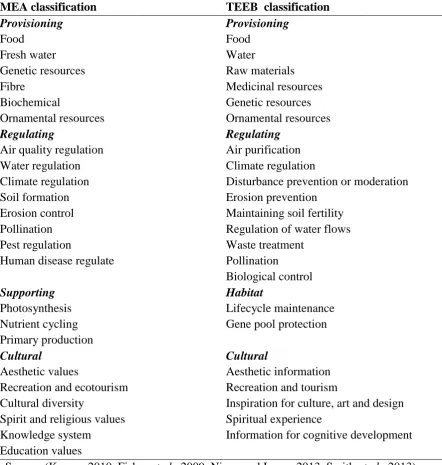
[image:26.595.87.530.212.678.2]relevant literature (Carreño et al., 2012, Daw et al., 2011). Following MEA classification, the TEEB (The economics of ecosystems and biodiversity) classification was also largely accepted in the academic community (La Notte et al., 2017, Kalaba et al., 2013) (Table 2.1).
Table 2.1: Different types of ecosystem services.
MEA classification TEEB classification
Provisioning Provisioning
Food Food
Fresh water Water
Genetic resources Raw materials
Fibre Medicinal resources
Biochemical Genetic resources Ornamental resources Ornamental resources
Regulating Regulating
Air quality regulation Air purification Water regulation Climate regulation
Climate regulation Disturbance prevention or moderation Soil formation Erosion prevention
Erosion control Maintaining soil fertility Pollination Regulation of water flows Pest regulation Waste treatment
Human disease regulate Pollination
Biological control
Supporting Habitat
Photosynthesis Lifecycle maintenance Nutrient cycling Gene pool protection Primary production
Cultural Cultural
Aesthetic values Aesthetic information Recreation and ecotourism Recreation and tourism
Cultural diversity Inspiration for culture, art and design Spirit and religious values Spiritual experience
Knowledge system Information for cognitive development Education values
27
2.1.1 Provisioning services
Provisioning ecosystem services are those products that can be harvested including timber, food, water and many other goods are consumed by the people for their material benefits. Many of these provisioning services are profitable commercial products and traded in markets. In many parts of the world, rural households are also directly dependent on the services for their subsistence (MEA, 2005, Fisher et al., 2009).
2.1.1.1 Food
Despite massive commercial food production, a large portion of human diet is still obtained from wild sources. Natural ecosystems are great sources for edible plants and animals including bush meat, fish, vegetables, fungi, and fruits. However, natural forest, grassland, and aquatic systems are often temporarily or partly used or converted to produce commercial foods, making such naturals systems even more valuable (de Groot
et al., 2002). One example where this becomes apparent is the use of wild mushrooms in
Asian communities. Mushrooms are traditionally used as a food item by many Asian communities. Wild mushrooms are higher in protein than many vegetables, rich in minerals and vitamins (Mattila et al., 2001). Arhorchin Mongol herdsmen have been using wild plants in their diets for generations. Historically, wild plants were the major source of the traditional diet composition of the indigenous Mongolian community. But with the advancement of technology and the mass production of commercial foods, the importance of wild food has been reduced, although some of these items still remain as a supplement to the dependent families (Huai and Pei, 2000).
28
meat. Noss (2002) reported that snare hunters in Dzanga-Sangha special forest reserve in South-western CAR can make more money (US$40-58 per month) than the CAR official minimum wage (US$38 per month) highlighting the importance of this ESS for the survival and wellbeing of some communities.
From a health standpoint, wild plants are known to have higher mineral contents than commercially produced plant items. Moreover, unlike farmed foods, wild foods are devoid of harmful chemical compounds. The decline of wild items in the diet due to land conversion and reduced availability may help to explain why over two billion people worldwide suffer from micronutrient malnutrition and general poor health (Flyman and Afolayan, 2006, Thompson and Amoroso, 2010).
2.1.1.2 Raw materials
Raw materials are the renewable biotic components of the ecosystems such as timber, fibres, latex, gums, oils, wax, tannins, hormones etc. that are used for industrial purposes or as energy resources (de Groot et al., 2002). Within this category comes the world timber trade, which is already regarded as a vital part of the international trade (Hillring, 2006). International timber trade is also one of the most important causes of tropical deforestation (Burgess, 1993).
29
use of biomass fuel is still relevant in the world, as it contributes 10–15% of the global energy consumption (Arnold et al., 2003).
Historically, non-timber forest products (NTFPs), wild foods (i.e. mushroom, bamboo shoot, honey, fish, bush-meat etc.), cane, bamboo, medicinal plants, aromatic plants, gums and resins, fibre and floss, fodder and forage species and many more were primarily used for local consumption, and large-scale commercial extraction was characterised as unprofitable (Schwartzman and AKO Nepstad, 1992). However, in the last two decades, there has been a growing interest in understanding the contributions of NTFPs to rural communities and the sustainable conservation of natural resources. Ecologically, extraction of NTFPs is less destructive than harvesting timber and conversion of forest land for another purpose, and thereby can promote sustainable forest management. Moreover, increased commercial demands for NTFPs can add to the perceived value of the forest ecosystem that would lead to increase the incentives to conserve the forest resource (Arnold and Pérez, 2001). Balick and Mendelsohn (1992) argued that income from sustainable harvesting of NTFPs potentially can be higher than timber harvesting, or income from the converted forest lands for agricultural productions.
2.1.1.3 Genetic resources
30
this technology is increasing disease and pest resistance, a wide range of uses have emerged in recent years. For example, crops whose wild relatives (e.g. wheat, tomato) have traditionally been a source of useful crop varieties are under continuous genetic improvement (e.g. taste, colour, flavour) by introducing new genes from wild crops. Wild crops are increasingly gaining importance worldwide; however, their potentials in developing new varieties are yet to be properly utilized (Hajjar and Hodgkin, 2007).
2.1.2 Regulating services
Regulating services are referred to the benefits supplied by an ecosystem that act as a regulator, which may include natural hazard regulation, water purification, climate regulation, waste recycling, and pest control (Brander et al., 2013). Natural ecosystems play a vital role in regulating and sustaining the earth’s biosphere which depends on a very delicate balance between many ecological processes including biomass production, flow of minerals in food chains, bio-geochemical cycles and regulation of physical systems. All these processes are regulated by an interaction of different factors such as climatic conditions with living organisms (i.e. wildlife, microbes). Humans eventually benefit from these functions, but often they are not recognized (de Groot et al., 2002).
2.1.2.1 Harmful gas regulation
Alterations of the balance in the chemical composition of our planet can have impacts on our natural as well as artificial systems. The chemical compositions of the earth’s systems are directly linked to bio-geochemical processes, which are influenced by the myriad biotic and abiotic processes of the ecosystems. For instance, by regulating CO2/O2
balance forest ecosystems protect the ozone-layer as well as regulate SOx gas levels. The
31
large number of air pollutants that consequently reduce public health hazards. Nowak et al. (2006) reported that the removal of harmful gases (O3, PM10, NO2, SO2, CO) by urban
plantation in the US is estimated at 711,000 metric tons ($3.8 billion value). Hence, establishing and managing urban forests could save huge national expenditure by assisting in meeting clean air standards (Freer-Smith et al., 1997).
Terrestrial ecosystems also greatly influence the atmospheric composition by acting as a sink through the process of dry deposition of trace gas elements including sulphur dioxide (SO2) and ozone (O3). It is also an important source of VOCs (Volatile Organic
Compounds) and some other important gases including nitrogen oxides (NOx)
(Ganzeveld et al., 2002). Nitrogen dioxide (NO2), sulphur dioxide (SO2), and carbon
monoxide are notable ambient air pollutants. Exposure to high-intensity NO2 causes
catastrophic injury including death and ambient NO2 exposure may cause respiratory tract
infections. Sulphur dioxide (SO2) also causes damage to respiratory systems e.g. changes
in airway physiology (Chen et al., 2007).
Particulate pollution in the atmosphere is also recognised as a serious health concern globally (Beckett et al., 1998). Koenig et al. (1993) reported that particulate air pollution hampers the pulmonary function of asthmatic children. Particle size in the atmosphere varies from sub-micron aerosols to barely visible grains of sand and dust. Vegetation of ecosystems can effectively trap and absorb many of these pollutant particles and thereby can act as a shield against many health issues (Beckett et al., 1998).
32
Beckett et al. (1998)) that turbulence and wind speed significantly increase particle deposition in forest ecosystems. The features of surface structure also facilitates atmospheric particulate mixing, and reduce surface boundary layer resistance which leads to higher deposition of particulates (Croxford et al., 1996).
2.1.2.2 Climate regulation
Through biogeochemical regulation, ecosystems reduce global concentrations of CO2 and
other greenhouse gases (GHGs) by storing those in soil and plant biomass (Chapin et al., 2008). Ecosystems also influence the regional climates by maintaining the balance of water, energy, and other physical cycles in the lower atmosphere (Pielke et al., 2002, Chapin et al., 2008, West et al., 2011). Tropical deforestation is thought to be responsible for approximately one-fourth of global carbon emissions, biodiversity loss, and diminishing ecosystem services. United Nations Framework Convention for Climate Change promotes the idea of avoiding deforestation, and minimizing the dangerous effects on earth (Kindermann et al., 2008). Since 2007, efforts to minimize emissions due to the deforestation and forest degradation have widely accepted worldwide in order to ensure sustainable management, and increase forest carbon stocks through financial incentives which is known as REDD+ (Reducing greenhouse gas emissions from deforestation and forest degradation), dedicated to sustainable forest management (Clements, 2010). Kindermann et al. (2008) estimated that avoiding deforestation is a cheaper option in reducing GHGs from the atmosphere. Only 10% reduction in deforestation could save $0.4 billion to $1.7 billion yr−1 by reducing 0.3–0.6 Gt (1 Gt = 1 × 10⁵ g) CO2·yr
−1
emission from 2005 to 2030 which is worth $0.4 billion to $1.7 billion·yr−1. Within the same period a 50% reduction in deforestation would save $17.2 billion to $28 billion yr−1 by reducing 1.5 to 2.7 Gt CO2 yr−1. Over the past three decades
33
biodiversity (Vitousek, 1994, Hughes, 2000). Thomas et al. (2004) predicted on the basis of three climate warming scenarios including minimal-range, mid-range and maximum-change scenarios about 18%, 24% and 35% of species are likely to be extinction, respectively.
2.1.2.3 Disaster prevention
This service refers to the ability of ecosystems to provide protection against natural hazards. For instance, wetlands, forests and coastal systems, act as natural protective barriers against floods, landslides, storms, wildfires and avalanches (de Groot et al., 2002, Brander et al., 2013, Thomalla et al., 2006). In the European Alps, there is a long history of managing mountain forests to provide protection against rock falls and avalanches (Dorren et al., 2004). In Switzerland, collaborative forest management approaches have also been adopted to reduce such natural hazards (MacKinnon et al., 2011). In Argentina, it has been shown that conserving forest ecosystems is a low-cost yet effective way to protect against floods, as well as provide biodiversity benefits (Emerton et al., 2003).
34
tsunamis, especially the 2004 Boxind Day tsunami, is widely mentioned in the many studies. Yanagisawa et al. (2009) found that Rhizophora spp. forest with a 0.2 trees m-2 density and a diameter of 15cm in a 400m wide area can reduce up to 30% of inundation depth during tsunami.
2.1.2.4 Water regulation and supply
Water regulation represents the influence ecosystems have on the hydrological cycle of the planet. This ecosystem function differs from ‘hazard prevention’ as it refers to the maintenance of the ‘normal condition’ of watersheds and ensures the maintenance of natural irrigation and drainage, as well as the regulation of the channel flow to support water transportation (de Groot et al., 2002). Forest ecosystems in watersheds regulate water flows in rivers and streams and there is a growing recognition for water regulation services of forests in local watersheds resulting substantial economic gains to human societies and development downstream. For example, the benefits of water flow regulation by the forest ecosystems upstream stretches over rivers, cities and farmlands are well recognised (see Figure 2.1 ) (Guo et al., 2000).
35
Within this context, vegetation and soil biota act as filtering agents of water and storage is influenced by the topography as well as sub-surface features of the ecosystems. Water supply benefits include improving the availability of cleaner water for households, agriculture and industrial production (de Groot et al., 2002). Due to the growing focus on global climate change, the hydrological and meteorological importance of forests has attracted much attention worldwide. Water supply function of forest ecosystems provide astrong argument for their sustainable management (Calder, 2007, Andréassian, 2004). Large volumes of fresh drinking water come from the catchments found under natural or artificial forest cover. Thus, there is a direct relationship between forest cover and quality of water of the catchments. It is also evident that the volume of water yield from a catchment largely depends on the forest structure and age. Therefore, forest ecosystem management around the watersheds provides a fundamental basis for sustainable watershed conservation (Dudley and Stolton, 2003).
It has been estimated that ecosystems provide water regulation and supply services worth US$ 2.3trillion/yr globally (Costanza et al., 1997). In China alone this is estimated to be 7.5 trillion yuan, which is equalto three times the value of wood resources (Athanas and Vorhies, 2001). Similarly, it is reported that Mount Kenya forest saved more than US$20 million in the national economy by protecting the catchment area for the Tana and the Ewaso Ngiro, two of the country’s main river systems (IUCN, 2001). Policy makers
36
2.1.2.5 Soil retention
Although not necessarily the case for all ecosystems, soil erosion is a widespread concern in many ecosystems due to the adverse effects it has on agriculture land, forest and aquatic ecosystems. For that reason, soil erosion is one of the most important environmental problems in the world and can create long-lasting damage in both local and global scales (Pimentel et al., 1995). Erosion of soil occurs when raindrops hit exposed soil and result in splash and sheet erosion, two most common forms of erosion (Bochet et al., 1998). Increasing vegetation helps prevent such soil loss as well as controlling runoff and sediment control, and hydrological process regulation (Yu et al., 2013). The litter, roots, and canopy cover slow down the soil loss process and increase the amount of interception and soil infiltration capacity and decrease raindrop impact on the soil surface (Naylor et al., 2002, Wainwright et al., 2000, Rey, 2003). Holifield Collins et al. (2015) also showed that the runoff and sediment yield were correlated with canopy cover.
37
2.1.2.6 Soil fertility
The most important nutrients for plant growth are nitrogen, phosphorus, and sulphur. In addition, nutrients such as calcium, potassium, magnesium, chlorine, and sodium are also essential for forest ecosystems to thrive. Moreover, numbers of trace elements are required to maintain vegetation growth including iron and zinc that provide physical and morphological support to the plants in order to facilitate internal recycling of nutrients. For example, soil organisms make nutrients available to the plants by decomposing organic matters (de Groot et al., 2002). The availability of phosphorus to the plants is maintained by phosphorus cycling occurred due to the competition among plant roots, microorganism, soil minerals and organic matters. It is well established that many plant species can exude compounds from their roots which can solubilize phosphorus sources during low availability (Attiwill and Adams, 1993).
2.1.2.7 Pollination
With the exception of some plants including tubers and root crops, pollination is essential for almost all plants to reproduce and many wild pollinator species deliver this service including insects, birds, and bats (Klein et al., 2007). Without these animals, many plants would disappear and cultivation of most agricultural crops would not be possible. Moreover, without a healthy population of the wild pollinators, achieving agricultural production growth would be enormously costly (de Groot et al., 2002). Lack of a healthy number of pollinators would worsen the situation food and nutrition security of world population especially of the millions of people in developing countries (Smith et al., 2015, Roy et al., 2006).
38
In several parts of the world population decline of native bees have already been a major agricultural concern (Biesmeijer et al., 2006). Wild pollinators are required to be conserved to sustain the pollination services for the sake of maintaining productive agriculture landscapes. These include habitat conservation (e.g. forest vegetation, soil substrates etc.) and support pollinators by ensuring enough nectar production (Klein et al., 2007).
2.1.2.8 Biological control
Evolutionary processes have been occurring for millions of years and have enabled biotic communities to develop many interactions and feedbacks which eventually bring stability to the earth (de Groot et al., 2002). Rising CO2 concentrations in the atmosphere is
known to reduce precipitation by 20% as it impacts the stomatal opening and closure of forest leaves. Dieback disease is another phenomenon creates a positive feedback in reducing precipitation by suppressing local evaporative water recycling through reducing forest vegetation cover and releasing CO2 in the atmosphere. It is estimated that dieback
disease can reduce precipitation by 25% in total as result of biogeophysical and the carbon cycle feedback (Betts et al., 2004).
39
(through hunting for example) or the soil quality (through tree removal, for example) would cause a vegetative change in the forest that would alter its entire structure. As a result, the whole ecosystem would suffer from lower levels of biotic activity including changes to mineralization of nutrients, and consequently lower productivity of the ecosystem. While an unproductive ecosystem can create some localized positive feedback, these changes do not outweigh the benefits of enhance plant productivity in an intact ecosystem (Bardgett and Wardle, 2003).
2.1.3 Cultural services
2.1.3.1 Aesthetic value
People enjoy the scenery of natural landscapes of wild ecosystems and people prefer living in aesthetically pleasing environments. This value has considerable economic importance in deciding the economic price of land or houses (Costanza et al., 1997). The affinity of humans to greenery is an age-old phenomenon and the desire to recreate green landscapes and living around them is universally desired. Every liveable and sustainable city offers ample green areas to both residents and visitors. In modern urban design, amenities and recreational opportunities have been well recognized as a key service offered to the citizens by the urban green spaces. it is highly desired to have green areas in the city and residents are often willing to pay directly or indirectly to maintain the services (Botkin and Beveridge, 1997, Lorenzo et al., 2000).
40
citizens (Jim and Chen, 2010). Although urban parks are generally limited in size due to scarcity of land, their contributions in creating a healthy living standard is very crucial for the urban residents (More et al., 1988).
2.1.3.2 Eco-tourism
Natural ecosystems serve as the place where people can relax and refresh by offering opportunities for hiking, walking, camping, fishing, and swimming. Eco-tourism has thus recently become a massive industry which should continue to grow in the foreseeable future (de Groot et al., 2002). Within the new array of ‘green’ products and services, ecotourism claims a strong position to generate environmental as well as economic benefits to incentivise conservation efforts. Economic incentives are imperative for nature conservation, especially in remote and poor regions where an inadequate presence of the state hinders the benefits of alternative environmental regulation tools (Wunder, 2000).
Community Based Ecotourism (CBET) has become a popular approach for conserving biodiversity, as an ecosystem with a high-biodiversity value is potentially capable in creating employment opportunities and generating income for the surrounding marginalized people (Stronza, 2007). Despite many successful examples in producing revenues for local communities and improving their attitudes towards conservation, CBET contributions to biodiversity conservation and local wellbeing remian limited due to a lack in proper revenue distribution, inadequate local participation, smaller commercial success and the competitive nature of the tourism industry (Afenyo and Amuquandoh, 2014, He et al., 2008, Ezebilo and Mattsson, 2010). Thus, many CBET projects identified as ‘successful’ has actually have little impact on existing resource-use,
41
Ecotourism has also served to connect many indigenous communities to market which otherwise would be impossible (Campbell, 1999, Johnston, 2000). Ecotourism may therefore work as a catalyst for uplifting the local economy as well as provide households a wider range of income opportunities (Levy and Lerch, 1991). Ecotourism unlike other types of tourism can make a big difference in local livelihood as the sites are generally in remote areas where there are little income opportunities and poor market facilities available for the local people (Wunder, 2000). A small increase in income tends to impact poor households greatly than rich families (Stronza, 2007).
2.1.3.3 Cultural, spiritual and inspirational
Natural ecosystems are often the main source for creating folklore and culture as humans have developed by interacting with nature. Numerous books, magazines, fairy tales, films, photographs, paintings, sculptures, music, architecture etc., would not be possible in the absence of natural ecosystems. Unfortunately, these services are often intangible and hard to quantify in reality (de Groot et al., 2002).
42
2.1.3.4 Scientific and educational information
Ecosystems offer endless opportunities for natural and environmental education through research, excursions and setting up onsite laboratories. This provides opportunities to generate valuable academic and non-academic knowledge (de Groot et al., 2002). Thus in order to sustainably management of our planet', Environmental and Natural Resource Economics has emerged as a popular area of study over the past three decades. Its brief history to date provides a context for the explorations of future research opportunities to follow (Deacon et al., 1998). In the past 20 years, a remarkable advancement has been made towards understanding consequences of biodiversity loss on the functioning of ecosystems and human society. Immediately after the Rio Earth Summit in 1992, interest in exploring how biodiversity loss might affect the dynamics of ecosystems, and the production of ecosystem goods and services has grown rapidly. Major international research initiatives are underway; hundreds of experiments are performed in ecosystems all over the world to develop and test new ecological theories (Cardinale et al., 2012).
43
2.2 ESS valuation
ESS valuation is a method by which we can assess the contributions of the ESS that are essential to maintaining human wellbeing and sustainable development (Liu and Costanza, 2010, Liu et al., 2010). In the last three decades, the valuation of ESS has become one of the fastest developing research areas in the field of environmental science disciplines (Turner et al., 2003). As listed above, humans benefit from natural ecosystems in many different ways. In the face of growing human pressures on the natural environment, these services are powerful justifications for sustainable conservation of these ecosystems (Balmford et al., 2002). However, typically only those natural goods and services that have a direct monetary value (e.g. food, fibre, wood and water) are recognized by the neoclassical economy, with the more intangible benefits such as soil protection, disaster control, water purification or habitat provision going largely ignored, possibly causing irreversible losses (Carreño et al., 2012).
Solow (1956) developed a production function under an assumption that the contributions of nature can be neutralized by using capital and labour arguing that scarcity of a particular input of a resource increases production cost and then consumers move to low-price alternatives. This low-price-demand relationship eventually allows rejuvenating that particular recourse. It is also suggested that including ‘land’ as a variable in the
44
started to address the environmental issues along with the standard economic theories (Gómez-Baggethun et al., 2010). Environmental and Resource Economics as a discipline widens the scopes of neoclassical economics by introducing the methods to asses and internalize the impacts of economic development on our environment. A neoclassical approach of economics inherently neglects the economic contributions of natural ecosystems by excluding the goods and services of nature that do not bear a direct market price. Hence, the systematic underestimation of ecological contributions in policy decisions has been continued partly because natural capitals are inadequately quantified compatible with the other economic benefits and built capitals (Costanza et al., 2011, Costanza et al., 1997).
45
2.2.1 Ecosystem valuation methods
The core idea of valuation of the benefits of nature is complex and multi-dimensional in nature. Economists generally strive for a taxonomy of different types of environmental value which represents total economic value. The key difference made in defining the value of nature is between the use values and non-use values which implies we may have little or no use for a given set of environmental resources but would experience a loss if the resources are diminished (Turner et al., 2003).
2.2.1.1 Direct market valuation methods
Price method:
This refers to the exchange values that ecosystem services have in the market, primarily applicable to the ‘goods’ (Powicki, 1998). This method is often used to
generate the value of provisioning services, as the commodities produced by the ecosystem have a market value for trade. In a functioning market consumers’ preferences and marginal production costs determine the market price, which is considered as the reliable information on the value of commodities (Pascual et al., 2010).
Cost method:
46
Replacement Cost (RC): These are the costs associated with the creation of artificial man-made systems to replace the services of a natural system. For instance, the waste treatment services provided by marshes can partly be replaced by installing expensive artificial treatment facilities (de Groot et al., 2002).
Production method:
Factor Income (FI): Many ESS enhanced revenues by acting as natural inputs to other production system. For example, water purified by nature systems increase income of fishermen by increasing the amount of fishes available due to better water quality (de Groot et al., 2002).
2.2.1.1.1 Limitations of direct market valuation
Direct market valuation predominantly relies on the market value of ESS, which are often readily available. However, applying the values in ESS valuation are sometimes criticised especially when there is no market for the services (Kumar, 2010) because if there is no market for the service or for a closely related service there is no data to base valuations on. Even if the market exists, any subsidy scheme would not represent the true value of the product. Eventually, the estimation the value would be biased and will not be reliable in important policy decision (Kumar, 2010, Baker and Ruting, 2014).
47
ecosystems and lack of knowledge on the dependence on the ecosystem in spatio-temporal scale often cause double counting (deGroot et al., 2010, Fu et al., 2010).
2.2.1.2 Revealed preference methods
Travel Cost (TC):
The travel cost method is commonly used to determine the consumer surplus associated with travelling to a recreational site including parks, beaches and heritage sites (Hailu et al., 2005). These travel costs are a reflection of the indirect value of the service. It refers to the travel expenditure during a trip as a substitute price travellers pay for sites recreation or the service (Liston-Heyes and Heyes, 1999). There are two most widely used travel cost models are single-site model (SSM) and random utility model (RUM). The RUM provides an individual with a full set of alternative sites to choose. It allows for different types of tastes in a lot of ways (Murdock, 2006).
Hedonic Pricing (HP):
Hedonic pricing is the idea that sets prices placed on the values of the attributes of a commodity indirectly affects its market price and thus can help to determine the implicit price of non-marketed attributes. For example, housing prices at beaches are at very high premium compare to the identical inland homes with less attractive surroundings (de Groot et al., 2002).
2.2.1.2.1 Limitations of revealed preference methods
48
about the relationship between the surrogate market and environmental goods (Whitehead
et al., 2008). In hedonic pricing, the estimations remain limited to the benefits that are related to housing prices. Thus, if people are unaware of the relationship between the environmental features and their effects, then the value would not reflect the actual price of the services (Mavsar et al., 2014). Travel cost methods are also subject to less reliable valuation because of the inability to identify the change in recreational demands over time due to the quality change (Whitehead et al., 2000).
2.2.1.3 Stated preference methods
Contingent valuation (CV):
This refers to a Willingness to Pay (WTP) for the availability or Willingness to Accept compensation (WTA) for the loss of respective services. Since the 1960s, it has been the most commonly used technique for non-market services valuation. Its high level of flexibility allows valuation of a wide range of non-market goods without paying the price. Non-use values, also defined as “passive use” values, refer to the values that are not subject to actual use of the resources (Carson et al., 2001).
Choice modelling (CM):
This involves asking respondents about various alternative types of a good, classified by their attributes and levels, to rank them. By including price/cost as one of the attributes, willingness to pay can be indirectly obtained from people’s
49
current or future situation without any major change, and remains constant in the preference sets. The CM method can potentially estimate the values for available alternative options and marginal changes due to the individual characteristics (Othman et al., 2004).
Contingent ranking (CR):
In a CR method respondents are requested to rank the preference of environmental goods from a discrete set of hypothetical alternatives (Caplan et al., 2002). The trade-offs between their preferences and the attributes can then be used to generate the marginal utility of an individual attribute. As price/cost is included as one of the attributes, it is possible to generate WTP estimates for particular bundles of attributes. This ranking approach is especially useful in estimating the values of environmental programs which has several different components associated with it (Garrod and Willis, 1998, Foster and Mourato, 2002).
Deliberative group valuation:
50
forms of analysis with deliberation process, both facts and values can be made more transparent (Fish et al., 2011).
2.2.1.3.1 Limitations of stated preference method
Stated preference methods often suffer from a hypothetical bias, lack of meaningful budget, and strategic and information biases (Arrow et al., 2001, Baral et al., 2008). For example, CV respondents often answer without thinking carefully about how much disposable income they have available to allocate. They also increase or reduce the value without any standard guidelines, as in many cases people do not understand the complex nature of environmental services (Arrow et al., 2001). A long-standing criticism with stated preference method is that this method is rather easy and careless activity to the respondents in valuing environmental services. Many critics argue that measuring preferences by asking survey questions only is associated to the violation of economic theory to some extent and thereby this approach is likely to produce inaccurate data (Carson et al., 2001).
2.3 Access to Ecosystem Services
51
Community forestry, an approach that recognises people’s access to forest goods and
services has gained the attention of the policy makers for forest conservation in order to improve rural wellbeing (Nath and Inoue, 2009, Thoms, 2008). It is argued that devolution of power to local communities will ensure equitable and inclusive management outcomes. However, many studies suggest that community forestry programs in many parts of the world in fact create unequal access to the forest (Adhikari, 2005, Beck and Madan, 2000, Baynes et al., 2015, Stephen R. Kellert, 2000). Irrespective of the management practices, equitable access of local people to the benefits from different forest management approaches has undoubtedly received great attention because of its crucial role in achieving sustainable ecosystem management goals (Daw et al., 2011, Ellis and Allison, 2004, King, 2011).
Access to forests is sometimes referred to as ‘property rights’ and thus it is often assumed that granting adequate rights will lead to greater wellbeing. However, Ribot and Peluso (2003) have argued for a conceptual uniqueness of “rights” and “access” by stating that access is all about available assets or means by which a person becomes able to benefit from anything; this includes different institutions and socio-economic factors that allow or obstruct the flow of benefits from any resources. On the contrary, ‘property’ deals with legal or customary claims which is only one of the factors determining resource-user’s ability to benefit from a resource (Maryudi and Krott, 2012, Ribot, 1998).
52
overexploitation and illegal activities. Forests provide a key income source for millions of poor people who have limited livelihood options (Vedeld et al., 2007). For example, in Nepal forests are the ground for both grazing and fodder collection for the livestock. These livestock produce manure that is used to fertilize fields and are the primary source of milk and meat to feed people. More than 80% of the total household energy consumption in the country is derived from fuelwood (Sharma, 1996).
2.3.1 Different ways of access
2.3.1.1 Access through law
This is broken down into legal access and illegal access. Legal access is obtained through state laws and policies. This thus involves a community, state or government that enforces the claim via titles, permits or licenses (Tawney, 1978). Customary or traditional access can also provide legal access and happens by social acceptance or traditional practice (Weber, 1978). Property rights holders can assert sanctions to control access. But those do not have such rights must gain access by paying a fee or exchanging any service to rights holders. Thus, the property rights per se, shape the relations across the society with respect to benefit flows (Ribot and Peluso, 2003).