DESIGN, DEVELOPMENT AND CHARACTERIZATION OF AN
ANTI-NEOPLASTIC INJECTION BY USING
LYOPHILIZATION TECHNIQUE
Dissertation submitted to
THE TAMILNADU Dr. M.G.R. MEDICAL UNIVERSITY, CHENNAI-32
In partial fulfillment for the award of the degree of
MASTER OF PHARMACY IN
PHARMACEUTICS Submitted by
Register Number: 261210005 UNDER THE GUIDANCE
Dr. B. Rama, M.Pharm., Ph.D. Mr. UdayChand, Mpharm.
(Institutional Guide) (Industrial Guide)
DEPARTMENT OF PHARMACEUTICS, C.L.BAID METHA COLLEGE OF PHARMACY,
(An ISO 9001-2000 certified institute), THORAIPAKKAM, CHENNAI-600097.
CERTIFICATE
This is to certify that the dissertation work entitled “DESIGN,
DEVELOPMENT AND CHARACTERIZATION OF AN
ANTI-NEOPLASTIC INJECTION BY USING LYOPHILIZATION RECHNIQUE”
submitted to THE TAMILNADU DR. M.G.R. MEDICAL UNIVERSITY,
CHENNAI-32 for the award of the degree Master of pharmacy in Pharmaceutics
is a bonafide research work done by Register No: 261210005 under my Guidance
in the Department of Pharmaceutics, C.L.Baid Metha College of Pharmacy,
Chennai-600097 during the academic year 2013-2014.
Place: Chennai-97 Dr.B. Rama, M.Pharm, Ph.D.
Date: Assistant professor,
Department of pharmaceutics,
C.L.Baid Metha College of pharmacy,
Prof. Dr. Grace Rathnam, M.pharm., PhD
Principal
CERTIFICATE
This is to certify that the dissertation work entitled “DESIGN,
DEVELOPMENT AND CHARACTERIZATION OF AN
ANTI-NEOPLASTIC INJECTION BY USING LYOPHILIZATION TECHNIQUE”
submitted to THE TAMILNADU DR. M.G.R. MEDICAL UNIVERSITY,
CHENNAI-32 for the award of the degree Master of Pharmacy in Pharmaceutics
is a bonafide research work done by Register No:261210005 under the guidance
of Dr.B. Rama, M.Pharm., Ph.D. Assistant professor, Department of
Pharmaceutics, C. L. Baid Metha college of Pharmacy, Chennai-600 097 during the
academic year 2013-2014.
Place: Chennai -97 Prof. Dr. GRACE RATHNAM, M. Pharm., Ph.D.
Date: Principal & HOD,
Department of Pharmaceutics,
C.L.Baid Metha college of Pharmacy
DECLARATION
I hereby declare that the thesis entitled “DESIGN, DEVELOPMENT
AND CHARACTERIZATION OF AN ANTI-NEOPLASTIC INJECTION BY
USING LYOPHILIZATION TECHNIQUE ” has been originally carried out by
me under the supervision and guidance of Mr. UDAY CHAND, Mpharm.,
(Industrial Guide) & Dr.Rama,M.Pharm.,Ph.D. (Institutional Guide)
Asst.Professor, Department of Pharmaceutics, C.L.Baid Metha college of Pharmacy,
Chennai-97, during the academic year 2013-2014.
Place: Chennai-97 Register No: 261210005,
Date: Department of Pharmaceutics,
C.L.Baid Metha college of Pharmacy,
ACKNOWLEDGEMENTS
It is a great time for me to acknowledge those without whom, this work
would not have been fruitful.
It gives me an immense pleasure in expressing my deep sense of gratitude
to my respected guide Dr.B.Rama (Asst. Professor, Pharmaceutics),
C.L Baid Metha Collage of Pharmacy for her remarkable guidance, constant
encouragement and every scientific and personnel concern throughout the course of
investigation and successful completion of this work.
I am greatly indebted to my Industrial Guide, Mr.R.Amarnath, Research
head, R&D, NatcoPharma, A.P for giving me an opportunity to join in his team
and thus made me work in this fascinating field of research. I thank him for his
professional and dedicated guidance of my work, constant encouragement, immense
support, and intellectual supervision, scientific and also personal advices which will
be helpful in building up my academic career.
It is a great pleasure and honor for me to owe gratitude to
Dr. Grace Ratnam M. Pharm, Ph.D, Principal, C.L Baid Metha College of
Pharmacy, for all her support and for giving a valuable guidance and scientific
support to carry out this work.
I am fortunate enough to do my project work in Natco Pharma Ltd and I
take pride in acknowledging the solicitous help and concern of
Mr.T.V.S.Chowdary FR&D Manager, Natco Pharma Ltd for providing me an
opportunity to carry out my project work in this prestigious and renowned
organization.
The untiring and amicable staff of the organization too supported me in my
research work. I want to thank all of them especially Mr.Udaychand,
Mr.Chaitanya, of Natco Pharma Ltd for their help, support, interest and valuable
I feel proud to express my hearty gratitude to all my teaching and
Non-teaching staff members of C.L Baid Metha College of pharmacy completing this
work.
I feel proud to express my hearty gratitude to all my classmates. Also I
want to thank all of those, whom I may not be able to name individually, for helping
me directly or indirectly.
Last but not the least I wish to express my deepest sense to respect and love
to my parents for their constant support and encouragement throughout.
CONTENTS
CHAPTER NO. TITELE PAGE NO.
1 INTRODUCTION 1-19
2 LITERATURE REVIEW 20-25
3 AIM AND OBJECTIVE 26
4 PLAN OF WORK 27
5 DRUG AND EXCIPIENT PROFILE 28-37
6 MATERIALS AND METHODS 38-64
7 RESULTS 65-91
8 DISCUSSION 92-102
9 SUMMARY AND CONCLUSION 102-104
LIST OF TABLES
TABLE NO. TITLE PAGE NO.
1 Route of administration 2
2 List of some of the marketed lyophilized
formulations in USA market
19
3 Drug profile 28
4 List of raw materials and their source 38
5 List of packaging materials and their source 38
6 List of equipments 39
7 List of chemicals and reagents used for HPLC 40
8 Solution stability studies TBA at 250C & 2 -
80C
42
9 Manufacturing formula of Bendamustine
hydrochloride for injection
42
10 Formulations of Bendamustine hydrochloride 43
11 Formula for single vial 43
12 Different Lyophilization conditions with
varying temperatures and duration of cycle
48
13 Assay - Chromatographic conditions 51
14 Related substances - Chromatographic
conditions
53
15 Gradient programming 54
16 RRT and RRF of different components 55
17 Acceptance criteria for Diluent compatibility
studies
57
18 Innovator details 59
TABLE NO. TITLE PAGE NO.
20 Shelf life specifications for compliance during
Stability
61
21 Various samples for photo stability study 62
22 Acceptance criteria forphoto stability study 64
23 Standard graph data of Bendamustine
Hydrochloride
65
24 saturation solubility – in water and alcohol 66
25 Results of solution stability studies of 10%,
20% TBA at 250C
67
26 Results of solution stability studies of 30%,
40% TBA at 250C
67
27 Results of solution stability studies of 10%,
20% TBA at 2-80C
68
28 Results of solution stability studies of
30%,40% TBA at 2-80C
68
29 Results of PVDF Filter compatibility study 69
30 Results of Pharma Pure tube compatibility
study
70
31 Results of SS vessel compatibility study 71
32 Lyophilization of F1-Trail 1 Formulation –
Freezing conditions
72
33 Lyophilization of F1-Trail 1 Formulation –
Primary drying conditions
72
34 Lyophilization of F1-Trail 1 Formulation –
Secondary drying conditions
72
35 Lyophilization of F1-Trail 2 Formulation –
Freezing conditions
73
36 Lyophilization of F1-Trail 2 Formulation –
Primary drying conditions
TABLE NO. TITLE PAGE NO.
37 Lyophilization of F1-Trail 2 Formulation –
Secondary drying conditions
73
38 Lyophilization of F1-Trail 3 Formulation –
Freezing conditions
74
39 Lyophilization of F1-Trail 3 Formulation –
Primary drying conditions
74
40 Lyophilization of F1-Trail 3 Formulation –
Secondary drying conditions
74
41 Lyophilization of F2-Trail 1 Formulation –
Freezing conditions
75
42 Lyophilization of F2-Trail 1 Formulation –
Primary drying conditions
75
43 Lyophilization of F2-Trail 1 Formulation –
Secondary drying conditions
75
44 Lyophilization of F2-Trail 2 Formulation –
Freezing conditions
76
45 Lyophilization of F2-Trail 2 Formulation –
Primary drying conditions
76
46 Lyophilization of F2-Trail 2 Formulation –
Secondary drying conditions
76
47 Lyophilization of F2-Trail 3 Formulation –
Freezing conditions
77
48 Lyophilization of F2-Trail 3 Formulation –
Primary drying conditions
77
49 Lyophilization of F2-Trail 3 Formulation –
Secondary drying conditions
77
50 Lyophilization of F3-Trail 1 Formulation –
Freezing conditions
78
TABLE NO. TITLE PAGE NO.
Primary drying conditions 78
52 Lyophilization of F3-Trail 1 Formulation –
Secondary drying conditions
78
53 Lyophilization of F3-Trail 2 Formulation –
Freezing conditions
79
54 Lyophilization of F3-Trail 2 Formulation –
Primary drying conditions
79
55 Lyophilization of F3-Trail 2 Formulation –
Secondary drying conditions
79
56 Lyophilization of F4-Trail 1 Formulation –
Freezing conditions
81
57 Lyophilization of F4-Trail 1 Formulation –
Primary drying conditions
81
58 Lyophilization of F4-Trail 1 Formulation –
Secondary drying conditions
81
59 Lyophilization of F4-Trail 2 Formulation –
Freezing conditions
82
60 Lyophilization of F4-Trail 2 Formulation –
Primary drying conditions
82
61 Lyophilization of F4-Trail 2 Formulation –
Secondary drying conditions
82
62 Lyophilization of F4-Trail 3 Formulation –
Freezing conditions
83
63 Lyophilization of F4-Trail 3 Formulation –
Primary drying conditions
83
64 Lyophilization of F4-Trail 3 Formulation –
Secondary drying conditions
83
65 Evaluation of all formulations 84
TABLE NO. TITLE PAGE NO.
optimized formulation F3-Trail 3
67 Physical parameters of Innovator product 86
68 Results of comparative studies of optimized
formulation with innovator
88
69 Results of stability data of 1st and 2nd months
under accelerated storage conditions
89
70 Results of Stability data of 3rd month under
accelerated and long term storage conditions
90
LIST OF FIGURES
FIGURE NO. TITLE PAGE NO.
1 Route of administration 2
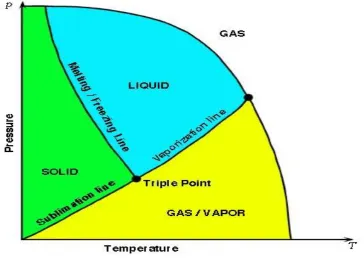
2 Phase diagram showing the triple point of water 4
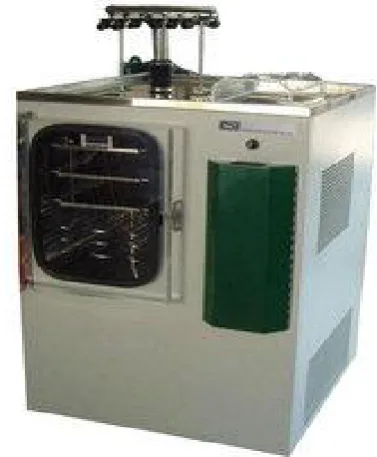
3 Laboratory scale Freeze-Dryer used for the
present study
5
4 Vials typically used for Lyophilization showing
slotted stopper in the open and closed positions
5
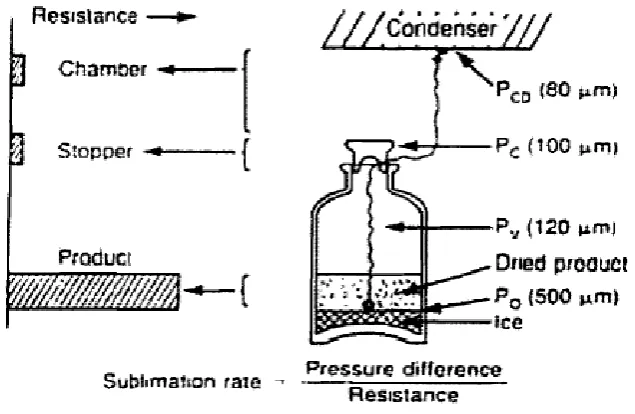
5 Resistances and their relative contributions in
Mass Transfer
10
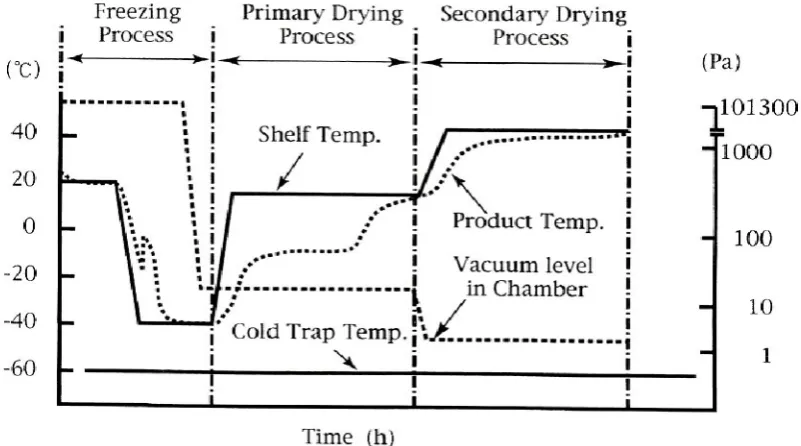
6 Plot of process variables such as shelf
temperature, product temperature and vacuum
level in chamber during freeze-drying cycle
14
7 Marketed brand of bendamustine hydrochloride 58
8 Standard graph of Bendamustine Hydrochloride 65
9 Lyophilization cycle of F3-tail 3 formulation 80
10 Figures of cake appearance - Shrinkage cake 85
11 Figures of cake appearance - Good cake 85
12 Figures of cake appearance – optimized
formulation F3-Trail 3
85
13 Chromatogram of standard 86
14 Chromatogram of Optimized formulation
F3-Trail3
ABBREVIATIONS
FDA - Food and Drug Administration
C - Degree centigrade
KPa - Kilo pascals
Nm-2 - Newton per meter square
Hg - Mercury
Tg - Glass transition temperature
Teu - Eutectic temperature
Tc - Collapse temperature
Tp - Product temperature
Ts - Shelf temperature
Po - Vapour pressure of ice
Pc - Chamber pressure
KF - Karl fisher
TGA - Thermal gravimetric analysis
IPEC - International pharmaceutical Excipients council
USP - United states pharmacopeia
WFI - Water for injection
API - Active pharmaceutical ingredient
EMEA - European medicines agency
WHO - World health organisation
IIG - Inactive ingredient guide
PIL - Patient information Leaflet
BP - British pharmacopeia
PDR - Physician’s Desk Reference
I.V - Intravenous
PAT - Process analytical technology
GMP - Good manufacturing practice
HPLC - High pressure liquid chromatography
SS - Stain less steel
PVDF - Poly vinylidenedifluoride
GR - Guaranteed Reagent
RH - Relative humidity
BM - Bendamustine hydrochloride
TAB - Tertiary butyl alcohol
CCs - Clear colourless solution
ND - Not detected
BEND-IV - Bendamustine IV
IPA - Isopropyl acetate
NOMENCLATURE
Mg - Milligram
Mm - Milli meter
µm - Micro meter
Min - Minute
w/v - Weight by volume
mOsm - Milliosmoles
% - Percentage
w/w - Weight by weight
q.s - Quantity sufficient
1
1. INTRODUCTION
1.1 INTRODUCTION OF PARENTERALS1
The parenteral administration route is the most effective and common form
of delivery for active drug substance with poor bio availability and the drugs with a
narrow therapeutic index. These products are intended for administration by
injection.
1.1.1 Types of Parenteral
Parenterals are broadly classified into three types
a) Small volume parenterals(SVP)
All the sterile products packaged in vials, ampoules, cartridges, syringes
bottles or other container that is 100 ml or less fall under the class of SVP
b) Large volume parenterals(LVP)
The USP provides the definition for large volume parenteral (LVP) “ where
used in the pharmacopeia, the designation large volume solutions applies to an
injection that is intended for intravenous use and is packaged in containers holding
100 ml or more”. LVP’S means a terminally sterilized aqueous drug product
packaged in a single dose container with a capacity of 100 ml or more and intended
to be administered or used in humans. It includes IV infusions, irrigation solutions,
2
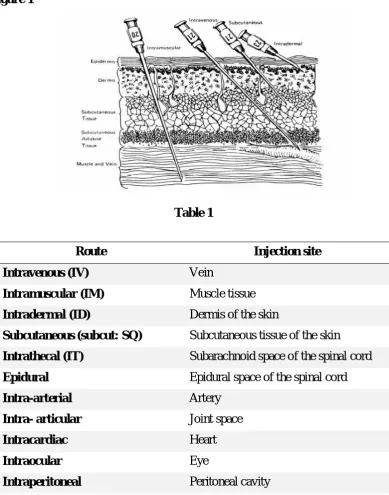
[image:18.595.111.501.137.633.2]1.1.2 Route of Administration1 Figure 1
Table 1
Route Injection site
Intravenous (IV) Vein
Intramuscular (IM) Muscle tissue
Intradermal (ID) Dermis of the skin
Subcutaneous (subcut: SQ) Subcutaneous tissue of the skin
Intrathecal (IT) Subarachnoid space of the spinal cord
Epidural Epidural space of the spinal cord
Intra-arterial Artery
Intra- articular Joint space
Intracardiac Heart
Intraocular Eye
Intraperitoneal Peritoneal cavity
1.1.3 Advantages
Provides drug and nutritional options for patients unable to tolerance
3 Circumvents absorption limitations of gastrointestinal tract.
Quick onset of action.
Localized delivery.
Prolonged duration of effect.
1.1.4 Disadvantages
Difficulty/ impossibility of drug removal /reversal.
Risk of infection.
Risk of emboli.
Risk of hypersensitivity reactions.
Higher costs.
1.2 LYOPHILIZATION2
Nowadays, in the pharmaceutical field, there is a great number of
substances which need to be stored in a dry state due to their instability in the
presence of water, for example, the antibiotics, vaccines, peptides and proteins.
Lyophilization or Freeze-Drying, fills an important need in pharmaceutical
manufacturing technology by allowing drying of heat-sensitive drugs and biological
at low temperature under conditions that allow removal of water by sublimation, or a
change of phase from solid to vapour without passing through the liquid phase.
While the most common application of pharmaceutical freeze-drying is in the
production of injectable dosage forms, the process is also used in the production of
diagnostics and, occasionally, for oral solid dosage forms where a very fast
dissolution rate is desired.1 About 50% of the currently marketed biopharmaceuticals are lyophilized, representing the most common formulation strategy.2
1.3 DEFINITION OF LYOPHILIZATION3-9
In simple terms, Lyophilization or Freeze-Drying is a unit operation in
4 a vacuum, allowing the ice to change directly from solid phase to vapor without
passing through a liquid phase (sublimation).In this process, the moisture content of
the product is reduced to such a low level that does not support biological growth or
chemical reactions.
1.4 PRINCIPLE OF LYOPHILIZATION
The main principle involved in Lyophilization is a phenomenon called
Sublimation, where water passes directly from solid state (ice) to the vapor state
without passing through the liquid state.
The phase diagram of water show that two phases coexist along a line under
the given conditions of temperature and pressure, while at the triple point (0.0075 °C
at 0.61kPa or 610 Nm-2; 0.01 °C at 0.00603 atm; 0.0099°C and 4.579 mm of Hg), all
[image:20.595.134.499.423.683.2]three phases coexist.
5 Lyophilization is performed at temperature and pressure conditions below
the triple point, to enable sublimation of ice. The entire process is performed at low
temperature and pressure, hence is suited for drying of thermolabile compounds.
[image:21.595.205.394.198.427.2]LYO lab lyophilizer is used for present study.
Figure 3 LYO lab Lyophilizer used for the present study
Figure 4 Vials typically used for Lyophilization showing slotted stopperIn the
[image:21.595.197.401.487.707.2]6
1.5 STAGES OF FREEZE DRYING10
A typical freeze-drying process consists of three separate, unique and
inter-dependent processes namely
Freezing (solidification)
Primary drying (sublimation)
Secondary drying (desorption)
1.5.1 Freezing
Freezing is generally the first step in a freeze-drying process, in which
nearly 90% of the water is converted to ice crystals while all solutes in the
formulation are solidified into a matrix either in amorphous or crystalline state, or in
a mixture. The conversion from water to ice crystals starts with ice nucleation,
which is followed by ice crystal growth. For a typical pharmaceutical formulation,
the ice nucleation temperature is often in the range of 10–15ºC or more below the
equilibrium freezing point; a phenomenon referred to as Super-Cooling.
Products freeze in two ways, depending on the makeup of the product. The
majority of products that are subjected to freeze drying consist primarily of water,
the solvent, and the materials dissolved or suspended in the water, the solute.It is
very important in freeze drying to refreeze the product to below the eutectic
temperature before beginning the freeze drying process. Small pockets of unfrozen
material remaining in the product expand and compromise the structural stability of
the freeze dried product.
The second type of frozen product is a suspension that undergoes glass
formationduring the freezing process. Instead of forming eutectics, the entire
suspension becomes increasingly viscous as the temperature is lowered. Finally the
product freezes at the glass transition pointforming a vitreous solid. This type of
7
a) Process Design and Control 6
During freezing, the chamber pressure is slightly lower than the
atmospheric pressure due to low temperature, or/and pre reduction of chamber
pressure to enhance the sealing of the chamber door. The stage of the process is
generally controlled by the shelf-cooling/heating rate, shelf-holding temperatures,
and holding times.
b) Pre freezing hold
In order to facilitate relatively uniform ice nucleation and ice crystal
growth, the product vials on the shelf are held at a temperature lower than room
temperature before cooling down. This temperature is generally the loading
temperature, for example, 5ºC. For formulations with high super-cooling
temperature, holding at an even lower temperature (a few degrees higher than the ice
nucleation temperate) is more appropriate.
c) Cooling Down to the Final Freezing Temperature
Cooling the product to a terminal (final) freezing temperature facilitates the
ice nucleation/growth and solute solidification. If a super-cooling hold is applied, a
relatively faster cooling is generally helpful for intra-vial uniformity of ice
formation.
d) Annealing11
Annealing is simply holding the product at a temperature above the final
freezing temperature for a defined period to crystallize the potentially crystalline
components (usually, crystalline bulking agent) in the formulation during the
freezing stage. An annealing step is frequently necessary to allow efficient
crystallization of the crystalline bulking agent, such as mannitol or glycine. Failure
to crystallize the bulking agent if bulking agent crystallizes during primary drying,
vial breakage may result, which is common if a high fill depth of concentrated
8 mannitolduring freezing using slow freezing or by avoiding a temperature lower
than about 25°C until the mannitol has completely crystallized. Completion of
crystallization may be facilitated by annealing. After annealing, the product
temperature is generally lowered to a final temperature and held long enough to
complete solidification.
1.5.2 Primary Drying 10
After freezing, the productis ‘‘dried’’ at relatively low temperature and low
pressure in which ice can be removed from the frozen product via sublimation,
resulting in a dry, structurally intact product.
This requires very carefully control of the two parameters,
1) Temperature and
2) Pressure involved in freeze-drying system.
It is extremely important that the temperature at which a product is
freeze-dried is balanced between the temperature that maintains the frozen integrity of the
product and the temperature that maximizes the vapor pressure of the product. This
balance is key to optimum drying.
Energy supplied to sublime a gram of water from the frozen to the gaseous
state as is (2700 joules per gram of ice).
1.5.2.1 Process design principle
a) Heat Transfer
Heat transfer in lyophilization can occur by three processes: conduction,
convection and radiation. Of these, Conduction is the main contributor to the heat
9 Conduction can be modeled by Fourier's law:
Where the heat flow is dQ/dt, A is the area of the surface, is the thermal
conductivity of the material and dTis the temperature gradient across the thickness
of the material dz.
Radiation heat transfer must also be taken into account in lyophilization.
This is the transfer of heat by electromagnetic radiation. A real body emits and
absorbs radiation according to the equation:
Where e = emissivity, = Stefan-Boltzmann constant and T = Absolute
Temperature.
b) Mass Transfer 11
The rate at which the ice sublimes will be affected by the resistances that it
encounters. The heat and mass transfer causes the top of the product to dry first with
drying proceeding downward to the bottom of the vial. Therefore, as drying
proceeds, there exists a three component or layer system in each vial – the upper dry
product, the middle sublimation front, and the lower frozen liquid product. As the
dried layer increases, it becomes a great barrier
10
Figure 5 Resistances and their relative contributions in Mass Transfer
1.5.2.2 Process design and control12
a) Target Product Temperature and Structural Collapse
Collapse temperature for an amorphous system refers to the
temperature, above which the dried region adjacent to ice loses its
structure,that is; collapse temperature (Tc) can be higher than the glass
transition temperature (Tg).
A safety margin should be kept during primary drying, that is, the
product temperature (Tp) should be 2–5ºC below Tc or Te. This safety
margin accounts for (i) the product temperature increases, in general,
between 1 and 3ºC, due to the increase of resistance from the
dried-layer as drying progresses; (ii) the heterogeneity of product temperature
across the shelf and from shelf to shelf.
b) Chamber Pressure
A most efficient primary drying condition for the product in a given
vial should be a combination of a ‘‘very high’’ shelf temperature with a
11 The chamber pressure is not generally lower than 50 mTorr.
As a general rule, a chamber pressure, approximately between 10% and
50% of ice vapor pressure at the target product temperature, which
generally falls into a range between 50 and 200 mTorr is chosen for
primary drying. This moderate chamber pressure (100–150 mTorr)
gives optimal homogeneity of heat transfer in a set of vials.25
Therefore; the optimum chamber pressure is a compromise between
high sublimation rate and homogenous heat transfer.
The optimal chamber pressure at known target product temperature (Tp)
can be given by the equation
= . × ( . × )
Where Pc is chamber pressure (Torr) and Tp is product temperature (°C).
c) Shelf Temperature
Shelf temperature can be determined experimentally by manometric
temperature measurement (MTM),12
The shelf temperature is higher than the product temperature and
sometimes can be much higher, up to 40ºC.
1.5.2.3 Process monitoring and control 6
a) Determination of End Point of Primary Drying
Once the shelf temperature and chamber pressure for primary drying are
determined, the primary drying process, essentially including two steps
b) Ramp from Freezing to Primary Drying:
After evacuation to reduce the chamber pressure to the target level, the
12 high, normally less than 1ºC/min. During this initial period of sublimation, ice
sublimation rate can be quite high, since the resistance in the product is nearly zero.
c) Duration of Primary Drying:
The duration of primary drying is determined by the ice sublimation rate,
the characteristics of formulation solution and can be roughly estimated
Theoretically by calculations based upon the mass and heat transfer
equations.
In practice, the duration is determined by monitoring the drying
progression.
1.5.3 Secondary Drying
When all ice crystals are removed from the product by sublimation, the
dried product contains a fairly high amount of ‘‘unfrozen water’’ (5–20% in the
solid content). In the secondary drying stage, the unfrozen water is further reduced
to a desired, much lower level at a higher temperature.
The glass transition temperature (Tg) of the dried formulation is a function
of the moisture content, which is governed by the Gorden-Taylor equation.
Therefore, the Tg changes sharply with the decrease of moisture during the ramp
from primary drying to secondary drying, and during secondary drying.
1.5.3.1 Process design and control13
a) Heating Rate and Chamber Pressure
Because of the fairly high residual moisture content in the amorphous
product early in secondary drying and, thus, low glass transition
temperature, the potential for collapse is greatest early in secondary
drying. So a ramp rate of 0.1 or 0.15°C/min for amorphous products is
13 Crystalline products do not have any potential for collapse during
secondary drying, and a higher ramp rate is suggested for such products
(0.3 or 0.4°C/min).
The chamber pressure in primary drying is also appropriate for
secondary drying, it is not necessary to change chamber pressure for
secondary drying.
b) The Shelf Temperature and Secondary Drying Time14
The products should be kept at “high” temperature for a period
sufficient to allow the desired water desorption. Usually, it is better to
run a high shelf temperature for a short time than a low temperature
for a long period.
Amorphous products are more difficult to dry than crystalline
products. Thus, higher temperatures and longer times are needed to
remove the absorbed water.
The secondary drying conditions also depend on the solute
concentration. At higher solute concentration (i.e., >10% solids in
solution), the dry product has smaller specific area, and it is more
difficult to remove the absorbed water; thus longer times and/or higher
temperatures are needed to finish secondary drying.
Normally, drying times of 4–10 h at the range 40 to 50°C.
The optimum secondary drying time can be determined by real-time
residual moisture measurement using Karl Fischer titration (KF),
14 The product is usually freeze dried to very low residual moisture content
(about 0.5%). Usually, a combination of long drying times (6 h) and low shelf
temperature (about 0°C) are best, but the exact conditions must be determined by
[image:30.595.105.506.203.426.2]trial and error.
Figure 6 Plot of process variables such as shelf temperature, product
temperature and vacuum level in chamber during freeze-drying
cycle.
1.6 EXCIPIENTS USED IN LYOPHILIZATION16
The International Pharmaceutical Excipients Council (IPEC) has defined
excipients as: “…substances other than thepharmacologically active drug or
prodrug which areincluded in the manufacturing process or are containedin a
15
The excipients commonly used in the lyophilization have been
classified as:
a) Bulking agent17-19
Bulking agents, as the name implies, form the bulk of the lyophilized
product and provide an adequate structure to the cake. These are
generally used for low dose (high potency) drugs that do not have the
necessary bulk to support their own structure. These are particularly
more important when the total solid content is less than 2%.In such
cases, a bulking agent is added to the formulation matrix.
Mannitol and glycine, are the most commonly used bulking agents,
16
b) Co-Solvents20
Water is the most commonly used solvent for lyophilization. However,
organic solvents are sometimes used to increase the primary drying rate
by increasing the sublimation rates, improve product stability, decrease
reconstitution time by improving drug wettability or solubility, and also
enhance the sterility assurance of the sample solution.
The most commonly used solvent is a tertiary-butanol/water
combination.
Liophilization can be applied for
Non – biological where the process is used to dehydrate or concentrate
reactive or heat labile chemicals
Non-living bioproducts
Enzymes
Hormones
Antibodies
Inactivated vaccines
Industrially useful bio products
1.7 DESIRED CHARACTERISTICS OF FREEZE-DRIED
PRODUCTS6, 11
The desired characteristics of a freeze-dried pharmaceutical dosage form
include:
A freeze dried product is expected to have nearly full recovery of the
17 Cake should be intact occupying the same shape and size as the
original frozen mass
Have sufficient mechanical strength to prevent cracking, powdering or
collapse
Uniform colour and pharmaceutically elegant appearance
The product should be sufficiently dry to maintain stability and
sufficiently porous which leads to rapid and complete dissolution
The product should be free from microorganisms, pyrogens and
particulates
The desired characteristics can be achieved by proper formulation of the
product and by employing optimum freeze-drying cycles.
1.8 ADVANTAGES OF LYOPHILIZATION 7, 11
The principle advantages of lyophilization includes
Minimum damage and loss of activity in delicate heat-labile materials
Removal of water without excessive heating of the product
Enhanced product stability in a dry state
Rapid and easy dissolution of reconstituted product due to the porous
nature of the product
Good for oxygen and/or air-sensitive drugs
Sterility of product can be achieved and maintained
Constituents of the dried material remain homogenously dispersed
Reduced weight of the product which makes the product easier to
18
1.9 DISADVANTAGES OF LYOPHILIZATION 7, 20
Increased handling and processing time
Need for sterile diluent upon reconstitution
Cost and complexity of equipment
1.10 FINISHED PRODUCT INSPECTION - MELTBACK
The USP points out that it is good pharmaceutical practice to perform
100% inspection of parenteral products. This includes sterile lyophilized powders.
1) Melt back is a form of cake collapse and is caused by the change from
the solid to liquid state. That is, there is incomplete sublimation
(change from the solid to vapor state) in the vial. Associated with this
problem is a change in the physical form of the drug substance and/or a
pocket of moisture. These may result in greater instability and
increased product degradation.
2) Another problem may be poor solubility. Increased time for
reconstitution at the user stage may result in partial loss of potency if
the drug is not completely dissolved, since it is common to use in-line
filters during administration to the patient.
Manufacturers should be aware of the stability of lyophilized products
which exhibit partial or complete meltback. Literature shows that for some products,
such as the cephalosporins, that the crystalline form is more stable than the
amorphous form of lyophilized product. The amorphous form may exist in the
19
Table 2Marketed lyophilized formulations10
DRUG CATEGORY MARKETED
NAME
MANUFACTUR ER
Amifostine Cytoprotective
agent
Ethyol® MedImmune
Oncology
Amphotericin B Antifungal Ambisome® Astellas
Acyclovir sodium Antiviral Zovirax® GlaxoWellcome
Azithromycin Antibiotic Zithromax® Pfizer
Cefazolin sodium Antibiotic Ancef ® GlaxoSmith-Kline
Chlorothiazide sodium
Diuretic and hypertensive
Diuril® Merck
Cisplatin Antineoplastic Platinol® Bristol Myers
Oncology
Dantrolene sodium Muscle relaxant Dantrium® Procter & Gamble
DaunorubicinHCl Antibiotic Cerubidine® Bedford
Diltiazem Antianginal Cardizem® Hoechst Marion
Roussel
Doxorubicin HCl Antineoplastic Rubex® Bristol Myers
Squibb
Ganciclovir sodium Treatment of CMV
retinitis in
immunocompromiz ed patient
Cytovene® Roche
HydromorphoneHCl Opioid analgesic Dilaudid-HP® Abbott
Lansoprazole Proton pump
inhibitor
Prevacid® TAP
Metronidazole Antibacterial Flagyl® Pfizer
Mitomycin Antineoplastic Mutramycin® Bristol Myers
Squibb
Pentostatin Antineoplastic Nipent® Supergen
Phentolaminemesyla te
Antihypertensive Regitine® Novartis
Pralidoxime chloride Antidote for overdose due to anticholinesterase
Protopam® Baxter
Healthcare Tazobactam sodium and Piperacillin sodium Antibacterial combination
Zosyn® Lederle
Tigecycline Antibacterial Tygacil® Wyeth
VancomycinHCl Antibiotic VancocinHCl® Eli Lilly
20
2. LITERATURE REVIEW
Julia CK et al., (2011)explained that Lyophilization is a drying process in
which freezing step is an important step, that impacts both process performance and
product quality. In this review, the physico-chemical fundamentals of freezing are
first summarized. The available techniques that can be used to manipulate or directly
control the freezing process in lyophilization are also reviewed. It aims to provide an
awareness of not only the importance but also the complexity of the freezing step in
lyophilization and its impact on quality attributes of biopharmaceuticals and process
performance. With a deeper understanding of freezing and the possibility to directly
control or at least manipulate the freezing behavior, more efficient lyophilization
cycles can be developed and the quality and stability of lyophilized
biopharmaceuticals can be improved.21
Nishant Tet al., (2010)explained about the Background of Bendamustine
(Treanda, Ribomustine), as a water-soluble, bifunctional chemotherapeutic agent
that also has potential antimetabolite properties. He also stated that the
Bendamustine has been designated as an orphan drug in the United States,
conferring prolonged market exclusivity. This article provides a comprehensive
review of the data on efficacy and toxicity from trials investigating the use of
bendamustine for the treatment of lymphoproliferative neoplasms.22
Nazik Eet al., (2010)explained that Flutamide (FLT), an anticancer drug
for prostatic carcinoma, has poor aqueous solubility and low oral bioavailability.
The present research describes the ability of -cyclodextrins( -CD) and
hydroxypropyl- -cyclodextrin (HP- CD) to form complexes with Flutamide with
enhanced solubility and dissolution rate in vitro. FLT–CD lyophilized dispersions
(LDs) were prepared via Lyophilization monophase solution technique using tertiary
butyl alcohol (TBA) as a co solvent. This shows an AL-type phase solubility
diagram consistent with a linear increase in drug solubility as a function of CD
concentration. Based on the data from differential scanning calorimetry (DSC) and
21 indicated by complete disappearance of FLT endothermic and diffraction peaks. The
Fourier transform infrared (FTIR) spectra indicated that a FLT–CD interaction took
place in the lyophilized complex. These data suggest that cyclodextrins might be
useful adjuncts in preparation of immediate-release formulations of FLT.23
Meister E et al., (2006) studied the dependency of a collapse temperature
(Tc) on total solid content by evaluating physical properties (e.g. viscosity) of
selected excipients solutions at 0°C. Thus, to gain a better understanding of collapse
behavior and therefore the opportunity to further optimize formulations and freeze
drying cycles and to evaluate the transferability of collapse temperatures measured
by Freeze Drying Microscopy (FDM) on freeze drying processes, and to establish a
general relationship (guideline) between the onset of collapse as detected by
microscopy and actual (micro) collapse of a structure in a vial during a freeze drying
cycle.24
Shailaja Ret al., (2005) the purpose of the present studies was to investigate
the effect of shelf temperature during primary drying and secondary drying on the
degree of cake shrinkage. Freeze drying experiments are performed using 5%w/v
sucrose where the drying protocols are altered in order to produce differing product
temperature profile. Resistance data during freeze-drying are evaluated by the
Manometric Temperature Measurement (MTM) Method. Theoretical simulation of
the freeze drying process is performed using the passage freeze-drying Software.
The difference between the glass transition temperature and product temperature
(Tg-T) obtained from the theoretical analysis is calculated and used for correlation
with experimental shrinkage data. Conclusion of experiment is maintained well
below the collapse temperature and below glass transition temperature throughout
the drying process which is important for prevention of shrinkage.25
Jennings TAet al.,(2005)examines means for managing the risk that the
moisture from elastomer closures may have in producing poor lyophilized products.
Assessment of the risk will be based on the frequency distribution of the capacitance
22 and its effect on managing the risk will be examined. Other key factors that must be
taken into account are post lyophilization treatment of the closures and mass of the
lyophilized cake. Sound management of the risk of a poor lyophilized product from
the residual moisture of closures requires a reliable data base.26
Searles JAet al.,(2004) performed research on annealing to optimize the
primary drying rate, reduce freezing-induced drying rate heterogeneity, and
determined Tg in pharmaceutical lyophilization.27
Rambhatla Set al., (2004)studied heat and mass transfer scale-up issues
during freeze drying: control and characterization of the degree of super cooling.28
Tsinontides SCet al., (2004)showed thatFreeze Drying involves transfer of
heat and mass to and from the product under preparation, respectively, thus it is
necessary to scale these transport phenomena appropriately from pilot plant to
manufacturing-scale units to maintain product quality attributes. It also describes the
principal approach and tools utilized to successfully transfer the lyophilization
process of a labile pharmaceutical product from pilot plant to manufacturing. Based
on pilot plant data, the lyophilization cycle is tested during limited scale-up trials in
manufacturing to identify parameter set-point values and test process parameter
ranges. The limited data from manufacturing are then used in a single-vial
mathematical model to determine manufacturing lyophilizer heat transfer
coefficients, and subsequently evaluate the cycle robustness at scale-up operating
conditions. The lyophilization cycle is then successfully demonstrated at target
parameter set-point values.29
Edinara AB et al., (2004)described thatFreeze drying is a separation
process based on the sublimation phenomenon. This process has the following
advantages compared to the conventional drying process. The material structure is
maintained, moisture is removed at low temperature (reduced transport rates),
product stability during the storage is increased, and the fast transition of the
moisturized product to be dehydrated minimizes several degradation reactions. In
23 energy balance equations has been developed, based on a deterministic mathematical
model proposed by Liapis and Sadikoglu [Drying Technol.(1997) 791], and used to
calculate the amount of removed water and amount of residual water. The
optimization procedure showed to be an important tool to improve the process
performance since lower energy consumption and hence lower cost has been
achieved to obtain the product with the same quality.30
Vikas KS et al., (2004)studied the systematical investigation of
protein-Mannitol interactions using vacuum drying, to obtain a better understanding of the
effect of protein/Mannitol w/w ratios on the physical state of Mannitol and protein
secondary structure in the dried state. Solutions containing -lacto globulin ( Lg):
Mannitol (1:1-1:15 wt/wt) are vacuum dried at 5°C under 3000 mTorr pressure. The
physical state of Mannitol is studied using x-ray powder diffractometry (XRPD),
polarized light microscopy (PLM), Fourier-transform infrared (FTIR) spectroscopy,
and modulated differential scanning calorimetry (MDSC). XRPD studies indicate
that Mannitol remained amorphous up to 1:5 w/w Lg, Mannitol ratio, whereas
PLM showed the presence of crystals of Mannitol in all dried samples except for the
1:1 wt/wt Lg: Mannitoldried sample. FTIR studies indicated that a small proportion
of crystalline Mannitol is present along with the amorphous Mannitol in dried
samples at lower (less than 1:5 wt/wt) Lg: Mannitol ratios. The Tg of the dried 1:1
wt/wt Lg: Mannitol sample was observed at 33.4°C in MDSC studies, which
indicates that at least a part of Mannitol co-exist with protein in a single amorphous
phase.31
Zhai S et al., (2003)studied to explain the mass transfer processes that
influence the rate of primary drying during lyophilization. They showed that the
total time required to sublime water from aqueous slurries of glass beads in a
conventional laboratory lyophilizer are in reasonable agreement with those times
estimated using the values determined by freeze-drying miscroscopy.32
Nail.S.Let al., (2002) explained the principles involved, process
24 and described about different freeze drying equipments, and pharmaceutical and
biological products that can be lyophilized by freeze drying process.33
Teagarden DL et al., (2002)studied thatNon-aqueous co-solvent systems
have been evaluated for their potential use in the freeze-drying of pharmaceutical
products. The advantages of using these non-aqueous solvent systems include
increased drug wetting or solubility, increased sublimation rates, increased pre-dried
bulk solution or dried product stability, decreased reconstitution time, and
enhancement of sterility assurance of the pre-dried bulk solution. Conversely, the
potential disadvantages and issues which must be evaluated include the proper safe
handling and storage of flammable and/or explosive solvents, the special facilities or
equipment which may be required, the control of residual solvent levels, the toxicity
of the remaining solvent, qualification of an appropriate GMP purity, the overall
cost benefit to use of the solvent, and the potential increased regulatory scrutiny. The
co-solvent system that has been most extensively evaluated is the tert-butanol/water
combination. The tert- butanol possesses a high vapor pressure, freezes completely
in most commercial freeze-dryers, readily sublimes during primary drying, can
increase sublimation rates, and has low toxicity. This co-solvent system has been
used in the manufacture of a marketed Injectable pharmaceutical product. When
using this solvent system, both formulation and process control requires
optimization to maximize drying rates and to minimize residual solvent levels at the
end of drying. Other co-solvent systems which do not freeze completely in
commercial freeze-dryers are more difficult to use and often resulted in unacceptable
freeze-dried cakes. Their use appears limited to levels of not more than 10%.34
SchoenaMPet al.,(1999)studied a lyophilization process model which is
adapted to fit experimental data from product vials processed using a development
scale dryer. The model is evaluated with regard to how well it is simulated with the
primary drying time and temperature conditions for product vials during the primary
drying phase of the cycle. The results indicate that the predicted drying time is very
close to the actual drying time observed for the product. The simulated product
temperature profile is also compared well with the actual product temperature
25
Liapis et al., (1995) constructed a theory to describe quantitatively the
dynamic behavior of the primary and secondary drying stages of the freeze-drying of
pharmaceutical crystalline and amorphous solutes. Experimental data for the
freeze-drying of cloxacillin monosodium salt and skimmed milk are obtained using a pilot
freeze-dryer. The comparison of the theoretical results with the experimental data
shows that the agreement between experiment and theory is good.36
U.S. Food and Drug Administration (USFDA) has given various
guidelines to be followed for the successful manufacturing of parenteral
lyophilization product. It explains bulk solution manufacturing, filling, partial
stoppering, loading into lyophilizer and freeze drying in chamber and unloading
26
3. AIM & OBJECTIVE
3.1 AIM
The aim of my present study was to formulate a stable lyophilized
formulation of Bendamustine Hydrochloride (100mg/vial) which is therapeutically
equivalent to the innovator product, Treanda, manufactured by Cephalon.
3.2 OBJECTIVE
Bendamustine Hydrochloride is an Antineoplastic agent used in the
treatment of patients with chronic lymphocytic leukemia (CLL) and with indolent
B-cell non-Hodgkin’s lymphoma (NHL).It is under the class of alkylating agents.
The purpose of the present study was to formulate a stable lyophilized
formulation of the drug Bendamustine Hydrochloride (100mg/vial).
Bendamustine Hydrochloride is unstable in the solution form. So, it cannot
be formulated as a liquid dosage form. In order to improve its stability, the drug
product should be dried and formulated as a solid product. Even though there are
several drying techniques to dry a product, Lyophilization technique was preferred
because it involves the drying of the product at low temperature and low pressure.
As Bendamustine Hydrochloride is thermo labile in nature and cannot withstand
27
4. PLAN OF WORK
To achieve the ultimate goal of formulating lyophilized product of
Bendamustine Hydrochloride, the present work was designed to address the
following objectives
Preformulation studies of the drug
Formulation of the injectable dosage form
Development of Lyophilization cycle.
Compatibility studies with process components
Lyophilization of the injectable dosage form
Evaluation of lyophilized product.
28
[image:44.595.96.512.130.774.2]5 DRUG AND EXCIPIENT PROFILE
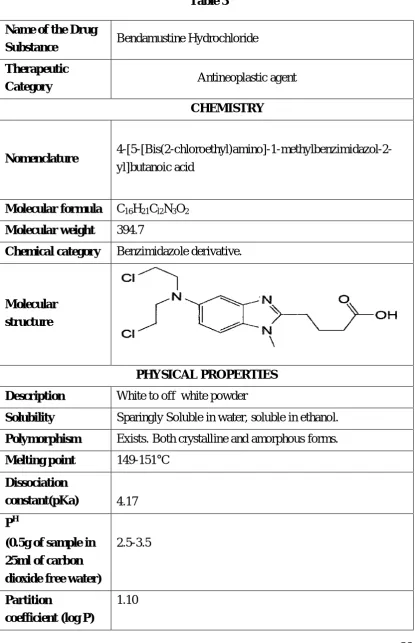
37-39Table 3
Name of the Drug
Substance Bendamustine Hydrochloride
Therapeutic
Category Antineoplastic agent
CHEMISTRY
Nomenclature
4-[5-[Bis(2-chloroethyl)amino]-1-methylbenzimidazol-2-yl]butanoic acid
Molecular formula C16H21Cl2N3O2
Molecular weight 394.7
Chemical category Benzimidazole derivative.
Molecular structure
PHYSICAL PROPERTIES
Description White to off white powder
Solubility Sparingly Soluble in water, soluble in ethanol.
Polymorphism Exists. Both crystalline and amorphous forms.
Melting point 149-151°C
Dissociation
constant(pKa) 4.17
PH
(0.5g of sample in
25ml of carbon
dioxide free water)
2.5-3.5
Partition
coefficient (log P)
29
CHEMICAL PROPERTIES
Spectral absorbance Maximum 275 nm
Related substances Monohydroxy, IPA ester, Dihydroxy and BND-IV impurities.
STABILITY
Thermal stability
Unstable
Photo stability Photo stable.
GENERAL
Handling
Wear suitable protective clothing and gloves. Respiratory protection is required when dusts are generated.
Storage Stored up to 25°C (77°F) with excursions permitted up to 30°C (86°F).
PHARMACOLOGICAL PROPERTIES
PHARMACOKINETICS
Absorption
Following a single IV dose of Bendamustine hydrochloride Cmax typically
occurred at the end of infusion.
Distribution
Plasma protein binding ranges from 94% to 96%. Steady-state Vd is
approximately 25 L.
Metabolism
Metabolized by hydrolysis to compounds with low cytotoxic activity, two
30
Elimination
Approximately 90% recovered in excreta, primarily in the feces.
Bendamustine clearance in humans is approximately 700 mL/minute. After a single
dose of 120 mg/m2bendamustine IV over 1-hour the intermediate t½ of the parent
compound is approximately 40 minutes. The mean apparent terminal elimination t½
of M3 and M4 are approximately 3 hours and 30 minutes respectively. Little or no
accumulation in plasma is expected for bendamustine administered on Days 1 and 2
of a 28-day cycle.
Half-life
Intermediate half-life of the parent compound is 40 min; the terminal
elimination half-life of M3 and M4 are approximately 3 h and 30 min, respectively.
Cl is approximately 700 mL/min.
MECHANISM OF ACTION
Bendamustine is a bifunctionalmechlorethamine derivative containing a
purine-like benzimidazole ring. Mechlorethamine and its derivatives form
electrophilic alkyl groups. These groups form covalent bonds with electron-rich
nucleophilic moieties, resulting in interstrand DNA cross links. The bifunctional
covalent linkage can lead to cell death via several pathways. Bendamustine is active
against both quiescent and dividing cells. The exact mechanism of action of
bendamustine remains unknown.
DOSAGE AND METHOD OF ADMINISTRATION
Dosing Instructions for chronic lymphocytic leukemia (CLL)
The recommended dose is 100 mg/m2 administered intravenously over 30
31
Dosing Instructions for B-cell non-Hodgkin’s lymphoma (NHL)
Recommended Dosage
The recommended dose is 120 mg/m2 administered intravenously over 60
minutes on Days 1 and 2 of a 21-day cycle, up to 8 cycles.
WARNINGS AND PRECAUTIONS
Renal Function
Use with caution in patients with mild or moderate renal impairment. Do not
use in patients with CrCl less than 40 mL/min.
Hepatic Function
Use with caution in patients with mild hepatic impairment. Avoid use in
patients with moderate to severe hepatic impairment.
Anaphylaxis
Anaphylaxis and anaphylactoid reactions have been reported, especially in
the second and subsequent cycles of therapy.
Infections
Infections, including pneumonia and sepsis, have been reported. Patients
experiencing myelosuppression after treatment are more susceptible to infections.
Infusion reactions
Reported frequently in clinical trials. Symptoms include chills, fever and
32
Malignancies
Premalignant and malignant diseases, including acute myeloid leukemia and
bronchial carcinoma, myelodysplastic syndrome, and myeloproliferative disorders,
have been reported.
Skin reactions
Have been reported and may include bullous exanthema, toxic skin reactions,
and rash.
DRUG INTERACTIONS
Inducers of CYP1A2 (e.g., omeprazole, smoking)
May decrease bendamustine plasma concentrations and increase levels of its
active metabolites. Co-administer with caution.
Inhibitors of CYP1A2 (e.g., ciprofloxacin, fluvoxamine)
May increase bendamustine plasma concentrations and decrease levels of its
active metabolites. Co-administer with caution.
UNDESIRABLE EFFECTS
Cardiovascular
Tachycardia, Hypotension, Cardiac failure
CNS (central nervous system)
Fatigue, headache, dizziness, insomnia, asthenia, anxiety, depression
Dermatological
Rash, Pruritus , dry skin, hyperhidrosis, night sweats ,skin necrosis, skin
33
GI (gastro intestinal)
Nausea ,vomiting , diarrhoea , constipation, Stomatitis , abdominal pain,
decreased appetite , dyspepsia, gastro esophageal reflux disease, dry mouth ,oral
candidiasis, abdominal distension, upper abdominal pain.
Local
1) Infusion-site pain, catheter-site pain, infusion reactions, injection-site
irritation, pain and swelling
Metabolic-Nutritional
Anorexia, decreased weight, dehydration, peripheral edema, hypokalemia,
hyperuricemia, hyperglycemia, hypocalcemia, hyponatremia
Musculoskeletal
Back pain, Arthalgia, bone pain, pain in extremities
Respiratory
Cough dysponea, upper respiratory tract infection, sinusitis, pneumonia, and
wheezing, pulmonary fibrosis.
Miscellaneous
Chills, herpes zoster, chest pain, febrile neutropenia, infection, herpes
simplex, myelodysplastic syndrome, sepsis, tumor lysis syndrome
OVERDOSE
Symptoms
ECG changes, including QT prolongation, sinus tachycardia, S and
34 No specific antidote for TREANDA overdose is known. Management of over
dosage should include general supportive measures, including monitoring of
hematologic parameters and ECGs.
5.2 EXCIPIENTS PROFILE 40
Substances, other than the active ingredient, which have been appropriately
evaluated for safety and are included in a drug delivery system to provide support.
The excipients used must have following characteristics-
1. They must be stable both physically, chemically and must be
biologically inactive.
2. It must be free from microbial contamination
3. Excipients used in formulation must be accepted by regulatory
agencies and should meet the entire current regulatory requirement.
The literature review of the innovator drug provided the qualitative and
quantitative composition of the product. So, the same excipients (Mannitol) and
solvents (Tertiary butyl alcohol, Water for Injection) which were present in the
innovator product were selected for the present study.
5.2.1 Mannitol
a) Nonproprietary Names
BP: Mannitol
IP: D-Mannitol
PhEur: Mannitol
35
b) Synonyms
Cordycepic acid, C*PharmMannidex, E421, Emprove; mannasugar,
D-mannite, D-mannite, mannitolum, Mannogem, Pearlitol
c) Chemical Name and CAS Registry Number
D-Mannitol [69-65-8]
d) Empirical Formula
C6 H14O6
e) Molecular Weight
182.17
f) Functional Categories
Diluents, plasticizer, sweetening agent, tablet and capsule diluents,
therapeutic agent, tonicity agent
g) Applications in Pharmaceutical Formulation or Technology
Mannitol is widely used as a diluent (10–90% w/w) in tablet formulations,
since it is not hygroscopic and may thus be used with moisture sensitive active
ingredients. It may be used in direct compression tablet applications, for which the
granular and spray dried forms are available, or in wet granulations. Granulations
containing Mannitol have the advantage of being dried easily.
It is also used as an excipient in the manufacture of chewable tablet
formulations because of its negative heat of solution, sweetness, and ‘mouth feel’
and also used as a diluent in rapidly dispersing oral dosage forms
In lyophilized preparations, Mannitol (20–90% w/w) has been included as a
carrier to produce a stiff, homogeneous cake that improves the appearance of the
36 It has also been used to prevent thickening in aqueous antacid suspensions
of aluminum hydroxide (<7% w/v), and has been suggested as a plasticizer in
soft-gelatin capsules, as a component of sustained-release tablet formulations and as a
carrier in dry powder inhalers.
Therapeutically, Mannitol administered parenterally is used as an osmotic
diuretic, as a diagnostic agent for kidney function, as an adjunct in the treatment of
acute renal failure, and as an agent to reduce intracranial pressure, treat cerebral
edema, and reduce intraocular pressure.
h) Description
It occurs as a white, odorless, crystalline powder, or free flowing granules.
It has a sweet taste and imparts a cooling sensation in the mouth. Microscopically, it
appears as orthorhombic needles when crystallized from alcohol.
i) Incompatibilities
Mannitol solutions, 20% w/v or stronger, may be salted out by potassium
chloride or sodium chloride. Precipitation has been reported to occur when a 25%
w/v solution was allowed to contact plastic.
It is incompatible with xylitol infusion and may form complexes with some
metals such as aluminum, copper, and iron. Reducing sugar impurities in it have
been implicated in the oxidative degradation of a peptide in a lyophilized formation.
It was found to reduce the oral bioavailability of cimetidine compared to sucrose.
j) Stability and Storage Conditions
It is stable in the dry state and in aqueous solutions. In solution, it is not
attacked by cold, dilute acids or alkalis or by atmospheric oxygen in the absence of
catalysts. It does not undergo Mallard reactions.
The bulk material should be stored in a well-closed container in a cool, dry
37
5.2.2 TBA (Tertiary Butyl Alcohol)
a) Empirical Formula : C4 H10O
b) CAS no: 75-65-0
c) Molecular Weight: 74.12
d) Physical State and Color: Colorless liquid which forms
rhombic-like crystals
e) Melting Point: 25.6 °C- 25.7 °C
f) Boiling Point: 82.41 °C
g) Specific Gravity: 0.78086
h) Vapor Pressure: 30.6 mm Hg @ 20 °C; 42 mm Hg @ 25 °C
i) Solubility: Soluble in water.
j) Flash point: 110 °C
k) Explosion limits: 2.4 - 8%
l) Stability
Stable. Very flammable Incompatible with strong oxidizing agents, copper,
alloys, alkali metals, aluminium.
m) Toxicology
Harmful if inhaled. Skin and respiratory irritant, Severe eye irritant, Typical
TLV (Threshold Limit Value) /TWA (time weighted average) - 100 ppm. Typical
STEL (short term exposure limit) -150 ppm
n) Residual solvent limit in lyophilized product
38
6.MATERIALS AND METHODS
6.1 LIST OF METERIALS
Table 4List of Raw Materials and Their Source
S.No INGREDIENT VENDOR
1 Bendamustine Hydrochloride NatcoPharma
2 Mannitol 25 Roquette
3 Tertiary butyl Alcohol Merck
4 Water For Injection (WFI) NatcoPharma
Table 5 List of Packaging Materials and Their Source
S.No PRIMARY PACKING
MATERIAL GRADE VENDOR
1 50ml Glass Vials – USP Type – I USP MatriMirra
2 20 mm Double slotted
Bromobutylrubber stoppers
USP/EP West
Pharmaceuticals
3 Aluminium flip off seals IH HBR Packaging
39
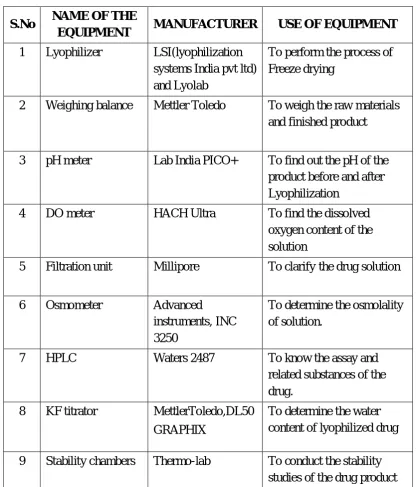
Table 6List ofEquipments
S.No NAME OF THE
EQUIPMENT MANUFACTURER USE OF EQUIPMENT
1 Lyophilizer LSI(lyophilization
systems India pvt ltd) and Lyolab
To perform the process of Freeze drying
2 Weighing balance Mettler Toledo To weigh the raw materials
and finished product
3 pH meter Lab India PICO+ To find out the pH of the
product before and after Lyophilization
4 DO meter HACH Ultra To find the dissolved
oxygen content of the solution
5 Filtration unit Millipore To clarify the drug solution
6 Osmometer Advanced
instruments, INC 3250
To determine the osmolality of solution.
7 HPLC Waters 2487 To know the assay and
related substances of the drug.
8 KF titrator MettlerToledo,DL50
GRAPHIX
To determine the water content of lyophilized drug
9 Stability chambers Thermo-lab To conduct the stability
40
Table 7List of Chemicals and Reagents used for HPLC
S.No Reagents Grade Manufacturer
1 Trifluoroacetic acid HPLC grade Merck
2 Acetonitrile HPLC grade Merck
3 Methanol HPLC grade Merck
4 Potassium
dihydrogenorthophosphate
GR-grade Merck
5 Triethyl amine HPLC grade Merck
6 Methanol HPLC grade Merck
7 Isopropyl Alcohol HPLC grade Merck
6.2 PREFORMULATION STUDIES
Preformulation studies are performed to investigate the physical and
chemical properties of a drug substance alone and also when combined with other
substances such as excipients. It is the first step in the rational development of
dosage forms.
The overall objective of performing preformulation testing is to generate
information that will be helpful in developing a stable and bioavailable dosage form
when combined with excipients.
The use of Preformulation parameters maximizes the chances in
formulating an acceptable, safe, efficacious and stable product and at same time
provides the basis for optimization of the drug product quality.
6.2.1 Preparation of Standard Graph
Bendamustine Hydrochloride (20.0mg) working standard was accurately
weighed and transferred into 200 mL amber colored volumetric flask. To this 60 ml
of methanol was added, it was dissolved and the volume was made up to the mark