White Rose Research Online URL for this paper:
http://eprints.whiterose.ac.uk/95851/
Version: Accepted Version
Article:
Aletta, F., Kang, J. and Axelsson, O. (2016) Soundscape descriptors and a conceptual
framework for developing predictive soundscape models. Landscape and Urban Planning,
149. pp. 65-74. ISSN 1872-6062
https://doi.org/10.1016/j.landurbplan.2016.02.001
Article available under the terms of the CC-BY-NC-ND licence
(https://creativecommons.org/licenses/by-nc-nd/4.0/)
[email protected] https://eprints.whiterose.ac.uk/
Reuse
This article is distributed under the terms of the Creative Commons Attribution-NonCommercial-NoDerivs (CC BY-NC-ND) licence. This licence only allows you to download this work and share it with others as long as you credit the authors, but you can’t change the article in any way or use it commercially. More
information and the full terms of the licence here: https://creativecommons.org/licenses/
Takedown
If you consider content in White Rose Research Online to be in breach of UK law, please notify us by
Landscape and Urban Planning, Volume 149, 2016, Pages 65 74
Soundscape descriptors and a conceptual
framework for developing predictive soundscape
models
Francesco Alettaa, Jian Kanga*, Östen Axelsson a,b
a
School of Architecture, University of Sheffield, Sheffield, United Kingdom b
Department of Psychology, Stockholm University, Stockholm, Sweden
* Corresponding author
Abstract: Soundscape exists through human perception of the acoustic environment. This paper investigates how soundscape currently is assessed and measured. It reviews and analyzes the main soundscape descriptors in the soundscape literature, and provides a conceptual framework for developing predictive models in soundscape studies. A predictive soundscape model provides a means of predicting the value of a soundscape descriptor, and the blueprint for how to design soundscape. It is the key for implementing the soundscape approach in urban planning and design. The challenge is to select the appropriate soundscape descriptor and to identify its predictors. The majority of available soundscape descriptors are converging towards a 2-dimensional soundscape model of perceived affective quality (e.g., Pleasantness–Eventfulness, or Calmness–Vibrancy). A third potential dimension is the appropriateness of a soundscape to a place. This dimension provides complementary information beyond the perceived affective quality. However, it depends largely on context, and because a soundscape may be appropriate to a place although it is poor, this descriptor must probably not be used on its own. With regards to predictors, or soundscape indicators, perceived properties of the acoustic environment (e.g., perceived sound sources) are winning over established acoustic and psychoacoustic metrics. To move this area forward it is necessary that the international soundscape community comes together and agrees on relevant soundscape descriptors. This includes to agree on numerical scales and assessment procedures, as well as to standardize them.
Keywords: Soundscape descriptor, Soundscape indicator, Sound perception, Environmental sound quality
2016 Landscape and Urban Planning
Landscape and Urban Planning, Volume 149, 2016, Pages 65 74 1. Introduction
Currently, with regards to the acoustic environment, society chiefly focuses on the
epidemiological aspects of ‘noise’. This is reflected in the attempts to reduce high sound
levels from transportation and industry below defined guideline values (World Health Organization, 1999; European Parliament and Council, 2002; World Health Organization, 2011). The increasing interest in environmental noise and its mitigation is largely a result of urbanisation (World Health Organization, 2011). Early attempts of noise regulation can be observed in Roman laws, like the Lex Iulia Municipalis from 45 BC, which prevented oxcarts from transiting on the streets of Rome during daytime, in order to avoid undue noise (Hardy, 2012). This example illustrates that noise and noise abatement chiefly are urban phenomena, and that urbanisation is a driving force. However, reducing the sound levels from certain sound sources may not necessarily result in an acoustic environment of high quality, because the character of the sound is equally important (e.g. Rådsten-Ekman, Axelsson, & Nilsson, 2013; Axelsson, et al., 2014). Environmental sounds, like the sound of road traffic, nature or people, are meaningful and provide information. Some sounds have a positive impact, whereas others have a negative meaning or character, regardless of their sound levels. To decide which acoustic environments are good, we must consider the activities they may enable (e.g. Brown & Muhar, 2004). These notions are at the core of the theoretical underpinnings of the soundscape approach.
The term ‘soundscape’ gained prominence in the 1970s in the study of contemporary music
through the work of the Canadian composer R. M. Schafer at Simon Fraser University in Vancouver (e.g. Schafer, 1977). Schafer and his colleagues defined ‘soundscape’ as “[a]n environment of sound (or sonic environment) with emphasis on the way it is perceived and understood by the individual, or by a society” (Truax, 1978). Ever since this concept emerged, researchers have wondered how the acoustic environments would affect the perceived quality of cities and how sounds could be used in urban planning and design.
Southworth (1969) raised the question of ‘sonic identity’ for cities, which in his view should
be considered and designed in correlation with the ‘visible’ city.
Recently, the International Organization for Standardization (ISO) published Part 1 of a new
International Standard, ISO 12913, on soundscape, which defines the term as “[the] acoustic environment as perceived or experienced and/or understood by a person or people, in context” (International Organization for Standardization, 2014). Thus, ‘soundscape’ is
different from ‘acoustic environment.’ The former refers to a perceptual construct, the latter
to a physical phenomenon. Most importantly, soundscape exists through human perception of the acoustic environment (e.g. Brown, Kang, & Gjestland, 2011; Brown L. A., 2012; International Organization for Standardization, 2014).
This paper addresses the topic of ‘soundscape descriptors’ and ‘soundscape indicators,’ and
Landscape and Urban Planning, Volume 149, 2016, Pages 65 74 2. Soundscape descriptors
This review of available soundscape descriptors is based on the view that the development of descriptors must precede the development of indicators. An example from the literature on psychoacoustics is the relationship between sound level (L) measured in dB, and perceived loudness () of pure tones, obtained by magnitude estimation. This relationship is roughly described by the equation:
= 2L/10 . (1)
Eq. 1 illustrates that the perceived loudness of pure tones doubles with every 10 dB increment (Fastl & Zwicker, 1990). Thus, the sound level is an indicator of the perceived loudness, and with the aid of Eq. 1 the sound level can be used to predict its magnitude. At large, psychoacoustics relies on such stimulus-response relationships (Rasch & Plomp, 1999). Surely, from the example of Eq. 1 it is clear that it is necessary to develop descriptors before any indicator can be considered. However, while this approach has been reasonably successful in studies of relatively simple sound signals, establishing similar relationships for soundscape will require larger efforts because of the information content that soundscape is associated with.
This section reviews the main descriptors of environmental sound that have been proposed. Some of them were originally developed for environmental noise. Implementation of these descriptors in the soundscape approach is not necessarily straightforward. On the other hand, these descriptors relate to the perception of acoustic features, so they are likely relevant to soundscape assessment, in part.
2.1 Noise Annoyance
Noise annoyance is a key concept with regards to environmental impact of sound on the community. Noise annoyance is acknowledged as a multifaceted concept that chiefly covers
immediate behavioural effects and evaluative aspects related to ‘noise’ (Guski, Felscher -Suhr, & Schuemer, 1999). How to assess noise annoyance has been investigated thoroughly (e.g. (Schultz, 1978; Levine, 1981; Fields, et al., 1997; Guski, Felscher-Suhr, & Schuemer, 1999; International Organization for Standardization, 2003). Considering noise annoyance as a descriptor, researchers have tried identifying its physical correlates (i.e.,
indicators). Zwicker (1991) calculated the ‘unbiased annoyance’ based on Loudness, Sharpness and Fluctuation Strength. Preis (1997) worked with ‘loudness intrusiveness’ (i.e., time-averaged value of the difference between Loudness of the ‘noise’ and the background sound), including Sharpness and distortion of informational content, in order to determine noise annoyance. In general, these researches have shown that aggregated group results for the percentage of highly annoyed can be correlated to noise indicators, while individual assessments of noise annoyance do not bear such a clear relationship (Schultz, 1978).
Fiebig et al. (2009) proposed an ‘Evaluation index’, combining Loudness, Sharpness, Roughness, Impulsiveness and relative approach, as indicators of noise annoyance, in order to predict the behaviour of a group of individuals. The laboratory experiment consisted of different simulated acoustic scenarios (open bus stop with passing-by vehicles) where
participants were required to assess the noise annoyance on a numerical scale from 1 (‘not annoying’) to 9 (‘very annoying’). The ‘Evaluation index’ was defined by means of a multiple
Landscape and Urban Planning, Volume 149, 2016, Pages 65 74
mapping application. However, at present, it has only been tested in a laboratory condition and only for the sound of traffic.
A limitation of noise annoyance as a descriptor is that it implies exposure to unwanted sound, and that human responses to sound in principle ought to be adverse. This puts an emphasis on the underlying notion in current noise policy that sound is a waste product of society.
2.2 Pleasantness
A number of researchers have focused their attention on descriptors related to the hedonic value of sound, that is, whether they are perceived as pleasant or unpleasant. This approach is substantially different from noise annoyance, because it extends the scope beyond unwanted sound sources. Terhardt and Stoll (1981) developed a descriptor for determining
the ‘pleasantness of noise’. They conducted a listening experiment based on paired
comparison of sounds (e.g., a vacuum cleaner, a circular saw, a man’s voice, a piece of music, a pure tone). The music was judged as the most pleasant sound, and the sound of the circular saw as the least pleasant. In order to identify an indicator for this descriptor, the authors considered Loudness, Sharpness, Roughness and Tonality. Good correlations were found between Pleasantness and a combination of Roughness, Sharpness and Tonality. However, no predictive model was established, and the study was limited to single environmental sounds out of context, whereas soundscape studies focus on acoustic environments holistically.
Lavandier and Defréville (2006) defined a descriptor, the ‘unpleasantness of sound,’ using
sound levels and the relative duration of categories of sound sources (e.g., car, moped, bus, motorcycle, voice and bird) as indicators. They gathered individual responses on the descriptor through listening experiments. Afterwards, the descriptor was analytically defined with multiple linear regressions, through automated sound source identification and statistical data of the sonic events.
2.3 Quietness or tranquillity
The European Environmental Noise Directive (END) (European Parliament and Council,
2002) provides that the Member Stats of the European Union must protect so called ‘quiet areas.’ This introduced an important qualitative perspective on the management of the acoustic environment (Vogiatzis & Remy, 2013). Regrettably, the END did not provide a
definition of ‘quiet areas,’ causing a need for a recent good practice guide (European
Environment Agency, 2014). It has also caused research on how to understand and to define the concept, including related descriptors (e.g. Delaitre, et al., 2012; Payne, 2013). Memoli and his colleagues (Licitra, et al., 2005; Memoli, Bloomfield, & Dixon, 2008) proposed an acoustic metric called ‘Slope’ related to the time history of the sound level,
taking into account how often events appear and how they emerge from the background.
Using individual data collected through questionnaires, they associated ‘perceived quietness’
to numerical values of the Slope metric, in a dose-response curve fashion. Thus the Slope
metric could be considered as an indicator of the ‘perceived quietness’ descriptor.
Pheasant, Horoshenkov, Watts and colleagues (e.g. Pheasant, et al., 2008; Pheasant, Horoshenkov, & Watts, 2009; Pheasant, Watts, & Horoshenkov, 2009) investigated how to
measure a ‘tranquil space,’ defined as a “space that can facilitate a state of tranquillity”
Landscape and Urban Planning, Volume 149, 2016, Pages 65 74
responses on perceived tranquillity, they developed a descriptor called ‘Tranquillity Rating’
(TR), based on a multiple linear regression model, mainly using sound levels and the percentage of natural features in a scene as indicators. The TR is the only soundscape descriptor currently implemented at a national (UK) policy level (European Environment Agency, 2014).
2.4 Music-likeness
Based on the original philosophy behind soundscape studies (Schafer, 1977), Botteldooren et al. (2006) proposed to assess soundscape through its likeness to music, considering that the temporal structure of an urban soundscape could be described also by other means than acoustic dynamics in terms of differences in statistical sound levels. The authors constructed a fuzzy Music-likeness (ML) indicator based on the acoustic environments’ spectrum of
loudness (and pitch) fluctuations, assuming that, for the temporal structure of such acoustic environments to be music-like, the spectrum should show a straight line on a log–log scale and that this straight line must have a 1/f slope. They conducted an experiment involving 100 participants and 10 urban environments. Participants were asked to listen to recordings of the acoustic environment and assess them by putting a mark on a triangular scale with three descriptors: music-like, boring/dull and chaotic. The ML indicator did not correlate well with the perceived music-likeness, but it had a good correlation to the soundscape being neither chaotic nor boring.
2.5 Perceived affective quality
Axelsson et al. (2010) proposed a two-dimensional model of perceived affective quality of soundscape. It is defined by four bipolar factors: the two orthogonal factors Pleasantness and Eventfulness, which are located at a 45° degrees rotation from the second set of orthogonal factors Calmness and Excitement. According to this model, an exciting soundscape is both pleasant and eventful, whereas a calm soundscape is both pleasant and uneventful. In the same way, a chaotic soundscape is unpleasant and eventful, whereas a monotonous soundscape is unpleasant and uneventful. The two main factors, Pleasantness and Eventfulness, are measured through a measurement model consisting of 8
unidirectional attribute scales of ‘attribute–soundscape match’: Calm, Pleasant, Exciting, Eventful, Chaotic, Annoying, Monotonous and Uneventful, ranging from ‘No match at all (0%)’ to ‘Perfect match (100%)’. The scale scores are either weighted and summarised into
indices, or subjected to a Principal Component Analysis in order to compute component scores (Axelsson, Nilsson, & Berglund, 2009). Axelsson and his colleagues are presently trying to identify the relationships between perceived affective quality of soundscape and information in the corresponding acoustic signal, through machine learning (Axelsson, Lundén, & Nilsson, 2013).
Landscape and Urban Planning, Volume 149, 2016, Pages 65 74
Davies et al. (2013) proposed a two-dimensional tool defined by the two axes: Cacophony–
Hubbub and Constant–Temporal. The Cacophony–Hubbub axis relates to the numbers of different sounds making up the soundscape, and the levels of dissonance or discord perceived by the individual. The Constant–Temporal axis relates to the amount and frequency of change within the soundscape.
2.6 Restorativeness
Inspired by the Attention Restoration Theory (Kaplan & Kaplan, 1989) (Kaplan, 1995), Payne
(2013) developed the ‘Perceived Restorativeness Soundscape Scale’ (PRSS), a one
-dimensional scale ranging from 1 (‘high restorativeness’) to 7 (‘low restorativeness’). With
this scale is it possible to differentiate between the restorativeness of soundscapes both between and within different environments.
2.7 Soundscape quality
A number of studies have aimed to achieve a general descriptor for ‘soundscape quality,’
rather than focusing on singular soundscape dimensions or components. These descriptors address the overall perception of the acoustic environment, measuring whether a
soundscape is ‘good’ or ‘bad’.
Ricciardi et al. (2015) proposed a ‘sound quality’ descriptor based on data collected in Paris,
cross-validated in Milan. The authors established different multiple linear regression models using either acoustic measurements or perceptual data as predictors. The model based on acoustic measurements included the average sound level (L50) and temporal variability (L10– L90). It explained 21% of the variance in ‘sound quality’. The models based on perceptual
variables, like ‘visual amenity’, ‘overall loudness’, ‘traffic’, ‘voice’ and ‘birds,’ explained up to 52% of the variance in ‘sound quality.’ Again, these results raise the question of to what
extent established acoustic measurements are useful in soundscape research.
Garcia Perez et al. (2012) proposed a descriptor for the evaluation of the soundscape quality
called ‘Environmental Sound Experience Indicator.’ It takes into account the sound levels,
the number and energy of acoustical events, the dominant sound sources, their consistency in the environment, and how individuals perceive the acoustic environment. The proposed descriptor is a one-dimensional, numerical scale, ranging from 0 (‘non-suitable soundscape’) to 12 (‘excellent soundscape’). The descriptor is developed within an industrial project, and
the authors have decided not to publish any information about the methodology, nor the necessary equation. Consequently, it is impossible for independent researchers to validate this descriptor.
2.8 Appropriateness
For the purpose of urban planning and design, Brown has proposed that it is central to assess whether or not a soundscape is appropriate for a place (e.g. Brown, Kang, & Gjestland, 2011; Brown, 2012). Davies, Bruce and Murphy (2014) reported that when participants were asked to design a soundscape in a laboratory environment, the designed
soundscapes seemed to be based more on the participants’ expectations of typical urban
Landscape and Urban Planning, Volume 149, 2016, Pages 65 74
Axelsson (2015) conducted an audio-visual experiment involving 50 participants, using photographs and audio recordings of 25 urban and peri-urban locations across UK. Among
other items, participants were required to assess the environments on both ‘soundscape quality’ and ‘appropriateness.’ A multiple linear regression model was established for ‘appropriateness,’ using perceptual indicators (i.e. urban environment, sounds of traffic and sound of individuals) as predictors. The model explained 57% of the variance in
‘appropriateness.’ However, the author points out that a soundscape might be appropriate even if it is poor, because ‘appropriate’ differs from desired. Thus, special attention should be given to this descriptor that is likely to provide complementary information, but is not to be used on its own.
3. A conceptual framework for the development of predictive models in soundscape
studies
Several descriptors have been proposed, investigating wider or narrower aspects of soundscape. Because it is a multi-layered construct, the different components of soundscape do not necessarily emerge at the same level. It is possible to develop descriptors related to perceived sound sources (e.g., technology, humans, and nature). Descriptors may also concern the sensation of sound, such as loudness, or perceived affective quality, such as pleasantness. At an overall level one might be concerned with whether or not the soundscape is perceived as appropriate for a place, or with the meaning of sound in a given context. For this reason, it is unlikely that a single common soundscape descriptor will be established. Consequently, it is worthwhile defining a framework for supporting the systematic development of tools for characterising soundscape, or some of its components. Tools that eventually will be used for urban planning and design.
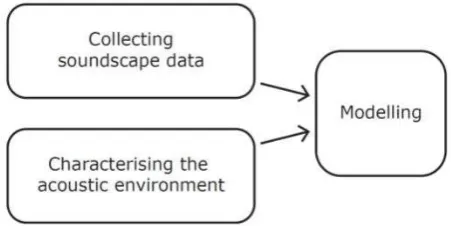
[image:8.595.184.410.539.652.2]Figure 1 presents a conceptual framework for the development of predictive models in soundscape studies. The first step in this framework concerns collecting soundscape data. The second step concerns characterising the acoustic environment. Finally, the third step concerns creating a model of the relationship between the perceived and the physical properties of the acoustic environment.
Figure 1 - Conceptual framework for the development of predictive models in soundscape studies.
3.1 Collecting soundscape data
Landscape and Urban Planning, Volume 149, 2016, Pages 65 74
Davies, et al., 2013). When planning or designing a study, the researcher must be aware of the advantages and limitations of these different approaches.
By definition, the environment experienced in situ provides for the most realistic representation of the external world, and is associated with high ecological validity. Nevertheless, studies conducted in situ suffer from low experimental control. Consequently, results from such studies will typically only represent the case in question, and will not contribute to general knowledge, or to theory development, directly.
Simulated or reproduced environments (typically in an indoor laboratory) allow for control of the stimuli presented to individuals. This makes it possible to investigate the relationship between cause and effect, which may contribute to theory development. Because of limited ecological validity, results obtained in a laboratory ought to be validated in situ.
Guastavino et al. (2005) raised the issue of ecological validity when reproducing acoustic environments, questioning whether the perception of a reproduced acoustic environment is the same or different from what might be expected in situ. Davies et al. (2014) recently published promising results, concluding that acoustic environments recorded and reproduced by Ambisonics may be ecologically valid for soundscape appraisal.
Recalling an environment in memory is the most indirect way of experiencing an acoustic
environment. The perception is affected by the individual’s ability to remember and to recall
the situation, and is filtered through the individual’s personal constructs (Ge & Hokao, 2003;
Davies, et al., 2013). Still, this approach is relevant when working with residents or other persons who are familiar with the investigated acoustic environment, learning about how the environment has changed over time or what is typical for the environment in question.
Landscape and Urban Planning, Volume 149, 2016, Pages 65 74
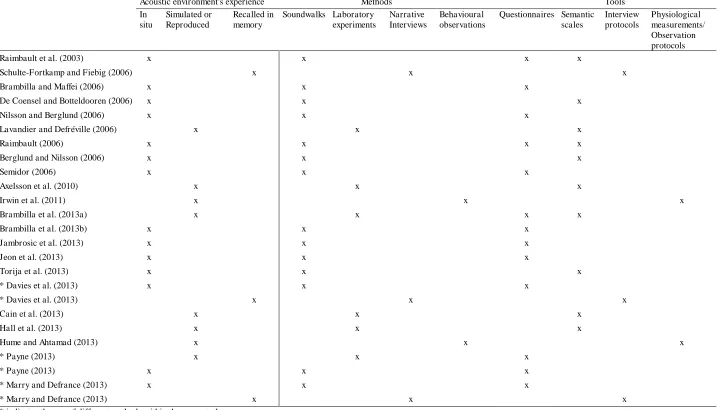
Table 1 - Review of methods and tools used in soundscape researech
Acoustic environment's experience Methods Tools In
situ
Simulated or Reproduced
Recalled in memory
Soundwalks Laboratory experiments
Narrative Interviews
Behavioural observations
Questionnaires Semantic scales
Interview protocols
Physiological measurements/ Observation protocols
Raimbault et al. (2003) x x x x
Schulte-Fortkamp and Fiebig (2006) x x x
Brambilla and Maffei (2006) x x x
De Coensel and Botteldooren (2006) x x x
Nilsson and Berglund (2006) x x x
Lavandier and Defréville (2006) x x x
Raimbault (2006) x x x x
Berglund and Nilsson (2006) x x x
Semidor (2006) x x x
Axelsson et al. (2010) x x x
Irwin et al. (2011) x x x
Brambilla et al. (2013a) x x x x
Brambilla et al. (2013b) x x x
Jambrosic et al. (2013) x x x
Jeon et al. (2013) x x x
Torija et al. (2013) x x x
* Davies et al. (2013) x x x
* Davies et al. (2013) x x x
Cain et al. (2013) x x x
Hall et al. (2013) x x x
Hume and Ahtamad (2013) x x x
* Payne (2013) x x x
* Payne (2013) x x x
* Marry and Defrance (2013) x x x
* Marry and Defrance (2013) x x x
Landscape and Urban Planning, Volume 149, 2016, Pages 65 74
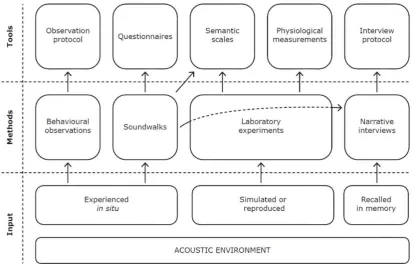
Inspection of Table 1 revealed some overall relationships between by which mode the participants experienced the acoustic environment and which data collection method and tool was used. Figure 2 summarises these overall relationships schematically in a diagram. Of course, in reality the relationships are not as clear-cut as one might expect from Figure 2. When an acoustic environment was experienced in situ, the researcher typically used a soundwalk, and collected the data by a questionnaire, which may have included semantic scales, or the researcher conducted an interview. Alternatively the researcher observed people in the area to draw conclusions from their behaviour. When the acoustic environment was simulated or reproduced, the preferred method was to conduct a laboratory experiment in which semantic scales were used to collect the data. Some experimenters collected physiological data. When the acoustic environment was recalled in memory, the researcher typically conducted an interview, using an interview protocol, or asked the participants to write a diary. The four methods are briefly described in some more detail below.
Figure 2 - Schematic illustration of the relationships between data collection methods and tools used in soundscape studies.
3.1.1 Soundwalks
Soundwalks are conducted in situ. In a soundwalk the participants are asked to walk in silence and listen to the acoustic environment. Afterwards, or at given locations along the walk, they are asked to fill in a questionnaire or to participate in an interview about their impressions of the area. For the data to be reliable, it is essential that all participants conduct their soundscape assessments in the same location(s).
[image:11.595.81.496.278.542.2]Landscape and Urban Planning, Volume 149, 2016, Pages 65 74
and audio recordings can later be used in laboratory experiments in order to validate the soundscape data from the soundwalk.
While most researchers use soundwalks to collect soundscape data for a current acoustic environment, some researchers have attempted to broaden the domain to include soundscapes of the past, recalled in memory (e.g. Järviluoma, 2009). Jeon et al. (2013) reviewed the literature on soundwalks for soundscape assessment. They found that in early studies researchers used no specific criteria for the selection of participants. In recent years it is all more common to recruit soundscape experts or urban planners in order to apply the results to real-life scenarios (Hong, Lee, & Jeon, 2010; Jeon, Hong, & Lee, 2013). Semidor (2006) underlined the importance of soundwalks for urban planners and architects to understand urban acoustic environments when they make decisions about the design of cities. Else, it is important to involve residents or the users of the space when assessing a soundscape (cf. Axelsson, et al., 2014).
3.1.2 Laboratory experiments
When simulating or reproducing acoustic environments in an indoor laboratory, researchers typically use binaural recordings reproduced by headphones (e.g. Axelsson, Nilsson, & Berglund, 2010). This method is often criticised because it is difficult to reproduce an environment, or even an acoustic environment, holistically. For this reason researcher are increasingly turning to alternative technologies such as auralization (e.g. Vorländer, 2008), Ambisonics (e.g. Davies, Bruce, & Murphy, 2014) or immersive virtual reality (e.g. Maffei, Masullo, Aletta, & Di Gabriele, 2013; Maffei, et al., 2013). The latter technology allows integration of different sensory modalities in experiments (e.g., hearing and vision).
The tool generally used for data collection in laboratory experiments is semantic scales (e.g. (Dubois, Guastavino, & Raimbault, 2006; Berglund & Nilsson, 2006; Axelsson, Nilsson, & Berglund, 2010; Torija, et al, 2011; Ozcevik & Yuksel Can, 2012). By this tool the researcher investigates to what extent concepts are applicable in describing the perception of an acoustic environment. Inspired by Osgood and his colleagues (e.g. Osgood, Suci, & Tannenbaum, 1957), the scales often consists of pairs of, presumably, opposite adjectives (i.e., semantic differential scales). Because semantic opposites are not always empirical opposites, some researchers use unidirectional scales in order to derive the opposite poles empirically (e.g. Axelsson, Nilsson, & Berglund, 2010).
The advantage of using semantic scales compared to open ended questions, often used in interviews, is that scales result in numerical scores that can be subjected to statistical analysis. This makes scaling data less prone to personal interpretations, which is essential when measuring. However, also numerical results must be interpreted to some extent. A limitation is that the results depend on the scales included in the study, and it is crucial that the researcher selects appropriate scales.
An alternative or complement to semantic scales is to use physiological data. Such data may be understood as related to the overall experience of an acoustic environment, and is not the result of self-reporting. In this case the researcher aims to manipulate the experimental situation in order to induce measurable physiological responses.
Landscape and Urban Planning, Volume 149, 2016, Pages 65 74
and high frequency heart rate variability. Recovery in skin conductance level tended to be faster when the participants listened to natural sounds as compared to noise, suggesting that natural sounds facilitate stress recovery.
A limitation with fMRI in soundscape studies is that the data is not meaningful unless it correlates with perception data. Consequently, fMRI data cannot be used alone. This technology is probably more informative to neurobiologists, learning about the functions of the brain, than to soundscape researchers.
3.1.3 Narrative interviews
Narrative or qualitative interviews are often used initially when the researcher has limited knowledge in the research field. Interviews are then useful for exploring and identifying relevant aspects of soundscape. For example, Axelsson used qualitative interviews early on to identify attributes that could be used for attribute scales in later studies (Axelsson, Nilsson, & Berglund, 2010; see also Davies, et al., 2013). Some researchers prefer narrative interviews and qualitative data over scales and numerical data, because they may provide in-depth information about the human experience and the participants’ understanding of the
acoustic environment (e.g. Schulte-Fortkamp & Fiebig, 2006; Marry & Defrance, 2013). Interviews may be conducted with one individual at a time or with a group of individuals (e.g. Davies, et al., 2013). Interviews can also be combined with ‘acoustic diaries’ that are
personal records and notes taken by the participants throughout a given period of time, related to the experience of their personal acoustic environment (Foale & Davies, 2012). A limitation with data from narrative interviews is that they are prone to the researcher’s
individual interpretations, and because they are not experimental or numerical they cannot
be used for deduction of cause and effect. Depending on the interviewer’s style and on how detailed the questions are, interview results can be highly individual. For this reason, interview data might not be generalised.
3.1.4 Behavioural observations
One limitation that interviews and semantic scaling have in common is that they require that the participant is aware of the acoustic environment or pays attention to it. One may argue that this is a rather atypical situation compared to our everyday life. To deal with this limitation, the research may use behavioural observations. The advantage of this method is that the participant may be unaware of the study and might not be able to influence the results.
Witchel and his colleagues have conducted a number of studies in which an outdoor acoustic environment was manipulated through the introduction of music through loudspeakers. Visitors in the area were video recorded before and during the intervention. The video material was then used for behavioural analyses. The final results are pending (Witchel, 2011; Lavia, et al., 2012; Witchel, et al., 2013).
Landscape and Urban Planning, Volume 149, 2016, Pages 65 74 3.2 Characterising the acoustic environment
As defined in ISO 12913-1, the acoustic environment consists of all sounds from all sources as modified by the environment (International Organization for Standardization, 2014). In soundscape research the acoustic environment is commonly characterised through the established acoustic metrics, such as the equivalent energy level (e.g., Leq) and the related statistical levels (i.e., levels exceeded for a given percentage of time, with respect to the acquisition period, Lx), the level variability over time (e.g., Lx–L100-x), and the proportion of low-frequency sounds (e.g., LC–LA) (see e.g. Berglund & Nilsson, 2006; Brambilla & Maffei, 2006). It is also common to characterise the acoustic environment through psychoacoustic indicators like Loudness, Sharpness, Roughness, and Fluctuation Strength (e.g. (Genuit, 2004; Fiebig, Guidati, & Goehrke, 2009; Rychtáriková & Vermeir, 2013; Hall, et al., 2013). Nevertheless, there are studies (e.g. Persson Waye & Öhtrsöm, 2002) showing that no established psychoacoustic indicator alone, or sound levels may explain the variation in, for example, annoyance responses for local situations. This is probably because the established psychoacoustic indicators are developed for pure tones or relatively simple signals from single sound sources. Consequently, human responses to complex sound signals, including spatially distributed sound sources, are difficult to predict (Genuit, 1996). Thus, there is a need for new indicators for the purpose of soundscape studies.
3.3 Modelling
There are chiefly two reasons for modelling the relationship between physical and the perceived properties of the acoustic environment. A predictive model may be used to predict how people would perceive the acoustic environment, without the laborious task of asking people about their perceptions. Secondly, an accurate predictive model reveals the underlying causes of the perceived properties, and may consequently be used for design purposes. One may say that the model provides us with the recipe for how to achieve a desired outcome. For example, Watts and his colleagues have shown that tranquillity of a place depends on low sound levels and a high proportion of green features (Watts, Miah, & Pheasant, 2013). Thus, if one wants to design a tranquil place, it is necessary to provide for lush greenery and to protect the area from loud sounds. This example also puts the finger on how central it is to first select the appropriate soundscape descriptor, because the outcome depends on it. One may ask whether or not it is desirable to make all places tranquil, or if tranquillity is relevant to all places. Probably the answer to this is no, so what other soundscape descriptors and predictive models are needed?
Landscape and Urban Planning, Volume 149, 2016, Pages 65 74 4. Principles for selecting soundscape descriptors
Soundscape concerns how people perceive, experience or understand the acoustic environment (International Organization for Standardization, 2014). Consequently, a soundscape descriptor must provide a measure of at least one of these aspects. For the purpose of modelling, as outlined in this paper, this measure must be numerical.
A soundscape descriptor may either refer to a singular underlying dimension of soundscape
(e.g. Pleasantness) or to soundscape holistically (e.g. ‘soundscape quality’). For the purpose
of urban planning and design the former seems more useful than the latter, because holistic soundscape descriptors depend on context. What is good or appropriate in one context is bad or inappropriate in another (Axelsson, 2015). As previously illustrated with the case of tranquillity, a soundscape descriptor related to a singular dimension can be useful, provided that the dimension selected is relevant. Thus, in order to select an appropriate soundscape descriptor, one must know for what purpose it will be used. Is the purpose to change the existing soundscape, or is it to characterise the current situation? Which soundscape descriptor is then the most relevant?
Based on the literature review, at present there are eight sorts of potential soundscape descriptors to choose from:
1) Noise annoyance 2) Pleasantness
3) Quietness or tranquillity 4) Music-likeness
5) Perceived affective quality 6) Restorativeness
7) Soundscape quality 8) Appropriateness
The purpose of the majority of these descriptors seems to be to achieve less annoying, more pleasant, quieter, more tranquil, more restorative, or more music-like soundscapes. Alternatively, to achieve soundscapes of higher perceived quality, or soundscapes that are more appropriate to the place where they are heard. In all of these cases, it seems that the researchers have had a preconceived idea of what aspect of soundscape that is relevant to deal with. On the other hand, in developing models of perceived affective quality, it seem that the researchers rather have investigated what aspects of soundscape there are, at all, and what aspects of soundscape are relevant to people. The latter is an important criterion for selecting a soundscape descriptor. These models have discovered one aspect of soundscape, not included in previous models, that is, eventfulness or vibrancy.
Landscape and Urban Planning, Volume 149, 2016, Pages 65 74
Overall soundscape quality has been found to be highly correlated with perceived affective quality (e.g. Axelsson, 2015). This means that measures of perceived affective quality provides the same information as a measure of overall soundscape quality. This ought to be true also for restorativeness. In theory, it should have a high correlation with calmness or tranquillity (a combination of low pleasantness and low eventfulness), although this has not yet been investigated. Thus, the majority of the soundscape descriptors identified so far seem to converge towards a two-dimensional soundscape model of perceived affective quality, and represent different aspects of the two underlying dimensions. Though, Axelsson (2015) found that appropriateness is independent of perceived affective quality, and provides complementary information. This means that appropriateness is a potential third dimension for characterising soundscape.
5. Concluding remarks
Before it is possible to establish predictive models of soundscape, it is necessary to identify the dependent variables, or what in this paper is called the soundscape descriptors. Thereafter the hunt for predictors, or soundscape indicators, can begin. Finally, the relationship between the soundscape descriptors and soundscape indicators may be established, creating predictive models. Such models are necessary for implementing the soundscape approach in urban planning and design, with the objective to create (urban) environments of high acoustic quality. Environments that promote, not merely permit, health, well-being and quality of life. The soundscape approach is creative and moves beyond current noise control engineering, and retrofitting of the acoustic environment. In the soundscape approach, soundscape is planned and designed.
The potential soundscape descriptors identified so far seem to converge towards two-dimensional soundscape model of perceived affective quality. Tough, the appropriateness of a soundscape to a place is a potential third dimension. As soundscape indicators, perceived properties, like perceived sound sources, seem to win over established acoustic and psychoacoustic metrics. More research is needed in this area.
It is necessary that the international community of soundscape researchers, including architects, urban planners, acousticians and psychologists, collaborate to identify and to agree on relevant soundscape descriptors, in order to move this area of research forward. This work must include to agree on numerical scales and assessment procedures, as well as to standardise these.
Acknowledgements
This research received funding through the People Programme (Marie Curie Actions) of the
Landscape and Urban Planning, Volume 149, 2016, Pages 65 74 References
Alvarsson, J. J., Wiens, S., & Nilsson, M. E. (2010). Stress recovery during exposure to nature sound
and environmental noise. International Journal of Environmnetal Research and Public Health, 7(3), 1036-1046.
Andringa, T. C., Weber, M., Payne, S. R., Krijnders, J. D., Dixon, M. N., v.d. Linden, R., et al. (2013). Positioning soundscape research and management. Journal of the Acoustical Society of
America, 134(4), 2739-2747.
Axelsson, Ö. (2015). How to measure soundscape quality. Proceedings of the Euronoise 2015
Conference, (pp. 1477-1481). Maastricht.
Axelsson, Ö., Lundén, P., & Nilsson, M. E. (2013). Sound Cities: Computational modelling of urban soundscape quality. Proceedings of the Internoise 2013 Conference. Innsbruck.
Axelsson, Ö., Nilsson, M. E., & Berglund, B. (2009). A Swedish instrument for measuring soundscape
quality. Proceedings of the Euronoise 2009 Conference. Edinburgh.
Axelsson, Ö., Nilsson, M. E., Hellström, B., & Lundén, P. (2014). A field experiment on the impact of
sounds from a jet-and-basin fountain on soundscape quality in an urban park. Landscape
and Urban Planning, 123(1), 49-60.
Axelsson, Ö., Nilsson, M., & Berglund, B. (2010). A principal components model of soundscape perception. Journal of the Acoustical Society of America, 128(5), 2836-2846.
Berglund, B., & Nilsson, M. E. (2006). On a tool for measuring soundscape quality in urban residential
areas. Acta Acustica United with Acustica, 92(6), 938-944.
Botteldooren, D., De Coensel, B., & De Muer, T. (2006). The temporal structure of urban soundscapes. Journal of Sound and Vibration, 292, 105-123.
Brambilla, G., & Maffei, L. (2006). Responses to noise in urban parks and in rural quiet areas. Acta
Acustica united with Acustica, 92(6), 881-886.
Brambilla, G., Gallo, V., & Zambon, G. (2013). The Soundscape Quality in Some Urban Parks in Milan,
Italy. International Journal of Environmental Research and Public Health, 10, 2348-2369.
Brambilla, G., Gallo, V., Asdrubali, F., & D'Alessandro, F. (2013). The perceived quality of soundscape in three urban parks in Rome. Journal of the Acoustical Society of America, 134(1), 832-839.
Brown, A. L., & Muhar, A. (2004). An approach to the acoustic design of outdoor space. Journal of
Environmental Planning and Management, 47(6), 827-842.
Brown, A. L., Kang, J., & Gjestland, T. (2011). Towards standardization in soundscape preference
assessment. Applied Acoustics, 72, 387-392.
Brown, L. A. (2012). A Review of Progress in Soundscapes and an Approach to Soundscape Planning.
Landscape and Urban Planning, Volume 149, 2016, Pages 65 74
Cain, R., Jennings, P., & Poxon, J. (2013). The development and application of the emotional dimensions of a soundscape. Applied Acoustics, 74, 232-239.
Davies, W. J. (2013). Editorial to the Special issue: Applied soundscapes. Applied Acoustics, 74, 223.
Davies, W. J., Adams, M. D., Bruce, N. S., Cain, R., Carlyle, A., Cusack, P., et al. (2013). Perception of soundscapes: An interdisciplinary approach. Applied Acoustics, 74, 224-231.
Davies, W. J., Bruce, N. S., & Murphy, J. E. (2014). Soundscape reproduction and synthesis. Acta
Acustica United with Acustica, 100(2), 285-292.
De Coensel, B., & Botteldooren, D. (2006). The Quiet Rural Soundscape and How to Characterize it.
Acta Acustica United with Acustica, 92(6), 887-897.
Delaitre, P., Lavandier, C., Cance, C., & Pruvost, J. (2012). What is the definition for the French word
E D A
16th century until today. Acta Acustica united with Acustica, 98(5), 734-740.
Dubois, D., Guastavino, C., & Raimbault, M. (2006). A Cognitive Approach to Urban Soundscapes: Using Verbal Data to Access Everyday Life Auditory Categories. Acta Acustica United with
Acustica, 92(6), 865-874.
European Environment Agency. (2014). Good practice guide on quiet areas. Luxembourg: Publications Office of the European Union.
European Parliament and Council. (2002). Directive 2002/49/EC relating to the assessment and
management of environmental noise. Brussels: Publications Office of the European Union.
Fastl, H., & Zwicker, E. (1990). Psychoacoustics - Facts and Models. Berlin, Germany: Springer Verlag.
Fiebig, A., Guidati, S., & Goehrke, A. (2009). Psychoacoustic evaluation oftraffic noise. Proceedings of
the NAG-DAGA 2009 Conference. Rotterdam.
Fields, J. M., de Jong, R., Brown, A. L., Flindell, I. H., Gjestland, T., Job, R. F., et al. (1997). Guidelines for reporting core information from community noise reaction surveys. Journal of Sound and
Vibration, 206(5), 685-695.
Foale, K., & Davies, W. J. (2012). A listener-centred approach to soundscape evaluation. Proceedings
of the Acoustics 2012 Conference. Nantes.
Garcia Perez, I., Aspuru Soloaga, I., Herranz Pascual, K., & Garcia-Borreguero, I. (2012). Validation of an indicator for the assessment of the environmental sound in urban places. Proceedings of
the Euronoise 2012 Conference. Prague.
Ge, J., & Hokao, K. (2003). Research on the formation and design of soundscape of urban park case study of saga prefecture forest park, Japan. International Symposium on City Planning. Sapporo.
Genuit, K. (1996). Objective evaluation of acoustic-quality based on a relative approach. Proceedings
Landscape and Urban Planning, Volume 149, 2016, Pages 65 74
Genuit, K. (2004). Sound quality in environment: psychoacoustic mapping. Proceedings of the ASA
2004 Conference. San Diego.
Guastavino, C., Katz, B. F., Polack, J., Levitin, D. J., & Dubois, D. (2005). Ecological validity of soundscape reproduction. Acta Acustica United with Acustica, 91, 333-341.
Guski, R., Felscher-Suhr, R., & Schuemer, R. (1999). The concept of noise annoyance: how
international experts see it. Journal of Sound and Vibration, 223(4), 513-527.
Hall, D. A., Irwin, A., Edmondson-Jones, M., Philips, S., & Poxon, J. E. (2013). An exploratory evaluation of perceptual, psychoacoustic and acoustical properties of urban soundscapes.
Applied Acoustics, 74, 248-254.
Hardy, E. G. (2012). On the Lex Iulia Municipalis. In H. W. Garrod, A. Platt, & H. Jackson (Eds.), The
Journal of Philology (Cambridge Library Collection - Classic Journals) (Volume 35). Cambridge:
Cabridge University Press.
Hong, J. Y., Lee, P. J., & Jeon, J. Y. (2010). Evaluation of urban soundscape using soundwalking.
Proceedings of the 20th International Congress on Acoustics. Sydney.
Hume, K., & Ahtamad, M. (2013). Physiological responses to and subjective estimates of soundscape elements. Applied Acoustics, 74, 275-281.
International Organization for Standardization. (2003). ISO/TS 15666:2003 Acoustics Assessment
of Noise Annoyance by Means of Social and Socio-Acoustic Surveys. Geneva: International
Organization for Standardization.
International Organization for Standardization. (2014). ISO 12913-1:2014 Acoustics Soundscape
Part 1: Definition and conceptual framework. Geneva: ISO.
Irwin, A., Hall, D. A., Peters, A., & Plack, C. J. (2011). Listening to urban soundscapes: Physiological
validity of perceptual dimensions. Psychophysiology, 48, 258-268.
Jambrosic, C., Horvat, M., & Domitrovic, H. (2013). Assessment of urban soundscapes with the focus
on an architectural installation with musical features. Journal of the Acoustical Society of
America, 134(1), 869-879.
Järviluoma, H. (2009). Lesconil, my home - Memories of listening. In H. Järviluoma, M. Kytö, H. Uimonen, & N. Vikman (Eds.), Acoustic Environments in Change (pp. 172-193). Tampere: TAMK.
Jeon, J. Y., Hong, J. Y., & Lee, P. J. (2013). Soundwalk approach to identify urban soundscapes
individually. Journal of the Acoustical Society of America, 134(1), 803-812.
Kang, J. (2007). Urban Sound Environment. London, UK: Taylor & Francis incorporating Spon.
Kaplan, R., & Kaplan, S. (1989). The Experience of Nature: A Psychological Perspective. Cambridge: Cambridge University Press.
Kaplan, S. (1995). The restorative benefits of nature: Toward an integrative framework. Journal of
Landscape and Urban Planning, Volume 149, 2016, Pages 65 74
Lavandier, C., & Defréville, B. (2006). The contribution of sound source characteristics in the assessment of urban soundscapes. Acta Acustica united with Acustica, 92(6), 912-921.
Lavia, L., Eastel, M., Close, D., Witchel, H. J., & Axelsson, Ö. (2012). Sounding Brighton: practical approaches towards better Soundscapes. Proceedings of the Internoise 2012 Conference. New York.
Levine, N. (1981). The development of an annoyance scale for community noise assessment. Journal
of Sound and Vibration, 74(2), 265-279.
Licitra, G., Memoli, G., Botteldooren, D., & De Coensel, B. (2005). Traffic noise and perceived loudness: a case study. Proceedings of the Forum Acusticum 2005 Conference. Budapest.
Maffei, L., Iachini, T., Masullo, M., Aletta, F., Sorrentino, F., Senese, V. P., et al. (2013). The Effects of Vision-Related Aspects on Noise Perception of Wind Turbines in Quiet Areas. International
Journal of Environmental Research and Public Health, 10, 1681-1697.
Maffei, L., Masullo, M., Aletta, F., & Di Gabriele, M. (2013). The influence of visual characteristics of barriers on railway noise perception. Science of the Total Environment, 445-446, 41-47.
Marry, S., & Defrance, J. (2013). Analysis of the perception and representation of sonic public spaces through on site survey, acoustic indicators and in-depth interviews. Applied Acoustics, 74, 282-292.
Memoli, G., Bloomfield, A., & Dixon, M. (2008). Soundscaoe characterization in selected areas of
Central London. Proceedings of the Acoustics 2008 Conference, (pp. 5555-5560). Paris.
Nilsson, M. E., & Berglund, B. (2006). Soundscape Quality in Suburban Green Areas and City Parks.
Acta Acustica United with Acustica, 92(6), 903-911.
Osgood, C. E., Suci, G., & Tannenbaum, P. (1957). The Measurement of Meaning. Urbana, IL:
University of Illinois Press.
Ozcevik, A., & Yuksel Can, Z. (2012). A laboratory study on the evaluation of soundscape.
Proceedings of the Acoustics 2012 Conference. Nantes.
Payne, S. R. (2013). The production of a Perceived Restorativeness Soundscape Scale. Applied
Acoustics, 74, 255-263.
Persson Waye, K., & Öhtrsöm, E. (2002). Psycho-acoustic characters of relevance for annoyance of wind turbine noise. Journal of the Sound and Vibration, 250(1), 65-73.
Pheasant, R. J., Horoshenkov, K. V., & Watts, G. R. (2009). The role of audio-visual interaction on the
perception of tranquility. Proceedings of the Euronoise Conference. Edinburgh.
Pheasant, R. J., Horoshenkov, K., Watts, G., & Barret, B. T. (2008). The acoustic and visual factors influencing the construction of tranquil space in urban andrural environments tranquil spaces-quiet places? Journal ofthe Acoustical Society of America, 123(3), 1446-1457.
Pheasant, R., Watts, G., & Horoshenkov, K. (2009). Validation of a Tranquillity Rating Prediction Tool.
Landscape and Urban Planning, Volume 149, 2016, Pages 65 74
Pijanowski, B. C., & Farina, A. (2011). Introduction to the special issue on soundscape ecology.
Landscape Ecology, 26(9), 1209-1211.
Preis, A. (1997). Environmental approach to noise. In A. Schick, & M. Klatte, Contributions to
Psychological Acoustics. Results of the 7th Oldenburg symposium on psychological acoustics. Oldenburg, Germany: BIS Verlag.
Rådsten-Ekman, M., Axelsson, Ö., & Nilsson, M. E. (2013). Effects of sounds from water on
perception of acoustic environments dominated by road-traffic noise. Acta Acustica united
with Acustica, 99(2), 218-225.
Raimbault, M. (2006). Qualitative Judgements of Urban Soundscapes: Questionning Questionnaires and Semantic Scales. Acta Acustica United with Acustica, 92(6), 929-937.
Raimbault, M., Lavandier, C., & Bérengier, M. (2003). Ambient sound assessment of urban
environments: field studies in two French cities. Applied Acoustics, 64, 1241-1256.
Rasch, R., & Plomp, R. (1999). The Perception of Musical Tones. In D. Deutsch (Ed.), The Psychology
of Music (pp. 89-112). Waltham: Academic Press.
Ricciardi, P., Delaitre, P., Lavandier, C., Torchia, F., & Aumond, P. (2015). Sound quality indicators for urban places in Paris cross-validated by Milan data. Journal of the Acoustical Society of
America, 138(4), 2337 2348.
Rychtáriková, M., & Vermeir, G. (2013). Soundscape categorization on the basis of objective
acoustical parameters. Applied Acoustics, 240-247.
Schafer, R. M. (1977). The tuning of the world. New York, NY: Knopf.
Schulte-Fortkamp, B., & Dubois, D. (2006). Preface to the special issue: Recent Advances in Soundscape Research. Acta Acustica United with Acustica, 92, I-VIII.
Schulte-Fortkamp, B., & Fiebig, A. (2006). Soundscape analysis in a residental area: An evaluation of
noise and people's mind. Acta Acustica United with Acustica, 92(6), 875-880.
Schulte-Fortkamp, B., & Kang, J. (2013). Introduction to the special issue on soundscapes. Journal of
the Acoustical Society of America, 134(1), 765-766.
Schultz, T. J. (1978). Synthesis of social surveys on noise annoyance. Journal of the Acousitcal Society
of America, 64, 377-405.
Semidor, C. (2006). Listening to a city with the soundwalk method. Acta Acustica united with
Acustica, 92(6), 959-964.
Southworth, M. (1969). The sonic environment of cities. Environment and Behavior, 1(1), 49-70.
Terhardt, E., & Stoll, G. (1981). Skalierung des Wohlklangs (der sensorischen Konsonanz) von 17 Umweltschallen und Untersuchung der beteiligten Hörparameter. Acta Acustica united with
Landscape and Urban Planning, Volume 149, 2016, Pages 65 74
Torija, A. J., & Ruiz, D. P. (2013). Application of a methodology for categorizing and differentiating urban soundscapes using acoustical descriptors and semantic-differential attributes. Journal
of the Acoustical Society of America, 1, 791-802.
Torija, A. J., Ruiz, D. P., De Coensel, B., Botteldooren, D., Berglund, B., & Ramos-Ridao, A. (2011). Relationship between road and railway noise annoyance and overall indoor sound exposure.
Transportation Research,part D, 16, 15-22.
Truax, B. (1978). Handbook for Acoustic Ecology. Vancouver, Canada: ARC Publications.
van Kempen, E., Devilee, J., Swart, W., & van Kamp, I. (2014). Characterizing urban areas with good sound quality: Development of a research protocol. Noise & Health, 16(73), 380-387.
Vogiatzis, K., & Remy, N. (2013). From environmental noise abatement to soundscape creation through strategic noise mapping in medium urban agglomerations in South Europe. Science
of the Total Environment, http://dx.doi.org/10.1016/j.scitotenv.2013.07.098.
Vorländer, M. (2008). Auralization: Fundamentals of Acoustics, Modelling, Simulation, Algorithms
and Acoustic Virtual Reality (RWTHedition). Aachen: Springer.
Watts, G., Miah, A., & Pheasant, R. (2013). Tranquillity and soundscapes in urban green spaces - predicted and actual assessments from a questionnaire survey. Environment and Planning B:
Planning and Design, 40, 170-181.
Witchel, H. J. (2011). You are what you hear: how music and territory make us who we are. New
York, NY: Algora Publishing.
Witchel, H., Lavia, L., Westling, C. E., Healy, A., Needham, R., & Chockalingam, N. (2013). Using body language indicators for assessing the effects of soundscape quality on individuals.
Proceedings of the AIA-DAGA 2013 Conference. Merano.
World Health Organization. (1999). Guidelines for Community Noise. Geneve: World Health
Organization.
World Health Organization. (2011). Burden of disease from environmental noise. Copenhagen: WHO Regional Office for Europe.
Yang, W., & Kang, J. (2005). Acoustic comfort evaluation in urban open public spaces. Applied
Acoustics, 66(2), 211-229.
Yu, L., & Kang, J. (n.d.). Effects of social, demographic and behavioral factors on sound level evaluation in urban open spaces. Journal of the Acoustical Society of America, 123(2),
772-783.
Zhang, M., & Kang, J. (2007). Towards the evaluation, description and creation of soundscape in urban open spaces. Environment and Planning B: Planning and Design, 34(1), 68-86.
Zwicker, E. (1991). A proposal for defining and calculating the unbiased annoyance. In A. Schick,